





A ripple of excitement ran through the main Finnish newspapers in January 1930. More used to reporting on success stories from the field of international athletics, here was a new kind of breakthrough into the global consciousness: ‘A Finnish forester to the Dutch Indies’ was the headline in one paper, reporting on the hiring of Arne Sandholm by the Dutch colonial administration.Footnote 1 Forests had long formed a key locus of the national imaginary, but outside acknowledgement of Finnish expertise gave a sense of validation to a public receptive for such news in the newly independent country. Two more Finns followed Sandholm to Java later that year, which was reported with equal satisfaction under the heading ‘Achievements of Finnish forestry’ and led a professional journal to remark that ‘It can be noted with pleasure that Finnish woodsmen seem to be favoured by the Dutch administration these days. Hopefully the Dutch East Indies can, with time, become a distant colony for our foresters.’Footnote 2
What was self-interestedly reported in Finland as an ‘honourable recognition of the forestry of our country’ was, in reality, merely one facet of a wider initiative of the Dutch colonial administration.Footnote 3 In an extended burst of hiring in 1930–31, the colonial forestry service in the Dutch East Indies employed as many as seventeen foreign nationals. This represented a remarkable surge in the service’s expert work force, made all the more notable by its international composition, with the newcomers hailing from across the Nordic countries and Central Europe. This was not, then, a special recognition for Finnish forestry, but rather a reflection of a change of policy in Dutch colonial forestry. This article will analyse this recruitment episode and its effects and aftermath as a case study in transimperial science and environmental management. By asking how an empire like the Dutch came to rely so heavily on foreign knowledge workers in its attempts to expand the extractive colonial economy, the analysis charts the opening of a new colonial horizon for a number of smaller European states as well as the entanglement of the Dutch empire within broader transnational networks.
That the networks of forestry crossed imperial borders is well known: most famously, as shown by Ulrike Kirchberger, the field’s development in nineteenth-century British India was directed by a cohort of German experts, the most influential among them being Dietrich Brandis, who rose to the position of Inspector-General of Forests.Footnote 4 Yet, as noted by Corey Ross, the focus on the Indian case where the forest service was comparatively well-resourced has served to obscure what was more commonly the reality of forestry as a profession of stretched resources and often limited ambitions.Footnote 5 This article seeks to show that other side of imperial forestry through an analysis of Dutch attempts in the East Indies, halting and prone to reverses, to expand exploitation of forests from the central island of Java to the peripheries of colonial control in the archipelago’s further islands. These attempts played out against the backdrop of the interwar intensification of international academic exchanges, which turned forestry from a set of place-bound practices into an increasingly globally framed science with universalising pretentions.Footnote 6 The language of universality, however, tended to disguise diverse local adaptations and a continuing reliance on local indigenous know-how.Footnote 7 As pointed out by scholars like Greg Bankoff, colonial forestry was far from a one-way influence projected from the imperial core outwards, but a translocal phenomenon of layered translations and adaptations between metropolitan science, different socio-environmental contexts and local know-how.Footnote 8
The recent rise of the field of transimperial history has significantly updated conventional understandings of how European empires functioned, recasting them less as national units of top-down domination and more as intertwined systems of networks with porous borders.Footnote 9 Whether or not one thinks of transimperial history as the or a ‘new global’, as recently discussed by Daniel Hedinger and Nadin Hée, the two frameworks can certainly be brought to a fruitful dialogue.Footnote 10 Emerging work in the transimperial field has undeniably given global history new impetus and, potentially at least, challenged it to foreground a renewed attentiveness to the power asymmetries and violence inherent to the imperial relations that have done so much to shape the world. Yet similarly, the open-endedness of the global mode of analysis can do much to enrich and properly contextualise the transimperial literature, which remains limited in its perspectives by being anchored to the major imperial formations, however re-envisioned. As this study hopes to show, global history can provide the tools to better interrogate interactions between several mutually constitutive, if frictional, dimensions of circulation—the transimperial and the international, academic and professional, Nordic and global—only some of which are inherently imperial.
A prominent role in the transimperial literature thus far has been played by histories of knowledge and the colonial sciences, ranging from ethnography to natural history to medicine.Footnote 11 It has been conclusively shown that the production and application of colonial knowledge took place across national and imperial borders, in what has memorably been dubbed the ‘imperial cloud’ by Christoph Kamissek and Jonas Kreienbaum.Footnote 12 One strand of the literature, more focused on the twentieth century, has analysed the processes of what Samuël Coghe has termed ‘inter-imperial learning’ at multilateral fora such as conferences and at institutions like the International Colonial Institute.Footnote 13 What this article seeks to show is how encounters at such fora led to concrete bilateral contacts between colonial administrations and outside agents and eventual employment in the field. Much of the existing work has chosen to dissect such actors’ careers through a biographical approach, examining the globetrotting trajectories of individual scholars.Footnote 14 Such an approach allows for more granular detail but runs the risk of obscuring the distinction between exceptional and systemic features; this article, therefore, seeks to provide a different perspective, proposing a group analysis of cross-border hiring at a specific time and place, in order to better highlight the limited scope of exchanges and the topographies that shaped networks.
Forestry differed in key respects from some of the other fields of knowledge exchange that have been more prominently discussed in the literature on transimperial knowledge. For example, as shown by Florian Wagner, the Dutch East Indies played a key role as a hub of agricultural research before the First World War.Footnote 15 Yet those exchanges consisted largely of independent scientists visiting as scholarship holders with defined projects. By contrast, the foresters examined here were on-the-field workers employed directly by the colonial state, with limited independence and much less economically secure. Their transimperial networks were in many respects closer to those of the Cumberland miners discussed by Duncan Money, drifting opportunists seeking openings around the world within the industries they grew up into in their home regions.Footnote 16 Indeed, I argue that forestry provides an optimal case study for understanding the linkages between the higher-level scientific exchanges of international conferences and the cross-border careers of on-the-ground practical knowledge workers. This responds to the recent call within history of knowledge to expand the scope of analysis to a broader range of ‘knowledge actors’ beyond professional scholars, and follows Lisa Hellman’s agenda for a truly global history of knowledge by seeking to revise older one-way dissemination histories with a critical discussion of ‘how knowledge was moved—with an aim, a direction, and actors making it move’.Footnote 17
Recent years have seen increasing scholarly interest in interrogating ‘Nordic colonialisms’, charting those countries’ involvement in the global structures of exploitation both overseas and in relation to the Sámi populations in their own northern territories.Footnote 18 This work has been important in engaging internal audiences in and across the Nordic region and opening up contentious, obscured histories for public discussion.Footnote 19 By contrast, this article approaches the issue from the other end, proposing a fresh perspective on global history by asking how these Nordic histories can change our broader understanding of European imperialism.Footnote 20 Forestry history provides one answer. Colonialism everywhere has involved resource extraction and conflicts over land use; it is a topic that bridges the arctic and the tropical.Footnote 21 This commonality naturally led to knowledge exchange. The forestry literature, however, has largely overlooked those connections, focusing primarily on the German and, to a lesser extent, French influences that dominated nineteenth-century European forestry.Footnote 22 Yet the interwar period saw a rapid rise to prominence of Nordic scholarship, aided by the ambitious national forest surveys—the first in the world—undertaken in Norway, Finland, and Sweden across the 1920s. The research developed in these countries came to play an influential role across Europe and around the world, as attested to by cases like the one discussed here. The global and transimperial lens adopted thus provides novel evidence of the surprising influence that such smaller or ‘marginal’ European countries could wield within specific, limited fields in colonial projects around the world.Footnote 23 Its highlighting of the multilateral networks of forestry also suggests structural continuities between the colonial era and the post-1945 regime of international development.
The analysis below is divided into three sections. The first of these briefly charts the development of Dutch colonial forestry over time and the organisational changes it underwent in the early twentieth century, laying out the relevant context and motivations for the late-1920s decision to turn to non-national experts. The second section then examines the precise process by which Dutch officials came to favour certain connections over others in the recruitment process. It zooms in on the Dutch–Finnish relationship, exploring the reasons that made the latter country’s forestry know-how attractive for Dutch imperial interests. Finally, the third section analyses the actual arrival of these ‘foreign foresters’ in the Dutch East Indies in 1930–31, examining both the overall profile of the group as well as their professional activities in the colony, as well as some of their own reflections upon those duties. The section also takes a brief look at the global careers many of these men followed afterwards, tracing the longer-term continuities between colonial service, transimperial knowledge production, and international development in the field of environmental management.
What emerges from the analysis is a deeper understanding of how the transition in the interwar period towards a more internationalist world of science opened up new, multilateral connections in the field of transimperial knowledge work. This provided opportunities for smaller European states to seek political gain and prestige through participation in imperial networks, while empires like the Dutch tapped into a wider range of expertise to fill in gaps left by relative German withdrawal. Following the call by James Beattie et al. for new histories of ‘eco-cultural networks’ that connected far-flung locations and transmitted lasting environmental impacts around the world, an exploration of these underresearched exchanges recasts global environmental knowledge production as a multilayered process arising from multiple sites of inquiry and circulations between them.Footnote 24 As part of it, the forest itself came to be reimagined as a global object of study and control, one that colonial administrations sought to master through a shared set of tools, composed of a patchwork of metropolitan science, site-specific pragmatism, and indigenous know-how and wielded by an emerging class of professional knowledge workers across wildly different biomes.
State of Dutch colonial forestry in the early twentieth century
Forestry in the Dutch East Indies had long exhibited a transimperial character. In this it was closely intertwined with agricultural research, with which it shared a site at the botanical station in Buitenzorg (now Bogor) in West Java, which scholars from around the world visited frequently.Footnote 25 Relative to cash crop production, however, forestry had been a secondary concern for most of the colonial period. Across the nineteenth century, forest management in the Dutch East Indies had suffered from a chronic lack of resources and trained staff, leaving exploitation largely to the hands of private speculators. Two crucial changes arrived in the 1890s, bringing both a system-wide reorganisation in the colony and a wholesale reform of officials’ training. Both developments bore a strong German imprint, reflecting that country’s influence on forestry in the Netherlands and across the continent.
The colony’s forest service (Boschwezen) was overhauled through an 1897 law change that brought the domain under direct state management. The underlying motive was to guarantee the continued expansion of forest exploitation under the guiding principles of sustainable growth and stable, predictable yields, and to avoid uncontrolled deforestation at the hands of private speculation.Footnote 26 The new system relied largely on the division of land into dedicated forest districts with their own dedicated foresters and development plans. To help carry out the reorganisation, ten German experts were later brought to the East Indies in 1909–10 to guide the process.Footnote 27 As part of the same drive towards professionalisation, it was also decided to entrust the training of foresters for the colonial service to a special course organised by the agricultural school at Wageningen.Footnote 28 Germany had long been the preferred location of advanced forestry training for the Dutch, and foresters going to the East Indies were generally trained for three years in Eberswalde in Prussia. This changed towards the end of the century when, in 1889, the inspector of intermediate education was tasked with coming up with a new study plan in dialogue with both Wageningen and German authorities.Footnote 29 The latter were still deemed a necessary partner as the available domestic infrastructure allowed neither adequate practical training or academic study. It was therefore decided that the two-year training in Wageningen, which began in 1891, would be complemented by a one-year stay at the Tharandt Forest Academy in Saxony.Footnote 30 Among the reasons Tharandt was chosen over the university in Munich were its situation in the middle of ample forestland and relative lack of urban ‘distractions and amusements’, suggesting a paternalistic concern for the students’ behaviour abroad.Footnote 31
The reliance on German know-how was not, in itself, unusual: the hiring of German experts had been common throughout the nineteenth century and, outside the Dutch empire, Germans played an equally significant role, if not more so, in the Indian Forest Service under British rule, as shown by Kirchberger.Footnote 32 The development of colonial forestry was driven by a country that, at the time, had limited colonial possessions itself, as a handful of advanced forestry schools in Germany served as a scholarly metropole to other powers’ colonies. Yet the 1910s, and the reluctance to keep relying on Germans in the aftermath of the war, brought further significant changes to the field as the Dutch sought to build up their own capacities. Two of the most important ones were institutional: first, in 1913, the establishment of the experimental forestry station (boschproefstation) in Buitenzorg in conjunction with the botanical establishment; and, second, the elevation of the school in Wageningen to university status (as the Rijks Landbouw Hoogeschool) in 1918.Footnote 33 The latter development meant that the entire training programme could finally be brought in-house, and the complementary courses in Germany dispensed with. One figure bound these two new institutions closely together: the forester H.A.J.M. Beekman, whose career represents a veritable microcosm of the broader development of Dutch colonial forestry. Beekman was trained at Wageningen and Tharandt in the 1890s, named the first director of the Buitenzorg station in 1913, was later the first doctor of forestry to be promoted at Wageningen in 1920 and, from 1921, was appointed professor of forest mensuration at that institution.Footnote 34
Beekman’s inaugural lecture at Wageningen provides a snapshot of the state and horizons of colonial forestry at that time. The overall tone of the text is one of impatience and of the need to make up for lost time, as Beekman recounts the suboptimal working conditions of previous generations of foresters. The foreseen expansion lies on a comprehensive programme of inventorying available forest resources, both by their situation and extent as well as by their legal situation, leading to a determination of desired future use.Footnote 35 Once this upper-level mapping had been carried out, the next crucial step was to determine the composition of the available forests, on which, as Beekman admits, data was sorely lacking. It was only woods dominated by specific, well-known economically valuable species, especially the djati or teak tree, that had been well studied, and these almost exclusively on the island of Java (see Figure 1). The mapping of forest resources in the so-called buitengewesten or outer islands of the colony was thus to be a key task of the reconstituted service, although one that would ‘demand very many years’ to carry out.Footnote 36 Of course, the expansion of supply was only one side of the equation. A memorandum from the mid-1930s makes it clear that the colony also had to do better in marketing its wood for export, especially in the Pacific region, proposing the Philippines as an example to emulate and Japan, China, and South Africa as the most promising potential markets to investigate.Footnote 37
A forest survey map of the islands of Java and Madura (1909). The mapped teak forests, in red, can be found mostly in the eastern part of Java. Leiden University Libraries Digital Collections, shelfmark COLLBN 053-03.

Figure 1. Long description
A detailed map of Java and Madoera islands. The map shows the islands in a horizontal layout with the Java Sea to the north and the Indian Ocean to the south. Key labeled locations include major cities and geographic features such as mountains and rivers. The map also includes a legend and various symbols indicating different types of geographic information. The inset in the upper right corner provides additional detailed information, likely related to specific regions or data points on the main map.
The 1910s also brought a divergence in the British and Dutch colonial models. While the former could draw on their superior resources and educational infrastructure to replace Germans with homegrown experts in India and beyond, the latter were playing catch-up, forced to seek external help. For the Dutch, the hiring of foreign experts promised a short-cut to kickstarting exploitation of the untold natural riches of the archipelago and a useful workaround to overcome limits of training capacity in the Netherlands, where the low numbers of recruited students were a constant concern.Footnote 38 The conservative officer and member of parliament B.R.F. van Vlijmen was an early supporter of the idea. As early as 1910, he called in parliament for US Americans to be hired to survey the outer islands to expedite exploitation; in 1913, he repeated the call, this time to provide funds for investment in the defence of the colony given the worsening security situation.Footnote 39 In 1919, the administration took action to hire a group of Danes to cover for an urgent shortage of trained personnel, especially in the outer islands.Footnote 40 Those proposals gave no specific rationale for the choice of nationalities, but regional expertise can be inferred: US foresters had been active in the Philippines since the establishment of the Insular Forest Bureau there in 1900; the Danish East Asiatic Company ran a tropical forestry course in Copenhagen between 1914 and 1921 for the benefit of its teak concessions in Siam.Footnote 41 Nor were such schemes unique to forestry: especially in the aftermath of the First World War, foreigners were employed in the colony in a range of practical expert roles including railway, mining, and civil engineering.Footnote 42
While it was not in the ordinary course of things to fill positions in the forestry service with non-nationals, it had thus nonetheless become a well-established outside option for moments of particular need or potential. In the 1920s, that need became all the more pressing because of a confluence of circumstances. On the one hand, a financial crisis in the decade’s early years led the administration to limit student places in Wageningen.Footnote 43 On the other, the reorganisation of the service, and therefore need for manpower, picked up pace towards the end of the decade. The question of personnel shortages was discussed at length at the 1928 congress of the Dutch East Indies higher forestry officials’ association VHABINOI (Vereeniging van Hoogere Ambtenaren bij het Boschwezen in Nederlandsch Oost-Indië). As the remodelled forestry organisation foresaw the division of the colony into around ninety administrative units, of which only forty-four were then constituted, this meant an urgent shortage of around forty-five foresters if the plan were to be fulfilled. Three partial solutions were suggested at the congress: the expedition of junior foresters into independent roles; the rapid expansion of student places at Wageningen; and, as a temporary fix, the hiring of foresters from abroad.Footnote 44 Whether or not the initiative for this came from the congress or elsewhere, the administration readily accepted the premise. To cover a temporary shortage of foresters, it was decided to take on ten foreigners in 1930, to be followed by another ten in 1931.Footnote 45 What made this hiring different from the earlier German influence in India and Java was the juniority of recruits: these were men to fill the ranks and to implement policy handed from above, not high-level experts to direct operations.
The decision was far from uniformly welcomed. Opinions in the press found it shameful that the country could not provide its own officials and that opportunities were given to foreigners and outsiders instead. Some of the rancour fell on the government for its decision to retire the study bursaries for candidaat-houtvesters (‘candidate foresters’, students contracted for future employment in the colony). Some found it easier to blame the lack of spirit in the youth of the day, supposedly unwilling to take a chance on a career in the tropics. It was also suggested that the colony would benefit from its own agricultural university.Footnote 46 (The first institutions of higher education on Java were set up in the 1920s, in engineering, law, and medicine.Footnote 47 ) The wounds from this debate ran deep, at least in some circles. In 1936, when applications for candidaat-houtvester were reopened after the financial cuts of the Great Depression, the forestry students’ association applied directly to the university and the minister of colonies to provide an express lane to colonial service for students who had studied through the crisis years without a government contract, in order to ‘avoid situations like in 1929’, when foreigners had to be taken on.Footnote 48 A fundamental inefficiency baked into the system, as the students pointed out, was that the number of available foresters in any given year was always tied to decisions made five years earlier, when the number of candidatures for the five-year course was decided.
The students’ application was, however, unsuccessful, as the authorities reiterated their long-standing policy of always favouring the most recent graduates for any available position. Overall, the position of a forester (houtvester) was a highly selective one and occupied an important position in the colonial hierarchy. It was distinguished by the requirement for an academic education in the subject, which also meant studies in Europe. Lower officials such as forest architects (boscharchitecten) could be trained at educational institutions in the colony itself. This requirement also functioned effectively as a colour bar, meaning the ranks of higher officials were traditionally manned exclusively by white men. The first cracks in this division were, coincidentally, appearing at exactly the same time as the hiring of the foreign foresters. It was in 1931 that Mas Sewandono was appointed as a forester in the colonial service, the first Javanese individual to reach that rank.Footnote 49 Yet, at least according to stories circulating in the newspapers at the time, his path was far from easy. Having trained to be a boscharchitect, Sewandono’s applications to the minister of colonies for permission to study further were repeatedly denied. It was only after travelling to The Hague on his own initiative—and at his own cost—to petition the minister in person that his request was finally granted.Footnote 50 Having completed his studies in Wageningen ahead of schedule, Sewandono returned to his homeland, in between the last of the foreign foresters, indicating another possible pool of expert labour that the colonial government was much less keen to tap into.Footnote 51
Selling Nordic expertise for tropical use
Finnish authorities had been engaging in active work to project the country’s forestry expertise to an international audience throughout the 1920s. Much of the impetus for this project came from A.K. Cajander, the first professor of forestry (since 1911) at the University of Helsinki. As caretaker prime minister of the country for brief spells in 1922 and 1924 and long-term director of the Forest Administration since 1918, Cajander’s persona combined scientific authority with wide-ranging political and economic influence across his different roles. Scholarly contacts with international colleagues were facilitated with exchange of publications, with English summaries increasingly appended to the outputs of the Finnish Society of Foresters alongside or instead of the traditional German ones. Two things proved to be of particular interest to outside observers. The first of these was the so-called forest-type theory developed by Prof Cajander, which provided a methodology for classifying forests according to easily observable features of their undergrowth. The derived classes had theoretical significance but were also practically useful for determining future yield expectations and categorising survey sites.
The second achievement of note was the first national forest survey, carried out in 1921–1924 under the leadership of Yrjö Ilvessalo, which was widely praised around the world both for the enormity of the effort and for the statistical sophistication of the methods employed. The Nordic countries were the first in the world to undertake such large-scale surveys, based on the line survey method that was originally developed in Sweden in the nineteenth century but which had, until the twentieth, only limited adoption outside Finland and Scandinavia.Footnote 52 Norway started its own survey first, in 1919, although it ran until 1930; Sweden followed in 1923, until 1929.Footnote 53 The results were widely admired and served as the model for, among others, the US forest surveys in the 1930s.Footnote 54 Attempts to apply the model in colonial contexts have, however, thus far remained unexplored. Among the Nordic projects, the Finnish undertaking was set apart by the rapidity of its completion and by its low-intensity sampling method, which allowed for cheaper on-the-ground execution without sacrificing the reliability of the results. The pragmatism and efficiency of the process proved attractive for the purposes of colonial forestry, often needing to make the most of limited resources covering vast areas: in the outer islands of the Dutch East Indies, a single forester’s theoretical responsibilities covered, on average, about 4 million hectares.Footnote 55
In 1927, the forester J.A.J.H. Stoutjesdijk, employed at the Buitenzorg experimental station, was tasked by the Dutch minister of colonies with making a visit to Finland to study ‘the circumstances relating to forests in your country … in particular the forest surveying and the theory of forest types’, as he wrote to Cajander—in their one shared language, German.Footnote 56 Stoutjesdijk was quick to explain the logic underlying his visit, noting that
You may be surprised that a forester from the tropics wishes to extend his boreal knowledge in the northern latitudes. Yet if you consider that the tropical forests of Borneo and Sumatra remain for the most part unexplored, and the survey of these forests remains one of the most difficult tasks of the Dutch Indies forestry service, you will soon understand our interest relating to the great survey work done in Finland.
It is interesting that Stoutjesdijk so directly addresses the obvious issue at hand: the seeming incommensurability of forestry practices in such far-flung environments as the boreal coniferous woods and tropical rainforests. Yet his visit, and the work of prominent scholars like Cajander in the 1920s, was premised precisely on the overcoming of that apparent discrepancy, in order to create a credibly global forestry science from seemingly disparate parts and, through it, to reimagine the forest itself as a global object of both study and exploitation. In fact, Stoutjesdijk was only one guest in what was a busy late summer for Cajander. Erik Lönnroth, who often guided such visitors around the country, mentioned in letters visiting groups from Poland and Latvia, a researcher from the Imperial Forestry Institute in Oxford and a whole ‘exodus’ of US scholars.Footnote 57
Stoutjesdijk had no previous connection to Finland, but he arrived with a recommendation letter from A. te Wechel, a professor at Wageningen, who had just met Cajander the previous year in 1926 at the first World Forestry Congress in Rome.Footnote 58 In Rome, Te Wechel would have heard Cajander’s lecture on precisely this topic: the importance of attaining ‘an objective ground for the classification of forest lands according to their quality’, a problem for which he unsurprisingly offered his own theory and its applications in Finnish survey work as a potential remedy.Footnote 59 This was one of Cajander’s main topics at this later stage of his career: to derive a ‘scientific foundation of forestry’ from the work he was overseeing, allowing ‘forestry [to] be planned on the most rational lines on the basis of sustainable yield’.Footnote 60 In such interventions, Cajander drew on the prevailing drive for a coordinated rationalisation of forestry to push for greater Finnish involvement on the international stage: if the forest was to be abstracted from any specific local ecological context as a globally commensurate object of study, there was no obstacle to making Finnish expertise marketable around the world. Cajander’s framework thus had some similarities to what has been dubbed the ‘plantation gaze’ in the field of agronomy: the collapsing of ecological difference at the altar of economic potential.Footnote 61 The sales pitch proved attractive to the Dutch, proffering a possible solution to what had been established as the most pressing challenge for colonial forestry in the East Indies. Stoutjesdijk’s mission shows how multilateral scientific gatherings could directly feed into bilateral on-the-ground exchanges and practical applications, tying together the world of international science and the practical work of colonial forestry.
The visit lasted for more than a month, taking in several sites across the country. Much like the departure of the Finnish foresters to the Dutch colony some years later, it also garnered a fair amount of media attention, with headlines announcing ‘Finnish forestry achievements to be applied in the Dutch Indies’ and ‘Finnish forest survey methods to be used as model in the Dutch East Indies’.Footnote 62 Stoutjesdijk himself was happy to provide flattering quotes on the ‘high level’ of the country’s forestry scholarship and the ‘energy and determination’ of its research workers. Media interest was based on more than mere vanity: in a telling quote, Erik Lönnroth lauded the great importance of such international attention for the ‘political struggle for our independence’, underlining the close entanglement of political and scholarly interests in the field.Footnote 63 As for Stoutjesdijk’s extended and unvarnished impressions, a fifty-page report of his visit was published in 1929 in the Dutch East Indies foresters’ professional journal Tectona, named after the Latin denomination of the teak tree.Footnote 64 He remarked on the importance of the national forest survey as a model for the Indies, representing the first attempt at a line survey at a scale comparable to what would be necessary in the colony’s outer islands.Footnote 65 He also noted specifically the simplified but efficient methodology developed, which allowed such an undertaking to be carried out at a manageable cost.Footnote 66
The report also speculates somewhat more cautiously on the applicability of Cajander’s forest-type theory to a tropical biome, calling for more research on the topic.Footnote 67 This was broadly in line with responses from elsewhere in the world: earlier in 1927, the Indian Forester had published a broadly appreciative editorial on the theory, calling it ‘one of the most important contributions … to scientific forestry’ and encouraging similar investigations within the context of India, but such exhortations rarely went much further.Footnote 68 More optimistic was a nota by Cajander himself that Stoutjesdijk appended to his text, laying out a simplified research programme for developing a ‘forest-type system’ applicable to the archipelago, naturally with reference to his own works and those of his students.Footnote 69 Cajander had been active in promulgating his theory throughout Europe and beyond in comparable climates, such as North America, but this was by far the most ambitious of his attempts to recast himself as a truly global authority, even if it garnered only a limited response. As for Stoutjesdijk, his findings were further debated at the 1929 meeting of the VHABINOI in Yogyakarta, dedicated to the theme of expanding exploitation in the outer islands. Here, Stoutjesdijk gave full-throated support to running trial surveys using the Finnish method in order to determine its applicability, offering a sketch of how such trials should be run.Footnote 70 These suggestions, however, met considerable opposition from his gathered colleagues, who argued that the variability and species-richness of rainforests, compared to the pine and spruce-dominated Finnish landscape, combined with the lack of available trained personnel, made them unpractical.Footnote 71
It does not appear that Stoutjesdijk’s visit led directly to any concrete action being taken in the Dutch East Indies. Rather, his ideas were absorbed into a broader, multifaceted debate over how to reform the surveying of the colony’s forests. Already in 1925, the forester Justus Gonggrijp had called for the application of a version of the Nordic survey methodology, with long, parallel strip samples in place of the scattered, short strips then preferred by Dutch colonial foresters.Footnote 72 Indeed, this eventually became the norm from the 1930s, even if the specifics never conformed exactly to either Finnish, Swedish, or Norwegian models.Footnote 73 The broader discussion explains why the Dutch authorities were interested in Finnish forestry in the first place. They saw in it a potential source of solutions to an urgent problem of the colony’s economic development: the exploitation of the forest resources on the so-called outer islands of the archipelago. It was as another response to this same problem that the group of foreign nationals, including three Finnish foresters, was hired and sent to the East Indies to work in the colonial forest service, with the first of them approached the very same year as the debate on Stoutjesdijk’s proposals in Yogyakarta. It makes sense to consider these two contacts between Finland and the Netherlands as parts of the same larger phenomenon of transimperial knowledge production in the field of forestry, unfolding simultaneously on two levels: the international, metropolitan world of international scholarly exchanges and the on-the-ground field of practical work in the colonies themselves.
About three months after the foresters’ congress in Yogyakarta, another, more international meeting took place in Stockholm, Sweden. This was the conference of the International Union of Forestry Research Organisations (IUFRO), a network that had originally been founded in 1891 but had remained dormant since the outbreak of the First World War. The decision for its revival was taken in Zürich in the immediate run-up to the 1926 Rome Congress, at a meeting of representatives from the major forestry countries the United States, Germany, and France but also Switzerland and several Nordic countries.Footnote 74 The emergence of the Nordic states as major actors in the international forestry scene was further underlined by the decision to give the lead of the network to the Swedish Sven Petrini, director of the experimental station in Stockholm. It was as a direct consequence of this decision that the first post-war conference met in Stockholm in July 1929. The participants—‘the world’s forestry elite’, as one report dubbed them—came from various European countries but also further afield: from the United States, Egypt, and Japan, and from the various colonial services of the British and the Dutch empires.Footnote 75 Among them was also Professor Beekman from Wageningen.
It was Beekman who, in 1929, went personally on a tour to recruit foresters from different countries for service in the Dutch East Indies. He arrived in Finland in late November.Footnote 76 According to an interview he gave, he had at that point already made agreements in Norway, Denmark, Sweden, and Germany; Switzerland and Austria remained on the list.Footnote 77 It is not immediately clear if Beekman undertook recruitment in Sweden, or perhaps in the other Scandinavian countries, in conjunction with his July conference visit to Stockholm, or if these agreements were made at separate occasions. At the very least, he let it be known in an interview that ‘well-qualified Swedes were welcome’ in the Dutch East Indies, indicating that the search was already on.Footnote 78 In any case, it is certain that he would have met representatives from all the mentioned countries there, a very useful opportunity for networking with an eye to continuing negotiations elsewhere. Finland, for its part, had sent a three-man delegation, including Yrjö Ilvessalo from the Forest Research Institute.Footnote 79 A contact was made, as Ilvessalo later hosted Beekman for a German-language lecture at the Society of Foresters in Helsinki during his visit there. In his address welcoming the guest from abroad, Ilvessalo hailed the ‘delightfully lively interaction’ between Finnish and Dutch forestry researchers in recent times—probably a reference to Stoutjesdijk’s visit two years previously.Footnote 80
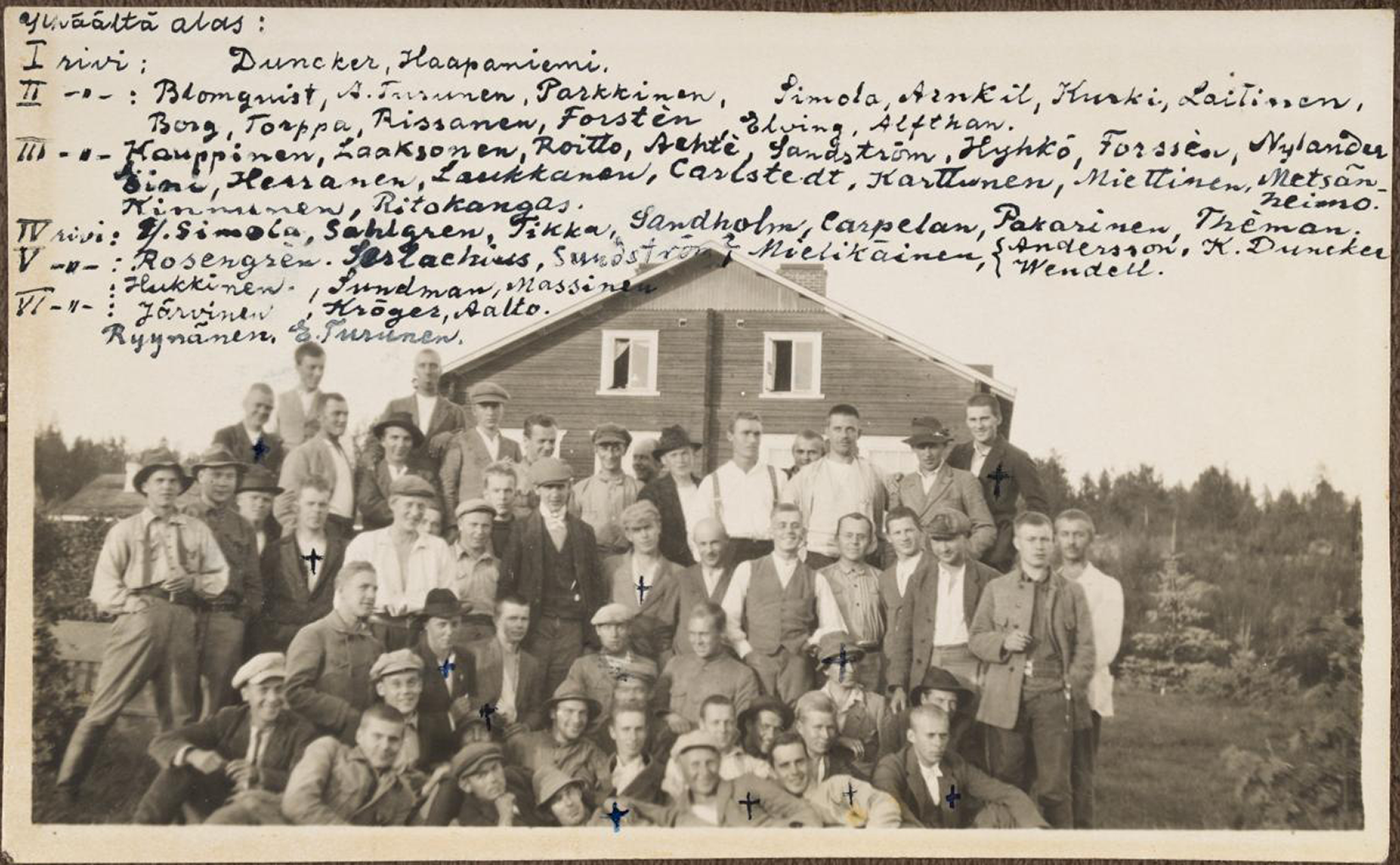
At the time of his hiring, Arne Sandholm, the first of the Finns to go, worked directly under Ilvessalo at the Forest Research Institute.Footnote 81 In fact, their relationship went a long way back. Unlike Dutch foresters, who were normally sent to the colony immediately upon graduation, Sandholm was by 1929 a relatively experienced worker, having passed his examination at the University of Helsinki in 1922 (see Figure 2).Footnote 82 At university, he had studied under Ilvessalo and had evidently made a favourable impression.Footnote 83 From 1922, Sandholm was employed in a key role in the national forest survey under the direction of Ilvessalo. He acted as one of the thirteen survey group leaders, and one of only five that returned to the field for a second year in 1923.Footnote 84 This experience positioned him as a trusted protégé of Ilvessalo, who may have personally recommended him for the posting abroad. More importantly, it also gave him extensive first-hand experience of the one feature of Finnish forestry work that the Dutch colonial authorities were most interested in. That one of the hired Swedes, Robert Helgesson-Hanser, had acted in a similar role in the Swedish national survey further confirms that such experience was considered a valuable criterion in the recruitment process.Footnote 85 The urgency of the shared task of surveying thus served to bridge the geographical and ecological gaps between boreal and tropical forests.
A group photo of forestry students at the University of Helsinki’s experimental station in Hyytiälä (1920). The group includes Kurt Duncker (first row from back, second from left) and Arne Sandholm (fourth row from back, fourth from left), both of whom later went to the Dutch East Indies. Lusto – Finnish Forest Museum, Hyytiälän metsäaseman kokoelma, V15014:10. CC BY 4.0.

The arrival of the ‘foreign foresters’
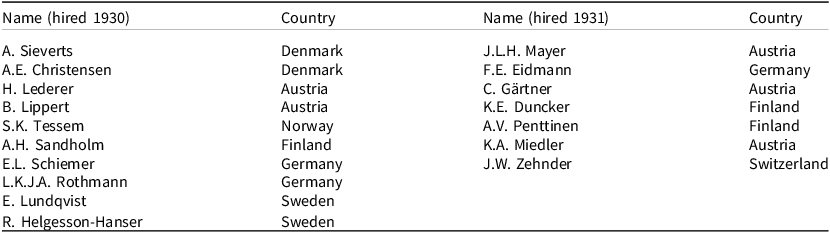
The group of foresters that arrived in the Dutch East Indies in the early 1930s numbered just under twenty individuals, although the exact number is difficult to determine with absolute certainty. Despite several waves of hiring, the colonial press quickly came to refer to the men as a single group under the label de buitenlandsche houtvesters (the foreign foresters). News reports gave various figures between ten and twenty for the total number hired—a general overview was difficult to get as the foresters arrived in several waves—and none of the reports provided anything like a simple list of names and nationalities. Checking the colonial service’s name lists as printed out in the yearly government almanac (regeerings-almanak) does, however, allow a proxy measure. The 1932 list, arranged by time of hiring and type of contract, shows a block of sixteen hires between 1930 and 1931, all marked as being on temporary contracts.Footnote 86 The latter detail is significant: as non-citizens, foreign experts had no right to the regular, indefinite contract structure of the forestry service. In any case, many of the sixteen can be recognised as potentially non-Dutch by their names. The 1931 list, by comparison, misses many of the later hires but does includes one additional name, that of Robert Helgesson-Hanser who died soon after arriving in the colony. It has mostly been possible to prove the foreign nationalities of these seventeen men from other sources, including their own writings, interviews and newspaper mentions. For full details, see Table 1.
The names and (likely) nationalities of the seventeen foresters employed from abroad

Table 1. Long description
A table with two columns each for the years 1930 and 1931, listing the names and countries of foresters hired in each year. The lists are as follows. 1930: A. Sieverts, Denmark; A.E. Christensen, Denmark; H. Lederer, Austria; B. Lippert, Austria; S.K. Tessem, Norway; A.H. Sandholm, Finland; E.L. Schiemer, Germany; L.K.J.A. Rothmann, Germany; E. Lundqvist, Sweden; R. Helgesson-Hanser, Sweden. 1931: J.L.H. Mayer, Austria; F.E. Eidmann, Germany; C. Gärtner, Austria; K.E. Duncker, Finland; A.V. Penttinen, Finland; K.A. Miedler, Austria; J.W. Zehnder, Switzerland.
A likely total figure for the number of ‘foreign foresters’ thus comes to seventeen. This does not, on the face of it, appear particularly high, but its significance becomes apparent from the context. The figure represents well over 10 per cent of the total of 152 ‘higher forest-technical officials’ (hoogere boschtechnische ambtenaren) employed by the colonial administration in 1932.Footnote 87 Even more strikingly, it is 30 per cent of the fifty-nine designated in the category of foresters (houtvesters), the majority of the rest (eighty-eight) having the title of senior foresters (opperhoutvesters) due to longer experience.Footnote 88 That they were hired over such a short course of time, barely more than a year from May 1930 to July 1931, further underlines the impact of this sudden influx of foreign experts. In 1930, before their arrival, the total had been just 130, meaning that the increase of the service by approximately 17 per cent in two years was achieved almost entirely through them.Footnote 89 Tracing the foresters’ identities from other sources gives a provisional list of nationalities (there is some uncertainty concerning one of the Austrians) that accords with those listed in the Beekman interview, mentioned above: five Austrians, three Finns, three Germans, two Danes, two Swedes, and one each from Norway and Switzerland. The underrepresentation of the Germans relative to population size and pre-existing presence in the colony is notable.
The contingent of foreign newcomers ended up taking on a range of tasks. All had to start with a stay in Buitenzorg, getting to know the tropics and learning about their expected duties. Afterwards, most moved to proper stations around the archipelago. An overview of the further positions can be gained from the 1931 and 1932 government directories (regeerings-almanakken) that listed all members of the colonial service with their roles and placings.Footnote 90 Since 1929, the forestry service had been divided into five sections: the state-controlled teak business (djatibedrijf); the service for wild forests on Java and Madura; the service for the outer islands; forest management (boschinrichting, in charge of work plans); and the Buitenzorg experimental station itself.Footnote 91 Three of the seventeen, including Arne Sandholm, got positions at the latter and thus did not need to move into the field. Most, eleven, were placed initially as additional foresters (toegevoegde houtvesters) in various forestry districts in the first three sections, working under a senior Dutch forester. Seven of these were stationed on Java and four in the outer islands: one each on Sumatra, Borneo, Sulawesi, and Bangka. Finally, three found employment in the forest management section, one of whom was assigned to survey work in the outer islands. Five of the group were thus directly involved in the work of facilitating forest exploitation in the outer islands.
While the tasks varied, a closer look at three of the Nordic recruits further confirms that their work aligned with their experiences back home. The connection is clearest with Sandholm, who ended up at the Buitenzorg station’s section for yield research (opbrengstonderzoek). No reports of his own are available, but, at the time, the department was engaged in producing yield tables for teak and different wild species.Footnote 92 These were a statistical tool necessary for predicting the productive potential of an area of forest based on its present state. It was a line of work Sandholm would have been intimately familiar with from his time at the Finnish Forest Research Institute; indeed, his former teacher and boss Yrjö Ilvessalo had made exactly such yield tables the topic of his PhD work, setting up his reputation as a rising star in the field.Footnote 93 Moreover, the tables were closely connected to the survey work Sandholm had participated in himself, providing the basis for estimating future yields for the surveyed areas. Coincidentally or not, in Buitenzorg his colleague, and the only other junior forester in the department at the time, was a recent Dutch graduate who had written his dissertation on Cajander’s theories, redoubling the Finnish influence on this work.Footnote 94 As the wholesale rationalisation of forest exploitation was the primary goal of the Dutch colonial administration at this time, it made sense to place a man of Sandholm’s experience at the heart of it. Evidently, his work was well appreciated, as by 1932 he had taken on full responsibility for the section’s work, with his initial supervisor moved elsewhere.Footnote 95 A Finnish report even suggested he had been promoted to a permanent position, although this seems unlikely and cannot be corroborated from other sources.Footnote 96
More directly involved in survey work was the Swede Eric Lundqvist, one of the few in the group who managed to have a long career in the colony and, later, independent Indonesia. In Sweden, he became famous for his autobiographical books on the archipelago, most of which were published after the Second World War. After his initial placing on Bangka, Lundqvist spent several years engaged in surveys on Borneo and later New Guinea. His first expedition took place in Northern Borneo, which was then at the very edge of the expanding commodity frontier of the Dutch empire. And not just the commodity frontier, but also the frontier of territorial consolidation. The two were inextricably entwined. Attempts by a Japanese corporation to secure concessions for logging in North Borneo had raised concerns throughout the colony; the Japanese presence was considered a security risk.Footnote 97 It was partly as a response to such concerns that the government decided to refuse the Japanese permission for further exploitation and sent in Lundqvist to prepare the ground for a Dutch venture, thus assuring control over the region.Footnote 98 Swedish saw-mill machinery was later ordered to the new site on his insistence.Footnote 99 Working from a base in Malinau, Lundqvist went on a series of long-term missions into the interior, accompanied by teams of Malay or local Dayak workers and guides numbering in the dozens. This was essentially unknown territory from the perspective of the forest service. He had no European colleagues in the field and worked mostly at a distance from the administrative apparatus of the Dutch, rowing inland along the rivers that formed the main pathways across the island.
More concrete details of Lundqvist’s survey work are given in his official 1941 report from New Guinea.Footnote 100 These are reminiscent of Nordic methods and also align broadly with the shorter description in his Norwegian colleague Sverre Tessem’s article ‘Tropisk skogbrug’ (‘Tropical Forestry’), which drew on his own experience working in East Sumatra.Footnote 101 Around the same time, another Swede, Folke Malmros, was also conducting surveys on Bangka, explicitly admitting the use of formulas developed and tested in Sweden.Footnote 102 All describe survey lines ten-metres wide, which was the norm in the Nordic countries at the time. Lundqvist notes that this width had ‘proved to be the most advantageous in surveys covering extended areas’, possibly referring to the Nordic national inventories.Footnote 103 Along the line, the diameter of trees was measured by the survey teams at chest height, which was standard. According to Tessem, all trees measuring at least 40 centimetres were noted; Lundqvist’s tables include trees from 35 centimetres upwards.Footnote 104 This betrayed a comparatively stronger focus on ready timber. In Sweden, for example, all trees above 15 centimetres were noted, complemented with samples of thinner trees in parts of the line.Footnote 105 Stretched resources meant that the line work in the colony was also much more restricted in scope, with line lengths of a few kilometres in most cases, compared to the hundreds in the national surveys.
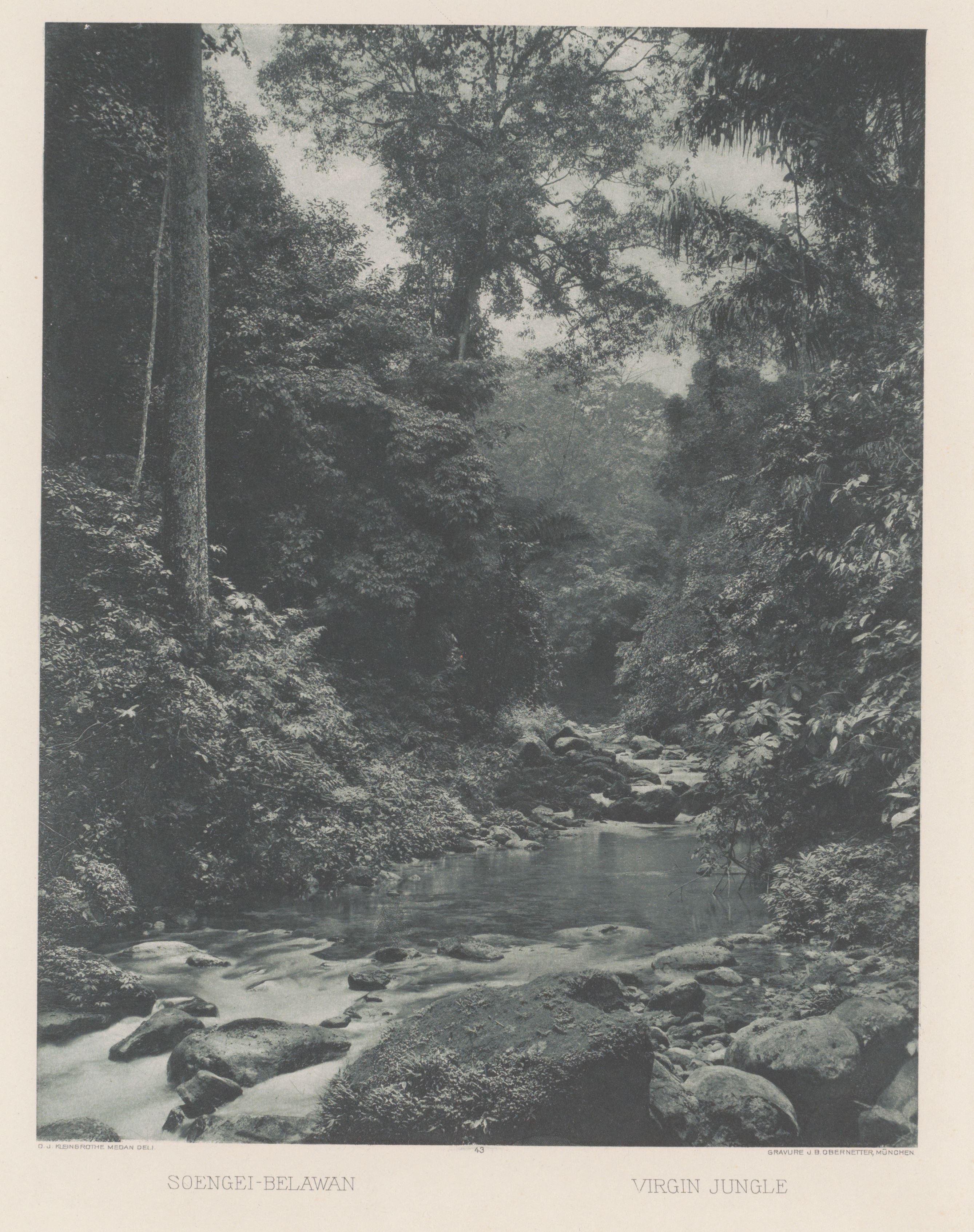
While the practicalities of standard survey work were thus in many ways familiar, the tropical forest also offered its unique challenges that the Nordic foresters were far less equipped to deal with. For Tessem, the rainforest (see Figure 3) represented ‘difficulties that we here at home are wholly spared’; Lundqvist called it ‘the most difficult terrain I have so far seen in my life’.Footnote 106 Yet the most intractable problem related to the bewildering variety of species that it was impossible for an outsider to quickly learn, in sharp contrast to boreal forests dominated by only a few main tree types. Tessem and Lundqvist were more forthcoming than some of their colleagues in admitting that the difficulty could only be mitigated through the use of indigenous ‘tree experts’, who identified species and indicated their names in different languages, which could then be compared against previously compiled herbaria.Footnote 107 This was especially necessary on the less exhaustively studied islands outside Java: as an earlier report and herbarium from Aceh shows, the Dutch relied almost entirely on local guides to identify potential species for useful timber.Footnote 108
Rainforest scenery at Sungai Belawan on Sumatra’s east coast, in the area where S.K. Tessem was later stationed. Photograph by Carl J. Kleingrothe (ca. 1898). Rijksmuseum, object number RP-F-AA3189-44.

Yet, as Lundqvist found, this was only a partial solution.Footnote 109 Not only were some local guides supposedly unreliable, but also there were more fundamental problems in trying to fit together what proved to be incommensurate knowledge systems. The very naming schemes among the Papuans followed a logic of their own. Sometimes trees of the same species had different names at different ages; sometimes Papuans of different ages used different names for the same trees. Tree names could be individualised according to specific characteristics, while certain names sounded too similar to reliably tell apart by an untrained ear. A pragmatic concern was that it proved difficult for outsiders to write down what the Papuans pronounced. The unruly reality of local life refused to conform to the standards of the academically trained European forester. Another issue was that the workers’ bodily measurements showed great variation ‘due to the presence of several races’, making it difficult to set norms for measuring actions like observing at an arm’s length.Footnote 110
Broadly, however, Lundqvist depicts the surveys as collaborative work, He gives recognition to the Papuans’ knowledge of their environment, while his book-length telling of the Borneo expedition is appreciative of the abilities of his workers and extols the camaraderie of the campsite. The Borneo Dayaks, after initial training, made for a ‘more efficient survey team’ than any in Sweden.Footnote 111 Lundqvist also had some comparative understanding of the commodity frontier as a global interface between metropolitan interests and indigenous communities, comparing the (untrained) Dayaks’ forest know-how to that of the Sámi in Sweden.Footnote 112 This, curiously, is among the few instances where Nordic foresters were prompted to consider potential analogies between their activities in the tropics and those going on in the north of their home countries. It is, however, unclear if any of them had direct experience of living or working in Sápmi. More broadly, Tessem’s discussion of the fundamental conflict between local communities’ preference for slash-and-burn agriculture—which had also been common across the Nordic countries mere decades earlier—and the medium-term needs of programmatic forest management, hints at the shared language of scientific modernity versus primitive rural customs that was a feature of forestry in both Europe and the colonies.Footnote 113
Most of the foresters, by comparison, paid little attention to locals in their accounts, even if they worked together on a daily basis. Descriptions were filled with the usual, century-old colonial tropes, such as when the German F.E. Eidmann decried the Javanese worker’s unproductivity and lack of initiative, or when the Finn Aaro Penttinen criticised their supposed indolence.Footnote 114 According to the latter, ‘the execution of some task takes proportionally five times as much “black power” as what would be needed in Europe’; yet just a couple of paragraphs later he admits that work in a tropical climate is ‘several times harder and requires more health and strength than in Northern countries’, quickly burning the European forester out.Footnote 115 The wilful inability to identify across cultural and professional lines is tangible. Nevertheless, many of the foresters’ statements betray an awareness of the tensions inherent to the extractive economy. Such remarks include Penttinen’s off-handed mention that ‘discipline on the ground is strict and order is guaranteed by the gun on the foreman’s hip’, among other references to the violence lurking beneath the surface of the colonial situation.Footnote 116
The most revealing insight, however, comes not from crafted public statements but from the incidentally surfaced correspondence of the Swede Robert Helgesson-Hanser, who was killed soon after his arrival in Sulawesi. The Dutch authorities quickly declared the incident, in which four individuals were killed by an indigenous policeman, an unmotivated amok attack.Footnote 117 However, while details remained scarce, the Swedish press leaned on information from the family of the deceased, who reported that Helgesson-Hanser had ‘recently expressed apprehension about working among the natives because of their hostility towards the authorities’ expropriation of forests’.Footnote 118 While, in the event, the killing turned out to be unconnected to those concerns, the reality of the violence of extraction, and the violence it could potentially breed in response, had clearly not escaped the Swede’s notice during his short colonial career. That conflict accompanied the expansion of logging and forest management was not surprising. Indeed, as noted recently with reference to the South American context, indigenous resistance to colonial forest extractivism has been an ‘ongoing, structural component of world history’.Footnote 119 The Indonesian archipelago was no exception. The senior forester for West Sumatra, C.H. Japing, noted in 1929 that land conflicts had become more common as the colonial state asserted ownership of all forest lands and sidelined day-to-day community uses.Footnote 120 As Nancy Peluso noted in her classic study, wood theft was heavily policed on Java and readily punished by the forest police specially employed by the state.Footnote 121 Forest fires were often explained in reports by the service as intentional and malicious arsons directed as revenge against the heavy-handed policing.Footnote 122 The work of forestry was thus far from a neutral, technical enterprise.
For most of the group, their experiences in the Dutch East Indies proved to be short-lived. The greater movements of the world economy laid waste to personal plans: beset by the Great Depression, the Dutch colonial administration decided to abruptly downsize the forest service, thus curtailing the experiment with foreign experts. The 1933 budget foresaw a reduction of the higher officialdom by as much as 19.5 per cent.Footnote 123 Inevitably, the easiest step towards that target was the termination of the temporary contracts given to non-nationals, who were also among the most junior, and thus disposable, foresters then active in the service. This did not occur without rancour: the foresters had been promised six-year contracts, and tough negotiations had to be conducted to determine how much was owed and to whom. Public opinion had not been exactly welcoming to these outsiders, but the press found the messiness of their firing unseemly, a threat to Dutch ‘prestige’; there was even a coordinated legal challenge against the minister of colonies.Footnote 124 Some, like the Swiss J.W. Zehnder, took their grievances back home. Zehnder’s letter to the Schweizerische Zeitschrift für Forstwesen made it clear that he felt mistreated and betrayed, in acrimonious enough tones that even the Dutch press took notice of the ‘painful reproof’ (pjinlijk verwijt).Footnote 125 Yet nothing much could be achieved in the face of economic realities. A handful of the foresters with families, including Sandholm, kept their employment into 1933. Only a few, including Lundqvist, the Austrian Conrad Gärtner and the Dane Arne Sieverts, weathered the crisis entirely. On the whole, the experiment—the last of its kind during Dutch rule of Indonesia—was over just a few years after it had started, its direct legacies ephemeral at best.
The story, however, has an epilogue. While the Dutch colonial administration gave up on the experiment, the broader development of an increasingly multilateral global forestry went on. Several of the seventeen hires found ways to build careers within this broader structure. A.E. Christensen found a couple more years of employment at a private sawmill after his firing in 1933, while his compatriot Sieverts managed to hang around until the end of the war of independence.Footnote 126 Gärtner was fired by the Dutch in 1940 as an enemy national but rehired under Japanese rule and, later, in independent Indonesia.Footnote 127 A foreign passport could thus serve as both a hindrance and a boon in the changing political landscape. Yet others found further employment in other colonies, like E.L. Schiemer, who resurfaced working for a match company in South Africa.Footnote 128 Such transfers of know-how were common enough within the world of colonial forestry, as has been shown before: experts from Asian colonies, especially British India, had a strong influence on early forestry in East and West Africa, as did Americans in the Philippines on China.Footnote 129 Most eye-catchingly, for two of the seventeen, colonial experience served as a pathway into the post-war world of international development: Eric Lundqvist and the Austrian K.A. Miedler both became acknowledged experts within the new order, going on missions for the UN Food and Agriculture Organisation to India and Burma, respectively.Footnote 130 In different ways, for each of these individuals, their stint in the Dutch colonial service was not just a self-contained adventure but a stepping stone in broader global careers.
Trees and transimperial knowledge production—conclusions
The interwar period witnessed the transformation of forestry from a set of localised, environmentally specific practices into a codified global science with pretensions towards universality. Yet, in many cases, those pretensions proved to be ill-founded. As pointed out by Brett M. Bennett, the trope of the global conquest of the German model of forestry was largely illusory: colonial foresters, far from pursuing a grand unified programme, tended to serve at the beck and call of non-expert officials, wielding little influence against the contingencies of local pressures.Footnote 131 One might more accurately describe interwar colonial forestry as an ideological project providing academic cover to the naked, often ad hoc extractivism of European empires. At one frontier of this development were the seventeen European foresters hired by the Dutch in 1930–31 to aid in the process of subjugating, managing, and extracting the natural resources of the Indonesian archipelago. Situated at the intersection of global and transimperial histories, their case highlights many of the particularities of the relationship between empires and the international networks of science in the interwar period.
The existing literature on transimperial forestry has been dominated by bilateral cases, especially the well-studied example of the German foresters employed in British India and, to a smaller extent, on Dutch Java. The case of the foreign foresters helps to expand the scope of existing analyses by drawing attention to the emergence of a more multilateral world of exchanges in the interwar period, facilitated by the budding institutions of international science as much as by the distrust of German collaborators in the immediate aftermath of the war. This period opened the field to new influences, an opportunity especially eagerly seized upon by the Nordic states with their rapidly developing forestry sectors, whose more global ambitions have thus far remained underresearched. Their inclusion in the picture helps to underline the fundamental coloniality of the extractive industries regardless of the location of activities, from arctic Sápmi to tropical archipelagos, and the very real networks of knowledge circulation that tied such far-flung locales together. The Nordic perspective also responds to Bernhard C. Schär’s call to employ global history methods not merely to provincialise, but also to ‘pluralise’ Europe by taking into account the diversity of experiences, actors and—both collaborative and competitive—interests conflated under that label.Footnote 132
As noted by Corey Ross, the focus in the literature on the well-resourced forestry services of India and Java has tended to obscure the reality of forestry in most colonial contexts, where struggle for resources and relevance was the norm.Footnote 133 The latter experience comes through in the case of the foresters discussed here, especially those employed in the outer islands of the colony. Theirs was a frontier profession of modest prospects and changeable ambitions, subject to rapid changes at the whim of larger forces. This helps to explain the attractions for a major empire of hiring non-nationals for its colonial service. Often, this was a pragmatic decision first and foremost, even if the specific qualities of the recruits played a role: compared to the long-term commitment of training your own officials over a government-subsidised five-year degree, hiring ready-to-go graduates from elsewhere provided a quick fix. This allowed officials to respond rapidly to changing economic and political circumstances: ramping up survey work and forest exploitation, especially in the outer islands, when finances were on the up in the late 1920s, but also permitting the firing of outsiders—without the kinds of long-term job protections Dutch professionals would have expected—when the atmosphere turned. Transimperial knowledge workers therefore functioned as a homeostatic mechanism at the frontiers of imperial expansion, moving resources to where they were most in demand and quickly disposing of excesses elsewhere.
The episode also provides evidence of what Moritz von Brescius has termed the ‘frictions of transnational science’.Footnote 134 Circulation of expertise across imperial borders was never as smooth as the prevailing metaphors of the literature tend to suggest. The debates around Dutch colonial forestry throughout the early twentieth century make it clear that the use of foreign skilled labour was never unusual, in the sense that the idea was floated over and over again and occasionally pursued; but it was always exceptional, in so far as each time such plans were characterised as a one-off response to special circumstances and widely criticised as a failure of good governance by segments of the public. This was therefore nothing like a case of unimpeded mobility and free circulation of expertise: each occasion came at a cost to all parties—including the foresters themselves, left at the whims of an indecisive administration. This is especially clear in the case of on-the-ground practical knowledge workers like foresters, whose bargaining power was significantly lower than higher-level scientific authorities who could be treated as exceptions.
Frictions also worked to guide mobilities; not every border was open for business and knowledge exchange never took place in a vacuum. In the words of Duncan Money, ‘some places became closely connected and not others’—the states involved did matter, as the interests and aims of the sending and receiving parties of the deal had to be coincide.Footnote 135 Wealth of forest resources provided the ecological link between Finland and the Indonesian archipelago, but the Dutch authorities also needed the willing collaboration of their Finnish counterparts to recruit from the latter nation’s pool of foresters. One party saw in the deal a temporary solution to a labour shortage; the other an opportunity to raise the country’s profile as a forestry power of global significance. Paying attention to the avenues through which such hiring processes were pursued also serves to elucidate the links between international, higher-level scholarly exchanges in the metropole and the practical knowledge work undertaken on the ground around the world. Contacts established and dialogues begun at events like the World Forestry Congress in 1926 and the Stockholm IUFRO meeting in 1929 were essential in the subsequent hiring of more practically oriented foresters from various European countries for colonial employment under the Dutch. The two layers were thus intimately connected but the latter’s experience of the realities of knowledge transfer proved decidedly less luxurious.
The standardisation and academicisation of forestry research in the interwar period played a significant role in making foreign expertise acceptable across contexts, giving authorities in different countries a shared language for measuring each other’s achievements. For example, the reputation of the national forest inventories undertaken in Finland, Sweden, and Norway not only fed into the planning of new survey methodologies in the Dutch East Indies from the 1930s onward; it also gave cachet to individual workers like Arne Sandholm or Robert Helgesson-Hanser, making them desirable hires to undertake similar labour in the tropics—even if the nature of the forests themselves was radically different. Indeed, while the language of science helped connect metropolitan elites and distribute colonial opportunities to a wider pool, it also served to obscure the continuing importance of local, indigenous sources of expertise, which quickly got written out of the emerging narratives of global forestry. In the process, the very concept of forests was reimagined as a global phenomenon readily reducible to predefined parameters, equally applicable in boreal or tropical, coniferous or deciduous woodlands. The multilateral production of global expertise in the colonial era thus served as a predecessor to the technical assistance regime of international development, within which self-defined neutral countries such as the Nordic states continued to make claims to world leadership in environmental management, as they still do, while obfuscating the colonial continuities of forest extraction and exploitation that continues around the world to this day.
Acknowledgments
I am grateful to Emilie Wellfelt, Bernhard C. Schär, Kristoffer Edelgaard Christensen, Jonas Fossli Gjersø, and Alex Levine for their suggestions and help with access to sources, and to the anonymous reviewers for their careful reading and helpful comments.
Financial support
Work on this article has been generously funded by grants from the Niilo Helander Foundation, the Ulla and Eino Karosuo Fund of the Finnish Cultural Foundation, and the Research Council of Finland (grant number 374684).
Competing interests
The author declares none.
Mikko Toivanen is a historian of imperialism and modern South-East Asia at the University of Eastern Finland. His current project, funded by the Research Council of Finland, examines the transimperial history of forestry and the global (co-)production of environmental knowledge. His earlier work has dealt with a range of topics related to colonial histories in Asian contexts, including the development of public spaces in nineteenth-century Singapore and Batavia (now Jakarta); the development of travel infrastructure and leisure practices in the Indian Ocean region; and the histories of Nordic colonial entanglements. Toivanen is the author of Empire, Tourism, and Colonial Knowledge in Nineteenth-Century Southeast Asia and Sri Lanka (Leiden University Press, 2025).


 Open access

