Introduction
The gut microbiome plays a pivotal role in infant health, influencing metabolic processes, immune system maturation, and overall physiological development. Reference Yang, Corwin, Brennan, Jordan, Murphy and Dunlop1,Reference Cebra2 Among the diverse bacterial populations colonizing the infant gut, Bifidobacterium species are of particular importance. As one of the earliest colonizers, these beneficial bacteria are essential for shaping the microbiome during early life Reference Saturio, Nogacka and Alvarado-Jasso3 and supporting critical functions such as fiber digestion and the production of essential metabolites, including B vitamins and beneficial fatty acids. Reference Wang, Huang, Tan, Chen, Chen and Nie4,Reference LeBlanc, Chain, Martín, Bermúdez-Humarán, Courau and Langella5 An early reduction in Bifidobacterium populations can lead to a range of health issues, including increased risks of obesity, diabetes, metabolic disorders, and higher all-cause mortality in later life. Reference Milani, Duranti and Bottacini6–Reference Korpela, Zijlmans and Kuitunen8
Breast milk is a natural source of prebiotics and probiotics that promote the growth of Bifidobacterium, helping to establish a healthy gut microbiota in breastfed infants. Reference Li, Ren and Wang9 However, breastfeeding may not be feasible for all families, leading some to rely on infant formula. To address this, the infant formula industry has developed products fortified with prebiotics, probiotics, synbiotics (a combination of both), and other functional ingredients to mimic the health benefits of breast milk and to support gut microbiota development in formula-fed infants.
Prebiotics are nondigestible carbohydrates – such as galacto-oligosaccharides (GOS) and fructo-oligosaccharides (FOS) – that selectively stimulate the growth of beneficial bacteria like Bifidobacterium. Reference Gibson and Roberfroid10 Probiotics are live microorganisms, such as specific strains of Lactobacillus or Bifidobacterium, which confer health benefits when consumed in adequate amounts. Reference Hill, Guarner and Reid11 Synbiotics combine both prebiotics and probiotics to synergistically enhance the colonization and activity of beneficial microbes. Reference Swanson, Gibson and Hutkins12 In addition to these, other functional ingredients – such as β-palmitic acid (sn-2 palmitate), a structured lipid that mimics the fat composition of human milk – may also support gut microbial balance by creating a favorable intestinal environment. Reference Yaron, Shachar and Abramas13,Reference Giuffrida, Marmet and Tavazzi14 Understanding the effectiveness of these formula supplements in fostering Bifidobacterium growth is important for informing optimal feeding practices for infants who are not breastfed.
Several studies have explored the effects of infant formula supplements on gut microbiota composition, with a particular focus on Bifidobacterium levels. These studies, conducted through various models such as in vitro, Reference Borewicz and Brück15,Reference Tonon, Salgaço and Mesa16 animal models, Reference Chen, Xie and Jiang17 observational studies, Reference Borewicz, Suarez-Diez and Hechler18 and clinical trials, Reference Yaron, Shachar and Abramas13,Reference Alliet, Vandenplas and Roggero19–Reference Castanet, Costalos and Haiden54 have investigated formulas enriched with prebiotics, probiotics, synbiotics, and other ingredients. Moreover, the effects of infant formula supplementations on gut microbiota, with a particular focus on Bifidobacterium levels and related health outcomes have been evaluated in several systematic reviews and meta-analyses. Reference Srinivasjois, Rao and Patole55–Reference Indrio, Gutierrez Castrellon and Vandenplas57
Considering all of conducted studies in this regard, there remains a lack of comprehensive systematic reviews and network meta-analyses that evaluate the specific bifidogenic effects – defined here as the ability to increase the relative abundance (RA) of Bifidobacterium in the infant gut – across a broad range of infant formula supplements compared to standard formula and breastfeeding. This systematic review and network meta-analysis (NMA) aims to evaluate the bifidogenic effects of various infant formula supplements: those enriched with any type of prebiotics, any type of probiotics and/or probiotics metabolites, synbiotics, β-palmitic acid (sn-2 palmitate), and combinations of β-palmitic acid with prebiotics compared to standard formula and also see that which one is better to mimic the effect of human milk feeding by synthesizing evidence from randomized controlled trials (RCTs).
While prebiotics and probiotics encompass a wide range of compounds and strains with potentially distinct biological activities, they were analyzed as broad categories in this review due to limitations in the available data. However, where feasible, additional analyses were performed on each subtype within these categories to better characterize their specific effects and mitigate potential oversimplification. The findings of this review will be informative for healthcare professionals in making informed decisions about infant feeding, particularly regarding gut health and overall well-being in formula-fed infants. As the body of literature on infant nutrition expands, this study seeks to fill knowledge gaps and clarify the role of infant formula supplementation in shaping gut microbiota development during this vital period of growth.
Methods
Study protocol and search strategy
Between July 1st, 2024, and August 15th, 2024, a comprehensive search was carried out across six scientific databases: PubMed, EMBASE, MEDLINE, Scopus, Web of Science, and Cochrane CENTRAL. This search employed a range of keywords (supplementary Table S1) and imposed no language restrictions. Retrieved articles were imported into EndNote software 21.2 58 for citation management, duplicate removal, and to streamline the review process.
This systematic review and meta-analysis adhered to Preferred Reporting Items for Systematic Reviews and Meta-Analyses (PRISMA) guidelines Reference Moher59 and the study protocol is registered in the International Prospective Register of Systematic Reviews website (PROSPERO) (https://www.crd.york.ac.uk/PROSPERO/; registration no: CRD42024568743). Initially, the protocol for this study outlined an intention to evaluate multiple aspects of the gut microbiota in infants, including a variety of bacterial taxa influenced by infant formula supplementation. However, during the course of the review, the scope was refined to focus exclusively on the levels of Bifidobacterium. This decision was made to enhance the specificity of the analysis, align with emerging evidence emphasizing the importance of Bifidobacterium in infant gut health, and provide a clearer, more targeted synthesis of the data.
Study eligibility
This systematic review and NMA sought to identify studies following the Population, Intervention, Comparator, Outcome (PICO) framework . We included RCTs, parallel or cross over with at least 2 weeks of intervention period, that evaluated the bifidogenic effects of various infant formula supplements: those enriched with any type of prebiotics, any type of probiotics and/or probiotics metabolites, synbiotics, β-palmitic acid (sn-2 palmitate), and combinations of β-palmitic acid with prebiotics, as either primary or secondary outcomes compared to standard formula. The outcome measured in this meta-analysis was the RA of Bifidobacterium in the gut microbiota, focusing on healthy neonates and infants aged 0 to 12 months. RCTs that did not include a standard formula comparator but had a breastfed group in their study arms were included only in the NMA. Studies that did not meet the eligibility criteria were excluded from the analysis. Moreover, if in studies bifidogenic effect showed as count of bacteria, the authors have been communicated to ask the value of RA, if it was not accessible in order to have the highest precision those studies have been excluded from this analysis.
Study screening
Two reviewers (FM and MM) independently screened citations and evaluated full-text articles for eligibility. The initial review focused on titles and abstracts, after which full texts of potentially relevant articles were assessed for final inclusion. A cross-check was conducted at both stages to ensure adherence to eligibility criteria. In cases of disagreement regarding study selection, the reviewers collaboratively discussed and resolved conflicts to reach a consensus.
Data extraction
A custom data extraction form developed in Excel is used by two reviewers (FM and MM) to systematically collect and organize the relevant data from the included studies. The following data were extracted: the surname of the first author, country of origin, year of publication, study design (parallel or crossover), number of participants, sex, age at enrollment, gestational age, mode of delivery, days of breastfeeding since birth, antibiotic usage, details of the intervention and control, study duration (follow-up), microbiota assessment method, end point value of RA of Bifidobacterium in the intervention, control, and reference groups (when applicable). In cases where quantitative data or any other key data – such as participant sex, age, gestational age, or delivery mode – were missing, the authors of the respective studies were contacted to request the missing information.
Quality assessment and risk of bias
The quality of the studies assessed by two authors (FM and LB) independently using version 2 of the Cochrane risk of bias tool for RCTs (RoB2.0). Reference Sterne, Savović and Page60 This tool assesses study bias across several areas, including: bias from the randomization process, bias from period and carryover effects in crossover RCTs, bias due to deviations from intended interventions, bias from missing outcome data, bias in outcome measurement, and bias in the selection of reported results. As a result, categories such as “Low,” “Some concerns,” or “High” were employed to evaluate each domain for study bias. In cases where independent reviewers had differing opinions on the extent of bias in any domain, final evaluations were determined through consensus among the authors.
Statistical analysis
Initially, a meta-analysis was conducted to evaluate the effects of five types of supplemented infant formulas: those containing prebiotics, probiotics, synbiotics, β-palmitic acid, and combination of β-palmitic acid with prebiotics, whenever data from at least two studies were available. Reference Higgins, Thomas, Chandler, Cumpston, Li, Page and Welch61 Given that all efficacy outcomes were continuous, the effect size was calculated as the mean difference (MD) along with 95% confidence intervals (CIs). Data were collected as the mean and standard deviation (SD) of the endpoint RA of Bifidobacterium in both the intervention, control, and breastfed reference groups at any available time point, occurring more than two weeks after the start of the intervention and prior to the cessation of the intervention formula. When SDs were not reported, they were derived from available 95% CIs or standard errors (SEs). Reference Higgins, Thomas, Chandler, Cumpston, Li, Page and Welch61 For outcomes reported as medians with interquartile ranges, the means and SDs were estimated following methods outlined in the Cochrane guidelines. Reference Higgins, Thomas, Chandler, Cumpston, Li, Page and Welch61 The I2 statistic was utilized to assess between-study heterogeneity, following the Cochrane guidelines for categorization: low heterogeneity (I2 = 0 to 40%), moderate heterogeneity (I2 = 30 to 60%), substantial heterogeneity (I2 = 50 to 90%), and considerable heterogeneity (I2 = 75 to 100%). Reference Higgins, Thomas, Chandler, Cumpston, Li, Page and Welch61,Reference Higgins62 To address methodological and clinical heterogeneity across studies, random-effects models utilizing the restricted maximum likelihood (REML) estimator were employed to calculate the pooled effect size. The REML method was selected for its ability to provide unbiased estimates of variance components, especially in models with random effects. Reference Viechtbauer63
In the next stage of analysis, breastfeeding was hypothesized as the “gold standard” in promoting an optimal gut microbiota composition in infants, particularly in supporting the highest levels of Bifidobacterium compared to formula feeding. Therefore, the NMA was conducted using the frequentist framework with random effects, implemented through the NETMETA package in R. This approach generates multiple comparative estimates by connecting all alternative interventions, combining both direct and indirect treatment comparisons. Reference Higgins62,Reference Bucher, Guyatt, Griffith and Walter64 This analysis was conducted with breastfed infants as the reference group to assess the bifidogenic effects of various formulas compared to breastfeeding, using at least three independent RCTs for each direct comparison to ensure the validity of the network. Reference Lin65
A meta-regression analysis was performed to assess if studies are similar regarding eight effect modifiers: feeding duration, feeding pattern, geographical region, microbiota assessment method, age at enrollment, antibiotic use, sample size, and risk of bias. These factors were analyzed for their influence on study outcomes. Reference Salanti, Ades and Ioannidis66 The I2 statistic was used to assess heterogeneity, while node splitting evaluated local inconsistency between direct and indirect comparisons. The difference between direct and indirect coefficients was tested for inconsistency, with a p-value < 0.05 indicating significant local inconsistency. In cases of inconsistency, nontransmissibility was considered, prompting further investigation into factors or regulators influencing the treatment effect. Reference Higgins, Thomas, Chandler, Cumpston, Li, Page and Welch61,Reference Parks and Ferrante67
Statistical analyses were performed using the “dplyr,” “meta,” “metafor,” and “netmeta” packages in RStudio version 2023.12.1 + 402. 68 A network plot of interventions was created to visualize the evidence and provide a concise overview of its characteristics. Each formula was ranked with p-scores from the surface under the cumulative ranking curve (SUCRA), where a higher p-score reflects greater divergence or lower Bifidobacterium level compared to breast milk. Reference Rücker and Schwarzer69
Sensitivity and subgroup analyses were conducted to evaluate the robustness of the pooled results, as well as to explore sources of heterogeneity. Reference Higgins, Thomas, Chandler, Cumpston, Li, Page and Welch61 Sensitivity analyses were performed using a leave-one-out approach when at least five studies, or distinct evaluations within a single study, were included. Moreover, in the NMA, sensitivity analysis was conducted by excluding high-risk studies to assess the impact of them on effect estimate and inconsistency. Reference Higgins, Thomas, Chandler, Cumpston, Li, Page and Welch61,Reference Viechtbauer63 Subgroup analyses were carried out based on feeding patterns (exclusive formula-fed, previously breastfed, or breastfed and formula-fed), feeding duration (short-term: less than 4 weeks, mid-term: 4-8 weeks, or long-term: over 8 weeks), age at enrollment (neonates: 0-1 month, infants: 1-6 months, or older infants: 6-12 months), antibiotic usage (yes or no), microbiota assessment method (16S rRNA gene sequencing, fluorescence in situ hybridization (FISH), quantitative polymerase chain reaction (qPCR), and metagenomic shotgun sequencing), geographical region (Europe, North and South America, or Asia), and bacterial species in the formula (with or without strains of Bifidobacterium species) to identify potential sources of heterogeneity when applicable. Subgroup analysis based on the mode of delivery, an important factor influencing gut microbiota, was not feasible since nearly all RCTs included infants from both delivery modes. Consequently, it was not possible to separate the participants into distinct groups for this analysis. Reference Higgins, Thomas, Chandler, Cumpston, Li, Page and Welch61
Regarding the assessment of publication bias, statistical tests and funnel plot visualizations typically require at least 10 studies to yield reliable results. Reference Sterne, Savović and Page60,Reference Sterne, Gavaghan and Egger70 Given that each formula supplementation type in our meta-analyses includes fewer than 10 studies, the power of these methods to detect publication bias is limited. Consequently, we did not evaluate publication bias in these meta-analyses. However, for the NMA, we evaluated potential publication bias and small-study effects using a comparison-adjusted funnel plot. Reference Schwarzer, Carpenter and Rücker71
Certainty assessment
The certainty of evidence across the network was evaluated using the Grading of Recommendations Assessment, Development, and Evaluation (GRADE) system Reference Brignardello-Petersen, Murad and Walter72 within the Confidence in Network Meta-Analysis (CINeMA) framework. Reference Nikolakopoulou, Higgins and Papakonstantinou73 This evaluation classified evidence quality into four levels: very low, low, moderate, or high, based on predefined criteria. Reference Nikolakopoulou, Higgins and Papakonstantinou73
Results
Study selection
Figure 1 presents the PRISMA diagram outlining the systematic search and literature selection process. Initially, from 1427 records retrieved through databases, 263 duplicates were removed. After screening the titles and abstracts of the remaining 1164 records, 1112 were deemed ineligible based on predefined criteria. Full-text assessment was performed on 52 records, leading to the exclusion of 33 studies that did not meet the criteria. Ultimately, 19 studies met the eligibility criteria for inclusion in this study. Reference Alliet, Vandenplas and Roggero19–Reference Wu, Zhao and Liu37 Among them, all studies included in NMA. However, studies conducted by Alliet et al. and Estorninos et al. have not been included in meta-analysis due to the absence of a suitable comparator formula, as the control formulas contained probiotics and high level of sn-2 palmitate, respectively. Reference Alliet, Vandenplas and Roggero19,Reference Estorninos, Lawenko and Palestroque25
PRISMA flow diagram of the literature search and filtering results for a systematic review on the Bifidogenic effect of various formula supplementation.

Study characteristics
Supplementary Table S2 presents a detailed overview of the trial characteristics included in this study. Of the nineteen studies analyzed in this systematic review and NMA, research was conducted across sixteen countries: Belgium, Reference Alliet, Vandenplas and Roggero19 Switzerland, Reference Berger, Porta and Foata21 Chile, Reference Brunser, Figueroa and Gotteland23 Spain, Reference Closa-Monasterolo, Gispert-Llaurado and Luque24,Reference Neumer, Urraca and Alonso32 the Philippines, Reference Estorninos, Lawenko and Palestroque25 China, Reference Guo, Li and Zhao26,Reference Wu, Zhao and Liu37 the Netherlands, Reference Haarman and Knol27,Reference Looijesteijn, Brouwer and Schoemaker30 the United States, Reference Holscher, Faust and Czerkies28 Germany, Reference Lagkouvardos, Intze and Schaubeck29,Reference Nomayo, Schwiertz and Rossi33,Reference Schmelzle, Wirth and Skopnik36 Singapore, Reference Mah, Chin and Wong31 Thailand, Reference Phavichitr, Wang and Chomto34 and Italy. Reference Roggero, Liotto and Pozzi35 Additionally, two studies spanned multiple countries: Beghin et al. conducted research in France, Germany, and Italy, Reference Béghin, Tims and Roelofs20 while Bosheva et al. conducted research in Bulgaria, Poland, and Hungary. Reference Bosheva, Tokodi and Krasnow22 The studies were published between 2003 Reference Schmelzle, Wirth and Skopnik36 and 2023. Reference Lagkouvardos, Intze and Schaubeck29 Except for one study, which used a crossover design, Reference Looijesteijn, Brouwer and Schoemaker30 all other RCTs employed a parallel design. Reference Alliet, Vandenplas and Roggero19–Reference Lagkouvardos, Intze and Schaubeck29,Reference Mah, Chin and Wong31,Reference Wu, Zhao and Liu37 Sixteen studies were conducted using a double-blind design, Reference Alliet, Vandenplas and Roggero19–Reference Bosheva, Tokodi and Krasnow22,Reference Closa-Monasterolo, Gispert-Llaurado and Luque24–Reference Lagkouvardos, Intze and Schaubeck29,Reference Mah, Chin and Wong31–Reference Schmelzle, Wirth and Skopnik36 two studies used a single-blind design, Reference Brunser, Figueroa and Gotteland23,Reference Looijesteijn, Brouwer and Schoemaker30 and one study did not specify blinding details. Reference Wu, Zhao and Liu37 The duration of the trials ranged from 6 weeks. Reference Haarman and Knol27,Reference Holscher, Faust and Czerkies28,Reference Looijesteijn, Brouwer and Schoemaker30 to 24 months Reference Lagkouvardos, Intze and Schaubeck29
In six studies, the intervention formula included prebiotic supplementation Reference Berger, Porta and Foata21,Reference Bosheva, Tokodi and Krasnow22,Reference Closa-Monasterolo, Gispert-Llaurado and Luque24,Reference Haarman and Knol27,Reference Holscher, Faust and Czerkies28,Reference Neumer, Urraca and Alonso32 Two RCTs assessed formulas supplemented with probiotics. Reference Mah, Chin and Wong31,Reference Roggero, Liotto and Pozzi35 while two others evaluated formulas containing synbiotics. Reference Lagkouvardos, Intze and Schaubeck29,Reference Phavichitr, Wang and Chomto34 Three RCTs investigated formulas with added sn2-palmitate, Reference Guo, Li and Zhao26,Reference Looijesteijn, Brouwer and Schoemaker30,Reference Wu, Zhao and Liu37 and two studies evaluated formulas containing both sn2-palmitate and prebiotics. Reference Nomayo, Schwiertz and Rossi33,Reference Schmelzle, Wirth and Skopnik36 The study by Beghin et al. included three intervention groups, each assessing a different supplementation: a formula fermented with Bifidobacterium breve C50 and Streptococcus thermophilus O65, a prebiotic-supplemented formula, and a fermented formula also containing prebiotics. Reference Béghin, Tims and Roelofs20 Brunser et al.’s study included two intervention groups with different formula types: one supplemented with FOS and another enriched with living Lactobacillus johnsonii La1. Reference Brunser, Figueroa and Gotteland23 In the RCT by Alliet et al., the control formula contained Limosilactobacillus (L.) reuteri DSM 17,938 probiotics, while the intervention formula also included 1 g/L 2’-fucosyllactose in addition to probiotics. Reference Alliet, Vandenplas and Roggero19 Furthermore, in the study by Estorninos et al., the control formula was high in sn-2 palmitate, while the intervention formula included Bovine milk-derived oligosaccharides (MOS), providing a total of 7.2 g oligosaccharides per liter in addition to high level of sn-2 palmitate. Reference Estorninos, Lawenko and Palestroque25 Fifteen studies included a nonrandomized breastfed group as the reference group, Reference Alliet, Vandenplas and Roggero19–Reference Lagkouvardos, Intze and Schaubeck29,Reference Nomayo, Schwiertz and Rossi33–Reference Roggero, Liotto and Pozzi35,Reference Wu, Zhao and Liu37 while four studies included only intervention and control groups without a breastfed reference group. Reference Looijesteijn, Brouwer and Schoemaker30–Reference Neumer, Urraca and Alonso32,Reference Schmelzle, Wirth and Skopnik36
The primary outcome retrieved was the RA of Bifidobacterium. In cases where the RA of Bifidobacterium was reported as a percentage, the values were standardized to ratios for consistency. The studies assess fecal samples using various methods, including DNA extraction followed by 16S rRNA gene sequencing, Reference Alliet, Vandenplas and Roggero19,Reference Berger, Porta and Foata21,Reference Estorninos, Lawenko and Palestroque25,Reference Roggero, Liotto and Pozzi35,Reference Wu, Zhao and Liu37 FISH, Reference Béghin, Tims and Roelofs20,Reference Brunser, Figueroa and Gotteland23,Reference Haarman and Knol27,Reference Holscher, Faust and Czerkies28,Reference Mah, Chin and Wong31,Reference Phavichitr, Wang and Chomto34,Reference Schmelzle, Wirth and Skopnik36 qPCR, Reference Closa-Monasterolo, Gispert-Llaurado and Luque24,Reference Guo, Li and Zhao26,Reference Lagkouvardos, Intze and Schaubeck29,Reference Neumer, Urraca and Alonso32–Reference Phavichitr, Wang and Chomto34 and metagenomic shotgun sequencing. Reference Bosheva, Tokodi and Krasnow22 Studies included in NMA and pairwise meta-analysis more than one time based on the number of intervention arms and evaluated time points. In meta-analyses, 3 studies included more than once due to the presence of multiple intervention groups with different types of supplementation Reference Béghin, Tims and Roelofs20,Reference Brunser, Figueroa and Gotteland23 or varying amounts of supplementation. Reference Phavichitr, Wang and Chomto34 Additionally, 4 studies were included multiple times because they evaluated RA of Bifidobacterium at more than one time point. Reference Bosheva, Tokodi and Krasnow22,Reference Lagkouvardos, Intze and Schaubeck29,Reference Neumer, Urraca and Alonso32,Reference Wu, Zhao and Liu37
Participant characteristics
The analysis included nineteen studies that evaluated a total of 3,356 infants or neonates after accounting for dropouts. Reference Alliet, Vandenplas and Roggero19–Reference Wu, Zhao and Liu37 The sample sizes varied significantly across studies, ranging from 19 Reference Looijesteijn, Brouwer and Schoemaker30 to 535 Reference Bosheva, Tokodi and Krasnow22 participants. With the exception of two studies that did not clearly delineate the sex distribution of participants, Reference Brunser, Figueroa and Gotteland23,Reference Holscher, Faust and Czerkies28 all other studies included infants of both sexes. Reference Alliet, Vandenplas and Roggero19–Reference Bosheva, Tokodi and Krasnow22,Reference Closa-Monasterolo, Gispert-Llaurado and Luque24–Reference Haarman and Knol27,Reference Lagkouvardos, Intze and Schaubeck29–Reference Wu, Zhao and Liu37 The included infants were all term, with mean gestational ages ranging from 37 weeks Reference Holscher, Faust and Czerkies28,Reference Roggero, Liotto and Pozzi35 to 39/7 weeks Reference Nomayo, Schwiertz and Rossi33 , while one study did not report gestational age. Reference Haarman and Knol27 Mean age at enrollment varied from 0 days (first day of birth) Reference Nomayo, Schwiertz and Rossi33,Reference Roggero, Liotto and Pozzi35 to 3/5 months Reference Brunser, Figueroa and Gotteland23 ; one study did not specify the age at enrollment. Reference Mah, Chin and Wong31
Four studies did not report the mode of delivery for the infants, Reference Brunser, Figueroa and Gotteland23,Reference Guo, Li and Zhao26,Reference Holscher, Faust and Czerkies28,Reference Schmelzle, Wirth and Skopnik36 while the other studies included infants delivered by both cesarean and vaginal methods. Reference Alliet, Vandenplas and Roggero19–Reference Bosheva, Tokodi and Krasnow22,Reference Closa-Monasterolo, Gispert-Llaurado and Luque24,Reference Estorninos, Lawenko and Palestroque25,Reference Haarman and Knol27,Reference Lagkouvardos, Intze and Schaubeck29–Reference Roggero, Liotto and Pozzi35,Reference Wu, Zhao and Liu37 Six studies noted that infants had a history of breastfeeding prior to enrollment, Reference Alliet, Vandenplas and Roggero19,Reference Haarman and Knol27,Reference Lagkouvardos, Intze and Schaubeck29–Reference Neumer, Urraca and Alonso32 whereas six studies reported that infants in both intervention and control groups were exclusively formula-fed; Reference Berger, Porta and Foata21,Reference Estorninos, Lawenko and Palestroque25,Reference Nomayo, Schwiertz and Rossi33,Reference Phavichitr, Wang and Chomto34,Reference Schmelzle, Wirth and Skopnik36,Reference Wu, Zhao and Liu37 other studies did not clearly address this point. Reference Béghin, Tims and Roelofs20,Reference Bosheva, Tokodi and Krasnow22–Reference Closa-Monasterolo, Gispert-Llaurado and Luque24,Reference Guo, Li and Zhao26,Reference Holscher, Faust and Czerkies28,Reference Roggero, Liotto and Pozzi35 All infants were deemed healthy during the intervention period. Reference Alliet, Vandenplas and Roggero19–Reference Wu, Zhao and Liu37 In one study infants, despite being in good health according to medical history, were identified as being at risk for allergy. Reference Mah, Chin and Wong31
Quality assessment and risk of bias
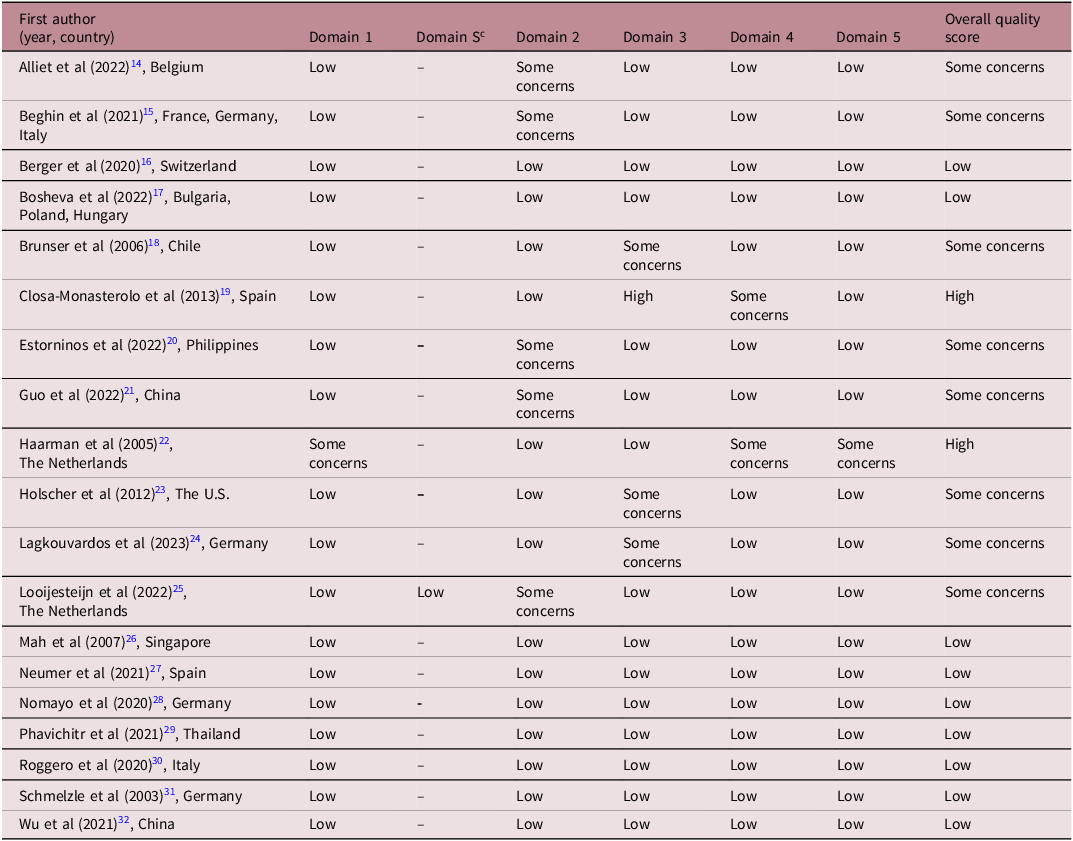
The quality and risk of bias in the included trials were assessed using the Cochrane RoB 2.0 tool Reference Sterne, Savović and Page60 , with findings presented in Table 1. One study raised “some concerns” about bias in the randomization process. Reference Haarman and Knol27 Five studies reported “some concerns” regarding deviations from the intended interventions. Reference Alliet, Vandenplas and Roggero19,Reference Béghin, Tims and Roelofs20,Reference Estorninos, Lawenko and Palestroque25,Reference Guo, Li and Zhao26,Reference Looijesteijn, Brouwer and Schoemaker30 Regarding missing outcome data, the study by Haarman et al. Reference Haarman and Knol27 identified a high risk of bias, while three other studies raised some concerns. Reference Brunser, Figueroa and Gotteland23,Reference Holscher, Faust and Czerkies28,Reference Lagkouvardos, Intze and Schaubeck29 Two studies expressed “some concerns” about outcome measurement bias, Reference Closa-Monasterolo, Gispert-Llaurado and Luque24,Reference Haarman and Knol27 and one study raised concerns about bias in the selection of reported results, Reference Haarman and Knol27 Overall, the risk of bias in the included studies ranged from “low risk” Reference Berger, Porta and Foata21,Reference Bosheva, Tokodi and Krasnow22,Reference Closa-Monasterolo, Gispert-Llaurado and Luque24,Reference Lagkouvardos, Intze and Schaubeck29,Reference Mah, Chin and Wong31–Reference Wu, Zhao and Liu37 to “some concerns,” Reference Alliet, Vandenplas and Roggero19,Reference Béghin, Tims and Roelofs20,Reference Brunser, Figueroa and Gotteland23,Reference Estorninos, Lawenko and Palestroque25,Reference Guo, Li and Zhao26,Reference Holscher, Faust and Czerkies28–Reference Looijesteijn, Brouwer and Schoemaker30 with two studies indicating a high risk of bias. Reference Closa-Monasterolo, Gispert-Llaurado and Luque24,Reference Haarman and Knol27
Cochrane risk of bias assessment: judgments on study quality and reliability across roB 2.0 Domains for each study included in this analysisa,b

a Low; Low risk of bias/ Some concerns; Some concerns about risk of bias (possible issues that may introduce bias, though not as serious as a high risk) / High; High risk of bias.
b Domain 1: Risk of bias arising from the randomization process, Domain S: Risk of bias arising from period and carryover effects, Domain 2: Risk of bias due to deviations from the intended interventions (effect of assignment, starting, and adherence to intervention), Domain 3: Missing outcome data, Domain 4: Risk of bias in measurement of the outcome, Domain 5: Risk of bias in selection of the reported result.
c This domain is applicable only to crossover randomized controlled trials.
Meta-analyses
Effect of formula supplemented with prebiotics on RA of bifidobacterium
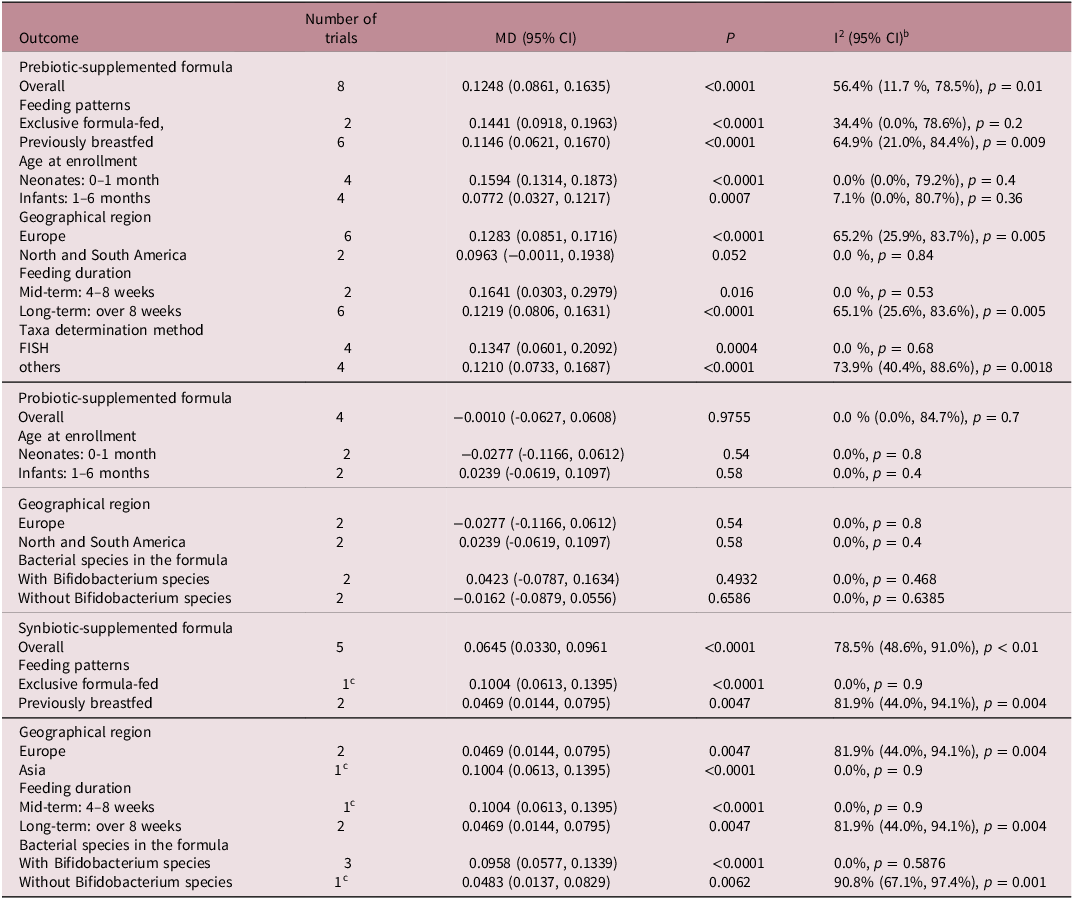
The impact of prebiotic-supplemented formula on the RA of Bifidobacterium compared to standard formula was assessed across eight RCTs Reference Béghin, Tims and Roelofs20–Reference Closa-Monasterolo, Gispert-Llaurado and Luque24,Reference Haarman and Knol27,Reference Neumer, Urraca and Alonso32 included in this analysis. Notably, the trials by Bosheva et al. Reference Bosheva, Tokodi and Krasnow22 and Neumer et al. Reference Neumer, Urraca and Alonso32 were incorporated twice in the meta-analysis. This was due to the presence of two intervention formulas with varying prebiotic concentrations in study conducted by Bosheva et al. Reference Bosheva, Tokodi and Krasnow22 and available data for Bifidobacterium RA at different timepoints in trial conducted by Neumer et al. Reference Neumer, Urraca and Alonso32 Overall, the meta-analysis, encompassing data from eight studies (totaling 1001 observations: 503 intervention and 498 control subjects), indicated a significant increase in Bifidobacterium RA with prebiotic-supplemented formula compared to control (MD = 0.1248; 95% CI: 0.0861, 0.1635, p < 0.0001) with moderate between-study heterogeneity (I2 = 56.4%; 95% CI: 11.7%, 78.5%, p = 0.01) (Fig. 2a).
Forest plot of the pooled meta-analysis of RCTs demonstrating the mean differences (MDs) corresponding with 95% CI of the effect of formula supplemented with prebiotics (a), probiotics (b), synbiotics (c), β-palmitic acid (d), and the combination of β-palmitic acid with prebiotics (e) on RA of Bifidobacterium compared to standard formula.

To explore heterogeneity sources, subgroup analyses were conducted based on feeding patterns (exclusive formula-fed, previously breastfed), feeding duration (mid-term: 4–8 weeks, long-term: over 8 weeks), age at enrollment (neonates: 0–1 month, infants: 1–6 months), geographical region (Europe, North and South America), and microbiota assessment method (FISH and others) (Table 2). Subgroup analysis by age at enrollment modified heterogeneity, showing a significant effect of prebiotic-supplemented formula on Bifidobacterium levels in both neonates (p < 0.0001) and infants (p = 0.0007). Furthermore, subgroup analysis based on microbiota assessment method resolved heterogeneity and revealed a significant effect in studies employing the FISH technique (P = 0.0004). Further subgroup analysis by feeding duration and geographic region showed a reduction in heterogeneity for studies with a mid-term duration and those conducted in North and South America. The effect was statistically significant for the first subgroup (p = 0.016), but not for the second (p = 0.0527). Other subgroup analyses did not reduce heterogeneity (Table 2).
The results of the subgroup analyses for the bifidogenic effects of various supplemented formulasa

CI, Confidence Interval; FISH, Fluorescence In Situ Hybridization; MD, Mean Difference.
a Subgroup analyses for the bifidogenic effect of formula supplemented with β-palmitic acid and formula supplemented with the combination of β-palmitic acid with prebiotics were not applicable.
b Test of heterogeneity: low heterogeneity (I2 = 0 to 40%); moderate heterogeneity (I2 = 30 to 60%); substantial heterogeneity (I2 = 50 to 90%); and considerable heterogeneity (I2 = 75 to 100%).
c This study was included in the meta-analysis twice due to having two distinct intervention groups, each with different levels of supplementation.
Effect of formula supplemented with probiotics on RA of bifidobacterium
The effect of probiotic-supplemented formula on the RA of Bifidobacterium compared to standard formula was evaluated across four RCTs (comprising 197 observations: 100 intervention and 97 control subjects) included in this meta-analysis. Reference Béghin, Tims and Roelofs20,Reference Brunser, Figueroa and Gotteland23,Reference Mah, Chin and Wong31,Reference Roggero, Liotto and Pozzi35 The results indicated that probiotic supplementation does not significantly influence Bifidobacterium RA compared to the control formula (MD = -0.0010; 95% CI: -0.0627, 0.0608, p = 0.9755), with no observed between-study heterogeneity (I2 = 0.0%; 95% CI: 0.0%, 84.7%, p = 0.7) (Fig. 2b).
Effect of formula supplemented with synbiotics on RA of bifidobacterium
The effect of synbiotic-supplemented formula on the Bifidobacterium RA compared to standard formula was evaluated across three RCTs included in this analysis. Reference Béghin, Tims and Roelofs20,Reference Lagkouvardos, Intze and Schaubeck29,Reference Phavichitr, Wang and Chomto34 Both the studies by Lagkouvardos et al. Reference Lagkouvardos, Intze and Schaubeck29 and Phavichitr et al. Reference Phavichitr, Wang and Chomto34 are included twice in the meta-analysis due to the available data for Bifidobacterium RA collected at different time points and the presence of two intervention formulas with different levels of supplementation.
In total, the meta-analysis comprises data from three studies (1118 observations: 553 intervention and 565 control subjects), suggesting that synbiotic-supplemented formula significantly increased the RA of Bifidobacterium compared to control formula (MD = 0.0645; 95% CI: 0.0330, 0.0961, p < 0.0001) with substantial between-study heterogeneity (I2 = 78.5%; 95% CI: 48.6%, 91.0%, p < 0.01) (Fig. 2c). To investigate sources of heterogeneity, subgroup analyses were performed. The results showed that heterogeneity was influenced by the presence of Bifidobacterium species in synbiotic formulas, with no heterogeneity and a significant increase in outcome for formulas containing Bifidobacterium species (p < 0.0001). The findings of these subgroup analyses are presented in Table 2.
Effect of formula supplemented with β-palmitic acid on RA of bifidobacterium
The effect of formula supplemented with β-palmitic acid on the RA of Bifidobacterium compared to standard formula was evaluated across three RCTs Reference Guo, Li and Zhao26,Reference Looijesteijn, Brouwer and Schoemaker30,Reference Wu, Zhao and Liu37 included in this analysis. The study by Wu et al. Reference Wu, Zhao and Liu37 appears twice in the meta-analysis due to the availability of RA data for Bifidobacterium at different time points. Overall, the meta-analysis incorporates data from these three studies (330 observations: 163 intervention and 167 control subjects), and indicates that β-palmitic acid supplementation significantly increased the RA of Bifidobacterium compared to the control formula (MD = 0.0648; 95% CI: 0.0283, 0.1012, p = 0.0005) with no observed between-study heterogeneity (I2 = 0.0%; 95% CI: 0.0%, 84.7%, p = 0.4) (Fig. 2d).
Effect of formula supplemented with the combination of β-palmitic acid with prebiotics on RA of bifidobacterium
The effect of formula supplemented with a combination of β-palmitic acid and prebiotics on the RA of Bifidobacterium, compared to a standard formula, was evaluated across two RCTs (112 observations; 57 intervention and 55 control subjects) Reference Nomayo, Schwiertz and Rossi33,Reference Schmelzle, Wirth and Skopnik36 and incorporated into this meta-analysis. The results suggest that formula supplemented with β-palmitic acid and prebiotics significantly increased the RA of Bifidobacterium compared to the control formula (MD = 0.0694; 95% CI: 0.0513, 0.0874, p < 0.0001) with no observed between-study heterogeneity (I2 = 0.0%, p = 0.97) (Fig. 2e).
Network meta-analysis (NMA)
A NMA (Fig. 3) was performed using data from nineteen studie. Reference Alliet, Vandenplas and Roggero19–Reference Wu, Zhao and Liu37 In this network, each intervention is represented by a node, with direct comparisons between interventions connected by a line. The thickness of each line corresponds to the number of trials evaluating that specific comparison. Both direct and indirect comparisons were used to evaluate the interventions.
Network plot comparing the effects of different formula on Bifidobacterium RA where breastfeeding was the reference group. This plot includes nineteen studies with seven interventions. Edges represent direct comparisons between interventions, with edge width corresponding to the number of trials, with edge width corresponding to the number of trials per comparison. Each node represents a specific type of intervention. Abbreviations: hm, human milk (breastfeeding); palmf, formula supplemented with β-palmitic acid; palmprebf, formula supplemented with the combination of β-palmitic acid with prebiotics; prebf, formula supplemented with prebiotics; probf, formula supplemented with probiotics; sf, standard formula; synf, formula supplemented with synbiotics.

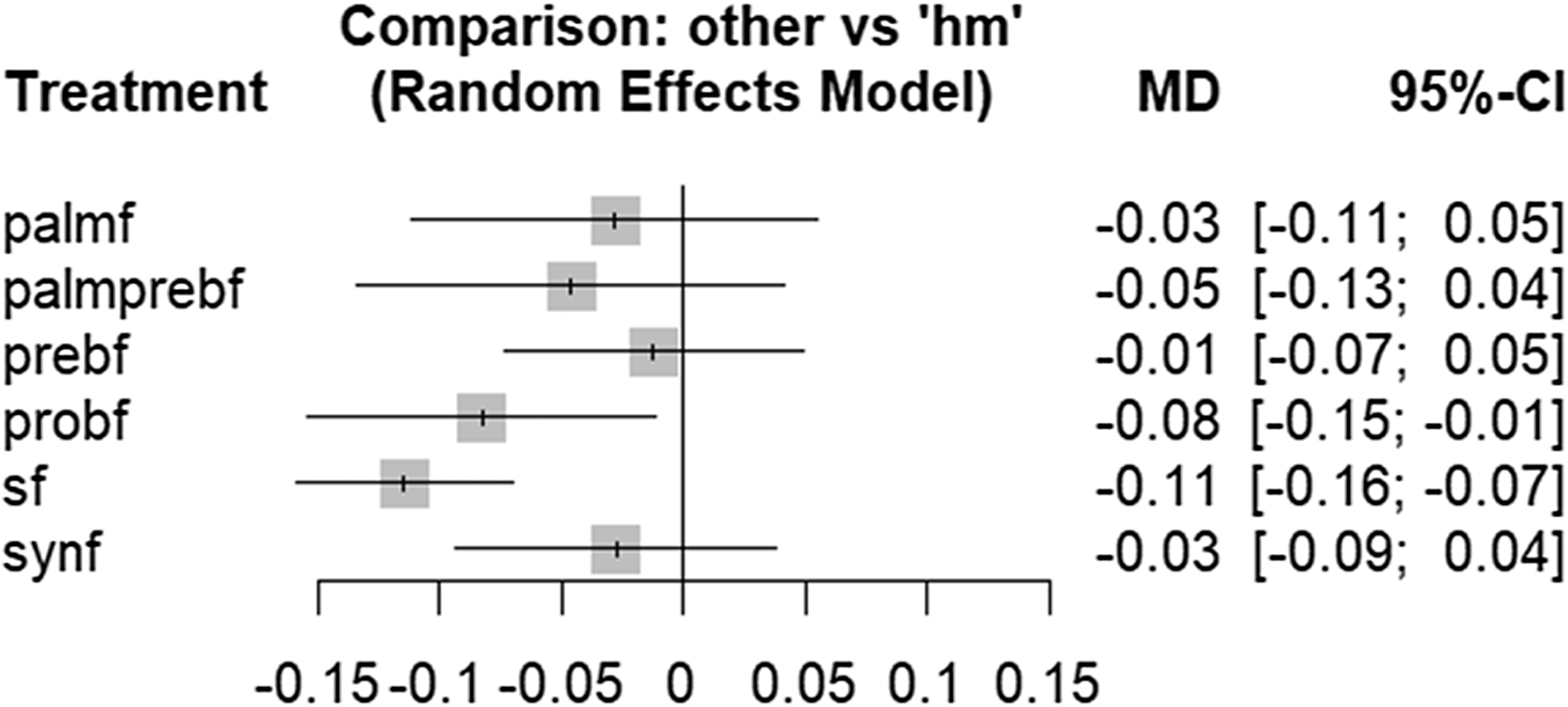
In the network where breastfed infants served as the reference group, the standard formula and formula supplemented with probiotics (Fig. 4) showed a significant decreasing effect on the RA of Bifidobacterium compared to the breastfed group (MD = −0.1146; 95% CI: −0.1590, -0.0701, p < 0.0001) for standard formula and (MD = −0.0827; 95% CI: −0.1542, −0.0112, p = 0.0234) for formula supplemented with probiotics. However, for other formula-fed groups, the effects did not reach statistical significance: formula supplemented with prebiotics (MD = −0.0122; 95% CI: −0.0736, 0.0493, p = 0.6984), synbiotics (MD = −0.0276; 95% CI: −0.0931, 0.0379, p = 0.4089), β-palmitic acid (MD = −0.0281; 95% CI-0.1111, 0.0549, p = 0.5067), and the combination of β-palmitic acid with prebiotics (MD = −0.0461; 95% CI: −0.1338, 0.0415, p = 0.3024) (Fig. 4).
Forest plot for the effect of various types of formula on Bifidobacterium RA compared to breastfeeding in NMA. Abbreviations: hm, human milk (breastfeeding); palmf, formula supplemented with β-palmitic acid; palmprebf, formula supplemented with the combination of β-palmitic acid with prebiotics; prebf, formula supplemented with prebiotics; probf, formula supplemented with probiotics; sf, standard formula; synf, formula supplemented with synbiotics.

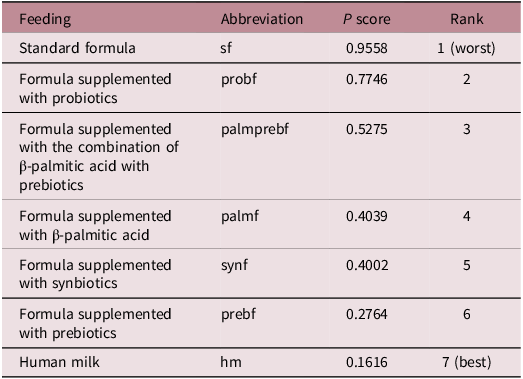
Direct comparisons between formulas and breastfeeding were made across 16 studies for standard formula, 5 studies for probiotic 4 studies for synbiotic formulas, 7 studies for prebiotic formula, 3 studies for formula with β-palmitic acid, and 3 studies for formula containing β-palmitic acid with prebiotics. The relative effects are summarized in the league table (Supplementary Table S3). Based on the p-scores, the standard formula was ranked highest (p-score = 0.9558), indicating the lowest level of Bifidobacterium RA compared to breastfeeding, while the lowest-ranked was formula supplemented with prebiotics (p-score = 0.2764), indicating the highest RA of Bifidobacterium and the closest resemblance to the levels observed with breastfeeding (Table 3). Furthermore, this analysis revealed substantial heterogeneity in the comparisons (I2 = 89%). The result of meta-regression evaluating the effects of modifier on study outcomes showed that, among all modifiers, risk of bias significantly impacted the study outcomes (p = 0.0020) (Supplementary Table S4). Therefore, a sensitivity analysis excluding two high-risk studies Reference Closa-Monasterolo, Gispert-Llaurado and Luque24,Reference Haarman and Knol27 was conducted, which reduced heterogeneity to a low level (I2 = 29%). The results of node splitting evaluated local inconsistency showed inconsistency for two comparisons out of fourteen comparisons; breastmilk vs prebiotic supplemented formula (p = 0.0013) and breastmilk vs synbiotic supplemented formula (p = 0.0110) indicated significant local inconsistency. On the other hand, other comparisons showed no significant differences, with p-values greater than 0.05 (Supplementary Table S5).
Ranking of formula interventions based on p-scores, reflecting their relative effect on Bifidobacterium RA compared to breastfeedinga

a Since breastfeeding (hm) served as the reference with the highest level of Bifidobacterium RA in this evaluation, higher p-scores in the table indicate a lower level of Bifidobacterium RA, whereas lower p-scores reflect a higher level and more closely resembling the levels observed with breastfeeding.
Sensitivity and subgroup analysis
Sensitivity analyses using the leave-one-out method were performed to assess whether any single study had an undue influence on the effect sizes in all analysis. In the meta-analysis evaluating the bifidogenic effect of formula supplemented with prebiotics, the leave-one-out analysis showed that after excluding each study, the overall result remained statistically significant, although heterogeneity was not fully eliminated (Supplementary Figure S1). In contrast, for the synbiotic-supplemented formula, omitting just one evaluation from the study by Lagkouvardos et al. Reference Lagkouvardos, Intze and Schaubeck29 maintained the significance (p < 0.0001), while heterogeneity was entirely resolved, with the I2 reducing from 78.5% to 0.0% (Supplementary Figure S2).
In the NMA, omitting study by Closa-Monasterolo et al. Reference Haarman and Knol27 led to a reduction in heterogeneity (I2 = 45%). However, applying the leave-one-out method to exclude other studies did not substantially impact heterogeneity. On the other hand, Conversely, sensitivity analysis that removed two studies with high risk of bias Reference Closa-Monasterolo, Gispert-Llaurado and Luque24,Reference Haarman and Knol27 resulted in more consistent findings (without significantly altering the pooled effect estimate), and heterogeneity (I 2) decreased from 89.5% (high) to 29% (low). Subgroup analyses were conducted for the meta-analyses with the results of the subgroup analyses are presented in Table 2.
Publication bias
The comparison-adjusted funnel plot (Fig. 5) for the NMA displayed symmetrical distributions. However, a few studies were located outside the expected range of the funnel.
Comparison-adjusted funnel plot for the NMA. Abbreviations: hm, human milk (breastfeeding); palmf, formula supplemented with β-palmitic acid; palmprebf, formula supplemented with the combination of β-palmitic acid with prebiotics; prebf, formula supplemented with prebiotics; probf, formula supplemented with probiotics; sf, standard formula; synf, formula supplemented with synbiotics.

Evaluation of evidence quality
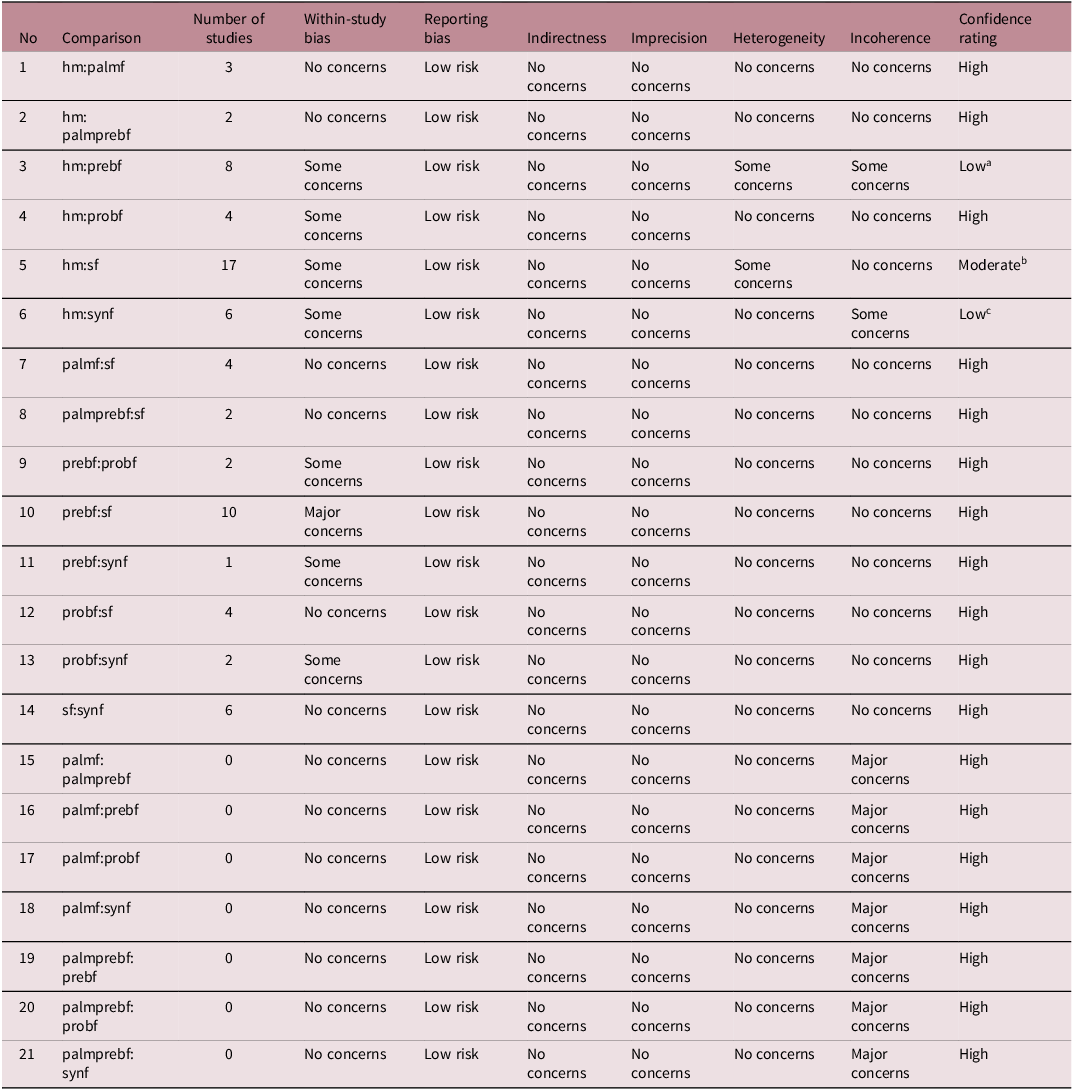
The confidence ratings for 21 different comparisons of various interventions, generated using the CINeMA framework are shown in Table 4. Most comparisons were rated as “High” confidence, indicating that the evidence supporting these comparisons was robust. However, a few comparisons were downgraded due to specific concerns. The breastmilk vs prebiotic supplemented formula comparison had a low confidence rating due to issues with the reliability of the effect estimate, variability in treatment effects, and inconsistency between direct and indirect evidence. The breastmilk vs standard formula and breastmilk vs synbiotic supplemented formula comparisons were rated “Moderate” or “Low” due to concerns with the reliability of the effect estimates and variability in treatment effects.
Confidence rating of different comparisons of interventions generated through CINeMA framework Reference Lin65

hm, human milk (breastfeeding); palmf, formula supplemented with β-palmitic acid; palmprebf, formula supplemented with the combination of β-palmitic acid with prebiotics; prebf, formula supplemented with prebiotics; probf, formula supplemented with probiotics; sf, standard formula; synf, formula supplemented with synbiotics.
a Reasons for downgrading: Concerns with the reliability of the effect estimate; variability in treatment effects; inconsistency between direct and indirect evidence.
b Reasons for downgrading: Concerns with the reliability of the effect estimate and variability in treatment effects.
c Reasons for downgrading: Concerns with the reliability of the effect estimate and variability in treatment effects.
Discussion
Current study encompasses RCTs with available data conducted between 2003 and 2023, involving a total of 3,356 infants or neonates comprehensively evaluated the bifidogenic effects of infant formulas supplemented with prebiotics, probiotics, synbiotics, β-palmitic acid, and the combination of β-palmitic acid with prebiotics compared to standard formula, using meta-analysis. Additionally, the study assessed these supplemented formulas against breastfeeding, considered the “gold standard” for promoting Bifidobacterium levels, in a NMA to explore which formula types most closely mimic the bifidogenic impact of breastfeeding on infant gut microbiota.
The meta-analysis findings indicated that all formulas except those supplemented with probiotics significantly promoted RA of Bifidobacterium compared to standard formulas. However, the NMA revealed that only standard formulas and those supplemented solely with probiotics were significantly less effective in maintaining Bifidobacterium levels compared to breastfeeding. Formulas containing prebiotics, synbiotics, β-palmitic acid, or a combination of β-palmitic acid and prebiotics demonstrated bifidogenic effects more closely resembling those seen in breastfed infants, though these differences were not statistically significant.
Further ranking of formulas using p-scores showed that prebiotic-supplemented formulas most closely approximated breastfeeding, followed by synbiotic, β-palmitic acid, and the combination of β-palmitic acid with prebiotics. In contrast, standard formula, without any supplementation, showed the most divergent effect from breastfeeding. These results illustrate a spectrum of bifidogenic effects across formula types, with varying degrees of similarity to breastfeeding. Among all supplemented formulas, those containing prebiotics demonstrated the closest resemblance to breastfeeding in terms of bifidogenic effect on the infant gut microbiota. Conversely, standard formulas, which ranked highest on the p-score scale, exhibited the least similarity to breastfeeding in this regard.
The findings of this study align with existing literature on the bifidogenic effects of supplemented formulas. For instance, an in vitro study using the Simulator of the Human Intestinal Microbial Ecosystem reported that formulas with human milk oligosaccharides increased Bifidobacterium levels in fecal samples from 6-month-old infants. Reference Tonon, Salgaço and Mesa16 Similarly, an animal study demonstrated that supplementation with 1,3-olein-2-palmitin enriched Bifidobacterium abundance. Reference Chen, Xie and Jiang17 Clinical research also found that breastfed infants and those fed with partially hydrolyzed formulas containing prebiotic oligosaccharides exhibited identical bifidobacteria levels in their feces. Reference Rinne, Gueimonde, Kalliomäki, Hoppu, Salminen and Isolauri74 Another study showed that formulas supplemented with a prebiotic blend had strong bifidogenic effects, supporting an accelerated shift toward a Bifidobacterium-dominated microbiome within 12 weeks. Reference Borewicz, Suarez-Diez and Hechler18 Synbiotic-supplemented formulas have been linked to substantial increases in endogenous Bifidobacterium. Reference Simeoni, Berger and Junick50 Similarly, formulas enriched with high levels of β-palmitate have been associated with higher Bifidobacterium counts compared to formulas with lower β-palmitate content. Reference Yaron, Shachar and Abramas13
However, there are inconsistencies, particularly concerning probiotic-only formulas. While some studies report higher Bifidobacterium levels in infants given probiotic-enriched formulas, Reference Mah, Chin and Wong31,Reference Roggero, Liotto and Pozzi35,Reference Chi, Xue and Liu75 a clinical trial by Brunser et al. found no significant effect of probiotic supplementation on Bifidobacterium levels. Reference Brunser, Figueroa and Gotteland23
Findings of current study align with previous systematic reviews demonstrating that Bifidobacterium levels increase with prebiotic Reference Srinivasjois, Rao and Patole55,Reference Ferro, Crowley and Bittinger56 and synbiotic supplementation, Reference Ferro, Crowley and Bittinger56 while probiotic-only formulas generally do not produce a similar effect. Reference Ferro, Crowley and Bittinger56 Moreover, a systematic review and NMA by Indrio et al. assessed the health effects of infant formula supplemented with probiotics or synbiotics in infants and toddlers, reporting no significant impact on Bifidobacterium levels compared to control formulas. Reference Indrio, Gutierrez Castrellon and Vandenplas57 In contrast, the current study provides a more comprehensive and precise analysis, offering additional insights by evaluating probiotics and synbiotics as distinct supplementation categories rather than grouping them together as in previous analyses. Reference Indrio, Gutierrez Castrellon and Vandenplas57 This differentiation highlights the unique effects of each supplement type and reveals that synbiotic supplementation may more effectively promote Bifidobacterium growth than probiotics alone. Additionally, this study conducted two distinct comparisons: a meta-analysis comparing supplemented formulas to standard formula and a NMA comparing supplemented formulas to breastfeeding. This dual comparison approach offers a more comprehensive perspective, enabling a better understanding of the bifidogenic effects of formula supplementation in relation to both standard formula and breastfeeding.
To further interpret these findings, exploring the mechanisms behind the bifidogenic effects observed in supplemented formulas is essential. Evidence suggests that prebiotics like FOS and GOS act as selective substrates that support the growth of Bifidobacterium in the infant gut. Reference Gibson and Roberfroid10,Reference Mao, Gu and Li76,Reference Louis, Flint and Michel77 Prebiotics are nondigestible carbohydrates that resist gastric acidity and enzymatic breakdown, reaching the colon where they serve as nutrients for beneficial bacteria like Bifidobacterium. Reference Gibson and Roberfroid10,Reference Davani-Davari, Negahdaripour and Karimzadeh78 This selective fermentation fosters an environment favoring Bifidobacterium proliferation and raises levels of short-chain fatty acids (SCFAs), such as acetate and lactate, which lower intestinal pH and discourage pathogenic bacteria, thus reducing competition and promoting further bifidobacterial growth. Reference Gibson and Roberfroid10,Reference Ashaolu, Ashaolu and Adeyeye79,Reference Stecher and Hardt80
In contrast, probiotic-only formulas may not significantly raise Bifidobacterium levels due to potential competition with native gut microbiota, strain viability issues, or insufficient substrate presence. Reference Stecher and Hardt80,Reference Wendel81 Thus, while probiotics provide potential benefits, the lack of targeted substrates in probiotic-only formulas might limit their ability to establish and sustain Bifidobacterium populations as effectively as formulas containing prebiotics.
The synergistic effects of synbiotics further enhance the benefits of probiotic supplementation. By providing both probiotics and their ideal prebiotic substrates, synbiotics promote faster colonization and stabilization of beneficial bacteria. This dual-action approach likely contributes to the more breastfeeding-like levels of Bifidobacterium observed in synbiotic formulas. Additionally, synbiotics help overcome survival challenges faced by probiotics in the gut, Reference Mohanty, Misra, Mohapatra and Sahu82 while their combined action in the small and large intestines enhances the overall gut environment. Reference Mohanty, Misra, Mohapatra and Sahu82,Reference Hamasalim83 They also reduce harmful metabolites, inactivate carcinogens, and increase SCFAs, promoting beneficial gut microbes like Bifidobacterium. Reference Gourbeyre, Denery and Bodinier84,Reference Manigandan, Mangaiyarkarasi and Hemalatha85
β-Palmitic acid (sn-2 palmitate) is another supplement showing bifidogenic potential. Its unique structure mimics the palmitic acid in human milk, which is predominantly esterified at the sn-2 position on triglycerides. Reference Giuffrida, Marmet and Tavazzi14 This structure has been associated with easier digestion and improved fat absorption, leading to reduced stool pH and greater levels of beneficial gut bacteria, including Bifidobacterium. Reference Bar-Yoseph, Lifshitz, Cohen, Malard and Xu86–Reference Tomarelli, Meyer, Weaber and Bernhart87,Reference Shoji, Arai and Kakiuchi88 By providing a fat profile more akin to that of human milk, β-palmitic acid supplementation may foster a gut environment similar to that observed in breastfed infants, promoting bifidobacterium.
This systematic review and NMA has several strengths. By separately evaluating five types of supplemented formulas compared both to standard formulas and breastfeeding, the study offers a comprehensive understanding of each formula’s bifidogenic effects. This dual-level comparison enhances the understanding of how different formula compositions influence infant gut microbiota profiles. Additionally, high confidence levels were achieved for most of comparisons, supported by CINeMA methodology, and thorough subgroup and sensitivity analyses were performed to investigate potential confounding factors across trials.
However, the study has limitations. Breastfeeding arms were not randomized in the included studies. Standard formula compositions also varied slightly between trials, which may have influenced the results. Additionally, subgroup analysis based on delivery mode could not be performed, as most studies included infants from both vaginal and cesarean deliveries, despite the well-documented influence of delivery mode on the infant gut microbiota. Furthermore, due to a limited number of RCTs in some comparisons, certain analyses were based on smaller participant numbers, reducing the statistical power of these comparisons.
Another notable challenge is the inherent diversity within the categories of “probiotics” and “prebiotics,” as well as the variability in microbiota assessment methods. Probiotics include a broad spectrum of bacterial strains, each potentially exerting distinct effects on the gut microbiota, while prebiotics consist of various carbohydrate molecules with different structures and mechanisms of action. The differences in the specific strains, species, or types of supplemented molecules, as well as variations in microbiota analysis methods, particularly in cases where subgroup analysis was not feasible, may contribute to heterogeneity in the results.
The findings from this study provided important insights into the bifidogenic effects of different infant formula supplementations. By synthesizing data from RCTs, this study offers a comprehensive understanding of how various formula compositions influence the development of Bifidobacterium in the infant gut microbiome. These results contribute to the broader understanding of early-life microbial development, particularly in infants who are not breastfed. Moreover, the evidence provided here may support future research and policy discussions aimed at addressing microbiome-related health outcomes, such as gastrointestinal conditions and immune system function.
Conclusion
Current analysis demonstrated that formulas supplemented with prebiotics, synbiotics, β-palmitic acid, or a combination of β-palmitic acid and prebiotics significantly increased Bifidobacterium levels compared to standard formulas. However, supplementation with probiotics may not show a significant bifidogenic effect. Compared to breastfeeding, while supplementation with prebiotics, synbiotics, β-palmitic acid, and the combination of β-palmitic acid and prebiotics showed a good Bifidobacterium levels, prebiotic supplementation most closely resembled breastfeeding’s impact on Bifidobacterium levels. This suggests that formulas supplemented with prebiotics may have a bifidogenic effect more similar to that observed in breastfed infants. In contrast, standard formula and probiotic-supplemented formulas showed significantly lower effects in this regard. Further large-scale, more standardized, and stratified researches in this area are needed to confirm these findings and establish the best strategies for supporting gut health in formula-fed infants.
Supplementary material
The supplementary material for this article can be found at https://doi.org/10.1017/S2040174425100196.
Data availability
Data described in the manuscript, code book, and analytic code will be made available upon request pending. For any request such as code access to analytic codes or specific inquiries regarding the data, requests can be directed to F.M., who is the guarantor of this study, with full access to all data.
Acknowledgements
The authors declare that there are no acknowledgments to report.
Author contribution
R.G., L.B., and F.M.: conceptualization. F.M. and M.R.: methodology, software, visualization, validation, investigation. F.M. and M.M.: formal analysis and data collection. F.M.: project administration, data curation, writing original draft, and editing. R.G. and L.B.: supervision and review. R.G.: funding acquisition.
Competing interests
The authors declare that they have no conflict of interests.
Funding support
This study was funded by doctoral grant of “AGRIBIOSERV_PNC_MISURA B4,” University of Camerino.