Introduction
Postoperative delirium (POD) is a clinical syndrome caused by acute brain dysfunction or encephalopathy, characterized by changes in attention and cognition, such as hypoactivity, lethargy, and mental disorders.Reference Palanca, Wildes, Ju, Ching and Avidan 1 Although a series of interventions have been adopted clinically to reduce the occurrence of POD, recent studies have shown that the incidence of POD in elderly patients was still between 5.1–43.8%.Reference Li, Li and Yuan 2 –Reference Xiao, Liu, Zhou, Yang and Wang 6 Compared with traditional thoracotomy, thoracoscopic lung surgery can greatly reduce postoperative pain, shorten hospital stay, and improve patients’ quality of life, but the incidence of POD is still high, and its high incidence and disability rate bring serious adverse effects on families and society.Reference Chen, Wu and Tiong 7 –Reference Lu, Yin and Jin 9 Therefore, it is an urgent problem to reduce the POD incidence and improve the quality of postoperative recovery.
Esketamine (Esk), as the right isomer of ketamine, has a strong analgesic effect mainly through non-competitive blocking of the N-methyl-D-aspartic acid (NMDA) receptor. At present, it has been widely used in intraoperative and postoperative analgesia.Reference Chen, Meng and Gao 10 , Reference Feng, Xu and Chen 11 In recent years, esketamine has been used more and more prophylactically in clinical studies of anti-depression and anti-suicide.Reference Ling, Zhu and Yan 12 , Reference Bahji, Zarate and Vazquez 13 Basic studies have confirmed that esketamine mainly reduces the incidence of perioperative depression, cognitive dysfunction, delirium, and vital organ injury through anti-inflammatory, antioxidant, anti-apoptosis, autophagy, and other mechanisms.Reference Wang, Weng and Zhou 14 , Reference Yuan, Chen and Xie 15 In addition, a clinical study showed that esketamine administration enhanced the quality of recovery by alleviating postoperative pain.Reference Cheng, Wang, Diao and Jiao 16 , Reference Jiang, Wang and Liu 17 When POD occurs in elderly patients after surgery, the cellular immune function often changes significantly. However, it has not been reported whether esketamine improves cellular immune function while reducing POD and improving the postoperative quality of recovery (QoR) of patients.
Dexmedetomidine (Dex), a highly selective adrenergic α2 receptor agonist, offers sedative, analgesic, anti-inflammatory, organ protective, and cognitive enhancing effects, making it widely utilized in perioperative and ICU settings.Reference Liu, Li, Kang and Wang 18 , Reference Wiegand, Behal, Robbins, Bissell, Pandya and Mefford 19 While esketamine presents significant clinical advantages, it may also induce mental symptoms such as headache, dizziness, hallucinations, nightmares, and irritability. The expert consensus on preventing and treating postoperative delirium in elderly Chinese patients explicitly states that esketamine alone is not recommended for reducing the risk of POD in elderly patients, however, the combined use of dexmedetomidine may be beneficial. 20 Therefore, in clinical practice, dexmedetomidine is frequently employed as an adjunctive medication during the perioperative period in conjunction with esketamine. However, the effect of esketamine combined with dexmedetomidine on the postoperative POD and QoR in patients undergoing thoracoscopic radical lung cancer surgery remains unknown.
This study aims to explore the effects of esketamine combined with dexmedetomidine on POD, QoR, and cellular immunity in elderly patients undergoing thoracoscopic radical lung cancer surgery. It is expected to provide a new theoretical basis and research target for reducing POD in elderly patients.
Materials and methods
Ethics and study design
This prospective, randomized, double-blind, controlled clinical study has been approved by the Clinical Medical Research Ethics Committee of Bengbu Medical University (Approval No. 2023211) and registered in the Chinese Clinical Trial Center (No. ChiCTR2100051804). This study was conducted in strict accordance with the ethical requirements set out in the Declaration of Helsinki, the International Ethical Guidelines for Biomedical Research Involving Humans, and the Measures for the Ethical Review of Biomedical Research Involving Humans formulated by the Ministry of Health of China. Consent was obtained from the patients and their families the day before surgery, and informed consent for anesthesia and the program was signed.
This study enrolled 176 elderly patients undergoing thoracoscopic radical lung cancer surgery from August 2023 to May 2024. Inclusion criteria: a) Age 65–80 years old, BMI 18–30 kg/m2, American Society of Anesthesiologists (ASA) grade II or III; b) The patient was diagnosed with lung cancer based on pathological examination or was strongly suspected of having lung cancer after thorough analysis of imaging studies, tumor-related biomarkers, and clinical symptoms; c) Patients can tolerate thoracoscopic radical lung cancer surgery under general anesthesia after evaluation.
Exclusion criteria: a) Combined with other malignant tumors; b) Prior to the operation, there were mental abnormalities, psychological disorders, neurocognitive disorders, central nervous system diseases, or a history of stroke; c) Accompanied by immune dysfunction; d) Received preoperative chemoradiotherapy, immunization, or targeted therapy; e) Allergic to esketamine or contraindicated in esketamine use; f) There is a vertical spinal plane block contraindicated; g) The presence of heart, liver, and kidney dysfunction or other serious complications; h) Only thoracoscopic cuneiform lobectomy, conversion to thoracotomy, or urgent re-operation is required after surgery; i) Intraoperative hemorrhage or allogeneic blood transfusion; j) Recurrent or metastatic lung cancer; k) Although lung cancer was highly suspected before surgery, the pathological results were benign; l) Refusing to sign informed consent.
Randomization and blinding
A total of 172 patients were randomly divided into the Esk + Dex group and the Dex group by an online randomization tool (Sealed Envelope Ltd.2022.), with 86 cases in each group. The randomization utilized a 1:1 ratio with block sizes of 2 and 4, generating 172 unique alphanumeric codes. The randomly generated codes were placed into opaque envelopes and locked by intraoperative data collectors. They were responsible for preparing and distributing either esketamine solution or normal saline based on the randomized results. The intraoperative portion of the case report form was completed by these collectors. Esketamine solution or normal saline were prepared with syringes to 20 mL (for induction) and 50 mL (for maintenance), respectively, with only randomly generated codes labeled on the syringes. Post-operative visitors deliberately ignored trial grouping and interventions. At the end of all trials, the group assignment was not known until the codes on the envelopes matched those on the syringes. In order to avoid bias caused by subjective factors of subjects and investigators, subjects, anesthesiologists, surgeons, and nursing staff were unaware of the grouping status and the contents of syringes. Statistical analysis of test data was performed independently by designated statisticians.
Study interventions
Patients in both groups received a dexmedetomidine infusion (0.5 μg/kg loading dose was pumped starting) 15 minutes before anesthesia induction, and the infusion was completed 10 minutes later. The infusion was continued at a pump rate of 0.4 μg/kg/h until 30 minutes before the end of surgery). Esk + Dex group: 0.25 mg/kg esketamine was intravenously injected during anesthesia induction, followed by continuous infusion at a pumping rate of 0.125 mg/kg/h until 30 minutes before the end of surgery. Dex group: the same volume of normal saline was infused in the same way.
Anesthesia protocol
Anesthesia induction was performed using midazolam 0.05–0.1 mg/kg, etomidate 0.2–0.3 mg/kg, sufentanil 0.3–0.5 μg/kg, and rocuronium 1–1.5 mg/kg. After induction of anesthesia, the bronchial catheter was intubated under the guidance of a fiberbronchoscope. Then, the erector spinae plane block (ESPB) was performed by anesthesiologists under the guidance of ultrasound using 15-20 ml 0.25%–0.5% ropivacaine. Anesthesia maintenance was performed using continuous intravenous infusions of propofol (2.5–5 mg/kg/h), remifentanil (2–5 μg/kg/h), rocuronium (1–1.5 mg/kg/h) and dexmedetomidine. Sufentanil was injected intravenously (1–1.5 μg/kg/ time). BIS value was maintained at 40–60, mean arterial pressure (MAP) at 65–100 mmHg (no more than 20% of the baseline value), and heart rate at 60–80 beats /min during operation. After surgery, all patients were transported to PACU for recovery. After the patient was awake, a self-controlled electronic analgesia pump was connected intravenously to relieve pain. Analgesic pump formulation: 0.5–1 μg/kg sufentanil +0.3–0.5 mg/kg dezocine +0.1–0.2 mg/kg tropisetron, diluted with normal saline to 100 mL; Operation parameters: loading dose 3 mL, continuous infusion rate 2 ml/h, single dose 3 mL, locking time 15 min.
Data collection
Baseline data
Age, sex, height, weight, smoking status, ASA grade, comorbidities (hypertension, diabetes, coronary heart disease, cerebral infarction) and education level were recorded. The preoperative respiratory (PaO2, PaCO2 and SpO2) and circulatory (MAP, HR and Hb) function indexes were monitored. The Mini-mental State Examination (MMSE) was used to evaluate the cognitive function of patients 1 day before surgery; the QoR-15 was used to evaluate the basic score of patients 1 day before surgery.
Intraoperative parameters
The MAP, HR, and SPI of the two groups were monitored at the time of tracheal intubation, skin incision, 30 min, 60 min, and the end of the operation. The consumption of propofol, sufentanil, remifentanil, esketamine, and dexmedetomidine during the operation and the concentration of end-expiratory sevoflurane at the time of incision, 30 min, and 60 min of operation were recorded. Intraoperative fluid infusion (crystal and colloid), blood loss, urine volume, and the number of norepinephrine administrations were recorded. The occurrence of hypoxemia (PaO2 < 60 mmHg or SpO2 < 90% for ≥1 min), hypotension, hypertension, tachycardia, and bradycardia were recorded. Hypotension/hypertension was defined as a decrease/increase in systolic blood pressure exceeding 30% of the baseline value for ≥1 min; Tachycardia/bradycardia refers to a heart rate of more than 100/ less than 50 beats /min for ≥1 min.
Postoperative parameters
Incidence of POD within 7 days after surgery, QoR-15 score within 3 days after surgery, adverse reactions and safety results (nausea/vomiting, rest/cough pain, hyperalgesia, pruritus, headache/dizziness, hallucination/nightmare, agitation, delayed recovery, etc.), patient satisfaction, postoperative complications, pathological type, operation time, postoperative tracheal catheter removal time, PACU stay time, and postoperative hospital stay of the two groups were recorded.
The 3D-CAM scale was used to evaluate the occurrence and severity of POD,Reference Mu, Ding and Zhou 21 and the incidence of POD was calculated by the number of POD cases. POD assessments were completed by the blind evaluator at the bedside during the hospital period, and the remaining days of hospitalization less than 7 days after surgery were mainly through telephone follow-up. QoR scores were assessed once in the morning and afternoon every day, and the average value was taken. Delayed recovery refers to the inability to open eyes and shake hands for more than 30 minutes after surgery and no obvious response to pain stimuli. Pain assessment was performed by NRS score: when NRS >5, flurbiprofen axetil (50 mg/time) was injected intravenously as a rescue analgesic measure.
Detection of inflammatory response, brain function and cellular immune function
Peripheral blood was collected before anesthesia induction (T0), at the end of surgery (T1), 12 h after surgery (T2), 24 h after surgery (T3), 48 h after surgery (T4), and 72 h after surgery (T5). The serum levels of S100β protein, NSE, IL-6, and IL-10 were determined by enzyme-linked immunosorbent assay (ELISA, Nanjing Jiancheng, China). The CD3+, CD4+, and CD8+ were determined by flow cytometry (CytoFLEX LX flow cytometry, Beckman Coulter, USA), and the CD4+/CD8+ ratio was calculated.
Outcomes
Primary outcomes: the incidence of POD within 7 days after surgery and QoR within 3 days after surgery. Secondary outcomes: the consumption of propofol, sufentanil, and remifentanil during operation, end-expiratory concentration of sevoflurane, postoperative nausea/vomiting, hyperalgesia, headache/dizziness, hallucinations/nightmares, and other adverse reactions; postoperative extubation time, PACU stay time, and postoperative hospitalization time.
Sample size
The sample size was estimated using the PASS 15.0 version of statistical software. A prospective study showed that the incidence of POD in elderly patients was 43.8%.Reference van Norden, Spies and Borchers 5 We hypothesized that esketamine would reduce the incidence of POD from 43.8% to 21.9% (that is a relative reduction of 50%). The parameters were set as follows: α =0.05, 1-β = 0.80, control rate value = 0.438, test rate value = 0.219, test:Nc sample size = 1:1. The estimated sample size was N = 160 (n = 80 each group). Anticipating a potential 10% loss to follow-up due to surgical or patient-related factors, we aimed to enroll a total of 176 subjects, with 88 in each group.
Statistical analysis
SPSS 25.0 statistical software was used to analyze and process the data. Normal distribution data were represented as mean (SD), and an independent sample t test was used for comparison between groups. The non-normal distribution data were represented as median (IQR), and the Mann–Whitney U rank sum test was used for comparison between groups. Categorical variables were expressed as n (%), and the χ2 test or Fisher exact test was used for comparison between groups. The intervention effects of Esk + Dex vs Dex were assessed using the odds ratio (OR) or median difference (MD) with its 95% confidence interval (CI). P < 0.05 was considered a significant difference.
Results
Patient recruitment
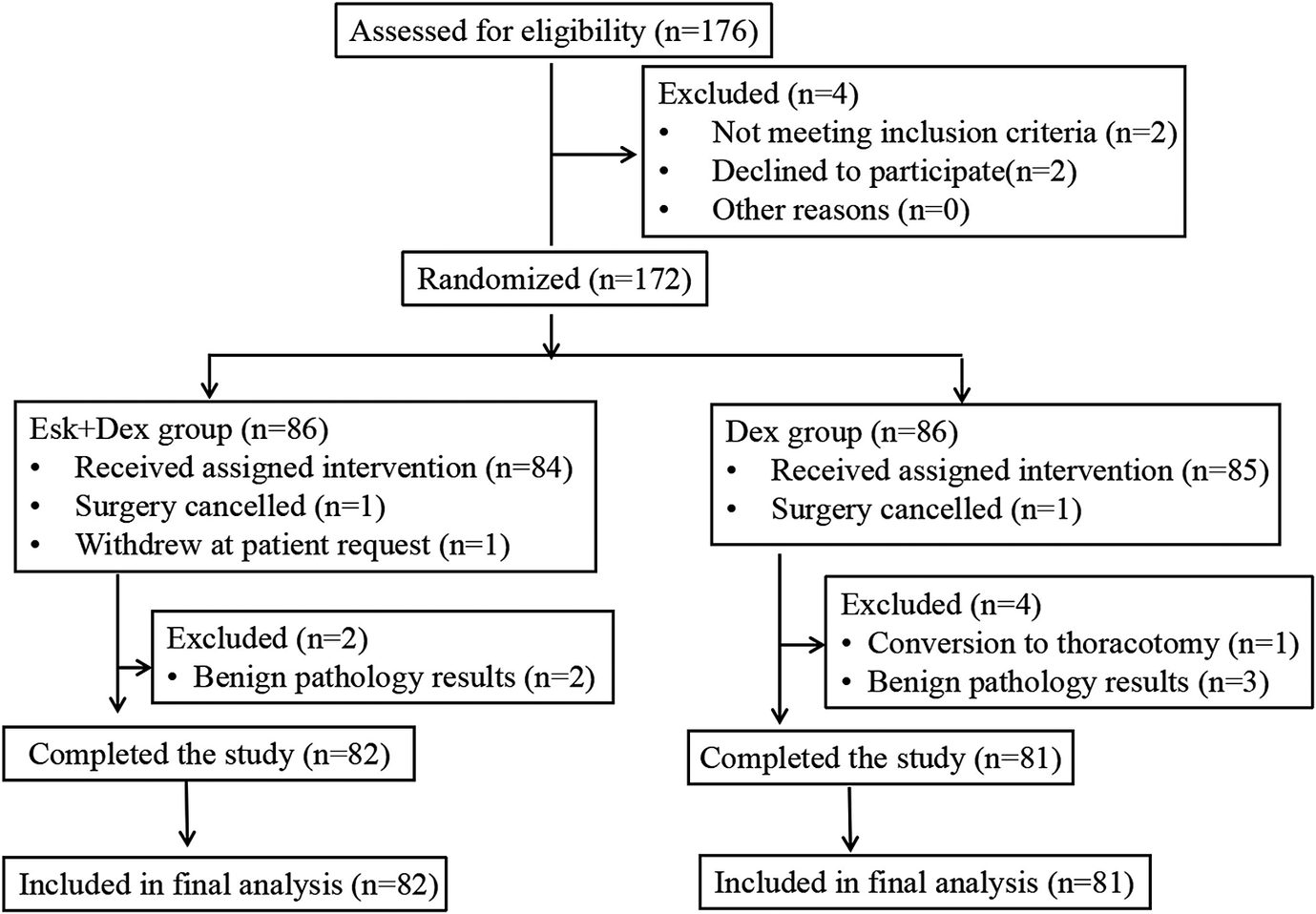
A total of 176 elderly patients scheduled for elective thoracoscopic radical lung cancer surgery were screened for eligibility. Four patients were excluded due to non-compliance with inclusion criteria (n = 2) and refusal to participate (n = 2). Thus, 172 patients met the inclusion criteria. The patients were randomly divided into the Esk + Dex group (n = 86) and the Dex group (n = 86). Of the 172 patients, 9 cases were excluded due to cancellation of surgery (n = 2), withdrawal at the patient’s request (n = 1), conversion to thoracotomy (n = 1), and benign pathologic findings (n = 5), respectively. Finally, a total of 163 patients received the specified intervention and were included in the analysis, including 82 in the Esk + Dex group and 81 in the Dex group ( Figure 1 ).
Flowchart of patient recruitment. Esk, esketamine; Dex, dexmedetomidine.

Perioperative and intraoperative data
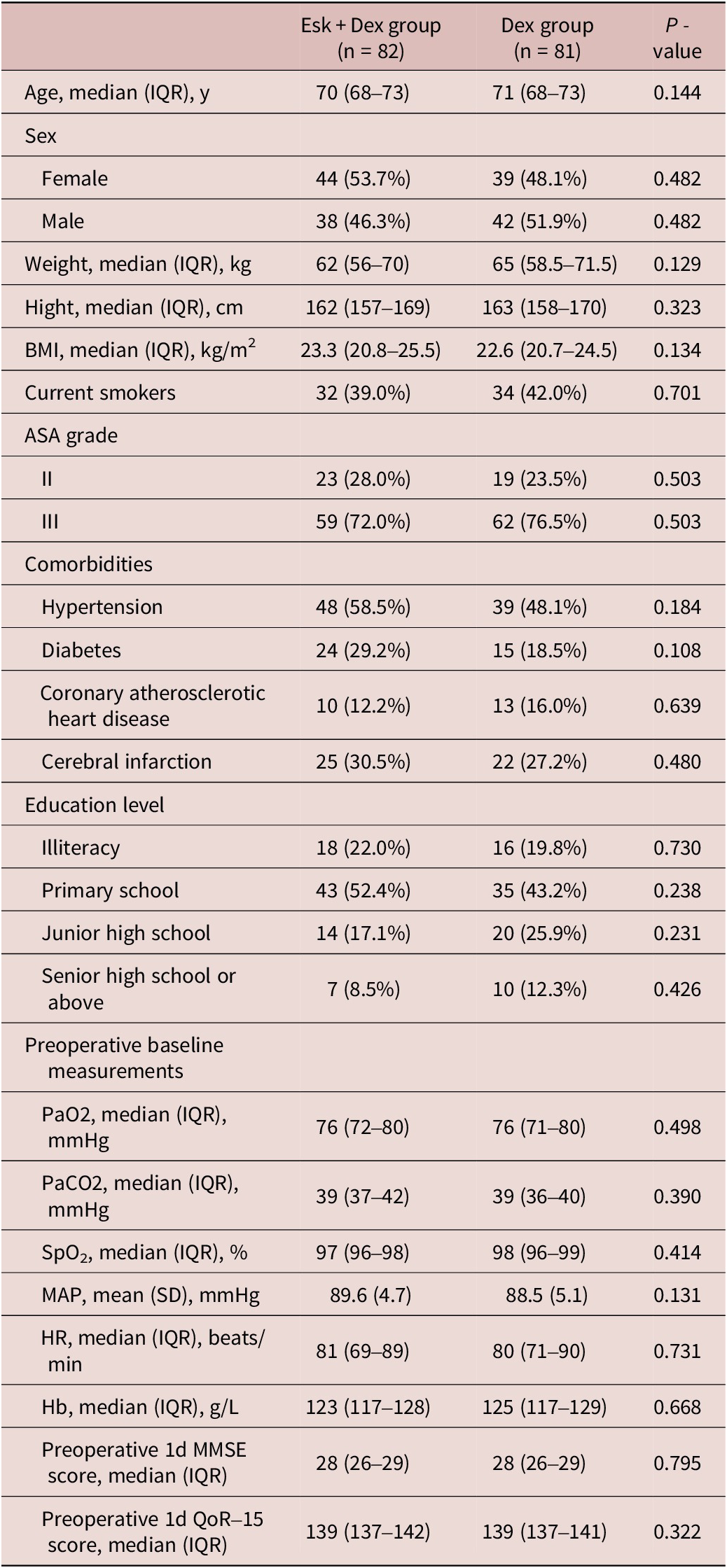
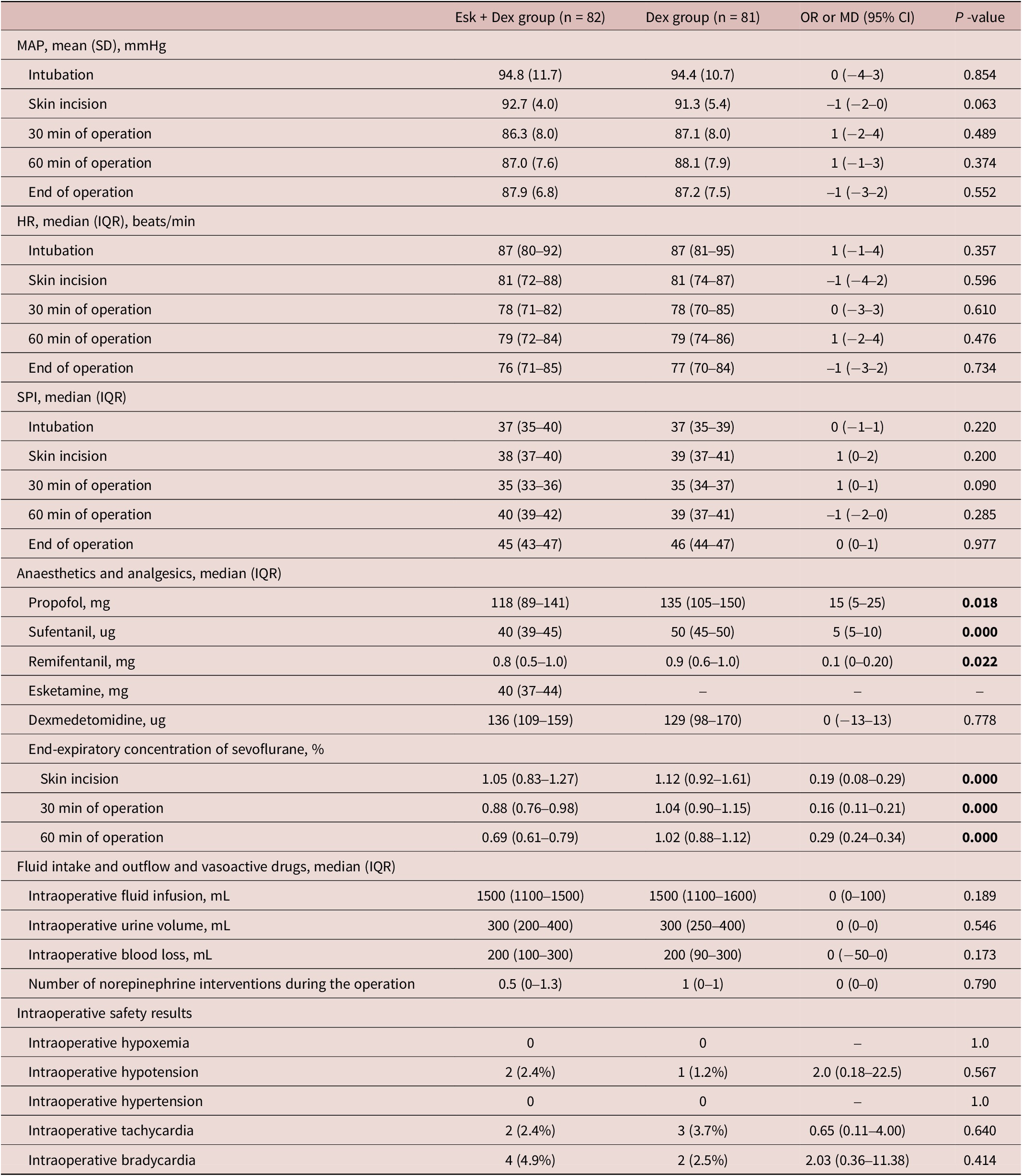
The demographic and baseline data characteristics of the two groups were well balanced, and the difference was not statistically significant (all P > 0.05, Table 1 ). The preoperative respiratory (PaO2, PaCO2 and SpO2) and circulatory (MAP, HR and Hb) function monitoring indexes, MMSE, and QoR-15 scale scores 1 day before surgery were in the normal range, and there was no significant difference(all P > 0.05, Table 1 ). Compared with the Dex group, the intraoperative consumption of propofol, sufentanil, and remifentanil and the end-expiratory concentration of sevoflurane were significantly decreased in the Esk + Dex group (all P < 0.05). There were no significant differences between the two groups in the amount of fluid in and out during the operation, the intervention times of norepinephrine, and the incidence of intraoperative hypotension, tachycardia, and bradycardia, and no intraoperative hypoxemia and hypertension were found between the two groups (all P > 0.05, Table 2 ).
Demographics and Baseline Characteristics

IQR, interquartile range; BMI, body mass index (calculated as weight in kilograms divided by height in meters squared); ASA, American society of anesthesiologists;MAP, mean blood pressure;HR, heart rate;Hb, hemoglobin; MMSE, mini-mental state examination; QoR-15, the 15-item quality of recovery scale. Data are presented as median (IQR), mean (SD) or n (%).
Intraoperative Parameter

IQR, interquartile range; OR, odds ratio; MD, median difference; CI, confidence interval; MAP, mean blood pressure;HR, heart rate;SPI, surgical pleth index. Data are presented as median (IQR), mean (SD) or n (%).
Clinical outcomes
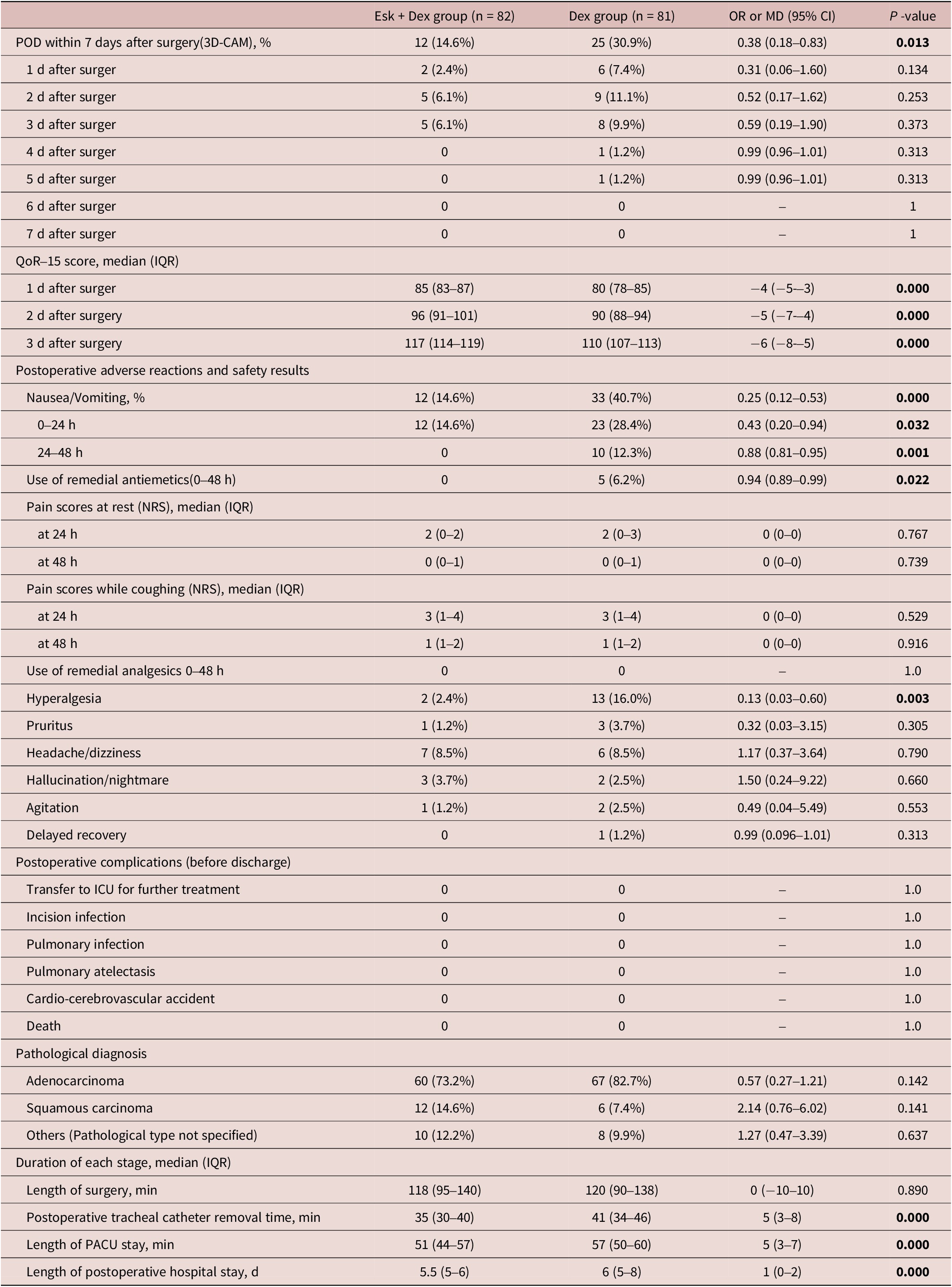
Compared with the Dex group, the incidence of POD within 7 days after surgery was significantly decreased in the Esk + Dex group (14.6% vs 30.9%, P = 013). POD mainly occurred in the first 3 days after surgery, especially on the 2nd and 3rd days. The QoR-15 score was significantly higher within 3 days after surgery (P < 0.05). The incidence of nausea/vomiting and hyperalgesia was significantly reduced 48 hours after surgery; 5 cases in the Dex group needed to be treated with antiemetic drugs, while no intervention was required in the Esk + Dex group. Postoperative tracheal catheter removal time, PACU stay time, and postoperative hospital stay were significantly shortened (all P < 0.05). There were no significant differences in the incidence of NRS score, skin pruritus, headache/dizziness, hallucinations/nightmares, agitation, and delayed recovery between the two groups 48 hours after surgery (all P > 0.05). There were no obvious postoperative complications in the two groups (P > 0.05, Table 3).
Postoperative Parameters

IQR, interquartile range; OR, odds ratio; MD, median difference; CI, confidence interval; POD, postoperative delirium; CAM, confusion assessment method; 3D-CAM, 3-Minute diagnostic interview for CAM-defined delirium; QoR-15, the 15-item quality of recovery scale; NRS, numeric rating scales; ICU, intensive care unit; PACU, post anesthesia care unit. Data are presented as median (IQR) or n (%).
Indicators of inflammatory response, brain injury, and cellular immune function
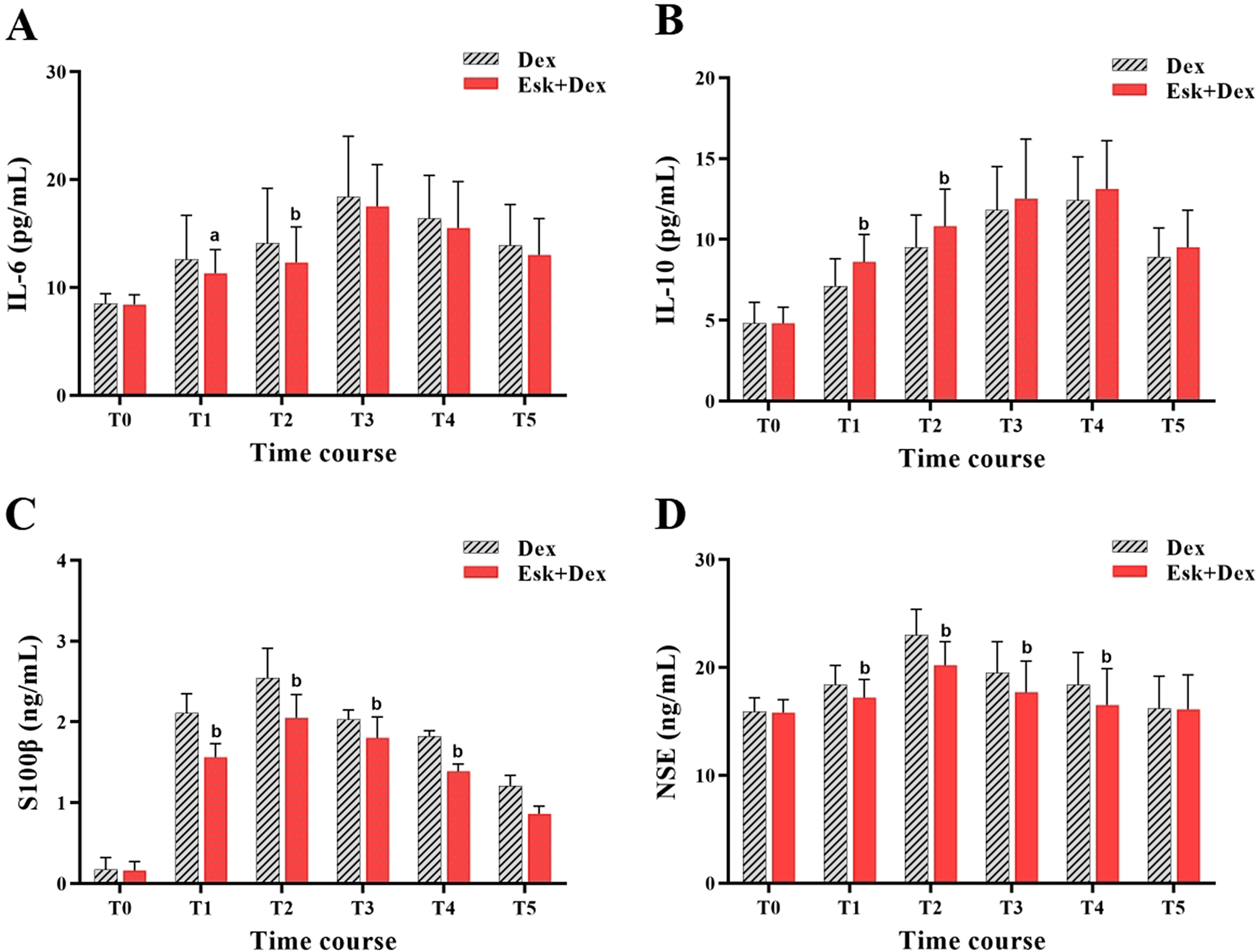
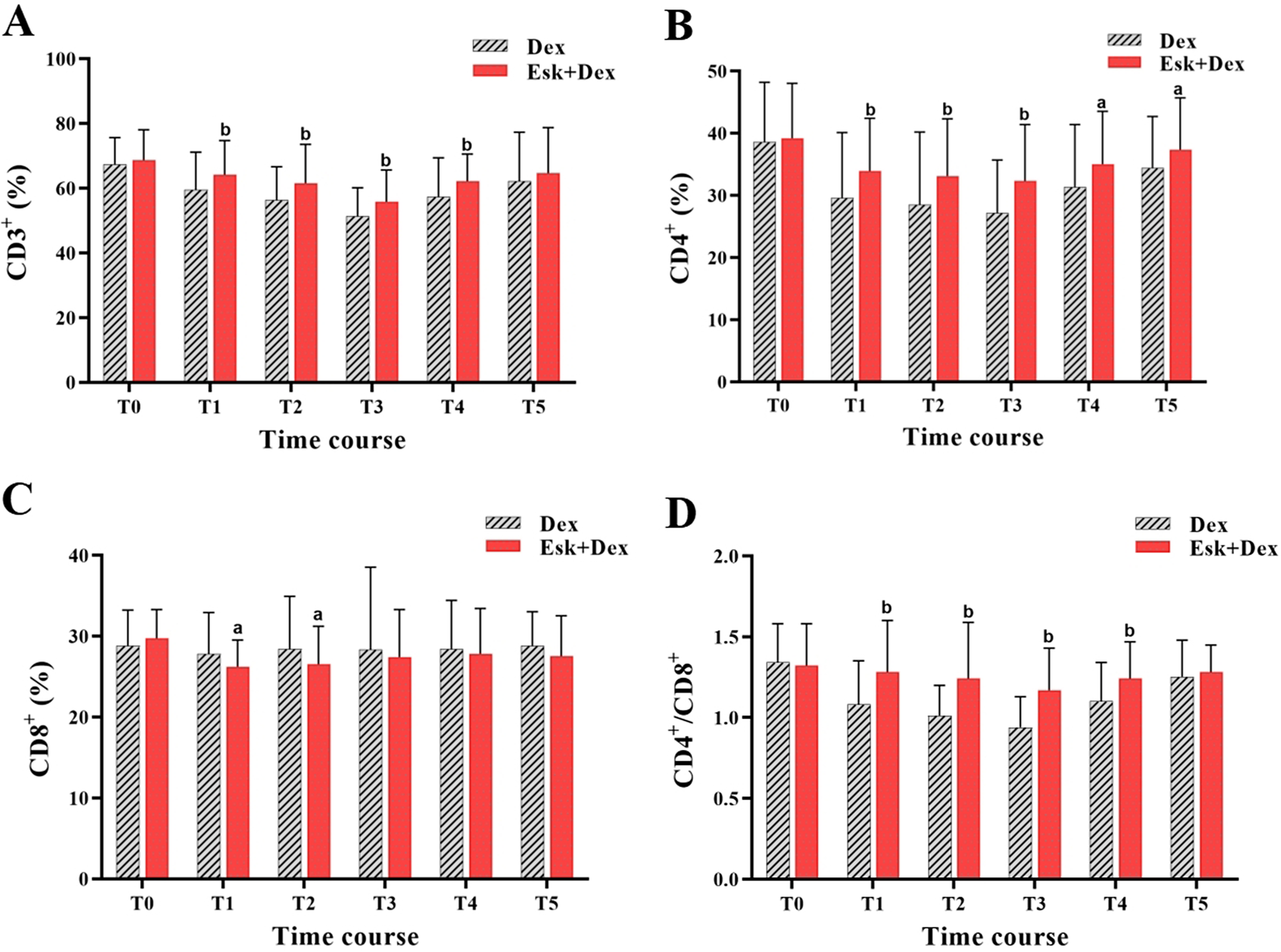
The levels of IL-6, IL-10, S100β protein, and NSE increased gradually in both groups after surgery. S100β protein and NSE levels peaked at T2, IL-6 concentration reached its highest point at T3, and IL-10 concentration peaked at T4. In comparison to the Dex group, the Esk + Dex group exhibited significantly decreased serum IL-6 levels and increased IL-10 levels at T1-T2 (all P < 0.05), reduced serum S100β protein concentration at T1-T5 (all P < 0.01), and decreased NSE levels at T1-T4 (all P < 0.01, Figure 2 ). The values of CD3+, CD4+, CD8+, and CD4+/CD8+ declined progressively in both groups postoperatively, with CD3+ and CD4+/CD8+ reaching their lowest points at T3, CD8+ at T1, and CD4+ at T3. Compared to the Dex group, the Esk + Dex group exhibited significantly increased proportions of CD3+ and CD4+/CD8+ at T1-T4 (all P < 0.01), increased CD4+ proportion at T1-T5 (all P < 0.05), and decreased CD8+ proportion at T1-T2 (all P < 0.01, Figure 3 ).
Indicators of inflammatory response and brain injury. IL, interleukin; NSE, neuron-specific enolase. Data are expressed as mean±s. Compared with the Dex group, aP < 0.05, bP < 0.01.

Indicators of cellular immune function. Data are expressed as mean±s. Compared with the Dex group, aP < 0.05, bP < 0.01.

Discussion
Nerve block techniques have been routinely implemented in thoracoscopic surgery with definite effects.Reference Turhan, Sivrikoz, Sungur, Duman, Özkan and Şentürk 22 –Reference van den Broek, Koopman and Postema 25 Erector spinae plane block has the advantages of exact block effect, simple operation, and high safety, so it has been widely adopted.Reference Su, Kong and Yang 23 The affinity of esketamine with the NMDA receptor is 4 times that of levodopa, and the analgesic intensity is 2 times that of racemic ketamine. Esketamine has faster metabolism and faster recovery than racemic ketamine and has a lower incidence of adverse reactions, so it is widely used in clinical practice.Reference Wang, Huang and Yang 26 –Reference Zhang, Jia, Li, Li, Ma and Chen 28 However, the application of esketamine often causes some psychiatric symptoms and other side effects in patients. Studies have confirmed that combined with dexmedetomidine can achieve good clinical effects. 20 Therefore, in terms of grouping in this study, we did not set up a separate group of esketamine and dexmedetomidine and compared their clinical effects. Instead, both groups were intravenously infused with dexmedetomidine and underwent ultrasonuse-guided erector spinae plane block. The study results indicated that the NRS scores for both resting and coughing states within 48 hours after surgery were consistently low in both groups, with no significant difference. This suggests that regardless of esketamine administration, the combination of dexmedetomidine with erector spinal plane block provided effective postoperative analgesia. Furthermore, there was a notable reduction in the consumption of intraoperative anesthesia drugs (propofol, sufentanil, remifentanil, and sevoflurane) in the combined intervention group. This reduction underscores esketamine’s potent analgesic and sedative properties, supporting its status as the preferred choice for non-opioid anesthesia.
The incidence of postoperative POD in elderly patients undergoing thoracoscopic lobectomy is 26.7% or even higher.Reference Dongjie, Longbiao and Peng 8 , Reference Gerresheim, Handschu and Winkler 29 POD can seriously affect the postoperative QoR of patients, produce a series of adverse outcomes, and even lead to the death of patients. This study showed that the incidence of POD within 7 days after thoracoscopic radical lung cancer surgery in elderly patients with esketamine intervention decreased from 30.9% to 14.6%, and the QoR was significantly improved within 3 days after surgery. As we all know, postoperative nausea, vomiting, and hyperalgesia are common side effects of opioids, and these adverse reactions are significantly reduced after the application of esketamine, which is also an important reason for some scholars to seek opioid-free anesthesia.Reference Feng, Xu and Chen 11 , Reference Yao, Fang, Yang, Chen and Chen 30 Headache, dizziness, hallucinations, nightmares, and postoperative agitation are common side effects of esketamine.Reference Yao, Fang, Yang, Chen and Chen 31 However, in this study, the incidence of the above adverse reactions was low between the two groups, and there was no significant difference between the two groups, indicating that the side effects of esketamine were significantly reduced, which was mainly related to the combined application of dexmedetomidine. Postoperative extubation time, PACU stay time, and postoperative hospital stay were significantly reduced. This may be mainly due to the significant decrease in the dosage of sufentanil, remifentanil, propofol, and sevoflurane. S100β protein and NSE are the biochemical indexes most closely related to POD and brain injury. The results showed that the levels of serum S100β protein and NSE in the two groups gradually increased at the end of surgery, and the S100β protein concentration of the esketamine intervention group was significantly lower than that of the control group in the first 3 days after surgery. The level of NSE was also lower than that of the control group in the first 2 days after surgery and returned to close to normal on the third day without statistical difference. The results confirmed that thoracoscopic radical lung cancer surgery can cause significant damage to brain function in elderly patients, and esketamine can alleviate this damage.
Surgery can cause changes in the inflammatory and cellular immune functions of patients. IL-6 and IL-10, as well as CD3+, CD4+, and CD8+, play an important role in the immune response induced by acute stress, such as tracheal intubation and surgical trauma.Reference Zheng, Zhao, Zheng, Jing and Wang 32 This study showed that esketamine could inhibit the release of IL-6 and promote the release of anti-inflammatory factor IL-10. IL-6 and IL-10 showed statistical differences between the two groups only at T1-T2, which we considered might be related to the clinical pharmacological characteristics of esketamine. At this stage, esketamine had its own unique advantage, and its anti-inflammatory effect was stronger than dexmedetomidine. At 24 hours after surgery, the benefit of esketamine gradually decreased to the point that the anti-inflammatory effect was comparable between the two groups. Recent studies have shown that CD8+ plays an important role in the regulation of brain injury and neurodegenerative diseases.Reference Xu, Yang and Li 33 The levels of CD3+, CD4+ and CD8+ reflect the body’s ability to regulate cellular immunity. CD4+/CD8+ ratio can directly reflect the cellular immune status of the body. The results of flow cytometry showed that the levels of CD3+, CD4+, and CD4+/CD8+ in the composite group increased significantly within 48 hours after surgery, while the CD8+ in the composite group was significantly lower than that in the control group within 12 hours after surgery, possibly because esketamine could directly or indirectly activate the killing function of CD8+ on target cells. Within 48 hours after surgery, CD4+/CD8+ values in the combined group were significantly higher than those in the Dex group, indicating that esketamine can effectively regulate the cellular immune function of patients and protect the cellular immune destruction of the body.
Limitations
This study has some limitations. First of all, this is a single-center clinical study, and only elderly patients undergoing thoracoscopic radical lung cancer surgery in the First Affiliated Hospital of Bengbu Medical University were selected as research objects. Second, erector spinal plane block and dexmedetomidine infusion were routinely performed in both groups, and these two interventions may have had some influence on the study results. Moreover, because the formulation of esketamine in the postoperative analgesia pump has not yet formed an exact scheme, considering the safety of patients and the postoperative analgesia effect, this study did not apply esketamine to postoperative analgesia. In addition, this study only conducted short-term follow-up on POD and postoperative QoR of patients and did not study their long-term prognosis, outcome, and survival rate. Last but not least, the exact relationship between POD incidence, postoperative QoR, and cellular immune function still needs to be verified by further basic experiments. Therefore, in the future, we will conduct a multi-center, large sample, multi-group, multi-time prospective study and collect long-term postoperative data of patients.
Conclusion
In conclusion, in this study, we found that esketamine combined with dexmedetomidine can significantly reduce the incidence of POD within 7 days after surgery, improve the QoR within 3 days after surgery, improve cellular immune function, reduce brain damage, reduce inflammatory reactions, reduce the consumption of intraoperative anesthetic drugs and reduce postoperative adverse reactions in elderly patients undergoing thoracoscopic radical lung cancer surgery, and it can also shorten the time of tracheal catheter removal, PACU stay, and postoperative hospital stay. The decrease of POD incidence and the improvement of postoperative QoR may be related to the improvement of cellular immune function of patients by esketamine.
Acknowledgements
The authors would like to thank colleagues in the department of anesthesiology and thoracic surgery of our hospital, as well as colleagues in the clinical research team and graduate students for their strong support in the implementation of this study, perioperative case data collection, and data aggregation.
Authors’ contribution
Conception and design: Zhang CL, Yan Y, Liu D, Ren L.
Implementation of the study: Zhang Y, Bai HL, Song NN, Zhuang Q.
Data collection and collation: Feng CJ, Xie LJ, Wang SY.
Statistical analysis of data: Zhang CL, Yan Y, Ren L.
Data interpretation: Zhang CL, Yan Y, Liu D, Ren L.
Manuscript drafting: Zhang CL, Yan Y.
Manuscript revision: Ren L, Liu D, Li XH.
Final approval of the version to be published: All authors.
Availability of data and material
Data will be made available on request.
Funding
Health Research Program of Anhui Province (AHWJ2022b024).
Natural Science Key Foundation of the Education Department of Anhui Province (2024AH051250, KJ2021A0712 and 2023AH051993).
Program of Training Action for Young and Middle-aged Teachers in Higher Education Institutions in Anhui Province (JNFX2024038).
Bengbu City Social Science Planning Project (BB23B062).
Innovation Program Projecs (Byycx24053, 202410367050 and S202310367144).
Competing interest
The authors declare no conflicts of interest.
Consent for publication
Not applicable.
Declarations
Ethics approval and consent to participate
This study was conducted in accordance with the Declaration of Helsinki, approved by the Research Ethics Committee of Bengbu Medical University (Approval No. 2023211), and registered in the Chinese Clinical Trial Center (No. ChiCTR2100051804). This study was conducted in strict accordance with the ethical requirements set out in the Declaration of Helsinki, the International Ethical Guidelines for Biomedical Research Involving Humans, and the Measures for the Ethical Review of Biomedical Research Involving Humans formulated by the Ministry of Health of China. Consent was obtained from the patients and their families the day before surgery, and informed consent for anesthesia and the program was signed. Methods were carried out in accordance with relevant guidelines and regulations.