Women and waste: mobilising citizens and resources for a total war
In late 1915, the women's organisation of the city of Frankfurt am Main initiated diverse efforts to collect used or useless materials, such as food leftovers or discarded household goods. The efforts were guided by the imperative to ‘create value out of nothing’ (‘Schaffet Werte aus dem Nichts!’) – a motto which was also heralded by the association's local housewives’ magazine, Die Frankfurter Hausfrau, to mobilise fellow women for the war effort. The rallying cry exhorted housewives to collect unused objects and make them available to those in need.Footnote 1 It was part of a larger female effort that called upon women to contribute to the war through resource-saving housekeeping, and, more specifically, through the separation, collection and donation of any potentially reusable waste. As we are about to see, these waste recycling efforts were a pivotal aspect of – a highly gendered – wartime mobilisation aimed at the so-called ‘home front’.Footnote 2 But they simultaneously drew on a long tradition of female thrift in private housekeeping and consumption.
As Nancy Reagin has shown, Imperial Germany had sought to educate housewives in frugal cooking and consumption since the late nineteenth century. The well-established ideal of the thrifty German housewife could be easily revived and expanded both during the First World War and later within the context of Nazi autarkic policies.Footnote 3 For the more specific case of waste and wasteful habits, the situation was more complex. Like consuming, domestic practices of storing, wasting or handing down leftovers of everyday life represented a female responsibility. As an unpleasant, even objectionable part of urban everyday life, the issue of domestic waste was equally marginalised in the public realm. Around 1900, the urban sanitation movement concentrated on hauling municipal waste as fast as possible out of the city, but once waste was dumped at its periphery, it was more or less left to itself. Sanitary engineers aimed to prohibit scavenging or any manual waste treatment, but recycling trades continued to exist and even represented a vital element of the early twentieth-century urban economy. The ‘dirty’ business of waste treatment was considered a fringe zone and was largely left to marginalised groups, such as the urban poor, who acted as scavengers, or Jews, who held a large share of the German scrap business. In contrast, wartime waste policies defied the sanitary discourse for the benefit of recycling. The call on Frankfurt's housewives to ‘create value out of nothing’ did not just mirror the hope that worthless waste matter could be turned into a valuable resource that drove nearly all recycling efforts of the past.Footnote 4 Such thinking also became dominant in a wider, even national, discourse when the state hoped to use waste as a remedy for scant resources, namely in times of war, crisis or autarky. In these contexts, once ‘private’ ways of discarding things were redefined as acts of national concern that would affect the material supplies of the nation. Likewise, municipal waste treatment and disposal were politicised. Once mainly an issue of urban hygiene, they became part and parcel of national economics.
The following article describes these developments through a very specific lens: it focuses on the nexus women, waste and war, highlighting the uniqueness of this constellation for the First World War. While I will describe the larger wartime waste recycling efforts and contextualise them within broader traditions of wasting and recycling, I will focus more closely on one critical example: the reuse of kitchen scraps in the city of Frankfurt between 1914 and 1920 and its revival in the National Socialist era. The focus on women, war and waste allows for contributions to different research strands in consumption history, women's history and war history respectively.
First, the article underlines and further explores the role of waste as a means of mobilising the home front in a ‘total’ war. For the city of Freiburg, Roger Chickering demonstrated that ‘collecting’ – be it the collecting of work forces, food or other resources to mobilise them for the purpose of war – proved to be an important aspect of the First World War's ‘total’ war experience.Footnote 5 While Chickering listed the many types of discarded materials that were collected for recovery, waste salvage itself has not yet been considered as a characteristic element of what this author and others have described as the ‘totalness’ of war.Footnote 6 The term refers to a massive commitment of armed forces to battle and to a thorough mobilisation of industrial economies for the war and hints to the fact that military personnel and civilians alike are factored in as combatants, and are organised and disciplined likewise. ‘Total’ war blurs the distinction between civilians and soldiers in that, for example, women are mobilised as workers in the (war) industry or as soldiers, and civilians are turned into military targets. It influences the lives of each and every individual and, according to Chickering, thus calls for a ‘total’ history. Drawing on these arguments, I claim that waste salvage then must be identified as a distinctive element of a total war. Waste salvage mobilised materials on the home front as war resources. The collection of waste was constructed as a means for individuals to make a material as well as an ideological contribution to the war. In the long run, waste recovery efforts expanded to include the ‘total’ spectrum of everyday materials and leftovers, not just in cities as the main ‘waste makers’, but also in smaller towns. Frequently, waste recycling during the First World War has simply been described as a means to alleviate the wartime shortages afflicting urban communities, industry and agriculture as a result of the Allies’ naval blockades and trade restrictions. Only National Socialist waste salvage plans have been interpreted as distinct elements of autarky and war mobilisation, yet even they lack a thorough historical analysis.Footnote 7 But France, Great Britain and even the United States also launched national salvage drives during both world wars. The topics of waste reuse and thriftiness, hence, should move from the niches of everyday wartime life histories to the forefront of war history as an integral part of wartime ideology and the economic, industrial and resource policies of the belligerent nations.Footnote 8
Second, as female domestic responsibility, the subject of waste salvage pertains most notably to the mobilisation of women in the war effort. So far, research in this field has neglected women's particular role as waste workers and collectors and favoured subjects such as women's work, female charity, motherhood, the feminist anti-war movement or the working-class women's hunger riots.Footnote 9 Even more specific research on the National Women's Service has highlighted housewives’ initiatives in terms of frugal ‘war cooking’ or the everyday thrift involved in mending and altering textiles,Footnote 10 while failing to notice their involvement in waste recycling. In First World War Germany, women's organisations actively shaped local waste recovery infrastructures before the state stepped in as a leader from 1916 onwards. The kitchen scrap collections of the First World War are striking examples of both mobilising women for the war and women's self-mobilisation for the war, while the subsequent National Socialist recycling efforts were dominated by a top-down mobilisation rather than by the largely female-driven bottom-up activism in First World War cities. Since the leavings of everyday life were seen as a female preoccupation, this specific involvement did not necessarily disrupt the established gender norms of work or housework as, for instance, the well-studied phenomenon of female industrial work did.
Third, the article offers a long-term perspective on consumption, waste and recycling. For one, it questions the wartime caesurae by taking into account longer traditions and extant reuse and thrift mentalities before 1914 and beyond 1918. As the first paragraph shows, reusing things was a common practice for housewives trying to make ends meet in times of scarcity, characterising everyday life in the early twentieth century. For another, the article questions the assumed exceptionalism of the autarkic National Socialist recycling efforts and indicates what the latter borrowed from First World War waste salvage drives.
Urban waste and recycling in early twentieth-century Germany
With the exception of the wars and the Nazi era, waste was largely defined as an urban problem up until the early 1960s. Its treatment and disposal was governed by urban policies and waste services as much as by a lively second-hand and scrap trade, but without any interference from or regulations by the state. Changing consumer habits and growing numbers of inhabitants forced cities to establish municipal waste collection services in the early twentieth century.Footnote 11 In 1910, when about 21% of the German population lived in cities with 100,000 inhabitants or more,Footnote 12 most of these bigger cities operated waste collection services. A survey of 170 cities with 25,000 residents or more showed that 48 of them had no municipal waste service; 27 used the collected waste as a fertiliser on outlying fields, while the majority (115 cities) unloaded the waste in dumps.Footnote 13 A handful of cities incinerated waste alongside dumping it. Statistics show that the German city dweller produced an average of 125 kg–150 kg of waste a year (i.e. around 350 to 410 g daily).Footnote 14 However, these general figures do not tell us how waste disposal practices differed from city to city, nor whether all daily surpluses ended up in the rubbish bin or dump. The city of Potsdam, for instance, collected kitchen scraps separately to feed pigs. From 1907 to 1917, Charlottenburg (near Berlin) tested an ambitious, costly waste separation system using three bins: one for ashes and sweepings (which accounted for around two thirds of the waste) to fill quarries and fertilise wasteland; a second for organic (food) leftovers (accounting for up to a fifth of the waste) for pigswill, and a third for all the other scrap materials that were sorted and sold to the glass, paper and other industries.Footnote 15 New York and other US cities boasted similar ‘source separation’ and industrially processed the collected kitchen leftovers into manure and grease.Footnote 16
But even where such official ‘waste recycling’ structures were lacking, not all leftovers were simply ‘thrown away’. Rather, there existed a diverse rag-and-bone trade (Rohproduktenhandel). Not only did it channel materials back to the production side, but it offered a means of survival for the urban poor. Around 1910, it was estimated that there existed around one rag-and-bone man or woman per 1,000 inhabitants. This trade captured around 5% of total household waste and hence, a quite considerable part of the scrap materials.Footnote 17 Furthermore, in smaller cities, organic waste was often channelled back into agriculture as animal feed or fertiliser, and arable or dairy farmers ran collections of kitchen scraps. Households in less densely populated areas or on the urban periphery might have fed their waste to small domestic animals that many of them kept for their own subsistence. In larger cities, restaurants and canteens sold their leftovers to pig farms while domestic food scraps were thrown away.
Housewives had a central, though invisible function in this waste and recycling system. Municipal engineers and politicians defined them as responsible for the handling of waste and, indeed, it was predominantly the female housekeepers who decided what to store for future reuse, what to throw away and where to dispose of it. As Susan Strasser has shown for the American case, European cities’ waste practices also changed substantially with the introduction of the municipal waste bin, through which the disposal of domestic waste was turned into a public task.Footnote 18 But in Europe, patterns of reuse – be it storing for later use or handing over scraps or food leftovers to peddlers or farmers – persisted much longer than in the USA. In the 1930s, most German urban housewives, in particular from the working class, still sold household refuse such as scrap metal, rags, old paper or bones to junk dealers.Footnote 19 Likewise, mending, restoring and repairing old things or storing them for future use were still considered as natural a task as serving food leftovers. Hence, those everyday materials that were thrown away in the home were limited compared to the waste streams of the post-war mass consumption society, and were nearly absent in the case of rural households. The wartime national rhetoric that any waste was a potential resource politicised this kind of everyday thriftiness, which at the same time was at the basis of the everyday survival of the scarcities of war. Waste was no longer discussed as a hygiene hazard, but as an exploitable resource.
Waste as a means to mobilise material and human resources in wartime Imperial Germany
Since it anticipated a rapid victory, the German government lacked a general plan for a war economy and long-term provisioning. As the naval blockade cut off Germany from the raw materials that it had previously imported from the world market, food supplies and further strategic materials for a war economy were soon rationed. The state fixed maximum prices for consumer goods during the initial months of the war and municipal inspection authorities (Preisprüfstellen) controlled these from the autumn of 1915. Moreover, under the inspection of the KRA (Kriegsrohstoffabteilung, War Raw Materials Section), War Materials Corporations (Kriegsrohstoffgesellschaften) were founded to control supply and demand.Footnote 20 From 1915 onwards, the consumption of food and textiles was regulated through such institutions (for example by the Reichsgetreidestelle, the Reichskartoffelstelle or the Reichsbekleidungsstelle, founded in 1915 to regulate crops, potatoes and textiles respectively). In the course of the war, about 200 of these war corporations were established. Not only did they interfere with industrial and agricultural production and distribution, but also with the scrap trade that was equally affected by confiscations and fixed trade prices. Bread consumption was rationed in early 1915 with a daily limit of 250 g of flour per head and textiles were rationed in the ensuing year. But such state-run attempts to guarantee the basic requirements of daily life were undermined by persistent inflation and further shortages. Potatoes were rationed in 1916 and the meat ration card of October 1917 reduced the weekly consumption of meat to 250 g, which was further cut in 1918. While the Kriegsernährungsamt (War Office of Food), founded in 1916, determined an average requirement of 2,432 kcal per head per day, the available foodstuffs only covered half of this requirement.Footnote 21 Towards the end of the war, nearly everything – from soap to shoes or rubber tires – was in short supply. The incapacity of the state to support its citizens and to regulate supply and consumption was exposed by the notorious ‘pig massacre’ of 1915 and the equally infamous ‘turnip’ or ‘hunger winter’ of 1916/17. In early 1915, millions of pigs – decried as dangerous ‘co-eaters’ (‘Mitfresser’) – were slaughtered to save crops and feed German mouths instead. This well-meant action only demonstrated the unco-ordinated and even conflicting measures that wartime Germany pursued in a bureaucratically controlled economy of scarcity. Suddenly, masses of meat had to be processed, while the dramatic livestock reduction later lead to meat shortages. After a bad potato harvest in 1916, turnips, i.e. beets that would have normally been used as animal fodder, replaced potatoes the ensuing winter and food rations melted down to an insufficient 1,000 kcal per head per day in 1917/18. Thus, compared to other countries, Germany was much more affected by hunger and ersatz products. It is estimated that about 700,000 civilians died of hunger, especially in cities.Footnote 22
In this context, waste and its potential salvage also became part and parcel of the national urge to save materials. Omnipresent hunger particularly strengthened the idea that no potential foodstuff should be left unused. Moreover, waste collections became a means to mobilise individuals on the home front. Waste and reuse practices were redefined as political acts through which each citizen could display his or her support of the war effort. By 1918, widespread propaganda tried to reach all classes by calling upon any ‘German’ to ‘collect’ leftovers to be channelled into the national war economy. Theatre shows and films explained the metamorphosis of everyday waste material into a resource or good; exhibitions under the title ‘out of every corner’ tried to convince visitors that any leftover was of value; phonograph recordings expressed the benefits of the waste transformations in verse and were ended by the ‘military trumpet call to “collect!”’.Footnote 23 Propaganda posters on individual waste materials underlined their strategic importance for the war economy. The message was clear: the individual citizen was asked to contribute bones to be rendered and used in the production of the fats, soap and explosives that were lacking; used paper would contribute to the production of ersatz textiles; women's hair could replace rubber in fixing joints and gaskets in war machinery, to name just a few examples. The domestic task of separating and allocating reusable leftovers, and the collective salvage drives both aimed at creating a feeling of national community. Independently of class or creed, any German citizen could contribute the leftovers of everyday life to improve the national resource base.
But it was only from 1916 onwards that Imperial Germany spelled out such an explicit policy of waste recycling. Nevertheless, a national move towards waste recovery was discernible even earlier in the case of food scraps, paper, textiles, metals and bones. It was supported by a limited number of state proposals, but mainly driven by urban politics, the press and various local initiatives, many of which relied on the helping hands of women and children. With respect to food wastes, the German authorities distributed a circular in November 1914 that called on municipalities to install their separate collection. This circular estimated that a total of 12 kg of dry animal food could be gained annually from the organic wastes of each urban citizen. Again, the waste per head or household was extrapolated to the national scale to demonstrate the impact that a unified home front would have on the collections. If all inhabitants of cities of 25,000 inhabitants or more participated, at least 4% of the formerly imported 8 million tonnes of food could be saved – an important figure since German agriculture suffered from the blockade that restricted its access to both fertiliser and fodder.Footnote 24 Charlottenburg's separate waste collection, shortly before being dismissed as too expensive, now served as a model while throwing away kitchen scraps was decried as a ‘loss of national property’.Footnote 25 By the end of 1914, households as well as schools and businesses were asked to resort to used materials.Footnote 26 In 1915, the press urged the public to save used paper since it could be used to produce new paper, cardboard, and textiles: ‘Don't throw away old paper, don't burn and destroy it, but collect it and turn it in for further processing!’Footnote 27 Metal collections began in 1915, first in industry and later in private households by recruiting schools and schoolchildren. Under the banner of the 1915 Reichswollwoche,Footnote 28 students, women and other volunteers collected rags from private households, which were then repaired for the armed forces in the many sewing parlours (Nähstuben) established by women's organisations. As we will see, at that time, women's organisations were the main agents of waste salvage, co-ordinating the collection and recovery of diverse material flows – be it old rags, household objects or kitchen scraps, eggshells or bones.
Having acknowledged its dramatic shortages, the German state rigorously restructured its industry with the 1916 Hindenburg Programme. While the previous complex wartime administration and the many Kriegsrohstoffgesellschaften had undermined systematic regulations, the new structures, headed by the Kriegsamt (War Office, founded in November 1916), intensified industrial mobilisation for war purposes through comprehensive control over industry, materials and workers. It is at that point that the state also began to systematically exploit private household waste. In 1916, enforced collections of bones, paper, fruit stones and temporarily even of coffee grounds were initiated by the Freiwillige Kriegshilfe (Voluntary War Aid) and by youth or women's organisations, based on voluntary, municipal or school infrastructures.Footnote 29 Collaborating with these associations, as well as with the War Office of Food, the war materials corporations responsible for oil and for greases, and the bone industry, the War Office established the Kriegsausschuß für Sammel- und Helferdienst (War Committee for Collection and Aid) in the spring of 1917.Footnote 30 This service institutionalised the numerous pre-existing charity and waste collections and unified charitable organisations such as the Red Cross, women's organisations, Voluntary War Aid associations, etc., thus providing local initiatives with a more efficient system of committees and collection centres. By the end of the war, more than 6,100 such local collection committees existed.Footnote 31 On the one hand, the War Committee further integrated women's organisations since these, as it stated, ‘not only recruit for the door-to-door collections through their members, but also assist with collection in individual households and provide female helpers for the collection sites’.Footnote 32 On the other hand, school pupils and teachers were systematically mobilised as scrap collectors and co-ordinators respectively, with school buildings serving as collection centres.Footnote 33 The pupils’ collection outcomes were compensated by a bonus system and local scrap dealers took away the scrap materials for fixed prices. In her memoirs, Erna Lange later recalled that the basement of her school in Berlin turned into a scrap shop and that the children tried to gather objects everywhere: ‘There are heaps and hills of old odds and ends. Nowadays, everything somehow has a value and can be further utilised: paper, rags, bones, tin foil, cork, rubber, bottle caps, hair, broken records, cans . . . and everywhere we discover objects we can bring. All our acquaintances’ attics are searched exhaustively.’Footnote 34 Indeed, besides relying on the female contribution to waste recovery, the War Committee saw the ‘secret of the waste collection's success’ in the ‘mobilisation of schoolchildren for the collection service’, as ‘millions of diligent children's hands must gather junk from attics, cupboards, cellars, halls and kitchens’.Footnote 35
With respect to food scraps, the war government likewise sought to implement a nationwide city-based recycling system. On 16 June 1916 a national regulation enabled cities of over 40,000 inhabitants to implement laws that forced households and businesses to hand over kitchen waste to separate collections.Footnote 36 This prevented the previous resistance of some households, which had claimed legal ownership of their own waste. Following the disastrous massacre, pigs were now reappraised in their long-established role as ‘recyclers’ of leftovers, even more so as those from the staple German diet of potatoes and bread provided ideal fodder, and wartime consumption of potatoes reached around one pound of potatoes per head per day.Footnote 37 At the same time, by 1914, the consumption of meat, and in particular of pork, had reached high rates that would only be met again in West Germany in 1956.Footnote 38 Subsidised by the state, the agricultural sector and around fifty cities founded the Reichsgesellschaft für deutsches Milchkraftfutter mbH (National Association for German Dairy Cattle Feed).Footnote 39 It processed kitchen scraps into germ-free, dry animal mash named Melkogen, introduced in pre-war Charlottenburg to prevent epidemics among pigs fed with raw kitchen scraps. The regulation of 1916, however, was never fully adopted. The Reichsgesellschaft was eventually decentralised, and only a few cities participated in the suggested national system since many cities favoured local food recycling schemes.
By 1918, as Chickering argues, the state-led search for reusable materials resembled a raid into the last and darkest corners of any flat.Footnote 40 Wartime collections had redefined the meaning of both things and waste. Regarding kitchen scraps, for instance, hygiene and cleanliness norms ranked lower than their nutritional value as animal feed. As in the case of British paper drives during the Second World War,Footnote 41 Germany's collections of reusable materials not only focused on ‘waste’ as such, but increasingly included wild plants, church bells or public bronze statues, and, moreover, private objects still valued, if not necessarily in use, such as old books, private journals or golden wedding rings. Official propaganda defined such things as valueless when stored at home and as valuable once they had entered into the war economy. We must assume that the citizen's willingness to participate in collections suffered considerably once these shifted from collecting waste to seizing private belongings.
Between mobilisation and self-mobilisation: women and the salvage of waste during the First World War
The First World War changed Germany's ruling ‘consumption regime’ as well as its ‘waste regime’.Footnote 42 Women were involved and affected in multiple ways. They carried the burden of keeping household economies running through hard times, when even obtaining a minimum of foodstuffs or fuels required time and effort. Women performed the dirty, tedious task of separating the various reusable waste elements, then handling and storing them before channelling them, sometimes with the help of their children, into the existing recycling systems. Besides, older or previously unemployed women served as poorly paid waste collectors.Footnote 43 According to the contemporary women's activist Martha Voß-Zietz, wartime waste salvage imposed an immense burden on housewives. She stated: ‘Numerous containers had to be set aside to separate and store cork, tin cans, tin caps, bones and food scraps. Moreover in most cities, especially the small ones, one had to bring the materials to the collection point oneself, since auxiliary services for this work were far from universal.’Footnote 44
But next to being the targets of mobilisation, women also actively engaged themselves in mobilising their fellow women to save resources. In many cities, among them Frankfurt, local women's organisations were set up with the specific aim of educating women in wartime housekeeping, cooking and consumption. These local groups and initiatives were headed by the NFD, the National Women's Service (Nationaler Frauendienst) – the wartime creation of the BDF (Bund deutscher Frauenvereine, the Federation of German Women's Associations, founded in 1894) that served as an umbrella organisation to integrate the diverse bourgeois women's movements.Footnote 45 The NFD was envisioned as the female counterpart of male military service, and it integrated also women's associations not aligned with the BDF such as the German Catholic Women's League (Deutsch-Katholischer Frauenbund) or patriotic leagues. Bridging political, class and denominational gaps, it reached beyond the traditional female field of wartime nursing and concentrated on education, food provisioning, welfare and charity, as well as labour recruitment. But at the same time, it was mostly middle-class women who volunteered, while working-class women were seen as the needy recipients of the former's voluntary work.Footnote 46 The NFD received government support and collaborated with national or local authorities, such as price inspection authorities, where it acted as an extension of state policies. In general, its work was strengthened and revalued with the Hindenburg Programme of 1916.Footnote 47 The NFD was involved in the Reichsbekleidungsstelle or the Kriegsernährungsamt and the War Committee for Collection and Aid (Kriegsausschuß für Sammel- und Helferdienst). From February 1915 on, the NFD published a weekly ‘housekeeping note’ with price indexes for foodstuffs and guidance on economical war dishes or the use of ersatz ingredients. The 1915 Reichswollwoche largely relied on the co-operation between cities and local NFD representatives.Footnote 48 Inside the local, urban Bekleidungsstellen, women collected, mended and further distributed reusable rags and textiles. From 1916 onwards, the NFD promoted the collection and processing of fruit and windfalls.
Buoyed by patriotism, women's organisations provided guidance about traditional housekeeping duties, but also assumed tasks that otherwise would have been carried out by public authorities. Many women made their way into city administrations and proved that they not only could organise efficiently, but also that they had ‘grass-roots influence’.Footnote 49 In exchange, the women's groups were provided with the necessary premises.Footnote 50 The degree of their involvement depended on local conditions, not least the question of whether the dominant male politicians accepted these new female voices.Footnote 51 With respect to nutritional education, gender studies have argued that (male) politicians first developed a framework of agencies before enrolling women for the practical implementation. In contrast, women acted as the main instigators of wartime waste collections rather than being mere auxiliaries of the male-run state. In the previously marginalised field of waste and recycling, female voices hardly challenged existing gender and power hierarchies and could gain much ground.
From the very beginning, the NFD leaders defined sustaining food supplies as one of its core activities, and this included the recycling of food leftovers.Footnote 52 In a 1915 article on ‘Housewives’ Responsibilities during the War’, women's leader Elisabeth Altmann-Gottheiner called for ‘a maximum utilisation of used foodstuffs and other materials’. She demanded the salvage of used kitchen scraps for animal feed and, more generally, an ‘entirely new attitude to consumption’.Footnote 53 In November 1914, the national foodstuffs commission (Lebensmittelkommission) of the NFD had decided to expedite the recovery of kitchen scraps.Footnote 54 Its 1916 yearbook proudly announced that ‘nearly everywhere the collection of kitchen scraps was established by women's organisations’.Footnote 55 Kitchen scraps were probably foregrounded within NFD activities, since every housewife or, in richer households, every kitchen servant dealt with them several times a day during food preparation, and women with rural roots were used to keeping them to feed animals.
Next to the omnipresent mending or knitting parlours and cooking instructions, the local NFD units initiated a vast array of efforts to recover materials. Frankfurt's NFD established the aforementioned depot for used household goods (Hausratsammelstelle), where people could bring their sorted goods, which were then repaired and sold to the needy at low prices.Footnote 56 From 1916 onwards, the collection efforts reached way beyond paper, rags and kitchen scraps. In Mainz, fruit stones and nettles, chestnuts, bones, hair and coffee grounds had been collected since the spring of 1916.Footnote 57 The NFD's counselling centres in Magdeburg were transformed into ‘collection centres for fruit stones, chestnuts, acorns, cans, old leather etc.’, as soon as shortages of a certain resource had been identified.Footnote 58 In Mühlhausen (Thuringia), the local housewives’ organisation co-ordinated salvage drives on behalf of the authorities and collected ‘kitchen scraps of all sorts, bones, mussel shells, paper . . . rags, wool and cotton thread, tin cans and any sort of metal, old nails, rubber, bottles, cork, pieces of string, tin foil, pipes, steel springs, inkpots, bottle caps, old leather gloves and fruit stones all year round’.Footnote 59 Through these activities, women indeed prepared the ground for and then supported the state's hunt for resources. In addition, and unlike in Great Britain or France, the range of materials salvaged encompassed nearly every type of remnant. In this respect, Germany's First World War salvage drives paved the way for subsequent National Socialist ones. While the latter were driven by the ambition of a ‘total’ reutilisation of any leftovers from the outset, First World War slogans such as ‘Schaffet Werte aus Nichts’ had already laid claim to such ‘totalness’.
Separating, collecting and reusing kitchen scraps in Frankfurt in the First World War and beyond
To implement the reuse of kitchen scraps, Frankfurt's women's organisation negotiated with local authorities, municipal waste collection services and farmers, while providing the necessary organisation and information.Footnote 60 Main figures were Stephanie Forchheimer and Rosa Kempf. They contacted the regional agricultural authority (Landwirtschaftskammer) in Wiesbaden, before turning to local farmers, politicians, the municipal waste collection service and housewives. To the latter, the NFD Frankfurt wrote: ‘Housewives of Frankfurt! Through our housekeeping, we must also resist our enemies’ plans to starve us and, in these difficult times, it is the duty of every German woman to maintain the valuable goods – and there are millions of them – entrusted to her wisdom and to her hands for her fatherland. Nowadays, kitchen waste, properly sorted out and collected, represents valuable animal feed that cannot be wasted.’Footnote 61 As this quote shows, housewives were depicted as forming a unified home-front community which had the patriotic duty and responsibility to prevent any waste through diligence and thrift. 40,000 questionnaires were distributed in which individual households were asked about their willingness to separate and hand over their food waste. Together with the municipal waste service, the NFD formed collection districts in those city boroughs where neighbouring farmers would buy up leftovers. The collections began on 1 February 1915 and by 1916 twenty-two collection districts existed.Footnote 62 The collection excluded animal products such as bones or fish leftovers since these would have required costly processing such as the Melkogen process. It was financed through a sales price of 50 to 70 pfennig (pence) per centner (50 kg) waste and a municipal grant of 2,000 marks.Footnote 63 The collection carts drove through the streets every day, ringing a bell. Housewives and servants would hand over their kitchen wastes in private pails or baskets; this saved the costs of special city collection containers and the transport labour between household and collection cart. In 1915, collection weights varied between 91 tonnes in August and 213 tonnes in April. Nearly 130 tonnes per month were collected during the winter months. Such variations were due to seasonal changes in diet: for example, the amounts sank with the harvest of new potatoes since these were rarely peeled.
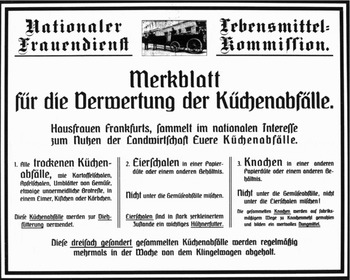
Frankfurt's NFD soon expanded its activities and also established a separate collection of bones and eggshells.Footnote 64 In an appeal to housewives (Figure 1), it explained how different organic wastes such as food, bones and eggshells were to be handled for their reuse as animal feed, fertiliser, and chicken feed respectively. 2,050 kg of bones were collected in the first four weeks, later increasing to about 1,000 kg a week.Footnote 65 A local bone factory processed the collected bones, which increasingly also came from restaurants and hotels, into bone meal to be delivered to local farmers and gardeners as a substitute for Chilean saltpetre that was lacking due to the naval blockade.Footnote 66 Later on, the collection results dropped considerably when meat became increasingly rare and two weekly meat-free days had been introduced.Footnote 67
The information sheet published by the National Women's Service (NFD) in Frankfurt. Historical Archives of the Institut für Stadtgeschichte Frankfurt am Main, Materialsammlung Neuland, S6b-75, 415.

In 1916, municipal waste collectors took over the kitchen scraps collection. The city of Frankfurt now became involved in the Reichsgesellschaft für Milchkraftfutter. Additionally, it decided to establish local pig fattening units that absorbed all the scraps until the winter of 1917.Footnote 68 Thereafter, surplus scraps were processed in the newly constructed drying unit. The contract with the Reichsgesellschaft from March 1917 stipulated a loan to be paid back in the form of kitchen waste, enabling Frankfurt to provide official collection bins for each property.Footnote 69 Furthermore, the city received horses so that the number of waste carts could be increased from eight to fourteen. Frankfurt received three marks per tonne of kitchen waste delivered to the Reichsgesellschaft and could obtain concentrated feed for 36 marks per tonne. In June 1917, all heads of households as well as businesses were obliged to collect kitchen waste separately, except those already reusing kitchen scraps in some form.Footnote 70 The outskirts were excluded since they kept their own livestock and would feed them the leftovers. In May 1918, the sales and purchase prices negotiated with the Reichsgesellschaft were increased to 4.5 marks a tonne for kitchen waste and 60 marks a tonne for concentrated feed.Footnote 71 Nevertheless, the city's basic collection costs could no longer be covered.
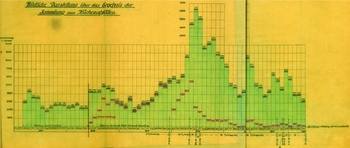
Due to the increasing number of participating households, the yields of the collection increased considerably at the outset (Figure 2). Besides, because they were aware of municipal on-site piggeries, many Frankfurt citizens now felt that their waste separation work directly contributed to the local food supply. Even during the drop in the summer of 1917, 140 tonnes–164 tonnes of kitchen waste were collected per month; in the winter of 1917/18 the figures reached 250 tonnes–291 tonnes, nearly twice as much as in 1915, with further increases to come. In Frankfurt, even in the spring and summer of 1918, an impressive 50 g–80 g of food scraps were collected per person per day. In 1916/17, cities with obligatory kitchen waste collections averaged 60 g.Footnote 72 One might assume that a critical and, later on, a deficient food supply would also reduce the amount of food scraps. However, provisions with a high nutritional value such as bread or meat were increasingly replaced with root vegetables. Their peel and many other parts were unfit for human consumption but were edible for pigs or small livestock.
Collected food waste per month in centner (50 kg). The red lines represent the amount fed to pigs at the municipal piggery. Note the many fluctuations both in the volume collected and the volume fed, due to seasonal variations, food supply conditions or epidemics in the piggeries.
Source: Städtisches Verkehrsamt, Abt. Fuhrpark, 20 Aug. 1920: Verwertung der Küchenabfälle in Frankfurt am Main, in Historical Archives of the Institut für Stadtgeschichte Frankfurt am Main, Bestand Magistratsakten, S 251 (Vol. 9, Lebensmittelversorgung allgemein).

Although professional journals repeatedly complained about low urban participation rates in the food recycling efforts as well as households’ inefficient waste separation,Footnote 73 we must assume high recycling rates for kitchen scraps in a situation where undernourishment was widespread. Even if the Reichsgesellschaft's recycling infrastructures were not successful, many food scraps transited through other municipal, but also informal or private paths to the stomachs of livestock. Besides, urban scavengers who searched through dustbins were omnipresent, and some families even lived on potato peels. While eight German cities owned municipal piggeries before 1914, their number rose to sixty-eight in 1917.Footnote 74 Even if many of them regularly struggled with epidemics, they were seen as contributing to the local citizens’ nutritional needs. Indeed, Frankfurt's piggeries occasionally provided more pigs than the number of pigs officially allocated to the city.Footnote 75 In Stettin, a city in the east (now Szczecin in Poland), regional animal breeders pursued the pre-war tradition of collecting food leftovers in exchange for milk, vegetables, wood or sand.Footnote 76 Wiesbaden, a small city near Frankfurt, refrained from an official kitchen scrap collection since it hosted many small livestock breeders, and regional milk farmers traded milk for scraps.Footnote 77 But we should also note that the rich neighbourhoods of this rather wealthy city lacked interest in a separation system.Footnote 78 In contrast, Cologne, as a large urban centre in the region, learned through a survey conducted in late 1914 that half of its households were willing to separate their food waste for collection.Footnote 79 According to contemporary waste practitioners, poor people's participation was obviously higher than that of the rich – a noteworthy observation since it contrasts with the view of contemporary organised middle-class women, many of whom accused working-class women of lacking sophisticated housekeeping knowledge or of prodigally performing their household tasks.Footnote 80 Besides, towards the end of the war, urban families increasingly kept rabbits or hens – be it in backyards or on balconies – that could be largely nourished by leftovers inedible for humans.Footnote 81 Some cities provided so-called ‘war gardens’ for the urban poor in which food was grown and animals were kept. By 1918, Frankfurt provided more than 60 hectares of land for gardening,Footnote 82 while Chickering reports that in Freiburg between 6,400 and 14,400 rabbits, 7,000–9,000 hens and more than 1,000 goats were living in 1918.Footnote 83
In some cities, kitchen scraps were collected beyond the end of the war. In Berlin, when green fodder was scarce due to harsh temperatures in early 1919, dairy cattle farmers established particular collection points where citizens could exchange their potato peel, breadcrumbs and cabbage leaves against kindling.Footnote 84 Frankfurt's municipal food scrap collection existed until January 1920, before farmers took over the initiative for some time. Municipal authorities decided to give up the official collection when labour and transport costs increased to such an extent that urban spending doubled the amount paid as reimbursement by the Reichsgesellschaft.Footnote 85 But there were also critical reactions to this development. The municipal health councillor, Dr Hanauer, pointed to the critical economic situation which should have called for the avoidance of any waste.Footnote 86 His model was Paris, where four waste treatment plants turned urban waste into fertiliser or burned it, depending on local demand.
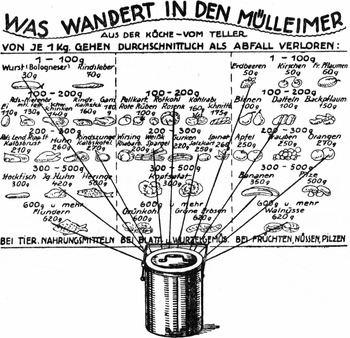
While kitchen scrap collections were eventually abandoned in interwar Germany, the rhetoric of ‘gold’ or ‘wealth’ to be found in rubbish bins that had been boosted by the war persisted. With regard to housekeeping, the war experience had promoted the idea that home economics constituted a distinct field of expertise. But even if German women did obtain the right to vote, the revaluation of home economics and housework only served to reinforce the traditionally gendered division of labour. In Weimar Germany, shopping and cooking were considered as women's unique weapons to serve the nation.Footnote 87 At the same time, home economics was further developed in the wake of the efficiency movement. In particular the RDH (Reichsverband Deutscher Hausfrauenvereine or National Federation of German Housewives’ Associations, founded in 1915) upheld a very traditional ideal of female domesticity while at the same time embracing home economics or household technology, which were seen as a means to serve the values of family and fatherland.Footnote 88 With respect to waste, influential works such as Erna Meyer's heeded the official discourse and emphasised the need for a proper, hygienic disposal of waste by means of the municipal dustbin.Footnote 89 But waste predominately figured as its obverse, namely as a call to avoid it through thrifty housekeeping or what Meyer called a domestic ‘materials management’ (Materialwirtschaft). Women were still educated about the efficient use of foodstuffs, and potato peelings continued to be a major issue. For instance, Erna Meyer explained that peeling potatoes before cooking them would mean a loss of 10% of the potatoes; extrapolating this to the scale of national economy, she regretted that peelings were hardly collected any more, either for fodder or to make compost.Footnote 90 An educational poster presented in an exhibition on nutrition (Figure 3) showed which kinds of food produced more or less scraps and highlighted that jacket potatoes were much less wasteful (only 100 g waste/kg) than boiled ones (250 g of peel waste). Housewives were called to use all food to full capacity ‘in the interest of national economy’, for instance through careful peeling.Footnote 91
Under the heading ‘What goes into the dust bin?’ foods derived from animals, from vegetables, and from fruits, nuts and mushrooms are ranked according to the amount of leftover waste. ‘Was wandert in den Mülleimer?’ Guter Rat für Heim und Herd, no. 7, July 1928, cover.

Waste and food waste collections under the Nazi regime
By the time the National Socialist party assumed power in 1933, German city dwellers produced around 400 g to 500 g of waste daily.Footnote 92 By now, more cities had municipal waste collection services and dumping prevailed as the main disposal method. Rag merchants remained important purchasers of used materials,Footnote 93 but their numbers had dropped during the economic crisis. The National Socialist waste and waste recycling policies were as incoherent as their consumption policies, oscillating between an austerity dictatorship and a modern consumer society.Footnote 94 Belying improving standards of living, the National Socialists focused on thrifty housekeeping and waste salvage, ultimately with the aim of an early war mobilisation. While most German citizens might not have been fully aware of this ongoing mobilisation for a second war, many supported the Nazi waste collections in the name of saving resources. Some citizens even did so by explicitly referring to the past wartime waste collections. Describing the former women's roles as ‘rag-pickers, junk dealers, bookkeepers and employers’ in a book on women on the home front, Marie-Elisabeth Lüders – a main leader within the BDF and a leading organiser of the women's First World War effort – drew very direct connections between wartime waste practices and the thrift policies of her time, even if she did not identify herself with the National Socialist ideology.Footnote 95 The Nazi government, in turn, did the same when it established its framework of national autarky and autarkic housekeeping.Footnote 96
As early as 1934 and 1935, some cities began systematically separating waste,Footnote 97 and various National Socialist organisations collected metals and textiles, paper and bones from 1936 onwards. The salvage drives of the First World War served as both positive and negative examples for the Nazi officials in charge, most of whom would have taken part in war waste collections as children.Footnote 98 While belligerent Imperial Germany explored initial steps into the ‘total’ mobilisation of waste materials and agents, the autarkic framework of Nazi Germany aspired to such a ‘total’ recovery of any waste matter early on and fully expressed it after 1936, in parallel with the Vierjahresplan (Four-Year Plan) policies. ‘Using the Useless’ (Verwertung des Wertlosen), for instance, was the title of a pivotal propaganda book on waste reuse and autarky that asked for a ‘battle against spoilage and the squandering of materials’ through a ‘total exploitation of waste’.Footnote 99 Nevertheless, National Socialist waste policies stand out as unique for the time. Not only did it systematically revalue waste work as condign service to the Volksgemeinschaft (national community), but it included utterly cruel and perverse aspects such as the Aryanisation of the scrap trade, the reutilisation of personal belongings or even hair of concentration camp victims or a systematic exploitation of raw as well as waste resources in occupied countries, most of which have not been studied so far.Footnote 100
As in the First World War, the Nazis largely resorted to existing waste and disposal infrastructures for their recycling activities and, once again, exploited women and schoolchildren as voluntary but effective waste workers. In contrast, they disapproved of earlier, unco-ordinated structures that had relied on local solutions reacting on local specificities of waste volumes or means of transport. The Nazis’ structured, centralised implementation of their waste policies limited municipalities’ power and heavily relied on the existing National Socialist personnel structures, enabling a direct communication between national level and the levels of Gau (region), Kreis (county) and local commissioner (Ortsbeauftragte). At the same time, the National Socialist waste regime was characterised by ‘polycratic’ elements; different institutions competed for competences and, in the end, the hundreds of regulations and directives on waste and recycling became unwieldy and ungraspable. Three sectors should be discerned:Footnote 101 by 1936, separate kitchen scrap collections were established; towns of 35,000 inhabitants or more had to include sorting mechanisms in their municipal waste disposal infrastructures to access reusable stuff out of the collected masses of waste; moreover, urban households had to collect certain types of waste at home under the controlling eyes of individual ‘caretakers’ who were responsible for a block of flats. As far as the scrap trade is concerned, it was systematically integrated in the reutilisation efforts from 1935 onwards. Jewish traders were excluded and replaced with ‘Aryan’ compulsory collectors (Pflichtsammler).Footnote 102 Targeting the various stages of the waste stream – at home, inside the municipal waste disposal infrastructures and within the recycling trade – facilitated the aspired ‘total’ exploitation of waste but also led to inefficient concurrences.
The idea of collecting kitchen scraps reappeared on the waste management agenda by the end of 1935. By that time, on average, kitchen waste was made up of 65% potato peelings, 18% vegetables, 4% bread, nearly 9% meat and the like, and 4% other sources.Footnote 103 As between 1914 and 1918, it was housewives who were made responsible for the separation, temporary storing and then delivery of different kinds of waste, in particular food waste. For instance, the Rheinisch-Westfälische Zeitung newspaper wrote with respect to the food recycling initiative: ‘A precondition for the success of this ambitious plan is obviously the active and understanding co-operation of the housewife. This is the opportunity for her, without any real sacrifice, to ensure her own not yet sufficient supply of fats, and at the same time to create new value so to speak out of nothing.’Footnote 104 In Frankfurt, information pamphlets with the title ‘Housewives! This time, you are involved!’ were distributed to recruit them for the upcoming kitchen scrap collection. Additionally, schools were involved, and teachers were expected to instruct their pupils on the importance of kitchen waste. In respect to women's activism, the diverse and in no way concordant women's alliances of the past had been ‘integrated’ (i.e. Nazified) within the Nazi administrative structure and Nazi organisations, such as the Deutsche Frauenwerk (German Women's Bureau) or the NS-Frauenschaft (the Nazi women's organisation with around 1.7 million members in 1939). These not only popularised home economics and efficient autarkic housekeeping, but also were involved in restructuring waste and recycling.Footnote 105 In contrast to the earlier situation, however, women's activism now largely supported centrally implemented recycling policies and mobilised fellow women for these instead of establishing individual local waste collection campaigns. The Nazis’ top-down approach to waste reuse did not leave much space for female grass-roots initiatives, even if, in general, the Nazi state offered a formerly unknown potential of participation for Aryan and politically trusted women.Footnote 106
In November 1936, municipalities received a directive demanding that they collaborate in collecting kitchen scraps. The main agent made responsible for this collection was the Nationalsozialistische Volkswohlfahrt (NSV, National Socialist People's Welfare), one of the largest Nazi mass organisations from 1933 onwards that, as the main institution of welfare and charity work, also turned into a relevant institution for the wartime mobilisation of the home front. Concerning the kitchen scrap collection, the NSV founded the Ernährungshilfswerk (EHW, nutrition relief organisation). In cities with over 40,000 inhabitants, piggeries were set up by the NSV or the EHW, since the Nazis favoured the direct feeding of food waste over its processing into dry mash. Municipalities had to provide appropriate land for the pig farms as well as the necessary collection vehicles.Footnote 107 In some Frankfurt districts, kitchen waste collections began in January 1938 and were expanded progressively.Footnote 108 Ideally, Frankfurt expected to receive 150 g of kitchen scraps per household per day and hoped to fatten 4,000–5,000 pigs with these.
We still do not know to what degree people were willing to participate in the Nazi waste collections. Besides, further research has to clarify how far the aspired ‘total’ recovery of waste was affected by the war and its systematic exploitation of occupied states. For 1937, the SoPaDe Berichte, that is the reports local informants prepared for the exiled head of the Social Democratic Party, mention that the kitchen scrap collections were ‘much ridiculed’. Citizens of Kehl, a German town on the Rhine directly opposite Strasbourg, joked that the pigs must be expensive because three municipal employees were required to collect the scraps.Footnote 109 Apparently, because voluntary participation failed, a police directive of 10 October 1939 obliged all urban households to participate in kitchen waste collections and home owners had to acquire collection bins, so-called ‘NSV bins’ from the EHW. Likewise, Nancy Reagin hints at sceptical and even alarmed reactions towards the Nazi women's effort to mobilise domestic leftovers for recycling, since it reminded contemporaries of past economic shortages considered to have been left behind.Footnote 110 At the same time, looking back with hindsight, in their memories, many women of the war generation later on would approve of the Nazi's recycling efforts as a positive element of that era.Footnote 111
Conclusion
As we have seen, during the First World War as well as in the Nazi regime, waste and waste salvage were pivotal fields in which the German state – and partly also women's organisations – tried to mobilise women, in particular, and even children for the war effort. In contrast to this historical situation, the exploration of the concept of ‘mobilising’ for a ‘total war’ has neglected these efforts so far. During the First World War, everyday leftovers, and then increasingly other used materials, were to be handed over to collection centres to improve the material basis of the war economy. This foreshadowed later National Socialist recycling efforts. Moreover, the participation in these waste-collecting efforts was constructed as a means to demonstrate one's moral support of the belligerent German nation by donating one's labour or unused materials to the needs of the nation. While the quantitative effects of wartime waste salvage drives cannot be estimated, their main importance might indeed lie in this ideological mobilisation. To maintain used, but yet ‘valuable’, goods was defined as a duty of every German woman. This is not to say that the practices of waste and reuse changed, but their meanings did. In the first half of the twentieth century, housekeepers from poorer families would have saved reusable things anyway, and they would most naturally sell these things to the urban rag-and-bone trade. But now channelling leftovers back to the sites of production was redefined as a political act to recover national resources. As a result, reusing waste as well as thrifty housekeeping and home economics were revalued as issues of national importance.
Germany's First World War waste policies were rather unco-ordinated and decentralised, leaving much scope for local bottom-up initiatives. Even after the state's rigid intervention in 1916, municipalities still had some discretion in meeting the national call for waste salvage. Many of the waste collections were not only sustained, but also established by, local female activism and the various women's associations, in particular in the case of food scrap recycling. In contrast, the Nazis’ recycling regime was centrally organised. Waste collections were imposed from the top and seem to lack a comparable women's grass-roots engagement. When considering the two wars in a long-term perspective, further aspects become clear: firstly, Nazi recycling efforts heavily relied on studying the success and failure of the previous wartime salvage efforts, and the Nazis also referred to the previous wartime situation to legitimise their waste policies. For another, during both periods, the German state ideologically explored a ‘total’ recovery of waste. But at the same time, neither the 1914–1918 nor the 1933–1945 period constitutes a ‘turning point’ in respect to waste and recycling. Rather, both regimes could reactivate existing practices and mentalities in reusing waste for their mobilisation policies.