November 2017
Graeme Barker and I managed to get a grant of 5,000 euros from the Prince Claus Fund to backfill the Haua Fteah cave near Susa. After many false starts and a great deal of preparation and effort the work was finally carried out by a team of Libyan colleagues in August 2017. During my visit to help with infilling the Haua, I managed to fit in other visits and discussions. This November 2018 report therefore covers a number of topics.
Visas
I am grateful to Ahmed Hussain, Saleh Aghab and Ahmed Emrage for arranging a visa for me to travel out to Libya to participate in the backfilling. Obtaining the visa was not straightforward. There are new forms, although the details are basically the same. The cost has now risen to £200 (£250 for a fast-track same-day service), but the duration of the visa is only one month from the day of issue.
Travel
Travel to Libya is difficult. At the time I left there were no regular flights into the country, only Libyan Arab Airlines via Tunis or Istanbul. My flight via Tunis involved a wait of over five hours, with the airport authorities not giving permission for me to travel on to Libya until the very last minute. It was clear that they did not want me to travel (as they did not want the responsibility).
Benghazi
I flew into a very different Benina Airport. There is a new arrivals and departures building. I suspect that the old buildings are damaged beyond use, although I could see no proof of that. Ahmed Emrage met me at the entrance to the arrivals hall. The drive from the airport to the town centre was as chaotic as ever, with a great deal of traffic. A number of buildings in the suburbs were pock-marked with bullet and shell holes; some had clearly been bombed, but they were rare. Everything seemed familiar, but with more rubbish and greater neglect.
Benghazi appeared to be as busy as ever with crazy traffic, shops open, many people in the streets and restaurants doing good trade. I met Saleh Aghab in one of the Benghazi hospitals (his son had fallen and broken his arm playing football that afternoon); the hospital was busy and appeared to be well staffed, clean and efficient. Saleh complained of regular failures in the electricity and water supplies, but believes things are improving thanks to the efforts and sacrifices of the Libyan Army. Posters of General Haftar, the leader of the army, are on most street corners. He and the army clearly enjoy considerable support in Benghazi and beyond.
Benghazi University
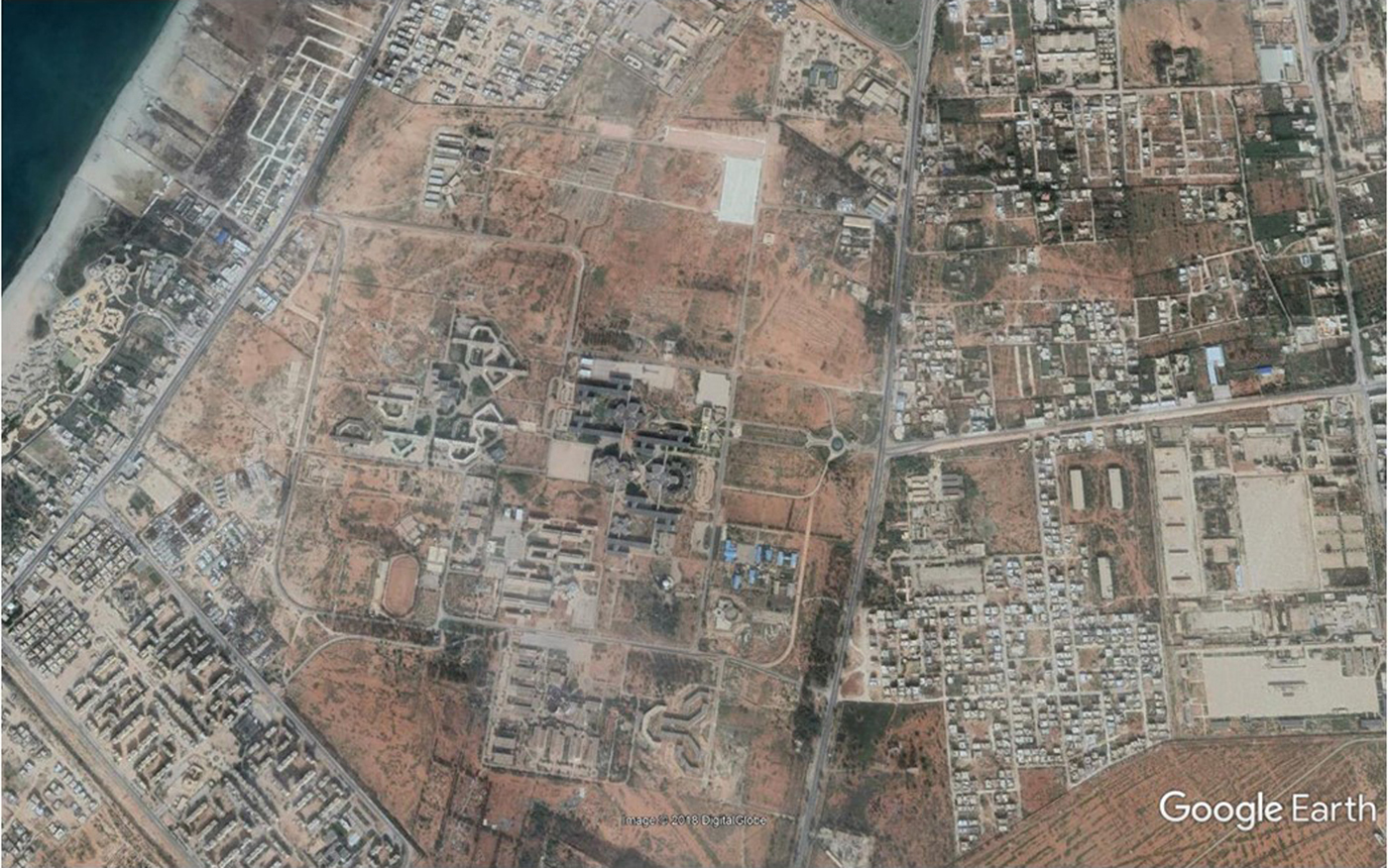
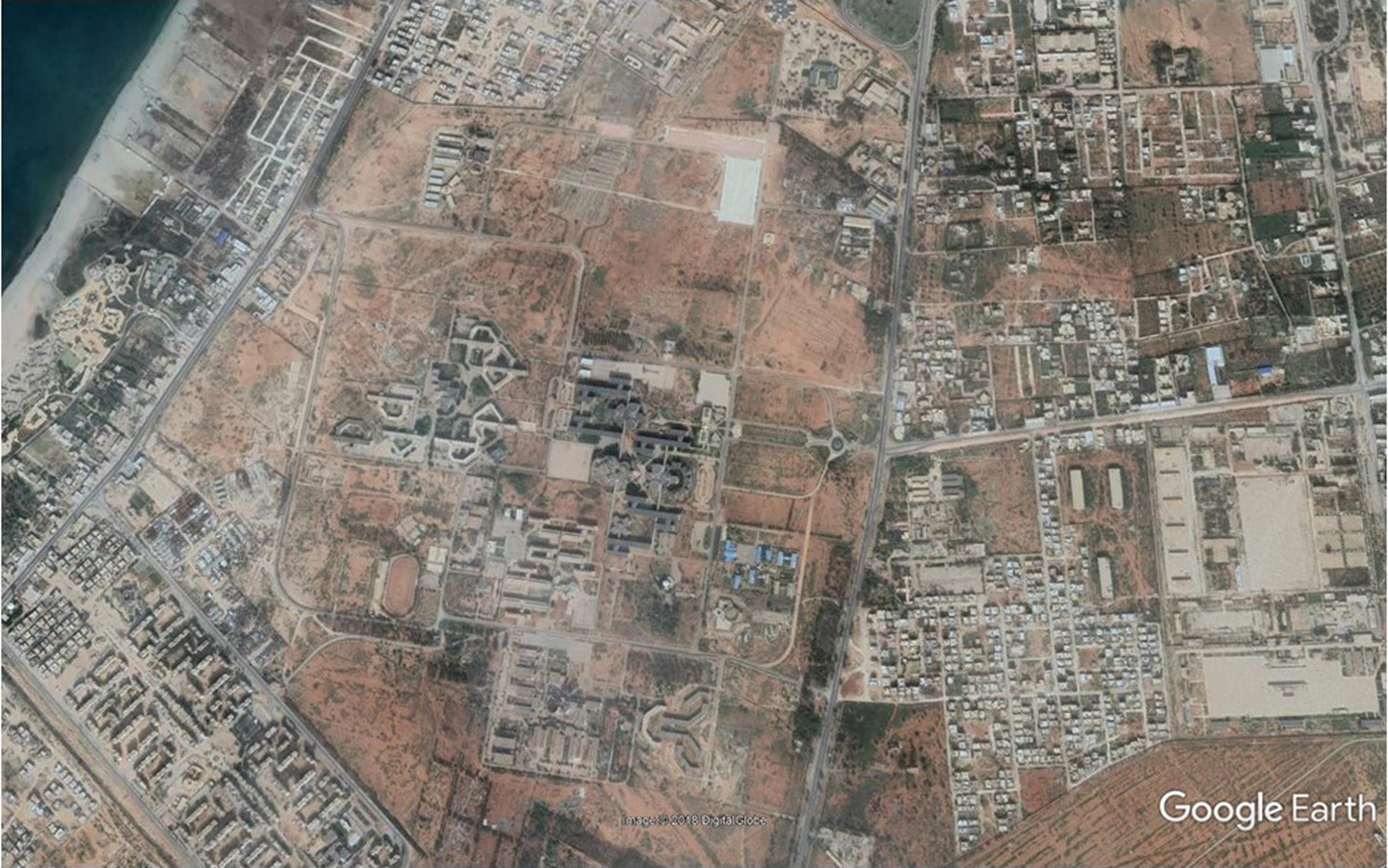
I managed to drive past the University of Benghazi. The site had been fought over on a number of occasions and I was shocked to see that not a single building seemed to be left standing; only a few blackened walls mark this once extensive campus. I remember the beautiful, newly-built Garyounis University from my earliest visits to Benghazi in 1972–73, with Cubit-designed modern architecture of glazed-tile buildings and gilded cupolas, set within shaded courtyards, paved walkways, attractive gardens and even fountains, and found it impossible to believe that the wasteland we drove past was the same place. The entire campus has gone. Although the original institution was severely degraded well before Gaddafi's demise, nevertheless, thousands of students attended this, one of the country's foremost centres of learning, and so the wholesale destruction of the university campus is a major disaster. The university still functions from outlying buildings and a number of branch universities have been developed in Tocra and Susa, but this has more to do with the resilience and determination of teaching staff and students (and their parents) than any other factor. Urgent action is required to rebuild the university.
Satellite view of the university before it was destroyed.
Berka Barracks
I met with members of the Department of Antiquities (DoA) at the former Berka Barracks complex on the morning of Tuesday 8 August at the request of the Prince Claus Fund. Saleh Aghab has approached them for grant aid to repair part of the barracks complex presently being used by the DoA as an office and stores.
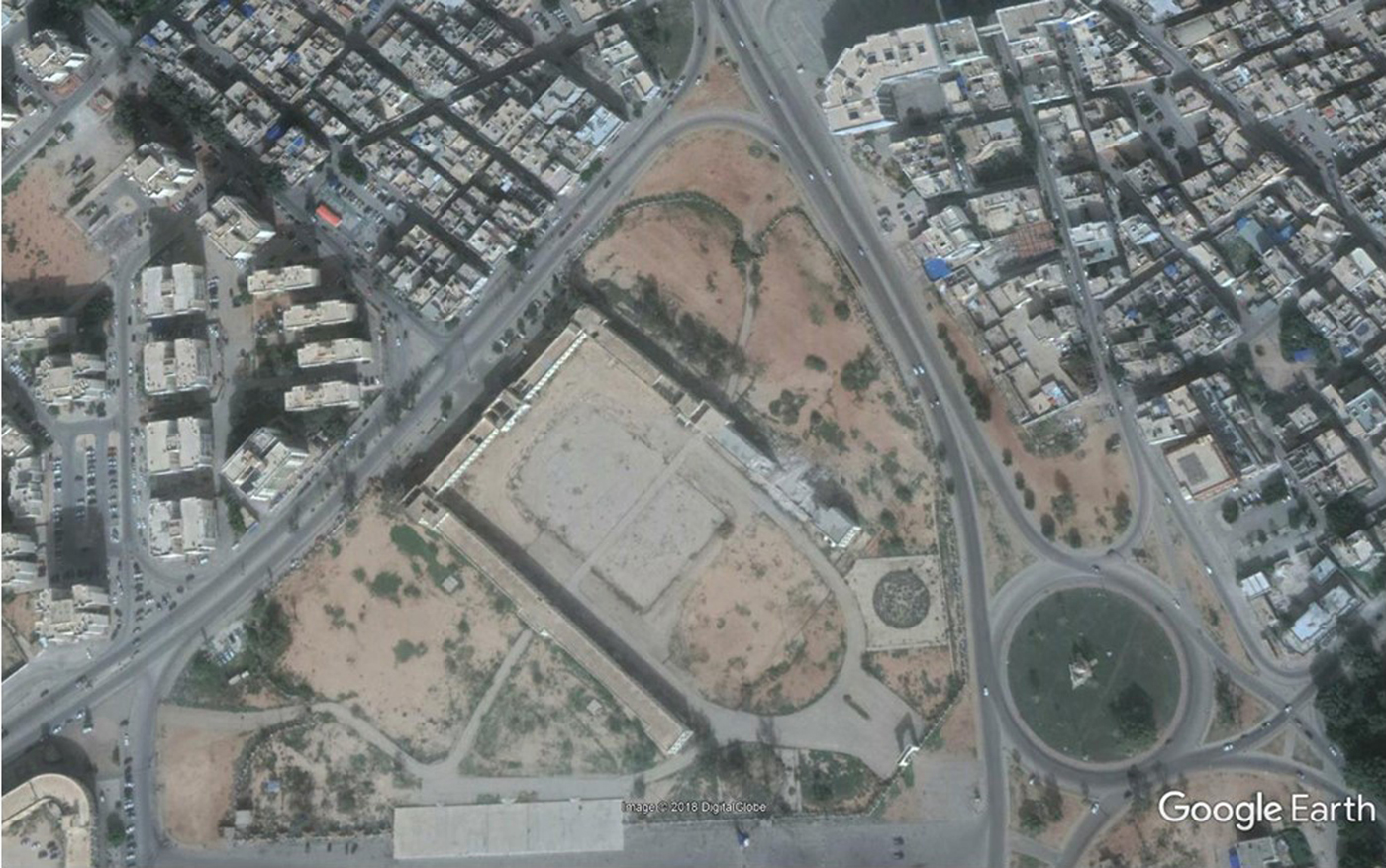
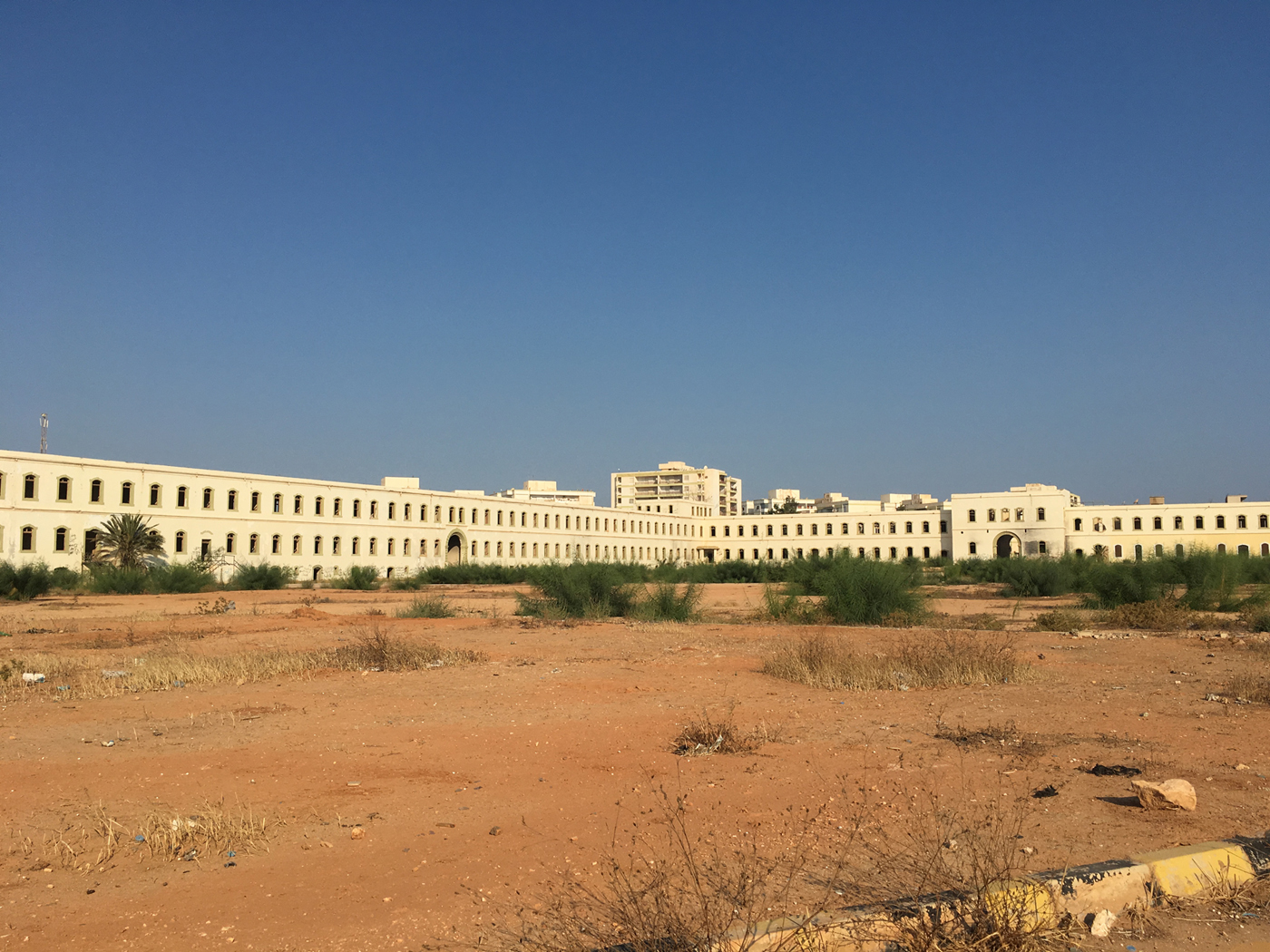
Gasr Berka, or Berka Barracks, is a former Ottoman barracks in the Berka suburb of Benghazi. The barracks was built towards the end of Turkish rule by two energetic, modernising governors, Rashid Pasha (1882–85 and 1889–93) and Taher Pasha (1893–1904). The Berka suburb (where the Turkish governor had a garden) was formed at this time by partly infilling a salt marsh (sebkha es-Selmani) and forming a causeway link to the old inner harbour. The barracks were built on the site of the garden, together with a palace for the governor and a military hospital. In 1891 a narrow-gauge railway line, Cyrenaica's first railroad, was constructed to link the port and the barracks to quarries at Sidi Daud, 6 km distant.
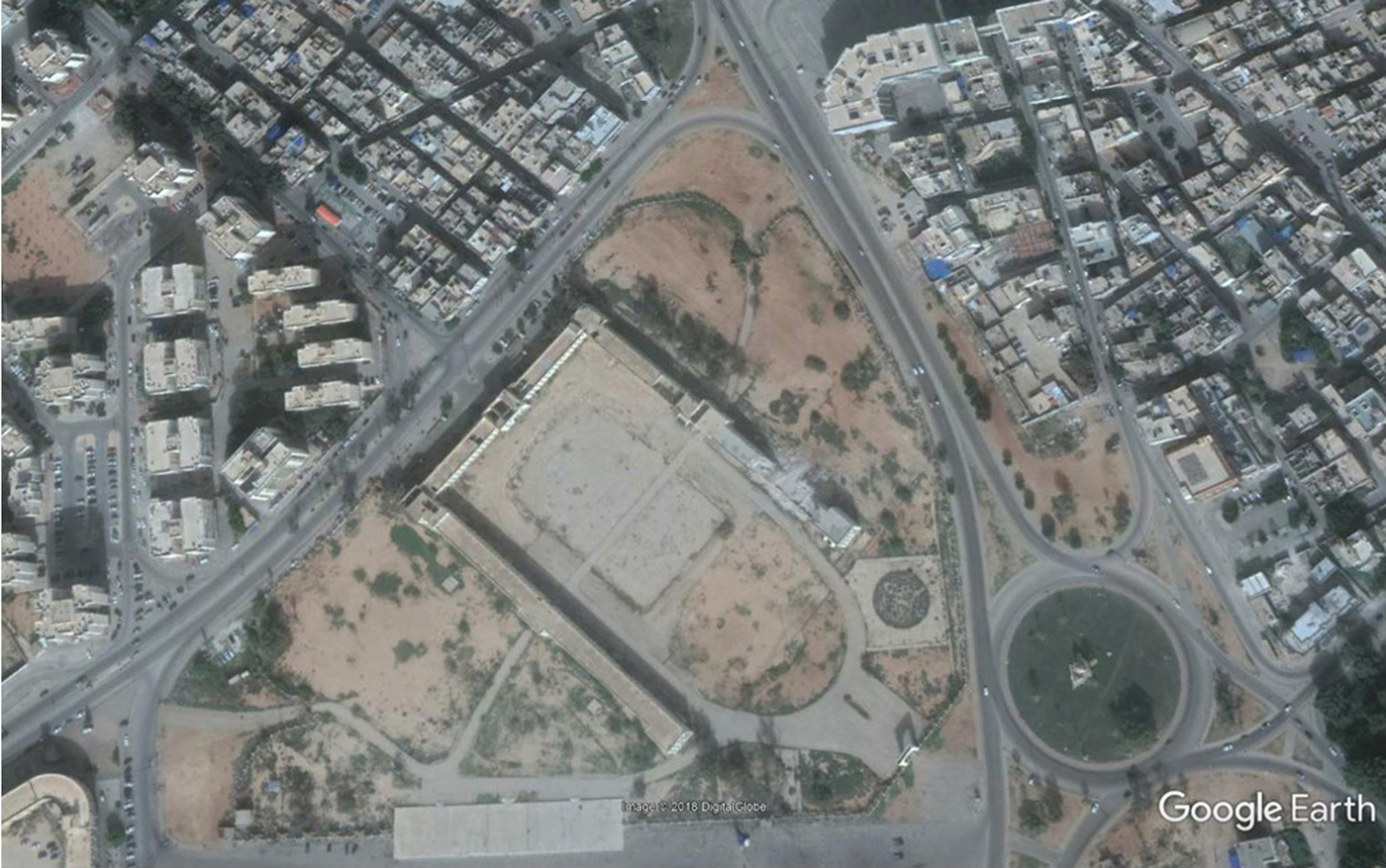
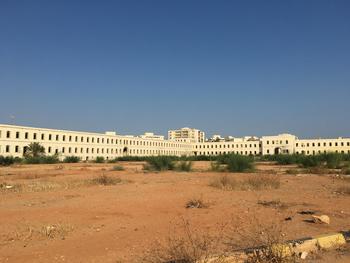
The barracks occupy three sides of a great quadrangle of decaying, partially collapsed buildings surrounding a former parade ground. The DoA has been using parts of the complex, principally the main entrance, as an office and stores for nearly ten years and had designs on other parts of the complex for a museum.
The Berka Barracks today (Google Earth satellite image).
The Berka Barracks before the conflict.
Before 2007, the stores, office and library of the DoA was at Sidi Khrebish, housed in a rather attractive school building built in the mid-1970s. This location for the DoA was established following the excavations of the site by the Society (1971–75) and the laying out of excavated buildings for public viewing.
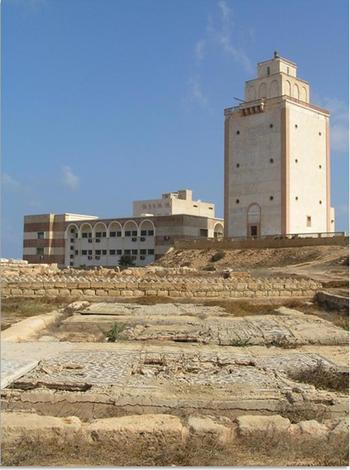
The lighthouse and the former DoA offices in 2006.
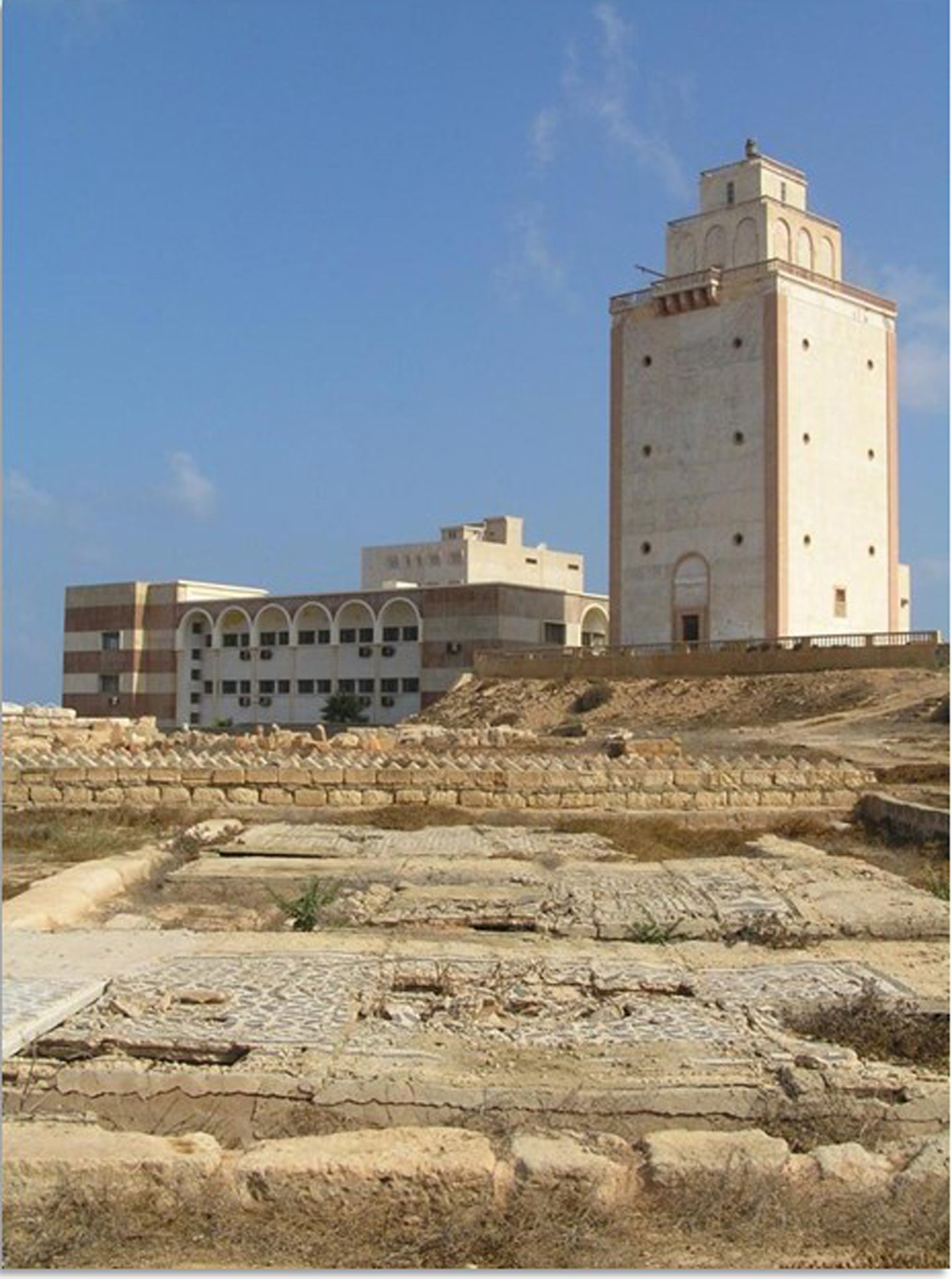
In 2007 the school building was summarily demolished at the orders of the then prime minister to give greater prominence to an iconic Italian period lighthouse occupying the same site. With bulldozers at the site entrance, an emergency operation led by Ahmed Buzaian and the late Abdulgader Muzzaine, removed the most important collections and transported them to Tocra for safe keeping, where they are presently stored. The collection is of national importance, containing finds from stratigraphic excavations spanning the mid-third century BC to the eleventh century AD. Other materials from excavations at Sidi Abeid (the Greek city site of Euesperides – the first Benghazi) were taken to the nearby ‘House of Culture’, an Ottoman period townhouse run then by the Municipality of Benghazi, whilst other parts of the more modern collections (including a fine group of Jewish and Italian gravestones and Italian period sculptures) were lost to the bulldozer. It was at this time that the DoA moved into the very dilapidated south range of the Berka Barracks and leased a few rooms in an office block in the centre of the city for administrative use.
In more recent years the DoA was given use of the former Italian Fish Market and this was renovated to provide good quality, attractive administrative offices, and a home for the library. Other materials were put in a basement store. The salvaged collections remained in store at Tocra and in the House of Culture, but the archive, including museum records, maps, plans and photographs, was kept with the library. The DoA was not there long, when fighting began in the suburbs of city and gradually spread to the university campus and eventually the city centre. At the time of my visit there were still pockets of unrest, some of the most serious in the narrow streets around the lighthouse and the archaeological site at Sidi Khrebish.
Two things have happened. Firstly, the DoA was asked to remove materials being stored in an annex of the House of Culture. The Greek and Hellenistic finds from Society excavations at Sidi Abeid 1996–2007 were taken to Tocra. Secondly, the Fish Market building has been badly damaged by shell and mortar strikes, to the point that it is no longer habitable. Some of the library and office equipment has been salvaged and taken to Berka Barracks, but a great deal has been lost, including perhaps the archive. Material stored in the basement has been buried by building debris and could not be retrieved.
The dilapidated stores at Tocra now hold well-dated finds from two meticulously excavated sites collectively spanning one and a half millennia, together with an enormous quantity of finds excavated from Tocra itself, a collection of considerable importance in its own right. There is an urgent need for this nationally important collection to be safeguarded.
Since the loss of the Fish Market building, the DoA effectively has no base of operations in Benghazi, other than Berka Barracks. Various inadequate buildings have been leased but there is no home for what is left of the salvaged library, archives and other materials. There is also a complete lack of resources to provide a new base of operations. The Department's priority is to pay wages, but even this basic commitment to its staff, with depreciation in the value of the currency and a lack of money supply (even if you have money in the bank, the bank will allow you to take out only a modest amount each month), is becoming immensely challenging and staff morale is very low.
At the time of my visit I expressed hope that the Prince Claus Fund would assist with repairs to make the south wing of Berka Barracks wind-tight and weatherproof, to provide a base for the DoA in very difficult times and to perhaps act as a pump-primer for other grant-giving bodies to assist with a larger project, to perhaps convert the barracks into a museum and resource centre equipped to tell the remarkable story of Libya's second city.
The Haua
Backfilling of the Haua was undertaken by a small Libyan team from the DoA, led by Dr Ahmed Emrage of the University of Benghazi and Fadl Abdulaziz, Controller of the Department of Antiquities of Cyrene. The backfilling process was started on 9 August 2017.
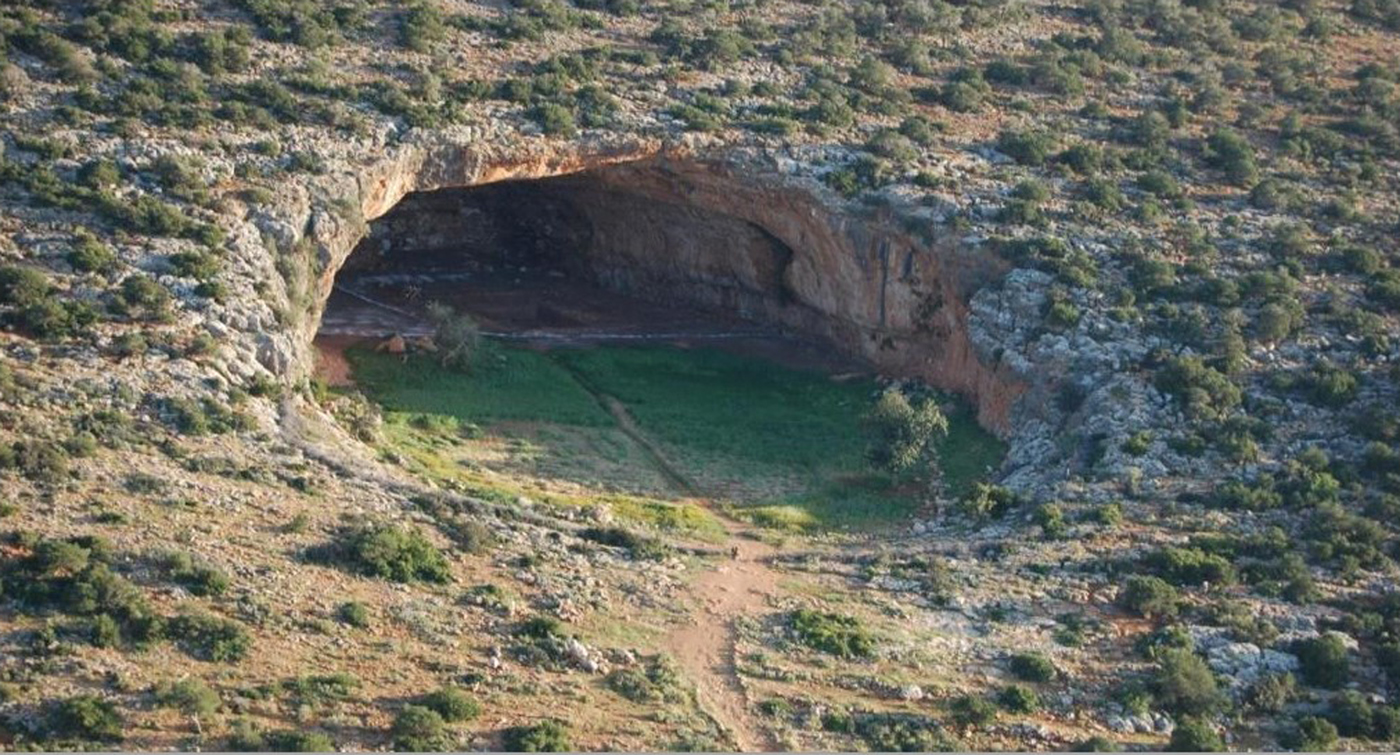
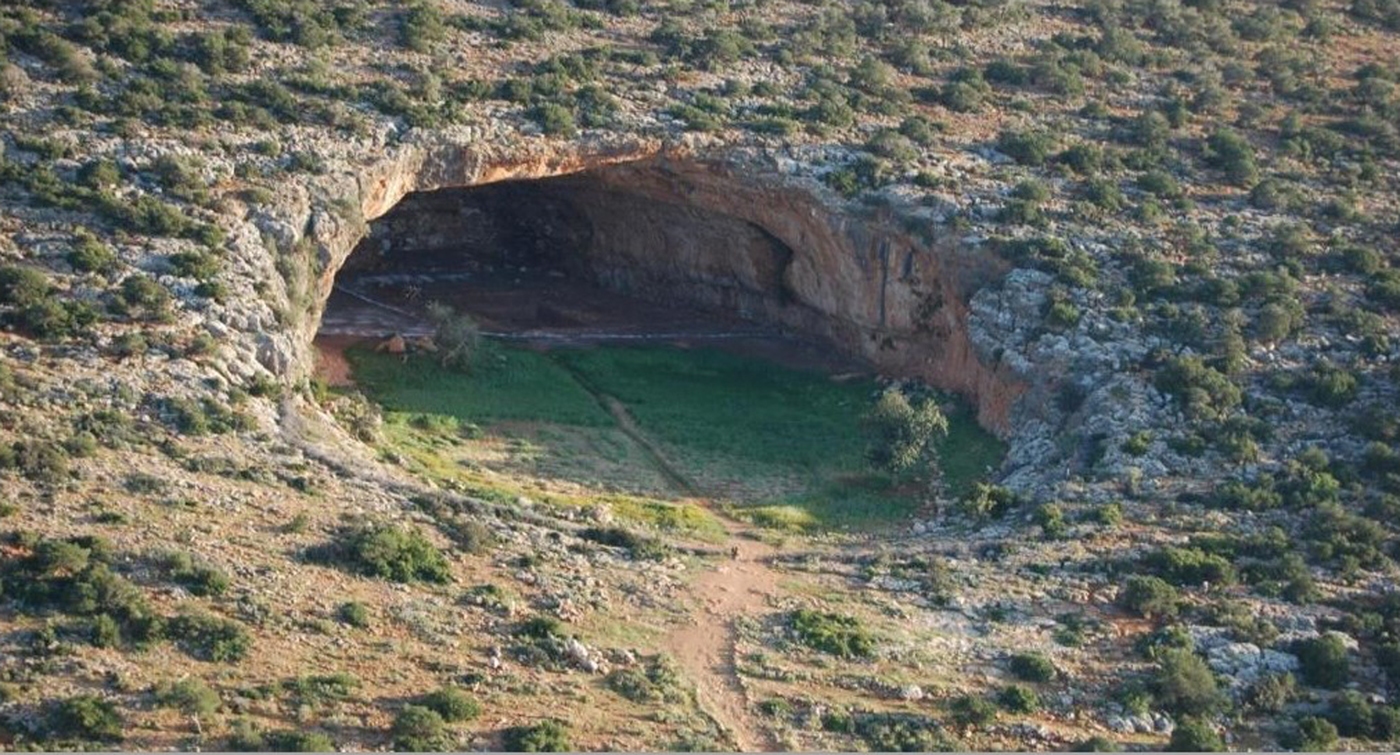
The Haua Fteah cave entrance.
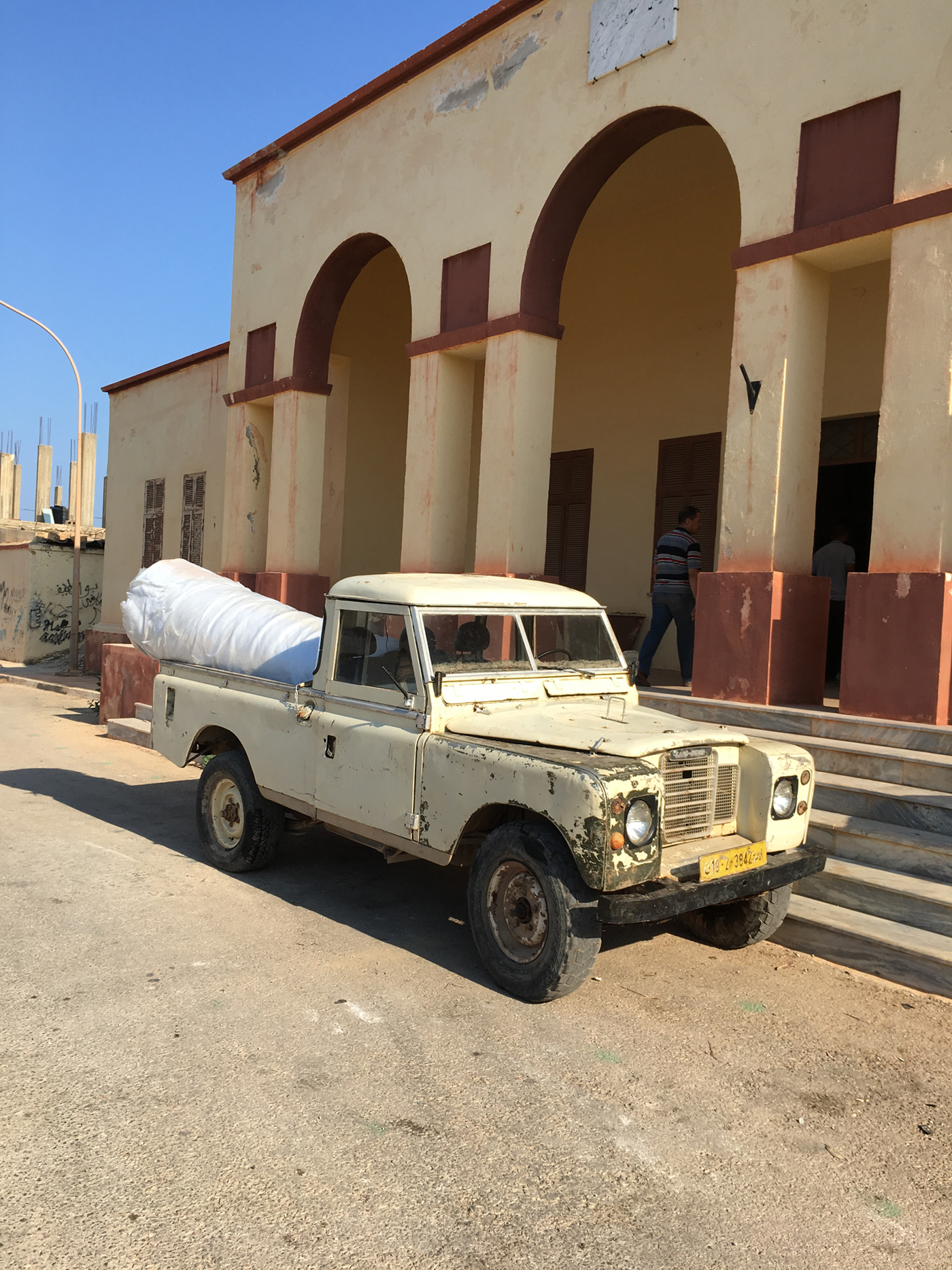
Geotextile: A strategy for backfilling the excavation was agreed with Professor Graeme Barker and the Prince Claus Fund well before the works took place. As part of the backfilling scheme we agreed to line the excavation with geotextile, so that any future investigation of the site would find the removal of our backfill a relatively easy task, with the geotextile additionally protecting the trench edges during the backfilling process.
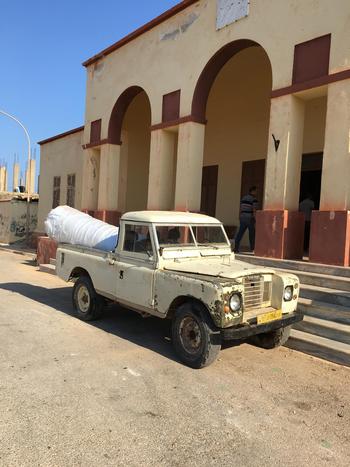
In the event, obtaining geotextile proved to be extremely challenging. None could be found in Libya, and the quantity required, estimated at 400 sq. m (two extremely large rolls, each 3 m long and 1.75 m in diameter, collectively weighing approximately 150 kg) was finally located in Egypt with the help of the Egyptian Antiquities Service. Dr Emrage travelled to Egypt and with the help of Egyptian colleagues, purchased the material and hired a vehicle to convey the two large rolls from Cairo to Susa, where it was temporarily stored. The entire process took the better part of a week.
Geotextile being transported to the Haua Fteah cave.
Making safe access: An essential preliminary to the backfilling process was to ensure that the security services were aware that the works were taking place. Negotiations with local and regional military authorities and the police took place, agreements were arrived at and a local man was appointed to keep the team safe. Fadl and Ahmed are respected and influential members of the local community; without their help, local connections and influence the project could not have moved forwards.
A Land Rover was hired for daily use to convey staff tools and equipment to site. Extendable ladders used during the excavation were transported to site and fixed in place to give access. The fencing surrounding the excavation was made secure and the shuttering and shoring inspected to ensure that it was safe to use.
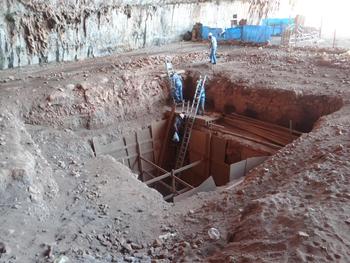
Removing sheeting: The upper and middle sections of the excavation were shuttered with large plywood sheets, wedged into position behind a framework of timber shores. The shuttering was systematically removed by the team, one elevation at a time, with each board transferred to the surface and stacked. Great care was needed to release the upper sheets as these retained large stones and each action was assessed for risk before it was attempted. This phase of the work was supervised by Fadl Abdulaziz and its success without incident was due to his careful planning and industry.
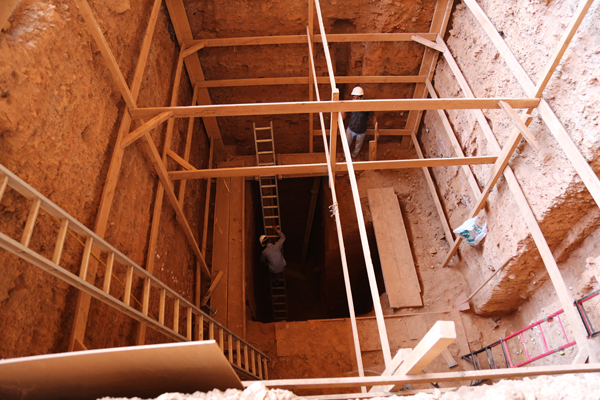
Timber shores.
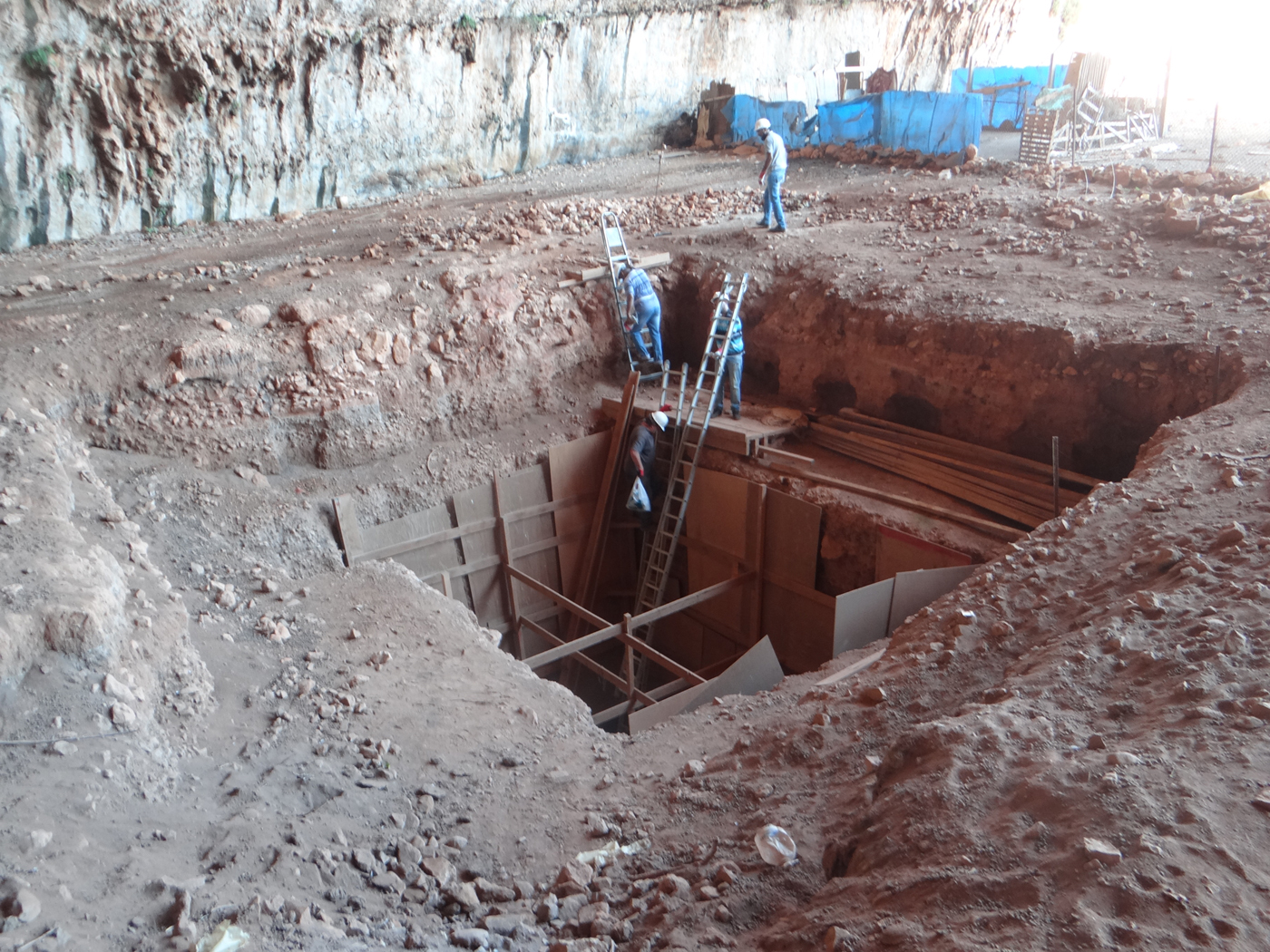
Dismantling shoring: The excavation was shored throughout with stout timber frames in three lifts. The timber platforms, floors, rails, roof and treading boards were dismantled and lifted out of the excavation. Secondary framing was removed next, and finally the principal frames, with all timbers, were lifted from the floor of the upper trench to the surface. Here timbers were de-nailed and stacked. As most of the timber was in a very poor state, a lorry and workmen were hired to remove and dispose of the material.
Removal of the timber shores.
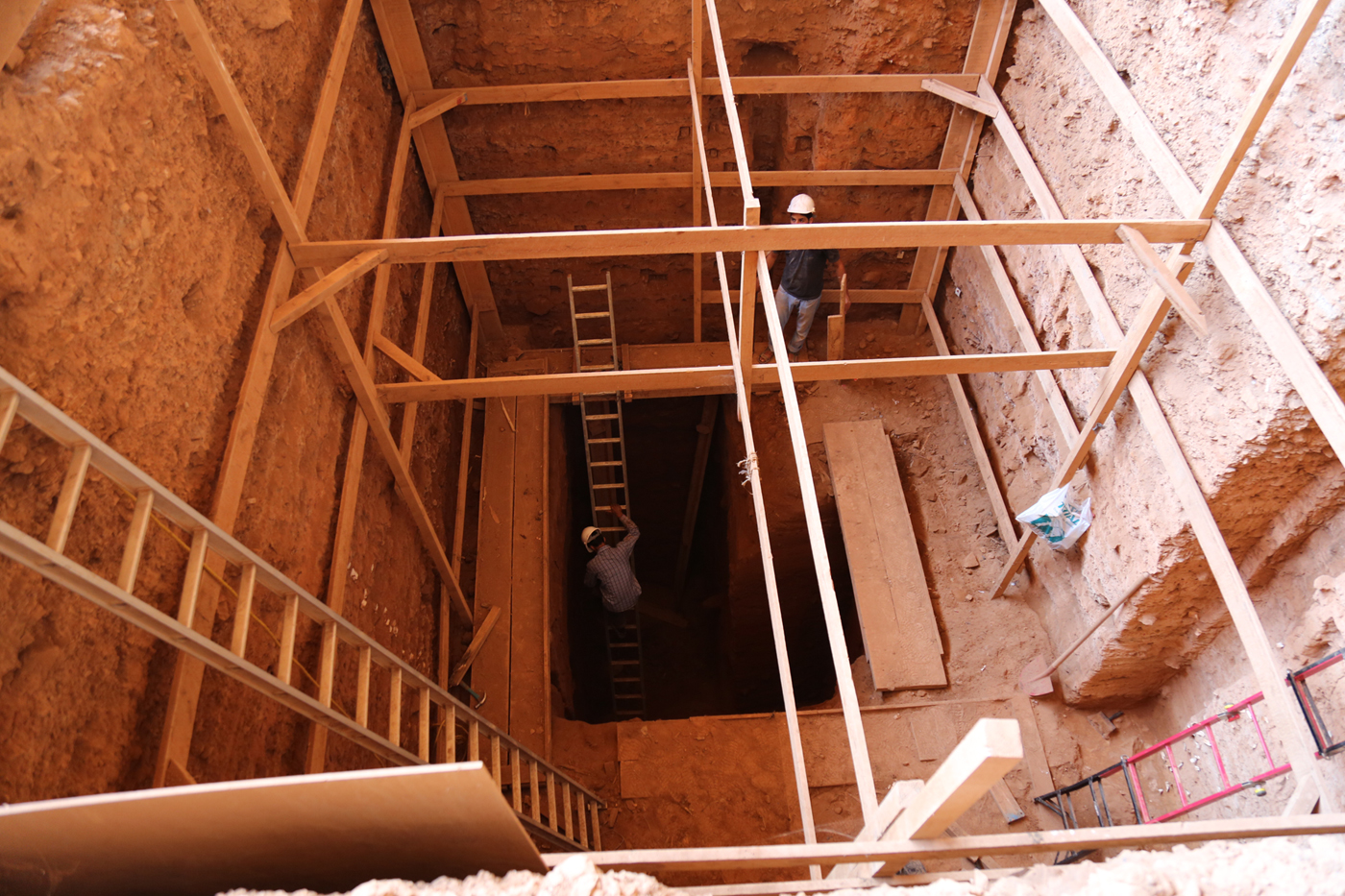
Recording the sections: For a short period, the sides of the excavation from cave floor to the base of the deep sounding were visible, unencumbered by shuttering and shoring for the first time since the completion of the McBurney excavation in 1954. The opportunity was taken to make a photographic record of each section together with general views of the entire excavation.
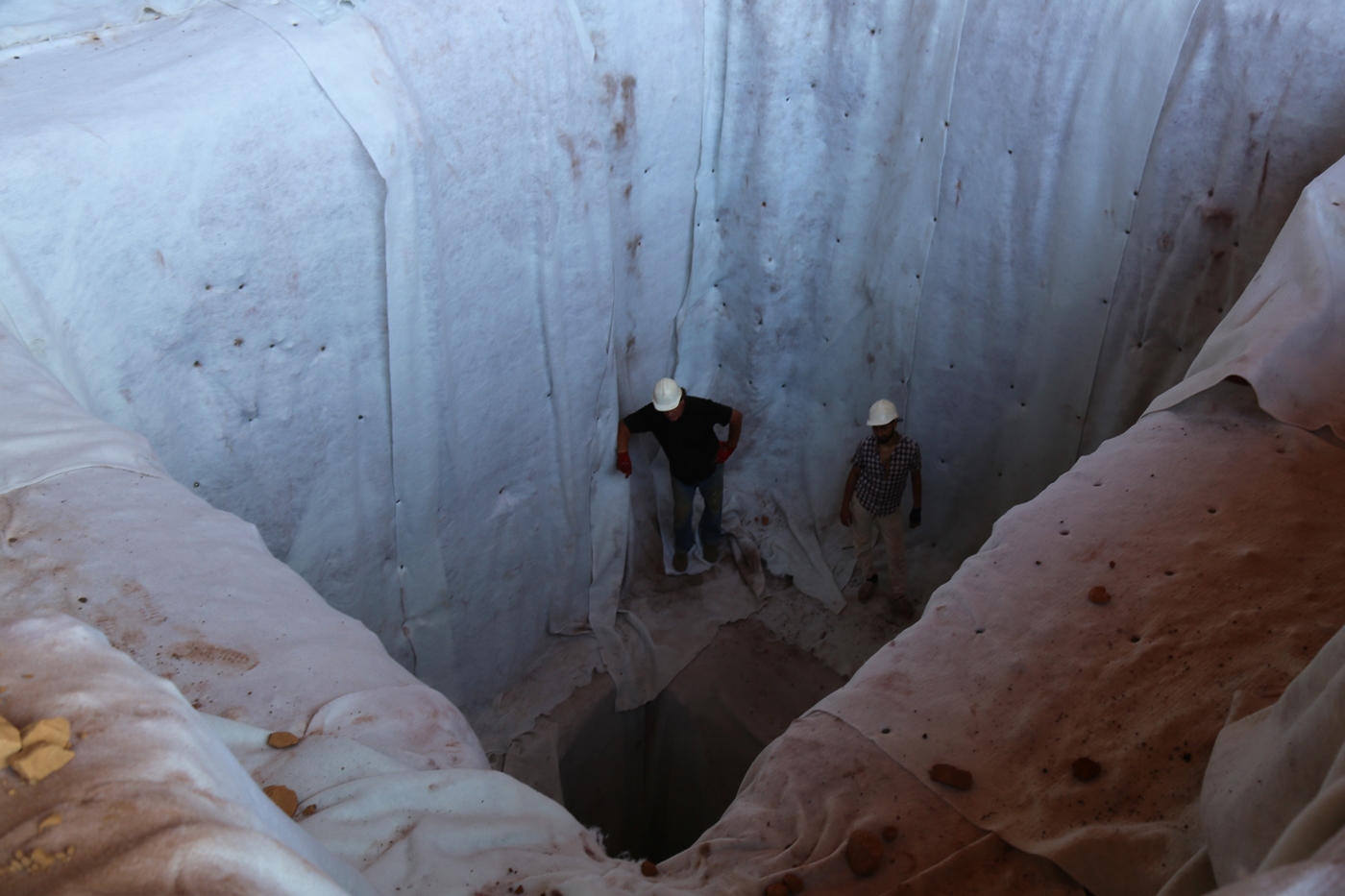
Lining the sides of the excavation: The next stage of the backfilling process was to line the excavation with geotextile. To this end two large rolls of geotextile were delivered to site from the museum stores in Susa. The textile was cut to fit each section with modest overlap, and pinned in place with galvanised nails.
Lining the sides of the excavation with the geotextile.
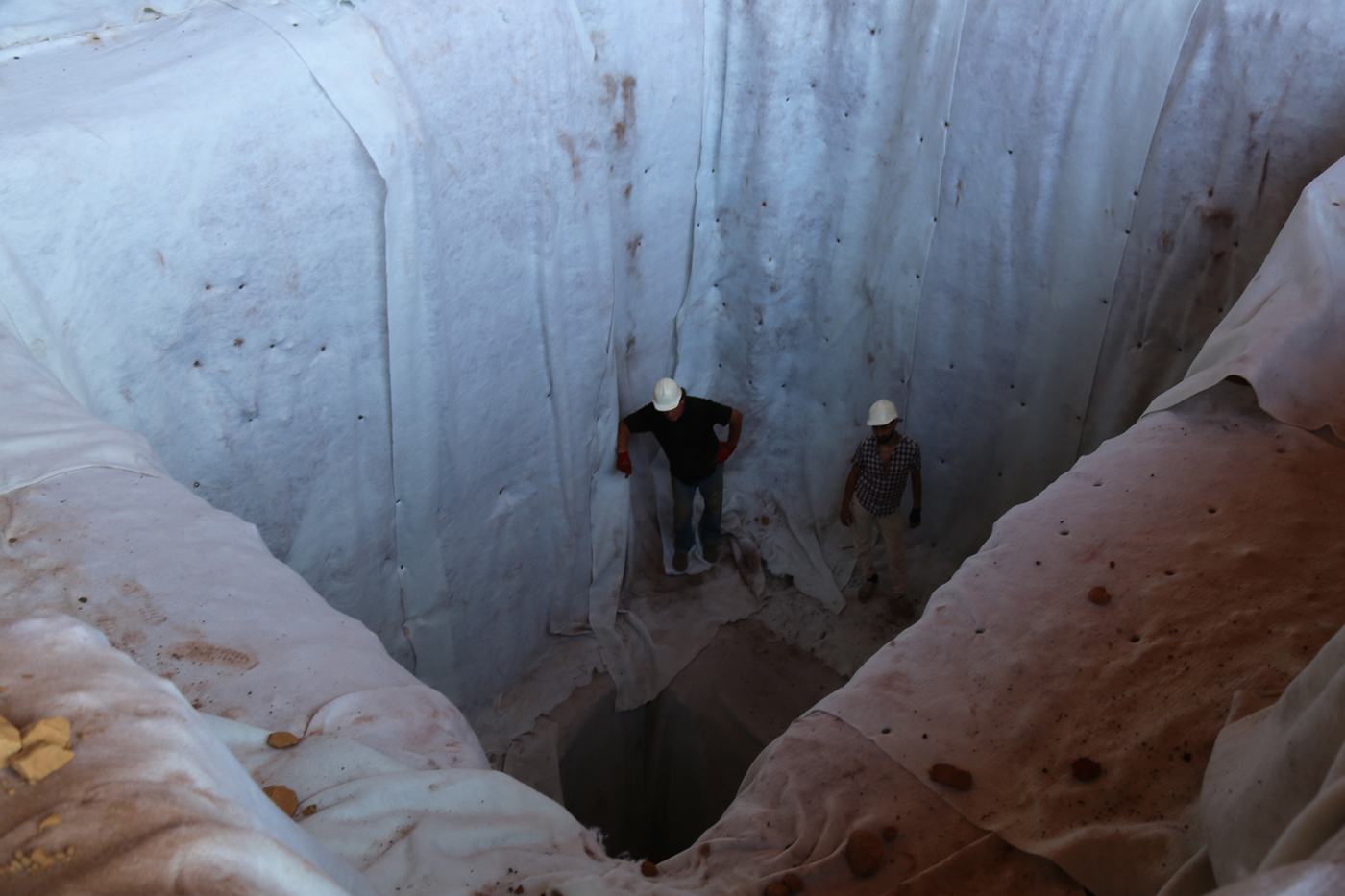
Backfilling: With lining complete, a bulldozer was hired to commence backfilling. For ease, safety and speed of infilling, it was decided to stockpile a substantial amount of fill on the eastern edge of the excavation and gradually allow the material to infill the excavation by gravity. Excavated spoil stockpiled against the eastern edge of the cave was carted by machine bucket to the eastern trench edge. As the work progressed and the heap increased in size, the material was pushed into the void at intervals, working from east to west. The geotextile lining was not displaced or torn during the infilling process, and overall the methodology worked.
Levelling and cleaning the site: The backfill was left for a week to allow for subsidence to take place prior to a second phase of consolidation and clearance. After a week a substantial hollow had formed and a second smaller machine was hired to infill the depression with material garnered from the original spoil heap. The machine was used to assist with the task of clearing the cave of debris. The operation was completed on 24 August 2017.
The backfilling team: The backfilling team, led by Dr Ahmed Emrage and Fadl Abdulaziz, included Akram Alwarfalli, Badr Shamata and Saad Buyadem. Professor Barker and I are extremely grateful to all of them for their exceptionally hard work and to the Prince Claus Fund for supporting the project.
Cyrene suburbs
During my stay in Al Baida, travelling to and from the Haua, I saw an enormous amount of new development, not just in the suburbs of Al Baida, Cyrene and Apollonia and along the coast, but within the World Heritage site of Cyrene. New buildings have been constructed in the Sanctuary of Demeter, along the ancient tomb-lined road to Al Baida and within Wadi Belgadir. All the ancient cemetery sites surrounding Cyrene must now be considered at risk as there is new, uncontrolled and illegal development everywhere. Alongside new development, there are areas which have been cleared for farming, and there are increasing signs of tomb robbing and other clandestine activities, clearly suggesting a growing black market trade in antiquities, particularly sculpture.
Apollonia
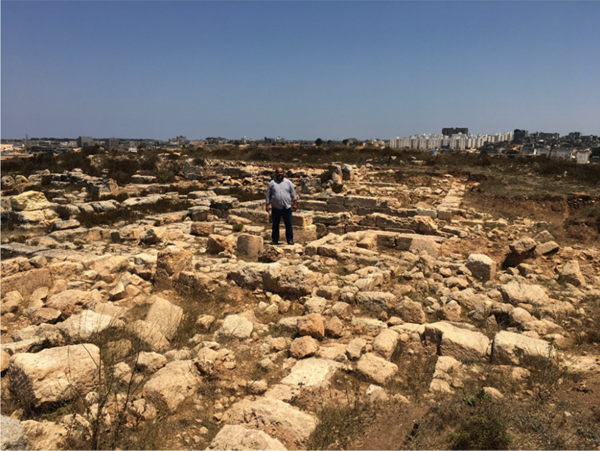
At Apollonia the construction of a new housing estate has recently destroyed an ancient rock-cut fortress. The East Fort, located on a promontory overlooking the sea east of the walled town, was built to protect the approaches to the ancient port in the second half of the fourth century BC. Our knowledge of the fort is sketchy, amounting to a brief topographical survey by G.R.H. Wright and three evaluation trenches cut by a University of Michigan team led by J.G. Pedley and D. White in 1967 (Libyan Studies 29, 1998, 3–33.). A similar fort to the west of the port was destroyed by housing developments and quarrying in recent years. Of the East Fort only a few fragments now remain and these are likely to disappear as the housing estate continues to expand eastwards.
New holiday developments abound on the coast road east of Apollonia. The seaward side of the main highway has been largely cleared, with dirt roads in place for forthcoming building projects. The escarpment side of the highway has been intensively developed with holiday homes, some set within secure walled precincts. Developments now extend for four to five kilometres east of Susa almost to the Haua Fteah cave. The coastal plain west of Apollonia has also been exploited for state housing, private homes, a holiday camp and a new desalinisation plant. The ancient port is now surrounded by housing. There are few paved roads and most sewers discharge directly into the sea, some even into the ancient port.
The harbour
The recent loss of a seaward-facing reef protecting the ancient harbour of Apollonia has exposed the port to the full effects of winter storms, bringing about increasingly severe episodes of silt deposition and erosion. A recent storm exposed part of a multi-period building with masonry walls decorated with painted plaster and rooms provided with opus signinum lined floors. The remains, on the landward side of the port near the East Basilica, were recorded by a team from the DoA and students from Al Baida University led by Ahmed Emrage. A report on the discovery is in preparation for Libyan Studies. The excavated area was carefully backfilled and protected against further erosion by constructing temporary walls of local stone gathered from the foreshore.
Professor Nic Flemming of Southampton University was the first to identify a collapsed natural reef that formed part of the seaward arm of the ancient harbour and predicted dire consequences. Professor Flemming surveyed the ancient harbour in the mid-1960s and following a visit in 2006 was alarmed by the marked deterioration of conditions within the harbour, attributing the silting-over of harbour installations and the severe reduction in the clarity of the water to the failure of the reef. Recent storm surges appear to bear out his warnings; the harbour is silting up and powerful winter waves are now eroding the foreshore on the landward side of the harbour. Urgent action is needed to rebuild the reef.
Al Baida
New development on the campus of the University of Al Baida has revealed the remains of a Late Roman masonry building with plaster-lined masonry walls and mosaic pavements. A rapid salvage excavation by students of the Department of Archaeology led by lecturer Mohammed Touati, has preserved a record of the building and prevented further destruction. A report on the discovery is in preparation for Libyan Studies.
Balagrae training excavation
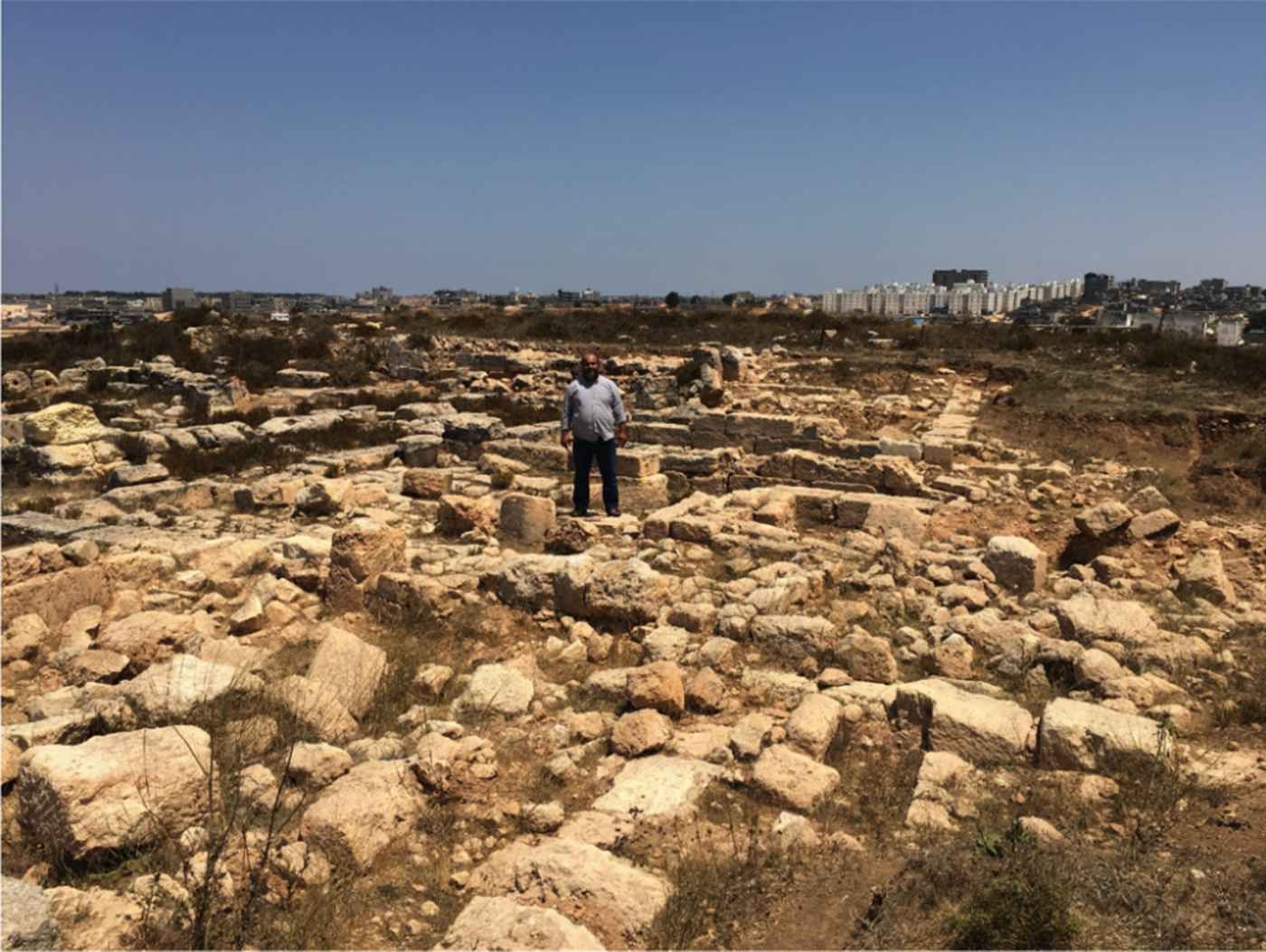
During a whistle-stop tour of Al Baida, Mohammed Touati very kindly gave me a guided tour of the university's recent training excavations at Balagrae near the Sanctuary of Aesculapius. Although a complex multi-period townhouse has been the focus of recent seasons, an earlier set of buildings is beginning to appear. These may not be domestic, but could relate to the religious complex. A report on the university's excavations has been requested for publication in Libyan Studies.
Balagrae, training excavation of the University of Al Baida, near the Sanctuary of Aesculapius, with Mohammed Touati.
Tocra training excavation
Although I did not manage to get to Tocra, Ahmed Emrage informed me that training excavations for the Universities of Tocra and Benghazi have resumed at the ancient site, under the joint direction of Ahmed Emrage and Fuad Bentiher.
Cyrene: World Heritage site
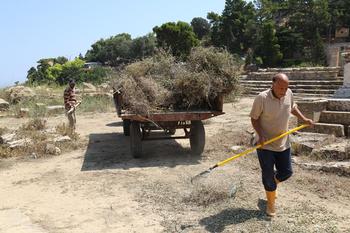
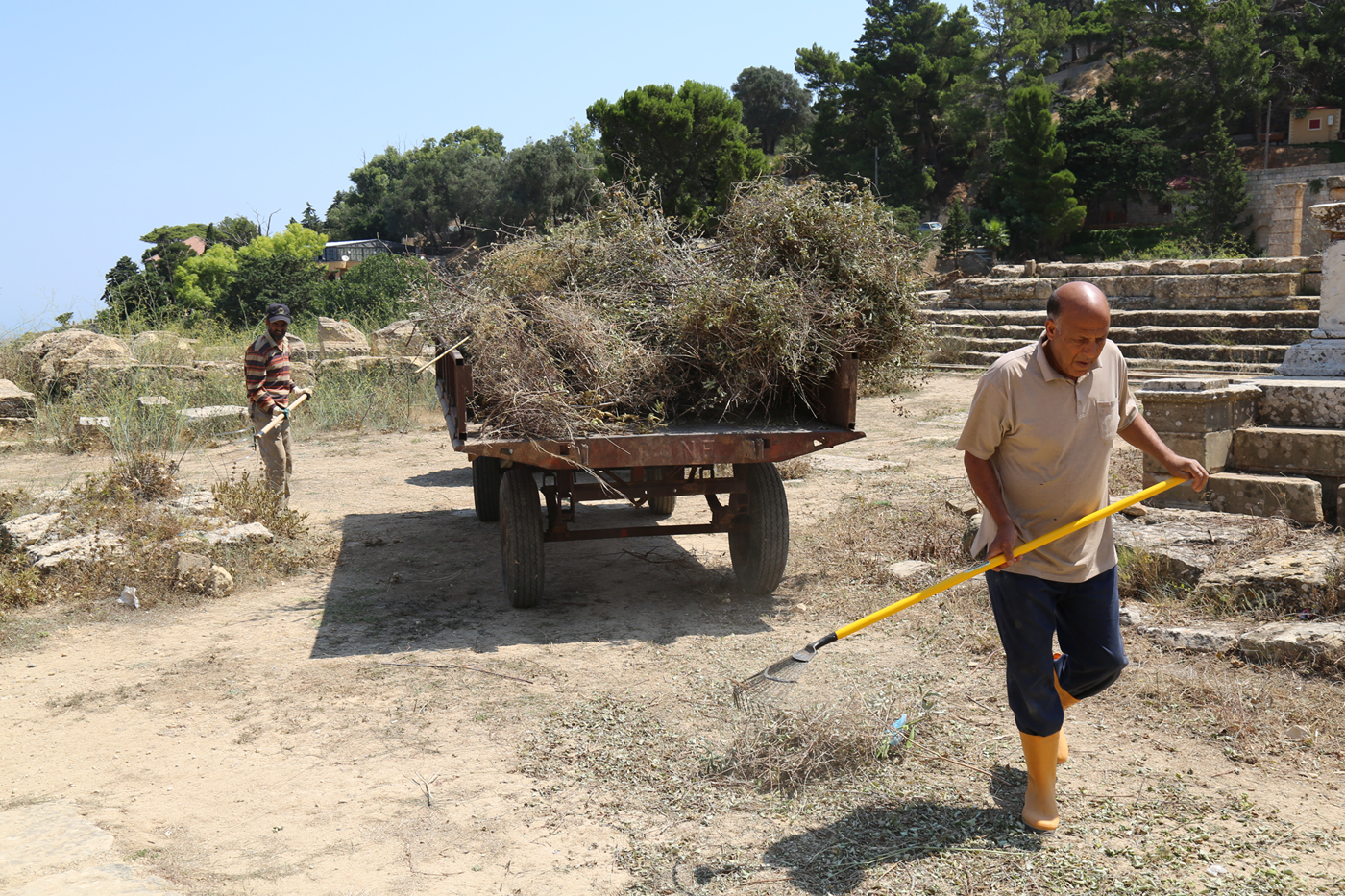
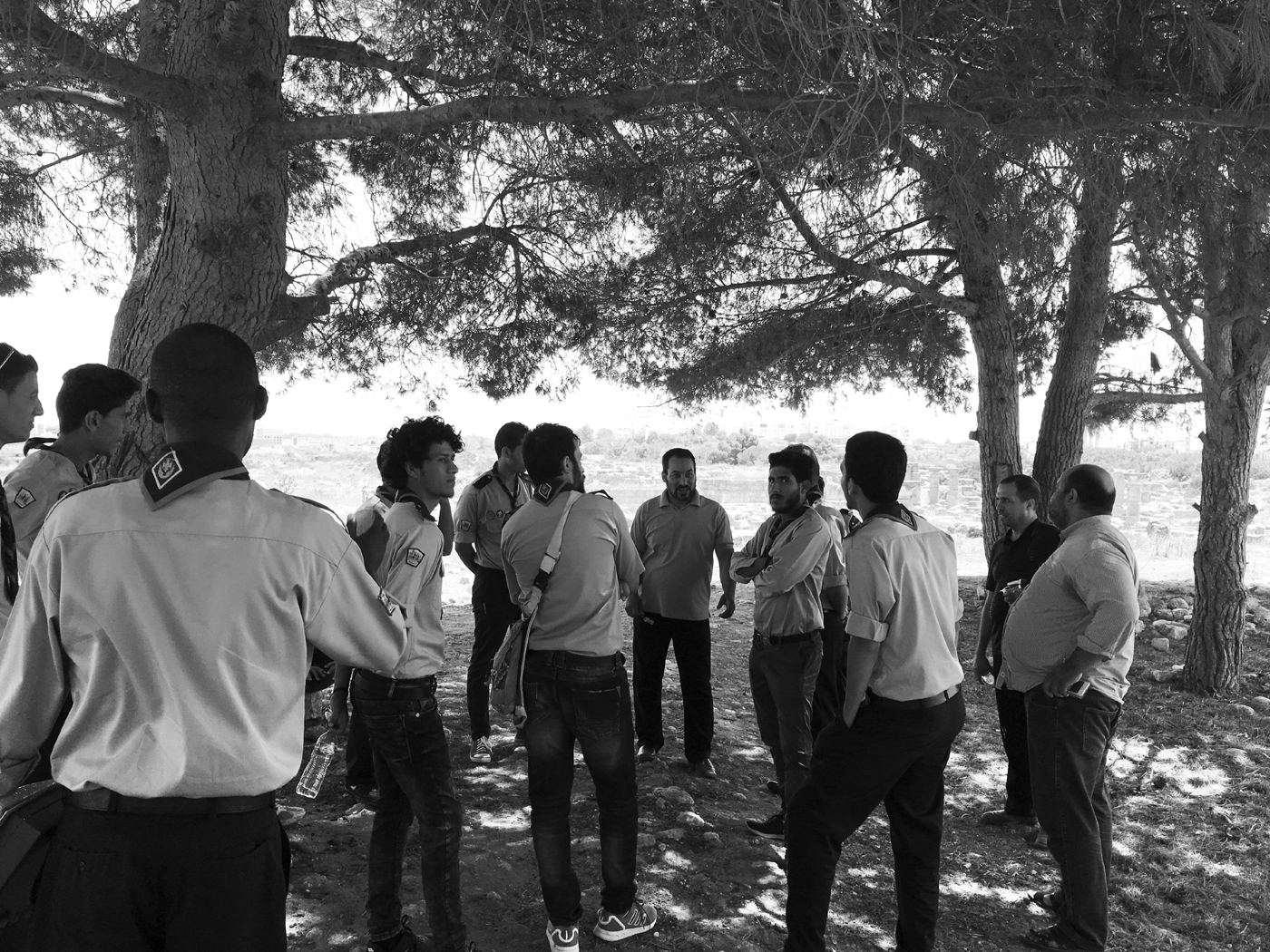
At Cyrene, the newly appointed controller Fadl Abdulaziz is working with DoA staff to clear vegetation from the Sanctuary of Apollo. The controller has drained, cleared and cleaned the Fountain of Apollo, removed damaging vegetation from the Temple of Mithras and is in the process of clearing, rebuilding and replanting a number of garden features within the Sanctuary. Elsewhere on the site a number of tombs close to the public highway have been made secure to prevent further vandalism, part of the House of Jason Magnus has been roofed over and works are in progress to ‘clean and tidy’ other parts of the site, including the backfilling of previous archaeological excavations, now considered to be a danger to visitors. Local farmers are now actively discouraged from bringing animals onto the site. Working with an organisation called the ‘Friends of the Trees’, a workshop near the entrance to the Sanctuary of Apollo has been converted into an attractive tea bar with a public lavatory. A second public lavatory is being established at the upper entrance to the site, near the forum, and a new Department office has been opened near the Market Theatre. The former Department office is now derelict and dangerous. Notices have been put up around the site encouraging visitors to take their litter home with them or to place litter in bins that the Department has provided in various locations across the site. Department staff have also been actively clearing areas that have been strewn with litter in the past, and the site has been dramatically improved. Fadl has also managed to forge an agreement with the Department to the effect that all entrance fees to the site remain with the Cyrene office, and can be used to improve the site. While I was there, a significant number of families were visiting the site, together with a large contingent of Boy Scouts, who were being guided around the site by another old friend, Yousef Bin Nasser.
Clearing vegetation from the Sanctuary of Apollo, Cyrene.
Boy Scouts and Girl Guides of Libya
Scout and Guide leaders from all over Libya were visiting Cyrene and Apollonia at the time of my visit. In April 2016, I met Chief Scout, Ali Shamsi, at a workshop in Tunis and was impressed with his passionate support for heritage and the capacity of the Boy Scout Movement to play a leading role in raising heritage awareness. Although Ali was not present at the Cyrene jamboree, the Scout leaders I managed to chat with also impressed me with their concern for Libyan heritage in all its forms, including archaeological sites, biodiversity and local traditions.
The Boy Scout Movement of Libya has applied to the Prince Claus Fund for help with developing a programme of heritage awareness activities across the country. They are seeking help with training Scout leaders in the specifics of heritage awareness, so that they are in a position to lecture to others and to promote Libyan heritage within rural and urban communities. They are also hoping to use ‘pop-up museums’ in tents, containing teaching aids in the form of replica objects and site-specific displays, to assist with the development of ‘grass roots’ support for heritage protection.
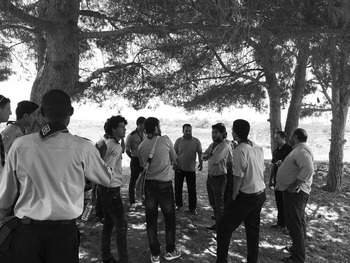
I have a great fondness for the movement and its potential for developing the youth of Libya and for doing good works within the community. I fully support the proposal to train a significant number of Scout and Guide leaders in the importance of cultural heritage and to show them how to carry that message to the Libyan population in general. The Scout movement in Libya is particularly strong, despite attempts by the regime to suppress it. Membership is nationwide and not restricted to the young; involvement spans all generations and just about every walk of life. The Scouts and Guides are well positioned to assist the Department of Antiquities and the Old Cities Agency in communicating their concerns for heritage to the community at large, and above all to the decision-makers and power brokers at local, regional and government level.
Scouts and Guides in Cyrene.
February 2018
In August last year I revisited the DoA in Benghazi, now housed in Berka Barracks as their former offices in the old Italian Fish Market had been destroyed by bombing. Department staff had managed to salvage remnants of the library and an array of fixtures and fittings, but materials stored in the basement were buried under debris and could not be retrieved. Recent clearance of part of the basement revealed a number of crates of finds from the Euesperides archive. I had previously been led to believe that all the Euesperides materials had been taken from the House of Culture to Tocra, so the discovery came as a considerable surprise. I am grateful to Akram Worfalli for reporting the discovery and to Department staff for salvaging the materials and sending them for safe storage to Tocra. I hope to visit Tocra soon to assess the Benghazi materials presently in store.
I have been discussing Benghazi historic buildings with Will Rayner of the American Mission. He has been remote sensing the extent of war damage within the Medina Gadima. His research and reports from friends living in the suburbs of Benghazi indicate that the Old City has been devastated by bombing and shelling and that many Italian period buildings, derelict at the outbreak of hostilities, have now been severely damaged. There is a great danger that those appointed to clear war damaged buildings will demolish everything, without thought for whether the building is of historic interest or not.
I have been looking again at work undertaken for the Benghazi Urban Charter in 2010, a project sponsored by the Libyan Government that was seeking to provide Benghazi with a master plan for a new future. The project was never finished but the historic buildings of the Medina were mapped and photographed at that time. I am attempting to contact former colleagues in an effort to locate the working archive. Kristian Göransson, Head of the Swedish Institute of Classical Studies in Rome, has promised his archive of photographs of Italian period buildings taken in 2007–8 while we were working together at Euesperides. The combined archives of maps, plans and photographs will be of great value to assist with any future post-war reconstruction work.
I was pleased to learn that the Prince Claus Fund has provided grants to the DoA to repair parts of Berka Barracks and to the Boy Scout Movement of Libya to promote public interest in Libyan heritage.
May 2018
International conference on rebuilding the city of Benghazi
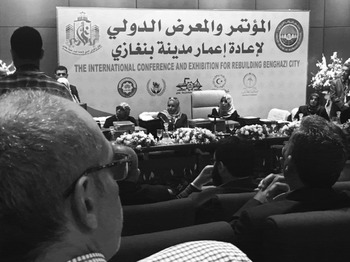
I attended a conference on rebuilding Benghazi which took place in Benghazi on the 5–10 May. The invitation to attend came from my friend Saleh Aghab, consultant with the DoA. With little notice, Mustafa Turjman, Director of Research with the DoA in Tripoli, kindly arranged a visa for me. Extreme difficulties in finding a flight were finally resolved at the eleventh hour in Benghazi by Ahmed Emrage. In consequence I did not arrive in Benghazi until the evening of the second day, when I gave a brief presentation in the Tibesti Hotel, stating that I was attending the conference to speak up for the buried and standing archaeology of Benghazi, particularly the sites of Euesperides and Berenice, and Ottoman and Italian period heritage buildings. The conference had been advertised as ‘international’ and a small group of Eastern European, as well as Greek, French and UK architects and developers attended. There was an also an exhibition which set out how various architectural practices visualised the reconstruction of Benghazi.
The international conference with a panel comprised entirely of professional women.

The best of the conference took part on the third day with presentations almost exclusively by Libyans with simultaneous English translation. Presentations included:
• The treatment of children traumatised by war – a presentation by two child psychologists talking about what is being done to help children affected by the recent conflict.
• Two presentations by lawyers from the Supreme Court looking at land ownership and the permissions required in law to get damaged buildings repaired or demolished.
• A presentation on Libyan laws concerning foreign investment and redevelopment. How much of Benghazi can be redeveloped using foreign capital and how can existing laws be changed to allow foreigners to invest in property and be involved in the wholesale redevelopment of the city.
• There was a presentation on the tools and resources needed to redevelop the city and another on obtaining loans through international banks.
• There were presentations from the Transportation and Maritime Authority that spoke of devastated road systems and bridges; getting the badly damaged harbour functioning again, to restore cement production and cargo movement. There are longer term plans to improve connections between the city and the port and even plans to build a marina.
• Benghazi was once a major airport hub that connected Africa to the outside world. Airport facilities are badly diminished with only one carrier, Afriquiyah, flying into the country (Libyan Arab Airlines and Buraq Air have recently started a regular service). All Libyan airlines are banned in the EU. A local airline pilot provided a presentation setting out a plan to develop Benina Airport as a major gateway to Benghazi, Libya and Africa.
• Senior members of the Guides and Boy Scout Movement provided a presentation explaining how the movement is helping relieve distress in Benghazi and elsewhere in Libya.
• There was a presentation suggesting that a Marshall-type plan was needed for Benghazi and fourteen other devastated centres, based on similar lines to post-war Germany.
• The Libyan Cement Company illustrated the training programmes they deliver to young people and the successes they have had in finding employment for their trainees.
• The Water and Sanitation Agency spoke of problems with maintaining their systems which have been degraded by warfare. Significant new engineering work is needed as much of the city's infrastructure has been destroyed.
• There was a presentation on recycling waste: systematically clearing and crushing destroyed buildings with specialist plant and using ‘crush’ as hardcore for rebuilding works.
• The Old City Agency provided a well-illustrated presentation looking at a new future for historic buildings and doing their utmost to save as many heritage buildings as possible. There was no mention of archaeological sites. We were expecting a presentation on the subject but none was given.
• A presentation by the Union of Benghazi Displaced People (UDBP) explained that there are 50,000 families without a home. A damage assessment of the Old City suggests that up to 40% of all housing has been destroyed. There was a great deal of discussion about what the government is doing to get them rehoused – the answer appears to be nothing, and there is very little in the way of resources or help coming in from outside the country. It is a truly desperate situation.
This was a unique conference in that it was filled with Libyan voices. There was lots of talk about communication and strategies; for getting government help, bringing in assistance and expertise from abroad and for self-help, particularly training for the long-term unemployed, and developing new businesses to create long-term employment. There was even talk of developing tourism as a future wealth provider.
Equally unique was the fact that many of the voices at the conference, from social services, hospitals, higher education, the legal profession, town planning, training in industry, and the Guiding movement, were female. This is an aspect of Libyan civil society that is little known to people outside the country but in my view is hugely encouraging for the future of the country.
It was called an ‘international’ conference, and perhaps I missed the non-Libyan contributions by architects and others, but I was struck by the passionate presentations and the question and answer sessions that followed, all from Libyan participants. I thought it was a hugely successful event for that reason alone.
But there is a mountain to climb. It will take generations to repair the damage. The scale of rebuilding and regeneration is so large and widespread that without constant vigilance, public support and a very active and well-trained Department and Agency, it will be extremely difficult to preserve archaeological sites and heritage buildings.
There is an opportunity to work with the Department and the Agency to raise public awareness and to lobby decision-makers to incorporate Benghazi heritage assets into future projects for rebuilding Libya's second city, whilst at the same time seeking training opportunities and support for our Libyan colleagues and the next generation. I hope the Society will take a leading part in these and other initiatives.
A devastated city
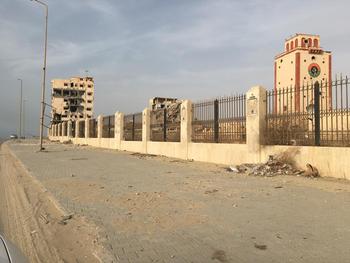
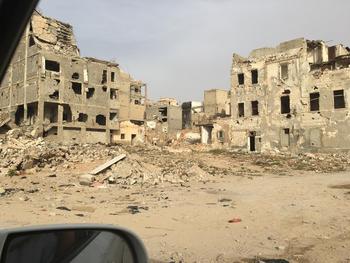
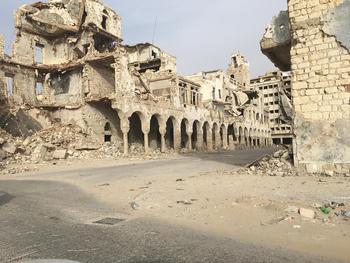
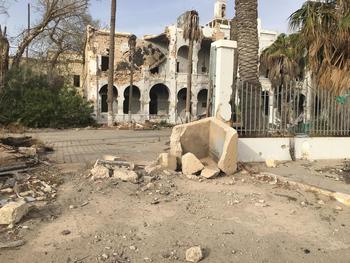
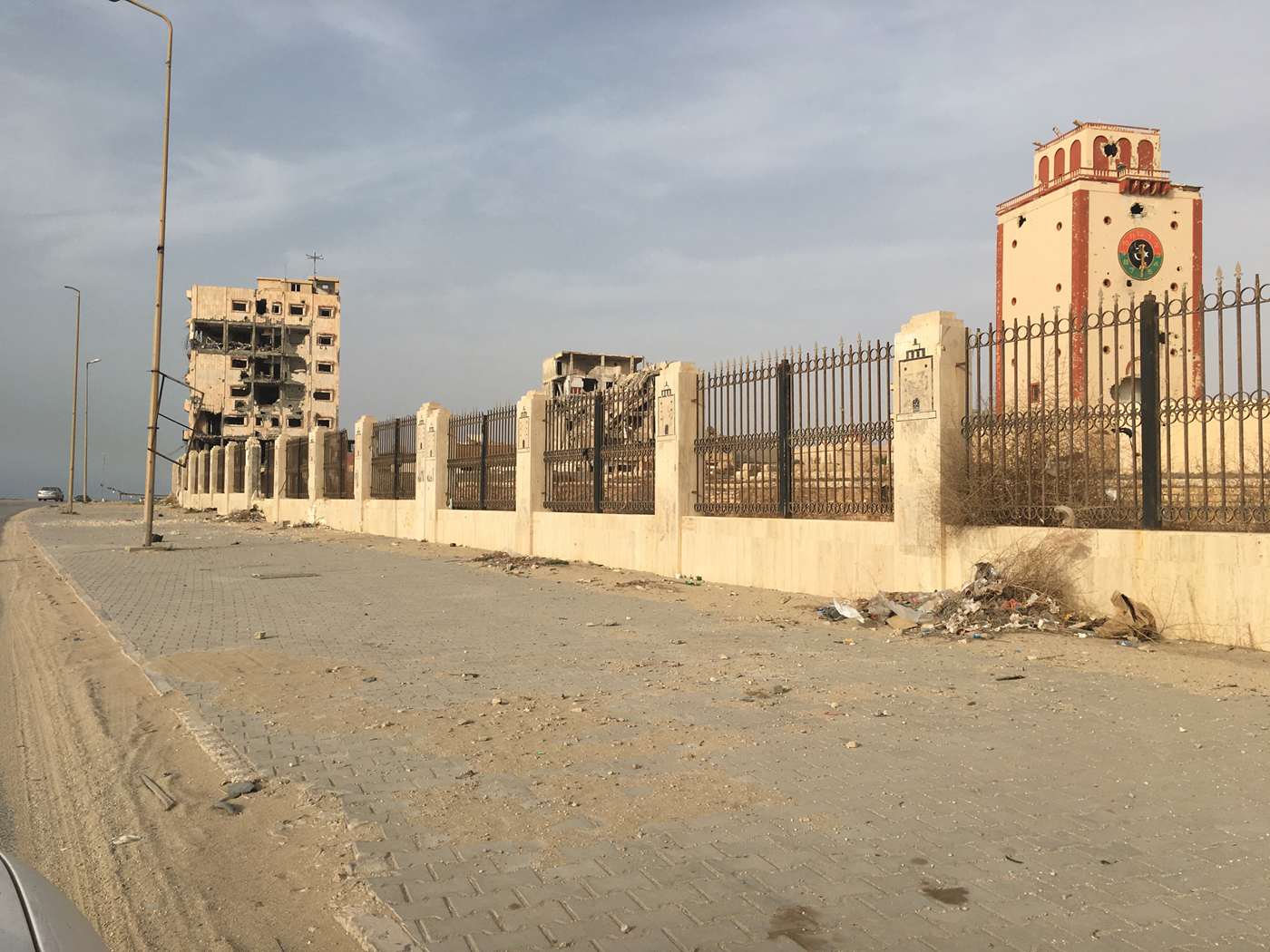
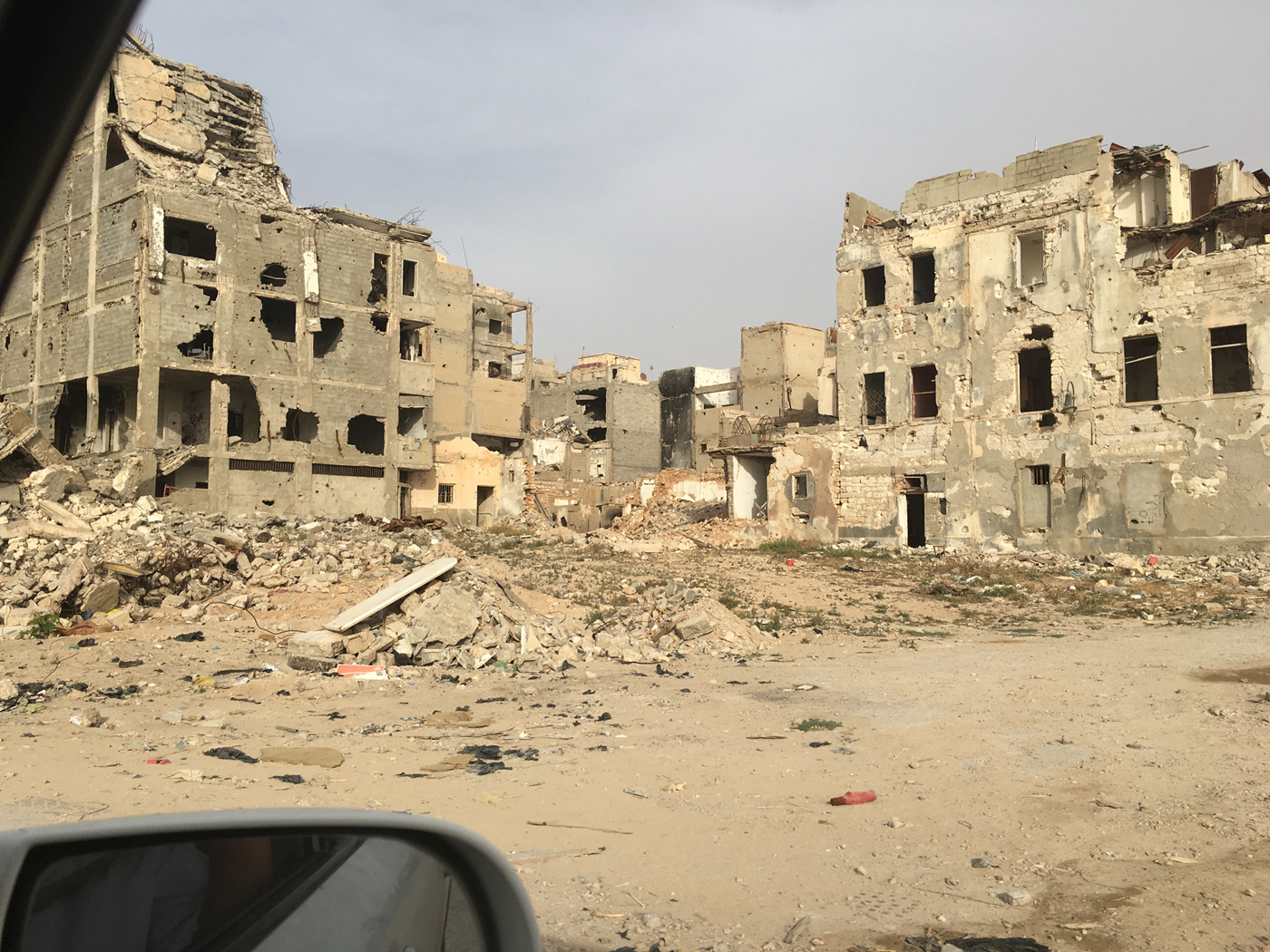
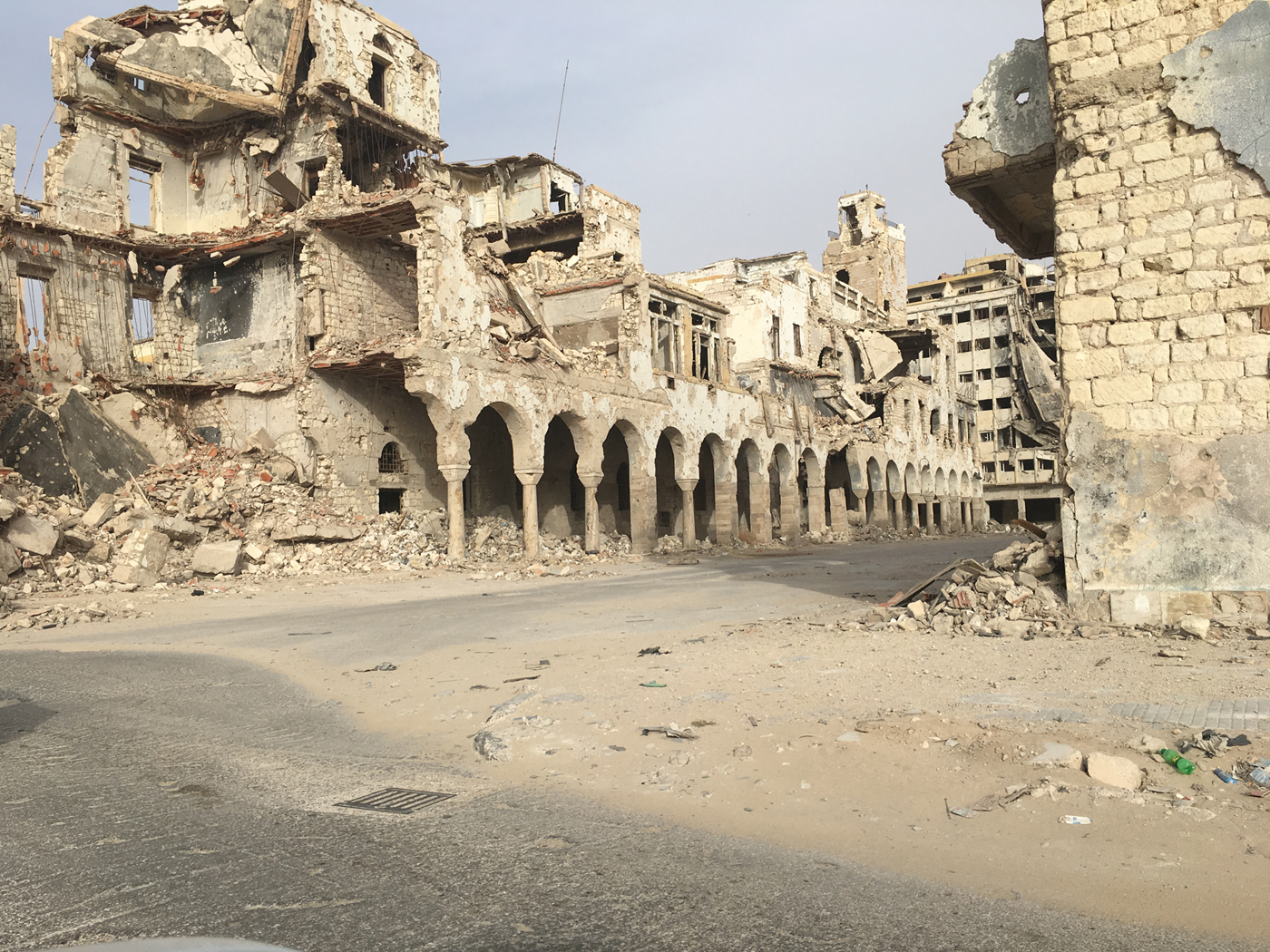
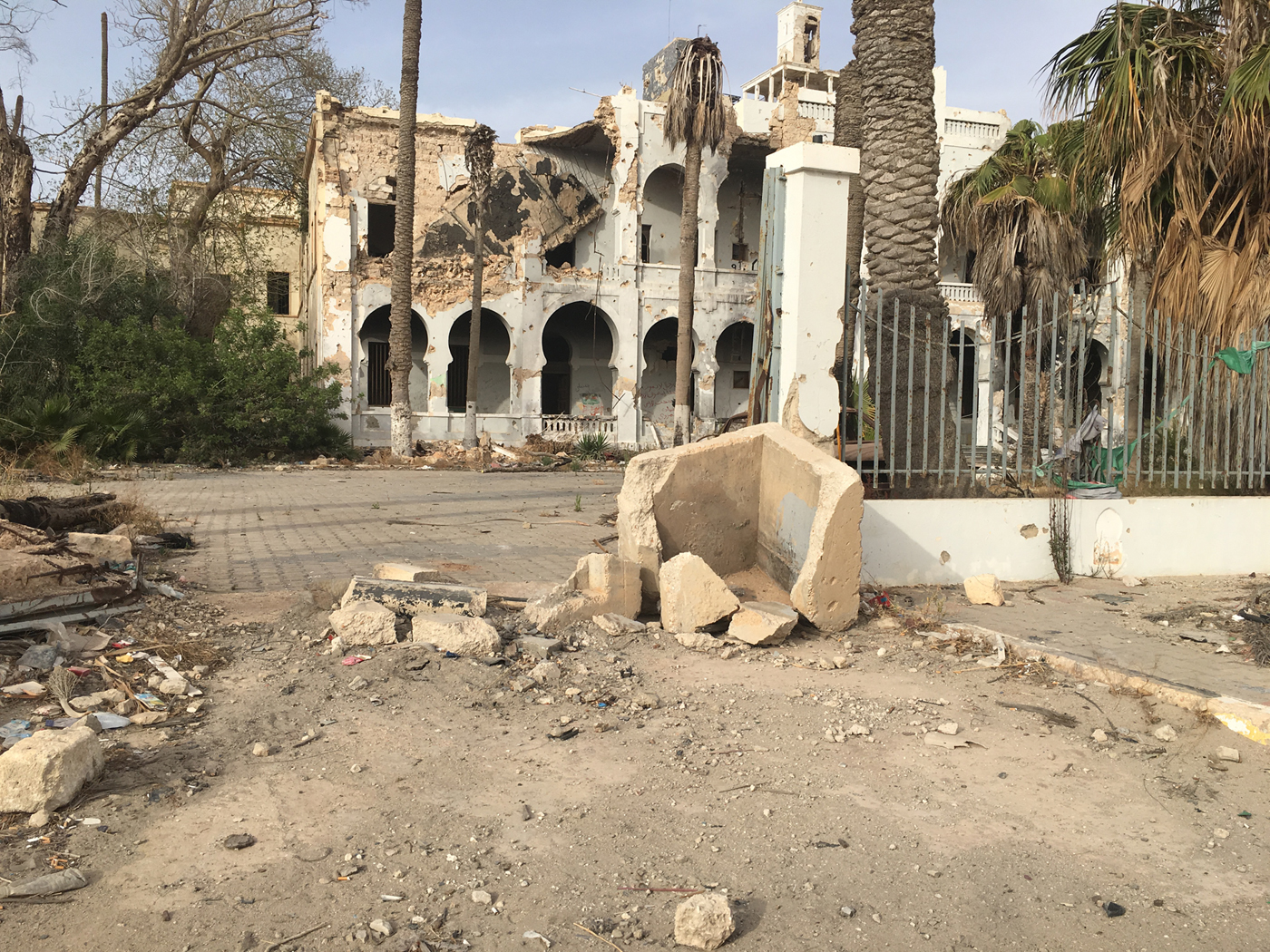
On my visit in August 2017 I had not been able to look at the Medina Gadima of Benghazi, particularly the area around Sidi Abeid and Sidi Khrebish, sites I have known and worked on intermittently since 1972. I am immensely saddened to report that the Old City has been devastated, with parts barely recognisable, being simply a mass of collapsed buildings and streets blocked with debris. The situation is far worse than I had ever imagined – the stuff of nightmares, and totally heartbreaking. Around Sidi Khrebish, all the buildings have been heavily bombed and shelled; the iconic lighthouse stands but is pockmarked with shell and bullet holes. The mosque and madrassa next to Sidi Khrebish have been flattened and many of the buildings surrounding the site have gone. The archaeological site has been badly damaged by multiple burials of Islamic extremists. I was told of plans to exhume them in the coming months. The site of Euesperides has been mined and is a ‘no-go’ area. Again, buildings surrounding the site have been very badly damaged by bombing and shelling.
The university campus, a battleground on more than one occasion, has effectively gone, with hardly a building left standing. The university is in part functioning from the former female halls of residence and other satellite buildings, with greatly depleted resources but large student numbers and dedicated, hard-working, intermittently paid staff.
Sidi Khrebish and its lighthouse.
Houses on el-Shabi Street, behind the Suq el-Hout (Fish Market).
The commercial bank in Omar al-Mukhtar Street.
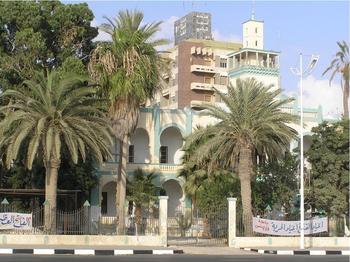
Emaret Lanqy in Gamal Abdel Nasser Street, near the seafront. The building was an important shipping office.
Same as Figure 25: Emaret Lanqy in Gamal Abdel Nasser Street, taken in 2006.
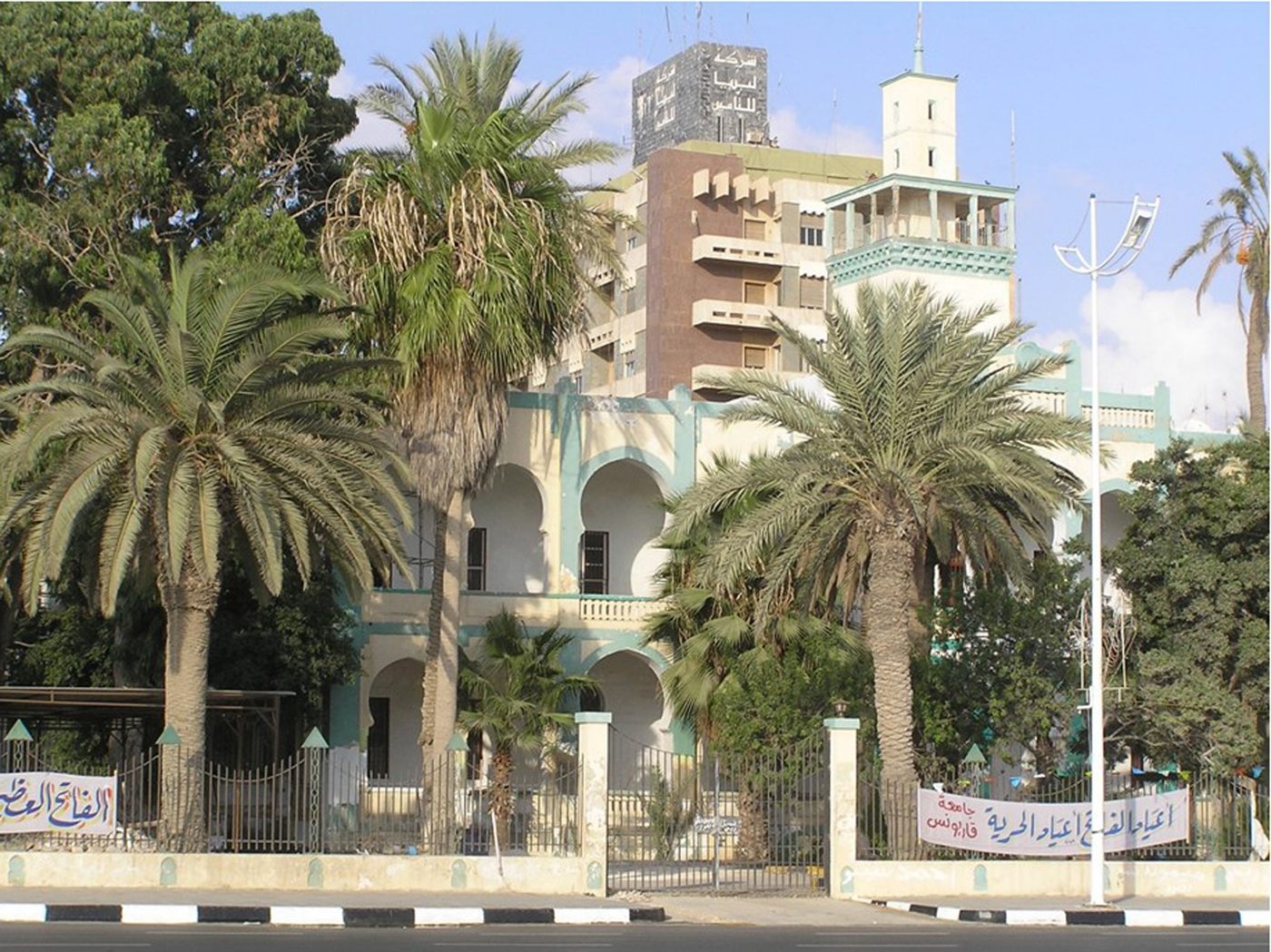
Tocra
I managed to spend a day at Tocra to inspect archaeological material from the Society's Benghazi excavations, sent there for safe-keeping some years ago. The material from Sidi Khrebish and Sidi Abeid, Berenice and Euesperides respectively, are exceptionally important study collections that need to be preserved. They are safe in Tocra but poorly housed and require assessment, re-boxing and better quality medium-term storage.
Eventually the collection should be returned to Benghazi, ideally to a refurbished Berka Barracks, repurposed as a museum of Benghazi, with associated stores, laboratories and teaching facilities. We inspected a former Turkish and Italian barrack building that could be repurposed as a store, but it will require investment in racking and storage materials. I will put together a costed proposal to possible grant-giving bodies for continued but improved storage at Tocra that will serve until a more permanent home has been found for the collections in Benghazi.
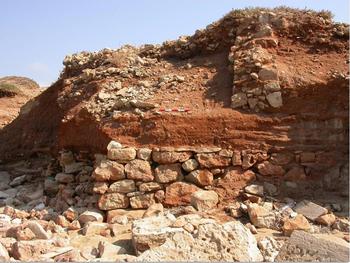
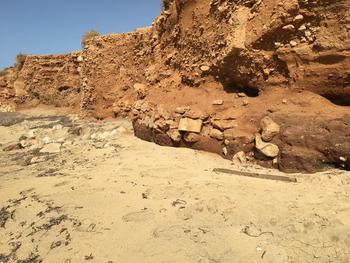
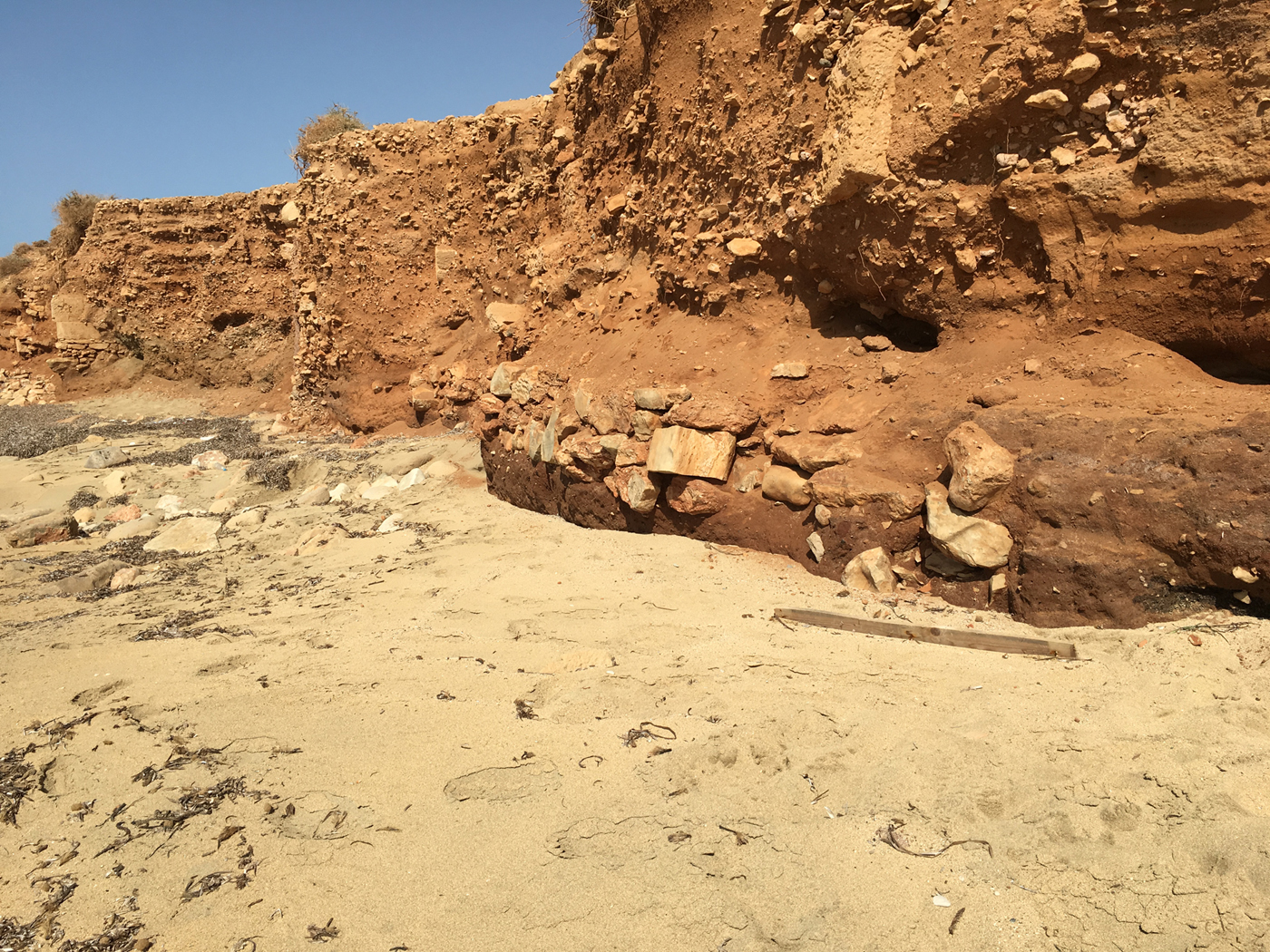
A significant amount of coastal erosion has occurred at Tocra since my last visit (Libyan Studies 35, 2004, 113–22), with further loss of stratified deposits and building foundations. The early Greek city wall reported on in 2004 is today only just visible. The sea frontage at Tocra remains one of the most stunning, informative (but unstudied) archaeological sections in Libya.
Coastal erosion at Tocra of the Greek city wall.
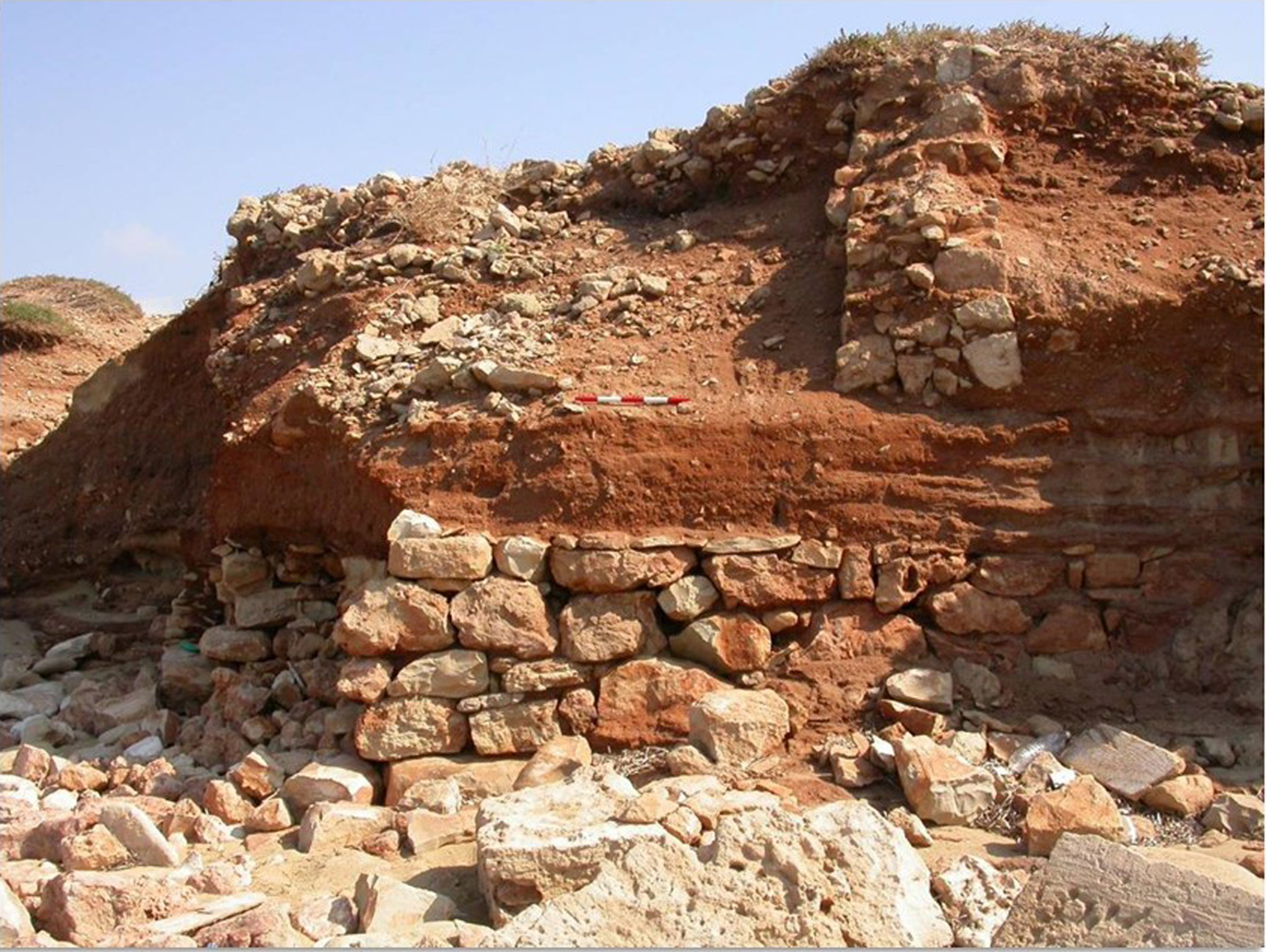
Coastal erosion at Tocra. Figures 19 and 20 are from the same section of Greek city wall. Fig. 19 is from 2004, and Fig. 20 is from 2018.
The present site is only partly fenced and like many important archaeological sites is made vulnerable through a lack of security amongst many other factors. A scheme to fence the site has apparently failed through lack of funds: the intention was to install concrete posts purchased some years ago. I was told the wire was in store ready to be used. It would be of tremendous benefit to the custodians responsible for the security of this jewel of a site to find a sponsor willing to pay for the fence to be built.
General observations
Whilst in Benghazi, I gave an illustrated presentation to DoA staff at their Berka Barracks headquarters and to university staff near the old university campus.
Just as I was leaving, the Libyan Army had commenced a bombardment of Derna. I worry for my friends caught up in the fighting and for the archaeological sites and heritage buildings of the ancient port and city.
Tripoli has fared much better than Benghazi, but I am told that groups of armed militia are in the backstreets, with kidnapping and car theft being commonplace. The archaeological sites of Lepcis Magna and Sabratha are largely unaffected, but residential and commercial development in the surrounding areas are encroaching almost on a near daily basis.
In the east (particularly in and around Cyrene) development is out of control, with many examples of archaeological sites being damaged or destroyed by illegal building activities.
Intermittent military action is reported in Fazzan and a continuing stream of migrants from central and southern Africa cross the desert to ports west of Tripoli. True stories of slavery, murder and bad treatment abound in the media, but what is less well known and less newsworthy are the attempts local people are making to improve their lives, to maintain schools and universities, to assist others at a time of adversity and to promote the protection of heritage assets whenever they can.
Despite all the bad news, I do believe the situation is improving and there is an absolute need for the Society to support our friends in Libya in any way we can, and to be seen to be doing so.