

Introduction
The use of feed enzymes in monogastric diets has been widely documented since the first publication almost 90 years ago (Clickner and Follwell, Reference Clickner and Follwell1925). Today the poultry industry is the largest animal feed industry taking advantage of exogenous feed enzymes. It is estimated that the global feed enzyme market is worth around US $900M and will reach $1.2 Billion in the next five years (Markets and Markets, 2014). The rapid growth of the enzyme market can largely be attributed to a (1) significant increase in the cost of raw materials, (2) greater awareness of environmental problems and (3) a better understanding of the benefits of exogenous enzymes. In modern broiler production exogenous microbial enzymes are used with goals of improving the nutritive value of feed ingredients, optimising bird health and performance, increasing feed efficiency, reducing environmental burden which, ultimately results in reduced feed cost and reduced cost of production. It is not surprising that the role of feed enzymes has been the subject of extensive reviews (Annison and Choct, Reference Annison and Choct1997; Bedford and Schulze, Reference Bedford and Schulze1998; Adeola and Cowieson, Reference Adeola and Cowieson2011; Slominski, Reference Slominski2011; Ao, Reference Ao and El-Shemy2011; Ravindran, Reference Ravindran2013). Most of these reviews focus on the benefits of phytase (with a market share of approx 60% (Adeola and Cowieson, Reference Adeola and Cowieson2011) or NSP-degrading carbohydrase (with a market share of 30%) with less commercial and academic attention being directed to protease or lipase.
Unlike phytases and carbohydrases, which have been used commercially since the early 1990s, significant use of exogenous proteases have not occurred until more recently, although it needs to be noted that use of protease supplementation in poultry diets was reported as early as the 1960s (Burnett, Reference Burnett1962). Inconsistent results, together with the suggestion that endogenous proteases were secreted in amounts that were adequate to meet requirements for protein digestion by poultry, has limited the commercial use of exogenous proteases (Doskovic et al., Reference Doskovic, Bogosavljevic-Boskovic, Pavlovski, Milosevic, Škrbic, Rakonjac and Petricevic2013). More recent studies have shown that exogenous protease can provide a variety of production benefits, especially in feed containing reduced levels of protein (Cowieson and Adeola, Reference Cowieson and Adeola2005). In particular, proteases play an important role in reducing environmental issues from intensive farming, since optimal digestion of nitrogen-containing compounds is essential in reducing excretion levels, which are known to pose a problem in soils and water courses (Oxenboll et al., Reference Oxenboll, Pontoppidan and Fru-Nji2011). The potential role of proteases is especially of interest in young broilers, since they require relatively high concentrations of dietary protein for growth but developmentally are subject to restricted mucosal enzyme activities (Doskovic et al., Reference Doskovic, Bogosavljevic-Boskovic, Pavlovski, Milosevic, Škrbic, Rakonjac and Petricevic2013; Uni et al., Reference Uni, Noy and Sklan1999).
Despite the recognition of protease as a commercial, viable and cost-effective addition to modern broiler rations, the actual mode of action remains unclear. Several authors have demonstrated that protease significantly improved in vitro protein hydrolysis of SBM or canola (Simbaya et al., Reference Simbaya, Slominski, Guenter, Morgan and Campbell1996; Yu et al., Reference Yu, Wu, Liu, Gauthier and Chiou2007), linked to improved growth performance in broiler chickens due to increased protein digestibility. However, Liu et al. (Reference Liu, Selle and Cowieson2013) showed the addition of an endopeptidase to diets containing sorghum and SBM increased amino acid digestibility but without any response on growth performance. The same authors found a highly significant correlation between the inherent digestibility of amino acids and the response to added protease. Hence, the response to exogenous protease may depend on a wide range of factors including the presence of anti-nutritive factors and the accessibility of feed protein by endogenous enzymes (Bao et al., Reference Bao, Romero and Cowieson2013).
The economic benefit of exogenous feed enzymes is linked to the amount of available substrate in the small intestine. There is little evidence in the literature of significant synergies between protease and carbohydrase when added to broiler diets, although several authors have reported cumulative effects of both protease and carbohydrase in terms of nutrient digestibility (Barekatain et al., Reference Barekatain, Antipatis, Choct and Iji2013; Kiarie et al., Reference Kiarie, Romero and Nyachoti2013; Kalmendal and Tauson, Reference Kalmendal and Tauson2012). Nevertheless, it is common practice to include a combination of carbohydrases and protease in modern broiler diets which in return allows a much wider use of alternate, less digestible feed ingredients and the use of nutritionally marginal diets without apparent loss of growth performance.
Despite the considerable work done with exogenous proteases there remains a lack of studies looking at the effects of protease and/or a combination of protease and carbohydrase at elevated levels. The current paper discusses the result of four independent broiler experiments to evaluate broiler performance responses and tolerance to a commercially available enzyme product containing protease and xylanase activities added to a wheat and SBM based diets.
Materials and methods
Four floor pen broiler chicken experiments were conducted to evaluate the efficacy of and tolerance to varying doses of the exogenous, protease-containing supplement Vegpro™ (Alltech Inc., Nicholasville, KY). Animal response was assessed in terms of live growth performance, excreta viscosity and litter quality, haematology and blood biochemistry. The enzyme supplement contained the protease Aspergillopepsin I (EC 3.4.23.18) as its main activity produced by solid state fermentation with Apergillus oryzae (SD154) and xylanase (EC 3.2.1.32) produced by Trichoderma longibrachiatum rifar (IMI 387064). Procedures for Experiments 1, 2, and 4 were approved by Scotland's Rural College Institutional Animal Care and Use Committee. Procedures for Experiment 3 were conducted and documented in accordance with Part 4, Chapters II and III, and Parts 8 and 9 of the Annex to Directive 92/18/EEC as stated in the EU guideline on Good Clinical Practice for the Conduct of Clinical Trials or Veterinary Medicinal Products issued by the Committee for Veterinary Medicinal Products (July 1994).
Experiment 1 – Efficacy
A total of 4,560 one-day-old broilers were purchased from a commercial hatchery (2,112 male and 2,448 female), where they had been vaccinated against infectious bronchitis. Broilers were randomly distributed to four dietary treatment groups. Each treatment group comprised 24 single-sex floor pens (12 male and 12 female pens) with 44 male or 51 female birds per pen. Terminal stocking densities did not exceed 34 kg/m2, in accordance with the UK code of recommendations for the welfare of poultry livestock (Department for Environment Food & Rural Affairs, 2002). Each pen was equipped with a single feed hopper and a nipple drinker; feed and water were provided ad libitum. Wood shavings were used as bedding to a depth of approximately 10 cm. The lighting program was as follows: one to six days of age (23L:1D); seven to 34 days of age (14L:10D); 35 to 42 days of age (23L:1D). The room was environmentally controlled in accordance with welfare recommendations for poultry.
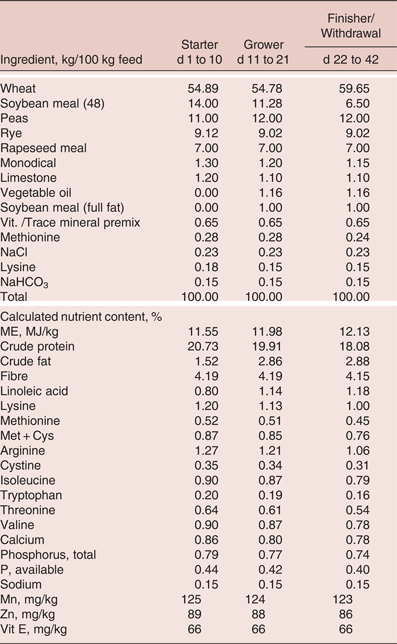
Broilers were fed in a three-phase program: starter (days one to 10), grower (days 11 to 20); and finisher/withdrawal (days 21 to 42). Feed was provided in pellet form (processing temp between 80-85C). All diets were commercially manufactured at Target Feeds, Whitchurch, Shropshire, UK. Composition of the experimental diets is presented in Table 1. Protease activity was determined by hydrolysate production (haemoglobin units tyrosine: HUT), whereby one HUT (haemoglobin unit on a tyrosine basis) of proteolytic (protease) activity was defined as that amount of enzyme that produces, in 1 min under the specified conditions, a hydrolysate with an absorbance at 275 nm that is the same as that of a solution containing 1.10 µg/ml tyrosine in 0.006 N HCl (Dillon et al., Reference Dillon, Filer and Moran2015a). Dietary treatments included a control diet (no protease supplement = 0 HUT/kg), or the same diet supplemented with protease as Vegpro™ to supply protease activity at 5,000, 10,000, or 20,000 HUT/kg, respectively. The corresponding xylanase activity (XU) for each treatment was 0, 75, 150, or 300 XU/kg, respectively, where one XU is the amount of enzyme that liberates 1 micromole of xylose per min at pH 5.3 and 50°C (Dillon et al., Reference Dillon, Filer and Moran2015b).
Composition and calculated analysis of experimental diets – Experiments 1 and 4

Bird weight per pen was determined on 1, 10, 21, and 42 d of age. Feed intake, weight gain, and feed conversion ratio (FCR) were determined at 10, 21, and 42 d of age. Excreta viscosity was measured for 16 pens per treatment at 21 and 42 days of age using a Brookfield DV-II + LV viscometer (Brookfield Engineering Laboratories, Stroughton, UK). Litter quality of each pen was assessed on d 42. Culling, mortality, and disease outbreaks were recorded as they occurred.
Experiment 2 – Efficacy
A total of 2,880 one-day-old male and female broilers were randomly distributed to six dietary treatment groups. Each treatment group comprised 16 single-sex floor pens (eight male and eight female) with 30 birds per pen. Chick source, feed manufacturer and animal husbandry practices were the same as those described in Experiment 1.
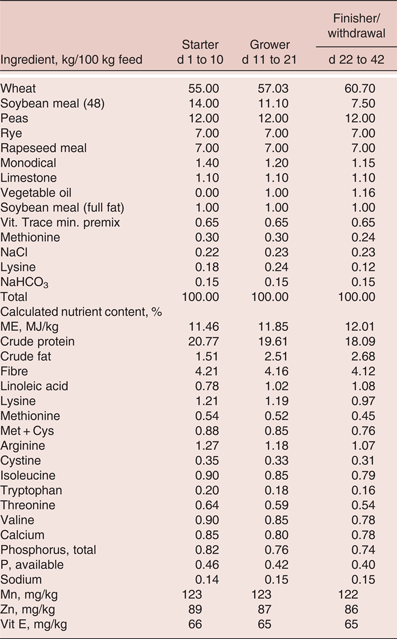
Broilers were fed in a three-phase program: starter (days one to 10), grower (days 11 to 21); and finisher/withdrawal (days 22 to 42). Feed was provided in pelleted form. Composition of the experimental diets is presented in Table 2. Dietary treatments included a control diet (no protease supplement = 0 HUT/kg), or the same diet supplemented with protease as Vegpro™ to supply protease activity at 2,500, 5,000, 10,000, 20,000, or 30,000 HUT/kg, respectively. The corresponding xylanase activity for each treatment was 0, 38, 75, 150, 300, or 400 XU/kg, respectively.
Composition and calculated analysis of experimental diets – Experiment 2
Bird weight per pen was determined at one, 10, 21, and 42 days of age. Feed intake, weight gain, and FCR were determined at 10, 21, and 42 days of age. Excreta viscosity was measured for eight pens per treatment at 21 and 42 days of age. Litter quality of each pen was assessed on day 42. Culling, mortality, and disease outbreaks were recorded as they occurred.
Experiment 3 – Efficacy
A total of 1,920 one-day-old male Ross PM3 broilers were purchased from a commercial hatchery, where they had been vaccinated against infectious bronchitis. Broilers were randomly distributed to four dietary treatment groups. Each treatment group comprised of 12 floor pens with 40 male birds per pen. Animal husbandry practices were the same as those described in Experiment 1. Feed for this experiment was produced by Euronutrition, Saint Symphorien, France.
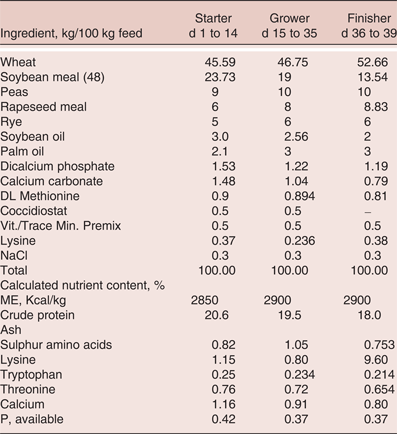
Broilers were fed in a three-phase program: starter (days one to 10), grower (days 11 to 21); and finisher/withdrawal (days 22 to 39). Feed was provided in pellet form. Composition of the experimental diets is presented in Table 3. Dietary treatments included a control diet (no protease supplement = 0 HUT/kg), or the same diet supplemented with protease as Vegpro™ to supply protease activity at 10,000, 20,000, or 40,000 HUT/kg respectively. The corresponding xylanase activity for each treatment was 0, 150, 300 or 600 XU/kg, respectively. A coccidiostat was included in starter and grower diets.
Composition and calculated analysis of experimental diets – Experiment 3
Individual bird weight and feed consumption (and FCR) per pen were determined at one, 14, 35, and 39 days of age. Ileal viscosity was measured for two birds per replicate at 21 and 31 days of age, whereby birds were euthanised by injection of pentobarbitone and a section of the ileum removed and the viscosity of its contents measured. Litter quality of each pen was scored on day 39 of the trial by visual assessment of the entire pen using a scoring guide from friable (score 1) to wet/dough-like (score 5). Culling, mortality, and disease outbreaks were recorded as they occurred.
Experiment 4 – Efficacy and tolerance
A total of 780 one-day-old male and female broilers (360 male and 420 female) were randomly distributed to three dietary treatment groups. Each treatment group comprised eight single-sex floor pens (four male and four female pens) with 30 male or 35 female birds per pen. Chick source, feed manufacturer and animal husbandry practices were the same as those described in Experiment 1.
Broilers were fed in a three-phase program: starter (days one to 10), grower (days 11 to 21); finisher (days 22 to 35); and withdrawal (days 36 to 42). Feed was provided in granular form in the starter phase and in pelleted form in the grower and finisher/withdrawal phases. Composition of the experimental diets is presented in Table 1. Dietary treatments included a control diet (no protease supplement, activity = 0 HUT/kg), or the same diet supplemented with protease as Vegpro™ to supply protease activity at 10,000 HUT/kg or 100,000 HUT/kg, respectively. The corresponding xylanase activity for each treatment was 0, 154, or 1,536 XU/kg, respectively.
The treatment diets for each phase were analysed using standard laboratory methods for proximate analysis (AOAC, 2005). Broiler weight by pen was determined at 1, 10, 21, 35, and 42 days of age. Feed intake, weight gain, and FCR were determined for each of the following periods: 1 to 10, 11 to 20, 21 to 35 and 36 to 42 days of age. Faecal viscosity was determined per pen at 28 days of age. Culling, mortality, and disease outbreaks were recorded as they occurred. Blood was sampled between 35 and 42 d of age for analysis for the hematologic and biochemical parameters (AOAC, 2005).
Statistical analyses
Data for each experiment were analysed by one-way ANOVA for completely randomised designs to examine the main effects of dietary treatment and bird sex, with pen being the experimental unit. Main effect interactions of the four experiments were determined using the GLM procedure of UNISTAT 6.0 (Unistat, 2009). Tukey's test was used to compare means when overall treatment or treatment x sex F tests were significant. Significance was declared at P < 0.05, whereas 0.05 < P < 0.10 was considered a near-significant trend. Likewise, the combined effect of Vegpro™ when supplying a protease activity of 10,000 HUT/kg feed across all the four experiments was performed using the GLM procedure of UNISTAT 6.0, with experiment as a blocking factor.
Results
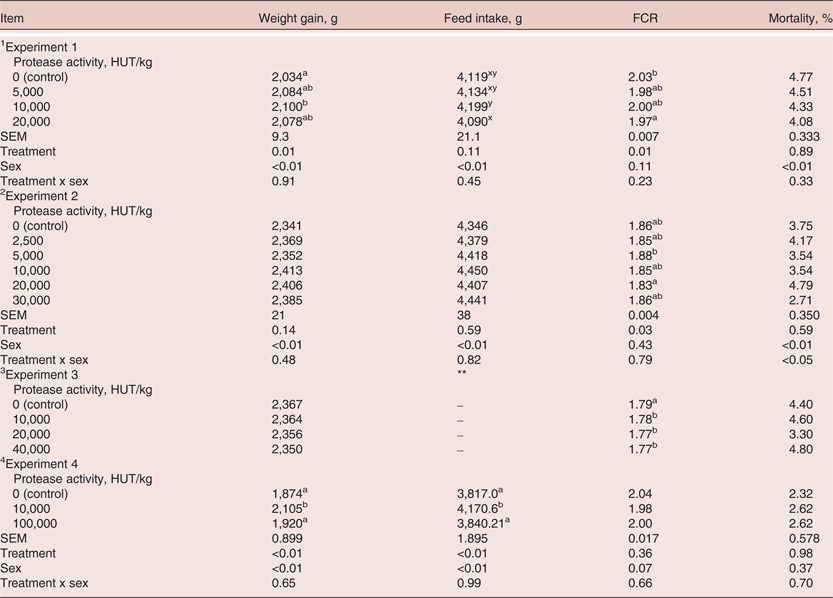
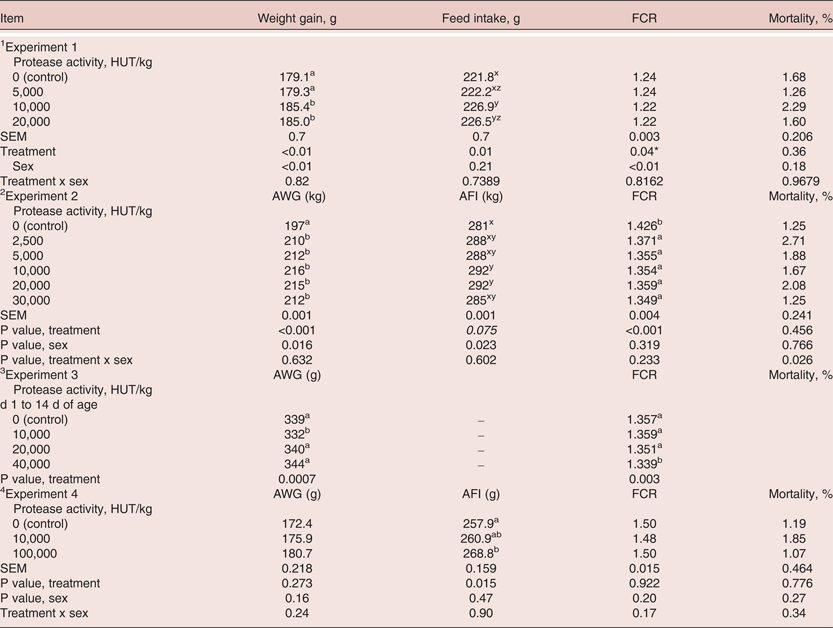
General health of the broilers was good and overall mortality across all four experiments was low (4.42, 3.75, 4.28 and 2.50% in experiments 1, 2, 3 and 4, respectively). Post-mortem examination of chickens that died showed no sign of infectious diseases; deaths were attributed to birds being poor starters. There were no statistical differences in mortality rates between treatments nor were there any interactions between dietary treatments and sex (P > 0.05; Table 4).
Performance response to Vegpro™ in broilers (entire trial period)
ab In each experiment values with different superscripts in a column differ P < 0.05
1Experiment 1: 24rep/treatment (12pens x 44 males/pen and 12 x 51 females/pen), trial duration 0–42days; starter feed 0–10days, grower feed 11–21 days, finisher feed 22–42days.
2Experiment 2: 16 rep/treatment (8pens x 30 males/pen and 8 x 30 females/pen), trial duration 0–42days; starter feed 0–10days, grower feed 11–21 days, finisher feed 22–42days.
3Experiment 3: 12 rep/treatment (12pens x 40 males/pen), trial duration 0-39days; starter feed 0–14days, grower feed 11–35 days, finisher feed 36–39days.
4Experiment 4: 8 rep/treatment (4pens x 30 males/pen and 4 x 35 females/pen), trial duration 0–42days; starter feed 0–10days, grower feed 11–21 days, finisher feed 22–35days, withdrawal feed 36–42.
** Feed intake was measured for calculation of FCR (not presented)
Experiment 1
The overall study results (1 to 42 d) showed that birds fed protease at 10,000 HUT/kg gained more weight compared with birds fed the control (+3.2%, 2,100 vs. 2,034 g respectively; P < 0.01; Table 4) and that they tended to consume more feed than those fed at 20,000 HUT/kg (+2.7%, 4,199 vs. 4,090 g respectively; P < 0.09). Feed conversion ratio was improved in birds fed protease at 20,000 HUT/kg compared with the control (−3.0%, 1.97 vs. 2.03 respectively; P < 0.05). Furthermore, birds fed the lowest protease dose (5,000 HUT/kg) tended to gain more weight (+2.5%, 2,084 vs. 2,034 g respectively; P < 0.07) and tended to exhibit a better FCR (−2.5%, 1.98 vs. 2.03 respectively; P < 0.09) compared with birds fed the control. No interaction occurred between dietary treatment and sex occurred during any of the phases (P > 0.05).
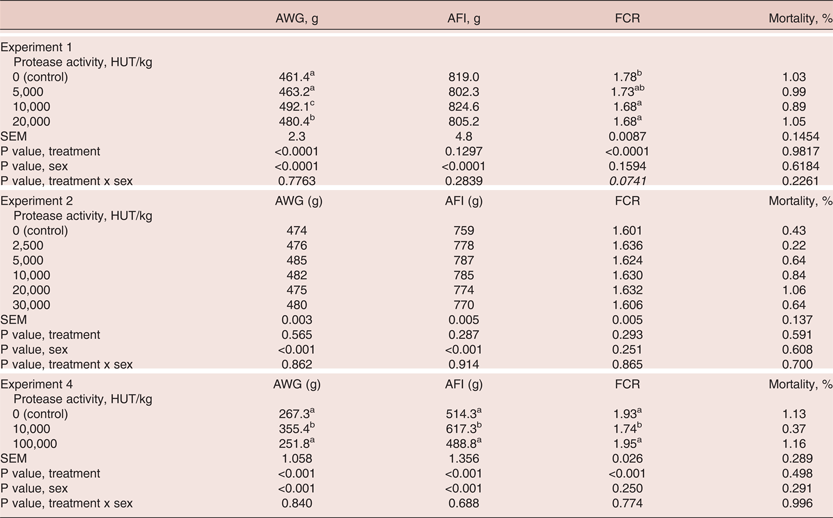
During the starter phase, birds fed diets with protease at 10,000 or 20,000 HUT/kg had higher BW gains (P < 0.001) compared with those fed the other treatments. Similarly, average daily feed intake (ADFI) tended to be highest (ANOVA: P < 0.05; Tukey's: P < 0.05 and P < 0.09) in birds fed at 10,000 HUT/kg compared with the 5,000 HUT/kg or control diets. Feed conversion ratio did not differ (P < 0.05) between treatments (Table 5).
Performance response to Vegpro™ in broilers in starter phase
ab In each experiment values with different superscripts in a column differ P < 0.05
1Experiment 1: 24 rep/treatment (12pens x 44 males/pen and 12 x 51 females/pen), trial duration 0–42days; starter feed 0–10days, grower feed 11–21 days, finisher feed 22–42days.
2Experiment 2: 16 rep/treatment (8pens x 30 males/pen and 8 x 30 females/pen), trial duration 0–42days; starter feed 0–10days, grower feed 11–21 days, finisher feed 22–42days.
3Experiment 3: 12 rep/treatment (12pens x 40 males/pen), trial duration 0–39days; starter feed 0–14days, grower feed 11–35 days, finisher feed 36–39days.
4Experiment 4: 8 rep/treatment (4pens x 30 males/pen and 4 x 35 females/pen), trial duration 0–42days; starter feed 0–10days, grower feed 11–21 days, finisher feed 22–35days, withdrawal feed 36–42
** Feed intake was measured for calculation of FCR (not presented)
***Mortality was measured at the end of the trial period (d39) only
ab Values within column differ P < 0.05
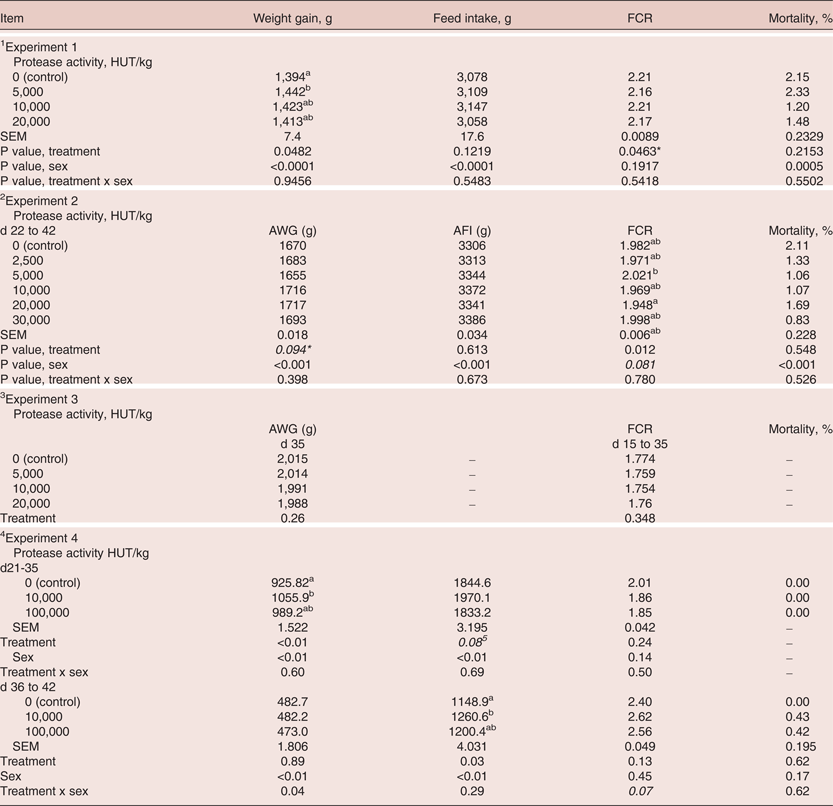
During the grower phase, birds fed diets with protease levels of 10,000 or 20,000 HUT/kg gained more weight and improved FCR compared with birds fed the 5,000 HUT/kg or control diets (P < 0.001). Average daily feed intake was similar between treatments (P > 0.05). The interaction between dietary treatment and sex tended to be significant during this period for FCR (P < 0.08; Table 6). During the finisher phase, average daily gain of birds fed diets with protease at 5,000 HUT/kg was higher compared with birds fed the control (+3.4%, 1,442 vs. 1,394 g respectively; P <0.05). Feed consumption and FCR did not differ (P > 0.05) between treatments (Table 7).
Performance response to Vegpro™ in broilers from 11 to 21 d of age
ab Values within column differ P < 0.05
Performance response to Vegpro™ in broilers from 22 to 42 d of age (or 15 to 35 d and 36 to 39 d of age experiment 3)
ab In each experiment values with different superscripts in a column differ P < 0.05
1Experiment 1: 24 rep/treatment (12pens x 44 males/pen and 12 x 51 females/pen), trial duration 0–42days; starter feed 0–10days, grower feed 11–21 days, finisher feed 22–42days.
2Experiment 2: 16 rep/treatment (8pens x 30 males/pen and 8 x 30 females/pen), trial duration 0–42days; starter feed 0–10days, grower feed 11–21 days, finisher feed 22–42days.
3Experiment 3: 12 rep/treatment (12pens x 40 males/pen), trial duration 0–39days; starter feed 0–14days, grower feed 11–35 days, finisher feed 36–39days.
4Experiment 4: 8 rep/treatment (4pens x 30 males/pen and 4 x 35 females/pen), trial duration 0–42days; starter feed 0–10days, grower feed 11–21 days, finisher feed 22–35days. withdrawal feed 36–42
5P-value of ANOVA indicated a near significant trend P < 0.10 but multiple comparison test (Tukey's) did not indicate a difference between treatments.
*No significant difference between treatments when means are separated using Tukey's comparison test
** Feed intake was measured for calculation of FCR (not presented)
***Mortality was measured at the end of the trial period (d39) only
Experiment 2
The overall study results (1 to 42 d) showed that birds fed protease at 20,000 HUT/kg had better FCR compared with birds fed at 5,000 HUT/kg (−2.4%, 1.832 vs. 1.878 respectively; P < 0.05; Table 4). No interaction occurred between dietary treatment and sex during any of the phases (P > 0.05). During the starter phase, birds fed diets with protease gained more weight and had better FCR compared with birds fed the control (P < 0.001). Likewise, birds fed protease-containing diets had consistently higher ADFI. Compared with the control these differences tended better (P = 0.075) for the 20,000 and 30,000 HUT/kg treatments only, although ADFI was similar between all protease-supplemented diets (Table 5). During the grower phase, performance parameters (Table 6) did not differ between treatments (P > 0.05).
For the finisher diets, birds fed the 20,000 HUT/kg diet had a better feed efficiency compared with birds fed at 5,000 HUT/kg (−3.6%, 1.948 vs. 2.021 respectively; P < 0.01; Table 7). Average daily gain and ADFI did not differ (P > 0.05) between treatments.
Experiment 3
The overall study period data (days 1 to 39) showed that protease supplementation did not affect bird body weight, however it tended to improve FCR (P < 0.06). This improvement increased linearly with protease concentration (Table 4).
When birds were young (14 d of age) the protease at 10,000 HUT/kg of feed decreased bird body weight (P < 0.001), compared with the control. Other protease treatment concentrations had no effect on body weight compared with the control during the starter phase. FCR improved linearly with the addition of Vegpro™ to diet (Table 5).
During the grower period, Vegpro™ in diet had no effect on bird weight at d 35 (P > 0.05) (Table 6). Likewise, in the finisher phase dietary inclusion of Vegpro™ had no effect on bird weight at d 39 (P > 0.05). However, FCR improved linearly with the addition of Vegpro™ to diet (Table 7).
Experiment 4
The results for the overall study period (d 1 to 42) showed that birds fed the diet containing protease at 10,000 HUT/kg gained more weight (+12.3%, 50.12 vs. 44.64 g/d respectively; P < 0.001) and consumed more feed (+9.3%, 99.30 vs. 90.88 g/d respectively; P < 0.01) compared with birds fed the control (Table 4). Moreover, birds fed the 10,000 HUT/kg diet gained more weight (+9.6%, 50.12 vs. 45.71 g/d respectively; P < 0.01) and consumed more feed (+8.6%, 99.30 vs. 91.43 g/d respectively; P < 0.01) compared with birds fed 100,000 HUT/kg. Average daily weight gain and ADFI were similar for birds fed control and 100,000 HUT/kg diets. FCR did not differ (P > 0.05) between treatments. No significant interaction occurred between dietary treatment and sex during any of the phases (P > 0.05).
During the starter phase, birds fed protease had consistently higher ADFI, however the differences were significant between the 100,000 HUT/kg and control treatments only (+4.2%, 26.88 vs. 25.79 g/d respectively; P < 0.05; Table 5). Birds fed the 100,000 HUT/kg diet tended to consume more feed than birds fed the control (+1.2%, 26.09 vs. 25.79 g/d respectively; P < 0.09). Average daily gain and FCR did not differ between treatments (P > 0.05).
Birds fed the 10,000 HUT/kg diet during the grower period gained more weight (+33.0%, 35.54 vs. 26.73 g/d respectively; P < 0.001), consumed more feed (+20.0%, 61.73 vs. 51.43 g/d respectively; P < 0.001) and processed feed more efficiently (-9.8%, 1.74 vs. 1.93 FCR respectively; P < 0.01) than birds fed the control (Table 6). Similarly, birds fed the 10,000 HUT/kg diet outperformed those fed 100,000 HUT/kg (ADG: +41.1%, P < 0.001; ADFI: +26.3%, P < 0.001; FCR: -10.8%, P < 0.01). In birds fed the 100,000 HUT/kg, ADG, ADFI and FCR were similar to those of birds fed the control (Table 6).
During the finisher dietary phase, average daily gain was higher in birds fed the 10,000 HUT/kg diet compared with birds fed the control (+14.0%, 75.42 vs. 66.13 g/d respectively; P < 0.01; Table 7), whereas ADFI and FCR did not differ (P > 0.05). Performance indicators did not differ (P > 0.05) between birds fed the 100,000 HUT/kg and control diets.
This trial included a withdrawal phase, where ADFI was higher in birds fed the 10,000 HUT/kg diet compared with birds fed the control (+9.7%, 180.09 vs. 164.13 g/d respectively; P < 0.05; Table 7). Although no significant differences in ADG were observed when analysing male and female birds together, a significant interaction between treatment and sex occurred during this study period (P < 0.05). Male broilers fed the control gained more weight than female birds fed the control (+32.2%, 78.52 vs. 59.38 g/d respectively; P < 0.01). Although FCR did not differ (P > 0.05) between treatments when analysing male and female birds together, there tended to be an interaction between treatment and sex (P < 0.07). Male birds fed the control tended to outperform than male birds fed protease at 10,000 HUT/kg (−17.0%, 2.29 vs. 2.76 respectively; P < 0.06).
Excreta viscosity and litter quality
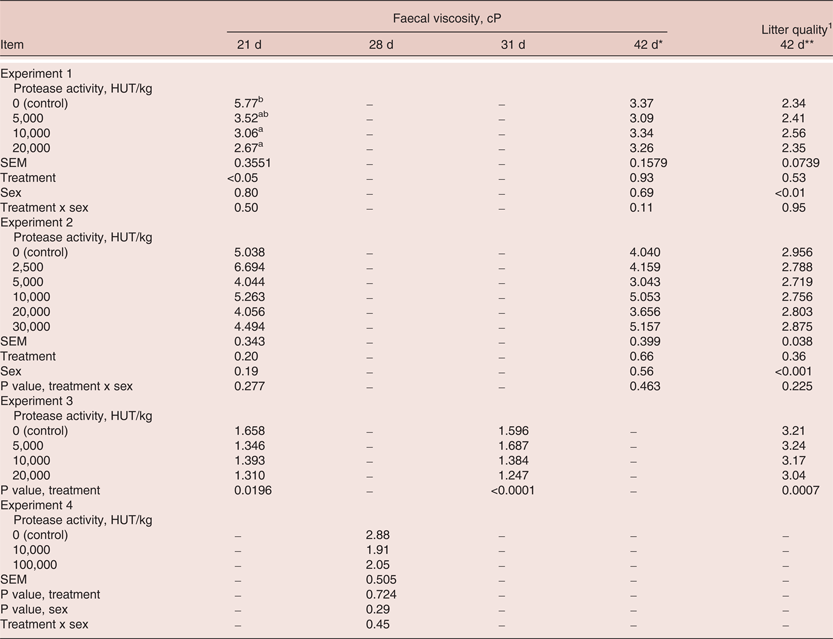
Excreta viscosity was low and unaffected by treatment (P > 0.05) over the course of experiments 1, 2, and 4, and no treatment x sex interactions were detected (P > 0.05; Table 9). At 21 d, in experiment 1, excreta viscosity was lower in birds fed the 10,000 or 20,000 HUT/kg diets compared with birds fed the control (3.06 or 2.67 vs. 5.77 cP respectively), corresponding to reductions of 47% (P < 0.05) or 54% (P < 0.01), respectively. Viscosity tended to be lower (39%) for birds fed the 5,000 HUT/kg diet compared with birds fed the control (3.52 vs. 5.77 cP, P < 0.10). In Experiment 3, ileal viscosity was linearly reduced in response to the Vegpro™ concentration, such that viscosity = 1.55 −2.812e−4.
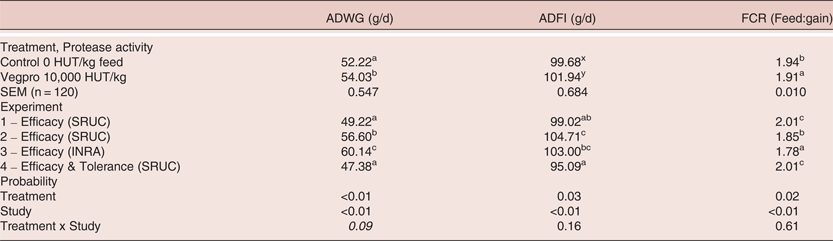
Meta-analysis of zootechnical performance: Effects of treatment and study (global period).
Notes: SEM = standard error of mean; ADWG = average daily weight gain; ADFI = average daily feed intake; FCR = feed conversion ratio (feed:gain)
abc Values with different superscripts in a column differ P < 0.05xy Values with column indicate near-significant trend: 0.05 < P < 0.10
Effect of Vegpro™ on faecal viscosity and litter quality
* Ileal viscosity on d 31 for experiment 3
** Ileal viscosity on d 39 for experiment 3
1 1 = friable, no capping or compaction; 2 = light capping, under a friable crumb surface; 3 = surface capped and compacted; 4 = surface wet and sticky; 5 = litter depth wet and dough-like
The addition of enzyme had no effect on litter quality (P > 0.05). In experiment 2, litter quality was better (P < 0.001) for female birds compared with male birds (Table 9). In Experiment 3 litter quality was improved only when Vegpro™ was supplemented at the 40,000 HUT/kg.
Serum haematology and biochemistry
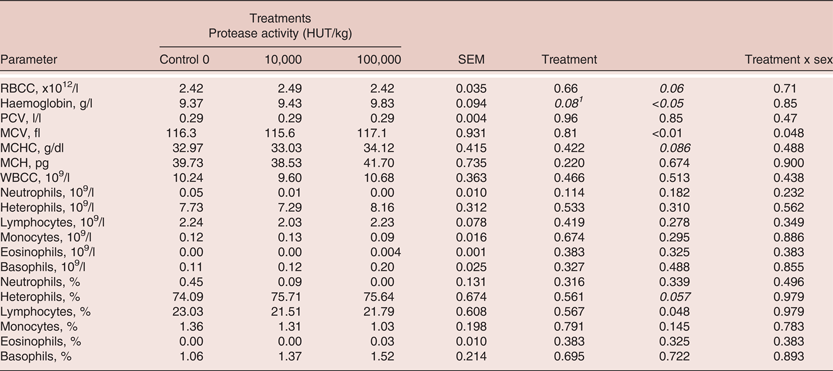
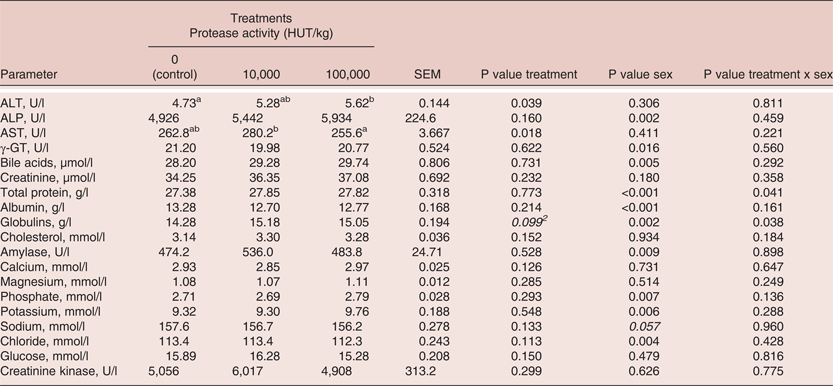
Haematology values were within normal ranges and similar between treatments (i.e., protease activities of 0, 10,000, or 100,000 HUT/kg; Table 10). All of the blood biochemistry parameters measured were within the normal physiologic ranges for broilers at 42 d of age (Silva et al., Reference Silva, Freitas Neto, Laurentiz, Junquiera and Fagliari2007). Alanine aminotransferase (ALT) concentrations were higher in birds fed protease at 100,000 HUT/kg compared with birds fed the control (+18.8%, 5.62 vs. 4.73 U/l, respectively; P < 0.05). Aspartate aminotransferase (AST) levels were lower in birds fed protease at 100,000 HUT/kg diet compared with the 10,000 HUT/kg diet (−8.8%, 255.6 vs. 280.2 U/l, respectively; P < 0.05). The remaining parameters did not differ (P > 0.05) between treatments (Table 11).
Tolerance of broilers to Vegpro™ – Haematologic profile of 42-d-old broilers (Experiment 4)
Notes: no. of replicates = 120 (5 birds/pen); SEM = standard error of mean; RBCC = red blood cell count; PCV = packed cell volume; MCV = mean corpuscular volume; MCHC = mean corpuscular haemoglobin concentration; MCH = mean corpuscular haemoglobin; WBCC = white blood cell count.
1 ANOVA indicated a near-significant trend (0.05 < P ≤ 0.10) but Tukey's multiple comparison test did not indicate a difference between treatments.
Tolerance of broilers to Vegpro™ – Blood biochemistry of 42d-old broilers
ALT = alanine aminotransferase; ALP = alkaline phosphatase; AST = aspartate aminotransferase; γ-GT = gamma-glutamyltransferase
ab Values in same column differ P < 0.05
1 Number of replicates = 120 (5 birds/pen); SEM = standard error of mean
2 ANOVA indicated a near-significant trend (0.05 < P ≤0.10) but Tukey's multiple comparison test did not indicate a difference between treatments.
Meta-analysis
A meta-analysis of zootechnical performance results from all four experiments, in response to protease treatments of 0 or 10,000 HUT/kg feed, showed that broilers fed Vegpro™ gained more weight (+3.5%, 54.03 vs. 52.22 g/d, respectively; P < 0.01), exhibited a significantly better feed efficiency (-1.5%, 1.91 vs. 1.94, respectively; P = 0.05) and tended to consume more feed (+2.2%, 101.9 vs. 99.7 g/d, respectively; P = 0.07) compared with broilers fed the control diets.
Experiment, as a blocking factor, exerted a significant effect, with weight gain and FCR being best in Experiment 3. Feed consumption was highest in experiment 4. A near-significant interaction (P < 0.09) between Vegpro™ supplementation and experiment was detected for daily weight gain. Birds from Experiment 3 fed control diet gained more weight compared with control birds of the other experiments (60.18 vs. 48.43, 55.74 & 44.64 g/d; P < 0.0001, P < 0.05 & P < 0.001, for experiment 3 vs. experiments 1, 2 & 4, respectively). Additionally, birds in Experiment 3 fed Vegpro™ gained more weight compared with birds of experiments 1 and 4 fed Vegpro™ (60.09 vs. 50.01 & 50.12 g/d; P < 0.001, for experiment 3 vs. experiments 1 and 4, respectively). Experiment 3 assessed the effect of Vegpro™ in male birds, whereas the other experiments used both male and female birds. Because male birds are larger and heavier than female birds, weight gains were greater in experiment 3 compared with the other experiments.
Meta-analysis of the zootechnical performance (Table 8) data from the four experiments showed that Vegpro™ added to diets to supply 10,000 HUT protease activity/kg feed improved weight gain of broilers by 3.5% (P < 0.05), improved FCR by 1.5% (P < 0.05) and showed a trend in improved feed consumption by 2.2% (P < 0.07).
Discussion
Published data on the dose response of protease in diets for broiler chickens are limited. The degree of protein hydrolysis in the presence of a protease (measured in vitro) can vary widely depending on the feed ingredient as well as the region where the geographical region ingredient originate (Fischer et al., Reference Fischer, Glitsoe, Pettersson and Fru2009; Antipatis et al., Reference Antipatis, Knap, Pontoppidan, Valientes and Angel2013). In vivo results reported by (Liu et al., Reference Liu, Selle and Cowieson2013) showed that a serine protease enhanced the apparent digestibility of amino acids in broiler chickens consuming sorghum-based diets. Previous work with a similar multi-enzyme complex as tested in the current study found that the combination of protease and carbohydrase enzymes significantly improved nutrient digestibility in a wheat-SBM broiler diet (Madrid et al., Reference Madrid, Catalá-Gregori, García and Hernández2010). The improvements in digestibility were not reflected in improved growth performance. On the other hand Angel et al. (Reference Angel, Saylor, Vieira and Ward2011) reported that a mono-component serine protease at a concentration of 15,000 PROT/kg (PROT = amount of enzyme that releases 1 µmol of p-nitroaniline from 1 µM of substrate (Suc-Ala-Ala-Pro-Phe-p-nitroaniline) per minute at pH 9.0 and 37°C.) or greater (200ppm/t) allowed broilers to overcome negative effects on BW gain and FCR resulting from a 10% downspecification in dietary crude protein, lysine, total sulphur amino acids and threonine, and a 15% reduction methionine. The same study also found that there is no further benefit on either performance or amino acid digestibility from adding higher dose of protease above 15,000 units/kg.
A number of studies showed that protease on top of the carbohydrases (xylanase and amylase) can further increase apparent ileal digestibility of amino acids and the nitrogen-corrected apparent metabolisable energy (AME) in young broilers fed maize-SBM diets with or without DDGS (Barekatain et al., Reference Barekatain, Antipatis, Choct and Iji2013; Romero et al., Reference Romero, Parsons, Utterback, Plumstead and Ravindran2013). Cowieson and Ravindran (Reference Cowieson and Ravindran2008a) found that an enzyme complex containing protease, xylanase and amylase improved nitrogen digestibility by 2.5%, representing a 15.6% improvement in crude protein (CP) digestibility, accompanied by improvements in BW gain of 5.5% and feed efficiency of 4% in broilers fed corn-SBM diet up to 21 days. A second study by the same authors (Cowieson and Ravindran, Reference Cowieson and Ravindran2008b) showed that these effects are depended on the dose of the enzyme cocktail. It can be concluded that the increase in AME as well as increased nutrient digestibility are the main contributors to improved growth performance. Similar effects were observed in the current study when protease was added at levels above 10,000 HUT/kg.
The effects of enzyme on ileal viscosity in broilers has been discussed widely in the scientific literature. It is well established that the addition of carbohydrases in wheat or barley based diets will result in significant lower viscosity in the small intestine and subsequently improve performance (Choct et al., Reference Choct, Kocher, Waters, Pettersson and Ross2004). Reduction in faecal viscosity in response to Vegpro™ at 10,000 or 20,000 HUT/kg in birds at 21 days of age is consistent with the performance improvements we reported in the grower phase. This is in agreement with other studies (Nagaraj et al., Reference Nagaraj, Hess and Bilgili2007) that showed the addition of a protease/carbohydrase enzyme cocktail to corn-SBM-based diets reduced the viscosity of gut contents irrespective of dietary protein source.
In the present study the addition of the enzyme cocktail above 10,000 HUT/kg did not result in any performance benefits. On the other hand adding 10 times above the optimal rate had no negative effect on feed intake, weight gain or feed conversion ratio. It has previously been reported that higher levels of exogenous enzymes (double concentration) can lead to increased feed intake (Cowieson and Ravindran, Reference Cowieson and Ravindran2008a), the increase in feed intake however was offset by greater bodyweight. It is speculated that the higher feed intake is related to increased passage rate and/or increase digestibility of protein and starch. Furthermore, the lack of significant differences in a wide range of haematological and biochemical parameters indicates that supplying protease at 100,000 HUT/kg of feed produced no adverse health effects.
Conclusions
The results showed that the exogenous enzyme protease provided as Vegpro™ is well tolerated by broilers at inclusion rates of up to 100,000 HUT per kg of feed, a protease activity 10 times that recommended for poultry diet by the manufacturer. No adverse effects on the measured health or performance indicators were found when fed at this rate from 1 to 42 d of age.
All four experiments confirmed that protease provided as Vegpro™ at activity levels greater than or equal to 5,000 HUT/kg, with minor xylanase activities, improved average daily gain and feed conversion ratio, especially in birds up to 21 d of age. Overall, inclusion of Vegpro™ to broiler diet at the manufacturers recommended rate of 10,000 HUT/kg protease per kg of feed was shown to provide the maximum performance benefit.
Acknowledgments
Experiments 1, 2, and 4 were conducted by Tom Acamovic, Nick Sparks and Farina Khattak, Avian Science Research Centre, Scotland's Rural College (Ayr, Scotland, UK). Experiment 3 was conducted by M. Lessire, INRA, Station de Recherches Avicoles (Nouzilly, France). The meta-analysis was performed by Miroslava Piskorikova, Pen & Tec Consulting SL (Barcelona, Spain). Funding for all experiments and data analysis was provided by Alltech France (Levallois-Perret, France).