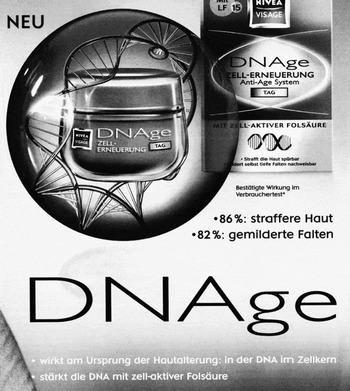
In recent years, cosmetics giants such as L’Oréal and Estée Lauder have launched new anti-aging products proclaiming that “the secret of young skin is its genes.” These products are the descendants of Nivea's Visage DNAge® cream and the revolutionary message it carried: that the future of anti-aging lies in enhancing the capacity of skin cell DNA to repair itself following external harm. In our age of genomic research, it might not come as a big surprise that genomics has now reached cosmetics. However, the origins of the DNAge strategy lie far beyond cosmetic dermatology. The genealogy presented here brings together a number of different accounts of the skin as they have developed over the last 40 years in a context wholly unrelated to the beauty industry: the vulnerability of human DNA to man-made hazards such as radioactive fall-out and pesticides. More generally speaking, the history of DNAge as it is presented here contributes to a genealogy of the human at risk and of risk politics. It will roll back the tape to the “Atomic Age,” an era in which the skin was seen not as an active but a passive surface and will follow the conceptual shifts and material transfers in radiation biology, toxicology, toxicogenetics and cancer research that supported new approaches to prevention, which ultimately became the basis for a new generation of beauty care products.
The 1950s, the beginning of the Atomic Age, was the starting point for vivid concerns about the deleterious impact of the man-made environment on human health. The threat of radioactive fall-out from aboveground weapons testing was omnipresent in the voluminous literature on politics and science in the Atomic Age. But this was not the only area of concern. Pesticides, occupational hazards, pharmaceuticals, and potential toxins, such as additives present in food and nutrition, became the focus of biomedical researchers, politicians, and the general public and were at the center of increasing national and international efforts in risk politics. Only recently historiographical accounts have begun to figure out the role that geneticists and genetic research have played in the growing concerns about the hazardous impacts of pollutants and toxins in the environment, in food, and at the workplace (Frickel Reference Frickel2004; Schwerin Reference Schwerin, Vienne and Brandt2009; Creager Reference Creager, Boudia and Jas2014; Bächi Reference Bächi2010; Schwerin Reference Schwerin2010; Schwerin Reference Schwerin, Cottebrune and Eckart2012; Schwerin Reference Schwerin, Gausemeier, Müller-Wille and Ramsden2013; Jas Reference Jas, Boudia and Jas2013; Stoff Reference Stoff2014; Schwerin Reference Schwerin2014; Boudia and Jas Reference Boudia and Jas2014). Scott Frickel has written about the history of the toxicogeneticists and “genetic toxicology scientists-activists,” who, starting in the late 1960s, began to engage in the debates on environmental hazards and have since played crucial – both conservative and liberal – roles in chemopolitics (Frickel Reference Frickel2004, 17; see also Proctor Reference Proctor1995; Creager Reference Creager, Boudia and Jas2014). One crucial point in that convoluted history is that carcinogens and mutagens came to be seen as a special class of toxicological hazards with more serious impact on occupational and public health than every known hazard before. This found its expression in regulatory debates and political efforts beyond radiation safety: the 1958 revision of the Food, Drug & Cosmetic Act in the U.S., the U.S. Toxic Substances Control Act of 1976, and the EU Council Directive 79/831/EEC of 1979 were deeply concerned with these kinds of hazards as were state-financed research and health programs to battle cancer (White Reference White1994; Frickel Reference Frickel2004, 62–65; Körber Reference Körber1998, 110–124).
Legislation, however, was not enough to settle the ongoing disputes on appropriate political measures and the principles guiding chemopolitics. Political and economic interests were in conflict, and scientific debates on the exact risks and the real threats continued or even increased. The conclusion that can be drawn from recent studies on the history of chemopolitics is that the shift of risk models deserves thorough attention (cf. Bächi & Reinhardt Reference Bächi and Reinhardt2010; Bächi Reference Bächi2010; Boudia Reference Boudia, Boudia and Jas2013; Jas Reference Jas, Boudia and Jas2013; Stoff Reference Stoff2014; Schwerin Reference Schwerin2014; in general, on the history of risk cf. Boudia & Jas Reference Boudia and Jas2007). To take up this lesson, this paper focuses on the history of the science of DNA repair, a phenomenon that emerged as a research field in between molecular biology and radiation genetics around the 1960s and that has not yet been studied in depth historiographically (Yi Reference Yi2007; Schwerin Reference Schwerin, Vienne and Brandt2009; among the numerous scientists’ accounts of the history of DNA repair, see Auerbach Reference Auerbach1976, 125–158; Kimball Reference Kimball1987; Friedberg Reference Friedberg1997). The 1970s witnessed an ever-growing body of knowledge on DNA repair mechanisms, which turned out to be ubiquitous in living things and crucial. External irritants are a permanent threat to the stability of genomic DNA, causing a steady stream of mutations. The sensational message from the molecular world of the body's cells was that there is not just one but a variety of mechanisms that guarantee the ongoing monitoring and repair of damage to the genetic material (mutations). Although molecular biologists paid little attention to the science of DNA repair in the beginning, geneticists, toxicologists, and cancer researchers were fascinated because the relevance of DNA repair to the environmental concerns of the time was obvious.
This paper will take a closer look at one of the many research arenas of DNA repair mechanisms. It is the case of James Cleaver, a biophysicist at the Laboratory of Radiobiology at the University of California, San Francisco (UCSF), and of xeroderma pigmentosum (XP), a familial skin cancer inducible by normal exposure to sunlight, which was found to be caused by a failure of skin cells to repair their DNA. The further aim will be to demonstrate that DNA repair created not only a new species of researcher at the intersection of radiation biology, genetics, toxicology, cancer research and molecular biology – “repairologists” (Friedberg Reference Friedberg2004, 195) – but also new attempts at disease prevention and enhancement of the body. “As is increasingly, becoming apparent,” Proctor mentioned in 1995, “prevention means not just reducing one's exposure to carcinogens but consuming an adequate supply of ‘anticarcinogens,’ especially the vitamins and other antioxidants found in green and yellow vegetables” (Proctor Reference Proctor1995, 14).
The 1970s and 1980s saw a number of political battles on prevention and its place within the whole of health politics. On the one hand, pressure grew for governments to devote more resources to researching the etiology and prevention of diseases; on the other hand, disease prevention efforts based in an environmental approach came under heavy pressure owing to a trend in the politics of Western industrialized countries away from social welfare to more liberal forms of governance. Numerous historians and sociologists of medicine and public health have described the shift from collective to individual lifestyle prevention strategies (see, e.g., Castel Reference Castel1981; Rabinow Reference Rabinow1996, 91–111; Petersen and Bunton Reference Petersen and Bunton1997; Aronowitz Reference Aronowitz1998; Porter Reference Porter1999; Bröckling, Krasmann, and Lemke Reference Bröckling, Krasmann and Lemke2011; Lengwiler and Madarász Reference Lengwiler, Madarász, Lengwiler and Madarász2010, 11–28). One arena in these political battles was diet and nutrition and their impact on the prevention of disease. While there is no question that diet and nutrition have been linked to human well-being repeatedly throughout history (cf., e.g., Turner Reference Turner1982; Kamminga and Cunningham Reference Kamminga and Cunningham1995; Fenton Reference Fenton2000; Thoms Reference Thoms, Neumann, Wierlacher and Wild2001; Orland and Spary Reference Orland and Spary2012), food as disease prevention received new attention as a growing number of occupational, environmental, and lifestyle factors became associated with poor health, particularly cardiovascular diseases and cancer (Cantor Reference Cantor2012a, 545–547). There has been profound scholarly attention given to the historical links among diet, nutrition, and disease prevention, especially food as pharma (cf. a selection of titles on diet and health with focus on prevention: Carpenter Reference Carpenter1988; Werner Reference Werner1998; McGrath Reference McGrath2006; Bächi Reference Bächi2009; Chen Reference Chen2009; Tanner Reference Tanner, Lengwiler and Madarász2010; Briesen Reference Briesen2010; Stoff Reference Stoff2012) and the role that food additives and hormones in processed food might play as mutagens and carcinogens (Richards Reference Richards1988; Sellers Reference Sellers1997a; Sellers Reference Sellers1997b; Bonah, Cantor, and Doerries Reference Bonah, Cantor and Doerries2010; Gaudillière Reference Gaudillière, Cantor, Bonah and Doerries2010; Langston Reference Langston2010; Cantor Reference Cantor2012b; Jas Reference Jas, Boudia and Jas2013; Stoff and Schwerin Reference Stoff and Schwerin2014; Stoff Reference Stoff2014; Schwerin Reference Schwerin2014; Schwerin Reference Schwerin, Erker, Homburg and Vaupel2015; Stoff Reference Stoff2015). Cancer prevention, in particular, became a main target for dietary recommendations, starting in the 1980s (Rushefky Reference Rushefsky1986; Marcus Reference Marcus1994; Hilgartner Reference Hilgartner2000; Davis Reference Davis2007). However, the role of DNA repair in these debates has been largely neglected with two exceptions (Proctor Reference Proctor1995; Creager Reference Creager, Boudia and Jas2014). This paper seeks to contribute to filling this gap.
DNA repair became a scientific reference in those struggles, opening up an innovative perspective on what I would like to call molecular mechanisms of prevention or just molecular prevention (cf. Proctor Reference Proctor1995). As the case of XP had proven that the capacities of bodies or individual cells to repair DNA could be functional to different degrees, the vision grew to manipulate and enhance these capacities – an idea subsumed under the shifting concepts of chemoprevention, anti-mutagenesis, and anti-carcinogenesis (there are only a few studies on chemoprevention, anticarcinogenesis, and antimutagenesis as concepts of primary prevention and chemoprophylaxis, not therapy: Fosket Reference Fosket2002; Fosket Reference Fosket2004; Löwy Reference Löwy, Gaudillière and Hess2012; cf. also Cantor Reference Cantor2012b). This vision transcended the conventional claims regarding the impacts of wrong diet and nutrition on health that focused on unbalanced food and carcinogens. The vision of molecular prevention was that diet could strengthen the body in the age of environmental pollution. The emergence of molecular prevention might not have been accidental, when the political focus of prevention shifted from the prevention of contamination to the regulation of an expanding number of toxic substances in a world already toxic (cf. Boudia and Jas Reference Boudia and Jas2014).
In the final section, this paper will detour away from the history of the role of DNA repair in the diet and cancer struggles and leave it for later analysis – in particular, the strategies that make use of the body's self-repairing capacities will have to be understood better in the context of general tendencies towards individualization and self-management. Instead the last section will trace the history of DNA repair until its emergence in cosmetics. Although the vision of enhancing DNA repair to fight serious diseases has not yet been achieved, the latest evidence for the appealing idea of molecular enhancement is its adoption by the beauty industry. Hence, the path of DNA repair leads from the toxicological realm of anti-mutagenesis and anti-carcinogenesis into the research laboratory of the Beiersdorf Company and to the transformation of this molecular mechanism into a new strategy of the anti-aging cosmetic business. Disease prevention through diet was translated into cosmetic nurturing of the skin. Though the story ends with recently developed skin care products, skin health goes beyond wrinkles. In the crevices of modern biopolitics and body concepts, one finds a vibrant political epistemology of vulnerability. As this reflects the broader topic of this paper, it must be explicated before picking up the story.
Skinologies: Vulnerability and Intersections of the Environment and the Organism
Vulnerability will be introduced here as a historiographical device or heuristic that draws the attention to the relation between the body and the environment. Actually, this has been the emphasis since the 1970s when the word became a widely used term in the context of health care.Footnote 1 Vulnerability relates to the person at risk and how risk levels differ from case to case. Of course this was not the first time that vulnerability became an object of scientific and political scrutiny. However, the history of science and science studies has been interested more in body concepts than in the relation between the body and its environment. The pathbreaking studies of Donna Haraway, Emily Martin, and Ilana Löwy on the achievements of immunology starting in the 1970s serve as an example.
As all three authors were intrigued by the broad impact of the new immunological concepts on people's self-perception, they analyzed the body concepts inherent in immunology and the influence of those concepts on our ideas of ourselves. In Harawayian terms, the biomedical concept of the immune system became a metaphor for general ideas of the body and subjectivity in a postmodern culture and in information-driven late capitalism (Haraway Reference Haraway1991, 204–207). Martin drew similar conclusions from her ethnographic fieldwork on popular health concepts. The growing health culture of the 1980s would show how biomedical concepts of the body and body functions become general metaphors for the body and the self in a world of social flexibility (Martin Reference Martin1994, 25, 120 and 248). Löwy pointed to an immunologically driven concept of the self, although she was more interested in its epistemological function as a “boundary concept” within science (Löwy Reference Löwy, Rheinberger and Hagner1993, 190). In summary, the three analyses of immunology diagnosed profound and interconnected changes in both scientific concepts and popular thinking about the body.
As I want to argue, if we follow body concepts through time and space, we must be conscious that “body concepts” is an abstraction. Most of the time, modern science is not about body concepts but about concrete problems. As Haraway, Martin, and Löwy mention in the case of immunology, the immunological self is about the need to distinguish between self and other. However, the difference between the body and the space around it is not central to their analyses as they are not interested in relationships but in how body concepts derive from their empirical material. The result is that the “body” hides the historical problem behind it, as immunology is first and foremost not about the organism or the body as an entity, but the body in relation to the environment. It is thus worthwhile to draw the attention away from body history back to the actual scientific events and their context – to the time before scientific concepts begin to circulate as metaphors of the body in science, culture, economy and politics.
The relational aspect of body concepts is certainly not specific to immunology. Generally, the impact of the environment on the body is a crucial topic of biological and medical research. And strictly speaking, the endless debates on “nature vs. nurture” that have continued for more than a century just reflect ideas about different degrees of autonomy and non-autonomy of the body in terms of its environment. The significance of this relational knowledge and the need to come to terms with it once again became urgent as environmental hazards have become a major issue of research and politics over the last 60 years. Research played a crucial role in understanding the danger of hazardous agents such as radiation and chemical toxins. The scientific problem at stake was the body as a vulnerable entity. It is worth mentioning that, even in this context of research, vulnerability was not limited to the sciences of vulnerability proper such as toxicology but has to be understood as a central scientific problem, for regulatory measures are crucially dependent on how we fundamentally problematize – research, describe, and conceptualize – the impact of the environment on the individual, the individual body, and the biological organism. As in the case of mutagenesis and carcinogenesis, this knowledge may encompass a wide range of biological and biomedical knowledge. All knowledge derived from these areas that permits the body's autonomy and its vulnerability to be determined is “regulatory knowledge” (Bächi and Reinhardt Reference Bächi and Reinhardt2010), whereas the scientific activities that contribute to the knowledge of the body at risk as a specific concept of vulnerability may be summarized as “risk episteme” (Schwerin Reference Schwerin2010, 403–404). The risk episteme of mutagenesis involved biophysics, genetics, molecular biology, biochemistry, and – as in the example of this paper – some medicine: dermatology.
The skin, but also the lungs, the stomach and the intestines, are intersections between the environment and the body. As passage points, these organs have been repeating elements in vulnerability discourses. Thus, the skin has never been merely the cosmetic surface that the beauty industry perceives (cf. Haiken Reference Haiken1997; Gilman Reference Gilman2000; Sullivan Reference Sullivan2001; Woloshyn Reference Woloshyn, Reinarz and Siena2013). The skin has been and is an object of the highest scrutiny and work including diverse practices such as stroking, massaging, rubbing, sunning, peeling, shaving, painting, tattooing, and piercing. Consequently, there has been significant interest in the skin's function as a social surface of inscription, signification, representation, identity building, and ascription (of the voluminous (non-)historiographical literature, see Anziou Reference Anziou1989; Caplan Reference Caplan2000; Ahmend and Stacey Reference Ahmend and Stacey2001; Benthien Reference Benthien2002; Connor Reference Connor2004). In a way, the skin has a life of its own as a signifier and is only superficially connected to our bodies. At the same time, the skin is not only a surface: It is a medical, anthropological, racial, and social object. It became an object of sophisticated hygienic practices in the nineteenth century and an object of ideas on the connectedness of the body and its environment (Fanon Reference Fanon1952; Duden Reference Duden1991; Sarasin Reference Sarasin2001, 264–313; Horn Reference Horn2003; Hau Reference Hau2003; Schnalke Reference Schnalke, de Chadarevian and Hopwood2004; Carter Reference Carter2007; te Hennepe Reference te Hennepe, van de Vall and Zwijnenberg2009; Flanagan and Booth Reference Flanagan and Booth2009; Zweiniger-Bargielowska Reference Zweiniger-Bargielowska2010; Reinarz and Siena Reference Reinarz and Siena2013). In the early twentieth century, it became an almost mystified energetic object in the writings and practices of health reformists and the rejuvenation movement (Möhring Reference Möhring, Forth and Crozier2005). The praise of the skin as an essential part in the energetic economy of the body highlights its role as a transitional boundary between the environment and our bodies, ever changing between the two boundary modes of connecting and demarcating.
In the story presented here, the skin is a crucial boundary, but a vulnerable one, too. (1) In the risk episteme of the Atomic Age, the skin was a protective cover of the body. (2) In the 1960s, the skin became the scene of environmental effects such as mutations, tumors, and wrinkles caused by UV radiation. (3) In the 1970s, the skin became a site in the transition from a physical model of vulnerability to a molecular and regulative model. It functioned as a boundary object that connected mutation biology, cancer research, and dermatology. (4) In the new risk episteme, the skin is no longer a passive demarcation, but foremost a connecting and active boundary in a nutrition-based economy between the body and its environment. The emergence of DNA repair elucidates these crucial features in the history of the skin that have been neglected so far. The other way around, the skin became one of the research foci from which DNA repair paved the way for a crucial shift in the contemporary understanding of the threat posed by environmental hazards to vulnerable bodies.Footnote 2
As DNA repair was a reminder of the embeddedness of the body in its physical and chemical environment, it is a good case to show the embeddedness of the skin in its social and political environment. In his story on the American “cancer wars,” Robert Proctor described body concepts as reflection of political fights and distinguished two “different conceptions of the human body, especially its ability to withstand toxic insults” (Proctor Reference Proctor1995, 171–172). In his analysis, these opposing conceptions correlated with the two main political factions in the debate on cancer prevention: on one side, “industry advocates and their academic allies” who relied on a “macho body” that could “detoxify potential carcinogens or repair genetic damage at rates sufficient to neutralize low-dose chemical or radioactive insults”; on the other side, environmentalists who focused “more on the vulnerability of the body” (ibid., 171). In other words and according to our terminology, there were different accounts of vulnerability. Whether those accounts were that strictly divided within the history of risk and vulnerability, nature, and politics is an open question that will not be addressed here. The aim here is to follow the path of DNA repair and its importance for an epistemic shift in the body's vulnerability, changing discourse on cancer prevention, and the promotion of chemoprevention and of anti-substances as ways to enhance the body's own molecular capacities.
The Turtle Strategy of the Atomic Age
The story of the skin as a remarkably thin surface and the changing capabilities ascribed to it begins in many respects in the 1950s. It was the Atomic Age, a time when many were thrilled by the prospects of nuclear energy. Countries all over the world adopted atomic energy as an innovative key technology to modernize energy production, industrial production, medicine, and research. At the same time, it was an era of fear when aboveground atomic testing became omnipresent in the news and fear spread that atomic fallout could travel long distances from testing grounds to rain down on cities and on the crops and land that provided the population's food supply and drinking water. It was an environmental threat that came through the air: highly toxic, pervasive, and undetectable by human senses, features that made it even more fatal in terms of individual health and collective burden. Radioactive pollution defined the environment as an object of regulation and risk politics and became the object of professional investigation, drawing together biophysicists, physicians, radiation biologists, and geneticists.
One well-documented aspect of this early environmental debate was the genetic effect of radiation (for a selection of works that have described the research on radiation biology and genetics as well as the role of scientists in the efforts to objectify the danger of radioactivity and to consider regulatory measures for radiation protection, see Seidel Reference Seidel1986; Caufield Reference Caufield1989; Beatty Reference Beatty, Benson, Maienschein and Rainger1991; Hacker Reference Hacker1992; Walker Reference Walker1994; Rader Reference Rader2004, 221–249; Creager and Santesmases Reference Creager and Santesmases2006; Creager Reference Creager2015). Radiation could easily penetrate the body, passing through human cells and causing all kinds of damage. Geneticists, especially, drew attention to the mutagenic effects of radiation on germ cells and pointed out that the detrimental effects on the genes would not show up in the harmed individuals but in the next generation when the mutated germ cells became the origin of new life. The fears of the Atomic Age focused more and more on these detrimental consequences of generational scale and saw radioactive hazards as a dysgenic problem.
How did these worries relate to concepts of the body? And how did the biological model of hazardous effects determine the rationale of radiation protection? Put simply, the risk model of the Atomic Age was that of a bullet that hits the cell and induces damage in the genetic make-up. In fact, no geneticist or biophysicist really spoke of “bullets,” but the genetic conception of radiation-induced mutations came close to this idea. According to that model, the radiation waves penetrated cells and induced changes in cell structures that – in accordance with the principles of quantum physics – contingently resulted in changes in the conformation of genes and chromosomes. This biophysical model was based on terms and concepts invented in the 1920s, when biophysicists entered biological radiation research, and has been dominant in genetic radiation research ever since (cf. Sloan and Fogel Reference Sloan and Fogel2011). Because the biophysical model assumed very focal initial changes at the target site of the cell structure, biophysicists and geneticists called it the target concept or target theory.Footnote 3
The biophysical model of mutagenesis evoked a clear idea of the role of the penetrated biological substance: it was passive. Hence, the biological organism appeared to be at the mercy of natural laws. Whether genetic cell structures were changed by radiation or not was merely a matter of the probabilistic laws of quantum mechanics. The model victimized the cell and the body: an external agent passed easily through the body's surface, penetrated the cell and hit its very heart. In this schema, the idea of a weak, almost naked body emerged as the object of environmental effects. Actually, this new model of genetic toxicology made people rethink the principles of toxicology, i.e., that the body could recover from – at least minor – physiological effects. The message of genetic toxicology was that the genetic body was far more vulnerable to the environment than the physiological body: mutations were irreversible. The impact of this message was far-reaching, as it was understood that there was absolutely no dose of radiation that was genetically not detrimental (Rader Reference Rader2004, 221–249; Boudia Reference Boudia, Boudia and Jas2013; Creager Reference Creager2015). This conclusion was one of the ever-repeated warnings by geneticists at that time. The body had almost no protection that could deflect genetic damage. The only protection against this kind of environmental threat was the skin, which was no more than a passive physical barrier. The skin acted like a filter that could absorb sunlight and ultraviolet radiation but was less effective in the case of more energetic forms of radiation.
Figure 1 shows stills from the movie “Duck and Cover,” an official United States Civil Defense Film produced in co-operation with the Federal Civil Defense Administration for school showings in the 1950s. It illustrates the vulnerability of human skin, which provides no protection against high-energy radiation. In the beginning, a cartoon clip shows a turtle hiding in its shell from a stick of dynamite exploding right next to it. The turtle character was performing the basic technique of self-protection in the Atomic Age: ducking and covering, a strategy that would offer some protection against the intense heat, shock waves, and radiation following a nuclear explosion. Though the technique offered only slight protection against radioactive fallout, it would at least reduce exposure to gamma rays.
The turtle strategy of protection. Stills from “Duck and Cover” (1951), a U.S. Civil Defense movie that illustrates the basic protection strategy in the Atomic Age. Source: Federal Civil Defense Administration [1951] 2005.

One of the next scenes unfolds in the classroom where a civil defense lesson is being presented. The teacher points to the blackboard with a sketch of a turtle on it, a turtle with a thick shell on its back: obviously, such a shell offers better shelter in case of an atomic bomb explosion than the skin of a human. The male narrator with the sonorous voice of a trustful guarantor of officially – and scientifically – attested knowledge puts the words into the teacher's mouth. “Now, you and I don't have shells to crawl into like Bert the turtle, so we have to cover up in our own way” (Federal Civil Defense Administration [1951] Reference Geerhart, Sitz and Gülden2005). The message was clear: humans have to seek a substitute protection against atomic bomb blasts. The basic sheltering substitute was so simple that children could exercise it right in the classroom: duck and cover under a desk. At least, use your arms to protect your head. Even better is to find a more stable shelter like a wall. So the children learned the lesson of atomic blast shelters: you need hard, thick things to protect the soft body against the penetrating forces of the bomb. The analogues in civil life were the concrete facade of a nuclear reactor, the concrete walls of a high-energy therapy laboratory, and the lead apron the radiologist uses in X-ray therapy. This sheltering strategy with its techniques of duck and cover, concrete construction, and lead coverage was based on a whole set of radiobiological and radiogenetic knowledge about the relation of the external agent and the human body. Part of the knowledge about this vulnerable relation was the boundary between the medium that transported shock waves, heat, and rays and the organism: the skin, which could absorb UV, but not gamma rays.
Transition Phase and Crises of Protection
In the 1960s, when mutation research turned from radiation to urgent new problems, the Atomic Age package of radiation hazards, the physical model of vulnerability and protection strategies was questioned. As the atomic power nations were agreeing in 1963 to halt aboveground atomic testing, a new armada of products from the petroleum industry and the problems of mass consumer societies had already begun to eclipse the concerns of the Atomic Age. The colorful little plastic things became a new power that structured reality. The sociologist Ernest Zahn wrote in 1964 in his Sociology of Prosperity that these things are the “necessary means of communication of social life,” hence, society would “not only be a growing number of people but a growing number of things as well” (cited in Westermann Reference Westermann2007, 19; my translation). As consumer products proliferated, the proliferation of synthetic chemicals became the foundation of increased consumption. The invention of new materials increased the occupational handling of all kinds of dangerous substances; the industrial processing of food involved the massive use of chemical additives such as preservatives and colorings; the so-called agricultural revolution was based on the widespread use of pesticides. The circulation of increasing quantities and varieties of chemicals emerged as a problem in and of itself. Pesticides turned out to be everywhere: once released into the environment they were absorbed by plants, passed to earthworms that fed on the plants, and eventually killed the birds that ate the worms. As with the ubiquitous threat of radioactive fallout, the biologist Rachel Carson presented the extensive use of pesticides as a ubiquitous threat to the living world (Lutts Reference Lutts1985).
One environmental problem replaced the other. In fact, many scientists who had been concerned with radioactive fallout and hazards shifted their attention to chemical pollution and chemical toxicity. As Creager puts it, “research into chemical carcinogens followed the tracks – conceptual, experimental, and institutional – of radiation genetics” and radiation biology (Creager Reference Creager, Boudia and Jas2014, 58). Geneticists knew that chemical substances could induce mutations just as radiation could. Little imagination was required to envision the new genetic threats posed by pesticides, food additives, and pharmaceuticals. The so-called consumer democracy, with its chemical-technical infrastructure, could lead straight to a genetic catastrophe. From the late 1960s onward, geneticists and toxicologists started to agitate for political action and demanded that the state shoulder the burden of protecting vulnerable individuals from toxicogenetic environmental influences. These calls to regulate chemical hazards and mutagens, especially, were among the driving forces behind the U.S. Toxic Substances Control Act (TSCA), which passed into law in 1976 and made mutagenicity testing for new chemicals obligatory (Frickel Reference Frickel2004, 62). Discussions in other nations were similar, eventually leading to legal regulations of toxic chemicals in one country after another.
Shielding was still the strategy of choice for handling mutagens. Scientists including the biochemist John Cairns claimed that the most promising approach for controlling mutagenic hazards was to “identify” those factors in the environment, keep them away from the human body and “eliminate” them (Cairns Reference Cairns1975, 64). These demands were in line with the common regulatory rationale of occupational and public health programs that would give shelter to a vulnerable citizen and were in this respect analogous to the turtle strategy crafted at the height of the Cold War. However, the problems of chemical toxicity were not so easily solved. Sheltering prevention in a general sense meant changing the human environment so that hazardous influences were kept away from the human body by any means. But who would be the one to tell the chemical industry to stop producing crucial chemicals?
Also, as it turned out, regulatory efforts were quickly overtaxed as the development of new substances accelerated. In contrast to risk research on radioactivity, testing of mutagenic substances faced the problem of big numbers. For instance, West German scientists had been among the pioneers in the field of mutagenesis testing and established a large-scale laboratory for mutagenicity testing in the late 1960s, but as it turned out, the effort was ridiculously undersized to tackle the new threats (Schwerin Reference Schwerin2010, 412). In the years around 1975, 1,000 to 3,000 new chemical compounds were introduced into chemical production just in West Germany each year, quite apart from those substances already in use, which nevertheless still needed to be tested (Westermann Reference Westermann2007, 292). Toxicologists, geneticists, and biochemists worked in dozens of laboratories around the world on genetic toxicology, but there was not even agreement on the right test measures to provide the regulatory agencies with definite proof of the mutagenicity or non-mutagenicity of a substance (Frickel Reference Frickel2004, 136; Creager Reference Creager, Boudia and Jas2014, 54; Schwerin Reference Schwerin2010, 407–409).
Thus, the efforts to regulate chemical mutagens faced a series of epistemic, technical, and political problems. The chemo-mutagenic danger was much more vague, diverse, and unpredictable than the radioactive threat of the Atomic Age. As it was difficult to find hard proof of the mutagenicity of a given substance for humans, “uncertainty” of knowledge became a major obstacle for those calling for fast and clear regulatory action (Langston Reference Langston2010; Creager Reference Creager, Boudia and Jas2014, 54–55; Schwerin Reference Schwerin2010; Schwerin Reference Schwerin, Erker, Homburg and Vaupel2015). To understand this, the controversial debates on mutagens – as well as carcinogens as we will see in the next section – and their regulation have to be seen in the context of a profound epistemic shift of regulatory regimes toward “risk assessment” and “cost-benefit calculus” starting in the 1970s.Footnote 4 With respect to chemical hazards, the preventive strategy and its sheltering techniques had reached their limits more than ever. Hardly any of the scientific experts, politicians, environmentalists and activists made this clear, however, instead continuing to argue and fight about legislation. Nevertheless, the growing gap between production and use of synthetic substances on one hand and efforts to get control of the circulation of hazardous chemicals on the other hand became a driving force for new things to happen behind the scenes of mainstream risk discourse.
A Conjunction: Mutation and Cancer – the Case of Xeroderma Pigmentosum
The early 1970s witnessed a crucial scientific reconfiguration in the risk regime of mutagens when cancer became a major target of health and research politics. In 1971, U.S. President Richard Nixon, finally having admitted that the war in Vietnam was lost, launched the “War on Cancer” (for the National Cancer Act, see Cantor Reference Cantor2012a, 533, n. 4; see also Rushefsky Reference Rushefsky1986). In effect, state money was redirected to combat this declared enemy. Cancer quickly became a magnet for all kinds of research. In retrospect, there is no doubt that this “war” was not successful, as the incidence of cancer did not decrease (Proctor Reference Proctor1995, 252). However, in one respect the race for cancer money turned out to be effective, as it encouraged collaboration across different fields of research.Footnote 5 One of those conjunctions was among cancer research, mutation genetics, and research on the molecular biology of mutations.
Until the 1960s, the whole experimental configuration of radiation-centered mutation research was mainly built around germ-line mutations. Mutation research had been a spin off of “classical” transmission genetics, and the methods of mutation research were designed to show the transmission of phenotypical traits from generation to generation. As such, germ-line mutations had been identified as an urgent eugenic problem (for the case of radiation, see, for example, Beatty Reference Beatty, Benson, Maienschein and Rainger1991; Rader Reference Rader2004; for the case of mutagens, see Frickel Reference Frickel2004, 104–107; Schwerin Reference Schwerin, Cottebrune and Eckart2012). In contrast, mutations in regular body cells and somatic mutagenesis were an almost neglected issue (Creager Reference Creager, Boudia and Jas2014, 53; Creager Reference Creager2015). Some scientists from genetics, toxicology and cancer research had long suspected that somatic mutations could be related to carcinogenesis; and with respect to the carcinogenic effects of some food additives and other chemicals, a growing community of scientists was convinced that these problems were connected to the induction of mutations in somatic cells (Proctor Reference Proctor1995, 224–226; Stoff Reference Stoff2014; Schwerin Reference Schwerin2014; Schwerin Reference Schwerin, Erker, Homburg and Vaupel2015; see also Creager Reference Creager2015). But it was only when cancer became a major political issue that the attention of mutation research shifted from germ-line mutations to somatic mutations more broadly. Both environmental health and cancer research became important fields in which mutation researchers could demonstrate the utility of their work beyond atomic energy. Historian Angela Creager illustrated this three-fold conjunction in the case of the American biochemist Bruce Ames. In 1973,
Ames published an overview of his method in Environmental Health Perspectives endorsing the theory succinctly: “We postulate that carcinogens cause cancer by somatic mutation.” Here and in his other publications, Ames drew on recent work on both the genetic code and on the chemical nature of DNA damage, much of which had been funded through the AEC [Atomic Energy Commission]. (Creager Reference Creager, Boudia and Jas2014, 53)
The conjunction of carcinogenesis and mutagenesis was an epistemic development that affected both research fields. Politically, it heightened the sense of urgency that it was necessary to come to terms with mutagenesis. As Scientific American put it: “Almost all cancers appear to be caused by exposure to factors in the environment” among which environmental mutagens were the most suspicious (Cairns Reference Cairns1975, 64).
Also, the conjunction accelerated the rise of a biological model of mutagenesis that went beyond the biophysical models of mutation research. Several factors accelerated the decline of the biophysical model of mutagenesis; among these was the fact that research revealed step by step that mutations are not an inevitable physical fate of cells, but that there are molecular mechanisms that provide cells with a means to react and repair mutagenic insult. The discovery that gene material did not stand permanently aloof from cellular metabolism was a major surprise of the 1960s (Fox Keller Reference Fox Keller2000, 27). DNA repair research became “highly fashionable” in radiation biology and molecular biology with the interest of mutation biologists, particularly in regard to mutagens, shifting from DNA to the cell as a whole (Auerbach cited in Wolstenholme and O’Connor Reference Wolstenholme and O’Connor1969, 105; see also Friedberg Reference Friedberg1997, 53 and 164–165).
Among the various scientific origins of our understanding of DNA repair, one stands out as it contributed to the merger of mutagenesis and carcinogenesis. This is the story of xeroderma pigmentosum (XP), a rare skin disease. The tale begins with James Cleaver, a biophysicist who joined the Laboratory of Radiobiology at the University of California, San Francisco (UCSF), in 1966 to study irradiated rodent cell lines (for biographical notes see Cleaver Reference Cleaver2001, 122–124; Cleaver Reference Cleaver2005, 635–636). Cleaver was intrigued by mutation research, especially the latest reports that some one-celled bacteria were able to repair mutations induced by UV light. Cleaver was curious about whether organisms other than bacteria were also able to do that, in particular, mammals or humans. In late 1967, he had an inspirational moment when he read a report in the San Francisco Chronicle that referred to a study on XP, which seemed to be a clue for his questions (Friedberg Reference Friedberg1997, 97–98; Cleaver Reference Cleaver2005, 636). The peculiarity of this perfidious cancer is that small doses of ordinary sunlight are enough to induce miniscule tumors in the exposed skin. Before Cleaver, it had mostly been dermatologists who had been interested in this rare form of cancer, although human geneticists had also expressed some curiosity owing to the fact that it had been known since 1925 to be hereditary. The common assumption of dermatologists was that XP patients were more vulnerable to sunlight than healthy persons because their skin cells lacked crucial capacities to cope with the detrimental influence of UV radiation, but it was completely unclear what kinds of mechanisms were involved and how they were connected to the hereditary nature of XP.
When Cleaver began research into XP, the repair phenomenon was still a marginal field within radiobiology and mutation genetics. It was only a few years earlier, in 1964, that two groups had independently presented evidence of the existence of a molecular DNA repair machinery when they showed that the long known ability of bacteria to recover from UV inactivation was based on enzymatic activities that included the repair of mutated DNA elements (Friedberg Reference Friedberg1997, 95). The inspiration Cleaver took from that was that the skin cells of XP patients must lack the ability to repair mutations in the DNA and thus the mutations would accumulate and trigger cancer. The crucial point in Cleaver's considerations was that XP was not just a hereditary cancer, but a disposition to getting cancer. In an interview recalling his thoughts when he first heard of XP, Cleaver said: “I thought to myself. ‘My word, here are God-given UV-sensitive mutants’” (Cleaver in Friedberg Reference Friedberg1997, 97–98).
Cleaver started research in collaboration with the dermatology clinic in San Francisco and tried to show that UV rays induce more mutations in cell cultures of XP patients than in normal skin. If so, then it was very likely that A) there was a DNA repair mechanism in the skin; and B) that this repair mechanism was not working in XP cells:
We worked through the Dermatology Department at UCSF and got skin biopsies and cultures of XP patients. We got three cultures from three different patients with XP. [My colleague Robert B.] Painter and I used the methods we had developed at that time for unscheduled DNA synthesis and Hanawalt's technique for repair replication. The results came up on each cell line right away. (Ibid.)
Within a year, Cleaver and his colleagues revealed the secret of XP. “The first two papers, in Nature and PNAS, established the discovery” (Cleaver Reference Cleaver2001, 123). Normal human skin cells behaved similarly to bacteria in that they could repair UV damage to the DNA, but the skin cells of XP patients lacked this capacity. From being an almost forgotten link between genetics and cancer, XP became a clue that linked environmental hazards (radiation and chemicals), mutagenesis, and carcinogenesis.
The radiobiologist Errol Friedberg recalls the excitement of mutation researchers about Cleaver's publications in general: “Thank God, we’ve now got a disease” (Friedberg Reference Friedberg2004, 195). These sentiments expressed the expectation that repair research and mutation research as a whole would profit from these results on genetic repair in human cancer because “the DNA repair field could now legitimately lay claim to some of the millions of research dollars then available for cancer research” (ibid.). The list of institutions that would fund Cleaver's research in the next years attests perfectly to the growing linkage among radiobiology, genetics, and cancer research: the Atomic Energy Commission, the National Cancer Institute, and the American Cancer Society.
In fact, the XP story was well rooted in the atomic research complex. Cleaver's crucial reference point was research on DNA repair in bacteria done at the Biological Division at Oak Ridge, Tennessee, one of the main research centers of the U.S. Atomic Energy Commission, investigating the biological and genetic effects of radioactivity – and more recently chemical mutagens, too (for the latter, see Frickel Reference Frickel2004, 42–43 and 54–59; Schwerin Reference Schwerin, Gausemeier, Müller-Wille and Ramsden2013, 119–120). Radiobiologists and biophysicists there had long been interested in the peculiarities of UV radiation and were at the forefront of research into DNA repair mechanisms.Footnote 6 Almost coincidentally with Cleaver, the group in Oak Ridge confirmed his results (Friedberg Reference Friedberg1997, chap. 3). In general, radiobiology was the main context in which DNA repair mechanisms were first described and researched (Yi Reference Yi2007, 45; Schwerin Reference Schwerin, Vienne and Brandt2009, 202–204). However, DNA repair mechanism transcended radiobiology, linking mutation research and molecular biology. The XP story came just at a turning point when public debates about the impact of recombinant genetics were growing. Therefore, molecular biologist Joshua Lederberg highlighted the story and wrote an editorial for the Washington Post in June 1968 celebrating the findings of Cleaver. He argued that the revealed connection of XP and DNA and, hence, the link among mutation research, cancer research, and molecular biology would have a big impact on a molecular understanding of carcinogenesis:
Excitement about the new biology of DNA has tended to provoke either of two reactions: that little men would soon be synthesized and come swarming out of the laboratories or that the whole study of molecular biology was mainly of academic importance and we would see little practical impact of it within our lifetime. More sensible observers have suggested that we would see ever deeper insights into cancer and other cell pathology over the coming years and decades. (Lederberg cited in Friedberg Reference Friedberg1997, 99)
The Sensitivity of the Skin: DNA Repair and Mutation as Biological Process
DNA repair mechanisms paved the way for the reinterpretation of mutagenesis in biological and molecular terms and, hence, for a new model of how the environment acts upon a biological substance. The case of xeroderma pigmentosum highlights the beginnings of this development. The link between mutation research and human skin cancer cells yielded an idea about human vulnerability that was different from the turtle model of biophysics-based radiation genetics. It suggested that vulnerability was not only determined by external forces but was also dependent on the body's own ability to handle distress. XP also actualized the concept of sensitivity in a modern, molecular form and as a somewhat threatening reminder that the repair capacities of human bodies were different. In medicinal or physiological terms, the XP patients got skin cancer because their skin was more sensitive to the damaging effects of UV light than the skin of healthy people. In terms of mutation research, the skin cells of XP patients were more sensitive because they were not able to avert the mutagenic effects of UV light as effectively as normal cells. Human skin cells possess (hereditary) mechanisms that regulate skin's sensitivity to UV light. Cleaver translated this physiological and genetic “sensitivity” into terms of molecular genetics. The regulating mechanisms were an enzymatic reaction system that was able to repair damage to DNA in a way similar to that described in bacterial systems by radiation biologists.
The papers by Cleaver – followed shortly thereafter by similar findings of the Oak Ridge group – were the first to reveal the importance of DNA repair in human health. As research revealed in the following years, the DNA repair reaction was not restricted to UV radiation but functioned similarly in the case of radiation- and chemical-induced mutations. Also, the repair system associated with UV radiation was not the only one; in fact several molecular repair systems were active in each cell of an organism repairing damages around the clock. By 1974, four major repair processes had already been recognized, and more were to come in the next decades (Kimball Reference Kimball1987, 13). In a popular account, Scientific American used XP as an example to illustrate the significance of the body's own repair mechanisms for life:
At noontime on a sunny day the flow of ultraviolet radiation that reaches the earth is strong enough to generate pyrimidine dimers in the DNA of exposed cells by linking two laterally adjacent thymines or a thymine and a cytosine. Most such DNA lesions in skin cells are repaired in normal people by an excision process strikingly similar to the “cut and patch” repair process in bacteria exposed to the same radiation. In xeroderma patients, however, the lesions go unrepaired, and their accumulation appears to bring on cell transformation; DNA damage breeds cancer. (Devoret Reference Devoret1979, 30)
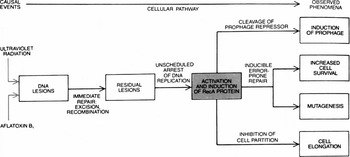
Repair phenomena fundamentally changed the concept of mutagenesis and subsequently the model of the organism-environment relation. What was at stake became clear in the introductory remarks at a Ciba Foundation Symposium in 1969 that meaningfully tackled “Mutation as a Cellular Process.” As the geneticist Richard Kimball noted in the opening remarks, the symposium brought together mutation biologists, geneticists, and molecular biologists who shared the experience that “the mutagenic treatments we give initiate a process which only after an appreciable time results in our detection of mutations” – an experience that supported the growing conviction that “mutation is not just an immediate event, a quantum event, or a simple chemical reaction, but a process in which cellular functions are intimately involved” (Kimball Reference Kimball, Wolstenholme and O’Connor1969, 1; emphasis added). This new tone was, as historian Doogab Yi has emphasized, no exception but reflected an ongoing “major shift” in the radiobiological community away “from target theory in addressing the problem of protection and recovery from irradiation damage” (Yi Reference Yi2007, 45). This shift went hand in hand with a “shift in emphasis from work on ionizing to work on ultraviolet radiation and from the biophysics of radiation action to the chemistry and biology of it” (ibid.). The diagram in fig. 2 depicts mutagenesis as a biological process that is controlled by a DNA repair mechanism. The mechanism involves particular genes and a system of enzymes (not shown in the schema). On the left, radiation or chemical substances injure the DNA in some way, but this does not mean that the effect automatically ends in a mutation. Whether the irradiation or chemical stimulus results in a mutation or whether it is repaired will only be known after a series of several steps and bifurcations.
Mutagenesis as biological process: Sequence of cellular events following DNA damage imposed by ultraviolet radiation or by chemical carcinogens, here in the bacterium E. coli. The sequence includes steps of DNA repair that are inactive in the skin of patients with XP. Source: Devoret Reference Devoret1979, 33.

Fig. 2 shows how the repair concept of mutagenesis changed the ideas of both detrimental agents and the biological organism. In general, as the great mutations researcher Charlotte Auerbach put it, the major achievement of this era in mutation research was “the formulation of a biochemical or ‘molecular’ theory of mutation which was as impressive as the biophysical target theory formulated 20 years earlier” (Auerbach Reference Auerbach1976, 11). Genes were no longer the static, stable entities of the biophysical model, a model which saw them as vulnerable but protected, as only major hazards such as radiation could disturb their stability. This idea of vulnerability at the level of genes and cellular environment was analogous to the turtle model of the body and its environment. In the words of a molecular biologist, the widespread idea was “that the genes are so precious that they must (somehow) be protected from biochemical insult, perhaps by being carefully wrapped. The possibility that the genes were dynamically stable, subject to the hurly-burly of both insult and clumsy (i.e., enzymatic) efforts to reverse the insults, was unthinkable” (Franklin Stahl cited in Friedberg Reference Friedberg1997, 17). Or in the words of an elder geneticist and biophysicist: “The stability of genes is now seen to be more a matter of biochemical dynamics, than of the molecular ‘statics’ of DNA structure. The genetic machinery of the cell provides the most striking example known of a highly reliable, dynamic system built from vulnerable and unreliable parts” (Robert Haynes cited in Fox Keller Reference Fox Keller2000, 31). Hence, the model of an active, environmentally open organism replaced the biophysical model of a passive organism that was dependent on the protection of its vulnerable core. And the static stability of the hereditary substance changed into a process of permanent self care of the cells and the organism. In consequence, as in fig. 2, the character of the environmental hazards of the Atomic Age was altered from that of a fatal mutagen to a stimulus of the molecular configuration of DNA. This stimulus was translated into a biochemical signal triggering a cascade of molecular reactions. Likewise, the human body's thin protection was not as passive as it had been imagined. The UV-sensitive skin of XP patients in fig. 2 perfectly illustrates this environmentally responsive genetic body and its diseases. The body's surface was not a passive victim of fateful radioactive or genotoxic disturbances but instead could handle those environmental factors – although there is no question that this repair system was not at all perfect: it was fallible and it could be “sick” as in the case of XP patients.
Diseases of the DNA and Its Therapeutics: Anti-Factors and Self-Repair
By demonstrating that there were diseases of the DNA repair system, XP became the long awaited example demonstrating the importance that molecular biology could have for medicine. Cleaver remembers the implication of his discovery: “Unbeknownst to me at the time, we had demonstrated that human cancer could be a genetic disease to be understood in terms of damage and repair to human genes. XP, and cancer in general, might therefore yield to a molecular understanding” (Cleaver Reference Cleaver2001, 123). The molecularization of mutagenesis and of the environmental effects on the organism made a difference in how the toxicology of mutagens and carcinogens was perceived. XP established a disease beyond the nature vs. nurture dichotomy; it was neither solely a hereditary cancer nor was it only environmentally determined. XP was instead a disturbance in the relation of the organism and its hazardous environment. Paul Howard-Flanders, one of the pioneers of DNA repair research, put it like this: “DNA repair was about molecular activation and regulation and self-regulation of the DNA. Both DNA's vulnerability to damage and its susceptibility to repair are implicit in its architecture” (Howard-Flanders Reference Howard-Flanders1981, 56). Likewise, cases in which DNA repair failed transcended the divide between genetics and the environment. In that sense, XP could be seen as a paradigmatic disease of the merging biomedical and environmental age to come.
The message that DNA appeared to be equipped with the cellular capacity to heal itself was dramatic news, as the eugenic scenarios and politics of protective prevention at the time rested on the assumption that mutations were not curable. This did not, however, spell the end of eugenics nor did the regulation of environmental mutagens change fundamentally.Footnote 7 But DNA repair did become a new trope within the discourse on environmental hazards and regulation in two ways: It was seen as an argument for less strict regulation, particularly of the tobacco and chemical industries. DNA repair could be used to defend the existence of safety thresholds even in the case of mutagens and carcinogens and to argue that, from a regulatory perspective, those substances must be treated like “normal” toxins (Proctor Reference Proctor1995, 160; cf. for the politics of the Reagan administration, see Rushefsky Reference Rushefsky1986, 125). More profoundly, DNA repair was used to argue that mutagenesis was a natural phenomenon and as such nothing much to worry about. Proponents of the naturalization of mutagenesis argued that not all mutagens were synthetic, there were also natural mutagens; hence, evolution had balanced the mutagenic threat and the body's capacities to handle it via DNA repair (Proctor Reference Proctor1995, 133–152 and 158–161; Creager Reference Creager, Boudia and Jas2014, 56–57; cf., for instance, Gormley, Downey, and O’Beirne Reference Gormley, Downey and O’Beirne1987, 230–233 and 268).
A different, but no less provocative conclusion from the DNA repair lesson was that deleterious mutations were not the fate of an organism or a population but could be imagined as a curable DNA disease. As the new insights on DNA repair disseminated into the public, mainstream media took up the topic. The German popular magazine Bild der Wissenschaft headlined a story “Mutations Cured!” and wondered: if the molecular system of genetic repair was still imperfect, why not intervene to enhance it (Mollet Reference Mollet1977, 69)? The idea emerged that in the future there would be means to repair mutations where the DNA repair system was insufficient. And indeed, there were hints that this was a realistic vision. Experiments with plants had shown that there were ways to stimulate the repair system of their cells so that the plants were afterwards better prepared to react to detrimental doses of radiation (Proctor Reference Proctor1995, 163).Footnote 8
The interventionist conclusions arising from the discovery of DNA repair motivated researchers to look for new methods of disease prevention. In brief, during the 1980s a branch of research developed at the boundaries of mutation and cancer research that focused on new biochemical-molecular research objects: “antimutagenesis” and “anticarcinogenesis.”Footnote 9 The aim was to identify anti-mechanisms and anti-factors that would counteract mutagenesis and carcinogenesis. One approach was to find practicable ways to stimulate, activate, and strengthen the cellular repair system. “Self-repair” (Beers Reference Beers, Beers, Herriott and Tilghman1972, xv) as the principle of DNA repair mechanisms became an aim of science and prevention. This research strategy was not about therapy or repair, but the preventive enhancement of molecular capacities and especially of the capacities for self-repair. The strategy of anti-factors transcended the common regime of cancer prevention. Primary prevention of cancer usually meant identification (risk assessment) and subsequent removal (risk management) of risk factors. The related politics included control techniques such as sheltering and limit values and aimed at protecting the vulnerable body from deleterious substances. The molecular prevention associated with anti-factors aimed not at the control of the environment but at the individual organism instead. Under this rationale, the defense was internalized in the individual and became a matter of individual responsibility.
The proponents of the new research strategy were well aware of this difference. They did not doubt that identifying and removing risk factors from the environment was the best tool for warding off certain causes of disease. However, their objective was to address some of the serious shortcomings of conventional prevention. As the influential public health professor Silvio De Flora, head of the Laboratory of Environmental Genomics and Prevention of Chronic Degenerative Diseases at the University Genoa, pointed out: there are too many mutagens and carcinogens generated by environmental pollution from man-made sources as well as by “natural” processes; the initial optimism about the predictive value of mutagenic tests had faded; and finally, many of the artificial risk factors were so tightly connected with the demands and benefits of modern life that their removal would be impractical from an economic and social standpoint (De Flora Reference De Flora1988). In this context of scientific and practical problems, De Flora saw the rise of the health care rationale of anti-factor research: “All these problems have contributed to an evident switch of a part of the interest of the scientific community from ‘environmental’ (in a broad sense) risk factors to anti-risk factors, acting in the host organism” (ibid., 281; emphasis added).
Nutrition as Molecular Chemoprevention: From Retinoids to Folic Acid
Molecular anti-strategies drew the attention from the environment to the individual but also moved boundaries. In the protective rationale of the Atomic Age and protective chemopolitics, the dangerous environment started beyond the organism's boundary – and so did the sites of intervention. The differentiation was between the outside and the inside of the body, whether the boundary layer was the skin or an impenetrable lead apron. The rationale of molecular intervention moved the boundary between the environment and the body into the body and therewith the sites of intervention, which became the metabolism, the biochemistry of the cells, and the molecular regulation of the DNA.
This move was not new, but in line with a general transition in cancer research politics that became prominently known under the label “chemoprevention.” From the early 1980s on, the somewhat imprecise concept of chemoprevention functioned as an umbrella for quite a number of approaches in cancer research.Footnote 10 As Cantor summarizes, chemoprevention was “sometimes labeled as tertiary prevention, sometimes as having the goal of primary prevention (preventing the occurrence of the disease), sometimes as secondary prevention (early detection and reversion of tumors at a premalignant stage), and sometimes as some combination of the three” (Cantor Reference Cantor2012b, 29, n. 72). The new emphasis that, in the U.S.A., had been legitimized by the 1971 Cancer Act became most visible with the cancer research program of the U.S. National Institutes of Health (NIH), which included a vast variety of research in chemoprevention focused on biochemical and molecular steps in carcinogenesis (Sestili Reference Sestili1984, 1–3; Cantor Reference Cantor2012a, 532–533).
Diet and nutrition became central to the efforts of the NIH's National Cancer Institute (NCI), which started its Diet, Nutrition, and Cancer Program (DNCP) in 1975 (Cantor Reference Cantor2012a, 539). The DNCP included different approaches: the review of diet and nutrition in therapy and rehabilitation of cancer patients, experimental and epidemiological research on imbalances in nutrition that could favor carcinogenesis, and the identification for preventive agents – anti-factors – including both naturally occurring and synthetic substances (Greenwald Reference Greenwald1993, 642–643; Cantor Reference Cantor2012a, 539–549). The latter approach aimed at an active intervention in the early precancerous stages of carcinogenesis and was often referred to as chemoprevention in a more strict sense or, sometimes, chemoprophylaxis.
But how might the “modification of individual target points” – as the NCI program envisioned (National Cancer Institute 1975, 8) – be approached? One of the numerous research projects funded by the DNCP was collaboration among dermatologists, molecular biologists, and cancer researchers, including NCI scientists, on the chemoprevention of carcinogenesis in individuals with a hereditary disposition to XP.Footnote 11 As the researchers explained their rationale, “the prevention of cancer with pharmacologic agents is a newly developing area of investigation. Several studies in humans have used retinoids – a group of compounds which include vitamin A and its synthetic derivatives – to prevent a variety of premalignant disorders” (Kraemer et al. Reference Kraemer, DiGiovanna, Moshell, Tarone and Peck1988). Retinoids turned out to be promising preventive anticancer agents for XP patients as well. Although the clinical data did not allow for conclusions to be drawn on exactly how these agents altered carcinogenesis, the results also suggested that “the drug might be expected to be effective in the prevention of cancer in patients who do not have xeroderma pigmentosum” (ibid., 1636–1637).
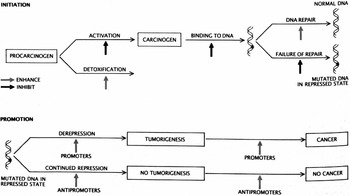
Other miracle drugs such as interferon were also used in testing as modulators of carcinogenesis.Footnote 12 Experiments with human cell cultures showed not only the anti-mutagenic activity of interferons in XP cells but also the mechanism: interferons stimulated the deficient DNA repair system of the XP cells (Sinel’shchikova, Chekova, and Zasukhina Reference Sinel'shchikova, Chekova and Zasukhina1989). Hence, the example of XP shows how, during the 1980s, the search for chemoprophylactic agents that could modulate a variety of cellular targets in mutagenesis and carcinogenesis became fashionable, including the enhancement of DNA repair (cf. fig. 3). In fact, from the 1980s on, the DNCP focused specifically on “biological and chemical prevention”:
Intervention by molecular prevention. The targets of molecular prevention are not sites in the environment, but rather molecular regulation within the body's cells. The figure illustrates how the biological model of mutagenesis opened up a range of sites for intervention (vertical black and gray arrows). It shows the influence of dietary factors on the initiation and promotion of carcinogenesis, which begins with a mutation in the DNA. The mutation may or may not be repaired. Steps in activation, binding, and DNA repair may be enhanced (gray arrow) or inhibited (black) by “such dietary components as vitamins A, C and E, indoles from cruciferous vegetables and the trace element selenium.” Source: Cohen Reference Cohen1987, 46.

The modifying effects of anticarcinogens are investigated relative to a large number of biochemical and biological endpoints, which, in addition to tumorigenesis and transformation themselves, include the activity of the mixed function oxidase system, free radical generation and quenching, cell proliferation, differentiation, activation/detoxification of carcinogens, DNA repair, binding proteins or receptors for preventive agents, preneoplastic states and cytogenetic variables. (National Cancer Institute 1983, 1526)
The NCI was criticized for the enormous budget of the DNCP with some arguing that more attention should be given to the environmental causes of cancer rather than basic research and the search for cures (Cantor Reference Cantor2012a, 558). Studies of environmental carcinogens were politically much more difficult, however, since many of the chemicals were produced by powerful industrial corporations. Still, the political affiliations of chemoprevention were not as clear-cut as these attacks might suggest. Recommendations to refrain from excesses in the diet – avoid too much meat or certain fats and sugars! – would alarm the farming and food-processing industries, too. But generally, the weakness of chemopreventive strategies was that they were dependent on the efforts of the individuals who needed to change their nutrition habits.
With the Reagan administration, the political policy shifted towards individual prevention, as its administrative strategy was to reduce the role of government in regulation. This became clear in a cancer policy document that focused on risk assessment and included a review of the literature on factors that might modify the effects of carcinogens such as DNA repair and detoxification.Footnote 13 In 1982, the National Research Council, an arm of the U.S. National Academy of Sciences, issued provisional guidelines intended to reduce the risk of cancer.Footnote 14 They reviewed the role of food in carcinogenesis and recommended a change in eating habits. The main recommendations were to lower the intake of fat from the current U.S. average of 40 percent of total calories to 30 percent; to eat more fiber, fruits, and vegetables; to increase the consumption of complex carbohydrates (such as the starch in flour and potatoes), and more (National Research Council 1982, 14–16). It was the first official – and subsequently controversial – document to advise that adhering to dietary guidelines might reduce cancer risk (Cohen Reference Cohen1987, 42; Council on Scientific Affairs 1993, 50).
Similarly, the WHO Study Group on Diet, Nutrition and Prevention of Noncommunicable Diseases met in 1989 to develop recommendations to prevent chronic diseases and reduce their impact. The WHO experts mainly reviewed epidemiological studies relating regional dietary habits and disease incidence from all over the world. The anti-carcinogenic diet they recommended included increased micronutrients such as vitamins C, E, and A, beta-carotene, other carotenoids, and folic acid (WHO Study Group 1990; Council on Scientific Affairs 1993, 53; Feldman Reference Feldman1993). Consequently, one of the recommendations was that every person should consume 400 grams of fruits and vegetables daily (WHO Study Group 1990, 112–113).
For the time being and for practical reasons, most experts such as the public health expert De Flora and his colleagues at the International Agency for Research on Cancer (IARC) admitted that chemoprevention for the general population would initially be limited to dietary recommendations, leaving the burden on the consumer (De Flora et al. Reference De Flora, Izzotti and Bennicelli1993, 2–4). But the 1980s and 1990s witnessed a growing industry of so-called functional foods and nutraceuticals that aimed to profit commercially from the officially confirmed cancer-preventive effectiveness of diet (Chen Reference Chen2009, 80–83).
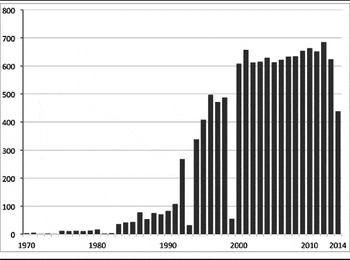
In the 1980s, there was increasing evidence that, in addition to retinoids – which were usually synthesized and not of dietary origin – true food ingredients might also be crucial for the prevention of cancer, the “modulation of carcinogenesis” and, especially, to counteract mutations (cf. fig. 3; Gormley et al. 1987, 60–63). Toxicogeneticists including Bruce Ames thus increasingly engaged in the diet and nutrient melee to advocate strongly for the ingestion of anti-mutagens such as vitamins and nutrient-rich foods (Creager Reference Creager, Boudia and Jas2014, 56–57). Their explanation for the preventive effects of diet was that certain nutrients were effective in the enhancement of DNA repair. The evidence of antimutagenesis and anticarcinogenesis research seemed to support such statements. The growing self-confidence of the field became obvious with the international conference series on “Mechanisms of Antimutagenesis and Anticarcinogenesis,” held since 1985. The number of publications on antimutagenesis and anticarcinogenesis increased slowly but steadily. In the early 1990s, the number jumped from around 100 to 250 publications per year – perhaps not an accidental coincidence with the publication of the WHO recommendations on healthy diet in 1990. By the turn of the century, the number had increased to about 600 per year (see Table 1). Likewise, the field of DNA repair “truly exploded”: “In 1994 the journal Science gave its ‘Molecule of the Year’ award to the enzymatic repair machinery, and for good reason,” noted Evelyn Fox Keller, biologist and advocate of a comprehensive biology (Fox Keller Reference Fox Keller2000, 30).
PubMed search for scientific publications with “antimutagenesis” or “anticarcinogenesis” in the title or abstract.

The antimutagenesis and anticarcinogenesis research community focused on the identification of effective anti-factors and studied half a dozen hot candidates, mostly vitamins (De Flora and Ramel Reference De Flora and Ramel1988, 299–300; Kuroda and Inoue Reference Kuroda and Inoue1988).The anti-mutagenic and anti-carcinogenic effect of micronutrients would not become clearer in terms of molecular mechanisms until the 1990s. One of the outcomes showed that folic acid – also known as vitamin B9 and one of the WHO-recommended micronutrients – was essential in DNA synthesis and repair. Experimental studies showed that folic acid depletion in human cell cultures increased DNA instability. This was in accordance with epidemiological data showing that a diminished folate status appeared to promote colonic carcinogenesis (Duthie Reference Duthie1999). The money was now on folic acid. Eventually, a study at the Vitamin Bioavailability Laboratory at the Jean Mayer USDA Human Nutrition Research Center on Aging in Boston achieved the breakthrough. In 1998, the researchers announced results from a study on rat colonic mucosa in vivo: they had found proof that folate deficiency impairs DNA excision repair (Choi et al. Reference Choi, Kim, Weitzel and Mason1998, 93–99). This was the long-sought evidence of a profound link among nutrient shortage, reduced efficiency of DNA repair, and carcinogenesis. And it wasn't only food chemists and cancer preventionists who were interested in this general connection.
Nivea's DNAge: From Molecular Nutrition to Cosmetics
Scientists of the German chemical company Beiersdorf Inc. were among those carefully following the research on DNA repair mechanisms. Beiersdorf, with an annual revenue of 5.8 billion Euros, is one of Germany's smaller chemical companies, a bit more than one-tenth the size of the chemical giant BASF (IKB 2010, 8). Their specialty is cosmetics, with an even finer focus on skin care and with Nivea as the most prestigious brand. Research has become an increasingly important component of Beiersdorf's cosmetic business plan. Their Skin Research Center opened in 2004 and included a Laboratory for Molecular Biology. At that time, Beiersdorf's molecular biologists had been interested in the use of DNA repair mechanisms for cosmetics for a number of years already. Not the least the case of XP had shown the relevance of mutation research for skin health.
In 2000, the young chemist and molecular biologist Stefan Gallinat joined the Beiersdorf product development team, rising to lead the Molecular Biology Laboratory only two years later (Beiersdorf Inc. 2006). Before that, Gallinat had been involved in research on the molecular biology of hypertension at pharmacy institutes at the University of Kiel in Germany and the University of Florida. At Beiersdorf, he was amongst those pushing to consider the latest findings on DNA repair and folic acid intake in light of skin care strategies.Footnote 15 The researchers of the molecular biology department were well aware of the progress in DNA repair research and, hence, that DNA repair was a fundamental mechanism protecting the skin against UV-driven damage – notably the main factor contributing to prematurely aged skin and thus one of the most important commercial targets of the beauty industry: “As a prominent sign of cutaneous aging, wrinkles appear preferentially on sun-exposed areas” (Südel et al. Reference Südel, Venzke and Mielke2005). This axiom became the intersection point of DNA repair and commercial beauty. Notably, the link to cancer got lost along the way.
In-house experiments showed that skin cells increase their folic acid uptake in response to UV exposure (Knott et al. Reference Knott, Mielke and Koop2007, 2465). The idea that emerged was that the skin should be supported in its preventive preparations by enhancing the cutaneous supply of vitamin B9. The scientists argued that effective DNA repair and normal cell proliferation in aging skin can “only be accomplished and maintained with a sufficient cellular folic acid supply” (Knott et al. Reference Knott, Koop and Mielke2008, 21). The project was identified as “important” at an early stage. “We worked to achieve a milestone right from the start” (Rudolph Reference Rudolph and Aktiengesellschaft2007, 34). Very soon the molecular biologists produced promising results, as in vitro experiments showed that folic acid significantly improved the repair system of skin cell nuclei. Folic acid, however, is sensitive to heat and light and is also water-soluble, thus difficult to formulate into a durable cream. This task fell to their colleagues in the product development department before the final formula was handed over for patenting and production in 2006 (ibid.).
In May 2006, 250 “beauty journalists” joined an international press conference for the launch of Beiersdorf's Nivea Visage DNAge®. The opening gala centered around “the wishes and needs of women over 40” (Beiersdorf Inc. 2007, 34). “DNAge” was certainly an uncommon name for a beauty care product. Likewise, the DNA double helix on the packaging and in the advertisements brought to mind the media hype of the Human Genome Project (fig. 4). So did the product claims that announced the beginning of a new era for skin care: the genomic age. In combination with the suffix “age” in the name “DNAge” the message to beauty house clients was clear: DNAge was envisioned as an anti-aging product of a new kind with active ingredients that would enhance the cell's own mechanisms for preventing damage to the skin.
A new type of beauty care “works where skin ageing starts: at the DNA” as Nivea advertised its new product line DNAge. DNA repair enhancement (DNA care) has become the goal of this new generation of anti-aging luxuries. As indicated on the depicted box, Nivea's DNAge face care cream contains folic acid – a substance that proved to be necessary for the function of DNA repair mechanisms. Source: Nivea print advertisement in Gala, 19.10.2006, No. 43, 1.Footnote 16

Thus, the important people of the day at Beiersdorf were the scientists who were tasked with explaining the new DNAge to the public. While most anti-aging products targeted structural changes in the connective tissue, they ignored another, more profound threat to the vitality of the skin. The Head of Product Development, Dr. Martin Rudolph wrote: “We know that damage, through UV light for example, can penetrate to the DNA and contribute to skin aging” (Rudolph Reference Rudolph and Aktiengesellschaft2007, 34). DNAge claimed to activate the molecular capacities of the skin to resist damaging environmental influences and prevent aging processes at the source. In this respect, Nivea Visage DNAge® was a “revolution” and the “first product of its kind worldwide.”
Shortly after the launch of DNAge, the Beiersdorf scientists published the results of their research that legitimized the DNAge formulation. The “commercially available formulation distributed by Beiersdorf AG (Germany)” included 0.03 percent folic acid and 0.2 percent creatine as its active ingredients (Knott et al. Reference Knott, Koop and Mielke2008, 21). The quantification of UV-induced DNA damage in epidermal keratinocytes in vitro showed that UV-induced DNA lesions decreased after application of the test formulation. Further, in vivo tests with female volunteers were initiated. The clinical monitoring with the test formulation included parameters such as fine and coarse wrinkles, overall wrinkles, tactile roughness, laxity, and radiance of facial skin. It showed a decrease in wrinkle volume, an increase in skin firmness, and an allover improvement in clinical grading (ibid.). Based on these studies the Beiersdorf scientists concluded that the DNAge formula skin care regimen counteracted a variety of clinical manifestations of aging (ibid.).
DNAge was launched into one of the beauty industry's most promising but competitive markets, one in which new marketing strategies and product types are necessary to maintain market share. According to Nivea's claims, the active ingredients of DNAge strengthened not only the skin's structure but were also effective at the level of molecular regulation. Beiersdorf's DNAge was the application of the anti-factor strategy developed within the context of cancer research and indicated as such a new strategy in beauty care: from skin protection to active DNA care. The competitors of Beiersdorf were keen not to lose ground in this new field since the total number of cosmetic procedures increased by 846 percent from 1992 to 2006, with Americans spending approximately $11.4 billion in 2006 and “facial procedures were among the fastest growing in both men and women aiming to combat the signs of aging” (ibid., 16).
Lancôme, a brand of L’Oréal, was the first to follow Beiersdorf. In March 2009, the brand released the new luxury trademark Génifique promising, “sleep well – your genes are working.”Footnote 17 In the same year, Estée Lauder “updated” its 25-year-old prestigious anti-aging product Advanced Night Repair with “revolutionary technology” inspired by “groundbreaking DNA research” claiming to offer “the one revolutionary formula millions of woman can't live without.” In January 2010, L’Oréal Paris launched Youth Code™ “after 10 years of gene research” and proclaimed in print ads “the secret of young skin is its genes.” Also, L’Oréal started Skin Vivo under its brand label Biotherm: an innovation with “two-fold anti-aging-effect: DNA + GENE.” Lancaster redesigned its company image, offering “the DNA of your beauty,” and promising that it “repairs the DNA of your skin” with 365 Cellular Elixir Intense. More companies were to follow suit in 2011.
What does the future hold? Nutrition, Self-Repairing Selves and DNA Care
This new generation of beauty products such as DNAge seems to be the commercial expression of our mixed genomic and epigenetic era. Conceptualizing the skin as a molecular surface, DNAge works at the precarious boundary between the environment and the body, which has been moved into the cells at the intersection of molecular environmental effects and the cell's economy of DNA health. From a genealogical perspective, however, the path that the molecular prevention strategy followed was not linear, since DNA repair mechanisms were born out of atomic research. It was no coincidence that the skin revealed the importance of DNA repair in the transition period between the Atomic Age of radiation policies and the era of environmental concerns of mass consumption societies. Basic knowledge of DNA repair processes came primarily from radiobiological experiments with bacterial cells exposed to UV radiation. UV merged the setting of radiation research, the burgeoning DNA repair research field, cancer research on the miniscule skin tumors of XP patients, and the call of molecular biologists for research money. Thereby, skin gained in epistemic value. In risk episteme terms, the skin of the Atomic Age was essentially a mechanical cover that functioned like a shield, though quite an imperfect one with respect to radioactivity. The DNA repair concept spelled this view out in molecular terms, thereby transforming the skin into an active interface between the organism and the environment.
However, DNA repair was, roughly speaking, not an answer to political and social questions of the Atomic Age, but to the mass consumerism age with the circulation of myriad chemicals, with the crises in toxicological control, and with neoliberalism in the air. The skin became one of the translators (or boundary objects) between molecular concepts of cellular regulation and political strategies. The turtle strategy of the Atomic Age conceptualized the organism as a passive victim of environmental hazards such as radioactive fallout. The strategy of chemoprevention belonged to an environmental era that began in the 1970s and 1980s. As we know, this was an era of deep social transformation. Part of the neoliberal shift in politics was a shift in the focus of prevention away from social circumstances toward individual habits placing new expectations on citizens and appealing to their “preventive self” (for preventive self, see Lengwiler and Madarász Reference Lengwiler, Madarász, Lengwiler and Madarász2010, 24). On the level of subjects, this process involved a shift in the relation between the individual person and the environment. This relation became the object of steady work in order to keep the right balance. However, these shifts were co-constructed with epistemic changes: prevention that was based on the individual commitment built upon shifts in the epistemic models of the organism-environment relation. In the example presented here, the new models basically referred to molecular models of human vulnerability: the molecular balancing of the self-repairing capacities of the cells. This picture supports the supposition that the shifts in the presuppositions about human vulnerability and, hence, about the strategy of molecular prevention were at the conceptual core of the “mutations in personhood” and a new bourgeois lifestyle to come (citation from Rose Reference Rose2007, 106).
The epistemicopolitical configuration of balancing body and environment legitimized techniques such as individual balancing of nutritional anti-factors by eating fruits and slowly cooked vegetables. Conscious diet certainly appealed to the new ecological and health movement as well as self-help groups. But what about those who preferred to increase their social capital at the solarium? The beauty industry has since filled that gap. Nivea's DNAge creams contain micronutrients such as vitamins for the proper nurturing of the skin. As DNAge claims to activate the self-repair capacities of the skin, it helps to democratize the nutritional self-government. The Lifestyle of Health and Sustainability (LoHaS) comprises the ideas of grass-root self-help groups and the enthusiasm of the new body purists. As such, the skin becomes an accomplice of the entrepreneurial self, a flexible self that works around the clock to compensate for exposure to altered environments (for the entrepreneurial self, see Bröckling Reference Bröckling2007). The active subject is determined not only to be active like an entrepreneur but also active in repairing the damages of its activities and, hence, in augmenting its repair capacities, e.g. with products from Lancôme that counteract “lifestyle damage.”
The new environmentalism does not mean that “nurture” has been crowned victorious: in our post-disciplinary society, the subjects are busy handling all kinds of risk factors (Rabinow Reference Rabinow1996, 99–100) with the enhancement of DNA repair as one of the starting points to prepare themselves for that job. Genetics and physiology now work together, and DNA repair shows how: by the involution of the environment into the body cells. This is the complementary side of the molecularization of the environment that Landecker describes as the lesson of epigenetics (Landecker Reference Landecker2011, 190; see also Bauer Reference Bauer, Nusser and Strowick2003, 202 and 207). Nutrition became a general feature of the self-repair rationale in as much as the skin changed from being a decisive boundary to being one surface among others where the environment meets the body. Hence, the succession from nutrition to cosmetics, as described here, is not really a succession. Beauty care became just a special case of nutrition.
In the future, skin care might mean feeding the skin – from the outside and from the inside. This trend made itself known when the industry launched its most recent products. “Eat for beauty” (Herbalife) was the broad message guiding product strategies and marketing campaigns. Biotherm, in 2011, launched Skin Ergetic, a “repair concentrate” that contains the “power of 150 tender broccoli shoots”; Lancôme's Génifique Nutrics is “inspired by gene research” and stimulates the repair of the skin; while Vichy and Estée Lauder call their new product series NutriExtra and Re-Nutriv, respectively.Footnote 18 The latest way to beautify your skin is, as a newspaper article notes, “to eat your products:” “nutricosmetics” can be added to breakfast (for “nutricosmetics,” see Rand Reference Rand2011). Food giant Nestlé, in partnership with L’Oréal, developed the product series Innéov, nutritional supplements for skin and hair. In this age of blurring boundaries, the skin care industry is feeding the skin, while the food industry is coming to care for the skin.
As this paper goes to press, the cosmetics industry's DNA care is languishing. In the last two years, most of the DNA care products described here have disappeared from the market, as regulatory agencies tasked with judging the health claims of advertising began to question whether the products lived up to their claims and found them deceptive. Beginning in 2009, the UK's Advertising Standards Agency (ASA) and the U.S. Federal Trade Commission (FTC) repeatedly banned ads for DNA care products from Nivea and L’Oréal on the basis that they were misleading and exaggerated the effect of using the creams (Poulter Reference Poulter2013; Liu Reference Liu2014). Ads for L’Oréal Paris Génifique and Youth Code heralding the “new era of skincare: gene science” and telling consumers that they could “crack the code to younger acting skin” were criticized by the FTC as “false and unsubstantiated claims” overstating the “products’ anti-aging benefits which allegedly involved targeting users’ genes and stimulating the production of youth proteins” (Shaheen et al. Reference Shaheen, Mudge and Marcheski2014; FTC 2014). The EU's Cosmetic Products directive (1223/2009), which came into effect in July 2013, further hindered the commercial success of DNA care products in the European market, as it strengthened safety requirements, rejected deceptive ads and introduced stricter separation of cosmetics and medicinal products (cf. on the directive Huber Reference Huber2014). This is certainly not the final chapter in the genealogy of molecular prevention, but where and how will DNA repair pop up in future again? (cf. Anon. 2015).
Acknowledgments
Special thanks to two anonymous reviewers for numerous helpful comments and suggestions. A portion of the research supporting this paper was provided by the German Research Foundation (DFG) as a part of the research project “Mutation and Mutagens: Biological and Risky Things in the Analytics of Biopolitics.” The International Research Center for Cultural Studies (IFK), Vienna, granted me a research fellowship.