Introduction
Major depressive disorder (MDD) is a potentially chronic, recurring illness both in adults and in children and adolescents.Reference Fergusson, Boden and Horwood1 In a longitudinal study following patients with childhood-onset depression into adulthood, almost 90% of 8- to 13-year-olds followed for up to 24 years had one or more recurrence.Reference Kovacs, Obrosky and George2 Indeed, MDD in children is under-recognized: up to 50% of depressed adults have reported in retrospect that the onset of their depression was in childhood.Reference Birmaher, Arbelaez and Brent3 Early-onset depression is also associated with bipolar disorder, which may be misdiagnosed as unipolar depression in patients presenting with mood symptoms.Reference Hirschfeld and Vornik4–Reference Bouchra, Maria and Abderazak6 The increased risk of manic conversion in pediatric patients treated with antidepressant drugs further underscores the need for appropriate screening and accurate diagnosis of children and adolescents with mood symptoms.Reference Hirschfeld and Vornik4, Reference Martin, Young, Leckman, Mukonoweshuro, Rosenheck and Leslie7
Depression in children and adolescents may have lifelong effects, as untreated MDD can have a negative impact on family interactions, social development and functioning, and academic progress.Reference Siu8–Reference Birmaher, Brent and Bernet10 Further, the frequency of depressive episodes in adolescence and early adulthood predicts later negative outcomes, including subsequent depression, anxiety, substance abuse, poor work history, and suicidal behaviors,Reference Fergusson, Boden and Horwood1, Reference Birmaher, Arbelaez and Brent3 and adolescent-onset recurrent MDD is associated with more severe psychosocial impairment in adulthood compared with adult-onset recurrent MDD.Reference Wilson, Hicks, Foster, McGue and Iacono11 Indeed, evidence from imaging research suggests that MDD may be a progressive disease in which volume loss and circuit dysfunction in brain areas associated with depression increase over the duration of untreated illness.Reference Oluboka, Katzman and Habert12
To prevent both neural damage and long-term functional consequences of MDD, early and effective intervention is critical in pediatric depression. Practice guidelines recommend antidepressant treatment, psychological intervention, or both for pediatric patients with moderate to severe depression.Reference Birmaher, Brent and Bernet10, Reference Cheung, Zuckerbrot, Jensen, Ghalib, Laraque and Stein13 However, few antidepressant trials have demonstrated antidepressant efficacy versus placebo in pediatric patients.Reference Emslie, Rush and Weinberg14–Reference Wagner, Robb, Findling, Jin, Gutierrez and Heydorn18 In positive short-term studies, antidepressant treatment is associated with remission rates of 31 to 42% (based on the Children’s Depression Rating Scale–Revised [CDRS-R] total score of ≤28) compared with 20 to 36% for placebo treatment.Reference Emslie, Rush and Weinberg14, Reference Emslie, Heiligenstein and Wagner15, Reference Emslie, Ventura, Korotzer and Tourkodimitris17, Reference Wagner, Robb, Findling, Jin, Gutierrez and Heydorn18
Extending antidepressant treatment 6 to 12 months significantly reduces relapse or recurrence in pediatric patients with MDD.Reference Emslie, Heiligenstein and Hoog19–Reference Cox, Fisher and De Silva21 In pediatric patients who remitted while taking acute antidepressant treatment, relapse/recurrence rates were 34 to 42% for patients receiving continued active treatment compared with 60 to 69% for patients assigned to placebo.Reference Emslie, Heiligenstein and Hoog19, Reference Emslie, Kennard and Mayes20 The addition of cognitive behavioral therapy to maintenance therapy may further reduce the risk of relapse.Reference Kennard, Emslie and Mayes22 The Texas Medication Treatment Algorithm states that, as in adults, children and adolescents who experience more than two depressive episodes (or more than one in some patients at risk) should be considered for maintenance treatment.Reference Hughes, Emslie and Crismon23 There is, however, an unmet need for approved medications for pediatric depression; US Food and Drug Administration–approved medications for the treatment of MDD include only fluoxetine (children ≥8 years of age) and escitalopram (adolescents 12–17 years of age).24, 25
Desvenlafaxine (administered as desvenlafaxine succinate) is a serotonin-norepinephrine reuptake inhibitor (SNRI) approved for the treatment of MDD in adults.26 The safety and tolerability of desvenlafaxine have been assessed in six studies as part of a pediatric development program. Treatment with desvenlafaxine was generally safe and well tolerated in children and adolescents in two phase 2, open-label studies (short-term and maintenance treatment at doses 10–100 mg/d in children or 25–200 mg/d in adolescents) and in two phase 3, short-term, double-blind, placebo-controlled studies (one evaluating desvenlafaxine 20–35 mg/day and 25–50 mg/d, and one, fluoxetine-referenced, evaluating desvenlafaxine 25–50 mg/d). Neither desvenlafaxine nor fluoxetine groups separated statistically from placebo on the primary efficacy outcome in these short-term, phase 3 studies.Reference Atkinson, Lubaczewski and Ramaker27, Reference Weihs, Murphy and Abbas28 Thus, the two double-blind, placebo-controlled studies failed to demonstrate efficacy of desvenlafaxine for treating MDD in children and adolescent patients. This paper presents the results of two 6-month extension trials that enrolled patients who had completed one of the phase 3, short-term studies. The primary objective of each extension study was to evaluate the long-term safety and tolerability of desvenlafaxine in the treatment of children and adolescents with MDD. The secondary objective was to evaluate the efficacy of desvenlafaxine in the treatment of children and adolescents with MDD.
Methods
Study design
Studies 1030 (ClinicalTrials.gov Identifier: NCT01371708) and 1031 (ClinicalTrials.gov Identifier: NCT01371721) were 6-month, open-label, flexible-dose extension studies for the treatment of children and adolescent outpatients with MDD. Both studies were initiated in February 2012; they were completed in April 2016 and October 2015, respectively. Principal investigators were child and adolescent or general psychiatrists with experience in the diagnosis and treatment of pediatric depression and in conducting industry-sponsored studies; evaluator qualifications and training were previously described.Reference Atkinson, Lubaczewski and Ramaker27, Reference Weihs, Murphy and Abbas28
Lead-in studies were similarly designed phase 3, multicenter, randomized, double-blind, placebo-controlled trials. Participants enrolled in the lead-in for study 1030 were randomly assigned (1:1:1) to placebo, desvenlafaxine low exposure (20–35 mg/d), or desvenlafaxine higher exposure (25–50 mg/d), with desvenlafaxine dose based on body weight at baseline (Supplemental Table 1). The lead-in to study 1031 was fluoxetine-referenced; participants were randomly assigned (1:1:1) to placebo, desvenlafaxine, or fluoxetine. Desvenlafaxine dose ranged from 25 to 50 mg/d, based on the patient’s body weight at the baseline visit. Randomization was stratified by age group (child or adolescent) and country (lead-in study for 1030: United States and Chile [1 patient]; lead-in study for 1031: United States and Mexico) in both studies.
Both lead-in studies included 8 weeks of double-blind treatment. The lead-in to study 1031 included a 1-week, double-blind transition phase following the 8-week treatment period for patients who entered the extension study. Therefore, the lead-in study week 8 assessment served as baseline for patients enrolling in study 1030, whereas lead-in study week 9 assessment served as baseline for patients enrolling in study 1031.
The extension studies were nearly identical in design, except for the 1-week transition phase in study 1031, which affected the statistical analysis. Both included a 26-week, open-label, flexible-dose treatment period; a 2-week taper period; and a 4-week follow-up. For both extension studies, desvenlafaxine doses were 20, 25, 35, or 50 mg/d, adjusted for each patient as clinically indicated. All patients entered the study assigned to 25 mg/d, and the dose could be adjusted up or down from that point. Dosing schedules, including lead-in, transition, and tapering for the two studies, are shown in Supplemental Table 1.
The studies were conducted in accordance with the International Council for Harmonisation Guideline for Good Clinical Practice29 and the ethical principles that have their origin in the Declaration of Helsinki. Study protocols and any amendments received institutional review board or independent ethics committee approval. Written informed consent and assent were obtained from legal guardians and study participants, respectively, before extension study procedures were performed.
Participants
Enrollment criteria for the lead-in studies are described in detail in separate publications.Reference Atkinson, Lubaczewski and Ramaker27, Reference Weihs, Murphy and Abbas28 Briefly, those enrolled included male and female outpatients, aged 7 years to less than 18 years who at time of enrollment met Diagnostic and Statistical Manual of Mental Disorders (4th ed., Text Revision) criteria for MDD as the primary diagnosis, as assessed by the KIDDIE Schedule for Affective Disorders and Schizophrenia for School-Age Children–Present and Lifetime VersionReference Kaufman, Birmaher and Brent30 (K-SADS-PL) and clinical interview. A comprehensive diagnostic psychiatric evaluation, including collection of psychiatric history and treatments and confirmation of the MDD diagnosis, was performed by a psychiatrist at screening of the lead-in study. Enrolled patients had depression that could have, in the investigator’s opinion, responded to therapy with antidepressant treatment alone without need for concomitant psychotherapy. Participants had depressive symptoms of at least moderate severity for a month or longer, a baseline CDRS-R total score greater than 40, and a Clinical Global Impressions Scale–Severity (CGI-S) score of at least 4 at screening and baseline. Patients with a history or presence of MDD with psychotic features or any psychotic disorder, bipolar disorder (or first-degree relative with bipolar disorder) or manic episodes, or comorbid primary psychiatric condition other than MDD, based on comprehensive psychiatric interview and evaluation supported by the K-SADS-PL, were excluded from the lead-in studies.Reference Atkinson, Lubaczewski and Ramaker27, Reference Weihs, Murphy and Abbas31
The extension studies included patients who completed one of the 8-week lead-in studies and who would benefit from long-term treatment, in the investigator’s opinion. The investigator’s determination was based on the results of efficacy and tolerability assessments and overall clinical presentation during the lead-in study and was intended to allow the investigator flexibility in considering the range of factors that may impact patient participation in a longer-term study. Treatment response during the lead-in study was not required for extension study entry. Patients were excluded from the extension studies if they were not generally healthy; had any severe acute or chronic medical or psychiatric condition that may have increased risk associated with study participation, including any unresolved clinically significant 12-lead electrocardiogram (ECG), laboratory, or vital sign abnormalities from the preceding study; used prohibited treatments; or were poorly compliant in the lead-in study. Patients were also excluded if they had experienced clinically significant adverse events (AEs) or serious AEs related to study medication during the lead-in study that precluded treatment with desvenlafaxine or if they had a history of any suicidal behaviors or suicidal ideation associated with actual intent and/or plan, based on the Columbia-Suicide Severity Rating Scale (C-SSRS) assessment or the clinical judgment of the investigator.
Prohibited treatments included electroconvulsive therapy; antidepressant drugs (other than the study medication); antipsychotic drugs; investigational drugs and devices; monoamine oxidase inhibitors, linezolid, methylene blue, and selegiline (for 7 days after the last dose of study medication); anxiolytics; triptans and other medications indicated for the treatment of migraines with a similar mechanism of action; tryptophan supplements; herbal products intended to treat anxiety, insomnia, or depression; sedative-hypnotic drugs; other psychotropic drugs or substances; and nonpsychopharmacologic drugs or herbal preparations with psychotropic effects. Beginning at the week 4 visit, formal psychotherapy and treatment with stimulants for comorbid psychiatric conditions relating to attention-deficit and disruptive behavior disorders were permitted.
Study assessments
Study visits were scheduled at baseline and weeks 1, 2, 3, 4, 6, 10, 14, 18, 22, and 26 during the treatment phase, with telephone contacts with the parents by study staff between monthly visits. Taper-phase visits were scheduled at weeks 27 and 28, with a follow-up visit at week 30 and phone contact at week 32. A comprehensive psychiatric evaluation, vital sign assessments, and C-SSRS were administered at each visit. The baseline version of the C-SSRSReference Posner, Brent and Lucas32 was administered at the lead-in study screening visit; C-SSRS, Since Last VisitReference Posner, Brent and Lucas33 was administered at all subsequent visits (including the lead-in study baseline visit). Laboratory evaluations (blood chemistry, hematology, and urinalysis) and ECG were conducted at study weeks 14 and 26 (or early termination), and a physical examination with Tanner assessment was performed at week 26 (or early termination). Adverse events were collected throughout each study; Medical Dictionary for Regulatory Activities, Version 18.1 (study 1031) or Version 19.0 (study 1030) coding was applied.
Serious AEs were defined as any untoward medical occurrence at any dose of study medication that resulted in death or events that posed immediate risk of death, required inpatient hospitalization or prolongation of hospitalization, resulted in persistent or significant disability/incapacity, or resulted in congenital anomaly/birth defect. Important medical events were also reported as serious AEs when it was determined that they may have jeopardized the patient or required intervention to prevent one of the other serious AE outcomes. Potential clinically important findings were identified based on changes in vital signs, ECG results, and laboratory findings defined according to criteria prespecified by the sponsor (criteria reported previously).Reference Atkinson, Lubaczewski and Ramaker27 Clinically important results were then identified by the medical monitor based on a review of patient data (laboratory, vital sign, and ECG data, and AE records), relevant clinical information pertaining to a patient in case report forms, and clinical judgment.
Severity of depression was assessed over the course of the extension studies based on change from baseline in CDRS-R total score. The CDRS-R was administered at each study visit, and change in total score was calculated from lead-in study baseline and from extension study baseline; week 26 was the primary timepoint of interest. Other efficacy endpoints included the Clinical Global Impressions Scale–Improvement (CGI-I) score and change from baseline in CGI-S score at each study visit. Response was defined at each timepoint as a CGI-I score of 1 or 2 (i.e., “very much” or “much” improved). Remission was defined as a CDRS-R total score less than or equal to 28.
Statistical analysis
Sample size for the extension studies was based on rollover from lead-in studies. The safety population was defined as all patients who were eligible to enter the extension and had taken at least 1 dose of study medication during the extension study period. In study 1030, safety data were evaluated descriptively with reference to the lead-in study baseline and to the extension study baseline, which was lead-in study week 8 (or last evaluation). Similarly for study 1031, safety data were evaluated descriptively with reference to lead-in baseline, lead-in study week 8 (or last evaluation), and lead-in study week 9 (or last evaluation). Adverse events were summarized by severity and relationship to study medication. Treatment-emergent AEs (TEAEs), taper/posttreatment-emergent AEs, serious AEs, and AEs leading to discontinuation were also summarized.
Efficacy data were evaluated with reference to both lead-in and extension study baselines for the intent to treat population, defined as all patients who were eligible to enter the extension, had taken at least 1 dose of study medication, had a lead-in study baseline CDRS-R evaluation, and had at least one CDRS-R evaluation after the first dose of extension study medication. Efficacy data were summarized using descriptive statistics, performed for observed cases and using the last observation carried forward approach for handling missing data. Results based on observed cases are reported here. In a post hoc analysis, week 26 CDRS-R and CGI-S scores were compared with extension study baseline (lead-in study week 8 for study 1030; lead-in study week 9 for study 1031) using paired t tests.
Results
Participants
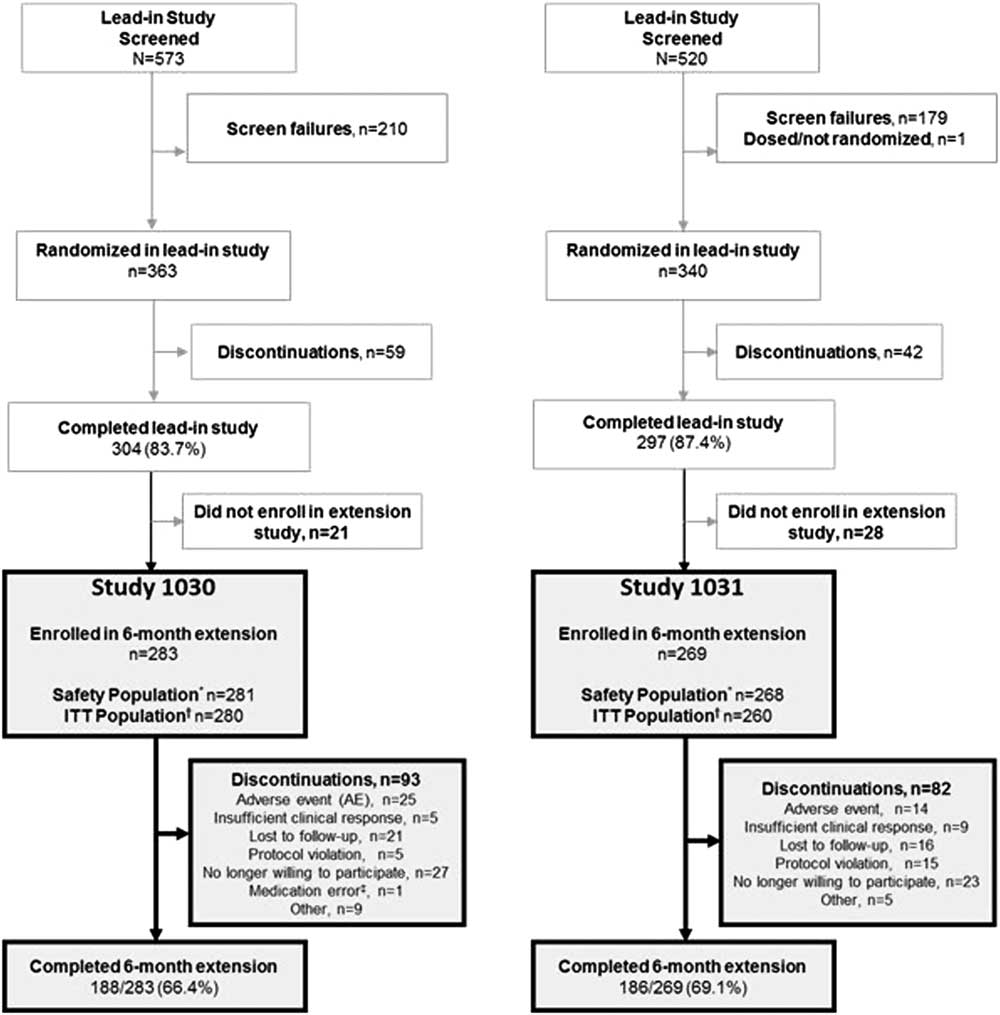
A total of 601 patients completed the two lead-in studies, and 552 patients enrolled in the extension studies (study 1030, N=283; study 1031, N=269; Figure 1). Discontinuation rates over 6 months were 33.1% (93/281) in study 1030 and 30.6% (82/268) in study 1031. The most common reason for discontinuation in each study was “no longer willing to participate” (study 1030, 9.6%; study 1031, 8.6%; Figure 1).
Patient flow. Shaded boxes represent patient disposition of the extension studies. CDRS-R=Children’s Depression Rating Scale–Revised; ITT=intent-to-treat. *Safety population=all patients eligible for entering the extension study who took ≥1 dose of study medication in the extension study. †ITT population=all patients eligible for entering the extension study who had an extension study baseline CDRS-R evaluation and took ≥1 dose of study medication and had ≥1 CDRS-R evaluation after the first dose of the study medication in the extension study. ‡Accidental overdose: the patient unintentionally took an extra dose of the prescribed daily dose of desvenlafaxine 50mg on several different days, because he could not remember if he took his other medication or study medication. No adverse events were associated with the accidental overdose.

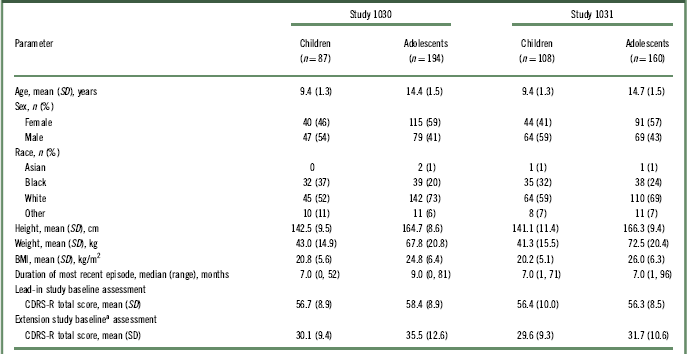
The majority of enrolled patients in each study were white (study 1030, 66.5%; study 1031, 64.9%) and female (study 1030, 55.2%; study 1031, 50.4%). The median age of participants at lead-in and extension study baselines was 13.0 years in both studies. Demographic and baseline clinical characteristics are presented by age group and by study in Table 1.
Demographic and baseline characteristics at baseline of acute-phase lead-in study, safety population

a Extension study baseline was lead-in study week 8 for study 1030 and lead-in study week 9 for study 1031, which included a 1-week transition phase between lead-in and extension studies.
BMI=body mass index; CDRS-R=Children’s Depression Rating Scale–Revised.
Mean (SD) daily dose in the two studies ranged from 24.7 (1.7) mg (study 1030) and 24.9 (1.4) mg (study 1031) during the first extension study week, to 38.9 (10.4) mg and 37.9 (10.7) mg, respectively, at week 26. The respective percentages of patients at each dose level at week 26 of the extension studies were 0 to 20 mg, 1.0 and 1.1%; >20 to 25 mg, 21.4 and 27.5%; >25 to 35 mg, 26.5 and 25.4%; >35 to 50 mg, 51.0 and 46.0%.
Safety
A total of 223/281 (79.4%) and 212/268 (79.1%) patients reported one or more AEs during studies 1030 and 1031, respectively. Most AEs were mild or moderate in severity. One or more severe AEs determined to be related to study medication were reported by 9 patients in study 1030 (headache [3 patients], suicidal ideation [2], suicide attempt [2; discussed below], fatigue [1], generalized tonic-clonic seizure [1], agitation [1], initial insomnia [1], insomnia [1], and pyromania [1]). Severe AEs related to study medication were reported by 10 patients in study 1031 (irritability [3 patients], rash [1], diarrhea [1], dizziness [1], road traffic accident [1], weight increased [1], headache [1], and suicide attempt [1; discussed below]). A total of 19 and 12 cardiovascular-related AEs were reported in studies 1030 and 1031, respectively (Supplemental Table 2).
Two pregnancies were reported in study 1030 (none in study 1031). One patient reported a positive pregnancy test at the week 28 visit, after having completed the taper phase. She gave birth to a live, full-term baby. The second patient reported a pregnancy with an estimated conception 9 days after her week 30 visit. Intrauterine fetal demise was then found in a prenatal ultrasound check (reported as a serious AE); fetal demise occurred at gestation week 11. The patient had a dilation and curettage with no reported difficulties. No deaths were reported in either study. Serious AEs were reported in 18 (6.4%) patients in study 1030 and 10 (3.7%) patients in study 1031 (Supplemental Tables 3 and 4). Suicide attempts reported as serious AEs are discussed below. A total of 25 (8.9%) patients in study 1030 and 14 (5.2%) patients in study 1031 discontinued during the treatment phase due to an AE; in addition, 1 patient in study 1030 was reported as discontinuing due to an AE (anger) that started during the taper/posttherapy period. Adverse events leading to discontinuation are listed in Supplemental Tables 3 and 4.
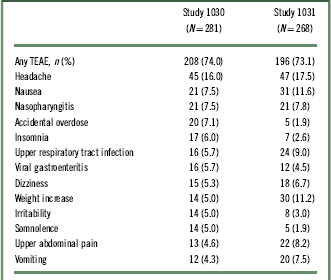
TEAEs were reported by 208 (74.0%) patients in study 1030 and by 196 (73.1%) patients in study 1031. The most common TEAEs (reported by at least 5% of patients in either study) are listed by study in Table 2. Headache and nausea were the most commonly reported TEAEs in each extension study. TEAEs in the taper/posttherapy period were reported by 54 (19.2%) patients in study 1030 and by 62 (23.1%) patients in study 1031. The most common TEAE in the taper/posttherapy period was headache, reported by 5 patients in study 1030 and 10 patients in study 1031.
Treatment-emergent adverse events reported by ≥5% in either study

TEAE=treatment-emergent adverse event.
Suicidality
C-SSRS
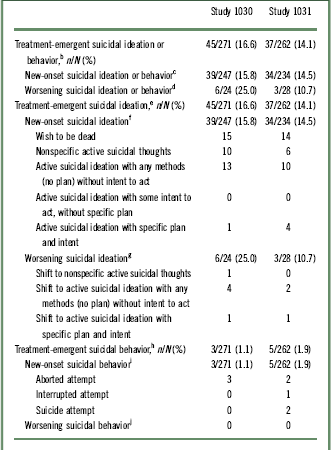
Treatment-emergent suicidal ideation or suicidal behavior, which included both new onset and worsening suicidal ideation or behavior, was reported for 45 of 271 (16.6%) patients in study 1030 and 37 of 262 (14.1%) patients in study 1031 who had a C-SSRS assessment at the lead-in study baseline visit and at one or more postbaseline timepoints during the extension study (Table 3, treatment-emergent events; full data presented in Supplemental Table 5). Rates of treatment-emergent suicidal ideation and suicidal behavior were 45/271 (16.6%) and 3/271 (1.1%), respectively, in study 1030, and 37/262 (14.1%) and 5/262 (1.9%), respectively, in study 1031. Because patients who reported prior suicidal behavior at the lead-in study screening or extension study baseline assessments were excluded from the study, all suicidal behavior reported in the extension studies was treatment-emergent. New-onset self-injurious behavior without suicidal intent was reported in 2/281 (0.7%) patients in study 1030 and 4/268 (1.5%) patients in study 1031.
Summary of treatment-emergent suicidal ideation and behavior reported on the C-SSRS at any postbaseline assessment,a safety population

a Baseline was defined as the baseline visit of the lead-in study. There was one poststudy suicide attempt reported as a serious adverse event in study 1032 that was not captured on the C-SSRS; C-SSRS was not performed following that event.
b Treatment-emergent suicidal ideation or behavior is defined as (1) new-onset suicidal ideation or suicidal behavior or (2) worsening suicidal ideation or suicidal behavior or (3) postbaseline suicidal behavior on patients reporting suicidal ideation at baseline.
c New-onset suicidal ideation or behavior is defined as any suicidal ideation or suicidal behavior reported postbaseline on patients who reported no suicidal ideation and no suicidal behavior at baseline.
d Worsening suicidal ideation or behavior is defined as (1) shift from suicidal ideation at baseline to a more severe suicidal ideation postbaseline or (2) shift from suicidal ideation at baseline (and no suicidal behavior at baseline) to any suicidal behavior postbaseline; patients who endorsed suicidal behavior on the baseline assessment were excluded from the lead-in studies.
e Treatment-emergent suicidal ideation is defined as new-onset suicidal ideation or worsening suicidal ideation.
f New-onset suicidal ideation is defined as any suicidal ideation reported postbaseline on patients who reported no suicidal ideation at baseline.
g Worsening suicidal ideation is defined as shift to a more severe suicidal ideation postbaseline on patients reporting suicidal ideation at baseline.
h Treatment-emergent suicidal behavior is defined as new-onset suicidal behavior or worsening suicidal behavior.
i New-onset suicidal behavior is defined as any suicidal behavior reported postbaseline on patients who reported no suicidal behavior at baseline.
j Patients who endorsed suicidal behavior on the baseline assessment were excluded from the lead-in studies.
N=the number of patients in this analysis, i.e., patients who had a baseline and a postbaseline C-SSRS assessment; C-SSRS=Columbia-Suicide Severity Rating Scale.
Suicidal behaviors reported as AEs
Suicide attempts were reported as serious AEs in 9 patients overall, 4 (1.4%) in study 1030 and 5 (1.9%) in study 1031. In study 1030, 2 patients were hospitalized and permanently discontinued, 1 after reporting two aborted attempts (plan to cut wrist; planned drowning), and a second after an aborted attempt (superficial cut to wrist). One patient reported a suicide attempt (swallowed bleach) approximately 1 month after the event and was later discontinued and hospitalized due to suicidal ideation, and a second patient reported an aborted attempt (put unknown number of pills in mouth, but spit them out) at a follow-up visit. In study 1031, 4 patients were permanently discontinued due to suicide attempts. Three were hospitalized after discontinuation: one after an aborted attempt to cut herself, one after an attempted overdose (30 doxycycline hyclate capsules), and a third after an attempted overdose (ibuprofen, naproxen, and vitamins) and cut wrist. Two patients were permanently discontinued without hospitalization, one after planning to jump from a roof, and the second 10 days after an aborted attempt (plan to cut neck) when the patient reported the event to the investigator. All 9 patients who reported suicide attempts in the extension study had previously endorsed “wish to be dead” or suicidal thoughts or ideation (no plan or intent) in lead-in and/or extension study C-SSRS assessments. Eight of the 9 endorsed “wish to be dead” or suicidal thoughts or ideation (no plan or intent) at screening; 5 of those also reported “wish to be dead” or suicidal thoughts or ideation (no plan or intent) at one or more postbaseline timepoints during the extension study prior to the suicide attempt. The ninth patient endorsed “wish to be dead” at two lead-in study assessments but no extension study assessment prior to the suicide attempt.
Other safety measures
Clinically important findings for vital signs and weight were reported in 24 patients in study 1030 and 38 patients in study 1031; the most common clinically important change in both studies was weight gain (15 and 26 patients, respectively). No clinically meaningful changes in physical examination findings were observed. Expected shifts associated with development assessed by Tanner staging were observed during each study. No clinically important ECG findings were reported in either study. Clinically important laboratory findings were reported in 22 patients in study 1030 and 17 patients in study 1031; the most common clinically important laboratory findings were the presence of protein in the urine in study 1030 (10 patients) and triglycerides in study 1031 (9 patients).
Efficacy
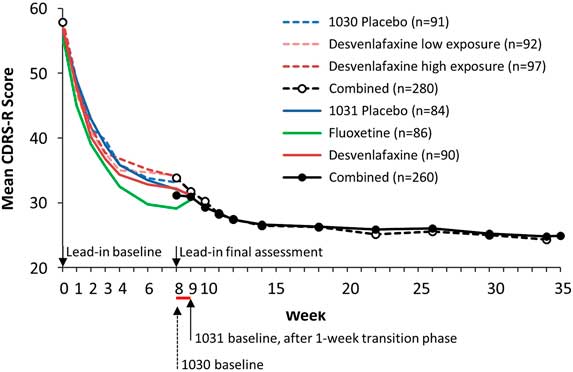
Depressive symptoms improved over the course of the lead-in studies, regardless of treatment group (Figure 2). Mean change in CDRS-R total score from baseline of the lead-in study to baseline of the extension study (lead-in study week 8 for 1030 and lead-in study week 9 for 1031) was −24.09 (study 1030) and −25.52 (study 1031), from lead-in mean baseline scores of 57.92 and 56.44, respectively. During the extension studies, mean (SD) CDRS-R total score continued to decrease, from 33.83 (11.93) and 30.92 (10.20), respectively, at extension study baseline to 24.31 (7.48) and 24.92 (8.45), respectively, at extension study week 26 (Figure 2). For both studies, the change in CDRS-R scores from extension study baseline to week 26 was statistically significant (both p<0.0001) but not deemed clinically meaningful.
Mean Children’s Depression Rating Scale–Revised (CDRS-R) total score for depression, based on observed cases, intent-to-treat population; Data from studies 1030 (dashed lines) and 1031(solid lines) and their respective lead-in studies. The horizontal red line below the x-axis indicates the transition phase prior to study 1031 baseline.

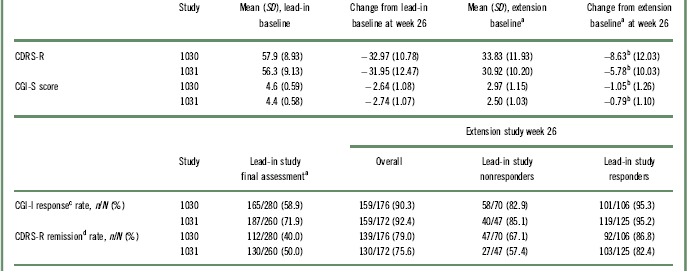
Results for the CGI-S were similar to those for the CDRS-R (Table 4). Rates of CGI-I response (CGI-I score=1 or 2) increased from 58.9% at extension study baseline to 90.3% at week 26 in study 1030, and from 71.9 to 92.4% in study 1031. Similarly, rates of CDRS-R remission (total score ≤28) increased from 40.0% at extension study baseline to 79.0% at week 26 in study 1030, and from 50.0 to 75.6% in study 1031. Response and remission rates are shown for lead-in study responders versus nonresponders in Table 4.
Efficacy endpoints, based on OC for the ITT population

a Extension study baseline was lead-in study week 8 for study 1030 and lead-in study week 9 for study 1031, which included a 1-week transition phase between lead-in and extension studies.
b p<0.0001, paired t test comparing week 26 with the baseline of extension studies.
c CGI-I response was defined as CGI-I score of 1 or 2 (i.e., “very much” or “much” improved).
d CDRS-R remission was defined as CDRS-R total score ≤28.
CGI-I=Clinical Global Impressions Scale–Improvement; CDRS-R=Children’s Depression Rating Scale–Revised.
Discussion
Results from these two open-label, flexible-dose extension studies investigating desvenlafaxine in the treatment of children and adolescents with MDD demonstrate that the safety of longer-term desvenlafaxine is similar to that found in acute, short-term (phase 2/3) pediatric studies. No new safety signals were noted with desvenlafaxine treatment of up to 6 months in this population. Completion rates for these two studies were high, with almost 70% of patients completing the extension trials; discontinuations due to AEs were 9 and 5% for studies 1030 and 1031, respectively, and no longer being willing to participate was the most common reason for discontinuation in either study. Tolerability findings in these studies were similar to those observed in adults. The two most common AEs in the pediatric extension studies, headache and nausea, were also the most common AEs reported in an integrated analysis of 9 trials of adults with MDD treated with desvenlafaxine 50 and 100 mg/d.Reference Carrasco, Kornstein and McIntyre34
The desvenlafaxine safety profile observed with longer-term treatment in these studies appears to be similar to that for other antidepressant medications studied in pediatric MDD populations. Discontinuation rates due to AEs in the two studies reported here are comparable to rates observed in pediatric patients receiving 24- to 26-week treatment with fluoxetine (2.0–8.7%),Reference Emslie, Kennard and Mayes20, Reference Kennard, Emslie and Mayes22, Reference Atkinson, Prakash and Zhang35, Reference Emslie, Prakash, Zhang, Pangallo, Bangs and March36 escitalopram (4.8%),Reference Findling, Robb and Bose37 duloxetine (2.4–7.4%),Reference Atkinson, Prakash and Zhang35, Reference Emslie, Prakash, Zhang, Pangallo, Bangs and March36 or sertraline (2.3%)Reference Rynn, Wagner and Donnelly38 and are substantially lower than in a previous 26-week trial of desvenlafaxine in children and adolescents (17.5%).Reference Findling, Groark, Chiles, Ramaker, Yang and Tourian39
Assessment of suicidal behavior has been of particular interest in pediatric trials of antidepressant medications, including selective serotonin reuptake inhibitors and SNRIs, in the wake of US Food and Drug Administration and UK Medicines and Healthcare Products Regulatory Agency findings of an increased risk for suicidal behavior in adolescents and young adults, which prompted the addition of boxed warnings to prescribing information for newer antidepressant medications.Reference Hammad, Laughren and Racoosin40, 41 Based on C-SSRS assessments, new-onset suicidal ideation or suicidal behavior during the extension studies (i.e., with no reported occurrence since screening at lead-in study baseline) was reported in 15.8 and 14.5% of patients in studies 1030 and 1031, respectively. Again, these rates are comparable to those observed in other pediatric MDD extension studies that used the C-SSRS assessment (approximately 7–15%).Reference Atkinson, Prakash and Zhang35–Reference Findling, Robb and Bose37 Suicide attempts were reported by 1.7% of enrolled patients during (or after completion of) the current studies. No completed suicides occurred in either study.
The efficacy of desvenlafaxine for the treatment of children and adolescents with MDD was not demonstrated versus placebo in either of the two short-term lead-in studies, as improvement in depressive symptoms, as measured by the change from baseline in CDRS-R total score, was similar in magnitude across all lead-in study treatment groups. However, symptom improvements observed across all treatment groups in the lead-in studies were maintained over the 26 weeks of open-label desvenlafaxine treatment. Clinical trials provide an enhanced level of care compared with that typically found in the clinic—patients had up to 10 or more study visits in these 26-week studies—and that may account, at least in part, for ongoing improvement in pediatric patients in these studies. Indeed, assessment itself, which was repeated over the course of the study, may be a therapeutic tool.Reference Young, Meers, Vesco, Seidenfeld, Arnold and Fristad42
Several characteristics of the studies limit the conclusions that can be drawn based on these results. Enrollment criteria limited the study population to patients with few comorbid medical or psychiatric conditions, which may affect safety or efficacy outcomes.Reference Emslie, Ryan and Wagner43 Further, excluding patients with suicidal behavior at screening or baseline, based on C-SSRS and clinical judgment, likely removes patients with more severe and possibly resistant depression from the study population. These results, therefore, may not generalize to pediatric MDD patients with very severe depression, or with major medical or other psychiatric morbidity. Also, reasons for not continuing in the extension study were not collected for the 49 patients who completed the lead-in studies but opted not to continue in the respective extension study. It was not possible to determine, therefore, whether those patients did not continue due to poor efficacy or tolerability outcomes in the lead-in study, which could bias the results of the extension studies. This important information should be collected in future studies.
No conclusions can be drawn from the current data regarding the efficacy of desvenlafaxine for treating children and adolescents with MDD, given that the desvenlafaxine treatment groups did not separate statistically from placebo in either of the acute studiesReference Atkinson, Lubaczewski and Ramaker27, Reference Weihs, Murphy and Abbas28 and due to the open-label treatment regimen (i.e., no placebo arm) used in these extension studies. It is important to note that desvenlafaxine is not indicated for the treatment of pediatric patients with MDD. Improvements in depressive symptoms observed in these studies may have resulted from therapeutic effects of the study procedures themselves, as described above, or may simply have reflected the natural course of the illness, with waxing and waning of symptoms and/or partial/complete remission of symptoms between episodes.
Conclusion
Desvenlafaxine 20–50 mg/d was generally safe and well tolerated by children and adolescents with MDD who received up to 6 months of treatment in these studies; no new safety signals were identified for desvenlafaxine in pediatric patients. In two open-label extension studies, children and adolescents with MDD treated with desvenlafaxine 20–50 mg/d maintained the mean depressive symptom reduction (via CDRS-R) observed at the end of the respective short-term, lead-in study.
Disclosures
Sarah Atkinson reports grants from Pfizer, Allergan, Otsuka, Sunovion, Intracellular, and Blackthorn during the conduct of the study. Louise Thurman was a principal investigator for these studies. Her employer, IPS Research, was paid for work performed. Sara Ramaker, Gina Buckley, Sarah Ruta Jones, Richard England, and Dalia Wajsbrot are Pfizer employees, own Pfizer stock, and have Pfizer stock options.
Supplementary material
To view supplementary material for this article, please visit https://doi.org/10.1017/S1092852918001128