Introduction
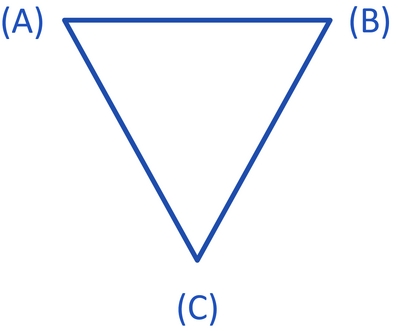
The duration and symptom severity in major depressive episodes are the two principal treatment predictors of this disorder. It is the treatability of the major depressive episode that has placed it among the most distinctive of our common mental disorders. It is within this frame of reference that the aim of this review has emerged namely to describe the treatability of major depressive episodes by the employment of the pharmacopsychometric triangle (Figure 1).
The pharmachopsychometric triangle. (a) Measurements relevant for desired therapeutic effects (e.g. HAM-D6). (b) Measurements relevant for identifying severity of adverse effects of medication (e.g. PRISE-CAR-5). (c) Measurements relevant for patient's self-reported outcome of treatment in terms of well-being (e.g. WHO-5).

The pharmacopsychometric triangle is the core component in measurement-based care, which is an attempt to measure not only the relief of the symptoms, but also to indicate to what extent the patient during the treatment process has restored his or her psychological well-being (Bech, Reference Bech, Jeste and Palmer2015).
The review is structured on the pharmacopsychometric triangle's dialectic nature: The thesis is the desired clinical effect for which the treatment has been prescribed, and the antithesis is the undesired side effects induced by this treatment, whereas the synthesis is the patient-reported outcome of treatment in terms of psychological well-being.
The main result of this review on the pharmacopsychometric triangle is crystallized on a dose–response trial with an antidepressive medication in patients with a major depressive episode of an acceptable duration and symptom severity in which valid rating scales have been used.
To consider psychological well-being as the ultimate goal of treatment is a main issue in positive psychiatry. Another important issue in positive psychiatry is the focus on prevention of mental illness. The treatment following the pharmacopsychometric triangle for a major depressive episode is inherently also the treatment for the prevention of recurrent depressive episodes, i.e. unipolar depression.
Duration of depressive episode and responsiveness to treatment
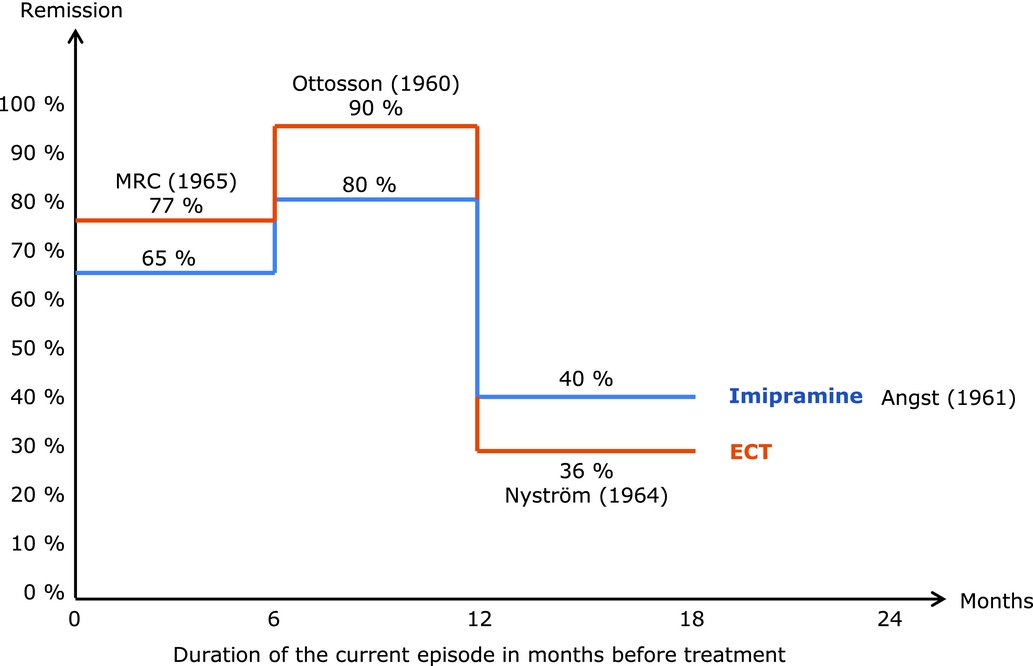
Figure 2 shows the percentage of symptom remission after four to six weeks of treatment obtained both with electroconvulsive therapy (ECT) (Ottosson, Reference Ottosson1960; Nyström, Reference Nyström1964; Medical Research Council, 1965) and imipramine (Angst, Reference Angst1961) when associated with the duration of the present depressive episode before treatment. An episode of depression of less than 12 months is associated with an evidence of great remission (between 80% and 90%) but an episode of depression of more than 12 months is associated with an evidence of rather poor remission (approximately 40%). In the study by Nyström (Reference Nyström1964), it was demonstrated that the remission was very poor in patients with chronic episodes (>12 months). This has recently been confirmed in a meta-analysis on the response of ECT to depression (Haq et al., Reference Haq, Sitzmann, Goldman, Maixner and Mickey2015).
Remission rates in percent in relation to the duration of the episode of depression under treatment with imipramine (Angst, Reference Angst1961) or ECT (Ottosson, Reference Ottosson1960; Nyström, Reference Nyström1964; MRC, 1965).

In his review paper on ECT, Ottosson (Reference Ottosson1985) concurred with Kendell's contention that it is a misuse of ECT to treat chronic neurotic conditions with it (Kendell, Reference Kendell1981). In his depression scale (Kendell, Reference Kendell1968), the duration of a current episode being less than 12 months is a core issue of unipolar depression.
The average duration of a depressive episode was according to Kraepelin (Reference Kraepelin1913), i.e. 6–8 months. In the very comprehensive study by Lundquist (Reference Lundquist1945), the median duration in the younger patients was 6 months and in the elderly patients 8–9 months. These findings have been accepted by WHO (1992) and confirmed by Rush et al. (Reference Rush1995).
Symptom severity of depression and responsiveness to treatment
The placebo-controlled trials are obviously much easier to perform for antidepressive medication than for ECT. Thus, in the MRC (1965) study, ECT was compared to both imipramine and placebo–imipramine but not to placebo–ECT. In this study, the remission rate after four weeks of therapy was 77% for ECT (Figure 2) and 59% for imipramine, i.e. just below 65% obtained by Angst (Reference Angst1961).
The most important study identified by the UK ECT Review Group (2003) when comparing the effect of ECT versus simulated ECT on depressive symptoms is the Northwick Park trial by Johnstone et al. (Reference Johnstone1980). This study followed the MRC (1965) trial in focussing on depressed patients with a current duration of less than 12 months. Johnstone et al. (Reference Johnstone1980) found ECT superior to simulated ECT in patients with very severe depressed symptoms including psychotic features.
The new generation antidepressants have a specific serotonin reuptake inhibition (SSRIs) or a specific noradrenergic reuptake inhibition (SNRIs). The first-generation antidepressants (e.g. imipramine) can be considered as unspecific serotonin and noradrenergic inhibitors as they also have antihistamine and anticholinergic actions. The superiority of the second-generation antidepressants over placebo is smaller than estimated for the first-generation antidepressants (Kramer, Reference Kramer2016). This was confirmed in a head-to-head comparison, but in terms of side effects, the second generation induced fewer side effects (DUAG, 1990). In this Danish University Antidepressant Group (DUAG), trial patients with major depression had a current episode not exceeding 12 months, and clomipramine obtained a remission rate of 62% after six weeks of therapy.
Psychological treatment as monotherapy for episodes of major depression in randomized, placebo-controlled trials is inherently difficult to perform. In the landmark study (Angst, Reference Angst and Healy1996; Kramer, Reference Kramer2016) from the National Institute of Mental Health (NIMH), an imipramine–placebo arm was included when evaluating cognitive behavioral therapy (CBT) and interpersonal therapy (IPT) against imipramine in an episode of major depression (Elkin et al., Reference Elkin1989). In the full analysis of this study (Elkin et al., Reference Elkin, Gibbons, Shea and Shaw1996), it was concluded that for severely depressed patients, imipramine was superior to CBT and IPT as well as to imipramine–placebo. In a meta-analysis on the effect of psychological treatments for depression, Cuijpers et al. (Reference Cuijpers, Van Straten, Bohlmeijer, Hollon and Andersson2010) identified three other trials than the NIMH study where CBT was compared to an antidepressant–placebo arm. Of these three trials, one was on atypical depression (Jarrett et al., Reference Jarrett, Schaffer, McIntire, Witt-Browder, Kraft and Risser1999) and concerning the other two trials the effect size in favor of CBT was very low. The NIMH study (Elkin et al., Reference Elkin1989) is important also because the duration of the current depressive episode was measured (62% had an episode of 12 months or less).
Both in the NIMH study (Elkin et al., Reference Elkin1989) and in the trial on ECT versus simulated ECT (Johnstone et al., Reference Johnstone1980), the Hamilton Depression scale (HAM-D) was used to measure outcome of the treatment. At baseline, before treatment, the patients in the ECT trial obtained an HAM-D score of 30, whereas in the NIMH trial of psychological treatments, the patients obtained an HAM-D score of 20 indicating that ECT is for very severe episodes of major depression and psychological treatments for mild episodes of major depression.
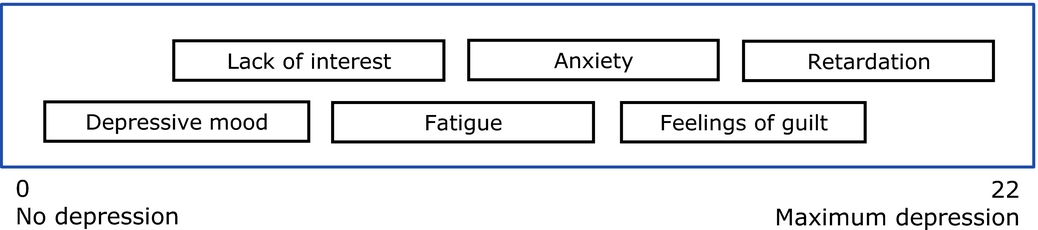
However, from a measurement-based care point of view, the full 17-item Hamilton Depression Scale (HAM-D17) is a multidimensional scale that was already shown by Hamilton (Reference Hamilton1960) and Hamilton (Reference Hamilton1967). We have performed a psychometric analysis of the HAM-D17 using experienced psychiatrists as index of clinical validity (Bech et al., Reference Bech, Gram, Dein, Jacobsen, Vitger and Bolwig1975). We found that only six items were valid in measuring the depressive severity (HAM-D6). Then, we demonstrated by use of the item response theory model by Rasch (Reference Rasch1980) that the HAM-D6 in contrast to HAM-D17 was a unidimensional measure of depression severity (Bech et al., Reference Bech1981). In Figure 3, it is shown how the individual six items in HAM-D6 are mapped in accordance with the Rasch analysis. Thus, on the low end of the dimension of severity (Figure 3), the items of “depressed mood” and “lack of interests” are placed (contributing least to the dimension of severity); on the severe end, the items of “guilt” and “psychomotor retardation” are placed (contributing most to the dimension of severity); and placed in between are the items of “fatigue” and “anxiety.” It is a basic requirement in this Rasch analysis that a cumulative principle is in operation (Bech, Reference Bech2012), namely, that a score on, for example, “guilt” has been preceded by scores on the items of “anxiety,” “fatigue,” “lack of interests,” and “depressed mood.” It is a consequence of being accepted by the Rasch model that a scale can be classified as a unidimensional scale where the total score is a sufficient statistic for measuring depression severity. In a systematic review by Timmerby et al. (Reference Timmerby, Andersen, Søndergaard, Østergaard and Bech2017), it has been verified that the HAM-D6 in contrast to the HAM-D17 is a unidimensional scale. Recently, Alves et al. (Reference Alves, Fleck, Boni and Rocha2017) have confirmed the location of the HAM-D6 items in Figure 3 and the cumulative principle for its unidimensionality.
The HAM-D6 ruler: total score a sufficient statistic.

In contrast to the full HAM-D17, the HAM-D6 has no overlap with side-effect symptoms induced by antidepressants, such as sleep disturbances, agitation, somatic anxiety, gastrointestinal symptoms, or sexual disturbances (Timmerby et al., Reference Timmerby, Andersen, Søndergaard, Østergaard and Bech2017). The essential pharmacological principle of a dose–response relationship of antidepressants has not been demonstrated by the full HAM-D17 but by HAM-D6 (Bech, Reference Bech2012). Thus, both for clomipramine (DUAG, 1999) and for the SSRIs (Bech, Reference Bech2012), a dose–response relationship has been found. From a measurement-based care point of view, this dose–response relationship is obviously of great importance by treating the depressed patients with the minimum effective dose.
Measurements relevant for adverse events (side effects of treatment)
Over the past decade Patient-Reported Outcome Measures (PROMs) have been used to evaluate adverse events induced by biological treatments (Bech, Reference Bech2016). Within psychotherapy, we still attempt to measure side effects induced by psychotherapy (Bech, Reference Bech2016).
A patient-reported version of the UKU (Udvalg for Kliniske Undersøgelser) side-effect scale (Lingjaerde et al., Reference Lingjaerde, Ahlfors, Bech, Dencker and Elgen1987; Bech, Reference Bech1993) was released by Lindström et al. (Reference Lindstrom, Lewander, Malm, Malt, Lublin and Ahlfors2001). However, both the original clinician administrated UKU and the patient administrated form have been found very cumbersome to use (Bech, Reference Bech2016). In the Sequenced Treatment Alternatives to Relieve Depression (STAR*D) study, a Patient-Related Inventory of Side Effects (PRISE) was found to be user friendly (Wisniewski et al., Reference Wisniewski, Rush, Balasubramani, Trivedi and Nierenberg2006). We have modified the PRISE by including the most important part of the UKU scale, namely, the action taken by the clinician when the prescription of drug therapy should be stopped or a dose reduction was needed (Bech, Reference Bech2016). Appendix 1 (present in supplementary material, available at http://dx.doi.org/10.1017/S1041610217003015) shows the five items selected from the Patient-Rated Inventory of Side Effects with Clinician Action of Response (PRISE-CAR-5) (Bech, Reference Bech2016). These five items cover the most relevant serotonin-related side effects of the SSRIs.
In measurement-based care, it is the close collaboration between the therapist and his or her patient that is one of the most central issues. The patient information element in PRISE-CAR-5 is an attempt to facilitate the detection of side effects induced by the treatment. The role of the clinicians in PRISE-CAR-5 is to facilitate the patient–clinician communication resulting in the collaborative, shared decision making of the action (Supplementary Appendix 1) concerning a dose reduction or a discontinuation of the treatment.
In the UKU publication (Lingjaerde et al., Reference Lingjaerde, Ahlfors, Bech, Dencker and Elgen1987), it was stated that it seemed not meaningful to add all the items of the UKU scale into a total score, because there is no additive interaction between the individual items in contrast to the HAM-D6 (Figure 3). In the PRISE-CAR-5, therefore, we do not recommend to give a total score but to evaluate each item individually (Supplementary Appendix 1). Thus, a score of 2 on a single item has to be evaluated for the action to reduce dose or to stop treatment with the drug under examination. The PRICE-CAR-5 scoring is, therefore, an expression of the prevalence of a side effect that has been perceived by the patient as very distressing. In other words, the PRISE-CAR-5 should not be considered as a unidimensional scale by its total score of all the items.
From a positive psychiatry point of view, the PRISE-CAR-5 should be considered as an example within measurement-based care to use PROMs questionnaires in terms of a feedback to the patient from the clinician about the interpretation of the scores in the PROMs instrument made by the patient himself/herself. In positive psychiatry, the feedback on patient's self-reported assessments is a most important aspect of the therapeutic collaboration between the therapist and his or her patient.
Measurements relevant for patient's self-reported outcome of treatment in terms of well-being
The patient's own assessment of improved well-being during treatment with a psychopharmacological drug is a very subjective index that no biological marker of the disease can capture (Feinstein, Reference Feinstein1987). When evaluating more than 100 different questionnaires covering subjective well-being, Gill and Feinstein (Reference Gill and Feinstein1994) were unable to identify a short generic well-being scale, i.e. without measuring the disease being investigated and without measuring the side effects of the treatment prescribed. An expert panel of health-related quality of life questionnaires listed the World Health Organization Well-Being Index (WHO-5) (Bech, Reference Bech1999) at the top as the most acceptable scale (Hall et al., Reference Hall, Krahn, Horner-Johnson and Lamb2011). The WHO-5 (Supplementary Appendix 2) is such a generic scale without overlap with disease-related components or components specific for pharmacological treatment (Topp et al., Reference Topp, Ostergaard, Sondergaard and Bech2015).
In contrast to the HAM-D or PRISE-CAR-5, the WHO-5 (Supplementary Appendix 2) contains only positively phrased items because it is a measure of positive psychological well-being. Each item is scored in terms of frequency over the past two weeks. The score on each item has a range from 0 (none of the time) to 5 (all of the time). Therefore, the summed total score of the WHO-5 goes theoretically from 0 (no well-being) to 25 (extreme well-being). Because quality of life scales conventionally have to be translated to a percentile scale (0–100), the WHO-5 raw scores have to be multiplied by 4 (Supplementary Appendix 2) implying that 0 represents worst imaginable quality of life and 100 represents best imaginable quality of life.
The measurement-driven construct validity of the WHO-5 has been found acceptable both when using the Rasch item response theory model (Lucas-Carrasco et al., Reference Lucas-Carrasco, Allerup and Bech2012) and when using the non-parametric item response theory model (Ellervik et al., Reference Ellervik, Kvetny, Christensen, Vestergaard and Bech2014). Therefore, the total score of the five items (Supplementary Appendix 2) is a sufficient statistic to indicate the level of well-being. The standardization of the WHO-5 indicates that the range between 100 and 50 corresponds to no well-being problems. A WHO-5 score range between 49 and 26 corresponds to a moderate well-being problem, and a WHO-5 score range between 25 and 0 corresponds to a very severe well-being problem.
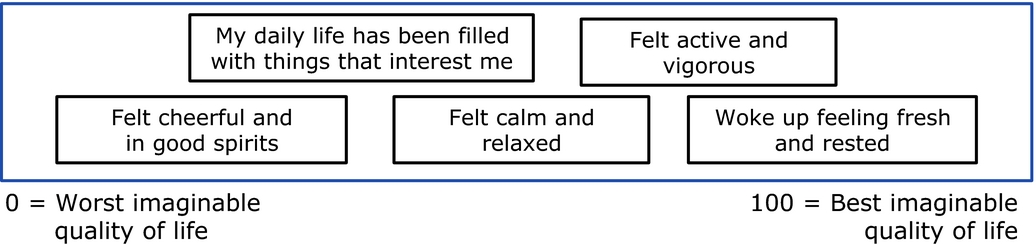
Figure 4 shows the rank order of the WHO-5 items when evaluated psychometrically by the parametric item response theory model by Rasch for being a cumulative scale analogue to HAM-D6 (Lucas-Carrasco et al., Reference Lucas-Carrasco, Allerup and Bech2012). In Figure 4, the item of being cheerful and the item of being interested in things are located at the lower part of the dimension of well-being, whereas the item of feeling active and the item of feeling fresh and rested are located in the higher part of the dimension of well-being. The item of feeling calm and relaxed is located in between. The acceptance of this rank order when males are compared to females and younger people to elderly people by the Rasch analysis implies that the total score on WHO-5 is a sufficient statistics in measuring subjective well-being.
The WHO-5 ruler: total score a sufficient statistic.

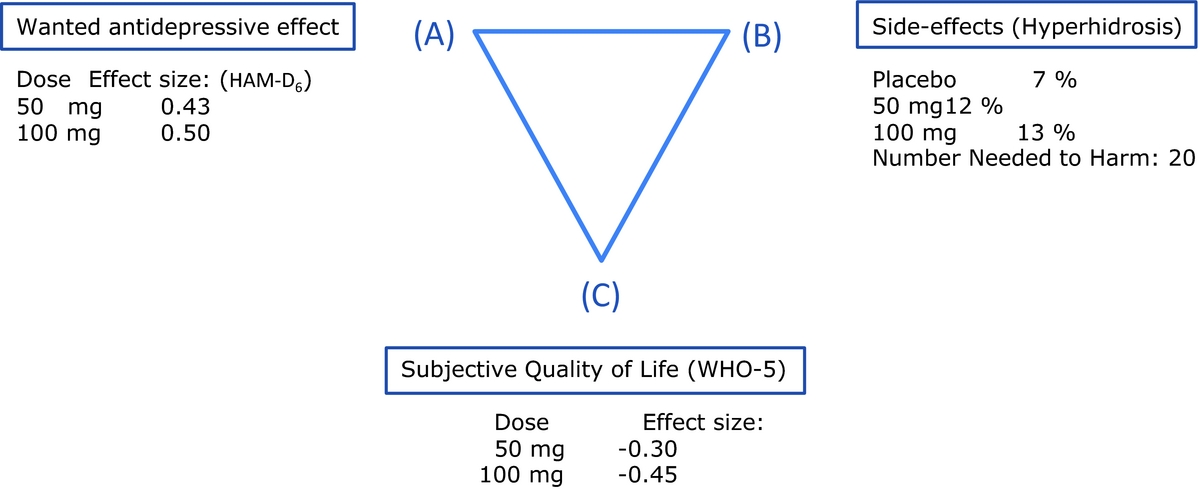
Figure 5 illustrates a dose–response trial in which the WHO-5 has been used following the pharmacopsychometric triangle as the ultimate goal of treatment and in which the HAM-D6 is the outcome measure of the symptomatic antidepressive effect (Boyer et al., Reference Boyer2008). In this landmark study (Bech, Reference Bech2012), the serotonin and noradrenalin reuptake inhibitor (SNRI) desvenlafaxine was compared to placebo in two fixed doses of 50 mg versus 100 mg daily in the planned treatment duration of eight weeks. The patients were suffering from a major depressive episode with a mean duration of approximately eight months and the HAM-D17 mean score at baseline was 24.
The pharmacopsychometric triangle for desvenlafaxine in a randomized clinical trial on major depression.

Because both the WHO-5 and the HAM-D6 have an adequate unidimensionality, effect size statistics were used (Figure 5). An effect size of 0.40 (0.35–0.45) is considered to be of clinical significance (Hattie, Reference Hattie2009; Bech, Reference Bech2012). However, the side effects were measured in terms of prevalence in percent, and in Figure 5, it is the side effect of “increased sweating” (hyperhidrosis) that is shown. Number Needed to Harm (NNH) is used in this case, and a NNH of 10 or more is considered clinically significant.
The result of this study (Figure 5) is that 100-mg desvenlafaxine was superior to 50 mg when using the WHO-5 as the ultimate goal of treatment. The effect size on WHO-5 is negative, since a higher score on this scale signifies increased well-being. Using HAM-D6 as outcome for the antidepressive effect at the level of symptoms, both 50-mg and 100-mg desvenlafaxine were superior to placebo with an effect size of 0.40 or more.
The superiority of 100-mg over 50-mg venlafaxine on the WHO-5 might be explained by the fact that the higher dose induced approximately the same level of side effect in terms of hyperhidrosis. The difference between the prevalence of 12% on 50-mg desvenlafaxine and of 7% on placebo corresponds to a NNH of 20 indicating no clinically significant effect. In Figure 5, hyperhidrosis has been shown for the measurement of side effects because increased sweating is one of the most important indicators of overdosing with a serotonin reuptake inhibitor. Hyperhidrosis is a prodromal symptom of hyperthermia, which is the clinical syndrome of serotonin toxicity (Buckley et al., Reference Buckley, Dawson and Isbister2014).
The side effect of sedation (Supplementary Appendix 1) is an indicator of the driving ability of patients with depression receiving antidepressants. In one of the first studies on car-driving performance of patients with mental disorders before and after treatment (Bech, Reference Bech1975), it was shown that the reduction of depression severity by the treatment with antidepressants also reduced the impairment of driving ability. In a systematic review on driving problems under the influence of antidepressants, Brunnauer et al. (Reference Brunnauer2015) identified only five studies on driving performance in depressed patients treated with antidepressants using on-road tests. A study on amitriptyline even in a small dose of 25 mg daily resulted in impairments of sedation during car driving (Veldhuijzen et al., Reference Veldhuijzen2006). However, a study on venlafaxine in doses between 150 and 300 mg daily resulted in no impairments (Brunnauer et al., Reference Brunnauer2015). Desvenlafaxine (Figure 5) is a metabolite of venlafaxine and has in doses of 50 to 100 mg daily probably no impairment on driving behavior. Much more research is still needed to evaluate this important side effect of behavioral toxicity of car driving, especially in the elderly depressed patients.
The PRISE-CAR-5 (Supplementary Appendix 1) is specifically adapted from the PRISE-CAR (Bech, Reference Bech2016) to cover the most clinically relevant side effects of SSRIs. To cover ECT-specific side effects, other PRISE-CAR items (Bech, Reference Bech2016) have to be considered, such as problems with concentration, sleep problems, or orthostatic dizziness. From a psychometric point of view, the PRISE-CAR-5 is not a cumulative scale, i.e. the total score is not sufficient. It is the percentage of very distressing side effects that is the outcome of the PRISE-CAR-5 ratings.
In measurement-based care, the use of a quality of life scale as the WHO-5 total score should be considered as a “drop-out of treatment preventer” (Bech, Reference Bech2016). Thus, patients with low quality of life scores seem to drop out of treatment with antidepressants early in the planned treatment period, despite the fact that they were slightly improving with regard to their depressive symptoms (Bech, Reference Bech1998).
Mental Health Services in the Capital Region of Denmark formed in 2016 is a working group consisting of psychiatrists, psychologists, patients with depression or anxiety, and their relatives. During the meetings, it became evident that the patients accepted such PROMs but only if the total amount of items at the assessment day would not be more than 30 items. Furthermore, the patients and their relatives preferred very much that not all the items should be symptom oriented, i.e. negatively worded items. Thus, they found the WHO-5 with its positively formulated items very acceptable. However, the feedback information about the WHO-5 scorings should not only be the total score but the patients also wanted a profile scoring of the individual items as indicated in Supplementary Appendix 3.
It is a patient with a WHO-5 total score of 35 that is shown in Supplementary Appendix 3 where the item of being active and vigorous and item of feeling fresh and rested had scores below the mean total of 35. Of these items, the one of being fresh and rested when waking up in the morning can be considered as a measure of restorative sleep. The patient in Supplementary Appendix 3 has a score indicating that he or she over the past week woke up being fresh and rested less than half of the mornings. This corresponds to the DSM-5 criteria of non-restorative sleep (American Psychiatric Association, 2013).
We have recently found (Ellervik et al., Reference Ellervik, Kvetny and Bech2016) that non-restorative sleep has a prevalence of 80% or more in patients with major depression, whereas in the general population, the prevalence is approximately 24%. In the hermeneutic feedback (Supplementary Appendix 3), the items on restorative sleep are important for the patients to realize in the rehabilitative care. The restorative sleep should be considered to “charge the battery” by a good night's sleep and the non-restorative sleep will implying having reduced activity in the daily working hours.
To the best of our knowledge, this hermeneutic patient reported outcome feedback in the rehabilitative care of depressed patients has yet not been adequately studied.
Discussion
We have considered a major depressive episode as a most distinct mental disorder from a medical point of view with its clear symptom profile (HAM-D6) and with its clear course of episodes not exceeding 12 months. Unipolar depressive disorder has by the World Health Organization been listed in the top among the most burdensome disorders and it is expected that unipolar depression will be the most severe in 2030 in terms of DALYs (Disability-Adjusted Life Years) (Mathers et al., Reference Mathers, Fat and Boerma2008). In terms of health-related quality of life problems, unipolar depression has previously been found more severe than any other chronic medical disorders (Hays et al., Reference Hays, Wells, Sherbourne, Rogers and Spitzer1995).
The treatability of major depressive episodes by biological therapies has been rank ordered in terms of depression severity with ECT as most effective in patients with the highest symptom scores at the level of psychotic depression and with antidepressive medication in the moderate to severe cases. Our review of major depressive episodes by the pharmacopsychometric triangle is inherently rooted within these biological therapies. The biological basis of positive psychiatry even concerning depression is still limited to mechanisms from single markers within neuro-circuitry, genetic, or blood and saliva tests (Moore et al., Reference Moore, Eyler, Mills, O'hara, Wachmann, Laveretsky, Jeste and Palmer2015). No such biological marker has as yet been identified. In this situation, Kramer (Reference Kramer2016) suggested that depressive disorder biologically might entail an impairment of resilience functions in the brain being a “painful form of stasis” that corresponds to the clinical depression scale HAM-D6.
In patients with mild to moderate major depression, the superiority of the second-generation antidepressants over placebo has been found rather weak. However, as stated by Kramer (Reference Kramer2016), these placebo-controlled trials have to be reanalyzed both by using the clinically valid HAM-D6 instead of the full HAM-D17 and by using trajectory statistics. Trajectory statistics is a cluster analysis to identify a distinct improvement path of response to treatment. Kramer (Reference Kramer2016) illustrated that patients receiving placebo typically have one single “trajectory responder” curve without patients who have obtained marked responses. In contrast, patients who have received antidepressants typically can be divided in two “trajectory responder” curves: around 75% of the patients receiving antidepressants will follow a curve with a steadily marked improvement. The remaining 25% will follow another curve showing non-response. In his monograph on placebo, Brown (Reference Brown2013) indicated that those patients been depressed for more than six months in the current episode do less well with placebo than those whose depression has been of shorter duration.
In this overview, the A, B, C of the pharmacopsychometric triangle should be seen as an attempt within positive psychiatry to indicate that clinical psychopharmacology is much more than simple prescribing antidepressants to patients suffering from major depressive episodes. Within the measurement-based care, the pharmacological treatments and the psychological treatments share many factors, e.g. a careful alliance with the patients, psychoeducation, a focus on the psychosocial problems, and a careful monitoring by valid rating scales or questionnaires. The combination of psychopharmacology and psychotherapy in unipolar depression seems actually to follow the reciprocation model (Fava et al., Reference Fava, Tomba and Bech2017), i.e. that the combination reinforce each other in a sequential integration by having well-being psychotherapy as the final attempt to ensure the restoration of functioning, i.e. the return to work (Guidi et al., Reference Guidi, Tomba and Fava2016).
The principal predictor for the course of recurrent major depressive episodes (unipolar depression) is a history of a previous depressive episode. The prevention of unipolar depression is, therefore, not only to get the depressed patient feeling well after the acute 6–8 weeks of treatment, but also to keep the patient well in the maintenance phase of treatment. The whole duration of the maintenance phase is found to correspond to the duration of an episode of major depression, i.e. 12 months (Sim et al., Reference Sim, Lau, Sim, Sum and Baldessarini2016).
The rank order of A, B, and C in the pharmacopsychometric triangle is, therefore, valid both in the acute and in the maintenance phase of the treatment of a major depressive episode to balance the symptomatic relief and the risks of side effects in keeping the patient in an acceptable state of psychological well-being. In positive psychiatry, well-being is a main factor in the prevention of mental illness (Jeste et al., Reference Jeste, Palmer, Rettew and Boardman2015).
Conflict of interest
None.
Supplementary material
To view supplementary material for this article, please visit https://doi.org/10.1017/S1041610217003015