INTRODUCTION
Water temperature is one of the most important environmental factors significantly affecting the fitness of commercially important marine invertebrates (Lemoine & Burkepile, Reference Lemoine and Burkepile2012), and consequently impacting their aquaculture industries (Watts et al., Reference Watts, Hofer, Desmond, Lawrence and Lawrence2011). The sea urchin is a good example because its aquaculture industry is adversely affected by high water temperature (e.g. Lawrence et al., Reference Lawrence, Cao, Chang, Wang, Yu, Lawrence and Watts2009; Watts et al., Reference Watts, Hofer, Desmond, Lawrence and Lawrence2011). It has been well documented that food consumption (Siikavuopio et al., Reference Siikavuopio, Mortensen and Christiansen2008; Lawrence et al., Reference Lawrence, Cao, Chang, Wang, Yu, Lawrence and Watts2009), growth (Lawrence et al., Reference Lawrence, Cao, Chang, Wang, Yu, Lawrence and Watts2009; Azad et al., Reference Azad, Pearce and McKinley2011), gametogenesis (Gibbs et al., Reference Gibbs, Watts and Lawrence2007; Uthicke et al., Reference Uthicke, Liddy, Nguyen and Byrne2014) and reproduction (Garrido & Barber, Reference Garrido and Barber2001) are significantly affected by high water temperature in sea urchins. Three major methods for sea urchin aquaculture include culturing them offshore at shallow depths in suspended cages and feeding them macroalgae or formulated feeds; releasing them into managed areas of sea floor; and industrial on-land indoor aquaculture (Chang et al., Reference Chang, Ding, Song and Yang2004). Water temperature cannot be controlled in the sea when sea urchins are cultured in cages or on the shallow sea floor, where they are greatly affected in areas with seasonal high water temperature (Brothers & McClintock, Reference Brothers and McClintock2015). Even in industrial aquaculture, it is very expensive to keep the seawater cool in these areas during seasonal high temperatures. This highlights the importance of the evaluation of potential negative impacts on commercially important traits of sea urchins and of approaches to improving sea urchin aquaculture in the expanding areas with seasonal high temperature.
The sea urchin Strongylocentrotus intermedius, which was introduced into China from Japan in 1989 for its commercial value (Chang et al., Reference Chang, Ding, Song and Yang2004), is endemic to intertidal and subtidal bottoms in northern Pacific coastal waters of Hokkaido off Japan, Korea and Far East Russia (Agatsuma, Reference Agatsuma and Lawrence2013). The annual production of sea urchins from fisheries and aquaculture in China was 6791 tonnes in 2014 (Zhao, Reference Zhao2015). As a cold-water, commercially important species, S. intermedius is a good model to investigate the effects of high water temperature on commercially important traits of sea urchins in aquaculture and to contribute a cost-effective approach to improving these traits of urchins cultured at high water temperature. The lethal temperature for S. intermedius is 23°C (Chang et al., Reference Chang, Ding, Song and Yang2004; Agatsuma, Reference Agatsuma and Lawrence2013). In Japan, over half of a population of juvenile S. intermedius in shallow water died at temperatures >23°C (Hokkaido Central Fisheries Experimental Station et al., 1984). Food consumption and gonad production of S. intermedius were significantly affected at 22°C (Lawrence et al., Reference Lawrence, Cao, Chang, Wang, Yu, Lawrence and Watts2009). Aside from production, gonad quality of sea urchins is very important to determine their market values, which includes gonad moisture, colour, flavour and nutrient components (e.g. protein). However, we know of no information on the effects of high water temperature (for example, 22°C) on gametogenesis and gonad quality of S. intermedius. This lack greatly hampers the development and promotion of aquaculture of S. intermedius, especially in areas with seasonal high water temperature.
Formulated feeds have been well documented to be effective in supporting growth and gonad production in a number of sea urchin species (e.g. Pearce et al., Reference Pearce, Daggett and Robinson2002; Watts et al., Reference Watts, Hofer, Desmond, Lawrence and Lawrence2011), including S. intermedius (Chang et al., Reference Chang, Lawrence, Cao and Lawrence2005; Lawrence et al., Reference Lawrence, Chang, Cao, Lawrence and Watts2011), although their effects on gonad quality are still debatable (e.g. Pearce et al., Reference Pearce, Daggett and Robinson2002; Azad et al., Reference Azad, Pearce and McKinley2011). Shpigel et al. (Reference Shpigel, McBride, Marciano, Ron and Ben-Amotz2005) reported that the feeding regime of formulated feed and macroalgae produced the optimal combination of desired gonad colour and production. Their explanation was that the formulated feed is effective in increasing gonad production, while macroalgae help improve gonad quality (Shpigel et al., Reference Shpigel, McBride, Marciano, Ron and Ben-Amotz2005). However, they did not evaluate the effectiveness of this method in unfavourable conditions (for example, at high water temperature). In S. intermedius, formulated diet has been well documented to effectively support gonad production (Chang et al., Reference Chang, Lawrence, Cao and Lawrence2005; Lawrence et al., Reference Lawrence, Chang, Cao, Lawrence and Watts2011). Kelp Saccharina japonica is the natural optimal feed for S. intermedius (Chang et al., Reference Chang, Ding, Song and Yang2004). Thus, we hypothesized that a feeding regime of formulated feed and kelp would probably improve gonad production as well as achieving the desired gonad quality and that it might be an effective feeding regime for S. intermedius at a high water temperature of 22°C.
The purposes of the present study are to investigate (1) whether high water temperature (22°C) significantly affects food consumption, growth, gonad production, gametogenesis and gonad quality of S. intermedius; (2) whether a feeding regime of formulated feed and kelp is more effective for gonad production in S. intermedius than formulated feed or kelp alone; (3) whether a feeding regime of formulated feed and kelp is a cost-effective method to improve gonad production and quality of S. intermedius cultured at high water temperature.
MATERIALS AND METHODS
Sea urchins
Sea urchins with a test diameter about 5 cm (5.2 ± 0.3 cm for 54 haphazardly chosen individuals) were transported from Dalian Haibao Fishery Company to the Key Laboratory of Mariculture & Stock Enhancement in the North China's Sea, Ministry of Agriculture at Dalian Ocean University on 2 April 2014. Sea urchins were maintained in the laboratory at 10°C, pH 8.05 and 31.6‰ salinity for a week and fed kelp S. japonica. They then were held without feeding for a week before the experiment began on 15 April 2014.
Experimental design
Water temperature and feeding regime were the two experimental factors in the study. 22°C was set as the high water temperature group. Water temperature was gradually increased from 10.6°C (the initial laboratory in situ water temperature) to 22°C by 1°C every 2 days and kept at 22°C using a seawater temperature control system (Huixin Co., China). The laboratory in situ water temperature (10.6–18.8°C during the experiment) was set as the control temperature (designated as field temperature group). Filtered seawater was used in this study.
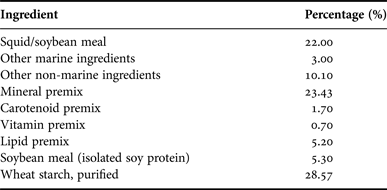
Three feeding regimes comprised formulated feed alone, formulated feed and kelp (S. japonica) and kelp alone. Formulated feed was prepared at Texas AgriLife Research Mariculture Laboratory at Port Aransas, USA. The composition of the formulated feed was analysed and provided by Dr A. Lawrence (Table 1). Wild fresh kelp, which was bought from a Dalian local market, was collected in Dalian Bay (120°37′E 38°56′N). The organic composition and ash were measured during the experiment (Table 2). Kelp alone and formulated feed alone refer to feeding S. intermedius only kelp and only formulated feed during the 6 weeks of the experiment, respectively. Formulated feed and kelp refers to feeding S. intermedius kelp for 3 weeks and formulated feed for the following 3 weeks. Nine replicates were used in each experimental treatment.
Composition of the formulated feed (dry weight).

Kelp organic composition (per cent dry weight) and ash (g per 100 g).

According to the experimental design described above, sea urchins were put into 27 individual cylindrical cages (11 cm in diameter, 15 cm high) in each of two large tanks (180 × 100 × 80 cm). Water temperature was controlled in one tank. Water temperature in the second tank was environmental temperature.
Food consumption
Strongylocentrotus intermedius were fed according to the feeding regimes described above. Uneaten kelp was collected, cleaned to remove the seawater on the surface and then weighed every day before re-feeding. Uneaten formulated feed was collected every day before re-feeding, dried at 72°C for 4 days and weighed. Seawater was changed every 2 days. Dried food consumption of kelp was calculated by dried amount of kelp provided minus the dried amount of uneaten kelp. Food consumption of formulated feed was calculated as follows (according to Zhu, Reference Zhu2005 with some revisions):
 $$\eqalign{{\rm FI}\, = & \,W \times ({\rm 1} - {R_{\rm 1}}) - {R_{\rm 2}}\, \times \,W\, \times ({\rm 1} - {R_{\rm 1}}) - ({W_{rf}} - {R_{\rm 3}} \times {W_w}) \cr = \,& {\rm 1}.{\rm 5} \times ({\rm 1} - 0.0{\rm 9}) - 0.{\rm 17} \times {\rm 1}.{\rm 5} \times ({\rm 1} - 0.0{\rm 9}) \cr &- ({W_{rf}}\, - 0.0{\rm 37} \times {W_w})} $$
FI, food consumption (g); W rf, weight of residual feed after drying; W w, weight of seawater in residual feed; W, amount of feed provided, 1.5 g; R 1, water content rate of the formulated feed, 0.09; R 2, lost rate of the formulated feed = 0.17; R 3, rate of residual elements of seawater after drying = 0.037.
Food consumption of sea urchins in the group of formulated feed and kelp was calculated as the arithmetic mean of the dried food consumption of kelp in the first 3 weeks and that of dried formulated feed in the following 3 weeks.
Body size, gonad weight, index and moisture
Test diameter, height and body weight of S. intermedius were measured using digital vernier calipers (Mahr Co., Germany) and an electric balance (G&G Co., USA). After dissection, test, lantern and gonads were weighed, dried for 4 days at 72°C and then reweighed. Gonad index and moisture were calculated according to the following formula:
 $${\rm GI(}\% {\rm )} = {\rm GW}/{\rm BW} \times {\rm 1}00,$$
GI, gonad index; GW, wet gonad weight.
 $${\rm GM(}\% {\rm )} = ({\rm GW} - {\rm DGW})/{\rm GW} \times {\rm 1}00,$$
GM, gonad moisture; DGW, dry gonad weight.
Feed conversion ratio
Feed conversion ratio (FCR) was calculated according to the method used by Siikavuopio et al. (Reference Siikavuopio, James, Lysne, Sæther, Samuelsen and Mortensen2012) as follows:
 $${\rm FCR(}\% {\rm )} = {\rm FI}/({W_{\rm 2}} - {W_{\rm 1}}) \times {\rm 1}00$$
W2, final wet weight; W1, initial wet weight; FI, food consumption.
Gonad colour and sweetness
One gonad of each urchin was used for objective colour measuring of L*, a* and b* readings (L* = lightness, a* = redness, b* = yellowness) using PANTONE Color Cue® 2 (Carlstadt, NJ, USA) under the standard light of D65. One gonad was placed on dishes for subjective colour and sweetness assessments under standard light of D65. The sensory panel consisted of six individuals who were familiar with colour and flavour analysis of sea urchin gonads. Before the experiment, they were carefully trained to distinguish among the subjective ratings of gonad colour and sweetness of S. intermedius according to the training method of Phillips et al. (Reference Phillips, Bremer and Silcock2009). Gonad colour and sweetness of sea urchins were evaluated according to the ranking standard of Pearce et al. (Reference Pearce, Daggett and Robinson2002):
Gonad colour (rating 1–4):
1 = bright yellow or orange; 2 = pale yellow or orange, mustard; 3 = yellow- brown, orange- brown, red- brown, cream; 4 = any other colour (e.g. dark brown, grey).
Gonad sweetness (rating 1–5):
1 = sweet; 2 = a bit sweet; 3 = not sweet, not bitter; 4 = a bit bitter; 5 = bitter.
Gametogenesis
One gonad from each individual was collected and fixed in the Bouin's solution (saturated picric acid solution: formaldehyde: glacial acetic acid = 15: 5: 1) for 24 h, followed by dehydration, transparency, wax dip, sectioning, HE staining and microscopic examination. The method was fully described in Ren et al. (Reference Ren, Tian and Liang2007).
The state of the gonad was divided into four stages according to the description of James & Siikavuopio (Reference James and Siikavuopio2011).
STAGE I: INTER-GAMETOGENESIS AND NP PHAGOCYTOSIS
This stage occurs after spawning. The reproductive cells start to appear around the gonads and the number of NP cells increases.
STAGE II: PRE-GAMETOGENESIS AND NP RENEWAL
In this stage the size of the gonads and the number of NP cells increase continuously. The reproductive cells exist in the periphery of the follicle in the gonad.
STAGE III: GAMETOGENESIS AND NP UTILIZATION
The reproductive cells develop continuously with a decrease in size and number of NP cells. Reproductive cells migrate into the centre of follicle in the gonad.
STAGE IV: END OF GAMETOGENESIS AND SPAWNING
Differentiated reproductive cells exist in the lumen, stored and ready for spawning. At the end of this stage all or some of the mature reproductive cells will be released.
Crude protein content of gonads
Semi-micro Kjeldahl nitrogen was used to determine crude protein content of 0.5 g dried gonad in each individual. This method was fully described in Chen et al. (Reference Chen, Shi, Wang and Zhang2008). The procedure includes digestion, distillation, absorption and titration. Crude protein content of gonads was calculated as follows:
 $$\hbox{Crude protein content(}\% {\rm )} = \,[({V_{\rm 2}} - {V_{\rm 1}})\, \times C \times 0.0{\rm 14} \times {\rm 6}.{\rm 25}\, \times \,{\rm 1}00]/[M \times V{\rm ^{\prime}}/V]$$
where V 2, [consumption] of hydrochloric acid titration (ml); V 1, consumption of hydrochloric acid titration for the blank (ml); C, concentration of hydrochloric acid standard solution (mol L−1); M, sample weight (g); V, the total dilution volume of the collected liquid (mL); V′, the distillation volume of the collected liquid (mL).
Statistical analysis
The data were tested for homogeneity of variance and normal distribution before statistical analysis. Two-way ANOVA was used to analyse the effects of water temperature and feeding regime on all experimental traits apart from gametogenesis. Because no significant interaction was found in all experimental traits except for feed conversion ratio, one-way ANOVA was carried out to separately analyse the effects of the two factors. Duncan multiple comparisons were then performed when significant differences were found with the ANOVA analysis. Independent-samples t-test was used to compare the differences of all experimental traits between the final and initial conditions apart from gametogenesis. Kruskal–Wallis H test was used to analyse the stage frequency of gametogenesis. All data analysis was performed using SPSS 13.0 statistical software. A probability level of P < 0.05 was considered as significant.
RESULTS
Test diameter, height, weight, lantern weight and body weight
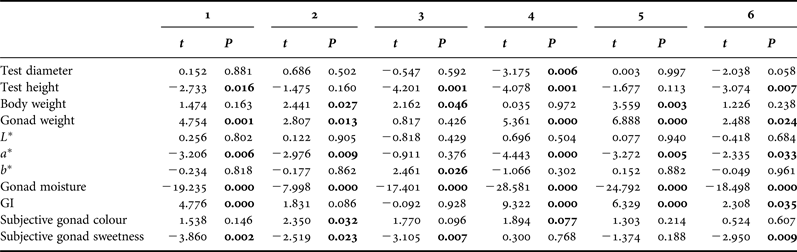
Compared with the initial condition, test diameter increased significantly only in S. intermedius fed formulated feed at the field temperature (P = 0.006, Table 3). Body weight significantly increased in S. intermedius fed formulated feed and kelp at both temperatures (P < 0.05), and individuals fed kelp at high water temperature (P = 0.046, Table 3). Test height was not significantly affected in S. intermedius fed formulated feed and kelp at both temperatures (P > 0.05, Table 3).
Statistical results of t-test to compare the differences of experimental traits between the initial and final conditions.
Note: Groups 1–6 refer to feeding formulated feed at high water temperature; feeding formulated feed and kelp at high water temperature; feeding kelp at high water temperature; feeding formulated feed at field temperature; feeding formulated feed and kelp at field temperature; feeding kelp at field temperature, respectively. Bold data indicate significant at P < 0.05.
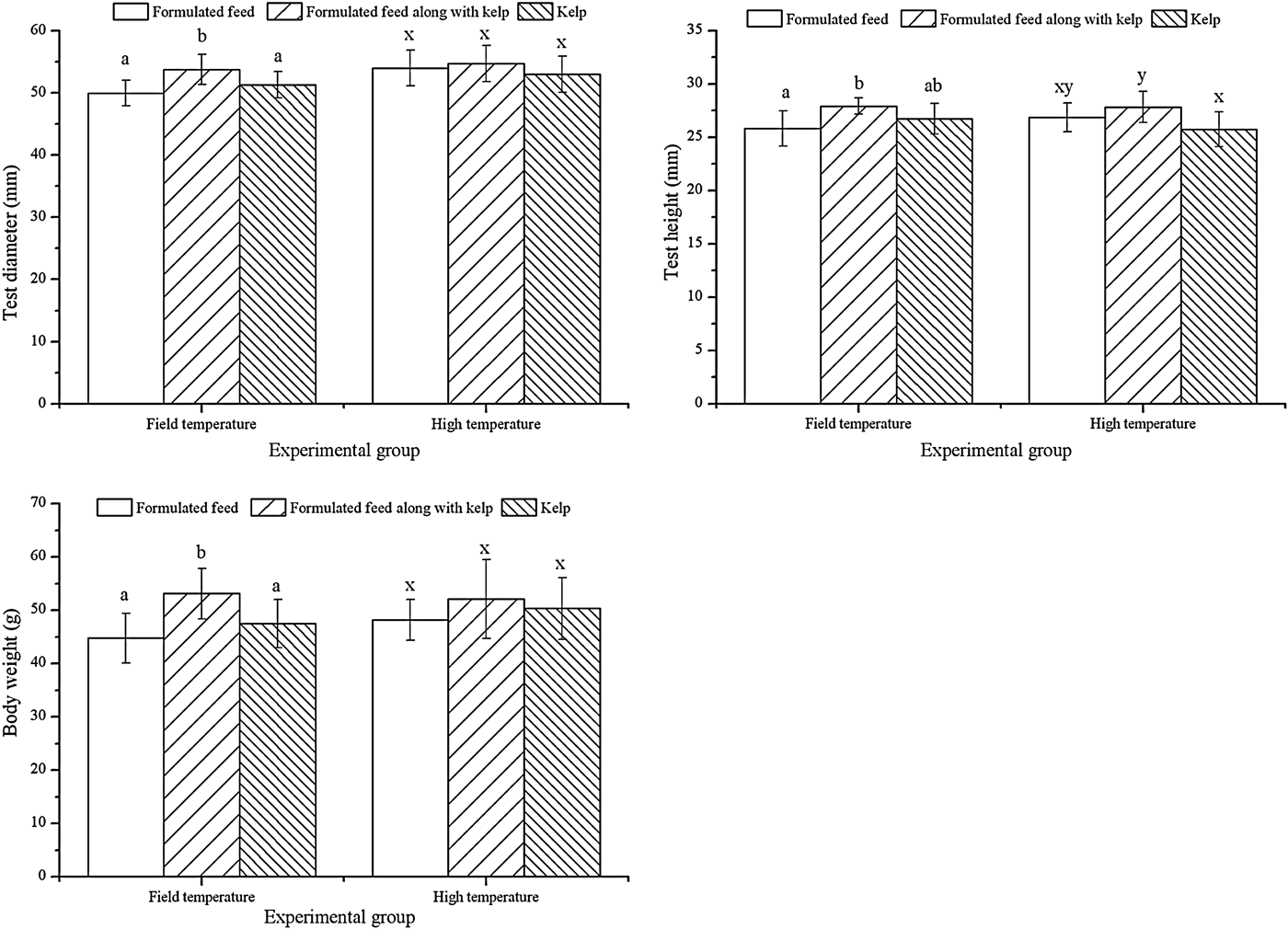
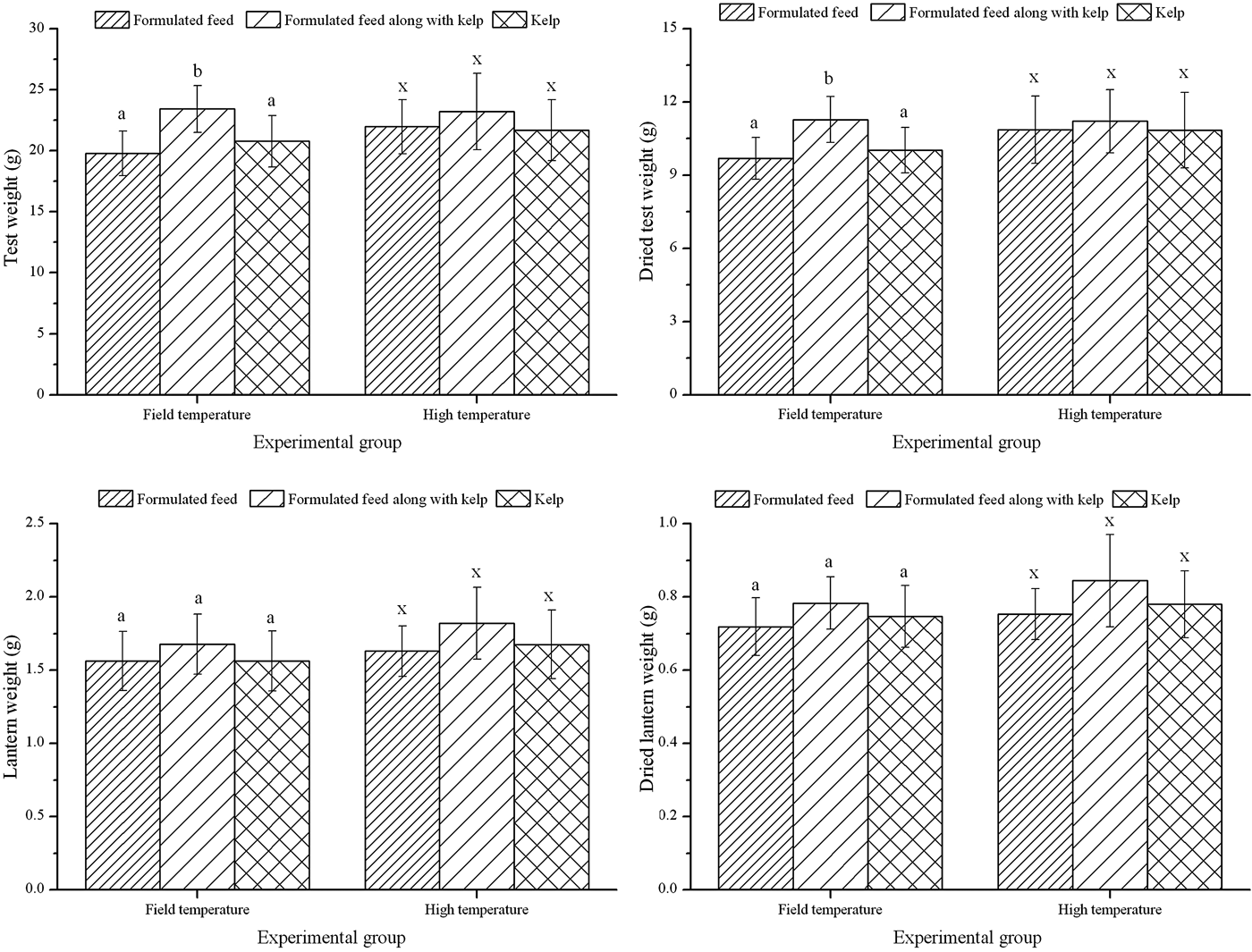
Water temperature significantly affected test diameter of S. intermedius (P = 0.003, Figure 1) but did not significantly impact test height, weight, lantern weight and body weight (P > 0.05, Figures 1 & 2). Feeding regime, on the other hand, significantly affected body weight (P = 0.006), test diameter (P = 0.021), test height (P = 0.002), test weight (P = 0.007) and dried test weight (P = 0.045) of S. intermedius (Figures 1 & 2), but did not significantly affect the wet and dried lantern weight (P > 0.05, Figure 2). There was no significant interaction on all these traits between water temperature and feeding regime (P > 0.05).
Test diameter, height and body weight of Strongylocentrotus intermedius cultured at different temperatures and feeding regimes. Different letters above the bars refer to significant difference in each temperature group.
Test weight, dried test weight, lantern weight and dried lantern weight of Strongylocentrotus intermedius cultured at different temperatures and feeding regimes. Different letters above the bars refer to significant difference in each temperature group.
At the field temperature (10.6–18.8°C), S. intermedius fed formulated feed and kelp had the significantly highest test diameter (P = 0.004), test weight (P = 0.002), dried test weight (P = 0.003) and body weight (P = 0.003). Significant differences of these traits were not found in individuals at high water temperature (P > 0.05, Figure 1).
Dried food consumption and feed conversion ratio
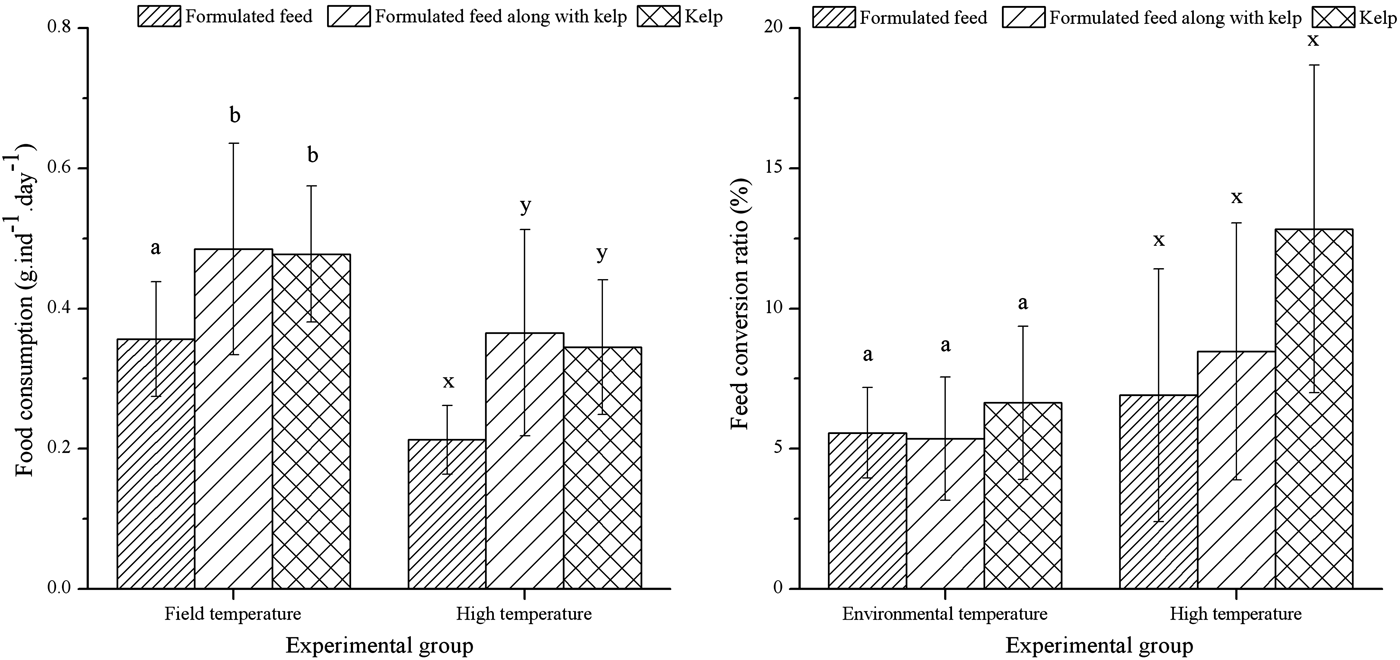
Dried food consumption by S. intermedius was significantly affected by both water temperature (P < 0.001) and feeding regime (P < 0.001, Table 4, Figure 3). Food consumption of S. intermedius held at the high water temperature was significantly less than those at the field temperature (10.6–18.8°C) with all feeding regimes (P < 0.001). Strongylocentrotus intermedius fed formulated feed consumed significantly less food at both water temperatures (P < 0.001). Individuals fed formulated feed and kelp did not consume significantly more dried food than those fed kelp alone at both water temperatures (P > 0.05).
Dried food consumption (g ind−1 day−1) and feed conversion ratio (%) of Strongylocentrotus intermedius cultured at different temperatures and feeding regimes. Different letters above the bars refer to significant difference in each temperature group.
Statistical results of two-way ANOVA to compare the differences of test diameter, test height, body weight, dried test weight, lantern weight, dried lantern weight, food consumption and food conversion ratio (water temperature and feeding regime as the two factors).
Note: Temp refers to water temperature, TD refers to test diameter, TH refers to test height, BW refers to body weight, DTW refers to dried test weight, LW refers to lantern weight, DLW refers to dried lantern weight, FC refers to food consumption, FCR refers to food conversion ratio. Bold data indicate significant at P < 0.05.
Feed conversion ratio was significantly affected by water temperature (P < 0.001), but not feeding regime (P = 0.051, Table 4, Figure 3). Feed conversion ratio was significantly higher at high water temperature (22°C) than at field temperature (10.6–18.8°C) regardless of feed (P < 0.001). Strongylocentrotus intermedius fed formulated feed had the highest feed conversion ratio at both water temperatures, although the level was not significant.
Gonad weight, index and moisture
Compared with the initial condition, gonad weight significantly increased in S. intermedius in all experimental groups except the individuals fed kelp at high water temperature (Table 3). Gonad moisture significantly decreased in S. intermedius in all experimental groups (P < 0.001, Table 3). Gonad index significantly increased in S. intermedius cultured at field temperature with all feeding regimes (P < 0.05) and in the individuals fed formulated feed at high water temperature (P < 0.001).
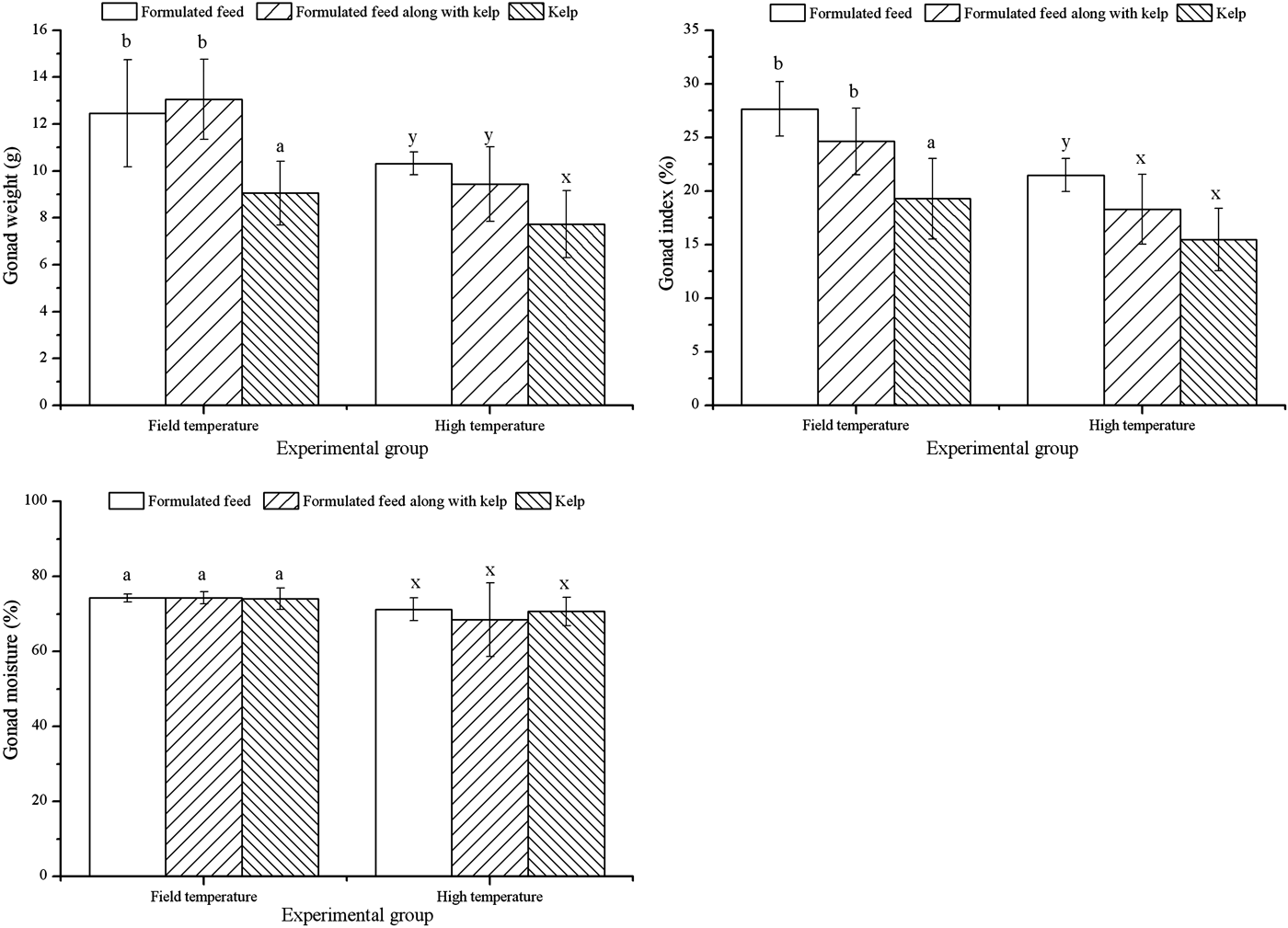
Gonad weight and index were significantly affected by both water temperature (P < 0.001) and feeding regime (P < 0.001, Table 5, Figure 4). Strongylocentrotus intermedius at high water temperature (22°C) had significantly lower gonad weight and index than those at field temperature (10.6–18.8°C) (P < 0.001). Gonad weight and index of S. intermedius fed formulated feed alone and formulated feed and kelp were significantly higher than those fed kelp alone at both water temperatures (P < 0.001). However, there was no significant difference of gonad weight and index between S. intermedius fed formulated feed alone and formulated feed and kelp (P > 0.05). High water temperature significantly reduced gonad moisture (P = 0.003, Figure 4). Feeding regime, however, did not significantly affect gonad moisture (P > 0.05).
Gonad weight, gonad index (%) and gonad moisture (%) of Strongylocentrotus intermedius cultured at different temperatures and feeding regimes. Different letters above the bars refer to significant difference in each temperature group.
Statistical results of two-way ANOVA to compare the differences of gonad weight, gonad index, gonad moisture, L *, a *, b *, gonad colour rating, gonad sweetness rating and crude protein of gonads (water temperature and feeding regime as the two factors).
Note: Temp refers to water temperature, GW refers to gonad weight, GI refers to gonad index, GM refers to gonad moisture, GC refers to gonad colour rating, GS refers to gonad sweetness rating, GP refers to crude protein of gonads. Bold data indicate significant at P < 0.05.
Gonad colour and sweetness
Compared with the initial condition, only a * was significantly reduced in S. intermedius in all experimental groups except the individuals fed kelp at high water temperature (Table 3). Subjective gonad colour rating was significantly impacted only in S. intermedius fed formulated feed and kelp at high water temperature (P = 0.032, Table 3). Subjective gonad colour rating was significantly affected in S. intermedius cultured at high water temperature in all feeding regimes (P < 0.05) and in individuals fed kelp at field temperature (P < 0.001, Table 3).
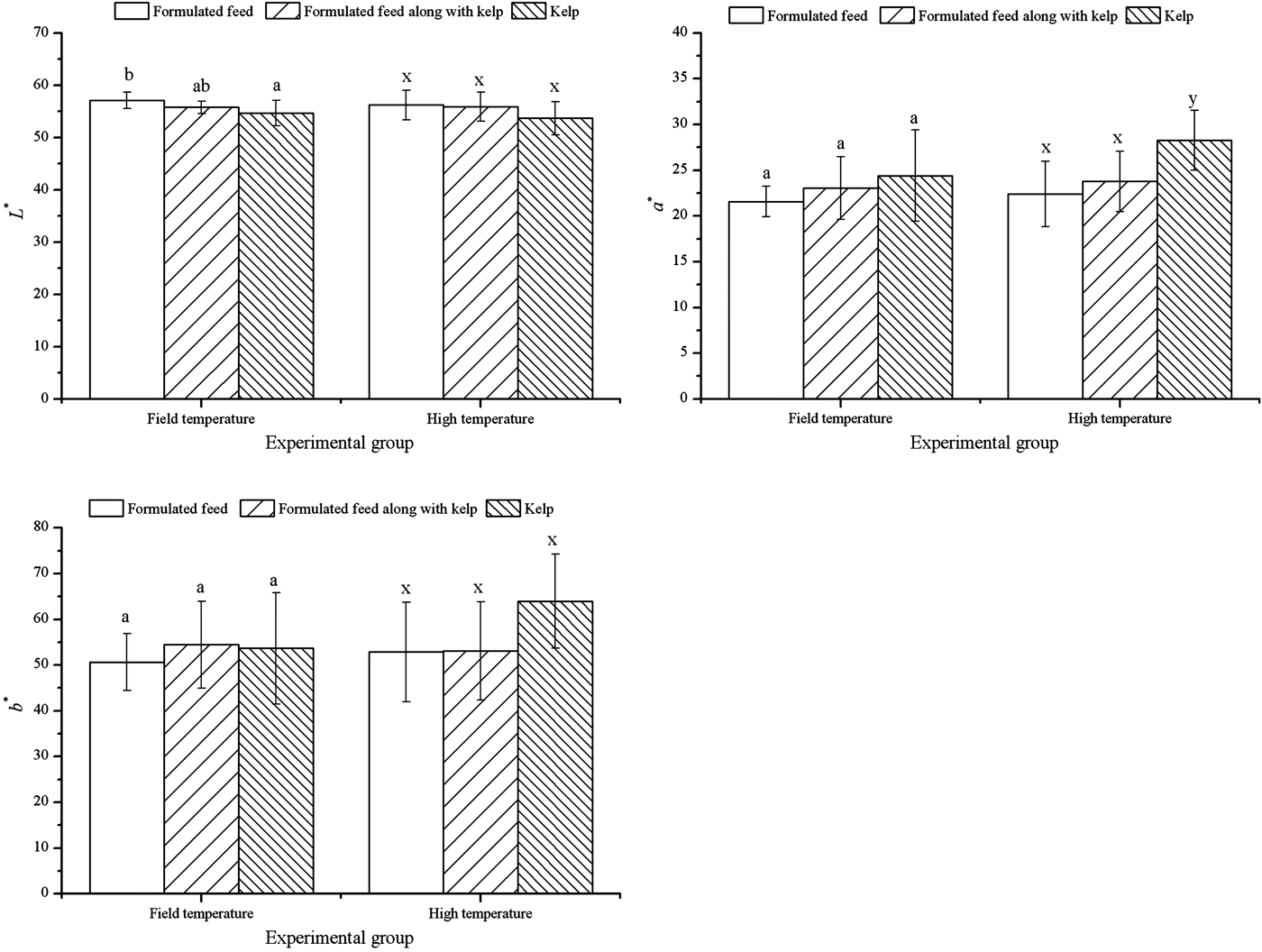
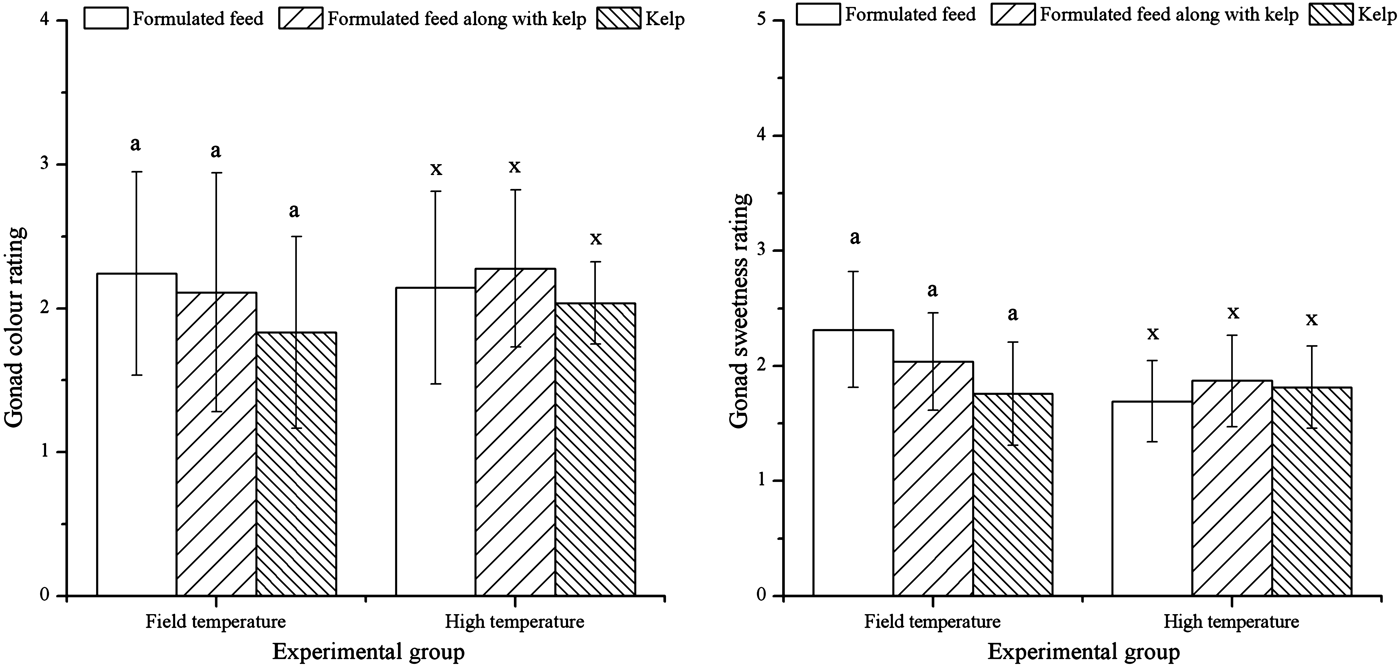
Water temperature did not significantly affect either objective (L *, a * and b * readings) or subjective colour ratings (P > 0.05, Table 5, Figures. 5 & 6). Feeding regime, on the other hand, significantly affected L * (P = 0.015) and a * (P = 0.003) readings, but did not significantly affect b * and subjective colour ratings (P > 0.05). There was no significant difference of both objective and subjective colour ratings between S. intermedius fed formulated feed alone and those fed formulated feed and kelp (P > 0.05).
L*, a* and b* readings of Strongylocentrotus intermedius cultured at different temperatures and feeding regimes. Different letters above the bars refer to significant difference in each temperature group.
Subjective gonad colour and sweetness ratings of Strongylocentrotus intermedius cultured at different temperatures and feeding regimes. Different letters above the bars refer to significant difference in each temperature group.
Gonad sweetness of S. intermedius at the high water temperature (22°C) was significantly better than those at the field temperature (10.6–18.8°C) (P = 0.042). However, feeding regime had no significant effect on gonad sweetness of S. intermedius (P > 0.05, Table 5, Figure 6).
Gametogenesis
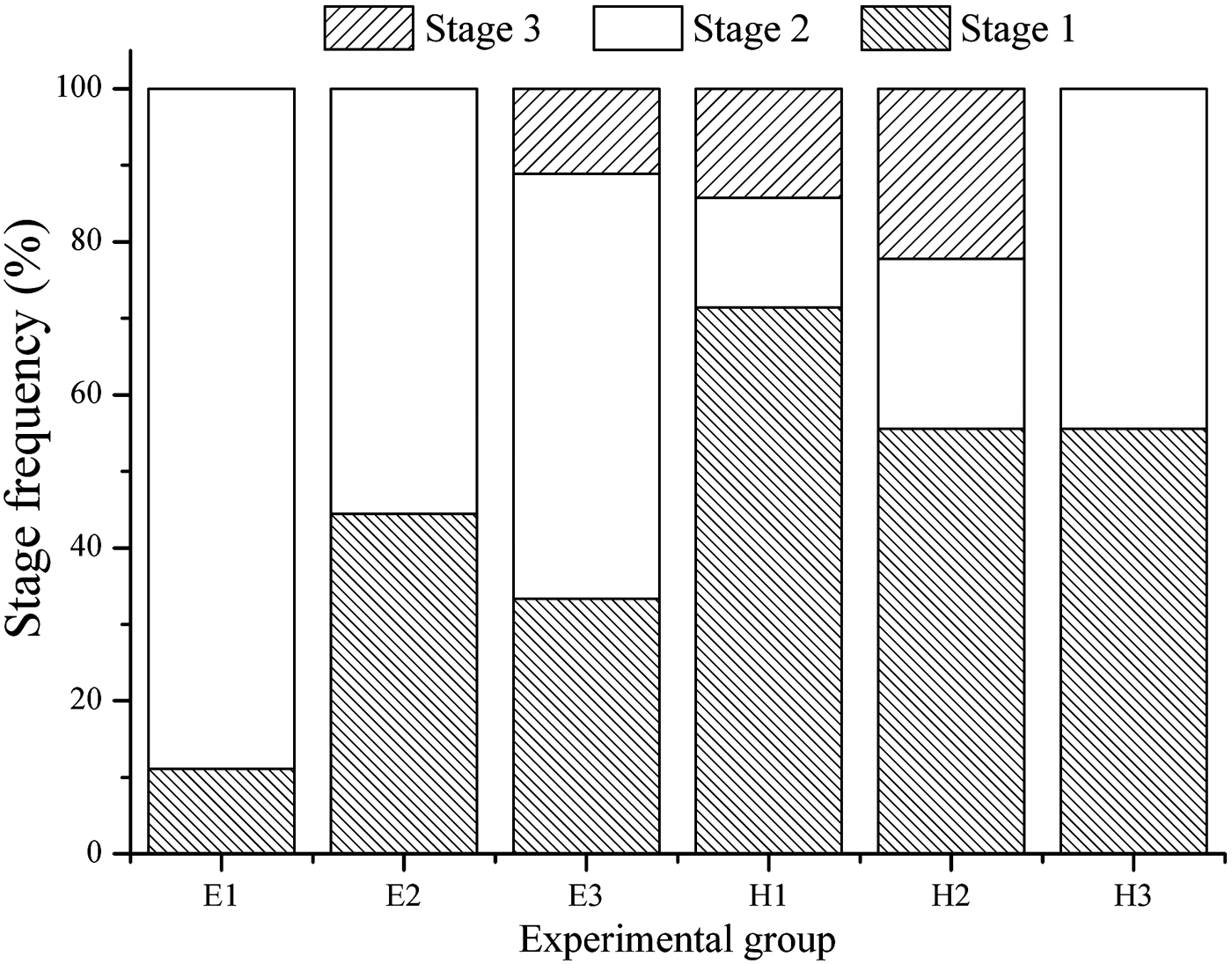
At the beginning of the experiment, gametogenesis of sea urchins were at stage 1 (N = 9). At the end of the experiment, the stage of the gonads was variable and not significantly different among all experimental groups (χ2 = 5.331, P = 0.377, Figure 7).
Frequency of stages of gametogenesis of Strongylocentrotus intermedius cultured at different temperatures and feeding regimes (N = 9). Note: E1, E2 and E3 refer to field temperature group 1, 2 and 3. H1, H2 and H3 refer to high water temperature group 1, 2 and 3. Groups 1 to 3 refer to feeding formulated feed, feeding formulated feed and kelp, and feeding kelp, respectively.
Crude protein content of gonads
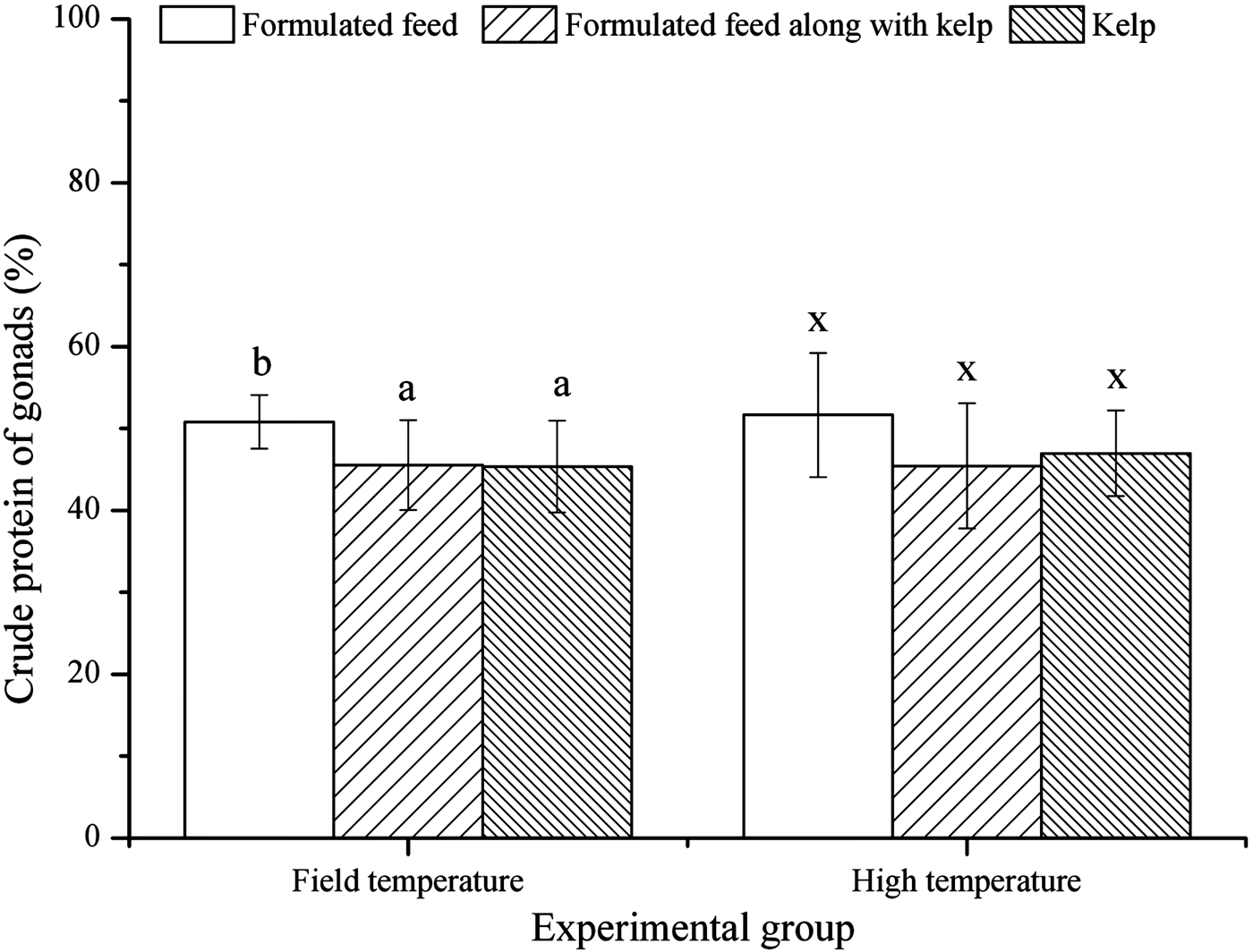
Feeding regime significantly affected crude protein content of gonads (Table 5, P = 0.015). However, water temperature did not significantly affect the crude protein of content of gonads (P > 0.05, Table 5). At the field temperature (10.6–18.8°C), S. intermedius fed formulated feed alone had the significantly highest gonad crude protein content (P < 0.05, Figure 8).
Crude protein of gonads of Strongylocentrotus intermedius cultured at different temperatures and feeding regimes. Different letters above the bars refer to significant difference in each temperature group.
DISCUSSION
The effects of water temperature on feed conversion, gonad quality and gametogenesis have never been investigated in S. intermedius, although the effects of temperature on food consumption, growth and gonad production have been reported by Lawrence et al. (Reference Lawrence, Cao, Chang, Wang, Yu, Lawrence and Watts2009). In the present study, we found that high water temperature significantly impacted gonad production of S. intermedius after 6 weeks, but not the body, test and lantern weights. This is partly consistent with the finding by Lawrence et al. (Reference Lawrence, Cao, Chang, Wang, Yu, Lawrence and Watts2009) that high water temperature for 3 months significantly impacted both gonad weight and body weight of S. intermedius. The different results of the two studies clearly indicate that gonad production of S. intermedius is more vulnerable than test and lantern growth under stress (for example, high water temperature) even in a relatively short duration. This conclusion can be supported by our previous finding that diel intermittent feeding/fasting significantly affected gonad weight, but not the body weight (Zhao et al., Reference Zhao, Zhang, Chang, Zhou, Song and Luo2013). In the present study, dried food consumption of S. intermedius held at high water temperature was significantly lower than at the field temperature, which agrees with the results of Lawrence et al. (Reference Lawrence, Cao, Chang, Wang, Yu, Lawrence and Watts2009). Moreover, we found that feed conversion ratio (FCR) significantly increased in S. intermedius reared at the high water temperature (22°C), clearly indicating that S. intermedius not only consumes less, but utilizes food less effectively. This can be explained by the significantly reduced absorption rate and assimilation efficiency of sea urchins held at suboptimal water temperatures (Lawrence et al., Reference Lawrence, Cao, Chang, Wang, Yu, Lawrence and Watts2009; Azad et al., Reference Azad, Pearce and McKinley2011). Thus, a reasonable explanation of the reduced gonad production is that sea urchins probably use the nutrients stored in gonads for maintenance when they are under stress (Lares & Pomory, Reference Lares and Pomory1998), although energy budget was not analysed in the present study. However, high water temperature did not significantly affect the crude protein of gonads in the present study. This indicates that the reduced gonad production is probably due to other nutrient elements except crude protein. The present finding increases our understanding of how high water temperature significantly negatively impacts gonad production of sea urchins. Together with previous studies (e.g. Lawrence et al., Reference Lawrence, Cao, Chang, Wang, Yu, Lawrence and Watts2009; Watts et al., Reference Watts, Hofer, Desmond, Lawrence and Lawrence2011), the present study suggests the importance of avoiding various stresses to achieve optimal gonad production and quality in sea urchin aquaculture. In addition, S. intermedius cultured at the high water temperature showed significantly reduced gonad moisture compared with those at the field temperature. This agrees with the study by Spirlet et al. (Reference Spirlet, Grosjean and Jangoux2000) on the sea urchin Paracentrotus lividus. High water temperature did not significantly affect gonad colour, according to both objective and subjective methods. However, the subjective sweetness rating was significantly better in S. intermedius held at the high water temperature than at the field temperature. This can be partly explained by the significantly reduced gonad moisture, which might result in the improvement of gonad flavour (McBride et al., Reference McBride, Price, Tom, Lawrence and Lawrence2004). To be noted, we did not measure the potential effects of the natural slow increase at temperature (10.6–18.8°C) on the traits of S. intermedius, although it was not great, only 8.2°C in the experimental duration of 6 weeks.
Dietary intervention successfully reduced the mortality of cultured Australian greenlip abalone, Haliotis laevigata, at high water temperature (Stone et al., Reference Stone, Bansemer, Lange, Schaefer, Howarth and Harris2014). Like abalones, a number of sea urchin species (for example, S. intermedius) are greatly affected by high water temperature in aquaculture, which greatly hampers the development of the industry. However, no information is available on how to improve commercial traits of sea urchins reared at high water temperature, although a number of impacts have been reported on food intake (Siikavuopio et al., Reference Siikavuopio, Christiansen and Dale2006, Reference Siikavuopio, Mortensen and Christiansen2008; Lawrence et al., Reference Lawrence, Cao, Chang, Wang, Yu, Lawrence and Watts2009; Watts et al., Reference Watts, Hofer, Desmond, Lawrence and Lawrence2011), somatic growth (Lawrence et al., Reference Lawrence, Cao, Chang, Wang, Yu, Lawrence and Watts2009), gametogenesis (Garrido & Barber, Reference Garrido and Barber2001; James & Heath, Reference James and Heath2008), gonad production (McBride et al., Reference McBride, Pinnix, Lawrence, Lawrence and Mulligan1997; Siikavuopio et al., Reference Siikavuopio, Christiansen and Dale2006, Reference Siikavuopio, Mortensen and Christiansen2008; Gibbs et al., Reference Gibbs, Watts and Lawrence2007; James et al., Reference James, Heath and Unwin2007; Azad et al., Reference Azad, Pearce and McKinley2011; Watts et al., Reference Watts, Hofer, Desmond, Lawrence and Lawrence2011) and quality (Azad et al., Reference Azad, Pearce and McKinley2011) in sea urchins. In the present study, we found that the feeding regime of formulated feed and kelp has obvious advantages in test size, body weight and gonad production at the field temperature and does not have significant disadvantages on these traits at high water temperature as well as gonad quality at both water temperatures, compared with feeding kelp or formulated feed alone. Thus, this feeding regime has direct application potential for S. intermedius aquaculture, especially at field temperature. The present result enriches the finding of Shpigel et al. (Reference Shpigel, McBride, Marciano, Ron and Ben-Amotz2005) that mixed feeding of formulated feed and macroalgae is applicable not only at the field temperature, but also at high water temperature. In the present study, S. intermedius fed formulated feed showed significantly highest crude protein of gonads and lowest food consumption and feed conversion ratio, which greatly contributes to the advantages of formulated feed at both field and high water temperatures. Macroalga (for example, kelp) is commonly used in sea urchin aquaculture. In the present study, however, S. intermedius fed formulated feed and kelp and formulated feed alone showed significant growth at high water temperature but not in the individuals fed kelp alone. This result clearly indicates that kelp alone is not effective in supporting growth and gonad production by S. intermedius held at a high water temperature. This novel finding greatly challenges the current commonly used feeding regime for S. intermedius in aquaculture with high water temperature (Chang et al., Reference Chang, Ding, Song and Yang2004). According to the present results, we suggest the feeding regimes of formulated feed and kelp and formulated feed alone, which have advantages of growth and feed conversion for S. intermedius at high water temperature.
In conclusion, high water temperature significantly reduced food consumption and gonad production of S. intermedius, but not the somatic growth. The feeding regime of formulated feed and kelp has direct application potential in S. intermedius aquaculture, especially at field temperature. Feeding kelp alone can be poorly effective to support growth and gonad production for S. intermedius cultured at high water temperature. Based on the current results, we suggest the feeding regimes of formulated feed and kelp or formulated feed alone for S. intermedius aquaculture with high water temperature. The present study provides new information into the aquaculture of sea urchins at high temperature and for production out of season.
ACKNOWLEDGEMENTS
We are grateful to Professor John Lawrence for academic and editorial suggestions. We thank Professor Addison Lawrence for supplying the formulated feed. All authors do not have any conflict of interest.
FINANCIAL SUPPORT
This work was supported by a research project granted by Liaoning Department of Education (L2015087) and the Chinese National 863 Project (2012AA10A412).