Probability theory had its first historical appearance associated to chance games, when it was pretended to calculate how likely an event can occur considering a set of possible number of events for a given game. This theory was later mathematically formalised and axiomatised as a function that establishes the possibility of occurrence of events of a given experiment. Reference Blanco2 The applications of this theory have led to the development of several predictive methods in science and disciplines including medicine, where phenomena such as the adult heart dynamics Reference Rodríguez, Correa, Ortiz, Prieto, Bernal and Ayala3–Reference Rodríguez, Correa and Prieto5 the binding peptides to HLA class II Reference Rodríguez, Bernal and Prieto6, and the epidemiological trends of infectious diseases Reference Rodríguez7 have been predicted. This wide repertoire of applications suggests that probability theory can be used to explore relevant issues of paediatric and neonatal health.
Neonatal mortality is one of the most challenging problems that clinical and public health face to improve in paediatric health since it relates to variables that are difficult to modify like low bodyweight, hypoxia, congenital malformations, and maternal diseases that directly affect the fetus. Reference Galván, Villa and Murgía8–Reference Rodríguez and Hernández10 This translates in 45% of deaths in infants under 5 corresponding to newborns. Most of these deaths happen in the first week of life, 11 and of these, about one quarter happen in the first 24 hours of life.
Different approaches have been developed in diagnostic medicine in order to complement the clinical surveillance of neonates and to enhance the interpretation of parameters measured in newborns that are useful to detect neonatal diseases. For example, it has been described that different characteristic of heart rate can be evaluated based on variability and transitory decelerations Reference Griffin, Lake and Moorman12–Reference Fairchild and O’Shea14 which has proven useful to predict unfavourable states that can lead towards important neonatal outcomes like mortality and sepsis. Reference Griffin, Lake and Moorman12–Reference Cuestas, Rizzoti and Agüero15 Nevertheless, the results of these investigations are not yet clinically applicable because it can be found that values of cases considered as normal can be found outside normality boundaries, and this does not necessarily translate in unwanted clinical outcomes.
On the other hand, a methodology capable of achieving precise diagnostics of heart dynamics in people older than 21 has been previously developed based on probability theory Reference Rodríguez, Correa, Ortiz, Prieto, Bernal and Ayala3 with confirmations of its diagnostic capability in different studies Reference Rodríguez, Álvarez and Tapia4,Reference Rodríguez, Correa and Prieto5 achieving sensitivity and specificity values close to 100%. This method has been proven to be independent of analysing variables such as surgical or pharmacological interventions, among others, that usually increase the complexity of developing biomedical diagnostic technologies.
Considering the above, the purpose of this research was to apply a methodology based on probability theory to evaluate heart dynamics of newborns and to establish quantitative differences between normality and abnormality.
Materials and methods
Definitions
Range of neonatal heart rates: heart rates of each electrocardiographic registry were divided in ranges that group 5 consecutive heartbeats, so that the first range includes rates from 1 beat/minute to 5 beats/minute and the second range includes rates of 6 beats/minute to 10 beats/minute and so on.
Probability of the ranges of neonatal heart rates: defined through equation (1) as follows:
 $$\left(R\right)={\rm Repetitions\ of\ the\ range\ {\it R} \over \rm Totality\ of\ repetitions\ of\ the\ measured\ ranges}={N_{R} \over N}$$
Population
A total of 39 continuous and ambulatory electrocardiographic registries of at least 21 hours were taken from newborn patients between 0 and 10 days old. Two groups were defined: group A that comprised 9 registries of normal patients and group B that comprised 30 abnormal registries. Normality and abnormality of said registries were defined according to clinical diagnostic criteria by an expert neonatologist, considered as Gold Standard. The registries were taken from the databases of Insight Group and Hospital Universitario San Ignacio’s Neonatal Intensive Care Unit after the signing of informed consent by parents.
Procedure
Initially, the clinical diagnostics were blinded in pursuit of preventing biases. Then, based on the information of electrocardiographic records, the maximal and minimal values of heart rates hour were taken each hour for 21 hours. Then, these values were organised in ranges of 5 heartbeats/minute (see definitions), and the quantity of heart rates found in each range was quantified to determine their probability by means of equation (1) with respect to the totality of heart rates in each registry. Finally, after observing the probability distributions of the ranges, differentiating mathematical parameters between normality and abnormal dynamics was established so a physical mathematical diagnosis could be determined for neonatal heart dynamics.
Statistical analysis
The clinical diagnostics of the registries examined were unblinded with the purpose of developing the statistical analysis that implemented a binary classification. True positives represent the quantity of patients that were clinically diagnosed as abnormal and that are inside the limits of the mathematical values of abnormality; true negatives are those cases clinically and mathematically diagnosed as normal. The false positives are those cases clinically diagnosed as normal but mathematically as abnormal, while false negatives are those cases mathematically diagnosed as normal but clinically abnormal.
To evaluate the diagnostic agreement between the physical mathematical values and the conventional clinical diagnosis, the Kappa coefficient was calculated through equation (2).
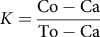 $$K={{\rm Co}-{\rm Ca} \over {\rm To}-{\rm Ca}}$$
where Co corresponds to the observed concordances, that is, the number of patients with the same diagnosis according to the proposed methodology and the clinical Gold Standard, To represents the totality of normal and abnormal cases, and Ca represents the agreements attributable to randomness, which is calculated with equation (3).
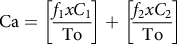 $${\rm Ca}=\left[f_{1}xC_{1} \over {\rm To}\right]+\left[f_{2}xC_{2} \over {\rm To}\right]$$
where f 1 is the number of registries with a mathematical evaluation of normality. C 1, are the registries clinically diagnosed inside the limits of normality. f 2, is the numbers of registries that presented mathematical values associated to disease, C 2 is the number of registries clinically diagnosed as abnormal, and To is the totality of registries.
Results
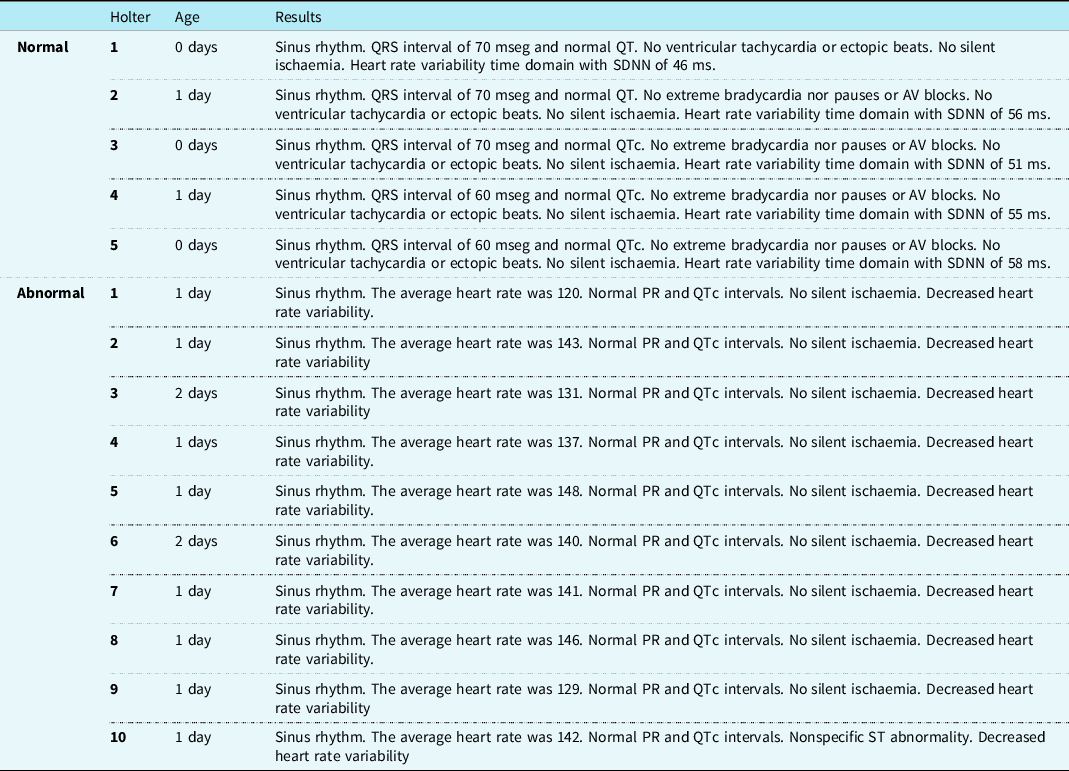
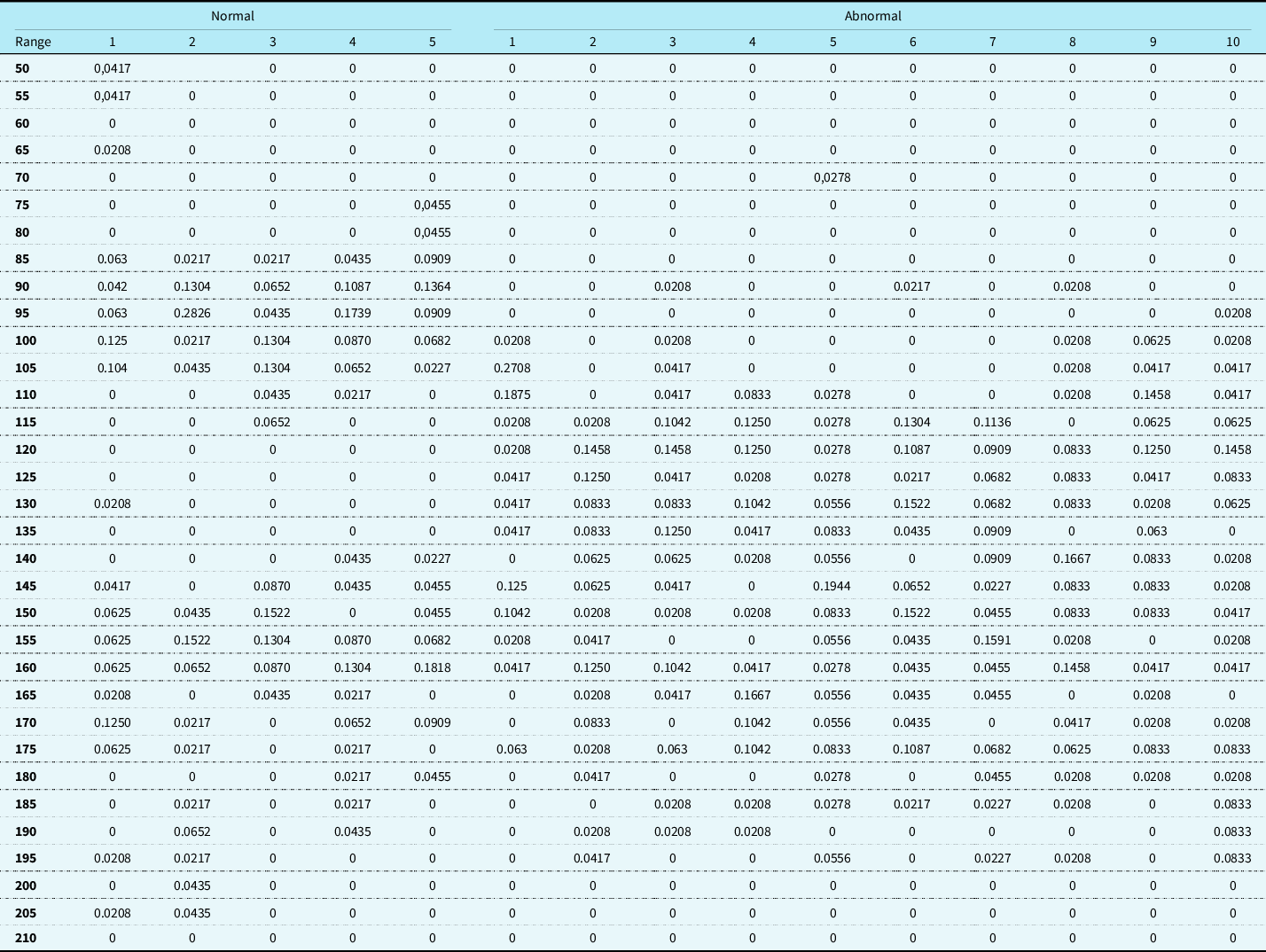
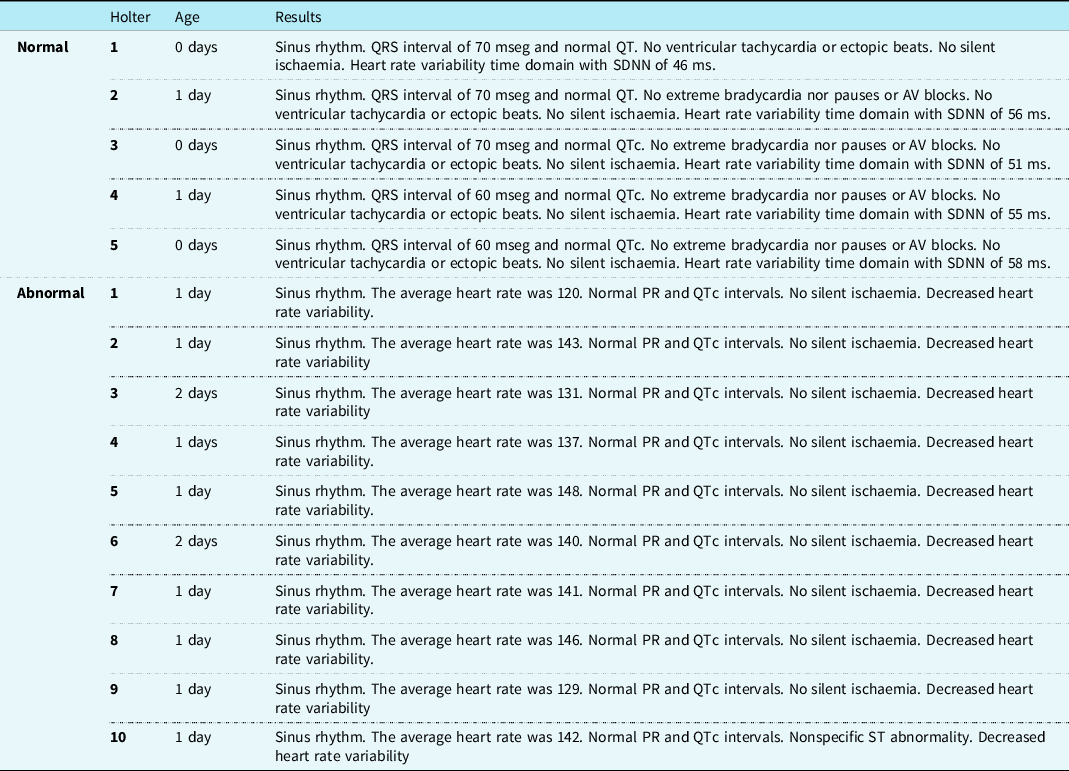
In Table 1, the diagnostics of 15 representative heart dynamics are shown, exhibiting 5 normal and 10 abnormal cases. It is highlighted that the distributions of probability present ranges of heart rates that vary between 50 and 210 heartbeat/minute with a totality of 32 ranges. The probability of each of these ranges was between 0.0208 and 0.282 for normal cases, while for abnormality these values were 0.0208 and 0.270. A minimal quantity of 11 ranges of heart rates and a maximal of 18 for each dynamic were quantified, observing that while normal dynamics presented ranges between 11 and 17, the dynamics with any abnormality for said ranges were between 12 and 18 (Table 2). The highest frequency of occurrence for the ranges was 150, while the least frequent value was 50.
Representative dynamics of the cases analysed
Ranges of heart rates with their respective probability of occurrence for dynamics in Table 1
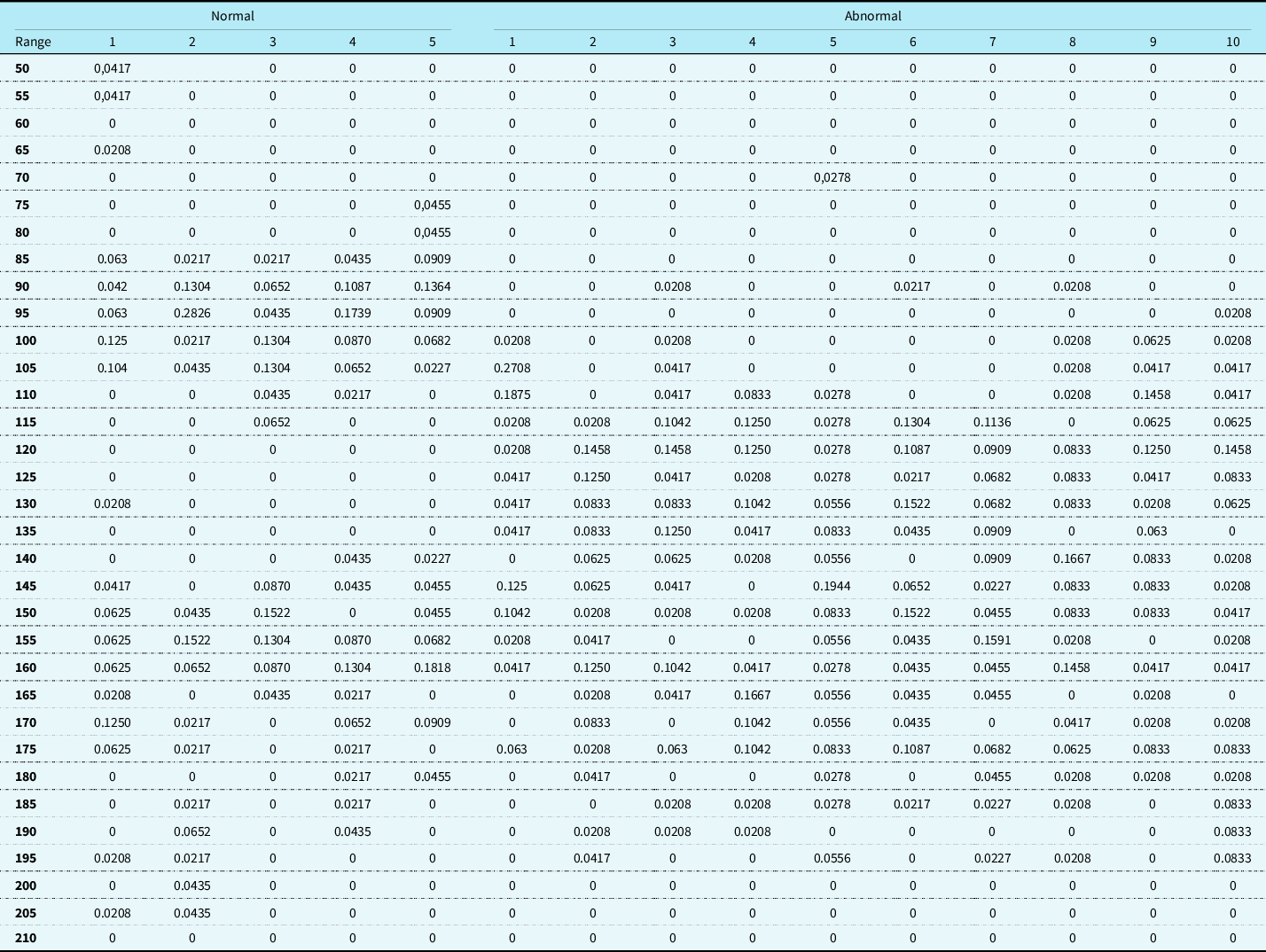
The normal dynamics were characterised for either showing absence or minimal frequency of occurrence, that is a value of 1, for the heart rate ranges between 125 and 135 heartbeats/minute along the probability distribution. In exchange, the dynamics corresponding to abnormal cases presented in their probability distribution that the frequencies of occurrence in the ranges between 125 and 135 heartbeats/minute were always superior to 1 or that the ranges between 75 and 85 heartbeats/minute had values associated to 0 or 1. The statistical analysis yielded values of sensitivity and specificity of 100%, and the Kappa coefficient was equal to 1.
Discussion
This is the first investigation in which heart dynamics of neonatal patients were analysed in the context of probability theory, achieving to mathematically characteris its behaviour and highlighting a probabilistic self-organisation of the neonatal dynamics. The results found allow to exhibit the utility of this physical-mathematical methodology and its capacity to establish objective quantitative differences between normal and abnormal dynamics in function of the probability distributions and the ranges of heart rates, achieving values of specificity and sensitivity of 100% and a Kappa coefficient of 1. However, this method must be applied to a larger quantity of cases to confirm the findings described and its relevance.
Given the high sensitivity achieved with this methodology to detect subtle variations of neonatal heart dynamics, this method could be useful to detect early mild changes of cardiac dynamics that suggest the cardiac dynamic is evolving towards disease, which is not possible with current conventional methods. Further, it is worth noting that this investigation shares the foundations of other works in which the use of physical-mathematical theories allowed the development of objective quantifications and precise diagnostics. That is the case of different diagnostic methodologies for adult, fetal, and neonatal heart dynamics. Reference Rodríguez, Prieto and Domínguez17–Reference Rodríguez, Prieto and Flórez19
Currently, a vast quantity of the studies conducted to analyse adult, fetal Reference Gonçalves, Pinto, Silva, Ayres and Bernardes20,Reference Longin, Gerstner, Schaible, Lenz and König21, and neonatal heart dynamics are based on heart rate variability Reference Eiselt, Curzi, Clairambault, Kauffmann, Médigue and Peirano22 with the objective of finding relationships between the decrease of variability and abnormal states as chronic heart failure, myocardial disfunction, 23–Reference Voss, Schroeder and Vallverdu25 infections Reference Ahmad, Tejuja, Newman, Zarychanski and Seely26,Reference Buchan, Bravi and Seely27, or acute myocardial infarction. Reference Bauer, Kantelhardt and Barthel28 However, it has not been achieved to establish an unequivocal and definitive diagnosis that allows to differentiate normality and disease through the analysis of RR interval variability, which is why more objective measurements are required.
On the other hand, physical and mathematical thinking has allowed to established quantifications and diagnostics of greater precision than clinical methods that is reflected on diverse methodologies that are applicable in different medical specialties as adult cardiology, Reference Rodríguez, Correa, Ortiz, Prieto, Bernal and Ayala3–Reference Rodríguez, Correa and Prieto5,Reference Rodríguez, Prieto and Domínguez17 fetal heart dynamics, Reference Rodríguez18 , immunology Reference Rodríguez, Bernal and Prieto6, and the prediction of malaria epidemics Reference Rodríguez7 . These examples reveal the high applicability of theoretical physics and mathematics to generate diagnostic and predictive solutions in medicine.
Acknowledgements
We thank Pontificia Universidad Javeriana for their support to our research.
We extend our thanks to the Hospital Universitario Nacional de Colombia, specially to Doctor Giancarlo Buitrago, Head of “Instituto de Investigaciones Clínicas” at Universidad Nacional de Colombia-Hospital Universitario Nacional de Colombia and Doctor Rubén Caycedo, Head of the Department of Surgery of the Faculty of Medicine at Universidad Nacional de Colombia-Hospital Universitario Nacional de Colombia for their support.
Financial support
This work is part of the products of the project 7032, financed by the Pontificia Universidad Javeriana.
Conflicts of interest
None.
Ethical standards
This study was approved by Pontificia Universidad Javeriana’s ethics committee under the reference 2014/165. Further, this research is based on the ethical principles for medical investigations on human beings of the World Medical Association’s Declaration of Helsinki, the Nuremberg code and the Belmont report. According to the title 11 regarding the investigation in human beings of the resolution N. 008430 of 1993 of Colombia’s Ministry of Health [16], the present study is considered as of minimal risk, fulfilling the ethical, scientific, technical and administrative statements for investigation in health since the physical calculations are performed over the results of the traditional clinical non-invasive tests, protecting the integrity and anonymity of the participants.