





No CrossRef data available.
Article contents
Linking sociometabolic stress to strong sustainability: a framework for assessing societal transformations
Published online by Cambridge University Press: 18 February 2026
Abstract
Non-technical summary
Sustainability transformations necessitate systemic changes that simultaneously respect planetary boundaries and promote social equity. This article presents a conceptual framework that links sociometabolic stress with the principles of strong sustainability. The framework enables the assessment of long-term social and environmental impacts of sustainability-oriented activities, considering both planetary thresholds and societal needs. The applicability of developed framework is illustrated through an exemplar analysis of the impacts and benefits associated with increased adoption of electric vehicles. Beyond offering a novel analytical lens, the proposed approach also invites reflection on the societal necessity and diversity of such activities.
Technical summary
This article introduces a conceptual framework linking sociometabolic stress to strong sustainability, providing a novel approach for assessing the transformative potential of sustainability-oriented activities. Sociometabolic stress is defined as the socio-ecological cost of provisioning societal services, such as transport and energy, relative to their societal benefits. The framework distinguishes between strong and weak sustainability by evaluating activities based on their capacity to reduce sociometabolic stress and ensure social equity. Strong sustainability is characterized by long-term conservation of critical natural capital and promotion of human well-being. Weak sustainability, in turn, assumes that human-made capital can substitute natural capital – a premise that risks long-term integrity of Earth's life-support systems. The framework integrates insights from social metabolism theory and the scaling of planetary boundaries to assess activities across two dimensions: societal need and socio-ecological cost. An example assessment from the transport sector demonstrates the framework's utility in evaluating whether increased electric vehicle adoption constitutes a strongly sustainable transformation. This article argues that reduced sociometabolic stress is a key indicator of strong sustainability and calls for its integration into sustainability assessments. This approach enables researchers and practitioners to better estimate the transformative potential of different activities, which thus supports societal planning.
Social media summary
A new societal transformation framework allows consideration between strong and weak sustainability activities.
Keywords
Information
- Type
- Concepts and Perspectives
- Information
- Creative Commons

 This is an Open Access article, distributed under the terms of the Creative Commons Attribution licence (http://creativecommons.org/licenses/by/4.0), which permits unrestricted re-use, distribution and reproduction, provided the original article is properly cited.
- Copyright
- © The Author(s), 2026. Published by Cambridge University Press.
References
Anderson, M. L., & Auffhammer, M. (2014). Pounds that kill: The external costs of vehicle weight. Review of Economic Studies, 81(2), 535–571. https://doi.org/10.1093/restud/rdt035CrossRefGoogle Scholar
Ayres, R. U., van den Bergh, J. C., & Gowdy, J. M. (2001). Strong versus weak sustainability: Economics, natural sciences, and “consilience”. Environmental Ethics, 23(2), 155–168. https://doi.org/10.5840/enviroethics200123225CrossRefGoogle Scholar
Bai, X., Hasan, S., Andersen, L. S., Bjørn, A., Kilkiş, Ş., Ospina, D., Liu, J., Cornell, S. E., Sabag Muñoz, O., de Bremond, A., Crona, B., DeClerck, F., Gupta, J., Hoff, H., Nakicenovic, N., Obura, D., Whiteman, G., Broadgate, W., Lade, S. J., … Zimm, C. (2024). Translating Earth system boundaries for cities and businesses. Nature Sustainability, 7(2), 108–119. https://doi.org/10.1038/s41893-023-01255-wCrossRefGoogle Scholar
Bullard, R. D., Johnson, G. S., & Torres, A. O. (2009). Transportation matters: Stranded on the side of the road before and after disasters strike. In Bullard, R. D., & Wright, B. (Eds.), Race, place, and environmental justice after Hurricane Katrina (pp. 49–62). Routledge.Google Scholar
Claudelin, A., Jouzi, F., Lakanen, L., Levänen, J., & Soukka, R. (2025). Social life cycle assessment of the use phase in mobility: Case study of a Finnish region considering consumers. Journal of Cleaner Production, 525, 146647. https://doi.org/10.1016/j.jclepro.2025.146647CrossRefGoogle Scholar
Crona, B., Parlato, G., Lade, S., Fetzer, I., & Maus, V. (2023). Going beyond carbon: An “Earth system impact” score to better capture corporate and investment impacts on the earth system. Journal of Cleaner Production, 429, 139523. https://doi.org/10.1016/j.jclepro.2023.139523CrossRefGoogle Scholar
De Groot, R., Perk, J., Chiesura, A., & van Vliet, A. (2003). Importance and threat as determining factors for criticality of natural capital. Ecological Economics, 44(2–3), 187–204. https://doi.org/10.1016/S0921-8009(02)00273-2CrossRefGoogle Scholar
de Molina, M. G., & Toledo, V. M. (2014). Introduction. In de Molina, M. G., & Toledo, V. M. (Eds.), The social metabolism: A socio-ecological theory of historical change (pp. 1–7). Springer.10.1007/978-3-319-06358-4CrossRefGoogle Scholar
Dietz, S., & Neumayer, E. (2007). Weak and strong sustainability in the SEEA: Concepts and measurement. Ecological Economics, 61(4), 617–626. https://doi.org/10.1016/j.ecolecon.2006.09.007CrossRefGoogle Scholar
Dillman, K., Czepkiewicz, M., Heinonen, J., & Davíðsdóttir, B. (2021). A safe and just space for urban mobility: A framework for sector-based sustainable consumption corridor development. Global Sustainability, 4, E28. https://doi.org/10.1017/sus.2021.28CrossRefGoogle Scholar
Dillman, K., Heinonen, J., & Davíðsdóttir, B. (2023a). A development of intergenerational sustainability indicators and thresholds for mobility system provisioning: A socio-ecological framework in the context of strong sustainability. Environmental and Sustainability Indicators, 18, 100240. https://doi.org/10.1016/j.indic.2023.100240CrossRefGoogle Scholar
Dillman, K. S., Heinonen, J., & Davíðsdóttir, B. (2023b). Of booms, busts, and sustainability: A socio-technical transition study of Iceland's mobility regime and its proximity to strong sustainability. Environmental Innovation and Societal Transitions, 48, 100755. https://doi.org/10.1016/j.eist.2023.100755CrossRefGoogle Scholar
Dillman, K. S., Heinonen, J., Davíðsdóttir, B., & Levänen, J. (2025). A longitudinal analysis of the strong social and ecological sustainability of Icelandic mobility provisioning. European Transport Studies, 2, 100009. https://doi.org/10.1016/j.ets.2024.100009CrossRefGoogle Scholar
Ekins, P., Simon, S., Deutch, L., Folke, C., & De Groot, R. (2003). A framework for the practical application of the concepts of critical natural capital and strong sustainability. Ecological Economics, 44(2–3), 165–185. https://doi.org/10.1016/S0921-8009(02)00272-0CrossRefGoogle Scholar
Fanning, A. L., O'Neill, D., & Buchs, M. (2020). Provisioning systems for a good life within planetary boundaries. Global Environmental Change, 64, 102135. https://doi.org/10.1016/j.gloenvcha.2020.102135CrossRefGoogle Scholar
Feola, G. (2020). Capitalism in sustainability transitions research: Time for a critical turn?. Environmental Innovation and Societal Transitions, 35, 241–250. https://doi.org/10.1016/j.eist.2019.02.005CrossRefGoogle Scholar
Feola, G., Vincent, O., & Moore, D. (2021). (Un)making in sustainability transformation beyond capitalism. Global Environmental Change, 69, 102290. https://doi.org/10.1016/j.gloenvcha.2021.102290CrossRefGoogle Scholar
Fischer-Kowalski, M. (1998). Society's metabolism. Journal of Industrial Ecology, 2(1), 61–78. https://doi.org/10.1162/jiec.1998.2.4.107CrossRefGoogle Scholar
Fischer-Kowalski, M., & Rotmans, J. (2009). Conceptualizing, observing, and influencing social–ecological transitions. Ecology and Society, 14(2), 3. https://doi.org/10.5751/ES-02857-140203CrossRefGoogle Scholar
Fischer-Kowalski, M., Rovenskaya, E., Krausmann, F., Pallua, I., & McNeill, J. R. (2019). Energy transitions and social revolutions. Technological Forecasting and Social Change, 138, 69–77. https://doi.org/10.1016/j.techfore.2018.08.010CrossRefGoogle Scholar
Folke, C. (2006). Resilience: The emergence of a perspective for social–ecological systems analyses. Global Environmental Change, 16, 253–267. https://doi.org/10.1016/j.gloenvcha.2006.04.002CrossRefGoogle Scholar
Fuchs, D., Sahakian, M., Gumbert, T., Di Giulio, A., Maniates, M., Lorek, S., & Graf, A. (2021). Consumption corridors: Living a good life within sustainable limits. Routledge.10.4324/9780367748746CrossRefGoogle Scholar
Gough, I. (2017). Heat, greed and human need: Climate change, capitalism and sustainable wellbeing. Edward Elgar Publishing.10.4337/9781785365119CrossRefGoogle Scholar
Gough, I. (2020). Defining floors and ceilings: The contribution of human needs theory. Sustainability: Science, Practice, & Policy, 16, 208–219. https://doi.org/10.1080/15487733.2020.1814033Google Scholar
Gowdy, J., & O´Hara, S. (1997). Weak sustainability and viable technologies. Ecological Economics, 22(3), 239–247. https://doi.org/10.1016/S0921-8009(97)00093-1CrossRefGoogle Scholar
Gupta, J., Liverman, D., Prodani, K., Aldunce, P., Bai, X., Broadgate, W., Ciobanu, D., Gifford, L., Gordon, C., Hurlbert, M., Inoue, C., Jacobson, L., Kanie, N., Lade, S. J., Lenton, T. M., Obura, D., Okereke, C., Otto, I. M., Pereira, L., & Verburg, P. H. (2023). Earth system justice needed to identify and live within Earth system boundaries. Nature Sustainability, 6(6), 630–638. https://doi.org/10.1038/s41893-023-01064-1CrossRefGoogle Scholar
Haberl, H., Fischer-Kowalski, M., Krausmann, F., Martinez-Alier, J., & Winiwarter, V. (2011). A socio-metabolic transition towards sustainability? Challenges for another great transformation. Sustainable Development, 19(1), 1–14. https://doi.org/10.1002/sd.410CrossRefGoogle Scholar
Haberl, H., Wiedenhofer, D., Paulik, S., Krausmann, F., Muller, D. B., & Fischer-Kowalski, M. (2019). Contributions of sociometabolic research to sustainability science. Nature Sustainability, 2, 173–184. https://doi.org/10.1038/s41893-019-0225-2CrossRefGoogle Scholar
Hauschild, M. Z., Kara, S., & Ropke, I. (2020). Absolute sustainability: Challenges to life cycle engineering. CIRP Annals, 62(2), 533–553. https://doi.org/10.1016/j.cirp.2020.05.004CrossRefGoogle Scholar
Holling, C. S. (2001). Understanding the complexity of economic, ecological, and social systems. Ecosystems, 4, 390–405. https://doi.org/10.1007/s10021-001-0101-5CrossRefGoogle Scholar
Holzer, J. M., Carmon, N., & Ornstein, D. E. (2018). A methodology for evaluating transdisciplinary research on coupled socio-ecological systems. Ecological Indicators, 85, 808–819. https://doi.org/10.1016/j.ecolind.2017.10.074CrossRefGoogle Scholar
Horcea-Milcu, A.-I., Dorresteijn, I., Leventon, J., Stojanovic, M., Lam, D. P. M., Lang, D. J., Moriggi, A., Raymond, C. M., Stålhammar, S., Weiser, A., & Zimmermann, S. (2024). Transformative research for sustainability: Characteristics, tensions, and moving forward. Global Sustainability, 7, e14. https://doi.org/10.1017/sus.2024.12CrossRefGoogle Scholar
International Energy Agency. (2023). Global EV outlook 2023. IEA. https://www.iea.org/reports/global-ev-outlook-2023Google Scholar
Jenkins, K., Sovacool, B. K., & McCauley, D. (2018). Humanizing sociotechnical transitions through energy justice: An ethical framework for global transformative change. Energy Policy, 117, 66–74. https://doi.org/10.1016/j.enpol.2018.02.036CrossRefGoogle Scholar
Jones, B., Elliott, R. J., & Nguyen-Tien, V. (2020). The EV revolution: The road ahead for critical raw materials demand. Applied Energy, 280, 115072. https://doi.org/10.1016/j.apenergy.2020.115072CrossRefGoogle ScholarPubMed
Kati, V., Kassara, C., Psaralexi, M., Tzortzakaki, O., Petridou, M., Galani, A., & Hoffmann, M. T. (2020). Conservation policy under a roadless perspective: Minimizing fragmentation in Greece. Biological Conservation, 252, 108828. https://doi.org/10.1016/j.biocon.2020.108828CrossRefGoogle Scholar
Krausmann, F., Wiedenhofer, D., Lauk, C., & Haberl, H. (2017). Global socioeconomic material stocks rise 23-fold over the 20th century and require half of annual resource use. PNAS, 114(8), 1880–1885. https://doi.org/10.1073/pnas.1613773114CrossRefGoogle ScholarPubMed
Lachman, D. A. (2013). A survey and review of approaches to study transitions. Energy Policy, 58, 269–276. https://doi.org/10.1016/j.enpol.2013.03.013CrossRefGoogle Scholar
Lade, S. J., Steffen, W., de Vries, W., Carpenter, S. R., Donges, J. F., Gerten, D., Hiff, H., Newbold, T., Richardson, K., & Rockström, J. (2020). Human impacts on planetary boundaries amplified by Earth system interactions. Nature Sustainability, 3, 119–128. https://doi.org/10.1038/s41893-019-0454-4CrossRefGoogle Scholar
Lenzen, M., Geschke, A., West, J., Fry, J., Malik, A., Giljum, S., Milà I Canals, L., Piñero, P., Lutter, F. S., Wiedmann, T., Li, M., Sevenster, M., Potočnik, J., Teixeira, I., Van Voore, M., Nansai, K., & Schandl, H. (2021). Implementing the material footprint to measure progress towards Sustainable Development Goals 8 and 12. Nature Sustainability, 5, 157–166. https://doi.org/10.1038/s41893-021-00811-6CrossRefGoogle Scholar
Meadowcroft, J., & Rosenbloom, D. (2023). Governing the net-zero transition: Strategy, policy, and politics. Proceedings of the National Academy of Sciences, 120, e2207727120. https://doi.org/10.1073/pnas.2207727120CrossRefGoogle ScholarPubMed
Meadows, D. (1999). Leverage points: Places to intervene in a system. The Sustainability Institute.Google Scholar
Moghaddam, A. A., Mirzahossein, H., & Guzik, R. (2020). Comparing inequality in future urban transport modes by doughnut economy concept. Sustainability, 14, 14462. https://doi.org/10.3390/su142114462CrossRefGoogle Scholar
Morrison, T. H., Adger, W. N., Agrawal, A., Brown, K., Hornsey, M. J., Hughes, T. P., Jain, M., Lemos, M. C., Holmes Mchugh, L., O'Neill, S., & Van Berkel, D. (2022). Radical interventions for climate-impacted systems. Nature Climate Change, 12, 1100–1106. https://doi.org/10.1038/s41558-022-01542-yCrossRefGoogle Scholar
Neumayer, E. (2013). Weak versus strong sustainability – Exploring the limits of two opposing paradigms (4th ed). Edward Elgar.10.4337/9781781007082CrossRefGoogle Scholar
Newell, P., Paterson, M., & Craig, M. (2021). The politics of green transformations. New Political Economy, 26, 903–906. https://doi.org/10.1080/13563467.2020.1810215CrossRefGoogle Scholar
Olsson, P., Galaz, V., & Boonstra, W. J. (2014). Sustainability transformations: A resilience perspective. Ecology and Society, 19(4), 1. https://doi.org/10.5751/ES-06799-190401CrossRefGoogle Scholar
Orola, A., Härri, A., Levänen, J., Uusitalo, V., & Olsen, S. I. (2022). Assessing WELBY social life cycle assessment approach through cobalt mining case study. Sustainability, 14(18), 11732. https://doi.org/10.3390/su141811732CrossRefGoogle Scholar
Patterson, J. J., Feola, G., & Kim, R. E. (2024). Negotiating discord in sustainability transformations. PNAS, 121, e2310186121. https://doi.org/10.1073/pnas.2310186121CrossRefGoogle ScholarPubMed
Paulik, S., & Hertwich, E. G. (2015). Socioeconomic metabolism as paradigm for studying the biophysical basis of human societies. Ecological Economics, 119, 83–93. https://doi.org/10.1016/j.ecolecon.2015.08.012CrossRefGoogle Scholar
Pichler, M. (2023). Political dimensions of social-ecological transformations: Polity, politics, policy. Sustainability: Science, Practice, & Policy, 19(1). https://doi.org/10.1080/15487733.2023.2222612Google Scholar
Raworth, K. (2017). Doughnut economics: Seven ways to think like a 21st-century economist. Random House.Google Scholar
Richardson, K., Steffen, W., Lucht, W., Bendtsen, J., Cornell, S. E., Donges, J. F., Druke, M., Fetzer, I., Bala, G., von Bloh, W., Feulner, G., Fielder, S., Gerten, D., Gleeson, T., Hofmanm, M., Huiskamp, W., Kummu, M., Mohan, C., Nogues-Bravo, D., & Rockström, J. (2023). Earth beyond six of nine planetary boundaries. Science Advances, 9(37), 37. https://doi.org/10.1126/sciadv.adh2458CrossRefGoogle ScholarPubMed
Schaffarzik, A., Pichler, M., Pineault, E., Wiedenhofer, D., Gross, R., & Haberl, H. (2021). The transformation of provisioning systems from an integrated perspective of social metabolism and political economy: A conceptual framework. Sustainability Science, 16, 1405–1421. https://doi.org/10.1007/s11625-021-00952-9CrossRefGoogle Scholar
Schandl, H., Fischer-Kowalski, M., West, J., Giljum, S., Dittrich, M., Eisenmenger, N., Geschke, A., Lieber, M., Wieland, H., Schaffartzik, A., Krausmann, F., Gierlinger, S., Hosking, K., Lenzen, M., Tanikawa, H., Miatto, A., & Fishman, T. (2018). Global material flows and resource productivity: Forty years of evidence. Journal of Industrial Ecology, 22, 827–838. https://doi.org/10.1111/jiec.12626CrossRefGoogle Scholar
Sovacool, B. K., Geels, F. W., Andersen, A. D., Grubb, M., Jordan, A. J., Kern, F., Kivimaa, P., Lockwood, M., Markard, J., Meadowcroft, J., Meckling, J., Moore, B., Raven, R., Rogge, K. S., Rosenbloom, D., Schmidt, T. S., Schot, J., Sharp, D., Stephenson, J., & Yang, K. (2025). The acceleration of low-carbon transitions: Insights, concepts, challenges, and new directions for research. Energy Research & Social Science, 121, 103948. https://doi.org/10.1016/j.erss.2025.103948CrossRefGoogle Scholar
Sovacool, B. K., Kester, J., Noel, L., & de Rubens, G. Z. (2019). Energy injustice and Nordic electric mobility: Inequality, elitism, and externalities in the electrification of vehicle-to-grid (V2G) transport. Ecological Economics, 157, 205–217. https://doi.org/10.1016/j.ecolecon.2018.11.013CrossRefGoogle Scholar
Steffen, W., Broadgate, W., Deutsch, L., Gaffney, O., & Ludwig, C. (2015a). The trajectory of the Anthropocene: The great acceleration. The Anthropocene Review, 2, 81–98. https://doi.org/10.1177/2053019614564785CrossRefGoogle Scholar
Steffen, W., Richardson, K., Rockström, J., Cornell, S. E., Fetzer, I., Bennett, E. M., Biggs, R., Carpenter, S. R., De Vries, W., De Wit, C. A., Folke, C., Gerten, D., Heinke, J., Mace, G. M., Persson, L. M., Ramanathan, V., Reyers, B., & Sörlin, S. (2015b). Planetary boundaries: Guiding human development on a changing planet. Science, 347, 6223. https://doi.org/10.1126/science.1259855CrossRefGoogle Scholar
Susur, E., & Karakaya, E. (2021). A reflexive perspective for sustainability assumptions in transition studies. Environmental Innovation and Societal Transitions, 39, 34–54. https://doi.org/10.1016/j.eist.2021.02.001CrossRefGoogle Scholar
Turner, R. A., & Wills, J. (2022). Downscaling doughnut economics for sustainability governance. Current Opinion in Environmental Sustainability, 56, 101180. https://doi.org/10.1016/j.cosust.2022.101180CrossRefGoogle Scholar
Wiedmann, T. O., Schandl, H., Lenzen, M., Moran, D., Suh, S., West, J., & Kanemoto, K. (2015). The material footprint of nations. PNAS, 112, 6271–6276. https://doi.org/10.1073/pnas.1220362110CrossRefGoogle ScholarPubMed
Williams, S., & Robinson, J. (2020). Measuring sustainability: An evaluation framework for sustainability transition experiments. Environmental Science & Policy, 103, 58–66. https://doi.org/10.1016/j.envsci.2019.10.012CrossRefGoogle Scholar
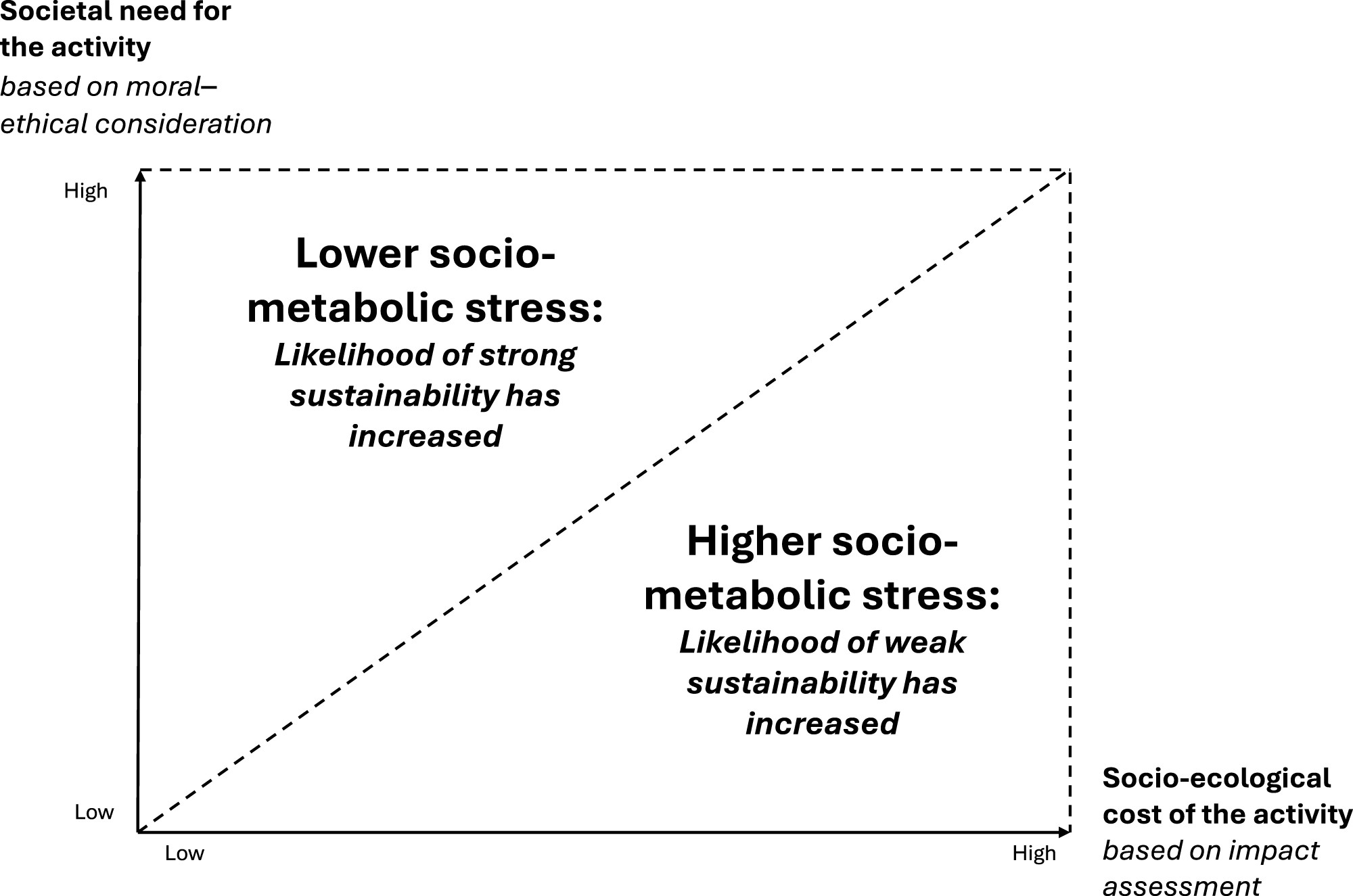
Figure 1. Conceptual framework for assessing activities designed to contribute to sustainability transformations.
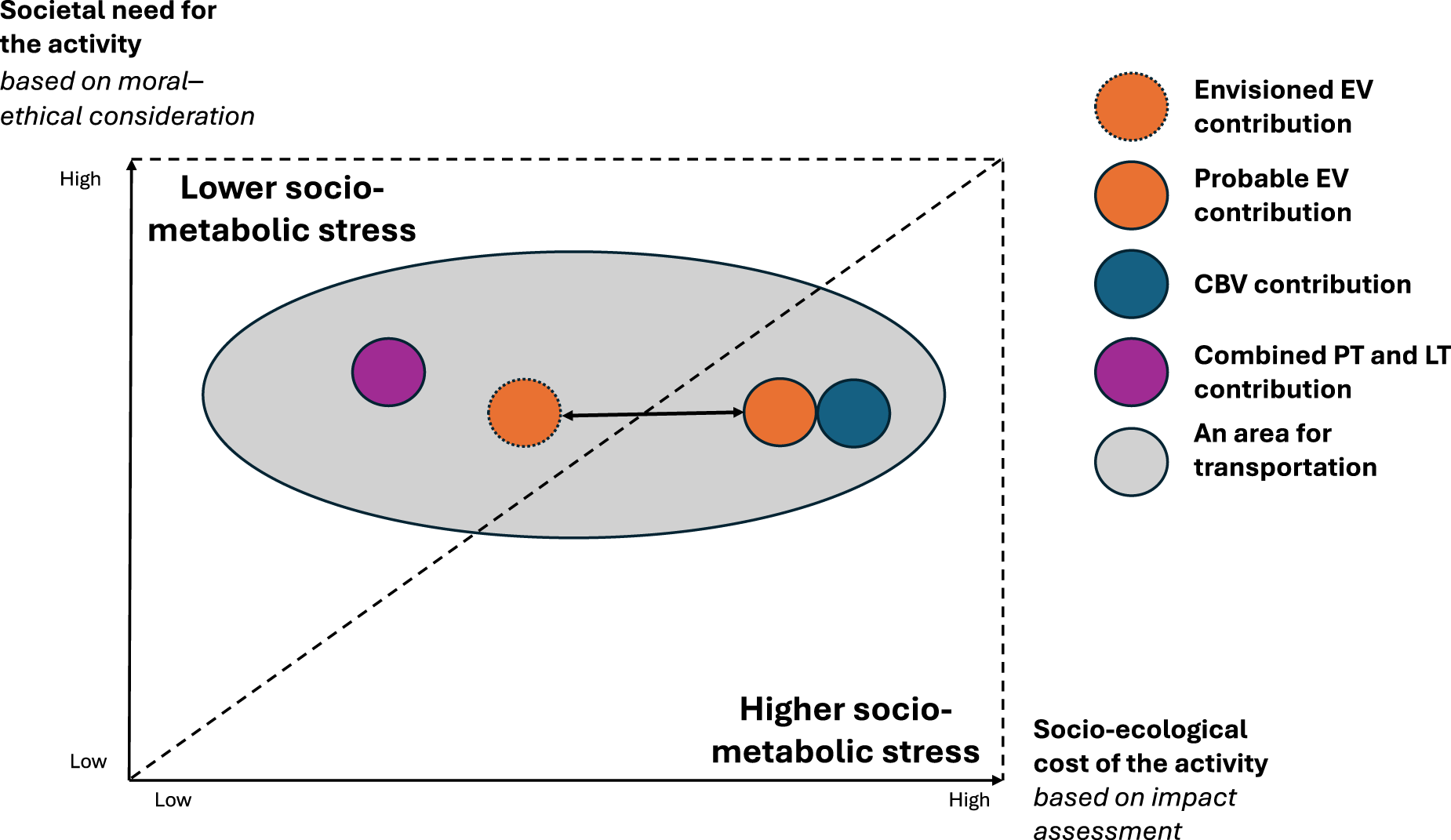
Figure 2. Indicative assessment of the sociometabolic stress resulting from different activities connected to provisioning of transportation (EV = electric vehicle, CBV = combustion-based vehicle, PT = public transportation, LT = light traffic).
 You have
Access
 Open access
- 1
- Cited by
1. Introduction
The notion of planetary boundaries (Richardson et al., Reference Richardson, Steffen, Lucht, Bendtsen, Cornell, Donges, Druke, Fetzer, Bala, von Bloh, Feulner, Fielder, Gerten, Gleeson, Hofmanm, Huiskamp, Kummu, Mohan, Nogues-Bravo and Rockström2023; Steffen et al., Reference Steffen, Richardson, Rockström, Cornell, Fetzer, Bennett, Biggs, Carpenter, De Vries, De Wit, Folke, Gerten, Heinke, Mace, Persson, Ramanathan, Reyers and Sörlin2015b), together with insights into the increasing global material footprint (Lenzen et al., Reference Lenzen, Geschke, West, Fry, Malik, Giljum, Milà I Canals, Piñero, Lutter, Wiedmann, Li, Sevenster, Potočnik, Teixeira, Van Voore, Nansai and Schandl2021; Wiedmann et al., Reference Wiedmann, Schandl, Lenzen, Moran, Suh, West and Kanemoto2015), underscores the urgent need for sustainability action across all sectors of society (Gupta et al., Reference Gupta, Liverman, Prodani, Aldunce, Bai, Broadgate, Ciobanu, Gifford, Gordon, Hurlbert, Inoue, Jacobson, Kanie, Lade, Lenton, Obura, Okereke, Otto, Pereira and Verburg2023). It is critically important that users of information derived from sustainability studies are provided with a clear explanation of the overall sustainability impacts of the activities being analyzed or modeled. However, due to the lack of commonly accepted ways to present the meanings of findings in relation to planetary thresholds, this is often not the case. In practice, reported sustainability gains may refer to a wide variety of outcomes, ranging from resource conservation and emission reductions to social sustainability improvements, such as enhanced equality. The actual contributions of these observations to truly sustainable development often remain unclear.
While interest in modeling “absolute environmental sustainability” using life-cycle assessment tools is growing (Bai et al., Reference Bai, Hasan, Andersen, Bjørn, Kilkiş, Ospina, Liu, Cornell, Sabag Muñoz, de Bremond, Crona, DeClerck, Gupta, Hoff, Nakicenovic, Obura, Whiteman, Broadgate, Lade and Zimm2024; Hauschild et al., Reference Hauschild, Kara and Ropke2020) and discussions about “net-zero” and “low-carbon” transitions are ongoing (Meadowcroft & Rosenbloom, Reference Meadowcroft and Rosenbloom2023; Sovacool et al., Reference Sovacool, Geels, Andersen, Grubb, Jordan, Kern, Kivimaa, Lockwood, Markard, Meadowcroft, Meckling, Moore, Raven, Rogge, Rosenbloom, Schmidt, Schot, Sharp, Stephenson and Yang2025), efforts to simultaneously assess developments across the three classical dimensions of sustainability – social, environmental, and economic – from the perspective of overall sustainability remain limited. This is especially problematic in research on sustainability transformations, where the idea is to understand profound societal changes toward increased overall sustainability, which require changes in values, governance, knowledge, decision-making, and technologies (Horcea-Milcu et al., Reference Horcea-Milcu, Dorresteijn, Leventon, Stojanovic, Lam, Lang, Moriggi, Raymond, Stålhammar, Weiser and Zimmermann2024). Sustainability studies rarely evaluate systemic change in terms of what is required for the analyzed system to operate within planetary boundaries (Williams & Robinson, Reference Williams and Robinson2020). Moreover, studies often prioritize environmental or technological aspects, neglecting the social and economic dimensions, which can obscure how changes in one dimension influence the others (Jenkins et al., Reference Jenkins, Sovacool and McCauley2018; Lachman, Reference Lachman2013).
Given these challenges, we advocate for a shift toward theorizing strong sustainability by integrating the social metabolism perspective into the domain of sustainability transformation. Strong and weak sustainability have both been defined in various ways (Daly, Reference Daly1991; Dietz & Neumayer, Reference Dietz and Neumayer2007). In the present context, we define strong sustainability as resulting from activities that safeguard the long-term conservation of critical natural capital (intergenerational equity) while ensuring human well-being (intragenerational equity) (cf. Ekins et al., Reference Ekins, Simon, Deutch, Folke and De Groot2003). The conservation of critical natural capital entails the use of natural resources in a manner that does not compromise the system's long-term capacity to regenerate and provide essential ecosystem services (De Groot et al., Reference De Groot, Perk, Chiesura and van Vliet2003). By contrast, weak sustainability assumes that contributions of natural capital to economic production and those from human-made capital are substitutable (Gowdy & O´Hara, Reference Gowdy and O´Hara1997). While weakly sustainable activities may yield relative improvements in specific sustainability aspects within bounded contexts, they fail to secure long-term enhancement of overall sustainability (Neumayer, Reference Neumayer2013).
Drawing an analytical distinction between strong and weak sustainability is essential for the systemic planning of societal transformations (Ayres et al., Reference Ayres, van den Bergh and Gowdy2001). We argue that employing sociometabolic stress as a general metric for the overall sustainability implications of a specific activity offers analytical advantages because it enables clear differentiation between strong and weak sustainability. By sociometabolic stress, we mean the social and environmental stress resulting from fulfilling human needs and desires in a specific socio-ecological system – that is, the socio-ecological cost of provisioning a unit of a specific service, such as energy, food, or transportation. As sociometabolic stress describes the socio-ecological cost in relation to the societal benefit gained, it necessitates weighing different options to provide services and calls for discussion of their eco-efficiency and necessity. This weighting of societal gains and losses renders sociometabolic stress conceptually different from absolute environmental sustainability.
Despite the good intentions, many sustainability-oriented activities remain incremental and do not significantly contribute to systemic transformation. We posit that assessing the capacity of different activities to reduce sociometabolic stress allows analysts to understand whether those activities can generate strong sustainability, or not. In the next section, we develop a conceptual framework for the assessment of the sociometabolic stress in different contexts. Then, we demonstrate the framework's usability. Finally, we discuss the implications of this work for research and practice.
2. Strong sustainability as a function of reduced sociometabolic stress
Historically, metabolism has been used to describe the flow of energy and materials and the resulting changes in biological organisms and their environments. Analogously, social metabolism concerns the biophysical foundation of societal systems, i.e. the flows of energy and materials needed to sustain the social functions of a society (Fischer-Kowalski, Reference Fischer-Kowalski1998; Paulik & Hertwich, Reference Paulik and Hertwich2015). This perspective provides a valuable analytical lens for examining how human activities align with the absolute limits and thresholds of the biophysical world (Krausmann et al., Reference Krausmann, Wiedenhofer, Lauk and Haberl2017), enabling clear assessments of strong and weak sustainability. Building on pioneering system-level resilience research (e.g., Folke, Reference Folke2006; Holling, Reference Holling2001; Olsson et al., Reference Olsson, Galaz and Boonstra2014), we argue that a strongly sustainable system can tolerate the sociometabolic stress generated by its operations without undermining the integrity of the Earth's support systems or critical societal structures. Conversely, a weakly sustainable system cannot endure such stress over time without triggering significant disruptions to ecological and/or social foundations.
2.1. Sociometabolic stress as an analytical term
Social metabolism concerns the dynamic interplay between critical flows of natural capital and socially constructed systems (de Molina & Toledo, Reference de Molina, Toledo, de Molina and Toledo2014). In the sustainability transformation context, it describes the process whereby natural resources, such as land and fossil fuels, are converted into social outcomes, such as satisfaction of human needs and wants (Gough, Reference Gough2020). The provisioning of goods and services typically generates a range of social and environmental externalities, such as greenhouse gas emissions (Fanning et al., Reference Fanning, O'Neill and Buchs2020). The dynamics between these externalities and the gains from their provisioning can be observed through a social metabolism lens (Schaffarzik et al., Reference Schaffarzik, Pichler, Pineault, Wiedenhofer, Gross and Haberl2021), which offers a valuable analytical perspective for better understanding how to balance socio-economic benefits and ecological costs (Fischer-Kowalski & Rotmans, Reference Fischer-Kowalski and Rotmans2009).
We suggest sociometabolic stress to allow assessment of the social metabolism generated by a specific activity in relation to a system's socio-ecological carrying capacity. Sociometabolic stress makes it possible to operationalize an approach that simultaneously considers both societal gains and socio-ecological costs associated with specific activities in broad sustainability transformations. As sociometabolic stress recognizes the long-term carrying capacity of the system wherein the analyzed activity takes place, it can be used to draw an analytical distinction between weak and strong sustainability. In practice, sociometabolic stress should be assessed with situation-specific measures because the factors affecting it vary based on the analytical situation at hand. The need to case-specifically define the qualifiers of sociometabolic stress does not reduce its analytical value, instead making it useful in various contexts and situations.
In recent years, approaches have been developed to scale planetary boundaries to the level of specific human activities (Crona et al., Reference Crona, Parlato, Lade, Fetzer and Maus2023; Lade et al., Reference Lade, Steffen, de Vries, Carpenter, Donges, Gerten, Hiff, Newbold, Richardson and Rockström2020). While these approaches are not yet fully functional, they can be used to define the sociometabolic stress associated with a specific sustainability-oriented activity, based on the ecological boundaries and factors influencing eudaimonic well-being (Dillman et al., Reference Dillman, Heinonen and Davíðsdóttir2023a). Moreover, important work concerning broader frameworks, such as the sustainable consumption corridor (Fuchs et al., Reference Fuchs, Sahakian, Gumbert, Di Giulio, Maniates, Lorek and Graf2021) and doughnut economics (Raworth, Reference Raworth2017), offers valuable background guidance and inspiration for identifying the system-level implications of human activities (Turner & Wills, Reference Turner and Wills2022).
2.2. A framework for assessing sociometabolic stress
Since about the 1950s, global social metabolism has increased exponentially due to the dramatic increase in material and energy use (Steffen et al., Reference Steffen, Broadgate, Deutsch, Gaffney and Ludwig2015a). While this intensification has provided many social development benefits, it is also a key driver of pressing environmental challenges, including climate change and biodiversity loss (Haberl et al., Reference Haberl, Wiedenhofer, Paulik, Krausmann, Muller and Fischer-Kowalski2019). Importantly, increased social metabolism is linked to negative social issues such as regional and global inequality (Schandl et al., Reference Schandl, Fischer-Kowalski, West, Giljum, Dittrich, Eisenmenger, Geschke, Lieber, Wieland, Schaffartzik, Krausmann, Gierlinger, Hosking, Lenzen, Tanikawa, Miatto and Fishman2018). In response to negative developments, studies have called for a rapid and broad reduction of social metabolism across all sectors (Fischer-Kowalski et al., Reference Fischer-Kowalski, Rovenskaya, Krausmann, Pallua and McNeill2019; Haberl et al., Reference Haberl, Fischer-Kowalski, Krausmann, Martinez-Alier and Winiwarter2011, Reference Haberl, Wiedenhofer, Paulik, Krausmann, Muller and Fischer-Kowalski2019). When sociometabolic stress is reduced at a sufficiently large scale, it is expected to gradually bring societal sectors to safer operational zones (Fischer-Kowalski & Rotmans, Reference Fischer-Kowalski and Rotmans2009). The key challenge lies in the development of sociopolitical system that is compatible with strong sustainability.
Sustainability science has tended to focus on individual sectors or industries. Consequently, insufficient attention has been paid to the cross-sectoral dynamics that shape systems and their transformation processes. Strong sustainability requires systemic activities and solutions that challenge entrenched logics, practices, and institutional structures (Patterson et al., Reference Patterson, Feola and Kim2024; Pichler, Reference Pichler2023). When evaluating the transformation potential of specific activities, it is important to recognize that observable events represent only the surface of a systemic change (Meadows, Reference Meadows2008). To drive a systemic transformation, profound changes must occur in the deeper layers of systems, including the institutional settings, behavioral patterns, and mental models. Each of these layers offers distinct leverage points for interventions (Meadows, Reference Meadows1999).
In the sustainability transformation context, it is particularly important to understand the functional logics underlying the root causes of sustainability problems. These causes may include characteristics of the prevailing growth-oriented economy that perpetuate wealth concentration, exploitative practices, asymmetrical power relations, and materially and energetically intensive ways of life (Feola, Reference Feola2020; Morrison et al., Reference Morrison, Adger, Agrawal, Brown, Hornsey, Hughes, Jain, Lemos, Holmes Mchugh, O'Neill and Van Berkel2022). Mitigating these root causes should be considered a central objective of sustainability transformation (Feola et al., Reference Feola, Vincent and Moore2021; Newell et al., Reference Newell, Paterson and Craig2021; Susur & Karakaya, Reference Susur and Karakaya2021). Change processes that proactively and systemically reduce sociometabolic stress compel actors to address the foundational drivers of sustainability threats. Therefore, to theoretically understand how strong sustainability can be fostered via transformation, it is essential to assess how activities influence sociometabolic stress.
We propose a conceptual framework that enables assessment of activities with sustainability improvement goals through their potential to reduce socio-metabolic stress (Figure 1). The framework presents a two-dimensional assessment space, wherein activities are analyzed based on their societal need and socio-ecological cost. In this framing, societal need is assessed through moral–ethical consideration of the provisioning the activity relates to. In previous studies, diverse need hierarchies have been suggested that may be useful in the assessment of societal need of the activity in focus (e.g., Gough, Reference Gough2017, Reference Gough2020), and similarly, various methods for the assessment of socio-ecological cost in contextually relevant way are presented (e.g., Holzer et al., Reference Holzer, Carmon and Ornstein2018). The novelty of the present framework lies in the sustainability assessment being performed via sociometabolic stress, which manifests the idea of weighing different aspects.
Conceptual framework for assessing activities designed to contribute to sustainability transformations.
This framework enables consideration of the transformation potential of an activity in terms of strong versus weak sustainability. The likelihood of strong sustainability increases when an activity reduces sociometabolic stress at the system level. This means that the system in which the activity happens is more likely to tolerate the sociometabolic stress necessary to maintain system functions in a socially just manner, which is likely to foster societal stability and create new opportunities for regenerative outcomes. Similarly, the likelihood of weak sustainability increases when a sustainability-oriented activity is not able to significantly reduce sociometabolic stress. When the sociometabolic stress remains high, the system might be unable to tolerate it. In such circumstances, the system cannot conserve critical natural capital or ensure the achievement of human well-being. This may lead to societal instability and the intensification of negative sustainability impacts within and beyond the system.
Integrating sociometabolic stress into the analytical framework of sustainability transformation enables estimation of whether the studied transformation is moving in a direction where the system may eventually reach an ecologically safe and socially just state. Such an assessment facilitates estimation of the maximum level of sociometabolic stress tolerable over long term while ensuring the system's socially just functionality. This approach represents a departure from more conventional analyses of sustainability activities, which do not necessarily assess the potential of activities to drive systemic changes within absolute socio-ecological limits.
2.3. Limitations of the framework
We recognize that the reduction of sociometabolic stress cannot be considered a universal measure of strong sustainability actions in all situations across all sectors. While its reduction generally supports long-term well-being, boundary issues may arise. In many situations, the societal benefits and drawbacks are difficult to quantify analytically and those may not be comparable across locations. Development of services, such as different forms of public transportation, happens in different rhythms in different places, which hampers their analytical assessments in relation to other options. Moreover, the use of eudaimonic well-being as a social foundation may not be applicable to all activities, especially those considered discretionary but culturally or socially significant. For instance, while the sports industry evidently contributes to well-being, it also generates notable ecological externalities. Capturing two-way developments within the dimensions of societal need and socio-ecological cost in situations like that remains analytically challenging.
We also emphasize that promotion of strong sustainability requires use of Precautionary Principle, meaning that lack of scientific certainty cannot justify postponing of activity to prevent environmental damage. Considering this principle in practice can bring in additional analytical challenges in different operational contexts.
3. An illustrative example
The sociometabolic stress perspective is helpful in analyzing the potential of individual activities to contribute to sustainability transformations because it enables estimation and assessment of how much and what types of human activities, and the related material and energy flows, systems can tolerate in the long run, providing empirically grounded boundaries for societal planning toward strongly sustainable systems. We will demonstrate the usefulness of the developed framework (Figure 1) with a brief literature-based example analysis from the transport sector. To our knowledge, transport is the most studied sectoral system along these lines of research (Dillman et al., Reference Dillman, Czepkiewicz, Heinonen and Davíðsdóttir2021, Reference Dillman, Heinonen and Davíðsdóttir2023a, Reference Dillman, Heinonen and Davíðsdóttir2023b, Reference Dillman, Heinonen, Davíðsdóttir and Levänen2025; Moghaddam et al., Reference Moghaddam, Mirzahossein and Guzik2020).
In the transport sector, the change from combustion-based (CBV) to electric (EV) vehicles represents an obvious and timely example of a sectoral transformation with significant influence on system dynamics. This transformation is driven by the goal of reducing greenhouse gas emissions and use of fossil energy sources following from use of CBVs. EVs have moved into the early adopter stage or even the early majority stage along a standard innovation curve. This development has benefitted from policies promoting EV uptake, including national policies in many EU countries (International Energy Agency, 2023). The key issue is whether we should consider increased EV use an activity contributing to strongly sustainable transformation.
While committing to EV uptake, governments typically have few resources to support other forms of mobility, such as public transportation (PT) and different light traffic (LT) options, such as cycling, walking, and light electric mobility applications like e-scooters and e-bikes. This can create new kinds of boundary issues while different activity-options compete over social acceptability, political support and public funding. As indicatively illustrated in Figure 2, in this operational context, sociometabolic stress means socio-ecological costs resulting from the provisioning of transportation compared to societal benefit that it provides. The societal need in this case means access to transportation, while the socio-ecological costs realizes through the negative environmental and social implications of different activities contributing to provisioning of transportation. The need for reasonable everyday transportation is high in any need hierarchy, while socio-ecological cost of traditional CBVs is high mainly due to CO2-emissions they generate (Figure 2).
Indicative assessment of the sociometabolic stress resulting from different activities connected to provisioning of transportation (EV = electric vehicle, CBV = combustion-based vehicle, PT = public transportation, LT = light traffic).
When looking at the social provisioning of increased EV use, we must recognize the risks of perpetuating an automotive regime traditionally associated with CBVs. For example, we know that an EV transformation may not enhance access to or affordability of transit equally across society (Claudelin et al., Reference Claudelin, Jouzi, Lakanen, Levänen and Soukka2025; Sovacool et al., Reference Sovacool, Kester, Noel and de Rubens2019), do little to reduce the negative spatial impacts of car-oriented planning and development (Bullard et al., Reference Bullard, Johnson, Torres, Bullard and Wright2009), and may exacerbate road fatalities due to increased vehicle weights (Anderson & Auffhammer, Reference Anderson and Auffhammer2014). Increased EV use also promotes a car-oriented lifestyle and does not require changes to people's existing mobility habits and the reasoning behind them. In sum, increased EV use does not significantly change the way of satisfying the need for transportation compared to CBVs (Figure 2).
Regarding the envisioned ecological contribution of increased EV use (Figure 2), we know that uncontrolled mass adoption of EVs would likely lead to significantly increased resource use and potential constraints on specific resources, such as battery metals (Jones et al., Reference Jones, Elliott and Nguyen-Tien2020), whose extraction is connected to numerous social problems, especially in the Global South (Orola et al., Reference Orola, Härri, Levänen, Uusitalo and Olsen2022). In the future, the EV-led transport sector transformation will require even more materials and lead to increased land use and biodiversity-impacting spatial fragmentation (Kati et al., Reference Kati, Kassara, Psaralexi, Tzortzakaki, Petridou, Galani and Hoffmann2020). Therefore, we can indicatively expect that total socio-ecological cost of increased EV use is smaller than that of CBV use, because of reduced CO2 emissions, but still significant due to increased use of material resources (Figure 2).
As can be seen, the societal and ecological benefits of increased EV use are not unequivocal. To assess its overall sociometabolic stress, it should be compared with alternative solutions addressing the same societal need. In many contexts, enhanced PT, especially when integrated with LT options, may offer even greater environmental and social benefits. Innovative PT–LT combinations can improve accessibility and affordability of transit, potentially reducing system-level sociometabolic stress (Figure 2). Based on this analysis, increased EV use may not significantly lower sociometabolic stress compared to use of CBVs, as emission reductions may not offset other negative externalities. Thus, EV adoption alone may not represent a strongly sustainable transformation of the transport system.
The framework developed in this article enables balanced assessment of both positive and negative impacts of specific activities. The EV example illustrates how applying the sociometabolic stress lens can guide analysts toward more holistic solutions that align ecological and social goals. While shifting away from personal vehicles may be challenging in certain urban or rural configurations, this is precisely where the sociometabolic stress perspective exhibits high utility.
4. Implications for research and practice
By integrating the notion of social metabolism into discussions about the societal transformation, we argue that sustainability should be considered from the perspective of system's capacity to conserve critical natural capital in the long run while simultaneously ensuring human well-being. Bringing this perspective to the forefront of assessments of sustainability-oriented activities, as well as further theorization, will have significant implications for how sustainability knowledge is produced and used. If the aim is to theorize and understand how strong sustainability is pursued in the context of societal transformations, the suggested approach and related framework provide a way forward. However, we acknowledge that more research and methodological development are needed to apply the suggested (still mainly theoretical) framing more broadly. Especially important is learning to define and assess sociometabolic stress in different operational and socio-economic contexts using relevant indicators.
The EV example shows how an analyst utilizing strong sustainability perspective can become aware of diverse boundary issues that come along with the sectoral transformation. Once recognized, these boundaries can become included in the analyses concerning different aspects of societal transformations. Through pragmatic analysis of sociometabolic stress in relation to societal needs, analysts will be well positioned to estimate the actions required to achieve strongly sustainable systems. It is critical to note that without such a perspective, there is a risk that analysts seeking to understand the transformation may select a certain trend, such as the number of EVs in use, and carry out system-level analyses from that standpoint. This will not necessarily reveal how the system under analysis preforms in relation to planetary thresholds and social equality. If the applied theoretical lens does not consider what theorized changes look like from the perspective of intra- and intergenerational sustainability, the research setting may prompt analysts to consider weak and incremental improvements in sustainability to be equally important as strong and transformative changes.
Acknowledgements
n/a
Author contributions
J.L.: Design of the study, Methodology, Writing – original draft, Visualization. J.L., L.L., K.D., and J.H.: Conceptualization, Analysis, Writing – review and editing.
Funding statement
Rannís (the Icelandic Centre for Research) [grant no. 2210924-1101] has supported this research.
Conflict of interest
n/a