Implications
Methane produced in the rumen contributes significantly to the global emission of greenhouse gases. Among the different strategies researched to reduce rumen methanogenesis, the use of direct-fed microbials (DFM) has received little attention so far. From a practical perspective, the DFM concept is well known to farmers as it is already utilised to increase animal productivity and to improve their health. This review explores the possibilities to modify some rumen biochemical pathways to decrease methanogenesis by using DFM.
Introduction
Methane (CH4) is an important greenhouse gas (GHG) that has a global warming potential 25 times higher than that of carbon dioxide (CO2; Intergovernmental Panel on Climate Change, 2007). Ruminants are the single largest source of CH4 emission from agriculture, globally contributing about 40% of the emissions produced by human-related activities (Steinfeld et al., Reference Steinfeld, Gerber, Wassenaar, Castel and Rosales2006). Enteric CH4 is produced in the rumen and to a lesser extent in the large intestine of ruminants. The rumen is the primary location for microbial fermentation of plant material in ruminants and it contains a microbial population made up of bacteria, archaea (methanogens), protozoa, fungi and phage. These rumen microorganisms function via complex interactions, which are essential to sustain their population and activity. The ingested feed is digested and fermented by bacteria, protozoa and fungi into short chain fatty acids (VFA), which are then used by the host as its energy source. Molecular hydrogen (H2) is an important by-product of this fermentation and is used by rumen methanogens to reduce CO2 into CH4.
Concerns about the environment and energy economics (about 5% to 9% of dietary gross energy loss) of rumen CH4 emission compel researchers to look for ways to decrease rumen methanogenesis (Martin et al., Reference Martin, Morgavi and Doreau2010; Buddle et al., Reference Buddle, Denis, Attwood, Altermann, Janssen, Ronimus, Pinares-Patiño, Muetzel and Wedlock2011). Among the different strategies studied, one promising method is the manipulation of biochemical pathways existing in the rumen to produce less CH4. Use of direct-fed microbials (DFM) for this manipulation is one possible option. Direct-fed microbials have been defined as a ‘source of live, naturally occurring microorganisms’ (Krehbiel et al., Reference Krehbiel, Rust, Zhang and Gilliland2003) and, they have been successfully used in ruminant production to increase productivity, to prevent digestive disorders like acidosis and to decrease pathogenic load in young animals (Adams et al., Reference Adams, Luo, Rayward, King, Gibson and Moghaddam2008; McAllister et al., Reference McAllister, Beauchemin, Alazzeh, Baah, Teather and Stanford2011; Lettat et al., Reference Lettat, Noziere, Silberberg, Morgavi, Berger and Martin2012b). They are an accepted alternative to the use of antibiotics and chemical substances that may induce a risk of antibiotic resistance and residues in animal products. However, to date there is little evidence to suggest the efficacy of DFM to control the production of CH4 in ruminants.
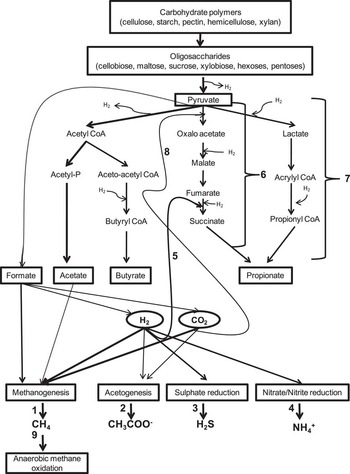
The majority of rumen methanogens use H2 to reduce CO2 to CH4. Some rumen methanogens can utilise formate or methyl group containing compounds such as methanol and methylamine (Janssen and Kirs, Reference Janssen and Kirs2008). Carbon dioxide constitutes up to 65% of total gas in the rumen (Ellis et al., Reference Ellis, McIntyre, Saleh, Williams and Lloyd1991) and it is not a limiting substrate of rumen methanogenesis. Therefore, H2 is a key compound for controlling CH4 production. The major biochemical pathways explored in this review to decrease CH4 emissions from ruminants by using DFM are the redirection of H2 away from methanogenesis and decreased production of H2 during feed fermentation. Other potential pathways are also briefly explored in this review. The different pathways that could be modulated to decrease rumen methanogenesis by providing DFM are shown in Figure 1. Biohydrogenation of unsaturated fatty acids is another H2-utilising pathway present in the rumen. However, biohydrogenation accounts only for 1% to 2% of the H2 consumed (Nagaraja et al., Reference Nagaraja, Newbold, Van Nevel and Demeyer1997). As such, this pathway is not discussed in this review.
Rumen biochemical pathways that could be modulated by direct-fed microbials to decrease CH4 production. 1. Methanogenesis, 2. homoacetogenesis, 3. sulphate reduction, 4. nitrate/nitrite reduction, 5. fumarate reduction, 6. propionate production (succinate/randomizing pathway), 7. propionate production (acrylate pathway) 8. capnophily (CO2 fixation), 9. methane oxidation (methanotrophy).

Yeast (Saccharomyces cerevisiae)
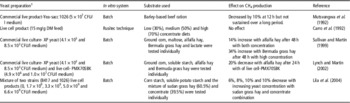
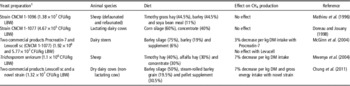
Saccharomyces cerevisiae is the most commonly used DFM in ruminant production and not surprisingly is the DFM that has been more extensively studied for its effect on rumen methanogenesis. However, results from both in vitro (Table 1) and in vivo (Table 2) studies are inconsistent. These variations can be partly explained by the differences in experimental conditions (yeast strains and formats (live culture or freezed-dried preparation), dose, animal species, physiological state of animals and diets) but also because up to now no strain has been selected based on effects on methanogenesis. The effects and modes of action of yeast on rumen fermentation have been extensively studied (Newbold et al., Reference Newbold, Wallace and McIntoth1996; Chaucheyras-Durand et al., Reference Chaucheyras-Durand, Walker and Bach2008). Chaucheyras-Durand et al. (Reference Chaucheyras-Durand, Walker and Bach2008) in their review identified three main effects of yeast on rumen development: improvement of rumen maturity by favouring microbial establishment, stabilising rumen pH and increasing fibre degradation. Live yeast also showed beneficial effects on the growth and H2-utilisation of acetogenic bacteria in vitro (Chaucheyras-Durand et al., Reference Chaucheyras-Durand, Fonty, Bertin and Gouet1995). Being an aerobic organism, the above mentioned effects may be due to the ability of yeast to remove the trace amounts of oxygen present in the rumen and/or due to the micronutrients present in the yeast itself (McAllister et al., Reference McAllister, Beauchemin, Alazzeh, Baah, Teather and Stanford2011).
Use of Saccharomyces cerevisiae as a DFM for reducing rumen methanogenesis (summary of published in vitro studies)

DFM=direct-fed microbial.
1 commercial producers: Yea-sacc-Alltech Biotechnology centre, XP yeast-Diamond V Mills, PMX70SBK-Saf Agri, Twin strain (8417 and 1026)-Bussan Biotech. Co. Ltd. When available, doses are given as colony forming units (CFU) per liter medium
Use of Saccharomyces cerevisiae as a DFM for reducing rumen methanogenesis (summary of published in vivo studies)

DFM=direct-fed microbial; LBW=live body weight; DM=dry matter.
Doses are given as colony forming units (CFU) per kg LBW.
1 Commercial producers: CNCM 1-1096 and CNCM 1-1077 – Institut Pasteur, France, Procreatin-7-Saf Agri, Levucell sc-Lallemand Inc.
Propionate-forming bacteria
The major VFA produced in the rumen are acetic, propionic and butyric acids and their proportion mainly depends on the diet offered to the animal. Ruminants fed a concentrate-based diet produce proportionally more propionate than those fed a high forage diet, which produces more acetate. Propionate formation consumes reducing equivalents, pyruvate is reduced to propionate, therefore it is considered as H2-utilisation pathway, while in H2 formation, protons (H+) are reduced to H2 (Baldwin et al., Reference Baldwin, Wood and Emery1963). As H2 is the main precursor for CH4 production, increase in propionate formation is stoichiometrically associated with decrease in CH4 production. In the rumen, propionate is produced through two pathways; succinate pathway and acrylate pathway (Figure 1). Succinate pathway is the major pathway in the rumen and along this pathway intermediate products such as malate, fumarate and succinate are formed. Moreover, this pathway involves a mixture of bacteria such as lactate producers (e.g. Streptococcus bovis), lactate utilisers (e.g. Selenomonas ruminantium), fumarate reducers (e.g. Wolinella succinogenes), succinate producers (Fibrobacter succinogenes) and succinate utilisers (e.g. S. ruminantium).
The acrylate pathway is also an important propionate-producing pathway in the rumen. Lactate-utilising Megasphaera elsdenii is the major rumen bacteria involved in this pathway (Russell and Wallace, Reference Russell and Wallace1997), which requires the presence of lactate. In the absence of lactate, M. elsdenii utilise glucose and produce acetate and butyrate but not propionate (Hino et al., Reference Hino, Shimada and Maruyama1994). Lactate-producing bacteria such as Streptococcus bovis play therefore a regulatory role in this pathway. There are other bacterial spp. in the rumen that can utilise lactate (e.g. S. ruminantium and Propionibacterium spp.) but in vitro (Counotte et al., Reference Counotte, Prins, Janssen and Debie1981) and in vivo (Klieve et al., Reference Klieve, Hennessy, Ouwerkerk, Forster, Mackie and Attwood2003) studies have shown that M. elsdenii is the key species performing this function. It has been shown that in cows supplemented with a M. elsdenii DFM, the pattern of rumen fermentation was altered in favour of propionate with potential benefits on energy balance and animal productivity (Henning et al., Reference Henning, Horn, Leeuw, Meissner and Hagg2010; Aikman et al., Reference Aikman, Henning, Humphries and Horn2011). Hino et al. (Reference Hino, Shimada and Maruyama1994) have also shown that combining lactate-producing bacteria with M. elsdenii is effective for increasing propionate production. Some strains of the rumen bacterium Prevotella ruminicola can also form propionate via the acrylate pathway, but the amount of propionate formed by these strains is not significant in the rumen (Wallnofer and Baldwin, Reference Wallnofer and Baldwin1967).
Propionate formation is the main rumen biochemical pathway explored and exploited by bacterial DFM in ruminant production (Seo et al., Reference Seo, Kim, Kim, Upadhaya, Kam and Ha2010). Propionibacterium spp. and/or Lactobacillus spp. were used to increase animal productivity (Ghorbani et al., Reference Ghorbani, Morgavi, Beauchemin and Leedle2002; Adams et al., Reference Adams, Luo, Rayward, King, Gibson and Moghaddam2008), M. elsdenii, Propionibacterium spp. and/or Lactobacillus spp. were used to prevent rumen acidosis in concentrate-fed animals (Aikman et al., Reference Aikman, Henning, Humphries and Horn2011; Lettat et al., Reference Lettat, Noziere, Silberberg, Morgavi, Berger and Martin2012b) and Lactobacillus spp. were used to decrease pathogenic load in young animals (McAllister et al., Reference McAllister, Beauchemin, Alazzeh, Baah, Teather and Stanford2011) but CH4 production was not measured in any of these studies. Decrease in CH4 emission was recently observed in lactating dairy cows receiving a mixed Propionibacterium jensenii – Lactobacillus spp. DFM (Lettat et al., Reference Lettat, Noziere, Berger and Martin2012a) showing the potential of this approach to mitigate rumen CH4 emission.
Nitrate/nitrite-reducing bacteria
Nitrate can act as an alternative H2 sink to CO2 in the rumen. The predominant pathway of nitrate metabolism in the rumen has been assumed to be dissimilatory nitrate reduction in which nitrate is reduced to ammonia in two-step processes: nitrate to nitrite and nitrite to ammonia. The potential use of nitrate to decrease rumen methanogenesis has been hindered by the toxicity of the intermediate product nitrite. Rumen microbes rapidly reduce the nitrate into nitrite, but the rate of reduction of nitrite into ammonia is slower, which can cause nitrite accumulation in the rumen (Iwamoto et al., Reference Iwamoto, Asanuma and Hino1999). When nitrite is absorbed from the rumen into the blood it converts blood haemoglobin into methaemoglobin and if its concentration is high it causes the condition called methemoglobinemia. Methemoglobinemia decreases the blood’s capacity to transport oxygen to tissues, resulting in depressed performances and, in severe cases, death of the animal (Morris et al., Reference Morris, Cancel and González-Más1958). Many studies on nitrate supplementation were focused on avoiding this nitrite toxicity. As a result, several solutions were proposed to avoid this problem (Alaboudi and Jones, Reference Alaboudi and Jones1985; Takahashi and Young, Reference Takahashi and Young1991; van Zijderveld et al., Reference van Zijderveld, Gerrits, Apajalahti, Newbold, Dijkstra, Leng and Perdok2010). Among them, the use of nitrite-reducing bacteria as DFM was tested (Anderson and Rasmussen, Reference Anderson and Rasmussen1998).
Bacteria with the ability to reduce nitrate, nitrite or both compounds are already present in the rumen. The major nitrate-reducing bacteria W. succinogenes and S. ruminantium are both present at a concentration of 106 cells/ml of rumen fluid (Asanuma et al., Reference Asanuma, Iwamoto, Kawato and Hino2002; Yoshii et al., Reference Yoshii, Asanuma and Hino2003). However, to compete with methanogens present at about 109 cells/ml (Jeyanathan et al., Reference Jeyanathan, Kirs, Ronimus, Hoskin and Janssen2011) it may be advantageous to increase the number and/or the activity of nitrate- and/or nitrite-reducing bacteria in the rumen if nitrate is going to be a strategy to decrease methanogenesis. Bacteria that have the ability to reduce nitrate or/and nitrite are more active when nitrate is included in the diet. Iwamoto et al. (Reference Iwamoto, Asanuma and Hino2002) showed that addition of nitrate increased the number of nitrate-reducing bacteria such as W. succinogenes and Veillonella parvula in vitro. But, this increase may not be sufficient to compete with methanogenesis. Therefore, providing nitrate- and/or nitrite-reducing bacteria as DFM along with nitrate may improve the nitrate reduction process and avoid nitrite toxicity.
Denitrification is another nitrate/nitrite-reduction pathway in which nitrate or nitrite are reduced via gaseous nitrogen-oxides (NO and N2O) to N2. Denitrification is prominent in the soil ecosystem (McKenney et al., Reference McKenney, Shuttleworth, Vriesacker and Findlay1982; Raciti et al., Reference Raciti, Burgin, Groffman, Lewis and Fahey2011). The presence of more organic carbon in the soil is thought to be the reason for this high denitrification activity (Tiedje et al., Reference Tiedje, Sexstone, Myrold and Robinson1982). Although the rumen has considerable organic carbon and has the possibility of inoculation of denitrifiers from soil through feed, denitrification process has not been reported in the rumen. Short turnover time of the rumen contents may be the reason for this observation (Ao, Reference Ao2008). However, traces of N2O were observed when rumen liquor from cattle was incubated with nitrate in vitro (Kaspar and Tiedje, Reference Kaspar and Tiedje1981). This N2O was thought to be the by-product of dissimilatory nitrate reduction by rumen bacteria. Kaspar (Reference Kaspar1982) tested five Propionibacterium species for their ability to reduce nitrate and found all five species reduced nitrate to N2O, but not to N2. Reduction of nitrate to N2O by Propionibacterium spp. was considered to be a detoxification mechanism rather than a part of an energy transformation reaction. As Propionibacterium spp. are present in the rumen N2O production occurs in the rumen and N2O is present in rumen gases, although in trace amounts.
There have been only few published studies on the use of nitrate/nitrite-reducing bacteria as DFM to decrease rumen methanogenesis. In an in vitro trial, Anderson and Rasmussen (Reference Anderson and Rasmussen1998) inoculated the nitrate-reducing rumen bacterium Denitrobacterium detoxificans strain NPOH1 along with added nitrate (10 μmol/ml) and observed up to 95% decrease in the CH4 production without nitrite accumulation. In the absence of D. detoxificans the decrease in CH4 production was only of 25% and nitrite accumulation was observed. In another in vitro study addition of nitrate-reducing-bacteria W. succinogenes, S. ruminantium or V. parvula to mixed methanogens in the presence of nitrate (5 mM) drastically decreased methanogenesis (>70% decrease). The highest decrease was observed with W. succinogenes, with low nitrite accumulated in the culture media compared with the other two nitrate-reducing bacteria (Iwamoto et al., Reference Iwamoto, Asanuma and Hino2002). Nitrite-reducing Escherichia coli strains decreased nitrite accumulation in vitro as well as in vivo when added with nitrate (Sar et al., Reference Sar, Mwenya, Santoso, Takaura, Morikawa, Isogai, Asakura, Toride and Takahashi2005b and Reference Sar, Mwenya, Pen, Takaura, Morikawa, Tsujimoto, Kuwaki, Isogai, Shinzato, Asakura, Toride and Takahashi2005c). Propionibacterium acidipropionici, which has the ability to reduce nitrite into N2O (Rehberger and Hibberd, Reference Rehberger and Hibberd2000) is commercially available to avoid nitrite toxicity in cows fed high nitrate forages. For the bacterial species mentioned above, however, there is still scarce in vivo data on their ability to decrease CH4 production and/or avoid nitrite toxicity particularly when nitrate is used as feed additive.
In addition to the bacteria mentioned above, other isolates have also shown the ability to decrease CH4 emission in the presence of nitrate in vitro. Asanuma et al. (Reference Asanuma, Yoshii and Hino2003) isolated a Clostridium sp. from dog faeces with high nitrite-reducing activity and Sakthivel et al. (Reference Sakthivel, Kamra, Agarwal and Chaudhry2012) isolated a bacterium from a buffalo rumen. Both bacteria alleviate nitrite toxicity, the buffalo isolate in particular nearly inhibited methanogenesis when combined with 10 mM nitrate without a negative effect on feed digestibility. In contrast, nitrate alone, although it decreased CH4 production by 69%, decreased feed digestibility by 14%. These two bacteria need to be fully characterised and, more importantly, their effect on the decrease in CH4 emission has to be confirmed in vivo.
Nitrate as feed additive can decrease rumen methanogenesis in different ruminant species and production conditions (van Zijderveld et al., Reference van Zijderveld, Gerrits, Dijkstra, Newbold, Hulshof and Perdok2011; Hulshof et al., Reference Hulshof, Berndt, Gerrits, Dijkstra, van Zijderveld, Newbold and Perdok2012). It is noted that nitrate could replace urea used as a nitrogen source for rumen microbial protein synthesis in diets with low N. In an in vivo study Li et al. (Reference Li, Davis, Nolan and Hegarty2012) replaced 1.5% urea by 3% calcium nitrate with a decreasing effect on CH4 emission. However, the possible negative impact of long term supplementation of nitrate on animal health and on the environment has to be explored more. As mentioned earlier, DFM can be used to avoid these negative effects (Perdok et al., Reference Perdok, Van Zijderveld, Newbold, Hulshof, Deswysen, Gerrits, Dijkstra and Leng2011).
Sulphate-reducing bacteria
Competitive and co-operative relationships between methanogens and sulphate-reducing bacteria (SRB) have been described in anaerobic environments including in the rumen. In anaerobic environments, in which sulphate is not limiting, SRB compete with methanogens for common substrates (e.g. H2, formate and acetate). As the energetic of sulphate reduction is slightly more favourable than methanogenesis (−152 kJ v. −131 kJ/mol; Gibson et al., Reference Gibson, Macfariane and Cummings1993), encouraging competition between these two groups theoretically decreases methanogenesis. The co-operative relationship between methanogens and SRB is another example of interspecies H2 transfer. In sulphate-depleted environments they grow in syntrophy with methanogens by producing H2. Limited sulphate availability in the rumen likely makes SRB as net producers of H2 (Bryant et al., Reference Bryant, Campbell, Reddy and Crabill1977).
The population of SRB in the rumen is low (105 to 106 cells/ml) and mainly from the genus Desulfovibrio and Desulfotomaculum (Campbell and Postgate, Reference Campbell and Postgate1965; Huisingh et al., Reference Huisingh, McNeill and Matrone1974). Recently, a sulphate-reducing bacterium belonging to the genus Fusobacterium was isolated from buffalo (Paul et al., Reference Paul, Deb and Singh2011) suggesting that there may be other not-yet-cultured SRB in the rumen. The ability of SRB to compete with methanogens is largely determined by the introduction of sulphate into the rumen. In an experiment with steers fed high-sulphate diet no significant increase in the numbers of SRB was observed. Instead their sulphate reducing capacity was enhanced (Cummings et al., Reference Cummings, Caldwell, Gould and Hamar1995). As such, sulphate reduction may be facilitated by introducing SRB when sulphate is used as an additive to decrease methanogenesis. However, there were only few studies on effect of sulphate supplementation in rumen methanogenesis (Morvan et al., Reference Morvan, RieuLesme, Fonty and Gouet1996; van Zijderveld et al., Reference van Zijderveld, Gerrits, Apajalahti, Newbold, Dijkstra, Leng and Perdok2010). The toxic end product (H2S) resulting from the sulphate reduction is the major reason for the lack of studies on this option.
Using sulphate alone as an additive cannot be an alternative for reducing rumen methanogenesis due to the sulphide toxicity. However, SRB are versatile organisms and published information indicates that they may possess some characteristics favouring rumen CH4 mitigation. For instance, a decrease in CH4 emission was observed in an in vitro study using the newly identified SRB, Fusobacterium sp., as a DFM with a high sulphate diet. The CH4 production at 72 h was decreased from 2.66 to 1.64 mmol/g digested dry matter (DM) without H2S accumulation (Paul et al., Reference Paul, Deb and Singh2011). Fibre digestion and number of cellulolytic bacteria were also increased. Absence of sulphide accumulation in this study may be due to its rapid utilisation by other microbes such as cellulolytic bacteria for synthesis of sulphur-containing amino acids (Bryant, Reference Bryant1973) or Fusobacterium sp. itself might be able to oxidise sulphide into sulphate as described in the termite gut (Droge et al., Reference Droge, Limper, Emtiazi, Schonig, Pavlus, Drzyzga, Fischer and Konig2005). The full characterisation of the isolated Fusobacterium sp. as well as additional studies are needed to gain a better understanding of this effect.
Major interactions were observed between nitrate and sulphate metabolism in microorganisms that are present in diverse anaerobic ecosystems (Garcia-de-Lomas et al., Reference Garcia-de-Lomas, Corzo, Portillo, Gonzalez, Andrades, Saiz-Jimenez and Garcia-Robledoa2007; Hubert and Voordouw, Reference Hubert and Voordouw2007; van Zijderveld et al., Reference van Zijderveld, Gerrits, Apajalahti, Newbold, Dijkstra, Leng and Perdok2010). Importantly, many SRB appear to have dual roles, that is, they reduce inorganic and organic sulphur, and the majority of them can reduce nitrite to ammonia. Their ability to reduce nitrite was explored to avoid the potential toxicity problem encountered when supplementing with nitrate alone (Takahashi et al., Reference Takahashi, Ikeda, Matsuoka and Fujita1998; Perdok et al., Reference Perdok, Van Zijderveld, Newbold, Hulshof, Deswysen, Gerrits, Dijkstra and Leng2011). Moreover, an additive effect was observed on decrease in CH4 emission in vivo when sulphate (2.6% of DM) and nitrate (2.6% of DM) were used together (van Zijderveld et al., Reference van Zijderveld, Gerrits, Apajalahti, Newbold, Dijkstra, Leng and Perdok2010). In anaerobic environments, H2S can act as an electron donor for nitrite ammonification in nitrate-reducing-sulphide-oxidising bacteria (NR-SOB) (Garcia-de-Lomas et al., Reference Garcia-de-Lomas, Corzo, Portillo, Gonzalez, Andrades, Saiz-Jimenez and Garcia-Robledoa2007; Hubert and Voordouw, Reference Hubert and Voordouw2007). These bacteria reduce nitrate to nitrite and oxidise sulphide to sulphate when further reducing nitrite to ammonia. The low concentration of H2S certainly limits the abundance of this group of bacteria in the rumen. However, physiological similarities between W. succinogenes and NR-SOB Sulphurospirillium deleyianum, suggest that this function is present in the rumen (Simon, Reference Simon2002). Indeed, W. succinogenes can grow using sulphide as an electron donor and fumarate as an electron acceptor (Macy et al., Reference Macy, Ljungdahl and Gottschalk1978). The possibility of preventing nitrite toxicity by provision of sulphate further suggests that some nitrate reducing bacteria present in the rumen may possess the characteristic of NR-SOB (Ao, Reference Ao2008).
Homoacetogens
Homoacetogens are present in diverse environments including rumen, and have the ability to produce acetate via heterotrophic and autotrophic growth. They grow heterotrophically by utilising sugars and autotrophically by utilising formate, CO and H2/CO2. Promoting the autotrophic growth of homoacetogens (Wood-Ljungdahl pathway) is thought to be a competitive pathway to methanogenesis as the same substrates are used. Acetate is a beneficial nutrient for the host and for other microbes within the rumen community.
The population of homoacetogens in the rumen highly varies (undetectable to 107 cells/ml) depending on diet, age of the animal and time of sampling (Leedle and Greening, Reference Leedle and Greening1988; Fonty et al., Reference Fonty, Joblin, Chavarot, Roux, Naylor and Michallon2007). They are among the first species to colonise the rumen but their numbers decrease when methanogens appear at 30 h after birth (Morvan et al., Reference Morvan, Dore, Rieulesme, Foucat, Fonty and Gouet1994). In a study using lambs placed in a sterile isolator 17 h after birth, the acetogen population was increased up to 5×10⁸ cells/ml at 150 days before methanogens inoculation (Gagen et al., Reference Gagen, Mosoni, Denman, Al Jassim, McSweeney and Forano2012). A similar observation was reported previously by Fonty et al. (Reference Fonty, Joblin, Chavarot, Roux, Naylor and Michallon2007) in their study with methanogen-free lambs. A negative correlation between numbers of homoacetogenic bacteria and methanogens has been described in the rumen of adult ruminants (Doré et al., Reference Doré, Morvan, Rieu-Lesme, Goderel, Gouet and Pochart1995). Notwithstanding, using acetogens as a DFM to decrease rumen methanogenesis has some limitations. Methanogens have a lower threshold for H2 than acetogens and the energy yield from methanogenesis is greater than that from acetogenesis (Thauer et al., Reference Thauer, Jungermann and Decker1977). As such, at the low H2 concentrations prevailing in the rumen, methanogens out-compete acetogens. In addition, acetogens can grow heterotrophically by utilising sugars and other substrates (e.g. alcohols, organic acids; Ragsdale and Pierce, Reference Ragsdale and Pierce2008).
Several attempts to increase the reductive acetogenesis process in the rumen by supplying DFM containing homoacetogens of rumen and non-rumen origin were unsuccessful. Lopez et al. (Reference Lopez, McIntosh, Wallace and Newbold1999) tested six acetogenic bacteria for their effect on rumen CH4 emission in vitro and found that only two of them slightly decreased methanogenesis. Peptostreptococcus productus, an acetogen isolated from an anaerobic sludge digester promoted acetogenesis in vitro only when methanogenesis was selectively inhibited (Nollet et al., Reference Nollet, Demeyer and Verstraete1997 and Reference Nollet, Mbanzamihigo, Demeyer and Verstraete1998). The same acetogen administered in association with spent Lactobacillus plantarum culture media failed to sustain the antimethanogenic effect for long term in sheep (Nollet et al., Reference Nollet, Mbanzamihigo, Demeyer and Verstraete1998). In another in vitro study, a combination of an acetogen (isolated from a lamb) and yeast stimulated acetogenesis significantly in the presence of methanogens (Chaucheyras et al., Reference Chaucheyras-Durand, Fonty, Bertin and Gouet1995). Further confirmations of above observations by in vitro or in vivo studies were not reported so far.
Homoacetogens have been shown to sustain a functional rumen in methanogen-free lambs (Fonty et al., Reference Fonty, Joblin, Chavarot, Roux, Naylor and Michallon2007) and studies have already shown that by inhibiting methanogenesis, the acetogenesis can be stimulated (Boccazzi and Patterson, Reference Boccazzi and Patterson1996; Nollet et al., Reference Nollet, Demeyer and Verstraete1997). However, acetogens were less efficient in H2 capture from fermentation (28% to 46%) than methanogens (>90%; Fonty et al., Reference Fonty, Joblin, Chavarot, Roux, Naylor and Michallon2007; Gagen et al., Reference Gagen, Mosoni, Denman, Al Jassim, McSweeney and Forano2012) and this may affect the overall fermentation process in the rumen. Identifying homoacetogens that are competitive to methanogens in the rumen is required. Recently, in an attempt to isolate rumen acetogenic bacteria able to grow on low threshold concentrations of H2, an isolate was successfully obtained using H2-limited continuous cultures (Boccazzi and Patterson, Reference Boccazzi and Patterson2011). Such acetogens could compete with methanogens in the rumen. Homoacetogenesis is competitive to methanogenesis in the gut microbial ecosystem of humans, rodents, macropods, and wood-digesting termites (Breznak and Switzer, Reference Breznak and Switzer1986). The Tammar wallaby (Macropus eugenii) is a foregut fermenter but it is a low CH4 emitter. The homoacetogen population in Tammar wallaby forestomach is different compared with that found in ruminants (Gagen et al., Reference Gagen, Denman, Padmanabha, Zadbuke, Al Jassim, Morrison and McSweeney2010), which can be one of the reasons for lower CH4 emission. The acetogens in the Tammer Wallaby may be more effective hydrogenotrophs than those in the rumen and possibly better competing with methanogens. If this is true, these animals may act as a source of novel acetogens to be used as DFM. The success of such option mainly depends on the ability of those acetogens to be active under rumen conditions.
Methylotrophs
Methylotrophs are microorganisms able to utilise one-carbon organic compounds such as methanol and methylamine as carbon sources and thus competing for substrates with methanogens. Some methylotrophs, the methanotrophs are also capable to use CH4 avoiding its release into the atmosphere. Understanding the pathways involved in the metabolism of these compounds may provide a novel biological control agent in mitigating rumen CH4 emission.
Up to now, there is little evidence to suggest that methanotrophy is important in the rumen. Only one study reported possible, albeit low 0.2% to 0.5%, methanotrophy in rumen fluid (Kajikawa et al., Reference Kajikawa, Valdes, Hillman, Wallace and Newbold2003). In another study bacterial clones closely related to Nitrosomonas spp. were identified from a clone library constructed from samples of bacterial communities attached to the rumen epithelium (Mitsumori et al., Reference Mitsumori, Ajisaka, Tajima, Kajikawa and Kurihara2002). Members of the genus Nitrosomonas are ammonia-oxidising bacteria, which have the ability to oxidise CH4 under some conditions (Hyman and Wood, Reference Hyman and Wood1983; Jiang and Bakken, Reference Jiang and Bakken1999). Close to the rumen wall there is always ammonia as urea coming from blood, which is rapidly degraded by ureolytic bacteria attached to the rumen wall (Cheng and Wallace, Reference Cheng and Wallace1979). Therefore, there is a possibility that Nitrosomonas spp. in the rumen wall may be involved in CH4 oxidation. However, their presence in the rumen epithelium was not always observed suggesting that they are minor or occasional members (Sadet-Bourgeteau et al., Reference Sadet-Bourgeteau, Martin and Morgavi2010; Li et al., Reference Li, Zhou, Adamowicz, Basarab and Guan2011).
Several clone libraries of rumen samples reported significant numbers of bacteria belonging to the phylum Verrucomicrobia (Romero-Perez et al., Reference Romero-Perez, Ominski, McAllister and Krause2011; Godoy-Vitorino et al., Reference Godoy-Vitorino, Goldfarb, Karaoz, Leal, Garcia-Amado, Hugenholtz, Tringe, Brodie and Dominguez-Bello2012). Although their role in the rumen is not well understood, some members of the Verrucomicrobia have been found to oxidise CH4 as the sole source of carbon and energy in non-rumen environments (Hou et al., Reference Hou, Makarova, Saw, Senin, Ly, Zhou, Ren, Wang, Galperin, Omelchenko, Wolf, Yutin, Koonin, Stott, Mountain, Crowe, Smirnova, Dunfield, Feng, Wang and Alam2008). Information on whether Verrucomicrobia are capable of this function in the rumen is still missing. Also, Klieve et al. (Reference Klieve, Ouwerkerk and Maguire2012) identified clones related to CH4-oxidising archaea in the rumen of cows. Methane-oxidising archaea have been described as having an important role in aquatic ecosystems (Hallam et al., Reference Hallam, Girguis, Preston, Richardson and DeLong2003; Knittel et al., Reference Knittel, Losekann, Boetius, Kort and Amann2005). Although the rumen conditions with a nutrient-rich environment and a high turnover rate does not favour the activity of methane-oxidising archaea, their importance remains to be assessed.
Other than methanotrophs, methyloptrophs that can utilise methanol and/or methylamine could also be helpful in reducing methanogenesis. Methanol and methylamine are substrates, in some cases the unique substrate, for some rumen methanogens. For example, methanogens belonging to the genus Methanosphaera absolutely require methanol (Miller and Wolin, Reference Miller and Wolin1985) while genus Methanomicrococcus require methanol or methylamine (Sprenger et al., Reference Sprenger, van Belzen, Rosenberg, Hackstein and Keltjens2000) for their growth. The Methanosarcina spp. can also utilise methanol and methylamine as substrates, although they are not their obligatory requirements (Jarvis et al., Reference Jarvis, Strompl, Burgess, Skillman, Moore and Joblin2000). Recent reports on a human methanogen isolate and on termite gut enrichment cultures suggested that methanol may be an obligatory requirement for rumen cluster C group (Dridi et al., Reference Dridi, Fardeau, Ollivier, Raoult and Drancourt2012; Paul et al., Reference Paul, Nonoh, Mikulski and Brune2012).
Among the methylotrophic methanogens, Methanosphaera spp. are common inhabitants of the rumen and found to be an important group in forage-fed cow, sheep and red deer (Jeyanathan et al., Reference Jeyanathan, Kirs, Ronimus, Hoskin and Janssen2011). Although they are categorised as a minor group based on the meta-analysis of partial 16S rRNA sequences by Janssen and Kirs (Reference Janssen and Kirs2008), recent studies showed that they are ubiquitous members of the rumen in different ruminant species, fed different diets and at various geographical locations (Franzolin et al., Reference Franzolin, St-Pierre, Northwood and Wright2012; St-Pierre and Wright, Reference St-Pierre and Wright2012). Methanomicrococcus and Methanosarcina were also retrieved from several rumen clone libraries (Whitford et al., Reference Whitford, Teather and Forster2001; Sundset et al., Reference Sundset, Edwards, Cheng, Senosiain, Fraile, Northwood, Praesteng, Glad, Mathiesen and Wright2009), but not in significant numbers. Instead, the rumen cluster C group is one of the major methanogen groups (Janssen and Kirs, Reference Janssen and Kirs2008) sometimes contributing up to 80% of the total clones analysed (Wright et al., Reference Wright, Toovey and Pimm2006). If their substrate requirement is similar to the human and termite representatives, methanol could be an important substrate for rumen methanogenesis. Methanol is formed by enzymatic cleavage of pectin methyl esters by anaerobic pectinolytic bacteria in the rumen. Utilisation of these substrates (methanol and/or methylamine) by organisms other than methanogens theoretically could decrease methanogenesis. However, the affinity of these substrates to methanogens and other organisms has to be considered. Methanol can also be utilised by homoacetogens (Lopez et al., Reference Lopez, McIntosh, Wallace and Newbold1999). Other than acetogens, there are no other methylotrophic bacteria reported in the rumen. Understanding methylotrophy especially methanotrophy in other environments such as soil may help to identify potential DFM, which could decrease rumen methanogenesis.
Capnophiles
Capnophiles are microorganisms that require high levels of CO2 for their growth. The rumen is an anaerobic environment where CO2 is the major gas. The presence of capnophiles in the rumen is therefore expected but their use as scavengers of CO2 to mitigate methanogenesis is questionable as this gas is not a limiting substrate for rumen methanogens. Dehority (Reference Dehority1971) suggested two types of CO2 requirement among rumen bacteria: biosynthesis type in which CO2 is required for cell growth (e.g. S. bovis) and the second type includes bacteria that are forming succinate in addition to biosynthesis (e.g. Actinobacillus succinogenes, Mannheimia succiniciproducens, succinivibrio dextrinosolvens). During succinate production, CO2 is attached to the three-carbon phosphoenolpyruvate, an end product in glycolysis, to generate the four-carbon compound, oxaloacetate. Oxaloacetate accepts two pairs of electrons, when reduced into succinate. As such, both CO2 and H2 are used during this succinate formation and may have an impact on rumen methanogenesis. Succinate is also an important intermediate product during the propionate production.
The Tammer wallaby produces only one-fifth of the amount of CH4 produced by ruminants per unit of digestible energy intake (Kempton et al., Reference Kempton, Murray and Leng1976). A physiological difference such as shorter retention time of feed in the foregut partially explains this. The presence of a novel group of acetogenic bacteria may be the reason for this lower CH4 emission (Gagen et al., Reference Gagen, Denman, Padmanabha, Zadbuke, Al Jassim, Morrison and McSweeney2010). Presence of capnophiles may also be contributing to this observation. In a clone library constructed from foregut samples of Tammer wallaby, a large proportion of novel capnophiles (9% of all sequences recovered in the 16S rRNA clone library) was observed (Pope et al., Reference Pope, Smith, Denman, Tringe, Barry, Hugenholtz, McSweeney, McHardy and Morrison2011). These clones were assigned to a group within the family Succinivibrionaceae. A member from this group was isolated and the genome sequence of this isolate proved that it is a capnophile dependent on CO2 to support its metabolism via succinate biosynthesis (Pope et al., Reference Pope, Smith, Denman, Tringe, Barry, Hugenholtz, McSweeney, McHardy and Morrison2011). A clear understanding of their pathway in the rumen and other similar environment is needed to assess their potential as rumen CH4 mitigants.
Other possible bacterial DFM
Bacterial cellulolytic populations in the rumen are the major contributors to fibre degradation. Some like Ruminococcus spp. primarily produce acetate, which leads to more H2 production. However, the major cellulolytic bacterium, F. succinogenes, primarily produces succinate that leads to propionate production with less H2 formation. Using bacteria which produce less H2 as DFM may help to decrease methanogenesis without impairing fibre degradation especially in forage-fed animals. Less H2 production was observed in gnotobiotically reared lambs inoculated with F. succinogenes as the only cellulolytic microbe compared to lambs inoculated with Ruminococcus species. Also, the rumen contents from F. succinogenes-containing-lambs produced less CH4 in vitro (Chaucheyras-Durand et al., Reference Chaucheyras-Durand, Masseglia, Fonty and Forano2010). However, cellulolytic organisms such as F. succinogenes are already present in the rumen in high numbers and studies using fibrolytic bacteria as DFM did not demonstrate any improvement in cellulose digestion (Dehority and Triabasso, Reference Dehority and Tirabasso1998; Krause et al., Reference Krause, Bunch, Conlan, Kennedy, Smith, Mackie and McSweeney2001).
Some bacteria have demonstrated inhibitory activity against methanogens. For example, some lactic acid-producing bacteria produce bacteriocins that can act against methanogens (Nollet et al., Reference Nollet, Mbanzamihigo, Demeyer and Verstraete1998; Lee et al., Reference Lee, Hsu, Mantovani and Russell2002b; Asa et al., Reference Asa, Tanaka, Uehara, Shinzato, Toride, Usui, Hirakawa and Takahashi2010). Nisin, a bacteriocin produced by Lactococcus lactis subsp. lactis is widely utilised in the food industry for controlling pathogenic bacteria. In vitro experiments have shown that nisin suppresses methanogenesis as much as 20% without negative impact on VFA production (Callaway et al., Reference Callaway, DeMelo and Russell1997; Sar et al., Reference Sar, Mwenya, Pen, Morikawa, Takaura, Kobayashi and Takahashi2005a). However, nisin is susceptible to rumen proteases (Lee et al., Reference Lee, Mantovani and Russell2002a) limiting its utilisation in vivo. The spent media of L. plantarum decreased methanogenesis by 18% in vitro (Nollet et al., Reference Nollet, Mbanzamihigo, Demeyer and Verstraete1998) while compounds produced by another L. plantarum strain decreased methanogenesis by 90% (Asa et al., Reference Asa, Tanaka, Uehara, Shinzato, Toride, Usui, Hirakawa and Takahashi2010). Bovicin HC5, a bacteriocin produced by S. bovis HC5, inhibited CH4 production by 53% in vitro (Lee et al., Reference Lee, Hsu, Mantovani and Russell2002b). In contrast, there is less information on the effect of these bacteriocins in vivo. Nollet et al. (Reference Nollet, Mbanzamihigo, Demeyer and Verstraete1998) tested the effect of spent L. Plantarum media with an acetogen DFM on sheep and found only a short-term effect (80% decrease after 3 days of treatment). Although there is a possibility to use bacteriocins as additives to decrease rumen methanogenesis, the administration of DFM-producing bacteriocins in vivo may not be possible. The requirement of large population densities to induce bacteriocin production could make this option physiologically unsuitable and, certainly, economically not possible.
Formate is an important substrate used by rumen methanogens (Hungate et al., Reference Hungate, Smith, Bauchop, Yu and Rabinowitz1970). It is known that SRB and nitrate-reducing bacteria can utilise formate as H2 donors. Nitrate-reducing bacteria probably out-compete the methanogens in formate utilisation because of their high affinity (Asanuma et al., Reference Asanuma, Iwamoto, Kawato and Hino2002). But limited availability of nitrate and sulphate prevents them to utilise formate. Rumen bacteria such as F. succinogenes and Anaerovibrio lipolytica also can consume formate (Asanuma et al., Reference Asanuma, Kanagawa, Iwamoto and Hino1998). These bacteria are already present in the rumen in high numbers. As such, their ability to utilise formate may be less efficient than that of methanogens. Identifying and isolating formate-utilising bacteria, which can compete with methanogens may be one possibility to decrease CH4 emission from ruminants.
Concluding remarks
Many of the bacterial strains, mentioned in this review as potential DFM for reducing rumen methanogenesis, are isolates that can be or are actually grown industrially. However, relatively few of them have been tested for their antimethanogenic activity. In addition to these already available microorganisms, the rumen as well as other environments are rich sources of potential DFM as the vast majority of microorganisms have not been yet cultured. Developments in genomics will help to identify microbes that could have the ability to decrease methanogenesis in the rumen.
The most promising species/strains studied so far have more than one feature considered to be beneficial in reducing methanogenesis. For example, some of the lactic acid bacteria produce antimethanogenic substances (e.g. L. lactis), nitrate and sulphate-reducing bacteria can utilise formate as substrate and some of the propionate-producing bacteria can reduce nitrate (W. succinogenes). This metabolic multiplicity seems important and should be sought when selecting candidates to be used as DFM. For the same reason, combination of different groups of bacteria could increase the efficacy of antimethanogenic DFM. If the DFM has particular nutrient requirements, incorporating them in the preparation as prebiotics might also help them to function efficiently in the rumen.
There are also technological aspects that should be considered for the development of DFM. All the bacteria presently used as DFM in ruminant production are facultative anaerobes that were mainly isolated from dairy products. Industrial preparation of anaerobic bacteria is technically difficult and costly as compared with standard production in the presence of oxygen. This constrain limits, for the time being, the type of DFM that can be developed for in-farm use. In addition, keeping obligate anaerobic bacteria viable for long periods after production is a challenge. Development of encapsulation methods for strictly anaerobic bacteria may help to overcome this problem. Technical advancements for the preparation of anaerobic bacteria are necessary to increase the scope of antimethanogenic DFM.
For newly developed DFM, in vivo trials are particularly important as DFM might both influence the rumen environment and induce shifts in the microbiota that will not occur in vitro. Such microbial changes have to be assessed to avoid any negative impacts on animals, the environment as well as consumers. Another aspect to consider is the persistency of the antimethanogenic effect that should be assessed in long-term animal trials. As for other mitigation strategies using feed additives and supplements, DFM have to be administered daily to be efficacious.
Acknowledgements
The financial support by Danone for this study is highly appreciated.