Enterococci, a member of lactic acid bacteria (LAB), are important in environmental, food, public health and medical microbiology. Enterococci form an essential part of the indigenous human microbiota soon after birth (Reviriego et al. Reference Reviriego, Eaton, Martin, Jimenez, Fernandez and Rodriguez2005). Enterococcus faecium and Ent. faecalis are the natural and the most common members of the human digestive microbiota. Enterococci are isolated from foods, plants, water and soils, probably as a result of spreading from faecal sources and their natural tolerance to adverse environmental conditions (Giraffa, Reference Giraffa2003). In contrast to other LAB, enterococci are not considered as ‘Generally Recognized As Safe’ (GRAS). Some enterococcal strains can act as opportunistic pathogens and cause nosocomial infections (Kayser, Reference Kayser2003). On the one hand, enterococci may be considered affirmative for the use in cheese technology as a starter culture or protective culture (Giraffa, Reference Giraffa2003).
In recent years, concerns about food safety have increased research into the development of new alternative methods of food preservation. Also, the increasing public interest in healthy eating has resulted in a higher demand for traditional foods without extensive processing and chemical preservatives. Biopreservation refers to the use of natural or controlled microorganisms and/or their antimicrobial compounds to improve food safety and extent the shelf life of food (Stiles, Reference Stiles1996). LAB are powerful candidates for the biopreservation of foods since they are naturally present in foods and have antagonistic activity against foodborne pathogens and spoilage bacteria. The antagonistic activity of LAB is due to the competition for nutrients and the production of antimicrobial metabolites such as organic acids, hydrogen peroxide, reuterin, and bacteriocins. The application of bacteriocins to inhibit the growth of foodborne pathogen and spoilage microorganisms in food has set a new platform to develop novel and effective biopreservation strategies. The bacteriocins may be applied directly or produced during the manufacture of fermented foods by bacteriocinogenic starters, protective or adjunct cultures (Rehaiem et al. Reference Rehaiem, Martinez, Manai and Rodriguez2010). Bacteriocins are considered the most suitable alternatives to chemical preservatives because they are harmless to eukaryotic cells, and are readily digested by proteolytic enzymes due to their proteinaceous nature (Gálvez et al. Reference Gálvez, Abriouel, López and Ben Omar2007). The ability to produce bacteriocins is wide spread among enterococci, especially in Ent. faecalis and Ent. faecium (Moreno et al. Reference Moreno, Rea, Cogan and De Vuyst2003). Many of these bacteriocin-producing enterococci have been evaluated for use as biopreservatives in cheese and meat products (Gálvez et al. Reference Gálvez, Abriouel, López and Ben Omar2007).
The objectives of this work were to (i) identify the bacteriocinogenic bacterium isolated from a traditional, starter free-White cheese by using morphological, physiological, biochemical and molecular methods, (ii) characterise inhibitory substance (bacteriocin) produced by the isolate, (iii) investigate factors affecting bacteriocin production, (iv) determine the growth and bacteriocin production ability of this bacterium in milk and (v) evaluate antilisterial activity of bacteriocin in microbiological medium and in milk.
Materials and methods
Cheeses, bacterial strains and media
Twenty different White cheese samples produced traditionally without using starter culture were collected from retail market in Tokat (Turkey) and examined for bacteriocin producing LAB. Ten grams of cheese samples, produced traditionally without starter cultures in Tokat (Turkey), were individually re-suspended in 90 ml peptone water, serially diluted and plated onto de Mann Rogosa Sharpe (MRS) agar (Merck). After incubation at 30 °C for 24 h, Sandwich overlay method was used to determine which colonies have inhibitory activity to indicator bacteria (Mayr-Harting et al. Reference Mayr-Harting, Hedges, Berkley, Noris and Ribbons1972). The plates were overlaid with about 108 cfu/ml of indicator bacteria in 5 ml of MRS or Brain Heart Infusion (BHI, Merck) soft agar (0·8 %) and incubated at 30 or 35–37 °C for 24 h depending on indicator bacteria used. The indicator microorganisms tested were Lactobacillus plantarum DSM 2601, Escherichia coli ATCC 3509, Staphylococcus aureus ATCC 6538, Bacillus cereus RSSK 1122, Listeria monocytogenes ATCC 7644 and Ent. faecalis ATCC 29212. Some colonies showed antimicrobial activity against just Lb. plantarum, List. monocytogenes, B. cereus or Ent. faecalis. These colonies were picked and their pure cultures were prepared and maintained frozen at −80 °C in MRS broth containing 20 % (v/v) glycerol. These colonies were tested against the indicator bacteria and only one colony had antibacterial activity to Lb. plantarum, B. cereus, List. monocytogenes and Ent. faecalis. Therefore, we concentrated on this isolate.
Identification of the cheese isolate
For identification of the isolate, morphological, physiological and biochemical tests were used. Further identification of the strain was done by using Strep-API 20, API 50 CHL (Biomérieux, Marcy-l'Etiole, France), and fatty acid profile (The Sherlock Microbial Identification System, MIDI, Inc.). Ultimate identification of the strain was done by using isolation of DNA with Qiagen DNeasy Blood and Tissue Kit (Venlo, The Netherlands). PCR amplification was done with taq DNA polymerase based on the supplier recommendations using a MyGenie-96 Gradient Thermal Cycler PCR (Bioneer, Daejeon, Korea). The bacteria-specific universal primer set LLF (5′-AGAGTTTGATCCTGGCTCAG-3′) and LLR (5′-CCGTCAATTCCTTTGAGTTT-3′) were used to amplify the partial 16S rDNA. Amplification was carried out with an initial cycle of denaturation at 94 °C for 5 min followed by 30 amplification cycles of denaturation at 94 °C for 1 min, primer annealing at 55 °C for 1 min, elongation at 72 °C for 1 min and a last extension step of 72 °C for 2 min (Sanger et al. Reference Sanger, Nicklen and Coulson1977). Sequencing of the 16S rDNAs was accomplished in RefGen (METU Technocity, Ankara, Turkey). Basic local alignment search tool (BLAST) was used to compare the sequences against the nucleotide database in National Centre for Biotechnology Information (NCBI) (http://www.ncbi.nlm.nih.gov.tr/BLAST).
Antibiotic resistance, haemolytic and gelatinase activity
The antibiotic susceptibility of the isolate was measured by the disc diffusion method on Mueller–Hinton II agar plates (Becton Dickinson, Heidelberg, Germany) (Cariolato et al. Reference Cariolato, Andrighetto and Lombardi2008). Susceptibility or resistance to antibiotics was determined according to the recommendation of Clinical and Laboratory Standards Institute (CLSI) (2011). The antibiotics used were erythromycin (15 μg/disc), ampicillin (10 μg/disc), ciprofloxacin (30 μg/disc), chloramphenicol (30 μg/disc), tetracycline (30 μg/disc), penicillin (10 U/disc), streptomycin (300 μg/disc), gentamicin (120 μg/disc), and vancomycin (30 μg/disc) (Oxoid).
Haemolysis assay was determined by using Columbia Agar plates supplemented with 5 % sheep and human blood. Gelatinase assay was performed by using BHI agar plates supplemented with 10 g peptone/l and 30 g gelatine/l (Cariolato et al. Reference Cariolato, Andrighetto and Lombardi2008).
Inhibitory spectrum of antagonistic activity
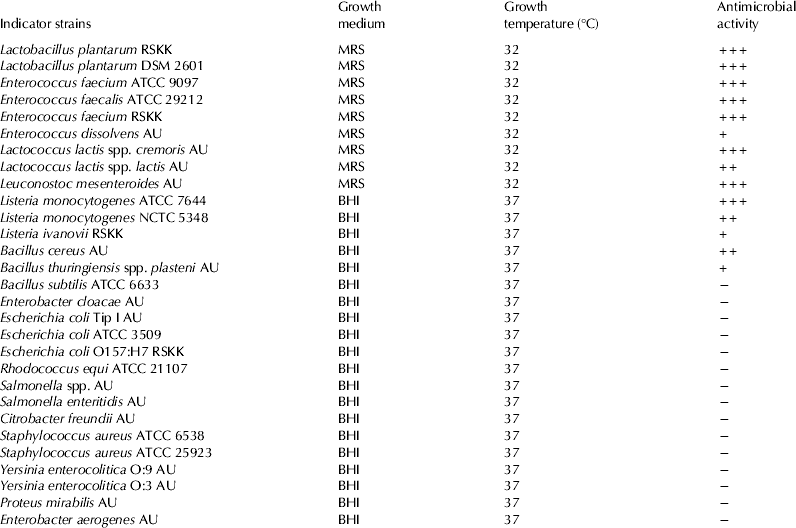
Spot-on-lawn method was used to determine the inhibitory spectrum of the cell free culture supernatant against Gram-positive and Gram-negative bacteria given in Table 1. The cell free culture supernatant (20 μl) was spotted onto the surface of MRS or BHI soft agars (0·8 %) inoculated with the test bacterium (∼107 cfu/ml) and incubated at 32 or 37 °C for 24 h depending on the indicator strains. Afterwards, the plates were checked for the presence of inhibitory zones.
Target strains and growth media (n=4)

−=no antimicrobial activity; +=inhibition zone <10 mm (the smallest inhibition zone was 4 mm); ++=inhibition zone >11 mm; +++=inhibition zone >20 mm
AU: Ankara University, Turkey; RSKK: Refik Saydam Hıfzısıhha Culture Collection, Turkey; ATCC: American Type Culture Collection, USA; NCTC: National Collection of Type Culture; DSM: German Collection of Microorganisms and Cell Cultures
Characterisation of antagonistic activity
The susceptibility of the antimicrobial compound to enzymes, pH, heat treatment, storage conditions, freezing-thawing and lyophilisation processes was assayed by using the method previously mentioned by Sahingil et al. (Reference Sahingil, Isleroglu, Yildirim, Akçelik and Yildirim2011), and susceptibility to NaCl by Chen et al. (Reference Chen, Yanagida and Srionnual2007). The effects of detergents, ethylenediamine tetraacetic acid (EDTA), ß-mercaptoethanol, and organic solvents on the antagonistic activity were investigated using the method given by Sahingil et al. (Reference Sahingil, Isleroglu, Yildirim, Akçelik and Yildirim2011). After these treatments, residual antibacterial activity was assayed by spot-on-lawn method. The bacteriocin activity was defined as the reciprocal of the highest dilution showing at least a 2 mm clear zone inhibition on a lawn of Lb. plantarum and expressed as one arbitrary unit (AU) per ml of the bacteriocin preparation (AU/ml).
Effect of media, inoculum level and initial pH on antagonistic activity
To determine the effect of media on antagonistic activity, an 18-h-old culture of the cheese isolate in MRS broth at 32 °C was inoculated (0·1 %, v/v) into MRS broth, M17 broth (Merck), APT broth (Difco), BHI broth, Nutrient broth (Merck), and Nutrient borth-E with yeast extract (Merck). Incubation was carried out at 32 °C for 18 h with/without agitation. Bacterial growth (OD at 600 nm, PerkinElmer UV/VIS spectrophotometer, USA), pH of the culture (WTW Inolab pH Level1, Germany), and inhibitory activity (AU/ml) were determined at different time intervals. The influence of inoculum amount (0·05, 0·10, 0·50, 1·00, 1·50, 2·00 or 2·50 %, v/v) and initial medium pH (5·0, 5·5, 6·0, 6·5, 7·0, 7·5, 8·0 or 8·5) adjusted with 5 M HCl or 5 M NaOH on the activity was assayed by using the method previously given by Isleroglu et al. (Reference Isleroglu, Yildirim, Tokatlı, Öncül and Yildirim2012).
Effect of incubation temperature on the bacterial growth and antagonistic activity
To determine effect of incubation temperature on the production of antagonistic activity, a freshly prepared Ent. faecium HZ (0·1 %, v/v) was inoculated into MRS broth (250 ml) and then incubated at 25, 32, 37 or 45 °C for 72 h under non-regulated pH condition and with/without agitation. At the designated times, culture samples were withdrawn to determine bacterial growth (OD at 600 nm), pH and antagonistic activity (AU/ml).
Partial purification of the antimicrobial agent
The antimicrobial compound was isolated and partially purified from 1500 ml cultures according to the method of Moreno et al. (Reference Moreno, Leisner, Tee, Ley, Radu, Rusul, Vancanneyt and De Vuyst2002), containing a two-step procedure: ammonium sulphate precipitation (50 % of saturation) and organic solvent precipitation (a methanol/chloroform mixture, 1 : 2, v/v).
Molecular mass of the antimicrobial agent
The molecular size of the antibacterial substance was analysed by 16 % tricine-sodium dodecyl sulphate-polyacrylamide gel electrophoresis (SDS-PAGE) (Schägger & Jagov, Reference Schägger and Jagov1987).
Growth Kinetic and antimicrobial agent production ability of the cheese isolate in UHT milk
Cells from MRS broth culture were harvested by centrifugation, washed twice with sterile saline solution (0·85 % NaCl), and suspended in the same solution. UHT milk (200 ml) was inoculated with a cell suspension to yield an initial population of about 107 cfu/ml and then incubated at 32 °C. During the incubation period, the samples were withdrawn to determine antibacterial activity, bacterial count and pH value. Cells were enumerated on MRS agar after incubation at 32 °C for 48 h.
Mode of action of antimicrobial agent to List. monocytogenes in BHI broth and milk
For examining the effect of the antimicrobial agent on actively growing List. monocytogenes cells in BHI broth and milk, various concentrations of the antimicrobial compound (0, 400, 800 or 1600 AU/ml) were added into actively growing List. monocytogenes cells (OD600=0·38) in BHI broth or whole fat UHT milk. During incubation period (4 h at 37 °C), the culture samples were periodically withdrawn to determine the cell viability. Cell suspensions of List. monocytogenes without added antimicrobial agent served as controls. All experiments in this study were performed four times.
Results and discussion
Identification of the cheese isolate
The isolated colony was Gram-positive, ovoid cocci, occurring singly, as pairs or in chains, non-motile, non-pigmented, non-spore forming, catalase, indol and Voges-Proskauer negative, and able to grow in the presence of 3·0–6·5 % NaCl, 40 % bile salt, 0·04 % sodium azide, at pH 4·4–9·6 and at 10–50 °C. Cheese isolate fermented galactose, D-glucose, D-fructose, D-mannose, mannitol, maltose, lactose, saccharose, threhalose, L-arabinose, ribose, N-acetyl-glucosamin, amygdalin, arbutin, esculin, salicine, cellobiose, glycerol but not erythritol, mellibiose, melezitose, xylose, sorbitol, rhamnose, dulcitol, inositol, D-raffinose, starch, glycogen, xylitol, D-tagatose, fucose and arabitol. According to these results, the isolate belonged to the genus Enterococcus (Moreno et al. Reference Moreno, Leisner, Tee, Ley, Radu, Rusul, Vancanneyt and De Vuyst2002; Vu & Carvalho, Reference Vu and Carvalho2011). The fermentation profile using API-20 STREP and API-50CHL (99·99 %), and fatty acid profile (MIS) (97·9 %) showed that this isolate was Ent. faecium (data not shown). Finally, identification was confirmed by molecular characterisation by the 16S rRNA gene designated 100 % homology with the Ent. faecium genome. The cheese isolate, therefore, was named as Ent. faecium HZ. In the production of White Brined Cheese, Lactococcus lactis subsp. lactis and Lb. delbrueckii spp. bulgaricus are used as starter culture. In traditionally produced White Brined Cheese without starter culture, Lactococcus, Lactobacillus, Leuconostoc and Pediococcus were the predominant LAB and Enterococci were the second dominant group (Hayaloglu et al. Reference Hayaloglu, Guven and Fox2002).
Antibiotic resistance, haemolysis and gelatinase activities
Ent. faecium HZ was found sensitive to ampicillin, erythromycin, chloramphenicol, gentamicin, penicillin, streptomycin, tetracycline, vancomycin, and ciprofloxacin. The sensitivity of Ent. faecium HZ to clinically important antibiotics, especially vancomycin is promising since the vancomycin-resistant enterococci have emerged in the last decade as a frequent cause of nosocomial infections. The sensitivity of the food isolates of enterococci to these antibiotics was also observed in other studies (Barbosa et al. Reference Barbosa, Ferreira and Teixeira2009; Ahmadova et al. Reference Ahmadova, Todorov, Choiset, Rabesona, Zadi, Kuliyev, de Melo Franco, Chobert and Haertlé2013). In addition, it was determined that Ent. faecium HZ did not show β-haemolytic and gelatinase activity, the virulence factors of enterococci. Therefore, Ent. faecium HZ could find application as a protective culture in food industry.
Inhibitory spectra of antagonistic activity
The antimicrobial compound inhibited the growth of some strains of Enterococcus, Lactobacillus, Leuconostoc, Lactococcus, Listeria, and Bacillus (Table 1). It showed the highest inhibitory activity to Lb. plantarum, Ent. faecalis, Ent. faecium, Lc. cremoris, Leu. mesenteroides, List. monocytogenes and relatively strong antagonistic activity against some strains of B. cereus and Lc. lactis. However, no activity was observed against Gram negative bacteria such as Esch. coli, Yersinia enterocolitica. The antimicrobial compounds of Ent. faecium strains generally were active against Gram-positive bacteria such as Listeria, Staphylococcus, Clostridium, Brochothrix, Bacillus spp. (Achemchem et al. Reference Achemchem, Martinez-Bueno, Abrini, Valdivia and Maqueda2005; Ghrairi et al. Reference Ghrairi, Frere, Berjeaud and Manai2008).
Characterisation of antagonistic activity
No inhibitory activity was observed after treatment of cell free supernatant culture with papain, trypsin and pancreatin. Handling with pepsin, lipase, α-amylase and catalase did not affect its antimicrobial activity. Papain, trypsin and pancreatin sensitivities are indicative of the proteinaceous nature, a general characteristic of the bacteriocins. There was no change in its biological activity after treatment with catalase, α-amylase, and lipase, showing that antimicrobial activity was not due to H2O2, and the active moiety of the antagonistic compound was not a glucan or a lipid. Based on these results, it was concluded that the antimicrobial compound produced by Ent. faecium HZ was a bacteriocin and thus, it was designated as enterocin HZ.
Enterocin HZ was highly resistant to high temperatures, retaining its biological activity after heat treatment at 60–90 °C for 30 min. This is a common property of the bacteriocins produced by Enterococcus and other LAB (Bal et al. Reference Bal, Isevi and Bal2012; Isleroglu et al. Reference Isleroglu, Yildirim, Tokatlı, Öncül and Yildirim2012). Nevertheless, only 50 % of its inhibitory activity remained after heat treatment at 110 °C for 30 min. Autoclaving at 121 °C for 15 min resulted in complete loss of activity. Enterocin HZ also withstood exposures to pH values from 2 to 9 for 24 h at room temperature. However, its activity was decreased by 50 % at pH 10·0, 75 % at pH 11, and 100 % at pH 12. These results reveal that the isoelectric point of enterocin HZ is probably between pH 10 and 12. Some researchers reported that the pH stability of enterocins changes between 2 to 11 (Ohmomo et al. Reference Ohmomo, Murata, Katayama, Nitisinprasart, Kobayashi, Nakajima, Yajima and Nakanishi2000; Losteinkit et al. Reference Losteinkit, Uchiyama, Ochi, Takaoka, Nagahisa and Shioya2001; Ghrairi et al. Reference Ghrairi, Frere, Berjeaud and Manai2008).
Addition of NaCl to MRS broth affected the production and inhibitory activity of enterocin HZ. When NaCl was added at 3 % level into MRS broth, the biosynthesis and inhibitory activity of enterocin HZ was not adversely affected. However, enterocin HZ activity was reduced by 75 and 100 % with the addition of 6–10 and 15 % NaCl, respectively. Inhibitory activities of bacteriocins produced by Ent. faecium MR006, D081821, and D081833 were reduced and/or completely inactivated by added NaCl into MRS broth (Chen et al. Reference Chen, Yanagida and Srionnual2007). In addition, cell-free supernatants retained activity after freeze-thaw and lyophylisation, and remained stable during storage at (−20 °C) and (−80 °C) for 1 year. Similar results were reported for other enterocins (Herranz et al. Reference Herranz, Casaus, Mukhopadhyay, Martinez, Rodriguez, Nes, Hernandez and Cintas2001; Nes et al. Reference Nes, Marekova, Laukova, de Vuyst and Skaugen2003; Isleroglu et al. Reference Isleroglu, Yildirim, Tokatlı, Öncül and Yildirim2012). These results indicate that enterocin HZ could be used as a biopreservative in highly acidic and moderately salty foods.
Enterocin HZ maintained its biological activity when treated with organic solvents at level of 10 and 25 % (formaldehyde, chloroform, acetone, 2-propanol, ethyl alcohol, hexane, ethyl ether), detergents (Tween 20, Tween 80, Triton X-100, SDS), EDTA (0·1–50·0 mM), urea or ß-mercaptoethanol (10 and 25 %). Some bacteriocins produced by other Ent. faceium strains such as enterocin A (Rehaiem et al. Reference Rehaiem, Martinez, Manai and Rodriguez2010), enterocin LR/6 (Kumar & Srivastava, Reference Kumar and Srivastava2010) had similar properties. These results showed that the active domain of enterocin HZ was not hydrophobic and does not have disulphide bounds, and also divalent cations did not have inhibitory effect on its antibacterial activity. In addition, the resistance of enterocin HZ to organic solvent confirms that lipid moiety is not responsible for the antimicrobial activity. Therefore, it may find application in high-fat foods like cheeses.
Enterocin HZ secretion was observed in all media tested. The highest bacteriocin production (6400 AU/ml) was obtained in M17 medium with/without agitation while the highest cell growth was observed in MRS, APT and M17 medium (data not shown). Also, MRS broth with agitation at 150 rpm increased enterocin HZ production from 3200 to 6400 AU/ml. In addition, agitation of MRS and M17 broth during cultivation caused longer production of enterocin HZ at the highest level. In BHI, NB, and NB-E broth, either the level of cell growth or bacteriocin production was low. These results emphasise that specific nutrients are required for bacteriocin production and bacterial growth.
The effect of inoculum amount (0·05–2·5 %) on the growth of Ent. faecium HZ and its bacteriocin production was examined in MRS broth with agitation (150 rpm) at 32 °C. During the 18 h of growth, the highest enterocin HZ activity (6400 AU/ml) was detected by addition of Ent. faecium HZ at 0·1 and 0·5 % level. For all cultures, the maximum absorbance value (600 nm) was 1·63–2·45, independent of inoculum level (data not shown).
The initial medium pH was also one of the important factors affecting the growth of Ent. faecium HZ and its bacteriocin production. The highest cell growth and bacteriocin production (6400 AU/ml) were obtained when the pH of MRS broth was adjusted between 6·5 and 7·0 (data not shown). Above pH 7·0, bacteriocin production appeared to be decreased even if Ent. faecium HZ grew well. The decrease in enterocin HZ activity could be interpreted as the adsorption of enterocin HZ to the cell wall of the producer bacterium (Yang et al. Reference Yang, Johnson and Ray1992). The optimal bacteriocin production by Ent. faecium strains was reported at pH 6·0–7·0 in MRS broth (Du Toit et al. Reference Du Toit, Franz, Dicks and Holzapfel2000). These results indicated that enterocin HZ production was linked to the growth of Ent. faecium HZ. Therefore, the factors affecting the cell growth such as composition of growth media, pH, temperature, inoculum level and other environmental factors directly affect bacteriocin production (Gálvez et al. Reference Gálvez, Abriouel, López and Ben Omar2007; Isleroglu et al. Reference Isleroglu, Yildirim, Tokatlı, Öncül and Yildirim2012).
Growth kinetics and bacteriocin biosynthesis at different cultivation temperature in MRS broth and UHT milk
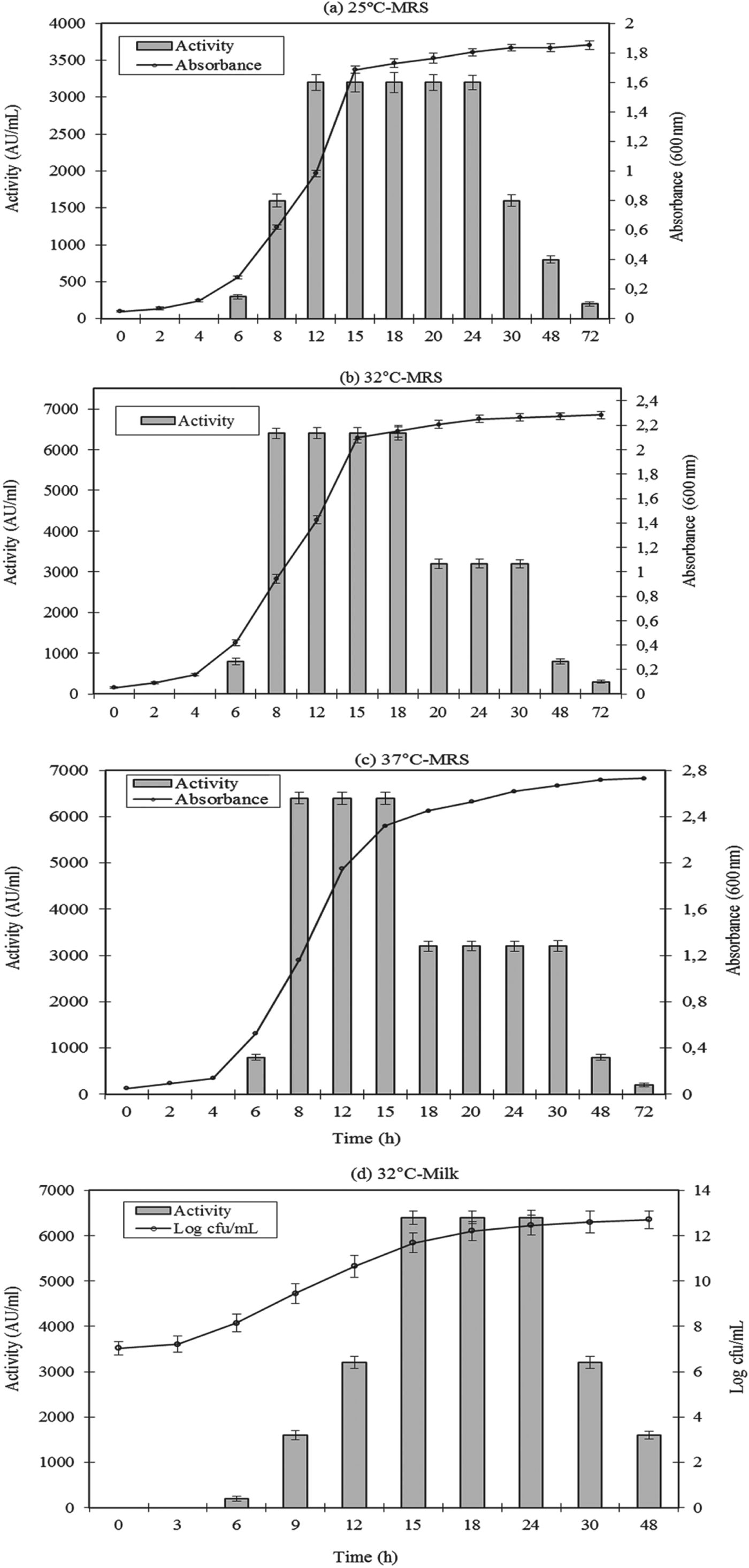
To determine the effect of incubation temperatures, Ent. faecium HZ was inoculated (0·1 %, v/v) in MRS broth and incubated with agitation at 25, 32 or 37 °C. Ent. faecium HZ grew better at 32 or 37 °C than 25 °C (Fig. 1). The highest enterocin production was obtained at 32 and 37 °C, although the highest cell mass was acquired at 37 °C. Also, enterocin HZ was more stable and kept antibacterial activity longer at 32 than 37 °C. These results show that enterocin HZ production is strongly dependent upon growth temperature like other LAB bacteriocins. Generally, LAB produce bacteriocins at the highest level at temperatures lower than the optima for growth (Aasen et al. Reference Aasen, Moretro, Katla, Axelson and Storro2000; Isleroglu et al. Reference Isleroglu, Yildirim, Tokatlı, Öncül and Yildirim2012). Activity of enterocin HZ was detected during early logarithmic phase of Ent. faecium HZ (Fig. 1). The highest enterocin HZ production was observed at 8–18 h of incubation during middle and late logarithmic phase. These results suggest that enterocin HZ is a secondary metabolite. Extension of incubation resulted in a decrease in its antibacterial activity. The decrease in bacteriocin activity after the cessation of growth is due to degradation by endogenous extracellular proteases, protein aggregation, adsorption to the producer cell surfaces and/or feedback regulation (Aasen et al. Reference Aasen, Moretro, Katla, Axelson and Storro2000). Accordingly, MRS broth and 32 °C were selected as a basal medium and a cultivation temperature for further experiments. During incubation period (at 32 °C for 72 h), the pH of MRS broth declined from 6·61 to 4·30 (data not shown) and the optical density of the culture increased from 0·05 to 2·28 (Fig. 1). Analogous bacteriocin production profiles were reported for some other enterocins (Moreno et al. Reference Moreno, Rea, Cogan and De Vuyst2003; Bellei et al. Reference Bellei, Miguel, Mere Del Aguila, Silva and Paschoalin2011).
Effect of growth phase and growth temperature on the production of enterocin HZ in MRS broth and milk with shaking at 150 rpm (n=4).
Studies were also made in UHT milk with the bacteriocin producing strain at 32 °C (Fig. 1). According to its kinetic of acidification, Ent. faecium HZ was an intermediate bacterium which coagulated milk in 18 h with final pH values of 4·61. In general, enterococci exhibit low acidifying ability in milk. Sarantinopoulos et al. (Reference Sarantinopoulos, Andrighetto, Georgalaki, Rea, Lombardi, Cogan, Kalantzopoulos and Tsakalidou2001) reported that only 21 isolates, out of 129 studied, decreased the pH of the milk below 5·0 after 16 h incubation at 37 °C. After 24 h of incubation, final populations of Ent. faecium HZ reached approximately 1012 cfu/ml. The production of enterocin HZ started during the logarithmic phase of growth and reached a maximum value at the stationary phase (Fig. 1). Enterocin HZ was more stable in milk than MRS broth; therefore, it maintained its biological activity longer in milk than MRS broth. However, Leroy et al. (2002) reported that bacteriocin production by Ent. faecium RZS C5 in skimmed milk was lower than in MRS broth and was detected mainly in the stationary growth phase.
Molecular mass of enterocin HZ
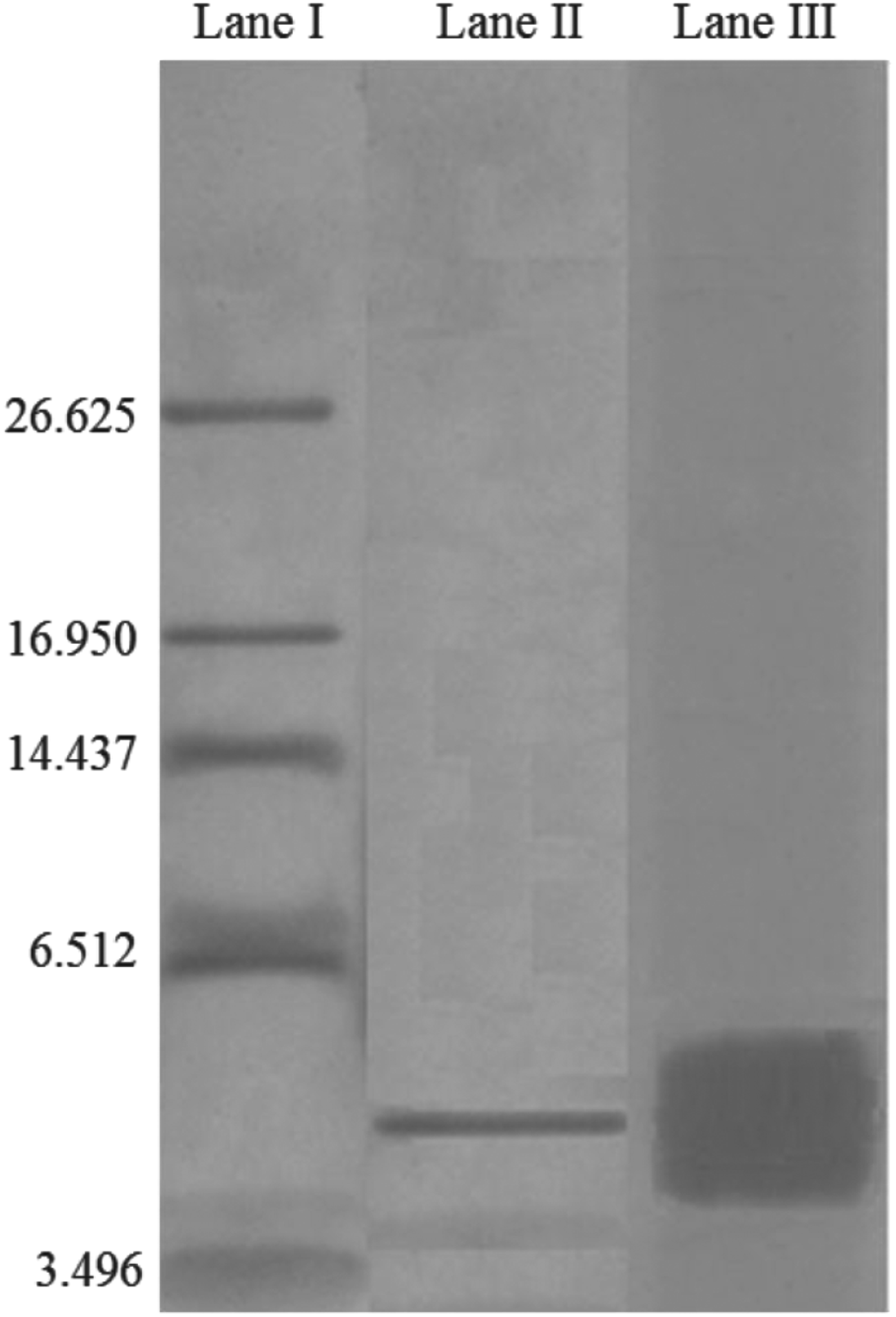
The apparent molecular size of partially purified enterocin HZ was analysed by 16 % Tricine-SDS-PAGE. After destaining, one half of the gel overlaid with Lb. plantarum displayed a clear zone of inhibition between 6·5 and 3·5 kDa reference bands (Fig. 2). The molecular weight of this band was about 4·5 kDa, which corresponds to previous results obtained for other enterocins produced by Ent. faecuim. The molecular weight of most bacteriocins from Ent. faecuim was reported between 2·5–6·5 kDa (Ohmomo et al. Reference Ohmomo, Murata, Katayama, Nitisinprasart, Kobayashi, Nakajima, Yajima and Nakanishi2000; Moreno et al. Reference Moreno, Leisner, Tee, Ley, Radu, Rusul, Vancanneyt and De Vuyst2002, Reference Moreno, Rea, Cogan and De Vuyst2003; Chen et al. Reference Chen, Yanagida and Srionnual2007; Ghrairi et al. Reference Ghrairi, Frere, Berjeaud and Manai2008; Bellei et al. Reference Bellei, Miguel, Mere Del Aguila, Silva and Paschoalin2011).
Molecular mass of enterocin HZ. Lane I: low molecular weight marker (BioRad); Lane II: partially purified enterocin HZ; lane III: Inhibition zone of enterocin HZ (the gel was overlaid with a culture of Lactobacillus plantarum in MRS agar and incubated for 24 h at 30 °C).
Inhibitory Activity against Listeria monocytogenes in BHI broth and milk
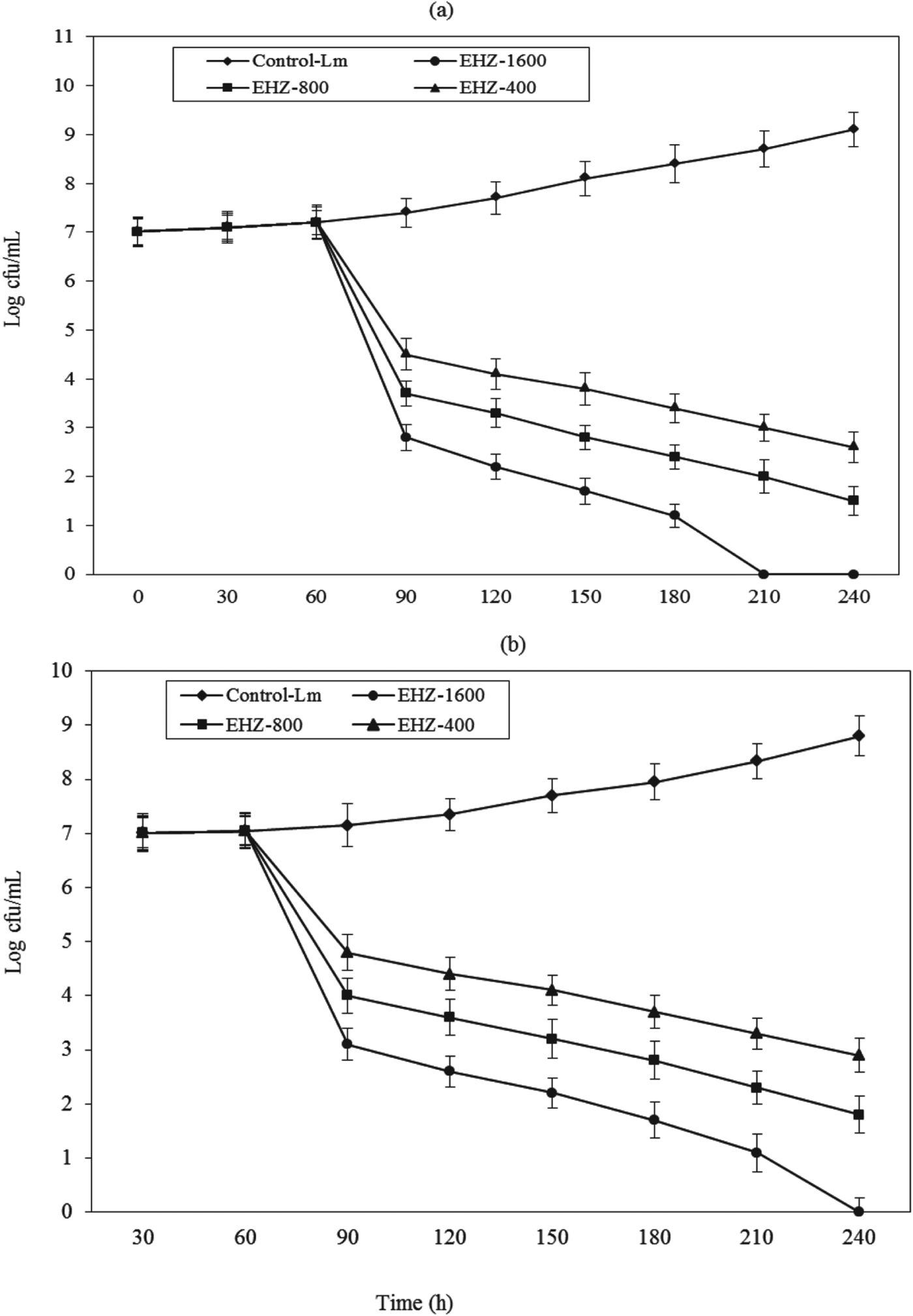
To determine whether mode of action of enterocin HZ against growing cells of List. monocytogenes was bactericidal or bacteriostatic, partially purified bacteriocin was added at different concentrations into BHI broth or whole fat UHT milk inoculated with List. monocytogenes. Enterocin HZ displayed a bacteriocidal mode of action under the experimental conditions since the number of viable L. monocytogenes cells decreased rapidly after addition of enterocin HZ (Fig. 3). The decrease in the number of listeria cells was very fast in the first 30 min of incubation and then slowly to 4 h. Over the 3 h incubation period, the reduction in viable cell number was approximately 7·0 log at 1600 AU/ml, 5·70 log at 800 AU/ml and 4·60 log at 400 AU/ml in BHI broth and 7·0 log at 1600 AU/ml, 5·25 log at 800 AU/ml and 4·15 log at 400 AU/ml in UHT milk. The efficiency of antilisterial activity was in proportion to the amount of enterocin HZ added. Milk fat and other constituents did not affect biological activity of enterocin HZ. However, it was reported that activity of nisin decreased in whole fat UHT milk due to its hydrophobic nature (Bhatti et al. Reference Bhatti, Veeramachaneni and Shelef2004).
Inhibitory effect of enterocin HZ against Listeria monocytogenes in BHI (a) or in milk (b) at 37 °C. EHZ-400: enterocin HZ 400 AU/ml; EHZ-800: enterocin HZ 800 AU/ml; EHZ-1600: enterocin HZ 1600 AU/ml.
Conclusion
Strong antilisterial activity in MRS broth and UHT milk, as well as small molecular mass and stability over a wide range of temperature and pH make enterocin HZ a good candidate to be studied as a food biopreservative. Unlike nisin and other LAB bacteriocins, enterocin HZ is more easy to use in dairy products and more effective against List. monocytogenes. In addition, Ent. faecium HZ could be used as a protective culture in food industry due to wide antibacterial activity, sensitivity to medically important antibiotics, anti-gelatinase and anti-haemolysis activity. The selective use of this bacteriocinogenic strain may improve the storage quality of foods. Further studies are required to evaluate the application of this bacterium as a protective or an adjunct culture in dairy fermentation process.
This research was partially supported by Turkish Republic Prime Ministry, The State Planning Organization (Project no 2002K120270).