Imperialism has long been associated with economic expansion. Political or military power can be used to acquire natural resources and raw materials, create overseas markets for exports, and expand the investment opportunities for home-country investors. Imperialism can potentially lead to the creation of global public goods, such as peace and stability.1
Kindleberger, “Dominance”; Lal, “Globalization”; and Ferguson, “Empire.”
Imperialism can also transform the economies of supplicants. It can facilitate the transfer of institutions that are amenable to long-run economic growth, or it can disrupt social order, creating political instability and retarding economic growth.
This article sheds light on the economic effects of empire by examining the expansion of U.S. imperial power in Latin America following the announcement of Theodore Roosevelt's 1904 Corollary to the Monroe Doctrine—a policy that signaled an important shift in political and economic relations between the United States and Latin America as well as between the United States and Europe in the Western Hemisphere. The corollary stated that the American government would ensure that Central and Latin American countries repaid their debts and that the United States would act as the region's policeman to ensure peace and stability. We make two main contributions to the literature. First, we provide a quantitative assessment of the Roosevelt Corollary and focus on how the response to its announcement in the sovereign debt market shaped U.S. foreign policy, permitting the United States to extend its “sphere of influence” in the Caribbean, Central America, and smaller countries of South America and helping to cement U.S. commercial and political objectives.2
Previous studies of the Roosevelt Corollary have not examined the response by financial markets, which can be used to draw some insights into the effects of the policy. Zevin (“Interpretation”) provides an overview of U.S. imperialism dating from the country's founding to later episodes in order to test the Marxist interpretation of imperialism; however, his focus is not the Roosevelt Corollary. Examining the Leninist critique of imperialism, Lebergott (“Returns”) examines what impact U.S. foreign investment from 1890 to 1929 had on Latin American factor returns, and concludes that it had little effect on labor incomes or landholders' capital gains in the recipient countries. LaFeber (New Empire) argues that America's imperial policy grew out of domestic economic distress of the 1890s (a point disputed by Zevin (“Interpretation”) and Becker and Wells (Economics)). Rosenberg (Financial Missionaries) examines the extension of Roosevelt's policies during the Taft administration, so-called Dollar Diplomacy.
Second, we use the Roosevelt Corollary and the experience of the United States in Central America and the Caribbean as a laboratory for testing whether empires or hegemons produce global public goods.
3 For accessible surveys on hegemonic stability theory, see Haggard and Simmons, “Theories”; and Keohane, After Hegemony.
Using newly gathered, weekly data on Latin American sovereign bond prices to analyze the impact of the Roosevelt Corollary on financial markets, we show that, on average, Central and South American sovereign debt issues listed on the London Stock Exchange rose by 74 percent after one year and by 91 percent nearly two years after the initial pronouncement of the Roosevelt Corollary. Our econometric evidence suggests that the most plausible explanation for the enormous rally that occurred in Latin American sovereign bonds was the announcement of the corollary and actions by the American government that established the credibility of the policy. Specifically, the United States sent gunboats to Santo Domingo in 1905 and took over customs collection to pay foreign creditors after it defaulted on its external debt and European powers threatened to intervene.
Although the threat was perceived as credible, the Roosevelt administration did not directly intervene elsewhere in the region in order to enforce debt repayment. Direct intervention, similar to what it had carried out in Santo Domingo, was politically and economically costly. Instead, it pursued the lower-cost strategy of serving as the region's “policeman” and a promoter of peace and regional stability. Because bond prices rose in response to the announcement and intervention in Santo Domingo, this reduced the likelihood that European powers would intervene on behalf of their bondholders, and enabled the United States to extend its regional hegemony over countries around the Caribbean Sea. As the region's power, the United States was able to provide the public goods of peace and stability. The Roosevelt administration helped to broker a lasting peace among five Central American states by 1907, which improved the probability of repayment, and ensured elections by deploying troops to provide civil order. In response to improved peace and stability, most of the countries saw either exports or government revenues (or both) rising at a faster pace than their debt service costs—suggesting an improved ability to pay. And after periods of long default, many of the republics reached debt workouts under newly negotiated terms subsequent to the announcement of the corollary. However, the historical evidence we present suggests that this was not a sufficient condition for debt settlement. Rather, recalcitrant debtors in Central America and around the Caribbean Sea were willing to enter into negotiations with creditors to resume payment on their external debt because of the threat of gunboat diplomacy and lost sovereignty, such as the U.S. seizure of foreign customs houses—a threat that was made credible by earlier U.S. intervention in Santo Domingo.
THE ROOSEVELT COROLLARY AND EUROPEAN BONDHOLDERS
The Victorian era is generally associated with the military and economic dominance of the British Empire. However, the last two decades prior to World War I saw the emergence of the United States as a new power in international relations, as its focus began to shift from settling the continent to outward expansion and engagement in world politics. According to Charles Kindleberger, the emergence of the United States at the turn of the century as a player in international politics did not signal its dominance, but rather its arrival.4
After securing victory in the brief Spanish-American War in 1898 and quadrupling spending between 1898 and 1909 to modernize its navy, the United States emerged from its isolationist past and began to exert itself on the world stage.
5 Sylla, “Experimental Federalism.”
With the annexation of Puerto Rico, Cuba, the Philippines, and Guam, and control of the Isthmus of Panama, foreign policy during the first decade of the 1900s became associated with imperialistic motives, as canonized in Theodore Roosevelt's famous quip: “Speak softly and carry a big stick.”
Despite U.S. ambitions in Latin America and a gradual shift in its policy towards it, U.S. dominance was far from certain at the turn of the century. European powers were extending their empires at this time, and saw Latin America as an open frontier for expanding finance and trade.6
Britain had used its naval power to seize the port of Corinto in 1895 in order to secure an indemnity from Nicaragua for property damage, and it had also intervened to support British Guiana in a boundary dispute with Venezuela in 1895/96, which contemporaries in the United States viewed as a guise for extending the British Empire.
7 The French were the first to try to build a canal across the Panama Isthmus in the 1880s. Although they failed after nearly 20 years, their attempt sharpened U.S. attention on the region and reinvigorated U.S. efforts to establish more naval bases and refueling depots around the Caribbean Sea, and to locate a feasible route for shipping cargo more quickly.
But the greatest threat to U.S. regional hegemony was financial instability. The nineteenth century witnessed tremendous growth in sovereign debt issue, especially in Latin America, despite the region's high incidence of default. As long as European creditors were concerned with the ability of Central and South American governments to honor their debts, the specter of European military intervention to enforce creditor claims was present. To varying degrees, European powers had exerted direct control over Egypt, Turkey, Serbia, and Greece after they defaulted in the nineteenth century, and there was concern among U.S. policymakers that a similar pattern would be established in Latin America.8
European military intervention in Latin America in 1902, in conjunction with Venezuela's debt default, marks a logical departure point for understanding the Roosevelt Corollary and how sovereign debt default shaped the policy. Venezuela had experienced a revolution in 1898, which lasted more than two years, during which time substantial foreign property was destroyed and the government ceased payments on its debt. Although the property damage was the pretext for British government involvement in the blockade, British creditors had strongly pressed their claims for a debt workout with the Venezuelan government and, after they failed, had sought redress with their own government.9
Borchard, State Insolvency, p. 270. Although it felt an obligation to protect the property and safety of its citizens, the British government was, for the most part, reluctant to intervene on behalf of its creditors in independent nations that had defaulted on their obligations. They not only recognized the moral hazard if they readily lent their support (as Herbert Spencer said, “the ultimate result of shielding men from the effects of folly is to fill the world with fools”), but they were generally averse to pursuing interventions that might undermine the confidence in new sovereign nations, and ultimately undercut British commercial interests (Lipson, Standing Guard). Such a position had been maintained by the Foreign Office at least since the defaults of the early 1820s. Exceptions to this policy, however, were numerous, including Greece, Turkey, and Egypt (Platt, Finance), and as Lipson (Standing Guard) points out, were often made for strategic reasons. As we discuss, the case of Venezuela in the Western Hemisphere is another notable exception.
President Castro of Venezuela refused to reply to foreign claimants. In response, Britain, Germany, and Italy blockaded the ports of La Guiara and Puerto Cabello and seized customhouses in December 1902. Germany also bombarded the fort at San Carlos. In February 1903 Castro acquiesced to foreign demands and signed protocols agreeing to arbitration and a gradual liquidation of Venezuelan debt. The Hague Tribunal in 1904 gave the European countries that blockaded Venezuela a preferential payment of 30 percent of claims because they had footed the bill and provided the force that resulted in benefits to all creditors. The claims of countries that did not participate in the military occupation, including those of the United States, were subordinated.
Even though he was a strong supporter of using the International Court of Arbitration at Hague, Roosevelt saw the court's 1904 decision as setting a dangerous precedent.10
Latin American countries were equally disturbed by this ruling and, in response, lobbied for the adoption of the Drago doctrine, which, under international law, would have prohibited the use of armed force to settle debts.
With U.S. interests expanding around the Caribbean Sea after its territorial acquisitions in the 1890s, Roosevelt was concerned that such a decision would provide justification for further European military action or permanent occupation in Central or South America and ultimately conflict with American commercial and strategic goals. As Roosevelt wrote to Secretary of State Root in 1904, “If we are willing to let Germany or England act as the policeman of the Caribbean, then we can afford not to interfere when gross wrongdoing occurs. But if we intend to say ‘hands off’ to the powers of Europe, then sooner or later we must keep order ourselves.”
11 As quoted in Gilderhus, Second Century, p. 29.
Signaling a shift in its relations with its southern neighbors and the culmination of earlier steps towards a new policy, the Roosevelt administration outlined a more interventionist policy in 1904, which came to be known as the Roosevelt Corollary to the Monroe Doctrine:
If a nation shows that it knows how to act with reasonable efficiency and decency in social and political matters, it keeps order and pays its obligations, it need fear no interference from the United States. Chronic wrongdoing, or an impotence which results in a general loosening of the ties of civilized society, may in America, as elsewhere, ultimately require intervention by some civilized nation, and in the Western Hemisphere the adherence of the United States to the Monroe Doctrine may force the United States, however reluctantly, in flagrant cases of such wrongdoing or impotence, to the exercise of an international police power.12
Theodore Roosevelt, 6 December 1904, as quoted in the New York Times, “The President's Annual Message,” 7 December 1904, p. 4.
The United States would police the nations of Central America, northern South America, and the Caribbean (providing peace and stability), and protect the interests of European investors by using its regional power to ensure that sovereign debts of these Latin American nations would be honored. By proposing a larger role for the United States in the region, Theodore Roosevelt aimed simultaneously to assert U.S. dominance in the region (which included the construction of the Panama Canal) and to check any military expansion by Europeans.13
Prior to this, Roosevelt took a different attitude towards European intervention in the region. In 1901 he wrote, “If any South American state misbehaves towards any European state, let the European country spank it” (quoted in Schoultz, Beneath the United States, p. 180).
The corollary to the Monroe Doctrine was first articulated by the Roosevelt administration in a speech delivered by Secretary Root on 20 May 1904. Although a new American foreign policy towards its southern neighbors had been evolving in the preceding decades, diplomatic historians and political scientists have argued that the announcement of the corollary signaled an important shift in political and economic relations between the United States and Latin America as well as between the United States and Europe in the Western Hemisphere.
14 Field, “American Imperialism,” argues that U.S. policy through 1898 had largely been a defensive response to Europe. Other historians and political scientists regard Roosevelt as the first internationalist President of the United States, and argue that the corollary marks a significant shift towards a more expansionist U.S. policy in Latin America. For examples, see Rippy, “British Bondholders”; Healy, Drive; and Becker and Wells, Economics. For the gradual change in U.S. policy towards Latin America that led to the pronouncement of the corollary, see Gardner, LaFeber, and McCormick, Creation.
Theodore Roosevelt elaborated upon his interpretation of the Monroe Doctrine in two subsequent speeches—to Congress on 6 December 1904 (as quoted above) and on 11 August 1905, when he reiterated the “duty” and “responsibility” of the United States to ensure that countries washed by the Caribbean Sea acted with “decency” and paid “their obligations”
15 New York Times, 12 August 1905, pp. 1 and 3.
THE EFFECTS OF THE ROOSEVELT COROLLARY
Movements in Central and South American Sovereign Debt Prices
In order to test the effects of the U.S. policy pronouncement on bond prices, we collected weekly sovereign bond price data from the Economist for Colombia, Costa Rica, Guatemala, Nicaragua, and Venezuela for the period 1900–1913—a sample of countries that were covered by the Roosevelt Corollary to the Monroe Doctrine and whose bonds actively traded in London.16
We would like to have included debt prices for Cuba, El Salvador, and Panama. Panama did not issue bonds that traded on the London Stock Exchange prior to the announcement of the corollary. Cuba, which was already under the U.S. sphere of influence after the Spanish American War, issued a new bond in 1904, which traded above par throughout our sample period. El Salvador's only outstanding foreign debt during our sample period was an issue of 1,000,000 pounds in 1908 by private London banks (Munro, Five Republics, p. 290).
We also collected monthly bond price data for Honduras from the
Investor's Monthly Manual. Par value for all bonds in our sample was 100 pounds sterling. Written accounts summarizing bond market activity from the
Economist and
Investor's Monthly Manual indicate that these bonds were actively traded during our sample period.
17 For example, the December issues of the Investor's Monthly Manual frequently refer to these countries' bonds as constituting a “busy” or “lively section of the Foreign market” during our sample period, and the Economist regularly commented on the active price movements of the “rubbish issues” of Central and South America (so named because they were often in default) that occurred over the preceding week.
Although one might argue that Mexico and the rest of South America should be included, the Roosevelt Administration was primarily concerned with the smaller and less stable countries in the Caribbean, Central America, and northern part of South America. Roosevelt alluded to this point in a 1906 address to Congress:
There are certain republics to the south of us which have already reached such a point of stability, order, and prosperity that they themselves, though as yet hardly consciously, are among the guarantors of the Monroe Doctrine. These republics we now meet not only on a basis of entire equality, but in a spirit of frank and respectful friendship, which we hope is mutual.18
As quoted in Schoultz (Beneath the United States, p. 190). Later, in his memoirs, Roosevelt singled out “Brazil, the Argentine, and Chile” as countries in South America that had “progress, of such political stability and power and economic prosperity … it is safe to say that there is no further need for the United States to concern itself about asserting the Monroe Doctrine so far as these powers are concerned” (quoted in Healy, Drive, p. 144). We also include Mexico in this group as this statement by Roosevelt was written after the Porfiriato; this had been a period when Mexico worked alongside the United States in establishing peace in the region.
Indeed, Roosevelt viewed Argentina, Brazil, and especially Mexico as junior partners that could help enforce the corollary. The American President, for example, pressured the Diaz government in Mexico on several occasions to annex Central America (except for Panama) to stabilize the region and worked with it to broker a peace accord among warring Central American republics in 1906 and 1907.
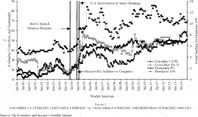
All bonds in our sample were in default at the beginning of the sample period, except for Nicaragua and Costa Rica (the latter of which defaulted in 1901). Figure 1 shows weekly bond prices for the 1.5-percent 1897 Colombian debt issue that traded on the London stock exchange for the period 1900–1913. Prices for the £2.7 million obligation traded between £10 and £20 in the first few years after the turn of the century. The Colombian security increased nearly one-third in value during the first half of 1903 following the end of a Thousand Days' War that had resulted in the deaths of approximately 100,000 Colombians. The United States dispatched the battleship Wisconsin to the region to help restore order and to assist in working out a truce among the warring factions. Debt prices fell again in response to American support of an uprising that led to the establishment of an independent Panama. Colombian bond prices decreased to about £15 before rising more than 125 percent following Roosevelt's declaration that the United States would intervene in the affairs of Latin American countries that did not honor their foreign debt obligations. Prices stabilized after a successful debt workout with bondholders in 1905.
FIGURE 1 COLUMBIA 1.5–3 PERCENT, COSTA RICA 3 PERCENT “A,” GUATAMALA 4 PERCENT, AND HONDURAS 10 PERCENT, 1900–1913
Figure 1 also shows sovereign debt prices for Costa Rica. The 3-percent A-Series 1885 bond (with an initial issue of £525,000) traded for about £30 during 1901, before falling to almost £16 in response to domestic default. The sovereign debt issue then increased from £17 sterling to nearly £60 in the year following Secretary of State Root's speech outlining the Roosevelt Corollary. The prices remained higher than pre-announcement levels and stabilized with the debt settlement that was reached in 1911.
Sovereign debt prices for the £1.6 million issue of Guatemala's 4-percent bond also appear in Figure 1. The bond displays a pattern similar to the Colombian bonds. Debt prices fluctuated between £10 and £25 during the first three years of the 1900s, reflecting repeated attempts at resolving their defaulted debt. Sovereign debt prices then increased from £15 to more than £40 between May 1904 and February 1906, again in response to the Roosevelt Corollary. In 1906 hostilities broke out between Guatemala, Honduras, and El Salvador, causing bond prices to fall. Following the signing of a peace accord, bond prices recovered.
Honduras (Figure 1) defaulted on the 1870 10-percent bond issue of £2.5 million in 1873. The announcement of the Roosevelt Corollary increased expectations regarding repayment that led to a more than doubling of bond prices between March 1904 and the end of 1905. Debt prices then fell following the start of a war with Guatemala and El Salvador, but rebounded with the signing of a treaty. Bond prices fluctuated around £10 to £11 for much of the period leading up to World War I.19
For Figure 1, we interpolated the monthly bond prices for Honduras into a weekly series to provide for a cross-country comparison of the policy/intervention shock on debt prices in a single figure. A graph of the monthly series is available in the working paper version of the article (Mitchener and Weidenmier, “Empire”).
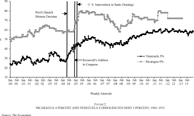
Figure 2 shows sovereign debt prices for 4-percent Nicaraguan bonds, with an initial issue of £5 million. The price increased from £50 in 1900 to £60 in early 1902. It then stabilized until late 1904 when the debt issue rose from £58 in late 1904 to £80 in the summer of 1905. Debt prices fell in 1907 following the outbreak of war with Honduras and El Salvador, and then recovered with the cessation of hostilities and the signing of treaties among five nations in Washington, D.C., later in that same year.
FIGURE 2 NICARAGUA 4 PERCENT AND VENEZUELA CONSOLIDATED DEBT 3 PERCENT, 1900–1913
Figure 2 also shows debt prices for the 3-percent Consolidated Debt of Venezuela (with an initial issue of £2.75 million) for the period 1900–1913. Bond prices rose briefly in 1901, following the arrival of three U.S. battleships that some bondholders mistakenly believed would put an end to a stand-off over property claims by U.S. companies to a pitch lake in Venezuela.20
Debt prices remained flat until the foreign blockade of Venezuela commenced in December 1902, when they increased in response to positive expectations of debt repayment. Bond prices then began a dramatic increase in the summer of 1904, from £28 in May of that year to more than £50 in early 1906—an increase of nearly 90 percent. After Venezuela reached an agreement with the Corporation of Foreign Bondholders in 1905 on its defaulted debt, prices for the 3-percent issue generally moved higher in the years leading up to World War I.
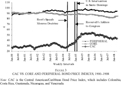
The individual country plots reveal that both the Roosevelt Corollary and country-specific events moved sovereign debt prices during the first decade of the twentieth century. To measure the average movement of sovereign debt prices for countries under the U.S. sphere of influence, we construct a Central American/Caribbean Bond Price Index (CAC). The unweighted price index is computed by averaging the sovereign bond prices of Colombia, Costa Rica, Guatemala, Nicaragua, and Venezuela.21
We do not include Honduras in the CAC Index because that would entail interpolating three out of every four observations to convert the monthly bond price series into a weekly one. Nevertheless, as suggested by the graphical analysis, including Honduras as part of the CAC Index would not change our results.
We then compare fluctuations in the CAC to two bond price indices designed to capture bond market movements in the London and world markets. The Core Bond Price Index (CORE) is an unweighted average of the prices of four “senior” debt obligations issued in London, Paris, Berlin, and Amsterdam—the most important European financial markets. The core index includes long-term debt prices for the 2.75-percent British consol, 3-percent French Rente, 3-percent German Imperial bonds, and 2.5-percent Dutch bonds. With the exception of the German Imperial bonds, all issues are perpetuities. In addition, we also construct an emerging market index (
PERIPHERAL) to provide a measure of bond returns in peripheral countries. We compute the average price of 12 long-term emerging market bonds (Argentina, Australia, Brazil, Cape Town, China, Egypt, Greece, Japan, New Zealand, Norway, Spain, Sweden) with a minimum maturity of ten years to measure sovereign debt outside of the European Core. All data are collected from the
Economist.
Figure 3 plots CAC against the CORE and
PERIPHERAL bond price indices. CAC increased approximately 91 percent in the period 1904–1906 while the CORE Index was flat and the
PERIPHERAL Index rose only 2 percent. This suggests that the effect we observe in the countries around the Caribbean Sea was not taking place in the markets of Europe or in other developing countries, but was region specific.
FIGURE 3 CAC VS. CORE AND PERIPHERAL BOND PRICE INDICES, 1900–1908
Some qualitative evidence that price movements were not related to other events can be drawn from the fact that five of the six countries in our sample were in default. Defaulted debt has no value unless there is at least the possibility of a debt settlement. Holders of defaulted debt thus have an incentive to push borrowers toward settlement (at terms that are as close to those in the original debt contract as possible). Other bond market participants would only be willing to acquire debt in default if they believed that prospects of debt settlement improved, and that they could realize capital gains on upward price movements. Even though bondholders of Central American and northern South American debt were unhappy with the state of affairs in these countries, the announcement of the corollary, ceteris paribus, would have renewed interest among bond market participants in acquiring the debt of these countries, in anticipation of realized capital gains.22
As was written about Guatemala in 1904 by the Council of Foreign Bondholders: “Another year has gone by, and Guatemala still remains in the same discreditable position as regards the payment of its debt. A reference to the history of the Debt prefixed to this Report will show that, all things considered, this Republic has, perhaps, outstripped any of the defaulting States of Spanish America in cynical disregard of its obligations to foreign creditors. In the three successive years the Government of Guatemala has repudiated three separate Agreements for the settlement of the Debt negotiated by its duly accredited representatives” (CFB, Annual Report, 1904/05, p. 231).
The importance of the Roosevelt Corollary was that it raised the hopes of settlement of long outstanding debt obligations, leading investors to purchase the bonds of Central American countries. Bond prices in Central America and northern South America experienced substantial increases after the announcement of the shift in U.S. foreign policy and before any debt settlements were effected (in the cases of Venezuela and Colombia).23
Bond prices may have increased in expectation of a greater ability to pay via improved revenues from export growth or willingness to pay in response to gunboat diplomacy. We further discuss this in the section on Hegemony and Global Public Goods Provision.
Indeed, the Corporation of Foreign Bondholders also viewed the large increase in CAC bond prices as resulting from the announcement of the new U.S. policy: “the increase in values is largely due to the idea that the recent utterances of President Roosevelt with regard to the Monroe Doctrine were intended to indicate that the United States Government would not allow the Spanish-American Republics … to evade the payment of their liabilities to their foreign creditors.”
24 CFB, Annual Report, 1904/05, p. 11.
The financial press also attributed the rally in Central American and Caribbean bond prices to the new interventionist approach of the U.S. government. The
Investor's Monthly Manual commented at the end of 1905 that Roosevelt's new foreign policy towards Central America and its involvement in the construction of the Panama Canal project “having brought the United States government into relations with some of the Republics has raised hopes of settlements of long-outstanding obligations, which in turn have given rise to intermittent spasms of excited speculation in the bonds of the States concerned.”
25 Investor's Monthly Manual, December 1905, p. 673.
And the
New York Times, on 5 May 1905, commented, “London stockbrokers are driving a roaring trade in South Americans, which have become a subject of lively, speculative interest on the theory that President Roosevelt has practically guaranteed all South American obligations. They bear the endorsement of the ‘big stick,’ so to speak.”
26 “Mr. Roosevelt as a Stock Boomer,” New York Times, 5 May 1905 as cited in Corporation of Foreign Bondholders (Annual Report, 1905, p. 186).
Econometric Tests of the Roosevelt Corollary
Although the time-series plots and the historical record from newspaper accounts suggest that bond prices moved in response to the announcement of the Roosevelt Corollary, we have not controlled for general movements in the bond market as well as other factors that could have driven debt prices in the region during this period. We now turn to a statistical analysis to address these problems and provide further quantitative evidence that bond prices moved in response to the Roosevelt Corollary. We employ a series of event studies. Our objective is to use econometric evidence to establish: that sovereign bond prices for countries under the U.S. sphere of influence behaved anomalously from the sovereign debt market as a whole; that the abnormal returns are not related to some general effect operating throughout Latin America; and that the announcement effect is not due to other plausible events taking place during the same time window. Our treatment group consists of a set of countries that defaulted, but were under the U.S. sphere of influence. Our control group should consist of a set of countries that defaulted on their debt, were located in Central America or the Caribbean, but were not under the U.S. sphere of influence. However, history did not produce a set of countries satisfying the conditions for a perfect control group. Consequently, our identification strategy relies on a series of tests to sort out these issues.
WERE CENTRAL AMERICAN AND CARIBBEAN BOND PRICES ABNORMAL?
We first estimate a market model for each of the six Central American/Caribbean countries and the CAC Index to control for general movements in sovereign debt prices. We compute bond returns by taking the natural logarithm of the bond price for country i at time t divided by the bond price of country i at time t-1. For the bond indices, we take the natural logarithm of the price relative for each country and then compute the average bond return for the six countries. The market model can be written as
where Rti is the bond return for country i at time t, a0 is a constant, βi is the time-invariant beta coefficient for country i, MKTRETt is the market return at time period t, and εt is a Gaussian white noise error term.
27 Campbell, Lo, and MacKinley, Econometrics.
β
i is a measure of the correlation of the bond return for country
i with the market index. We employ
CORE and
PERIPHERAL as our measures of market returns in the leading European financial centers and emerging markets, respectively. The CAC Index and sovereign debt prices are, for the most part, correlated with market returns at the 1- or 5- percent levels of significance.
28 The market model results are reported in a longer, working paper version of the article (Mitchener and Weidenmier, “Empire”).
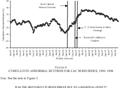
We then use the market model to provide further insight into the period following the announcement of the Roosevelt Corollary. We use it to calculate cumulative abnormal returns (CAR) for each bond series as well as for our different bond prices indices.29
We converted the weekly bond price indices into monthly ones by using the price on the Friday nearest the end of the month as a proxy for the monthly closing price. We then used the monthly bond indices to calculate abnormal returns for Honduras.
CARs are calculated by taking the partial sum of the residuals in equation 1. A CAR analysis is useful because it provides a week-by-week assessment of bond returns in Central America relative to the overall market. The CARs can then be used to determine if important political and economic events coincide with excess returns in financial markets. The results for the CAC index are plotted in
Figure 4. Whether we examine the countries under the U.S. sphere of influence individually or aggregated, all of them exhibit large abnormal returns by 1905.
30 Consistent with our hypothesis that gunboat diplomacy raises bond prices, we also find that Venezuela experienced abnormal returns as a result of the European blockade in 1902. However, the effects are smaller than those associated with the Roosevelt Corollary and subsequent actions by the U.S. government to make it credible. Individual country plots of CARs are available in a working paper version of the paper of this article (Mitchener and Weidenmier, “Empire”).
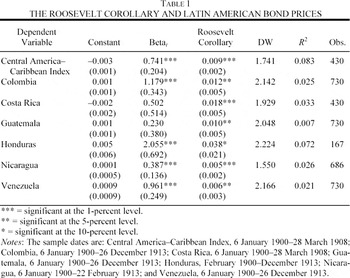
To test whether the Roosevelt Corollary was statistically significant, we also included a dummy variable in the market model, which was set equal to one for the period May 1904 to May 1905. For all the countries under the U.S. sphere of influence and for the CAC Index as a whole (CAC), the Roosevelt-Corollary dummy variable was statistically significant at the 5-percent level, except for Honduras, which was significant at the 10-percent level (
Table 1).
31 As a robustness test, we also calculated cumulative total returns for the Central American-Caribbean Index (CAC). This may be useful because the bonds we are considering were in default. The cumulative returns for countries under the U.S. sphere of influence hover around zero until the announcement of the corollary, after which they rise to over 60 percent in one year (See Mitchener and Weidenmier, “Empire”). We also tested each sovereign debt series for multiple structural breaks using the Bai-Perron structural break methodology (Bai and Perron, “Estimating and Testing Linear Models”). For each country and our Latin American Index, we find a statistically significant structural break in the period following the announcement of the Roosevelt Corollary.
FIGURE 4 CUMULATIVE ABNORMAL RETURNS FOR CAC BOND INDEX, 1900–1908
WAS THE MOVEMENT IN BOND PRICES DUE TO A REGIONAL EFFECT?
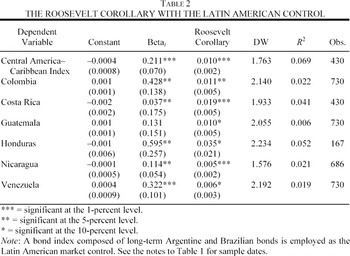
Having shown that CAC bond price movements exhibit abnormal returns, we now consider whether the large upward movement in Central American and Caribbean bond prices may simply have been part of a broader rally in Latin American securities. We employ Argentine and Brazilian sovereign debt issues to control for a general Latin American effect. As we described earlier, these two countries were unlikely targets of U.S. intervention because they are farther removed from the focus of American foreign diplomacy and economic interest, which was centered on the Caribbean Sea. For both countries, we employ 4.5-percent long-term gold bonds that were issued and actively traded on the London exchange. Table 2 reports the regression results of bond returns for the Central and Caribbean countries and the CAC Index on a constant, a bond index of long-term securities for Argentina and Brazil, and a dummy variable for the Roosevelt Corollary. The Roosevelt Corollary remains statistically significant at either the 5-or 10-percent level, and the economic effect is nearly identical to the results from the market model. Perhaps an even stronger test would be to consider a country within the Caribbean Basin, but not under U.S. sovereignty. This would allow one to isolate whether there was a general effect related to Central America, but not related to U.S. policy. Located on the Caribbean Sea, British Guiana was a colony and unlikely to be bombarded by U.S. gunboats enforcing debt repayment. We therefore examined bond prices for British Guiana's sovereign debt and found no abnormal returns for them.32
Although the behavior of British Guiana may be idiosyncratic due its concentrated commercial interests, bond prices for its 4 percent bonds remained stable and did not experience abnormal returns during the 1904–1906 period, while the CAC increased more than 90 percent.
IS THERE AN ALTERNATIVE EXPLANATION?
The statistical evidence thus far suggests that sovereign debt prices for Caribbean and Central American countries under the U.S. umbrella of influence exhibited positive cumulative returns beginning in 1904. Although the business press from the period and statements by the Corporation of Foreign Bondholders suggest that the main factor moving bond prices in this region was the announcement of the corollary and the subsequent actions of the U.S. government, we nevertheless want to consider whether there is an alternative interpretation that might also be consistent with the behavior of the data. Perhaps the most plausible alternative explanation to the debt enforcement hypothesis is that Central American and Caribbean bond prices increased in response to the United States gaining control over the Panama Canal Zone following the resolution of a political struggle over rights to the isthmus. The construction of the Panama Canal could have generated higher bond prices if bond market participants in England anticipated that it would reduce shipping costs and increase regional trade in the area. This might lead to greater trade and an improved ability for Central American countries to pay off their outstanding debts.
American interest in a canal to connect the Atlantic and Pacific Oceans intensified in the late 1890s as the United States pursued an expansionist foreign policy by incorporating the Hawaiian Islands, colonizing the Philippines, and taking de facto control of Cuba. In 1898 President McKinley appointed a commission to investigate the cost and feasibility of building a canal through Nicaragua or the Panamanian Isthmus. Although the commission initially recommended Nicaragua, the decision was subsequently overturned by Congress following some political maneuvering by supporters of the Panama route.33
The Spooner Act, passed on 28 June 1902, called for the establishment of a canal commission to investigate problems with building a canal across the isthmus. The legislation also granted Roosevelt the power to negotiate the construction of a canal with Colombia and to buy out the French company that owned the rights to the land and had begun construction. Colombia rejected a proposed treaty with the United States in August 1903, prompting Roosevelt to support a revolution in Panama that led to the creation of the new country. Roosevelt officially recognized an independent Panama in November 1903 and negotiated a treaty that granted the United States a 99-year lease of the Canal Zone and a 10-mile wide area around it. The United States took control of the Canal Zone in February 1904, began construction two years later, and completed the project in 1914.
The proximity in timing between the United States gaining control of the Canal Zone and the announcement of the Roosevelt Corollary potentially introduces an identification problem in explaining the behavior of bond prices. To examine whether this alternative hypothesis has any explanatory power, we constructed an additional test with a covariate to identify the trade effects of the Panama Canal. An ideal control would be a country whose trade would benefit from the construction of the Panama Canal, but would be insulated from either the influence of the Roosevelt Corollary or debt settlement. We employ the returns for long-term Chilean bonds trading on the London stock exchange to proxy for the effects of the Panama Canal.34
The Chilean returns will contain both a market and Panama Canal effect. Alternatively, we ran regressions including both Chile and the CORE market return separately. The results were similar to what we report in Table 3.
Located on the west coast of South America and possessing no Atlantic port, Chile was well positioned to benefit from the construction of a canal. Its high-value exports of minerals and nitrate would no longer have to sail through the dangerous Straits of Magellan to reach New York and Liverpool.35
We also would have liked to include bond prices for Ecuador and Peru in the analysis. Unfortunately, the Economist and Investor's Monthly Manual did not quote debt prices for the two South American countries during this period.
The American business publication
Dun's Review commented in 1906 on the potential gains in trade for the west coast of South America from the construction of a Canal. “The completion of the Panama Canal ought to very profoundly influence the commerce between the United States and the west of South America.”
36 Dun's Review, 26 November 1906, p. 4.
Nearly a year later,
Dun's Review noted that “the most important traffic in this whole coast is that in nitrate of soda and minerals arising in the region of Iquique, in northern Chile, which is about half way up the length of the South American coast. The saving in distance to New York is over 5,000 miles.”
37 Dun's Review, 21 September 1907, p. 9.
Furthermore, Chile faithfully serviced its sovereign debts during the gold standard period and was widely considered more stable and secure than most countries in Central and South America.38
Given its record of debt repayment and distance from the United States, Chile was an unlikely target of gunboat diplomacy. Therefore, any movement in its sovereign debt prices in 1904–1905 would most likely reflect gains from expanded trade via the proposed Canal rather than a Roosevelt Corollary effect. We therefore use Chile to deal with the identification problem.
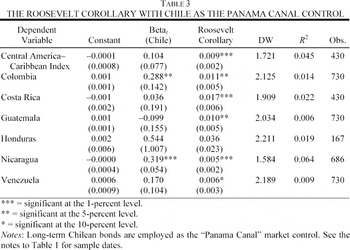
Table 3 shows the results of regressing the bond returns for the CAC Index and the individual bond returns for each country on a constant, the return on 4.5 percent Chilean (sovereign) bonds trading on the London stock exchange, and the corollary dummy for the period 1900–1913.39
We also tested to see if Chile experienced abnormal returns by regressing its bond return on a constant, the market index, and the corollary dummy. The indicator variable was not significant at the 5-or 10-percent level and the size of the coefficient was approximately one-eighth the magnitude of the corollary variable on the CAC Index. In addition, we tested to see if the passage of the Spooner Act (1902), which granted Roosevelt the power to negotiate the construction of a canal with Colombia, led to abnormal bond returns for Central American countries. If the Panama Canal had a large effect on bond prices, then one would expect that forward-looking bond traders would have bid-up debt prices in response to the Spooner Act and the creation of the Isthmian Canal Commission, which signaled the United States' intentions to build a canal across Central America in the near future. We regressed the bond returns for the CAC Index and each individual Central American country on a constant, the market return, and a dummy variable that takes a value of one for the period July 1902 to June 1903, the year following the passage of the legislation. The dummy variables are all insignificant at conventional levels except for Colombia, where U.S. gunboats intervened in 1902 and 1903 to help put an end to a long civil war.
Because an upward movement in Chile's bond prices over the period 1904–1905 may reflect country-specific factors, the overall market effect, and the effects of expanded trade via the canal, we are “over-controlling” for the effects of the Panama Canal. The regressions show that the corollary dummy variables remain statistically significant at the 5- or 10-percent level, except for Honduras, and the sizes of the coefficients are almost identical to those obtained using the market index. The empirical evidence thus suggests that the potential opening of the canal was not the major factor moving Central American and Caribbean bond prices strongly upward in 1904 and 1905.
40 The lack of a strong Panama Canal effect in our data may simply reflect that the Roosevelt Corollary countries would not benefit nearly as much by the opening of the Panama Canal compared to other countries in the region because all of them already had Atlantic-facing ports (enabling them to trade easily with Europe and North America).
One possible explanation for the absence of a significant trade effect is that bond traders heavily discounted news regarding construction of the Panama Canal. The French Canal Company had failed to build a canal across the isthmus in the late nineteenth century and market participants were simply unconvinced that the American experience would be any different or that the canal would be completed anytime in the foreseeable future. Because the process of conceiving of an American-controlled canal across the isthmus (Bidlack Treaty of 1846) to actual completion of construction took more than 60 years, it may be too much to expect that high frequency data on sovereign debt prices could identify this slow-moving historical process. Moreover, even after the United States established the right to construct the canal in Panama, its final date of completion was far from certain. As reported in the financial press, canal engineers estimated, as of l905–1906, that it would not be completed for somewhere between eight and 12 years into the future.41
Estimates on the completion date are from Dun's Review, 26 February 1906, and Brad-street's, 17 June 1905.
This uncertainty may have dampened any response by British investors to the canal. Some commentators in the financial press even questioned the potential increase in trade from the completion of the canal, noting that the economic effects largely depended on the toll schedules that apparently had not even been discussed by American officials: “The probable use of the canal will be greatly influenced by the rate of tolls. This is one of the things to which the government has apparently as yet given no attention, but is one which must be eventually settled as the result of much careful thought and study, for nothing will more profoundly influence the use and value of the canal.”
42 Dun's Review, 21 September 1907, p. 9.
Although our statistical tests are by no means perfect, they nevertheless seem to cast serious doubt on the most plausible alternative explanations.43
We also tested to see if the Roosevelt Corollary had an effect on long-range U.S. investments in the region during this period, which may have increased the capacity of these countries to service their debts. To test this hypothesis, we examined the behavior of stock returns for United Fruit, a U.S. company that was perhaps more committed to Central America than any other at this time, with millions of dollars invested heavily invested in fruit trees, plantations, and railroads. We were unable to reject the null hypothesis that United Fruit experienced normal stock returns following the announcement of the Roosevelt Corollary. For more details, please see the working paper version of this article. Lewis (“America's Stake”) and Wilkins (“Emergence”) discuss American investment in Central and Latin America during the early twentieth century.
Moreover, what is most striking about the time-series plots for the countries under consideration is that the run-up in sovereign debt prices occurs simultaneously. If broader market integration (driven by either investment or trade) were the underlying causal mechanism for this coincident behavior, then there would have to have been a significant region-specific shock to either trade or investment that could explain the response seen in bond markets. However, there was no large, discrete change to investment that occurred during the 1904–1905 period, and the only plausible trade shock that may explain the run-up at that time, the Panama Canal, seems to have little power as an explanatory variable.
MAKING THE THREAT CREDIBLE
A positive response in bond markets facilitated the success of the Corollary and U.S. regional hegemony. If the United States could convince European nations that their creditors' interests would be taken care of, then the likelihood of military intervention or occupation by Europeans in the Western Hemisphere would be reduced. Moreover, if market participants believed the threat of U.S. intervention and potential occupation in countries that shirked on payment was credible, perhaps through a substantial commitment of resources, then they would respond by bidding up sovereign debt prices in the London market on countries under the U.S. sphere of influence. This, in turn, would reduce the pressure for European nations to offer assistance to bondholders.
The process of convincing the European bond markets that the United States would intercede in Latin America on their behalf was reinforced by actions and a dedicated commitment of resources. There were unprecedented tours taken by U.S. diplomats as well as American gun-boats. For example, in July 1906, Secretary Root began a several-month tour through Latin America that extended to many other cities besides Rio, which was hosting the Pan-American Congress.44
Bradstreet's commented that “so long a journey by an American Secretary of State outside of his own country is a novelty, and it is likely that it will be productive of important results in relations between the United States and Latin American republics.” (Bradstreet's, 7 July 1906, p. 1)
And the American navy embarked on a two-year circumnavigation of the globe including port calls throughout Latin America beginning in 1907. Most notably, however, was U.S. fiscal intervention in Santo Domingo (Dominican Republic) in 1905.
Under the corrupt regime of dictator Ulysses Heureux, Santo Domingo (Dominican Republic) had spent profligately and accumulated a large national debt. Heureux was assassinated in 1899, civil war broke out, and Santo Domingo defaulted on its debts. Foreign warships were threatening to land troops and seize available customs revenues as payment for delinquent debts in 1904. The United States then sent the cruisers Newark and Columbia and the training boat Hartford to Santo Domingo in February 1904, and bombed the ports at Duarte and Pajarito to quell an uprising.45
Bradstreet's, 27 February 1904, p. 1.
The initial foray of gunboat diplomacy by the United States likely explains why the run up in sovereign debt prices began just slightly before Root's actual announcement—as it was an early signal that the United States was potentially willing to expend resources in the region to enforce debt payment. The Republic of Santo Domingo, facing bankruptcy, was forced to agree to terms with its international creditors in a treaty signed in July; it then failed to honor the terms of the treaty.
The Roosevelt administration, recognizing that European nations were likely to intervene on behalf of their disgruntled bondholders, as they had done in Venezuela, unilaterally took action by sending gunboats and troops to Santo Domingo to assist in the collection of customs duties after a request by President Carlos Morales in December 1904. It quickly assumed the role of the fiscal agent of the country—a role similar to what Europeans had previously played when Turkey and Egypt had defaulted.46
According to the business press, in January 1905, European nations requested that either the United States assist in collecting customs revenue and bring order to the “financial chaos” in Santo Domingo, or “assent to action to that end being taken by certain European creditors of that republic.” (Bradstreet's, 28 January 1905, p. 1).
This was especially noteworthy as Great Britain, France, Belgium, Holland, and the United States had earlier agreed to mutually intercede and jointly collect customs if Santo Domingo defaulted.
47 Fenn on the Funds (1898, 16th edition, p. 471).
On 7 February 1905 the Dominican government signed a treaty with the Roosevelt administration authorizing the United States to act as General Receiver and collector of customs.
48 During the week of 11 February, Roosevelt told the U.S. Congress that the negotiated treaty with Santo Domingo is necessary in order to enforce the Monroe Doctrine and stave off European intervention in the Americas (Bradstreet's, 18 February 1905, p. 1).
Forty-five percent of the collected revenue was to be used to settle Santo Domingo's internal obligations, with the remainder placed in a trust and used to pay off creditors according to their claim amounts. With the ratification of the treaty bogged down in the U.S. Senate and foreign creditors pressuring Santo Domingo for claims, Roosevelt circumvented the U.S. Senate, and with authorization from President Morales, exercised a diplomatic tool known as
modus vivendi to assist the Dominican government and begin customs collections as outlined in the treaty. A U.S. citizen was nominated to act as receiver and Morales allowed the United States to enter into possession of all the customs houses to assure repayment to external creditors.
As a further signal of their commitment to involvement in the region, the United States repeatedly sent warships to Santo Domingo to put down numerous attempts at rebellion after the treaty was signed and to protect the customhouses under U.S. control. To stop smuggling so that revenues could be collected and foreign claims honored, the American General Receiver of Customs in Santo Domingo organized a force of 120 Dominicans to police the land and customs offices.
The degree of U.S. intervention in Santo Domingo in 1905 took British bondholders by surprise:
The past year has witnessed a new and altogether unexpected development in connection with the Debt of this country especially with regard to the rights of English holders of Santo Domingo Bonds, which were defined and guaranteed by the International Arbitration Award of July, 1904 … Payments were duly made by the United States Government to the Improvement Company, and arrangements were in course of completion for a settlement with the English holders of Dominican Bonds included under the Arbitration Award.49
Statement of Bondholders of Santo Domingo, CFB, Annual Report, 1904/05, p. 21.
But it met with bondholder approval and was seen as evidence that the United States would intervene elsewhere in the region.50
Rippy, “British Bondholders,” p. 198.
That the actions taken by the United States in Santo Domingo reinforced the credibility of the shift in U.S. policy can also be seen by comparing the reaction in the press and by bondholders before and after the Santo Domingo intervention. Prior to the agreement that was reached with President Morales,
The Daily Mail in London wrote:
The little gamble which has been going on in Central American Securities lately naturally finds favor with Stock Exchange speculators. They have read in the recent utterances of President Roosevelt and Mr. Root an intimation that the Monroe Doctrine is capable of being extended into more than a cry of ‘Hands off’ to European interests. Some good folk even see a hint that the United States is disposed to go gunning in Central America on behalf of the British and other European investors. It is an entertaining idea, but one that unfortunately may end in mere theory.51
“Central America,” Daily Mail, 5 January 1905, as cited in Corporation of Foreign Bondholders (Annual Report, 1905, p. 173).
After the intervention, Europeans who held the debt of other Latin American countries in default were emboldened by the U.S. intervention in Santo Domingo. In a letter to the U.S. State Department on 10 March 1905, British bondholders of Colombian debt wrote about the need for the United States to intervene in Panama to secure payment of Panama's share of Colombian debt:
The President then gives as a special reason for the intervention of the United States in the Case of Santo Domingo, that certain Foreign Governments were becoming importunate and pressing their unsatisfied claims against the Dominican Government. We had therefore, we submit, good reason to hope that the President would be prepared to assist the holders of Colombian Bonds, whose claims are at least as good as those of the Santo Domingo Bondholders, and who, we venture to think, have a right to especial [sic] consideration in view of the prejudice which they have suffered in consequence of the secession of Panama from Colombia.52
CFB, Annual Report, 1904–1905, p. 97.
Similarly, British bondholders, who were frustrated at the repeated failure of Guatemala to come to an agreement with the CFB, stated in 1905 that “if the United States Government is really prepared, as it has intimated, to put pressure on the defaulting Spanish American States to respect their obligations, it would be difficult to find a better case to commence with than that of Guatemala.”53
CFB, Annual Report, 1904–1905, p. 238. See also the London-based publication, the Financier, 18th edition, 1905, which states that “those who are in touch with Central American affairs are convinced that the establishment of a Protectorate over these Republics by the United States is only a question of time, and in that event Uncle Sam would probably establish control over the Customs, as in the case of Santo Domingo.” (Corporation of Foreign Bondholders, Annual Report, 1904–1905, p. 177).
HEGEMONY AND GLOBAL PUBLIC GOODS PROVISION
Kindleberger and Deepak Lal have suggested that empires are particularly well suited to the provision of global public goods, and argue that peace and financial stability are two “goods” that hegemons or empires might be capable of providing. Charles Wyplosz suggests international financial stability is a global public good, or more aptly, financial instability is a global public bad, because it is associated with outcomes that affect nonmarket participants and that potentially spill across national borders.54
Kindleberger, “Dominance”; Lal, “Globalization”; and Wyplosz, “International Financial Instability.”
David Hamburg and Jane Holl argue that preventing deadly conflict and providing security fosters conditions that are indivisible and nonexcludable and that offer benefits or positive externalities to inhabitants of a region, not just among warring parties.
55 Hamburg and Holl, “Preventing Deadly Conflict.” Hegemonic stability theory holds that international regimes are defined by the rise and fall of a global hegemon that sets the rules of the game (Haggard and Simmons, “Theories”). Applied to Central America and the Caribbean, the United States provided two collective goods, peace and financial stability, that are beneficial to the hegemon as well as to the countries in the region. Other nations also consume the collective goods and try to free ride off the United States to avoid paying the costs of producing them. The United States must remain committed to pressuring or persuading other countries, such as Mexico, to support the system. Otherwise, the system will collapse. As discussed in the text, the United States provided a limited supply of collective goods (an incentive-compatible amount) because American intervention in Santo Domingo significantly reduced the threat of European intervention. This may also explain why Central American and Caribbean bond prices increased dramatically after the change in American policy, but did not rise enough to be considered investment grade securities.
The willingness and ability of the United States to provide the public goods of peace and financial stability in the region were made possible by the response of the sovereign debt market in London as well as commitments to other strategic and commercial goals. If the Corollary had not been seen as credible and if bond prices had not risen, then it is likely that European powers would have wanted to maintain a stronger regional presence to enforce property rights claims rather than acceding to U.S. policing for dealing with recalcitrant debtors. However, by the end of 1905, Britain had deferred to U.S. leadership in the region, and Roosevelt believed that he had successfully impressed upon the Kaiser of Germany that “violation of the Monroe Doctrine by territorial aggrandizement on his part around the Caribbean meant war, not ultimately, but immediately, and without delay.”56
As quoted in Healy, Drive, p. 72.
With Europe pacified, the United States could pursue strategic footholds for its navy around the Caribbean Sea, build and control the Panama Canal with little opposition, and expand its commercial interests in the region. However, maintaining a constant police presence in the region in order to secure these goals was fiscally and politically costly. A far cheaper means of advancing its interests was to promote peace and regional stability. As J. S. Mill suggested, a climate of improved stability and lasting peace would draw overseas investment to the region, promote exports, and stimulate growth. Moreover, promoting peace yielded an additional dividend to the United States: improved prospects of debt repayment by sovereigns (which lowered U.S. “collection” costs and reduced the likelihood of European intervention.)
According to political scientists, peace in Central America became the chief goal of American foreign policy after 1905, and for the remainder of Roosevelt's presidency.57
Healy, Drive. Leonard, Central America, suggests Secretary of State Root rejected the routine use of force as a means for achieving stability. Writing about U.S. foreign policy towards Central America in 1918, Dana Munro (Five Republics, p. 304) wrote, “The establishment of peaceful government in the Isthmus is a matter in which we are deeply interested for political reasons.”
The Roosevelt administration pursued two broad strategies: operational prevention, or measures to respond to an immediate crisis; and structural prevention, or measures to keep crises from arising and from recurring.
58 This policy approach is consistent with the Carnegie Commission on Preventing Deadly Conflict.
Operational prevention included ensuring elections with troops in Cuba in 1906 and in Panama in 1908. Structural prevention began in 1906, when the United States, along with the aid of Mexico, initiated an effort to secure peace in the five unstable nations of Central America: Costa Rica, Honduras, Salvador, Nicaragua, and Guatemala. War broke out in that year, but the United States continued to pursue resolution and organized the
Marble-head Conference on 20 July 1906 to mediate peace. In one day, the conveners were able to convince the factions to cease fighting and disarm, until a new peace conference was called in September. War continued sporadically until the United States (with the help of Mexico) was able to broker a lasting peace among the five states at the Central American Conference in Washington, D.C. in 1907. Eight treaties and conventions were signed and ratified, including provisions that made arbitration of disputes in a new Central American Court of Justice compulsory. Under U.S. stewardship, the court succeeded in bringing peace to the republics for the next several years.
59 As historian Jurgen Buchenau (In the Shadow, p. 78) has written, “Equally significant, the Washington Conventions diminished the likelihood of future trouble, since all Central American states had signed the treaties. Thus, the treaties promised to reduce the probability of U.S. intervention in Central America.”
In light of these efforts by the Roosevelt administration to stabilize the region, contemporaries, such as Dana G. Munro of the Carnegie Institute of International Peace, argued that the United States had “already achieved one of its main objects, in that revolutions and international wars have been checked throughout the Isthmus.”
60 Munro, Five Republics, p. 307. The United States also intervened in Sonora, Mexico, to quell a rebellion in 1906, re-occupied Cuba between 1906 and 1909 to prevent a Civil War, and landed troops in Honduras to settle a war with Nicaragua in 1907.
The Roosevelt Corollary (and its implied threat of force) and subsequent diplomacy may have managed to reduce conflict in the region, but U.S. strategy in securing regional financial stability was subject to scrutiny by European bondholders. Despite the success in extracting payment from Santo Domingo for foreign bondholders, the United States did not follow this episode with regular intervention around the Caribbean on behalf of bondholders. To the dismay of some European bond-holders, the United States was unwilling to apply the corollary and use force on behalf of foreign bondholders to ensure repayment of debt in “flagrant cases of wrongdoing or impotence.” The lack of widespread intervention by the United States to enforce debt repayment, coupled with the outbreak of war in Central America, may explain the decline of Central American bond prices in 1905–1907. The frustration of British creditors holding the bonds of countries such as Colombia, Guatemala, and Costa Rica is described in the Annual Reports of the Corporation of Foreign Bondholders. For example, writing in the 1908 CFB report, the Council of Foreign Bondholders wrote:
The President has stated that it is the duty of the United States to see that the Spanish-American Republics “behaved with decency in industrial matters and paid their obligations.” So far, however, far from putting pressure on Guatemala in order to obtain payment of the long-established Debt due to the Bondholders, the United States Government in 1906 lent its powerful support to a new Contract, made between the Government of Guatemala and an American Syndicate, under which the export duty of Coffee, pledged to Bondholders in 1895, and the 30 per cent of the Customs Duties payable in gold, promised to them under the Agreements of 1903 and 1904, were handed over to the Syndicate.61
CFB, Annual Report, 1908, p. 13.
Did the U.S. fail to provide the public good of financial stability as British bondholders' complaints suggest? Our interpretation is that it did not, but that the United States chose a policy path that was less costly and also compatible with its broader strategic and commercial goals. A strategy of repeated intervention would have been an inferior policy once the sovereign debt market in Europe responded favorably to the corollary. The United States gained an important strategic advantage when market participants bid up sovereign debt prices: the reduced threat of conflict with Europe made expansion in the region less costly. But the lack of regular intervention elsewhere in the region does not imply that the United States failed to improve financial stability in the region. U.S. involvement in Santo Domingo sent a signal to countries under its sphere of influence that it was willing to intervene to promote repayment, which in turn led to improved prospects for defaulting countries to make payments or reach new debt accords.
As it would be quite difficult to construct the appropriate counterfactual (what would have occurred in the absence of the implied threat of loss of sovereignty and U.S. efforts to promote regional stability), we present several pieces of supporting evidence that are consistent with the view that the corollary increased the prospects for the repayment of sovereign debt. First, even though the United States did not always work directly with British bondholders to secure debt relief, debt settlements were nevertheless reached with Colombia and Venezuela in 1905, Costa Rica in 1911, and Guatemala in 1913.62
CFB, Annual Report, 1911, p. 13.
It is quite impressive that most of these countries in default came to terms with bondholders considering that they had been in default for long periods prior to 1904. Costa Rica agreed to a debt settlement with foreign creditors because the country feared that the United States would take control of its customs houses.
63 Munro, Five Republics, p. 313; and Schulzinger, U.S. Diplomacy, p. 49.
Shortly after coming to terms with foreign bond-holders, Colombia and Costa Rica managed to float new issues of bonds in Paris, the former in 1909 and 1913 and the latter in 1911. In 1910, following pressure by the United States, Nicaragua signed the Dawson Pact to promote debt repayment. The agreement required Nicaragua to set aside a percentage of its customs receipts to repay outstanding loans.
64 Weeks, “Almost Jeffersonian.”
Two years later, Nicaragua came to terms with its bondholders after a brief default; the interest rate on Nicaragua's external debt was reduced from 6 to 5 percent. In exchange for the concession, Nicaragua allowed New York bankers and the Corporation of Foreign Bondholders (CFB) to petition the United States government for assistance if the Central American country violated the terms of the new debt workout.
65 European powers were ready to intervene in Nicaragua if the United States “did not see to it that Nicaragua fulfilled her contractual obligations.” (Young, Central American Currency, p. 136.)
The historical evidence suggests that direct intervention as well as the threat of gunboat diplomacy increased the probability of debt workouts by Central American and Caribbean countries in the years leading up to World War I.
Second, as we indicated earlier, bond prices in our Central American-Caribbean sample did not decline following the announcement. Debt prices remained well above their pre-announcement values at the end of Roosevelt's term despite disappointment among some British bondholders who were hoping for wider U.S. military intervention. Financial markets attributed much of the sustained rally in bond prices to greater peace and stability. For example, the Investor's Monthly Manual wrote that the rise in bond prices was the result of these countries “attaining a stable form of government, and in spite of temporary outbreaks the credit of their official securities is approximating European standards” and that the United States and Mexico “will be able to enforce peace among the quarrelsome States of the isthmus.”66
Investor's Monthly Manual, December 1909, p. 682. A similar statement regarding improved stability in these countries is made in the Investor's Monthly Manual in December 1908, p. 678.
Even the Corporation of Foreign Bondholders acknowledged how the peace treaties signed in Washington in 1907 raised the prospects for debt repayment for countries in default.
67 CFB, Annual Report, 1907, p. 15.
Finally, as regional peace fostered stable political regimes, it became easier for governments to collect revenue and for export-producing industries to generate earnings. As a London investment firm wrote in 1905, “If she [the United States] interferes with matters of finance no doubt that will to a certain extent prevent revolutions in these countries … and there is no doubt that the majority of revolutions that take place in the Central and Southern America arise from matters of indifferent finance on the part of the President and the Government generally.”68
“Governments Stock Investment,” 4 February 1905, as cited in Corporation of Foreign Bondholders, Annual Report, 1905, p. 175).
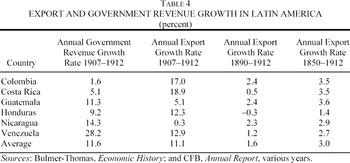
After peace was secured with the Conference in 1907, government revenues expanded, and in comparison to earlier periods, exports also grew rapidly (
Table 4).
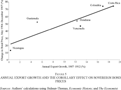
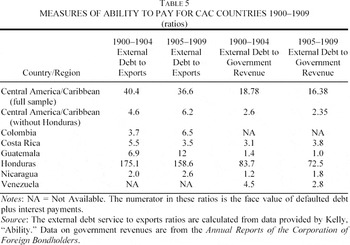
Figure 5 shows a positive relationship between export growth and the movement of bond prices (between the announcement of the corollary and the end of 1907), which is consistent with the hypothesis that the Roosevelt Corollary spurred export growth by reducing regional conflict. The ratio of external debt to exports, a measure of a country's ability to pay, declined for Costa Rica and Honduras in the five years after the announcement of the corollary; however, it increased for Colombia, Guatemala, and Nicaragua (
Table 5).
69 More precisely, the numerator in this ratio is the face value of defaulted debt plus interest payments.
The decline in the ratio of external debt to exports for Costa Rica and Honduras suggests that the Roosevelt Corollary may have improved the ability of these two countries to repay their debts.
70 If Honduras is excluded from the sample, then the Central American countries also had a lower ratio of external debt to exports than Argentina and Brazil—two countries with better repayment records.
FIGURE 5 ANNUAL EXPORT GROWTH AND THE COROLLARY EFFECT ON SOVEREIGN BOND PRICES
Cessation of hostilities in Central America during the Roosevelt presidency allowed countries in the region to reap a peace dividend, improve their revenue collection and fiscal management, and potentially increase their ability to pay off their debts.71
As the CFB stated in response to the peace agreements signed by the Central American republics: “It is to be hoped that the Governments of the Central American Republics will ratify and loyally abide by these Treaties, and that they will have the effect of putting an end to the constant quarrels which have hitherto been such a serious factor in retarding the development of the countries concerned. In the case of the States which are in default, the money hitherto spent in armaments may now well be devoted to the payment of their debts.” (CFB, Annual Report, 1907, p. 15).
As the last column in
Table 5 shows, the ratio of external debt to government revenue for Guatemala, Honduras, and Venezuela declined in the years following the implementation of the new U.S. foreign policy.
72 Due to missing observations, unreliability of the data reported, and the territorial loss of Panama and its effects on reported trade statistics, we excluded Colombia from the table.
On the other hand, Costa Rica experienced an increase in its ratio of external debt to government revenues after the announcement. The decline in the ratio for three countries suggests that the Roosevelt Corollary may have improved the ability of some CAC countries to repay their debts through improved fiscal management.
A combination of improvements in fiscal management and export earnings, brought about in part by improved regional peace and stability, increased the CAC countries' ability to service their debts. But reaching new debt workouts would likely not have been possible without gunboat diplomacy and the threat of U.S. intervention. What the Roosevelt Corollary did to effect debt settlement was to provide an enforcement mechanism for ensuring that countries were more willing to pay: it made countries under its sphere of influence think twice about staying away from the bargaining table. Until these debt agreements were reached under the watchful gaze of the Roosevelt administration and its “Big Stick” policies, these countries were viewed by the CFB as among the most recalcitrant of debtor nations.73
That the CFB regarded improved ability to pay as insufficient for inducing debt repayment or settlement is evidenced in the following statement with respect to Guatemala: “It has always been understood that a fall in the price of coffee has been urged by Guatemala as the excuse for not paying her creditors, but it would appear that this plea is hardly a valid one, as the Minister of Finance, in referring to the Decree raising the Export Duty on coffee to $6 paper, stated that: ‘This measure was, in general, well received, since all agree that this being the most productive branch of national industry, is the one called upon, in difficult circumstances, to contribute to the maintenance of the administrative expenses, whilst the favourable price of the article on foreign markets admits thereof, and as long as the Treasury can count upon other resources with which to face public exigencies.’ From the foregoing it would also appear that the Treasury can count upon other resources to meet public exigencies besides the tax on coffee. It seems, however, that the Government of Guatemala does not consider the payment of Foreign Bondholders a public exigency” (CFB, Annual Report, 1901, pp. 184–85).
Between 1870 and 1913, Central American and Caribbean countries had been in default for over 140 combined years: Colombia for 13 years, Costa Rica for 26 years, Guatemala for 31 years, Honduras for 40 years, Nicaragua for 8 years, and Venezuela for 20 years.
CONCLUSION
The history of U.S. imperialism at the turn of the century provides a powerful illustration of the effects of news on financial markets. The Roosevelt Corollary prompted one of the largest bond market rallies in the early twentieth century. Abnormal returns on sovereign debt issued by countries around the Caribbean Sea were substantial in 1904 and 1905, but not in other areas of the globe or Latin America, suggesting that the bond rally was the result of Teddy Roosevelt's new policy of intervention. Viewing the policy as credible, market participants bid up the price of bonds in anticipation of greater U.S. involvement in resolving debt disputes.
The costs of securing regional hegemony declined as the threat of European intervention in the region receded. And as prices of sovereign debt rose in London, the need for the United States to intervene on behalf of creditors fell because the primary reason for European intervention (to support creditor claims) became less of a concern. However, the United States did not have to commit to a long-run policy of direct intervention. Its commitment of resources and direct intervention in Santo Domingo sent a signal to countries under its sphere of influence that it was willing to intervene, use “Big Stick” diplomacy, and take away sovereignty; but its chief long-run strategy was to promote peace and regional security. The reduced incidence of conflict in Central America and the Caribbean encouraged exported growth and revenue collection in the region, but the threat of gunboat diplomacy or lost sovereignty, made credible by prompt U.S. intervention in Santo Domingo, led many Central American and Caribbean countries to settle long outstanding defaulted debts. The new American policy was cheaper than repeated direct intervention and improved the prospects of debt settlement by increasing the willingness of Central American countries to pay their debts. It was also incentive-compatible with U.S. commercial and military interests in the region. The response of financial markets to the corollary made it possible for the United States to provide the public goods of empire, and their provision was a cost-effective means of promoting its broader strategic objectives.
We thank Hugh Rockoff, Noel Maurer, two anonymous referees, and seminar participants at UC Berkeley, the NBER-DAE conference, and the EHA Annual Meetings for comments and suggestions. We also thank Lea Halloway for valuable research assistance, Trish Kelly for sharing data, and the Gould Institute, Lowe Institute, Leavey Foundation, Dean Witter Foundation, and the Finocchio Fund for financial support.