





Impact statement
Indigenous peoples in Bangladesh face higher mental health problems due to systemic exclusion from generating knowledge and accessing resources (e.g., healthcare, education), contributing to epistemic injustices. Both testimonial (disregarding Indigenous perspectives and lived experiences) and hermeneutical (discounting Indigenous epistemologies) injustices perpetuate health disparities and restrict the accessibility of culturally informed mental healthcare. This article offers an Indigenous framework to foster epistemic justices in mental healthcare for Indigenous peoples, including Bangladesh, by bringing reformation of health services incorporating their voices, lived experiences, and Indigenous framework of knowledge. The framework seeks to promote testimonial justice by involving Indigenous peoples in the co-creation of knowledge, valuing their lived experiences as credible, in the pursuit of developing collaborative governance and community-based mental health interventions. The integration of Indigenous practices and efforts to reduce interpretative gaps by promoting epistemic pluralism fosters hermeneutical justices. The Indigenous framework recommends strategies that will ensure epistemic injustices are effectively addressed in the mental healthcare for Indigenous peoples in Bangladesh and beyond.
Introduction
Epistemic injustice
Originally coined by philosopher Miranda Fricker (Reference Fricker2007), epistemic injustice (EI) generally refers to the unfair discrimination against a person or a group of persons with respect to their ability to know things (Kious et al., Reference Kious, Lewis and Kim2023). In other words, it is a harmful practice of disregarding the capacity of a person to engage in epistemic practices (e.g., disseminating knowledge to others and making sense of own experiences) (Crichton et al., Reference Crichton, Carel and Kidd2017). Although Fricker’s conceptualization of EI initially revolved around the experiences of further marginalization of members in disadvantaged groups in the public and private exchange of information, later it spilled over in several domains to call for social change, including in mental healthcare and research (Carel and Kidd, Reference Carel and Kidd2014; Michaels, Reference Michaels2021; Rosen, Reference Rosen2021; Kious et al., Reference Kious, Lewis and Kim2023; Sakakibara, Reference Sakakibara2023; Okoroji et al., Reference Okoroji, Mackay, Robotham, Beckford and Pinfold2023a; Côté, Reference Côté2024).
Epistemic injustices in mental healthcare
It is often argued that the field of psychiatry is susceptible to EIs due to its psychiatric concepts and diagnostic criteria, the roles of institutions, and the dynamics in real clinical settings (Kious et al., Reference Kious, Lewis and Kim2023; Sakakibara, Reference Sakakibara2023). For example, it has been argued that the experiences of people with mental health problems have been devalued to produce favorable clinical, academic, and professional knowledge (Rose and Kalathil, Reference Rose and Kalathil2019a). In addition, psychiatrists and psychologists often attempt to conform to the existing policies that are presumed to be credible within the mental health system (Okoroji et al., Reference Okoroji, Mackay, Robotham, Beckford and Pinfold2023b). These structural dynamics and devaluation can be classified into two forms of injustices – testimonial and hermeneutic injustice. Testimonial injustice occurs when an individual from a disadvantaged community (e.g., Indigenous peoples) experiences EI due to the prejudicial associations between the community and negative stereotypes (Crichton et al., Reference Crichton, Carel and Kidd2017; Kious et al., Reference Kious, Lewis and Kim2023). Hermeneutic injustice, on the other hand, occurs when the healthcare provider or the overall healthcare system lacks the conceptual resources to comprehend the recipient’s knowledgeable reports (Kious et al., Reference Kious, Lewis and Kim2023; Côté, Reference Côté2024). The testimonial injustices often stem from epistemic authority held by mental health professionals, including non-Indigenous ones. This epistemic authority tends to discount the lived experiences of those with mental health problems, particularly when the experiences clash with the dominant psychiatric or biomedical narratives (Rose and Kalathil, Reference Rose and Kalathil2019b). In addition, sanism – a deeply embedded system of discrimination and oppression also marginalizes the knowledge of people with lived experience of mental illness, contributing to testimonial injustice (LeBlanc and Kinsella, Reference LeBlanc and Kinsella2016). The biomedical model of mental healthcare often fails to recognize the complexities of intersectionality, which considers how multiple identities (e.g., race, gender, and Indigeneity) shape mental health experiences. This oversight can exclude alternative understandings of mental healthcare and Indigenous healing mechanisms, paving the way for hermeneutical injustice by interfering with the ability to make sense of the experiences in line with personal and cultural contexts (Hassall, Reference Hassall2024). Both forms of EIs have mental health implications with evidence suggesting that people experiencing EI experience feelings of humiliation, hopelessness, impaired self-confidence and self-efficacy, sense of belonging, denial of healthcare assistance, mistrust for healthcare providers, and challenges in restoring the damage caused by the condition (Omodan, Reference Omodan2023; Hassall, Reference Hassall2024; Côté, Reference Côté2024). In addition, it also affects the therapeutic relationship between the client and the mental healthcare provider (Sakakibara, Reference Sakakibara2023). Therefore, to ensure people with mental health problems particularly those from disadvantaged communities are provided with appropriate care devoid of EI and increase their adherence to the healthcare system, continued worldwide discussions on how to effectively address EI at all levels of healthcare should be made an ethical imperative. Failure to do this means EI contravenes the fundamental ethical principle of care (First, do no harm) (Freeman and Stewart, Reference Freeman, Stewart, Sherman and Goguen2019; Della Croce, Reference Della Croce2023). Recent developments have regarded EI as a crucial step to reform the traditional clinical care in mental healthcare services (Carrotte et al., Reference Carrotte, Hartup, Lee-Bates and Blanchard2021; Groot et al., Reference Groot, Haveman and Abma2022), with evidence showing that people with mental health problems have endorsed these initiatives (Newbigging and Ridley, Reference Newbigging and Ridley2018).
Epistemic injustices in Indigenous peoples
Researchers have claimed that people with mental health problems are more vulnerable to EI than those with medical conditions (Crichton et al., Reference Crichton, Carel and Kidd2017; Grim et al., Reference Grim, Tistad, Schön and Rosenberg2019; Harris et al., Reference Harris, Andrews, Broome, Kustner and Jacobsen2022; Yates et al., Reference Yates, Gladstone, Foster, Silvén Hagström, Reupert, O’Dea, Cuff, McGaw and Hine2024) because of the deeply embedded social stigma, negative stereotyping, and systemic inequalities based on race and gender sexuality (Newbigging et al., Reference Newbigging, Salla, Schön and King2024; Yates et al., Reference Yates, Gladstone, Foster, Silvén Hagström, Reupert, O’Dea, Cuff, McGaw and Hine2024). However, this vulnerability may be more experienced in those representing minority groups, particularly Indigenous communities, for example. The dismissal of Indigenous people’s voices in healthcare settings may result in misdiagnosis, inappropriate treatment, a sense of separation, and distrust toward the healthcare system. The absence of an Indigenous framework or the use of a predominantly Western framework of psychiatry for conceptualizing Indigenous people’s mental health problems reflects the practice of hermeneutical injustice. This also leads to a cycle of exclusion, inadequate mental healthcare, and systemic distrust.
EI among Indigenous peoples has been studied in relation to various systemic issues and services. These include human rights (Tsosie, Reference Tsosie2012; Townsend and Townsend, Reference Townsend and Townsend2021), equity and social justice in health professions (Blanchet Garneau et al., Reference Blanchet Garneau, Bélisle, Lavoie and Laurent Sédillot2021), public health education (Orjinta and Mbah, Reference Orjinta, Mbah, Mbah, Filho and Ajaps2022), colonization and its longstanding influence on educational systems (Adams et al., Reference Adams, Bell and Griffin2007; Heleta, Reference Heleta2016). In addition, EI has been examined in legal contexts (Altanian and El Kassar, Reference Altanian and El Kassar2021) and feminist perspectives (Johnstone and Lee, Reference Johnstone and Lee2021). In terms of services, research has explored how empowering Indigenous peoples to run their own services (e.g., child welfare services) (Leckey et al., Reference Leckey, Schmieder-Gropen, Nnebe and Clouthier2022) can address EI. However, despite these discussions, the implications of both testimonial and hermeneutic injustices in mental healthcare for Indigenous peoples remain significantly unexplored, particularly in Bangladesh.
Mental health problems in Indigenous peoples: Global perspectives
The number of the world’s Indigenous peoples is approximately 476 million, containing merely 6% of the global population (Indigenous Peoples, n.d.). Estimates inform that Indigenous peoples make up about 19% of the extremely poor (Indigenous Peoples, n.d.), and the majority (two-thirds, estimating 260 million) of them reside in Asia with 2000 diverse civilizations and languages (Errico, Reference Errico2017). While they are collectively called as ‘Indigenous peoples’, there are other expressions to identify them, especially in Asia, such as ‘hill tribes’, ‘Indigenous nationalities’, ‘tribal people’, ‘natives’, and ‘Mountain people’ (Errico, Reference Errico2017). Indigenous peoples across the world have a shared ancestral connection with their geographical location, including the lands and natural resources which are linked to their identity, culture, livelihoods, and physical and mental well-being. The unique cultural identity, including a variety of languages, often results in distinguished customary entities (e.g., leaders or organizations) separating them from the dominant society or culture (Indigenous Peoples, n.d.). Despite the world witnessing significant economic growth over the last few decades, nevertheless, Indigenous peoples have rarely reaped the benefits. Part of this failure is attributable to the nonchalant attitude of dominant groups, which is often manifested in ignoring Indigenous people’s perspectives, experiences, and direct or indirect participation in epistemic practices (testimonial injustices) (Okoroji et al., Reference Okoroji, Mackay, Robotham, Beckford and Pinfold2023b). The far-reaching impact of this indifference is taking a heavy toll on the mental health of Indigenous peoples across the world, partly due to epistemic injustice – in relation to the systemic exclusion and marginalization of Indigenous peoples in producing, disseminating, and validating knowledge (hermeneutic injustices). Both testimonial and hermeneutic injustices contribute to the ongoing systemic marginalization, increasing the vulnerability of mental health problems (Levin, Reference Levin2022).
Indigenous peoples worldwide are at greater risk for mental health problems compared to their non-Indigenous counterparts (Kirmayer and Brass, Reference Kirmayer and Brass2016; Zhang et al., Reference Zhang, Hou and Liu2025). Research has shown that depression, anxiety, psychological distress, stress, including academic stress, suicide, alcohol and or other substance use, and trauma are the key mental health issues among Indigenous peoples (Grayshield et al., Reference Grayshield, Rutherford, Salazar, Mihecoby and Lunan.d.; Armenta et al., Reference Armenta, Whitbeck and Habecker2016; Tucker et al., Reference Tucker, Wingate, O’Keefe, Hollingsworth and Cole2016; Tucker, Wingate, et al., Reference Tucker, Wingate and O’Keefe2016; Paradies, Reference Paradies2018; Chee et al., Reference Chee, Shorty and Robinson Kurpius2019; Matheson et al., Reference Matheson, Foster, Bombay, McQuaid and Anisman2019; Li and Brar, Reference Li and Brar2022). Of all reported mental health problems, the rate of suicide has been found to be disproportionate (0–187.5 suicide deaths per 100,000 population) among Indigenous peoples as evidenced in a systematic review with 99 studies conducted in 30 countries and territories (Pollock et al., Reference Pollock, Naicker, Loro, Mulay and Colman2018). The review also noted that in some cases the rates were more than 20 times higher among Indigenous peoples. Evidence also showed that the rates of suicide are more pronounced among Indigenous youth (Lehti et al., Reference Lehti, Niemelä, Hoven, Mandell and Sourander2009; Harder et al., Reference Harder, Rash, Holyk, Jovel and Harder2012). Considering the gravity of suicide among youth, it has been labeled as a ‘youth epidemic’ (Leenaars, Reference Leenaars2006). In addition to suicide, the rate of alcohol use is higher among Indigenous peoples, especially among youth (Stanley et al., Reference Stanley, Harness, Swaim and Beauvais2014). Moreover, poorer levels of well-being and evaluation of own health, self-esteem, and life satisfaction have also been reported (Houkamau et al., Reference Houkamau, Stronge and Sibley2017). Indigenous peoples also experience physiological complications such as obesity, type 2 diabetes mellitus, cardiovascular diseases, increased blood pressure, asthma, excess body fat, poor sleep, poor oral health, and increased tobacco consumption (Gracey and King, Reference Gracey and King2009; Huffman and Galloway, Reference Huffman and Galloway2010; Paradies, Reference Paradies2018; Jamieson et al., Reference Jamieson, Hedges, Peres, Guarnizo-Herreño and Bastos2021). All these consequences can have a synergistic impact on the overall life expectancy. For example, estimates show that Indigenous peoples’ life expectancy is up to 20 years lower than those of non-Indigenous peoples worldwide (Indigenous Peoples, n.d.).
Factors impacting Indigenous peoples’ mental health
One of the key factors contributing to the disproportionate mental health repercussions among Indigenous peoples across the world has mostly revolved around the impacts of colonization (Duran and Duran, Reference Duran and Duran1995; Brave Heart and DeBruyn, Reference Brave Heart and DeBruyn1998; Brave Heart, Reference Brave Heart2003; Whitbeck et al., Reference Whitbeck, Adams, Hoyt and Chen2004; Gone and Trimble, Reference Gone and Trimble2012; Goodkind et al., Reference Goodkind, LaNoue, Lee, Freeland and Freund2012; Mitchell, Reference Mitchell2019; Tan, Reference Tan2019; González et al., Reference González, Carvacho and Jiménez-Moya2022). Due to colonization, Indigenous peoples experience severe social disadvantages including health disparities (Ferdinand et al., Reference Ferdinand, Lambert, Trad, Pedrana, Paradies and Kelaher2020; Zhang et al., Reference Zhang, Hou and Liu2025), economic disparities (e.g., unemployment and poverty), political disenfranchisement, educational barriers, social and cultural suppression (i.e., a loss of cultural identity), legal as well as property rights issues (i.e., land dispossession) (Kirmayer et al., Reference Kirmayer, Brass and Tait2000; Gracey and King, Reference Gracey and King2009), discriminatory legislation as well as policies to deprive rights, orchestration of genocide (Wolfe, Reference Wolfe2006), indiscriminate industrialization (Burns et al., Reference Burns, Linton, Pollock, Brubacher, Green, Keeling, Latta, Martin, Rand and Morton Ninomiya2022), and mental health consequences (“Indigenous Trauma and Healing”, n.d.; Paradies et al., Reference Paradies, Ben, Denson, Elias, Priest, Pieterse, Gupta, Kelaher and Gee2015; Urrieta, Reference Urrieta2019; Maracle, Reference Maracle2021; Ninomiya et al., Reference Ninomiya, Burns, Pollock, Green, Martin, Linton, Rand, Brubacher, Keeling and Latta2023). The longstanding effects of colonization also include the devaluation of Indigenous voices and marginalized advocacy for rights, reflecting testimonial injustice. Colonial governments also attempted to assimilate Indigenous peoples into non-Indigenous societies (Kirmayer et al., Reference Kirmayer, Brass and Tait2000; Gracey and King, Reference Gracey and King2009), leading them to witness the dispossessing of traditional and sovereign lands, imposition on settlements and displacement, and casting out cultural practices and languages (Kirmayer et al., Reference Kirmayer, Brass and Tait2000; Truth and Reconciliation Commission of Canada, 2015; Orellana et al., Reference Orellana, Balieiro, Fonseca, Basta and Souza2016; Faruk and Rosenbaum, Reference Faruk and Rosenbaum2022). Complete extermination of Indigenous peoples and submissiveness toward the authority of colonizers have also been reported (González et al., Reference González, Carvacho and Jiménez-Moya2022). This incessant infiltration or invasion has resulted in serious implications for physical and mental health outcomes that can persist through generations after generations triggering an exposure to intergenerational trauma (Kirmayer et al., Reference Kirmayer, Brass and Tait2000; Truth and Reconciliation Commission of Canada, 2015; Browne et al., Reference Browne, Varcoe, Lavoie, Smye, Wong, Krause, Tu, Godwin, Khan and Fridkin2016; McQuaid et al., Reference McQuaid, Bombay, McInnis, Humeny, Matheson and Anisman2017; Greenwood et al., Reference Greenwood, Leeuw and Lindsay2018; Zhang et al., Reference Zhang, Hou and Liu2025) eventually contributing to a lack of conceptual resources for Indigenous peoples to fully articulate their experiences of mental health within Westernized systems (hermeneutic injustice). Considering the gravity of these repercussions, ensuring universal coverage and healthcare equity for Indigenous peoples has remained a constant appeal (Holder and Corntassel, Reference Holder and Corntassel2002; Pact, Reference Pact2016; The State of the World’s Children 2021 | UNICEF, 2021).
Mental health problems in Indigenous peoples: Bangladesh perspectives
With approximately 1.65 million people in both mainland and hill tracts, Bangladesh is home to 54 Indigenous communities (Hossen et al., Reference Hossen, Sohel, Horaira, Laskor, Sumi, Chowdhury, Aktar, Sifullah and Sarker2023). The majority of them reside in the Chattogram Hill Tracts (CHT) regions in the Southeastern parts of the country. They experience geographical detachment, low levels of income with limited employment opportunities, poverty, inadequate healthcare services, insufficient access to clean water and sanitation, limited access to educational facilities, language loss, and inadequate Infrastructure development (Barkat et al., Reference Barkat, Poddar, Badiuzzaman and Osman2008; Kibria et al., Reference Kibria, Inoue and Nath2015; Rasul, Reference Rasul2015; Faruk and Rosenbaum, Reference Faruk and Rosenbaum2022). It has been shown that the poverty rate is disproportionately higher in CHT than in any other part of the country (Kibria et al., Reference Kibria, Inoue and Nath2015). In addition, they also experience high conflict rates and indiscriminate land-grabbing practices by settlers (Bangladesh – IWGIA – International Work Group for Indigenous Affairs, n.d.; Barkat et al., Reference Barkat, Poddar, Badiuzzaman and Osman2008; Rasul, Reference Rasul2015). Conflicts, land-grabbing, poverty, inadequate access to healthcare, and the loss of language and cultural identity may result in cumulative trauma contributing to conditions such as PTSD, anxiety, depression, and poor physical health outcomes. For example, evidence suggests that Indigenous peoples in Bangladesh are at higher rates of both physical (e.g., diarrhea and dengue) and mental health problems (e.g., anxiety and depression) (bdnews24.com, n.d.; Faruk et al., Reference Faruk, Nijhum, Khatun and Powell2021). Although Indigenous peoples face these rising rates of health challenges, they have only partial and limited access to healthcare services (bdnews24.com, n.d.), including mental healthcare. Differential understanding about the etiology of both physical and mental illness, lower health literacy, and widespread stigma around physical and mental health may have contributed to the poorer physical and mental health outcomes (bdnews24.com, n.d.; Uddin et al., Reference Uddin, Hossin, Mahbub and Hossain2012; Rahman et al., Reference Rahman, Khan, Hossain and Iwuagwu2021; Faruk and Rosenbaum, Reference Faruk and Rosenbaum2023; Fenta et al., Reference Fenta, kidie, Tiruneh, Anagaw, ketema Bogale, Dessie, Worku, Amera, Tesfa, Limenh, Delie and Ayal2024). The outbreak of the COVID-19 Pandemic has further worsened their mental health outcomes (Faruk et al., Reference Faruk, Nijhum, Khatun and Powell2021). The disregard for Indigenous people’s voices is reflected in poverty, restricted access to education and mental healthcare, limited or no opportunity to engage in policymaking and development agendas, and widespread stigma surrounding mental as well as physical health signifying testimonial injustices. On the other hand, cultural infiltration and knowledge marginalization (e.g., continued loss of languages and cultural identity, differential understanding of mental health issues) reflect hermeneutic injustices that reduce Indigenous people’s ability to frame their experiences and challenges within the dominant sociocultural discourse.
Addressing epistemic injustice in mental healthcare: Toward a framework
Concerns may be raised over the extent to which EI is related to these mental health challenges of Indigenous peoples worldwide and in Bangladesh. A plausible explanation of this concern would be that EI is not essentially a risk factor for their mental health challenges; however, undoubtedly a perpetuating factor. For example, continued enforcement of systemic inequalities, such as disregarding culturally sensitive healthcare approaches, may reinforce hermeneutic forms of EI. The persistent or pervasive use of dominant cultural frameworks to conceptualize psychopathology may fail to adequately capture or respect Indigenous perspectives and experiences. As a result, they might struggle to communicate their experiences and needs effectively within the mainstream healthcare system, resulting in misdiagnosis, inappropriate treatments, noncompliance to care, and health inequalities (Indigenous Populations Face Unique Barriers to Accessing Mental Health Help, n.d.; Mental Health Effects of Racism on Indigenous Communities, n.d.; Wylie and McConkey, Reference Wylie and McConkey2019; Goetz et al., Reference Goetz, Mushquash and Maranzan2023). It is, therefore, crucial to put forward the discussion of EI, particularly by researchers and practitioners, preferably considering a framework when highlighting mental health challenges and risk factors among Indigenous peoples. This is important because the EI framework may capture the underlying mechanisms of why risk factors continue to sustain and contribute to mental health challenges among Indigenous peoples. In addition, an EI framework may reduce testimonial injustices by recognizing Indigenous knowledge and experiences, addressing stigma and biases, and improving trust in healthcare services. The framework may also address hermeneutical injustices by the inclusion of cultural context (e.g., Indigenous language, healing practices), challenging dominant paradigms (i.e., biomedical model of psychopathology), and advocating for a more inclusive approach respecting Indigenous epistemologies. The framework may aid to address structural inequalities by adopting a social justice approach, human rights, and cultural competence in mental healthcare. The collaborative nature that reinforces enhanced participation in shaping mental healthcare services will foster empowerment. Finally, addressing EI through the framework may offer the potential to create more culturally sensitive, equitable, sustainable, and effective mental healthcare systems. Therefore, this paper aims to provide a framework (Figure 1) to address EIs in reducing mental health challenges faced by Indigenous peoples.
The framework to address epistemic injustice in the mental healthcare for Indigenous peoples.

The framework places epistemic justice at its core, with actionable steps targeting both testimonial and hermeneutical injustices. Epistemic justice in mental healthcare has been traditionally defined as recognizing people with mental health illness as active agents and collaborators in mental healthcare, utilizing voices or lived experiences and trusting marginalized experiences, offering a model of service delivery that considers service user’s values or perspectives, and facilitating dyadic conversations with culturally sensitive ways, and developing new avenues and structures to accommodate alternative forms of knowledge (Johnstone, Reference Johnstone2021; Okoroji et al., Reference Okoroji, Mackay, Robotham, Beckford and Pinfold2023a; Bortolotti, Reference Bortolotti2025). The framework described in this article incorporates all major aspects of this broader definition of epistemic justice in relation to the mental healthcare of Indigenous peoples. However, a greater emphasis has been placed on the cultural and social contexts and systemic change to achieve social justice, which is central to epistemic justice (Cohen-Fournier et al., Reference Cohen-Fournier, Brass and Kirmayer2021; Côté, Reference Côté2024). In addition, elements of social justice have also been discussed to reduce structural inequalities (i.e., access to mental healthcare), complementing epistemic justice (i.e., recognition and validation of Indigenous knowledge) (Côté, Reference Côté2024).
The actionable steps within each component of the framework focus on equitability, accessibility, cultural sensitivity, human rights, social justice, and collaborative alliance informed by several theories and frameworks. For example, equitability, accessibility, and social justice components are central to social justice theory in healthcare (Social Justice and Health, n.d.; Braveman and Gruskin, Reference Braveman and Gruskin2003) whereas cultural sensitivity and collaborative alliance are based on Multiculturalism and Cultural Competence Theory in healthcare (Herman et al., Reference Herman, Merrell, Reinke and Tucker2004; Pistole, Reference Pistole2004; Whaley and Davis, Reference Whaley and Davis2007), and Community Psychology and Participatory Action Research (Lykes, Reference Lykes2017), respectively. Ensuring equitability provides an opportunity to address testimonial injustices by ensuring that Indigenous people’s voices are heard while fostering cultural sensitivity addresses hermeneutical injustices by adopting a conceptual understanding based on respect and shared participation. The Collaborative alliance addresses both forms of EIs by fostering the co-creation of solutions and trust. It should be noted that while these action points to address EI were specifically tailored to the Bangladeshi context, the framework could still be applicable and beneficial in other regions.
Accessibility
To address epistemic injustice in the mental healthcare of Indigenous peoples, increasing access to mental health services is crucial. Research showed that increasing access to mental healthcare is an effective intervention to reduce health disparities (Amaddeo et al., Reference Amaddeo, Zambello, Tansella and Thornicroft2001; Nelson, Reference Nelson2002), which will eventually reduce EI, particularly hermeneutical injustice. This can be achieved by focusing on the availability and reachability of mental health services for Indigenous peoples, irrespective of geographical and linguistic differences. This ensures that systemic barriers do not hinder their ability to access necessary healthcare resources. In Bangladesh, however, the availability and reachability of mental health services for Indigenous peoples remains significantly limited due to several systemic barriers contributing to testimonial (i.e., devaluing testimony and biases in the healthcare system) and hermeneutical injustices (i.e., policies that disregard Indigenous epistemologies). For example, the majority of the Indigenous peoples reside in remote hilly and rural areas (Faruk and Rosenbaum, Reference Faruk and Rosenbaum2023), away from the primary healthcare facilities, which restricts their access to essential mental health services perpetuating testimonial injustices. In addition, there is a pronounced lack of culturally sensitive mental health professionals who are trained to understand and address the unique cultural contexts and needs of Indigenous peoples. It should be noted that the number of mental health professionals in Bangladesh is inadequate and the majority of them provide services in the principal cities (Alam et al., Reference Alam, Hossain, Ahmed, Alam, Sarkar and Halbreich2021). Furthermore, substantial underrepresentation of mental health professionals representing Indigenous communities remains a major concern (Faruk et al., Reference Faruk, Ramos and Ching2024). It should be noted that there are language barriers which further exacerbate these challenges, as many mental health services are not available in Indigenous languages highlighting hermeneutical injustice. The lack of mental health services in primary languages may result in communication difficulties, eventually impacting trust-building efforts. Additionally, socioeconomic factors such as higher levels of poverty (Kibria et al., Reference Kibria, Inoue and Nath2015) and lower levels of education (Hossen et al., Reference Hossen, Sohel, Horaira, Laskor, Sumi, Chowdhury, Aktar, Sifullah and Sarker2023), may impede their ability to seek and receive appropriate care. Discrimination and social stigma surrounding mental health issues within these communities (Faruk and Rosenbaum, Reference Faruk and Rosenbaum2023) can also contribute to the testimonial injustice leading to the underutilization of available services. Addressing these epistemic injustices require targeted interventions, such as increasing the availability of mental health services, implementing community-based mental health programs, offering economic assistance, and ensuring mental health services are linguistically diverse capturing the needs of Indigenous peoples.
Service availability
The use of healthcare services for achieving the best possible health outcomes including mental health outcomes is a key to ensuring access to healthcare (Institute of Medicine (US) Committee on Monitoring Access to Personal Health Care Services, Reference Millman1993). However, due to the prevailing barriers preventing access to healthcare services, many people experience the risk of poor health outcomes and health disparities (Institute of Medicine (US) Committee on Understanding and Eliminating Racial and Ethnic Disparities in Health Care, Reference Smedley, Stith and Nelson2003) which may be attributed to the widespread prejudice or stereotype and failure of understanding the lived experiences of Indigenous peoples in the dominant healthcare framework, contributing to both testimonial and hermeneutical injustices. Efforts to ensure testimonial and hermeneutical justices in the mental healthcare of Indigenous peoples in Bangladesh through increasing service availability may include increasing the number of mental health facilities, mobile health units, and telemedicine.
Increasing services through mobile units and adoption of digital means
Currently, mental healthcare is not available in primary, secondary, and peripheral healthcare facilities in Bangladesh (Koly et al., Reference Koly, Christopher, Ahmed, Baskin, Saba, Islam, Tariq, Alam, Sultana, Mushtaq and Ahmed2022). The services available at the tertiary level are concentrated in urban areas. As a result, these services are largely inaccessible and unknown to those residents in rural areas (WHO, 2016; Hasan et al., Reference Hasan, Anwar, Christopher, Hossain, Hossain, Koly, Saif-Ur-Rahman, Ahmed, Arman and Hossain2021; Khatun et al., Reference Khatun, Parvin, Rashid, Alam, Kamrunnahar, Talukder, Rahman Razu, Ward and Ali2021), especially to Indigenous peoples (Faruk and Rosenbaum, Reference Faruk and Rosenbaum2023), highlighting structural injustice which is linked to epistemic injustices. In addition to the heavy concentration of mental health services in principal cities, overall mental healthcare delivery is further impacted by the inadequate number of mental health professionals (Alam et al., Reference Alam, Hossain, Ahmed, Alam, Sarkar and Halbreich2021; Hasan et al., Reference Hasan, Anwar, Christopher, Hossain, Hossain, Koly, Saif-Ur-Rahman, Ahmed, Arman and Hossain2021). However, gradual developments in Bangladesh included recruiting psychologists at district and division levels to ensure people with mental health needs have access to mental health services (Faruk, Reference Faruk2022). While this initiative offers a promising solution to the existing scarcity of mental health services across the country, the number of professionals remains a major concern for ensuring mental healthcare for all irrespective of ethnicity with estimates suggesting 0.16 psychiatrists and 0.34 psychologists for 100,000 population (Alam et al., Reference Alam, Hossain, Ahmed, Alam, Sarkar and Halbreich2021; Hasan et al., Reference Hasan, Anwar, Christopher, Hossain, Hossain, Koly, Saif-Ur-Rahman, Ahmed, Arman and Hossain2021). This is equally concerning for Indigenous peoples, particularly those residing in remote hill tract regions who primarily suffer difficulties in transportation. Against this backdrop, establishing more healthcare facilities (e.g., clinics) in these regions would significantly reduce the travel distances for patients with mental health issues, enabling them to seek help. This can be achieved by identifying areas with the highest need through community assessments and ensuring the clinics are staffed with culturally competent professionals capable of understanding the specific mental health issues faced by Indigenous populations. This calls for the use of a systematic approach that may involve epidemiological, qualitative, and comparative methods to understand the mental health problems of Indigenous populations (Wright et al., Reference Wright, Williams and Wilkinson1998). This initiative will help ensure testimonial justice by increasing access to services and determining priorities for the most effective use of resources (e.g., implementation of program or intervention) (Conducting Rural Health Research, Needs Assessments, and Program Evaluations Overview – Rural Health Information Hub, n.d.; Wright et al., Reference Wright, Williams and Wilkinson1998). Concerted efforts by researchers and practitioners in collaboration with government and non-government organizations may also be useful in ensuring testimonial justice by establishing mental healthcare facilities in accessible areas based on well-thought-out priorities. The first step would be establishing care facilities in urban areas and gradually scaling up the services in remote areas. Consideration of geographical remoteness is important as evidence shows that Indigenous peoples living in urban areas are three times more likely to receive mental health services compared with those living in regional or remote places (Indigenous Populations Face Unique Barriers to Accessing Mental Health Help, n.d.).
Another way to promote testimonial justice is by increasing the compliance of Indigenous peoples with mental healthcare by making services available in their vicinity. Evidence suggests that compliance can be affected if healthcare facilities are not located within the reach and with distance and transport unavailability also affecting compliance (Indigenous Populations Face Unique Barriers to Accessing Mental Health Help, n.d.; Nolan-Isles et al., Reference Nolan-Isles, Macniven, Hunter, Gwynn, Lincoln, Moir, Dimitropoulos, Taylor, Agius, Finlayson, Martin, Ward, Tobin and Gwynne2021; Roberts et al., Reference Roberts, Darroch, Giles and van Bruggen2022a). It is reasonable to assume that Indigenous peoples living in the hilly areas in Bangladesh are less likely to avail mental healthcare services not located within reach, due to other pressing needs. Therefore, besides establishing care facilities in the locality, temporary services such as fly-in-fly-out services may be offered in hard-to-reach areas, particularly in the CHT, as recruiting and retaining permanent healthcare professionals is often challenging due to the geographical remoteness (Michiel Oosterveer and Kue Young, Reference Michiel Oosterveer and Kue Young2015). Fly-in-fly-out services refer to a type of service delivery where providers, mostly from the urban areas, travel, stay, and provide services in remote areas and return home for designated periods (Asare et al., Reference Asare, Robinson, Powell and Kwasnicka2023; Fruhen et al., Reference Fruhen, Gilbert and Parker2023). For example, in Australia, fly-in-fly-out services have been in use since the early 2000s for those, including Indigenous peoples, living in remote disadvantaged areas (Smith et al., Reference Smith, Margolis, Ayton, Ross, Chalmers, Giddings, Baker, Kelly and Love2008; Hussain et al., Reference Hussain, Maple, Hunter, Mapedzahama and Reddy2015; Nolan-Isles et al., Reference Nolan-Isles, Macniven, Hunter, Gwynn, Lincoln, Moir, Dimitropoulos, Taylor, Agius, Finlayson, Martin, Ward, Tobin and Gwynne2021). Other countries, such as Canada, have also introduced fly-in-fly-out services for Indigenous peoples (Roberts et al., Reference Roberts, Darroch, Giles and van Bruggen2022b). Despite some difficulties associated with the fly-in-fly-out service model (i.e., insufficient time for consultation and establishing professional relationships, and the risk for vicarious trauma and other negative mental health consequences among service providers), this service has shown promising outcomes in providing mental healthcare in a culturally appropriate manner (Nolan-Isles et al., Reference Nolan-Isles, Macniven, Hunter, Gwynn, Lincoln, Moir, Dimitropoulos, Taylor, Agius, Finlayson, Martin, Ward, Tobin and Gwynne2021; Roberts et al., Reference Roberts, Darroch, Giles and van Bruggen2022a; Asare et al., Reference Asare, Robinson, Powell and Kwasnicka2023; Fruhen et al., Reference Fruhen, Gilbert and Parker2023). It is important to note that fly-in-fly-out service providers must be capable of cultivating tolerance and respect for inclusion and diversity, which promote hermeneutical justice.
With the advent of technology, health systems worldwide have been capitalizing on the benefits by making significant investments in digital health for health promotion and ensuring access to healthcare (Michie et al., Reference Michie, Yardley, West, Patrick and Greaves2017; Dawson et al., Reference Dawson, Walker, Campbell, Davidson and Egede2020). Digital health solutions, often known as ‘virtual healthcare’ and ‘healing at a distance’ for mental health and well-being, have also witnessed significant growth recently (Telemedicine, Reference Telemedicine2010; Marzano et al., Reference Marzano, Bardill, Fields, Herd, Veale, Grey and Moran2015). In Canada and Australia, for example, the utilization of digital health solutions such as telehealth to address Indigenous people’s mental health problems and gaps in services has been recommended (Province of Manitoba | Mental Health and Addictions, n.d.; Dawson et al., Reference Dawson, Walker, Campbell, Davidson and Egede2020). The use of tele-mental health services offers more accessible and flexible healthcare, reducing stigma, transport expenses promoting autonomy and engagement with services (Chakrabarti, Reference Chakrabarti2015; Hubley et al., Reference Hubley, Lynch, Schneck, Thomas and Shore2016). Digital health solutions developed and delivered in a culturally appropriate manner can address hermeneutical injustice by identifying unique mental health challenges experienced by Indigenous peoples (Coleman et al., Reference Coleman, Stewart, Waitzfelder, Zeber, Morales, Ahmed, Ahmedani, Beck, Copeland, Cummings, Hunkeler, Lindberg, Lynch, Lu, Owen-Smith, Trinacty, Whitebird and Simon2016; Nelson and Wilson, Reference Nelson and Wilson2017; Hensel et al., Reference Hensel, Ellard, Koltek, Wilson and Sareen2019; Dawson et al., Reference Dawson, Walker, Campbell, Davidson and Egede2020; Li and Brar, Reference Li and Brar2022). Telehealth interventions lasting from three to 20 months can be delivered through telephone, internet, and SMS messaging (Dawson et al., Reference Dawson, Walker, Campbell, Davidson and Egede2020). Utilization of telehealth requires enhanced broadband internet access in rural and remote areas across Bangladesh for reliable internet connectivity. User-friendly telemedicine platforms tailored to the needs of Indigenous peoples in the CHT and plainlands, should be accessible on various devices, including smartphones. The Ministry of Chittagong Hill Tracts Affairs has developed an Integrated Digital Service Delivery Platform with a view to providing civic services, including education and training (Ministry of Chittagong Hill Tracts Affairs Set to Digitise All Civil Services by February, 2024). However, currently, the platform does not cover healthcare services within its service provisions. Integration of healthcare services into the platform, including mental healthcare in Indigenous languages provided by trained and culturally competent mental health professionals has immense potential to reduce the burden of mental health problems among Indigenous peoples in Bangladesh. Comprehensive mental healthcare services such as counseling, therapy, support groups, and psychiatric consultations provided through telehealth have shown promising effectiveness (Neufeld et al., Reference Neufeld, Yellowlees, Hilty, Cobb and Bourgeois2007; Bashshur et al., Reference Bashshur, Shannon, Bashshur and Yellowlees2016; Viswanathan et al., Reference Viswanathan, Myers and Fanous2020; Di Carlo et al., Reference Di Carlo, Sociali, Picutti, Pettorruso, Vellante, Verrastro, Martinotti and di Giannantonio2021; Sugarman and Busch, Reference Sugarman and Busch2023). Despite concerns over data security, technical difficulties such as internet disruptions, efficacy of the intervention being provided, treatment compliance, allocation of resources, handling of emergency cases (e.g., suicidal ideation or attempt), and digital literacy (Hailey et al., Reference Hailey, Ohinmaa and Roine2009; Cowan et al., Reference Cowan, McKean, Gentry and Hilty2019; Greenhalgh et al., Reference Greenhalgh, Wherton, Shaw and Morrison2020; Siegel et al., Reference Siegel, Zuo, Moghaddamcharkari, McIntyre and Rosenblat2021; Singla et al., Reference Singla, Meltzer-Brody, Savel and Silver2022), telemedicine has been a national digital health strategy in many countries across the world (Greenhalgh et al., Reference Greenhalgh, Wherton, Shaw and Morrison2020). To overcome these barriers, including language barriers, interpreter services and infrastructural investments in collaboration with the government and private telecom companies may be introduced. Efforts to utilize low-cost satellite internet services, community Wi-fi hubs, and offline telemedicine applications, particularly in rural areas, may be useful. To protect information, secure storage solutions with end-to-end encryption, training and awareness on data security, and implementing Incident Response Plans to address and tackle data breaches can be enforced. The synergistic implementation of mobile clinics in the form of fly-in-fly-out modalities and telemedicine can improve access to primary healthcare services, including mental healthcare in the rural areas (Gizaw et al., Reference Gizaw, Astale and Kassie2022), especially in remote hilly areas. The abovementioned initiatives address both testimonial and hermeneutical injustices by promoting efforts to ensure Indigenous people’s voices are heard and respected, which in turn ensures that their experiences are understood and interpreted appropriately.
Community-based interventions
Amidst the distinct cultural, social, economic, and political characteristics (Indigenous Peoples, n.d.; 10 Things to Know about Indigenous Peoples – United Nations Development Programme | UNDP, n.d.; Subramanian et al., Reference Subramanian, Davey Smith and Subramanyam2006; Bartlett et al., Reference Bartlett, Madariaga-Vignudo, O’Neil and Kuhnlein2007; Faruk et al., Reference Faruk, Nijhum, Khatun and Powell2021), Indigenous peoples including those in Bangladesh have differential ideas of psychopathology (LaFromboise and Fatemi, Reference LaFromboise, Fatemi, Spicer, Farrell, Sarche and Fitzgerald2011; Tan, Reference Tan2019; Faruk et al., Reference Faruk, Nijhum, Khatun and Powell2021). Close connections with the community, people, places, and languages have been integral to Indigenous identities (Maracle, Reference Maracle2021). Therefore, interventions aimed at addressing mental health issues among Indigenous peoples need to be embedded in the community context which promotes hermeneutical justice. Mental health services developed in the Western contexts are seldom sought by Indigenous peoples due to the dominant medical model, which fails to address historical experiences of colonial policies and practices, as well as the importance of shared community perspectives in healing (Lewis and Myhra, Reference Lewis and Myhra2017; Li and Brar, Reference Li and Brar2022), perpetuating the cycle of hermeneutical injustices. To promote hermeneutical justice, multi-sectoral and community-based mental healthcare approaches are critical to addressing structural determinants of mental health and promoting well-being (Castillo et al., Reference Castillo, Ijadi-Maghsoodi, Shadravan, Moore, Mensah, Docherty, Aguilera Nunez, Barcelo, Goodsmith, Halpin, Morton, Mango, Montero, Rahmanian Koushkaki, Bromley, Chung, Jones, Gabrielian, Gelberg and Wells2019; Farah Nasir et al., Reference Farah Nasir, Brennan-Olsen, Gill, Beccaria, Kisely, Hides, Kondalsamy-Chennakesavan, Nicholson and Toombs2021; Montesanti et al., Reference Montesanti, Fitzpatrick, Fayant and Pritchard2022). Community-based mental health interventions for Indigenous peoples have been postulated as ‘culture as treatment’ recognizing the importance of integrating traditional practices and community support systems with modern mental health services (Gone, Reference Gone2013) which aligns with the concept of hermeneutical justices. For example, mental health programs incorporating traditional ceremonies and Indigenous knowledge by elders, reconnection of people with their ancestral lands, culturally grounded indoor and outdoor activities, traditional food gathering, cultural spiritual beliefs, storytelling, and community gatherings were successful in fostering a sense of belonging and cultural continuity, which are essential for mental well-being (Gone, Reference Gone2013; Farah Nasir et al., Reference Farah Nasir, Brennan-Olsen, Gill, Beccaria, Kisely, Hides, Kondalsamy-Chennakesavan, Nicholson and Toombs2021; Graham et al., Reference Graham, Stelkia, Wieman and Adams2021). Additionally, training and employing Indigenous community members as mental health workers can enhance trust and relatability, ensuring that services are delivered in a culturally competent manner (Kirmayer et al., Reference Kirmayer, Sehdev, Whitley, Dandeneau and Isaac2009; O’Keefe et al., Reference O’Keefe, Cwik, Haroz and Barlow2021). Similarly, interventions focusing on building community resilience and social support networks are also crucial to ensure both testimonial and hermeneutic justice in Bangladesh. These may include facilitating peer support groups among Indigenous peoples, community education workshops, and family counseling sessions that address both individual and collective mental health needs within the community. Community ties expressed through numerous sociocultural practices among Indigenous peoples in Bangladesh (e.g., collective agriculture, festivals, and traditional governance structures) can be utilized to implement these initiatives. These services contribute to epistemic justice by offering a space in which the unique cultural and social needs of Indigenous peoples are expressed and accurately interpreted while involving community members in the design and implementation of mental health interventions.
Economic assistance
Economic assistance within the accessibility of services involves providing financial support and resources to make mental health services more accessible to Indigenous peoples. Currently, many Indigenous peoples worldwide including in Bangladesh have inadequate or no health insurance coverage further contributing to the barriers to healthcare access and health disparities (Institute of Medicine (US) Committee on Understanding and Eliminating Racial and Ethnic Disparities in Health Care, Reference Smedley, Stith and Nelson2003; Call et al., Reference Call, McAlpine, Garcia, Shippee, Beebe, Adeniyi and Shippee2014; Koly et al., Reference Koly, Christopher, Ahmed, Baskin, Saba, Islam, Tariq, Alam, Sultana, Mushtaq and Ahmed2022). Adequate insurance coverage, funding for transportation to and from mental health facilities, community health funding schemes, subsidies for treatment costs, and financial aid for families affected by mental health issues can reduce barriers to accessing mental healthcare and improve well-being (Gizaw et al., Reference Gizaw, Astale and Kassie2022). Several countries such as Australia and Canada have allocated funds to foster culturally appropriate mental health services for Indigenous peoples (Canada, 2023; Care, 2024). Reducing the financial burden in accessing mental healthcare for Indigenous peoples in Bangladesh, economic assistance may encourage them, particularly those in the hilly areas in the CHT, to seek help, which contributes to both testimonial and hermeneutical justice by ensuring that their experiences and needs are understood, respected, and addressed. This economic assistance ensures that Indigenous peoples and their families can seek help without economic constraints. In addition, this support can also extend to creating job opportunities within the community, such as training and employing Indigenous mental health workers, which can simultaneously address unemployment while strengthening the community’s capacity to manage mental health issues internally.
Linguistic accessibility
Indigenous languages worldwide, including in Bangladesh, are on the verge of extinction (Khawaja, Reference Khawaja2021; Chiblow and Meighan, Reference Chiblow and Meighan2022; Whalen et al., Reference Whalen, Lewis, Gillson, McBeath, Alexander and Nyhan2022; Faruk and Rosenbaum, Reference Faruk and Rosenbaum2023). It is reasonable to believe that the language will be lost with the death of speakers leading to the disappearance of linguistic diversity and contributing to epistemic injustice, particularly hermeneutic injustice. For example, this language loss may prevent Indigenous peoples from transmitting traditional knowledge, rituals, and cultural norms. All these losses may have significant implications for the overall well-being with both physical and mental health adversely impacted (Khawaja, Reference Khawaja2021; Faruk and Rosenbaum, Reference Faruk and Rosenbaum2022; Whalen et al., Reference Whalen, Lewis, Gillson, McBeath, Alexander and Nyhan2022). The continued risk of extinction with no sustainable efforts to preserve and revitalize Indigenous languages is also likely to affect cultural heritage and future generations, contributing to the lower levels of well-being while perpetuating epistemic injustices. Therefore, to promote epistemic justice in the context of Indigenous people’s mental healthcare, revitalization of Indigenous languages is crucial as they often experience language barriers in accessing mental healthcare (Li and Brar, Reference Li and Brar2022). Hermeneutic justice focuses on linguistic accessibility as an approach to revitalizing Indigenous languages. It ensures that mental health services are available in the native languages of Indigenous peoples. This is critically important for effective communication, as language barriers can significantly hinder the understanding and treatment of mental health issues contributing to epistemic injustice (Peled, Reference Peled2018). Accessibility of service interventions should include the provision of multilinguistic awareness and translation of mental health materials into Indigenous languages to promote a sense of epistemic humility (Peled, Reference Peled2018). Evidence suggests that educational programs (e.g., Community Linguistic Certificate) and early immersion programs in Indigenous languages embedded in the decolonial approach are likely to increase language fluency, academic achievement, and strengthen community engagement, and offer other social benefits (Khawaja, Reference Khawaja2021; McCarty et al., Reference McCarty, Noguera, Lee and Nicholas2021). In addition, state-sponsored activities (e.g., forming a special body to preserve endangered languages) and community involvement can also be helpful in preserving and revitalizing Indigenous languages to protect cultural heritage. Preservation and revitalization efforts in Bangladesh should target achieving epistemic justice by fostering coordinated efforts between Indigenous peoples and expert committee members with substantial linguistic knowledge and understanding. Additional actions might essentially include textbooks in Indigenous languages, the widespread use of technology (e.g., digital recording of languages and creating a website in a particular language), social engagement strategies such as pairing younger people with elderly speakers, the use of archival materials for recreation of languages, and the promotion of values, rituals, and folklores in Indigenous languages in the family and community. Awareness campaigns across Bangladesh highlighting the importance of cultural heritage might help raise awareness among the general population and relevant stakeholders, including government and non-governmental organizations, educators, researchers, and policymakers. Considering these initiatives facilitate both testimonial and hermeneutic justices by reviving and invigorating Indigenous languages deemed critically endangered in Bangladesh. These efforts will increase awareness, foster a sense of belongingness, and help build a practice of passing down the language to future generations. Additionally, incorporating traditional communication styles and culturally relevant terminologies can enhance therapeutic relationships and improve the outcomes of mental health interventions, contributing to epistemic justice.
Cultural sensitivity
Cultural diversity is one of the core components of the framework discussed in the current article, as it significantly influences both testimonial and hermeneutical injustices by highlighting the complexities of cross-cultural exchanges, systemic structures, and knowledge frameworks. Cultural diversity influences the overall mental healthcare, including the perception of mental health, health-seeking behavior, and attitudes (Gopalkrishnan, Reference Gopalkrishnan2018). As culture determines the acceptability of treatment (Hernandez et al., Reference Hernandez, Nesman, Mowery, Acevedo-Polakovich and Callejas2009), thus the absence of cultural sensitivity in mental healthcare not only affects treatment compliance but also results in unnecessary and incorrect treatment modalities (Dein, Reference Dein2018; Fogel et al., Reference Fogel, Nazir, Hirapara and Ray2024) contributing to epistemic injustices. With the distinct cultural characteristics (Indigenous Peoples, n.d.; 10 Things to Know about Indigenous Peoples – United Nations Development Programme | UNDP, n.d.; Subramanian et al., Reference Subramanian, Davey Smith and Subramanyam2006; Bartlett et al., Reference Bartlett, Madariaga-Vignudo, O’Neil and Kuhnlein2007; Faruk et al., Reference Faruk, Nijhum, Khatun and Powell2021), Indigenous peoples worldwide and in Bangladesh have a unique conceptualization of mental health issues (LaFromboise and Fatemi, Reference LaFromboise, Fatemi, Spicer, Farrell, Sarche and Fitzgerald2011; Tan, Reference Tan2019; Faruk et al., Reference Faruk, Nijhum, Khatun and Powell2021), and the failure to consider this uniqueness leads to hermeneutical injustices. Evidence suggests that these injustices resulted in the mistrust in mental health services delivered by non-Indigenous professionals and called for greater consideration of culture (Barron et al., Reference Barron, Oge and Markovich1999; Schill et al., Reference Schill, Terbasket, Thurston, Kurtz, Page, McLean, Jim and Oelke2019; Goetz et al., Reference Goetz, Mushquash and Maranzan2023). Therefore, cultural sensitivity remains a key consideration in the diagnosis and treatment of people with mental health issues (Fogel et al., Reference Fogel, Nazir, Hirapara and Ray2024), particularly for Indigenous peoples (Goetz et al., Reference Goetz, Mushquash and Maranzan2023). Addressing cultural sensitivity fosters testimonial justice by validating Indigenous people’s voices and perspectives in the diagnosis and treatment of mental health issues and hermeneutical justice by developing an inclusive framework within Indigenous epistemologies. To promote epistemic justice in mental healthcare for Indigenous peoples in Bangladesh, I argue that cultural competence and integration of Indigenous practices are crucial.
Cultural competence
Cultural competency refers to the ability to recognize and address the diverse cultural perspectives and backgrounds of patients (Stubbe, Reference Stubbe2020) which is central to hermeneutical justice. Considering its widespread benefits, cultural competency has become a core requirement for mental health professionals working with culturally diverse groups (Bhui et al., Reference Bhui, Warfa, Edonya, McKenzie and Bhugra2007) (e.g., Indigenous peoples). Training for mental health professionals may be useful (Bhui et al., Reference Bhui, Warfa, Edonya, McKenzie and Bhugra2007) to increase cultural competence in the mental healthcare for Indigenous peoples worldwide and in Bangladesh. A comprehensive cultural competency training may include cultural awareness training and skill development (Reifels et al., Reference Reifels, Nicholas, Fletcher, Bassilios, King, Ewen and Pirkis2018) such as educating professionals about Indigenous histories, cultural nuances, and traditional healing practices which will help develop a lens embedded in Indigenous epistemologies and epistemic humility (Côté, Reference Côté2024). Additionally, the reformation of mental health education curricula incorporating Indigenous perspectives may help future professionals understand cultural competence from the beginning of their training. Regular evaluation of services, seeking feedback from Indigenous clients, and adapting practices based on this feedback are crucial for ensuring hermeneutical justice.
Engaging Indigenous communities including families in developing and delivering mental health services based on Indigenous values ensures cultural appropriateness and builds trust (Laugharne et al., Reference Laugharne, Glennen and Austin2002; Reifels et al., Reference Reifels, Nicholas, Fletcher, Bassilios, King, Ewen and Pirkis2018). This can be achieved by integrating Indigenous values into mental health services in Bangladesh countering the marginalization that is often associated with testimonial injustice. In addition, increasing the number of mental health professionals (i.e., counselors) representing Indigenous communities must be a priority to ensure cultural appropriateness in Bangladesh and beyond (Haviland et al., Reference Haviland, Horswill, O’Connell and Dynneson1983; Williamson et al., Reference Williamson, Raphael, Redman, Daniels, Eades and Mayers2010; Faruk et al., Reference Faruk, Ramos and Ching2024) further promoting testimonial justice.
Integration of Indigenous practices
The integration of culturally relevant services and Indigenous practices into mental healthcare promotes epistemic pluralism in which multiple systems of knowledge (i.e., Indigenous epistemologies) are recognized in conjunction with dominant Western frameworks. Evidence suggests that Indigenous people’s willingness to use mental health services depends on the degree to which these services are culturally relevant and suitable (Garay et al., Reference Garay, Williamson, Young, Nixon, Cutmore, Sherriff, Smith, Slater and Dickson2023), which foster hermeneutical justice by bridging the gap in understanding between dominant healthcare paradigms and Indigenous perspectives. Fostering trust and ensuring their voices and narratives are considered in the mental health service delivery process also facilitates testimonial justice.
Integrating Indigenous practices into mental healthcare in Bangladesh may involve incorporating traditional healing methods, cultural values, and community-based approaches to create a holistic and inclusive care system (Westerman, Reference Westerman2010; Dickerson and Johnson, Reference Dickerson and Johnson2011; McClintock et al., Reference McClintock, Tauroa, Mellsop and Frampton2016; Sabbioni et al., Reference Sabbioni, Feehan, Nicholls, Soong, Rigoli, Follett, Carastathis, Gomes, Griffiths, Curtis, Smith and Waters2018; Harfield et al., Reference Harfield, Purcell, Schioldann, Ward, Pearson and Azzopardi2024). This can be achieved through utilizing hermeneutical resources by collaborating with Indigenous healers to incorporate traditional rituals, narrative ethics, and narrative therapy, storytelling, ceremonies, and healing practices into mental health treatments (Harfield et al., Reference Harfield, Purcell, Schioldann, Ward, Pearson and Azzopardi2024; Côté, Reference Côté2024). Additionally, involving Indigenous community members in the development and implementation of mental health programs in Bangladesh can also facilitate hermeneutical justices. Studies have shown that incorporating cultural elements can improve engagement and outcomes in mental healthcare for Indigenous peoples (Gone, Reference Gone2013; Beaulieu and Reeves, Reference Beaulieu and Reeves2022; Harfield et al., Reference Harfield, Purcell, Schioldann, Ward, Pearson and Azzopardi2024) advancing hermeneutical justice. A culturally integrated approach focusing on trust and improving mental health outcomes for Indigenous peoples leads to the development of a sense of ‘cultural safety’ (Schill et al., Reference Schill, Terbasket, Thurston, Kurtz, Page, McLean, Jim and Oelke2019; Beaulieu and Reeves, Reference Beaulieu and Reeves2022; Harfield et al., Reference Harfield, Purcell, Schioldann, Ward, Pearson and Azzopardi2024) and promotes testimonial justice by ensuring that Indigenous peoples feel respected, understood, and encouraged to share their lived experiences without fear of dismissal or judgment.
Collaborative alliance
Collaborative alliance in mental healthcare refers to the shared relationship between a mental health professional and an individual with mental health issues. The shared understanding of the development of rapport, goals of treatment, and tasks in treatment is a key element of this collaboration. Research evidence suggests that collaborative alliance is a robust predictor of mental healthcare, such as psychotherapy (Wampold and Flückiger, Reference Wampold and Flückiger2023). Fostering community and stakeholder engagement and partnership may be useful in addressing epistemic injustice in mental healthcare for Indigenous peoples.
Community engagement
Community engagement generally focuses on actively involving Indigenous communities in all stages of mental health program development, ranging from design to implementation and evaluation (Berry and Crowe, Reference Berry and Crowe2009; Russell et al., Reference Russell, Rosenbaum, Varela, Stanton and Barnett2023). Indigenous people’s engagement in the development of targeted programs and policies promotes epistemic justice in which mental health service barriers are appropriately addressed, the right to self-determination is promoted (Hurst and Nader, Reference Hurst and Nader2006; Ferdinand et al., Reference Ferdinand, Lambert, Trad, Pedrana, Paradies and Kelaher2020), and cultural knowledge is incorporated into the decision-making processes. In addition, community engagement results in increased access to healthcare services with enhanced trust (Durey et al., Reference Durey, McEvoy, Swift-Otero, Taylor, Katzenellenbogen and Bessarab2016). Amid the benefits of this engagement, many countries have restructured their health policies to address health inequalities experienced by Indigenous peoples. For example, the USA, Chile, Brazil, and New Zealand have established national policies to facilitate engagement and recognize the distinct health needs of Indigenous peoples (Ferdinand et al., Reference Ferdinand, Lambert, Trad, Pedrana, Paradies and Kelaher2020; Goforth et al., Reference Goforth, Nichols, Sun, Violante, Christopher and Graham2022). Adopting such policies may be useful in combatting epistemic injustices in mental healthcare for Indigenous peoples in Bangladesh. For example, community consultations, focus groups, and participatory action research facilitating open dialog, and mutual learning between mental health professionals and Indigenous community members (Durey et al., Reference Durey, McEvoy, Swift-Otero, Taylor, Katzenellenbogen and Bessarab2016; Lin et al., Reference Lin, Loyola-Sanchez, Boyling and Barnabe2020; Goforth et al., Reference Goforth, Nichols, Sun, Violante, Christopher and Graham2022) may facilitate epistemic practices where Indigenous peoples are encouraged in the production of knowledge. In addition, community-led programs and partnering with Indigenous peoples-led organizations can also help design and implement mental health services that meet the specific needs of these communities (Isaacs et al., Reference Isaacs, Pyett, Oakley-Browne, Gruis and Waples-Crowe2010; Durey et al., Reference Durey, McEvoy, Swift-Otero, Taylor, Katzenellenbogen and Bessarab2016), contributing to both testimonial and hermeneutical justices. Regular community outreach and education efforts, particularly in remote hilly areas, can raise awareness about mental health issues and available services, encouraging individuals to seek help (Isaacs et al., Reference Isaacs, Pyett, Oakley-Browne, Gruis and Waples-Crowe2010). However, consideration of age, involvement of families, the use of technology, gender, geographical remoteness, and the use of decolonial approaches (i.e., utilizing Indigenous knowledge systems, promoting self-determination, facilitating collaboration and engagement) are must to ensure that community engagement strategies are appropriate and culturally responsive (Hurst and Nader, Reference Hurst and Nader2006; Yellowlees et al., Reference Yellowlees, Marks, Hilty and Shore2008; Durey et al., Reference Durey, McEvoy, Swift-Otero, Taylor, Katzenellenbogen and Bessarab2016; Goforth et al., Reference Goforth, Nichols, Sun, Violante, Christopher and Graham2022; Russell et al., Reference Russell, Rosenbaum, Varela, Stanton and Barnett2023). By employing these strategies, mental healthcare systems can better engage Indigenous peoples, ensuring that services are rooted in epistemic justice.
Stakeholder engagement and partnership
Stakeholder engagement and partnership involve forming strategic collaborations with a wide range of stakeholders, including Indigenous leaders, healthcare providers, policymakers, and academic researchers. These partnerships ensure that mental health initiatives are comprehensive and sustainable, leveraging the expertise and resources of various sectors to address complex mental health issues effectively (Dudgeon et al., Reference Dudgeon, Milroy and Walker2014).
Involving Indigenous peoples in the decision-making processes (Chando et al., Reference Chando, Tong, Howell, Dickson, Craig, DeLacy, Eades and Howard2021; Jull et al., Reference Jull, Fairman, Oliver, Hesmer and Pullattayil2023), building partnerships with local health agencies, educational institutions, non-governmental organizations (NGOs), and government bodies (Isaacs et al., Reference Isaacs, Pyett, Oakley-Browne, Gruis and Waples-Crowe2010), capacity building strategies through continued training, providing resources, and regular communication and feedback (Chino and DeBruyn, Reference Chino and DeBruyn2006) can promote epistemic justice in Bangladesh by enhancing stakeholder engagement. These partnerships can foster interdisciplinary approaches and innovative solutions by combining traditional Indigenous knowledge in Bangladesh with contemporary mental health practices (Wendt and Gone, Reference Wendt and Gone2012), enabling a co-creation approach to epistemic justice. In addition, collaboration with stakeholders to advocate for policy changes and increased funding for improving Indigenous people’s mental health services is crucial.
Equitability
Equity in mental health refers to the opportunity for all people, irrespective of race and ethnic identity, to have access to services that promote optimal health (Satcher and Rachel, Reference Satcher and Rachel2017; National Academies of Sciences et al., 2018). Equity in mental healthcare for Indigenous peoples fosters epistemic justice by adopting a multifaceted approach that focuses on the fair allocation of resources and the development of inclusive policy. This approach helps to address epistemic injustice by reducing historical and systemic disparities that have long affected Indigenous peoples in Bangladesh, ensuring that they receive the same level of care and opportunities for mental well-being as other groups.
Resource allocation
It is often argued that the disproportionate distribution of resources (i.e., money, power, and community resources) results in inequalities in healthcare (Social Justice and Health, n.d.; Varcoe et al., Reference Varcoe, Browne and Cender2014; Horrill et al., Reference Horrill, McMillan, Schultz and Thompson2018) that eventually perpetuate epistemic injustice. Therefore, to address inequalities, fair allocation of resources (e.g., assessing Indigenous people’s needs and prioritizing funding and support accordingly) to develop a culturally safe mental health service system is necessary. Countries such as Canada have started allocating funds to improve the mental health and well-being of Indigenous peoples (Kazi and Mushtaq, Reference Kazi and Mushtaq2022).
Establishing and maintaining healthcare infrastructure for Indigenous peoples residing in remote hilly areas in Bangladesh may be prioritized to reduce barriers to accessing mental healthcare. Increasing mental health professionals representing Indigenous communities (Faruk et al., Reference Faruk, Ramos and Ching2024), adequate funding for existing mental healthcare and research to expand the bandwidth of services (Montesanti et al., Reference Montesanti, Fitzpatrick, Fayant and Pritchard2022), developing manuals for mental health professionals in accessible languages, offering training and ongoing supervision via digital platforms, can be a cost-effective means for fair allocation of resources. It is important to note that enhancing partnerships with multiple stakeholders is crucial to ensure that funding and resource allocation strategies are sustainable and scalable. These initiatives foster testimonial justice by ensuring the validation and amplification of Indigenous voices in shaping healthcare policies and programs, while also addressing hermeneutical injustice by bridging systemic gaps in understanding their mental health needs through the integration of their cultural contexts.
Policy development
The importance of addressing the unique mental health needs of Indigenous peoples by developing relevant policies has been a consistent urge worldwide (Calma et al., Reference Calma, Dudgeon and Bray2017; Jongen et al., Reference Jongen, McCalman, Campbell and Fagan2019; Montesanti et al., Reference Montesanti, Fitzpatrick, Fayant and Pritchard2022; Hobden et al., Reference Hobden, Freund, Rumbel, Heard, Davis, Ooi, Newman, Rose, Sanson-Fisher and Bryant2025; Zhang et al., Reference Zhang, Hou and Liu2025), including in Bangladesh (Faruk et al., Reference Faruk, Ramos and Ching2024). The unique needs and preferences of Indigenous peoples (e.g., integration of culturally appropriate practices) incorporated into an inclusive mental health policy can facilitate epistemic justice in the mental healthcare for Indigenous peoples in Bangladesh. For example, the robust mechanism(s) to include Indigenous leaders and community members in the policy-making processes (i.e., planning, implementation, and evaluation) enable hermeneutical justice by incorporating Indigenous knowledge systems. In addition, this process also promotes testimonial justice by facilitating trust and equity-focused policies, acknowledging and validating lived experiences, setting measurable goals to improve mental health outcomes, and ensuring equitable distribution of healthcare resources. The policy should include ongoing training programs for mental health professionals in Bangladesh to ensure they are equipped to cultivate epistemic humility. The policy should also focus on legislative support advocating for laws and regulations that protect the rights of Indigenous peoples to equitable healthcare, addressing social determinants (e.g., poverty, education, and housing) (Kirmayer et al., Reference Kirmayer, Gone and Moses2014) which further advances hermeneutical justice. Collaborative governance structures promote testimonial justice by facilitating cooperation between government agencies, Indigenous peoples-led organizations, and healthcare providers to support the implementation and oversight of equitable mental health services. Finally, a national policy focusing on valuing Indigenous voices and lived experiences and developing culturally safe mental health resources is crucial (Hutt-MacLeod et al., Reference Hutt-MacLeod, Rudderham, Sylliboy, Sylliboy-Denny, Liebenberg, Denny, Gould, Gould, Nossal, Iyer, Malla and Boksa2019) to promote both testimonial and hermeneutical justice in the mental healthcare for Indigenous peoples in Bangladesh.
Human rights and social justice
The concepts of human rights and social justice are important to consider when promoting epistemic justice (Côté, Reference Côté2024). Human rights have been regarded as power catalysts for change in mental healthcare due to their universal and non-negotiable standards (Porsdam Mann et al., Reference Porsdam Mann, Bradley and Sahakian2016). While the human rights-based approach to mental health primarily focuses on promoting and protecting human rights, placing them at the heart of service provision is another crucial concern (United Nations. Office of the High Commissioner for Human Rights, 2006; Curtice and Exworthy, Reference Curtice and Exworthy2010) as it promotes both testimonial and hermeneutical justice. The subsequent section focuses on strategies such as awareness and advocacy, and robust legal frameworks, that can effectively promote epistemic justice in the mental healthcare for Indigenous peoples in Bangladesh.
Awareness and advocacy
Researchers have long been arguing for awareness and advocacy as strategies to improve mental healthcare (Hann et al., Reference Hann, Pearson, Campbell, Sesay and Eaton2015; Aller et al., Reference Aller, Fauth and Seedall2021). Although mental health advocacy has been pioneered to promote the human rights of people with mental health issues and to reduce stigma and discrimination, it also aims to change structural and attitudinal barriers to acquiring optimal mental health outcomes (Saha, Reference Saha2021). Therefore, it is often argued that mental health policy should include advocacy and awareness activities, which are essential components of the World Health Organization’s mental health policy (Minoletti, Reference Minoletti2003; Saha, Reference Saha2021).
Awareness campaigns and advocacy work may play a crucial role in the promotion of both testimonial and hermeneutical justices in the mental healthcare for Indigenous peoples in Bangladesh. For example, testimonial justice can be achieved by highlighting the unique mental health needs and rights of Indigenous peoples, ensuring that Indigenous perspectives and knowledge are recognized rather than dismissed. In addition, the inclusion of mental health advocacy and awareness components in educational curricula in Bangladesh may also be emphasized to foster hermeneutical justice. Research showed that taking courses related to mental health awareness and advocacy increases students’ mental health knowledge and self-efficacy (Aller et al., Reference Aller, Fauth and Seedall2021). Social initiatives, such as a mental health coalition, can be developed that can foster an advocacy movement. For example, in some low- and middle-income countries, such as Sierra Leone formed a coalition in August 2011 involving persons with lived experiences of mental health issues and their family members, mental health professionals, government, and non-governmental organizations, as well as civil society (Hann et al., Reference Hann, Pearson, Campbell, Sesay and Eaton2015). This effort has been effective in promoting mental health in Sierra Leone’s national-level policy initiatives and fostering research (Hann et al., Reference Hann, Pearson, Campbell, Sesay and Eaton2015). These efforts foster testimonial and hermeneutical justices by dismantling stigma and discrimination and amplifying Indigenous voices and experiences, respectively. Similar efforts should be undertaken to improve Indigenous people’s mental health outcomes in Bangladesh. Although several government and non-governmental initiatives in Bangladesh have successfully promoted mental health awareness, reduced stigma, and expanded mental health services nationwide (Faruk, Reference Faruk2022; Jahan et al., Reference Jahan, Rahaman, Das and Arafat2024); however, there has been minimal effort directed toward raising awareness and advocacy specifically for the mental healthcare of Indigenous peoples. Training people and mental health professionals, educators as well as students, collective efforts (e.g., advocacy movement) led by relevant stakeholders including persons with lived experience of mental health issues and their families, and development of national advocacy and awareness policy are strongly recommended in promoting epistemic justice in the mental healthcare for Indigenous peoples in Bangladesh.
Legal framework
A legal framework in healthcare is highlighted in the United Nations charter, in which the rights of people with mental health issues to treatment have been underpinned (Hamer et al., Reference Hamer, O’Brien and Lampshire2014). Absence of the legal framework has been identified as a barrier to accessing mental health resources among Indigenous peoples worldwide (Payne et al., Reference Payne, Steele, Bingham and Sloan2018), including in Bangladesh. Without a legal framework, there may be a lack of formal recognition and protection for Indigenous knowledge, healing practices, and perspectives, which eventually perpetuates epistemic injustices by excluding them from mental health discourse and policymaking. Indigenous peoples in Bangladesh have limited or no opportunity to engage in the development and delivery of mental health services, partly due to the absence of a legal framework that mobilizes their epistemic practices.
Laws and regulations should be formulated to explicitly guarantee the rights of Indigenous peoples that can help to institutionalize the recognition of Indigenous knowledge and perspectives within mental healthcare systems, advancing hermeneutical justice. Legal provisions can also hold healthcare providers accountable for discriminatory practices and ensure that Indigenous peoples have access to legal recourse if their rights are violated, countering testimonial injustices. This legal recognition also helps to promote hermeneutic justice, where conceptual resources are generated to make sense of their experiences (Medina, Reference Medina and Medina2013). The legal framework of mental healthcare in Bangladesh has witnessed a significant change with the noteworthy legislative step of the Mental Health Act 2018 replacing the century-old Lunacy Act 1912 (Karim and Shaikh, Reference Karim and Shaikh2021). The law emphasizes the rights of people with mental health issues, including protection from discrimination. However, specific provisions addressing the unique needs of Indigenous peoples are limited, highlighting the need for more focused efforts to ensure equitable access to mental healthcare for these people. To overcome this gap, cultural competency training and capacity building among mental health professionals, extending mental health services through community-based mental health interventions, particularly in remote hilly areas, continued advocacy for fair allocation of resources, and promoting mental health literacy may be useful within the purview of the existing legal framework to foster epistemic justice.
Theoretical and clinical implications of the framework
The framework for addressing epistemic injustice in mental healthcare for Indigenous peoples in Bangladesh has both theoretical and clinical implications across various dimensions. The framework highlights the theoretical importance of equitable access to mental health services. Theories of social justice and health equity underpin the need for accessible and fair distribution of services, suggesting that disparities in access contribute to broader social inequalities (Creary, Reference Creary2021). The focus on community-based interventions aligns with community psychology theories, emphasizing empowerment, participatory action, and the social determinants of health (Perkins and Zimmerman, Reference Perkins and Zimmerman1995; De Weger et al., Reference De Weger, Van Vooren, Luijkx, Baan and Drewes2018; Agner, Reference Agner2021). These theories suggest that mental health cannot be divorced from the social and cultural contexts in which people live (Gopalkrishnan, Reference Gopalkrishnan2018; Gonzalez-Guarda et al., Reference Gonzalez-Guarda, Gross, Lowe and Taylor2024). Economic assistance and linguistic accessibility draw on theories of economic justice and cultural competence, indicating that financial barriers and language differences significantly impact the utilization of mental health services (Khawaja, Reference Khawaja2021; McCarty et al., Reference McCarty, Noguera, Lee and Nicholas2021; Faruk and Rosenbaum, Reference Faruk and Rosenbaum2023). In addition, the framework highlights the theoretical stance that culturally tailored interventions are more effective. Theories of cultural humility and competence suggest that understanding and respecting cultural differences improve patient outcomes (Bhui et al., Reference Bhui, Warfa, Edonya, McKenzie and Bhugra2007; Lok, Reference Lok2022). Integration of Indigenous practices supports theories of decolonizing methodologies, arguing for the incorporation of Indigenous knowledge systems into healthcare practices (Bodeker and Kariippanon, Reference Bodeker and Kariippanon2020; The Importance of Indigenous Knowledge in Healthcare, n.d.; O’Keefe et al., Reference O’Keefe, Cwik, Haroz and Barlow2021; Beaulieu and Reeves, Reference Beaulieu and Reeves2022; Harfield et al., Reference Harfield, Purcell, Schioldann, Ward, Pearson and Azzopardi2024). Collaborative alliance emphasizes the need for community and stakeholder engagement reflecting theories of collaborative governance and participatory healthcare, which advocate for inclusive decision-making processes (Berry and Crowe, Reference Berry and Crowe2009; Russell et al., Reference Russell, Rosenbaum, Varela, Stanton and Barnett2023). The framework’s focus on policy development aligns with theories of institutional change and legal reform, highlighting the role of policies in shaping healthcare practices and ensuring rights (Calma et al., Reference Calma, Dudgeon and Bray2017; Jongen et al., Reference Jongen, McCalman, Campbell and Fagan2019; Montesanti et al., Reference Montesanti, Fitzpatrick, Fayant and Pritchard2022; Hobden et al., Reference Hobden, Freund, Rumbel, Heard, Davis, Ooi, Newman, Rose, Sanson-Fisher and Bryant2025; Zhang et al., Reference Zhang, Hou and Liu2025). Human rights and social justice draw on human rights theories, emphasizing the universal right to health and the need for legal and social frameworks to protect this right (Perehudoff et al., Reference Perehudoff, Alexandrov and Hogerzeil2019; Nampewo et al., Reference Nampewo, Mike and Wolff2022).
Mental health facilities in disadvantaged areas, such as remote hill tract areas, can be enhanced by increasing the number of mental health professionals, particularly from Indigenous communities (Faruk et al., Reference Faruk, Ramos and Ching2024). This would mean lesser barriers to accessing mental healthcare due to hermeneutical injustices. Decentralizing healthcare services aligns with best practices in public health (Sapkota et al., Reference Sapkota, Dhakal, Rushton, Teijlingen, Marahatta, Balen and Lee2023). Community-based interventions can utilize community resources, collaborative alliances, and traditional healing practices to inform culturally sensitive and sustainable mental health services. Equipping mental health and allied professionals with cultural sensitivity and competence training may lead to diagnostic accuracy, eventually leading to treatment compliance. Economic assistance and the promotion of linguistic diversity can remove barriers to accessing care, resulting in higher mental healthcare utilization rates and optional health outcomes. Ensuring equitable distribution of resources can address mental health disparities, prioritizing under-resourced areas and populations in resource allocation decisions. Developing and enforcing policies that aim to protect the rights of Indigenous peoples to equitable mental healthcare can institutionalize these practices and ensure sustained improvements in care quality and access. Advocacy and awareness efforts can offer impetus for policy changes and resource allocation that prioritize mental healthcare for Indigenous peoples. These implications help to ensure that epistemic justice is at the heart of mental healthcare for Indigenous peoples in Bangladesh.
Conclusion
Indigenous peoples across the world, including in Bangladesh, experience unique and higher risks of mental health problems due to a combination of historical and systemic factors such as colonialism and lack of access to healthcare. Epistemic injustice plays a crucial role in this issue by perpetuating the marginalization of Indigenous voices in knowledge creation and healthcare, which further contributes to mental health disparities. If left unaddressed, epistemic injustices will continue to pose barriers to accessing and benefiting from mental health services. The framework proposed in this paper will help reform the mental healthcare system in Bangladesh, incorporating principles of equitability, accessibility, cultural sensitivity, human rights, and collaborative alliance. This approach aims to address the epistemic injustices by highlighting the pressing mental health needs of Indigenous peoples and challenging the systemic exclusion that underpins these disparities. It is expected that the integration of Indigenous perspectives and experiences into mental healthcare will enable the framework to ensure effective health services for Indigenous peoples in Bangladesh, with broader implications for global mental health.
Open peer review
To view the open peer review materials for this article, please visit http://doi.org/10.1017/gmh.2025.10008.
Data availability statement
This work contains no primary data.
Acknowledgment
I express gratitude toward the reviewers for their comments to improve the quality of this article. I also express my sincere gratitude to Dr. Sudipta Sarker for his support and encouragement in preparing the manuscript.
Author contribution
M.O.F. is the sole contributor to this work.
Financial support
The work received no financial assistance.
Competing interest
I declare no potential conflicts of interest.
Ethics statement
The study did not involve primary data; therefore, ethical approval was not necessary.
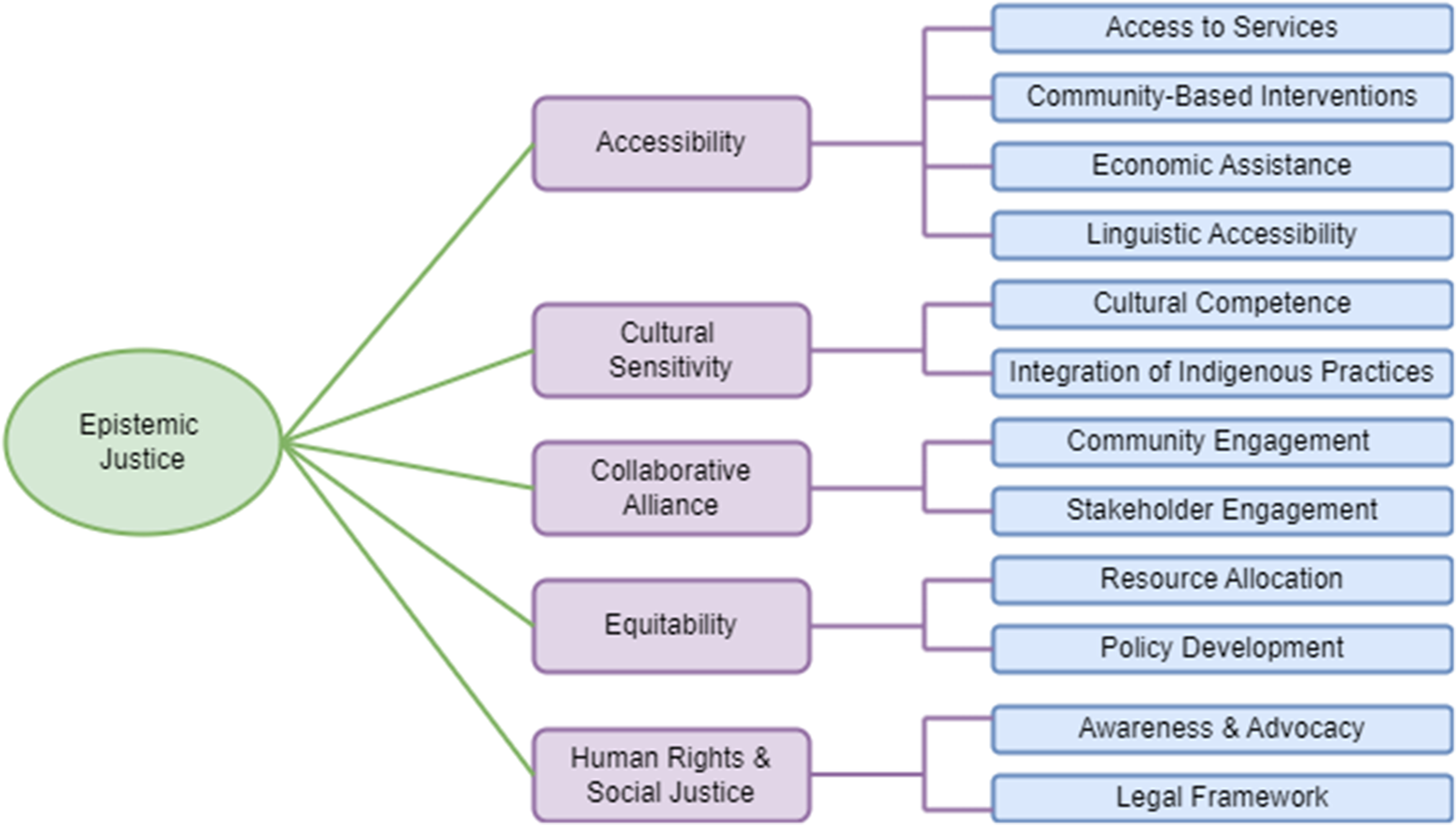

 Open access


Comments
August 24, 2024
Professor Judy Bass,
Editor-in-Chief, Global Mental Health
Dear Professor Judy Bass,
Re: Addressing epistemic injustice in the mental health care of Indigenous people in Bangladesh: Implications for global mental health
I would like to submit this manuscript for publication in Cambridge Prisms: Global Mental Health.
The manuscript highlights epistemic injustice, the systemic exclusion in the production and dissemination of knowledge in the mental care for Indigenous people across the world with Bangladesh taking an example. It is argued in the manuscript that epistemic injustice contributes to the higher prevalence of mental health problems among Indigenous people, therefore, it is crucial to address epistemic injustice. To this end, I aimed at offering a framework to address epistemic injustice to ensure accessible, equitable, and culturally sensitive mental health care for Indigenous people. While the framework primarily focuses on addressing epistemic injustice in Bangladesh, the framework can be equally applicable for Indigenous people across the world, signifying its relevance for global mental healthcare.
I hope this work will remind policy makers in government and non-governmental organizations to develop policies and interventions utilizing the framework to improve mental health outcome campaign for Indigenous people in Bangladesh.
This work was carried out with no financial assistance and has not been submitted elsewhere, nor is under consideration by any journal.
I appreciate and accept the relevant copyright and other conditions set by the journal.
I look forward to hearing further from you.
Yours sincerely,
Md. Omar Faruk
Department of Psychology
Louisiana State University
Baton Rouge, LA,
Email: mfaruk2@lsu.edu