Introduction
Alcohol and drug use disorders [AUD and DUD, respectively; substance use disorders (SUD) collectively] are strongly associated with the risk of suicidal thoughts and behaviors (Agrawal et al., Reference Agrawal, Tillman, Grucza, Nelson, McCutcheon, Few and Bucholz2017; Barak-Corren et al., Reference Barak-Corren, Castro, Javitt, Hoffnagle, Dai, Perlis and Reis2017; Conner, Bridge, Davidson, Pilcher, & Brent, Reference Conner, Bridge, Davidson, Pilcher and Brent2019; Conner, Duberstein, & Conwell, Reference Conner, Duberstein and Conwell1999; Flensborg-Madsen et al., Reference Flensborg-Madsen, Knop, Mortensen, Becker, Sher and Gronbaek2009; Hesse, Thylstrup, Seid, & Skogen, Reference Hesse, Thylstrup, Seid and Skogen2020; Lynch et al., Reference Lynch, Peterson, Lu, Hu, Rossom, Waitzfelder and Ahmedani2020; Lynskey et al., Reference Lynskey, Agrawal, Henders, Nelson, Madden and Martin2012; Morin et al., Reference Morin, Wiktorsson, Marlow, Olesen, Skoog and Waern2013; Ostergaard, Nordentoft, & Hjorthoj, Reference Ostergaard, Nordentoft and Hjorthoj2017; Polimanti et al., Reference Polimanti, Levey, Pathak, Wendt, Nunez, Ursano and Gelernter2021; Westman et al., Reference Westman, Wahlbeck, Laursen, Gissler, Nordentoft, Hallgren and Osby2015). Both SUD and suicidal behavior represent substantial public health concerns: AUD and DUD account for over $500 billion in annual costs (Birnbaum et al., Reference Birnbaum, White, Schiller, Waldman, Cleveland and Roland2011; Florence, Zhou, Luo, & Xu, Reference Florence, Zhou, Luo and Xu2016; National Drug Intelligence Center, 2011; Sacks, Gonzales, Bouchery, Tomedi, & Brewer, Reference Sacks, Gonzales, Bouchery, Tomedi and Brewer2015) and 165 000 annual deaths (Centers for Disease Control and Prevention, 2020; National Institute on Drug Abuse, 2020), while suicide was the 10th overall leading cause of death in the USA in 2018 (Centers for Disease Control and Prevention) and suicide attempts (SA) and suicide deaths (SD) led to an estimated $93.5 billion in annual costs (Shepard, Gurewich, Lwin, Reed, & Silverman, Reference Shepard, Gurewich, Lwin, Reed and Silverman2016). Clarification of the etiology of these outcomes and the mechanisms underlying their association has the potential to inform treatment and intervention efforts.
The relationship between SUD and suicidal thoughts and behaviors can be due to both causal pathways and non-causal effects such as familial confounders. Using Swedish national registry data, we have previously investigated the association between AUD and SA (Edwards et al., Reference Edwards, Ohlsson, Moscicki, Crump, Sundquist, Kendler and Sundquist2021a, Reference Edwards, Ohlsson, Moscicki, Crump, Sundquist, Lichtenstein and Sundquist2021b) and SD (Edwards, Ohlsson, Sundquist, Sundquist, & Kendler, Reference Edwards, Ohlsson, Sundquist, Sundquist and Kendler2020). Those studies suggested that the observed association among outcomes was due in part to shared familial liability as well as a potentially causal pathway (i.e. AUD→SD). Unlike traditional twin-family models, the co-relative approach employed in those studies does not result in heritability or co-heritability estimates. Instead, it extends the cotwin control method (Kendler et al., Reference Kendler, Neale, MacLean, Heath, Eaves and Kessler1993) to account for confounding familial factors that might jointly influence the risk of two outcomes, one of which is conceptualized as a potential risk factor for the other, thus aiding with causal inference. Further evidence of a causal association was reported by Orri et al. (Reference Orri, Seguin, Castellanos-Ryan, Tremblay, Cote, Turecki and Geoffroy2020), who used Mendelian randomization and found that lifetime cannabis use may increase the risk for SA, though it should be noted that this finding may not generalize to a clinical outcome such as cannabis use disorder.
A non-mutually exclusive alternative to a causal model for the SUD–suicidality association is that of shared liability: genetic and/or environmental factors that jointly increase the risk for both outcomes. Studies of familial aggregation of SUD and suicidality largely support the role of familial factors in comorbidity (Bridge, Brent, Johnson, & Connolly, Reference Bridge, Brent, Johnson and Connolly1997; Kim et al., Reference Kim, Seguin, Therrien, Riopel, Chawky, Lesage and Turecki2005; Roy, Reference Roy1983, Reference Roy2000), with some exceptions (Ballard et al., Reference Ballard, Cui, Vandeleur, Castelao, Zarate, Preisig and Merikangas2019). However, to our knowledge, twin-family studies have not been previously employed to estimate the genetic and environmental correlations between SUD and suicidal behavior. Such an approach would complement previous efforts: (i) it provides direct estimates of genetic and shared environmental correlations; and (ii) it enables the examination of unique (non-shared by family members) environmental correlations, which are not accounted for in co-relative models, studies of familial aggregation, or molecular genetic studies. These factors may be important predictors, as environmental stressors such as divorce (Edwards, Larsson Lonn, Sundquist, Kendler, & Sundquist, Reference Edwards, Larsson Lonn, Sundquist, Kendler and Sundquist2018; Fjeldsted, Teasdale, Jensen, & Erlangsen, Reference Fjeldsted, Teasdale, Jensen and Erlangsen2017; Kendler, Lonn, Salvatore, Sundquist, & Sundquist, Reference Kendler, Lonn, Salvatore, Sundquist and Sundquist2017; Roskar et al., Reference Roskar, Podlesek, Kuzmanic, Demsar, Zaletel and Marusic2011) or unemployment (Henkel, Reference Henkel2011; Nordt, Warnke, Seifritz, & Kawohl, Reference Nordt, Warnke, Seifritz and Kawohl2015) are associated with increased risk of both SUD and suicidality. They could also constitute targets for prevention or intervention, e.g. reducing environmental stressors may help to improve SUD-related consequences and suicidality.
In the current study, we use national Swedish registry data and a twin-family model to investigate the latent genetic and environmental relationships between SUD and suicidality. We have previously reported on shared liability between AUD and DUD in twins born 1958–1991 (Kendler et al., Reference Kendler, Lonn, Maes, Lichtenstein, Sundquist and Sundquist2016), and found modest but significant outcome-specific genetic and environmental influences; therefore, the current study does not combine these outcomes into a single SUD variable. Similarly, we have reported that SA and SD are etiologically different (Edwards et al., Reference Edwards, Ohlsson, Moscicki, Crump, Sundquist, Kendler and Sundquist2021a, Reference Edwards, Ohlsson, Moscicki, Crump, Sundquist, Lichtenstein and Sundquist2021b; Kendler, Ohlsson, Sundquist, Sundquist, & Edwards, Reference Kendler, Ohlsson, Sundquist, Sundquist and Edwards2020) and should not be collapsed into a single outcome. Our primary analyses focused on non-fatal SA, with additional but less well-powered analyses where SD replaced SA. Given prior evidence that familial factors contribute to co-aggregation of SUD and suicidal behavior, we hypothesized that we would observe moderate to substantial genetic correlations across outcomes. Although previous studies have not directly addressed the extent to which non-familial environmental risk factors jointly contribute to SUD and suicidal behavior, we expected to observe environmental correlations given the existence of plausible shared risk factors. We did not establish hypotheses regarding how suicidal behavior would be differentially etiologically related to AUD v. DUD, or whether we would observe differences as a function of suicidal outcome (SA that did not end in death v. SD).
Methods
Sample
We collected information on individuals from Swedish population-based registers with national coverage linking each person's unique personal identification number which, to preserve confidentiality, was replaced with a serial number by Statistics Sweden. We secured ethical approval for this study from the Regional Ethical Review Board of Lund University (No. 2008/409, 2010/476, 2012/795, and 2016/679). For the analysis, we double entered from the Swedish Twin Registry all same-sex twin pairs with known zygosity and birth years between 1960 and 1980, and from the Swedish Multi-Generation Register all Swedish-born same-sex full- and half-sibling pairs born between 1960 and 1980 and within 5 years of each other. An individual could be included several times if he/she had several siblings or different type of siblings. Zygosity was assigned using standard self-report items, which, when validated against biological markers, were 95–99% accurate.
Using the Swedish national census and population registers, we assessed cohabitation status for same-sex full- and half-sibling pairs as the proportion of possible years they lived in the same household until the oldest turned 16. Among monozygotic (MZ) and dizygotic (DZ) twins and full siblings, we only included pairs reared together for ⩾80% of their possible years. For half siblings, we included pairs reared together for ⩾80% and pairs reared together ⩽20% of the possible years, classifying these as pairs reared together or apart, respectively (see below for implications within the twin/family model).
Phenotypes
SA, SD, AUD, and DUD were defined at the individual level using information from Swedish population-based registers. The variables were treated as binary, and the registration could occur at any time during the follow-up period. SA were identified using the Swedish Hospital Discharge Register (coverage 1973–2015) and Outpatient Care Register (national coverage 2001–2015). Consistent with NIMH terminology, ‘suicide attempt’ is used to refer to non-fatal events (National Institutes of Mental Health, 2019). SD were determined using the Swedish Mortality Register (coverage 1969–2016). AUD and DUD were identified using the Swedish Hospital Discharge Register (coverage 1973–2015); Outpatient Care Register (national coverage 2001–2015); Primary Care Registry (partial coverage from 1999 to 2017); the Swedish Drug Register (2005–2017); the Swedish Mortality Register; the Swedish Criminal Register (1973–2017); and the Swedish Suspicion Register (1998–2017). ICD and legal codes for each phenotype are provided in the online Supplementary material.
Statistical analyses
To investigate the latent genetic and environmental relationships between SA, AUD and DUD, we used trivariate twin/sibling modeling, which assumes three sources of liability: additive genetic (A), shared environment (C), and unique environment (E). The model assumes that MZ twins share 100% of their genes; DZ twins and full siblings share, on average, 50% of their genes; while half siblings share, on average, 25% of their genes. The model also assumes that the shared environment, which reflects family and community experiences, is equal between MZ twins, DZ twins, and full siblings, while for half siblings C equaled 1 for pairs reared together and 0 for pairs reared apart. Finally, the unique environment reflects experiences not shared by twins/siblings, random developmental effects, and random measurement error. The model is based on the idea of an underlying unobserved distribution of liability to SA, AUD, and DUD, measured as binary outcomes. The correlation within each twin/sibling pair corresponds to the proportion of variance explained by the genes (A) and environment (C) they share. Thus, each model yields estimates of the proportion of variance in a given outcome that can be attributed to A (i.e. heritability), C, and E. The model was built using the Cholesky decomposition where the first factor loads on SA, AUD, and DUD, the second loads only on AUD and DUD, while the third only loads on DUD. We replicated the models using SD instead of SA, as prior research indicates that these outcomes do not represent different levels of severity on a single liability continuum (Kendler et al., Reference Kendler, Ohlsson, Sundquist, Sundquist and Edwards2020). In the multivariate context, these models also enable the estimation of genetic and environmental correlations and bivariate variance decomposition between phenotypes (Røysamb & Tambs, Reference Røysamb and Tambs2016). The correlations provide insight to the degree of shared liability between outcomes, e.g. the extent to which a shared set of genetic factors jointly impacts the risk of SA and AUD. The bivariate decomposition estimates indicate the proportion of the observed phenotypic correlation accounted for by each source of variance. Note that even where two phenotypes exhibit a high genetic correlation, if heritability is low, this will be reflected in a low estimate for A in the bivariate variance decomposition. All analyses were stratified by sex. The OpenMx package (Boker et al., Reference Boker, Neale, Maes, Wilde, Spiegel, Brick and Niesen2020; Neale et al., Reference Neale, Hunter, Pritikin, Zahery, Brick, Kirkpatrick and Boker2016) was used in R to fit the models.
Results
Descriptive statistics
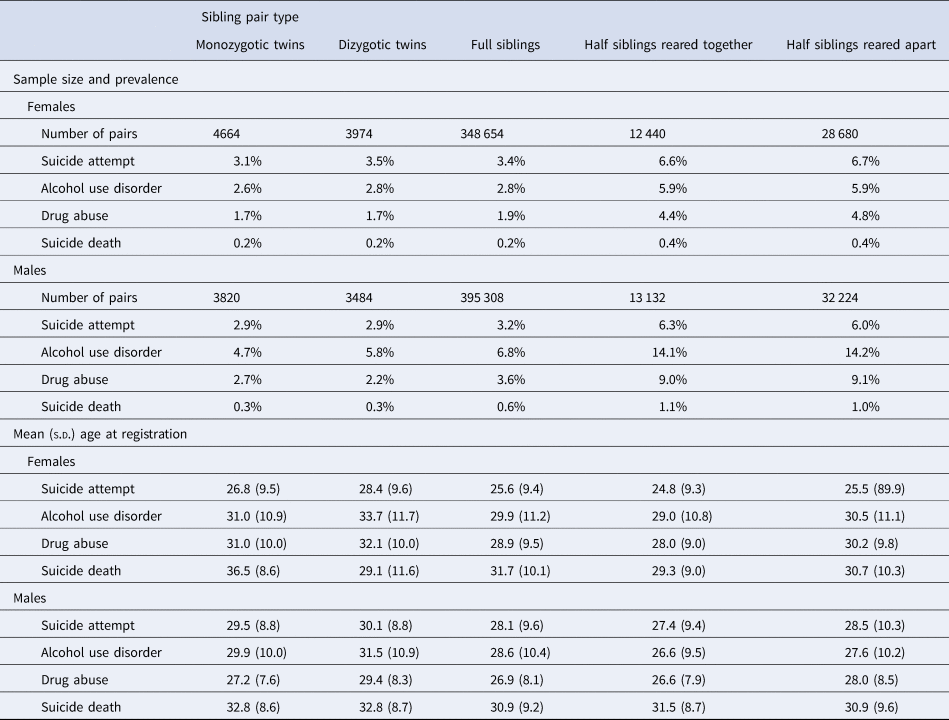
Table 1 presents the number of pairs and lifetime prevalence of AUD, DUD, and SA, by sibling type (MZ twin, DZ twin, full sibling, half sibling raised together, and half sibling raised apart) and sex. Age at first registration is also included in Table 1. Overall, AUD and DUD were more common among males, while SA was more common among females. The prevalence of all three outcomes was higher among half-siblings.
Sample size and prevalence of each outcome by sex and sibling pair type

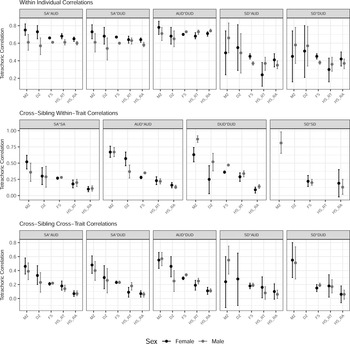
Figure 1 illustrates tetrachoric correlations within individuals across outcomes, alongside sibling correlations within and across outcomes for each type of sibling pair (see online Supplementary Table S1 for more details). As expected, and almost without exception, phenotypic correlations across sibling pairs declined with decreasing degrees of genetic relatedness, suggesting a genetic component to liability for SA, SD, AUD, and DUD.
Tetrachoric phenotypic correlations and 95% confidence intervals, by sex. The top panel illustrates cross-trait correlations within individuals, for each sibling pair group. The center panel illustrates correlations across siblings, within each phenotype. The bottom panel illustrates cross-sibling, cross-trait correlations. Females are depicted in black lines and males in grey lines. For suicide death, data were too sparse to calculate all correlations. Complete correlation results are available in online Supplementary Table S1. SA, suicide attempt; AUD, alcohol use disorder; DUD, drug use disorder; SD, suicide death; MZ, monozygotic twins; DZ, dizygotic twins; FS, full siblings; HS_RT, half siblings reared together; HS_RA, half siblings reared apart.

Univariate twin models
We initially fit univariate models of each outcome in order to derive starting values for trivariate models. Complete results are presented in online Supplementary Table S2 and Figure. Each outcome exhibited modest to moderate heritability for both sexes (A = 0.39–0.59 for women and A = 0.36–0.65 for men). Shared environmental influences were low to modest (C = 0–0.17 for women and C = 0.00–0.15 for men), and the balance was accounted for by unique environmental factors (E = 0.41–0.57 for women and E = 0.20–0.56 for men).
Trivariate twin models
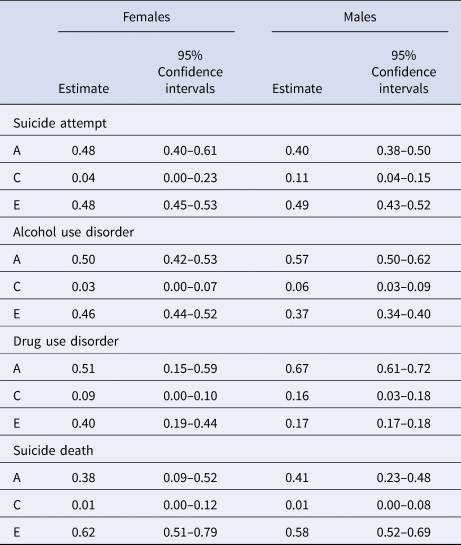
We focus here on trivariate models including SA; see below for parallel analyses where SD replaces SA. We observed slight shifts in some variance component estimates relative to the univariate models, likely due to the increased power of the multivariate models. Complete estimates for each variance component are provided in Table 2. Some estimates, particularly those related to suicidal behavior, were imprecise. We elected to avoid subsequent model fitting (i.e. testing whether a specific path could be dropped from the model without a substantial decrement in fit) because we may lack sufficient power to accurately detect important changes. Thus, results from the full model are presented.
Variance component and 95% confidence interval estimates from trivariate models

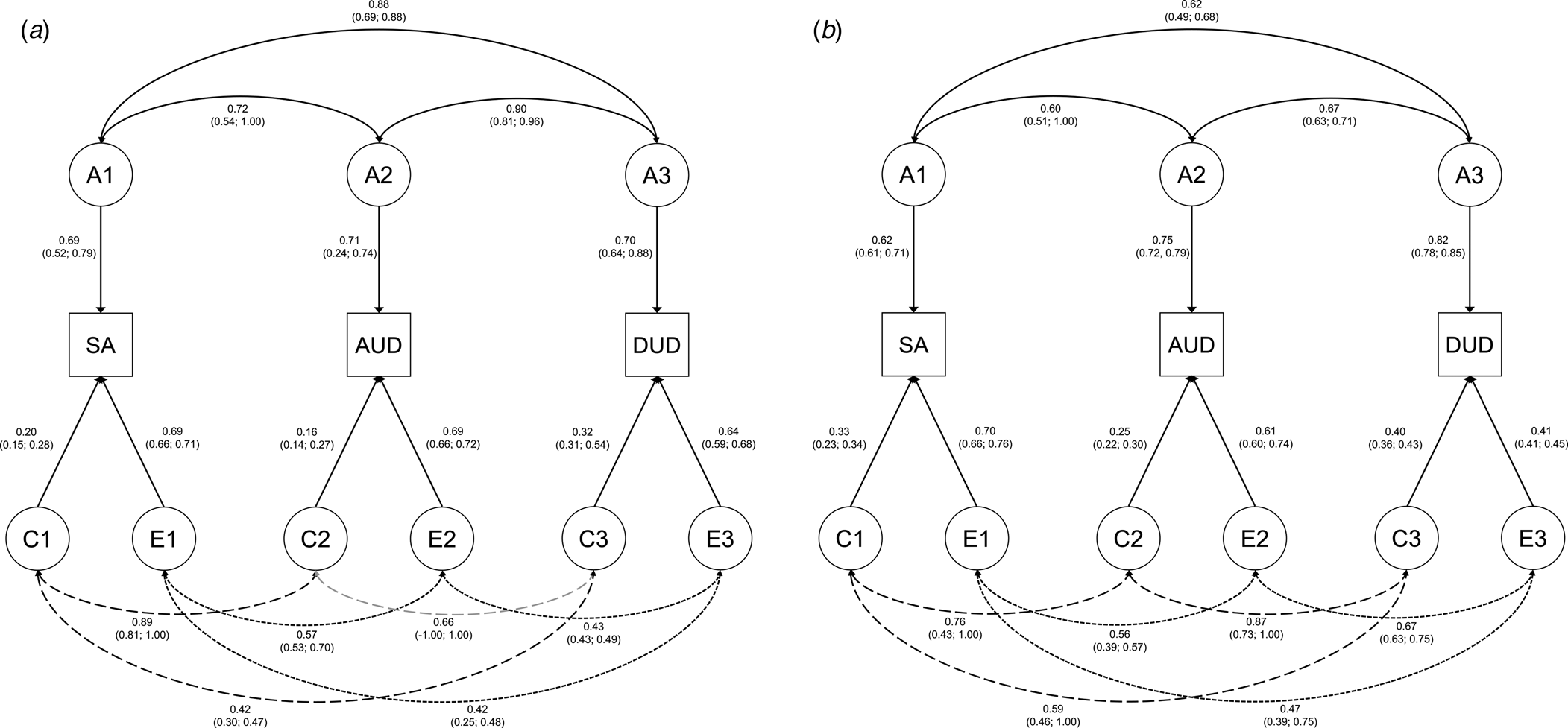
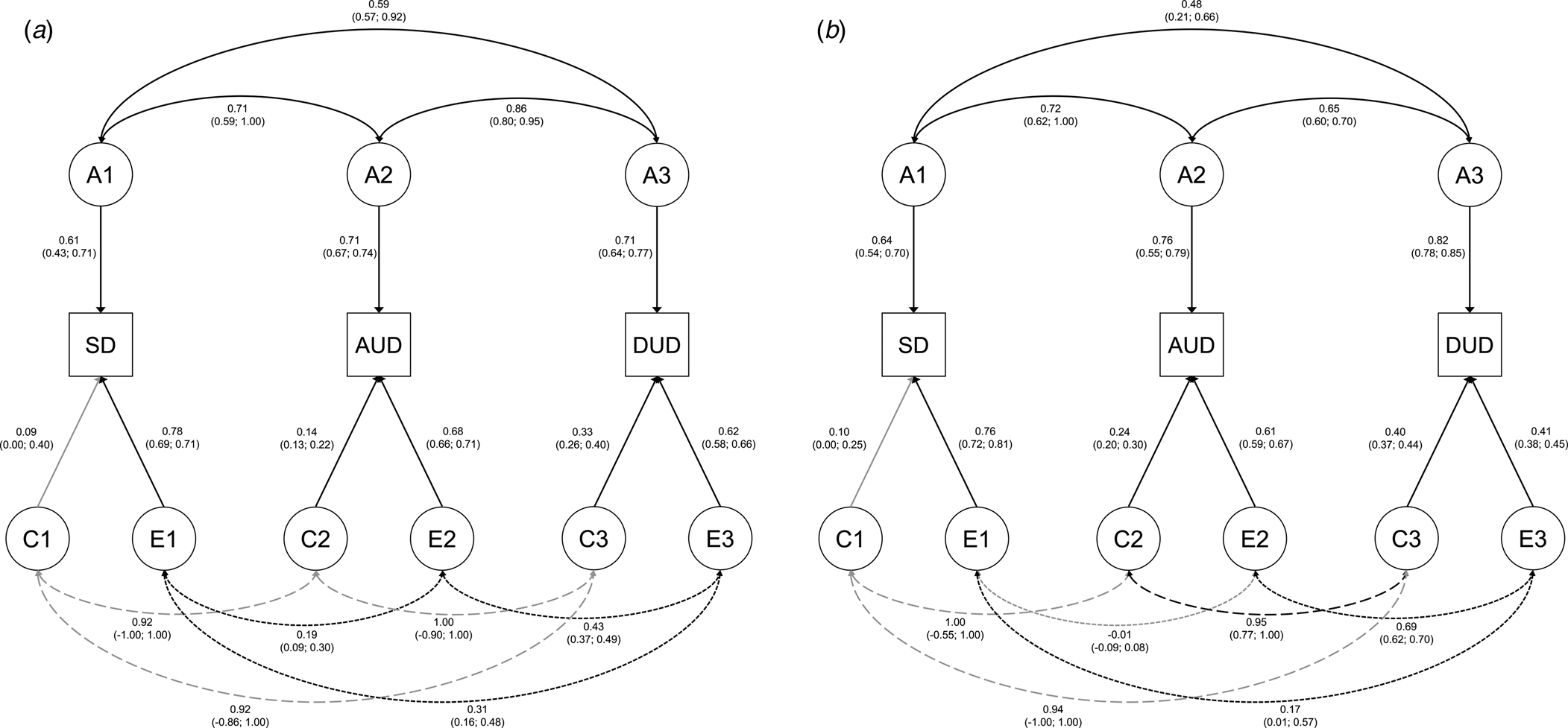
Genetic and environmental correlations between outcomes are depicted in Fig. 2 and provided in online Supplementary Table S3. Among women, SA was substantially genetically correlated with both AUD (rA = 0.72) and DUD (rA = 0.88). The corresponding estimates were more moderate among men (rA = 0.60 and rA = 0.62, respectively), though confidence intervals overlapped across sexes for AUD. Shared environmental correlations were moderate to high (rC = 0.42–0.89) and were more pronounced for attempt and AUD than for attempt and DUD among both women and men. However, these influences accounted for little of the total variance for all four outcomes (C = 0.03–0.16) (Table 2). Unique environmental correlations were moderate and were higher between attempt and AUD (rE = 0.56–0.57) than between attempt and DUD (rE = 0.42–0.47).
Parameter estimates (95% confidence intervals) from the correlated factors models of suicide attempt (SA), alcohol use disorder (AUD), and drug use disorder (DUD) in women (panel A) and men (panel B). The sources of variance are additive genetics (A), shared environment (C), and unique environment (E). To facilitate distinction between shared and unique environmental correlation paths, we used dashed lines for the former and dotted lines for the latter. Paths or correlations whose confidence intervals overlap 0 are depicted in grey.

We performed a parallel analysis replacing SA with SD, as previous studies have found that these outcomes are not completely genetically correlated (Kendler et al., Reference Kendler, Ohlsson, Sundquist, Sundquist and Edwards2020; Mullins et al., Reference Mullins, Kang, Campos, Coleman, Edwards, Galfalvy and Ruderfer2021) and other etiologic differences may exist (Beautrais, Reference Beautrais2001). Potentially notable differences relative to analyses including SA were: (i) a lower rA with DUD among women (rA = 0.59); (ii) among men, a slightly higher rA with AUD (rA = 0.72) and a lower rA with DUD (rA = 0.48); and (iii) within both sexes, a markedly lower rE with both AUD and DUD (rE = −0.01 to 0.31). However, due to the low prevalence of SD (0.2–1.1%), estimates from these analyses lack precision and should be considered with caution. Complete results are available in Fig. 3, Table 2, and online Supplementary Table S3. Online Supplementary Table S4 provides bivariate decomposition estimates.
Parameter estimates (95% confidence intervals) from the correlated factors models of suicide death (SD), alcohol use disorder (AUD), and drug use disorder (DUD) in women (panel A) and men (panel B). The sources of variance are additive genetics (A), shared environment (C), and unique environment (E). To facilitate distinction between shared and unique environmental correlation paths, we used dashed lines for the former and dotted lines for the latter. Paths or correlations whose confidence intervals overlap 0 are depicted in grey.

Discussion
In this population-based study of suicidal behavior and SUD, we found that SA was substantially genetically correlated with both AUD and DUD in both sexes. Environmental factors shared by siblings also jointly influenced liability to SUD and SA, though overall these factors contributed little to total risk. Finally, unique environmental factors – those that do not contribute to sibling similarity – were moderately correlated across SA and SUD. Findings were similar, though with some notable differences, for analyses of SD instead of SA, where data were more sparse and statistical power was reduced. These findings provide critical insight to the etiology of comorbidity between SUD and suicidal behavior.
While SUD have consistently been associated with an increased risk of suicidal behavior (Barak-Corren et al., Reference Barak-Corren, Castro, Nock, Mandl, Madsen, Seiger and Smoller2020; Conner & Bagge, Reference Conner and Bagge2019; Darvishi, Farhadi, Haghtalab, & Poorolajal, Reference Darvishi, Farhadi, Haghtalab and Poorolajal2015; Edwards et al., Reference Edwards, Ohlsson, Sundquist, Sundquist and Kendler2020; Lynch et al., Reference Lynch, Peterson, Lu, Hu, Rossom, Waitzfelder and Ahmedani2020), discerning the nature of this association has proved challenging. We have previously used co-relative models to examine the association between AUD and SD (Edwards et al., Reference Edwards, Ohlsson, Sundquist, Sundquist and Kendler2020) or SA (Edwards et al., Reference Edwards, Ohlsson, Moscicki, Crump, Sundquist, Kendler and Sundquist2021a, Reference Edwards, Ohlsson, Moscicki, Crump, Sundquist, Lichtenstein and Sundquist2021b), reporting in both cases that familial confounding factors contributed to the association alongside a potentially causal path from AUD to suicidal outcomes. DUD, while not the focus of those studies, were included as covariates and exhibited similar associations. Further evidence of a potentially causal association has been observed using Mendelian randomization: Orri et al. (Reference Orri, Seguin, Castellanos-Ryan, Tremblay, Cote, Turecki and Geoffroy2020) reported that lifetime cannabis use, but not drinks per week or tobacco use, was causally associated with the risk for SA. The subclinical nature of these predictors may account for differences relative to SUD.
The current findings have potential clinical implications. The first pertains to consideration of family history of psychiatric and SUD. Family history of suicidal behavior is widely recognized among clinicians to be an indicator of risk for one's own suicidal behavior (McDowell, Lineberry, & Bostwick, Reference McDowell, Lineberry and Bostwick2011). The current results suggest that family history may also be informative across outcomes – i.e. a family history of suicidal behavior should be considered a risk indicator for SUD, even if the patient themselves has not yet manifested suicidal behavior. We note, however, that family history screening is not without limitations in clinical settings (Khoury, Feero, & Valdez, Reference Khoury, Feero and Valdez2010; Valdez, Yoon, Qureshi, Green, & Khoury, Reference Valdez, Yoon, Qureshi, Green and Khoury2010). Second, given the non-trivial environmental correlations between SUD and SA, clinicians treating patients for one outcome should continue to be vigilant about the risk for the other (McDowell et al., Reference McDowell, Lineberry and Bostwick2011). For example, an individual's first SUD registration may represent a key opportunity in the therapeutic process, where environmental stressors that contributed to SUD onset may be evaluated for their potential impact on SA risk.
Comparison to molecular genetic studies
The current study expands on prior research by providing evidence of non-causal associations between SUD and suicidal behavior using biometrical analyses in a large, representative Swedish cohort. Importantly, there is now convergent evidence across methods for a moderate to substantial genetic correlation between SA and AUD: Mullins et al. (Reference Mullins, Kang, Campos, Coleman, Edwards, Galfalvy and Ruderfer2021), using genomewide association study summary statistics, reported a remarkably similar genetic correlation (rA = 0.52–0.63). Colbert et al. (Reference Colbert, Hatoum, Shabalin, Coon, Nelson, Agrawal and Johnson2021) also reported a comparable rA between problematic alcohol use and SA (rA = 0.52), but a considerably lower genetic correlation with SD (rA = 0.34). The discrepancy with the current study's findings for SD (rA = 0.71–0.72) could be due to the heterogeneity of the phenotypes included in the problematic alcohol use discovery GWAS [i.e. 27.9% of the sample was assessed using the AUDIT-P, which was incompletely genetically correlated with AUD (rA = 0.71)] (Zhou et al., Reference Zhou, Sealock, Sanchez-Roige, Clarke, Levey, Cheng and Gelernter2020), sample differences (e.g. the Million Veterans Project accounted for >60% of the discovery sample), or other factors.
With respect to DUD, Colbert et al. (Reference Colbert, Hatoum, Shabalin, Coon, Nelson, Agrawal and Johnson2021), also using GWAS summary statistics, reported that the genetic correlations between SA and cannabis use disorder and opioid use disorder were rA~0.6, similar to the male-specific genetic correlation in the current study. As in the Swedish cohort, rA was modestly lower for these two SUD and SD, ranging from 0.33 to 0.53. A SUD common factor, which loaded onto cannabis use disorder, problematic alcohol use, nicotine dependence, and opioid use disorder, was moderately correlated with SA and SD (rA = 0.31–0.46). While sex-specific rA estimates are not available in the above studies (Colbert et al., Reference Colbert, Hatoum, Shabalin, Coon, Nelson, Agrawal and Johnson2021; Mullins et al., Reference Mullins, Kang, Campos, Coleman, Edwards, Galfalvy and Ruderfer2021), and rE estimates are not possible using that approach, the overall similarities in genetic findings across methods are encouraging. The current study therefore expands our understanding of sex differences and environmental contributions to risk, yet our findings should be considered tentative until they are replicated in an independent sample.
Comparison of findings across suicide attempt and suicide death
Our primary analyses focused on SA, with additional analyses on SD, where data were sparse. Several differences emerged with respect to the genetic and environmental correlations between SUD and attempt v. death. First, while the genetic correlation with AUD was similar for SA and SD for women (rA = 0.71 and 0.72, respectively), rA was modestly higher for SD among men (0.72 v. 0.60), though the upper confidence intervals overlapped. DUD was more strongly genetically correlated with SA than SD for both women (rA = 0.88 v. 0.59) and men (rA = 0.62 v. 0.48). Nevertheless, these estimates indicate that shared genetic liability substantially contributes to comorbidity between suicidal behavior and SUD.
Differences across SA and SD were more pronounced for environmental correlations with SUD. For both AUD and DUD, in both sexes, rE with SA ranged from 0.42 to 0.57 – lower than rA in all cases, yet nontrivial. In contrast, rE with SD ranged from −0.01 to 0.31: For men, the AUD-death rE did not differ from 0. One implication of these findings is that, while specific environmental exposures, such as divorce (Edwards et al., Reference Edwards, Larsson Lonn, Sundquist, Kendler and Sundquist2018; Fjeldsted et al., Reference Fjeldsted, Teasdale, Jensen and Erlangsen2017; Roskar et al., Reference Roskar, Podlesek, Kuzmanic, Demsar, Zaletel and Marusic2011), unemployment (Henkel, Reference Henkel2011; Nordt et al., Reference Nordt, Warnke, Seifritz and Kawohl2015), and trauma (Conner et al., Reference Conner, Bossarte, He, Arora, Lu, Tu and Katz2014; Hughes, McCabe, Wilsnack, West, & Boyd, Reference Hughes, McCabe, Wilsnack, West and Boyd2010), have been previously associated with increased risk for both SUD and SD, they may contribute relatively little to comorbidity; alternatively, observed phenotypic associations may involve causal pathways (e.g. divorce→SUD→SD). This is less applicable to SUD and SA, suggesting that some environmental stressors may serve as useful targets for prevention or intervention across SUD and attempt.
Comparison of findings across sexes
We observed both similarities and potentially important differences across women and men, though wide confidence intervals for many correlation estimates suggest that we lack sufficient power to formally test for quantitative sex differences. The following observations should therefore be considered preliminary, warranting further study in other samples. First, the genetic correlation between DUD and SA was substantially higher among women than men (rA = 0.88 v. 0.62, respectively; confidence intervals did not overlap). As we did not assess qualitative sex differences, we cannot determine whether these disparate estimates are attributable to the joint impact of different genetic variants across sex (i.e. different variants contribute to comorbidity between DUD and SA in males v. females), or whether they reflect cross-trait differences in effect size between the sexes (i.e. a variant has a similar effect on DUD and SA in women but only impacts one of these behaviors in men). Second, the environmental correlation between AUD and SD for women, while somewhat low, was considerably higher than for men (rE = 0.19 v. −0.01; confidence intervals did not overlap). As noted above, this has implications for joint prevention and intervention of AUD and SD, which could differ in efficacy across sex. While sex differences in the prevalence of suicidal thoughts and behaviors are well-established (Beautrais, Reference Beautrais2001; Nock et al., Reference Nock, Borges, Bromet, Alonso, Angermeyer, Beautrais and Williams2008; Schrijvers, Bollen, & Sabbe, Reference Schrijvers, Bollen and Sabbe2012), evidence of sex differences in the association between substance misuse and suicidal behavior, i.e. a modifying effect of sex, is inconsistent (Kittel, Bishop, & Ashrafioun, Reference Kittel, Bishop and Ashrafioun2019; Kotila, & Lonnqvist,Reference Kotila and Lonnqvist1988; Oquendo et al., Reference Oquendo, Bongiovi-Garcia, Galfalvy, Goldberg, Grunebaum, Burke and Mann2007). Our observation that genetic and unique environmental correlations are modestly higher among women suggests that stronger associations might be expected for women than men. However, most confidence intervals overlapped. The extent to which shared genetic liability between SUD and suicidal outcomes contributes to phenotypic sex differences warrants further study, ideally within the context of biopsychosocial models of risk.
Limitations
The current analyses are not without limitations. First, SUD encompass a wide range of drugs (e.g. opioids, stimulants, cannabis), and while we distinguished between AUD and DUD, we did not pursue other substance-specific analyses. Previous research indicates that, while a substantial component of genetic risk for illicit substance use and abuse is attributable to a common factor, substance-specific genetic factors also play a role (Kendler, Jacobson, Prescott, & Neale, Reference Kendler, Jacobson, Prescott and Neale2003) and that genetic correlations with suicidal behavior might vary across substances (Colbert et al., Reference Colbert, Hatoum, Shabalin, Coon, Nelson, Agrawal and Johnson2021). Second, our use of national registry data results in prevalences of AUD, DUD, and SA that are lower than typically observed in studies utilizing self-reports. We are likely to be identifying more severe cases of SUD and primarily medically serious SA. It is possible that this impacts variance component and correlation estimates; ideally, these models should be replicated in a sample assessed via self-report. This concern is somewhat offset by the likelihood that our findings apply to a group of SUD cases who may interface more with health care providers due to the severity of their disorder, thereby presenting opportunities for suicide risk assessment and intervention. Third, SUD and suicidal behaviors are influenced by a constellation of factors that impact other psychiatric outcomes (e.g. depression). The current analyses do not explicitly incorporate these other outcomes, which could result in attenuated estimates of genetic and environmental correlations that are specific to SUD and suicidal behavior. Finally, while parameter estimates and 95% confidence intervals are suggestive of sex differences, technical features of our analysis, including the use of likelihood-based confidence intervals, make formal tests difficult. However, in a multi-group modeling context, constraining parameters to be equal across the sexes resulted in a detriment to model fit (LRT = 66 096, df = 30, p < 0.0001 for the SA-AUD-DUD model; LRT = 51 390, df = 30, p < 0.0001 for the SD-AUD-DUD model), providing support for stratification by sex as presented above.
Conclusions
The current study provides empirical evidence of modest to substantial genetic and environmental correlations between SUD and suicidal behavior using a representative Swedish national cohort. In conjunction with prior research, these findings indicate that phenotypic associations among these outcomes are due to a combination of shared liability and causal relationships. Differences in the genetic and environmental correlations across AUD and DUD with SA v. SD, and across sexes, underscore the complexities of shared etiology. Awareness of the substantial common genetic liability may be clinically useful, for example, by encouraging health care providers to provide educational materials about the risk of suicidal behavior to individuals seeking care for SUD or those with a family history of SUD; however, given the highly polygenic nature of both suicidal behaviors and SUD, opportunities for personalized genomics are not feasible. In addition, interventions predicated on perceived shared environmental risks, such as divorce, may be more effective for SA and SUD than SD and SUD.
Supplementary material
The supplementary material for this article can be found at https://doi.org/10.1017/S0033291721004256.
Financial support
The current study was supported by NIH grants AA027522, AA023534, and DA030005; and by Swedish Research Council and ALF funding from Region Skåne, Sweden. We acknowledge The Swedish Twin Registry for access to data. The Swedish Twin Registry is managed by Karolinska Institutet, Stockholm, Sweden.
Conflict of interest
None.
Ethical standards
The authors assert that all procedures contributing to this work comply with the ethical standards of the relevant national and institutional committees on human experimentation and with the Helsinki Declaration of 1975, as revised in 2008.