Introduction
Suicide is a complex morbid behavior and a major public health concern, ranked among the leading causes of death in many developed countries.Reference Hawton and van Heeringen 1 Sadly, due to the stigma and prejudice surrounding both suicide and schizophrenia (SCZ), many suicidal individuals with SCZ fail to reach out or seek help when faced with difficulties. Suicidal behavior is generally defined along a continuum that includes suicidal ideation, deliberate self-harm with minimal intent (nonsuicidal self-injury [NSSI]), and suicide attempting with higher levels of intent and medical endangerment, with the ultimate end of the continuum being deliberately self-inflicted death (i.e., suicidal completion).Reference Hawton and van Heeringen 1 Unfortunately, due to the complex nature of suicide and its relatively low base rate, it is difficult for clinicians to accurately identify individuals at the greatest risk.
Many individuals who attempt suicide often experience severe despair, frequently attributed to their underlying predicaments, including psychiatric disorders. In fact, SCZ, a common major mental illness, has been shown to substantially increase an individual’s risk for suicide.Reference Brown, Inskip and Barraclough 2 Individuals with SCZ generally experience a range of symptoms, such as delusions, sensory hallucinations, flat or blunted emotions, and disorganized thoughts and speech.Reference Phan and Kreys 3 These symptoms may be associated with an increased risk for self-injurious and suicidal behaviors.Reference Brown, Inskip and Barraclough 2 In particular, suicide attempts and suicide completion are among the largest contributors to the increased morbidity and mortality rates in SCZ.Reference Hawton, Sutton, Haw, Sinclair and Deeks 4 Recent epidemiological studies have identified that the currently revised suicide risk for patients with SCZ is approximately 4.9%.Reference Palmer, Pankratz and Bostwick 5 Many studies have proposed a host of risk factors that may contribute to suicide risk in SCZ; however, their ability to accurately predict suicide risk in individual patients is limited.
Discrepancies in the ability to identify suicide risk factors are largely attributed to differences in research methodologies and target samples that attempt to assess single risk factors for suicide. This inconsistency may be attributed to epidemiological studies focusing on patients at different stages of the illness. Notably, first-admission individuals with SCZ are at a higher risk for suicidal behavior compared to chronic patients.Reference Alaraisanen, Miettunen, Rasanen, Fenton, Koivumaa-Honkanen and Isohanni 6 The risk of suicidal behavior in SCZ is greater during the early years of disease onset, typically during the first five years following a diagnosis.Reference Heilä, Haukka, Suvisaari and Lonnqvist 7 Despite a relative decline in the suicide rate among older adults with SCZ, it is still greater than among the general population.Reference Cohen, Abdallah and Diwan 8 , Reference Montross, Kasckow, Golshan, Solorzano, Lehman and Zisook 9 An improved ability to predict suicide risk in SCZ is essential for clinicians to be able to make crucial decisions about therapeutic interventions.
The current objective of this systematic review is to provide an updated and comprehensive examination of the robust risk factors that are associated with suicidal behavior in SCZ. We focused our review on studies published within the last 36 years (1980–2015) to synthesize the recent findings and provide an update on previously identified suicide risk factors. In this regard, we will be focusing on identification and qualitative description of suicide risk factors, and discussing the interactive effects between risk factors for improved risk assessment.
Methods
Literature search
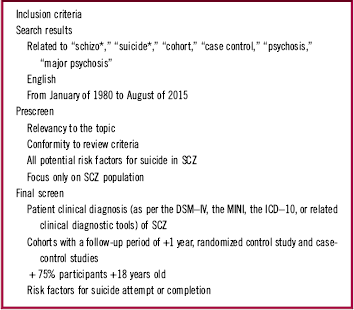
A comprehensive literature search for articles examining suicide attempt risk factors in SCZ was completed using the search terms “schizo* AND suicid*,” “schizo* AND suicid* AND cohort,” “schizo* AND suicid* AND case control,” “psychosis AND suicid*,” and “major psychosis AND suicid*.” The selection was restricted to studies written in English and published between January of 1980 and August of 2015. A total of 2,921 database citations were identified from the literature search using such electronic databases as PubMed, MEDLINE, and Scopus. These identified studies were prescreened for relevancy to the topic and conformity to the review criteria. A total of 61 research articles were selected in the prescreening process and then screened for all potential risk factors of suicide (attempt and completion) in SCZ. Following the screening, the full range of biopsychosocial risk factors for suicide were selectively categorized into major category groups. We selected these factors according to those most frequently reported in the literature. Those that appeared most often and also demonstrated a relationship with other mentioned risk factors were included in the review. Articles were carefully chosen so as to select only those that focused solely on the SCZ population, without the inclusion of other mental disorders in the study sample.
Inclusion criteria
Published studies were included in this review if they satisfied the following criteria: (1) studies including patients with a clinical diagnosis (as per the DSM–IV, the ICD–10, and the M.I.N.I. International Neuropsychiatric Interview [MINI], or related clinical diagnostic tools) of SCZ, including spectrum-related disorders such as paraphrenia, delusional psychoses, paranoid psychoses, psychoses not otherwise specified, schizophreniform disorder, schizotypal disorder, or schizoaffective disorder; (2) cohort studies with a minimum follow-up period of one year, randomized control studies, and case-control studies; (3) studies where the majority of participants (75%) were over 18 years of age; and (4) studies examining risk factors for suicide attempt or completion (Table 1).
Risk Factors for Suicide in Schizophrenia
Patient demographics
Many studies have attempted to identify key demographic traits that are predominantly shared among those with SCZ who also demonstrate suicidal behavior. Age, gender, and the marital and employment status of these individuals have all been found to contribute to the likelihood that they will attempt suicide.
It appears that there are two major peaks in age for when suicide risk is highest. Previous studies have demonstrated that being of a younger age leads to an increased disposition for suicide compared to the general population.Reference Hor and Taylor 10 Interestingly, completed suicide occurs at a younger age in SCZ (at around 30 years) compared to other psychiatric disorders.Reference Gómez-Durán, Martin-Fumadó and Hurtado-Ruíz 11 Another studyReference Hor and Taylor 10 suggested that there is a higher risk for suicide among patients over the age of 50.
Individuals with SCZ typically develop symptoms at a younger age. According to van Os and Kapur,Reference van Os and Kapur 12 the peak period for the onset of SCZ is during late adolescence and early adulthood. Additionally, as the risk for suicide also appears to peak around five years following illness onset,Reference Carlborg, Winnerback, Jonsson, Jokinen and Nordstrom 13 it is not surprising that suicide risk is associated with younger age. In particular, individuals with first-episode psychosis (FEP) with a longer duration of first hospital treatment, the presence of depressive symptoms, and nonadherence to treatment in the early phases of follow-up after FEP predict future suicide attempts.Reference Togay, Noyan, Tasdelen and Uçok 14 When diagnosed at a young age, an FEP patient who believes that having SCZ may lead to a deteriorating mental state and lower quality of life can react differently from someone with high insight but a more optimistic outlook on the course of the disorder.Reference Melle and Barrett 15 Several studies indicate that beliefs about psychosis can influence insight and aspects related to suicide risk, as patients with high insight and low levels of stigmatizing beliefs report lower levels of depression, more hope, better self-esteem, and better quality of life than patients with high insight and high levels of negative beliefs.Reference Linden and Godemann 16 , Reference Staring, van der Gaag, van den Berge, Duivenvoorden and Mulder 17
Young adulthood is a critical period in an individual’s social and career growth and development.Reference Addington 18 Debilitation from the onset of SCZ during these formative years may lead to poor employment rates and an inability to form relationships, which are also independent risk factors for suicide in SCZ. Previous reports have found that being single, unemployed, and unable to work generally increases the risk for suicide in the overall population and among individuals with mental illnesses such as SCZ.Reference Popovic, Benabarre and Crespo 19
Further studies on patient demographic risk factors for suicide in SCZ have also identified gender as a contributing factor. It is already well-established that there are differences in suicidal behavior between men and women, regardless of whether or not they have been diagnosed with SCZ.Reference Carlborg, Winnerback, Jonsson, Jokinen and Nordstrom 13 In fact, in the general population, men die more often by suicide than females, while females attempt suicide much more frequently. In contrast, among the SCZ population, women have been described as displaying male tendencies for suicide whereby they act impulsively and aggressively and choose lethal methods for suicide.Reference Caldwell and Gottesman 20 The odds ratio for suicide in SCZ in men compared to women is approximately 1.57,Reference Hawton, Sutton, Haw, Sinclair and Deeks 4 suggesting a less extreme gender difference in suicide risk than seen in the general population. Nevertheless, while less frequently reported, other studies have suggested that women have a higher risk for suicide in SCZ or that there is no difference in suicidal behavior between genders.Reference Popovic, Benabarre and Crespo 19
Considering all the reported controversial demographic factors that contribute to suicide risk, some studies have attempted to assign a diagnostic profile for the average suicide attempter with SCZ. FentonReference Fenton 21 characterized a typical patient with SCZ at high risk for suicide as a young male, with good premorbid functioning and late age of first hospitalization, high IQ, paranoid subtype, and retention of abstract thinking. While these variables do contribute to the suicide phenotype in SCZ, the relative contribution of each in determining suicide risk remains ambiguous. An updated review by Pompili et al.Reference Pompili, Amador and Girardi 22 characterized a high-risk suicide phenotype as typically a young Caucasian male, never married, with good premorbid functioning, post-psychotic depression, history of substance abuse, and previous suicidal behavior (attempt, self-harm, ideation). Many of these identified risk factors are considered in today’s risk assessments; however, further investigations have taken into account the role of more recently reported risk factors.
Illness-related factors
SCZ is a debilitating mental disorder that entails a range of positive and negative symptoms that are often exacerbated by comorbid affective disorders or symptoms, as well as treatment complications. Given the degree of dysfunction and life disruption that an average individual with SCZ endures, it is not surprising that a significant proportion of these individuals attempt or consider suicide.
One of the most controversial illness-related risk factors for suicide in SCZ is the impact of a patient’s insight into their illness. Insight is generally described in psychiatry as being able to recognize one’s own mental illness and its consequences. Insight can have major repercussions on many related clinical aspects over the course of the illness, such as recognizing the need for treatment and complying with medication recommendations.Reference Amador and Kronengold 23 Intact insight in SCZ is associated with medication adherence, lower symptomatology, and better treatment outcomes. At the same time, greater insight is linked with hopelessness, depression, and suicide.Reference Amador and Kronengold 23 Generally, insight has been proposed to be a factor that increases the risk for suicide in SCZ; however, it has not been sufficiently investigated, and conflicting results have been reported. In a meta-analysis by Hawton et al.,Reference Hawton, Sutton, Haw, Sinclair and Deeks 4 there was no statistically significant association between the presence of insight and risk for suicide. This finding, however, is likely attributed to the low sample size of the studies used to investigate insight and suicide risk.
The major argument in favor of insight leading to higher suicide risk in SCZ is that it is often correlated with hopelessness, demoralization, and depression. Furthermore, feeling hopeless is one of the most consistently reported risk factors for suicide in SCZ and other psychiatric disorders.Reference Amador and Kronengold 23 On the other hand, other studies have found that individual insight is the first step in gaining mastery over their illness and is usually associated with improved treatment compliance.Reference López-Moriñgo, Ramos-Ríos, David and Dutta 24 Notably, Hawton et al.Reference Hawton, Sutton, Haw, Sinclair and Deeks 4 considered insight and compliance as separate entities and found a significant association for poor compliance as a risk factor for suicide. Therefore, it can also be argued that better insight may reduce suicide risk via improved treatment compliance.
Whether or not it is accepted that hopelessness, self-depreciation, and depression are the direct consequence of clinical insight on the part of the patient, it remains clear that these affective symptoms pose a high risk for suicide in individuals with SCZ. Hopelessness has often been proposed as an important risk factor for suicide, perhaps even more so than depression.Reference Friedman, Terras, Zhu and McCallum 25 Patients who feel hopeless about their situation as a result of their illness and life circumstances are often the ones that resort to suicide. In fact, hopelessness is a key risk factor that interacts with illness insight. Some studies have suggested that insight into the illness is only associated with suicide if it is followed by hopelessness.Reference Amador and Kronengold 23 For that reason, hopelessness can be seen as the deciding factor in the debate as to whether or not illness insight leads to increased suicide risk. When individuals’ insight into their illness is high but they do not have severe feelings of hopelessness, it is more likely that they will experience the benefits of good insight. On the other hand, if individuals with SCZ have clear insight into their illness and see their situation as hopeless, they are more likely to develop suicidal behavior.
Depression, of course, is another major factor in predicting suicide risk. Previous studies have demonstrated that many SCZ patients experience a mood disorder during their lifetime.Reference Hawton, Sutton, Haw, Sinclair and Deeks 4 In fact, many of these individuals experience depressive symptoms concurrently with suicidal behavior.Reference Hawton, Sutton, Haw, Sinclair and Deeks 4 , Reference Pompili, Lester and Dominici 26 Specifically, having a comorbid depressive disorder is believed to elicit suicidal behavior in patients with SCZ. Unfortunately, many studies have failed to take into account the timing and severity of depressive symptoms in assessing suicide risk.Reference Carlborg, Winnerback, Jonsson, Jokinen and Nordstrom 13 It appears that one of the periods of highest suicide risk occurs during the six months post-discharge following hospitalization, when the illness remains active and during which the relationship between depression and suicide is proposed to be highest.Reference Heilä, Haukka, Suvisaari and Lonnqvist 7
Hospital admissions are an important risk factor for suicide in SCZ, as they demonstrate important evidence regarding the mental state of the patient. Previous findings have suggested that suicide risk is highest when considering the time of hospitalizations.Reference Qin and Nordentoft 27 Approximately one-third of SCZ and general inpatient suicides occur during admission or a week following hospital discharge. There is also evidence which suggests that the risk for suicide remains high for as long as a year following discharge.Reference Kao and Liu 28 As expected, the number of hospitalizations is also indicative of the severity of the SCZ illness. This may represent the cumulative extent to which an individual experiences any debilitating positive symptoms, leading to previously described feelings of hopelessness and depression.
When assessing the risk for suicide in SCZ, it is necessary to examine the extent to which psychotic symptoms associated with the illness play a role. Historically, psychosis has been associated with increased suicidal behavior in SCZ.Reference Fenton 21 , Reference De Hert, McKenzie and Peuskens 29 At first glance, this may be explained by the tendency for irrational thinking during periods of psychosis. Despite any initial logical reasons for why someone with SCZ would want to attempt suicide, experiences arising from the content of delusions or thought disorders may be the deciding factor. Another way in which psychotic symptoms may act as risk factors for suicide is that they may drive the patients to inflict self-injury without suicidal intent, but their impaired judgment leads them to miscalculate the probability of death from their action.Reference Fenton 21 Additionally, these individuals may be experiencing delusions in which they feel that they are impervious to physical harm or experiencing hallucinations that distract them from this risk.Reference Wong, Öngür, Cohen, Ravichandran, Noam and Murphy 30 Even though these are plausible explanations for the association between psychosis and suicide risk, there is little substantive evidence to support them in the literature.
Another explanation for an increase in suicide risk during psychosis is the idea that individuals respond to command hallucinations that instruct them to kill or harm themselves. Command hallucinations are cases in which patients hear voices that tell them to perform certain acts, occurring in 18–50% of the SCZ population, including the command to kill themselves.Reference Wong, Öngür, Cohen, Ravichandran, Noam and Murphy 30 However, there is limited and conflicting evidence for command hallucinations being associated with suicide in SCZ. In one of the first controlled studies investigating an association between suicidal behavior and command hallucinations, Hellerstein et al.Reference Hellerstein, Frosch and Koenigsberg 31 found no significant differences for suicide ideation in SCZ. On the contrary, however, additional studies have shown an association between having command hallucinations and a history of suicide.Reference Wong, Öngür, Cohen, Ravichandran, Noam and Murphy 30
Previously, studies have suggested that psychotic symptoms per se may not be the actual cause for increases in suicide risk in SCZ, but the distressed and low mood that follows.Reference Hu, Sun, Lee, Peng, Lin and Shen 32 This concept has been observed in previous reports in which more severe levels of psychosis were associated with suicide. This pathway to suicidal behavior in SCZ represents another way in which multiple risk factors interact.
More recent research regarding psychosis and suicide risk in SCZ has attempted to observe whether specific symptoms—namely, positive and negative symptoms—are more likely to lead to increased suicide risk.Reference Pješčić, Nenadović, Jašović-Gašić, Trajković, Kostić and Ristić-Dimitrijević 33 Positive symptoms typically include hallucinations, delusions, and disorganization, while negative symptoms usually involve flat affect, anhedonia, and a lack of motivation. In contrast to analyzing command hallucinations only, studies considering all positive symptoms and the risk for suicide have found more promising results.Reference De Hert, McKenzie and Peuskens 29 Even though there is little evidence for command hallucinations playing a significant role in suicide risk, several studies have suggested that active positive symptoms are associated with attempting suicide.Reference De Hert, McKenzie and Peuskens 29 Furthermore, the total number of positive symptoms is also associated with suicide risk.
Among the illness-related factors, it is not easy to determine which factor signifies the highest risk for suicide in SCZ. However, the systematic review by Hawton et al.Reference Hawton, Sutton, Haw, Sinclair and Deeks 4 ascertained that the clinical factor with highest relative risk for suicide in SCZ is the fear of mental disintegration.
Comorbid substance abuse
Substance abuse is commonly associated with SCZ and is often believed to influence suicide risk in these individuals. In a previous study, comorbid substance abuse was found more often among younger individuals with SCZ who exhibited suicidal behavior.Reference Pompili, Innamorati and Lester 34 While substance abuse is often considered when assessing suicide risk in SCZ, there is not necessarily a difference in the frequency of drug abuse between individuals with SCZ who attempt and do not attempt suicide.Reference Harkavy-Friedman, Nelson, Venarde and Mann 35 On the other hand, individuals with SCZ who do engage in substance abuse may experience more positive symptoms, particularly hallucinations, and correspondingly have more suicide attempts compared to patients with no substance use.Reference Sokya 36 Notably, hallucinations have been found to increase the incidence of suicide attempts in SCZ independently from alcohol or drug abuse/dependence.
As expected, substance abuse is associated with impulsiveness and thus suicidal behavior. However, in general, this association is not unique in SCZ. It appears that substance abuse, while not directly influencing suicide risk, does impact many other factors that may increase the risk for suicidal behavior in SCZ, such as treatment noncompliance, loss of self-control, violence, and economic difficulties.Reference Harkavy-Friedman, Nelson, Venarde and Mann 35 These risk factors may thus become stressors that trigger suicidal behavior later on. Given these examples, current research on suicide in SCZ takes into account the role of substance abuse, not as an independent factor, but as a modulating risk factor that may increase the risk for suicide. While reports of alcohol abuse and suicide in SCZ have been conflicting, a recent study by Zai et al.Reference Zai, Zai and Tiwari 37 demonstrated an interaction between specific genetic variants and suicidal behavior that were only significant when alcohol abuse or dependence were considered in the analysis.
Previous suicide attempt(s)
Previous suicide attempts or ideation have a strong positive correlation with completed suicide in SCZ patients and have been among the strongest predictors for suicidal behavior in patients with FEP.Reference Hor and Taylor 10 Moreover, the strongest predictor for suicide attempt in SCZ is a past history of deliberate self-harm behavior that includes past suicide attempts and acts in which other motives may have been more prominent.Reference Hawton, Sutton, Haw, Sinclair and Deeks 4
A history of suicide attempt appears to elevate the risk for completed suicide threefold.Reference McGirr and Turecki 38 , Reference Reutfor, Brandt, Jonsson, Ekbom, Sparen and Osby 39 McGirr et al.Reference McGirr and Turecki 38 found that individuals with SCZ who were admitted for attempted suicide were at the highest risk (of all variables studied) of committing suicide. Reutfor et al.Reference Reutfor, Brandt, Jonsson, Ekbom, Sparen and Osby 39 reported that the proportion of suicide patients with an earlier suicide attempt was 32%. This is lower than the 40–71% estimated in previous studies.Reference Heilä, Haukka, Suvisaari and Lonnqvist 7 However, Reutfor’s finding of a fivefold higher suicide risk associated with a history of prior suicide attempt is in the same range as several previous findings, and comparable to the risk estimate obtained in the metaanalysis by Hawton et al.Reference Hawton, Sutton, Haw, Sinclair and Deeks 4
Patients with a history of suicidal behavior (attempt, ideation, self-harm) may also be suffering from emotional dysregulation that may be related to affective symptoms or a general inability to express emotion in an empathetic way.Reference Hawton, Sutton, Haw, Sinclair and Deeks 4 Suicidal ideation often fluctuates, and many patients may think about suicide.Reference McGirr and Turecki 38 Although active suicidal ideation is considered a significant risk factor for suicidal behavior, it may act as a deterrent in some cases (when not associated with a command hallucination).Reference Nordentoft, Laursen, Agerbo, Oin, Hoyer and Mortensen 40 More specifically, it may be a coping factor for SCZ patients to engage in thoughts about the emotional significance of suicide and the reasons for performing the behavior. Nevertheless, it is important that clinicians monitor active suicidal ideation in patients who have attempted suicide in the past.
Lifetime stress
One of the most highly studied risk factors for suicide currently is a history of stressful life events (SLEs), particularly considering childhood abuse and trauma.Reference Enns, Cox, Afifi, De Graaf, Ten Have and Sareen 41 Unfortunately, only a few studies have examined SLEs and suicidal behavior in SCZ, and the vast majority of them are association analyses for suicide completion. SLEs frequently precede suicide, and they were identified in almost half the cases of suicide in SCZ in a Finnish national psychological autopsy study.Reference Hor and Taylor 10 Furthermore, another studyReference Enns, Cox, Afifi, De Graaf, Ten Have and Sareen 41 found that suicide in SCZ is more likely to occur following an SLE associated with aggressive behavior or psychiatric impairment, and an SLE of a humiliating nature.
In a retrospective cohort study by Melle et al..Reference Melle 42 life dissatisfaction was found to be a significant predictor of suicide in FEP patients. It is possible that they are in a period of their life that is accompanied by high stress, and the burden of a chronic illness may interact with predisposing suicide traits.Reference Fenton 21 In a retrospective report by Cohen et al.,Reference Cohen, Abdallah and Diwan 8 suicide risk in older adults with SCZ was associated with a lifetime traumatic and victimization scale, revealing that lifetime stressful events do contribute to the suicide phenotype. In particular, higher rates of early sexual and physical abuse were modestly associated with suicide attempt history.Reference Cohen, Abdallah and Diwan 8
RoyReference Roy 43 analyzed the effects of childhood trauma on 50 chronic schizophrenic patients with and without a history of suicide attempts. The authors found that schizophrenia patients who attempted suicide had significantly higher scores on the Childhood Trauma Questionnaire (CTQ) subscales of emotional, physical, and/or sexual abuse, and emotional and/or physical neglect. The suicide phenotype was also associated with a higher CTQ total score. Despite the clear association between childhood adversity and suicidal behavior, this association may have been a result of increased psychopathology in SCZ patients who attempted suicide.Reference Funahashi, Ibuki, Domon, Nishimura, Akehashi and Sugiura 44 Uçok and BikmazReference Uçok and Bikmaz 45 found that childhood trauma was associated with increased psychopathology and suicide attempts before admission in patients with FEP. This finding is interesting because previous studies have found an association between early life stress and development of mental illnesses. Therefore, it is not conclusive that early life stress contributes to the suicide phenotype directly, but rather indirectly through its effects on illness severity.Reference Cohen, Abdallah and Diwan 8
Biological Risk Factors
Clinical studies showing the effectiveness of clozapine in reducing suicidal behavior in SCZReference Meltzer, Alphs and Green 46 have pointed out the involvement of biological factors related to the mechanism of action of the atypical antipsychotics in influencing suicidal behavior in SCZ. Therefore, in addition to the previously described psychosocial risk factors, there is also evidence for a biological basis for suicide.
Among the studies investigating the biological basis of suicidal behavior, genetic studies have had a prominent role. In fact, familial studies, adoption studies, and twin studies suggest that suicide is both genetic and heritable.Reference Fu, Heath and Bucholz 47 , Reference Glowinski, Bucholz and Nelson 48 Previous studies also suggest that the heritability of suicidal behavior is 43%.Reference Bondy, Buettner and Zill 49 , Reference McGuffin, Marusic and Farmer 50 Notably, monozygotic twins show a greater concordance rate for attempted and completed suicide compared to dizygotic siblings.Reference Roy and Segal 51 SCZ patients who are relatives of individuals who committed suicide have an increased risk of attempting suicide likely caused by familial aggregation.Reference Qin, Agerbo and Mortensen 52 , Reference Trémeau, Staner and Duval 53 The familial aggregation of suicide and SCZ diagnosis also extends to siblings of SCZ patients who have a significantly increased risk for suicide.Reference Alaraisanen, Miettunen, Rasanen, Fenton, Koivumaa-Honkanen and Isohanni 6 For instance, suicide completion was eight times higher in the offspring of fathers with SCZ. Furthermore, Ljung et al.Reference Ljung, Lichtenstein and Sandin 54 found that the risk of a suicide attempt or suicide completion in the offspring of SCZ parents was two times higher. Given the aforementioned evidence, it is possible that the genetic risk profile for suicidal behavior in SCZ is similar to the genetic risk for developing SCZ.
Early attempts at uncovering biomarkers for suicide evaluated serotonin by dysfunction measuring cerebrospinal fluid (CSF) monoamine metabolites and serotonin receptor binding in fronto-orbital brain tissue of suicide victims. While low levels of indices of serotonin activity were associated with suicide in the general population, this was not replicated in a schizophrenica population.Reference Chistiakov, Kekelidze and Chekhonin 55 Only one study found a significantly lower concentration of the serotonin metabolite 5-hydroxyindoleacetic acid (5-HIAA) in the CSF of individuals with SCZ who had completed suicide.Reference Mann 56 While the serotonergic system is one of the most extensively studied in terms of suicidal behavior, inconclusive evidence for several serotonin receptor candidate genes has been widely reportedReference Anguelova, Benkelfat and Turecki 57 – Reference Judy, Seifuddin and Mahon 59 .
Continuing onward, many studies began looking for potential genes or genetic markers that may influence suicidal behavior in SCZ. A large portion of these studies focused on candidate genes in an attempt to identify specific genetic variants or single nucleotide polymorphisms (SNPs) that may indicate a risk for suicide. The most investigated genes believed to be associated with suicidal behavior in SCZ are those of the serotonergic system. One of these major candidate genes is the serotonin 2A receptor (HTR2A).Reference Serretti, Drago and De Ronchi 60 More than 200 SNPs along the gene have been characterized, but only two SNPs—rs6313 (T102C) and rs6311 (A1438G)—have been extensively investigated in suicidal behavior.Reference Tsai, Hong and Liou 61 It has been repeatedly shown that rs6313 may not be involved in suicide among SCZ patients. Both Ertugrul et al.Reference Ertugrul, Kennedy, Masellis, Basile, Jayathilake and Meltzer 62 and Tan et al.Reference Tan, Chong, Chan and Tan 63 did not find an association with the T102C polymorphism and suicidal behavior. Correspondingly, an A allele, А/– genotypes of the polymorphism rs6311 G>A, and a T allele, T/– genotypes of the polymorphism rs6313 C>T, were found to be less frequent in SCZ patients with a history of a suicide attempt than among patients with SCZ without a history of a suicide attempt, thus suggesting a protective role in the development of suicidal behavior.
In addition to HTR2A, tryptophan hydroxylase (TPH) genes were among the first serotonergic genes to be investigated regarding suicidal behavior, specifically TPH1 and TPH2. An early study by Paik et al.Reference Paik, Toh, Kim and Lee 64 examined a Korean sample of individuals with SCZ who had and had not attempted suicide. They looked at the A218C variant in the gene TPH1 and found that the C allele was more frequently observed among individuals with SCZ who had attempted suicide. In a later study by Saetre et al.,Reference Saetre, Lundmark and Wang 65 A218C as well as A779C were tested in a sample of SCZ patients with and without a history of suicide attempt. This study, however, found no significant associations for both polymorphisms when comparing attempter and non-attempter patients. A polymorphism in the promoter region of TPH2 was also examined for a relationship with suicidal behavior in SCZ.Reference De Luca, Voineskos and Wong 66 TPH2 has one polymorphism (−473T>A) in the putative promoter and many highly polymorphic variants in introns within the gene. Allele and haplotype frequencies for this promoter polymorphism and other variants demonstrated no significant difference among a cohort of SCZ patient with and without a history of suicidal behavior.Reference De Luca, Voineskos and Wong 66
The serotonin transporter (5-HTT) is crucial in regulating the amount of serotonin in the synapses of the brain. Not surprisingly, the serotonin transporter gene (SLC6A4) and the common functional promoter polymorphism (5-HTTLPR) have been extensively investigated in many suicide studies. The 5-HTTLPR promoter contains an insertion/deletion polymorphism that leads to either a long (L) or short allele (S). In an early report, Bayle et al.Reference Bayle, Leroy and Gourion 67 demonstrated genotypic and allelic differences for the 5-HTTLPR polymorphism between violent and nonviolent suicide attempters. Furthermore, violent attempters also differed from non-attempters according to genotype distribution. In both associations, the S allele was more frequently represented among violent suicide attempters. However, this study found no significant difference between suicide attempters (both violent and nonviolent) and non-attempters according to genotype and allele distributions. In a Chinese sample of SCZ patients, rather than the S allele, it was the L allele that was more frequently represented in male suicide attempters compared to those with no suicidal history.Reference Hung, Lung and Chen 68 This was also seen in the research by Božina et al.,Reference Božina, Jovanović and Podlesek 69 in which the L allele was more frequently carried by suicide attempters. In addition to the conflicting evidence, a negative study was published for this polymorphism;Reference Contreras, Hernandez and Quezada 70 however, the suicidal behavior investigated was not clearly indicated in the study. Finally, in a Scandinavian sample that consisted of 837 SCZ patients, Lindholm Carlström et al.Reference Lindholm Carlström, Saetre and Rosengren 71 tested seven polymorphisms in SLC6A4 for suicidal behavior. In this study, an association between a polymorphism in intron 1 (rs16965628) of SLC6A4 and suicide attempters was found. While studies of 5-HTTLPR and suicide in SCZ have provided inconclusive results, preliminary findings for SLC6A4 appear promising but require further replication.
Candidate genes other than those of the serotonergic system have been investigated, though not as extensively, as potential players in modulating suicide risk in SCZ. Genetic variants for monoamine oxidase A (MAOA) and catechol-o-methyl transferase (COMT), for example, have been investigated for their potential in conferring risk of suicide in SCZ. De Luca et al.Reference De Luca, Tharmalingam, Muller, Wong, de Bartolomeis and Kennedy 72 looked at the promoter VNTR polymorphism in the MAOA gene and three COMT polymorphisms (–287A>G, Val/Met, and 3’UTR C Insertion/Deletion) among 270 SCZ patients. However, no association between suicide attempt and the polymorphisms were found, including haplotype analyses. An inhibitory neurotransmitter, γ-aminobutyric acid (GABA), was also tested for an association with suicide attempt while taking alcohol use into account.Reference Zai, Zai and Tiwari 37 Haplotypes for rs183294 and rs209356 in the GABA subunit GABRG2 gene were significantly associated with a history of suicide attempt in a SCZ sample. This study suggests that GABRG2 may be able to predict suicide attempters in SCZ among those with a history of alcohol abuse or dependence. Lastly, the hypothalamic–pituitary–adrenal (HPA) pathway is becoming increasingly implicated in suicidal behavior. As the only study to date to examine the role of HPA axis genes and suicide attempt exclusively in SCZ, De Luca et al.Reference De Luca, Tharmalingam and Zai 73 analyzed and tested six HPA genes (CRH, CRHR1, CRHR2, CRHBP, MC2R, and NC3R1) for an association with a history of previous suicide attempts. Genotype analyses revealed a significant association between CRHBP and suicide attempt, and interaction analyses demonstrated a significant interaction between CRHR1 and CRHBP with suicide attempt.
Beyond traditional genetics and candidate-gene studies, researchers have attempted to uncover whether differences in transcription and gene expression represent a marker for suicidal behavior in SCZ. Dopamine-and-cAMP-regulated neuronal phosphoprotein (32 kDa; DARPP–32) is expressed in brain regions receiving dopaminergic projections and is implicated in the pathophysiology of SCZ. Feldcamp et al.Reference Feldcamp, Souza, Romano-Silva, Kennedy and Wong 74 found differences in DARPP–32 mRNA expression levels between SCZ patients who died by suicide and patients who died by other causes. Suicide completers with SCZ also demonstrated differences in gene expression compared to controls with no history of psychosis. Garbett et al.Reference Garbett, Gal-Chis, Gaszner, Lewis and Mirnics 75 attempted to measure gene expression in the frontal cortex of SCZ patients who died by suicide and patients who died by other causes using DNA microarray expression profiling. Expression analyses revealed a significant prefrontal cortical downregulation of the HTR2A transcript in suicide completers compared to controls and nonsuicidal SCZ patients. This approach further gave credence to the belief that the serotonin system is implicated in suicide in SCZ.
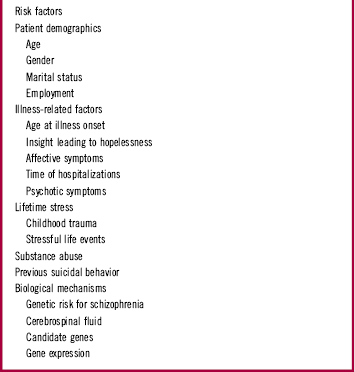
Table 2 shows a summary of reported risk factors for suicide in schizophrenia.
Interaction Between Risk Factors of Suicidal Behavior
The complexity of SCZ is considered to be the result of multiple interacting biopsychosocial factors. The best model for investigating the interaction between clinical factors and biological factors in suicide is the stress-per-genes interaction model proposed by John Mann.Reference Mann 76 Regarding how to incorporate into suicide prediction the interaction of multiple factors, some papers using a machine-learning approach have been published;Reference Passos, Mwangi and Cao 77 however, none thus far have focused on the schizophrenia patient population.
Conclusions
The association between biopsychosocial risk factors and suicide in SCZ has been a topic of investigation for many years. Numerous studies have identified risk factors for suicide that are prevalent among individuals with SCZ. As previously described, many risk factors are intertwined with one another and may contribute reciprocally in leading to suicidal behavior in SCZ. The most commonly reported risk factors include lifetime stress, active psychosis, substance abuse, an early age of onset, unemployment, experiencing hopelessness, previous suicidal behavior, and depression. Therefore, predicting individuals who may be susceptible to suicide is a difficult endeavor given the uncertain relative contributions of each risk factor in suicidal behavior. It is imperative that future studies continue to take a biopsychosocial approach to uncovering the risk for suicide in SCZ. To achieve the most success, future studies should incorporate a gene–environment interaction or epigenetic model that incorporates the many psychosocial factors already established.
At the moment, genetic and epigenetic studies of suicide continue to investigate new avenues to determine an underlying biological susceptibility for suicidal behavior. After over a decade of candidate-gene studies, the focus of genetic investigations of suicidal behavior has shifted toward genome-wide association (GWA) studies. Unfortunately, to date, there are no GWA studies of suicidal behavior in SCZ. Some of the most promising research that is emerging regarding suicidal behavior involves the analysis of epigenetic changes. Epigenetics involves an alteration in gene expression without changing the actual DNA sequence. This is often influenced by stressful life events and other psychosocial factors. Therefore, epigenetics provides an ideal model for studying suicide in that it is an observable mechanism by which many risk factors may interact. Unfortunately, there have been limited studies that have explored epigenetic mechanisms as playing a potential role in suicide in SCZ.
This review was presented as a qualitative analysis of the current suicide risk factors in SCZ, and it is therefore limited in determining the quantitative predicative value of each risk factor identified. However, due to the differences in methodology employed across studies (randomized control, retrospective and prospective cohort, and case-control), conducting a meta-analysis would not have been informative or even feasible. The review could also not overcome the limitations of each individual included article. Many independent risk factors have been identified, albeit with conflicting results, and each can account for only a small proportion of the variance. While they are informative, for the most part, they have limited predictive value. Essentially, these conflicting results can be attributed to major differences in research methodology. Primarily, how these studies define suicide or suicidal behavior varies greatly. As previously mentioned, suicidal behavior is considered on a spectrum that also includes ideation, attempts, and nonsuicidal self-injurious behavior. However, not all studies consider or have data on the full range of behaviors. Furthermore, the definition of the sample population in these studies also varies. As it is not always explicitly stated, different studies may have included individuals with varying degrees of symptoms and different clinical diagnoses. SCZ alone is a complex disorder, and further attempts at identifying a risk for suicide among SCZ patients is just as complex to unravel and requires that all aspects of the disorder be taken into account. Moving forward, it is suggested that studies clearly describe the SCZ sample and the suicidal behavior of interest. Breaking down future studies into specific suicidal behaviors and symptoms of SCZ may allow for a more refined approach and a fair comparison between many of the proposed risk factors.
Disclosures
Vincenzo De Luca received support for this research from a Canadian Institutes of Health Research (CIHR) operating grant (no. MOP-119332). Nuwan Hettige is supported by a University of Toronto Open Fellowship Award and by a Margaret and Howard Gamble Research Grant. Nuwan Hettige was also awarded a CIHR Travel Award from the Institute of Population and Public Health to present aspects of this manuscript. Ali Bani-Fatemi is supported by an Ontario Graduate Scholarship. Isaac Sakinofsky has nothing to disclose.
Summary of inclusion criteria for the present review study

Summary of reported risk factors for suicide in schizophrenia

Acknowledgements
The authors would like to thank the research assistants and students involved in data collection and data entry.