From January 20, 2020, when a 35-year-old female who had returned from China was the first confirmed case of coronavirus disease (COVID-19) in South Korea, the number of confirmed cases has increased steadily. 1,Reference Kim, Choe and Oh2 After the 31st case of COVID-19 was confirmed on February 18, 2020, numerous cases were discovered in the Daegu and Gyeongbuk areas of South Korea. Epidemiological investigations revealed the source of the mass infection was Sincheonji, a South Korean religious cult. Their religious gatherings acted as an epicenter for spreading the virus. 3 On March 20, 2020, the number of confirmed cases in the Daegu and Gyeongbuk areas reached 7478 of a national total of 8652 cases. Approximately 4800 cases were linked to the religious group. 4
The sudden explosion of community-acquired cases forced medical institutions in the Daegu area to deal with a surge in the demand for medical care, which far exceeded the services available. However, as the majority of medical staff were quarantined after close contact with patients later confirmed to be infected with severe acute respiratory syndrome coronavirus 2 (SARS-CoV-2; the virus that causes COVID-19) or have COVID-19 and the medical facilities where confirmed patients were initially treated were closed sequentially, the shortage of medical services in the community worsened.
SARS-CoV-2 is more contagious than previously known coronavirus infections such as severe acute respiratory syndrome and Middle East respiratory syndrome (MERS). Reference Liu, Xie and Wang5 There are numerous reports from various countries of COVID-19 patients, including laboratory or radiologically confirmed cases, with no significant respiratory symptoms. Reference Kim, Kim and Ra6 Accordingly, adequate pretriage screening and allocating emergency treatment areas based on infection risk stratification should be planned before allowing patients into each emergency department (ED) area.
The purpose of this study was to evaluate the usefulness and safety of operating a pretriage screening clinic and an expanded preemptive quarantine area in the ED during a regional COVID-19 outbreak by analyzing the flow, detailed characteristics, and outcome of the patients.
METHODS
Study Setting and Design
This was a descriptive, cross-sectional, retrospective study conducted in a single institution. The study ED is a regional emergency center. The hospital in which the study ED is located operates a nationally designated regional quarantine ward, which was established after the MERS outbreak in 2015. The hospital was appointed as a regional “responsible medical agency” of public health by the Ministry of Health and Welfare (MOHW) of South Korea in 2019. 7 Patient data were collected and segregated into 2 periods according to ED closure and implementation of the new triage protocol.
Change of Protocols
After the first case of COVID-19 in South Korea, the study hospital began preparing for segregation and screening of possible infected patients. The study hospital had already implemented conventional screening procedures, including passing Joint Commission International and MOHW accreditation. In this triage protocol, patients with suspected infectious diseases were instructed to not enter the ED directly but to notify the security staff or staff in the triage area. After notification, the ED physician communicated with the patient by means of a landline phone placed near the ED entrance. The physician decided whether the patient was at high risk of acquiring infectious disease or had any risk factors suggesting the presence of infectious disease. Patients who were at risk of an infectious disease, were escorted to the quarantine area. In case of no or little risk, the patient was either discharged or entered the ED for general emergency patient procedures.
On February 18, 2020, an infected patient from the religious event visited the study ED and was held in observation units without any precautions, and was only later found to be positive for COVID-19. Following the protocol set by the MOHW at the time, the ED was closed for 4 days from February 18 to 22, and the ED staff who had come into contact with the patients were quarantined for 2 wk.
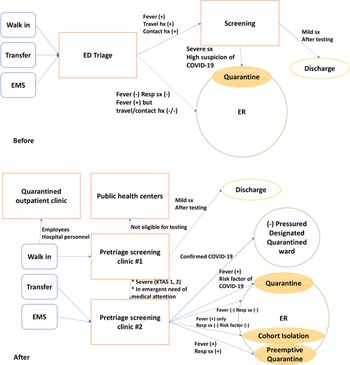
At the time, there was an increasing demand from the community for SARS-CoV-2 (COVID-19) polymerase chain reaction (PCR) testing. By then only a few medical institutions and local health authorities were able to provide testing. It was well understood that an increasing number of patients may pose a threat and necessitate further ED closures if proper measures were not taken after reopening. During the closure, before reopening, a new protocol for COVID-19 response was implemented, which required that all patients who visited the ED comply with the clinical protocol, without exception. A detailed explanation of the protocol change after regional outbreak is provided in Figure 1. The new protocol included adjusting treatment area in ED and segregation of suspected COVID-19 patients from nonsuspected patients.
Comparison of the ED patient screening procedure before and after regional COVID-19 outbreak. New protocol was implemented after the closure of ED in the study hospital. Legend: ED, emergency department; EMS, emergency medical services; hx, history; sx, symptom; resp, respiratory; ER, emergency room.

The main idea of a new improved protocol for screening included 2 pretriage screening clinics that served as a sentry for all patients visiting the ED, not limited to patients assess at posing a risk of infection based on the presence of fever or their travel history. The first clinic was designated for walk-in patients. The clinic was located at a distance from the ED and equipped with basic tools to measure vital signs, collect respiratory swabs for SARS-CoV-2 testing, write prescriptions for medicine, and take chest X-rays. All medical and nonmedical staff in both clinics donned full level D personal protective equipment (PPE). Our PPE kit consisted of water repellent gowns, facial shields or goggles, N95 masks (our only choice of respiratory protection at that time), surgical gloves (with double gloving and taping), and waterproof shoe covers. In our ED, whoever had the chance to come in any direct contact with patients from outside the hospital followed the standard protocol of level D PPE requirements. One thing to note is that we ran out of facial shields early, and had to outsource makeshift face shields (with plastic covers, sponges and rubber bands) from local hardware stores.
Physicians assigned to both clinics determined whether the patients were in need of a SARS-CoV-2 PCR test, which included assessing fever, respiratory symptoms, a history of contact with confirmed COVID-19 patient, or a history of visiting places considered to be epicenters of outbreaks or endemic countries. For patients with mild symptoms requiring only a swab for a COVID-19 test or oral prescription, the entire clinical process was completed in the first clinic and they were discharged on site, regardless of testing.
If patients visiting the first clinic were assessed as having severe disease during the triage and could not be sent home, they were sent to the second clinic. Any hemodynamically unstable patients were immediately placed to the isolated resuscitation unit, regardless of infection risk, and resuscitation started right away. Unstable patients were treated as positive until proven otherwise. Furthermore, any patients who arrived by ambulance were sent directly to the second clinic, which was placed in front of the ED. All emergency medical service and transfer patients needed to be prenotified to the ED, otherwise they were diverted unless the spare capacity at that time was sufficient. When ambulances arrived, patients were instructed not to unload before being examined by an emergency physician in the second clinic. If the patient was diagnosed with COVID-19 before ED arrival, he or she bypassed the ED and was directed straight to the COVID-19 designated ward. For patients who were not aware of their COVID-19 status, the same brief risk stratification assessment was performed as that used at the first clinic.
Patients with both risk factors and symptoms were directed to the quarantine area in the ED equipped with double doors, separate ventilation for each room, and equipped to monitor vital signs outside of the patient beds. Patients with fever and respiratory symptoms only and no apparent risk factors of COVID-19 disease, were directed to preemptive quarantine rooms that had separate, isolated space. The preemptive quarantine area was intended to expand the treatment capabilities of urgent patients with respiratory symptoms. One of the existing general wards was emptied to place preemptive quarantine beds, equipping with portable negative pressure devices in each room. Patients whose only suspicious symptom was fever, and with no other respiratory symptoms or risk factors were placed separately into cohort areas, where beds were spaced apart from the double width of conventional placement (approximately 3 m), segregated only with curtains.
PPE was mandatory to treat these patients until they received a test result confirming that they were negative for COVID-19. If the SARS-CoV-2 PCR test was positive, the patient was admitted to the COVID-19 designated ward. If the COVID-19 ward was full, positive patients were placed within the negative-pressure quarantine area within the ED. In contrast, patients with negative results were moved to the general observation area for further treatment. Last, patients who arrived in the second clinic without any symptoms or risk factors but triaged as severe and in need of emergent attention were managed according to the general procedures applied to ordinary ED patients.
Data Source and Collection
Electronic medical records at both clinics were written by the ED physicians for each patient, which were collected and processed by physicians and data coordinators working in the ED.
Study Participants
All patients who visited either the pretriage screening clinic or the ED in the study hospital from January 21 to March 31, 2020, were included. As the ED closure took place on February 18, these dates were chosen to include approximately 1 mo before and after the closure. Patients visiting the screening clinic or the ED for nonclinical reasons, such as issuing medical certificates, obtaining medical records, or other administrative purposes, were excluded.
Variables and Statistical Analysis
Data were collected on patient demographics, including gender and age, time of the hospital visit, visiting route, initial vital signs, chief complaints, and the clinical outcome. Variables collected relating to COVID-19 included fever, respiratory symptoms, contact history with confirmed case patients, and international travel history or travel to places where COVID-19 was epidemic. Major respiratory symptoms were assessed according to the WHO and Korean Centers for Disease Control guidelines. 8–10
In-hospital data of SARS-CoV-2 RT-PCR assay results, chest X-ray findings, ED disposition, final diagnosis, and discharge status, were also collected as part of the study. The Korean Triage and Acute Scale (KTAS; 1, most severe; 5, least severe), which is widely used in Korean EDs, was used to measure the severity of disease in patients attending the ED. Reference Park and Lim11,Reference Kwon, Kim and Jo12
A descriptive analysis was performed to report how changes in the ED protocol were implemented in the hospital, its impact on patient flow, the clinical results, and the effectiveness of the pretriage screening clinic, as well as the whole protocol. Additional analyses were conducted within the isolated population divided into 2 groups according to the quarantine area in the ED. Comparisons were made using the chi-squared test or Fisher exact test for categorical variables. For continuous variables, Student t-test or the Mann-Whitney U test was performed.
All statistical analyses were performed using SAS software, Version 9.4 (SAS Institute, Cary, NC, USA). P-Values < 0.05 were considered statistically significant.
Ethics Statement
The present study protocol was reviewed and approved by the Kyungpook National University Institutional Review Board (File No. 2020-04-037). This study was a retrospective study, based on electronic medical records with no meaningful harm to the study subjects. Therefore, a waiver of informed consent was granted.
Results
Patient Influx and Flow
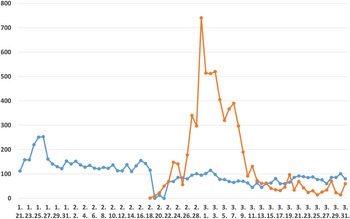
The total number of patients visiting the ED during the study period, compared with total number of newly confirmed COVID-19 patients in the region, is displayed in Figure 2. The ED of the study hospital typically treats 120 to 150 patients per day. The number of patients dropped sharply at the beginning of the outbreak (February 18) and during full ED closure.
Number of patients visiting ED in the study period. The peak in attendance the start of the graph is due to the national holiday when the number of ED visits generally increase at this particular time of year. Legend: Blue line, patients visiting ED; orange line, laboratory confirmed COVID-19 patients in the city region.

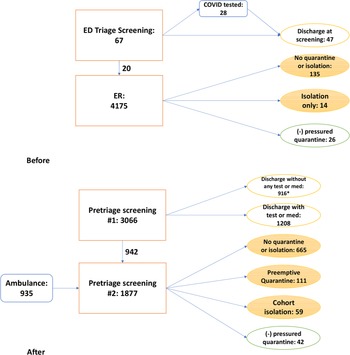
Figure 3 shows the patient flow. Before the full ED closure, only a small portion of patients (0.5%) were screened before entering the ED. After reopening, a significant proportion of patients (50.2%) were screened in the pretriage clinic. Patients presenting with suspected symptoms were isolated or quarantined, following the new protocol.
Flow of patients visiting ED, compared before and after period of regional outbreak resulting in new protocol implementation. Legend: ED, emergency department; ER, emergency room.

Patient Characteristics Visiting the Screening Clinic, Entering the ED, and Overall Isolation
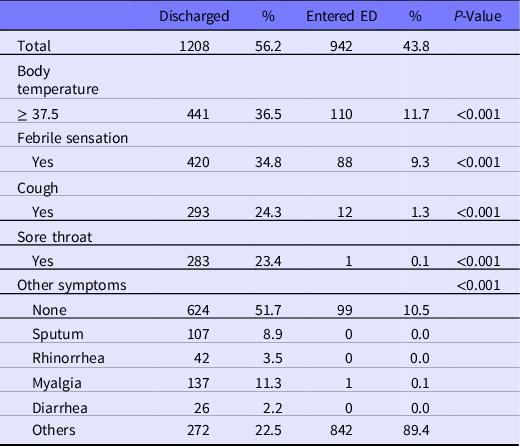
To track the inflow of patients after implementing the new protocol, summarization of the data on patients who were treated in the pretriage screening clinic was done and they were divided according to the patient disposition. The results are shown in Tables 1 and 2. Median age of patients discharged from the clinic was younger (41 vs 55). Patients who presented with respiratory symptoms or fever were more likely to be discharged. Moreover, patients with related risk factors (such as contact and travel history), fever (36.5% vs 11.7%), febrile sensation (34.8% vs 9.3%), respiratory symptoms (such as cough, sore throat, symptom, or rhinorrhea), and other related symptoms were more likely to be discharged from the pretriage screening clinic. The proportion of patients with swab results positive for SARS-CoV-2 was higher in those who were discharged (4.4% vs 0.5%).
General characteristics and clinical results of patients treated in 1st pretriage screening clinic after regional outbreak, according to patient disposition

Note: Note that ”discharged” means the treatment of patient was concluded in the pretriage screening clinic, not entering ED.
Symptoms of patients treated in 1st pretriage screening clinic after regional outbreak, according to patient disposition

Note: Note that ”discharged” means the treatment of patient was concluded in the pretriage screening clinic, not entering ED.
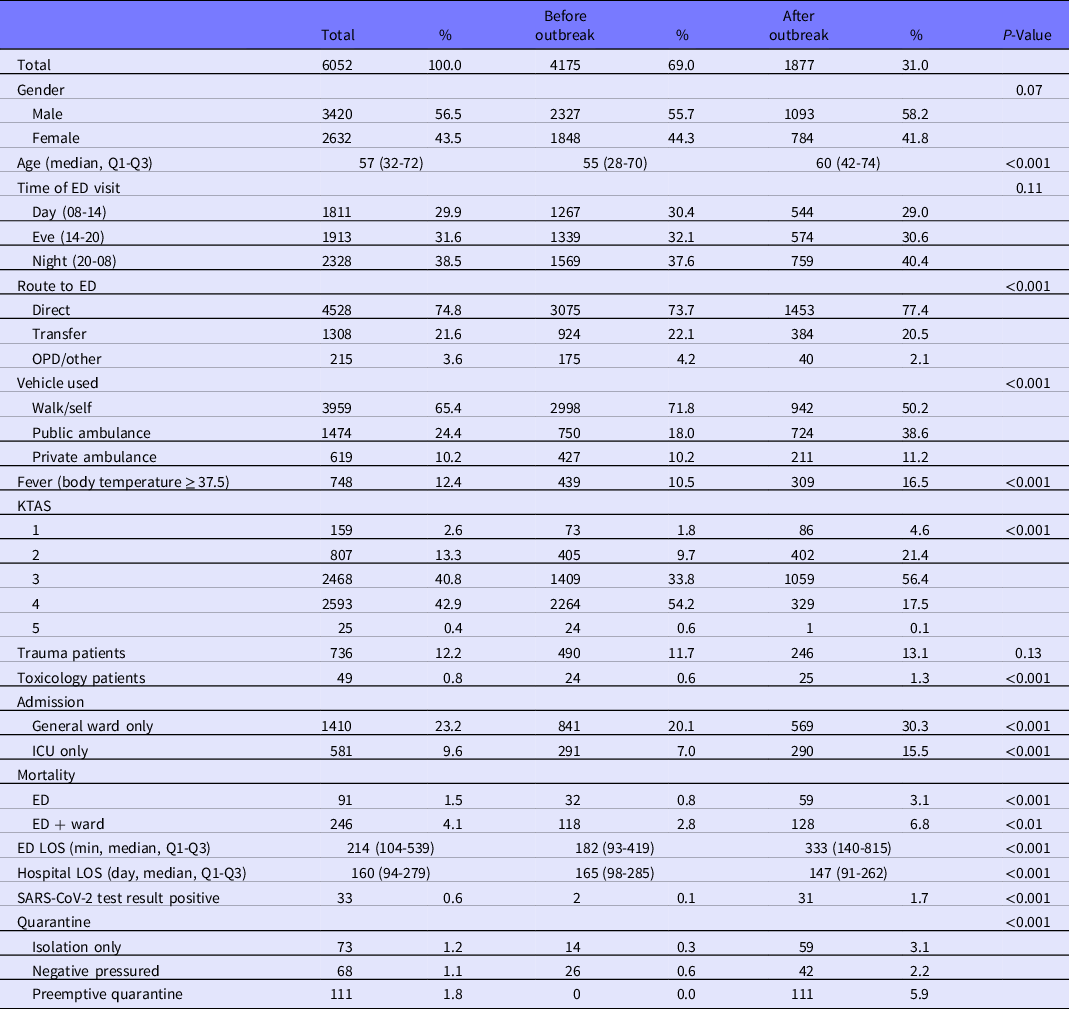
Table 3 shows the characteristics of patients clearing the screening process and entering the ED according to timeline, and shows the change in prescreening and quarantine protocols in the ED. After the regional epidemic, patients entering the ED were significantly older (55 vs 60), used ambulances more frequently (28.2% vs 49.8%), and had a more severe in KTAS triage level (11.5% vs 26.0%). The proportion of patients who had a high temperature (meeting testing standards) were higher after the outbreak period (10.5% vs 16.5%). The proportion of intoxicated patients increased, but the portion of trauma patients did not show any difference. Table 3 also portrays the outcome of patients, which admission rate (27.1% vs 45.8%), length of stay in the ED (182 vs 333), and proportion of patients isolated (0.9% vs 11.2%) significantly increased, but the length of hospital admission decreased (165 vs 147).
Comparison of patients screened in pretriage clinic to enter ED, before and after outbreak with redesigned pretriage screening system

Abbreviations: OPD, outpatient department; AMB, ambulance; EMS, emergency medical service; ICU, intensive care unit; LOS, length of stay.
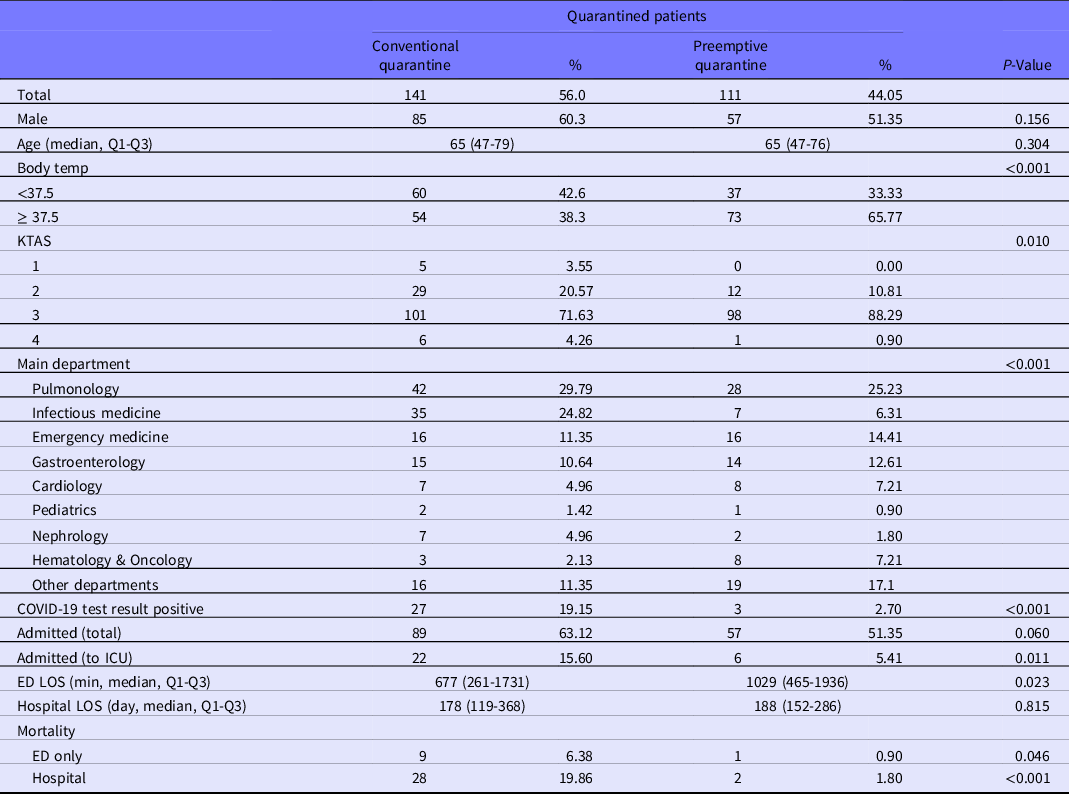
To measure the impact of the new quarantine strategies and increased isolation area surge capacity on patient care, a comparison was made of the quarantined or isolated patients according to the treatment area. Although the proportion of febrile patients was higher in the newer preemptive quarantine area (38.3% vs 65.8%), patients with greater severity disease (24.2% vs 10.81%) were placed in conventional quarantine areas. Patients treated in the newer area stayed longer in the ED (677 vs 1029) and had a lower mortality rate (19.9% vs 1.8%). The detailed results are shown in Table 4.
Comparison of characteristics and clinical results of conventional quarantined and preemptively quarantined patients in ED

Note: ”Conventional” includes isolated or quarantined area prepared before the outbreak; ”preemptive” means isolated or quarantined area set up after the outbreak, including preemptive quarantine area and cohort isolation areas.
Abbreviations: ICU, intensive care unit; LOS, length of stay.
Discussion
A new protocol in response to the regional COVID-19 outbreak was implemented, for managing patients who presented to the ED. This protocol consisted of 2 main components. The first was the addition of a pretriage screening clinic, which focused on acting as a “protective layer” before ED and distributing the burden to actual ED capacity. Adding and expanding the screening area is not an entirely novel concept. Similar measures were taken during the H1N1 and MERS outbreaks. Reference Scarfone, Coffin and Fieldston13,Reference Varughese, Read and Al-Khal14 The severity of patients entering the ED after protocol implementation showed a marked increase in the portion of patients with more severe conditions (KTAS level 1 to 3). This result may be attributed to effective screening in the pretriage clinic.
During the study period, 84 cases of COVID-19 were diagnosed among patients attending the pretriage screening clinic. The majority of patients diagnosed with COVID-19 were discharged home directly from the pretriage clinic and instructed to undergo home quarantine. This was due to the policy of preserving the ED beds for patients who required essential medical care and of trying to discharge and isolate patients by means of home quarantine. Although some of the discharged patients were later admitted, if they had any related risk factors, they were more likely to be discharged. Had these cases of COVID-19 been all diagnosed inside the ED, this would have led to multiple closures of the ED and more ED staff shortages because of quarantine. Identified risk factors were generally similar to those identified in previous COVID-19 studies conducted in China, Italy, and Singapore. Reference Li, Zhang and Li15–Reference Guan, Ni and Liang18 Having contact with someone with known infection and visiting an epicenter of infection were the most common factors. It is likely that many patients visited the pretriage clinic because they were concerned about their contact history. In contrast, the prevalence of each cardinal symptom of the virus was lower than in previous studies.
Despite these results, there are some remaining concerns regarding the operation of the clinic. The study hospital intended to segregate patients without any symptoms or risk factors who only wanted COVID-19 testing, as testing in the ED is an inappropriate use of ED resources, especially during the current epidemic period. There have also been reports of patients visiting the ED only for COVID-19 testing in other geographical regions. 19–21 During the early phase of the COVID-19 epidemic in Korea, some clinics and institutions implemented drive-thru clinics to emphasize testing. Reference Kwon, Ko and Shin22 Public health centers established a system for mass testing much later, and this relieved much of the demand to EDs. Reference Choi, Han and Lee23 Before the COVID-19 pandemic, approximately half of the patients visiting EDs in Korean tertiary hospitals were triaged as low severity. Reference Kim, Hong and Kim24 Public promotion of appropriate inquiring (to seek help or advice regarding pandemic), choosing, and patient choice of the type of health facility should be considered. Another suggestion involves promoting local medical clinics to provide basic primary care in these situations.
The other main idea behind the new protocol, was expanding the preemptive quarantine area and the isolation area for observation, thus reducing the use of the negative-pressure quarantine units. There are guidelines and studies on how to prepare and maintain health services during a pandemic, and numerous studies have proposed transforming some areas in the ED to isolation units. Reference Scarfone, Coffin and Fieldston13,Reference Varughese, Read and Al-Khal14,25,Reference Chang, Lin and Tsai26 However, mass testing, longer hours required for testing, and a lack of effective antiviral treatment will rapidly overwhelm the services for febrile patients. The study hospital expanded and set aside observation areas as ”cohort” isolation areas, which can play a significant role in providing safe patient care until the SARS-CoV-2 test results are confirmed. A similar idea has been proposed by health-care providers in China, Taiwan, and Italy. Reference Li, Zhang and Li15–Reference Carenzo, Costantini and Greco17,Reference Chang, Lin and Tsai26 Using this approach, the study institution was able to manage a relatively large number of febrile patients and patients with respiratory illness, and this also explains why more patients visited the ED at night. Current study results show that the admission rate, length of stay in the ED, and the isolation rate were significantly increased after the outbreak, but that the length of hospital stay was shorter, meaning that a greater burden of care was focused on the ED and the acute care area. Importantly, those patients stayed longer than patients in ”conventional” isolation areas, confirming the need for, and effectiveness of, the preemptive quarantine area.
At the time of writing this manuscript, after implementation of the new patient triage protocol, study ED had not experienced another closure, and there were no further episodes requiring mass-quarantine of ED staff. For example, on March 1, 1 patient tested positive for COVID-19 in the ED, despite passing all precautionary steps in the new protocol. The patient did not show any symptoms and was diagnosed based on a routine test before admission to the general ward. Although there was a breach, due to following the new protocol, the ED was closed only in the cohort isolation area very briefly.
In a disaster, health-care providers and institutions should be able to establish plans to prepare for meeting the surge in demand for medical care. 25,27 In a major catastrophic event, providing and maintaining a constant level of care may pose a challenge to EDs in hospitals. Reference Davis, Zobel and Khansa28,Reference Steele, Orefuwa and Dickmann29
Previous experience provided some level of preparedness in the study institution. After the MERS epidemic, nationwide public health policy was amended to set up at least 3 isolated quarantine rooms and 2 negative-pressure quarantine rooms in each regional emergency center. The ED medical staff were trained to follow the basic protocol. However, another challenge for infectious disease outbreaks depends on the identification and knowledge of the disease. Reference Steele, Orefuwa and Dickmann29 At the beginning of the present study, COVID-19 was a novel disease for which knowledge was limited. Difficulty in identifying and understanding the pathophysiology, and transmission of infection, was a challenge in response.
One of the lessons from previous outbreaks, that was confirmed in this outbreak, is that an outbreak increases the demand not only on managing the disease responsible for the outbreak, but also on normal everyday hospital functioning. The study hospital is not only designated as a tertiary regional emergency center but also serves as a regional trauma center and a regional cardiovascular center. Although the ED had to be closed in the beginning, after implementing the new protocol, other intensive care units, general ward, outpatient clinics, and operating theater were able to continue carrying out conventional tasks without any temporary closures.
Limitations
This study has several limitations. First, it was conducted in a single hospital. While it may provide how a single center may manage and treat the medically disastrous situation in a regional outbreak, the patient characteristics and outcomes may not be generalizable. Further multicenter studies may provide more practical results. Second, some factors led to missing data which could not be addressed. For example, if the patient was discharged immediately from the first clinic, insufficient in-depth information was obtained. This happened especially in February, when there was a surge in the demand for patient screening and the ED staff were not yet familiar with the new protocol. In addition, data such as the COVID-19 test results performed in other medical institutions or test centers were not available. Moreover, patients readmitting after discharge were instructed to take a different pathway to avoid contacting ED patients. Data for such patients could not be obtained. Third, the scope of this study is focused on the ED level. In-hospital outcomes (other than mortality) of COVID-19 patients admitted to isolation wards were not considered, once they had been left the ED. COVID-19 patients diagnosed in general wards and traditional in-hospital outpatient clinics were also not considered. The protocol for patient management in outpatient clinics and the general wards during the outbreak and the outcome could be as important as those of the ED in maintaining the integrity of hospital function as a whole. Last, some patients visited pretriage screening clinics multiple times. Each visit was analyzed as a separate event, as it was difficult to distinguish between a missed infection and a delayed diagnosis.
Conclusions
In a regional, community outbreak of infectious disease epidemic, pretriage clinic safely screened and segregated infectious patients from other patients entering ED. Expanded preemptive quarantine area effectively increased surge capacity on quarantine area by treating more patients with fever and respiratory symptoms. An infectious disease protocol implementing 2 treatment area may contribute to preserve and maintain ED function.
Conflict(s) of interest
The authors have no conflicts of interest to declare.