Introduction
In order to achieve Millennium Development Goal-4 of reducing child mortality by two-thirds by the year 2015, it is important to understand factors related to health care that affect neonatal mortality (Martines et al., Reference Martines, Paul, Bhutta, Koblinsky, Soucat, Walker and Bahl2005). Each year a quarter of the world's total neonatal deaths (nearly one million) occur in India (UNICEF, 2007). Within India, the state of Uttar Pradesh (UP) accounts for a quarter of India's neonatal deaths, which is much higher than the state's share of the population of India. Thus a significant proportion of the world's neonatal deaths occur in UP alone (Srivastava et al., Reference Srivastava, Awasthi and Agarwal2009). The state of UP also has a high infant mortality rate (72.7 per 1000) (National Family Health Survey, 2007). Data show that 65% of all births and 75% of all rural births occur at home (National Family Health Survey, 2007). Thus there is a need to explore causes of neonatal deaths at the micro-level in general and factors associated with delivery practices in India (National Family Health Survey, 2001; Black et al., Reference Black, Morris and Bryce2003; Freeman et al., Reference Freeman, Christian, Khatry, Adhikari, LeClerq, Katz and Darmstadt2005).
It is well established that better postpartum health care practices reduce neonatal mortality and morbidity to a large extent. A set of delivery practices such a clean cord care (cutting the umbilical cord with a sterilized instrument and tying it with a thread), thermal care (drying and wrapping the newborn immediately after delivery and delaying the newborn bath for at least 6 hours or for several days to reduce the hypothermia risk) and initiating breast-feeding within the very first hour after birth have been identified as some of the major factors behind reduction in neonatal mortality (Darmstadt et al., Reference Darmstadt, Bhutta, Cousens, Adam, Walker and de Bernis2005; Bhutta et al., Reference Bhutta, Darmstadt, Hasan and Haws2005). Although there are some studies on care-seeking behaviour (Awasthi et al., Reference Awasthi, Srivastava and Pant2008; Srivastava et al., Reference Srivastava, Awasthi and Agarwal2009) and causes of neonatal deaths (Baqui et al., Reference Baqui, Darmstadt, Williams, Kumar, Kiran and Panwar2006) in UP, all of them are confined to urban slums or rural backgrounds; there is a lack of micro-level data on antenatal care, delivery and postnatal care during the neonatal period in peri-urban areas.
Peri-urban areas provide a testing ground for the effect of interface of cultural changes on the one hand and development and health infrastructure on the other. Populations residing in peri-urban areas comprise of heterogeneous groups with respect to culture, income level, language and social norms. It is a region in transition between rural and urban zones and is defined as a poorly planned and regulated mosaic of land, housing, agriculture and industry, in a state of rapid change (Birley & Lock, Reference Birley and Lock1999). Being in close proximity to the city, the peri-urban region provides more education and health facilities and stronger medical interventions compared with rural areas, but it also sustains traditional rural/folk culture and practices, some of which may be detrimental to health. The peri-urban region is more complex than either rural or urban regions, and presents a unique challenge to study the levels and causes of mortality.
Peri-urban areas are growing in most developing countries. India is no exception, though the history and nature of peri-urban areas in India are not the same as those in the West. In India peri-urban areas are mostly those up to which expanding city limits have reached in the recent past. They develop greater connection with the city through newly built roads and many of their residents commute to work or provide services in urban areas. Yet, continuously living in the native village, they also stick to their traditional beliefs and culture. In this context, the present study focuses on neonatal mortality in a peri-urban environment around the city of Kanpur in UP, a high infant mortality state of India.
There is very little information on neonatal deaths in peri-urban areas in UP. The National Family Health Survey-3 (NFHS-3) reports an infant mortality rate of 72.2 per 1000 live births for urban and 85.8 for rural areas of UP during 2005–06 with a very high neonatal death rate of 47.6 (NFHS, 2007). The area around the periphery of Kanpur city has diverse social communities with different occupational backgrounds.
This study is unique in one respect: it compares the experiences of neonatal deaths and live births in the same households leading to a stronger case for generalization for the causes of neonatal deaths. Secondly, women who had experienced neonatal death were compared with those who had not experienced neonatal death to find out the differences (if any) in antenatal care, delivery and postnatal care, within the same peri-urban area, with better accessibility and availability of medical facilities than the interior villages.
Methods
Study area
The study was conducted in a peri-urban set-up approximately 20 km from the city of Kanpur, situated on National Highway No. 91. Five settlements (Ameliha, Jaguwapurwa, Dewpalpur, Maharajpur and Tatiyaganj) in the catchment of the Chobepur public health centre, situated at very close proximity, were selected. A pilot survey and interviews with local people revealed that the population in this peri-urban area has diverse socioeconomic status with respect to social class (caste), possession of agricultural land, occupation and income. The heterogeneous nature of socioeconomic characteristics of the households in this study area is common to peri-urban settlements around the world, especially in developing countries, though the causes for this are not the same everywhere.
Research design
This study used a quantitative methodology with a structured interview schedule. Data were collected from all women selected in the sample villages situated at a distance 2–5 km from the heath centre. The schedule was developed keeping in view the objectives of the study and available schedules from the major demographic and health studies done in India, including NFHS-3. Considering the fact that the respondents would not know English, interview schedules were translated into Hindi – the local language. A pilot survey was done to test the interview schedules, based on which some modifications were made in the order and wordings of the questions.
Pregnancy history was obtained from each woman in the household. Information on age at marriage, number of pregnancies, pregnancy outcome and child deaths, if any, was recorded. During the interviews age estimation of women was very difficult, as a large number of respondents could not read or write. An indirect method of deriving it from information on age at marriage, age at first menarche, birth interval and age of the first child was therefore used. Local historical events and important dates were also used. Detailed information about pregnancy wastage such as abortions (spontaneous/induced), miscarriages and stillbirths (birth of dead baby) was recorded. For the present study only live births were taken into consideration, i.e. babies who cried after birth. UNICEF (2007) definitions were used for classification of age of child death as follows.
• Neonatal death: death occurring during the first 28 completed days of life.
• Infant death: death occurring between birth and exactly one year of age.
• Under-five mortality or child mortality: death occurring among children between birth and exactly five years of age.
For the present study, neonatal deaths and their perceived causes were recorded. Birth order, birth interval, sex and duration of breast-feeding were noted. Information on antenatal and postnatal care of infants and mothers and delivery practices was also obtained. Respondents were asked about the details of place of delivery, immunization, access to and quality of health facilities and contacts with health workers. Information regarding receipt of antenatal care, type of antenatal care received, complications (if any), intake of iron/folic acid tablets and tetanus toxoid injections was collected. Questions were also asked about the reasons for not using antenatal care during pregnancy. Similarly details of place of delivery, assistance during delivery, sterilization of the cord-cutting instruments, application to the umbilical cord after removal and to the navel during the neonatal period were obtained. Postnatal checkups (if any) were recorded.
The socioeconomic characteristics such as caste, mother's education and husband's education were noted. A household standard of living index (SLI) was constructed using the methods employed by the NFHS-3 of India and an additive scale based on poverty level, possession of agricultural land, bank accounts, housing, environment, electricity, animal possession, presence of kitchen, toilet facilities and material possession such as television, refrigerator etc. was constructed. Apart from this, the field assistants used a ‘observed housing, environmental and material possession status scale’. This was matched with the socioeconomic information given by the respondents. Thus field assistants categorized households into low, medium and high socioeconomic groups, as observed during the interviews done at each respondent's residence.
Fieldwork was carried out for three months from the beginning of January to March 2008. Three women field assistants were appointed to complete the household schedules as pregnancy-related questions are personal and sensitive and women in these areas would be more comfortable with women interviewers. All the field assistants were provided with training, where the purpose of the study was clarified and guidance on interviewing and the ethical aspects of the research was provided. They were all local and they had a good knowledge of the socioeconomic conditions, cases of child deaths and the quality of local health care services in the study area. They used the help of local anganwadi (pre-school) workers and accredited social health activists (ASHA) (who are part of the government-run health care programme in the country).
All married women (<50 years) from the five settlements were selected for the study. Women who had achieved menopause on the date of the survey were excluded. A total of 983 women were found to fulfil the criteria needed for this study. However, Muslim women's schedules, which were very few, and some incomplete schedules due to non-response to certain important questions, were dropped from the analysis. Since the purpose was to examine whether health practices and care determine pregnancy outcome and child survival, women who had no live birth were also excluded from the survey. Thus final analysis was done on 892 women, of whom 109 had neonatal deaths. There were two women with a record of child death but without any surviving child. In all there were 107 women with both experience of living and dead children. Therefore, 109 neonatal deaths with 107 living children were compared with respect to pregnancy care, delivery and postnatal care. These 109 women who had neonatal deaths were also compared with 783 women who had no neonatal deaths, for the same variables.
Statistical analysis
Descriptive statistics were used to explore the household socioeconomic condition and demographic behaviour of the women with and without neonatal deaths. Some demographic variables such as age of the events (last live birth and last neonatal death), birth order and birth interval of the last surviving and last neonatal deaths of the 109 women were compared and t-test was used to test the significance of differences in their mean values. The chi-squared test was used to examine the relationship between the conditions of childbirth (antenatal care, delivery and postnatal care) and the status of the pregnancy outcome, i.e. whether the child was dead or alive. The chi-squared test was also used to examine the difference between the characteristics of women with or without the experience of neonatal death.
Results
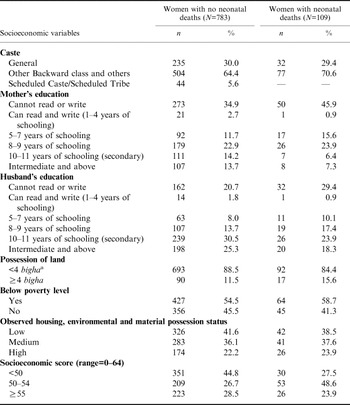
A comparison of the socioeconomic status of women without neonatal deaths and those with at least one neonatal death (Table 1) shows that a similar number of women in both categories belong to the General caste, while 64% of women having no neonatal deaths and 71% of women with deaths were from the Other Backward class (intermediate social groups). Some women with no neonatal deaths also belonged to Scheduled Castes and Tribal Groups (6%) (the lowest social groups in India). The percentage of women who were not able to read or write (46%) was higher among those households who experienced neonatal deaths than among those who did not. Similarly, husbands of women with no neonatal deaths had a greater percentage of secondary and higher education (56%) than husbands of the ‘other’ category (42%).
Socioeconomic characteristics of women with at least one neonatal death and those with no neonatal death

a One bigha=0.4 hectare.
The possession of sufficient agricultural land (≥4 bigha) was about the same in both groups of women (16% and 12% respectively). While 55% households of women with no neonatal death were under the poverty level, 59% of households women with neonatal deaths were below the poverty level. Attributes of observed housing, environment and material possession were about the same in households of both groups. The scale developed on the basis of scoring of variables such as possession of sufficient agricultural land, poverty level of the household, possession of a bank account and insurance policy, type and ownership of house, source of drinking water supply, presence of electricity and toilet facilities, general cleanliness of house and yard, possession of domestic animals (cows, buffaloes and horses), presence of a kitchen, fuel used for cooking and material possessions such as television, refrigerator and agricultural goods, and other household amenities has a range of 0–64. The lowest range of the score was defined as less than 50. It was found that 45% women without neonatal death and 27.5% of women with neonatal deaths belonged to households in the lowest range. A slightly greater percentage of women with neonatal deaths (48.6%) belonged to the middle range (50–54), while only 26.3% of women having no neonatal deaths were in this range. Almost the same percentage of women without neonatal deaths (28.5%) and with neonatal deaths (23.9%) belonged to households in the high range (scores of 55 and above).
Demographic characteristics of women with and without neonatal deaths
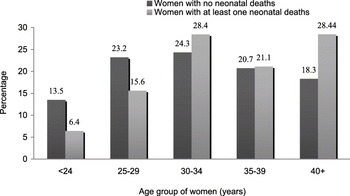
Figure 1 shows the age distribution of women with and without neonatal deaths. Most of the women with neonatal deaths belonged to the 30–34 (28.4%) and 40+ (28.4%) age groups, and a gradual increase in neonatal deaths was observed with increasing age, except in the 35–39 year age group.
Age distribution of women with and without neonatal deaths.

Demographic characteristics of the last surviving and dead children of women with neonatal deaths
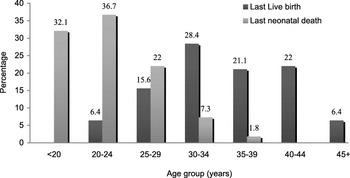
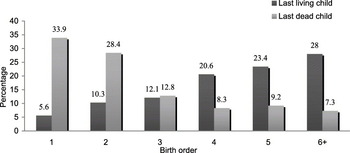
Differences in demographic factors were also observed among the 109 women with neonatal deaths, during the birth of their last living and last dead child (Figs 2–5). The number of last neonatal deaths was highest when the women were less than 24 years of age. As age increased, more live births were recorded, with 30–34 years being the ideal age with nearly 28% of the live births. Older women (35+) had very few or almost no neonatal deaths, indicating that young women were at higher risk of delivering babies leading to neonatal deaths.
Age distribution of women with neonatal deaths at birth of last living and last dead child.

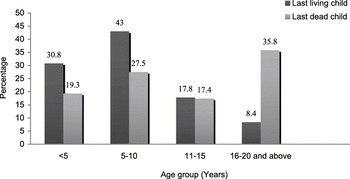
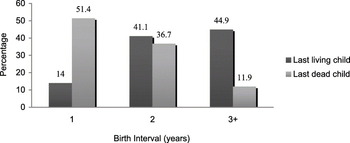
The present age of the last living child and what would have been the age of the last dead child of the same women were calculated and Fig. 3 indicates that more than 70% of the last live births took place during the last 10 years. The greatest number of neonatal deaths, however, occurred at least before 16 years. Further, more of the live births of the women with neonatal deaths were of higher birth order (Fig. 4) as compared with their last dead child. This implies that most neonatal deaths took place after first and second deliveries. From Fig. 5 it is also clear that almost half of the neonatal deaths (51%) occurred when the birth interval between marriage and birth or between two consecutive births was one year or less. The highest number of living children in women with neonatal deaths was found (45%) when the birth interval was 3+ years, followed by a 2-year birth interval (41%).
Present age of last living child and what would have been the age of last dead child.

Birth order of last living and last dead child.

Birth interval of last living and last dead child.

In the context of patriarchy gender bias is marked. The proportion of males among the last living children is higher (58%) than among the neonatal deaths (50.5%). Also, a slightly higher percentage of breast-fed children were found (26.2%) among the last living children as compared with the last dead children (20.2%). Within the limits of sample size this shows that breast-feeding improves the survival chances of a child, and in this respect male children are in a more advantageous situation than female children (data not given).
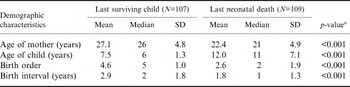
A significant difference in demographic characteristics (Table 2) between the last living and last dead child of the 109 women was noted. A significant larger number of neonatal deaths was found when women were younger (p<0.001), and at higher ages more live births were recorded. The mean age (in years) of the last surviving child of women with neonatal deaths was 7.5, while a significantly higher age was noted among their last dead children (mean=12.0). As evident from Fig. 3, the difference in mean neonatal deaths steadily decreased during the last 10 years in this peri-urban area. Mean birth order of the last living children was also significantly higher (4.56) than that for the last dead children (2.57); birth interval (in years) was also significantly higher (3.00) for the living children than for the dead children (1.76) of the women with neonatal deaths.
Demographic characteristics of the last surviving child and the last neonatal death of the same women

a Based on t-test.
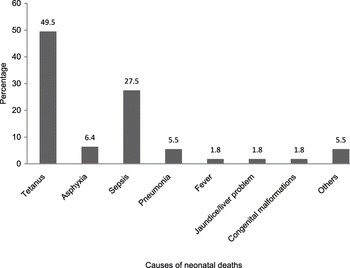
The causes of deaths were mainly tetanus, asphyxia and sepsis (83%) (Fig. 6). Tetanus alone accounts for half of the neonatal deaths (49%). This implies that if tetanus can be eliminated nearly half of neonatal deaths could be prevented.
Causes of neonatal deaths.

Intra- and inter-household differences in antenatal care
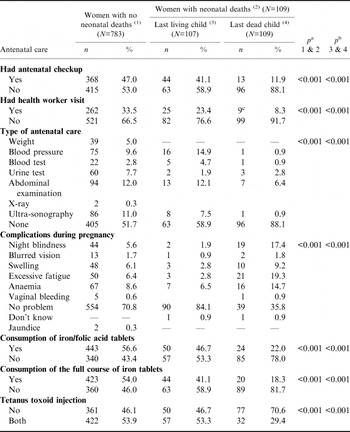
Differences in antenatal care, delivery practices and postnatal care were also observed between the last living and dead child of women with neonatal deaths (Table 3). During pregnancy, differences in antenatal care were observed between incidences of giving birth to a living and dead child. Similar differences in antenatal care were noted between women with neonatal death and women without neonatal death. The rate of antenatal checkups was only 12% among the last neonatal deaths, which was significantly lower than (p<0.001) the rate of antenatal checkups when last living children (41%) were born.
Antenatal care of last living child and last dead child of women with and without neonatal deaths

a Difference in antenatal care between women with no neonatal deaths and women with at least one neonatal death (1 and 2).
b Difference in antenatal care between the last living child and last neonatal death of the same women (3 and 4).
c There was one non-response, so total number of women adds up to 108.
A difference in seeking antenatal care was also noted (p<0.001) between women with neonatal deaths and those without neonatal deaths. The rate of health worker visits during pregnancy also differed: it was as low as 8.3% when the last neonatal deaths occurred and 23.4% during the last live births (p<0.001) of the women with neonatal deaths. The difference in proportion of women visited by health workers between women with no neonatal deaths and women with at least one neonatal death was also statistically significant (p<0.001).
The type of antenatal care received varied between the last born living child and last neonatal death of women with neonatal deaths, and also between women with neonatal deaths and without neonatal deaths. Only 12% of women had some sort of antenatal tests done during pregnancy when the last neonatal death occurred, among which abdominal examination counts for 6.4%. Antenatal checkups were significantly (p<0.001) higher among these 109 women before giving birth to the last living child (41%), as a higher percentage of blood tests (4.7%), abdominal examinations (12.1%), ultra-sonography (7.5%) and measurements of blood pressure (14.9%) were recorded. Different types of antenatal checkups were also significantly higher (47%) among women with no neonatal deaths than those with at least one neonatal death.
Complications such as night blindness, swelling, excessive fatigue and anaemia together amounted to 64% during the pregnancy of the last neonatal deaths, while lower rates of complications in pregnancy were noted (16%) at the birth of the last living child of the women with neonatal deaths. Nearly 30% of 783 women with no neonatal deaths had some sort of complications during pregnancy, which was also significantly lower (p<0.001) than the percentage for women with neonatal deaths. Intake of iron tablets was very low (22%) during pregnancy of the last neonatal deaths of the 109 women, while this was significantly higher (p<0.001) during the birth of the last living child (47%). A still significantly higher (p<0.001) percentage of consumption of iron tablets (57%) was noted among women with no neonatal deaths. Consumption of a full course of iron tablets is also important for fully recovering from anaemia during pregnancy. This study shows that only 18.3% women had fully consumed the prescribed 100 iron tablets during their pregnancy when the last neonatal deaths occurred. During the birth of the last living children, consumption of iron tablets was higher (41%), and the difference was statistically significant (p<0.001). A still higher value was recorded (54%) among women with no neonatal deaths in having the full course of iron tablets, and this was also significantly higher than that for the women with neonatal deaths (p<0.001).
Another measure to reduce tetanus of the neonates is tetanus toxoid injection during pregnancy. The course of two injections was completed during pregnancy for only 29% of the last-born neonatal deaths among the 109 women, and a significant higher rate (p<0.001) of uptake of tetanus toxoid injections was noted (53%) among the last-born living child of these women. Almost the same percentage (54%) was also noted among women with no neonatal deaths during pregnancy, which was significantly higher (p<0.001) than for women with at least one neonatal death.
Inter- and intra-household differences in delivery practice and postnatal care
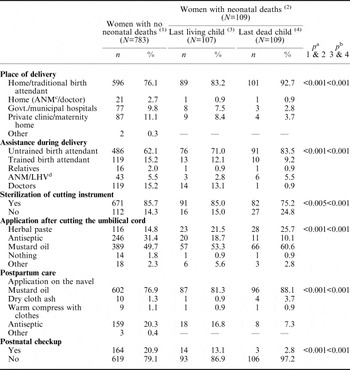
Table 4 shows delivery and postnatal care of the last-born 107 living and 109 dead children of women with neonatal deaths and 783 women without neonatal deaths. Nearly 93% of the deliveries in which neonatal deaths occurred took place at home, which was significantly higher than the figure of 83.2% for deliveries of births of the last living child. Also, a significantly lower percentage (p<0.001) of home delivery by untrained birth attendants was noted among women with no neonatal death records when compared with women with neonatal deaths. Most neonatal deaths took place when the deliveries were assisted by untrained birth attendants (84%), and this was significantly different when the last surviving child was born (p<0.001). A lower percentage of untrained birth assistants was involved when women with no neonatal deaths delivered their babies. During delivery the instrument used for cutting the umbilical cord was more likely to be sterilized during the birth of the last living child (85%) than during the birth of dead children (75%) among women with neonatal deaths. Antiseptic was used on the umbilical cords of 10% of newborns who died during the neonatal stage, which was significantly lower (p<0.001) than the 19% observed during the birth of the last living child of women with neonatal deaths. A further increase in the use of antiseptic on the umbilical cord during delivery (31%) was noted among women with no neonatal deaths. This was significantly higher than in the pregnancies that resulted in neonatal deaths (p<0.001).
Delivery practice and postpartum care of last living child and last dead child of women with and without neonatal deaths

a Difference in antenatal care between women with no neonatal deaths and women having at least one neonatal death (1 and 2).
b Difference in antenatal care between the last living child and last neonatal death of the same women (3 and 4).
c ANM=auxiliary nurse midwife.
d LHV=lady health visitor.
Postnatal care, such as application of antiseptic to the navel after delivery, was as low as 7% in the case of children who died during the neonatal phase, but a 17% rate of application of antiseptic was noted for the last living child of the women with neonatal deaths. Women with no records of neonatal deaths had a higher rate of application of antiseptic (20%) than women with neonatal deaths. The rate of postnatal checkups also varied. Women with neonatal deaths reported only a 3% rate of checkups of their newborns after delivery, while a significantly higher value (13%) was noted after the birth of the last living children. Women with no neonatal deaths had a still higher percentage of postnatal checkups (21%) after birth.
Discussion
Under-five mortality is one of the key indicators of development and neonatal death rate is a significant component of this. According to UNICEF, 1.2 million neonates die each year woldwide. India has one of the highest child mortality rates in the world (UNICEF, 2007). The National Family Health Survey-3 (2007) shows that the state of Uttar Pradesh has the highest infant mortality rate (73/1000 live births) and highest child mortality rate (96/1000 live births) in India. This state also has the third highest neonatal mortality rate (47.6) after the state of Jharkhand (48.6) and Chhattisgarh (51.1) (National Family Health Survey, 2007). This study in the peri-urban area of Kanpur city recorded a high neonatal mortality rate (42/1000 live births). Analysis of data obtained from interviews of 892 women exhibited significant differences in antenatal care, safe delivery practice and postnatal care between women with and without neonatal deaths (inter-household differences) and also within the women with neonatal deaths (intra-household differences).
Women with neonatal deaths had different behaviours when antenatal, delivery and postnatal care were studied for different pregnancy outcomes. Most of the neonatal deaths occurred in the first and second births and between one- and two-year birth interval. The association between infant and neonatal mortality with birth order and birth interval is an established fact (Alam, Reference Alam1995; Manda, Reference Manda1999; Titaley et al., Reference Titaley, Dibley, Agho, Roberts and Hall2008). In this study, after experiencing a neonatal death (which mostly occurred during the first or second birth order), women became more careful in succeeding pregnancies, as most of the last living children were of higher birth orders. Secondly, when closely spaced pregnancies resulted in neonatal deaths, increased birth spacing was preferred as the last living child revealed greater birth spacing. The third reason can be the age of the women. Most of the neonatal deaths were found in older women, indicating that younger ones were adopting better care during and after pregnancy. Moreover, as part of the National Rural Health Mission every village in the country is now provided with a trained female community health activist – Accredited Social Health Activist (ASHA) (National Rural Health Mission, 2009). This started in 2005. An ASHA is supposed to create awareness about danger signs among pregnant women and the determinants of health and risks. She also mobilizes the local community for health planning and increased utilization of existing health services. The introduction of ASHAs may have played a very important role in making women more aware of antenatal care, safe delivery practices and newborn care in the study area. This has possibly resulted in better health care among the younger mothers and newborn children in the recent past.
Two more things can be ascertained from the results. Older women with no neonatal deaths adopted safer delivery care and methods, while some women living in the same peri-urban area failed to do so, indicating inter-household differences in combating neonatal deaths. Secondly, older women with neonatal deaths had differences in their age of giving birth to the last live birth and last dead child. Most of the neonatal deaths took place when the women were young, and gradually with increasing age the chances of child survival increased. This individual difference in behaviour can be attributed to the experiences of neonatal deaths in adopting safer delivery methods, with increasing age of the same individual.
The decrease in neonatal deaths during the past years can be explained in terms of the intensification and implementation of immunization, antenatal programmes and safe delivery programmes during the last two decades and this is reflected in this study by a lower incidence of neonatal deaths in younger women. This is illustrated in Fig. 3, which compares the age of the last live birth and calculated present age of the child. The last 10 years had the least number of neonatal deaths. Older women in their most recent births also exhibited a lower incidence of neonatal deaths, suggesting better health-seeking behaviour with respect to antenatal care, delivery care and postnatal care.
The observed significant differences in antenatal care, delivery and postnatal care between women with neonatal deaths and women who had no neonatal deaths, living in the vicinity of an urban city and having easy access to health care and safe delivery institutions, show the impact of care on the pregnancy outcome. Better antenatal checkups with measurement of body weight, blood and urine examination, abdominal examination and ultra-sonography were observed among women with no neonatal deaths. However, the difference between the last living children and last-born neonatal deaths of women with neonatal deaths, again reflects behavioural differences associated with neonatal survival. About 50% of the neonatal deaths were due to tetanus. Consumption of a full course of iron tablets and receiving tetanus toxoid injections (to fight against tetanus and sepsis) were very low during the pregnancies that might have resulted in neonatal deaths, while a higher percentage of the above antenatal care was observed when these women had surviving children. Previous studies have also found that tetanus toxoid and intake of iron tablets during pregnancy reduces neonatal mortality (Pondel et al., Reference Poudel, Singh, Raja and Budhathoki2008; Dikici et al., Reference Dikici, Uzun, Yilmaz-Keskin, Tas, Gunes and Kocamaz2008), and this was noted in the present study among women with neonatal deaths, with a difference of intake of the above between their last-born living and dead child.
Complications during pregnancy were highest among women whose last birth resulted in neonatal death. Significantly better health was observed among these women, during pregnancy and while delivering the living child. The findings suggest that maternal health is associated with survival outcome, as reported by earlier studies (Akello et al., Reference Akello, Nabiwemba, Zirabamuzaale and Orach2008; Kalk et al., Reference Kalk, Guthmann, Krause, Relle, Godes and Gossing2009; Kidanto et al., Reference Kidanto, Mogren, Lindmark, Massawe and Nystrom2009). The reason, which is typically associated with child mortality in much of north India, is the low status of women. Restrictions on consulting male medical practitioners, poor utilization of available free medical facilities and low women status, along with poor educational attainment, are known to be associated with high perinatal and neonatal mortality in India (Pallikadavath et al., Reference Pallikadavath, Foss and Stones2004). Delayed or inappropriate care-seeking behaviour contributes significantly to high neonatal mortality (Mohon et al., Reference Mohan, Iyengar, Agarwal, Martines and Sen2008), and this is reflected in this study, indicating that cultural beliefs and habits are often associated with neonatal deaths. Data from this study indicate that 70% of women with neonatal deaths thought that it was not customary or necessary to have antenatal care or safe delivery (i.e. with a trained practitioner), and almost the same percentage reported having no knowledge or instructions from health workers regarding safe delivery and antenatal care during their pregnancy (data not shown), which might have been responsible for neonatal deaths. Mothers-in-law of women with neonatal deaths were the main advisers (55%), and others, which included relatives and neighbours who themselves were illiterate and ignorant about safe delivery and proper antenatal care, contributed 26% (data not shown). In India, health-seeking behaviour often includes visiting practitioners of alternative systems of medicine, herbalists, indigenous and folk practitioners, compounders and others (Kumar et al., Reference Kumar, Jaiswal, Tripathi, Kumar and Idris2007), leading to large numbers of neonatal deaths being prevalent in this peri-urban environment.
Tetanus, sepsis, pneumonia and asphyxia were the main causes of neonatal deaths in this study area. A low intake of tetanus toxoid injections during pregnancy and unsafe delivery by untrained birth attendants seem to be associated with neonatal mortality due to the above causes, as a higher percentage of safe delivery was found during the birth of the last living child. During childbirth, unhygienic delivery practices, where deliveries are conducted by dhais (i.e. traditional midwives), are common in India. Traditional midwives use cultural methods of deliveries and are ignorant about scientific methods. Yet in northern and rural India, people prefer the traditional midwives for their easy availability, intimate relations and low charges. These dhais use different types of instruments such as blades, knives and bamboo edges to cut the umbilical cords of newborn babies (Ghosh, Reference Ghosh2003) and are not aware of the concept of using sterile instruments. This study also reveals that 84% of deliveries that resulted in neonatal deaths were assisted by dhais and 86% of the neonates were applied with mustard oil or some herbal paste, instead of antiseptic, after removal of the umbilical cord. After birth only, 7% applied antiseptic to the navel of the newborn of the last neonatal deaths, while a higher percentage (17%) was found among the last-born living child of women with neonatal deaths. These applications are quiet injurious and are known to cause infections such as tetanus and sepsis. A similar study shows that application of goat's dung ash among the Munda and tulsi sap (Ocimum Sanctum) in the Poundrakshatriya caste population in West Bengal has resulted in a high infant mortality rate (Ghosh & Bharati, Reference Ghosh and Bharati2010). Similar evidence was found in Pakistan where soil is used on the umbilical cord leading to high neonatal mortality due to tetanus (Quddus et al., Reference Quddus, Luby, Rahbar and Pervaiz2002). Although training of these midwives is a part of government interventions and a large number of them have been given training, traditional methods of delivery are still preferred. The situation will continue until experts' concepts have entered the social representations among the laypersons and traditional healers in rural settings. This study indicated that 46% women who had neonatal deaths, and nearly 30% of their husbands, had no formal schooling. It has to be stressed that level of education is an important factor in health among mothers and children. Educated women are more likely to adopt a healthy lifestyle and use the existing health facilities than uneducated women.
The proportion of women going for postnatal checkups among those who experienced neonatal death was as low as 3% in this peri-urban area, despite the fact that it has a number of health facilities, including medical institutes nearby, situated at a distance of 2–5 km from the primary health centre (PHC). The frequency of postnatal checkups was greater among women with the last-born living child and was still higher among women with no neonatal deaths. Very low rates of postnatal checkups within the same household and (between the last-born living and dead child of women with neonatal deaths) between women with neonatal deaths and women without neonatal deaths were noted. Certain proximate determinants of child mortality may be associated with a low rate of postnatal checkups of neonates, such as ignorance of the parents, lack of money, faith in supernatural causes and non-availability of recognized doctors and ‘responsible persons’ at home. Cultural beliefs prevent people from taking full advantage of existing facilities for antenatal care, delivery practices and postnatal care. Studies of orthodox cultural settings in various regions of the world have indicated the association between health illiteracy, cultural stigmas and delivery practices, resulting in high child mortality (Quddus et al., Reference Quddus, Luby, Rahbar and Pervaiz2002; Sreeramareddy et al., Reference Sreeramareddy, Joshi, Sreekumaran, Giri and Chuni2006). The sluggish decline of infant mortality rates in the past decade in India, and in some other developing countries, could be largely attributed to stagnation in neonatal mortality, which is influenced by both economic factors and cultural beliefs (Dadhich & Paul, Reference Dadhich and Paul2004). The study shows that women in peri-urban areas, which have better economic conditions and access to health facilities in the neighbouring city than the interior rural areas, are unable to take advantage of them due to cultural backwardness.
Further, the care-seeking pattern among families of newborns is also associated with risk. Respiratory infections (lower), septicaemia, diarrhoea and severe malnutrition may present with typical or masked signs, and they can all take a precipitous life-threatening course, and require immediate assessment and aggressive treatment. Preference for home remedies and traditional treatments from local herbal doctors and unrecognized quacks are common health-seeking behaviours, especially in rural areas, and this was also found in this peri-urban region. Dependence on these traditional providers and delays in appropriate and timely action by the caregivers often complicates the illness and increases the risk of child mortality (Mohon et al., Reference Mohan, Iyengar, Agarwal, Martines and Sen2008; Awasthi et al., Reference Awasthi, Srivastava and Pant2008). The decision to seek health care outside the household involves the male members of the family, and primary care providers (the pregnant mothers) are not considered to be competent to deal with newborns (Mohon et al., Reference Mohan, Iyengar, Agarwal, Martines and Sen2008). Lack of perception of the severity of neonatal illness and ascribing the conditions to gods, goddesses or the ‘evil eye’ increase the complications. Families' decisions and beliefs, after all, play a major role in health care seeking for neonates (Mohon et al., Reference Mohan, Iyengar, Agarwal, Martines and Sen2008). This study also associated neonatal deaths with poor antenatal care, unsafe delivery and poor postpartum care during the initial pregnancies of women, and the reason can be attributed to lack of severity of illness and orthodox beliefs. However, the experience of previous neonatal deaths might have helped older women to adopt better care during and after pregnancies resulting in a higher number of live births in later pregnancies.
Conclusion
This in-depth investigation noted individual behavioural differences in antenatal care, delivery and postnatal care among women who had neonatal deaths between their last dead and living children. Women of the same age group with no neonatal deaths adopted better antenatal care and safe delivery methods living in the same environment, in the vicinity of urban medical facilities and recognized health institutes. These inter- and intra-household differences in health care are a complex problem to deal with, and the basics, i.e. education and awareness regarding safe delivery, should be further increased and intensified, keeping in mind the cultural hindrances for their implementation, to reduce neonatal mortality in this part of India and elsewhere in the world having similar cultural stigmas and perceptions.
Acknowledgments
This work was done under the project Determinants of Child Mortality, Reported Causes and Quality of Services, funded by the Council of Scientific and Industrial Research (CSIR), India. The authors wish to express their sincere thanks to the department of Humanities and Social Sciences, IIT Kanpur, for providing the necessary facilities for the study, and to the people of the study area for their cooperation and participation in the study.