





High consumption of sugar-sweetened beverages (SSB) remains a persistent public health concern, contributing to increased risk of obesity, type 2 diabetes and cardiometabolic disease(Reference Vartanian, Schwartz and Brownell1–Reference Keller and Bucher Della Torre5). SSB are among the largest contributors to added sugars in diets both globally and in the USA(Reference Malik and Hu4,6) . In 2011, half of the US population consumed at least one SSB daily, and one quarter consumed at least 200 kcal/d from sugary drinks(Reference Ogden, Kit and Carroll7). Notable disparities persist, with Hispanic/Latinos reporting higher SSB consumption than non-Hispanic counterparts(Reference Dai, Soto and Dunn8,Reference Rosinger, Herrick and Gahche9) . Mexican Americans consume more SSB than other Latino subpopulations(Reference Moon, Hua and Qi10) and compared with Mexicans in Mexico(Reference Batis, Hernandez-Barrera and Barquera11). To address high SSB consumption globally, nationally and within subpopulations, policies such as nutrition labelling interventions aim to promote informed dietary choices and reduce intake of unhealthy foods and beverages(12).
Front-of-package nutrition labelling (FOPL) systems are designed to address limitations of food labelling, by increasing label comprehension and saliency. Due to their location, FOPL are more noticeable than Nutrition Facts Tables, which appear on the back or side of packages. FOPL present nutritional information in a simple, at-a-glance format to facilitate identification of unhealthy foods and comparison of options(Reference Crosbie, Gomes and Olvera13). Front-of-package nutrient warning labels (FOPWL) have gained traction across Latin America, with Chile (2016), Peru (2017), Mexico (2020), Brazil (2022), Argentina (2022), Uruguay (2022) and Venezuela (2022) implementing them on packaged foods and beverages high in nutrients of concern(Reference Crosbie, Gomes and Olvera13–15). For example, in Mexico, SSB such as cola, soda and most sweetened fruit drinks display ‘excess sugars’ and/or ‘excess calories’ warnings (see Figure 1)(16). Products with added caffeine or non-caloric sweeteners must also display front-of-package statements warning against consumption by children(Reference Arellano-Gómez, Jáuregui and Nieto17).
Mexican FoPWLs. Sugar-sweetened beverages typically display “Exceso Calorías” and “Exceso Azúcares” indicating excess calories and sugar, respectively.

Evidence suggests that FoPWL may reduce SSB purchases. An experimental study found that Canadian adults exposed to Mexican-style FoPWL bought drinks with less sugar than those viewing beverages without FOPL(Reference Acton, Jones and Kirkpatrick18). Simulation models estimate Mexican FoPWL could reduce beverage calorie intake by about 23 kcal per person per day, potentially lowering obesity prevalence in Mexico by approximately 3·0 % when combined with reductions from foods(Reference Basto-Abreu, Torres-Alvarez and Reyes-Sánchez19). In Chile, the volume of FoPWL-labelled beverages purchased fell by about 24 % between 2015 and 2017(Reference Taillie, Reyes and Colchero20). In the year after Mexico implemented FoPWL, half of adults reported buying fewer SSB due to the labels(Reference Contreras-Manzano, White and Nieto21). Overall, this evidence suggests that Mexican-style FoPWL can reduce SSB purchases, likely contributing to lower consumption.
Due to market integration between Mexico and the USA, pre-packaged Mexican foods and beverages with FoPWL have entered the US market, including through Mexican-oriented stores. In 2021, 88 % of a national sample of Mexican American consumers reported shopping in Mexican stores, of which 64 % reported being aware of the FoPWL, and nearly half of this subgroup reported purchasing less cola because of the labels(Reference Thrasher, Villalobos-Daniel and Fang22). However, this study focused mainly on Mexican stores and did not account for exposure of the FoPWL in other retail environments, such as food trucks and restaurants, and stores that do not necessarily emphasise Mexican products, but where Mexican beverages may nonetheless be sold.
To understand population-level impacts, it is important to examine potential disparities in FoPWL effects. FoPWL simplify nutritional information into an at-a-glance format to support informed purchase decisions, so differences in education and health literacy warrant attention. In the USA and other countries, adults with higher education and health literacy report greater ability to understand Nutrition Facts Tables than those with lower levels(Reference Bhawra, Kirkpatrick and Hall23–Reference Kollannoor-Samuel, Segura-Pérez and Shebl28), although misinterpretation can still persist regardless of these factors(Reference Rothman, Housam and Weiss24,Reference Hobin, Sacco and Vanderlee29) . Experimental studies among Mexican and Mexican American adults found educational attainment was generally unassociated with self-reported reductions in unhealthy purchases due to FoPWL(Reference Thrasher, Villalobos-Daniel and Fang22,Reference Jáuregui, Vargas-Meza and Nieto30) , while another found lower education was associated with self-reported reductions in unhealthy purchases(Reference Contreras-Manzano, White and Nieto21). In a multi-country study (not including the USA) comparing different FOPL schemes, adults with a high likelihood of low health literacy reported greater FOPL use(Reference Bhawra, Kirkpatrick and Hall23). These findings suggest that simpler labels may benefit individuals with lower health literacy, but further research is needed to assess variation in awareness and behaviour for FoPWL on SSB. Indeed, this variability in comprehension makes it imperative to understand the impact of FoPWL across the full breadth of socio-demographic groups.
The primary goals of this exploratory study were to assess Mexican American adults’ self-reported awareness of Mexican FoPWL on SSB and self-reported changes in SSB purchasing due to the labels. We focused on awareness because it is an indicator of label exposure and a meaningful step in the primary pathway through which nutrition labelling policies influence attitudes, purchases and consumption(Reference Fishbein and Cappella31,Reference Taillie, Hall and Popkin32) . Prior research in this population was limited to shoppers in Mexican-oriented stores, but US populations may also be exposed to Mexican-manufactured SSB with FoPWL in other retail environments. The focus of our study is specifically on beverages. We assessed whether self-reported awareness of FoPWL on SSB and self-reported reductions in sugary beverage purchases varied by health literacy, education and other socio-demographics. Finally, we evaluated the association between self-reported reductions in buying SSB due to FoPWL and past 7-d SSB consumption, following established methodology(Reference Contreras-Manzano, White and Nieto21). This study leverages a unique opportunity to evaluate the potential influence of FOPWL on SSB in the USA, which lacks FOPL regulations.
Methods
Study design and participants
Data are from the US arm of the 2022 and 2023 waves of the International Food Policy Study (IFPS) – a repeat cross-sectional survey conducted annually with national samples of adults (18–100 years). Participants completed web-based surveys in November and December each year. The current analysis focused on an oversample of self-identified Mexican Americans (n 6301) recruited via Qualtrics and their partner panels. Email and dashboard application invitations containing unique survey links were shared with panelists. Panelists were screened for Mexican ancestry, and those who identified as Mexican, Mexican-American or Chicano were eligible for recruitment as part of the oversample, with soft quotas (i.e. approximate targets rather than fixed requirements) for age, sex and educational attainment to approximate distributions in the general Mexican American population(Reference Hammond, White and Rynard33,Reference Hammond, White and Rynard34) . Participants could complete the survey in English or Spanish, with Spanish translations reviewed by professional translators and bilingual members of the research team. Eligible participants were provided with details about the study in an online information letter and provided informed consent prior to being redirected to complete the survey questionnaire. Participants received post-incentives in accordance with their panel’s usual incentive policy (e.g. cash, points and prize draws). The study received ethics clearance through a University of Waterloo Research Ethics Board (REB #30829) and the University of South Carolina Institutional Review Board. Further description of the study methods are available in IFPS Technical Reports(Reference Hammond, White and Rynard33,Reference Hammond, White and Rynard34) .
Measures
Main outcomes
Self-reported awareness of beverage front-of-package warning labels
Participants viewed an image of the Mexican ‘Exceso Calorías’ (excess calories) warning label (see Figure 1) and were asked: ‘In the last month, how often have you seen this type of label on drinks from Mexico?’ Response options were ‘Never,’ ‘Rarely,’ ‘Sometimes,’ ‘Often,’ ‘All the Time,’ ‘Don’t Know’ or ‘Refuse to Answer’ and were recoded as binary: ‘Not aware’ (Never/Rarely) v. ‘aware’ (‘Sometimes’/ ‘Often’/ ‘All the Time’). Responses of ‘rarely’ were considered ‘not aware’ because they may reflect limited exposure unlikely to result in meaningful recognition of the labels. Since FoPWL are not required in the USA, respondents would only encounter them on imported products. Participants who selected ‘Don’t Know’ or ‘Refuse to Answer’ were excluded from the analytic sample.
Self-reported impact of front-of-package warning labels on purchasing
Participants were asked a parallel question to the one above, specifically about awareness of FoPWL on food packages (‘How often have you seen this type of food label on Mexican food packages?’). If participants reported any awareness of FoPWL on Mexican food packages (i.e. rarely or more often), they were then asked about the impact of the labels on their food and beverage purchases: ‘Have the warning labels (black octagons) changed whether you buy the following packaged products for you or your family?’ In 2022, queried SSB included cola (Coca-Cola, Pepsi, etc.); soda (Sprite, Orange Crush, etc.) and sweetened fruit drinks (lemonade, iced tea, SunnyD, fruit punch/cocktail, etc.). In 2023, only cola was assessed. Soda and cola were queried separately in the purchasing impact question because cola products may also display caffeine statements. Although the current study did not examine the impact of caffeine statements on purchasing, this distinction was maintained. Responses were recoded as ‘Buy Less’ v. ‘Did not Buy Less’ (Buy More’ and ‘No Change’). Those who selected ‘Don’t Know’ or ‘Refuse to Answer’ were excluded from analyses.
This study focuses exclusively on beverages. However, questions assessing awareness of Mexican FoPWL on beverages were added to the IFPS survey in a later wave than the other two measures. Therefore, to avoid ordering effects that could introduce bias when assessing trends in self-reported influence over time, participants were first asked about their awareness of FoPWL on Mexican food packages, followed by questions on awareness of FoPWL on beverages.
Beverage consumption in adults
Prior to answering questions about FoPWL, participants completed the Beverage Frequency Questionnaire (BFQ), reporting frequency of consumption across twenty-four beverage categories over the past 7 days (measured as number of drinks and independent of drink size). Our analysis focused on SSB likely to carry FoPWL: regular soda (cola and soda were queried as one category), sweetened fruit drinks, flavoured waters and vitamin drinks, sports drinks and regular energy drinks. Responses across these beverage categories were summed to estimate the frequency of SSB consumption over the past 7 days(Reference Vanderlee, Reid and White35). Beverage categories corresponding to FoPWL purchasing influence questions (i.e. regular soda, sweetened fruit drinks) were evaluated separately from this summative index.
Covariates
Survey year (2022 and 2023) was included as a covariate to examine outcome changes over time. Included demographics were sex at birth (male, female), age group (18–29, 30–44, 45–69, 60+), educational attainment (low = high school or lower; medium = associate’s degree or vocational/technical certificate; high = university degree or higher) and the number of children living in the household under 18 (none, one, two or more), given that having children appears to influence responses to FoPWL(Reference Thrasher, Villalobos-Daniel and Fang22). Perceived income adequacy was assessed by asking respondents how difficult it was to make ends meet (very difficult, difficult, neither difficult nor easy, easy or very easy). Language use was measured using eight items from an acculturation scale (e.g. ‘In general, what language(s) do you read and speak?’) with responses ranging from 1 (‘Only English’) to 5 (‘Only Spanish’)(Reference Marin, Sabogal and Marin36). After confirming scale reliability (α = 0·85), items were recoded so that higher values indicated greater use of Spanish and an average across items was calculated. Shopping role was measured by asking, ‘How much of the food shopping do you do in your household?’ (‘Most of the shopping,’ ‘Shared equally,’ ‘Some, but less than others’ or ‘None’) and recoded to combine ‘Some’ and ‘None.’ Shopper role (categorical) and a participant’s frequency of shopping at Mexican stores (continuous), were both included as covariates in models, as greater household shopping responsibility may increase exposure to FoPWL and other nutrition labels(Reference Contreras-Manzano, White and Nieto21,Reference Thrasher, Abad-Vivero and Huang37) .
Health literacy was assessed using an online adaptation of the Newest Vital Sign, in which participants viewed a US Nutrition Facts label and answered six questions assessing interpretation of the information presented (e.g. the number of calories in the container; percentage daily value of calories from one serving). As in the original Newest Vital Sign tool, summed scores were used to categorise participants into three groups: high likelihood of limited literacy (0–1 correct), possibly limited literacy (2–3) and adequate literacy (4–6)(Reference Weiss, Mays and Martz38).
Analysis
In 2022 and 2023, 3329 and 2972 Mexican Americans, respectively, completed the survey and passed data quality checks. Participation rates were 30·0 % in 2022 and 18·5 % in 2023. All analyses were conducted using post-stratification weights constructed for each survey year based on the distributions of Mexican Americans in the 2021 American Community Survey Public Use Microdata Sample by sex, age, education and region (West; South; Northeast/Midwest combined).
Weighted and unweighted descriptive statistics were reported. Ordinal regression models were initially estimated for the awareness outcome, but distributional assumptions were violated; hence, we used logistic regression after recoding awareness to binary (i.e. aware=‘sometimes,’ ‘often’ or ‘very often’ v. not aware=‘never’ or ‘rarely’). Separate logistic regression models were estimated to evaluate self-reported reductions in purchasing three SSB categories due to the FoPWL; cola in 2022 and 2023; soda in 2022 and sugar-sweetened fruit drinks in 2022. In the survey, participants were only asked these questions if they reported being aware of FoPWL on Mexican food packages. However, because the study focuses on beverages, participants who reported ‘never’ being aware of FoPWL on beverages were also excluded (9·1 %, n 184/2023 in 2022 and 9 %, n 343/3487 in 2023 were excluded). The analytic sample therefore included only participants reporting at least some awareness of FoPWL on beverages. Both weighted bivariate and adjusted models (with all covariates) were estimated for all outcomes.
Additionally, we ran a series of negative binomial models that regressed past 7-d frequency of SSB consumption (from the BFQ) on self-reported reduction of different BFQ categories due to FoPWL (2022 data only). First, we modelled associations between specific beverage categories’ frequency of consumption (e.g. cola or soda consumption on reported purchasing reductions of cola and soda; sweetened fruit drink consumption on reported purchasing reductions of sweetened fruit drinks). Next, we modelled the frequency of total SSB consumption in the past week on each beverage type queried for buying less (i.e. cola, soda and sweetened fruit drinks), as well as a summative indicator of the number of beverage types for which participants reported they had reduced purchases (range = 0–3).
All models were adjusted for aforementioned covariates: age, sex, education, health literacy, income adequacy Spanish language use, shopping at Mexican stores, shopping role and having children at home. Multicollinearity was tested for all adjusted models using the VIF, with no evidence of issues. Results from multiple imputation analyses were consistent with primary models in both direction and statistical significance, suggesting robustness to missing data (Supplementary Tables 1–3). The only inconsistencies were that females were more likely than males to be aware of FoPWL (Supplementary Table 1), and income adequacy was no longer associated with reporting buying less soda (Supplementary Table 2). All BFQ analyses were performed in SAS 9.4., whereas those for the other outcomes were conducted with Stata 18.5.
Results
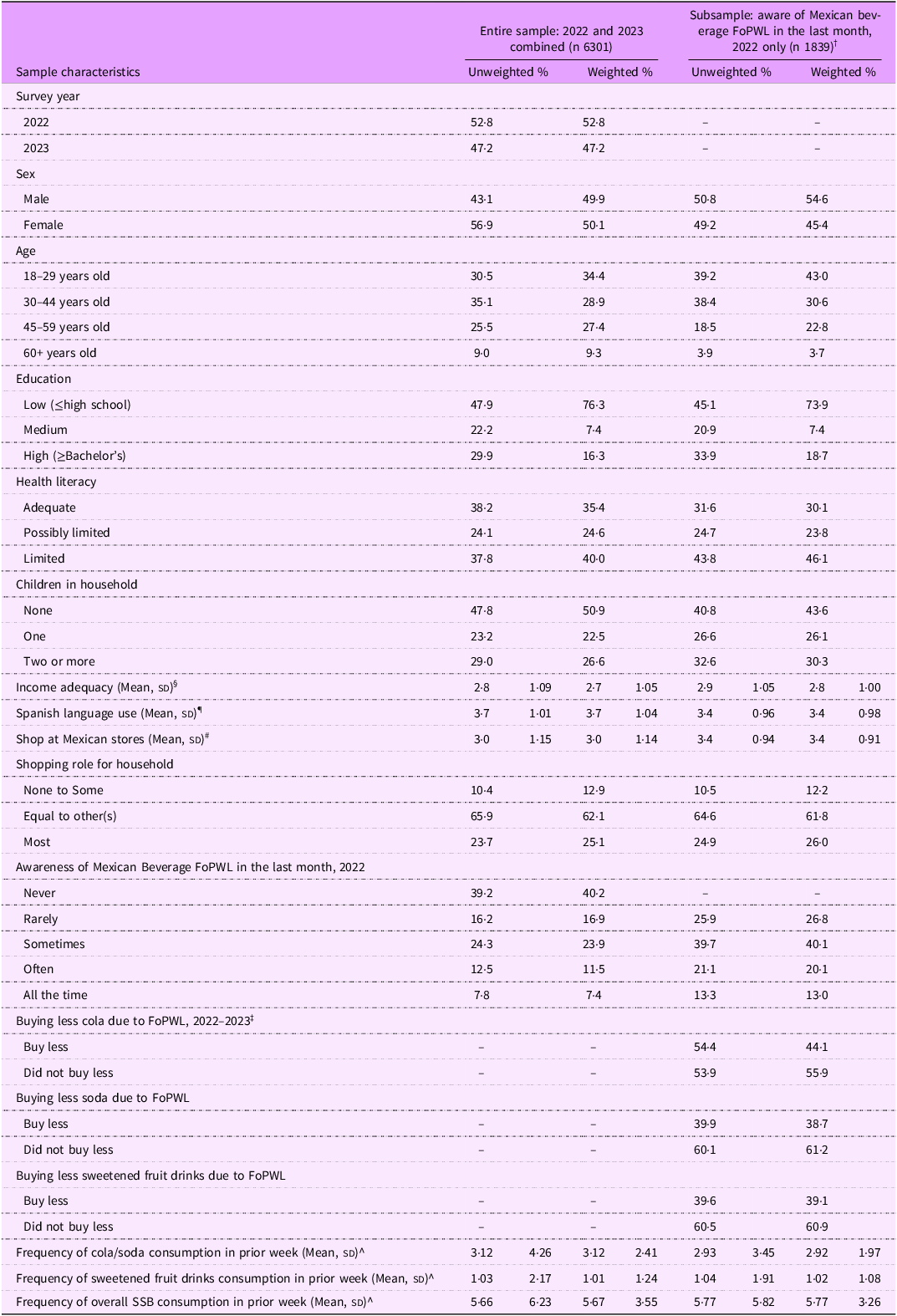
Table 1 shows the characteristics of the full sample and the subsample who reported noticing FoPWL on beverages (i.e. excluding participants who reported ‘never’ seeing of FoPWL on beverages). Approximately 60 % of the entire weighted sample reported noticing FoPWL at least rarely in the past month, defining the analytic subsample out of which SSB purchasing impacts were evaluated.
Analytic samples of Mexican American adults 2022–2023

Table 1. Long description
In Table 1, first column group includes 6,301 respondents in the entire sample, combining 2022 and 2023 data from the IFPS surveys. The second column group includes a subsample of 1,839 respondents from 2022 who were aware of Mexican beverage FoPWLs in the last month. Characteristics used to describe these samples include survey year, sex, age, education, health literacy, children in the household, income adequacy, Spanish language use, shopping frequency at Mexican stores, household shopping role, awareness of Mexican beverage FoPWLs in the last month, purchasing less cola, soda, and sweetened fruit drinks due to FoPWLs, frequency of cola/soda, sweetened fruit drink, and overall SSB consumption in the prior week. For categorical variables, unweighted and weighted percentages are reported; for continuous variables, means and standard deviations are reported. Footnotes describe the analytic subsamples and provide additional details on the measurement of key variables.
FoPWL, front-of-package nutrition warning labels; SSB, sugar-sweetened beverages; AOR, adjusted OR.
*p value < 0·05, **p value < 0·01, ***p value < 0·001.
† Analytic subsample for assessing self-reported impact of FoPWL in 2022. Only participants who reported noticing any FoPWL on Mexican food packages were asked these questions (61 % of weighted sample). Of this group, we only included people who reported seeing, at least rarely, any FoPWL on beverages in the last month.
‡ Data shown for buying less cola are described for the analytic sample pooling both 2022 and 2023 (n 3487), since this, but not the other buying less questions, was asked in 2023.
§ Single item on difficulties making ends meet (1 = ‘very difficult’ to 5 = ‘very easy’).
¶ Average of eight items on Spanish (v. English) language use frequency (1 = ‘only English’ to 5 = ‘only Spanish’).
# Single item on last month shopping frequency (1 = ‘never’ to 5 = ‘all the time’).
^Self-reported consumption data of SSB were measured using an average of number of BFQ composite catgories, including regular soda, sweetened fruit drinks (e.g. fruit punch or fruit nectars with added sugar), flavoured waters or vitamin-enhanced waters, regular sports drinks and regular energy drinks.
Self-reported awareness of front-of-package warning labels on beverages
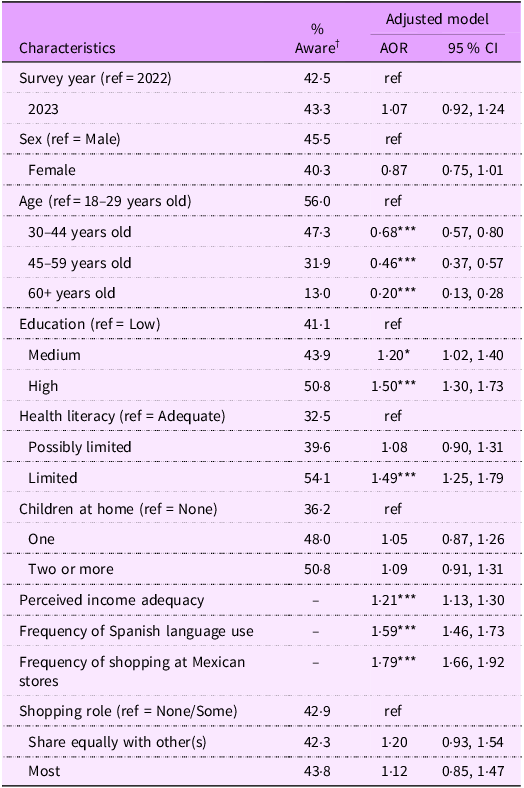
Results from adjusted and weighted models (Table 2) among the entire sample indicated that participants with medium education (AOR = 1·20, 95 % CI = 1·02–1·40, p = 0·02) and high education (AOR = 1·50, 95 % CI = 1·30–1·73, p < 0·001) had higher odds of being aware (i.e. sometimes or more) of FoPWL on beverages from Mexico compared with participants with low education. In contrast, the odds of awareness were higher among individuals with limited health literacy compared to people with adequate health literacy (AOR = 1·49, 95 % CI = 1·25–1·79, p < 0·001). Having greater income adequacy (AOR = 1·21, 95 % CI = 1·13–1·30, p < 0·001), using Spanish more frequently (AOR = 1·59, 95 % CI = 1·46–1·73, p < 0·001), and shopping at Mexican stores (AOR = 1·79, 95 % CI = 1·66–1·92, p < 0·001), were each associated with higher odds of awareness of FoPWL on beverages. Awareness was inversely associated with age, with 56 % of the 18–29 age group aware of labels compared with 32 % of the 45–59 age group (AOR = 0·46; 95 % CI = 0·37–0·57, p < 0·001) and only 13 % of those aged 60 or older (AOR = 0·20, 95 % CI = 0·13–0·28, p < 0·001). Survey wave, sex and shopping role were not associated with awareness of the FoPWL on beverages.
Prevalence and correlates of Mexican American adults who were aware of front-of-package nutrition warning labels on drinks from Mexico in the last month, 2022–2023 (n 6301)

Table 2. Long description
Table 2 includes 6,301 respondents from the 2022 and 2023 IFPS surveys. The first column presents the weighted percentage of respondents who were aware of FoPWLs, and the second column is the adjusted odds ratios and 95% confidence intervals from the adjusted model estimating associations between participant characteristics and FoPWL awareness. Characteristics included in the analysis were survey year, sex, age, education, health literacy, children in the household, perceived income adequacy, frequency of Spanish language use, frequency of shopping at Mexican stores, and household shopping role. Footnotes provide additional details on the categorization of the FoPWL awareness outcome.
AOR, adjusted OR.
*p value < 0·05, **p value < 0·01, ***p value < 0·001.
† Respondents in 2022–2023 who reported seeing the FoPWL on drinks from Mexico ‘sometimes,’ ‘often’ or ‘all the time’ were categorised as ‘Aware’ (42·8 %, weighted), whereas ‘never’ and ‘rarely’ were considered ‘Not Aware’.
Self-reported impact of front-of-package warning labels on purchasing
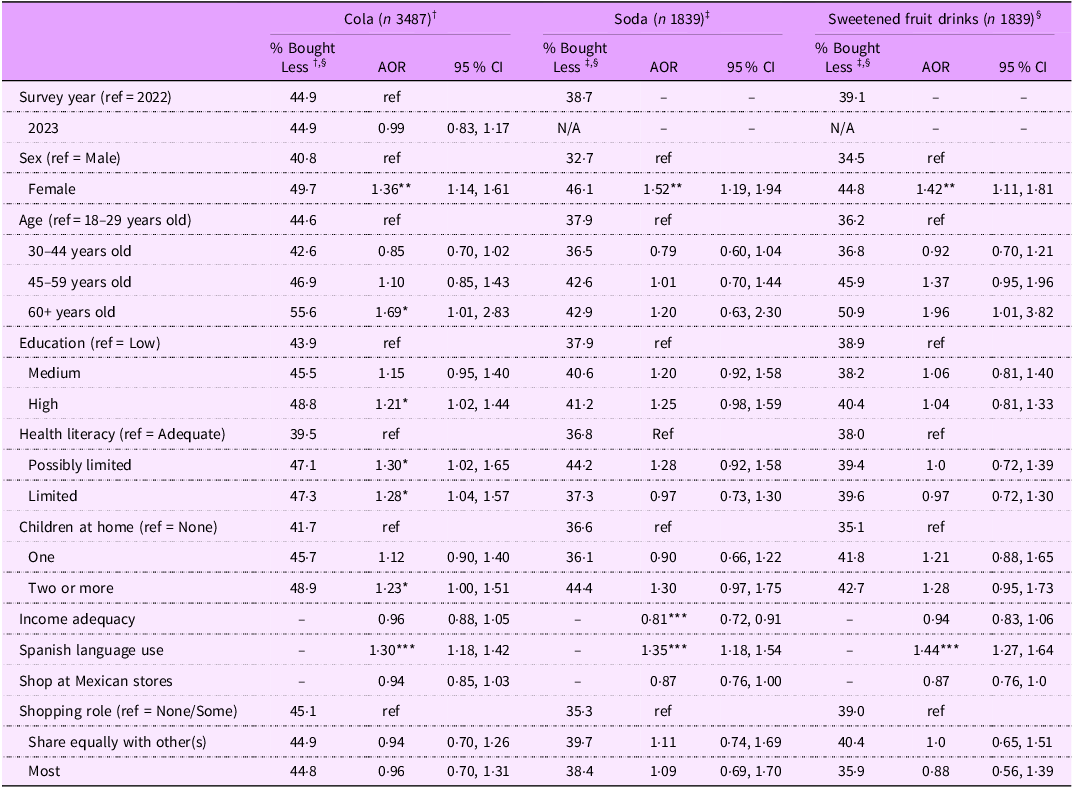
Results from adjusted, weighted models (Table 3) show that nearly half (45 %) of those who were aware of FoPWL on beverages reported buying less cola in both 2022 and 2023 (n 3487), with no differences between years. Overall, 39 % of participants reported buying less soda and sweetened fruit drinks, separately, due to FoPWL (n 1839; only queried in 2022). Women had higher odds than men of reporting buying less cola (50 % v. 41 %; AOR = 1·36, 95 % CI = 1·14–1·61), soda (46 % v. 33 %; AOR = 1·52, 95 % CI = 1·19–1·94) and sweetened fruit drinks (45 % v. 35 %; AOR = 1·42, 95 % CI = 1·11–1·81) due to the FoPWL (p < 0·01 for all). Compared with participants with adequate health literacy (40 %), those with possibly limited literacy (47 %; AOR = 1·30, 95 % CI = 0·90–1·40, p = 0·03) and those with limited literacy (47 %; AOR = 1·28, 95 % CI = 1·04–1·57, p = 0·02) had higher odds of reporting buying less cola due to the FoPWL. Having a high (v. low) level of education was positively associated with reported buying less cola due to the labels (AOR = 1·21, 95 % CI = 1·02–1·44, p = 0·03). Neither health literacy nor education were associated with buying less soda or sweetened fruit drinks.
Prevalence and correlates of Mexican American adults who reported buying less SSB due to Mexican front-of-package nutrition warning labels, by beverage

Table 3. Long description
Table 3 is organized into three columns: cola (n=3,487), soda (n=1,839), and sweetened fruit drinks (n=1,839). Each column presents the weighted percentage of respondents who bought less of each respective beverage, along with the the adjusted odds ratios and 95% confidence intervals from the adjusted model estimating associations between participant characteristics and FoPWL purchasing impact. Characteristics included in the analysis were survey year, sex, age, education, health literacy, children in the household, perceived income adequacy, frequency of Spanish language use, frequency of shopping at Mexican stores, and household shopping role. Footnotes provide additional details on the sample used for the FoPWL purchasing impact outcomes, by beverage.
AOR, adjusted OR.
*p value < 0·05, **p value < 0·01, ***p value < 0·001.
† Analyses of buying less cola based on subsample pooling data from 2022 and 2023, excluding participants who reported never noticing a FoPWL on a beverage.
‡ Analyses of buying less soda and sweetened fruit drinks based on subsample in 2022, excluding participants who reported never noticing an FoPWL on a beverage.
§ Respondents who reported buying less SSB due to the FoPWL ‘Buy Less’ categorised as ‘Bought Less’ = 44.1 % for cola, 38.7 % for soda and 39.1 % for sweetened fruit drink. Whereas respondents who selected ‘Buy more’ or ‘No Change’ were categorised as ‘Other.’
Using a greater amount of Spanish than English was associated with higher odds of reporting buying less of all three types of beverages due to the labels (cola: AOR = 1·30, 95 % CI = 1·18–1·42; soda: AOR = 1·35, 95 % CI = 1·18–1·54; sweetened fruit drink: AOR = 1·44; 95 % CI = 1·27–1·64; p < 0·001 for all). Participants 60+ years old had higher odds of reporting buying less cola due to the labels compared with those 18–29 years (AOR = 1·69, 95 % CI = 1·01–2·83, p = 0·05). Furthermore, having two or more children at home (compared with none) was associated with higher odds of reporting buying less cola (AOR = 1·23, 95 % CI = 1·00–1·51, p = 0·05). However, neither age nor number of children were associated with reporting buying less soda or sweetened fruit drinks. Having lower income adequacy was associated with greater odds of reporting buying less soda due to the labels (AOR = 0·81, 95 % CI = 0·72–0·91, p < 0·001), but not cola or sweetened fruit drinks. Neither frequency of shopping at Mexican stores nor shopping role was associated with reporting buying less of any of the three beverages due to the FoPWL.
Association between sugar-sweetened beverage consumption in adults and front-of-package warning label purchasing impact
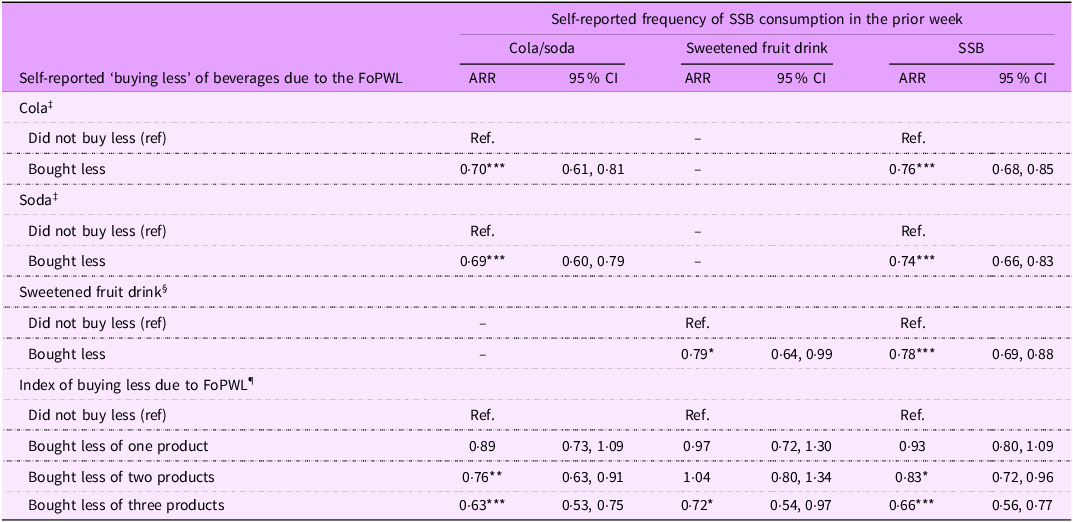
In adjusted models for reported consumption of SSB in the prior 7 days (2022 data only) (Table 4; n 1839), we found that reporting buying less cola due to FoPWL was associated with lower reported cola/soda consumption (adjusted rate ratio, ARR = 0·70, 95 % CI = 0·61–0·81) and lower overall reported SSB consumption (ARR = 0·76, 95 % CI = 0·68–0·85). A similar pattern of results was found for reporting buying less soda (cola/soda consumption, ARR = 0·69, 95 % CI = 0·60–0·79; SSB consumption, ARR = 0·74, 95 % CI = 0·66–0·83). Reporting buying less sweetened fruit drinks due to FoPWL was marginally associated with lower reported consumption of sweetened fruit drinks (ARR = 0·79, 95 % CI = 0·64–0·99) and associated with lower overall reported SSB consumption (ARR = 0·78, 95 % CI = 0·69–0·88). Finally, examination of the composite index of reported purchase reduction of all three SSB indicated that whereas reporting buying less of one SSB was unassociated with overall reported SSB consumption (v. buying less of 0 SSB), reporting buying less of two SSB (ARR = 0·83, 95 % CI = 0·72–0·96) or all three SSB (ARR = 0·66, 95 % CI = 0·56–0·77) were each associated with decreased self-reported SSB consumption.
Association between FoPWL purchasing impact and SSB consumption, † 2022 (n 1839)

Table 4. Long description
Table 4 is organized into three columns: cola/soda consumptiom, sweetened fruit drink consumption, and overall SSB consumption. Each column presents adjusted rate ratios and 95% confidence intervals from adjusted models estimating associations between self-reported purchasing impacts of FoPWLs and frequency of SSB consumption in the prior week. Rows describe self-reported purchasing impacts, including buying less cola, soda, and sweetened fruit drinks due to FoPWLs, as well as an index measuring the number of beverage types for which participants reported buying less due to FoPWLs. Footnotes provide additional details on the measurement of SSB consumption and information about the models used and the construction of the purchasing impact variables and index.
SSB, sugar-sweetened beverage; FoPWL, front-of-package nutrition warning labels; ARR, adjusted rate ratio.
*p value < 0·05, **p value < 0·01, ***p value < 0·001.
† Frequency of consumption was measured as the number of drinks consumed in the prior week, 2022. Results come from negative binomial regression models regressing weekly drink counts (including no drinks) on the WL influence variable, adjusting for age, sex, education, income, presence of children at home, BMI and shopper role.
‡ Model results are based on self-reported reductions in cola and soda purchases due to warning labels, using 2022 data only. Cola and soda were treated as separate predictors; however, they were combined into a single outcome because survey responses referenced both beverages together.
§ Model results for self-reported buying less sweetened fruit drink due to warning labels.
¶ Model results for 4-level index derived by summing buying less cola, soda and sweetened fruit drink (range = 0–3).
Discussion
We assessed how self-reported awareness of FoPWL on beverages and self-reported reductions of sugary beverage purchases due to the FoPWL varied by health literacy, education and other socio-demographic characteristics. Over half (60 %) of the Mexican Americans surveyed reported seeing the Mexican FoPWL on drinks from Mexico rarely, sometimes, often or all the time in the past month. A prior study of Mexican American participants in the 2021 IFPS survey(Reference Thrasher, Villalobos-Daniel and Fang22) found a similar prevalence of awareness of FoPWL on food packages (64 %); however, those analyses were limited to Mexican American adults who shopped at Mexican-oriented stores. The current study evaluated awareness in a broader sample, including those who did not shop in Mexican stores. Frequency of shopping at Mexican-oriented stores was positively associated with awareness of FoPWL on beverages, consistent with the prior study, yet it was unassociated with reporting buying less of any SSB due to the FoPWL. These null findings may be explained by the analytic subsample used for the ‘buying less’ outcomes, which was limited to those aware of FoPWL. By removing those who were unaware of FoPWL from our analytic sample, we disproportionately excluded those who shop at Mexican stores less frequently. Furthermore, Mexican Americans may encounter Mexican FoPWL outside of Mexican stores, such as at food trucks, restaurants and non-Mexican grocery stores. Identification of specific venues of exposure could inform intervention strategies, and it will be important to determine the range of beverages available in these settings. Importantly, awareness of FoPWL for beverages did not change from 2022 and 2023, which may suggest that the Mexican companies had not modified packaging to avoid FoPWL on beverages destined for the US market. The stability of awareness also suggests potential sustained public health impacts, especially given waning effects of package warning labels observed for other products, such as cigarettes(Reference Nagelhout, Willemsen and de Vries39). In Chile, declines in SSB purchases after FoPWL implementation were accompanied by sustained or greater reductions in energy and sugar intake 3 years later, particularly from beverages(Reference Taillie, Reyes and Colchero20,Reference Taillie, Bercholz and Popkin40) Further research should examine whether this pattern persists over time, including for other packaged foods categories (e.g. non-beverage foods).
We also found that Mexican American adults with either limited or potentially limited literacy were more likely than those with adequate literacy to report awareness of FoPWL on beverages at least sometimes. This suggests that FoPWL are a promising strategy for reaching people with low literacy who may otherwise struggle with interpreting and thereafter ignore nutrition information on packages, as found for Nutrition Facts Tables and some other FOPL(Reference Bhawra, Kirkpatrick and Hall23). Yet, participants with higher education were also more likely to report awareness of FoPWL than those with low education. In nutrition, health literacy is the extent to which individuals can access and comprehend basic nutrition information (e.g. food labels) to make choices about their health; importantly, health literacy is not isomorphic with educational attainment(Reference Blitstein and Evans25,Reference Zoellner, Connell and Bounds41) . Compared with educational attainment, whose meaning can also vary by age cohort, our measurement of health literacy, through participants’ interpretation of an Nutrition Facts Table, captures relevant nuances in the ability to interpret standard nutrition labels.
Self-reported buying less cola due to FoPWL demonstrated a similar pattern to awareness with respect to these covariates: individuals with limited and possibly limited health literacy were more likely to report buying less cola compared with those with adequate literacy, and consumers with high education were more likely to report buying less cola than those with low education. Previous studies similarly found that low health literacy levels(Reference Bhawra, Kirkpatrick and Hall23) and high education levels(Reference Thrasher, Villalobos-Daniel and Fang22,Reference Shrestha, Cullerton and White42) are both associated with greater FoPWL awareness. On the other hand, another IFPS study found that Mexican adults with relatively low education were more likely to report reduced purchases of FoPWL-bearing foods and beverages(Reference Contreras-Manzano, White and Nieto21). Overall, our results are consistent with other research suggesting that education and health literacy can operate independently from one another(Reference Rothman, Montori and Cherrington43), although in our study, self-reported buying less soda and sweetened fruit drinks found no association with either of these variables. It is important to note that cola, because it was queried in both survey years, has almost twice the sample size for soda or sweetened fruit drinks; as such, null associations for the latter beverages may reflect lower statistical power. Nonetheless, given inconsistent patterns across the existing literature and the present study, relationships between health literacy, education and purchasing behaviour may be beverage-specific and vary by product type. Furthermore, our survey did not assess which specific beverages participants saw FoPWL on, limiting our ability to determine whether exposure differs by beverage type. Further research is required to clarify these issues.
The current findings were consistent with many findings from another study of Mexican Americans’ responses to FoPWL on food products, using 2021 IFPS data(Reference Thrasher, Villalobos-Daniel and Fang22). Both studies found that females were more likely than males to report purchasing fewer SSB due to FoPWL(Reference Thrasher, Villalobos-Daniel and Fang22) – consistent with evidence of stronger nutrition labelling effects among females(Reference Bhawra, Kirkpatrick and Hall23,Reference Campos, Doxey and Hammond44) . Both studies also found that higher income adequacy was positively associated with FoPWL awareness(Reference Thrasher, Villalobos-Daniel and Fang22). However, the present study also found that reported buying less soda due to the FoPWL was more common among those who reported having a relatively lower income adequacy than those with higher income. This is notable given the need for interventions to address the relatively high consumption of added sugar (including in SSB) among people with low household income(Reference Ogden, Kit and Carroll7,Reference Rehm, Matte and Van Wye45,Reference Welsh, Sharma and Grellinger46) . However, this association was observed only for soda (not cola or sweetened fruit drinks) and was NS in multiple imputation sensitivity analyses; therefore, further research is warranted to confirm this association and assess beverage-specific responses.
Self-reported awareness of FoPWL and reductions in SSB consumption were more likely among participants who more frequently used Spanish, perhaps partly because the FoPWL are in Spanish. However, a systematic review on acculturation effects on diet quality (not focused on FoPWL) found that more accultured Latinos, among whom less frequent use of Spanish is a key indicator, consumed fewer SSB and other unhealthy foods than less accultured counterparts(Reference Ayala, Baquero and Klinger47). Overall, our finding of greater awareness and self-reported impact of FoPWL among those who speak Spanish more frequently is consistent with evidence linking lower acculturation to more health-conscious food choices among US Latinos(Reference Thrasher, Villalobos-Daniel and Fang22).
Consistent with previous research using 2021 IFPS data, younger participants were more aware of FoPWL(Reference Thrasher, Villalobos-Daniel and Fang22), but the current study found that older participants were more likely to report purchasing less cola due to FoPWL. This may suggest that although self-reported awareness among younger adults is relatively high, it does not necessarily translate into changes in beverage purchasing. Prior research has also shown that young Mexican Americans are more likely than older ones to have poorer food consumption patterns(Reference Reininger, Lee and Jennings48,Reference Yoshida, Scribner and Chen49) , which may help explain higher awareness but lower behaviour change. Yet, given that young adults did report purchasing less food products due to the label in the prior study(Reference Thrasher, Villalobos-Daniel and Fang22), our findings may reflect differences between food- and beverage-related behaviours, suggesting a need for further research on why younger adults appear more responsive in food contexts but not in beverage contexts.
We found evidence of an association between self-reported reduction of SSB purchases due to the FoPWL and past 7-d consumption of SSB. Participants who reported buying fewer cola, soda and sweetened fruit drinks due to FoPWL also reported consuming fewer SSB. Additionally, reducing the purchases of any two SSB, or all three beverages, was associated with lower overall SSB consumption. These results indicate that our self-reported measurement approach for assessing responses to FoPWL is consistent with self-reported beverage consumption patterns. Furthermore, the results are consistent with a similar assessment of the consistency between these self-reported impact questions and the BFQ-derived consumption frequency in Mexico(Reference Contreras-Manzano, White and Nieto21), though the association may have been stronger in that study due to the FoPWL being mandatory there, compared with the US context.
Our study has some limitations. Generalisability may be limited as the sample was recruited via online panels, which may not fully represent the broader Mexican American population in the USA. We used soft quotas and weighted analyses to approximate population distributions of age, sex, education and region of residence among Mexican Americans; nevertheless, selection bias may persist, though its influence on our findings is unclear. Furthermore, this study relied on self-reported data for all outcome measures. Such self-reports can be affected by recall bias and social desirability bias, the latter of which may lead to over-estimation of effects, particularly given that FoPWL questions were introduced by showing participants an ‘Excess Calories’ label, which implied unhealthiness. However, the BFQ assessing SSB consumption was administered prior to the FoPWL purchasing impact questions. This means that participants were able to report their usual beverage consumption without being influenced by FoPWL-related questions, reducing the likelihood of responses biased toward socially ‘expected’ behaviour. The cross-sectional design also means that the temporal sequence between exposure to FoPWL and changes in consumption cannot be definitively established. However, the survey questions did explicitly ask whether the black octagon FoPWL changed the way participants purchased the labelled beverage products, providing some support for the presumed direction of the effects, although longitudinal or experimental designs are necessary to establish causality. Future research could incorporate objective purchasing data, such as verifying consumers’ grocery store receipts(Reference Taillie, Reyes and Colchero20) to validate self-reported findings. Future assessments of FoPWL effects should consider SSB consumption frequency and volume while using more rigorous study designs.
We also do not have data on SSB consumption prior to potential exposure to the Mexican FoPWL policy, limiting our ability to determine whether participants with higher health literacy were less impacted by the FoPWL in terms of reductions in cola consumption and purchases. However, our cross-sectional models examining frequency of SSB intake included health literacy as a covariate. Because SSB consumption questions were asked prior to the FoPWL items, these measures may have been less susceptible to FoPWL-related self-report bias. Although these results were not included in the main manuscript, no differences in SSB consumption frequency were observed between participants with adequate v. limited health literacy across models. Future research should account for baseline consumption to better isolate these effects. Furthermore, survey length constraints precluded the inclusion of questions on FoPWL awareness for non-SSB products that Mexican Americans and other US consumers may encounter. Other research has found that many Mexican Americans report FoPWL impacts on their purchasing of desserts, candy and sugary cereals and salty snacks(Reference Thrasher, Villalobos-Daniel and Fang22). Future evaluations of FoPWL policy effects should take advantage of full implementation of this policy in Mexico, Chile and other Latin American countries, while also considering other elements of these policies (e.g. caffeine statements cautioning against children’s consumption).
This study is the first to examine the impact of Mexican FoPWL on beverages among the Mexican American population in the USA. The results provide evidence that most Mexican Americans have encountered these labels and many, as a result, report reducing their purchases of SSB, with stronger effects among individuals with lower health literacy and higher education (for cola), lower income adequacy (for soda) and more frequent Spanish use (for all drinks). This paper contributes to the evidence on FoPWL effectiveness across socio-demographic contexts, including its potential to reduce health literacy-related disparities. Given relatively widespread awareness of the FoPWL, dietitians and public health nutrition professionals working with Mexican American populations – or other groups exposed to FoPWL in countries where they have been implemented – could encourage clients to use these labels as a quick, easy-to-understand cue to identify SSB and reduce purchases and consumption. Furthermore, US policymakers should consider supporting a similar mandatory, interpretative FOPL policy, enabling broader reach and impact nationwide.
Supplementary material
For supplementary material accompanying this paper visit https://doi.org/10.1017/S1368980026103401
Acknowledgements
There are no additional contributors or sources of support to acknowledge.
Author contributions
Muskaan K. Makkar: Writing – original draft; Conceptualisation; Methodology; Formal analysis; Investigation; Visualisation; Writing – review & editing. Sultan Alsallum: Formal analysis; Methodology; Visualisation; Writing – review & editing. Rachel E. Davis: Writing – original draft; Supervision; Project administration; Funding acquisition; Writing – review & editing. Alejandra Contreras-Manzano: Conceptualisation; Writing – review & editing. Lana Vanderlee: Data curation; Writing – review & editing. Christine M. White: Project administration; Data curation; Methodology; Writing – review & editing. James Hardin: Methodology; Data curation; Writing – review & editing. Dai Fang: Methodology; Data curation; Writing – review & editing. Alejandra Jáuregui: Funding acquisition; Writing – review & editing. David Hammond: Funding acquisition; Methodology; Resources; Writing – review & editing. James F. Thrasher: Conceptualisation; Writing – original draft; Methodology; Visualisation; Supervision; Project administration; Funding acquisition; Writing – review & editing.
Financial support
Funding for the International Food Policy Study was provided by the National Institute of Diabetes and Digestive and Kidney Diseases of the National Institutes of Health (R01 DK128967) and the Canadian Institutes of Health Research (CIHR) Project Grant (PJT-162167). The content is solely the responsibility of the authors and does not necessarily represent the official views of the National Institutes of Health, the Canadian Institutes for Health Research or any other funding organisations. No funder had any role in the design, analysis or writing of this article.
Competing interests
D.H. has received remuneration for providing expert testimony on behalf of public health authorities in cases involving challenges from the food and beverage industry. L.V. is supported by the Canada Research Chairs program. The other authors declare no conflicts of interest.
Ethical standards
N/A.



 Open access

