Introduction
Novel technological interventions are increasingly used in mental health settings. Examples include mood monitoring by text messaging,Reference Bopp, Miklowitz, Goodwin, Stevens, Rendell and Geddes 1 , Reference Berrouiguet, Gravey, Le Galudec, Alavi and Walter 2 cognitive behavior therapy by smartphone:apps,”Reference Luxton, McCann, Bush, Mishkind and Reger 3 and touchscreen technology in hospital settings.Reference Newnham, Doyle, Sng, Hooke and Page 4 Telepsychiatry, the practice of psychiatry over distances using information and communication technologies, has also continued to develop throughout the world, making use of new technologies.Reference Mars 5 – Reference Valdagno, Goracci, di Volo and Fagiolini 8 In this article, we describe 3 novel technological strategies in use for the management of risk and violence in 2 forensic psychiatry settings in the United Kingdom: a medium secure service in London and Broadmoor high secure hospital.
Several studies evaluating technological interventions in psychiatry report encouraging results. Mood monitoring by text message in patients with bipolar disorder was shown to generate clinical data comparable to one-to-one interviews for monitoring of the condition.Reference Bopp, Miklowitz, Goodwin, Stevens, Rendell and Geddes 1 A pilot study of a text message–based outreach program for patients with suicidal behaviors was accepted by patients who found it to have a positive preventive impact.Reference Berrouiguet, Gravey, Le Galudec, Alavi and Walter 2 It also had several advantages such as lower cost and easier utilization compared to current post-acute care strategies. Another study showed reduced depressive symptoms using a mindfulness-based smartphone app intervention.Reference Luxton, McCann, Bush, Mishkind and Reger 3 In a sample of 1308 consecutive inpatients and outpatients participating in a 2-week cognitive behavioral therapy group, daily self-report measures using touch-screen technology were effective in reducing symptoms for patients at risk of poor outcomes.Reference Newnham, Doyle, Sng, Hooke and Page 4
Forensic psychiatry services have been alert to these developments. Forensic services in the UK treat individuals with mental illness who have committed violent offences or are thought to be at especially high risk of doing so. Management of risk and violence is complex, and new cost-effective strategies to optimize outcomes for patients while reducing risk are of great interest to clinicians and service administrators. Inpatient services for these patients are provided through a network of high, medium, and low secure units.Reference Durcan 9
The largest segment of UK forensic services are the medium secure units (MSUs), consisting of approximately 3500 beds in the UK.Reference Durcan 9 MSUs are expensive services that combine high levels of physical and relational security with intensive medical, nursing, and psychological treatments. The medium secure forensic psychiatry service of the South London and Maudsley Foundation Trust (https://www.national.slam.nhs.uk/services/adult-services/forensic/) is a typical UK forensic service that aims to manage risk, reduce further offending, and support recovery throughout the patient’s stay. There are 8 wards, with varying levels of security. Admissions and intensive care wards offer enhanced physical, procedural, and relational security, while pre-discharge units offer a high level of independence with a lower level of security, increased access to community programs, and community outreach services, which foster the development of living skills before moving to independent settings in the community.
Broadmoor High Secure Hospital (http://www.wlmht.nhs.uk/bm/broadmoor-hospital/) is 1 of 4 high secure hospitals in the UK. People referred to high secure hospitals in the UK are detained under mental health legislation because they are thought to pose a “grave and immediate danger to the public.”Reference Durcan 9 The hospitals treat people with mental illness and personality disorders who represent a high degree of risk to themselves or to others. There are approximately 210 patients, and the average stay is 5 years. Patients are transferred to conditions of lower security once the risks that they pose are diminished. The hospital provides a full range of therapeutic treatments that are tailored to each patient’s individual needs, including assessment, specialist care, and rehabilitation.
Technologies for Management of Risk and Violence
Electronic monitoring by GPS tracking
Background
Use of the electronic devices to monitor the whereabouts of individuals is referred to in legal and scientific literature as “electronic monitoring” (EM). EM has been used for over 3 decades in criminal justice systems. Initial trials of EM included an experimental system used in 1964 to monitor parolees, with a one-way transmitter activated by repeater stations used to record an offender’s location.Reference Button, DeMichele and Payne 10 Early systems relying on radio frequency (RF) technology were cumbersome and required an offender to carry a heavy transmitter. The technological community responded by developing more advanced systems utilizing RF transmitters, and later, global positioning satellites (GPS). In the mid-1980s, in order to alleviate prison and jail crowding, a new system of EM was developed and refined. By 1987, 21 states were utilizing electronic monitoring to supervise offenders.Reference Button, DeMichele and Payne 10 Initially, agencies viewed EM as a punishment and to reduce demand on prison places, rather than a means of preventing crime or aiding the rehabilitation of offenders, though these priorities have shifted in recent times.Reference Geoghegan 11
There is some evidence to suggest that EM using GPS technology is superior to RF technology,Reference Geoghegan 11 , Reference Bales, Mann and Blomberg 12 and GPS-based systems have become more widely used. Since its introduction in the early 1990s by the U.S. Department of Defense, GPS technology has become ubiquitous through use in mobile phones, laptop computers, and satellite navigation (satnav) devices. A GPS “tracking” device determines the precise location of a vehicle, person, or other asset to which it is attached. Some GPS systems store data within the GPS device for future review, known as “passive” tracking, while others send information on a regular basis to a centralized database via a modem within the device, known as “active” tracking.
Use of EM is on the increase, with more than 80,000 “tagging” orders made in the UK in 2010–2011, as both a community penalty and to monitor prisoners released early on home detention curfews.Reference Travis and Hill 13 However, the evidence for EM has failed to keep pace with increased use and development of technology. A recent report was critical of the lack of evidence for use of EM and for the slow progress made in converting to GPS-based systems.Reference Geoghegan 11 Another report highlighted that despite widespread use in sex offender populations in the U.S., the evidence base remains unconvincing.Reference Payne and DeMichele 14 A 2010 evaluation of EM in a large population of offendersReference Bales, Mann and Blomberg 12 found that EM reduced the failure of community supervision by 31% compared to other forms of community supervision. The outcome measures were rates of absconding from supervision and revocations for technical violations, misdemeanor, or felony arrest. EM systems can offer additional functionality, such as secure continuous remote alcohol monitoring (SCRAM), which uses a device to monitor body sweat for alcohol levels, with alerts sent if alcohol is detected.Reference Litten, Bradley and Moss 15 This technology is used in several corrections services in the U.S.Reference Barton 16 A pilot project is underway in Scotland to evaluate the benefits of SCRAM in offenders sentenced to community orders or selected for early release from prison.Reference Fox and Lockhart 17 Recent studies by Dougherty and colleaguesReference Dougherty, Charles, Acheson, John, Furr and Hill-Kapturczak 18 – Reference Dougherty, Hill-Kapturczak and Liang 20 have demonstrated the potential benefits of SCRAM, including complementing conventional behavioral interventions, such as contingency management, to help reduce alcohol consumption.
Limitations of EM
Since its inception, EM has been a focus of considerable empirical and philosophical debate. A recent overview of EM in sex offenders by Payne and DeMicheleReference Button, Tewksbury, Mustaine and Payne 21 highlighted 5 key potential problems: lack of empirical support, false sense of security, difficulties in community supervision, organizational issues, and legal issues. All of these factors need to be considered in applying EM to forensic psychiatric settings. Also referring to sex offender policies, including EM, Button et al Reference Fohall and St. John 22 have argued that research concerning public perceptions tends to be descriptive and largely atheoretical. The practical limitations of EM by tracking devices also need to be considered. While superior to radio frequency technology, GPS data are still reliant on a traceable signal. The signal is sometimes lost in our secure units, delaying leave. It is not traceable at all in other environments, such as underground trains or metal lined secure transport vehicles. In December 2014, Steve Gordon, a high risk sex offender in the U.S. who was required to wear a GPS tracking bracelet was charged with raping and murdering 4 women.Reference Stewart and Bowers 23 He had removed his bracelets and was unmonitored for nearly 2 weeks. However, information from his co-offender’s EM tag confirmed his presence at the sites where victims disappeared. While the ankle straps used on our devices are reinforced and very difficult to remove, we have encountered one removal using cutting shears. In this instance, police returned the patient promptly upon having been informed of the most recent location of the device. Our devices also emit a security alert if there is an attempt to cut through the strap.
Electronic monitoring in a UK medium secure service (South London and Maudsley Trust)
Although patients may spend long periods in MSUs, the vast majority of patients will eventually be discharged to the community following periods of community leave, typically beginning with leave where the patient is accompanied by nursing staff and progressing to unescorted leave. During the predischarge period, there is a high risk of relapse and “leave violation,” including “absconding” (when a patient on escorted leave escapes from the supervision of an escort) and “failure to return” (when a patient on unescorted leave is late or fails to return from arranged leave).Reference France 24 In 2010, the forensic psychiatry service at our hospital reviewed security arrangements following a series of high-profile absconding incidents, one of which had a tragic outcome.Reference Tully, Hearn and Fahy 25 Subsequently, the service introduced a secure tracking device using GPS technology for electronic monitoring of patients on leave from the service as part of a comprehensive protocol for risk management and recovery. The device was used for patients in the initial stages of taking leave as part of their clinical pathway toward discharge to the community. It was envisioned that public protection could be enhanced by introducing a facility that would notify clinical staff immediately should any patient violate his or her leave conditions, or if patients did not return from leave at the agreed time. The device also provides the facility with the ability to identify the patient’s location if he or she failed to return from leave or if they absconded from escorting staff.
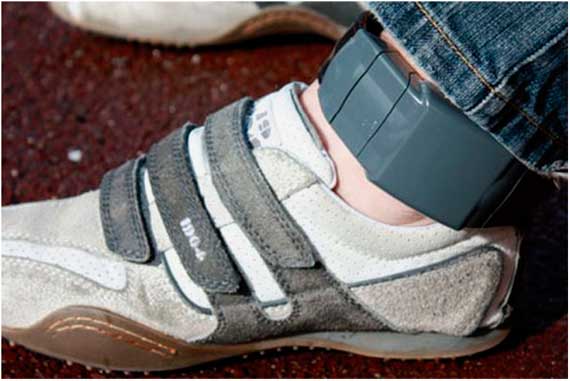
The “Buddi” GPS tracker used by the service is an active tracking device. The following is an outline of how it operates:
-
∙ A security version of the device is attached to the patient’s ankle with an individually measured lockable strap (Figure 1).
-
∙ The strap incorporates cabling to make the device nonremovable and optic fibers to provide anti-tamper alarms.
-
∙ Each patient using the system has his or her own allocated device.
-
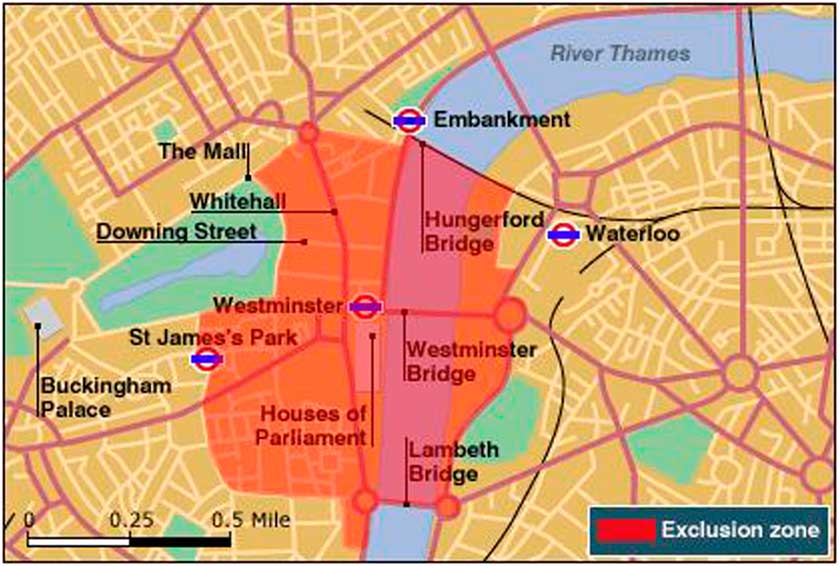
∙ The device can be set with geographical parameters, known as “geo-fences” (Figure 2), which enable the creation of exclusion and inclusion zones—a common sanction in forensic patients.
-
∙ Information from each device is monitored by a security company, and breaches in agreed terms and conditions trigger a predetermined alert to relevant parties and a risk management plan.
The “Buddi” GPS tracker.

Example of an exclusion zone for a “geo-fence.”

The introduction of this technology proved controversial at local and national levels. In correspondenceReference Tully, Hearn and Fahy 26 to our recent editorial on the subject,Reference Konow 27 one question of particular concern was that of consent. Patients are not obliged to wear the device without consent, with the exception of those high-risk patients requiring emergency hospital or court transfer. Patients are informed that use of electronic monitoring is optional. Permission for leave is risk assessed, and the benefits of EM in risk management are considered as a matter of routine. As we have pointed out, consent is a complex issue in psychiatry and may be defined in degrees, rather than as a binary concept.Reference Desai 28 We accept that patients’ decisions about consent to EM are likely to be influenced by a wish to move more quickly toward leave and discharge. This has parallels with consent to medication and engagement in psychotherapies and occupational activities, particularly in the forensic setting.
Ethical considerations must take account of possible benefits of EM, including potential increases in users’ autonomy and acceleration of clinical progression through secure services and back to the community, as well as cost effectiveness of treatment programs. A research group was established to investigate quantitative and qualitative analysis of the impact of EM. Several projects are completed or nearing completion, and our research group aims to publish data on these projects in the near future. In the UK, GPS-based EM is currently being used by 2 other medium secure forensic units and for some individuals with severe neurodevelopmental disorders. Several psychiatric intensive care units are also investigating its potential use. It is anticipated that the next Code of Practice for the UK Mental Health Act will include specific guidance on the use of EM in detained patients.
Closed Circuit Television (CCTV)
Background
Closed-circuit television (CCTV) is the use of video cameras to transmit a signal to a specific place, on a limited set of monitors.Reference Gill and Spriggs 29 CCTV has become widespread in UK society, where it is estimated that there are now over 4 million CCTV cameras.Reference Parish 30 A major report into effectiveness of CCTV in the UKReference Warr, Page and Crossen-White 31 suggested that the majority of the schemes evaluated did not reduce crime, nor did CCTV schemes make people feel safer or change their behavior. However, these conclusions were qualified in the same report as being too simplistic, pointing to the fact that mechanisms that increase recorded crime rates can work alongside those that reduce crime, cancelling each other out.
Use of CCTV in psychiatry was pioneered in 1953 by Tucker for mass therapy in California because of “the increasingly difficult situation of overcrowding and understaffing faced by most mental hospitals,” and by Wittson for psychiatry education in Nebraska from 1955.Reference Newnham, Doyle, Sng, Hooke and Page 4 In the UK, CCTV cameras have featured as a surveillance tool in mental health hospitals since 2002Reference Parish 30 and have become commonplace in both general and psychiatric hospitals.
General and forensic psychiatric hospitals have identified several potential uses of CCTV. Many of these are practical considerations, such as monitoring of visits, protection of staff during searches, and easier monitoring of ward and patient areas where sightlines are suboptimal. CCTV can also assist robust prosecution of offending behaviors by patients or staff, and the review of serious incidents for training purposes. In this way, it can make both staff and patients safer, and act as a deterrent toward inappropriate practice by staff. This is particularly pertinent in the wake of a recent enquiry into abuse of vulnerable patients by staff in the UK.Reference Desai 32
CCTV can be used to monitor a range of more specific risks. For example, it may be employed in supervised confinement to monitor patient behavior more closely. Monitoring may be particularly difficult in the early stages of supervised confinement, when a severely unwell patient may be violent and hostile. In this way, risk of self-harm or injury can be minimized. Longitudinal assessment using CCTV may allow staff to get a clearer picture of the patient’s level of agitation prior to face-to-face assessment. CCTV footage of disturbed or aggressive behavior could also be reviewed with a patient when he or she is relatively well, as part of overall treatment and planning.
Limitations of CCTV
Some research and development on CCTV in psychiatric settings has been undertaken, and comprehensive guidelines have been devised for its use. 33 However, very little research has assessed the impact of the cameras on patients and nursing practices. DesaiReference Hermann and Weiner 34 expressed concern about several aspects of the use of CCTV, including ethical considerations, the potential to distort the reality of what is happening in a ward environment, and reduction in face-to-face contact between staff and patients. In another article,Reference Parish 30 the same author pointed to other potential negative consequences of CCTV, including “function creep” (applications for CCTV that did not feature in the original mandate), increased paranoia, and creation of a “panoptican”—an all-seeing eye reigning over staff and patients alike, as described by Foucault. A recent report was critical of use of CCTV in patients’ bedrooms in an Irish psychiatric hospital without patients’ consent.Reference Jovanov, Milenkovic, Otto and De Groen 35
Use of CCTV in a high secure hospital (Broadmoor)
Standard CCTV
CCTV has been used routinely at Broadmoor Hospital for over a decade. There is extensive perimeter CCTV, which is part of the standard security measures for a high secure hospital. Recent years have seen the progression of its use. All higher dependency wards at Broadmoor hospital have CCTV covering communal areas (but not patients’ bedrooms). Footage from CCTV cameras is used to support usual security protocols in real time. CCTV has also been used to provide evidence toward convictions for violent behavior. For practical reasons, such as the costs of storing large volumes of footage, footage is routinely kept for 6 weeks only. Should any suspected offending be identified, that CCTV footage is stored longer for further potential use.
Requests can also be made to retain CCTV footage for other reasons, such as reflective practice and supervision. Footage has also been used in team reviews of particular incidents, as well as supervision of clinicians. High secure hospitals occasionally require planned responses from specially trained staff using shields, for example, to remove a weapon from a disturbed patient. These teams have been using handheld CCTV footage of their interventions for training and record-keeping purposes since 2012. In these ways, CCTV can be seen to aid risk management by securing prosecution of offending behaviors and for developing the skills of clinicians.
Body-worn video
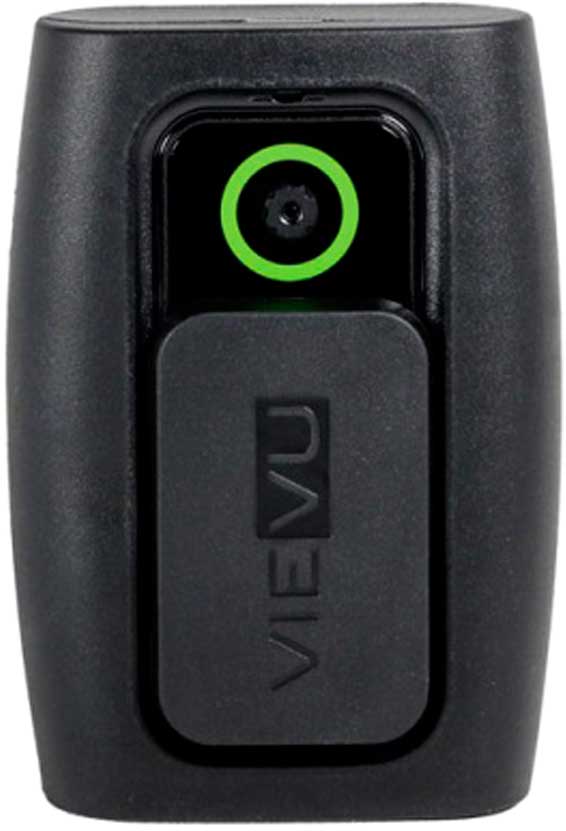
Body-worn video (BWV; Figure 3) is a form of CCTV. Small cameras are attached to the front of the wearer. Sound can be recorded. Used by selected UK police force units since 2005 with a view to increasing both officer and civilian accountability, use of BWV by the police has become more widespread and will likely increase further in light of recent policing controversies in the United States.Reference Lubecke, Ong and Lubecke 36 In 2014, Broadmoor Hospital undertook the first trial of body-worn CCTV cameras in a UK hospital. One of the criticisms by patients in qualitative appraisal of the pre-existing CCTV system was the absence of sound recording, which they believed led to a lack of context when reviewing the visual images. BWV was introduced partly to address this issue, as well as to provide an extension of CCTV footage used for risk management in the unit.
A body-worn video camera.

The BWV device is not in constant use on the ward, nor is it in constant use when it is being worn. When on the ward, a member of nursing staff wears a small, clearly marked CCTV camera which is usually switched off, and has a red LED to clearly show when it is recording. It also records sound. To date, use of BWV has been judged as useful by staff members, who report a reduction in incidents when it is present. The overwhelming majority of patients supported its continued use, and the trial has been extended to other parts of the hospital. Future potential use includes review of post-incident footage to assess the nature of the incident, quality of crisis management and contingency plans, and integration into patient clinical records to demonstrate both risk behaviors and examples of good coping skills. Qualitative and quantitative data on BWV and CCTV are being collected on an ongoing basis, with a view to publication in future articles.
Motion detector technology
Background
Motion detector or motion sensor technology refers to any instrument used to detect moving objects, particularly people. Several technologies are available, including passive infrared (PIR), microwave, ultrasonic, tomographic motion detector, and video camera software. A wide range of uses is possible, including computer game software (eg, Wii and Xbox) and “smart lighting” systems for street, home, and office lighting. In healthcare settings, the potential applications are considerable. To date, motion sensor technology has been used in assisted rehabilitation,Reference Demiris, Oliver, Dickey, Skubic and Rantz 37 monitoring of cardiac and respiratory conditions,Reference Pollack 38 assistance of home living in the elderly and cognitively impaired,Reference Helal, Cook and Schmalz 39 , Reference Blum and Magill 40 and monitoring of diabetes.Reference Tarassenko, Villarroel, Guazzi, Jorge, Clifton and Pugh 41 Personalized ambient monitoring (PAM) uses motion sensor (and other) technology, which is worn by patients in their homes, to collect physiological and environmental data. This information is then used to develop models of prodromal phases of illness, based on level of activity and physiological measures. Potential applications in mental health include monitoring of those with bipolar disorder, depression, schizophrenia, and dementia.Reference Villarroel, Guazzi and Jorge 42
Use of motion detector technology in a high secure hospital
In forensic and general psychiatric hospitals, patients are usually subjected to regular checks during the night. This involves recording of a patient’s breathing rate, heart rate, and oxygen saturation. These checks typically require light to properly visualize the patient and his or her breathing, leading to either patients being regularly woken up or checks regularly being poorly done, neither of which is acceptable.
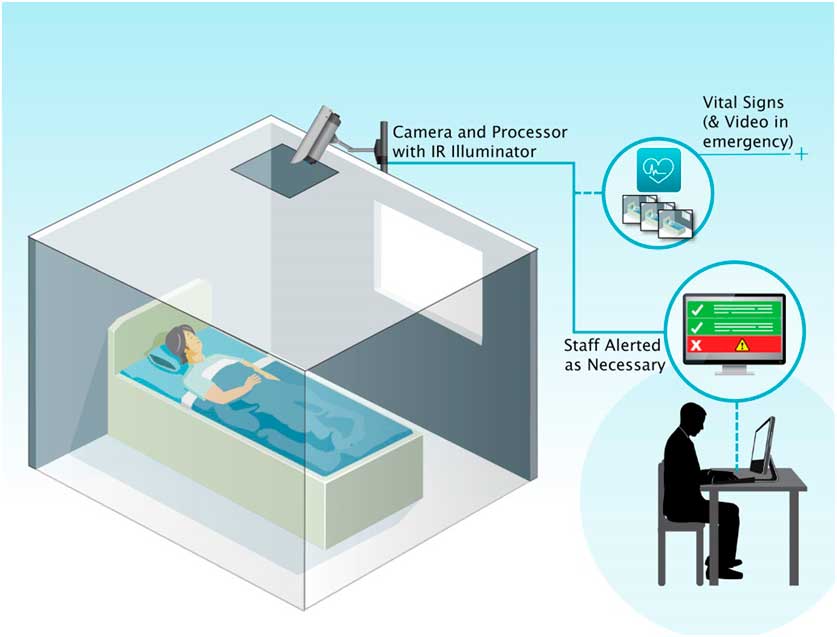
To address this problem, Broadmoor Hospital has recently collaborated with a UK medical technology company (Oxehealth) to develop an adapted CCTV system that can work in total darkness and provide constant contactless monitoring, without the need for a patient to wear any monitoring equipment or physically co-operate with the process. This could prove extremely useful, as it means the patient does not have to be woken or disturbed at night. As well as the practical benefit to the patient of not having to be disturbed at night, this can aid risk management through improving therapeutic effect of appropriate sleep patterns.
The technology involved is twofold. First, the CCTV cameras employ infrared light to detect movement. This technology has been available for some time and is commonly used in night-time CCTV or night vision security cameras. Second, to process the information, Oxehealth developed a novel set of algorithms, known as Oxecam (Figure 4). The algorithms use techniques such as image-based photoplethysmography and movement tracking to extract information automatically from the camera data. No manual processing is required. The system can run continuously, gathering extended sections of monitoring data rather than spot-check measurements. If the latest measured data indicate a cause for concern, the system can raise an alarm automatically for staff to review the data and intervene if necessary. Bespoke hardware is not needed, as widely available cameras can be used. As well as monitoring patients in visible light (indoor lights or sunlight), the system can operate in total darkness by using invisible infrared illumination. This camera-based technology has been demonstrated in previous clinical studies involving adults undergoing hemodialysis43 and pre-term infants in a neonatal intensive care unit.44 The device currently being trialed can be placed in a ceiling, in secure CCTV housing.
Oxecam system.

Broadmoor Hospital is also currently piloting a separate system, which develops algorithms based on motion sensor data to identify prodromes of aggression and violent episodes. The device tracks the movement of every person on the ward. CCTV is not involved, and individuals are not identifiable. Alongside data on movement, data about the time, nature, and location of any significant incident that occurs on the ward are collected. Algorithms will be developed with the aim of identifying early warnings of patterns of movement that are known to precede significant clinical events, alerting staff when such patterns occur, and allowing a proactive approach to be taken to any developing situation
Conclusions
New technologies offer a broad range of benefits in forensic psychiatry services. These include less restrictive options for patients, improved accountability of both staff and patients, less invasive testing, improved automated record keeping, and better assurance reporting.
A common theme of the developments described here is the use of technology to improve the completeness and accuracy of data used by clinicians to make decisions. In the complex interplay of risk management and patient recovery, such accuracy is vital. Another common thread is that each of these strategies supports and improves current clinical approaches rather than drastically changing them. Some technologies are cost-neutral, or cost-saving, and for those that are not, the falling price and improving quality should reduce barriers to uptake.
Services that utilize technologies also need to be aware of limitations. EM may be seen as unduly restrictive by patients and advocates. Evidence for its use remains limited, and technical failures may render it ineffective in some cases. CCTV in psychiatric settings also lacks a robust evidence base, and concerns about reality distortion, “function creep,” and impact on therapeutic relationships should be borne in mind. It is important that services retain the correct balance when deciding in what ways technological advances will be used, and in what ways they will not. It is vital that the types of technological innovations described in this article should be subject to thorough evaluation that addressed cost effectiveness, qualitative analysis of patients’ attitudes, safety, and ethical considerations.
Disclosures
None of the authors has any commercial interests, nor conflicts of interest, actual nor implied, with any of the companies mentioned in this article.