




No CrossRef data available.
Article contents
The influence of host haematocrit on the blood feeding success of Anopheles stephensi: implications for enhanced malaria transmission
Published online by Cambridge University Press: 07 August 2001
Abstract
Two studies were carried out to determine the effect of the rodent malaria Plasmodium yoelii nigeriensis on the blood feeding success of Anopheles stephensi. Initially, pairs of mice with similar packed cell volume (PCV) (measured by haematocrit) were selected. Following infection of one of the pair its PCV gradually fell. At various times post-infection, a comparison was made of the bloodmeal size (haemoglobin content) of mosquitoes feeding on these mice. The bloodmeal sizes increased with parasite-induced fall in PCV down to a haematocrit of 43–44%, which occurred approximately 48 h post-infection. Bloodmeals were significantly reduced, however, when mosquitoes fed on mice with higher parasitaemias and a haematocrit of 15–35%. Thus, at early stages of infection, mosquitoes ingested a bloodmeal significantly greater than did the mosquitoes feeding on the control mice. However, mosquitoes were not able to compensate for severe infection-associated anaemia. To compensate for variation due to innate differences in the mice, a second experiment was performed. Mosquitoes were fed on the same mice before (control) and after infection. Again, the bloodmeal size increased with decreasing PCV down to haematocrits of 42–45%, but declined thereafter. In this host–parasite–vector system, haematocrits that maximized erythrocyte intake were produced when gametocytes, capable of exflagellation, were present.
Information
- Type
- Research Article
- Information
- Copyright
- 2001 Cambridge University Press
INTRODUCTION
Haematophagy is essential for both the transmission of malaria parasites and the reproduction of their mosquito vectors. Larger bloodmeals transfer more infective cells and produce larger batches of eggs (Briegel, 1990), but longer feeding times increase the risks to the mosquito that result from host contact (Shieh & Rossignol, 1992). It is thus possible that strategies have evolved which maximize the benefits of blood feeding for the mosquito and the likelihood of transmission for the parasite.
Anaemia is a major complication of chronic Plasmodium falciparum malaria, especially in children and pregnant women in endemic areas. Not all infected patients develop symptomatic malaria but, depending on the conditions of transmission, they may harbour malaria parasites without developing clinical illness (Shulman et al.1996; Kurtzhals et al.1999). While it is difficult to define the pathophysiology of anaemia in malaria, a lowered packed cell volume (PCV) is evident (Shiff et al.1996; Menendez, Fleming & Alonso, 2000). Here we consider whether transmission of the malaria parasite from the vertebrate host to the mosquito vector, could be enhanced by changes in haematophagy associated with the development of infection-induced anaemia in the host.
Daniel & Kingsolver (1983), developed a mechanistic model to describe feeding of blood-sucking insects. The model demonstrated that haematocrit played an important role in the rate of blood uptake. It was predicted that haematocrits that were slightly below normal would produce the fastest rate of erythrocyte and total protein uptake. Shieh & Rossignol (1992) tested the effect of artificially lowered haematocrit on Aedes aegypti blood feeding rate. They observed that, initially, uptake was faster when feeding on anaemic blood but, if the mosquitoes were left to feed to engorgement the overall volume of blood imbibed did not differ from controls. These experiments did not assess feeding in terms of total erythrocyte uptake or total protein imbibed, yet these are the parameters that will impact upon mosquito reproductive success and parasite transmission.
The blood feeding behaviour of anopheline vectors differs from aedine mosquitoes as in anophelines, the red blood cell component of the meal is concentrated by expelling plasma whilst feeding, a process which is termed prediuresis (Briegel & Rezzonico, 1985). This process also increases the number of infected cells imbibed (Vaughan, Noden & Beier, 1991), thereby enhancing vector reproductive fitness and also parasite transmission. It seemed possible therefore that, (a) anopheline mosquitoes are able to compensate for infection-induced changes in host haematocrit by bloodmeal concentration, and (b) the optimum haematocrit for erythrocyte intake is not the highest PCV exhibited by the host.
Using a rodent malaria, Plasmodium yoelii nigeriensis, 2 experiments were designed to test these hypotheses. Feeding success of Anopheles stephensi was monitored while blood haematocrit (packed cell volume) changed during the progress of infection, using anaesthetized mice to eliminate defensive behaviour. In P. y. nigeriensis, gametocytaemia peaks at 2–3 days post-infection following a blood passage (Chutmongkonkul, Maier & Seitz, 1992), and this is followed by rising asexual parasitaemia and falling PCV.
MATERIALS AND METHODS
Mosquito maintenance
Anopheles stephensi Liston (Dubai strain), were reared in conditions which produce adults of very similar sizes (Jahan & Hurd, 1997). Mosquitoes emerging within the same 24 h period were maintained together for experimental purposes.
Parasite maintenance
Plasmodium yoelii nigeriensis Killick-Kendrick (N67), was maintained in CD1/S male mice, in controlled rearing conditions at 18 °C±2 °C, and a 14:10 light/dark photo-period. Mice were infected with cryopreserved mouse blood and, when parasitaemia levels reached approximately 10%, as assessed by Giemsa-stained thin smears from tail blood, a blood passage was performed to infect experimental mice, to ensure greater synchronization of the infection.
Experimental protocol (1); matched pairs
Eight pairs of mice, selected for experimental use, were litter-mates of similar weight and initial PCV. One was to be a control and the other to be infected with parasitized blood. Gametocytes were evident 30–36 h post-infection and exflagellation was confirmed by examining thick blood smears under oil immersion (×1000). Infected mice were monitored for changes in PCV by examination of 50 μl of tail blood, which was centrifuged for 4 min in a micro-haematocrit centrifuge (Gelman-Hawksley, Lancing, Sussex, UK). Mice with different haematocrits, and thus different degrees of parasitaemia and gametocytaemia, were selected to provide a range of different feeding conditions for groups of mosquitoes.
Nulliparous A. stephensi from one cohort, 4–8 days post-emergence, were anaesthetized by exposure to low temperature, and randomly divided into 2 cages. The mosquitoes were starved for 6 h, then one cage was fed on an infected mouse and the other on a control mouse. The infected and control mice were anaesthetized with fenlanyl/fluanisone (Hypnorm: Janssen), and diazepam (Valium: Roche), and the mosquitoes allowed to feed on them for 20 min between 16.00 and 17.00 h. All mosquitoes were frozen (−18 °C), 2 h post-bloodmeal. This ensured that the blood was completely contained in the midgut but had not yet begun to undergo digestion (Briegel, Lea & Klowden, 1979).
As a measurement of mosquito size, wing length of all blood-fed females was measured from the distal end of the allula to the tip, excluding the fringe. Haemoglobin in whole abdomens was assayed by haemoglobinometry (Briegel et al.1979; chloroform method), as described by Ahmed et al. (1999).
Experimental protocol (2); individual mice
To attempt to overcome the problem of innate variation in mouse haematocrit, mosquitoes were fed on the same mouse twice, once before and once after infection. Therefore, in this second experiment, each mouse acted as its own control. Ten mice were selected and anaesthetized as above. Rectal temperature, PCV and weight were recorded immediately prior to feeding.
Mosquitoes reared and maintained as above, were starved for 6 h before feeding for 15 min. The mice were allowed to recover from the anaesthesia (about 2 h). An interval of 4 days was allowed to ensure that the PCV of these mice had returned to a normal level following the blood loss caused by the first mosquito feed. The 4-day recovery period was based on a pilot study (data not presented).
After these 4 days the mice were infected with 0.1 μl of blood. From 30 h onwards the mice were checked for infection and their PCV monitored until a slight fall was observed. Exflagellation was assessed from tail blood by placing 10 μl of blood on a glass slide, covered with an 18×18 mm cover-slip, sealed with Vaseline™. The number of exflagellating centres was recorded from 12 fields of view ×1000, and the mean calculated. In addition, parasitaemia was assessed by the examination of Giemsa-stained thin blood smears. Mosquitoes from the same generation as those used for the first feed, were allowed to feed for 15 min. Most of the mosquitoes were frozen 2 h post-bloodmeal and analysed by haemoglobinometry, but 15 mosquitoes from each group were retained to monitor oocyst development.
Statistical analysis
All statistical analysis was carried out using MINITAB® computer program. All data were tested for normal distribution (Anderson–Darling Test). Significant differences were accepted at a value of P<0.05.
RESULTS
Experiment 1; matched pairs
Eight pairs of mice were used for a comparison between haemoglobin content of mosquitoes feeding on infected or control mice. The haematocrit of control mice ranged from 43 to 49% , and that of the infected mice from 15 to 49%. The difference between the haematocrit of the infected and control mouse in each test pair, increased with time post-infection and this difference reflected the increase in parasitaemia. Parasitaemia was first observed in thin blood smears 20 h post-infection, at which time no drop in haematocrit was detectable. However, at 6 days post-infection, parasitaemia had reached 61% and haematocrit fallen to 15%.
At the time of vector feeding, exflagellation was observed (but not quantified), in each infected mouse, except at the highest PCV when parasitaemia was lowest (2%) and at the lowest PCV when parasitaemia was greatest (61%).
There was no significant difference between mean wing length (and hence body size) of mosquitoes feeding on an infected or control mouse in each matched pair, but size did vary between generations of mosquitoes feeding on different pairs (Table 1). Thus, direct comparisons of bloodmeal haemoglobin content could not be made, and the bloodmeal haemoglobin content of infected females was expressed as a percentage of the control in each pair. Fig. 1 shows that where infection caused a 1–2% drop in PCV, the mosquitoes imbibed significantly more haemoglobin than the respective control mice. However, reduction in PCV of 8.5–29%, caused significant reductions in haemoglobin intake.

Fig. 1. The influence of host haematocrit on mosquito bloodmeal size when feeding on matched pairs of mice. The infected bloodmeal (haemoglobin mg), is expressed as a percentage of the control bloodmeal haemoglobin ([squf ]). The difference in PCV between the infected and the control mice, increases with progressive malaria infection shown as rising parasitaemia (□). * Significantly less than control. ** Significantly greater than control.
Table 1. Analysis of data for mosquitoes feeding on matched pairs of mice (Comparisons of bloodmeal size (haemoglobin mg) of mosquitoes feeding on control (con) and infected (inf) mice, showing PCV at the time of feeding. Modal wing size varied slightly between experiments, but there were no significant differences within each pair. Hb, haemoglobin in mg; PCV, packed cell volume measured immediately before blood feeding.)

Experiment 2; individual mice
This second experimental protocol confirmed that a slight drop in PCV enhanced haemoglobin uptake by blood feeding mosquitoes. However, a significant difference was not seen until there was a 3% drop (Fig. 2). No significant difference was seen at the 1–2% drop in the initial experiment. In the second experiment, a drop of 7% in PCV caused a significantly reduced erythrocyte intake. There was no significant difference in mouse body temperature during the experimental period (range – infected 36.1–38.1 °C, control 36.8–37.5 °C), but there was a significant difference in weight (range – infected 30–35 g, control 31.37 g) (paired t-test P = 0.004). The mice showed no physical sign of infection, for example, lethargy.

Fig. 2. The influence of host haematocrit on mosquito bloodmeal size when feeding on the same mouse before and after infection. The infected bloodmeal (haemoglobin mg) is expressed as a percentage of the first control bloodmeal taken from the same mouse ([squf ]). Parasitaemia is shown to rise with increasing infection (□). * Significantly less than control. ** Significantly greater than control.
Although exflagellation was not always detected in thick blood smears, all infected bloodmeals produced oocysts, with numbers ranging from less than 20 to more than 100 per mosquito midgut. In no case was there a significant difference in the modal wing size between the mosquitoes used for control and infected feeds on the same mouse (Table 2).
Table 2. Analysis of data for mosquitoes feeding on individual mice (Comparison of bloodmeal size of mosquitoes feeding on the same mice before and after infection. Modal wing size varied slightly, but there were no significant differences within the control and infected feed for each mouse. Hb, haemoglobin in mg; PCV, packed cell volume measured immediately before blood feeding. exf, mean episodes of exflagellatoin per field of view (×1000).)

DISCUSSION
Both of our experiments demonstrated that the slight decrease in haematocrit observed early in P. y. nigeriensis infections enhances the uptake of haemoglobin, and hence erythrocytes, in infected mosquitoes. In addition, mosquitoes are unable to compensate for large decreases in PCV by prediuresis.
Feeding on slightly anaemic hosts could thus be expected to enhance the reproductive fitness of anopheline mosquitoes, by increasing the protein source available for egg production. However, our previous work demonstrated that when these haematocrits are produced by malaria infection, fecundity was significantly reduced (Hogg & Hurd, 1995; Jahan & Hurd, 1997). Thus this increased protein does not compensate for the reduction in reproductive fitness caused by malaria infection.
A major difference between the blood feeding behaviour of A. stephensi and that of Aedes aegypti, is the ability of the former to concentrate erythrocytes whilst taking a bloodmeal. A. stephensi have been shown to concentrate red blood cells by a factor of 1.7 (Vaughan et al.1991), as a result of which the feeding period is protracted and a rectal fluid is excreted during feeding. This process, defined as prediuresis (Briegel & Rezzonico, 1985), begins approximately 80 sec after feeding commences, when mosquitoes already appear to be fully engorged. Briegel & Rezzonico (1985) reported a mean haemoglobin content of 499.9 μg (which is comparable with our results) in engorged female A. stephensi (size undefined).
Despite their ability to undergo prediuresis, the mosquitoes observed in this study were unable to compensate for very low host haematocrit by bloodmeal concentration during an extended feeding period. The midgut appears to be stretched to capacity long before feeding ceases; we are not aware of any study that identifies the trigger that initiates proboscis withdrawal in anophelines. Thus anopheline mosquitoes feeding exclusively on a severely anaemic host may be unable to mature a complete egg batch (Briegel, 1990).
Our experiments support the hypothesis that an intermediate haematocrit exists, which enhances blood feeding, and that this is just below the normal range of PCV seen in non-infected mice. Haematocrit is progressively lowered as asexual parasitaemia increases in P. y. nigeriensis infections in mice. However, the infective gametocyte stages of some species of malaria, including P. y. nigeriensis, are most abundant early in infection, when PCV is only slightly lowered (Dearsley, Sinden & Self, 1990). Vector infection is dependent upon host gametocytaemia, gametocyte infectivity and the number of erythrocytes in the bloodmeal (discussed by Dearsley et al.1990 and Sinden et al.1996). In wild infections (where oocyst burdens are low), and in laboratory studies, gametocyte density has been positively correlated with intensity and/or prevalence of infection, but not all studies have shown this (discussed by Taylor & Read, 1997). Enhanced feeding success (erythrocyte uptake), occurring at a time of peak gametocyte activity, may thus contribute towards transmission success. This is, however, difficult to demonstrate in our laboratory model, as A. stephensi is a highly competent vector for P. y. nigeriensis and prevalence of infection is usually 80–100%. Differences associated with increased gametocyte intake may not be detectable in this model.
Shieh & Rossignol (1992) suggested that the increased blood feeding rate, that occurs during initial feeding on an anaemic host, will increase the chances of a mosquito acquiring a small bloodmeal before host defensive behaviour disturbs it. We have shown that, if host anaemia is severe, protein intake will be lower and the mosquito is thus likely to seek additional bloodmeals, especially if feeding is interrupted. This increase in risky host contact may decrease vector fitness and hence the chances of the parasite surviving to produce sporozoites. However, if host haematocrit is only slightly lowered, increased flow will result from decreased blood viscosity and bloodmeal concentration in anopheline mosquitoes will compensate for the lower PCV. Females are thus less likely to seek alternative hosts, which may increase vector fitness (Davies, 1990), and feeding will be biased in favour of infected hosts exhibiting slight anaemia.
It is likely that an optimum haematocrit exists in other host/malaria/vector associations. However, the degree of anaemia, erythrocyte size, timing of gametocyte appearance and persistence and vector behaviour all vary and will contribute to produce different profiles of transmission in different parasite/host/vector combinations.
References
AHMED, A. M., MAINGON, R. G., TAYLOR, P. J. & HURD, H. (1999). The effects of infection with Plasmodium yoelii nigeriensis on the reproductive fitness of the mosquito Anopheles gambiae. Invertebrate Reproduction and Development 36, 217–222.CrossRefGoogle Scholar
BRIEGEL, H. (1990). Fecundity, metabolism and body size in Anopheles (Diptera: Culicidae), vectors of malaria. Journal of Medical Entomology 27, 839–856.CrossRefGoogle Scholar
BRIEGEL, H., LEA, A. O. & KLOWDEN, M. J. (1979). Hemoglobinometry as a method for measuring bloodmeal size of mosquitoes (Diptera: Culicidae). Journal of Medical Entomology 15, 235–238.CrossRefGoogle Scholar
BRIEGEL, H. & REZZONICO, L. (1985). Concentration of host blood protein during feeding by anopheline mosquitoes (Diptera: Culicidae). Journal of Medical Entomology 22, 612–618.CrossRefGoogle Scholar
CHUTMONGKONKUL, M., MAIER, W. A. & SEITZ, H. M. (1992). Trials to infect Anopheles stephensi with Plasmodium yoelii nigeriensis by membrane feeding technique. Angewandte Parasitologie 33, 217–225.Google Scholar
DANIEL, T. L. & KINGSOLVER, J. G. (1983). Feeding strategy and the mechanics of blood sucking in insects. Journal of Theoretical Biology 105, 661–672.CrossRefGoogle Scholar
DAVIES, C. R. (1990). Interrupted feeding of blood-sucking insects: causes and effects. Parasitology Today 6, 19–22.CrossRefGoogle Scholar
DEARSLEY, A. L., SINDEN, R. & SELF, I. A. (1990). Sexual development in malarial parasites: gametocyte production, fertility and infectivity to the mosquito vector. Parasitology 100, 359–368.CrossRefGoogle Scholar
HOGG, J. & HURD, H. (1995). Plasmodium yoelii nigeriensis: the effect of high and low intensity of infection upon egg production and bloodmeal size of Anopheles stephensi during three gonotrophic cycles. Parasitology 111, 555–562.CrossRefGoogle Scholar
JAHAN, N. & HURD, H. (1997). The effects of infection with Plasmodium yoelii nigeriensis on the reproductive fitness of Anopheles stephensi. Annals of Tropical Medicine and Parasitology 91, 365–369.CrossRefGoogle Scholar
KURTZHALS, J., ADDAE, M. M., AKANMORI, B. D., DUNYO, S., KORAM, K. A., APPAWU, M. A., NKRUMAH, F. K. & HVIID, L. (1999). Anaemia caused by asymptomatic Plasmodium falciparum infection in semi-immune African schoolchildren. Transactions of the Royal Society of Tropical Medicine and Hygiene 93, 623–627.CrossRefGoogle Scholar
MENENDEZ, C., FLEMING, A. F. & ALONSO, P. L. (2000). Malaria-related anaemia. Parasitology Today 16, 469–476.CrossRefGoogle Scholar
SHIEH, J.-N. & ROSSIGNOL, P. A. (1992). Opposite influences of host anaemia on blood feeding rate and fecundity of mosquitoes. Parasitology 105, 159–163.CrossRefGoogle Scholar
SHIFF, C., CHECKLEY, W., WINCH, P., PREMJI, Z., MINJAS, J. & LUBEGA, P. (1996). Changes in weight gain and anaemia attributable to malaria in Tanzanian children living under holoendemic conditions. Transactions of the Royal Society of Tropical Medicine and Hygiene 90, 262–265.CrossRefGoogle Scholar
SHULMAN, C. E., GRAHAM, W. J., JILO, H., LOWE, B. S., NEW, L., OBIERO, J., SNOW, R. W. & MARSH, K. (1996). Malaria is an important cause of anaemia in primigravidae: evidence from a district hospital in coastal Kenya. Transactions of the Royal Society of Tropical Medicine and Hygiene 90, 535–539.CrossRefGoogle Scholar
SINDEN, R., BUTCHER, G. A., BILLIKER, O. & FLECK, S. L. (1996). Regulation of infectivity of Plasmodium to the mosquito vector. Advances in Parasitology 38, 54–117.CrossRefGoogle Scholar
TAYLOR, L. H. & READ, A. F. (1997). Why so few transmission stages? Reproductive restraint by malaria parasites. Parasitology Today 13, 135–140.CrossRefGoogle Scholar
VAUGHAN, J. A., NODEN, B. H. & BEIER, J. C. (1991). Concentration of human erythrocytes by anopheline mosquitoes (Diptera: Culicidae) during feeding. Journal of Medical Entomology 28, 780–786.CrossRefGoogle Scholar

Fig. 1. The influence of host haematocrit on mosquito bloodmeal size when feeding on matched pairs of mice. The infected bloodmeal (haemoglobin mg), is expressed as a percentage of the control bloodmeal haemoglobin ([squf ]). The difference in PCV between the infected and the control mice, increases with progressive malaria infection shown as rising parasitaemia (□). * Significantly less than control. ** Significantly greater than control.
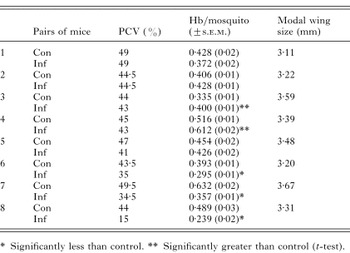
Table 1. Analysis of data for mosquitoes feeding on matched pairs of mice

Fig. 2. The influence of host haematocrit on mosquito bloodmeal size when feeding on the same mouse before and after infection. The infected bloodmeal (haemoglobin mg) is expressed as a percentage of the first control bloodmeal taken from the same mouse ([squf ]). Parasitaemia is shown to rise with increasing infection (□). * Significantly less than control. ** Significantly greater than control.
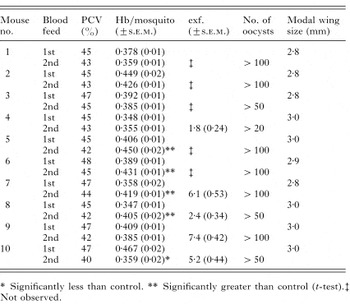
Table 2. Analysis of data for mosquitoes feeding on individual mice
 You have
Access
- 38
- Cited by