



No CrossRef data available.
Yasunaru Kawashima
Published online by Cambridge University Press: 18 April 2005
Abstract
An abstract is not available for this content. As you have access to this content, full HTML content is provided on this page. A PDF of this content is also available in through the ‘Save PDF’ action button.
Information
- Type
- The Paediatric Cardiology Hall of Fame
- Information
- Copyright
- © 2003 Cambridge University Press
It is a great honor for me to be able to introduce Yasunaru Kawashima (Fig. 1) in the Paediatric Cardiology Hall of Fame. It is also an honor for Yasanaru, since he becomes the first cardiac surgeon from Asia to enter this Pantheon, following the truly great surgeons previously inducted, namely Francis Fontan,1 John Kirklin,2 Lucio Parenzan,3 and Adib Jatene.4 In addition to his clinical contributions, on a par with these other giants in the field of paediatric cardiac surgery, Yasunaru Kawashima also devised and introduced surgical devices that were truly epoch-making. Furthermore, it is not only as a surgeon, but also as an educator that he has played such an important role in the field of cardiac surgery in our country. He has presided over our major domestic associations concerning cardiovascular diseases. Without question, he has been undoubtedly one of the most active and academic surgeons anywhere in the world. It is my privilege to describe his remarkable strides in cardiac surgery.

Figure 1. Yasunaru Kawashima.
I met him first when he moved from Osaka University to the National Cardiovascular Center of Japan as a general manager of its hospital in 1991. Of course, I had already known his name and his achievements, but I did not know him as a person at that time. He left a vivid impression, at least to me, when he entered, for the first time, our morning surgical conference. Immediately after he walked in, all of us in the room straightened ourselves in our seats, and the atmosphere within the room became tense. He simply said “Good morning” with a calm smile. But we could all sense the enormous energy and aura that surrounded him. Eventually, he became the president of the institution. He allowed me to go abroad to study. Thanks to his support, I was able to spend almost 2 years in London studying cardiac morphology under the guidance of Bob Anderson. This experience has proved extremely important for me, both in terms of my professional life as a cardiac surgeon, and the construction of my philosophy as a human being. Without Yasunaru's help and support, I would not now be in my current shape. I am sure that there are many other people like me around him, thanking him greatly in their minds. Having taken this opportunity to express my sincere thanks to Yasunaru Kawashima, I would now like to start to describe his personal history and affairs.
Studentship
Yasunaru was born on 23 August 1930, in Osaka, as the third son of his parents. His father was a gynecologist, and his mother was the daughter of a military officer. The Second World War broke out when he was an elementary school student, the nightmare ending during the period of his junior high school. He had dreamt to become a naval officer in childhood, but he gave up this idea because of the outcome of the war.
Although the state of affairs was miserable during and immediately after the war, his collegiate life was optimistic. He was clearly brilliant at mathematics and physics. He initially intended to specialise in mechanical engineering at the University of Kyoto. Within the first year, however, he was disappointed with that field, and transferred to the Medical School at the Osaka University, so as to become a medical doctor like his father. At his graduation in 1955, he chose surgery for his future profession. This was because he possessed a good sense of physics, but disliked chemistry. His father also recommended him to be a surgeon, hypothesising that the surgeon was able to have the best satisfaction of achieving medical cure of diseases. As is often the case with Japanese medical doctors, he decided to enter the department of Surgery of the school from which he had graduated. This happened in April of 1956.
Apprenticeship
In Osaka
Just before Yasanaru entered the surgical department in Osaka, on March 18 1956, Hisao Manabe, who was leading the surgical team at the Osaka University, successfully repaired a patient with tetralogy of Fallot, using a cardiopulmonary bypass machine for the first time in Japan. At that time, Yasunaru was serving his internship at the hospital. He had yet to decide in which surgical field he was to specialize. The heart drew his attention, because the organ was a pump of our circulation, and his ability of physics aided understanding of its mechanism. Of course, the timely and memorable achievement of Dr Manabe was further motivation for him to enter the burgeoning field of cardiac surgery. His application to join the team of cardiac surgery was eagerly supported by Manabe. This did not mean, at least for him, that he decided to spend all his life for this new subject just at its dawn. At all events, Dr Manabe subsequently became his respected and fateful mentor.
In spite of the shining initial achievement of open heart surgery at the Osaka University, the surgical results in the series of patients undergoing surgery using cardiopulmonary bypass were far from encouraging. Eventually, the chief professor at that time instructed the cardiac surgical team to quit their clinical procedures, and to recommence from the beginning with a series of experimental works. The oxygenator available at that time was the Dewall-Lillehei bubble model, and cardiopulmonary bypass could be sustained in practical fashion for no more than 30 minutes. Yasunaru's experimental task was to establish how extracorporeal circulation could be maintained more efficiently. And for longer periods of time. He harvested blood from dogs in an underground laboratory, full of the smell of dead bodies. Using the material, he repeated experiments of artificial perfusion. One of the fundamental questions, unsolved at that time, was how much a living body should be perfused. It had been known that an inappropriate amount of perfusion unbalanced the distribution of the volume of blood between the living body and the heart-lung machine. Yasunaru's answer to minimize this problem was based on his clinical as well as experimental experiences. He noted that systemic vascular resistance should be maintained within the normal standard level. He proposed that the appropriate amount of perfusion would be around 2.2 l/min/m2.
There was also no consensus at that time regarding the amount of extracorporeal perfusion. The agreed concept was that extracorporeal perfusion should meet the demands for oxygen of the living body, but there were proposed standards. Yasunaru wrote a paper on the basis of his experience and results. It was his first paper written in English. The manuscript was submitted to the Journal of Thoracic and Cardiovascular Surgery, and, fortunately, was accepted by the journal.5 In addition, its content was highlighted in the Year Book of Cardiovascular and Renal Medicine, accompanied by comments from John W. Kirklin. This achievement had a positive impact, winning respect for him from his colleagues.
In the United States of America
The next opportunity for him came from the United States of America. A famous cardiac surgeon, Jerome Harold Kay (Fig. 2), working at the University of Southern California, asked the chief professor of Osaka University to recommend a young fellow who was participating in experiments related to cardiac surgery. Yasunaru got this recommendation. He flew to the United States of America in June 1964, the year of the Tokyo Olympic Games. He did not take Misako, his recently married wife, because she was pregnant with their first child. When he looked at the American Continent from a window of an airplane, he was rather excited, regarding the ground as a forthcoming stage, or a ring of battle, for him.

Figure 2. Yasunaru with Jerome H. Kay and his wife.
The work proposed for him in the laboratory in Southern California was to replace the mitral valve in dogs, using a mechanical valve of the disk type. Mr Shiley, who was not yet famous, had designed the valve. The circumstance for the experiments sat very comfortably for him. Before moving to the United States, Yasunaru had been required to do everything, from A to Z, by himself in his Japanese laboratory. He did blood sampling. He prepared, tidied, and cleaned the cardiopulmonary bypass machine. He had to transfer a heavy Sigmamotor pump between the laboratory at the underground level and the operating theatre at the second level, because the equipment was used for both clinical practice and research activity. Compared to these primitive circumstances, the laboratory in the United States was just perfect. On his arrival at the laboratory, all the equipment needed had been already prepared, and the animal to be the subject of his experiments had been laid on the table under anesthesia. He just did his experiments as an operator. He had no complaint at all with this wonderful arrangement, except for a bed for himself. He wanted to set a bed in the laboratory, since he thought that postoperative care could be better in a more intensive fashion beside his dogs. When he asked Dr Kay to get a bed for this purpose, Dr Kay was glad to hear that, realizing that Yasunaru was a conscientious colleague. They wrote a paper proposing that the valve under experiment for was most likely to be of clinical use.6
Having finished experimental studies of one year, he moved to St Vincent's Hospital as a clinical fellow. In this new world for him, he had to work very hard, including all-night duty one day in three. In fact, this was nothing for him. It was rather a great pleasure for him to have opportunities of experiencing two or more open heart procedures a day. At that stage, he could have experienced only one operation a week had he remained in Japan. As is the case with a private clinic, he was unable to carry out intracardiac maneuvers by himself. Nonetheless, to watch so many open heart procedures was unequivocally a hugely valuable experience.
Coming back to Japan
During his training at St Vincent's Hospital, his boss, Dr Manabe, had become a Professor at the Osaka University. A year later, Yasunaru returned from the United States of America to the Osaka University, and became a chief of the team for cardiovascular surgery. The first procedure performed by Yasunaru as chief was construction of a Blalock-Taussig shunt. The operation itself was successful, but for some reason it took almost a whole day. This debut gave his colleagues a dull impression that many difficulties might lie ahead of Yasunaru. After several successful operations, he came across a difficult situation. The patient had a huge aneurysm of the ascending aorta that was eroding the posterior aspect of the sternum. He considered, nonetheless, that his surgical skills would find a way out of the difficulties. He attempted to approach the lesion through a median sternotomy. But the aneurysm inevitably ruptured during the maneuver, and the patient died of massive haemorrhage on the table in the operating theatre. Yasunaru was tremendously shocked with this outcome. He reconsidered how important the preoperative planning should be for safe achievement of the cardiac surgical procedures. He did not any more regard the technical skill of the operator as the crucial force. This experience has formed a part of the nucleus of his subsequent professional principles.
Devices for operative procedures
As a chief of the cardiovascular team at the Osaka University, Yasunaru's motto was to produce originality and invention. He continued to convey this academic enthusiasm to his surgical colleagues until his retirement. He would say “Cardiac surgery is not to be carried by hands, but to be achieved by intelligence”. This came, of course, from his early bitter experience. His motto also matched the stance of his department. The department had a tradition that one of the major academic challenges was innovation.
Use of a homograft
Very soon, he began to replace the aortic valve using homografts, having learned the procedure in Los Angeles. He also attempted replacement of the mitral valve using a homograft. Furthermore, he also used, in 1968, a homograft as a valved conduit for repair in a patient having the diagnosis of so-called “pseudotruncus”. In May, 1969, he achieved functional biventricular repair in a 2-year-old boy with discordant atrioventricular connections, double outlet right ventricle, and pulmonary stenosis, again using an aortic homograft.7 The conduit was interposed between the pulmonary arteries and the morphologically left ventricle, which was right-sided. The pulmonary trunk was ligated, and interventricular communication was closed. At that time, he did not know that Giancarlo Rastelli and his colleagues had already achieved a similar successful repair.
The Kawashima intraventricular rerouting
In September of the same year, he operated on a 7-year-old girl who demonstrated mild cyanosis. Because preoperative evaluation was far from perfect at this earlier stage of cardiac surgery, the patient had been diagnosed as having a ventricular septal defect with a small intracardiac right-to-left shunt. When he incised the right ventricle under total cardiopulmonary bypass, he immediately noted the presence of double outlet from the right ventricle. He said earnestly, “This is the Taussig-Bing malformation!” One of his assistants nonchalantly replied, “What is that?” The Taussig-Bing malformation was not a well-known entity even at this institution, where most cardiac surgery had been carried out in Japan. Even now, the use of the term “Taussig-Bing malformation” can create confusion, particularly when qualified by adjectives such as false, true, original, transposition-type, and so on. But this is another story!
Just prior to his encounter with this malformation, Hightower and Kirklin and their colleagues had reported successful functional biventricular repair in 3 patients with this type of malformation.8 They had baffled the interventricular communication to the pulmonary valvar orifice, employing the Mustard procedure to provide intra-atrial redirection of blood. Although he considered use of this procedure to achieve functional biventricular repair, precise recognition of the intracardiac morphology enabled him to reroute directly the interventricular communication to the aortic valvar orifice. He meticulously resected the muscular outlet septum interposed between the aortic and the pulmonary valves, and attached a baffle for intraventricular rerouting. The procedure was successful.9
When this achievement was reported at a meeting, the audience responded negatively to his presentation. The majority of attendees felt that this operative procedure would be seldom applicable in patients having the Taussig-Bing malformation because of its structural features. Yasunaru, therefore, visited a library of autopsied specimens with congenital heart disease, the library being provided by Shigeru Sakakibara at Tokyo Women's Medical Collage, specifically investigating the morphology of the Taussig-Bing malformation. He noted that, indeed, in several specimens his concept of direct intraventricular rerouting seemed impossible because of the morphologic features. In some hearts, nonetheless, with a significant distance between the tricuspid and the pulmonary valves, it was obviously feasible to construct a short and straight tunnel connecting the interventricular communication and the aortic valvar orifice.
When he visited John Kirklin with photos of intraventricular rerouting in his patient, he was told that a similar procedure might have been employed also at the Mayo Clinic. It was, nonetheless, another procedure reported by Patrick and McGoon.10 Kawashima's intraventricular rerouting was not employed very often subsequent to his first success. This was partly because the congenital cardiac malformation itself was relatively rare. Another reason related to inadequate preoperative diagnosis. With the developing diagnostic techniques in the 1970s and early 1980s, it was far from easy to identify precisely the intracardiac morphology, and to determine preoperatively the feasability of the Kawashima procedure. By 1988, nonetheless, he had succeeded in treating 4 patients with this malformation, the great arterial trunks being oriented in side-by-side fashion. He reported this series of patients at the first World Congress of Pediatric Cardiology and Pediatric Cardiac Surgery organized by Lucio Parenzan and Gaincarlo Crupi in Bergamo in 1988 (Fig. 3).

Figure 3. Yasunaru and his wife at the first World Congress of Pediatric Cardiology and Pediatric Cardiac Surgery in Bergamo in 1988. Lucio Parenzan was the president of the meeting.
Currently, many surgeons prefer the arterial switch combined with baffling of the interventricular communication to the pulmonary orifice rather than attempting Kawashima's procedure. Still, some brilliant surgeons, such as Hikaru Matsuda and Toshikatsu Yagihara, have adopted Kawashima's intraventricular rerouting with excellent results.11, 12 They used to be young colleagues of Yasunaru, and nowadays they are two of the great cardiac surgeons leading cardiovascular surgery in Japan. Matsuda took over the Professorial position at the Osaka University. Dr Yagihara is currently a director of the surgical team at the National Cardiovascular Center of Japan.
Approach to the ventricular septal defect
Not only was he devising new operative methods, but Yasunaru was also keen to import excellent procedures introduced by other cardiac surgeons. When Viking O. Bjork visited the Osaka University in 1963, Yasanaru was deeply impressed by the Scandinavian surgeon, who closed ventricular septal defects through an incision in the right atrium. At that time, it was customary to close such defects through a right ventriculotomy. Yasunaru eventually intended to close the so-called supra-crista defect, which was more frequently seen in oriental people, without an incision to the right ventricle. For this purpose, an incision was made in the pulmonary trunk, and the defect was inspected through the pulmonary valvar orifice. Visualization, at least for him, proved far better than anticipated preoperatively. Particularly in patients with such doubly committed and juxta-arterial defects in which no musculature was present between the attachment of the pulmonary valvar leaflets and the rim of the defect, some stitches could readily be placed at the firm fibrous tissue of the hingepoint of attachment of the leaflets of the pulmonary valve. This proved an obvious advantage,13 and Kawashima employed this technique from September, 1975.
An incision in the right ventricle, if placed in its outflow portion, might have little influence on postoperative haemodynamics. Some investigators, however, had anticipated that avoiding such incisions would decrease the potential to produce incomplete right bundle branch block or ventricular arrhythmia, since no scars are produced around the right ventricular free wall. James R. Malm visited the Osaka University one day, and commented that he disliked closing defects using such an unusual and inadequate field of vision. Nowadays, nonetheless, this trans-pulmonary approach is common, being described in any textbook of cardiac surgery for congenital heart disease.
Yasunaru replaced Manabe as a Professor of Surgery at the Osaka University in 1978. From that time on, he promoted repair of tetralogy of Fallot using either no, or a minimal 5 mm long, or shorter, incision to the right ventricle. Intracardiac maneuvers were carried out through both the tricuspid valvar orifice and the incision made in the pulmonary trunk.14 Minimal invasiveness to the right ventricle in repairing tetralogy of Fallot was already discussed as long as 25 years ago in terms of the surgical outcome in the longer term. To avoid sequels requiring re-operation was one aspect, and minimizing postoperative arrhythmias was another matter of concern. Yasunaru demonstrated that the trans-pulmonary and trans-atrial approach produced no incremental risk of residual or recurrent obstruction across the right ventricular outflow tract, and that the right ventricular function was better when compared with similar parameters in patients undergoing a considerable ventriculotomy.15 He also anticipated less frequent arrhythmias in the longer terms. This topic remains, more or less, controversial, and has yet to be precisely concluded.
Right heart bypass
The most attractive issue for him has been surgical treatments in patients with univentricular physiology. As had been attempted by several cardiac surgeons, total bypass of the right heart was repeated by Yasunaru in animal models, but in vain. All the systemic venous drainage could not be forwarded to the pulmonary arteries without the aid of ventricular contraction. During his struggle, Francis Fontan reported in 1971 that he had successfully achieved exclusion of the ventricular chamber from the pulmonary circulation in clinical patients having tricuspid atresia.16 In later years, Francis visited the Osaka University, presenting a lecture on the Fontan procedure. Yasunaru asked Francis how many experiments had been done, and how often the circulation had been efficient. Francis' reply was “innumerable experiments with no success”. Yasunaru was very impressed with this comment. He realized that Francis had made every effort to understand the unknown circulation. Francis did not consider that experimental models could be perfectly designed to match the complicated circumstances of this disease at that time. Even without any experimental success, therefore, Francis dared to attempt total bypass of the right heart in his patients. Yasunaru concluded that a brave challenge, accompanied with scientific insight and enthusiasm, was occasionally needed.
He paid direct homage to the new procedures introduced by Francis and by Guillermo Kreutzer.17 He doubted, nonetheless, that the right atrium had an important role as a pumping chamber for the pulmonary circulation, even with placement of valvar mechanisms at its inlet and/or outlet. Remembering the knowledge of hydraulics he had learned during his student life at the school of technology, he expected that contraction of the right atrium could give just a pulsation to the flow of blood in the pulmonary arteries. He did not consider that it was a force for driving the overall pulmonary circulation. In order to prove his hypothesis, he arranged an experiment together with Dr Matsuda. In the experimental model, using dogs, the tricuspid valve was closed, a conduit was interposed between the right atrium and the pulmonary arteries, and then the pulmonary trunk was ligated. Haemodynamic parameters were recorded under either regular sinus rhythm or induced atrial fibrillation. The results of this experiment strongly suggested that the right atrium scarcely functioned as a pump in the Fontan circulation.18
An occasion to apply their findings in the clinical field emerged in July, 1978. A 23-year-old female was referred to Yasunaru, having a functionally single ventricle and severe regurgitation across a common atrioventricular valve. The inferior caval vein was interrupted, draining via a hemiazygos continuation to the left-sided superior caval vein. The patient, who had previously undergone shunting at another hospital, was critically cyanotic, so that even walking had been considerably restricted. To improve this severely incapacitated state, Yasunaru chose a new procedure according to his conviction based on the experimental findings. The superior caval vein was directly anastomosed to the pulmonary arteries in bidirectional fashion. With this redirection of blood, all the systemic venous blood flow, except for effluents from the liver and the heart itself, would be forwarded to the lungs without any atrial contraction. This maneuver was accompanied with replacement of the regurgitant common atrioventricular valve. The postoperative course was not uneventful, but eventually the patient recovered with marked improvement in cyanosis.
Several patients having similar cardiac malformations were found on the waiting list of Yasunaru's patients at that time. He, however, did not employ this new surgical procedure immediately after his first success. It took 2 years before he repeated the procedure, because he thought he was responsible for confirmation of its outcome, not only in the short term but also in the intermediate term. Thus, he carried out the procedure in another 3 patients, and reported his experience in 1984.19 He named the operation the “total cavopulmonary shunt”. This achievement proved that almost three-quarters of the systemic venous drainage could be redirected to the lungs without either ventricular or atrial contraction. Marc de Leval subsequently expanded the concept, placing a baffle or a conduit within the right atrium so as to drain the inferior caval vein to the pulmonary arteries.20 Thus, he established total bypass of the right heart, excluding atrial contraction from the pulmonary circulation. The alternative procedure was named as the “total cavopulmonary connection”, and its experimental background was given on the basis of fluid mechanics.
Another important impact of Kawashima's total cavopulmonary shunt was the bidirectional nature of the anastomosis between the superior caval vein and the pulmonary arteries. Different from the conventional Glenn procedure, the pulmonary arteries were left confluent. A decade later or more, the bidirectional cavopulmonary anastomosis became very important, since the so-called bidirectional Glenn procedure was increasingly employed in patients with complicated cardiac malformations and considerable risk factors. Nowadays, the staged approach to the Fontan circulation has become conventional wisdom. Many surgeons, therefore, now use the bidirectional cavopulmonary anastomosis. In addition, the technique is utilized also in the so-called one and one half ventricular repair.21
Other devices in repairing complicated cardiac malformations
Other operative devices reported by Yasunaru as being of value in repair of complicated cardiac malformations include an additional aortopulmonary anastomosis, and repair of atrioventricular septal defect with a common valve using the so-called endocardial cushion prosthesis.
The former was reported as a case report of surgical repair of double outlet right ventricle with subpulmonary defect and pulmonary stenosis.22 The procedure could be a sort of modification of the Damus-Kaye-Stansel procedure in patients with discordant ventriculo-arterial connections. But dual tracts from the systemic ventricle were constructed using a stenotic pulmonary valvar orifice. In this respect, the concept was unique.23 Construction of dual channels from a systemic ventricle has become common in Fontan candidates, while a similar maneuver in biventricular repair of complicated malformations remains less common.
Use of an endocardial cushion prosthesis at the time of repair of usual atrioventricular septal defect with a common valve24 might not now be attractive as a current trend. This is because this malformation is now primarily repaired during early infancy, and the surgeon hesitates to make incisions in the thin and fragile valvar leaflets. The prosthesis, nonetheless, may remain its role in repair of complicated forms of atrioventricular septal defect in visceral heterotaxy.25 The leaflets of the atrioventricular valve are often unusually formed in this setting, and augmentation of the leaflets could be needed.26
Coronary arterial bypass in Kawasaki disease
A further achievement of Yasunaru as a pioneer was coronary arterial bypass grafting in a child with Kawasaki disease and an obstructive coronary arterial lesion. He succeeded in bypassing the coronary artery using a saphenous vein in a 4-year-old boy in August 1975.23 It was Soichiro Kitamura, who was as an assistant in the fist successful procedure by Yasunaru, who subsequently popularized the technique, and has now carried out much work regarding this matter.28–31 After Yasunaru's retirement as President of the National Cardiovascular Center of Japan, Dr Kitamura has succeeded him as the current President.
Miscellaneous achievements
In 1974, he made the first successful repair in Japan for a 2-month-old baby with totally anomalous pulmonary venous connection of the infracardiac type. The arterial switch was successfully employed in a patient with discordant ventriculo-arterial connections in 1976, the achievement being also the first occasion in Japan.
Many other devices and efforts were made also for adults with cardiac disease, particularly the introduction of heart transplantation in Japan. Space precludes detailed cataloguing of all his important contributions to cardiac surgery.
Academic activities
A list of Kawashima's achievements includes 290 articles written in English concerning cardiovascular surgery, and another 100 papers for surgery in fields apart from cardiovascular. The most important articles are listed in the references.5, 6, 9, 11–15, 18, 19, 22–30, 32–89
He arranged many major scientific meetings in Japan, on behalf of organizations such as the Japanese Circulation Society, the Japanese Association for Thoracic Surgery, the Japanese Society for Cardiovascular Surgery, the Japanese Society of Artificial Organs, and so on. He also organized several international meeting. He held the annual meeting of the International Association of Heart and Lung Transplantation at Osaka in 2000 as a chairman of the Local Organizing Committee. In 1994, he had an opportunity to arrange a unique international symposium entitled “Surgical Morphology of Congenital Heart Disease”, with the aid of Yagihara and myself (Fig. 4). Robert H. Anderson and Anton E. Becker played principal roles in the symposium.
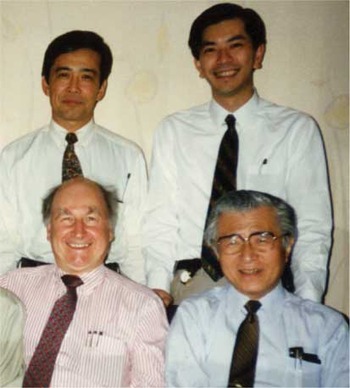
Figure 4. Yasunaru arranged an international symposium “Surgical Morphology of Congenital Heart Disease” in 1994 with the aid of Toshikatsu Yagihara and Hideki Uemura myself. Robert H. Anderson was one of the principal speakers.
He counts many famous cardiac surgeons as his friends. And he has been invited to give many lectures all over the world. In 1991, for example, his friend, Magdi Yacoub, invited him to London as the Brock Lecturer (Fig. 5). The lecture was entitled “Evolution of cardiac surgery in Japan.”

Figure 5. Yasunaru was invited to London as a Brock Lecturer by his friend Magdi Yacoub in 1991. Aldo Castaneda was also present at the symposium.
His energetic activities as an academic surgeon have permitted many younger colleagues to achieve their own success. Among those who worked for him, as many as 25 surgeons eventually became professors, including 17 professors of cardiovascular surgery.
Family
Yasunaru first met Misako (Fig. 6) when he was working as an assistant lecturer at the Osaka University. At that time she was a student of School of Pharmacy. Having waited for her graduation, they married. Her pharmaceutical licence has never been used. As is often the case with women of this Far East country, she devoted herself unstintingly to Yasunaru and their three daughters, just like a Cardiac Surgical Widow. When Yasunaru moved to the United States of America in 1964, she was pregnant with their first daughter.

Figure 6. Yasunaru with his wife Misako.
The daughter seems strong-minded, taking over her father's spirit. She graduated from Osaka University of Art at the top of the list. To brush up her career as a singer, she earnestly asked Yasunaru to allow her to learn music in Italy. Yasunaru consulted on this matter with Lucio Parenzan, and Lucio introduced her to a great conductor in Milano, Maestro Gavacini. Having sung several pieces in the presence of Gavacini, she won recognition of the Maestro. She is now in Milano, continuing her training under Adani Mariella, who used to be a singer at Teatro alla Scala. Moreover, she is now married to a son of Adani Mariella, who is a neurologist. They have recently produced the first grandchild of Yasunaru, Gianluca Yasu Tadeo.
The second daughter of Yasunaru studied archaeology during her college life, and is married to an electric engineer. Yasunaru's third daughter is a qualified architect, briskly directing big men at construction sites.
Yasunaru has been enjoying calm days since his retirement from the position as President of the National Cardiovascular Center of Japan. He could not pay primary attention to his family when he was an active cardiovascular surgeon. Perhaps in recompense, he is now spending much time with his wife. Recently, he flew all the way to Milano so as to see his grandchild, Yasu, who has just started to walk (Fig. 7).

Figure 7. Yasunaru with his lovely grandchild Gianluca Yasu Tadeo in Milano.
References
Anderson RH. The Paediatric Cardiology Hall of Fame – Francis Fontan. Cardiol Young 1999; 9: 592–600.Google Scholar
Fontan F. The Paediatric Cardiology Hall of Fame – John Webster Kirklin. Cardiol Young 2000; 10: 332–339.Google Scholar
Anderson RH. The Paediatric Cardiology Hall of Fame – Lucio Parenzan. Cardiol Young 2001; 11: 551–555.Google Scholar
Aiello VD, Bosisio IBJ. The Paediatric Cardiology Hall of Fame – Adib Domingos Jatene. Cardiol Young 2002; 12: 479–483.Google Scholar
Kawashima Y, Fujita T, Fujimoto K, Manabe H. Optimum flow rate during total cardiopulmonary bypass on the basis of circulatory dynamics. J Thorac Cardiovasc Surg 1964; 48: 1007–1015.Google Scholar
Kay JH, Kawashima Y, Kagawa Y, Tsuji H, Redington JV. Experimental mitral valve replacement with a new disc valve. Ann Thorac Surg 1966; 2: 485–498.Google Scholar
Kawashima Y, Fujita T, Miyamoto T, Horiguchi S, Nomura N, Horiguchi Y, Okamoto S, Hashimoto H, Kozuka T, Nozaki K, Maki K, Manabe H. Report of a case with transposition of the great vessels corrected surgically utilizing homograft aorta with valve: A case with double outlet right ventricle, ventricular inversion, valvular and subvalvular PS, ASD and VSD. Jap J Thorac Cardiovasc Surg 1970; 18: 596–602. (In Japanese)Google Scholar
Hightower BM, Barcia A, Bargeron LM. Jr, Kirklin JW. Double-outlet right ventricle with transposed great arteries and subpulmonary ventricular septal defect: The Taussig-Bing malformation. Circulation 1969; 39–40 (Suppl 1): 207–213.Google Scholar
Kawashima Y, Fujita T, Miyamoto T, Manabe H. Intraventricular rerouting of blood for the correction of Taussig-Bing malformation. J Thorac Cardiovasc Surg 1971; 62: 825–829.Google Scholar
Patrick DL, McGoon DC. An operation for double-outlet right ventricle with transposition of the great arteries. J Cardiovasc Surg 1968; 6: 537–542.Google Scholar
Kawashima Y, Matsuda H, Yagihara T, Shimazaki Y, Yamamoto F, Nishigaki K, Miura T, Uemura H. Intraventricular repair for Taussig-Bing anomaly. J Thorac Cardiovasc Surg 1993; 105: 591–597.Google Scholar
Kawahira Y, Yagihara T, Uemura H, Ishizaka T, Yoshikawa Y, Yoshizumi K, Kitamura S. Ventricular outflow tracts after Kawashima intraventricular rerouting for double outlet right ventricle with subpulmonary ventricular septal defect. Eur J Cardiothorac Surg 1999; 16: 26–31.Google Scholar
Kawashima Y, Fujita T, Mori T, Ihara K, Manabe H. Trans-pulmonary arterial closure of ventricular septal defect. J Thorac Cardiovasc Surg 1977; 74: 191–194.Google Scholar
Kawashima Y, Kitamura S, Nakano S, Yagihara T. Corrective surgery for tetralogy of Fallot without or with minimal right ventriculotomy and with repair of the pulmonary valve. Circulation 1981; 64 (Suppl II): 147–153.Google Scholar
Kawashima Y, Matsuda H, Hirose H, Nakano S, Shirakura R, Kobayashi J. Ninety consecutive corrective operations for tetralogy of Fallot with or without minimal right ventriculotomy. J Thorac Cardiovasc Surg 1985; 90: 856–863.Google Scholar
Kreutzer G, Galindez E, Bono H, De Palm C, Laura JP. An operation for the correction of tricuspid atresia. J Thorac Cardiovasc Surg 1973; 66: 613–621.Google Scholar
Matsuda H, Kawashima Y, Takano H, Miyamoto K, Mori T. Experimental evaluation of atrial function in right atrium-pulmonary artery conduit operation for tricuspid atresia. J Thorac Cardiovasc Surg 1981; 81: 762–767.Google Scholar
Kawashima Y, Kitamura S, Matsuda H, Shimazaki Y, Nakano S, Hirose H. Total cavopulmonary shunt operation in complex cardiac anomalies: a new operation. J Thorac Cardiovasc Surg 1984; 87: 74–81.Google Scholar
De Leval MR, Kilner P, Gewillig M, Bull C. Total cavopulmonary connection: A logical alternative to atriopulmonary connection for complex Fontan operations. J Thorac Cardiovasc Surg 1988; 96: 682–695.Google Scholar
Billingsley AM, Laks H, Hellenbrand W, George B, Saunti T, Williams RG. Definitive repir in patients with pulmonary atresia and intact ventricular septum. J Thorac Cardiovasc Surg 1989; 97: 746–754.Google Scholar
Kawashima Y, Matsuda H, Taniguchi K, Kobayashi J. Additional aortopulmonary anastomosis for subaortic obstruction in the Rastelli-type repair for the Taussig-Bing malformation. Ann Thorac Surg 1987; 44: 662–664.Google Scholar
Uemura H, Yagihara T, Kawashima Y, Kamiya T. Regurgitation through the morphologically pulmonary valve after additional aortopulmonary anastomosis. J Heart Valve Dis 1995; 4: 176–181.Google Scholar
Kawashima Y, Matsuda H, Hirose H, Nakano S, Shimazaki Y, Miyamoto K. Surgical treatment of complete atrioventricular canal defect with an endocardial cushion prosthesis. Circulation 1983; 68 (Suppl II): 139–143.Google Scholar
Kawashima Y, Matsuda H, Naito Y, Yagihara T, Kadoba K, Matsuki O. Biventriular repair of cardiac isomerism with common atrioventricular canal with the aid of an endocardial cushion prosthesis. J Thorac Cardiovasc Surg 1993; 106: 248–254.Google Scholar
Uemura H, Anderson RH, Ho SY, Devine WA, Neches WH, Smith A, Yagihara T, Kawashima Y. Left ventricular structures in atrioventricular septal defect with right isomerism compared to similar features with usual atrial arrangement. J Thorac Cardiovasc Surg 1995; 110: 445–452.Google Scholar
Kitamura S, Kawashima Y, Fujita T, Mori T, Oyama C, Fujino M, Kozuka T, Nishizaki K, Manabe H. Aortocoronary bypass grafting in a child with coronary artery obstruction due to mucocutaneous lymphnode syndrome. Circulation 1976; 53: 1035–1040.Google Scholar
Kitamura S, Kawashima Y, Kawachi K, Fujino M, Kozuka T, Fujita T, Manabe H. Left ventricular function in patients with coronary arteries due to acute febrile mucocutaneous lymph node syndrome or related diseases. Am J Cardiol 1977; 40: 156–164.Google Scholar
Kitamura S. Kawashima Y, Kawachi K, Harima R, Ihara K, Nakano S, Shimazaki Y, Mori T. Severe mitral regurgitation due to coronary arteritis of mucocutaneous lymph node syndrome: A new surgical entity. J Thorac Cardiovasc Surg 1980; 80: 629–636.Google Scholar
Kitamura S, Kameda Y, Seki T, Kawachi K, Endo M, Takeuchi Y, Kawasaki T, Kawashima Y. Long-term outcome of myocardial revascularization in patients with Kawasaki coronary artery disease. J Thorac Cardiovas Surg 1994; 107: 663–674.Google Scholar
Yoshikawa Y, Yagihara T, Kameda Y, Taniguchi S, Tsuda E, Kawahira Y, Uemura H, Kitamura K. Results of surgical treatments in patients with coronary-arterial obstructive disease after Kawasaki disease. Eur J Cardiothorac Surg 2000; 17: 515–519.Google Scholar
Manabe H, Kawashima Y, Fujita T, Ueda T, Yamamoto Z, Fujimoto K. Hemodaynamics of the intracardiac return during open-heart surgery related to type and serverity of the cardiac lesion. J Thorac Cardiovasc Surg 1966; 51: 213–222.Google Scholar
Kawashima Y, Ueda T, Naito Y, Morikawa E, Manabe H. Stenosis of pulmonary vein. Report of a patient corrected surgically. Ann Thorac Surg 1971; 12: 196–202.Google Scholar
Kawashima Y, Danno M, Shimizu Y, Matsuda H, Miyamoto T, Fujita T, Kozuka T, Manabe H. Ventricular septal defect associated with aortic insufficiency. Circulation 1973; 47: 1057–1064.Google Scholar
Kawashima Y, Nakano S, Matsuda H, Miyamoto T, Manabe H. Successful correction of total anomalous pulmonary venous drainage with a new surgical technique. J Thorac Cardiovasc Surg 1973; 66: 959–964.Google Scholar
Kawashima Y, Naito Y, Kitamura S, Nakano S, Miyamoto T, Fujita T, Fujino M, Kozuka T, Manabe H. Use of large homograft artery with semilunar valve for correction of tetralogy of Fallot. J Thorac Cardiovasc Surg 1974; 67: 685–693.Google Scholar
Kawashima Y, Nakano S, Kato M, Danno M, Sato K, Manabe H. Fate of pericardium utilized for the closure of ventricular septal defect. J Thorac Cardiovasc Surg 1974; 68: 209–218.Google Scholar
Kawashima Y, Yamamoto Z, Manabe H. Safe limits of hemodilution in cardiopulmonary bypass. Surgery 1974; 76: 391–397.Google Scholar
Kawashima Y, Oyama C, Mori T, Manabe H. Interruption of the aortic arch associated with patent ductus arteriosus and ventricular septal defect. J Cardiovasc Surg 1975; 16: 426–431.Google Scholar
Kawashima Y, Mori T, Matsuda H, Miyamoto K, Kozuka T, Manabe H. Intraventricular repair of single ventricle associated with transposition of the great arteries. J Thorac Cardiovasc Surg 1976; 72: 21–27.Google Scholar
Nagai I, Kawashima Y, Fujita T, Mori T, Manabe H. Successful closure of ventricular septal defect through a left-sided ventriculotomy in corrected transposition of the great vessels. Ann Thorac Surg 1976; 6: 492–498.Google Scholar
Kawashima Y, Matsuda H, Nakano S, Miyamoto K, Fujino M, Kozuka T, Manabe H. Tree-shaped pulmonary veins in infracardiac total anomalous pulmonary venous drainage. Ann Thorac Surg 1977; 23: 436–441.Google Scholar
Yokota H, Kawashima Y, Takao T, Hashimoto S, Manabe H. Carbohydrate and lipid metabolism in open-heart surgery. J Thorac Cardiovasc Surg 1977; 73: 543–549.Google Scholar
Kato M, Kawashima Y, Fujita T, Mori T, Manabe H. Right Ventricular Hypertrophy in Tetralogy of Fallot. Recent Advances in Studies on Cardiac Structure and Metabolism. In: Kobayashi T. Ito Y. Rona G. (eds.) Cardiac Adaptation. University Park Press, Baltimore 1978; 12: 149–155.
Kitamura S, Kawashima Y, Shimazaki Y, Mori T, Nakano S, Beppu S, Kozuka T. Characteristics of ventricular function in single ventricle. Circulation 1979; 60: 849–855.Google Scholar
Naito Y, Fujita T, Manabe H, Kawashima Y. The criteria for reconstruction of right ventricular outflow tract in total correction of tetralogy of Fallot. J Thorac Cardiovasc Surg 1980; 80: 574–581.Google Scholar
Matsuda H, Kawashima Y, Takano H, Miyamoto K, Mori T. Experimental evaluation of atrial function in right atrium-pulmonary artery conduit operation for tricuspid atresia. J Thorac Cardiovasc Surg 1981; 81: 762–767.Google Scholar
Mori T, Kawashima Y, Kitamura S, Nakano S, Kawachi K, Nakata T. Results of aortic valve replacement in patients with a narrow aortic annulus: effects of enlargement of the aortic annulus. Ann Thorac Surg 1981; 31: 111–116.Google Scholar
Shimazaki Y, Kawashima Y, Mori T, Kitamura S, Matsuda H, Yokota K. Operative results in patients with pseudotruncus arteriosus. Ann Thorac Surg 1983; 35: 294–299.Google Scholar
Matsuda H, Kawashima Y, Hirose H, Nakano S, Shirakura R, Shimazaki Y, Nagai I. Transaortic closure of ventricular septal defect in atrioventricular discordance with pulmonary stenosis or atresia: Results in five patients. J Thorac Cardiovasc Surg 1984; 88: 776–781.Google Scholar
Nakano S, Kawashima Y, Hirose H, Matsuda H, Shimazaki Y, Sato S, Ohyama C. Long-term results of open mitral commissurotomy for mitral stenosis with severe subvalvular changes:A ten year evaluation. Ann Thorac Surg 1984; 37: 159–163.Google Scholar
Hirose H, Kawashima Y, Shirakura R, Matsuda H, Nakano S, Adachi S. Use of the balloon catheter for distal occlusion of the aorta in prosthetic replacement of aortic arch aneurysms. Ann Thorac Surg 1985; 39: 538–540.Google Scholar
Kawachi K, Kawashima Y, Kitamura S, Mori T, Hirose H, Nakano S, Ohyama C. Coronary sinus blood flow and myocardial oxygen consumption after valve replacement for aortic insufficiency. Ann Thorac Surg 1986; 42: 86–89.Google Scholar
Matsuda H, Kawashima Y, Hirose H, Nakano S, Kishimoto H, Sano T. Evaluation of total cavopulmonary shunt operation for single ventricle with common atrioventricular valve and left isomerism. Am J Cardiol 1986; 58: 180–182.Google Scholar
Miyamoto K, Kawashima Y, Matsuda H, Okuda A, Maeda S, Hirose H. Optimal perfusion flow rate for the brain during deep hypothermic cardiopulmonary bypass at 20: An experimental study. J Thorac Cardiovasc Surg 1986; 92: 1065–1070.Google Scholar
Sato S, Kawashima Y, Hirose H, Nakano S, Matsuda H, Shirakura R. Long-term results of direct-current cardioversion after open commissurotomy for mitral stenosis. Am J Cardiol 1986; 57: 629–633.Google Scholar
Kawashima Y, Hashimoto S, Miyamoto K, Hirose H, Nagai I, Kadoba K. An improved technique for the closure of ventricular septal defect in ventricular inversion. Ann Thorac Surg 1987; 43: 107–108.Google Scholar
Kawachi K, Kitamura S, Kawashima Y, Oyama C, Sakai K, Kobayashi H, Morita R. Changes in myocardial oxygen consumption and coronary sinus blood flow before and after resection of left ventricular aneurysm after myocardial infarction. J Thorac Cardiovasc Surg 1987; 94: 566–570.Google Scholar
Nakano S, Kawashima Y, Hirose H, Matsuda H, Shirakura R, Sato S, Taniguchi K, Kawamoto T, Sakaki S, Oyama C. Reconsiderations of indications for open mitral commissurotomy based on pathologic features of the stenosed mitral valve: A fourteen-year follow-up study in 347 consecutive patients. J Thorac Cardiovasc Surg 1987; 94: 336–342.Google Scholar
Matsuda H, Covino E, Hirose H, Nakano S, Kishimoto H, Miyamoto Y, Nishigaki K, Takano H, Ohtake S, Sakaki S, Ogawa M, Taenaka N, Kawashima Y. Acute liver dysfunction after modified Fontan operation for complex cardiac lesions. J Thorac Cardiovasc Surg 1988; 96: 219–226.Google Scholar
Nakano S, Kawashima Y, Hirose H, Matsuda H, Shimazaki Y, Taniguchi K, Kawamoto T, Watanabe S, Sakaki S. Evaluation of long-term results of bicuspidalization annuloplasty for functional tricuspid regurgitation: A seventeen-year experience with 133 consecutive patients. J Thorac Cardiovasc Surg 1988; 95: 340–345.Google Scholar
Nakao K, Miyata M, Nagaoka M, Nakamuro M, Hirose H, Shirakura R, Kawashima Y. Budd-Chiari syndrome treated by Senning's procedure. J Cardiovasc Surg 1988; 29: 746–750.Google Scholar
Sawa Y, Matsuda H, Shimazaki Y, kadoba K, Onishi S, Nakada T, Kawashima Y. Comparison of single dose versus multiple dose crystalloid cardioplegia in neonate. J Thorac Cardiovasc Surg 1989; 97: 229–234.Google Scholar
Shirakura R, Kawashima Y, Hirose H, Matsuda H, Shimazaki Y, Sano T. Autopsy findings 14 years after septation for single ventricle. Ann Thorac Surg 1989; 48: 124–125.Google Scholar
Taniguchi K, Nakano S, Matsuda H, Shimazaki Y, Sakai K, Kawamoto T, Sakaki S, Arisawa J, Kawachi K, Kawashima Y. Depressed myocardial contractility and normal ejection performance after aortic valve replacement in patients with aortic regurgitation. J Thorac Cardiovasc Surg 1989; 98: 258–265.Google Scholar
Shimazaki Y, Tokuan Y, Lio M, Nakano S, Matsuda H, Blackstone E, Kirklin J, Shirakura R, Ogawa M, Kawashima Y. Pulmonary artery pressure and resistance late after repair of tetralogy of Fallot with pulmonary atresia. J Thorac Cardiovasc Surg 1990; 100: 425–440.Google Scholar
Taniguchi K, Nakano S, Matsuda H, Shimazaki Y, Sakai K, Kawamoto T, Sakaki S, Kobayashi J, Shintani H, Mitsuno M, Kawashima Y. Timing of operation for aortic regurgitation: Relation to postoperative contractile state. Ann Thorac Surg 1990; 50: 779–785.Google Scholar
Hirata N, Nakano S, Kawashima Y, Matsuda H, Shirakura R, Nakata S, Taniguchi K, Kawamoto T, Matsuki O. A case report of 21 years' survival after aortic valve replacement with β-propiolactone-preserved aortic allograft. J Thorac Cardiovasc Surg 1991; 101: 751–753.Google Scholar
Kobayashi J, Kawashima Y, Matsuda H, Nakano S, Miura T, Tokuan Y, Arisawa J. Prevalence and risk factors of tricuspid regurgitation after correction of tetralogy of Fallot. J Thorac Cardiovasc Surg 1991; 102: 611–616.Google Scholar
Kawashima Y, Shimazaki Y. Double-outlet right ventricle. 1990–91 Annual of Cardiac Surgery 1991; 74–76.Google Scholar
Kawaguchi A, Kawashima Y, Mizuta T, Ishibashi-Ueda H, Kanosue K, Shirakura R, Matsuda H. Single lung transplantation in rats with fatal pulmonary hypertension. J Thoracic Cardiovasc Surg 1992; 104: 825–829.Google Scholar
Kawazoe K, Eishi K, Sasako Y, Kosakai Y, Kito Y, Nakajima N, Kawashima Y. Clinical experience of mitral valve reconstruction with artificial chordae implantation. Eur J Cardiothorac Surg 1992; 6: 297–301.Google Scholar
Matsuda H, Sasako Y, Nakano S, Shirakura R, Ohtani M, Kaneko M, Ohtake S, Kawashima Y. Determination of optimal perfusion flow rate for deep hypothermic cardiopulmonary bypass in the adult based on distributions of blood flow and oxygen consumption. J Thorac Cardiovasc Surg 1992; 103: 541–548.Google Scholar
Miura T, Nakano S, Shimazaki Y, Kobayashi J, Hirose H, Sano T, Matsuda H, Kawashima Y. Evaluation of right ventricular function by regional wall motion analysis in patients after correction of tetralogy of Fallot. J Thorac Cardiovasc Surg 1992; 104: 917–923.Google Scholar
Shirakura R, Matsuda H, Nakano S, Nakata S, Kaneko M, Miyamoto Y, Matsuwaka R, Kitagawa S, Fukushima N, Kawashima Y. Cardiac function and myocardial performance of 24-hour-preserved asphyxiated canine hearts. Ann Thorac Surg 1992; 53: 440–444.Google Scholar
Takano H, Taenaka Y, Nakatani T, Akutsu T, Kawashima Y, Manabe H. Long-term circulatory maintenance with a left-sided single artificial heart. J Thorac Cardiovasc Surg 1992; 103: 96–503.Google Scholar
Kawashima Y, Shirakura R, Nakano S, Matsuda H, Taniguchi K, Kaneko M, Kawaguchi A, Kadoba K, Matsuwaka R. Long-term results of entry closure and aneurysmal wall plication with axillofemoral bypass: A new procedure for repair of DeBakey type 3 dissecting aneurysm. Surgery 1993; 113: 59–64.Google Scholar
Kosakai Y, Kawaguchi A, Isobe F, Sasako Y, Nakano K, Eishi K, Tanaka N, Kito Y, Kawashima Y. Cox maze procedure for chronic atrial fibrillation associated with mitral valve disease. J Thorac Cardiovasc Surg 1994; 108: 1049–1055.Google Scholar
Yagihara T, Kishimoto H, Isobe F, Yamamoto F, Nishigaki K, Matsuki O, Uemura H, Kamiya T, Kawashima Y. Double switch operation in cardiac anomalies with atrioventricular and ventriculoarterial discordance. J Thorac Cardiovasc Surg 1994; 107: 351–358.Google Scholar
Yagihara T, Kishimoto H, Yamamoto F, Nishigaki K, Matsuki O, Uemura H, Takahashi O, Kamiya T, Kawashima Y. One-stage repair in early infancy of tetralogy of Fallot with ‘absent pulmonary valve’ syndrome. Cardiol Young 1994; 4: 103–109.Google Scholar
Kawashima Y, Matsuki O, Yagihara T, Matsuda H. Total cavopulmonary shunt operation. Seminars in Thoracic and Cardiovascular Surgery 1994; 6: 17–20.Google Scholar
Hirooka K, Yagihara T, Kishimoto H, Isobe F, Yamamoto F, Nishigaki K, Matsuki O, Uemura H, Kawashima Y. Biventricular repair in cardiac isomerism: Report of seventeen cases. J Thorac Cardiovasc Surg. 1995; 109: 530–535.Google Scholar
Kosakai Y, Kawaguchi A, Isobe F, Sasako Y, Nakano K, Eishi K, Kito Y, Kawashima Y. Modified Maze procedure for patients with atrial fibrillation undergoing simultaneous open heart surgery. Circulation 1995; 92 (Suppl II): II-359–II-364.Google Scholar
Uemura H, Yagihara T, Kawashima Y. Repair of tetralogy of Fallot with pulmonary atresia in early infancy. Cardiol Young 1995; 5: 326–330.Google Scholar
Uemura H, Yagihara T, Kawashima Y, Nishigaki K, Kamiya T, Ho SY, Anderson RH. Coronary arterial anatomy in double-outlet right ventricle with subpulmonary VSD. Ann Thorac Surg 1995; 59: 591–597.Google Scholar
Uemura H, Yagihara T, Kawashima Y, Okada K, Anderson RH. The earliest site of atrial activation in patients with isomeric appendages. Br Heart J 1995; 74: 305–309.Google Scholar
Yagihara T, Yamamoto F, Nishigaki K, Matsuki O, Uemura H, Ishizaka T, Takahashi O, Kamiya T, Kawashima Y. Unifocalization for pulmonary atresia with ventricular septal defect and major aortopulmonary collateral arteries. J Thorac Cardiovasc Surg 1996; 112: 392–402.Google Scholar
Kawashima Y. Cavopulmoanry shunt and pulmonary arteriovenous malformations. Ann Thorac Surg 1997; 63: 930–932.Google Scholar
Isobe F, Kawashima Y. The outcome and indications of the Cox Maze III procedure for chronic atrial fibrillation with mitral valve disease. J Thorac Cardiovasc Surg 1998; 116: 220–227.Google Scholar

Yasunaru with Jerome H. Kay and his wife.

Yasunaru and his wife at the first World Congress of Pediatric Cardiology and Pediatric Cardiac Surgery in Bergamo in 1988. Lucio Parenzan was the president of the meeting.

Yasunaru arranged an international symposium “Surgical Morphology of Congenital Heart Disease” in 1994 with the aid of Toshikatsu Yagihara and Hideki Uemura myself. Robert H. Anderson was one of the principal speakers.

Yasunaru was invited to London as a Brock Lecturer by his friend Magdi Yacoub in 1991. Aldo Castaneda was also present at the symposium.

Yasunaru with his wife Misako.

Yasunaru with his lovely grandchild Gianluca Yasu Tadeo in Milano.
 You have
Access
- 5
- Cited by