Appropriate antibiotic therapy is the cornerstone of management of patients with bacterial infections, and antibiotics are the most commonly prescribed class of medications among children. Reference Hales, Kit and Gu1 However, antibiotics are widely overused, and recent studies have demonstrated that a substantial proportion of antibiotic prescriptions may be inappropriate, defined as use without an appropriate indication or prescription of the incorrect drug, dose, or treatment duration. Reference Dellit, Owens and McGowan2–Reference Levin, Idrees and Sprung5
Antimicrobial resistance is one of the most serious threats to public health worldwide. Antibiotic use is an important driver of the development and spread of antibiotic-resistant bacteria. In addition, antibiotic use is associated with adverse events including disruption of healthy enteric bacterial flora, Clostridioides difficile infections, hypersensitivity reactions, nephrotoxicity, myelosuppression, hepatitis, and increased healthcare costs. Reference Fridkin, Baggs and Fagan6–Reference Westphal, Vetter and Brogard8 Inappropriate antibiotic use needlessly exposes patients to these potential risks. The Centers for Disease Control and Prevention (CDC) has recommended that all acute-care hospitals develop and implement antibiotic stewardship programs (ASPs) to improve the appropriate use of antibiotics. Reference Fridkin, Baggs and Fagan6 Implementation of ASPs at pediatric hospitals has been associated with an average decline in monthly antibiotic use of almost 6% between 2007 and 2012. Reference Hersh, De Lurgio and Thurm9 To enhance appropriate use of antibiotics and to minimize the potential for preventable harm, it is necessary first to understand the patterns of antibiotic use.
A cross-sectional study of hospitalized children showed that more than half of them received at least 1 dose of an antibiotic during their hospital stay in 2010. Reference Gerber, Kronman and Ross10 Another cross-sectional assessment of antibiotic use in US hospitals encompassing both children and adults in 2011 showed that up to half of all hospitalized patients received at least one antibiotic during their stay. Reference Magill, Edwards and Beldavs11 However, children represented only a small proportion of that study population, and the seasonal variability in antibiotic use was not assessed. Few other studies have characterized the epidemiology of antibiotic use in the inpatient setting in children. In the past decade, most acute-care hospitals have implemented antibiotic stewardship programs to reduce overuse and misuse of antibiotics, and provider awareness of the need for judicious antibiotic use has increased. Reference Hersh, De Lurgio and Thurm9 We examined inpatient antibiotic use prevalence and characterized the seasonal and regional variation across all four seasons in 1 recent year among hospitalized US children.
Patients and methods
We conducted a cross-sectional study of inpatient antibiotic use among children admitted to hospitals that participate in the Children’s Hospital Association’s Pediatric Health Information System (PHIS). Antibiotic use prevalence was measured at 4 specific points in time. We compared prevalence of antibiotic use among participating hospitals and by services (medical versus surgical) and units where children were hospitalized. We also examined the potential association between antibiotic use and clinical complexity at individual hospitals.
Data source
PHIS is a clinical and resource utilization database for >50 free-standing US children’s hospitals. PHIS data contain detailed information for each patient hospitalization, including demographics, diagnoses, medications, procedures, and laboratory tests. Data are maintained by the Children’s Hospital Association, participating hospitals, and Truven Health Analytics. Children are assigned unique study identifiers to allow for linking across encounters within a hospital while preserving the privacy of their health information. Reference Bundy, Richardson and Hall12 This study of existing, deidentified patient data was reviewed and considered exempt from further review by the Vanderbilt University Medical Center Institutional Review Board.
Study population and selection criteria
Our study population included all patients <18 years old who were admitted to a participating PHIS hospital. We excluded patients who were admitted to the hospital solely for research purposes. We selected a priori four individual study dates that occurred in the middle of each of the 4 seasons. Selected study days were Wednesdays: May 3, 2017 (spring), August 2, 2017 (summer), October 25, 2017 (fall), and January 31, 2018 (winter). We limited our assessments to hospitals for which antibiotic use data were available for all 4 study days.
We classified each encounter according to clinical service line (medical vs surgical) determined by all patient-refined diagnosis-related group (APR-DRGs, version 32 software, 3M, Maplewood, MN) service-line classifications. We also characterized the setting of care according to clinical units using billing data: neonatal intensive care unit (NICU), pediatric intensive care unit (PICU), and all other units/wards. We further classified hospitalizations according to the census region where the hospitals were located: Midwest, Northeast, South, and West.
Additionally, we characterized children according to the presence of complex chronic conditions. These were defined using a validated method for characterizing coded diagnoses-based pediatric complex chronic conditions, represented by 11 categories: neuromuscular, cardiovascular, respiratory, renal, gastrointestinal, hematologic or immunologic, metabolic, malignancy, genetic or other congenital defect conditions, premature, and neonatal. Reference Feudtner, Feinstein, Wenjun Zhong and Dai13 Furthermore, to ascertain the clinical complexity of the patient population of each individual hospital, we used the case-mix index (CMI), a widely used surrogate for severity of illness and risk of mortality. In PHIS, CMI is based on APR-DRGs categories and severity levels and is calculated as the ratio of the average charge for encounters in a particular APR-DRG category/severity level combination to the average charge for all encounters included in the PHIS database. Reference Richardson, Rodean, Harris, Berry, Gay and Hall14
Antibiotic classifications
We included all antibiotics administered via oral, intravenous, or inhalational route and excluded those administered via other routes, such as topical, otic, and ophthalmic (see Supplementary Table 1 online for full list of antibiotics included). We defined broad-spectrum antibiotics as previously published, Reference Gerber, Newland and Coffin15 and we included additional antibiotics with increasing availability in recent years. The antibiotics considered broad spectrum for this study included vancomycin, daptomycin, ceftolozane/tazobactam, cefepime, ceftaroline, ceftazidime/avibactam, piperacillin/tazobactam, ticarcillin/clavulanate, carbapenems, fluoroquinolones, and linezolid.
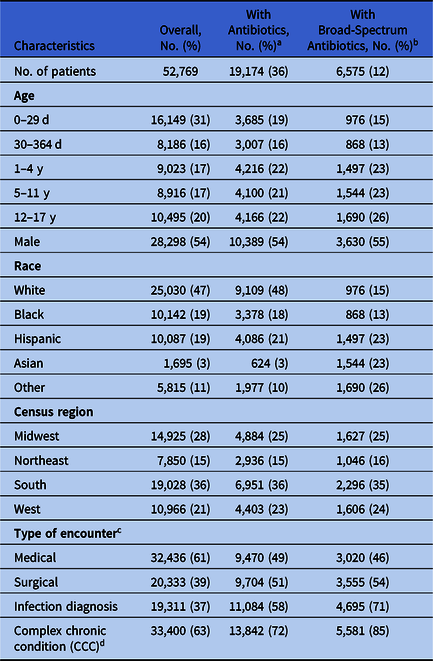
Characteristics of Children Admitted to 1 of 51 Pediatric Health Information System (PHIS) Hospitals on a Study Date, 2017–2018

Note: Parenthetical figures displayed as column percentages.
aAntibiotics include any antibacterial antibiotic administered via the oral, intravenous, or inhalational route.
bBroad-spectrum antibiotics include vancomycin, daptomycin, cefepime, ceftaroline, ceftazidime-avibactam, ceftolozane-tazobactam, piperacillin-tazobactam, carbapenems, fluoroquinolones, and linezolid.
cEach patient encounter day is coded as either medical or surgical based on service line charge data.
dComplex chronic condition was defined per Feudtner et al13 as “any medical condition that can be reasonably expected to last at least 12 months (unless death intervenes) and to involve either several different organ systems or 1 organ system severely enough to require specialty pediatric care and probably some point of hospitalization in a tertiary-care center.”
Statistical analysis
We described sociodemographic and clinical features of the study population, including age, gender, race, payor source, hospitalization day (number of days admitted prior to study day), mechanical ventilation status, presence of a complex chronic condition, and primary reason for hospitalization, as identified using APR-DRGs (version 32). We calculated the overall prevalence of antibiotic use in the study population by dividing the total number of patients who received at least one antibiotic on the study day by the total number of patients hospitalized for nonresearch purposes in a study hospital on that day. We calculated 95% confidence intervals for these proportions. Prevalence of broad-spectrum antibiotic use was calculated similarly. Prevalence of overall and broad-spectrum antibiotic use was also stratified and compared among seasons (spring, summer, fall, winter), clinical service lines (medical/surgical), unit of hospitalization (NICU, PICU, all other units/wards), and census region. In secondary analyses, we assessed antibiotic use in the subset of hospitals with cardiac ICU patients within the PICU as well as the subset of hospitals with hematology-oncology units within the other units/wards encounters. We also assessed the correlation between the prevalence of overall and broad-spectrum antibiotic use and hospital median CMI. As a sensitivity analysis, we repeated our assessments after exclusion of healthy newborns given their unique indication for hospitalization. The most commonly used antibiotics were also identified. If a child received >1 antibiotic on the study date, each antibiotic used was considered separately. The most common antibiotic combinations were summarized and ranked. Categorical variables are expressed as proportions and were compared using χ2 analysis. Analyses were conducted using Stata version 15.1 software (StataCorp, College Station, TX) or SAS version 9.4 software (SAS Institute, Cary, NC).
Results
Study population
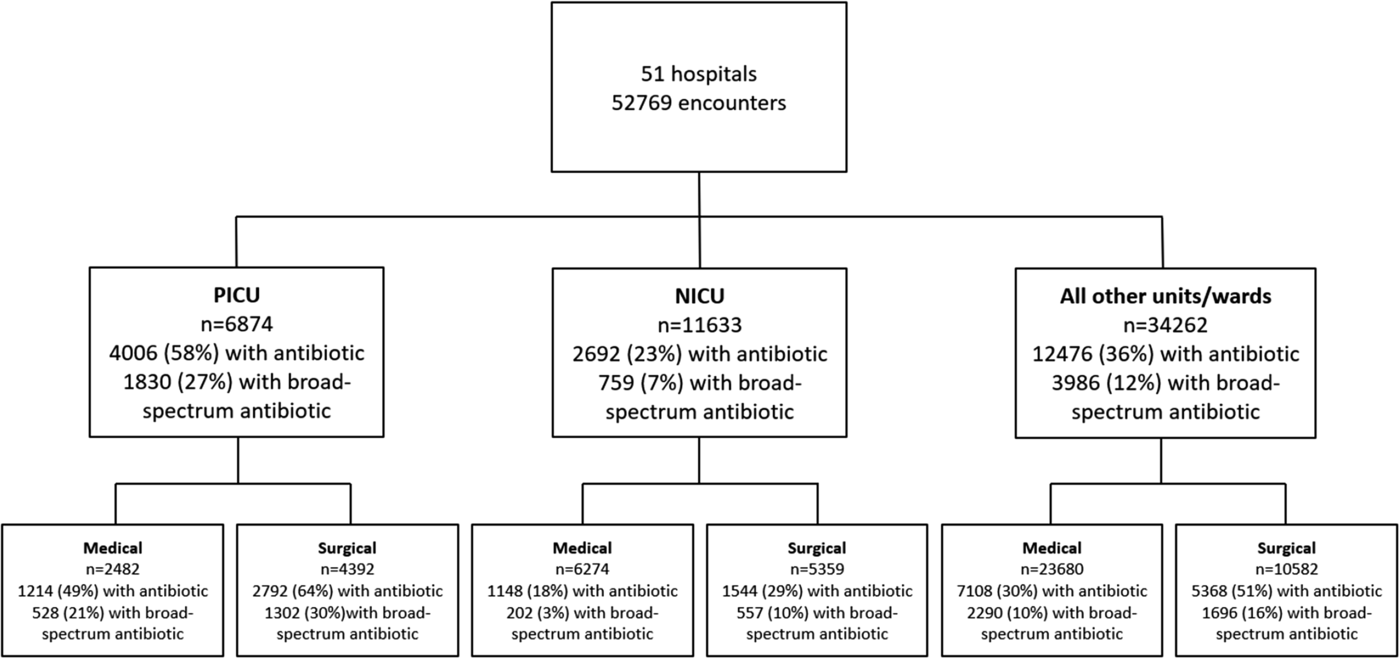
Overall, we observed 52,769 encounters among 48,692 distinct patients across 4 seasons, and 1,850 patients appeared in >1 season. Patient and encounter characteristics are summarized in Table 1 and Fig. 1. Almost one-third of the study population (30.6%) were infants <1 month of age, and children <5 years old accounted for 63.2% of all hospitalized children. Males comprised a slight majority of patients. Approximately 62% of hospitalizations were attributed to a medical service line, and 63.3% had complex medical conditions.
Flow diagram describing number and distribution of inpatient encounters in 51 Pediatric Health Information System (PHIS) hospitals on a study date, 2017–2018, by clinical unit and service line.

Prevalence of antibiotic use
Overall, 36.3% of hospitalized children received antibiotics on the day of the study, 12.5% received at least one broad-spectrum antibiotic (Table 1), and 14.6% received 2 or more antibiotics. Of the antibiotics administered, 71% were delivered intravenously, 27.7% were given orally, and 1.3% were inhaled. Children >1 month of age comprised 30.6% of the study population but only 19.2% and 14.8% of those receiving any or broad-spectrum antibiotics, respectively. Children with reported white race represented 47.4% of the study population but accounted for only 14.8% of the patients receiving broad-spectrum antibiotics, whereas Asian children represented 3.2% of the study population but accounted for 23.5% of those receiving broad-spectrum antibiotics. Patients with a complex chronic condition accounted for 63.3% of hospitalized children and represented 72.2% of children receiving any antibiotic and 84.9% of children who received broad-spectrum antibiotics. One-third of encounters (36.6%) were assigned an infection diagnostic code at discharge, indicating that an infection was present upon admission or was diagnosed at some point during the hospitalization. This proportion rose to 57.8% among those receiving any antibiotic and to 71.4% among those receiving a broad-spectrum antibiotic. One-quarter of all medical encounters (26.7%) were assigned an infection diagnostic code, which included 57.7% of medical patients receiving any antibiotic and 65.5% of those receiving a broad-spectrum antibiotic. More than half of surgical encounters (52.4%) included an infection diagnostic code, which included 57.9% of surgical patients receiving any antibiotic and 76.4% of those receiving a broad-spectrum antibiotic. After exclusion of healthy newborns from the analysis (n = 1,559, 2.95% of hospitalizations), there was little change in the prevalence of overall and broad-spectrum inpatient antibiotic use (Supplementary Table 2 online).
Variability in inpatient antibiotic use
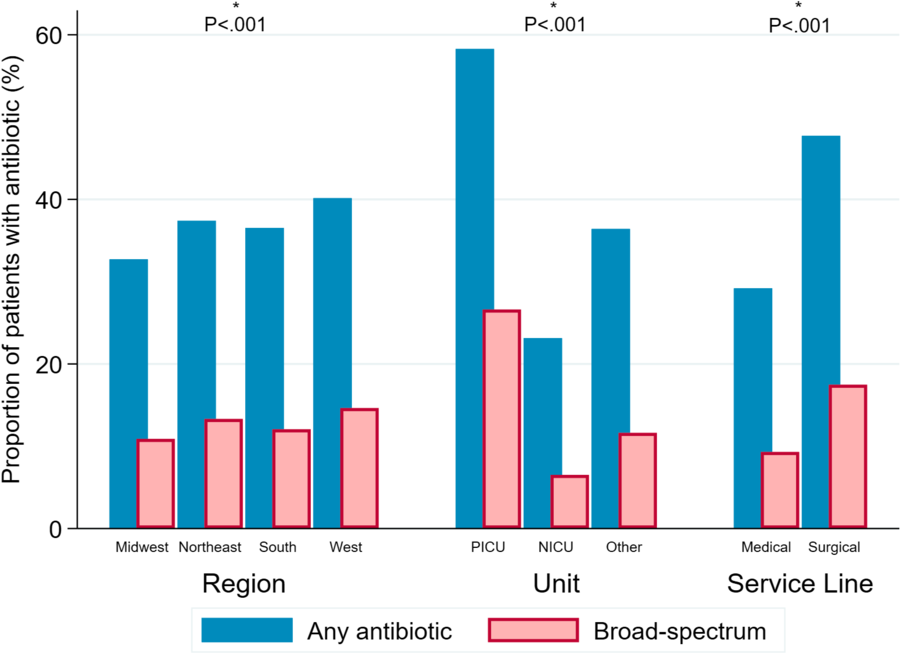
Prevalence in inpatient antibiotic use varied little by season (Supplementary Table 3 online), but significant variation was observed by service line, unit, and geographic region (Fig. 2). Overall prevalence of antibiotic use and prevalence of broad-spectrum antibiotic use was higher among surgical patients (47.7% and 17.5%, respectively) than medical patients (29.2% and 9.3%, respectively; P < .001). Similarly, patients in the PICU had a higher prevalence of any antibiotic (58.3%) or broad-spectrum (26.2%) antibiotic use than patients in the NICU (23.1% and 6.5%, respectively) or other units/wards (36.4% and 11.6%, respectively; P < .001). In the 13 hospitals with designated hematology-oncology units, 56.3% of patients in these units received an antibiotic, and 31.1% received a broad-spectrum antibiotic. By census region, overall and broad-spectrum antibiotic use was most prevalent in hospitals located in the West region (40.2% and 14.6%, respectively) than in other regions, with the Midwest region exhibiting the lowest prevalence (32.7% and 10.9%; P < .001 for both overall and broad-spectrum variation in antibiotic use by region).
Distribution of overall and broad-spectrum antibiotic use among children admitted to a Pediatric Health Information System (PHIS) hospital on a study date, 2017–2018, by US census region, clinical unit, and service line. Blue represents overall antibiotic use is represented. Red represents broad-spectrum antibiotic use. Asterisks (*) indicate significant variation in prevalence among groups.

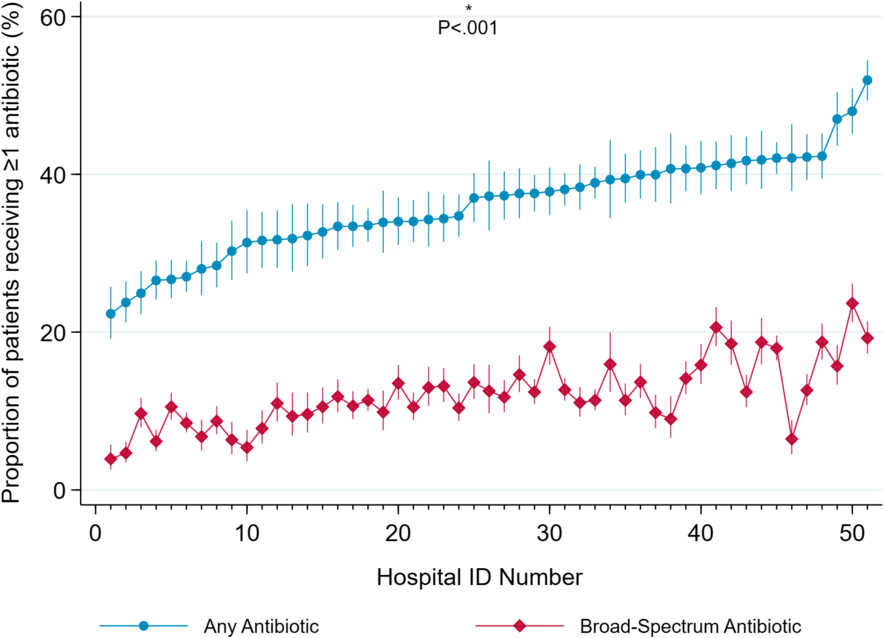
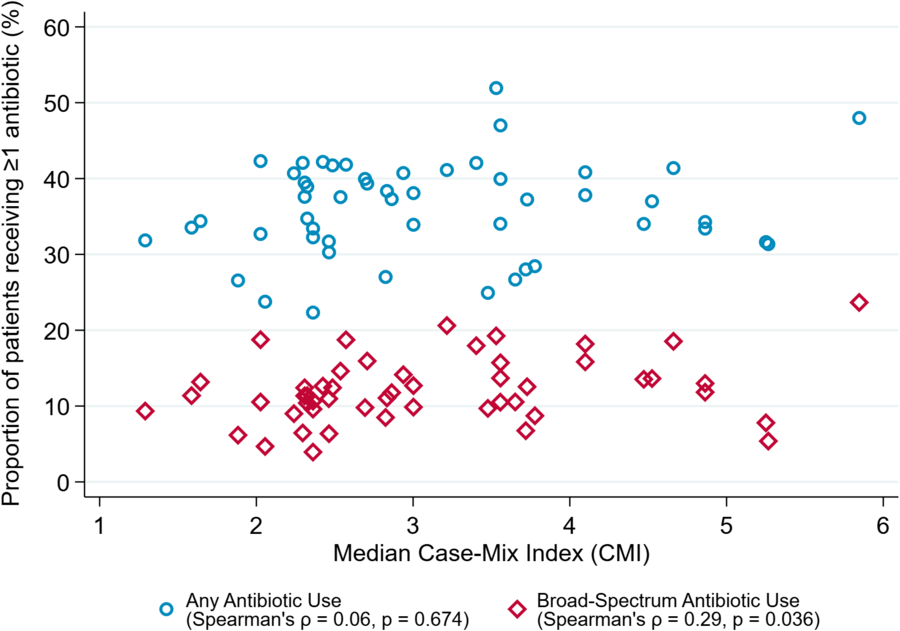
Prevalence of overall inpatient antibiotic use and broad-spectrum antibiotic use also varied by hospital, from a low of 22.3% to a high of 51.9% for overall and from 3.9% to 23.7% for broad-spectrum antibiotic use (P < .001) (Fig. 3). Importantly, we did not detect a statistically significant relationship between median CMI (a surrogate for clinical complexity of cases seen at each hospital) and overall antibiotic use prevalence (Spearman ρ = 0.06; P = .674). We detected only a weak (Spearman ρ = 0.29), although statistically significant (P = .036), relationship between median CMI and broad-spectrum antibiotic use (Fig. 4).
Prevalence of overall and broad-spectrum antibiotic use by hospital among US children’s hospitals on a study date, 2017–2018. Diamonds represent prevalence of antibiotic use. Vertical lines represent 95% confidence intervals. Blue represents overall antibiotic use, and red represents broad-spectrum antibiotic use. Asterisk (*) indicates significant variation in prevalence among hospitals.

Correlation between prevalence of antibiotic use and median hospital case-mix index (CMI). CMI is calculated using all patient-refined diagnosis-related group (AP-DRG) categories and severity levels. A higher CMI indicates a higher level of clinical severity. Blue circles represent prevalence of any antibiotic. Red circles represent prevalence of broad-spectrum antibiotic use.

Most commonly used antibiotics in children’s hospitals
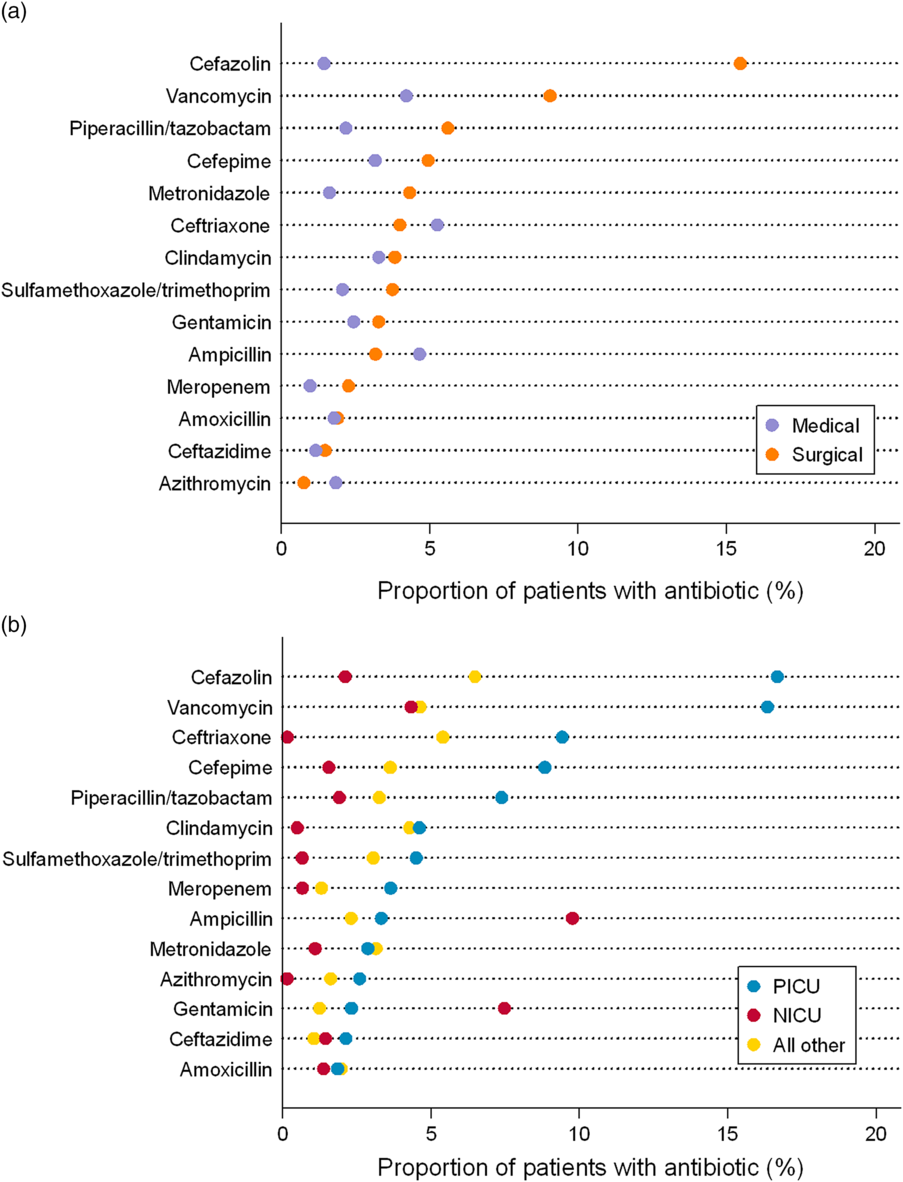
The prevalence of the most commonly used antibiotics among all patients, including healthy newborns, according to clinical service line and inpatient unit, are displayed in Fig. 5 and are listed in Supplementary Table 4 (online). Ceftriaxone and ampicillin were most commonly used among medical encounters, and cefazolin and vancomycin were most commonly used in surgical encounters. The most frequently used antibiotics in the NICU were ampicillin and gentamicin. Those most frequently used in the PICU were cefazolin and vancomycin. In other units, cefazolin and ceftriaxone were used most frequently. The most common antibiotic combinations were ampicillin/gentamicin (9.7% of patients who received ≥ 2 antibiotics), cefepime/vancomycin (4.4%), and piperacillin/tazobactam/vancomycin (3.9%). There was little variability in the most common combinations of antibiotics by encounter type (Supplementary Table 5 online).
Most frequently used antibiotics among Pediatric Health Information System (PHIS) hospitals, 2017–2018 by service line (A), and by clinical unit (B). Purple dots represent medical use, and orange dots represent surgical use. Blue dots represent use in a pediatric intensive care unit (PICU). Red dots represent use in a neotatal intensive care unit (NICU). Yellow dots represent use in all other units and wards.

Discussion
We found that inpatient antibiotic use is common and highly variable among children admitted to freestanding US children’s hospitals and observed variability in the prevalence of antibiotic use by hospital service line and inpatient unit, with highest overall and broad-spectrum antibiotic use in surgical services and in the PICU. Although there was minimal variability in antibiotic use among seasons, antibiotic use prevalence varied by census region, with lowest use in the Midwest and highest use in the West. Previous studies have assessed regional differences in antibiotic prescribing in outpatient pediatric settings, but our study characterizes these differences in the inpatient setting. Importantly, although considerable variation in antibiotic use was observed across hospitals, this variability was not fully explained by patients’ case-mix differences.
The overall prevalence of antibiotic use among hospitalized children in 2017–2018 in our study was 36.3%, higher than the prevalence reported among children (30.7%) in a 2011 study of inpatient use of antibiotics among both children and adults hospitalized in the United States. Reference Magill, Edwards and Beldavs11 Overrepresentation of adult patients relative to children in the previous study may partially explain this apparent discrepancy. Nevertheless, our assessment focused exclusively on children, assessed antibiotic use in single-day time points across all seasons in a 1-year period, and our findings demonstrate that the prevalence of inpatient antibiotic use remained relatively consistent throughout the year. In the 2011 study, the most commonly used antibiotic in the inpatient setting was vancomycin. In contrast, the most commonly used antibiotic in hospitalized children in our study was cefazolin, an antibiotic commonly used for surgical prophylaxis. A recent cross-sectional study reported that nearly one-third (32.9%) of European children’s hospital inpatients received an antibiotic for prophylactic use (73.4% for medical diseases and 26.6% for surgical diseases). Reference Hufnagel, Versporten and Bielicki16 Another study previously assessed antibiotic use in children admitted to hospitals participating in PHIS in 2008, before widespread implementation of inpatient antibiotic stewardship initiatives, and reported that ~60% of hospitalized children received antibiotics at some point during their hospital stay as well as similar regional variability to that observed in our current study. Reference Gerber, Newland and Coffin15 Differences in study design and measurement approaches likely account for some of the differences between the results of that study and our observed prevalence of 36.6%; our cross-sectional study focused on a single point-in-time assessment.
The lack of correlation between CMI and the prevalence of overall antibiotic use suggests that other patient-, provider- or hospital-associated factors may be contributing to unwarranted variability in inpatient antibiotic use. A retrospective study of 2010–2014 data revealed that antibiotic use was higher in PICUs than other wards and that use varied significantly across PICUs, indicating that the PICU could be a good target for antimicrobial stewardship activities. Reference Brogan, Thurm and Hersh17 Additional studies are needed to identify specific drivers of variability and to optimize approaches to antibiotic stewardship activities. Future studies are particularly important because benchmarking appropriate inpatient antibiotic use and developing methods for objective interhospital comparison have become important priorities among hospitals, professional societies, and regulatory bodies. Reference Yu, Moisan and Tartof18
Our study has important strengths including detailed characterization of inpatient services provided to hospitalized children with a broad range of medical and surgical conditions and a large sample size with representation of many large freestanding children’s hospitals in the United States. Unlike studies that focus on information based on written or electronic prescriptions or pharmacy fills to characterize antibiotic use, a distinct advantage of the current study relates to the source of antibiotic use information, extracted from charges related to antibiotics administered in the inpatient setting, which captures both the providers’ preference and actual antibiotic receipt rather than prescription.
Our study has several limitations. The specific indications for antibiotic use, and whether they were used for treatment or prophylaxis, were not available for the study. Although other studies have conducted selected chart reviews to try to obtain this information, we used the primary reason for hospitalization as adjudicated based on discharge diagnoses and procedures through the standardized diagnosis-related group adjudication process. Without more specific diagnostic information, we were unable to assess the appropriateness of antibiotic use as other studies have done using national prescribing guidelines. Reference Fleming-Dutra, Hersh and Shapiro19 The cross-sectional nature of our assessment precluded a more detailed characterization of the magnitude and duration of antibiotic exposure among hospitalized children. Our cross-sectional approach may lead to underrepresentation of antibiotic use of very short duration. Additionally, our prevalence figures cannot be directly compared to other measurements, such as days of treatment (DOT) per 1,000 patient days used in other studies. Furthermore, by reporting data only from a single 1-year period, it is unclear whether our findings reflect underlying trends in antibiotic use following efforts to improve antibiotic use through increased implementation of ASPs. Future assessments including multiple years would allow characterization of trends in antibiotic use in children’s hospitals and may be used to assess the impact of specific policies or interventions. Individual hospital ASP data, such as whether a program exists and when it was established, were not readily available for our study. These factors could explain some of the variability in antibiotic use across hospitals. Our findings are based on data from large freestanding children’s hospitals participating in a collaborative network of hospitals; therefore, caution is warranted when attempting to extrapolate our findings to other inpatient pediatric settings. Previous research has shown differences in antibiotic use among children’s and nonchildren’s hospitals. Reference Tribble, Ross and Gerber20
In conclusion, antibiotic use among children hospitalized in the United States is common and varies substantially according to hospital, clinical unit and service type, and census region. Variability seen among individual hospitals does not appear to be explained by the clinical complexity of their patients. Additional studies should identify the main drivers of inpatient antibiotic use variability to inform antibiotic stewardship activities.
Supplementary material
To view supplementary material for this article, please visit https://doi.org/10.1017/ice.2019.373
Acknowledgments
None.
Financial support
Hannah G. Griffith’s participation in this research was funded by Vanderbilt University.
Conflicts of interest
Carlos G. Grijalva has received consulting fees from Pfizer, Merck, and Sanofi, and has received research support from Sanofi, the Agency for Healthcare Research and Quality, the National Institutes of Health, the US Food and Drug Administration, and the Centers for Disease Control and Prevention, outside the submitted work. Leigh M. Howard has received research support from Pfizer and the National Institutes of Health, outside the submitted work. Ritu Banerjee has received research support from Biomerieux, Roche, and BioFire, outside the submitted work. Derek J. Williams has received in kind support from Biomerieux, outside the submitted work. All other authors report no potential conflicts.