Introduction
A diagnostic criterion for dementia is evidence that cognitive functioning has declined from a previous, higher level. The Informant Questionnaire on Cognitive Decline in the Elderly (IQCODE) is a well-established and widely used informant-based screening tool designed to estimate cognitive decline from a previous level of functioning (Jorm et al., Reference Jorm, Scott and Jacomb1989; Jorm, Reference Jorm2004). Its administration is recommended to supplement the patient's clinical findings and especially in cases where direct patient testing is difficult (e.g. comprehension difficulties) and for patients with very low levels of education (Fuh et al., Reference Fuh1995; Senanarong et al., Reference Senanarong2001; Perroco et al., Reference Perroco2009). The IQCODE exists in two forms – a longer 26-item and a shorter 16-item version – and requires the informant to rate the patient's cognitive decline from a previous level over the last 10 years on a five-point scale from “much improved” (1) to “much worse” (5), where a score of 3 represents a “no change” judgment. Its validity has been established in longitudinal studies where mean IQCODE scores were significantly correlated with cognitive performance on a number of different neuropsychological tasks (for an overview, see Jorm, Reference Jorm2004). Since its inception, the IQCODE has become one of the most frequently used and best-studied informant-based screening tools and has been translated into several different languages including Dutch, French, Spanish, Italian, Thai and Chinese (de Jonghe et al., Reference de Jonghe, Schmand, Ooms and Ribbe1997; Law and Wolfson, Reference Law and Wolfson1995; Del-Ser et al., Reference Del-Ser, Morales, Barquero, Canton and Bermejo1997; Isella et al., Reference Isella, Villa, Frattola and Appollonio2002; Senanarong et al., Reference Senanarong2001; Fuh et al., Reference Fuh1995, respectively).
IQCODE informants are typically required to base their judgments of changes in the patient's functioning on a 10-year time interval, although a five-year (Barba et al., Reference Barba, Martinez-Espinosa, Rodriguez-Garcia, Pondal, Vivancos and Del-Ser2000; Pisani et al., Reference Pisani, Inouye, McNicoll and Redlich2003) or variable (Patel et al., Reference Patel, Goldberg and Moss1993) time interval has been used to address different questions. However, in dementia screening, judgments of changes in a patient's functioning over a 10-year time interval are often confounded by multiple changes associated with retirement (Calero-Garcia et al., Reference Calero-Garcia, Navarro-Gonzales and Munoz-Manzano2007). Additionally, it may be difficult for informants to remember patients’ cognitive performance over this long time period (Coughlin, Reference Coughlin1990). Given these potential confounds, and advancements in the early detection and treatment of dementia, a shorter time-frame for informant judgments appears more appropriate for the screening of dementia symptoms with the IQCODE.
The goals of the present study were to determine the diagnostic discriminability of the German 16-item version of the IQCODE with a two-year observation interval to discriminate between healthy older individuals and those with cognitive changes impacting on daily functioning, i.e. mild cognitive impairment (MCI) or a probable Alzheimer's disease (AD) patients. A two-year-observation interval was selected for the reasons outlined above, and corresponded to the test-retest interval of the healthy participants in the present study, all of whom were members of the longitudinal BASEL study (Basel Study on the ELderly; Monsch et al., Reference Monsch2000; see also Shultz et al., Reference Shultz, Aman and Rojahn1998). Since, to our knowledge, no normative data on the German IQCODE exist, we collected IQCODE data from informants of healthy older participants. These normative data allowed us to quantify the judgments of significant others (spouses, carers, etc) regarding changes in healthy older individuals’ cognitive functioning and thus provided us with a baseline for interpreting rated changes in MCI and AD patients’ cognitive functioning. To ensure that the earliest possible stages of cognitive changes were studied, we only included individuals with MMSE (Mini-mental Status Examination; Folstein et al., Reference Folstein, Folstein and McHugh1975) scores ≥ 24/30. We aimed to determine optimal cut-off scores to discriminate healthy individuals from both patient groups, and to determine which cut-off scores best differentiated MCI and AD patients from the healthy older individuals. Finally, we also explored whether it was possible to significantly reduce the number of IQCODE items while retaining its diagnostic discriminability in an attempt to develop a more economical dementia screening tool.
Methods
Participants and procedures
Healthy aged participants
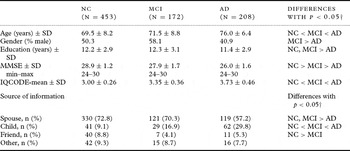
As part of the BASEL study (Basel Study on the ELderly; Monsch et al., Reference Monsch2000), a longitudinal study assessing cognitive performance in older individuals, a large number of healthy individuals (NC) were neuropsychologically tested with the Consortium to Establish a Registry on Alzheimer's Disease Neuropsychological Assessment Battery (CERAD-NAB; Morris et al., Reference Morris, Mohs, Rogers, Fillenbaum and Heyman1988; Reference Morris1989; Welsh et al., Reference Welsh1994) and were assessed with a detailed medical history questionnaire. While collecting the informant anamnesis, the accompanying significant other of 453 NC study participants (see Table 1) filled out the German 16-item IQCODE with a two-year time frame. All NC participants fulfilled the following inclusion criteria: they spoke German as their first language; obtained z-scores ≤ −1.96 (2.5th percentile) in no more than one of the 11 CERAD-NAB variables; and were in good general health, i.e. had no current systemic illnesses, no psychiatric problems, no diseases interfering with the administration of neuropsychological tests (e.g. severe hearing or visual deficits), no diseases of the central nervous system (CNS), no diseases or events during life which could have negatively impacted CNS activity; and did not suffer from depression according to the Diagnostic and Statistical Manual of Mental Disorders (American Psychiatric Association, 1994) as assessed with a standardized questionnaire (Kühner, Reference Kühner1997). See Table 1 for demographic characteristics of the NC sample.
Demographic characteristics of healthy mature individuals (NC), patients with mild cognitive impairment (MCI), and patients with probable Alzheimer's disease (AD)

MMSE = Mini-mental State Examination (Folstein et al., Reference Folstein, Folstein and McHugh1975)
† Comparisons using t test (continuous variables) or χ2 (discrete variables).
The project was approved by the local Ethics Committee, and written informed consent was obtained from all participants.
Patients with MCI and very mild to mild dementia
Data from two groups of patients from the Memory Clinic of the University Hospital Basel were available for analysis: 215 individuals with a diagnosis of MCI according to the Winblad et al. criteria (Reference Winblad2004) and 267 patients with a diagnosis of probable AD according to the criteria outlined by the National Institute for Neurological and Communicative Disorders and Stroke and the Alzheimer's Disease and Related Disorders Association (McKhann et al., Reference McKhann, Drachman, Folstein, Katzman, Price and Stadlan1984) and DSM-IV criteria for AD (American Psychiatric Association, 1994). MCI and AD patients had undergone extensive standardized neuropsychological testing and medical examinations including neurological, neuroimaging and laboratory tests as part of their routine clinical workup (Monsch et al., Reference Monsch1995). To determine the ability of the IQCODE to correctly classify cognitively impaired individuals in the early stage of the disease process, we only included data from patients with MMSE scores ≥ 24/30, i.e. in the same range as the NC participants. The IQCODE (16 items, two-year observation period) was completed by the informants while the respective patient was neuropsychologically tested. Since the NC questionnaires had no missing items, only the IQCODE data from 172 MCI and 208 AD patients with completely filled in questionnaires were included in the analyses.
A comparison of complete vs. incomplete IQCODEs in the MCI group revealed that only Item 1 received a lower mean score in individuals with complete compared to incomplete questionnaires (3.78 vs. 3.87; (t [209] = −2.492, p = .013 (two-tailed)). In the AD group, there was a difference in overall mean IQCODE score (3.73 vs. 3.92; t [265] = −2.73, p = 0.007) as well as lower mean scores on items 1 (3.78 vs. 4.05; t [263] = −2.539, p = 0.012), 2 (4.10 vs. 4.33; t [263] = −2.017, p = 0.045), 5 (3.64 vs. 3.91; t [263] = −2.696, p = 0.007), 6 (3.82 vs. 4.07; t [263] = −2.273, p = 0.024), 7 (4.06 vs. 4.36; t [261] = −2.755, p = 0.006), and 12 (3.61 vs. 3.93; t [262] = −2.919, p = 0.039) for patients with complete compared to incomplete questionnaires. The IQCODE mean was calculated according to standard procedures by dividing the sum of all items by the number of completed items (cf. Jorm Reference Jorm2004). Thus, the estimated cognitive decline was greater for patients with missing items on the IQCODE in both patient groups. Importantly, the demographic status of patients with complete vs. incomplete questionnaires did not differ in both groups. Because of our goal to detect cognitive decline as early as possible, we included only complete questionnaires in our study.
The demographic characteristics and information regarding the informants of the final patient groups are listed in Table 1. Of note are the mean education levels of the final participant groups: NC sample = 12.2 (2.9) years; MCI sample = 12.3 (3.1); AD sample = 11.4 (2.9).
Statistical analyses
Following the descriptive statistics on the mean IQCODE score, we calculated binary logistic regressions and receiver operating characteristic (ROC) curves to determine the ability of the IQCODE to discriminate between (a) the NC and entire patient group (i.e. MCI and AD); (b) the NC and MCI groups; and (c) the NC and AD groups. The cut-off values in the logistic regression were determined by the proportions of the respective group sizes and were 0.46 (NC vs. all patients), 0.28 (NC vs. MCI), and 0.32 (NC vs. AD). The confidence intervals for sensitivities and specificities were calculated following the exact method described in Clopper and Pearson (Reference Clopper and Pearson1934).
The most common and practical IQCODE scoring method in the clinical setting is the simple mean score. We aimed to determine how well the simple average of IQCODE items discriminated healthy controls from patients in the earliest stages of a degenerative illness compared to a statistically more sophisticated scoring system in which IQCODE items were weighted according to their diagnostic relevance. We therefore performed a binary logistic regression analysis of all 16 items and compared the diagnostic discriminability of this model with that of the simple mean. Finally, a binary logistic regression model (backward stepwise elimination using the WALD statistic, exclusion criterion: p = 0.10; inclusion criterion: p = 0.05) was used to identify a subset of items which optimally differentiated NC individuals from patients. Thus, this final model included only significant predictors.
The areas under the ROC curves of the 16-item and shorter IQCODE versions were compared using Hanley and McNeil's (Reference Hanley and McNeil1983) method to test for differences in the correct classification of individuals. We computed 1000 bootstrap replicates (Efron, Reference Efron1979) to estimate the variability of the cut-off scores.
All statistical analyses were conducted with SPSS 15.0 (SPSS Inc., Chicago, IL) and the freely available software package R (www.cran.r-project.org).
Results
Using the German 16-item version of the IQCODE, significant others rated NC participants on average as having displayed no changes in cognitive functioning over the two-year observation period (IQCODE: mean 3.00, SD 0.26). The mean IQCODE scores were 3.56 (SD 0.46) for both patient groups combined, 3.35 (SD 0.36) for the MCI group and 3.73 (SD 0.46) for the AD patients. Thus, overall, cognitive changes in the preceding two years were rated as more negative in the MCI group than the NC group (t [240.12] = −11.81, p < 0.0001 (two-tailed) and more negative in the AD than the MCI patients (t [376.47] = −8.89, p < 0.0001 (two-tailed)). Interestingly, 68% of NC participants were rated as having exhibited no changes or an improvement in functioning (IQCODE mean ≤ 3.00) compared to only 15% of MCI and 2.4% of AD patients.
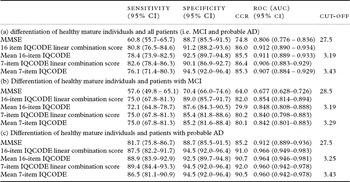
The results of the binary logistic regression analyses aiming to discriminate NC from patient groups are shown in Table 2(a–c). This table also lists values for the areas under the ROC curves constructed using mean IQCODE scores, and the corresponding optimal cut-off scores. The correct classification rates (CCRs) of the mean 16-item IQCODE were 85.5% for the discrimination of NC from all patients, 79.9% for the discrimination of NC and MCI, and 90.7% for NC vs. AD. An analysis of the areas under the ROC curves following Hanley and McNeil (Reference Hanley and McNeil1983) demonstrated that the mean IQCODE (16 items) was superior to the MMSE in its ability to discriminate NC from all patients (z = 5.82; p < 0.0001), NC from MCI (z = 5.36; p < 0.0001) and NC from AD patients (z = 3.48, p < 0.001). Thus, based on the predetermined equal weighting of sensitivity and specificity, bootstrap resampling generated an optimal cut-off score of 3.19 to differentiate NC from all patients. This cut-off score was reached by 67% of the bootstrap samples, whereas 33% resulted in the next higher cut-off score of 3.25.
Diagnostic discriminability of the Mini-mental State Examination, 16-item and 7-item IQCODE as estimated by the results of a binary logistic regression analysis (sensitivity, specificity, correct classification rate), areas under receiver operating characteristic curves, as well as corresponding cut-off-scores

IQCODE = Informant Questionnaire on Cognitive Decline in the Elderly; MCI = mild cognitive impairment; AD = Alzheimer's disease; CI = Confidence interval; CCR = correct classification rate; ROC = receiver operating characteristic; AUC = area under curve; MMSE = Mini-mental State Examination
The cut-off score of 3.19 also optimally differentiated NC from MCI individuals (88% of bootstrap samples), whereas 10% of bootstrap samples resulted in the next higher cut off score of 3.25, and 2% resulted in the next smaller cut-off score of 3.13. In the differentiation of NC from AD, 44% of bootstrap samples resulted in an optimal cut-off score of 3.25, while 31% of bootstrap samples generated the next higher score (3.31), 21% the next lower score (3.19) and 3% the score of 3.38. A comparison of the areas under the ROC curves demonstrated that the linear combination of 16 items differentiated groups as well as the mean of the 16 items (NC vs. all patients: z = 0.10, p = 0.92; NC vs. MCI: z = 0.43, p = 0.67; NC vs. AD: z = 0.36, p = 0.72).
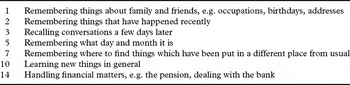
To explore the possibility of generating a shorter version of the IQCODE with high diagnostic discriminability, we performed a binary logistic regression with backward stepwise elimination. This analysis resulted in an 8-item version (IQCODE items 1, 2, 3, 4, 5, 7, 10 and 14) which optimally distinguished NC individuals from all patients. Since the negative weighting of Item 4 in the regression equation resulted in a rating of “worsening” adding positively to the mean, this item was also eliminated, such that only items 1, 2, 3, 5, 7, 10 and 14 remained in the final model (see Table 3). The following equation best discriminated the groups of NC and all patients: −20.051 + (1.135*IQ1) + (0.682*IQ2) + (1.143*IQ3) + (0.694*IQ5) + (0.713*IQ7) + (0.616*IQ10) + (1.085*IQ14) (where IQx = IQCODE-item Nr. x). The following equation describes the optimal differentiation of NC from MCI with these items: −18.589 + (1.175*IQ1) + (0.829*IQ2) + (0.828*IQ3) + (0.432*IQ5) + (0.822*IQ7) + (0.398*IQ10) + (0.999*IQ14). Finally, the optimal differentiation of NC from AD was achieved with the following equation: −26.809 + (1.16*IQ1) + (0.398*IQ2) + (1.766*IQ3) + (1.65*IQ5) + (0.418*IQ7) + (1.063*IQ10) + (1.393*IQ14). By applying these formulae to participants’ data, CCRs of 86.4% (NC vs. all patients), 80.2% (NC vs. MCI) and 92.0% (NC vs. AD) were reached (see Table 2). Significantly, comparisons of AUCs of the 16-item and 7-item linear combination IQCODE scores demonstrated that both solutions discriminated participant groups equally well (NC vs. all patients: z = 0.82, p = 0.41; NC vs. MCI: z = 0.57, p = 0.57; NC vs. AD: z = 0.42, p = 0.67).
The 7-item IQCODE questions whose diagnostic discriminability equals that of the longer 16-item version

The CCR of the mean 7-item version were 85.3% (NC vs. all patients), 80.1% (NC vs. MCI) and 90.5% (NC vs. AD) (see Table 2). Thus, no change or an improvement in cognitive functioning (IQCODE mean ≤ 3.00) was apparent in 70% of NCs compared to 18% of MCI and 2.4% of AD patients. The quality of these classifications – as judged by an AUC comparison – was comparable to that of the mean 16-item version (NC vs. all patients: z = 0.60, p = 0.55; NC vs. MCI: z = 0.43; p = 0.67; NC vs. AD: z = 0.53; p = 0.60) as well as the linear combination of the 7 IQCODE items (NC vs. all patients: z = 0.06, p = 0.99; NC vs. MCI: z = 0.18; p = 0.86; NC vs. AD: z = 0.72; p = 0.47). The mean of the 7-item IQCODE was also superior to the MMSE in discriminating NC from all patients (z = 5.47; p < 0.0001), NC from MCI (z = 5.13, p < 0.001) and NC from AD (z = 2.59; p < 0.01).
The internal consistencies of both versions of the IQCODE were high (Cronbach's α: IQCODE 16 item = 0.913; IQCODE 7 item = 0.818).
The ideal cut-off scores of the mean 7-item IQCODE version were 3.43 (NC vs. all patients; 61% of bootstrap samples; 39% resulted in the next smaller cut-off of 3.29), 3.29 (NC vs. MCI; 93% of bootstrap samples; 7% resulted in the next higher cut-off of 3.43) and 3.43 (NC vs. AD; 98% of bootstrap samples; 1.7% resulted in the next smaller cut-off of 3.29, 0.3% resulted in the next higher cut-off of 3.57).
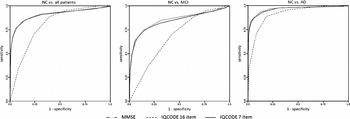
Figure 1 shows the ROC curves of MMSE and mean 16-item and 7-item IQCODE scores.
Comparison of receiver operating characteristic (ROC) curves of MMSE, mean 16-item IQCODE, and mean 7-item IQCODE comparing (a) healthy mature individuals (NC) vs. all patients (MCI and AD); (b) NC vs. MCI; and (c) NC vs. AD.

Discussion
The goal of our study was to determine the diagnostic discriminability of the German short 16-item IQCODE version with a two-year time frame in patients with MCI and probable early AD. We also explored whether the number of IQCODE items could be significantly reduced without compromising its diagnostic discriminability. In general, the IQCODE consistently correctly classified individuals more effectively than the MMSE, although the MMSE demonstrated a surprisingly good performance, especially in the discrimination of NC from early stage AD with its correct classification rate of 85%. However, the present findings demonstrate that the short IQCODE with a two-year time frame has excellent screening properties. Importantly, a logistic regression analysis produced a very short 7-item IQCODE with a diagnostic accuracy as high as the longer version. Interestingly, all of these seven items are also part of the Brazilian 15-item short form of the IQCODE, recently developed by Perroco et al. (Reference Perroco2009) in a study of NC and AD groups (mean MMSE = 27.9 and 19.8, respectively) with low levels of education (mean education level = 5.4 and 4.8, respectively). Moreover, five of our seven items are also represented in the group of the eight best discriminating items of the Brazilian short form. These consistencies suggest that educational level, culture and ethnicity do not necessarily determine the selection of optimally discriminating IQCODE items. However, Senanarong et al. (Reference Senanarong2001) found that three IQCODE items significantly discriminated samples of NC and AD Thai participants with four or less years of education. This difference, which is unlikely to be the result of a single factor, supports our view that absolute cross-cultural compatibility of diagnostic instruments may not be an attainable goal.
Clearly, it will be necessary to replicate the diagnostic performance of the 7-item version when only these items are presented for ratings. For both the short and very short versions, mean IQCODE scores correctly classified individuals as well as linear combinations of individual IQCODE items. This impressive finding signifies that the easily calculated IQCODE mean score need not be replaced by a more complicated scoring system in the clinical setting. Taken together, these results show that compared to NC participants, patients with MCI and an early stage of probable AD appear to show cognitive decline in daily life to such an extent that ratings for all three participant groups significantly differed from one another.
Since the purpose of dementia screening is to detect pathologic cognitive functioning as early as possible, the more stringent cut-off scores which discriminate NC from MCI patients appear appropriate for both versions of the IQCODE. This corresponds to a score of 3.19 for the mean 16-item IQCODE version, and 3.29 for the mean 7-item version. Higher cut-off scores for the discrimination of NC from AD patients have been reported for the 16-item IQCODE version (e.g. Jorm et al., Reference Jorm1996; Del-Ser et al., Reference Del-Ser, Morales, Barquero, Canton and Bermejo1997; Perroco et al., Reference Perroco2009). This difference is most likely due to the inclusion in these previous studies of patients in more advanced stages of the disease process and to longer IQCODE judgment intervals. Because of the increased sensitivity of its combination of items, the cut-off scores for the 7-item version are slightly higher than those for the 16-item version. Thus, further diagnostic examinations are indicated when at least three of the 16 items, and at least two of the seven items, are judged as “a bit worse”.
The version of the IQCODE used in the present study instructed informants to rate target participants’ changes in cognitive functioning over the preceding two years. For dementia screening with the IQCODE, longer observation periods (e.g. 10 years) are typically used (e.g. de Jonghe et al., Reference de Jonghe, Schmand, Ooms and Ribbe1997; Del-Ser et al., Reference Del-Ser, Morales, Barquero, Canton and Bermejo1997; Lim et al., Reference Lim, Lim, Anthony, Yeo and Sahadevan2003). However, since individuals in their early seventies are typically referred to a memory clinic (Rosness et al., Reference Rosness, Ulstein and Engedal2009; Frisoni et al., Reference Frisoni2009), and since retirement usually takes place around the age of 65 in German-speaking countries, the common 10-year time frame requires informants to compare patients’ current cognitive performance during retirement with cognitive performance during the last few years of occupational activity. These different phases of life have different cognitive demands (Powell, Reference Powell1994; Calero-Garcia et al., Reference Calero-Garcia, Navarro-Gonzales and Munoz-Manzano2007) which may confound IQCODE ratings, despite its focus on non-occupational aspects of daily life. Moreover, informants may have difficulty remembering patients’ performance over the relatively long observation period of 10 years (see, for example, Coughlin, Reference Coughlin1990). The present choice of a two-year time frame circumvents both of these potential confounders without diminishing the IQCODE's diagnostic discriminability compared to versions with longer observation periods mentioned above.
Other potential confounders of IQCODE ratings exist. For example, it may be necessary to correct IQCODE scores for the influence of a patient's demographic status, as is commonly done for many neuropsychological tests (Berres et al., Reference Berres, Bläsi, Zehnder and Monsch2008). Without going into the details of the results, we conducted a thorough set of such analyses for the mean 16-item IQCODE and found that demographically adjusted mean IQCODE scores did not perform significantly better in correct classification than the unadjusted measures presented above. Fuh et al. (Reference Fuh1995) and Isella et al. (Reference Isella, Villa, Russo, Regazzoni, Ferrarese and Appollonio2006) also found no effect of education in their studies. Moreover, in his review of the variables influencing IQCODE results, Jorm (Reference Jorm2004) concluded that the effect of education was “negligible”. Thus, it is unlikely that the older age of the MCI and AD patients compared to the NC group significantly influenced our results. These negative findings may reflect the informants’ unconscious subjective adjustment of their expectations concerning the cognitive abilities of the patient, e.g. their assumption that “it is normal to get slower when getting older”. Thus, the use of raw IQCODE scores represents a simple and still very reliable scoring method in the clinical setting. While patient's demographic characteristics were not associated with IQCODE ratings, future studies will determine whether factors related to the informant should be used to adjust IQCODE scores. For example, informant anxiety or depression may influence judgments (Jorm et al., Reference Jorm1996), while the influence of social considerations on IQCODE ratings – for example, whether the informant's goal is to obtain more caregiver support – remain inconclusive (Del-Ser et al., Reference Del-Ser, Morales, Barquero, Canton and Bermejo1997; Lim et al., Reference Lim, Lim, Anthony, Yeo and Sahadevan2003). Other informant-related factors appear less important, as reviewed by Jorm (Reference Jorm2004): “IQCODE-scores are not influenced by length or type of relationship (Fuh et al., Reference Fuh1995) or by age and education of the informant (Jorm et al., Reference Jorm1996)” (p. 286). Thus, the potential influence of informant-associated factors on IQCODE judgments requires further investigation.
To date, one major focus of studies using the IQCODE has been differentiating healthy individuals from those with a possible dementia syndrome. The present study shows that the IQCODE also effectively differentiates MCI from healthy performance, consistent with previous reports (Isella et al., Reference Isella, Villa, Frattola and Appollonio2002; Reference Isella, Villa, Russo, Regazzoni, Ferrarese and Appollonio2006). While the present NC-MCI cut-off scores require confirmation in a longitudinal study comparing the baseline performance of NC and MCI patients who convert to AD, they suggest that the IQCODE is an effective screening tool for individuals in the very early stages of the disease process. Such screening allows for further diagnostic examinations and implementation of therapies early in the course of the disease, when they are expected to have their maximal benefit. Considering the pressing need for new AD therapies, the earliest possible diagnosis of this syndrome in the MCI stage is of central importance as it identifies individuals for testing new therapeutic interventions.
One caveat of the present study is the inclusion criterion that patients’ IQCODES were completely filled in, and thus, strictly speaking, the reported results can only be applied to complete questionnaires. Upon comparing complete and incomplete questionnaires, we found that negative cognitive changes were rated as more pronounced in some items in patients (especially those with AD) with incomplete IQCODEs. Since our goal was to detect cognitive change as early as possible, we decided to use only complete cases in the search for a subset of best differentiating items. Nevertheless, we performed an additional set of analyses comparing models of complete with combined complete and incomplete data, where missing values were estimated with multiple imputation methods (which assume that missing data can be modeled as random, an assumption not met in our data). These models produced essentially the same results as those based on complete questionnaires. We recognize that complete questionnaires may be difficult to obtain in clinical practice. The common method of calculating the IQCODE mean by dividing the item sum by the number of completed items (Fuh et al., Reference Fuh1995; Perroco et al., Reference Perroco2009), although clinically useful, may underestimate a patient's deterioration in cognitive functioning. Given these problems associated with missing items, it is advisable to ask significant others to fill in the missing items to the best of their knowledge. It remains to be determined whether the short version of the IQCODE is also able to detect early cognitive changes associated with depression and other non-AD causes of dementia such as vascular dementia, Parkinson's disease dementia, and frontotemporal lobar degeneration.
The collection of informant information is necessary whenever factors such as sensory disturbances, severe somatic diseases and reduced compliance (e.g. based on diminished insight) minimize or prohibit the ability to collect direct information while working with the patient (cf. Jorm, Reference Jorm2004). These judgments of changes eliminate the need for a premorbid evaluation and avoid the special challenges inherent in interpreting longitudinal findings which are influenced by learning effects and “test sophistication” (Anastasi, Reference Anastasi1981) during repeated testing. Moreover, the informant-based questionnaire of change circumvents difficulties associated with detecting changes in the test performance of high functioning individuals whose subtle changes can be overlooked when they result in still normal test performance.
Ideally, screening instruments should be sensitive, specific, socially acceptable, inexpensive and brief (Parker and Philp, Reference Parker and Philp2004). In particular, the time expended on data acquisition is becoming an increasingly important factor in many health systems. Primarily because previous informant-based questionnaires on cognitive changes were deemed too time-consuming, Galvin et al. (Reference Galvin2005) developed the 8-item AD8, a brief informant interview to detect dementia. Here we demonstrate that the IQCODE can be reduced from 16 to 7 items with no loss in diagnostic accuracy, thereby obviating the concern expressed by Galvin et al. regarding the length of the IQCODE. Thus, the short 7-item version of the IQCODE with its high diagnostic discriminability provides clinicians with an excellent tool for screening for AD and its MCI prodrome.
Conflict of interest
None.
Description of authors' roles
M. M. Ehrensperger and A. U. Monsch designed the study. M. M. Ehrensperger collected the data, carried out the statistical analyses and was primarily responsible for writing the paper. M. Berres assisted in preparing the statistical design and supervised the statistical analyses. All authors discussed the results and conclusions. K. I. Taylor translated the manuscript.
Acknowledgments
Parts of this paper were presented at the International Conference on Alzheimer's Disease, Chicago, July 2008. We gratefully acknowledge the help and support of all patients and volunteers as well as the staff of the Memory Clinic, Basel, Switzerland. In particular, we thank Ursi Kunze for her support in database management.