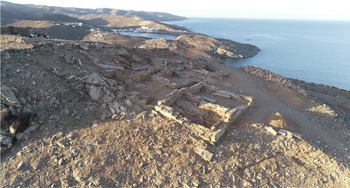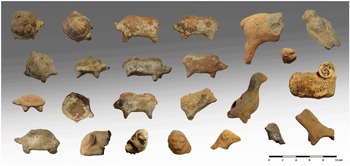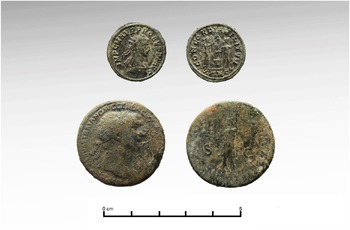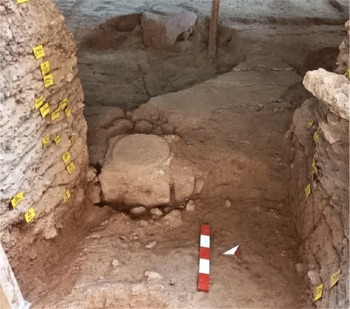


Introduction
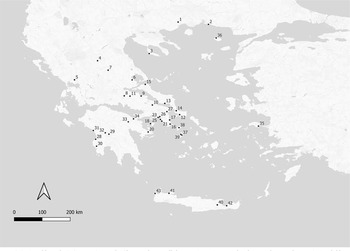
2022–2023 has been a fruitful period for archaeology in Greece (Map 3.1). Collaborative projects have employed cutting-edge technologies and innovative methodologies to explore both terrestrial and underwater landscapes, yielding important results that have significantly enriched our comprehension of various historical periods and regions. In this article, we summarize some of the most important findings that have emerged during this vibrant period. By highlighting these key findings, we aim to provide an overview of the contributions made in expanding the horizons of Greek archaeology.
1. Dikli Tash; 2. Stryme; 3. Fourka Shipwreck; 4. Kallithea; 5. Arta; 6. Magoula Plataniotiki; 7. Palamas; 8. Amphikleia; 9. Mitrou; 10. Eleon; 11. Elateia; 12. Gourimadi; 13. Amyranthos; 14. Styra; 15. Kastri; 16. Thorikos; 17. Koroni; 18. Kolonna; 19. Kallithea; 20. Troezen; 21. Lathouriza; 22. Kerameikos; 23. Neon Phaleron; 24. Hellenikon; 25. Moschato; 26. Athenian Agora; 27. Kotroni; 28. Kyparissia; 29. Marathousa; 30. Pylos; 31. Kleidi Samikou; 32. Mt Lykaion; 33. Nemea; 34. Corinth; 35. Samos; 36. Samothrace; 37. Kythnos; 38. Kea; 39. Vryokastro; 40. Katharo Plateau; 41. Chania; 42. Azoria; 43. Falasarna.

East Macedonia and Thrace
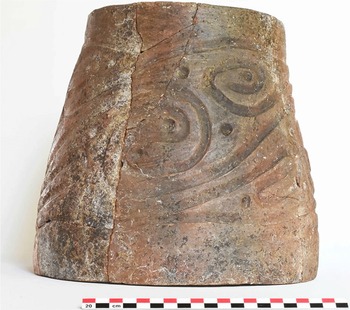
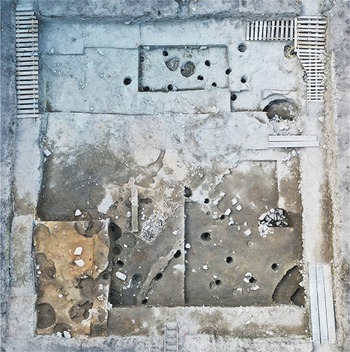
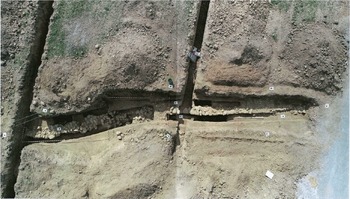
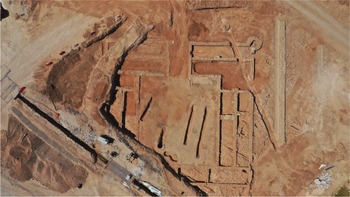
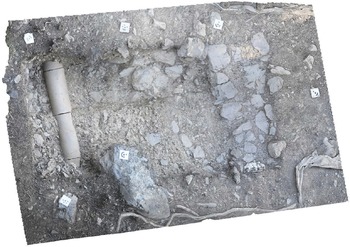
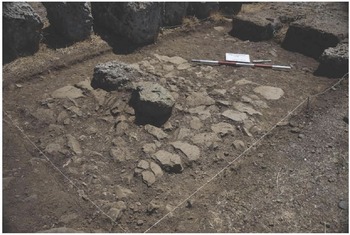
In 2022, Haïdo Koukouli-Chryssanthaki (Ephor Emeritus, Ephorate of Antiquities of Kavala), Dimitra Malamidou (Ephorate of Antiquities of Serres), Pascal Darcque (Centre national de la recherche scientifique (CNRS) – Université Paris), and Zoï Tsirtsoni (CNRS – Université Paris) initiated a new synergasia excavation campaign with the EfA at Dikili Tash (ID18534), a Neolithic and Early Bronze Age settlement site located in the southeastern part of the Drama plane, focusing specifically on the northern slope of the tell. The objective of the excavation was to uncover and study the successive levels of Neolithic occupation between the fifth and seventh millennia BC. The levels explored in 2022 date later than 4800 BC, as indicated by the artefacts found in these strata, such as a stone support with fluted decoration (Fig. 3.1), that belong more or less to common types from the Late Neolithic II and the Final Neolithic. These levels are variously covered or disturbed by more recent episodes; items from different phases of the Bronze Age (fourth–second millennium BC) were revealed in the form of pits and cooking structures, but also secondary deposits of colluvium (Fig. 3.2).
Support with fluted decoration from the Late Neolithic II. © Archaeological Society of Athens/EFA.

Overview of sector 9, looking north. © Archaeological Society of Athens/EFA.

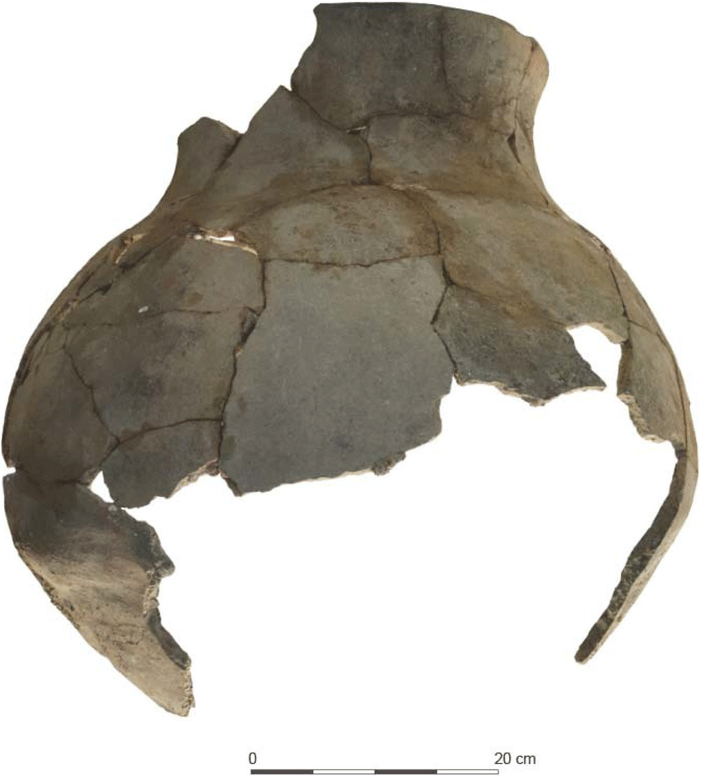
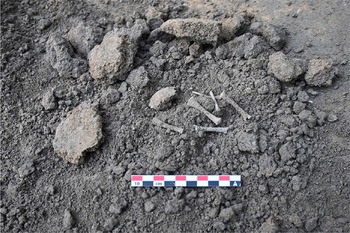
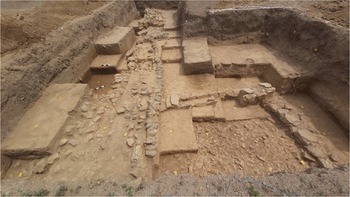
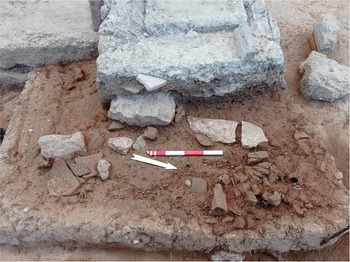
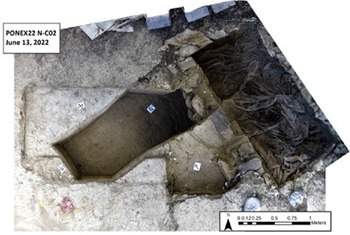
Two successive dwellings from the Late Neolithic II were excavated in the southwestern part of the sector. On the floor of the more recent dwelling lay one of the largest known jars (diameter 0.7m, estimated height 1m) to date from Dikili Tash (Fig. 3.3 ). The other house yielded a nearly complete skeleton of a foetus, aged 25–26 weeks, which was covered with building material (Fig. 3.4 ). This is a unique discovery for Dikili Tash, where no burials have been found until now, and it is very rare for the entire Aegean-Balkan prehistoric world. The project is set to continue until 2026, further advancing our understanding of early human occupation in the Aegean-Balkan area.
Large Late Neolithic II jar; diameter of 0.7m for an estimated height of at least 1m. © Archaeological Society of Athens/EFA.

The bones of a foetus associated with fragments of earth to be built on the floor of a Late Neolithic II house. © Archaeological Society of Athens/EFA.

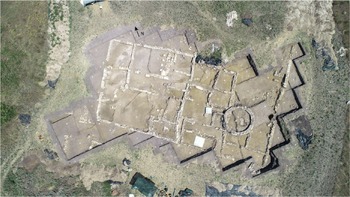
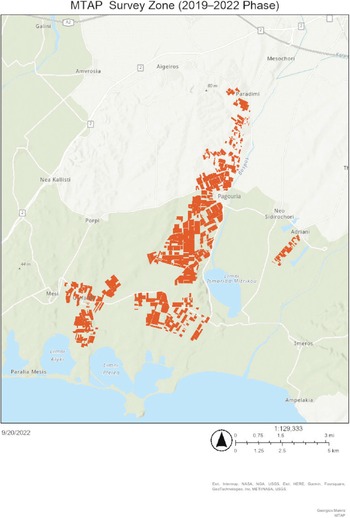
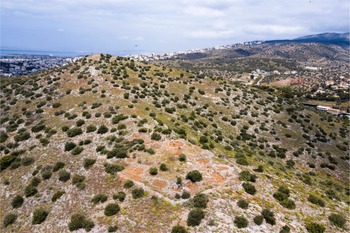
Marina Tasaklaki (Ephorate of Antiquities of Rhodope), Domna Terzopoulou (Ephorate of Antiquities of Evros), Nathan Arrington (Princeton University), George Makris (University of British Columbia), and Thomas Tartaron (University of Pennsylvania) report on the Molyvoti, Thrace, Archaeological Project (https://mtap.scholar.princeton.edu/overview; Fig. 3.5 ), a synergasia project between the Ephorate of Antiquities of Rhodope and the ASCSA, which resumed its second phase of fieldwork in 2022 after a two-year hiatus due to the pandemic ( ID18581 , ID18570 ). Near the site of ancient Stryme, in the vicinity of Lake Mitrikon, test trenches were opened to investigate a potential sanctuary site. A large cut into the virgin soil suggested the presence of a wall foundation, while the fill contained Hellenistic pottery and iron slag. Archaeobotanical samples indicated the deposition of residential and agricultural refuse, including cereal grains and crop weeds. Another trench, to the north, revealed a long wall that may be associated with agricultural activities and potentially linked to grape processing for wine-making. Additional test trenches exposed corner walls, possibly representing sanctuary features. Thracian ceramics were found throughout the test trenches; preliminary analysis suggests that these are prehistoric rather than Iron Age. A pedestrian surface survey aimed to provide further context and investigate land use patterns. The survey extended up to 16km north and 7.5km northwest of the coastal city (Fig. 3.6 ), reaching nearby villages. There was abundant Classical–Hellenistic material nearer to the city, but this decreased with distance from the city, while Byzantine to Ottoman material appeared more frequently in northern and western units, particularly near modern villages. The project ends in 2023, with the majority of resources being focused on the conservation of revealed structures.
House of Hermes (left) and House of the Gorgon (right). © Hellenic Ministry of Culture: Ephorate of Antiquities of Rhodope and ASCSA.

MTAP survey units, 2019 and 2022. © Hellenic Ministry of Culture: Ephorate of Antiquities of Rhodope/ASCSA.

Central Macedonia
Stavroula Brachionidou (Ephorate of Underwater Antiquities) reports on the latest discoveries from a shipwreck found accidentally in 2020 about 80m from the coast of Fourka in Chalkidike, at a depth of 4m ( ID18604 ; https://politic.gr/ellada/s-vrachionidou-stin-politic-gia-to-navagio-sti-fourka-se-kali-katastasi-ta-kanonia-kai-to-kariofili-anagkaia-i-prostasia-tou-ploiou-to-kalokairi-eikones/). It dates to the early 18th–early 19th century. Its largest part is buried in sand, but the wooden hull is estimated to be 25m long and 8m wide. Among the most important finds this year are two canons and a kariofili, a long rifle widely used by the Greeks and Ottomans during the Greek Revolution (1821–1829) (See Briggs and Campbell, this volume, for an overview of recent underwater archaeology in Greece).
Thessaly and West Greece
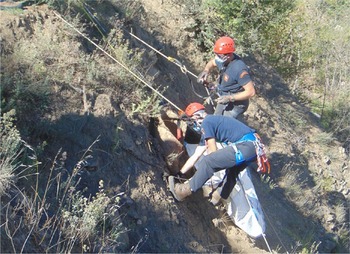
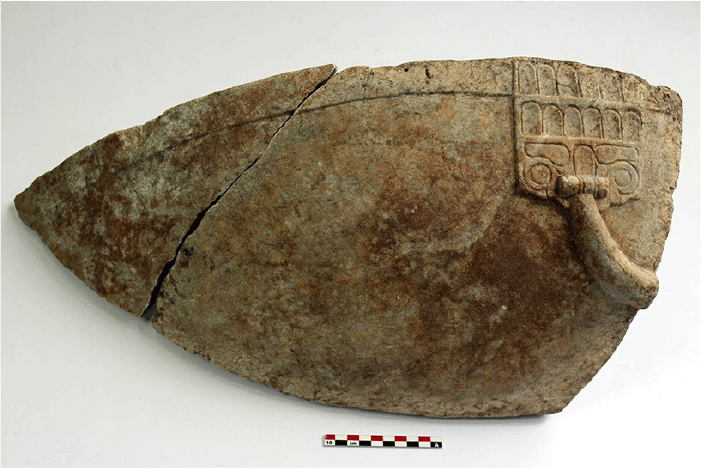
Varvara Papadopoulou (Ephorate of Antiquities of Sparta) reports that near the city of Arta, on the riverbank of Acheloos, a stirrup jar was recovered in 2022 (Fig. 3.7 ) ( ID18603 ). It is an unpainted handmade pithos made of impure clay, preserved in large contiguous sections, and damaged by river floods. The artefact is most likely related to the prehistoric settlement at the site of Agios Vasilios of Piges, where finds from the same period (Middle and Late Bronze Age, second millennium BC) have also been found.
Rare prehistoric jar salvaged by Special Fire Service Forces. Acheloos riverbank, Arta. © Hellenic Ministry of Culture: Ephorate of Antiquities of Arta/Archaeological Resources Fund.

In 2022 excavations continued at Magoula Plataniotiki near Almyros in Thessaly, as part of the Halos Archaeological Project ( ID6758 , ID6173 ) directed by Vladimir Stissi (University of Amsterdam) under the auspices of the NIA and the Ephorate of Antiquities of Magnesia. This season focused on the eastern edge of Classical Halos, where previous geophysical surveys had indicated the presence of buildings, roads, and architectural structures with different orientations. The excavations confirmed the presence of multiple building phases in the investigated area, suggesting a continuous sequence of habitation in Halos from the late fifth century BC to the Late Classical period. Excavations revealed the existence of walls defining different rooms and uncovered deeper layers and earlier phases of walls that had already been discovered. In one room, the stratigraphy indicated the presence of layers associated with use and destruction, possibly related to the conquest of the site by the Macedonian army in 346 BC. However, distinguishing between different phases of use before 346 BC proved challenging. In another room, the excavation revealed a similar stratigraphic sequence and the presence of different wall phases. Excavations in the main street and the area of the eastern street uncovered a fill consisting of rubble and pottery fragments, possibly associated with the destruction of walls. Pavement levels and a complex combination of modules were also discovered in the eastern street area.
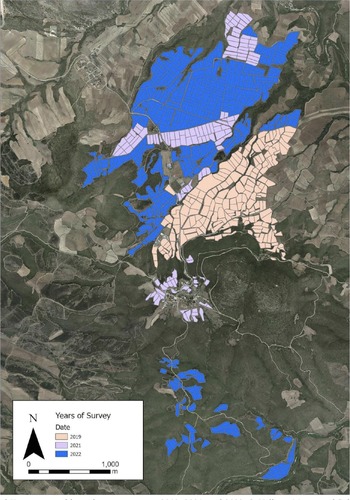
2022 also saw the continuation of the Central Achaia Phthiotis Survey (CAPS; https://caps.artsrn.ualberta.ca/). Sophia Karapanou (Ephorate of Antiquities in Larissa) and Margriet Haagsma (University of Alberta), under the auspices of the Hellenic Ministry of Culture and Sport and the CIG, report on the second season of the five-year project, which surveyed the landscape surrounding the fourth- to second-century BC city at Kastro (Fig. 3.8 ) near the village of Kallithea in Thessaly ( ID18582 , ID18176 , ID12959 ). Intensive survey of cultivated fields was conducted to the north and south of the city. The findings revealed a chronological range of human activity from the Neolithic to pre-Modern periods. While the number of artefacts found was lower than previous seasons, they were located in clear distributions and concentrations. The fields south of Kastro, which are scheduled for solar panel construction, had limited visibility but yielded concentrations of Hellenistic roof tiles, indicating potential agricultural or funerary activity. The fields north of Kastro suffered from extensive damage caused by bulldozing and agricultural activities, making it difficult to identify architectural features. However, the bulk of the finds (including ceramic sherds totalling no less than 2,000) have been dated from the Classical–Hellenistic period to Late Roman–Early Byzantine, with a small substratum of Bronze Age material. Some areas showed evidence of water management and concentrations of material, suggesting habitation sites and ties to agricultural activities; most finds were located closer to the Kastro, confirming the hypothesis that finds are distributed in the form of a ‘halo’ around the northern part of the Kastro. The 2023 season of the project will focus on systematically surveying the area east and northeast of the Kastro.
Areas around Kastro covered by pedestrian survey in 2019, 2021, and 2022. © Hellenic Ministry of Culture: Ephorate of Antiquities of Larissa/CIG (image: M. Chykerda, M. Haagsma and L. Radloff).

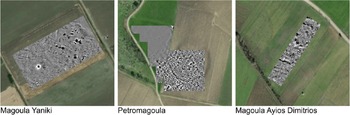
Another diachronic survey took place as part of the Palamas Archaeological Project ( ID18583 ) under the direction of Maria Vaïopoulou (Ephorate of Antiquities of Karditsa), Robin Rönnlund (SIA), and Fotini Tsiouka (Ephorate of Antiquities of Karditsa). The 2022 season focused on mapping, surveying, and excavating a number of sites dating from prehistoric to Byzantine times within the municipal unit of Palamas in the region of Karditsa, Thessaly. The work was divided into two field seasons, one in spring and one in late summer. The spring season focused on sites including the Classical-Roman city at Vlochos and prehistoric magoules (mound-like structures) in the vicinity of Palamas. Geophysical survey using magnetometry was carried out at three magoules (Fig. 3.9 ), revealing indications of extensive land modifications likely from the 20th century. Aerial photography was used to create digital topography models of the sites. The largest magoula, Magoula Gianiki, exhibited evidence of a Neolithic period construction, while the smaller magoula at Petromagoula and the recently discovered magoula near Paparma yielded ditches, embankments, and possible burned-out structures.
The magoules surveyed as part of the geophysical work. © Hellenic Ministry of Culture: Ephorate of Antiquities of Karditsa/SIA.

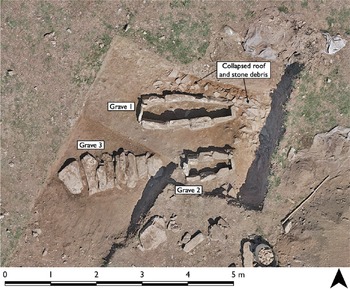
At the ancient city of Vlochos, a ground resistivity survey was conducted, producing high-resolution results that depicted the city wall, towers, and internal structures of the Classical–Hellenistic and Roman periods. Drone photography further revealed buried fortifications, towers, and structures at the site. Excavations at Strongilovouni uncovered a sixth-century AD building with an earlier foundation and a destruction layer from the Hellenistic period. Cist tombs were also discovered (Fig. 3.10 ), possibly belonging to the later phases of habitation at the site.
Northern part of Trench 2 with tombs. © Hellenic Ministry of Culture: Ephorate of Antiquities of Karditsa/SIA.

At the hill of Kourtikiano in Metamorfosi, the survey of fortifications continued, revealing an Early Byzantine fortification wall, towers, and structures. Pedestrian surveys on the hilltop identified concentrations of Archaic and Classical pottery, indicating domestic and industrial activities. The project’s findings shed light on the region’s ancient history, emphasizing the need for further study and excavation.
Central Greece
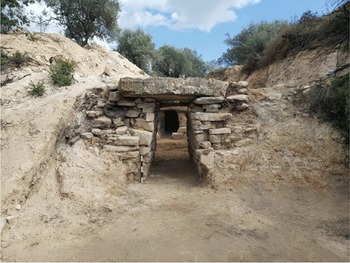
Petros Kounouklas (Ephorate of Antiquities of Phthiotis and Evrytania) reports on the discovery and excavation in winter 2022 of a vaulted Mycenaean tomb (Fig. 3.11 ) situated near Amphikleia in the Phthiotis region of Central Greece ( ID18584 ; https://greekreporter.com/2023/05/28/mycenean-tomb-unearthed-greece/). The tomb represents the first evidence for the presence of a Mycenaean tholos (vaulted) tomb in Phthiotis, constructed between the 14th and 13th centuries BC. It has been subject to looting in antiquity and later repurposed during the Roman period, as evidenced by the discovery of Roman grave goods alongside the Mycenaean artefacts. In addition to human remains from ancient burials, the excavation yielded remarkable gold jewellery and pottery characteristic of the Mycenaean period. Among the findings were two seals, one of which depicts the famous Taurokathapsia, the bull-leaping sport associated with the Minoan civilization. This particular bull-leaping scene is unprecedented in Phthiotis, with comparable finds previously only identified at the Mycenaean palace of Thebes and the vaulted tombs of Dimini in the Magnisia region of Thessaly (Younger Reference Younger1976). The construction of the tomb itself remains well-preserved, despite the collapse of the vault.
Entrance to the Mycenaean tomb. © Hellenic Ministry of Culture: Ephorate of Antiquities of Phthiotis and Evrytania.

The 13th season of the Mitrou Archaeological Project was completed in 2022 under the direction of Aleydis Van de Moortel (University of Tennessee) ( ID12880 , ID8985 , ID4214 , ID3062 ). Study of the beads and glassy materials at Mitrou showed that ca. 200 beads date to the Early Iron Age, displaying a simple design compared to other sites. However, some Late Bronze Age beads, including a fragment of a Mycenaean rosette glass relief bead, were also discovered. Certain dark blue glass beads resemble beads from postpalatial Elateia-Alonaki in the Kephissos valley, suggesting their origin from northern Italy rather than Greece at that time.
A palaeopathology study was conducted on the children’s bones from Mitrou, in order to shed light on physiological stress. The skeletal remains of 53 children and adolescents found common occurrences of Linear enamel hypoplasia, porotic hyperostosis, and cribra orbitalia, indicating growth deficiencies and iron deficiency. Trauma and signs of infection were less frequent. Study also continued on the findings from the 1988–89 CHELP surface survey at Mitrou (Kramer-Hajos and O’Neill Reference Kramer-Hajos and O’Neill2008), revealing a greater amount of Early Helladic and historical pottery than previously reported, especially in the southern parts of the site.
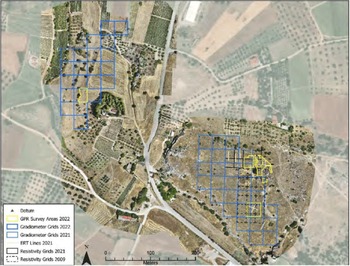
The Eastern Boeotia Archaeological Project (EBAP; ID18585 , ID18175 , ID12963 , https://ebapexcavations.org), a synergasia between the Ephorate of Antiquities of Boeotia and the CIG, continued in 2022. Alexandra Charami (Ephorate of Antiquities of Boeotia), Brendan Burke (University of Victoria), Bryan Burns (Wellesley College), Nicholas Herrmann (Texas State University), and Trevor Van Damme (University of Victoria) report on the architectural and geophysical survey at the site of ancient Eleon (Fig. 3.12 ). The goals of the survey were to contextualize ceramic material, verify the existence of a lower town fortification wall, and assess the extent of the walls and their relationship to the acropolis. The survey revealed previously unidentified features in the lower town, including evidence of occupation during phases otherwise undocumented on the acropolis; most notable are a substantial Late Neolithic to Early Helladic site situated along the banks of the Glaukia Stream, an Early Iron Age locus of activity including Protogeometric–Subprotogeometric material to the southwest of the acropolis focused on the slopes south of the chapel of Agios Georgios, and significant quantities of Classical–Hellenistic material in the lower town area. The material collected suggests a decline in settlement activity from the first century BC to the third century AD, followed by renewed growth in the fourth and fifth centuries AD. The site appears to have been abandoned after the Late Roman period and resettled in the Late Byzantine or Early Ottoman period.
Map of survey zones at ancient Eleon, 2021 and 2022. © Hellenic Ministry of Culture: Ephorate of Antiquities of Boeotia/Nicholas Hermann, EBAP.

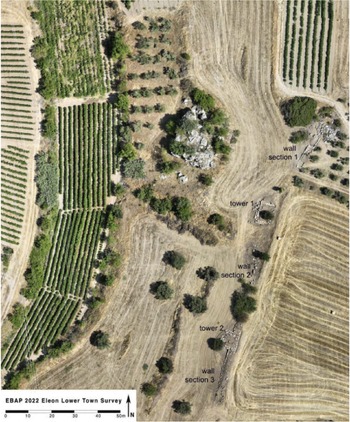
The survey also confirmed the existence of a lower town fortification wall with four towers and substantial stretches of wall (Fig. 3.13 ). Ground-penetrating radar and gradiometry revealed anomalies and architectural features in the lower town and acropolis areas. The research provides new insights into the extent of the historical settlement and confirms the location of Archaic and Classical period cemeteries. The data from the reanalysis of ceramic finds demonstrates the abandonment of the acropolis at the end of the Late Bronze Age was likely due to a shift in function, from a space of occupation to one of sacred activity, rather than a complete abandonment of the settlement, which now shifted to the lower town. The study season also included analytical work on pottery provenance and osteology. Overall, the project’s findings contribute to the understanding of the political geography and history of ancient Eleon in Boeotia.
Eleon lower town fortification wall revealed by cleaning. © Hellenic Ministry of Culture: Ephorate of Antiquities of Boeotia/Bryan Burns, EBAP.

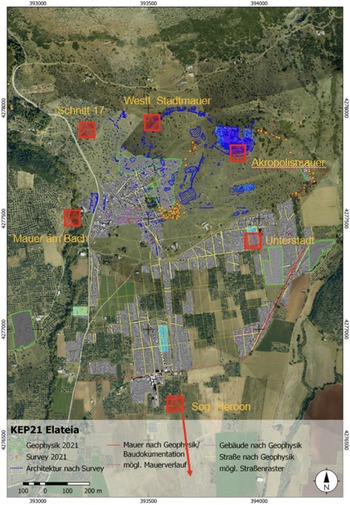
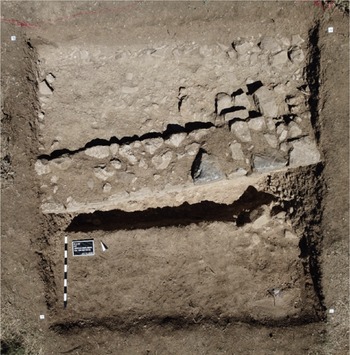
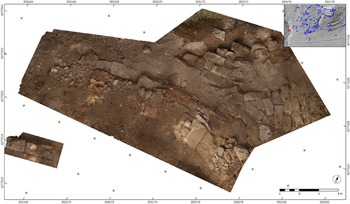
Petros Kounouklas (Ephorate of Antiquities of Phthiotis and Evrytania) and Katja Sporn (DAI) undertook a six-week field campaign as part of the Kephissos Valley Project in 2022 ( ID18576 , ID18181 , ID17980 ), which concludes the first five-year plan of a collaborative project (2018–2022). The main objective was to obtain chronological evidence through targeted excavation soundings. In Elateia, six locations were either excavated or cleaned, revealing insights into the fortification walls (Fig. 3.14 ). The inner ring of the acropolis (Fig. 3.15 ) was dated to the early Roman Imperial period, significantly earlier than the date of the outer cyclopean wall. Additionally, surprising findings at the eastern bank of the creek included an ancient fortification wall with an east–west orientation (Fig. 3.16 ), possibly part of the west wall of the lower city or a bridge crossing the creek. The wall is preserved at a length of 11.35m and a thickness of 1.3m, with a core made up of medium-sized paving stones and earth. Ceramic artefacts mainly date to the Hellenistic period. Excavations in Elateia also aimed to locate the city’s theatre but have so far provided no evidence of its existence.
Plan of Elateia, showing the areas investigated in 2022. © Hellenic Ministry of Culture: Ephorate of Antiquities of Phthiotis and Evrytania/DAI.

The inner acropolis wall at Elateia. © Hellenic Ministry of Culture: Ephorate of Antiquities of Phthiotis and Evrytania/DAI.

The western wall. © Hellenic Ministry of Culture: Ephorate of Antiquities of Phthiotis and Evrytania/DAI.

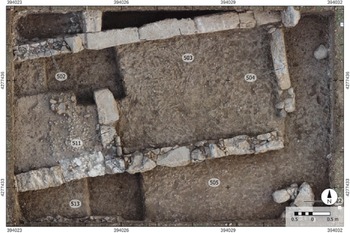
Investigations at the lower city at Elateia revealed an orthogonal street network with buildings, with the first building in ashlar masonry dating back to the first century BC (Fig. 3.17 ). Other walls made from reused rubble stones and polygonal stones belonged to a slightly later phase, with evidence of occupation until the second half of the second century AD. It remains to be clarified whether the entire lower city was developed later, after the Phokian Koinon’s relocation to Elateia in the middle of the second century BC. Excavations at the Heroon, a monumental structure from the Hellenistic period, provided no significant findings, and its function will be further investigated through architectural comparisons. At the Athena Kranaia sanctuary, detailed examinations of the architecture were conducted and a previously missing inscription (IG IX 1, 139) was rediscovered.
Section of wall dating to the first century BC, found in the Unterstadt. © Hellenic Ministry of Culture: Ephorate of Antiquities of Phthiotis and Evrytania/DAI.

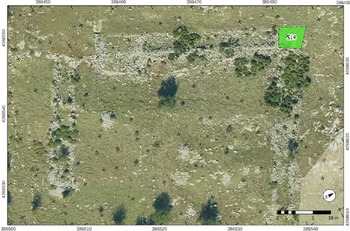
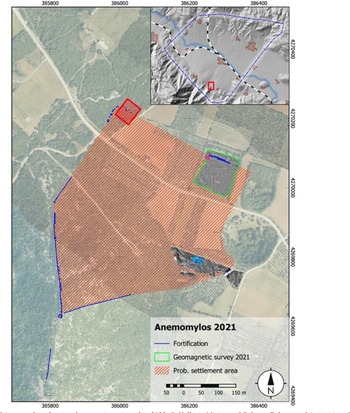
On the other side of the valley, at Agia Marina, a large public plaza was investigated, where a room dating back to the third century BC was discovered, providing valuable dating evidence for the site (Fig. 3.18 ). The nearby fortification of Anemomylos (Fig. 3.19 ) was also studied, with the identification of the northwest corner of the lower city wall. Soil analysis in the Kephissos Valley showed that most soils were highly to moderately fertile, with the southwestern area being the most fertile, except for Elateia, which surprisingly exhibited only moderate fertility. Research on palaeoclimatic changes and extreme flood events in the valley revealed five flood events, with one missing from the fifth century AD. The evidence suggests that extreme flooding may have influenced the abandonment of low-lying settlements in favour of higher areas during the Late Hellenistic period.
Aerial photo of the plaza at Agia Marina, showing the excavated area in green. © Hellenic Ministry of Culture: Ephorate of Antiquities of Phthiotis and Evrytania/DAI.

Plan of Anemomylos, showing the areas investigated in 2022. © Hellenic Ministry of Culture: Ephorate of Antiquities of Phthiotis and Evrytania/DAI.

Euboea
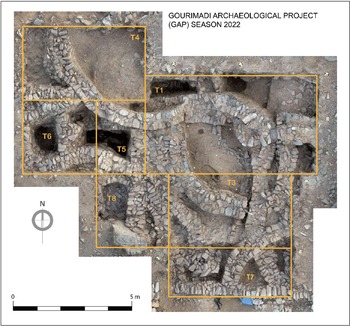
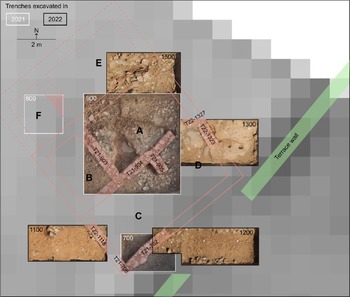
Fanis Mavridis (EPS), Zarko Tankosic (University of Bergen), and Paschalis Zafeiriadis (NIA/ University of Bergen) report on the fourth year of the Gourimadi Archaeology Project (GAP), which involves the systematic excavation of a Late Neolithic–Early Bronze Age site near Karystos in Southern Euboea ( ID18589 , ID18177 , ID17977 , ID17976 ). Six trenches were excavated in 2022 (Fig. 3.20 ) to explore the stratigraphy and distribution of building activity at the site. Excavations in Trench 1 and Trench 3 were continued from previous seasons, while Trench 4 was expanded to uncover architectural remains between the two trenches. Additionally, new trenches (Trenches 6, 7, and 8) were opened to explore the continuation of architectural features uncovered in previous seasons. Trench 1 revealed stone-built walls and a surface/floor made of reddish packed earth. Trench 3 revealed the continuation of these features to the south and a wall outside the boundaries of Trench 1. Trench 4 revealed a new stone-built wall connecting to a previously known wall, and a third wall was excavated in the northeastern corner. An extensive surface with intense burning was also revealed in the east sector of the trench. Trench 6 uncovered numerous architectural features, including a possible continuation of a mud-brick structure from Trench 5 in 2021 ( ID18177 ). These mud-brick remains represent the earliest stratified architectural remains at the site. Trench 7 revealed three stone-built walls, but their spatial distribution requires further investigation. Trench 8 was opened to enhance understanding of the architectural remains in Trenches 1, 3, and 5. Several stone-built walls related to neighbouring trenches were found.
Orthophoto of the 2022 trenches. © NIA.

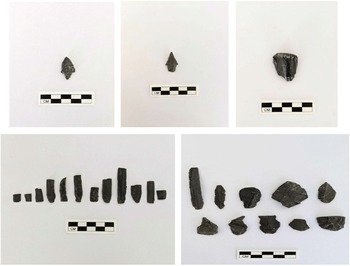
Movable findings from the excavations include pottery, chipped-stone artefacts, mainly made of Melian obsidian (Fig. 3.21 ), terracotta anthropomorphic figurines, ground-stone tools, spindle whorls, and faunal remains. The ceramic assemblages from 2022 contained pottery types typical of the Late and Final Neolithic periods, including undecorated, burnished, crusted, and incised decoration. Obsidian artefacts and flake byproducts of its production were the most common finds. The excavation yielded a significant number of obsidian arrowheads, suggesting their use during the later occupation phases of the site. However, their numbers seem to decline with excavation depth, indicating a potential shift in site use or the historical context.
Examples of obsidian finds from Gourimadi. © Aikaterini Soma, Gourimadi Archaeological Project (GAP), project director: Zarko Tankosic.

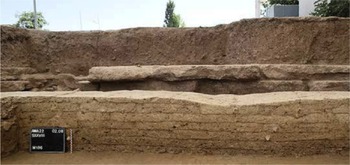
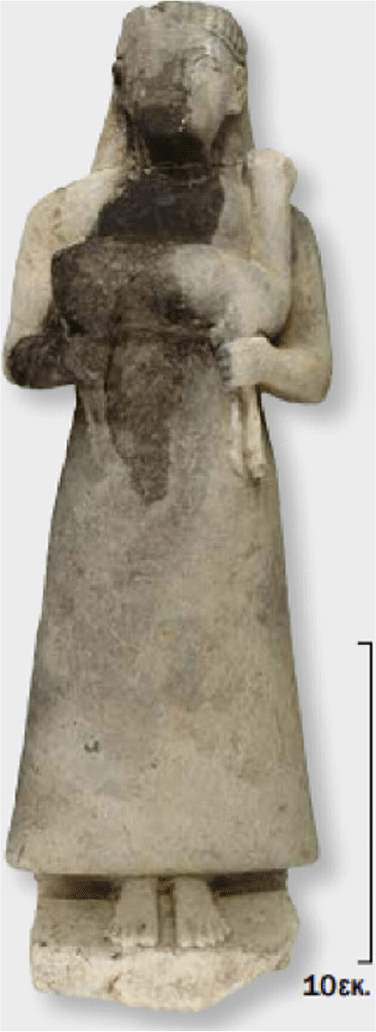
The ongoing excavations at the Artemision of Amarynthos ( ID18579 , ID18254 , ID18029 , https://www.esag.swiss/wp-content/uploads/2022/11/ESAG-Public-Report-2022-gr-eng.pdf; 2021–2025) have also brought to light numerous important finds. In 2022, the team, led by Angeliki Simosi (Ephorate of Antiquities of Euboea) and Sylvian Fachard (ESAG), focused on the pre-Classical phases of the sanctuary. Within the temple zone, an intermediate phase was identified between the two main Archaic architectural phases, characterized by the presence of a mud-brick wall (Fig. 3.22 ). Excavation of this area over the past two seasons has revealed approximately 700 votive offerings that were deposited prior to the construction of the latest temple in the late sixth century BC. An exceptional find in this collection is a statuette in the Cypro-Ionic style, depicting a female figure carrying a fawn or doe (Fig. 3.23 ). Furthermore, within the wider area of the sanctuary, earlier structures dating back to the 12th century BC have also been investigated. Simultaneously, the excavation of the prehistoric settlement located on the Palaeoekklisies hill has been ongoing.
Mud-brick wall inside the temple. © Hellenic Ministry of Culture: Ephorate of Antiquities of Euboea/ESAG.

Cypro-Ionic style statuette, depicting a female figure carrying a fawn or doe. © Hellenic Ministry of Culture: Ephorate of Antiquities of Euboea/ESAG.

Alongside the excavations taking place at the Artemision of Amarynthos, a regional surface survey project has been underway since 2021 in the area between Eretria and the sanctuary. In the current year, particular attention has been given to the northern region of the Artemision, resulting in the identification of three settlement sites, one of which is believed to be the centre of the Amarynthos community. The slopes of Mount Servouni have also been explored using extensive survey. Additionally, at the Partheni pass, an area known locally as ‘Ta Marmara’, the remains of a previously known ancient structure have been excavated and documented (Fig. 3.24 ). This well-constructed building, situated along the route to Amarynthos, is likely to be a small temple due to its meticulous construction and strategic location.
Small religious structure at ‘Ta Marmara’. © Hellenic Ministry of Culture: Ephorate of Antiquities of Euboea/ESAG.

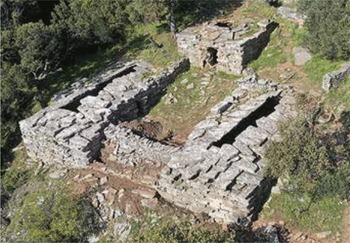
In 2022, ESAG also undertook excavations at the drakospito (dragon house) complex at Palli Lakka ( ID18588 , ID18259 ; https://www.esag.swiss/wp-content/uploads/2022/11/ESAG-Public-Report-2022-gr-eng.pdf) in the Styra region. This was under the direction of Αngeliki Simosi (Ephorate of Antiquities of Euboea), Maria Chidroglou (National Archaeological Museum of Athens), Karl Reber (ESAG), Jérôme André (University of Lausanne), and Chloé Chezeaux (University of Lausanne). Based on pottery findings, it has been determined that this structure was built during the Late Hellenistic period. One significant outcome of the campaign was the discovery of a grand threshold within the southern building of the complex, indicating the presence of an initial occupation level. The presence of Roman pottery in Palli Lakka, along with the abundance of nearby stone quarries, suggests that these houses were likely associated with stone quarrying activities as a dwelling for stone masons. Additionally, two other drakospita (dragon houses) or, in other words, dry stone houses made from monumental blocks that the local inhabitants of southern Euboea once reported would have been made by dragons (Reber et al. Reference Reber, Simosi, Chidiroglou, Chezeaux, André and Stavroulaki2021: 165), were documented within the region at Makkou and Kapsala (Fig. 3.25 ) and seem to have served primarily as rural buildings.
Drakospita at Palli Lakka complex. © Hellenic Ministry of Culture: Ephorate of Antiquities of Euboea/ESAG.

In central Euboea, Joanita Vroom (University of Leiden) undertook pedestrian surveys of Kastri, Figes, and Dio Vuna in 2023. The focus was primarily on Kastri, where a greater concentration of pottery was found compared to the other sites. The survey revealed the presence of buildings, walls, and fortified enclosures at Kastri (Fig. 3.26 ), with indications of multiple phases of use from the 13th to the 15th centuries AD. At Figes, structures including a lime kiln, as well as burial sites and pottery collections, were identified. Dio Vuna featured a tower and a lime kiln. The surface finds included ceramics, coins, metal objects, bone cubes, stone elements, and glass fragments. In addition to the intensive surface survey, an extensive survey was conducted in the Messapiu and Lilantas river valleys, resulting in the identification of various monuments and structures. The documentation work continued, and sampling was carried out to analyse samples from medieval towers for dating and architectural evolution. The project is due to run until 2025, with geophysical and geomorphological studies planned for the 2024 season.
The medieval fortified town of Kastri. © NIA.

Attica (including Troezen)
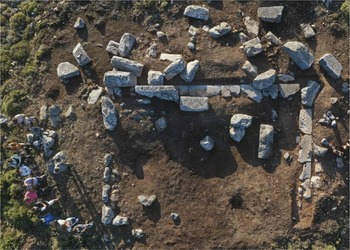
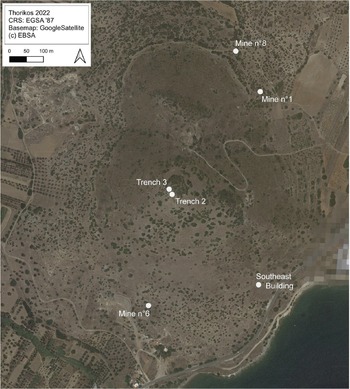
The final season of the current five-year project at Thorikos (2018–2022) was completed last year, and Roald Docter (EBSA/Ghent University) and Sylviane Déderix (EBSA/Universität Heidelberg/Université catholique de Louvain) provide an overview of the work undertaken ( ID18592 , ID8498 , ID8492 ; https://www.thorikos.be/; Fig. 3.27 ). The excavation of trial trenches that were begun in 2021 at the prehistoric settlement on the acropolis of the Velatouri were completed (Docter and Webster 2021). Trench 2, located below the rocky hilltop, revealed a thick retaining wall supporting an open court, along with poorly preserved building remains. Most of the pottery found in this trench dates to the Middle Helladic and early Late Helladic periods, suggesting occupation during those times. Stray sherds also indicate activity during the Final Neolithic, Early Bronze Age, Late Archaic, and Classical periods. Trench 3, on the upper west slope of the hill, aimed to assess the nature and date of two concentric rings of walls.
Thorikos Velatouri Hill with indication of areas covered by fieldwork in 2022. © EBSA, Thorikos Archaeological Research Project.

Roald Docter and Johannes Bergemann (Karl August University, Göttingen) directed the excavations of an Early Iron Age building (Fig. 3.28 ) on the lower southeastern slope of the Velatouri Hill. The excavation revealed rooms and pottery dating to the Middle Helladic and early Late Helladic periods, similar to that found in Trench 2. The walls were well-preserved, and the finds (stone utensils, sea shells, and pottery covered in heavy concretions; animal bones are rare) suggested a Final Protogeometric to Early Middle Geometric period occupation, making it the earliest Iron Age house discovered in Attica. Future work will restore the finds to offer more clarity regarding dating and function.
Thorikos, Early Iron Age building on southeast slope of Velatouri. © EBSA, Thorikos Archaeological Research Project.

The investigation of the subterranean silver- and lead-mining infrastructure below Velatouri Hill by a team led by Denis Morin (University of Lorraine, Nancy), under the general field direction of Sylviane Déderix, also revealed significant discoveries. Sheepfold Mine No. 1 was fully explored, indicating possible exploitation before the Classical period. A new mine called the Olive Tree Mine (Mine No. 8) was discovered and investigated, dating to the Classical period. Other underground workings may have existed under the northern slope of Velatouri Hill. The exploration of the Acropolis Mine provided new insights into ventilation systems, and additional mines were identified nearby. Charcoal analysis and rock sampling provided valuable information for dating and identification purposes.
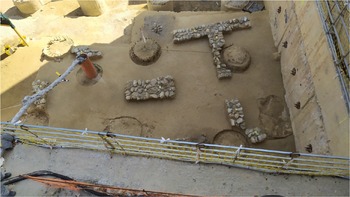
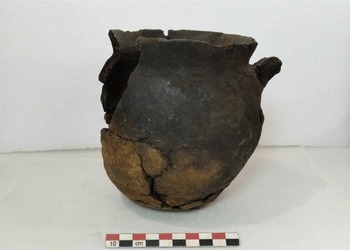
Elsewhere in Attica, through rescue excavations under the direction of Eirini Skiaderesi (Ephorate of Antiquities of Piraeus and Islands) at 98 Evripidou Street and 325 El. Venizelou Street in Kallithea, foundation wall remnants were discovered in 2022, which designate a rectangular building with a cross wall and east–west orientation (Fig. 3.29 ). In the central part and eastern part of the plot, 13 pits of different shapes and three narrow channels were found. Moreover, one pit tomb with tiles and slate stones was found and possibly two infant burial jars placed in a narrow channel. Findings were unearthed throughout the excavation site and are ceramics mainly from the Early Helladic (EH) II to EH III periods (Fig. 3.30 ), stone artefacts, and some organic remains.
98 Evripidou street and 325 El. Venizelou street. Top view of the building. © Hellenic Ministry of Culture: Ephorate of Antiquities of Piraeus and Islands.

Pottery from EH II–III periods. © Hellenic Ministry of Culture: Ephorate of Antiquities of Piraeus and Islands.

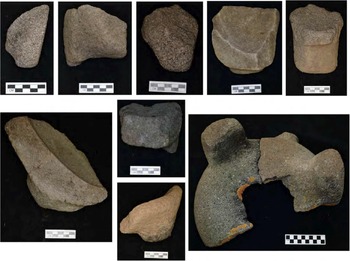
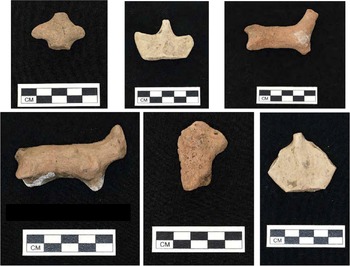
Pedestrian surveys at Rafti Island, Raftopoula Island, and Porto Rafti and the architectural study of the Koroni acropolis were undertaken during the 2022 season of the diachronic Bays of East Attica Regional Survey project (BEARS, ID18591 , ID18083 , ID8189 ), directed by Sarah Murray (University of Toronto) under the auspices of CIG. The main findings of the survey on Rafti Island are that the dominant element of the pottery scatter is datable to the Late Helladic (LH) IIIC period, while a smaller component represents the Late Roman period, with most finds dating to the sixth–seventh centuries AD. This confirms the hypothesis that Roman-period activity was concentrated in lower elevations around the western apron of the island. LH IIIC material, on the other hand, was distributed densely across the entire habitable surface of the island. There was an extraordinary assemblage of ground-stone objects (171 in total), including: nine pieces of tripod mortars (Fig. 3.31 ), a type that is relatively rare in the LH IIIC period; dozens of other querns and mortars in various shapes and sizes; and dozens of hand-tools for polishing, grinding, and pounding, including some high-quality pestles, likely intended to accompany the tripod mortars. Also collected were many chipped-stone lithics (189 in total), mostly of obsidian and a few of quartz; figurines, both zoomorphic and anthropomorphic; miniature figurines (Fig. 3.32 ), loom weights, and textile tools (including a spool-shaped loom weight); bronze fragments; stoppers; whetstones; technical ceramics; steatite beads or buttons; lamps; worked shell; lead lumps and one lead weight; a few over-fired LH IIIC White Ware pottery wasters; a worked piece of rock crystal; and a polished green stone axe.
Tripod mortar pieces from a001. © CIG, The Bays of East Attica Regional Survey.

A selection of figurines from 2022 collection in feature a001. © CIG, The Bays of East Attica Regional Survey.

At Raftopoula Island, the surface assemblage yielded a modest collection of diagnostic pottery (dating to the Mycenaean and Late Roman periods), tiles, lithics, and other artefacts. Nine ground-stone objects were catalogued (four certain or possible pounding tools, two grinding stones, a hand-stone, and two cobbles). The islet also yielded remains of three structures, potentially representing remnants of larger structures below the surface. The preservation of these structures varied: one had a solid foundation wall running parallel to the coast, while others showed degraded features or were poorly preserved, making it difficult to draw definitive conclusions about their original design.
At Porto Rafti, an intensive survey was conducted around the town. Nearly 3,000 sherds of pottery, 674 tile fragments, and close to 2,000 lithics were observed. The distribution of lithics was concentrated in the western and northern parts of the bay, particularly in fields and slopes connecting the coastal site of Pounta with inland communities in the Early Bronze Age. The overall chronological patterns (including the chronological distribution of both tiles and pottery) indicate that activity around the bay may have been especially extensive in the Bronze Age, the Archaic to Hellenistic periods, and the Venetian to Early Modern periods. The concentration of sherds was particularly notable in the centre of Porto Rafti, suggesting extensive activity in the Archaic to Hellenistic periods. The survey also revealed evidence of possible industrial activity, such as the presence of metal and stone artefacts, along with pottery and lithic finds. A small site was documented in the valley south of Porto Rafti, potentially serving as a route between the Koroni area and the Attic deme of Merenda, with findings from the Bronze Age to modern periods.
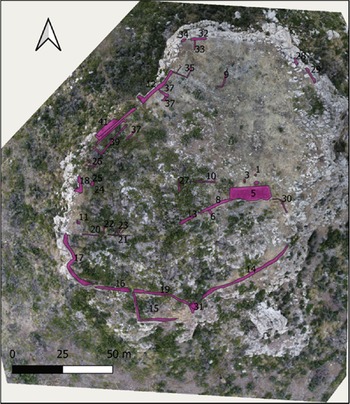
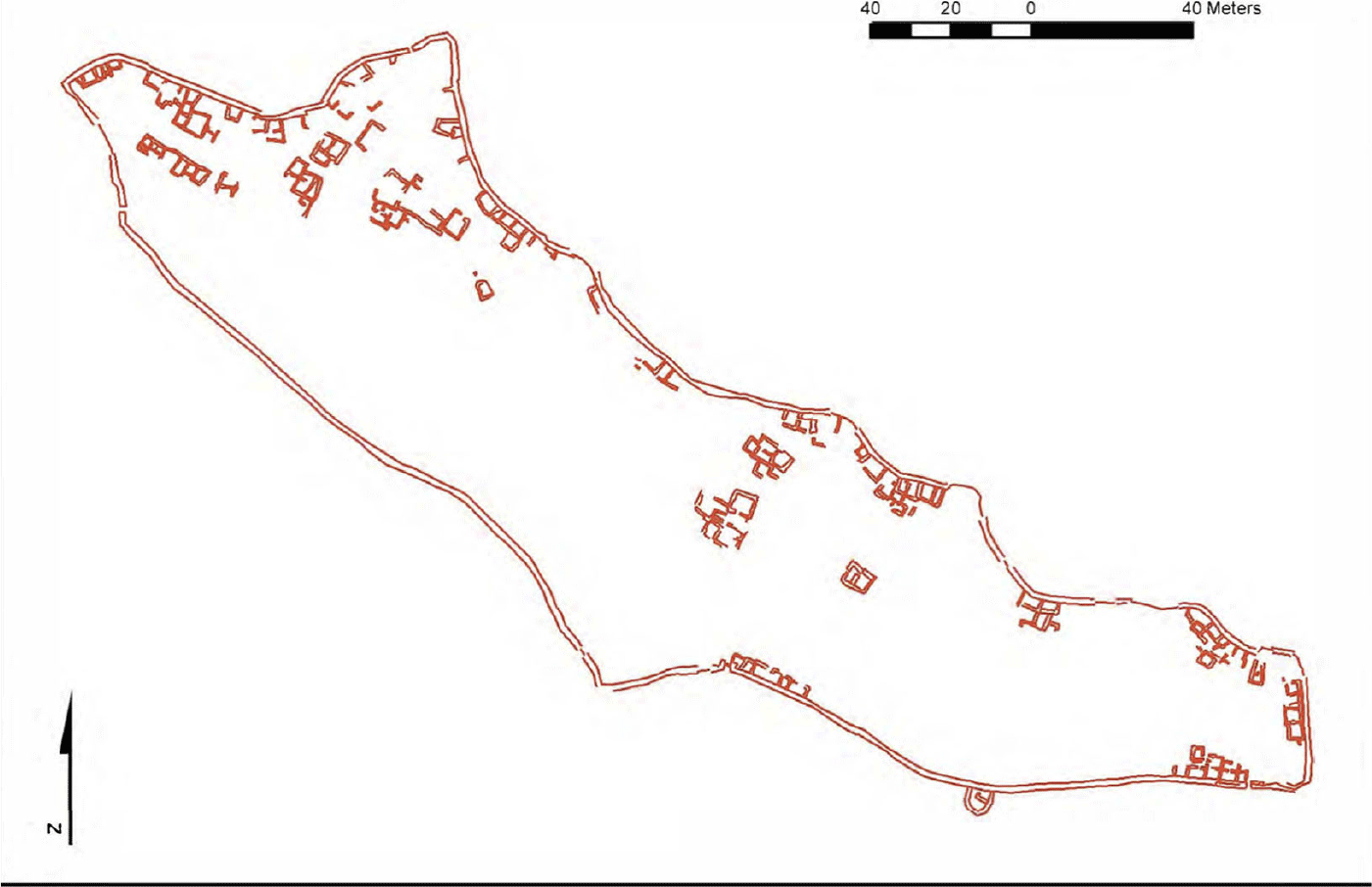
The architectural documentation of the Hellenistic acropolis on the Koroni peninsula (Fig. 3.33 ) aimed to accurately record the existing structures using modern instruments. Using dGPS with Hellenic Positioning System (HEPOS) corrections, the team measured, sketched, photographed, and described 408 architectural features, including 35 designated structures with multiple walls. The architectural remains include structures of varied sizes and arrangements, including rows of small rooms suitable for storage, more complex agglomerative structures suggestive of habitation or work, and clearly defensive structures such as fortified gates in a substantial fortification wall. One structure even resembles an apsidal building typical of the Bronze Age or Geometric periods, which, if actually dating to the Classical or Hellenistic period, could be representative of a ritual space. The majority of the architectural features are believed to be from the Hellenistic period, with evidence of expansion and adaptation over time. The findings indicate the presence of pre-existing structures on the acropolis before the Hellenistic construction phase.
Map of Koroni acropolis created in 2022. © CIG, The Bays of East Attica Regional Survey.

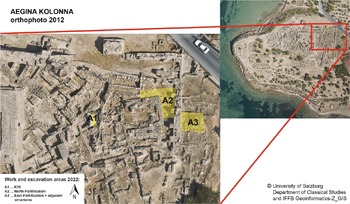
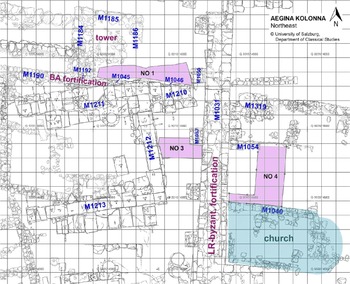
Alexander Sokolicek and Lydia Berger (University of Salzburg) directed the 2022 season of the Kolonna excavations on Aegina ( ID18543 ; https://www.aegina-kolonna.at/aktuelle-forschungen/feldforschung/2022/), which took place under the auspices of the Austrian Academy of Sciences. The excavations focused on two main research themes: the development of a Bronze Age suburb in the northeast of Kolonna and the transformation of the sanctuary into a settlement during the in the Late Roman and Byzantine periods. These research areas are closely connected due to the heavy rebuilding of the sanctuary in the Late Roman period, which resulted in Byzantine structures being built near or on top of Bronze Age structures. In 2022, archaeological investigations were conducted in four main areas: trenches NO1, NO3, NO4, and area K10 (Figs 3.34 and 3.35 ). Area K10 focused on the Late Bronze Age settlement and provided insights into the suburb of the Bronze Age settlement on Kolonna. Excavations in 2022 uncovered a layer of debris covering the western part of K10, revealing information about early Mycenaean habitation, Bronze Age agriculture, craft, and waste behaviour. The debris contained stones, large pottery fragments, animal bones, molluscs, charcoal, clay, and stone tools, offering valuable knowledge about the diet and crafts during the Middle Helladic (MH) II period at Kolonna.
Orthophoto of Aegina Kolonna (2012) with the working areas 2022 marked in yellow. © University of Salzburg, Department of Classical Studies, and IFFB Geoinformatics-Z_GIS.

Plan of the northeastern area in Aegina Kolonna with the trenches NO1, NO3, and NO4. © University of Salzburg, Department of Classical Studies.

Trench NO1 aimed to investigate the Late Bronze Age fortification wall of the suburb, whose exact chronology and construction sequence were not previously clarified. The fortifications consisted of an older rectilinear stone wall with mud-bricks at the top layers. A rectangular tower made of large rough blocks was added at a later stage. Excavations focused on the clay and stone filling of the tower and its connection to the fortification walls. The findings from the tower fill indicated a dating to the MH III–LH I phases, suggesting that the tower is older than previously assumed. During the construction of the tower, the older fortification wall was partially rebuilt, and another wall was added to the east of it, possibly built at the same time as the tower. These discoveries suggest that the Late Bronze Age suburb was expanded and fortified during the shaft-grave period (MH III/LH I).
Trench NO3, placed to the west of the Late Roman/Byzantine fortification, revealed the significant impact of Late Roman and/or Byzantine building activities. A late fortification wall was found to be built directly on the remains of a Late Bronze Age house, which consisted of a wall covered by a layer of melted mud-bricks. Further investigations will focus on determining the exact date and extent of this building.
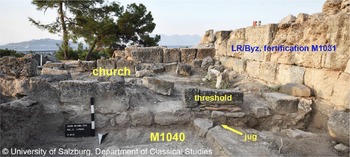
Trench NO4, located outside the late fortification wall, concentrated on an area north of a small church or chapel. The church was constructed directly against the fortification wall, potentially serving as spiritual protection near an entrance to the Byzantine city. Although the building was heavily damaged and its stratigraphy disturbed, a small jug was discovered below its northern doorstep in the northern church wall (M1040), likely a ‘building offering’ for the church (Fig. 3.36 ).
Northern church wall (M1040) with threshold from the north. © University of Salzburg, Department of Classical Studies.

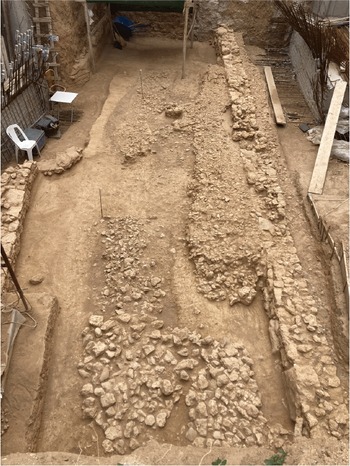
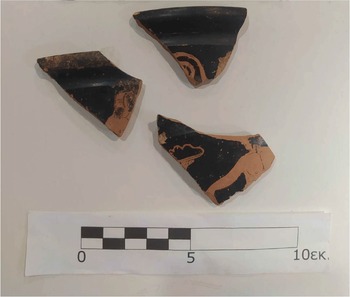
The Ephorate of Antiquities of Piraeus and Islands conducted excavations in Kallithea. An ancient road was uncovered at 6 Perikleous Street, with direction north–south, along the entire length of the lot (14.3m) (Fig. 3.37 ). A preliminary observation of the excavation’s finds (Fig. 3.38 ) shows that the archaeological context dates back to the Late Archaic era and was in use until the early Hellenistic period (sixth–fourth century BC). The excavated area, in its first documented phase, was crossed by a river. At the end of the sixth century BC an embankment wall, 0.6m in width, was built east of the river. In a second phase, the river course was deviated and its bed filled with small-size and medium-size stones to lay down the foundation layer of a road. At the same time, another wall (0.6m in width) was built four metres west of the first one and running parallel to it, thus providing the west limit of the road.
Kallithea, 6 Pelikleous street, ancient road. © Hellenic Ministry of Culture: Ephorate of Antiquities of Piraeus and Islands.

6 Pelikleous street, Attic pottery of Classical times. © Hellenic Ministry of Culture: Ephorate of Antiquities of Piraeus and Islands.

In between the two walls, the alternation of three different layers of shingle and three layers of loose gravel and sand has been documented, which is likely to indicate three different construction phases of the road, following its repeated destruction by the overflowing of the river. This alternation of archaeological layers shows that the road was destroyed and rebuilt at least three times. The chronology of the different layers, which date back to the Classical and Hellenistic periods, the road’s size, and its direction suggest the discovery of a Classical road, possibly connecting a rural deme of the Attic region to the city of Athens and to its harbour in Piraeus.
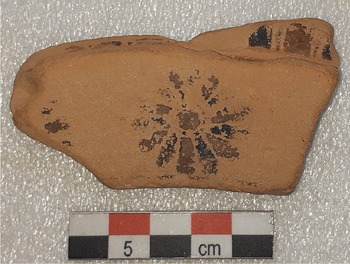
Also in Kallithea, parts of ancient walls have been discovered and excavated at 11 Daphnis Street, where two walls were found from the fifth century BC and possibly the fourth century BC. At 70 Kolokotroni Street, a Hellenistic wall of retaining use was found (Fig. 3.39 ). For the most part it is built with raw stones and the search brought to light a plethora of finds dating back to the late Geometric, Archaic, Classical, and Hellenistic periods, including a type 1a handmade figurine dating to the seventh–sixth century BC (Fig. 3.40 ) and a dinos sherd with painted rosettes on the shoulder dating back to the beginning of the sixth century BC (Fig. 3.41 ).
Retaining wall, west side, Hellenistic era. © Hellenic Ministry of Culture: Ephorate of Antiquities of Piraeus and Islands.

Terracotta figurine, seventh–sixth century BC. © Hellenic Ministry of Culture: Ephorate of Antiquities of Piraeus and Islands.

Dinos sherd, early sixth century BC. © Hellenic Ministry of Culture: Ephorate of Antiquities of Piraeus and Islands.

Maria Giannopoulou (Ephorate of Antiquities of Piraeus and Islands) reports on work conducted at Troezen ( ID18609 ). At the plain extending outside the city walls, a long, wide retaining wall of west–east orientation was excavated (Fig. 3.42 ). The wall was probably constructed in Late Archaic times to block a stream, as indicated by a layer of sand and cobbles. Part of the wall seems to have been destroyed by the waters of the stream. The construction of the wall was obviously intended to protect the cultivations that would exist in this area.
Retaining wall. Late Archaic period. © Hellenic Ministry of Culture: Ephorate of Antiquities of Piraeus and Islands.

At a distance of ca. 130m to the west, a similar retaining wall of west–east orientation was also excavated (Fig. 3.43 ). In this wall two different structural phases are evident. The first phase dates probably from the Classical period and the later phase dates from the Late Roman period. The later structural phase appears to be an attempt to repair and strengthen the wall. During this later phase, a rectangular structure with a stone pipe had been attached to the south side of the wall. The retaining wall possibly served the same purpose as the similar wall found at the previous excavation, i.e., to protect the cultivations from the waters of a stream. The rectangular structure attached to the wall was most likely used to collect water from the stream, through a conduit, for the irrigation of the crops. A cobble layer within the structure was apparently created by the continuous deposition of stream waters.
Retaining wall with attached rectangular structure. Classical–Late Roman times. © Hellenic Ministry of Culture: Ephorate of Antiquities of Piraeus and Islands.

Also as part of the Ephorate of Antiquities of Piraeus and Islands, Amygdalia Andreou reports on the start of a five-year systematic excavation project in 2022 and 2023 at the low hill of Lathouriza, in the region of Vari in Attica (Fig. 3.44 ). The project ( ID18608 ) is run by the Universities of Ioannina and Thessaly, under the direction of Assistant Professor Alexandra Alexandridou and Professor Alexandros Mazarakis Ainian, respectively, in collaboration with the Ephorate of Antiquities of Piraeus and Islands, under the direction of the ex-director, Dr Stella Chrysoulaki. The project aims to reexamine and excavate an area, which was last excavated in the summer of 1939 and never published.
Hill of Lathouriza. The plateau of Tholos in the foreground with the edifices of the Classical to the Roman era on the summit. © Hellenic Ministry of Culture: Ephorate of Antiquities of Piraeus and Islands.

In the summer of 2022, the so-called ‘Tholos’ of the southeastern ridge of the hill was investigated, as well as the interior of all surrounding buildings. The architectural remains were documented through orthophotogrammetry. The site may be identified as ‘peak sanctuary’, founded at some point during the seventh century BC. Cult was initially performed in the open air, centred around a horse-shoe shaped eschara. The foundation of the Tholos in the sixth century marked the main period of activity, as indicated by the volume of the votive material. Towards the end of the sixth, or early in the fifth, century, a number of buildings were founded in the immediate vicinity of the Tholos, the function and chronology of which remain unclear. Additionally, the small Π-shaped temple at the north ridge was investigated.
During the excavation season in the summer of 2023, the summit, at the northwest side of the hill, was partly explored. The site comprises a fortification wall with a series of rooms set against the inner side. On the summit, two rectangular edifices were excavated, in use from the Classical period to the Roman era. Their function will be clarified following further study of the material.
Work continued at Kerameikos (ID18590, ID17197, ID8493). Jutta Stroszeck (DAI) outlines the 2022 season, which focused on an area between Proteichisma (outer wall) tower (fifth–fourth century BC), the Sacred Way, and the South Hill. The documentation of the visible remains was carried out as part of investigations into city fortifications, sanctuaries, workshops, and hydraulic structures in Kerameikos, while investigations were undertaken on a fifth-century altar at the Sacred Gate and the water basins discovered at the endpoint of water conduit ‘ax’.
Eirini Skiadaresi (Ephorate of Antiquities of Piraeus and Islands) reports on 2022 excavations in Neon Phaleron at Piraeus 86 Street ( ID18605) and at 8 Diamanti Street (ID18606). At the former, few and fragmentary antiquities were discovered around the perimeter of the plot. Along the southern border of the plot, they found mainly remains of floors that span from the end of the fifth to the beginning of the third century BC, and at the west side a cistern with pottery from the first half of the fifth century BC. At the same time, the excavation continued in the holy temple of Cybele, which dates from the end of the sixth to the end of the fifth century BC.
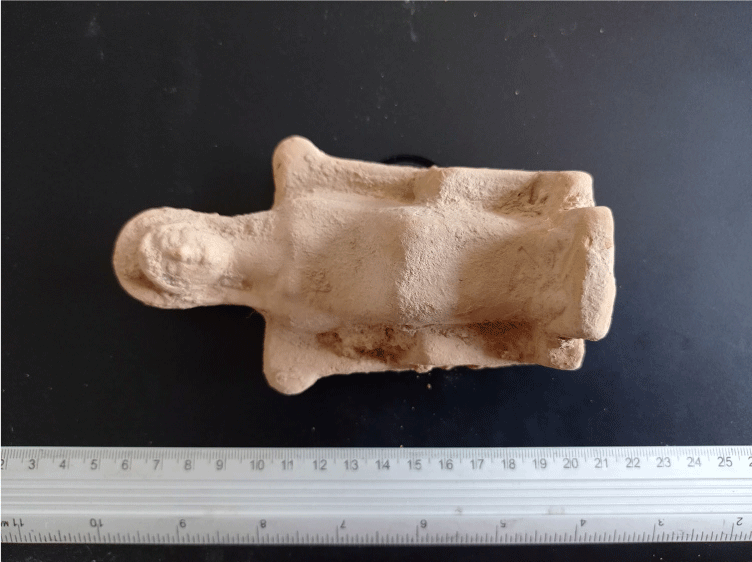
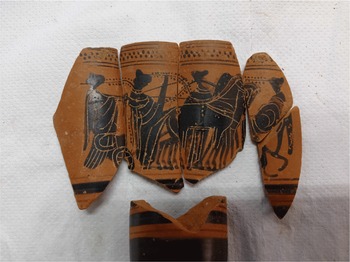
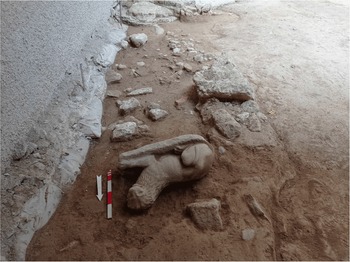
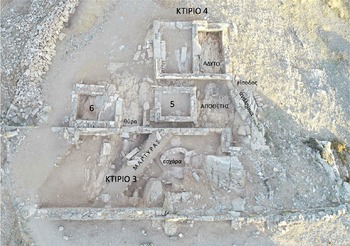
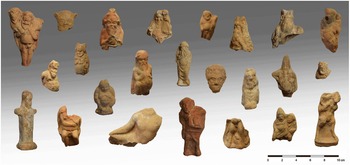
During the earlier excavation of the site, the foundation of a polygonal enclosure made of large blocks of Piraeus actite and three internal walls of the same structure were revealed that formed four rooms in a row open to the east. In the south, which was also the main area of worship, a total of six shrines had been uncovered, one of which with a statue of Cybele’s throne type and stone pedestals for the depositing of smaller votive offerings. The northernmost areas were interpreted as auxiliary for the needs of the priesthood (ADelt 60: 201–02). The latest research confirms the existence of three layers of floors, mainly on the eastern border of the archaeological site. The first two, superimposed on each other, are temporally related to the construction of the enclosure, while the third, which was found deeper, was probably the initial level of the space. This was confirmed by the investigation east of the northernmost temple, where a large number of clay figurines of mostly enthroned female figures were excavated (Figs 3.45 and 3.46 ). In addition to the figurines, small lekythes were also found, among them a black-figure example with a representation of four women, the first from the left driving a chariot and the last on the right sitting on a stool (Fig. 3.47 ). To the east of the cluster of temples were found bones of a horse’s skull together with two figurines of enthroned women. Finally, near the area of the enclosure, a marble statue of a lion was found, as a vow to the goddess with an inscription of the assignor: HΓEΣΙΜΑΧΟΣ ΕΚ ΚΕPΑΜΕΩΝ (Hegesimachos of Kerameis) (Fig. 3.48 ).
Sanctuary of Cybele, deposit with clay figurines. © Hellenic Ministry of Culture: Ephorate of Antiquities of Piraeus and Islands.

Sanctuary of Cybele, clay figurine. © Hellenic Ministry of Culture: Ephorate of Antiquities of Piraeus and Islands.

Sanctuary of Cybele, part of a black-figure lekythos. © Hellenic Ministry of Culture: Ephorate of Antiquities of Piraeus and Islands.

Sanctuary of Cybele, marble statue of a lion. © Hellenic Ministry of Culture: Ephorate of Antiquities of Piraeus and Islands.

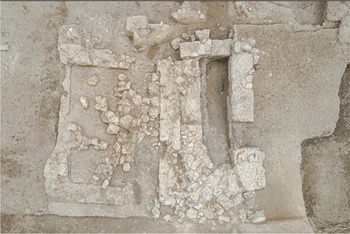
At 8 Diamanti Street an ongoing rescue excavation has so far yielded finds dating from the Classical to the Late Roman times (Fig. 3.49 ). These include one stone-built enclosure from the Roman period, as inferred from the excavated pottery. In addition, excavations revealed three wells, two from the Roman period and one from the Classical to the Hellenistic period, based on the pottery found in its fill. The enclosure consists of a rectangular construction made of enormous margaic limestone bricks and encompasses abundant animal bones and a large concentration of Murex shells. To the west of the rectangular structure, there are traces of its roof, which has collapsed and was probably a vaulted roof with tiles. A separate four-wall room abuts the north side of the enclosure. This room may have been a water tank, based on the mortar found on its floor and walls. To the east of the structure and this room, two undisturbed children’s jar burials dating to the fifth century were also excavated. North of the room/tank, the base of a lime pit was revealed and, further north, the remains of a partially preserved road. The east part of the excavation area yielded an extensive concentration of animal bones, pottery, ceramics, and other movable finds, giving the impression of a refuse area/context. There are also two local dense concentrations of animal bones (mostly bovine).
Diamanti street, rectangular structure. © Hellenic Ministry of Culture: Ephorate of Antiquities of Piraeus and Islands.

In Hellinikon, during the construction of the Poseidonos Avenue underpass, part of a large rectangular building was found, probably from the Late Byzantine period (Fig. 3.50 ). The work has been conducted by Maria Giannopoulou (Ephorate of Antiquities of Piraeus and Islands). The building consists of two sections and 13 rooms around an interior courtyard. Part of a road was also discovered north of the building dating to the same period. Under the ancient road, seven disturbed graves were investigated (two cist graves, two tile graves, and three pit graves), probably from the Early Byzantine period, and parts of four walls probably from Late Classical period were found. The earlier use of the site is also identified by cultivation or irrigation channels and pits, cut into the natural rock surface, dating from the Classical period or even earlier.
Hellinicon, remains dating from Classical to Late Byzantine times. © Hellenic Ministry of Culture: Ephorate of Antiquities of Piraeus and Islands.

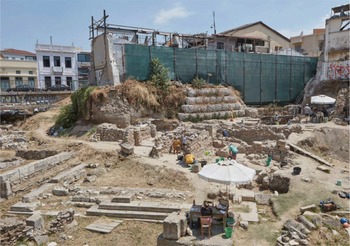
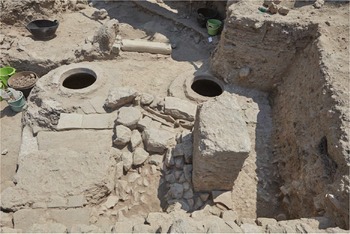
Work at the Athenian Agora in 2022 (ID18538, ID18405 , ID8115), directed by John Camp II (ASCSA), focused on the south and north of the Painted Stoa and within the western third of the building (Fig. 3.51). Byzantine levels were explored within section ΒΘ East, revealing several rooms south of the Painted Stoa; two well-preserved pithoi were discovered, along with a crudely paved area and drain suggestive of liquid management in the area (Fig. 3.52 ).
Work on the south and north of the Stoa Poikile and the western third of the building. © ASCSA.

Two preserved pithoi, a paved area and drain used to manage liquids in the area. © ASCSA.

In section ΒΘ West, excavations concentrated on later levels within the west end of the Painted Stoa. Layers of Early Byzantine and Late Roman fills were removed, and an Ionic column base made of Pentelic marble was found. The column base matched another one discovered previously (Shear Reference Shear1975: 338), implying the presence of a large, unrecognized monument or building in the area. The lowest step of the façade of the Painted Stoa was exposed near its western end, revealing well-cut limestone step-blocks joined by substantial double-T clamps.
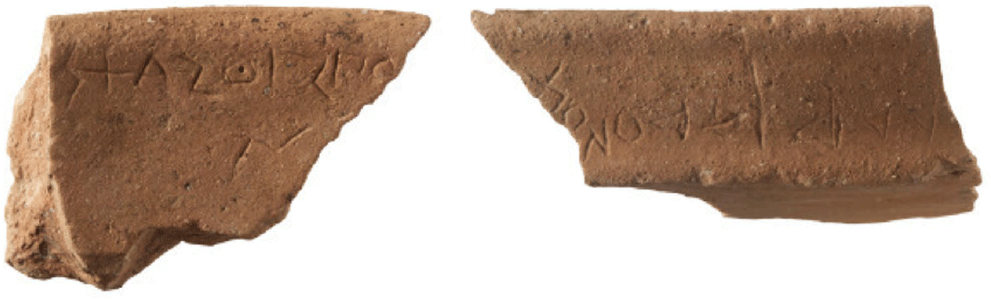
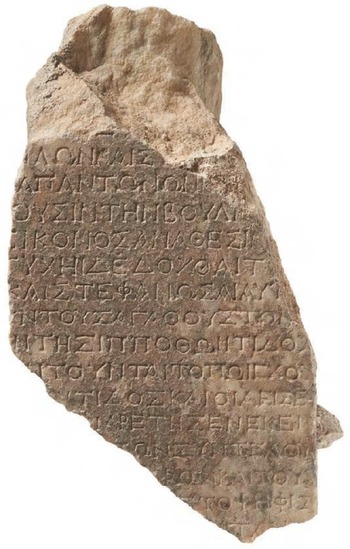
In section ΒΖ, Late Roman walls that fell in the winter of 2021/2022 due to heavy rains were cleared up. Among the finds was a fragmentary Late Hellenistic inscription (second century BC) concerning an associate of one of the Antiochid kings of Syria. Late Archaic/Early Classical layers were also excavated, yielding a collection of ostraka containing names such as Xanthippos, Themistokles, and Aristeides, along with lesser-known individuals (Fig. 3.53 ).
Ostrakon, probably discarded in the 480s. © ASCSA.

Furthermore, a separate small excavation was conducted at the Crossroads Enclosure in section ΒΓ. A fragmentary inscription was discovered in the later Roman round structure, highlighting honours for the prytaneis of the tribe of Hippothontis and their officials in the first century BC (Fig. 3.54 ).
Honorific inscription for the prytaneis of the tribe of Hippothontis and their officials, first century BC. © ASCSA.

Anna-Maria Anagnostopoulou (Ephorate of Antiquities of Piraeus and Islands) reports a rescue excavation in Moschato, 37 Chimarras Street ( ID18607 ), which has brought to light an extensive building complex that occupied the central and south part of the excavation area and probably dates to the Late Roman/Early Byzantine period (Fig. 3.55 ). From the excavation data so far, it appears that this is a workshop, probably a winery, consisting of a network of connected cisterns of varied dimensions and large storage pithoi. Finds from the excavation include large amounts of pottery, clay lamps, terracotta figurines, and coins.
Workshop of Late Roman–Early Byzantine period. © Hellenic Ministry of Culture: Ephorate of Antiquities of Piraeus and Islands.

Anastasia Dakouri-Hild (University of Virginia) and Stephen Davies (University College Dublin) report on the diachronic Kotroni Archaeological Research Project (KASP; ID18601 , ID18035 , ID8141 ), which has taken place since 2019 under the auspices of the Greek Ministry of Culture (Ephorate of Antiquities of East Attica) and the IIHSA. The project focuses on studying the relationship between the natural and human landscape of Aphidna, just east of Kosmothea in northeast Attica, from prehistory through to the present. Aphidna, an important deme of Classical Athens, has a rich history that includes a Middle Bronze Age cemetery, a Mycenaean/Late Bronze Age citadel, a Classical–Hellenistic fort, and various settlements from different time periods including Geometric, Archaic, Hellenistic, Roman, Byzantine, Frankish, Turkish, and contemporary communities. Due to the area’s preservation and its diverse history spanning four millennia, it serves as an excellent case study for understanding the long-term inhabitation and changing significance of landscapes.
In 2022 the KASP study season commenced, involving the sorting and quantifying of pottery, the illustration of selected sherds for an upcoming conference, and the diagnostic study of conducting ceramic and diagnostic studies in museums. Additionally, a descriptive study of small finds from previous seasons was completed, and the data was entered into a cloud-based publication database.
Peloponnese
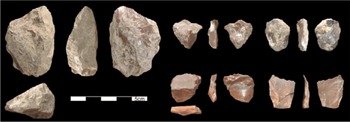
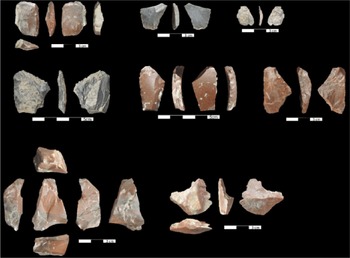
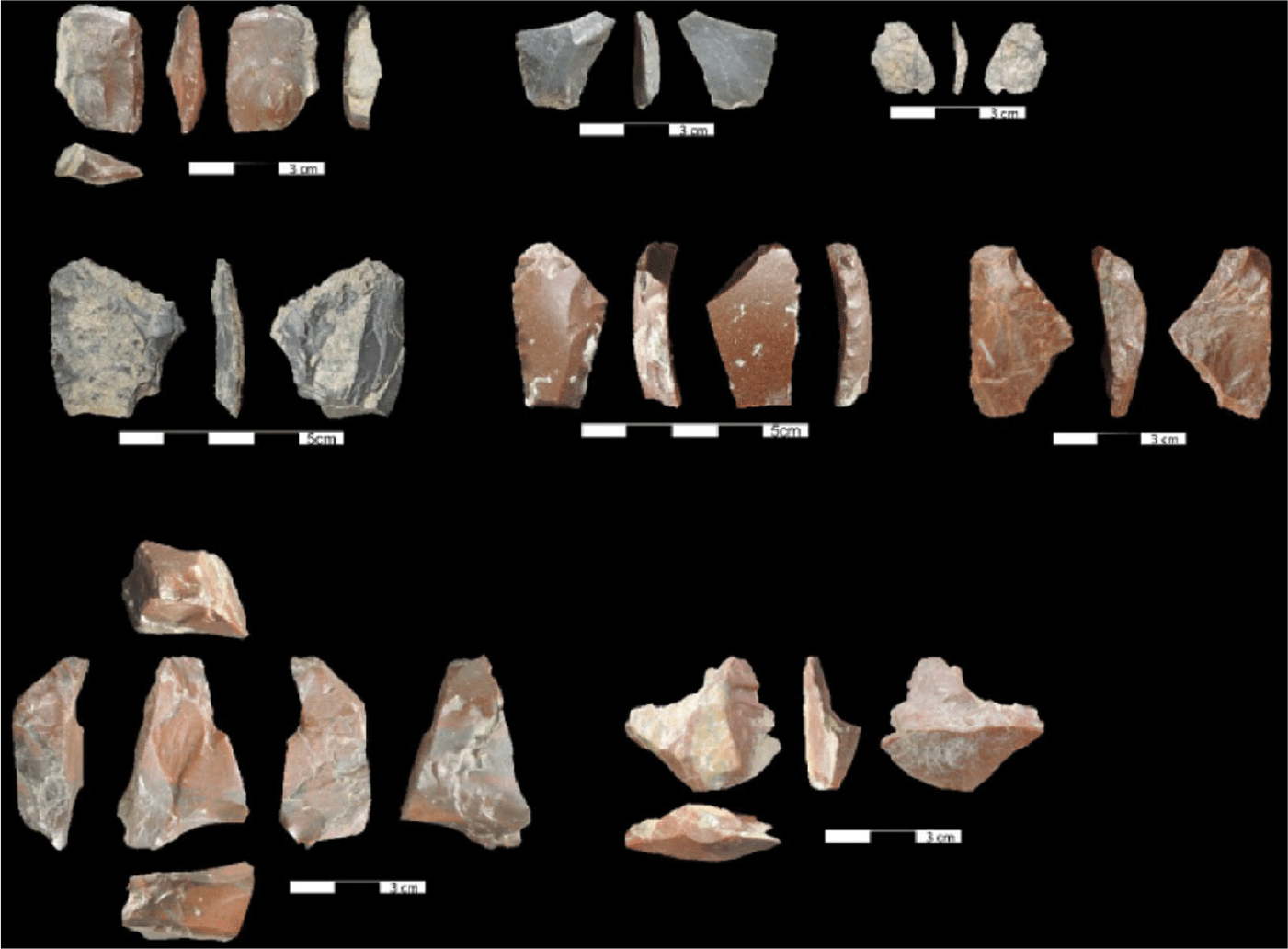
2022 saw the completion of the Megalopolis Paleoenvironmental Project (2018–2022) ( ID18541 , ID18402 , ID13474 , ID8117 ; https://www.culture.gov.gr/el/Information/SitePages/view.aspx?nID=4607). Eleni Panagopoulou-Karampela (Ephorate of Palaeoanthropology and Speleology), Panagiotis Karkanas (ASCSA), and Katerina Harvati (Eberhard Karls Universität, Tübingen) describe the objectives of the final season, including reassessing previously identified archaeological and paleontological sites and collecting geological samples for various analyses and dating methods (Konidaris et al. Reference Konidaris, Tourloukis, Boni, Athanassiou, Giusti, Thompson, Syrides, Panagopoulou, Karkanas and Harvati2023). The area of Kyparissia yielded nine lithic artefacts (Fig. 3.56 ), predominantly blanks and debris made of radiolarite, along with faunal remains such as bones of large herbivores and small-sized taxa; elephant and other large mammal bones were found here in association with lithic artefacts. Tripotamos and Choremi were confirmed as important sites for understanding human occupation during the Palaeolithic, with rich lithic assemblages (Fig. 3.57 ) and faunal remains of artiodactyls and bovids.
Lithic artifacts made of flint and radiolarite from Kyparissia. © Hellenic Ministry of Culture: Ephorate of Antiquities of Palaeoanthropology and Speleology/ASCSA.

Lithic artifacts made of flint and radiolarite from Choremi. © Hellenic Ministry of Culture: Ephorate of Antiquities of Palaeoanthropology and Speleology/ASCSA.
Marathousa yielded hippopotamus remains and a lithic artefact, suggesting human activities in the eastern part of the Marathousa mine. Sediment samples were collected from all the investigated sites for various environmental and dating analyses. The stratigraphy of each site was studied and litho-stratigraphic units were documented. Overall, the surface survey and geoarchaeological investigations conducted over the five-year programme have allowed for the identification of five new Palaeolithic sites in the Megalopolis basin dating to the Middle Pleistocene (Panagopoulou et al. Reference Panagopoulou, Tourloukis, Thompson, Konidaris, Athanassiou, Giusti, Tsartsidou, Karkanas and Harvati2018; Panagopoulou-Karampela, Karkanas and Harvati Reference Panagopoulou-Karampela, Karkanas and Harvati2022; Konidaris et al. Reference Konidaris, Tourloukis, Boni, Athanassiou, Giusti, Thompson, Syrides, Panagopoulou, Karkanas and Harvati2023). These sites offer valuable insights into human behaviour during an important period of human evolution and contribute to the understanding of this relatively under-explored area.
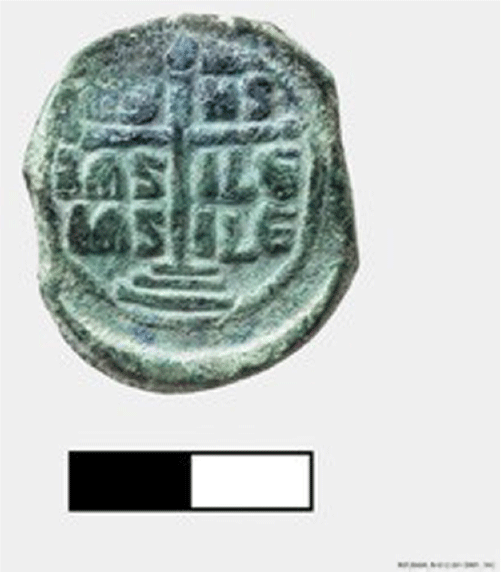
Sharon R. Stocker and Jack L. Davis (University of Cincinnati) report on the 2022 season of the Palace of Nestor excavations at Pylos, conducted under a permit of the ASCSA and focusing on three areas of the site ( ID18537 , ID18403 , ID8078 , ID5577 ). A trench was opened to explore a collapsed and rebuilt part of the southwestern wall of the grave of the Griffin Warrior, which dates to between 1500 and 1450 BC (Fig. 3.58 ). The excavation outside the southwestern wall of the Griffin Warrior’s grave located the line of the foundation trench and confirmed that the burial deposit had not been disturbed since its initial deposition. In Tholos VI, the excavation revealed new information about the construction of the blocking wall, including a Byzantine-era pit dug into it. The pit contained a coin from the reign of Michael IV of Byzantium (Fig. 3.59 ), providing a potential date for the pit.
Grave of the Griffin Warrior with 2022 trenches dug to explore the southwestern wall. Grave at right. © The Department of Classics, University of Cincinnati.

Coin of Michael IV of Byzantium. © The Department of Classics, University of Cincinnati/ASCSA.

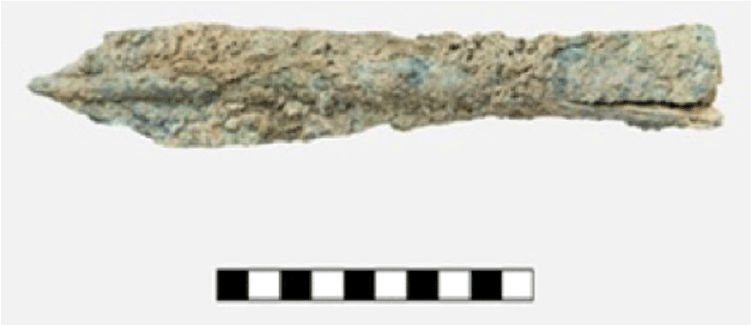
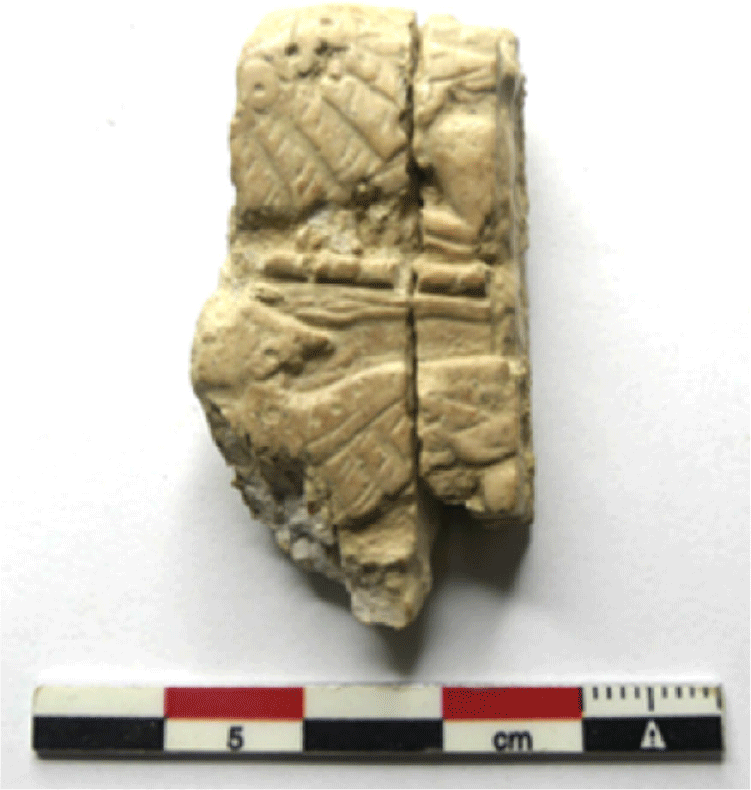
The most significant finds came from Area H, where unexpectedly dense complexes of walls were discovered, indicating multiple construction phases using different techniques. An uppermost floor featured a large, plastered offering table and a terracotta scoop nearby. Outside the room, a deep pit contained pottery and animal bones, likely remnants of a ritual feasting deposit. Conservators worked on conserving finds from the recent and previous excavation seasons, including artefacts from the Griffin Warrior’s grave. Among the notable finds were a socketed spearhead (Fig. 3.60 ) with traces of wood inside, similar to one found in Schliemann’s Shaft Grave IV, and a small ivory rod (Fig. 3.61 ) from the dromos of Tholos VI depicting a couchant griffin.
Socketed spearhead from the grave of the Griffin Warrior. © The Department of Classics, University of Cincinnati/ASCSA.

Wing and haunch of a griffin or sphinx at top in carved ivory. © The Department of Classics, University of Cincinnati/ASCSA.

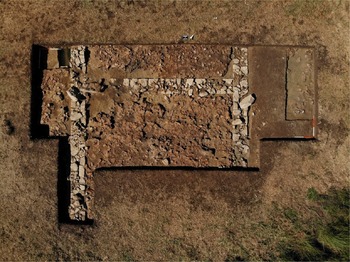
A new project is underway at the Archaic-Imperial sanctuary of Poseidon at Kleidi Samikou ( ID18544 ; 2022–2026). Erofili Kollia (Ephorate of Antiquities of Ilia) and Birgitta Eder (Austrian Academy of Sciences) report on the first year of excavations, which follow geophysics work carried out in 2017, 2018, and 2021 (Eder et al. Reference Eder, Huber, Kolia, Moutzouridis, Nikolentzos, Vött, Xanthopoulou, Banou, Zimi, Giannouli, Karapanagitou and Koumousi2020). The findings of the excavation include the discovery of well-constructed walls, pottery concentrations, and the presence of a ceramics fill between the walls. The walls are believed to be the foundation of a building made of irregular and rough lime bricks, and the ceramics found, including Laconian tiles, and the style of the marble entablature indicate an Archaic date. This is further supported by the oblong plan of the building (9.4m × 28m). Based on the excavation and geophysical research, it is suggested that the building had a floor plan with two large central spaces connected to smaller spaces in the northwest and southeast (Fig. 3.62 ), possibly indicating a religious building with two naves. The discovery of the temple building in Kleidi, along with the presence of Archaic ceramics and a fragment of a marble basin (Fig. 3.63 ), confirms the existence of the Sanctuary of Poseidon mentioned by Strabo (Geography 83.3).
Aerial photograph of the excavation. © Hellenic Ministry of Culture: Ephorate of Antiquities of Ilia/ÖIA.

Part of the marble basin found at the building of Kleidi-Samikou. © Hellenic Ministry of Culture: Ephorate of Antiquities of Ilia/ÖIA.

The Mt Lykaion Excavation and Survey Project ( ID18538 , ID8119 ; 2016–2022), directed by Anna Karapanagiotou (National Archaeological Museum of Athens), David Gilman Romano (University of Arizona), and Mary E. Voyatzis (University of Arizona) under the auspices of the ASCSA, continued in 2022 for its fifth series of excavation work. Work focused on two main areas: the southern peak of the mountain, where the team excavated the altar of Zeus, and the lower sanctuary, where the team worked on various buildings and structures, including the Sanctuary of Pan.
Excavations at the altar of Zeus discovered the likely continuation of the rubble retaining wall of the altar to the west and found pockets of Early Helladic pottery in specific areas. Additionally, deposits of Late Helladic and Early Iron Age fineware and a well-preserved wide-mouthed jar dating to the MH III/LH I period were discovered. Excavations at the Ionic Building focused on cleaning the interior of the building and relocating fallen blocks and stones. The team exposed the foundation courses of the building on three sides and found a marble Ionic column base near the front stylobate.
A new exploratory trench was opened above the Sanctuary of Pan. Found here was a large cache of roof tiles, primarily Laconian, along with mud-brick clumps, suggesting a roof collapse of a potential building or structure. Another trench, which has been under investigation since 2016, revealed a circular anomaly believed to be the Pan Sanctuary. In the central and southern areas of the trench, the team discovered water pipes, a water outlet, and limestone and marble slabs, as well as black-glaze sherds and a black-glaze skyphos dating back to around 500 BC. The team also excavated a rubble stone wall that was initially discovered in 2019 (Romano and Voyatzis Reference Romano and Voyatzis2021), and excavations explored the northern quarter of the administrative building, exposing fieldstone interior walls, including a north–south wall measuring 11m, an east–west wall measuring 1.95m, and a 6m wall. The team found a large Doric capital and removed blocks from higher levels in the southern part of the trench. Hellenistic and Late Classical pottery were recovered from lower levels.
Excavations continued in the middle section of the corridor. This area, previously used as a passageway for athletes, had become a refuse pit from the third century to the first century BCE. The team discovered large quantities of tiles, including stamped tiles, Hellenistic pottery, and iron nails. Fallen wall blocks were also relocated within the trench. The excavation of the dromos focused on exposing the low wall on the east side as it approached the northern arch of the corridor. The team also discovered the low walls on the west side, which were partially covered by a walnut tree. They identified the ends of the low walls forming the entrance to the sanctuary from the north. Numerous Classical and Hellenistic pottery pieces were found on the floor levels of the dromos.
Kim S. Shelton (University of California at Berkeley) reports on another new project begun in 2022 at Nemea, under a five-year permit of the ASCSA ( ID18596 ). At the Early Christian basilica, the work aimed to preserve the walls, which had deteriorated from exposure to the elements, and to prevent the collapse of the upper walls made from large ashlar blocks from the Temple of Zeus. The west end of the fifth-century AD building, including the narthex and rooms added later to the building on the north and south sides, was cleaned and cleared to reveal the foundation walls, floor surfaces, and architectural features. The previously unrecorded interior walls of the fourth-century BC Xenon building, which is thought to have served as accommodation for athletes and their trainers competing in the Nemean Games (Birge, Kraynak and Miller Reference Birge, Kraynak and Miller1992), were also discovered (Fig. 3.64 ). Digital recording and planning were conducted for the foundations, and covered drains and road surfaces were uncovered and recorded. Small finds such as coins and painted terracottas were recovered. Future seasons will focus on reinvestigating the building and conserving the masonry. As part of the project, an Early Christian burial display was removed due to damage to the bones, impact on the ancient architecture, and ethical considerations.
Basilica, Narthex, interior – wall founded on north–south fourth-century BC Xenon wall. © The Nemean Center for Classical Archaeology/ASCSA.

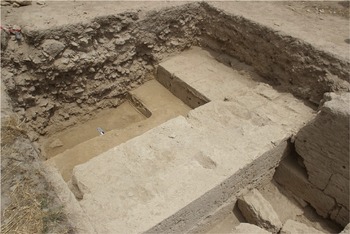
Elsewhere in Corinthia, excavations continued of Byzantine Corinth ( ID18535 ), led by Christopher Pfaff (ASCSA). In 2022, excavation revealed portions of the north–south Byzantine (12th century) road, first recognized further north in 2018, as well as sections of walls of contemporary structures to its east. Below the Byzantine road layers, a deep robbing trench was revealed extending down into a partially plundered vaulted drain. This drain underlies the earliest Roman road layers uncovered to the west in 2021 ( ID18406 ). To the east of this drain, part of a smaller secondary drain was discovered below a fill of stones and transport amphorae. The amphorae, including at least two Spanish types, date to the first century AD. To the west of the road, much more of the Late Roman Marble Room discovered in 2020 ( ID13473 ) was revealed (Fig. 3.65 ). Substantial remains of its brick- and stone-faced concrete east wall were found to extend northward for a distance of over 15 metres from the southeast corner of the room. The newly revealed portion of the floor of the room preserves much of its original opus sectile pavement with circles in a reticulate pattern, but some areas show signs of crude repairs (Fig. 3.66 ). Excavation in this area revealed two massive east–west walls constructed in two distinct styles. The south wall abuts the west face of the pre-existing east wall of the Marble Room and is constructed in part with irregular poros blocks set in mortar with trowelled lines similar to those found on several Late Antique buildings in Corinth (Fig. 3.67 ).
The Marble Room, view from the south. © ASCSA.

Late Antique wall over north portion of the Marble Room. © ASCSA.

Room line with a bench north of the Marble Room. © ASCSA.

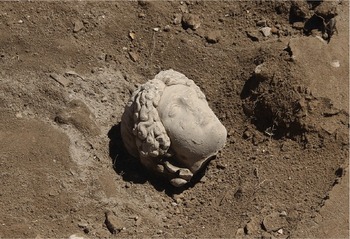
The north wall is also likely to date to the Late Antique period, but, in contrast to the south wall, it cuts through the east wall of the Marble Room and is constructed of larger, more regular poros ashlars. At its east end, this wall forms a right angle with another wall that extends northward into the north scarp of the excavation trench. The exposed corner of the interior space defined by these two walls preserves evidence of a marble pavement and a marble veneered bench, similar to that of the earlier Marble Room to the south. The Marble Room seems to have remained open at least until the first of Late Antique walls was constructed toward its north end. The late sixth- to seventh-century fill deposited over the original floor of the Marble Room south of the Late Antique walls produced large quantities of pottery and glass vessels as well as a variety of other finds, including the head of a full-size marble copy of the Cassel Apollo type (Fig. 3.68 ) and part of the leg of another large marble figure.
Head of the Cassel Apollo type as discovered in Late Antique fill. © ASCSA.

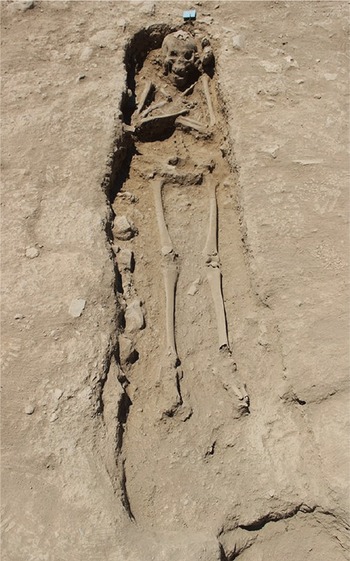
Excavation also revealed seven graves cut into the hard upper surface of the north–south Byzantine road that lay just below the modern plough zone. The location of these graves in close proximity to four others (excavated previously in 2019) strongly suggests that all 11 graves belong to a single burial plot. Six of the seven graves excavated in 2022 were elongated shallow pits, while the seventh was a slightly more elaborate rectangular cist lined with small stones. The disposition of the skeletons (supine with arms crossed and head positioned to the west) is consistent with Christian burial practice, but the lack of accompanying finds contemporary with the burials leaves their date in doubt (Fig. 3.69 ). An isolated grave of a small child covered with a single cover tile was discovered in the fill above the Marble Room. Its relationship to the other burials is unclear at this time, though it too appears to be a Christian burial, no earlier than the 12th century.
Late grave cut into the north–south Byzantine road. © ASCSA.

North Aegean
A new five-year collaborative project on diachronic landscape change and the historical land use of Samos commenced in 2022 under the direction of Pavlos Triantaphyllidis (Ephorate of Antiquities of Samos and Ikaria) and Jan-Marc Henke (DAI). In the spring, final preliminary investigations were carried out, creating two seismic profiles along two transects in the Chora plain to gain insight into the stratigraphy of the area. The profiles revealed sediment layers of a once extensive lagoon from ancient times, which is now mostly silted up. Additionally, a significant tectonic fault north of the lagoon was observed, likely responsible for the formation of the entire Chora plain and potentially influencing its development to this day. Further seismic analysis alongside geomagnetic and ground-penetrating radar measurements were conducted in the archaeological site of the Heraion and the adjacent area to the east. This led to the tracing of the Archaic Sacred Way’s eastern path and provided evidence that the Row of Bases (Basenreihe), currently interpreted as the western boundary of the sanctuary, bends southwestward outside the archaeological site, suggesting a previously unknown western entrance.
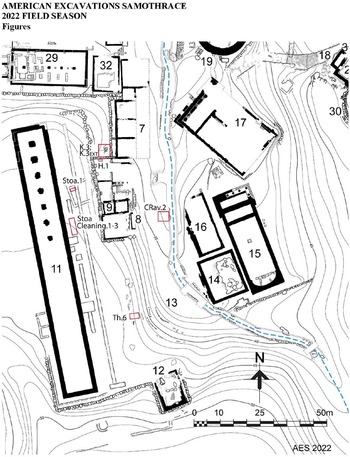
Bonna D. Westcoat (ASCSA/Emory University) reports on the third year (2022) of archaeological fieldwork in the region of the Sanctuary of the Great Gods on Samothrace under a new permit obtained in 2018 ( ID18573 , ID8116 ). The excavation, field survey, architectural research, and conservation work focused on five initiatives (Fig. 3.70 ). First, excavations were completed in the Central Ravine to locate the ancient water channel and they uncovered a section of the Roman channel’s retaining wall. Second, the team explored the theatre, dated to ca. 200 BC, to clarify its design. They found preserved sections of a terracotta pipe and fragments of the socle blocks (Fig. 3.71 ). Third, in Area K and Room H, the team aimed to understand the relationship between various features, including retaining walls and a staircase, suggesting different construction phases in the Hellenistic and Roman periods. Conservation measures were taken to stabilize the Roman retaining wall in Area K. Fourth, the terrace east of the third or second century BC stoa was investigated, uncovering a bronze ‘pinky’ finger from the left hand of a life-size bronze statue, as well as a constructed feature composed of neatly stacked basalt and trachyte cobbles (Fig. 3.72 ). Finally, the team documented the ancient city fortification wall from the West Gate to Tower A and conducted a field survey to understand the transitional area between the city and the sanctuary. Preliminary findings indicate Hellenistic and Roman activity in the region, with evidence of architectural elaboration during the Hellenistic period. Overall, the season’s work provided valuable insights into the sanctuary’s layout, structures, and historical development.
Plan of the Sanctuary of the Great Gods indicating the position of 2022 trenches. © ASCSA.

Orthorectified overhead view of terracotta pipes found in the theatre. © ASCSA.

Southern end of the foundation for a long orthostate monument to the east of the stoa. © ASCSA.

South Aegean
Joanne M.A. Murphy (University of North Carolina at Greensboro) and Amanda Kelly (University College Dublin) report on the fifth year of the Kea Archaeological Research Survey (KARS; ID18569 , ID12999 , ID4216 , ID3258 ). The team focused on examining pottery from specific areas and selecting samples for scientific analysis. Natalie Abell (University of Michigan) conducted a diachronic fabric study of prehistoric material, identifying a domestic area with table, storage, and cook wares belonging to different periods. Some small finds, such as kiln furniture, a ceramic wine press, and a ceramic mortar, were discovered, and a possible prehistoric slag fragment was found. Maria Koutsoumbou (Ministry of Culture) focused on the Archaic–Classical period; there was a predominance of Archaic to Classical/Hellenistic sherds, reflecting the presence of a nearby Late Archaic–Classical farmstead. Alexandros Laftsidis (Université Libre de Bruxelles), focusing on the Hellenistic and Roman periods, identified several examples of Attic-type A skyphoi and fragments from kraters, indicating wine-drinking practices similar to those in the Aegean and mainland Greece. The strong presence of Attic-type A skyphoi from the Late Archaic through the early Hellenistic periods suggests that the Keans closely monitored pottery developments elsewhere. However, vessels typical of the Hellenistic period were either absent or poorly represented. Overall, future work will focus on dating the pottery and selecting samples for chemical and petrographic analysis, as well as analysing lithics chemically.
Dimitris Athanasoulis (Ephorate of Antiquities of Cyclades) and Alexandros Mazarakis Ainian (University of Thessaly) report on the five-year excavation project at Vryokastro on Kythnos island (https://www.culture.gov.gr/el/Information/SitePages/view.aspx?nID=4609). This year, in 2023, the team focused on structures and buildings of the Acropolis that first came to light in 2021 ( ID18183 ). The survey was completed in Building 4 (Fig. 3.73 ). This 7.5m × 7.5m structure is identified as a temple of the Classical period, based on female terracotta figurines (Fig. 3.74 ), perfume vessels, and burned bones of small animals. Between this temple and Building 3 there are two small, square structures, 5 and 6, with entrances facing each other. Building 6, is a 4.85m × 4.25m structure, the interior of which is divided into three levels. It is suggested that this was the main entrance to the altar, which, during the Roman period, was abandoned and incorporated into Building 6, perhaps as a ritual representation of a descent to Hades.
Aerial photo of the north part of the Acropolis. © Hellenic Ministry of Culture: Ephorate of Antiquities of Cyclades.

Terracotta figurines of Dionysus and actors. © Hellenic Ministry of Culture: Ephorate of Antiquities of Cyclades.

Surveying was conducted on the opposite, earlier Building 5, a 3.8m × 3.3m structure that is also identified as a second, smaller temple, based on various votive offerings that were found beneath the floor in 2021. The paved narrow corridor between Buildings 4 and 5 suggests that both structures were in use during the same period.
In 2023, excavations focused on Building 3, a large 21m × 8.5m building, with monumental architecture in its entrance on the north wall. Two square trenches inside the building further our understanding of its layout significantly. In the eastern part of the building a series of jagged recesses of the natural rock, bordered by walls, were revealed, which seem to have formed spaces for the storage and the deposition of votive offerings, as in these areas there was a strong concentration of finds of all categories. In this part of the building, a stone, 2.5m × 2m horseshoe-shaped eschara was found, containing ash, several burned animal bones. and votive offerings. This layout casts doubt on whether this part of the structure was covered with a roof. An important concentration of finds was also found alongside the back (south) of the western half of the wall.
A retaining wall runs between the two temples (Buildings 4 and 5) and Building 3, with an entrance on the east side, which during the long life of the sanctuary (seventh century BC to third century AD) collected countless votives (Fig. 3.75 ). The 2023 survey brought to light hundreds of intact or almost intact artefacts, mostly female terracotta figurines and perfume vessels.
Aerial photo of the sanctuary of Demeter and Kore. Buildings 4 (front), 3 (left), 5 (middle), and 6 (right). © Hellenic Ministry of Culture: Ephorate of Antiquities of Cyclades.

A more precise dating and interpretation of the structures will be carried out after the study of all finds and collected data. The excavation has unearthed thousands (the intact or almost intact figurines exceed 2,000) of Archaic, Classical, or Hellenistic terracotta figurines of women and children and fewer men, hermaic stelai, piglets, turtles, lions, birds, etc. (Fig. 3.76 ). There were also numerous lamps of various styles, dating from the Archaic to Roman periods, coins (Fig. 3.77 ), fine pottery, and various ceremonial liquid vessels of exceptional quality, mainly red- and black-figured Attic vases, as well as Corinthian, Cycladic, and of east Aegean workshops.
Animal figurines (piglets, turtles, lions, goats, birds, cicada). © Hellenic Ministry of Culture: Ephorate of Antiquities of Cyclades.

Bronze coins of the Roman period. Sestertius of Trajan, after 106 AD (below), and coin of Diocletian, 285 AD (top). © Hellenic Ministry of Culture: Ephorate of Antiquities of Cyclades.

Crete
In July 2023, 10 fossils of dwarf hippopotamuses were discovered during work carried out by Georgios Anastasakis and Georgios Lyras (National Kapodistrian University of Athens) at Katharo Plateau on the Dikti mountain in east Crete ( ID18571 ). These animals were endemic to Crete and their fossils date back to 200,000–300,000 years ago. The pygmy hippopotamus is a small member of the hippopotamid family. Fossils of other endemic animals have been found on other parts of Crete ( ID11675 ) and Greek islands such as Tilos, Rhodes, and Naxos, but this is the largest concentration of pygmy hippopotamus fossils to date.
Maria Andreadaki-Vlazaki (General Secretary, Ministry of Culture and Sports), under the auspices of the Ephorate of Antiquities of Chania, reports on the excavation in the Kastelli Hill in the old town of Chania, and specifically in the area of the Katre Street, during the months of October and November 2022 ( ID18542 ; https://www.haniotika-nea.gr/apokalyptetai-stadiaka-to-anaktoriko-kentro-ston-lofo-kastelli-fot/). New findings support the hypothesis that this was a palace of Chania and Kydonia of the Minoan period. Two more bases of wooden columns were unearthed (Fig. 3.78 ), parts of the double colonnade that covered a large area (so far extending to 18m north–south and 10.3m east–west) dating to the 14th and 13th centuries BC. Attached to the north wall, at a place between the two colonnades, there is evidence of wooden furniture, possibly a seat, that stood on a stone base on the floor (Fig. 3.79 ).
Part of the colonnade. Two bases for the support of wooden columns. © Minoan Kydonia systematic excavations archive.
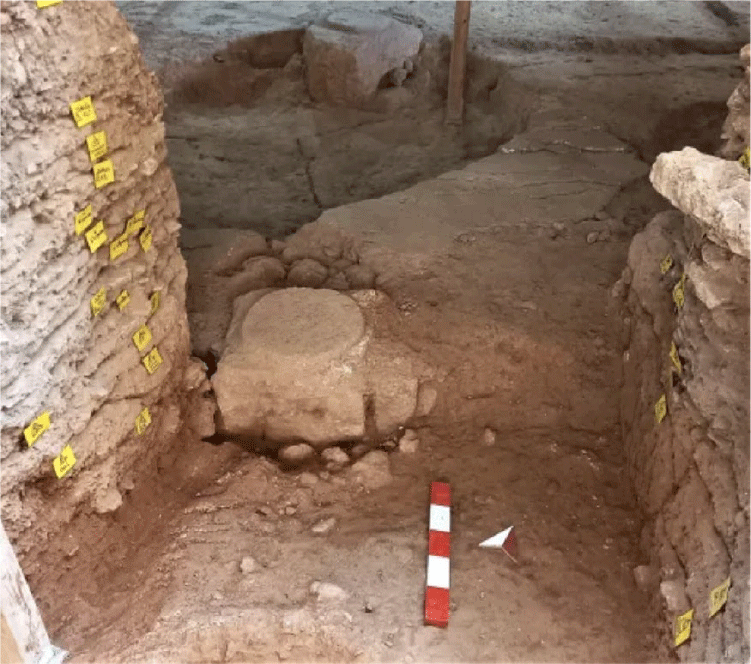
North wall of the colonnaded area from the south. Stone base of a wooden furniture. © Minoan Kydonia systematic excavations archive.

The excavation also revealed more evidence of the great earthquake of the 13th century BC in the floor made of gravel and lime. In addition, an area in front of the paved road first revealed in 2018 and dating to the Neopalatial period (16th–15th century BC) was shown to have been made of gravel and lime. The surface of this area, however, was made of a thinner layer and of a different texture and construction technique from the large colonnade area dated to the 14th century BC. Several pottery sherds of large vessels, with traces of fire that indicate collective craftsmanship, are dated to the end of the eighth and the beginning of the seventh century BC. An important find considered rare for the region is a terracotta female head of a goddess, dating to the same period (Fig. 3.80 ). Other important findings include several clay whorls and loom weights (second half of the seventh–early sixth century BC), and 33 silver coins, mostly staters of the fourth century BC. The coins come from various cities of Crete, including Kydonia and Knossos (Fig. 3.81 ). More pottery was found from a brief survey in an area belonging to Lionaki-Vlamaki, on the Kanevaro and Scordilon streets. These sherds helped further reconstruct artefacts of fine pottery dating before the middle of the 14th century BC that were brought to light during the 2021 excavation. Another important find is a clay discus, which includes a Linear A ideogram and depicts a warrior and oxen skulls (Figs 3.82 and 3.83 ).
Terracotta female head of a goddess. © Minoan Kydonia systematic excavations archive.

Thirty-three silver coins, including coins from Kydonia and Knossos © Minoan Kydonia systematic excavations archive.

Small clay discus depicting a warrior and Linear A. © Minoan Kydonia systematic excavations archive.

Small clay discus depicting two oxen skulls. © Minoan Kydonia systematic excavations archive.

A study season was undertaken at Azoria, east Crete (ID5576, ID4550) under the direction of Donald C. Haggis (ASCSA/University of North Carolina at Chapel Hill). The team studied the architecture, stratigraphy, and finds from excavations conducted between 2013 and 2017 (Haggis and Mook 2013; Reference Haggis and Mook2015; Haggis Reference Haggis, Pilz and Seelentag2014). They focused on the Protoarchaic Building, a complex of rooms used for feasting and sacrifice in the eighth and seventh centuries BC. The analysis and documentation of the building’s stratigraphy revealed three distinct phases, with the final phase transforming its function from ceremonial and ritual use to industrial space. The building consisted of nine interconnected rooms/spaces, and its disuse and abandonment occurred in the early Archaic period. The study also focused on structured deposits found in rooms of seventh-century buildings across the site. These rooms were left standing but closed and inaccessible during the Archaic period and contained distinctive assemblages of vessels, apparently deposited during their abandonment. The assemblages included various types of vessels, and their placement during and after abandonment suggests ritualized or ritual activities relating to rebuilding in the settlement. Zooarchaeological evidence in several deposits supports the idea of sacrificial feasting and structured deposition in conjunction with the distinctive ceramic assemblages. Furthermore, the project conducted a systematic study and analysis of wood charcoal samples recovered from excavations between 2013 and 2017. This analysis aimed to understand the use of wood as structural elements, furniture, fuel, and utilitarian objects, as well as to provide insights into the palaeoenvironment of the site and region during the 12th to fifth centuries BC (Haggis Reference Haggis2022).
In the past year, Elpida Chatzidaki (Ministry of Culture and Sports) and Eleni Papadopoulou (Ephorate of Antiquities of Chania) have undertaken excavation at the Archaic–Classical temple of Demeter at the Acropolis of Falasarna in west Crete (ID18531, https://www.culture.gov.gr/el/Information/SitePages/view.aspx?nID=4408). The temple, now collapsed, was built on a rocky hill at the plateau between two mountain peaks, with a natural cave with plenty of water. After the collapse, the rocky hill was used as a sanctuary for chthonic deities related to earth, water, and fertility and the symbolism of water as a life source. Excavations at the rocky areas have unearthed nude female figurines left as votive offerings that date to the early Archaic period (650 BC). Their main characteristic is the daidalic hairstyle and the tall polos. Other findings that date to the sixth century BC include objects made from Egyptian or Phoenician glass, clay figurines of birds and animals, arrowheads and spearheads, miniature pottery vessels, enthroned female figurines, and a female figurine holding a poppy flower and a pomegranate. Findings that date to the fourth century BC, include hydriskes, a beaked jug with a red-figured representation of a flying cupid, iron pieces, and objects made of alabaster.