

Introduction
The pregnant body has been a site of contestation for centuries. Historically, midwives and physicians vied for supervision of pregnant women and to serve as primary birthing attendants in the United States. Ultimately, the interdependent relationship between the medical and legal professions established doctors as primary practitioners within birthing work (Abbott Reference Abbott1988; Borst Reference Borst1995; Rothman Reference Rothman1991; Starr Reference Starr1982; Stover Reference Stover2011; Weitz and Sullivan Reference Weitz, Sullivan and Rothman1992). This study examines how this medico-legal relationship developed in South Carolina during the period from 1900 to 1940 and was reflected in the South Carolina Sanitary Codes midwifery regulations as a response to the state having the highest mortality rates for mothers and infants during the early twentieth century (Bonaparte Reference Bonaparte2007). Midwifery scholars have minimally discussed South Carolina despite its alarming birth statistics in the early twentieth century (see Campbell Reference Campbell1946 for sole study examining Georgia and South Carolina midwives). Examining legislative changes within South Carolina Sanitary Codes for midwives exemplifies how the relationship between the legal and medical professions changed who was ascendant in birthing work. This work extends previous midwifery literature (Lay Reference Lay2000; Rothman Reference Rothman1991; Weitz and Sullivan Reference Weitz, Sullivan and Rothman1992) by noting how midwifery supervisors enacted new legal prohibitions as well as the increased presence of more restrictive verbiage in midwifery legislation. This history helps to explain current midwifery regulation efforts by the medico-legal establishment especially as it relates to the relationship between certified nurse-midwives and lay midwives (e.g., insurance prohibitions, restricted areas of care, and increased scrutiny by the American College of Obstetricians and Gynecologists).
Based on a qualitative study that examined midwifery regulation advocacy by physicians (Bonaparte Reference Bonaparte2007), this article focuses on the temporal nature of South Carolina's midwifery legislation during the early twentieth century and reviews midwifery supervisor reports on the progress of midwifery in South Carolina. The study informing this article traces the mechanisms whereby physicians’ prestige and medical authority influenced midwifery abrogation in South Carolina. I explore how the language within these legislative stipulations governing granny midwives became more restrictive over time in the early twentieth century and how the South Carolina State Board of Health ensured that grannies operated appropriately. This exploration was guided by the following questions: (a) how did language changes within midwifery legislation reflect shifts of authoritative knowledge away from granny midwives? And, (b) how does the historical employment of midwifery supervisors aid us in understanding the historicized battle over pregnant bodies? Using Abbott's (Reference Abbott1988) and Starr's (Reference Starr1982) discussion of the medico-legal relationship, I argue that the medicalization of birth and the professionalization of medicine paved the way for increased legislative restrictions on South Carolina granny midwives.
I draw from midwifery legislation and South Carolina Board of Health Sanitary Codes to demonstrate that despite the lack of universal laws governing midwifery in the United States, South Carolina actively engaged in “rounding up” the midwife through legislation and instituting midwifery supervisors in the following ways during the early twentieth century. I use the term round up to describe how health officials brought midwives before the State Board of Health to prove their professional legitimacy and as a means of curtailing and replacing midwifery practice. First, early twentieth century South Carolina midwifery laws were lenient in comparison to later years (1900 to 1915 and 1920 to 1940, respectively) in which efforts to round up the midwife increased in order to counter high rates of maternal and infant mortality. Second, in the early 1920s, the South Carolina Board of Health employed black nurse-midwife supervisors to teach black midwives how to practice “better midwifery” rather than traditional methods of birthing. National and state public health campaigns at this point in history linked traditional birthing methods to negative birthing outcomes (Bonaparte Reference Bonaparte2007: 100). However, these efforts were ruses to round up midwives to show public health officials that older “uneducated” midwives were not serving South Carolina mothers. Consequently, these midwife supervisors in conjunction with increasingly stricter legislations governing midwifery reduced the presence of black granny midwives in South Carolina by enforcing and mandating midwifery training sessions.
In this article, I situate my study in the broader literature on the social significance of southern black granny midwives and how doctors used the professionalization of medicine and its legal edicts to advocate for prohibitive midwifery regulation. This literature is important to my discussion of how changing legal stipulations impacted black midwives’ social circumstances in a southern state plagued by worsening infant and maternal mortality rates and addresses gaps in literature concerning midwifery regulation in South Carolina. I then provide the theoretical foundations of my analysis and methodology to emphasize why the professionalization of medicine served as an escalating vehicle of exclusion within birthing work. Thereafter, I present my analytical findings of how the crux of midwifery regulation took place in the South Carolina Sanitary Codes; and, these Codes reflected South Carolina's efforts of ensuring that midwives passed state-mandated proficiency tests by using educated black nurse-midwives as supervisors. I conclude with some implications for why my analysis is related to the continued competition between birthing attendants.
Literature Review
The Social Significance of Women as Healers: The Case of the Black Midwife
During the seventeenth through the early twentieth centuries in the southern United States, many granny midwives or grannies were older black women who passed Central and West African herbal knowledge to younger women, which fostered cultural reproduction and rebellion against seventeenth-century dominant Western medical practices (Beoku-Betts Reference Beoku-Betts and Hudson1994; Davis and Ingram Reference Davis, Ingram, Bair and Cayleff1993; Fraser Reference Fraser1998; Gray White Reference Gray White1999; Heywood Reference Heywood2002). Black and white women during this time period preferred entrusting their lives to these revered grannies as their birthing attendants over ill-suited white male doctors (with little or minimal) obstetrical expertise (Davis and Ingram Reference Davis, Ingram, Bair and Cayleff1993; Devitt Reference Devitt1979; Holmes Reference Holmes and Rothman1992; see Beito and Beito Reference Beito and Beito2006 for further discussion of black health care in the American South). Grannies garnered respect due to their gender, age, life experiences, leadership and spiritual positions, as well as an interdependent relationship between healer and black-white community members during slavery and post-Emancipation (Davis and Ingram Reference Davis, Ingram, Bair and Cayleff1993; Fraser Reference Fraser1998; Gray White Reference Gray White1999; and see Lee Reference Lee1996). Consequently, American society considered midwives as experts in birthing work with divine healing arts and participants in “woman's work” (Hoch-Smith and Spring Reference Hoch-Smith and Spring1978). However, as professions became more dominant, the social acceptance of midwives shifted and their birthing practices became subject to regulation and abrogation efforts in the late nineteenth century and the early twentieth century (Bonaparte Reference Bonaparte2007; Davis and Ingram Reference Davis, Ingram, Bair and Cayleff1993; Mongeau et al. Reference Mongeau, Smith and Maney1961). I next outline the sociocultural context behind physician antimidwife advocacy that led to more restrictive midwifery legislation in the United States followed by a discussion of contradictory views southern physicians held toward midwives.
Changing Regulations: Medico-Legal Influence on Birthing Practices and Midwives
Prior to the 1920s, lay midwives (including granny midwives) practiced without regulation in several US states. But, between 1900 and 1940, US health officials and doctors came to view granny midwifery as an unsafe or illegitimate form of medicine and subjected the practice of midwifery to various forms of criticism and prosecution (Bonaparte Reference Bonaparte2007). For example, physicians writing in the Journal of the South Carolina Medical Association (JSCMA) and the Journal of the American Medical Association (JAMA) espoused racist beliefs about blacks, their approaches to healing, and debased Africa as “the dark continent” (Reference Bonaparteibid.: 12). In physicians’ estimation grannies were “a cross between a superstitious hag and a meddlesome old biddy,” an attack against the very bodies and ages of black women (Susie in Lee Reference Lee1996: 39).
Physicians and other medical practitioners (like nurses) substantiated their authority by noting that grannies were ignorant of newer medical birthing procedures and tools (Litoff Reference Litoff1990; Pringle Reference Pringle1998; Radcliffe Reference Radcliffe1989). Other antimidwife advocates included public health lobbyists who joined physicians’ campaigns against ethnic granny midwives (immigrant and black women) using circulars that distorted grannies’ visages (Susie in Lee Reference Lee1996: 39; see also Wertz and Wertz Reference Wertz and Wertz1977). The common thread within antimidwife advocacy was ensuring and bettering maternal and infant health outcomes. As a result, “[t]he emphasis on health in [American] culture and the medical profession's need to bolster its status and expand its ‘jurisdiction’ encouraged an ever-widening conception of the conditions that require medical management and treatment [such as maternity and childbirth]” (Schur Reference Schur1983: 93). Schur (Reference Schuribid.) illuminates how birthing work became a bone of contention between midwives and physicians; yet, he too ignores the experiences of southern black people and does not examine restrictions within midwifery legislation. Moreover, his analysis focuses on how the medical profession deemed midwives as medical deviants without considering how race functioned as another way of attributing deviancy to granny midwives. This project puts forth that such investigations are necessary when considering the direct links between physician advocacy and changes in medical legislation while also noting how changing medical codes and legislation impacted marginalized black women like granny midwives.
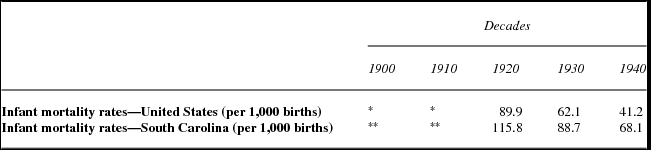
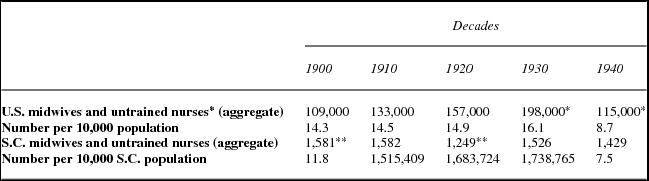
In particular, the federal Children's Bureau of Health and maternal health care movement in the early 1920s identified midwives as possible contributors to alarming infant and maternal mortality rates and reasoned that physician-assisted births would result in a significant decline in mortality rates (Condran and Murphy Reference Condran and Murphy2008; Litoff Reference Litoff1990; Mathews Reference Mathews, Baer and Jones1992; Rooks Reference Rooks1997). However, I found that South Carolina infant mortality rates did not drop between 1920 and 1930 (see table 1) despite the decreasing numbers of South Carolina midwives from 1900 to 1930 (see table 2). As I argue later, this decline in midwives’ numbers may be attributed to changes in midwifery legislation such as more restrictive standards of practice thanks to the maternal health care movement rather than to a decline in the number of midwives.
Infant mortality rates, United States and South Carolina, 1900–1940

aU.S. Department of Commerce 1943, Vital Statistics Rates in the United States 1900–1940. Washington, DC: U.S. Printing Office.
*The Historical Abstracts of the United States did not estimate infant and maternal death rates prior to 1915. See http://www.census.gov/statab/hist/HS-13.pdf. While there are estimates available, no comparable sources are available.
**Prior to 1920, national infant mortality rates were reported in 1915 (99.6), 1916 (100.0), 1917 (96.1), 1918 (105.8), and 1919 (88.7).
Count of midwives in United States, 1900–1940,a and South Carolina, 1900–1940b

a U.S. Bureau of the Census. (1975) Historical Statistics of the United States, Colonial Times to 1970. Washington, DC: Government Printing Office.
b U.S. Bureau of the Census. (1902) Twelfth Census of the United States, Taken in the year 1900: Population Part II. Washington, DC: Government Printing Office.
———. (1914) Thirteenth Census of the United States, Taken in the year 1910: Population, Occupation Statistics. Washington, DC: Government Printing Office: 653
———. (1922) Statistical Abstract of the United States, 1921. Washington, DC: Government Printing Office. www2.census.gov/prod2/statcomp/documents/1921-06.pdf.
———. (1933) Fifteenth Census of the United States: 1930, Population Occupations by States. Washington, DC: Government Printing Office: 983.
———. (1943) Sixteenth Census of the United States: 1940, Population, the Labor Force. Washington, DC:
Government Printing Office: 975.
* Beginning in 1930, the U.S. Census began combining the number of practical nurses with the number of midwives.
** Census records for this year counted unspecified nurses and midwives separately.
So, despite their erroneous claims, physicians achieved their interests within state and national legislatures and among the American populace and ensured their credibility by (a) pressuring legislators for the amendment of medical practice acts; and (b) limiting entrance into medical institutions to secure their position as superiorly competent professionals by using midwife supervisors.
Legislative Support of Authoritative Knowledge in Birthing Work
Pathways of establishing professional legitimacy involved the medical profession extending, “[i]ts authority . . . into arenas of moral and political action . . . [to possess] social privilege, economic power, and political influence” (Starr Reference Starr1982: 5). Consequently, the late nineteenth and early twentieth centuries involved a concerted push to remove individuals deemed illegitimate practitioners from medical practice through medical practice acts with licensure requirements. Beginning in the late nineteenth century, physicians sought licensure requirements for medical practitioners in order to establish “[t]heir political power [as well as] their distinctive structural position within the economy” (Reference Starribid.: 103). Licensing rules and regulations “assume a particular knowledge system linked to formal education, abstract standards, and hierarchical relationships among practitioners” (Lay Reference Lay2000: 32). Lay (Reference Layibid.) outlines the manner in which physicians successfully wrested the reins from midwives by using their professional legitimacy.
Yet, her arguments do not address the ways in which other women, like nurse supervisors, were employed to regulate granny midwives. Because “[p]rofessions [are] organized bodies of experts [whose members apply] esoteric knowledge to particular cases, [midwifery supervisors engaged in] elaborate systems of instruction and training, . . . examination and other formal prerequisites” to substantiate their medical authority (Abbott Reference Abbott1988: 3). By the very nature of their jobs, these supervisors’ practices reflected an expertise that the American populace could trust, which in effect, led to what Abbott (Reference Abbottibid.) termed “the determining history” of birthing work because American social structure and culture embraced the medicalization of birth and men in birthing rooms (Reference Abbottibid.: 3). Briefly, the medicalization of birth was a medical phenomenon in which birth was pathologized in such a way that health professionals opined that birth required medical guidance (Borst Reference Borst1995; Ehrenreich and English Reference Ehrenreich and English1973; Rothman Reference Rothman1991).
I show that licensure stipulations and midwifery supervisors identified who is permitted to practice, based upon education and training levels; and the Bureau of Health designed rules and regulations to protect the public from “unsafe” practitioners like granny midwives. Furthermore, legal definitions detail the scope of practice as agreed upon by the state and the profession. Sometimes these definitions were the result of medical conventions about the state of midwifery as well as county society meetings where doctors questioned what necessary resolutions would address the inadequacies of existing medical practice acts (Bonaparte Reference Bonaparte2007).
Additionally, credentialism, as enacted by the American Medical Association (AMA), restricted “[u]northodox practitioners” like granny midwives (Collins Reference Collins1979: 145). And, the AMA aided the legal profession in developing legal rules for medical practice due to the resultant social honor of medical expertise. Because the legal system as a whole protects the interests of the powerful, physicians successfully placed themselves as medical authorities on state boards of health thanks to the AMA's backing and the persuasiveness of their professional writings; consequently, physicians changed the ways in which granny midwives practiced birthing work.
Collins (Reference Collins1979) argued education fomented a powerful white elite and operated as a discriminatory tool that fostered a differential opportunity structure. This study extends Collins's (ibid.) work by investigating how midwifery regulations using mandated supervisions and midwifery clinics supplemented physicians’ campaigns of legitimacy within birthing work and in effect aided in the abrogation of South Carolina grannies.
Relaxing and Tightening the Reins: Tolerating the Granny Presence in the American South
Holmes (Reference Holmes and Rothman1992) found that initially from the seventeenth through the early twentieth century, southern physicians tolerated grannies’ presence in birthing work because of racism and granny midwifery did not economically impact physicians because many did not want to serve black women. Medical professionals’ exerted some control by (a) mandating midwifery training seminars; (b) county health officials counting the number of practicing lay midwives; and (c) mandating midwifery seminars that taught morals, Christian attitudes, and the importance of cleanliness (Reference Holmes and Rothmanibid.: 258). Supervisory structures implemented by county health departments encouraged physician-dependency and shifted authority away from community-oriented midwives to local health departments. “Senior midwives were targeted for replacement by new recruits willing to accept the health departments’ dictated standards for midwifery practice” (Reference Holmes and Rothmanibid.: 258–59). Although county health officials permitted granny midwifery, supervisors and midwifery trainers determined the extent of granny midwifery practice. Therefore, Holmes (Reference Holmes and Rothmanibid.) provides important insight regarding how some granny midwives continued their practice under the direction of county and state health departments; yet, she primarily focuses on Mississippi, which had much more lenient midwifery regulations than other southern states such as allowing lay midwives to continue to practice without supervision by doctors in rural areas (see Mongeau et al. Reference Mongeau, Smith and Maney1961). Holmes (Reference Holmes and Rothman1992) does not discuss how laws governing midwifery became increasingly more restrictive or how county boards of health specifically used black nurse midwife supervisors to “round up” and train black midwives. My secondary analysis is important to understanding the complex relationship that black midwives held with black nurses and how legal restrictions enforced a muted understanding of hierarchy among black women in birthing work.
While researchers like Wertz and Wertz (Reference Wertz and Wertz1977) found that nationally, the proliferation of antimidwifery legislation in the early twentieth century reduced the number of midwives, they minimally discuss the impact of legislation on black midwives in the South. This absence is important because the social context and experiences of Southern black midwives cannot be explained or captured in the experiences of white midwives in the North. Simply, research on white midwives in the North examines the impact that class ideology had on gender relations in the field of birthing work and the impact of modernity on maternal health care (Reference Wertz and Wertzibid.; Leavitt Reference Mathews, Baer and Jones1986; Rooks Reference Rooks1997).
One exception is Mathews (Reference Mathews, Baer and Jones1992) who discusses the ways in which county boards of health in North Carolina sought to round up the midwife and effectively reduce their numbers. She found that county boards of health successfully decreased the number of practicing lay and predominantly black midwives using health code violations. But her analysis does not examine the role black midwifery supervisors, employed by county departments to round up the midwife, played in enforcing state-mandated midwifery practices to reduce the midwives' presence. Nor does she examine the notes of midwifery supervisors to see the ways in which black granny midwives responded to the tutelage of midwifery supervisors. Further, because grannies were concentrated in the southern states of the United States, research should attempt to detail each of the states in which grannies were active; making generalizations about the manner in which grannies were eradicated based on a few southern states is erroneous when a “fuller picture” can be provided by studying each of these states individually.
My intention with this study is to add to midwifery literature by noting the significance of language black midwife supervisors used in describing their efforts to round up black grannies and to note how Sanitary Codes reports rather than legislative stipulations detailed the increasing exclusionary nature of South Carolina midwifery regulation. In a previous study (Bonaparte Reference Bonaparte2007), I found the number of South Carolina lay midwives (primarily granny midwives) decreased from 197 in 1900 to 124 by 1920 due to physicians’ advocacy for midwifery regulation. This finding points to a need for investigating how midwifery regulation was enacted within South Carolina.
Methods
Examining Midwifery Legislation and Supervisors: The Restricting Ties within South Carolina
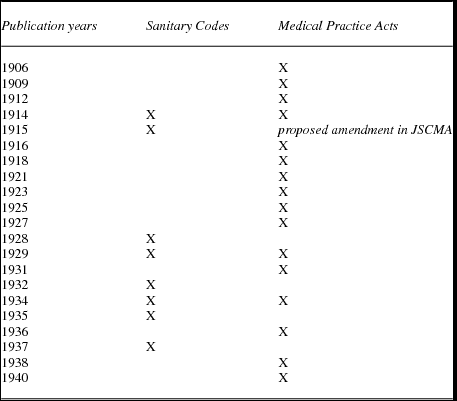
I employed a thorough content analysis of relevant legislative statutes—the South Carolina medical practice acts and the South Carolina Bureau of Health Sanitary Codes—to investigate medico-legal influence on laws governing midwifery practice and how midwifery supervisors rounded up the midwife. Sanitary Codes and medical practice acts were coterminous, so I examined both sources consecutively from 1900 to 1940 to note if language became more exclusionary and corresponded with physician advocacy for midwifery regulation. The American Medical Directory, first published in 1906, detailed South Carolina (and other states) medical practice acts—these acts aided doctors and other health care practitioners in understanding the necessary educational and training standards of medical practice. Also, medical practice acts detailed the subsequent punishment for noncompliance and defined the duties of the State Board of Medical Examiners. Printings of the South Carolina medical practice acts occurred in three- to four-year time spans. Consequently, I examined the medical practice acts of 1906, 1909, 1912, 1914, 1915, 1916, 1918, 1921, 1923, 1925, 1927, 1929, 1931, 1934, 1936, 1938, and 1940 for their relevance to my research question.
Regarding the Sanitary Codes, I previously found that the 1920 South Carolina State Board of Health incorporated rules for midwives within its Sanitary Codes (Bonaparte Reference Bonaparte2007). This finding was pivotal to uncovering forms of midwifery regulation as well as to my argument regarding the relationship between doctors and the sociolegal system. In order to locate the Sanitary Codes, I reviewed the South Carolina State Board of Health annual reports, “Reports and Resolutions,” which published the Sanitary Codes. Sanitary Codes regarding midwifery regulation appeared in 1914, 1915, 1928, 1929, 1932, 1934, 1935, and 1937.Footnote 1 Furthermore, these reports contained the writings of midwifery supervisors who noted their participation in changing midwifery practice in South Carolina. Table 3 further indicates the publication years of midwifery regulation in the Sanitary Codes and the South Carolina medical practice acts.
South Carolina midwifery regulation, 1900–1940

Rationale for Grounded Theory Analysis
I analyzed the text of the medical practice acts and Sanitary Codes using a variant of grounded theory. This analysis involved the repeated reading of texts to discover and label categories and their interrelationships. Consequently, this technique produced a preliminary list of themes through which I explored the more restrictive elements of midwifery legislation.
Criteria for Selecting and Coding Text
In order to locate particular legislation for analysis, I developed the following criteria:
-
(a) I perused the table of contents for each volume of the medical practice acts and Sanitary Codes and utilized the subject indices when tables of contents were unavailable.
-
(b) My perusal of the table of contents included locating key terms related to midwifery practice such as rules of practice, birthing prohibitions, midwives, midwifery, lay midwifery, grannies, birthing practices, “the midwife problem,” birth rates, episiotomy, fibroids, hysterectomy, infant mortality, labor, lay practitioners, maternal mortality, home births, and hospital births. These terms were not the sole basis for my choice to peruse the volumes though each of them proved helpful in finding relevant legislation.
-
(c) I also enlisted the aid of archivists at the South Caroliniana Library in Columbia, South Carolina to locate the State Board of Health Regulations using a review of table of contents. These regulations housed most of the Sanitary Codes in the Records and Resolutions.
Because this project stems from a larger project (Reference Bonaparteibid.), for the purpose of this study, I solely examined the medical practice acts and the Sanitary Codes for the presence or absence of the following:
-
(a) Is there an explicit mention of midwifery care or midwives?
-
(b) Does the medical practice act or Sanitary Code allow unlicensed midwifery?
-
(c) Are midwives exempt from the provisions of the medical practice act or Sanitary Codes? If so, are there particular conditions for the exemption?
-
(d) Does the medical practice act or Sanitary Code require a license in order to practice midwifery?
-
(e) Are there requirements for medical schooling from an accredited medical institution and/or nursing school in order to practice midwifery?
-
(f) Does the medical practice act or Sanitary Code impose a financial punitive action (e.g., fines) against unlicensed medical practitioners?
-
(g) Does the medical practice act or Sanitary Code impose a jail sentence against unlicensed medical practitioners?
-
(h) Is supervision required in order to practice midwifery?
Because I argue that the maternal health care movement, the professionalization of medicine, and the medicalization of birth aided in midwifery regulation and abrogation from 1900 to 1940, I systematically examined these statutes to see how well physician advocacy for midwifery regulation corresponded with more restrictive midwifery Sanitary Codes. In order to classify whether the acts became restrictive, I noted the number of prohibitions included in medical practice acts and Sanitary Codes with the expectation that with each passing year, the number of prohibitions would increase. Lastly, I reviewed midwifery supervisor notes to see how black nurses saw their supervisory roles over granny midwives and how they opined that their work aided in bettering maternal and infant care in South Carolina.
Results
I expected midwifery legislation written and published during my study's time period (1900 to 1940) would shift from unrestrictive to more restrictive and/or prohibitive stipulations. Borrowing Lay's (Reference Lay2000) discussion of how medicalized birth fostered changes in legislation, I posited that South Carolina medical practice acts and Sanitary Codes would provide “social and professional justification” for modernized views of the birthing process (Reference Layibid.: 173). Further, I expected medical practice acts would note changes in midwifery regulation because in a previous project that examined Journal of South Carolina Medical Association texts (Bonaparte Reference Bonaparte2007), I found one 1915 publication written by South Carolina physicians that listed a proposed amendment to the South Carolina medical practice act that detailed midwifery regulation in the form of registration, examination requirements, and practice fees (see “Proposed Amendments to the State Medical Practice Act as will be Submitted to the Delegates of the South Carolina Medical Association at their Annual Meeting at Greenwood, S.C.,” Reference Lay1915: 75–76).
Instead of finding this act in the 1915 South Carolina medical practice acts, I found that medical practice acts exempted “dentists, trained nurses, pharmacists, opticians, optometrists, [and] midwives” over the entire 40-year time period of my study (American Medical Association 1921: 1386). This absence is significant because it speaks strongly to the fact that midwifery regulation did not occur within formal South Carolina legislature. Rather, the Sanitary Codes proved to be far more informative and contained the most salient aspects of increased midwifery regulation through written stipulations and mandated supervision in South Carolina. And, as I discuss later, the forms of regulation did not simply consist of language prohibiting traditional midwifery practice but also used state-mandatory training seminars as a form of restrictive granny midwifery practices.
I next detail how these stipulations included prohibiting midwives from signing birth certificates, reporting eye infections, to midwifery bag checks. Then, I highlight how the Sanitary Codes documented the coercive ways in which nurse midwifery supervisors mandated midwifery-training seminars for South Carolina midwives and rounded up the midwife in order to showcase the “newly” educated midwife and the demise of the older midwife.
Sole Practice to Supervised Practice: Midwifery Regulation in Sanitary Codes
Prior to 1930, midwifery regulations were encapsulated within the Sanitary Codes as published in the South Carolina State Board of Health Records. The Sanitary Codes were legislative statutes that detail what provisions those seeking to practice medicine in a particular state must adhere to as well as a listing of prohibitive behavior. Sanitary Codes for the state began in 1914; within this first code, Rule 19 of Quarantine and Disinfection states, “whenever any nurse, midwife or other person not a legally qualified practitioner of medicine shall notice inflammation of the eye or redness of the lids in a newborn child under his or her care, it shall be the duty of such person to report the same to the local health authority, or in his absence, to any reputable physician, within twelve hours of the time the same is first noticed” (Sanitary Codes 1914: 86, emphasis mine). This stipulation aligns with my previous research that details physicians’ claims that midwives contributed to newborn eye infections by unsanitary birthing practices and/or neglecting to apply silver nitrate to an infant's eyes after delivery (Bonaparte Reference Bonaparte2007). In addition, this regulation grouped midwives with other not “legally qualified practitioner[s]” (Reference Bonaparteibid.: 86). The year 1915 marked a turn of events regarding midwife prohibitions.
The 1915 Sanitary Codes stated “midwives shall not sign certificates of death for still-born children; . . . and still-births occurring without attendance of either physician or midwife, shall be treated as deaths without medical attendance, as provided for in section nine of these regulations” (Sanitary Codes 1915: 93). So, midwives were medical birth attendants; but, if a patient died, the South Carolina State Board only accepted death certificates,
made and signed by the physician, if any, last in attendance on the deceased, who shall specify the time in attendance, the time he last saw the deceased alive and the hour of the day at which death occurred. And he shall further state cause of death, so as to show the course of the disease or sequence of causes resulting in the death, giving first the name of the disease causing death (primary cause), and the contributory (secondary) cause, if any, and the duration of each. (ibid.: 94)
This legal “jurisdictional claim” substantiated that only physicians could define or determine death that titled physicians with “superior competence” over midwives and makes midwives dependent upon physicians’ expertise (Starr Reference Starr1982: 11). This connection is significant when considering the grave concern with mortality rates within the general populace, especially the nature of the death for women and infants. Therefore, I reason this language signifies the professional hierarchy of medicine, why legislative stipulations exemplify how midwives lacked a certain level of professional legitimacy, and how laws regulated midwives’ behaviors and practice.
Conversely, physicians and midwives could sign birth certificates and complete their filing “properly and competently . . . giving all the particulars required by this act, with the local registrar of the district in which the birth occurs, within ten days after date of birth” (Sanitary Codes 1915: 97). Other duties include the same 1914 regulation regarding the reporting of eye infections among newborns, midwives, nurses, and “other persons [who were] not legally qualified practitioners of medicine” (Reference Bonaparteibid.).
The 1916, 1918, 1921, 1923, 1925, and 1927 Sanitary Codes held no midwifery regulations for indiscernible reasons.Footnote 2 So, despite midwives not being able to sign death certificates, the early Sanitary Codes do not reflect a fully concerted effort to regulate midwifery practice. Midwifery regulations resume in the 1928 Sanitary Codes, a time that reflected pivotal maternal and infant health interventions and more restrictive language within Sanitary Codes regarding midwifery practice.
The Maternal Health Care Movement's Influence on South Carolina Midwives
During the late 1920s, the establishment of the South Carolina Bureau of Child Hygiene and Public Health Nursing led to a yearly accounting of the effectiveness of maternal and infant health care interventions (e.g., child health care conferences as well as other public health interventions [such as tuberculosis clinics]). The establishment of this bureau and its records coincided with the national campaign for maternal and infant health led by the US Maternal and Child Health Bureau, which targeted South Carolina for its high rates of maternal and infant mortality (Bonaparte Reference Bonaparte2007). This acclaimed campaign called for midwifery reform, provided states with monies for midwifery education, and offered other public health efforts geared toward midwifery regulation or abrogation. The South Carolina bureau's reports included counts of midwife classes and practicing midwives within the state. Significantly, the first report of the Bureau of Child Hygiene and Public Nursing appeared in the Sanitary Codes of 1928. Consequently, I sought examples of how the national campaign influenced how South Carolina rounded up its midwives.
South Carolina's Efforts to Round Up the Midwife
I discovered efforts to round up the midwife led by midwife supervisors like Miss Laura Blackburn, a black nurse-midwife, and physicians. Again, most black midwives practicing in South Carolina had informal training in comparison to nurse-midwives who had formal training and licenses. So, the certified nurse midwives’ end goal was to supervise and teach all practicing midwives in an effort to circumvent birth complications and reduce maternal and infant mortality. Beginning in 1928, Ms. Blackburn reported,
At the present time the only two counties in which the Midwives are untaught and unsupervised are Lexington and Greenville, and in Greenville, Miss Dalton is now engaged in rounding them up and organizing classes. In Lexington County the work was begun several years ago by Miss Blackburn but discontinued at the request of the County Medical Society. (Sanitary Codes 1928: 90)
Ms. Blackburn also noted that physicians were in “sympathy with the work [of midwifery regulation] and are very cooperative” (ibid.). Training courses tended to last for a month with some held at historical black colleges such as Voorhees in Denmark, South Carolina.
To assist Miss Malone this year, Nurse Hilda Warren, a colored graduate midwife of Bellevue Hospital, was employed. With her help much work was done. Eighteen (18) patients were delivered in the hospital, 13 in homes and six were brought to the hospital for after care. Five others who had been delivered by local doctors or midwives were given post-partum care in their homes. (ibid.: 91)
Because several training courses used educated black midwives, I argue positioning granny midwives against educated black midwives harkens to Patricia Hill Collins's (2000) process of “othering”Footnote 3 as a means of creating hierarchical patterns within social groups—in this instance between black women. This quote highlights how a hierarchical arrangement substantiated the authoritative knowledge of licensed health professionals and delegitimizes granny midwifery practices. Moreover, pitting black women against one another served as yet another means of ostracizing granny midwives for their practices.
Another surprising element in Ms. Blackburn's notes is the reported receptivity of midwives to formal educational training. “The midwives came [for training] from 27 counties. This was due to the efforts of the staff and county nurses. The general attitude of the midwives toward their [educational lessons and] work was excellent and things ran even more smoothly this year than they did last” (ibid.: 91). However, I argue such reports should receive scrutiny because nurses employed by the state needed to establish their efficacy in rounding up and better training midwives in order to stay employed and as a means of demonstrating that South Carolina's maternal and child health care was improving. I surmise black educated midwives felt a more concerted pressure to hold onto their position within the medical hierarchy and to avoid censure associated with granny midwifery given the racial and sociopolitical climate of the early twentieth century in the South. Also, the South Carolina State Board of Health charged its health professionals (especially midwifery supervisors, nurses, and doctors) to either eliminate or reduce the number of practicing granny midwives much like their successful colleagues in other states (Bonaparte Reference Bonaparte2007).
Medical Hierarchy and Its Impact on Midwives’ Birthing Authority
Nurses also occupied a higher position than granny midwives in the medical hierarchy. For example, within midwifery training courses, staff and county nurses taught classes and demonstrated various methods for attending births.
The demonstrations consisted of bed making, bed baths, bathing of baby, baby's tray, enemas, douches, preparation for delivery, delivery, post-partum care, temperatures, etc. Supplies were made, such as newspaper pads, bed pans, bags, etc., and the simple solutions were taught. An effort was made to make these demonstrations so simple that they would be applicable to any home, no matter how poor, that the midwife might enter in her work. They were taught to use newspaper in every available way and the simplest equipment was used. (Sanitary Codes 1928: 91)
Employing nurses as midwife supervisors under the South Carolina Board of Health's edicts made it apparent that midwives were no longer authorities within the field of medicine. Instead, nurses, midwifery supervisors as well as physicians held a legitimized claim as authorities in birthing work. I would argue these newly enforced standards of care provided the public and midwives with the understanding that nurses and physicians deserved to occupy dominant hierarchical positions in birthing work while lay midwives occupied subordinate positions. And, despite the medical practice acts exempting midwives from its provisions, the South Carolina State Board of Health ensured their governance of midwifery.
Creating Standards for the Satisfactory Midwife Bag
Midwifery supervisors provided this governance by working to uncover if some midwives delivered “insufficient service or [had] physical disabilities,” and inspected their midwife bags (ibid.: 91). If midwives failed to comply with standards for their midwifery bags such as “. . . if [the bag was] found incomplete or in bad condition the midwife is suspended until she has corrected what is wrong” (ibid.). Supervisors entailed prohibiting midwifery practice for six months. Other methods of gatekeeping included nurses, appointed by the Bureau of Child Hygiene, conducting reviews of midwifery standards of care throughout South Carolina. Some counties held specific standards for their midwives, such as Laurens County where “midwives were required to review the entire course of ten lectures and demonstrations” (ibid.: 92). Similar to other forms of evaluation (e.g., midwife bag checks), noncompliance with midwifery standards involved license (or certificate, depending upon the county) suspension. Also, state Board of Health–appointed nurses revoked midwifery certificates for midwives deemed insufficient or physically unable to provide adequate midwife care (ibid.). And, the South Carolina Board of Health mandated all South Carolina midwives attendance at midwifery training seminars (known as Midwifery Institutes) regardless of their length of practice. The state's concern with declining birth rates further amplified the weight of this gatekeeping mechanism leading to suspensions that together worked to prohibit midwifery practice throughout the state, especially in rural areas where granny midwives primarily practiced.
Playacting and the Continued Pressure for the Satisfactory Midwife Bag
Other gatekeeping mechanisms occurred during graduation exercises at Midwifery Institutes. During graduation, nurses and midwifery supervisors awarded the midwife with the best bag and enacted plays that outlined the differences between the old midwife and the more highly trained and educated midwife. For example, “[a] Playlet entitled ‘The Old Order Passeth,’ written by Miss Blackburn, with the assistance of those at the [Midwifery] Institute, was acted at the graduation exercises, by the midwives themselves. They played their parts most creditably and showed to the audience the difference [between] the old and the new midwife” (ibid.: 91). In essence, older midwives participated in a castigation of their former practices. Because a licensed midwife supervisor wrote the lines for this performance, these theatrical performances possessed an underlying element of authoritative knowledge held only by licensed professionals.
Midwives acting in these plays at the Midwifery Institute may have truly been performing to obtain approval from their professional licensed counterparts. Granny midwives understood that participating in birthing work entailed bowing down to the authoritative knowledge of physicians and nurse midwife supervisors while also adhering to legislative stipulations governing midwifery practice. I found this genuflection evidenced within pertinent statistics discussed in the Sanitary Codes starting with 1929 and ending in 1936.
South Carolina's Rounding Up Efforts by the Numbers
The 1929 Sanitary Codes continued the tradition of reporting organized midwifery training classes, attendees, and midwifery reviews. Within these reports, descriptive statistics reflected the impact of midwife training classes and documented improvements within South Carolina maternal health care (e.g., the number of midwives practicing and how many women completed midwifery training given the standardization of midwifery care). In 1929, there were 2,033 midwives and 3,588 doctors (Sanitary Codes 1929: 67). The Bureau of Child Hygiene and Public Health Nursing reported (ibid.: 68):
Midwife classes organized:
No. of Midwife Classes Organized. . . . . . . . .120
No. Class Meetings Held. . . . . . . . .120
No. New members. . . . . . . . .128
No. Old members. . . . . . . . .158
No. Completing course during year. . . . . . . . .77
Midwife classes reviewed:
No. midwife classes reviewed. . . . . . . . .749
Attendance. . . . . . . . .6,822
No. Certificates Withdrawn. . . . . . . . .111
I expected to find a reduction in the number of practicing midwives in South Carolina thanks to midwifery education and midwifery supervision stipulations. Previously, I mentioned noncompliant midwives received either license suspension and/or certificate revocation. Examining the 1929 Sanitary Codes, 111 midwifery certificates were withdrawn meaning that 111 black midwives discontinued their practice because they did not fit the newly enforced standards of a trained midwife. Further investigation of these statistics revealed a marked difference between the number of new members joining midwifery classes (128), the number of old members (158), and the number of midwives who actually completed the course (77). These statistics illustrate and support my arguments that midwifery supervision and midwifery education as mandated within the Sanitary Codes were effective institutional roadblocks to practicing midwifery in South Carolina. Further, authoritative knowledge is evident in regard to the number of women granted passing grades and the number of women with withdrawn certificates.
The Midwifery Meeting as an Axis of Midwifery Regulation
The 1932 Sanitary Codes did not provide regulatory measures for midwives; however, the Sanitary Codes indicated the impact of an annual midwife meeting. I suggest such meetings detail the legal scope of midwifery practice as agreed upon by the state and the profession and discredited traditional birthing approaches in order to promote the interests of dominant groups (see Gerth and Mills Reference Bonaparte1965 for further discussion regarding how dominant groups use the law to gain leverage against subordinate groups). Despite the fact that granny midwives provided woman-centered and culturally sensitive care and trained within apprenticeships under older midwives, doctors deemed their practices antiquated. And, physicians argued birthing work should remain firmly entrenched in doctor's arms (Bonaparte Reference Bonaparte2007). For the purpose of my analysis, physicians sought to promote their interests by legal advocacy, and medical regulations reflected the efficacy of physician efforts.
The year 1932 marked another publication of records that focused on “get[ting] information to the public that will result in the reduction of the amount of illness and the number of deaths among infants and children and their mothers, and the stimulation of a general interest in the positive cultivation of health, helping to bring about that time when everybody will realize that the mere avoidance of disease, though a step in the right direction, is not enough” (Sanitary Codes 1932: 46). These records, in effect, pressured doctors and nurses to improve maternal and infant health. Because granny midwives carried the label of interloping social pariahs and uneducated birthing attendants who were responsible for the dire health states of South Carolina's mothers and children, eliminating these women by stricter educational requirements and supervision were the only possible solutions. Within this 1932 publication, educating and supervising midwives were prominent themes and reports for the month of September addressed midwifery in South Carolina by relaying information regarding state midwife meetings.
The first state meeting for midwives occurred in conjunction with a conference instructing nurses how to teach and supervise midwives (ibid.: 49). State Field Nurse and Midwife Supervisor Miss Blackburn again reported the state of midwives in South Carolina and detailed her review of 174 midwife classes with an attendance of 1,447 to the Bureau of Child Hygiene and Public Health Nursing. To address the need for midwifery tutelage, “Miss Blackburn conducted a two weeks’ institute for midwives at which twenty-four women were given instruction” (ibid.: 50). Midwives possessing the best midwife bags or a “very good appearance” in their midwife uniforms received prizes (ibid). These institutes delegitimized lay midwifery practices and diminished the number of lay midwives. For example, physicians and nurses stated,
We are glad to report that the number of midwives in the State has been reduced to about 3,000 from over 6,000 ten years ago. This means that many of the most incompetent have been eliminated and those in active practice now are, on the whole, cleaner and more intelligent. (ibid.: 51)
Incompetent midwives would include granny midwives that previously practiced without licenses or certificates. And, to further advocate for the proper training of midwives, the report mentioned,
It is interesting to note that from 1919 to1928, the last year for which we have figures tabulated separately for white and colored, there was a decided reduction in the colored rates [of death] for both infants and mothers although there was an increase in both rates for whites. This would seem to indicate that the instruction of midwives, who deliver most of the negro mothers, has not been without value to the State. (ibid.)
Midwifery education (care of legal regulation) served as the key means of changing midwifery practice and, in doctors’ estimation, bettering maternal outcomes in South Carolina (Bonaparte Reference Bonaparte2007). Unfortunately, the report did not include statistics indicating the number of midwives who passed the midwifery classes and received certificates; yet, Nurse Blackburn points out the concerted effort to remove incompetent midwives. This move to abrogate granny midwives was one of the key criticisms doctors and nurses used when describing granny midwives (Reference Bonaparteibid).
A Firmer Embrace of the “Younger, More Intelligent Midwife”
The 1934 Sanitary Codes detailed other methods of midwifery regulation within the bureau's narrative report such as requiring midwives to distribute health literature to their patients and continuing to praise and reward midwives for having satisfactory midwife bags at a state midwife meeting. One startling difference involved a discussion of further standardizing midwifery care in order to reduce the presence of the “old midwife” because, “a younger, more intelligent midwife is coming forward at this school and even those who are older go back to their communities and have a great influence on the women of their communities” (Sanitary Codes 1934: 34).
Some physicians and nurses desired a reduction of practicing midwives. Conversely, some licensed health professionals lauded that “2 graduate nurses . . . took the course to become midwives and several practical nurses. This is the ultimate goal in Midwifery, the trained Nurse Midwife” (ibid.). Pushing toward this goal has an undergirding argument for the abrogation of lay midwives.
In 1935, State Field Nurse Blackburn provided an annual report on South Carolina midwives. Her report lauds that “2,604 midwives were supervised,” “129 midwife groups were inspected,” and that an outside instructor “Dr. Bartlett, professor of Public Health, University of Michigan” invited to attend two midwife classes, “was delighted at the progress the midwives had made” (Sanitary Codes 1935: 26). Nurse Blackburn's report on the state meeting for midwives included similar forms of information to other county midwife meetings and the Midwifery Institute such as award ceremonies for the “best equipped bag” and the county with the largest number of midwives (ibid.). Ms. Blackburn noted that some women attended previous institutes and the activities of the 1935 Midwifery Institute. Again, the report did not contain the number of midwives who passed the classes, but the mention that midwives are returning to these classes and Midwifery Institutes attests to the coercive power of the South Carolina Board of Health.
These notes are noteworthy for two other reasons. One, midwives in attendance received Chase doll demonstrations to teach obstetrical care.Footnote 4 In addition, graduation included the annual play demonstrating the inefficacy of the old midwife versus the new midwife (ibid.: 27). The trend of teaching midwives while castigating old midwives remained constant especially considering the inception of the One Week Institute for black midwives.
The One Week Institute's Contribution to the Younger Midwife
The One Week Institute is particularly relevant because I argue physicians’ professional writings and medico-legal influence sought to eliminate granny midwives in South Carolina. Midwifery instruction happened at “a colored school and clinic” and participating midwives received “lectures by doctors and nurses and Chase doll demonstrations” (ibid.). Furthermore, the Prenatal Conference “at the Colored Clinic, Pineville” was a result of this institute, which included further instruction of practicing black midwives and occurred in Berkeley County, which historically (and presently) possesses a predominantly black populace and involved physicians and nurses serving as midwifery supervisors and teachers. Because many midwives lacked access or the ability to attend the institute, they might have been subject to a license suspension or revocation of a midwifery certificate if their absence was revealed. In addition, because birthing work at this point was legally governed, midwives could either comply with regulation or cease practicing midwifery. And, health officials created even more institutes to address the need for improvements in midwifery care in South Carolina. For example, one-day county institutes began because of the utility of the Chase doll for proper demonstration of birthing procedures and because many rurally situated midwives (mainly black grannies) lacked access or the ability to attend the state institute. More importantly, health officials such as Miss Blackburn sought to improve midwifery by changing the practicing midwife in South Carolina.
Miss Blackburn noted, “Our aim for this year has been to interest and train a younger, more intelligent woman to work as a midwife in isolated sections of the State, to replace those old midwives who are dying out. . .. We already feel the influence of the midwife in a community, who has been to the State school” (ibid.: 28). Health officials understood that providing midwifery training to younger women would aid in achieving their goal of “the trained Nurse Midwife” because grannies due to their age would cease to practice (Sanitary Codes 1934: 34). In addition, health officials such as Miss Blackburn acknowledged the prudence of their actions in regulating midwifery by commending the impact of educated and trained midwives. While waiting for the demise of older midwives, the untrained midwife's presence was considered a bane to public health.
One of our greatest problems is the lack of workers in the field, to supervise and stimulate the midwives, and the lack of finances to carry on the work. There is a rising up to replace the older midwives who have died, but who did have some instruction, a woman who has had no instruction, no equipment, and who hides her work. To check this requires greater personnel and better traveling facilities. Our problem is also the lack of prenatal examinations. (Sanitary Codes 1935: 29)
This observation is significant on several accounts. First, such statements are evidentiary proof that some older midwives continued their practice. Second, Miss Blackburn's comments indicated that midwifery regulation efforts were not as successful as I initially perceived, given financial constraints as well as a lack of suitable midwifery instructors and supervisors. As I indicated earlier, physicians’ and other licensed health officials’ sought to reduce and/or eliminate midwives through midwifery education, and Miss Blackburn describes this form of regulation by discussing her five midwifery classes, the 78 new enrollees, and her review of 129 midwifery classes. Third, this Sanitary Code illustrates that health officials did acknowledge that older midwives “did have some instruction,” which is in direct conflict with my assumption that granny midwives were viewed as ignorant practitioners of birthing work (ibid.).
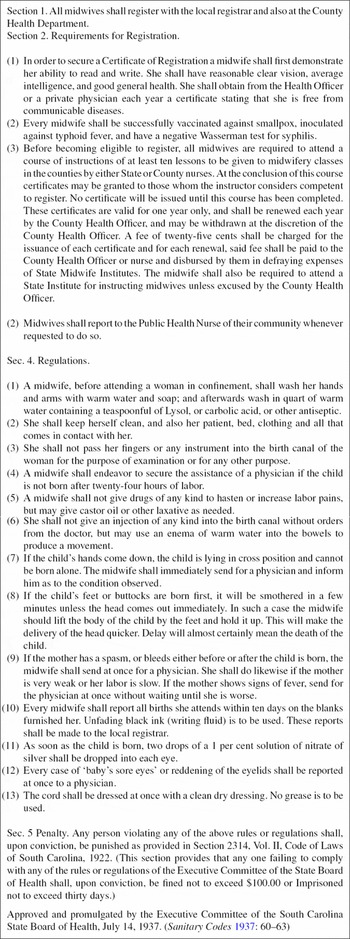
The Sanitary Codes for 1937 provided the most detailed stipulations for midwifery practice in South Carolina (see figure 1). These Sanitary Codes detailed birthing procedures that midwives should implement and the possible fines for noncompliance. I should note that previous Sanitary Codes solely mentioned suspension of certificates for noncompliant midwives, which serves as evidence of increased punitive actions. Moreover, South Carolina did not publish other Sanitary Codes for the remainder of the time period of my study.
Rules and Regulations Governing Midwives in the State of South Carolina

Summary of Sanitary Codes’ Efforts to Regulate Granny Midwives
Health officials regulated midwives in South Carolina using Board of Health guidelines provided in the Sanitary Codes rather than including this occupation within the medical practice acts. In fact, the rules within the medical practice acts exempted “dentists, trained nurses, pharmacists, opticians, optometrists, [and] midwives” and these rules did not shift throughout the entire time period of my study (American Medical Association 1906: 1386). During the first two decades of the 1900s, midwives were not as restricted in their practice (American Medical Association 1909, 1912, 1914, 1916, 1918, 1921). In fact, the only significant restriction was that midwives could not sign death certificates. However, as time passed, midwifery regulations, whether in the form of law or being physically rounded up, became more stringent (American Medical Association 1923, 1925 1929, 1931, 1934, 1936, 1938, 1940). My analysis of the Sanitary Codes and the reports of midwife supervisor Miss Laura Blackburn revealed that women practicing midwifery without a license or certificate (again depending on the county) might suffer similar consequences as unlicensed practitioners such as monetary fines, license suspension, or revocation. In addition, the Sanitary Codes for 1938 provided a full explication of the prohibited and accepted activities of midwives. In previous years, the Sanitary Codes did not provide such detail.
Midwifery Institutes also became a larger presence in South Carolina from 1900 to 1940. In fact, some of these institutes occurred in predominantly black cities and counties. I surmise that placing these institutes in these places was a strategic means of dealing with and improving the granny midwife situation among black people and South Carolina as a whole. Moreover, reporting that midwives attending these institutes and adhering to newly instated stipulations demonstrated to the medical establishment how midwife supervisors addressed the South Carolina “midwife problem.”
The accounting of the state of midwifery in South Carolina within the Sanitary Codes demonstrates further how midwives occupied the lower rung of the occupational hierarchy of birthing work. For example, the Sanitary Codes and notes therein from the State Midwife Supervisor Miss Blackburn imparted how nurses viewed midwives and the nurses’ roles in ridding South Carolina of the older, ignorant midwife. In addition, Miss Blackburn's notes on the state of midwifery in South Carolina correspond well with the notes from Miss Mary Dodd, a black registered nurse and midwife supervisor, within the Journal of the South Carolina Medical Association (Bonaparte Reference Bonaparte2007). Miss Dodd provided her accounting of her training and supervising experiences similar to Nurse Blackburn. Each of these nurses discussed midwifery classes taught, the demeanor of the women who sought their expertise, and the effectiveness of training sessions. Miss Blackburn's notes are also beneficial to my study given her description of the numbers of midwives in attendance at certain Midwifery Institutes as well as the number of midwives that faced license suspension or revocation. Moreover, the goal of these training meetings and resulting Midwifery Institutes was to not only reduce the number of older midwives but also to change the midwife to a nurse midwife.
Lay (Reference Lay2000: 21) states that when authoritative knowledge is socially accepted, tools, procedures, or theories result. As I argued earlier, the professionalization of medicine aided doctors in becoming viewed as premier authorities in medical care; therefore, it is no surprise that medical legislation reflected how society attributed authoritative knowledge of medicine (including birthing work) to physicians.
Discussion and the Twenty-First Century Experiences of Midwives of Color
Given my analysis, the evidence suggests that certain lessons can be learned about why contemporary midwives of color in the twenty-first century continue to encounter hindrances to their practice. In addition, my analysis is important due to the lack of ethnographic research that could provide further voice to the experiences of black granny midwives in the early twentieth century. Currently, two ruling professional bodies govern obstetrical practice and pregnant bodies: the AMA and the American College of Obstetricians and Gynecologists. Authoritative knowledge (which credits expertise to those possessing formal education and training) bolsters these governing professional organizations as well as reinforces hierarchy in birthing work wherein midwives are “the other” (Collins Reference Collins2000). According to the American College of Nurse Midwives, 94 midwives practice within the state of South Carolina (American College of Nurse-Midwives 2012); however, according to Nichole Wardlaw, a black certified nurse midwife practicing in South Carolina, the number should be slightly more than 100 since the statistics listed are based on a 2008 count (Nichole Wardlaw, pers. comm., December 11, 2012). Examining the number of black practicing midwives in the state revealed five certified nurse midwives, two licensed midwives, one certified practical midwife, and two certified nurse midwives that are no longer practicing (ibid.). Overall, these numbers waxed and waned over the years due to the corporatization of medicine as well as the continued publication of erroneous or incomplete data regarding the dangers of midwife-assisted births or out-of-hospital births (Wagner Reference Wagner1999). CorporatizationFootnote 5 provides insurance companies considerable leverage in determining whether midwifery care is covered within policies; and, in some instances, insurance companies have effectively shut down hospitals that primarily used midwives for prenatal and postnatal care. Case in point, the Midwifery Today and National Women's Health network websites cite that midwives continue to face difficulty practicing because many cannot afford insurance liability coverage and face the threat of “frivolous lawsuits” that aid in using fear-mongering as the charge against midwifery care, particularly for direct-entry midwives (Feldhusen Reference Feldhusen2000; Thayer Reference Thayer2004). This cost-prohibition can have a more pronounced impact on midwives of color in the South.
For example, Jennie Joseph and I detail the experiences of working as a midwife of color in the South, which has historically pathologized midwifery care, and how sociostructural factors continue to limit the scope of care that midwives can provide, especially to marginalized and underserved communities (Bonaparte and Joseph Reference Bonaparte, Joseph, Oparah and Bonaparte2015). Many midwives of color who were former members of the Midwife Association of North America are seeking to address the need for the main professional organization to further discuss their experiences within institutional racism and more firmly include their voices within policy discourses (Midwives of Color: Information for Midwives of Color in North America Reference Bonaparte, Joseph, Oparah and Bonaparte2012). And, despite the reemergence of midwives in US birthing rooms thanks to the home birthing movement and midwife-activists like Ina May Gaskin during the 1970s (Sullivan and Weitz Reference Sullivan and Weitz1988), legislative statutes and the AMA continue to govern birthing work so that midwives are considered alternative birthing attendants. So, although in some ways society presently provides a level of social permissiveness previously absent in birthing work and pregnant women celebrate “natural” homebirth and the absence of medical men, the power of the medico-legal relationship continues to impact midwifery practice.
Amy Cohen (Reference Cohen2005) found that only fifteen states allow midwife-assisted births and, since the 1970s, midwifery advocates sought to demonstrate the safety of midwifery care. One of the main reasons that midwifery is necessary is because it serves as a model of care that would largely benefit marginalized communities unable to pay for obstetrical care. Obstetrical services in a hospital on average can be between $12,000 to $15,000 simply for a vaginal birth, while uncomplicated and complicated cesarean sections can have even steeper prices. In essence, prenatal and postnatal care for marginalized black communities can be cost-prohibitive, which is why midwives and more specifically, midwives of color are needed. For example, Urban Midwifery is a South Carolina–based midwifery clinic that caters to black women and part of its motto is to eradicate birthing inequities among black women (Urban Midwifery 2012). In addition, Jennie Joseph created a midwifery training program titled the JJWay specifically geared toward addressing the birthing needs of marginalized women in Florida (Joseph Reference Joseph2012). This study reinforces the need for midwifery researchers to note the importance of how exclusionary medical regulations can become in order to promote the interests of the medical elite, namely medical doctors and nurses. Moreover, recognizing the historical precedent of hierarchy within birthing work can aid researchers interested in reproductive health inequities to advocate for the continued presence of midwives in birthing rooms.