Introduction
The education sector has witnessed constant changes worldwide over the past few decades, including Hong Kong. As part of these changes, the Education Bureau (2006) decentralized the school management structure several years ago, with schools and kindergartens encouraged to tailor-make curricula to provide greater autonomy and flexibility. Schools can design course objectives and corresponding evaluation mechanisms, enabling greater diversity to respond to student needs, which according to the Education Bureau (2006), results in greater ‘learning effectiveness’ (p. 8). In designing their own curricula, schools have been encouraged to be student-oriented, customize curricula to suit student needs, build the student knowledge base, and inspire thinking. The idea is that with greater autonomy in designing curricula, schools have opportunities to be more creative and flexible, and integrate curricula.
Based on discussion about curriculum integration in the international literature, the Hong Kong Curriculum Development Council (CDC) (2000) proposed that curriculum ‘integrate contents across more than one subject area’ (p. 39). The Guide to the Pre-Primary Curriculum (the Guide) (CDC, 2006) encourages informal learning for young children and indicates that integrated, open and flexible approaches are important when catering for ‘children's developmental needs and interests’ (p. 13). The Guide also encourages teachers to recognize and leverage the links between various disciplines, to ‘incorporate play activities into different learning areas and plan the curriculum through an integrated approach’ (p. 41). Adopting an integrated approach furthers ‘children's whole person development’, which is the aim of early childhood education in Hong Kong (CDC, 2006, p. 16). Two research questions provided the focus for this investigation: What challenges are faced by a teacher transitioning to an integrated and creative approach to teaching music; and What supports teachers moving from a subject based and transmission approach to a teacher designed integrated curriculum? The article begins by considering the international literature concerning musical concepts, movement and creativity in early childhood education. This is followed by a discussion about music programs in Hong Kong kindergartens. Details of the purpose of the research and the research design are explained, and then the findings are presented. The article concludes by considering the findings in terms of the research questions and potential applicability for Hong Kong kindergartens.
Musical concepts, movement and creativity in early childhood education
Music in kindergarten curricula lends itself to children having opportunities to learn musical concepts, and engage in expressive movement and creativity. According to Barrett (Reference BARRETT and Wright2012), there are five key components of a music program in early childhood settings, with each being ‘interconnected and mutually supportive: composing and improvising with instruments and voice; notating music experiences; singing invented and canonic song; playing instruments, and listening to music’ (p. 71). Children like to sing as they play, with singing ‘often accompanied by movement, and instrumental sound-making’ (Barrett & Tafuri, Reference BARRETT, TAFURI, Welch and McPherson2012, p. 308). Play offers opportunities for the integration of language through singing, movement, and sound making, while singing is a way of communicating thoughts and feelings (Mayesky, Reference MAYESKY2012). Because songs are made up of lyrics and melodic sound, ‘they are an integration of text and melody . . . Singing a song is, therefore, an experience not just in music, but in language as well’ (Chen–Hafteck & Mang, Reference CHEN–HAFTECK, MANG, Welch and McPherson2012, p. 270). Therefore, when children sing, there are effects on language such as promoting sensitivity to prosodic structures (Wong et al., Reference WONG, SLOE, RUSSO, DEES and KRAUS2007), and increasing brain responses to violations in musical pitch (Magne, Schon & Besson, Reference MAGNE, SCHON and BESSON2006) and syntactic structure (Jentschke, Koelsch & Friederici, Reference JENTSCHKE, KOELSCH and FRIEDERICI2005).
Early research indicated that children aged 2–8 years liked spontaneous music making when they participated in unstructured play settings (Moorhead & Pond, Reference MOORHEAD and POND1978). More recently, Barrett and Tafuri (Reference BARRETT, TAFURI, Welch and McPherson2012) have elaborated on children's spontaneity, including their ‘capacity and willingness to experiment (vocally and instrumentally), their readiness to engage in invention individually and in conjunction with others, the strong relationship between words and rhythm in early chant . . . and the embodied nature of much of children's early music making’ (p. 300). Music educators such as Carl Orff and students, and Zoltan Kodaly, have supported the idea that music and linguistic abilities develop in tandem (Chen–Hefteck & Mang, Reference CHEN–HAFTECK, MANG, Welch and McPherson2012). For instance, the Orff approach for children starts with ‘speech rhythm, traditional rhymes, and songs, which are then integrated with musical expression, movement, and creativity’ (p. 274). Music and language learning experiences can become an integrated whole as they do in the Kodaly approach, with each enhancing the other (Chen–Hefteck & Mang, Reference CHEN–HAFTECK, MANG, Welch and McPherson2012).
Musical experiences such as chanting, singing and dancing are common occurrences in young children's play. Children use the sound of their own voices to sing and chant, which is a way to ‘experiment with sound and rhythm’ (Mayesky, Reference MAYESKY2012, p. 397). They also make up original chants and songs, and move rhythmically to beat (Mayesky, Reference MAYESKY2009). Hearing soothing sounds can help children become calm and relaxed, while more robust sounds encourage children to move their bodies in more powerful ways. When children are given chances to listen to and experience instruments and their tonal qualities, they can be encouraged to develop a concept of timbre. They can also learn to distinguish sounds from two different percussion instruments (e.g., tambourine, claves).
Movement is a fundamental aspect of everyday life for children and including movement in music programs in kindergarten settings is an important part of the daily routine. Movement is a catalyst that supports children's interaction with other people and their surroundings (Robinson et al., Reference ROBINSON, WEBSTER, LOGAN, LUCAS and BARBER2012). During eurhythmic (musical movement) activity, children use their bodies to express themselves. Their movements can have a rhythmic quality, such as using arms and legs to move in response to the tempo (fast/slow) of a rhythm (e.g., run, walk, freeze), and dancing while music is playing (Isenberg & Jalongo, Reference ISENBERG and JALONGO2010). Movement has widespread use in classroom music education as children can ‘invent movements to accompany songs . . . and their own compositions’ (Harwood & Marsh, Reference HARWOOD, MARSH, Welch and McPherson2012, p. 336).
Children can engage spontaneously in creativity in their daily play and activities and because music is a common and enjoyable occurrence in many young children's lives, it is ‘a natural avenue for a young child's creative expression’ (Mayesky, Reference MAYESKY2009, p. 379). Children's expressions of creativity involve cognitive (thinking) and affective (feeling) dimensions. Cognitively, creative behaviour consists of four elements: fluency, flexibility, originality and elaboration; while the affective dimension includes curiosity, complexity, risk-taking, imagination and fantasy (Isenberg & Jalongo, Reference ISENBERG and JALONGO2010). Isenberg and Jalongo (Reference ISENBERG and JALONGO2010) suggest that creativity, imagination, and fantasy are ‘all interrelated types of thinking that largely depend on the ability to use symbols in inventive ways’ (pp. 28–29). As such they are important elements of music programs for young children. However, the idea of enhancing creativity is challenging for kindergarten teachers in Hong Kong as they work in a context that relies on the transmission of knowledge and teacher-centred instructional approaches (Cheung & Leung, Reference CHEUNG and LEUNG2014). After administering a rating scale, Cheung and Leung (Reference CHEUNG and LEUNG2014) found that Chinese kindergarten teachers in Hong Kong were ‘not confident in their own creativity as teachers’ (p. 86). Cheung (Reference CHEUNG2012) also showed that early childhood teachers in Hong Kong had limited understanding of how to promote creativity.
Music programs in Hong Kong kindergartens
Kindergartens in Hong Kong cater for children aged 3–6 years and most operate on a half-day basis with children attending for one three-hour session in the morning or the afternoon, five days per week. They are operated privately by non-profit or for-profit organizations. Many focus on children's academic achievement (Rao & Li, Reference RAO and LI2009) despite the whole child approach found in the Guide (CDC, 2006). Parents expect an academically oriented curriculum, and many teachers also value teacher-oriented approaches (Fung & Lam, Reference FUNG and LAM2012). Hu and Sente (Reference HU and SZENTE2009) reasoned that these parental and teacher perspectives mean that curricula imported from western contexts that emphasize play and child-centred approaches tend to be ineffective in Chinese cultural contexts. A recent study indicated that kindergarten teachers in Hong Kong do not link play with learning and think that children should acquire knowledge at kindergarten (Wu, Reference WU2014). The integrated, whole-child approach recommended in the Guide seems to have been an ongoing challenge as some time ago the Hong Kong Education Bureau published a ‘List of Do's and Don'ts for Kindergarten’ (Education Department, 1999). The List included appropriate and inappropriate content and teaching approaches, with the former including catering for holistic development, play, and respecting children's individual differences; and the latter including the inappropriateness of children aged three and four years being asked to write Chinese characters, being required to memorise content, and experiencing the use of didactic teaching approaches. The transmission approach that characterizes many kindergarten classrooms in Hong Kong translates into children sitting at desks completing worksheets, dictation, spelling, and rote learning tasks (Wong & Lau, Reference WONG and LAU2008).
Because of the focus on an academically oriented curriculum, there is little time for music in many kindergartens. Music is at risk because while it is scheduled in classroom routines on a regular basis, extra time needed for homework or writing activities can be drawn from that allocated to music or physical activities (Ho, Reference HO2015). When music is included, it is often ‘a routine and highly structured component of the curriculum and involves breathing exercises, pitch practice, and an emphasis on the technique of singing songs’ (Lau & Grieshaber, Reference LAU and GRIESHABER2010, p. 128). Practicing songs in large groups in unison is common, with children expected to copy the teacher, and many repetitions are required before they can be performed at the expected high standard (Lau, Reference LAU2008). The number of songs children can sing is often used to judge children's musical development and there is little emphasis on play, creativity or the integration of other subject areas with music (Lau & Grieshaber, Reference LAU and GRIESHABER2010).
Some kindergarten teachers have moved beyond separate subject or discipline specific teaching, but the ‘boundaries between music and other subjects (such as physical fitness and health, language, mathematics, etc.) still exist’ (Lau & Cheong, Reference LAU and CHEONG2008, p. 63). Even though the curriculum framework was designed so learning areas were linked and teachers were encouraged to ‘synthesize/integrate the contents across more than one subject area’ (CDC, 2000, p. 39), this has proved challenging when it comes to integrating music, mainly because in the past the Education Bureau has suggested focusing on teaching new songs, practicing rhythm, and manipulating musical instruments, rather than integration with other subject areas (CDC, 1996). The more recent Guide (CDC, 2006) recommended that kindergartens ‘avoid subject teaching or mere delivery of academic knowledge’ (p. 48) and provides guidance about the appropriate time allocation for physical fitness/music/arts activities: ‘60–105 minutes for full-day kindergartens’ and ‘45–60 for half-day kindergartens’ per day (p. 49). While music is recommended as a daily activity in the teaching schedule among other subjects (CDC, 2006), the delivery of academic knowledge tends to take precedence (Fung & Lam, Reference FUNG and LAM2012; Rao & Li, Reference RAO and LI2009).
Little professional development has been provided in music education and kindergarten teachers must draw on their own knowledge, resources and experience. However, teachers lack confidence in teaching music and often struggle with basic music techniques, not to mention integrating music with other subjects (Wong & Lau, Reference WONG and LAU2008). As a result, integrating music into the curriculum remains a goal, and music teaching in kindergartens in Hong Kong can be rigid and superficial (Lau, Reference LAU2008; Lau & Grieshaber, Reference LAU and GRIESHABER2010). For example, the curriculum often follows a theme from a curriculum teaching kit or syllabus package, and music is one of the routine elements to be taught (Lau & Cheong, Reference LAU and CHEONG2008). The learning activities suggested in the kits emphasise repetitive techniques such as singing, beat, rhythm, tone, and the use of musical instruments in specific ways. The objective is to achieve unity in children's singing, movement or action. The scripted activities mean that children's interests and engagement are often neglected, as is integration with other subjects and any sort of creative content. Teachers can and do use stories to revisit traditional songs, but it is rare that music is used to connect with other subjects.
Purpose of the study
Despite efforts to integrate other subject areas with music in kindergarten programs in Hong Kong, it tends to be taught as a specific subject area. This is reflected in the daily routine of kindergarten classrooms as music is usually allocated a specific time on the timetable. This article investigates one Hong Kong kindergarten teacher's experience in developing an integrated approach to music education and in so doing attempting to move beyond teaching it as a single subject area and relying on children singing in unison as the main part of each lesson. The teacher attempted to integrate other subjects into the music curriculum through movement and games, and by encouraging children's creativity.
The research was undertaken in one kindergarten in Hong Kong that participated in a scheme that was initiated by the Education Bureau to provide school-based support services to enhance the professional capacities of kindergarten teachers in curriculum integration. It was co-organized by the Hong Kong Education Bureau and one of the universities in Hong Kong. Amongst other things, the support service aimed at developing a sharing and reflective culture and enhancing teachers’ capability to stimulate children's learning. As part of the program, the Education Bureau commissioned personnel in tertiary institutions with relevant experience to support teachers in their classrooms (the first author). The first author had two roles. First, she was the researcher responsible for data collection. Second, as per the guidelines from the Education Bureau, she provided onsite support that included feedback after observing lessons; discussing and analyzing the teacher's music lesson plans; oral comments about teaching approaches and implementation, and conducting tripartite discussions with the principal that were aimed at further enhancement of teaching. A detailed written report was prepared for the teacher. The focus of this article is the way in which the teacher adopted an integrated approach to curriculum development with music as the core, and how this was implemented.
Methodology
This instrumental case study (Stake, Reference STAKE1995) investigated the practices of one kindergarten teacher in Hong Kong who attempted to implement an integrated music program for approximately 19 children aged 5–6 years in her kindergarten class. An instrumental case study was selected because it can provide an in-depth understanding of an issue or concern (Creswell, Reference CRESWELL2013). The kindergarten teacher was purposefully selected because she was transitioning from a transmission approach to implementing an integrated music program that encouraged children's creativity. The purpose was to understand the challenges faced and support needed by the teacher. The case has clear boundaries related to time, events and people studied, and data collection processes (Creswell, Reference CRESWELL2013).
Data collection was undertaken in two phases, from November to December 2008 (Phase 1; four lessons), and from March to April 2009 (Phase 2; four lessons). Non-participant observation of the eight lessons, photographs of the lessons, and an individual interview (Gray, Reference GRAY2004) with the teacher were used to gather data about the approach to music education before and after an integrated approach was adopted. During the first four lessons, the teacher focused on music theory and training the children to attain unity, an approach consistent with what has been reported from previous research in music education in kindergartens in Hong Kong (Lau & Cheong, Reference LAU and CHEONG2008; Lau & Grieshaber, Reference LAU and GRIESHABER2010). For the two months between the data gathering periods, the teacher undertook professional development about integrated approaches, read relevant literature and engaged in formal and informal professional conversations about integration with colleagues such as the principal of the kindergarten. In the final four lessons, the teacher attempted a more integrated approach by including more subject areas and creative elements. One of the lesson plans from the last four lessons (Phase 2) is provided as an example (Appendix A).
Non-participant observation was the core method of data collection (Creswell, Reference CRESWELL2012) and an observation protocol was developed to provide a systematic way of watching and listening to interactions and phenomena as they occurred. Eight lessons were observed twice per month for four months, with observational records made of the teacher (Appendix B) and the children (Appendix C) for each of the 45-minute lessons. Four lessons were observed before and four after an integrated approach was attempted (with a two-month break in between). Observations focused on the teaching approaches used and how the teacher integrated other subject areas. Observations of children were recorded in three categories: music concepts, movement skills, and creative behaviour. Photographs were taken to record the children's behaviour, teaching approaches used, and how music was integrated with other subjects during all eight lessons (Bogdan & Biklen, Reference BOGDEN and BIKLEN2003). Parental consent was obtained for all children prior to the study.
Following observations of the eight lessons, the class teacher participated in an individual interview with the first author as a way of ‘gathering information about the teacher's knowledge, values, preferences and attitudes’ (Gray, Reference GRAY2004, p. 214). It provided an opportunity for the teacher to discuss her initial approach and how it had changed over the data collection period. Interview questions were broad and included asking about the approach to integrating music lessons before and after an integrated approach was adopted. Responses were followed with probing to explore further if necessary. The interview lasted approximately one hour and the teacher disclosed her experiences during both phases.
After completing data gathering and thorough familiarization with the data, analysis was begun. All observational data were recorded in Mandarin Chinese and the interview with the teacher was conducted in Cantonese, the dialect most widely used in Hong Kong. The interview was audio recorded, translated into English and a thematic approach adopted for analysis. First, initial themes were identified; then themes were reviewed, and following that, themes from the interview were defined and named (Creswell, Reference CRESWELL2012). One lesson plan was translated from Chinese to English (Appendix A) and data from the observation guides for each of the eight lessons were summarized, collated and translated into English. A deductive approach (Creswell, Reference CRESWELL2012) was adopted for collating and analyzing the observations based on the observation guide (i.e., teaching approaches used by the teacher; children's interaction and involvement in using music concepts, movement skills and creative behaviours) (see Appendix C). Appendices B and C use examples from Phase 2, Lesson 4. Credibility was enhanced through prolonged engagement at the site, while transferability was assured by the use of purposive sampling and thick description (Anfara, Brown, & Mangione, Reference ANFARA, BROWN and MANGIONE2002). Triangulation of data sources assisted with credibility, dependability and confirmability, and creating a detailed audit trail also strengthened dependability (Anfara et al., Reference ANFARA, BROWN and MANGIONE2002).
The teacher, Ms. Li, had completed a Certificate of Education, which is a two-year teacher preparation qualification. She was invited to participate because her kindergarten had joined the scheme initiated by the Hong Kong Education Bureau to support school based curriculum development. The kindergarten's mission is to fully develop children's potential, encourage them to proactively acquire knowledge and solve problems, and enhance their creativity and aesthetic sense. The teacher had worked in the kindergarten for over ten years and considered music and creativity to be important aspects of the program. She aspired to provide an open and relaxed environment through the use of imagination and free-play processes, which she valued for enhancing children's musical creativity and learning.
Findings and discussion
Data are provided from observations of the children and the teacher during both phases of data collection, as well as data from the individual interview with the teacher following the completion of classroom observations. In what follows, music concepts, movement skills, and creative behaviour (see Appendix C) are discussed as part of the analysis. To provide some contextual information, we begin with an observational snapshot from the first lesson in Phase 1.
The lessons took place in a multi-function classroom where the children attended for half a day in the afternoon session. Two teachers and a pianist were working with 19 children aged five to six years. All music lessons were 45 minutes long. During the first lesson observed, the teacher emphasized music theory and training. All children were required to sing and move in unison, with no opportunity for individual creative vocalizations or actions. Ms. Li used a curriculum kit as the teaching guide, with preset teaching content that was based on the theme of ‘going to school’, because the children were in their last year of kindergarten. Thematic approaches aim to integrate traditional subject areas and are one of several methods used in kindergartens in Hong Kong (Zhu & Zhang, Reference ZHU and ZHANG2008).
Phase 1
Music concepts
In Phase 1, there was heavy emphasis on conventional technique training. All four lessons included voice, breathing, and rhythm training, and revisiting traditional songs. In the first lesson observed (representative of lessons in Phase 1), Ms. Li conducted a series of activities that emphasised musical knowledge and skill training, which included teaching new songs, rhythm and beat exercises, and intonation drills. Given the emphasis on training, the lessons reflected little evidence that music and linguistic abilities develop together in young children, or that music and language experiences can be integrated (Chen–Hefteck & Mang, Reference CHEN–HAFTECK, MANG, Welch and McPherson2012). Ms. Li required neat and consistent actions when moving, such as all children sliding down the slide in a sequenced and orderly manner in the same way and the same direction, with no encouragement of individual responses. This meant that children were not able to make up chants and songs, or move individually in rhythmic ways (Mayesky, Reference MAYESKY2009). Ms. Li used a story-based form to revisit traditional songs, but with little emphasis on music as a way of integrating other subjects. The music lesson was a routine affair, with children participating willingly but showing little obvious enjoyment. Musical instruments were not used so there was no opportunity for children to experience timbre, accent and beat differences. Music appreciation was not included in this phase but was introduced in Phase 2.
Movement skills and creative behaviours
The children were rarely encouraged to actively participate and show imagination, and there were few opportunities to come up with their own movements or manipulate props, despite enough space to use gross motor skills in the multi-function classroom. There was heavy reliance on conventional approaches such as voice practice that involved no games, but children singing, ‘Let's go to the school, hurry hurry up!’ Lyrics were the main motivator of movement and were used as the ‘frames’ of the song that described movement, with children being told to follow the music with bodily movements and to sing along. While children did use the slide, there was no spontaneity, or any chance to invent movements (Harwood & Marsh, Reference HARWOOD, MARSH, Welch and McPherson2012) for the songs they were required to sing. Spatial exploration was rare, as was prop manipulation. There was little opportunity for creative expression and no time for creative movement based on the music, which meant children were unable to participate in experiences where they could be imaginative, take risks, engage in complex thinking, and be curious musically (Isenberg & Jalongo, Reference ISENBERG and JALONGO2010). The teacher rarely integrated music with other subjects. The only example was children moving their bodies according to the music (while singing), which brought in an element of physical education.
The first four lessons, then, included only one aspect of the five key components of a music programme in early childhood settings (Barrett, Reference BARRETT and Wright2012): singing canonic song. The teacher had several concerns about her ability in teaching music, notwithstanding her worries about moving to an integrated approach.
Teacher perspectives
Ms. Li indicated in the interview that in Phase 1, she had opportunities to review and discuss the lesson plans in depth with the principal. The feedback encouraged her to rethink the relationship between the classroom theme and the possible content of an integrated music lesson. The principal encouraged Ms. Li to attempt integration, but when she did, she experienced difficulty. Ms. Li was concerned about the need to follow the standardized and uniform curriculum of the kindergarten (see Lau & Cheong, Reference LAU and CHEONG2008), and suggested that there was little possibility of changing the content she was required to teach. When planning a lesson and attempting integration, Ms. Li indicated that she lacked experience in designing music content that was integrated with various activities; and, as has been shown in recent research with kindergarten teachers in Hong Kong (Cheung, Reference CHEUNG2012; Cheung & Leung, Reference CHEUNG and LEUNG2014), she found it hard to incorporate creative elements in the lesson plan. Ms. Li also encountered difficulty in achieving coherence between the music content and the planned activities.
Consistent with other research (Wong & Lau, Reference WONG and LAU2008), Ms. Li expressed her lack of knowledge about music, which she stated reduced confidence in her ability to teach music. She was afraid she (and thus the children) would not achieve the objectives of the lesson and the ultimate teaching goals for music. Ms. Li said she had a superficial understanding of integration and it was hard for her to guide/lead the music activity in an integrated way, something that has also been noted by Wong and Lau (Reference WONG and LAU2008). She also stated that she found it a challenge to arrange the classroom environment in a way that was conducive to children's learning.
Phase 2
There was a two-month break between data gathering in Phases 1 and 2. During this time, the teacher engaged in regular professional conversations with the principal and other colleagues, consulted literature and attended a workshop. A whole day integration workshop was held at the kindergarten and presented by the first author for all teachers. The primary focus was how other subjects can be integrated in a lesson where music is the core, with teachers engaging with content; and design and presentation of integrated lessons.
Integration
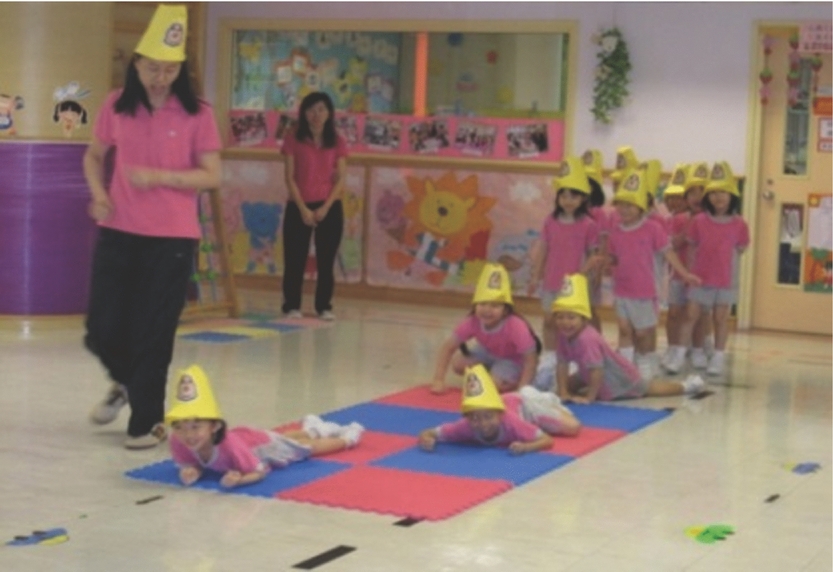
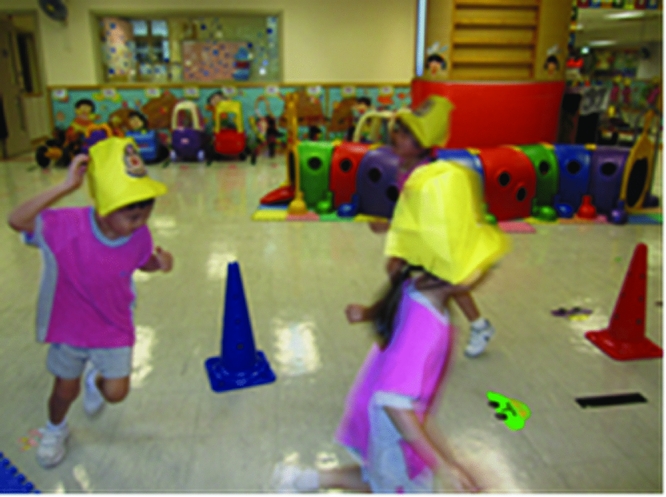
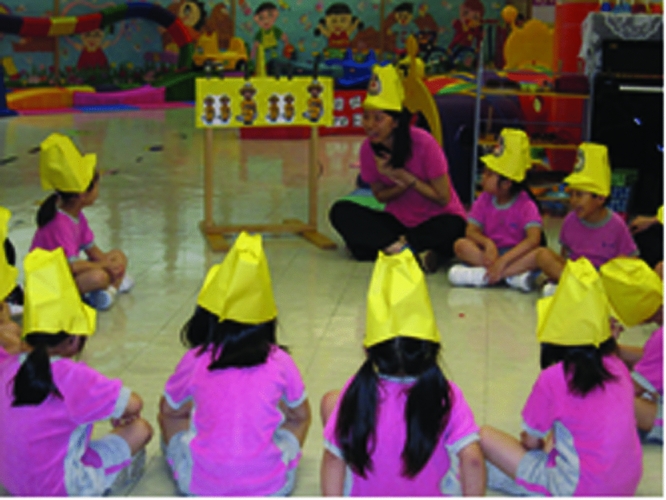
In Phase 2 Ms. Li planned more integrated music activities with opportunities for children to experiment with movement, lyrics and rhythm, and musical props. Lessons included the five components of a music programme: composing and improvising with instruments and voice; notation; singing invented and canonic songs; playing instruments, and listening to music (Barrett, Reference BARRETT and Wright2012) (see Appendix A). As well as children singing, dancing and playing games, they also experienced music appreciation, took part in role-play and improvisation, used full body movements, and were encouraged to make individual and group responses (Appendix A). There was some success at integrating other subjects with the music lessons (Appendix A). Children were taught about similar aesthetic elements in related genres. For example, one part of the lesson involved integrating music with physical education and movement, and children pretended to be firefighters, crawling, crossing paper bricks and running around hurdles (Figures 1 & 2). The games incorporated literacy whereby the children followed the rhythm (♫  | ♫ | ♫ | ♫ ) on flashcards, and read the lyrics they had created (Figure 3). Ms. Li's attempts to integrate other subjects with music enabled children to move and create in different ways, resulting in more active engagement and interest. Movement such as this encourages children to interact with each other and the environment (Robinson et al., Reference ROBINSON, WEBSTER, LOGAN, LUCAS and BARBER2012).
Children crawled like firefighters

Children ran around hurdles (music and physical education)

Children expressed rhythmic language

As the examples show, Ms. Li grew more confident in designing teaching activities that integrated subject areas in Phase 2. She provided more opportunities for children to move their bodies to music in creative ways. The integration workshop and activities (presented by the first author) assisted Ms. Li not only in designing music lessons, but also broadened her knowledge of different approaches to integration. She also consulted music and movement reference books in the kindergarten that had examples of integration. Her attempts at integrating music and creative movement were more informed than the lessons in Phase 1.
Music concepts and movement
Children were taught about and then given opportunities to detect changes in tempo and rhythm (fast and slow) and respond accordingly. In Lesson 8, the teacher used the song Firefighters (Appendix A). When they heard the siren in crotchet time, the children pretended to drive the fire engine at a slower pace. When they sang ‘the fire engine is coming’ in quaver time, the fire engine went faster, showing appropriate responses to tempo and rhythm. Children imitated firefighters hosing buildings, and showed understanding of dynamics and accents (strong and weak). For instance, they were encouraged to shoot the hose upward on the downbeat when they heard the first strong beat, and shoot downward in the weak beat. Children also detected changes in tempo, responding by running, skipping and tiptoeing in different directions when they recomposed the lyrics to fit the right rhythm/meter by using a familiar melody. This combination of creative expression (Mayesky, Reference MAYESKY2009) in response to changes in the tempo (Isenberg & Jalongo, Reference ISENBERG and JALONGO2010) enabled children to be challenged cognitively in terms of the complexity of the task and the combination of fluency and flexibility required (Isenberg & Jalongo, Reference ISENBERG and JALONGO2010). Once a strong feeling of beat is established, a beat can be ‘felt’ even if it is not specifically heard. Some children could identify the recurring pattern in the song ♫ | ♫ ; firefighters, firefighters (pattern works with Chinese but not English words); and the recurring pattern ♫ ♫ | ♫ when climbing the ladder to rescue those caught in the fire. This experience and later discussion deepened understanding of recurring patterns and their similarities and differences that incorporated the use of symbols (Isenberg & Jalongo, Reference ISENBERG and JALONGO2010). Music appreciation appeared in the last part of Lesson 8. Children listened to Doll's Dream as a way of calming, driving the fire engine to the fire station according to the music. The teacher led a discussion about how firefighters might feel after putting out a fire and rescuing people. Using imagination in this way can assist children in understanding the complexity and risk taking (Isenberg & Jalongo, Reference ISENBERG and JALONGO2010) involved in fire fighting.
The children were encouraged to perform a variety of creative movements based on the story and make use of the space available. They moved in different directions (up, down, left, right) when the music ‘pointed’ them and used a prop for steering the fire engine. They participated in creative games using ‘sol’ and ‘la’ hand bells to produce the same notes as the horns in the Firefighters song, and tried mimicking the horns (sol, la, sol, la), which resulted in creating a more realistic sound of a siren. These experiences with instruments help children develop understandings of timbre. In rhythmic speech games, the children experimented with sound and rhythm (Mayesky, Reference MAYESKY2009), created lyrics (Barrett, Reference BARRETT and Wright2012) for ♫ | ♫ | ♫ | ♫ , and came up with ‘Firefighters are so brave, Firefighters are so heroic’, showing originality with rhythmic language. They enjoyed the experience and were able to be imaginative in response to the music, in addition to creating new lyrics while singing and role-playing.
During the interview, Ms. Li stated that the discussions with and feedback from the principal enhanced her understanding of curriculum and lesson design:
I was less dependent on the teaching kits that I had used before, and the lessons in Phase 2 were more child-centred because the children were actively engaged for greater periods of time . . . I thought the objectives in the lesson plans were more specific and clearer than in Phase 1 . . . The interactions between me and children and among children increased; I became more aware of the children's needs and interests through discussing and interacting with them . . . I used resources and props more frequently than in Phase 1 and found myself becoming a little more confident in integrating other subject areas with music. (Interview, 9 June 2009)
Teachers unfamiliar with implementing integrated curricula are advised to ‘start small’ perhaps using a theme (Zhbanova et al., Reference ZHBANOVA, RULE, MONTGOMERY and NIELSEN2010), and to rely less on instruction kits; two things that Ms. Li did. After observing Lesson 8, the principal commented positively and constructively that Ms. Li's teaching was more integrated and consistent with the theme. Ms. Li indicated that ‘A closer relationship was built with the principal . . . and I felt that the principal had helped significantly to improve my teaching quality’ (Interview, 9 June 2009).
Despite these changes, the children were not automatically inspired to engage in the music activities and encouragement was needed. Ms. Li indicated that interactions between herself and the children had increased, and the first author suggested in the interview that the teacher could aim for a further increase. While not mentioned to the teacher, interaction between the teacher and the children was still quite low, despite increasing from what had been observed in the lessons in Phase 1. Ms. Li mentioned that her attempts ‘to integrate focused primarily on the design of the lessons . . . I sometimes overlooked the use of teaching resources, more teacher-child interaction and the importance of the teaching space, as my focus remained the lessons running smoothly’ (Interview: 9 June 2009). Concern with lessons running smoothly shows the emphasis on routine elements and the lack of confidence to use resources and encourage more interaction (Lau & Cheong, Reference LAU and CHEONG2008).
Conclusion
This instrumental case study investigated two research questions: What challenges are faced by a teacher transitioning to an integrated and creative approach to teaching music; and, what supports teachers moving from a subject based and transmission approach to a teacher designed integrated curriculum? The kindergarten participated in a scheme initiated by the Hong Kong Education Bureau to enhance the professional capacities kindergarten teachers in curriculum integration. This article has shown how one teacher moved toward an integrated approach to curriculum with music as the core, given that interdisciplinary integration is an expectation of the Guide to the Pre-Primary Curriculum (CDC, 2006). The findings have applicability to other kindergarten settings where transmission approaches tend to dominate and teachers want to encourage music integration and children's musical creativity. In terms of generalisation of case studies, Creswell (Reference CRESWELL2013) explains ‘naturalistic generalizations’ as what ‘people can learn from the case either for themselves or to apply to a population of cases’ (p. 200). Accordingly, three such generalisations are applicable either individually or for a population of similar cases: the role of the principal; the willingness of the teacher; and contextual factors such as culture, values and expectations by society of the education system.
With the implementation of school-based curriculum reform, the Education Bureau has provided kindergartens with more freedom and flexibility in designing their own curricula. The teacher was interested in a more flexible approach to music curricula, but found it difficult to move from the security of the lessons provided in the curriculum kit. The principal played a key role in supporting the teacher's attempts to design and implement an integrated approach. Professional support is necessary for any change in curriculum and teaching approaches to occur, and with music education in particular, teacher confidence is a major factor (Wong & Lau, Reference WONG and LAU2008). Despite her lack of confidence, Ms. Li made a concerted effort to move from heavy reliance on a kit, technique training and musical unity, to integrate other subject areas with music education as the core. This is significant given that music teaching in kindergartens in Hong Kong can be rigid and emphasise technical aspects such as repetitive singing in large groups (Lau & Grieshaber, Reference LAU and GRIESHABER2010). The formal and informal conversations about integration between the teacher and the principal, and the sharing and reflective relationship that developed were influential in Ms. Li having confidence to take some risks. She was able to try ways in which she could move closer to her professional goals of valuing children's musical creativity, imagination and learning in an open and relaxed environment; and to provide more opportunities for children to enhance their creativity and aesthetic sense, as per the mission of the kindergarten. While these changes might be small, they do provide incentive for Ms. Li to continue her efforts, especially with the ongoing support of the principal.
Given the expectations of Hong Kong parents about academically oriented kindergarten curriculum (Fung & Lam, Reference FUNG and LAM2012), and kindergarten teachers themselves supporting teacher-oriented approaches (Wu, Reference WU2014), Ms. Li's concerns about moving from curriculum kits and a teacher-directed approach were well founded. Despite the Guide (2006) recommending that kindergartens ‘avoid subject teaching or mere delivery of academic knowledge’ (p. 48), academic knowledge still takes precedence (Fung & Lam, Reference FUNG and LAM2012; Wu, Reference WU2014) over what is considered less academic and therefore less valued, such as music. Despite this, music education reform in particular, points toward integrating ‘music, drama, dance and visual arts, [which] can cultivate children's aesthetic sensitivity, imagination, creativity and communication skills’ (CDC, 2006, p. 35). The five key components of a music program in early childhood settings (Barrett, Reference BARRETT and Wright2012) were evident in Phase 2 lessons, albeit to varying degrees. The Phase 2 lessons also involved children in expressing themselves using different media, role play, and included more creative elements (Isenberg & Jalongo, Reference ISENBERG and JALONGO2010). What occurred in Phase 2 represents a significant change for the teacher involved. While Ms. Li is motivated to plan and implement an integrated approach with music at the core, continued use of such approaches will require ongoing support of the principal and colleagues, and further professional learning opportunities to consolidate these moves and reinforce any further development.
Kindergarten teachers face expectations and therefore pressure from parents for the preferred academic and teacher-directed approaches to kindergarten education (Fung & Lam, Reference FUNG and LAM2012), making the task of providing integrated approaches to music education more challenging. Nevertheless, the experiences of Ms. Li suggest ways in which kindergarten teachers in Hong Kong might begin to incorporate more creative integrated approaches to music education, despite the limited understanding of how to promote creativity by teachers in Hong Kong (see Cheung, Reference CHEUNG2012).
Appendix A: Lesson plan of integrated music activity (Phase 2; Lesson 4)
Theme: Brave Firefighters Class: K3 (5–6 years) Time: 45 minutes
Learning objectives for children
• Distinguish between high and low pitch, fast and slow speed;
• Create sentences by applying rhythm ♫
 | ♫ |;
• Create a variety of movements, languages, rhythmic speech and patterns;
• Use bodies to express direction, level, locomotor and non-locomotor movement.

Appendix B Guide for observing teaching approach

Appendix C: Guide for observing children's interaction and involvement