




No CrossRef data available.
Article contents
The effect of dietary carbohydrates with different digestibility on the populations of Oesophagostomum dentatum in the intestinal tract of pigs
Published online by Cambridge University Press: 28 November 2001
Abstract
An experiment was undertaken to study the effect of dietary carbohydrates with different digestibility on the populations of Oesophagostomum dentatum in the intestinal tract of pigs. Sixty-four worm-free pigs from a specific pathogen-free farm were randomly divided into 8 equal groups. The animals in 4 groups were assigned to a diet with partially undegradable carbohydrates (diet 1), while the pigs in the 4 remaining groups were given a diet with fermentable carbohydrates (diet 2). Diet 1 was comprised of barley flour, oat husk meal, soybean meal, vitamins and minerals and diet 2 of barley flour, inulin and sugar beet fibre, soybean meal, vitamins and minerals. The pigs in 6 of the groups (n = 48) were inoculated with 6000 infective larvae of O. dentatum. To determine O. dentatum populations at the early stage of infection, 16 pigs were slaughtered 3 weeks p.i., while the remaining 4 groups continued on the diets for a further 9 weeks after which they were slaughtered. In a diet cross-over experiment 6 weeks after inoculation, 8 pigs changed from diet 1 to diet 2 (diet 1>diet 2), and 8 pigs from diet 2 to diet 1 (diet 2>diet 1). The results showed that partially undegradable carbohydrates provided favourable conditions not only for parasite establishment and sustainability, but also for already established O. dentatum infection while, in contrast, the diet composed of highly degradable carbohydrates decreased worm establishment, size and female fecundity. The implications for pastured pigs or pigs fed different complex carbohydrate diets is discussed.
Information
- Type
- Research Article
- Information
- Copyright
- © 2002 Cambridge University Press
INTRODUCTION
The effect of host diet and nutrition on parasites may be important in determining their overall transmission success, but this has received relatively little attention, at least in monogastric mammalian hosts like pigs and humans (Thamsborg, Roepstorff & Larsen, 1999). Because experimental infections to elucidate the effects of diet and nutritional status are not possible in humans for obvious reasons, animal model systems employing closely related host and parasite species are necessary to determine the complex interaction between helminth infections and diet/nutritional status of the host (Johansen et al. 1997). Anatomical, physiological, immunological, physical and other characteristics of the pigs' gastrointestinal tract have points of resemblance to those in humans, and are only surpassed in similarity by non-human primates (Stephenson, 1987). This makes the pig an ideal model for human infections.
In recent studies on experimentally infected pigs (Petkevičius et al. 1995, 1997, 1999; Bjørn, Roepstorff & Nansen, 1996), it was shown that dietary composition had a profound impact on the establishment, gut location and fecundity of Oesophagostomum dentatum in the large intestine of naive pigs. These studies suggested that diets that had a high content of insoluble non-starch polysaccharides (NSP) and lignin provided favourable conditions for the establishment of O. dentatum and female worm fecundity, while the opposite was true when diets with more digestible contents were fed. The results are in accordance with observations that growth and development of gastrointestinal helminths are dependent on the type and the amount of dietary carbohydrates (Von-Brand, 1979; Nesheim, 1984; Barrett, 1988; Crompton, 1991). However, further studies are needed to determine the specific dietary factors responsible for the establishment of O. dentatum in the gut and to investigate their mode of action. These approaches may also offer ways to reduce the worm burden in pigs with already established infection with O. dentatum through dietary manipulation.
The aims of the present investigation were to study the influence of diets, composed of different types of carbohydrates, on the establishment of O. dentatum infection of growing pigs and on already established infections with this parasite. The pigs were fed 2 experimental diets formulated to provide approximately the same amounts of potentially fermentable carbohydrates to the large intestine but with contrasting physicochemical properties and degradability in the large intestine.
MATERIALS AND METHODS
Experimental design
Sixty-four specific pathogen-free hogs (Landrace/Yorkshire crosses, Danish Institute of Agricultural Sciences Swine Herd, Foulum, Denmark) were used for the experiment. At approximately 16 weeks of age, they were divided into 8 groups by stratified random sampling each of 8 animals, according to bodyweight and sex as follows: 4 littermates were distributed with 1 animal in each of the groups, respectively. The pigs were stalled 4 per pen, 2 pigs from each litter. In addition, the uninfected control pigs were kept separate from infected pigs. The pens were disinfected thoroughly and dried prior to the introduction of the pigs and at regular intervals during the study period. Faeces were removed twice daily and pigs were kept on a slatted floor without bedding. The pigs had free access to water via drinking nipples. Pigs in the 4 groups were offered diet 1, and pigs in the remaining 4 groups diet 2. The diets were based on barley flour with added insoluble fibre from oat husk (diet 1) or inulin (Raftiline® HP) plus sugar beet fibre (diet 2) and with added soybean meal, vitamins and minerals (Table 1). The diets provide approximately similar levels of carbohydrates potentially available for fermentation in the large intestine but with different rates and degree of degradation in the large intestine. Prior to inoculation, faecal examinations of all pigs were performed and helminth eggs were not detected. After 3 weeks of adaptation to the diets, the pigs in 6 of the groups (n = 48) were inoculated with 6000 infective larvae of O. dentatum (Roepstorff, Bjørn & Nansen, 1987), while 2 groups were not infected. To determine O. dentatum populations at an early stage of infection, the pigs in 2 groups were slaughtered at 3 weeks p.i. Two groups were fed diet 1 and diet 2, throughout the whole experiment (permanent diet groups), whereas 2 groups changed diets (crossover: diet 1>diet 2 and diet 2>diet 1) 6 weeks after inoculation. Two weeks prior to slaughter 2 g/kg diet of chromic oxide was incorporated into the diets to provide an insoluble marker for estimation of digestibility of the diet.
Table 1. Composition of the plant material and chemical composition of the experimental diets (LMW sugars, low molecular weight sugars; NSP, non-starch polysaccharides NCP, non-cellulosic polysaccharides; FUp, Feeding Units for pigs. Values in parentheses are soluble NSP.)

Faecal samples were collected from the rectum for determination of O. dentatum egg counts and evaluation of faecal consistency the day after arrival, the day before inoculation, and once a week thereafter. All pigs were weighed on arrival, every third week, and at slaughter. The pigs were weighed at the same time of the day (compared to feeding time). At the end of the experiment, week 3 for 2 groups (n = 16) and week 12 for 4 groups (n = 48), the animals were killed 3 h after the morning feed. The gastrointestinal tract was quickly removed, separated from the mesenteries and samples taken from the gut contents and gut wall at various sites of the intestine. The large intestine was divided into the caecum (Ce) and 4 segments of colon and rectum (Col: 0–20%, Co2: 21–40%, Co3: 41–60%, and Co4: 61–100%) and from the contents of each section representative subsamples of 20% of the total contents were taken. Samples for chemical analysis were taken form Co4, while samples for short chain fatty acids (SCFA) in the colon were pooled by weight.
Parasitological techniques
Faecal egg counts were monitored every week p.i. using a modified McMaster technique (Roepstorff & Nansen, 1998) with a lower sensitivity of 20 eggs per gram (epg) faeces. O. dentatum were collected from digesta and washings of the caecum and colon using a modified agar-gel method as described by Slotved et al. (1996). All the agar-gel samples were incubated in physiological saline for 24 h at 37 °C. After harvesting, worms were transferred to screw-capped plastic tubes, fixed and stored in 70% (v/v) ethanol solution until the worms subsequently were counted. The developmental stages of O. dentatum were identified using the criteria of Goodey (1926). The sex of adults was recorded. The lengths of the worms (up to 40 females and males from the each large intestinal section) were measured using a digital image analysis system (Microvision®, DTI, Denmark).
Chemical analysis
All analyses were performed in duplicate. Chromic oxide and short-chain fatty acids determinations were performed on wet materials; other analyses were performed on freeze-dried materials. Protein was determined by the Kjeldahl method using a Kjell-Foss 16200 autoanalyser, ash analysed by the AOAC method (Association of Official Analytical Chemists, 1990), fat (hydrochloric acid-fat) was extracted with diethyl ether after acid hydrolysis (Stoldt, 1952) and chromic oxide was determined using the method of Schürch, Loyd & Crampton (1950). Starch was analysed by an enzymatic colorimetric method (Bach Knudsen, 1997), non-starch polysaccharides (NSP) by an enzymatic-chemical method (Bach Knudsen, 1997) and fructans by the method described by Bach Knudsen & Hessov (1995). Short-chain fatty acids (SCFA) were determined by the method described by Jensen, Cox & Jensen (1995).
Statistical analysis
For pigs slaughtered at 3 and 12 weeks p.i., faecal egg counts (epg) were recorded weekly until slaughter. The diet effects were analysed by a multivariate analysis of variance (ANOVA) assuming that the transformed counts log10 (x+10) for each pig are multivariate normal with an unconstrained covariance common to all pigs and with mean E(log10 (x+10)ijk) = αi+βj+γij, where αi is the diet main effect, βj is the main effect of week, and γij represents the diet week interaction, index k represents the pig. O. dentatum worms were observed in sections Ce and Co1 to Co5, but data from sections Co4 and Co5 are combined. The diets are contrasted for each section and analysed by means of a univariate ANOVA. As an indication of the mean position of the O. dentatum worms along the large intestine, the average location of worms for each pig was calculated accordingly (Petkevičius et al. 1995). The effect of diet on the average location and the mean length of adult male and female worms 3 and 12 weeks p.i. were investigated by a univariate ANOVA. The effect of diet on the proportion of female O. dentatum worms was investigated by ANOVA on the arcsine transformed proportions. For pigs with a positive female adult worm burden at week 12, fecundity of O. dentatum female worms was estimated by dividing the week 12 faecal egg count by the adult female worm burden. Diets were contrasted by means of a univariate ANOVA on log-transformed fecundity data.
Ethical consideration
The experiment was designed not to cause higher parasite loads on the animals than under average natural conditions. The infection course was subclinical. The experiment was approved by the Danish Animal Ethical Committee (Experimental animal permission license: 2000/561-321). Meetings were held with the agricultural and laboratory technicians to explain the purpose of the experiment and what was required from the persons handling the pigs.
RESULTS
Animal health and performance
There were no clinical signs of parasitic disease in any of the pigs during the experiment. All pigs had a normal appetite during the experiment and daily feed allowance was completely consumed in all groups. Average live weight (standard deviation-S.D.) of the pigs at the start of the experiment was 55.5 kg (1.9). There was a significant increase in the bodyweights over the course of the experiment, but there were no significant differences in the weight of pigs between all the groups due to infection, diet or sex of the pigs (P>0.05). In all experimental groups, the average weight of pigs increased gradually at 3, 6, 9 and 12 weeks p.i. and reached 75.8 kg (2.2), 94.8 kg (4.2), 111.6 kg (2.0) and 130.9 kg (2.8), respectively.
Composition of digesta materials
The faecal consistency was softer and more sticky in pigs fed diet 2 than when fed diet 1. This was also reflected in the composition of the digesta materials from Co5 where the concentrations of marker, protein, fat and short-chain fatty acids were higher and of NSP and Klason lignin lower from the pigs consuming diet 2 compared to diet 1 (Table 2).
Table 2. Composition (g/kg dry matter or mmol/kg digesta) of digesta materials from the rectum of pigs fed diet 1 and diet 2 (NSP, non-starch polysaccharides; NCP, non-cellulosic polysaccharides; SCFA, short chain fatty acids; S.E.M., standard error of mean; t, trace.)

Short-chain fatty acids
The concentration of SCFA in the caecum 3 weeks p.i. was not different between the 2 diets, while in the colon the concentration was higher after feeding diet 2 as compared to diet 1 (Table 3). The proportion of propionate at both intestinal compartments was also influenced by the diet. The difference in concentration of SCFA between the 2 experimental diets was more pronounced at 12 weeks p.i. Thus, feeding diet 2 resulted in a SCFA concentration that was approximately 50 mmol/kg digesta higher than when feeding diet 1. The dietary composition also influenced the molar proportions of SCFA; butyrate was higher while acetate and branched chain fatty acids (BCFA) were lower when feeding diet 2 relative to diet 1. Infection with O. dentatum did not influence either the concentration of SCFA or the molar proportions.
Table 3. Total short chain fatty acids (mmol/kg digesta) and molar proportions (%) of SCFA of pooled digesta materials from the caecum and colon after feeding diet 1 or diet 2 to non-infected and infected pigs for 3 weeks and 12 weeks p.i. (SCFA = short-chain fatty acids; BCFA = branched-chain fatty acids).

Faecal egg counts
The geometric mean faecal egg counts for O. dentatum are presented in Fig. 1. O. dentatum eggs first appeared in the faeces of the infected pigs 3 weeks p.i. and were present in the faeces of all experimental pigs from the fourth week onwards. From patency (3 weeks p.i.) to the end of the experiment in the permanent diet groups, the geometric mean O. dentatum faecal egg counts were statistically significantly higher for diet 1 compared with the group fed diet 2 (P<0.01–P<0.001). In the cross-over groups the decrease in faecal egg counts after changing from diet 1 to diet 2 at 6 weeks p.i. was, on average, 670 epg per week and the increase in faecal egg counts on average, 469 epg per week for pigs switched from diet 2 to diet 1. Comparison of O. dentatum faecal egg counts revealed significant differences (P<0.05) between the cross-over diets and the fixed diet groups from 10 weeks p.i. (Fig. 1). The faecal egg counts in both uninfected control groups were negative throughout the trial.

Fig. 1. Geometric mean Oesophagostomum dentatum egg counts of pigs fed permanent diet 1 ([squf ]), permanent diet 2, (○), changed diet 1> diet 2 group ([bull ]) and changed diet 2>diet 1 group (□).
Worm burdens
O. dentatum worm burdens are shown in Figs 2 and 3. No worms were recovered from the control pigs. The total mean (S.D.) O. dentatum worm numbers recovered from the large intestine 3 weeks p.i. were 5081 (1142) and 998 (512) in diet 1 group and in diet 2 group, respectively (P<0.025) (Fig. 2). In the anterior and middle parts of the large intestine (Col-3), those pigs given diet 1 had the statistically significantly higher worm burdens compared with diet 2. The total mean (S.D.) O. dentatum worm numbers recovered 12 weeks p.i. were 4969 (1247) and 536 (269) in diet 1 group and diet 2 group, respectively (Fig. 3). The total worm burden in the caecum was not significantly affected by the diet. In the proximal and middle parts of the large intestine (Col-3), however, pigs in the permanent diet 1 group had significantly higher (P<0.01–P<0.001) O. dentatum mean worm burdens than in the diet 2 and in the cross-over diet groups. In section Co3 mean total O. dentatum worm burden in the pigs switched from diet 2 to diet 1 was significantly (P<0.05) higher than that of the permanent diet 2 group. Variable numbers of O. dentatum were observed in Co4 and Co5, but the differences between permanent and changed diet groups were not significant. Changing of diet 2 to diet 1 (at 6 weeks p.i.) resulted in significantly higher O. dentatum worm counts (P<0.05) than those of pigs permanently fed by the diet 2.

Fig. 2. The mean location of Oesophagostomum dentatum worm burdens in the intestine of pigs slaughtered 3 weeks post-inoculation. Sections of the large intestine: (1) Ce-caecum; (2) Co1-0–20%; (3) Co2-21–40%; (4) Co3-41–60% and (5) Co4,5-61–100%.

Fig. 3. The mean location of Oesophagostomum dentatum worm burdens in the intestine of pigs in the cross-over design slaughtered 12 weeks post-inoculation. Sections of the large intestine: (1) Ce-caecum; (2) Co1-0–20%; (3) Co2-21–40%; (4) Co3-41–60% and (5) Co4,5-61–100%.
Mean location of O. dentatum in the sections of the large intestine is shown in Figs 2 and 3. At week 3 p.i., the mean (S.D.) location of O. dentatum worms in diet 1 group and diet 2 group were sections 2.9 (0.2) and 3.4 (0.3), respectively, and at week 12 p.i. they were 2.6 (0.4), 3.2 (0.5), 3.2 (0.4) and 2.7 (0.5) in diet 1, diet 2, diet 1 to diet 2 and diet 2 to diet 1 groups, respectively. The differences observed in worm location were significantly different between the pigs permanently fed diet 1 and diet 2 (P<0.05), whereas there was no significant difference between the location of worms of the pigs in the changed diet groups.
Examination of the sexual maturity of O. dentatum at 3 weeks p.i. between the different diet groups, however, revealed that adult worms were more numerous in pigs fed diet 1 (96.3%) than in diet 2 (75.8%) (P<0.01). At 12 weeks p.i., all O. dentatum worms recovered were adults and in all diet groups there was an equal distribution of females and males.
Worm fecundity
Back-transformed mean O. dentatum fecundity (epg per adult female worm (S.D.)) 3 weeks p.i. was 1.7 (0.7) in pigs fed diet 1 and 1.0 (0.7) in pigs fed diet 2; the difference was non-significant. At 12 weeks p.i., the dietary effect on worm fecundity was more pronounced and the worms in pigs permanently fed diet 1 or switched from diet 2 to diet 1 had fecundity values that were higher (4.4 (2.2) and 3.5 (1.9)), than the worms in pigs permanently fed diet 2 or changed to diet 2 from diet 1 (0.8 (0.5) and 1.3 (0.6), respectively).
Worm sizes
The mean length of female and male O. dentatum worms in different diet pigs 3 and 12 weeks p.i. is shown in Fig. 4. At weeks 3 and 12 p.i., both male and female worms in the permanent diet 1 group were significantly longer than in the permanent diet 2 group (P<0.001). Furthermore, the O. dentatum worms in the same diet groups 12 weeks p.i. were longer than those 3 weeks p.i., yet the difference was not statistically significant. It appears that there was no significant effect from switching diets (diet 1>diet 2 or diet 2>diet 1) on the length of O. dentatum. In general, the adult O. dentatum worm sizes of both sexes were slightly higher at the proximal part of the colon (section 2) and decreased towards the caudal part of the large intestine. In the same diet groups, the involved section of the large intestine did not significantly affect the worm lengths.

Fig. 4. The mean length of Oesophagostomum dentatum female and male worms 3 and 12 weeks post-inoculation in the cross-over design experiment.
DISCUSSION
The 2 diets behaved, as expected, differently in the intestinal tract and there was a distinct impact of the diet composition on the establishment, persistence, localization and on already established O. dentatum infection. These results confirm previous studies (Bjørn et al. 1996; Petkevičius et al. 1995, 1997, 1999) that there is an interaction between the dietary composition and the parasite burden in the host. The findings of the current study agree reasonably well with our previous data that diets with high levels of insoluble NSP and lignin given to growing pigs influence survival, growth and fecundity of gastrointestinal helminths. Additionally, the inclusion of highly degradable carbohydrates decreased establishment and fecundity of O. dentatum, whereas undegradable fibre (oat husk meal) had a significant effect on O. dentatum sexual maturation. The differences in worm burdens were of the same order of magnitude at both 3 and 12 weeks p.i., suggesting that the highly digestible carbohydrate diet exerted its negative influence on the worm population before week 3, i.e. in the pre-patent period. However, a change in diets at 6 weeks p.i. caused a marked increase in O. dentatum egg production in the group fed partially undegradable carbohydrates, whereas the worm egg counts were significantly reduced in the pigs fed highly degradable carbohydrates. It should be mentioned that O. dentatum worm length was not significantly affected by this change in diet, probably because the change in diet took place after the worms had completed their development. It appears, that a diet consisting of mainly undegradable carbohydrates can extend its effect on egg excretion and female worm fecundity not only on early stages of O. dentatum infection but also on established and mature nodular worm populations. Approximately 85% of all infective O. dentatum larvae had developed completely to the adult stage in pigs fed with partially undegradable carbohydrates, whereas only 17% of the worms in pigs on the highly degradable carbohydrates diet developed into adults, most of which were retarded in their development.
There are many factors which may be connected with the population dynamics of the nodular worms in the large intestine of pigs and could contribute to the diet effects we observed (Christensen, 1998). In various helminth infections, stunting of worms and reduced fecundity of females are recognized as features that can be caused by immunity. However, host immunity is not strong in Oesophagostomum spp. infections in pigs (Stewart & Gasbarre, 1989). High population density may also cause retarded development of Oesophagostomum spp. worms (Christensen, Barnes & Nansen, 1997). However, in this study, the female worm fecundity and worm size of both sexes did not decline with increasing population size (over 5000 worms in pigs fed diet 1), and differed only between pigs on the different diets. This finding is in agreement with Jacobs & Dunn (1968) and Coyne, Smith & Johnstone (1991), who also found no evidence of density-dependent regulation of female worm fecundity and with Anderson et al. (1996), who reported that stunting of worms is not dependent on the density of the worm population. The cause of stunting seen in this study is unclear. Christensen et al. (1995) proposed that stunting may be the consequence of a high concentration of waste products or specifically excreted substances associated with high population density that have an inhibitory effect on growth and development. Therefore, it is possible that in the diet 2 group the nodular worms were retained longer in the mucosa of the large intestines, and when they finally emerged from the mucosa they found the intestinal environment unfavourable due to a high rate of SCFA generation from active microbial degradation of carbohydrates, which led to stunted worms in the distal part of the large intestine – an unusual location for nodular worms. This hypothesis may explain findings that in pigs fed diets with undegradable carbohydrates, O. dentatum congregated in their preferred locations (40% of proximal colon), whereas with highly degradable carbohydrates (diet 2) there was a more widespread distribution of the worms throughout the large intestine. The underlying mechanisms of this altered nodular worm distribution may also be responsible for the retarded development of adult worms in diet 2.
Information on functional aspects of the interactions between growing and mature helminths and intestinal digesta (diet, metabolic products, microflora) is relatively scarce (Maruyama & Nawa, 1997). Diet may not only influence the resistance of the host to infection but may have direct effects on gastrointestinal parasites (Holmes, 1993). The mechanism(s) behind the action of the various types of carbohydrates on the establishment and fecundity of O. dentatum in the large intestine is yet unknown, although analysis of the relationship between the concentration of non-digestible residues and worm numbers within the different segments of the large intestine does not indicate any strong direct relationship between these two parameters (Petkevičius et al. 1997, 1999). The same is true with regard to the direct relationship between the concentration of SCFA, and worm numbers (Petkevičius et al. 1997, 1999). However, products produced from microbial fermentation may have an indirect effect on the worms, moderated through their effect on gut function and morphology. The main determinant of intestinal epithelial cell proliferation is feed intake and composition, and these are strongly correlated with crypt cell production and mucus formation (Brunsgaard, 1998). Since the mucus acts as a barrier against chemical and mechanical damage to the underlying epithelial layers, the balance between synthesis, secretion and erosion may be important in maintaining the stability and integrity of the large intestine (Allen, 1981; Quigley & Kelley, 1995). A hallmark of gastrointestinal nematode infections is the loss of considerable quantities of host exfoliated epithelial cells and mucus into gastrointestinal tract (Holmes, 1993); indirect evidence suggests that the loss is substantial (Poppi et al. 1986; Bown, Poppi & Sykes, 1991) and, hence, may also play a role for the establishment of the worms.
Previous in vitro studies have shown that a correlation exists between larval development in faecal cultures and the level of dietary fibre and dry matter in faeces (Petkevičius et al. 1998). This is in agreement with results that diets high in insoluble NSP favour the establishment of A. suum and Trichuris suis nematodes in pigs (Pearce, 1999). In naturally infected sows, O. dentatum faecal egg counts and fecundity of female worms increased when a diet rich in carbohydrates, mainly sugar beet, bran and potatoes, was given (Herbert, Lean & Nickson, 1969). These findings may have important implications for the epidemiology of Oesophagostomum spp. in pigs, for example, under pasture conditions (Nansen & Roepstorff, 1999; Thamsborg et al. 1999). In such systems, pigs consume considerable roughage, primarily fresh grass, and in Denmark, whole grain silage or sugar beet silage constituents are a high proportion of the diet. The current move towards more straw-based systems is thus likely to result in increased parasite infection in pastured pigs. On the other hand, when carbohydrate intake of the host is reduced because of deficient dietary intake, the parasite finds itself in a poorer environment and its development and survival can be affected adversely (Crompton, 1991; Solomons & Scott, 1994).
In conclusion, this experiment demonstrates that highly degradable carbohydrates decreased establishment, size and fecundity of females of O. dentatum. In contrast, a diet composed of mainly undegradable carbohydrates provided favourable conditions not only for the establishment of O. dentatum, but also for already established infections. Therefore, the dietary composition and NSP in particular appears to have a significant influence in controlling O. dentatum infection. This is in agreement with Pearce's (1999) findings, which pointed to NSP as a most important factor controlling parasite infection in growing pigs in the UK.
The study was supported by the Danish Agriculture and Veterinary Research Council (Grant Reg. No. 28810) and the Danish National Research Foundation. The authors greatly appreciate the skilled technical assistance provided by Tina Rasmussen, Gudrun Ellendersen, Claus Dahl, Jørgen Olesen, Pernille Ginsbo, Nicolaus Bonnichsen, Karin Eybye, Sven Møller Pedersen, Henrik Bentzon and Niels Larsen.
References
ALLEN, A. (1981). Structure and function of gastrointestinal mucus. In Physiology of the Gastrointestinal Tract (ed. JOHNSON, L. R.), pp. 617–639. Raven Press Ltd, New York.
ANDERSON, N., ARMOUR, J., EADIE, R. M., JARETT, W. F. H. & JENNINGS, F. W. (1966). Experimental Ostertagia ostertagi infections in calves: results of single infections with five graded dose levels of larvae. American Journal of Veterinary Research 27, 1259–1265.Google Scholar
ASSOCIATION OF OFFICIAL ANALYTICAL CHEMISTS (1990). Official methods of analysis. In Association of Official Analytical Chemists, Washington D.C.Google Scholar
BACH KNUDSEN, K. E. (1997). Carbohydrates and lignin of plant materials used in animal production. Animal Feed Science and Technology 67, 319–338.CrossRefGoogle Scholar
BACH KNUDSEN, K. E. & HESSOV, I. (1995). Recovery of inulin from Jerusalem artichoke (Helianthus tuberosus L.) in the small intestine of man. British Journal of Nutrition 74, 101–113.Google Scholar
BARRETT, J. (1988). The application of control analysis to helminth pathways. Parasitology 97, 355–362.CrossRefGoogle Scholar
BJøRN, H., ROEPSTORFF, A. & NANSEN, P. (1996). A possible influence of diet composition on the establishment of nematodes in the pig. Veterinary Parasitology 63, 167–171.CrossRefGoogle Scholar
BOWN, M. D., POPPI, D. P. & SYKES, A. R. (1991). Nitrogen transactions along the digestive tract of lambs concurrently infected with Trichostrongylus colubriformis and Ostertagia circumcincta. British Journal of Nutrition 66, 237–249.CrossRefGoogle Scholar
BRUNSGAARD, G. (1998). Effects of cereal type and feed particle size on morphological characteristics, epithelial cell proliferation, and lectin binding patterns in the large intestine of pigs. Journal of Animal Science 76, 2787–2798.CrossRefGoogle Scholar
CHRISTENSEN, C. M. (1998). Population biological studies of Oesophagostomum dentatum and Oesophagostomum quadrispinulatum in pigs, Dr. Sc. thesis, pp. 12–45. Royal Veterinary and Agricultural University, Copenhagen, Denmark.Google Scholar
CHRISTENSEN, C. M., BARNES, E. H. & NANSEN, P. (1997). Experimental Oesophagostomum dentatum infections in the pig: worm populations at regular intervals during trickle infections with three levels of larvae. Parasitology 115, 545–552.CrossRefGoogle Scholar
CHRISTENSEN, C. M., BARNES, E. H., NANSEN, P., ROEPSTORFF, A. & SLOTVED, H.-C. (1995). Experimental Oesophagostomum dentatum infection in the pig: worm populations resulting from single infections with three doses of larvae. International Journal for Parasitology 25, 1491–1498.CrossRefGoogle Scholar
COYNE, M. J., SMITH, G. & JOHNSTONE, C. (1991). A study of the mortality and fecundity of Haemonchus contortus in sheep following experimental infections. International Journal for Parasitology 21, 847–853.CrossRefGoogle Scholar
CROMPTON, D. W. T. (1991). Nutritional interactions between host and parasites. In Parasite–Host Associations. Coexistence or Conflict? (ed. TOFT, C. A. AESCHLIMANN, A. & BOLIS, L.), pp. 228–257. Oxford University Press, Oxford.
GOODEY, T. (1926). Some stages in the development of Oesophagostomum dentatum from the pig. Journal of Helminthology 4, 191–198.CrossRefGoogle Scholar
HERBERT, I. V., LEAN, I. J. & NICKSON, E. W. (1969). Dietary factors and the production of Oesophagostomum spp. ova in breeding pigs. Veterinary Record 84, 569–570.Google Scholar
HOLMES, P. H. (1993). Interactions between parasites and animal nutrition: the veterinary consequences. Proceedings of the Nutrition Society 52, 133–140.CrossRefGoogle Scholar
JACOBS, D. E. & DUNN, A. M. (1968). The epidemiology of porcine oesophagostomosis. Nordisk Veterinær-Medicin 20, 258–266.Google Scholar
JENSEN, M. T., COX, R. P. & JENSEN, B. B. (1995). Microbial production of skatole in the hind gut of pigs given different diets and its relation to skatole deposition in the back fat. Animal Science 61, 293–304.CrossRefGoogle Scholar
JOHANSEN, M. V., BøGH, H. O., GIVER, H., ERIKSEN, L., NANSEN, P., STEPHENSON, L. & KNUDSEN, K. E. B. (1997). Schistosoma japonicum and Trichuris suis infections in pigs fed diets with high and low protein. Parasitology 115, 257–264.CrossRefGoogle Scholar
MARUYAMA, H. & NAWA, Y. (1997). Strongyloides venezuelensis: adhesion of adult worms to culture vessels by orally secreted mucosubstances. Experimental Parasitology 85, 10–15.CrossRefGoogle Scholar
NANSEN, P. & ROEPSTORFF, A. (1999). Parasitic helminths of the pig: factors influencing transmission and infection levels. International Journal for Parasitology 29, 877–891.CrossRefGoogle Scholar
NESHEIM, M. C. (1984). Some experimental approaches to the study of nutrition and parasitic infection. Federation Proceedings 43, 235–238.Google Scholar
PEARCE, G. B. (1999). Interactions between dietary fibre, endo-parasites and Lawsonia intracellularis bacteria in grower-finisher pigs. Veterinary Parasitology 87, 51–61.CrossRefGoogle Scholar
PETKEVIČIUS, S., BACH KNUDSEN, K. E., NANSEN, P., ROEPSTORFF, A., SKJøTH, F. & JENSEN, K. (1997). The impact of diets varying in carbohydrates resistant to endogenous enzymes and lignin on populations of Ascaris suum and Oesophagostomum dentatum in pigs. Parasitology 114, 555–568.Google Scholar
PETKEVIČIUS, S., BJøRN, H., ROEPSTORFF, A., NANSEN, P., BACH KNUDSEN, K. E., BARNES, E. H. & JENSEN, K. (1995). The effect of two types of diet on populations of Ascaris suum and Oesophagostomum dentatum in experimentally infected pigs. Parasitology 111, 395–402.CrossRefGoogle Scholar
PETKEVIČIUS, S., LARSEN, M., BACH KNUDSEN, K. E., NANSEN, P., GRøNVOLD, J., HENRIKSEN, S. AA. & WOLSTRUP, J. (1998). The effect of different diets on the development of Oesophagostomum dentatum larvae in faecal cultures with or without added spores of the nematode-destroying fungus, Duddingtonia flagrans. Helminthologia 8, 111–116.Google Scholar
PETKEVIČIUS, S., NANSEN, P., BACH KNUDSEN, K. E. & SKJøTH, F. (1999). The effect of increasing levels in insoluble dietary fibre on the establishment and persistence of Oesophagostomum dentatum in pigs. Parasite 6, 17–26.CrossRefGoogle Scholar
POPPI, D. P., MACRAE, J. C., BREWER, A. & COOP, E. L. (1986). Nitrogen transactions in the digestive tract of lambs exposed to the intestinal parasite Trichostrongylus colubriformis. British Journal of Nutrition 55, 593–602.CrossRefGoogle Scholar
QUIGLEY, M. E. & KELLY, S. M. (1995). Structure, function, and metabolism of host mucus glycoproteins. In Human Colonic Bacteria: Role in Nutrition, Physiology, and Pathology (ed. GIBSON, G. R. & MACFARLANE, G. T.), pp. 175–199. CRC Press, Boca Raton, FL, USA.
ROEPSTORFF, A., BJøRN, H. & NANSEN, P. (1987). Resistance of Oesophagostomum spp. in pigs to pyrantel citrate. Veterinary Parasitology 24, 229–239.CrossRefGoogle Scholar
ROEPSTORFF, A. & NANSEN, P. (1998). Epidemiology, Diagnosis and Control of Helminth Parasites of Swine. FAO Animal Health Manual N3. FAO, Rome, Italy.
SCHÜRCH, A. F., LOYD, L. E. & CRAMPTON, E. W. (1950). The use of chromic oxide as an index for determination the digestibility of a diet. Journal of Nutrition 50, 629–636.Google Scholar
SLOTVED, H.-C., BARNES, E. H., BJøRN, H., CHRISTENSEN, C. M., ERIKSEN, L., ROEPSTORFF, A. & NANSEN, P. (1996). Recovery of Oesophagostomum dentatum from pigs by isolation of parasites migrating from large intestinal contents embedded in agar-gel. Veterinary Parasitology 63, 237–245.CrossRefGoogle Scholar
SOLOMONS, N. W. & SCOTT, M. E. (1994). Nutritional status of host populations influence parasitic infections. In Parasitic and Infectious Diseases, Epidemiology and Ecology (ed. SCOTT, M. E. & SMITH, G.), pp. 101–114. Academic Press, San Diego, USA.
STEPHENSON, L. S. (1987). Schistosomiasis. In Impact of Helminth Infections on Human Nutrition, pp. 47–88. Taylor & Francis, New York.Google Scholar
STEWART, T. B. & GASBARRE, L. C. (1989). The veterinary importance of nodular worms (Oesophagostomum spp.). Parasitology Today 5, 209–213.CrossRefGoogle Scholar
STOLDT, W. (1952). Vorschlag zur Vereinheitlinchung der Fettbestimmung in Lebensmitteln. Fette, Seifen, Anstrichmittel 54, 206–207.CrossRefGoogle Scholar
THAMSBORG, S. M., ROEPSTORFF, A. & LARSEN, M. (1999). Integrated and biological control of parasites in organic and conventional production systems. Veterinary Parasitology 84, 169–186.CrossRefGoogle Scholar
VON BRAND, T. (1979). Nutrition. In Biochemistry and Physiology of Endoparasites, pp. 28–79. Elsevier/North-Holland Biomedical Press, Amsterdam.Google Scholar
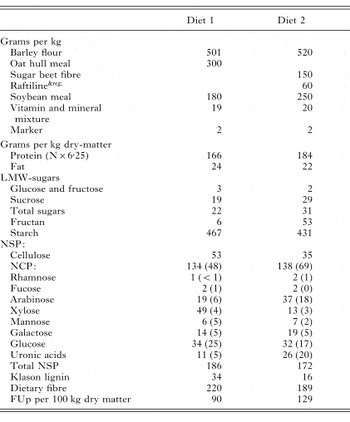
Table 1. Composition of the plant material and chemical composition of the experimental diets
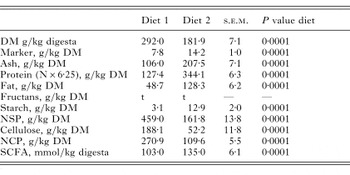
Table 2. Composition (g/kg dry matter or mmol/kg digesta) of digesta materials from the rectum of pigs fed diet 1 and diet 2
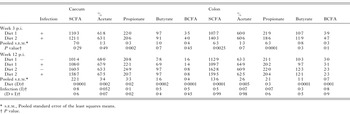
Table 3. Total short chain fatty acids (mmol/kg digesta) and molar proportions (%) of SCFA of pooled digesta materials from the caecum and colon after feeding diet 1 or diet 2 to non-infected and infected pigs for 3 weeks and 12 weeks p.i.

Fig. 1. Geometric mean Oesophagostomum dentatum egg counts of pigs fed permanent diet 1 ([squf ]), permanent diet 2, (○), changed diet 1> diet 2 group ([bull ]) and changed diet 2>diet 1 group (□).

Fig. 2. The mean location of Oesophagostomum dentatum worm burdens in the intestine of pigs slaughtered 3 weeks post-inoculation. Sections of the large intestine: (1) Ce-caecum; (2) Co1-0–20%; (3) Co2-21–40%; (4) Co3-41–60% and (5) Co4,5-61–100%.

Fig. 3. The mean location of Oesophagostomum dentatum worm burdens in the intestine of pigs in the cross-over design slaughtered 12 weeks post-inoculation. Sections of the large intestine: (1) Ce-caecum; (2) Co1-0–20%; (3) Co2-21–40%; (4) Co3-41–60% and (5) Co4,5-61–100%.

Fig. 4. The mean length of Oesophagostomum dentatum female and male worms 3 and 12 weeks post-inoculation in the cross-over design experiment.
 You have
Access
- 24
- Cited by