Introduction
Deep-sea hydrothermal vent ecosystems are unique ecosystems whose energy source is sustained largely by chemoautotrophic microbial production, differing from typical deep-sea ecosystems that are sustained by phytodetritus input (Van Dover, Reference Van Dover2000). Organisms inhabiting hydrothermal vent ecosystems have therefore adapted to utilize such chemoautotrophic food sources or have symbiotic relationships with chemoautotrophic microbes (Dubilier et al., Reference Dubilier, Bergin and Lott2008). The taxonomic composition of meiofauna at hydrothermal vents has become the focus of attention in recent decades (e.g. Dinet et al., Reference Dinet, Grassle and Tunnicliffe1988; Shirayama, Reference Shirayama1992; Vanreusel et al., Reference Vanreusel, Bossche and Thiermann1997, Reference Vanreusel, De Groote, Gollner and Bright2010; Tsurumi et al., Reference Tsurumi, de Graaf and Tunnicliffe2003; Flint et al., Reference Flint, Copley, Ferrero and Van Dover2006; Gollner et al., Reference Gollner, Zekely, Van Dover, Govenar, Le Bris, Nemeschkal and Bright2006, Reference Gollner, Zekely, Govenar, Le Bris, Nemeschkal, Fisher and Bright2007, Reference Gollner, Riemer, Arbizu, Le Bris and Bright2010a, Reference Gollner, Govenar, Fisher and Bright2015a, Reference Gollner, Govenar, Martinez Arbizu, Mills, Le Bris, Weinbauer, Shank and Bright2015b; Zekely et al., Reference Zekely, Gollner, Van Dover, Govenar, Bris, Nemeschkal and Bright2006a, Reference Zekely, Van Dover, Nemeschkal and Bright2006b; Copley et al., Reference Copley, Flint, Ferrero and Van Dover2007; Degen et al., Reference Degen, Riavitz, Gollner, Vanreusel, Plum and Bright2012; Cuvelier et al., Reference Cuvelier, Beesau, Ivanenko, Zeppilli, Sarradin and Sarrazin2014; Sarrazin et al., Reference Sarrazin, Legendre, De Busserolles, Fabri, Guilini, Ivanenko, Morineaux, Vanreusel and Sarradin2015; Zeppilli et al., Reference Zeppilli, Vanreusel, Pradillon, Fuchs, Mandon, James and Sarrazin2015, Reference Zeppilli, Leduc, Fontanier, Fontaneto, Fuchs, Gooday, Goineau, Ingels, Ivanenko, Kristensen, Neves, Sanchez, Sandulli, Sarrazin, Sørensen, Tasiemski, Vanreusel, Autret, Bourdonnay, Claireaux, Coquillé, de Wever, Durand, Marchant, Toomey and Fernandes2018; Baldrighi et al., Reference Baldrighi, Zeppilli, Crespin, Chauvaud, Pradillon and Sarrazin2017; Plum et al., Reference Plum, Pradillon, Fujiwara and Sarrazin2017). However, it is still largely unclear how meiofaunal-sized organisms colonize such an environment, due to the lack of fundamental ecological knowledge at a more refined scale. Studies on faunal compositions covering both vent-specific and ‘ubiquitous’ meiofauna are also required to understand the colonization process at the vent chimney, and environmental selection during that process.
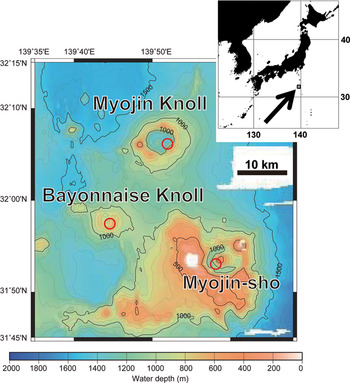
Recently, we investigated spatial variations in meiofaunal composition on active chimney structures in the calderas of three neighbouring sea knolls (Bayonnaise Knoll, Myojin Knoll and Myojin-sho Caldera) on the Izu-Ogasawara Arc, north-western Pacific Ocean (Figure 1). These studies revealed that the meiofaunal communities on the surfaces of active vent chimneys were dominated by benthic copepods, whereas nematodes were the most abundant taxa in the sediments located around chimney bases (Setoguchi et al., Reference Setoguchi, Nomaki, Kitahashi, Watanabe, Inoue, Ogawa and Shimanaga2014; Uejima et al., Reference Uejima, Nomaki, Senokuchi, Setoguchi, Kitahashi, Watanabe and Shimanaga2017). Furthermore, spatial differences in order-level copepod taxonomic composition on venting chimney surfaces were significantly correlated with differences in the availability of vent chemoautotrophic carbon. At the sites with higher values of stable carbon isotope ratios (δ13C) of organic matter in the detritus (suggesting a higher contribution of chemoautotrophic bacteria), Siphonostomatoida dominated, mainly Stygiopontius senokuchiae, the first species of Dirivultidae found in the area (Uyeno et al., Reference Uyeno, Watanabe and Shimanaga2018; Watanabe et al., Reference Watanabe, Senokuchi, Nomaki, Kitahashi, Uyeno and Shimanaga2021). In contrast, Harpacticoida, another highly abundant copepod taxon, showed decreased frequencies with increasing δ13C values at vent sites in those knolls (Senokuchi et al., Reference Senokuchi, Nomaki, Watanabe, Kitahashi, Ogawa and Shimanaga2018). The δ13C values of copepod tissues also suggest that dirivultids rely on vent chimney bacteria as their nutritional source (Nomaki et al., Reference Nomaki, Uejima, Ogawa, Yamane, Watanabe, Senokuchi, Bernhard, Kitahashi, Miyairi, Yokoyama, Ohkouchi and Shimanaga2019). These results strongly suggest that chemoautotrophic food resource availability is the key factor controlling vent copepod distributions, at least at higher taxonomic levels.
Map showing locations of Bayonnaise Knoll, Myojin Knoll and Myojin-sho Caldera. Circles indicate the hydrothermal vents investigated.

Information on harpacticoid communities at deep hydrothermal vent sites had been badly lacking from the north-western Pacific, comparing those in the eastern Pacific and the mid Atlantic (e.g. Tsurumi et al., Reference Tsurumi, de Graaf and Tunnicliffe2003; Zekely et al., Reference Zekely, Van Dover, Nemeschkal and Bright2006b). In this study, we focused on the harpacticoid community composition at the family level on active vent chimneys in the three knolls, as the first step in the investigation of spatial variation of this composition around the hydrothermal area. We examined the degree of similarity in the harpacticoid composition among vent sites in the three knolls in our study area and those in the other provinces on a global scale. The vent sites in each of the investigated knolls were isolated by the high caldera walls that surrounded them. The copepod family Dirivultidae (Siphonostomatoida), a typical vent family, has planktonic nauplii and/or copepodid stages (Ivanenko, Reference Ivanenko1998; Ivanenko et al., Reference Ivanenko, Martínez Arbizu and Stecher2007; Gollner et al., Reference Gollner, Ivanenko, Arbizu and Bright2010b), thus enabling wide dispersal via oceanic currents. Harpacticoids, however, usually have direct benthic development, without planktonic nauplius (Huys et al., Reference Huys, Gee, Moore and Hamond1996), and may thus be restricted to expanding their distribution ranges due to the caldera walls functioning as geographic barriers. This results in few similarities in their community composition, even at the family level, between the vent sites in the different knolls. We also investigated the effect of several environmental factors on these harpacticoid compositions around the hydrothermal vents on these knolls, including those of food availability, which showed significant effects on the copepod composition at higher taxonomic levels in the study area.
Materials and methods
Meiofaunal sampling and sample processing
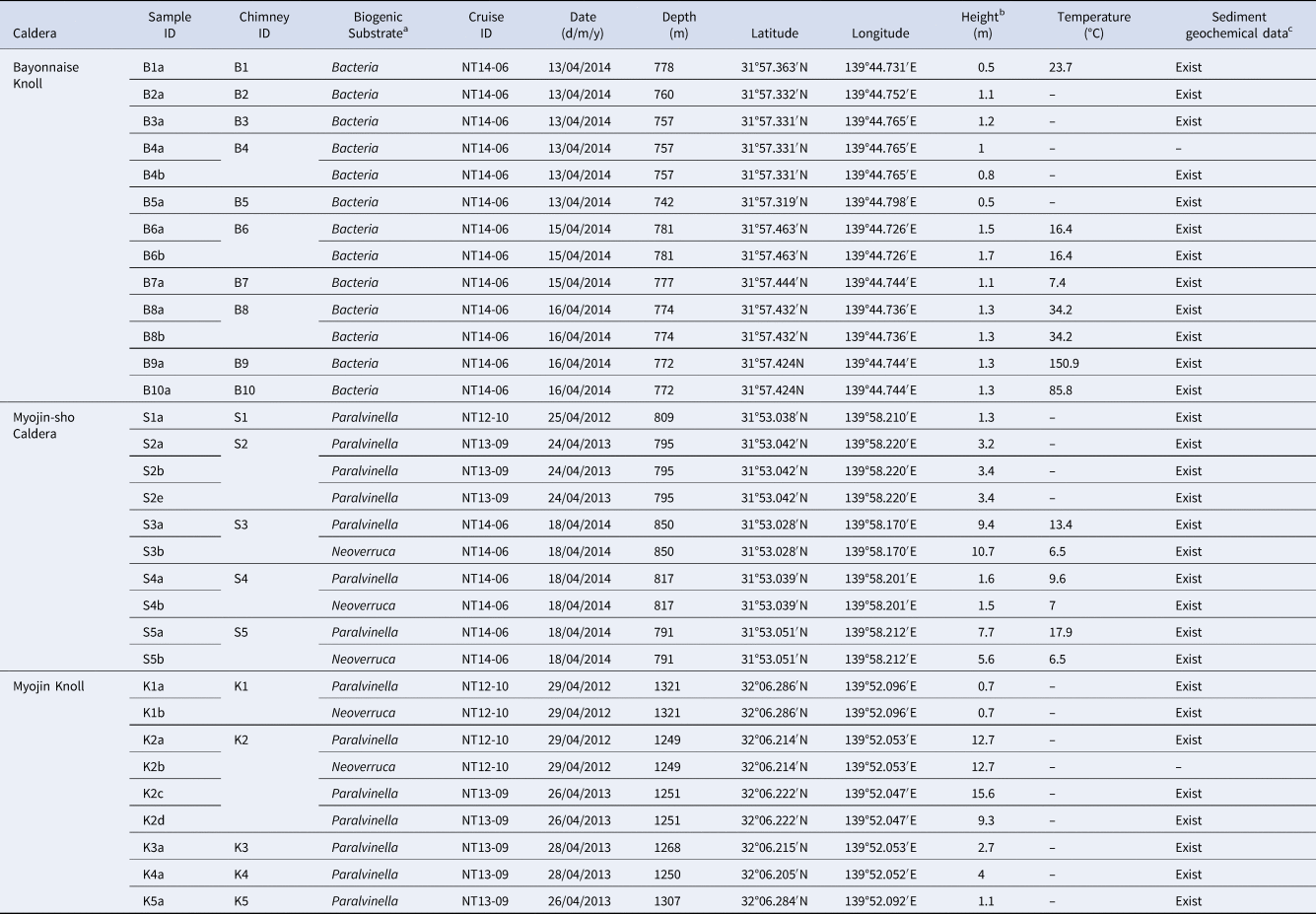
The samples used in this study were collected using the research vessel (RV) ‘Natsushima’ (cruises NT12–10 in 2012, NT13–09 in 2013 and NT14–06 in 2014; all cruises in April), which visited three adjacent knoll-associated calderas with known active hydrothermal vent systems: Bayonnaise Knoll, Myojin-sho Caldera and Myojin Knoll (Figure 1, Table 1). Details of the sampling sites and procedures have been reported previously (Senokuchi et al., Reference Senokuchi, Nomaki, Watanabe, Kitahashi, Ogawa and Shimanaga2018; Nomaki et al., Reference Nomaki, Uejima, Ogawa, Yamane, Watanabe, Senokuchi, Bernhard, Kitahashi, Miyairi, Yokoyama, Ohkouchi and Shimanaga2019). In brief, samples were collected using the remotely operated vehicle (ROV) ‘Hyper-Dolphin’. Detritus was collected from aggregations of polychaetes (Paralvinella spp.) on the surfaces of active hydrothermal vent chimneys of Myojin Knoll and Myojin-sho Caldera using a suction sampler (lined with a 30 μm mesh). These annelids are typically distributed in close proximity to vent orifices, where temperatures are the highest among the vent-megafaunal aggregations (Watanabe & Kojima, Reference Watanabe, Kojima, Ishibashi, Okino and Sunamura2015). At certain chimneys, we took suction samples from patches of Neoverruca intermedia, a vent barnacle that occurs within tens of centimetres from the vent orifice. Water temperature measurements were taken with a thermometer at the centre of some of the sampling locations, which showed that the Neoverruca patches were cooler than the Paralvinella spp. patches by up to 11 °C (Table 1). Since there were no obvious high-density macrofauna aggregations on Bayonnaise Knoll, we collected suction samples from white bacterial mats around the vent orifices of the chimneys. The biogenic substrate, sampling position, water depth and altitude above the bottom of each sampling site are summarized in Table 1.
Details of sampling locations, codes, dates, biological and physicochemical parameters

aBacteria, bacterial mat; Paralvinella, Paralvinella patch; Neoverruca, Neoverruca patch. bHeight above bottom recorded by the ROV altimeter during fixed position sampling. cData on parameters of detritus organic matter are cited from Nomaki et al. (Reference Nomaki, Uejima, Ogawa, Yamane, Watanabe, Senokuchi, Bernhard, Kitahashi, Miyairi, Yokoyama, Ohkouchi and Shimanaga2019).
Upon recovery of the samples on the ship, a small amount of detritus was removed immediately from each detritus sample and frozen without chemical fixation. These samples were used to measure the concentrations of total organic carbon (TOC) and total nitrogen (TN), C/N ratios and stable carbon isotopic compositions (δ13C) to estimate the origins of the organic matter in detritus. Details of the TOC, TN and δ13C analyses are described by Nomaki et al. (Reference Nomaki, Uejima, Ogawa, Yamane, Watanabe, Senokuchi, Bernhard, Kitahashi, Miyairi, Yokoyama, Ohkouchi and Shimanaga2019). The remaining portions of the detritus samples were subdivided into two aliquots using a plankton splitter, and each aliquot was preserved separately in 5% buffered seawater formalin for analysis of the taxonomic composition of meiofauna (used in this study), or 99.5% ethanol for their DNA. Formalin-fixed samples were then stained with rose bengal (final concentration 0.05 g L–1) to help identify live meiofaunal samples.
The details of the process of benthic copepod extraction from the formalin-fixed samples in the laboratory are described in Senokuchi et al. (Reference Senokuchi, Nomaki, Watanabe, Kitahashi, Ogawa and Shimanaga2018). Among the extracted copepod specimens from each sample, we randomly selected adult harpacticoid specimens without serious morphological damage preventing identification, until reaching 50 specimens (or all available specimens when there were <50). The specimens were examined under a compound microscope equipped with differential interference optics. We investigated only adult copepods due to the difficulty associated with morphologically identifying immature individuals. The specimen number in a sample (N = 50) was found to be sufficient for evaluating the overall trend in meiofaunal composition (e.g. Setoguchi et al., Reference Setoguchi, Nomaki, Kitahashi, Watanabe, Inoue, Ogawa and Shimanaga2014). Little is known about the taxonomy of benthic harpacticoids, particularly on deep-sea hydrothermal vents around Japan (e.g. Lee & Huys, Reference Lee and Huys2000; Back et al., Reference Back, Huys and Lee2010); therefore, we did not identify individuals to the species level, only to the family level using a key based on Huys et al. (Reference Huys, Gee, Moore and Hamond1996), Boxshall & Halsey (Reference Boxshall and Halsey2004) and Wells (Reference Wells2007) and recent literature (cf. Walter & Boxshall, Reference Walter and Boxshall2021).
Statistical analyses
We analysed the entire dataset of harpacticoid composition using a distance-based linear model (DISTLM) and distance-based redundancy analysis (dbRDA), using the Bray–Curtis index as a similarity index (Clarke & Warwick, Reference Clarke and Warwick2001; Anderson et al., Reference Anderson, Gorley and Clarke2008). Suction samples from the chimney surface were generally taken from areas of ~20 × 30 cm2 on common biogenic substrata (e.g. patches of Paralvinella spp.), but we encountered difficulties in precisely tracing the sampling areas from video and photographs, which were usually captured at inappropriate angles to identify the exact sampling points. Thus, statistical analyses were performed based on standardized values of family composition (percentage of each family in total identified specimens) for each sample, as opposed to their actual density (ind. cm−2). We used PRIMER7 software with the add-on package PERMANOVA + (PRIMER-E Ltd, Plymouth, UK) for these analyses.
DISTLM was used to determine the best-fit models and partition variance in the response variables (harpacticoid compositions) to assign proportional effects to the measured environmental factors (Anderson et al., Reference Anderson, Gorley and Clarke2008).
The environmental factors TOC concentration in detritus, C/N ratio (weight/weight), δ13C values, water depth and the height from the chimney base where the sample was collected (altitude) were considered in the analysis. The δ13C values and C/N of organic matter in the detritus are indicators of the relative contributions of different carbon sources. In our previous study, the δ13C values of vent chimney detritus ranged from −24 to −11%, a range between typical photosynthetic organic carbon and chemoautotrophic organic carbon (Nomaki et al., Reference Nomaki, Uejima, Ogawa, Yamane, Watanabe, Senokuchi, Bernhard, Kitahashi, Miyairi, Yokoyama, Ohkouchi and Shimanaga2019). The C/N ratios of chemoautotrophic organic matter in detritus tend to be lower (Limén et al., Reference Limén, Levesque and Juniper2007). In addition to these geochemical factors, we also considered water depth and altitude as potential factors controlling copepod composition. Bathymetric changes in community composition have been reported among benthic harpacticoids at the (non-vent) deep-sea bottom (e.g. Shimanaga et al., Reference Shimanaga, Kitahashi and Kawamura2019). The mean depths at sampling sites in Bayonnaise Knoll, Myojin-sho Caldera and Myojin Knoll were 768, 811 and 1274 m, respectively (cf. Table 1). Although we could not include temperature in our overall multivariate analyses due to the limited in situ temperature data (N = 14 out of 32), preliminary DISTLMs based on a limited temperature dataset did not select the temperature as a significant parameter, suggesting its low association with spatial heterogeneity in harpacticoid composition at least at family level.
Benthic harpacticoids have large variations in their body shapes based on their lifestyles; some of them are large and have free-swimming abilities (Hicks & Coull, Reference Hicks and Coull1983). Around the hydrothermal vents, many meiofauna species including harpacticoids are generalists that can live on active vents and non-vent seafloor, and they were suggested to populate new vent sites by crawling or swimming from their old habitats (Gollner et al., Reference Gollner, Govenar, Martinez Arbizu, Mullineaux, Mills, Le Bris, Weinbauer, Shank and Bright2020). Although the effects of chimney height (altitude of the sampling spot from the base of the chimney) on meiofaunal composition at hydrothermal vent fields are still unknown, this may affect the differences in vertical distribution on chimneys between the harpacticoids with different swimming abilities.
While we used standardized values of harpacticoid families for each sample before calculating similarities between samples, the values of those environmental factors were not transformed, as PERMANOVA+ automatically normalizes each environmental factor when running DISTLM (Anderson et al., Reference Anderson, Gorley and Clarke2008). The forward selection procedure was used to determine the best combination of predictor variables to explain variation in harpacticoid composition data and to partition the variation explained by the selected predictor variables based on the selection criterion (AIC, in this study). The dbRDA was used to ordinate the fitted values from the models selected by DISTLM (Anderson et al., Reference Anderson, Gorley and Clarke2008).
Results
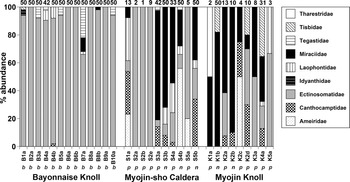
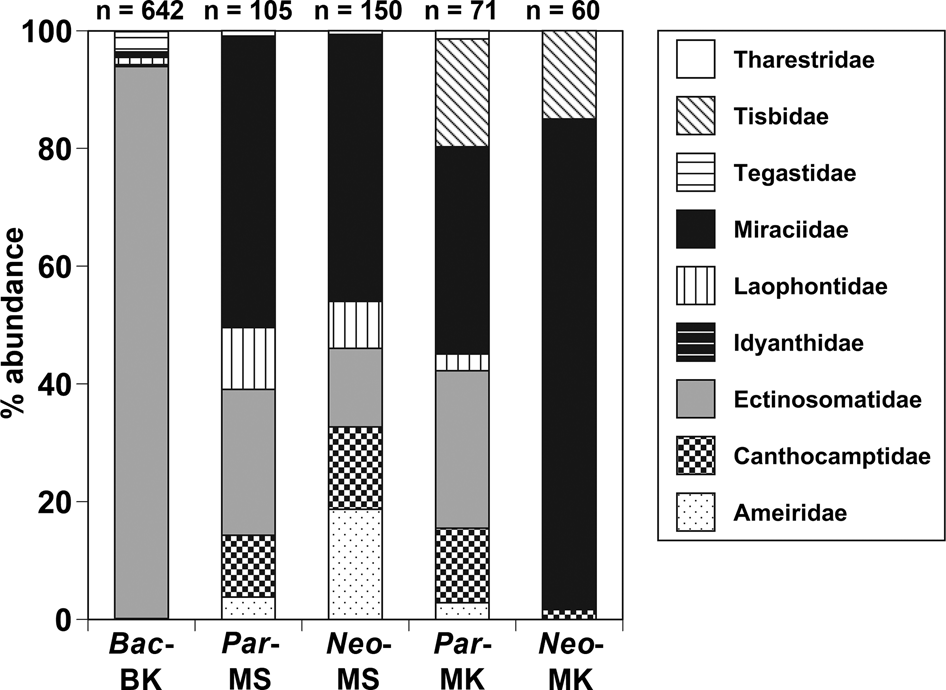
Among 1028 adults investigated, nine harpacticoid families were recognized (Figure 2). Ectinosomatidae was the most abundant family at the bacterial mats on the chimneys in Bayonnaise Knoll (Figure 2), comprising 94% of the total identified specimens collected from the knoll (Figure 3). Their relative abundances were about 25% among the total specimens collected from the patches of Paralvinella polychaetes on the chimneys in both Myojin-sho Caldera and Myojin Knoll; although, in some patches where only a few harpacticoid specimens were obtained (e.g. S2a, b in Figure 2), all of the samples were from the Ectinosomatidae family. Ectinosomatids were fewer in the community at the patches of Neoverruca barnacles (13% in Myojin-sho, 0% in Myojin Knoll, Figure 3). In contrast, Miraciidae comprised only 1% of the total adult harpacticoids from Bayonnaise Knoll, whereas its frequency increased on the chimneys in Myojin-sho Caldera (~50% at both macrofaunal patches), and in the Myojin Knoll (35% in Paralvinella patches, 83% in Neoverruca, Figure 3). The χ2 test based on the pooled data, ignoring the differences in biological patches, revealed that the frequencies of families were significantly different among the knolls (P < 0.01). Other χ2 tests also detected significant differences at the 1% level in the frequencies between Paralvinella and Neoverruca patches in both Myojin-sho Caldera and Myojin Knoll when the consideration was restricted to separate samples from each sea knoll.
Spatial differences in harpacticoid family composition among samples from active chimneys. The numbers above each bar denote the number of specimens obtained on each sample. b, bacterial mats; p, patches of Paralvinella spp.; n, patches of Neoverruca intermedia.

Frequencies of harpacticoid families in the pooled specimens obtained from different biogenic substrata on chimneys in the three calderas. n, total specimen number for each category; Bac-BK, bacterial mats on chimneys on Bayonnaise Knoll; Par-MS and Neo-MS, patches of Paralvinella spp. and Neoverruca intermedia, respectively, on chimneys in Myojin-sho Caldera; Par-MK and Neo-MK, patches of Paralvinella spp. and Neoverruca intermedia, respectively, on chimneys in Myojin Knoll.

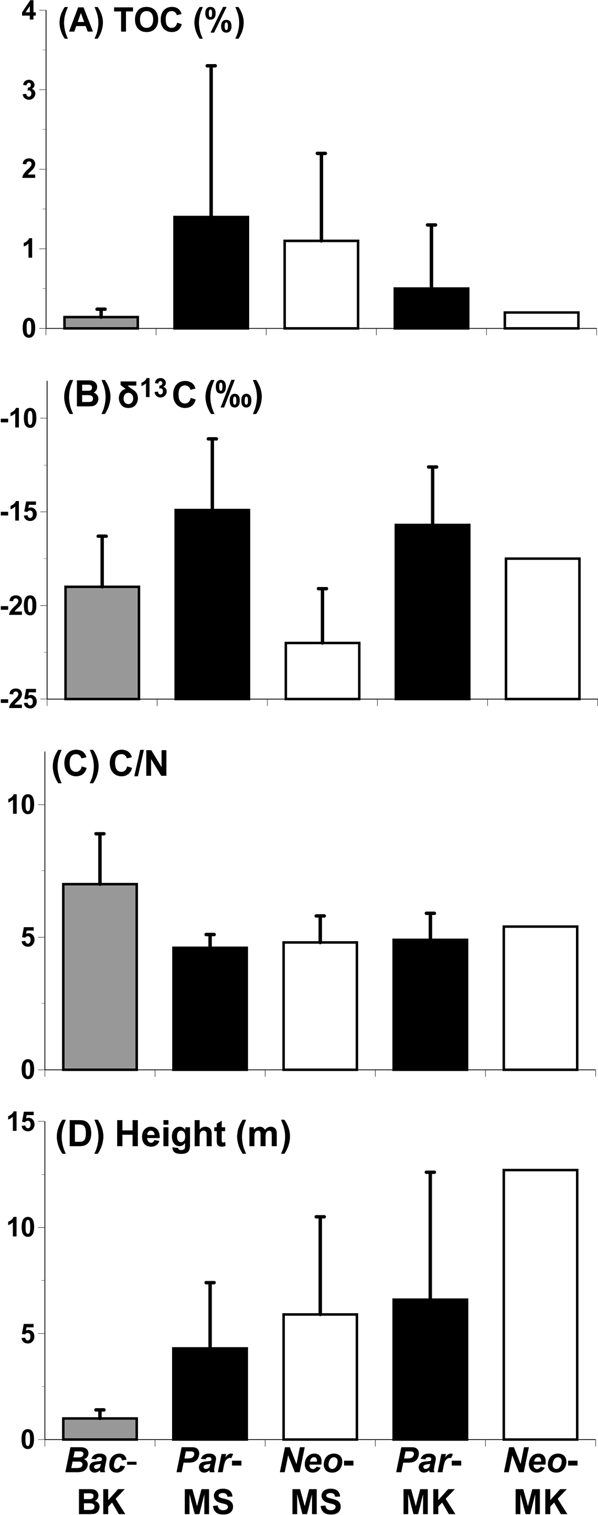
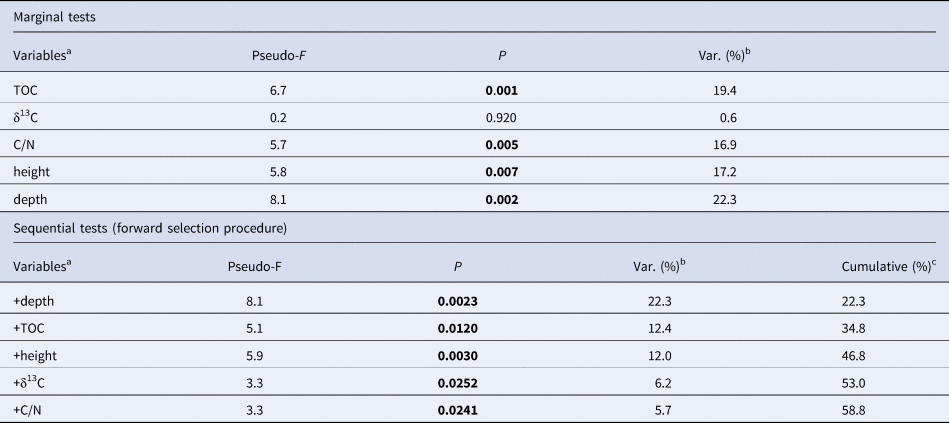
Based on samples for which we had data on harpacticoid family level compositions and those of environmental parameters (detritus TOC concentration, δ13C values, C/N ratios, water depth, and height of sampling positions on the chimney walls, Table 1 and Figure 4), DISTLM showed significant associations between four out of five investigated environment factors and spatial differences in harpacticoid composition separately, but δ13C of the detritus of the habitat (i.e. potential food sources) did not reveal a significant correlation by itself (marginal tests in Table 2). On the other hand, the forward selection processes in DISTLM selected all investigated parameters, including δ13C of the detritus, as factors explaining 65.5% of the total spatial variation in composition difference among samples (Table 2). The spatial heterogeneities of water depth were the most important factors explaining 22% of the total variation in composition difference among samples, followed by TOC (12%) and the differences in the height of the sampling position (12%). The contributions of δ13C and C/N of the detritus of the habitat (i.e. potential food sources) were smaller (~6%).
Spatial changes in (A) concentration of total organic carbon (TOC), (B) stable carbon isotopic compositions (δ13C), and (C) Total organic carbon/total nitrogen ratio (C/N), (D) height of the sampling point above the seafloor. Bars and error bars denote averages and standard deviations (SDs), respectively. Bac-BK, bacterial mats on chimneys in Bayonnaise Knoll; Par-MS and Neo-MS, patches of Paralvinella spp. and Neoverruca intermedia, respectively, on chimneys in Myojin-sho Caldera; Par-MK and Neo-MK, patches of Paralvinella spp. and Neoverruca intermedia, respectively, on chimneys on Myojin Knoll.

Distance-based linear model (DISTLM) analyses of harpacticoid composition

aVariables tested as predictors in the analyses. Significant P-values are shown in bold with under lines. δ13C denotes those of organic matter in detritus. bPercentage of total variation explained by the factor. cCumulative percentage explained by the added factors.
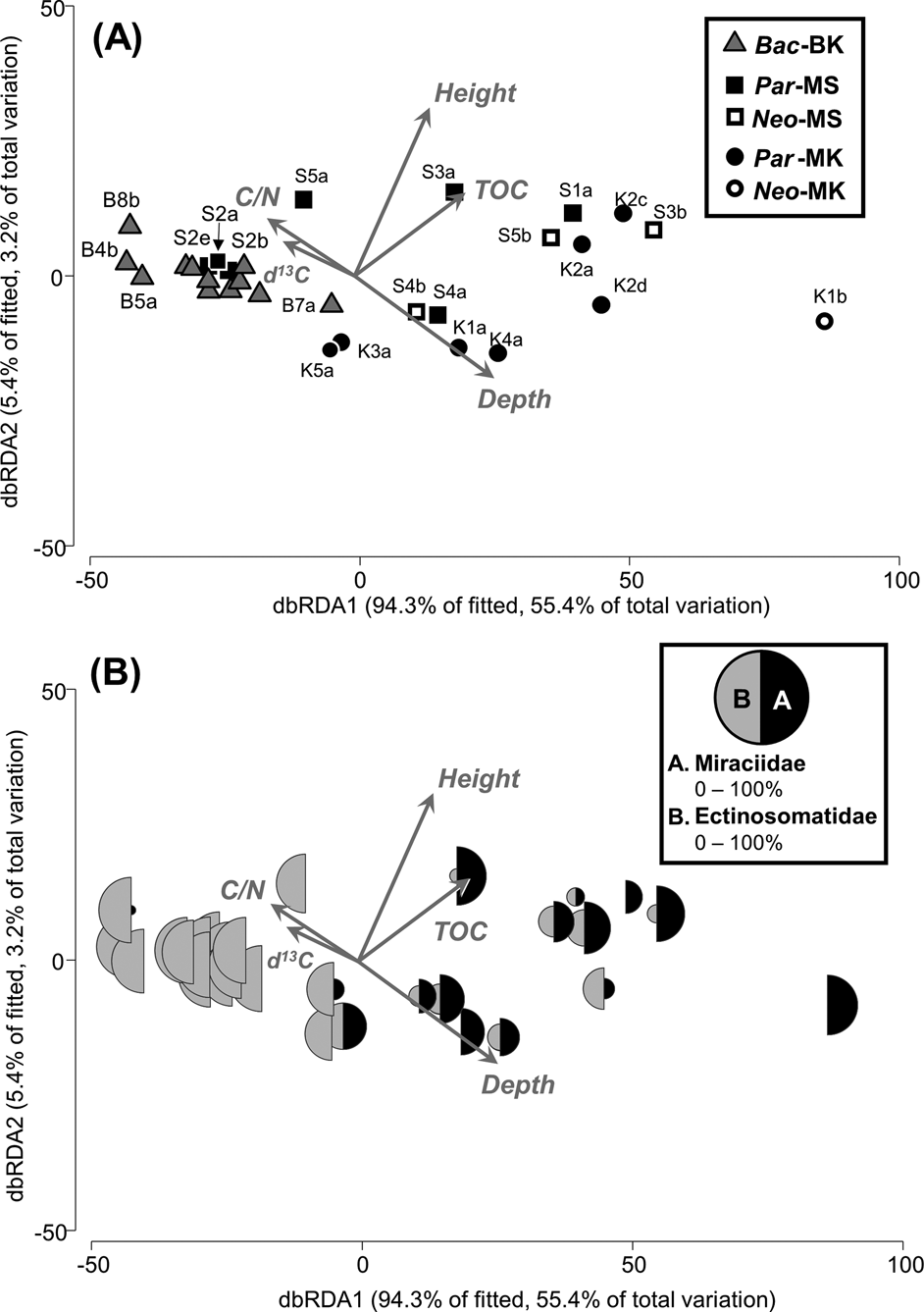
The dbRDA based on the DIRSTLM results showed that the spatial heterogeneities of water depth and TOC contributed mainly to the difference in harpacticoid composition between the knolls (Figure 5A), as the proportion of Miraciidae (expressed by the sizes of black segments of bubble plots in Figure 5B) were positively correlated with these factors, and were greater on Myojin-sho and Myojin Knolls. The relative abundances of Ectinosomatidae (grey segments of bubble plots in Figure 5B) were negatively correlated with these factors and showed a tendency to increase in Bayonnaise Knoll. The values of δ13C and C/N had weak positive associations with the higher frequencies of the family.
(A) Distance-based redundancy analysis (dbRDA) of the harpacticoid family-level composition dataset according to distance-based linear modelling (DISTLM) with selected environment factors. The percentages of variation in the fitted model and in the total variation in harpacticoid composition explained by each of the dbRDA axes are indicated. The directions and lengths of vector overlays denote the directions and strengths of the relationships between the dbRDA axes and the environmental factors, respectively. Different symbols refer to different habitats where sampling was conducted. Bac-BK, bacterial mats on chimneys in Bayonnaise Knoll; Par-MS and Neo-MS, patches of Paralvinella spp. and Neoverruca intermedia, respectively, on chimneys in Myojin-sho Caldera; Par-MK and Neo-MK, patches of Paralvinella spp. and Neoverruca intermedia, respectively, on chimneys on Myojin Knoll. Particular sample codes are arrayed next to the symbols. (B) Segmented bubble plot for the main copepod taxa (A, Miraciidae; B, Ectinosomatidae) on the ordination plotted in (A). Differences in size between segmented bubbles indicate relative abundances of the taxa (0–100%).

Discussion
Previous studies have shown that the lower diversity of meiofauna, including copepods, at deep-sea hydrothermal vent sites with high hydrothermal influence, suggests that environmental conditions around vents affect meiofaunal taxa more negatively than larger macrofauna (Tsurumi et al., Reference Tsurumi, de Graaf and Tunnicliffe2003; Zekely et al., Reference Zekely, Van Dover, Nemeschkal and Bright2006b; Gollner et al., Reference Gollner, Riemer, Arbizu, Le Bris and Bright2010a, Reference Gollner, Govenar, Fisher and Bright2015a). While most of the described copepod species from the deep-sea hydrothermal vents belong to the family Dirivultidae (order Siphonostomatoida), which has been reported exclusively in those ecosystems, other copepod families of the Harpacticoida and Cyclopoida orders from hydrothermal vents have been previously identified in shallow waters (Zeppilli et al., Reference Zeppilli, Leduc, Fontanier, Fontaneto, Fuchs, Gooday, Goineau, Ingels, Ivanenko, Kristensen, Neves, Sanchez, Sandulli, Sarrazin, Sørensen, Tasiemski, Vanreusel, Autret, Bourdonnay, Claireaux, Coquillé, de Wever, Durand, Marchant, Toomey and Fernandes2018).
The present study showed simple and similar compositions at the family level of meiofaunal-sized harpacticoids collected from active chimneys on each investigated sea knoll. Especially at the bacterial mats on the chimneys in Bayonnaise Knoll, harpacticoid communities were close to being monopolized by Ectinosomatidae (>90%). In contrast, the family level composition of harpacticoids at vent sites was significantly different between the biological substrata, but also between the knolls, suggesting caldera walls function as barriers, as expected. The frequency of Ectinosomatidae was lower on average on the chimneys in both Myojin-sho Caldera and Myojin Knoll, where Miraciidae contributed more to the harpacticoid composition, especially at Neoverruca patches.
The copepod family Dirivultidae (Siphonostomatoida), a typical vent copepod group, has planktonic nauplii and/or copepodid stages and strong swimming abilities (Ivanenko, Reference Ivanenko1998; Gollner et al., Reference Gollner, Govenar, Fisher and Bright2015a), and members of this family migrate either as larvae and/or free-swimming adults from an active vent source to other active vent sites (cf. Gollner et al., Reference Gollner, Govenar, Martinez Arbizu, Mullineaux, Mills, Le Bris, Weinbauer, Shank and Bright2020). In contrast to the high abundance of dirivultids, very low frequencies of benthic harpacticoids occurred in the water column above the same vent habitats (Gollner et al., Reference Gollner, Govenar, Martinez Arbizu, Mills, Le Bris, Weinbauer, Shank and Bright2015b), suggesting their lower locomotive abilities around the vent habitats. The swimming ability of some harpacticoids, however, may be sufficient to migrate occasionally between neighbouring chimneys. On the continental slope near central California, Thistle et al. (Reference Thistle, Sedlacek, Carman, Fleeger and Barry2007) showed that some deep-sea harpacticoid species demonstrated emergence behaviour, temporary excursions into the water column above the sea bottom, and the majority of these emergent species belonged to Ectinosomatidae, suggesting that deep-sea species of this family are strong swimmers similar to their relatives in shallow waters. Although the identification at lower taxonomic levels is still ongoing for our harpacticoid specimens, preliminary surveys suggest that ectinosomatids on the chimneys in Bayonnaise Knoll are composed of Ectinosoma spp., which also appeared to be distributed in the sediment on the non-venting seafloor at the bases of those chimneys. Further studies at genus and species levels on harpacticoid compositions on the surfaces of venting chimneys and in the sediment of their neighbouring seafloor would help clarify the processes of the foundation and maintenance of populations of ectinosomatids at our investigated vent sites.
After a major volcanic eruption in 2005/2006 buried faunal communities over a large area of the vent field in the 9°N East Pacific Rise (EPR), harpacticoid copepods such as Amphiascus aff. varians (Miraciidae) contributed as meiofaunal colonizers of new active vent sites (Gollner et al., Reference Gollner, Govenar, Martinez Arbizu, Mullineaux, Mills, Le Bris, Weinbauer, Shank and Bright2020). These meiofaunal harpacticoids would have reached those new vent sites predominantly via migration from local refuge areas that were not disturbed by the eruption (Gollner et al., Reference Gollner, Govenar, Martinez Arbizu, Mullineaux, Mills, Le Bris, Weinbauer, Shank and Bright2020), suggesting that the Miraciidae species observed at those vent sites, as well as our sites, have stronger swimming abilities than other harpacticoids.
There were general bathymetric trends in harpacticoid community composition on the (non-vent) deep-sea bottom from the upper bathyal to abyssal depths (400–5800 m) along the Pacific side of the Japanese island arc, where Ectinosomatidae was the most abundant family at upper bathyal depth, but was consistently decreased with increasing water depth (Shimanaga et al., Reference Shimanaga, Kitahashi and Kawamura2019). This trend could at least partly explain the observation of the highest frequencies of Ectinosomatidae on vent chimneys in the caldera of Bayonnaise Knoll, which has the shallowest depths (770 m on average) among the three knolls investigated in this study. In the foundation and maintenance of communities of non-vent-endemic meiofauna, including most of the harpacticoids, at deep-sea vent fields, the invasion from adjacent non-vent areas would have been more important than the migration from the other isolated hydrothermal vents due to the lack of a planktonic life stage (cf. Vanreusel et al., Reference Vanreusel, Bossche and Thiermann1997). It is noteworthy that the DISTLM identified water depth as the most significant factor explaining the spatial change in harpacticoid composition at vent sites in this study. To confirm this proposal, further information on harpacticoid composition on the non-vent seafloor surrounding the vent chimneys investigated in this study will be essential.
The concentration of TOC in detritus was selected as the second factor explaining the harpacticoid distribution, and Ectinosomatidae dominated at the sites where lower TOC was observed in Bayonnaise Knoll. The processes by which a lower TOC drives a higher frequency of the family are unclear based on current available data. The vent chimneys in Bayonnaise Knoll were generally smaller than those in the other two knolls (Figure 4b) and without apparent patches of large sessile mega- and macrofauna on their surfaces, suggesting that the total amount of organic input was too small to sustain the larger fauna. This reduction of food availability may affect both macrofauna and meiofaunal harpacticoids.
In the present study, δ13C and C/N of organic matter in the detritus, indicators of relative contributions of different carbon sources, showed low affinities with the spatial difference in family-level harpacticoid composition, suggesting that chemoautotrophic food availability is not the main factor controlling harpacticoid distribution on the active chimneys in the investigated sea knolls. We have not yet measured and compared δ13C values of body tissues between different harpacticoid taxa. Interestingly, however, the preliminary study showed the mixed samples of several tens of copepods other than dirivultids (mainly harpacticoids) in this study area had lower δ13C values than dirivultids, suggesting that they utilized a mixture of photosynthesis- and chemosynthesis-derived carbon resources (Nomaki et al., Reference Nomaki, Uejima, Ogawa, Yamane, Watanabe, Senokuchi, Bernhard, Kitahashi, Miyairi, Yokoyama, Ohkouchi and Shimanaga2019). This may reinforce a possibility that harpacticoids at the investigated vents do not feed exclusively on chemoautotrophic food, but also adopt marine snows from sea surface onto chimneys as a total harpacticoid community. Ectinosomatids also dominated in harpacticoid specimens from some patches of Paralvinella, where most benthic copepods found were vent-endemic dirivultids (Senokuchi et al., Reference Senokuchi, Nomaki, Watanabe, Kitahashi, Ogawa and Shimanaga2018), and smaller numbers of harpacticoids were obtained (Figure 2). Since dbRDA suggested weak but positive associations between δ13C and C/N and the frequency of Ectinosomatidae, the species of the family may be affected by the gradient of chemosynthesis-derived carbon availability more strongly than the other harpacticoids observed in the study vent sites.
A potential impediment to the present study is that no common biological substratum was collected from all investigated vent areas in the three knolls. For example, in Bayonnaise Knoll, the shallowest among the three knolls, there were only bacterial mats with lower TOC concentrations in detritus on shorter chimneys than those of the other knolls. Based on these available sample sets, it is possible that the effects of differences in these substrata (and their foundation macrofauna species themselves) and environmental factors would be correlated with each other and subsequently affect the observed harpacticoid distribution.
The comparisons between our results and previous studies suggest that harpacticoid composition at deep-sea vents in the various provinces is considerably different from each other, even at the family level.
On the Juan de Fuca Ridge in the eastern Pacific (45–48°N), higher frequencies of harpacticoids than dirivultids are observed on the basalt and sulphide habitats with lower venting flow, where most harpacticoids were of the family Miraciidae (Tsurumi et al., Reference Tsurumi, de Graaf and Tunnicliffe2003). Particularly on ‘blue mats’, which were formed by colonial folliculinid ciliates and occupied as much as 70% of the basaltic substratum at the hydrothermal vent sites on the Juan de Fuca and the adjacent Explorer Ridges, most benthic copepods were composed of one undescribed species of the family (Amphiascus; Kouris et al., Reference Kouris, Limén, Stevens and Juniper2010). As mentioned above, a species of Amphiascus (Miraciidae), distributed in both vent and non-vent fields, also contributed as meiofaunal colonizers of new active vent sites (2500 m) in the 9°N EPR (Gollner et al., Reference Gollner, Govenar, Martinez Arbizu, Mills, Le Bris, Weinbauer, Shank and Bright2015b, Reference Gollner, Govenar, Martinez Arbizu, Mullineaux, Mills, Le Bris, Weinbauer, Shank and Bright2020).
In the meiofaunal communities associated with Bathymodiolus mussel aggregations in the Mid-Atlantic Ridge (MAR, 11°N) and EPR (23°N), most copepod species were vent endemic dirivultids, and harpacticoid copepods contributed only a minor percentage to the total permanent meiofauna, which were composed of only two families, Ectinosomatidae and Laophontidae, with higher frequencies of the former in both areas (on average 70–90% of harpacticoids, Zekely et al., Reference Zekely, Van Dover, Nemeschkal and Bright2006b).
Colonization experiments deployed at the Lucky Strike vent field on the MAR (37°N, 1698 m) also suggested that environmental differences affect copepod composition (Ivanenko et al., Reference Ivanenko, Ferrari, Defaye and Sarradin2011). At the base of a black smoker, the harpacticoids of Ectinosomatidae, Ameiridae or Argestidae were the most abundant (58–80% of total benthic copepods), whereas the frequencies of Tisbidae (Tisbe spp.) harpacticoids were higher (>80% maximum) on Bathymodiolus mussel assemblages, together with dirivultids, cyclopoids and the harpacticoid species of Tegastidae (Smacigastes micheli).
A recent colonization experiment held in Lucky Strike vent field confirmed that the gradient of venting fluid input, rather than the difference in the substrata used for the experiment, mainly influenced the copepod composition colonizing the substrata; S. micheli and Tisbe sp. contributed to 36–74% of the average similarity among the samples from the most active area and from another site characterized by the presence of Bathymodiolus mussels and microbial mats with intermediate fluid inputs (Plum et al., Reference Plum, Pradillon, Fujiwara and Sarrazin2017). Very recently, at the ABE vent site (2142 m) in the Lau Basin, the south-western Pacific, Lorenzo et al. (Reference Lorenzo, ter Bruggen, Luther and Gartman2021) reported that Amphiascus aff. variance were the most abundant harpacticoids (3‒38%), followed by a species of Tisbidae (4‒16%) on the Bathymodiolus communities, but very few harpacticoids were observed from those of Alviniconcha and Ifremeria snails correlated with higher temperature and hydrogen sulphide concentrations. Those recent studies suggest that physicochemical conditions are important drivers of copepod colonization patterns at hydrothermal vents.
Although we could not include temperature in our overall multivariate analyses due to the limited in situ temperature data (Table 1), our previous study showed a higher association of δ13C values of organic matter in detritus with the copepod distribution at the order level (Senokuchi et al., Reference Senokuchi, Nomaki, Watanabe, Kitahashi, Ogawa and Shimanaga2018). This showed that δ13C of detritus, mainly controlled by the contribution of organic matters produced by the chemoautotrophic prokaryotes, can explain spatial differences in copepod compositions, and can be a parameter for environmental gradients around vents, considering that chemosynthetic production is high under hot and sulphide-rich conditions. Thus, the low affinity between δ13C and harpacticoid composition observed in the present study also may suggest that the physicochemical gradients around vents are not a significant driver of the spatial differences in harpacticoid communities in the study area.
Another possibility is that the present sample set did not cover the whole harpacticoid community on the vent sites in our study area, which may lead to the observed low relations of harpacticoid composition with chemosynthetic gradients; Tisbidae and Tegastidae showed low frequencies in our available samples. Since high frequencies of Tisbidae and/or Tegastidae have been reported in Bathymodiolus mussel assemblages at the vent sites in different areas (e.g. Ivanenko et al., Reference Ivanenko, Corgosinho, Ferrari, Sarradin and Sarrazin2012; Plum et al., Reference Plum, Pradillon, Fujiwara and Sarrazin2017; Lorenzo et al., Reference Lorenzo, ter Bruggen, Luther and Gartman2021), the harpacticoid samples taken from the bed of Bathymodiolus septemdierum, a species of Bathymodiolus mussels observed at the vents in Myojin Knoll and the other knolls on the Izu-Ogasawara Arc (Watanabe et al., Reference Watanabe, Fujikura, Kojima, Miyazaki, Fujiwara and Kiel2010), are required for the next stage.
In summary, we detected significant differences in harpacticoid composition between the vent sites of the three knolls, even at the family level. However, high similarities in the composition were observed between the same biological substrates on different chimneys in each knoll, suggesting connectivity between populations on adjacent vent chimneys by the dominant taxa (Ectinosomatidae or Miraciidae), probably with strong swimming abilities as their relatives have shown in other habitats. While high associations between harpacticoid composition, water depth and TOC concentration were detected, the availability of vent chemoautotrophic food did not seem to be the main factor controlling the harpacticoid composition around the vents investigated in this study.
Acknowledgements
The authors are grateful to the captain and crew of RV ‘Natsushima’, as well as the operational team of the ROV ‘Hyper-Dolphin’. Comments by the associate editor and two anonymous reviewers greatly improved our manuscript. We would like to thank Editage (www.editage.com) for English language editing.
Financial support
This study was partly funded by grants from the Japan Society for the Promotion of Science Grants-in-Aid for Scientific Research (KAKENHI) program (grant numbers JP26440246 and JP19H03305).