The Burkholderia cepacia complex (BCC) contains >20 species of related gram-negative bacteria that cause opportunistic infections, traditionally in patients with cystic fibrosis and chronic granulomatous disease. BCC bacteria are ubiquitous in the natural environment, especially in soil and water, and have the ability to contaminate healthcare spaces and cause nosocomial infections. Reference Compant, Nowak, Coenye, Clement and Ait Barka1,Reference Shaban, Sotomayor-Castillo and Nahidi2 Due to their ability to remain viable on environmental surfaces for prolonged periods of time, to colonize human skin and mucosal surfaces, and to be tolerant or resistant to some disinfectants (eg, quaternary ammonium compounds) and topical antiseptics (eg, providone–iodine and chlorhexidine), BCC presents a particular challenge to standard infection control interventions. Reference Shaban, Sotomayor-Castillo and Nahidi2–Reference Rose, Baldwin, Dowson and Mahenthiralingam4 Consequently, BCC is increasingly recognized as a cause of local and large-scale outbreaks in adult and pediatric healthcare settings, often as an environmental or medication contaminant, although identification of a source can be challenging. Reference Alvarez-Lerma, Maull and Terradas5–Reference Rhee, Baker and Tucker12
We describe the identification and investigation of an outbreak of BCC (B. contaminans) among patients at a large quaternary-care children’s hospital, most likely associated with endoscopic device reprocessing. Despite an extensive epidemiologic and environmental investigation, we were unable to identify a specific source. However, our broad investigational approach enabled us to conduct targeted system-level changes that likely ended the outbreak and prevented future events.
Methods
Case definition
A suspected case was defined as any patient with a respiratory culture collected between January and July 2021 in which BCC was isolated. A confirmed case was a suspected case whose BCC isolate was identified as B. contaminans by matrix-assisted laser desorption ionization time-of-flight mass spectrometry (MALDI-TOF MS, BioMerieux Vitek MS, Marcy-l’Étoile, France) and was genetically matched by random amplified polymorphic DNA (RAPD) polymerase chain reaction (PCR) or whole-genome sequencing (WGS).
Outbreak detection and case ascertainment
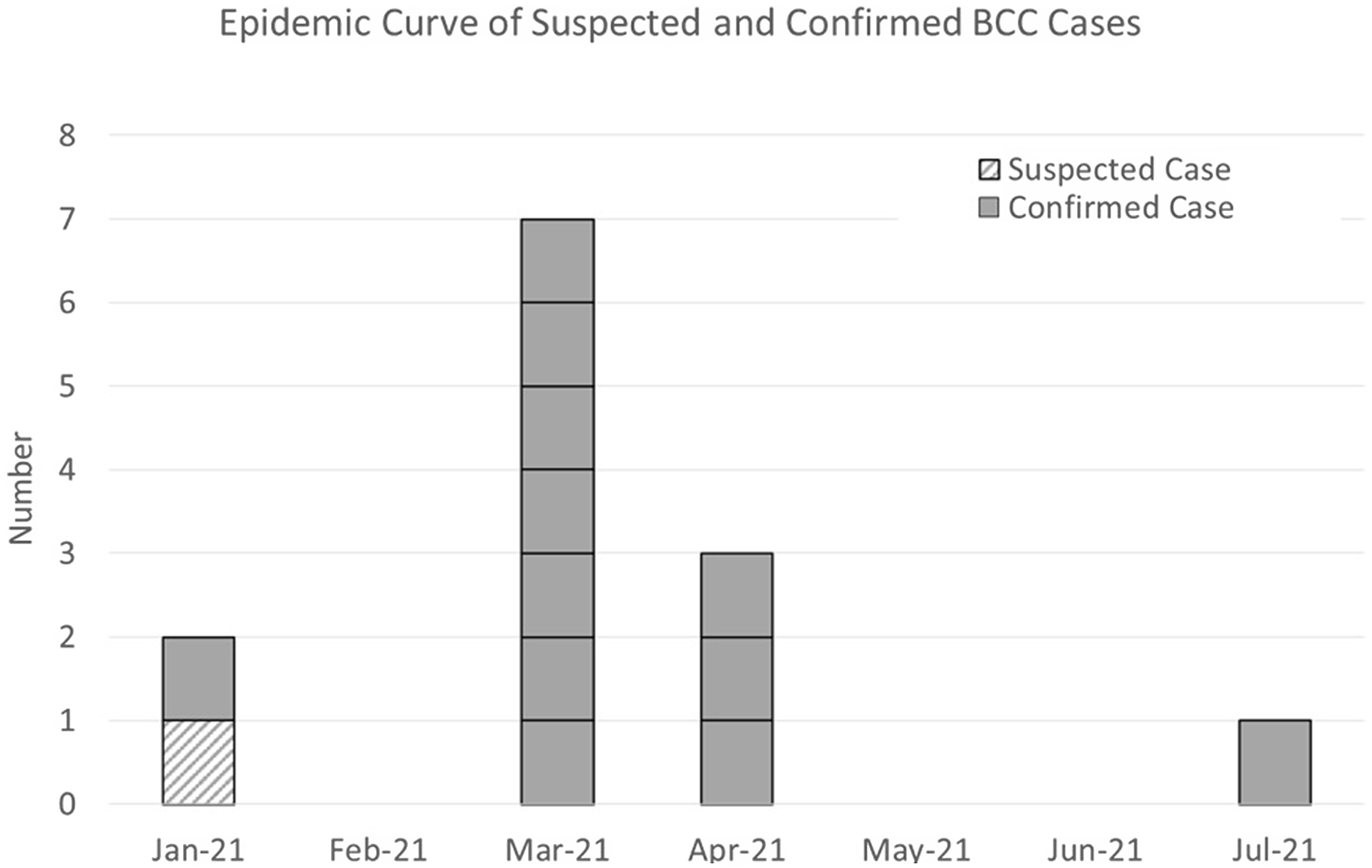
In March 2021, we noted an increase above baseline of respiratory cultures positive for BCC. Specifically, 7 patients, none of whom had cystic fibrosis, grew B. contaminans from at least 1 respiratory culture. In total, we identified 13 suspected cases, 12 of whom had confirmed cases, between January to July 2021.
Microbiological and molecular testing
Standard species identification for any positive respiratory culture was performed using MALDI-TOF MS. The WGS was performed in house by extracting DNA from isolated bacterial colonies using Ultraclean Microbial DNA Isolation kit (Qiagen, Germantown, MD). Amplified library generation was performed with Nextera XT adapters (Illumina, San Diego, CA), and sequencing was performed on an Illumina NovaSeq 6000 machine (Illumina) to obtain 150-bp DNA paired-end reads to a depth of ∼5 million reads per sample. Reads were filtered for quality and length using the Sickle Reference Joshi and Fass13 program and then assembled into contigs using the Spades program. Reference Prjibelski, Antipov, Meleshko, Lapidus and Korobeynikov14 Contigs were merged and reference-independent sequence comparison and phylogram generation was performed using the program kSNP3. Reference Gardner, Slezak and Hall15 Pairwise SNP distances across all isolates were calculated using the program kSNPdist. Reference Gardner, Slezak and Hall15
In addition, isolates were sent to the University of Michigan Cystic Fibrosis Foundation Burkholderia cepacia Research Laboratory and Repository where genotyping was performed using RAPD. Reference Coenye, Spilker, Martin and LiPuma16
Environmental sample testing was performed by Q Laboratories (Cincinnati, OH). Briefly, 120-mL free water samples were collected and homogenized the same day. An aliquot was then enriched in broth and plated for BCC culture. Medication testing was performed by the US Food and Drug Administration (FDA) reference laboratory according to established protocols for nonsterile products. 17
Epidemiologic investigation
We conducted reviews and observations of processes involving microlaryngoscopy and bronchoscopy, anesthesia, endoscope reprocessing and tracking, formula room practices, respiratory therapy care, materials procurement and use, and medication compounding.
Matched case–control study
We conducted a matched case–control study to identify potential exposures that warranted further investigation. Each confirmed case was matched 1:1 to a control chosen based on 3 criteria, in descending order of significance: (1) patients on the same hospital unit as a case at time of the case’s first positive culture; (2) patients with respiratory culture sent within 7 days of the case patient’s first positive culture; and (3) patients with a hospital admission date within 7 days of the case’s hospital admission date. We manually reviewed electronic medical records during the exposure period defined as either January 1, 2021 (for cases admitted prior to that date), or a case’s hospital admission date, and ending on the day of the case patient’s first positive culture. Exposures collected for both cases and controls included all procedures, medications, nutrition, physical locations including units of admission and operating rooms, available device information (eg, tracheostomy tubes, bronchoscopes, ventilators, etc), and clinical factors such as length of stay and mechanical device assistance. Medication administration data were collected electronically and were collated by patient from 3 separate pharmacy databases: parenteral prepared centrally, enteral prepared centrally, and obtained from BD Pyxis machines (Becton Dickinson, Franklin Lakes, NJ) and prepared locally. Supply use was collected from unit-based BD Pyxis data as well as patient-specific special orders that were obtained from the hospital stockroom. Case control data were collected and managed using REDCap electronic data capture tools hosted by the Center for Clinical & Translational Science & Training (CCTST) at the University of Cincinnati. Reference Harris, Taylor, Thielke, Payne, Gonzalez and Conde18,Reference Harris, Taylor and Minor19
Analysis
Given our small number of cases and high number of exposures, we designed our analysis to identify notable differences between cases and controls rather than focusing on statistical significance. We calculated a matched odds ratio (OR) for each exposure. Due to the importance of identifying possible exposures coupled with the small sample size (12 cases total), we favored avoiding type II errors (rather than type I) and opted to focus decision making on clinical significance rather than statistical significance. Exposures with OR >10 were evaluated by the investigation team for previous reports as an outbreak source and its plausibility as a possible source. The investigation team also evaluated its sourcing, processing, and distribution within our hospital and any likely substitution during the exposure period given frequent supply shortages and the need for product substitution during the coronavirus disease 2019 (COVID-19) pandemic. Exposures deemed to be plausible sources were further investigated for use in clinical practice and potential breaches in infection prevention processes. When available, products from lots likely in use during the exposure period were sent for formal testing for BCC contamination.
Results
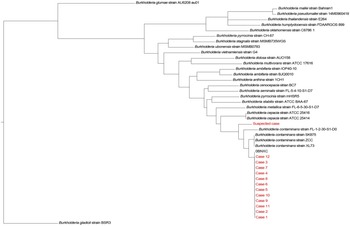
From January to July 2021, we identified 13 suspected cases (Fig. 1), of which 12 were confirmed and likely from a common source based on WGS (Fig. 2) and RAPD (J Lipuma, MD, personal written communication, August 2021). An additional matching clone was isolated from the blood of a patient in our institution nearly 30 years prior to the current outbreak. This clone (ST482) has been rarely reported in the national database Reference Jolley, Bray and Maiden20 and has not been historically associated with outbreaks (J Lipuma, MD, personal written communication, April 2021). The Centers for Disease Control and Prevention (CDC), the Ohio Department of Health (ODH), and national pediatric infection prevention partners were not aware of any other B. contaminans clusters during the same period (CDC, personal written communication, April 2021). Several product recalls due to BCC contamination occurred at the same time as our local outbreak, but no products involving B. contaminans were used at our institution.
Epidemic curve of suspected and confirmed BCC cases.

Whole-genome sequencing phylogram. Cases 1–12 represent confirmed cases and ‘OBNXC’ represents historical matching clone.

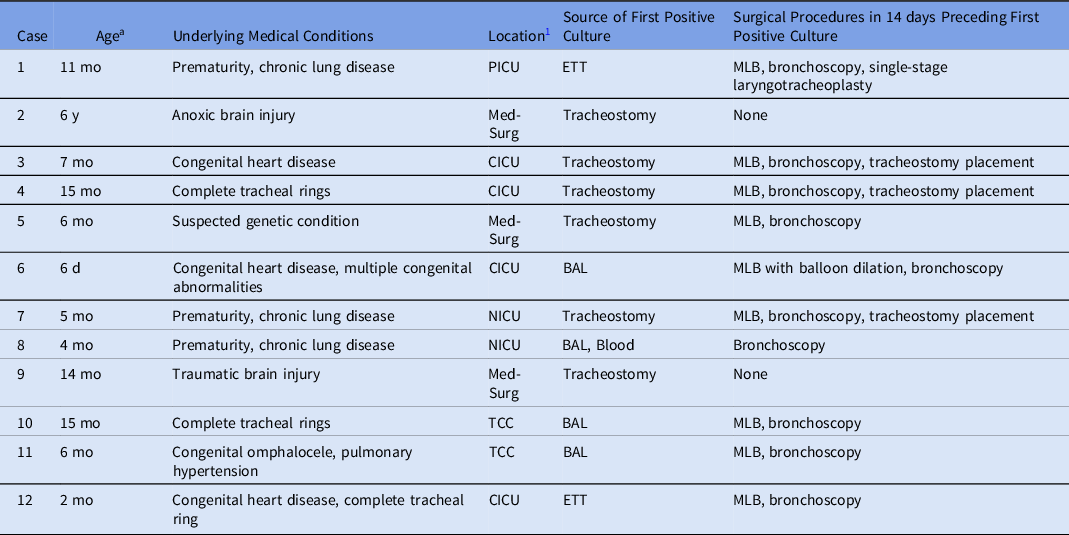
Of the 12 confirmed cases, 10 (83%) were ≤15 months of age. All 12 cases had an advanced artificial airway (endotracheal tube or tracheostomy tube), and 10 of the 12 cases had an airway-related procedure performed in the 14 days prior to their first positive culture (Table 1). One patient (case 7) developed bacteremia following an emergent bedside endoscopy for airway hemorrhage. Respiratory and blood cultures sent following the procedure were both positive for the outbreak BCC strain. No other non-respiratory cultures were positive for BCC for any other cases during the outbreak period. There was no common unit or procedure suite among the 12 cases. The few cases who were on the same unit were seldom in the same pod during the exposure period, making it very unlikely that they had any shared caregivers (eg, respiratory therapists or nurses) (Supplementary Fig. 1 online).
Confirmed Case Characteristics

Note. PICU, pediatric intensive care unit; Med-Surg, medical-surgical unit; CICU, cardiac intensive care unit; NICU, neonatal intensive care unit; TCC, transitional care center; ETT, endotracheal tube; BAL, bronchoalveolar lavage; MLB, microlaryngoscopy and bronchoscopy.
a At time of first positive culture for Burkholderia contaminans.
We convened a multidisciplinary investigation team led by the infection prevention and control program that included representation from hospital operations, infectious diseases, patient safety, regulatory adherence, sterile processing, biostatistics and epidemiology, microbiology, pharmacy, respiratory therapy, nursing, environmental services, otolaryngology, and pulmonology. Additionally, we held multiple conference calls with public health partners (Cincinnati Health Department, ODH, and CDC) as well as with peer institutions to share methodology and results.
Case–control study
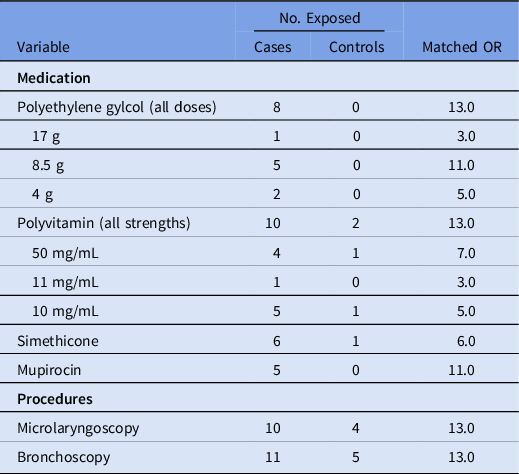
Procedure evaluation. No difference was identified for surgical procedures involving a skin incision. However, both microlaryngoscopy (evaluation of the upper airway by an otolaryngologist) and bronchoscopy (evaluation of the lower airway by a pulmonologist) occurred more frequently in cases than controls (Table 2). The 2 procedures were often performed in tandem preoperatively and at routine intervals postoperatively for patients who had undergone airway reconstruction. Although the patient, anesthesia professional, and location (typically 1 of 4 operating rooms) were the same for both procedures, each involved different proceduralists and equipment that was reprocessed, stored, and tracked separately.
Matched Case–Control Analysis Results for Notable Medication and Procedure Exposures

Note. OR, odds ratio.
Flexible bronchoscopes are tracked by serial number through use and high-level disinfection (HLD) and can be identified at the patient level. In total, 18 bronchoscopies were performed on 10 of the 12 cases. Among the 14 that had an identifiable serial number, 2 were used on multiple patients. The time between procedures was 5–7 days, and no breaches in reprocessing were identified for either flexible endoscopes during the outbreak period. No breaches were identified from interviews and observations of procedures and reprocessing team members.
Rigid tracheoscopes and attachments used during microlaryngoscopy are subject to much more frequent use and turnover. Thus, we were unable to track each device through processing or to the patient level. No breaches were identified during procedure review. However, we identified inconsistent drying of processed devices during reprocessing. Unlike flexible endoscopes, rigid tracheoscopes were not placed in an automated endoscope reprocessor. Devices were cleaned manually, underwent high-level disinfection, and were rinsed with filtered water. They were then left to air dry prior to redistribution to procedure carts. There was no standard amount of time required for air drying, and sterile processing and distribution (SPD) staff reported that due to high demand, procedure team members would occasionally retrieve devices before redistribution, possibly prior to complete drying.
Medication evaluation. Because all case isolates were collected from respiratory cultures, we included only enteral, respiratory, and topical medications in our review. Of those, 3 had an odds ratio >10 and were further evaluated: mupirocin ointment, polyethylene glycol (PEG), and polyvitamin solution (Table 2). We additionally evaluated liquid simethicone due to its past involvement in BCC outbreaks in pediatric settings. Reference Marquez, Jones and Whaley9,Reference Glowicz, Crist and Gould21,Reference Akinboyo, Sick-Samuels and Singeltary22 Multiple lots of mupirocin were used for cases and none was available for testing. Polyvitamin solution came in 3 different concentrations from different companies without local processing, and cases used different products. PEG comes in packets of powder for reconstitution from a single supplier and is suspended in water or other liquid at the bedside for administration. None of the units who cared for case patients reported using tap water for suspension; all utilized sterile water or a milk or formula product. Simethicone is sourced from a single producer and is not modified locally prior to administration. Samples from 2 of the simethicone lots utilized during the outbreak tested negative for BCC in July 2021 at the FDA laboratory.
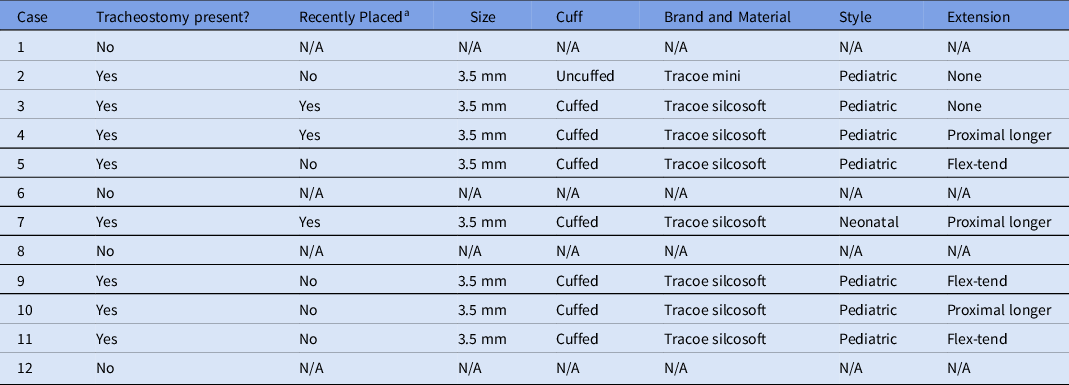
Nutrition, device, and supply evaluation. We did not detect a difference between cases and controls for enteral (6 cases vs 8 controls) or parenteral (8 cases vs 10 controls) nutrition during the period of interest. Similarly, there was no difference seen in the mode of delivery for enteral feeding episodes (eg, through nasogastric tube). We did not detect a difference for ventilation utilization by ventilator type or brand; by circuit type; by use of humidification; or by airway type, brand, size, or cuffing (Table 3). Patient supplies that were identified as significant on initial analysis were not tested for BCC if we determined that there was a variety of sizes and/or lack of substitution during the period of interest. No breaches or improper methods were identified when interviewing and observing staff in pharmacy, compounding, nutrition, or formula room.
Characteristics of Tracheostomy in Confirmed Cases at Time of First Positive Culture

Note. N/A, not available.
a New tracheostomy placed 14 d prior to first positive culture.
Environmental evaluation. Water samples were collected from several environmental sources, none of which tested positive for BCC. Samples tested included water from sinks in the cardiac intensive care units, microlaryngoscopy scope reprocessing room, and from the 4 scrub sinks outside the 4 operating rooms used for most microlaryngoscopy procedures. Reprocessing and scrub sinks were sampled monthly from August 2021 through July 2022; all were negative for BCC (data not shown).
Interventions. We utilized investigational findings for real-time re-education and/or gap mitigation. Staff notification included recommending vigilance around common sources of BCC. We added several microlaryngoscopy-related processes including making an inventory of microlaryngoscopy scopes and using compressed medical air for scope drying. We are developing a patient-level tracking system for rigid trachoescopes and sheaths. We partnered with respiratory therapists to understand respiratory care routines and reinforce preventive measures. During the outbreak, several products were recalled due to contamination with BCC, none of which matched the outbreak strain. 23
Discussion
Despite extensive investigation, we did not identify a source for our B. contaminans cluster. Lack of source identification is likely more typical of BCC investigations than reported in literature because publication bias may make source identification appear common. Reference Hafliger, Atkinson and Marschall11,Reference Vonberg, Weitzel-Kage, Behnke and Gastmeier24 In July 2021, the FDA advised all manufacturers to verify proper production and monitoring for BCC, in part due to the understanding that recognized sources are only a portion of contamination events. 25 Nonetheless, our multidisciplinary approach with internal and external partners gave us confidence that we addressed most if not all possible avenues.
The most likely explanation for our outbreak was local contamination of water, as has been described previously. Reference Torbeck, Raccasi, Guilfoyle, Friedman and Hussong26 Locality was confirmed, with no reports of recalls or B. contaminans clusters that matched our outbreak strain, which has not been identified in an outbreak to date (J Lipuma, MD, personal written communication, April 2021). Reprocessing deficiencies of rigid tracheoscopes used during microlaryngoscopy procedures could have allowed residual water on scopes used for subsequent procedures. Adding medical air for drying may have helped prevent further contamination, but the outbreak continued after the intervention. The historical clone match to the outbreak strain (Fig. 2) was from a patient, who underwent liver transplantation and received care in the building where outbreak cases occurred and underwent surgical procedures, and could indicate long-term contamination of the building’s water system. Nonetheless, we failed to identify any BCC growth from 12 months of routine sampling of water used in reprocessing rigid tracheoscopes and operating room hand hygiene for nearly all airway procedures.
We did not subject our rigid scopes to steam sterilization, which could have contributed to the outbreak occurrence. Using HLD is adequate according to the manufacturer’s instructions, but guidelines recommend that heat-stable devices should undergo steam sterilization. Reference Rutala and Weber27 Not all of the rigid scopes we use are heat stable, and without a tracking system, we were unable to differentiate them. Additionally, our high-throughput system (often needing to reuse scopes the same day) led us to develop an HLD process in an area separated from the main SPD. Thus, autoclaving a subset of scopes would have been logistically difficult. With our introduction of a tracking system, we will be able to better identify heat-stable devices and sterilize them as recommended.
Our outbreak is one of many examples of the risk water poses in healthcare. Whereas US regulations require control of Legionella alone, 28 other countries, such as England, have required a more holistic approach to healthcare water safety. 29 Mandated water safety programs provide an opportunity to mitigate risks from other pathogens, including Mycobacteria, Pseudomonas, and BCC, of which facilities should take advantage. Reference Gamage, Ambrose, Kralovic and Roselle30
Our outbreak investigation had several limitations related to source identification. Our environmental sampling was limited in that we did not collect swabs of faucets, sinks, drains, or aerators, which would have increased our likelihood of identifying a definitive source. Reference Lucero, Cohen and Trevino31 However, we did conduct 12 months of free water sampling, and it is not clear that the expense to conduct the testing would have yielded an answer or changed our approach to the outbreak. We were unable to link individual scopes to healthcare providers, operating rooms, and/or patients as is recommended by the Healthcare Infection Control Practices Advisory Committee. 32 This limited our ability to further investigate the role of microlaryngoscopies and precluded us from sampling rigid tracheoscopes used in implicated procedures. Not all products could be tracked directly to patients, and many medication lots were not available for testing. Conducting a colonization point-prevalence survey of our entire population of patients with tracheostomy was not done due to cohort size that includes inpatients and outpatients, many of whom live outside our 100-mile catchment area. Identifying additional cases without knowing when BCC was introduced would not likely help our investigation, and our small set of cases was sufficient to determine the cluster was clonal, local, and a specific clinical process implicated.
In conclusion, we identified a cluster of B. contaminans airway colonization and infection that was likely associated with tracheoscopy, but we were unable to identify a specific source or mechanism. A notable strength of our outbreak investigation was our multidisciplinary approach that allowed us to conduct an exhaustive search for a source. We mitigated identified gaps in real time, which likely helped stop the outbreak. Knowledge gained from investigations that fail to identify a source has value in building internal and external relationships and in guiding groups undertaking similar efforts.
Supplementary material
To view supplementary material for this article, please visit https://doi.org/10.1017/ice.2022.235
Acknowledgments
We acknowledge the support and expertise provided by the outbreak response team during our outbreak investigation as well as Dr John Lipuma, Dr David B. Haslam, Dr Joel Mortensen, and members of the microbiology department.
Financial support
Data were collected and managed using REDCap electronic data capture tools hosted by the Center for Clinical & Translational Science & Training (CCTST). The CCTST at the University of Cincinnati is funded by the National Institutes of Health (NIH) Clinical and Translational Science Award (CTSA) program, grant UL1TR001425. The CTSA program is led by the National Institutes of Health (NIH) National Center for Advancing Translational Sciences (NCATS). The content of this paper is solely the responsibility of the authors and does not necessarily represent the official views of the NIH.
Conflicts of interest
All authors report of no conflicts of interest relevant to this article.