


Introduction
Hoarding has been defined as ‘the acquisition of, and failure to discard, possessions which appear to be useless or of limited value’ (Frost & Gross, Reference Frost and Gross1993, p. 367). The phenomenology of this problem is well-described (e.g. Steketee & Frost, Reference Steketee and Frost2003), and has formed the basis of the DSM-5 criteria for hoarding disorder introduced in 2013. The principal criteria are difficulty discarding possessions, a perceived need to save items, clutter of active living areas, and significant distress or functional impairment (see Mataix-Cols et al. Reference Mataix-Cols, Frost, Pertusa, Clark, Saxena, Leckman, Stein, Matsunaga and Wilhelm2010; Mataix-Cols & Pertusa, Reference Mataix-Cols and Pertusa2012). What is less clearly understood is why the need to save items is important or why discarding may be distressing, and more widely, the processes that underlie the development and maintenance of such problems.
Cognitive-behavioural approaches suggest that hoarding is driven by beliefs about the nature of possessions, their value, and the purpose of saving, and that these beliefs may have become exaggerated or biased over time. Frost & Hartl (Reference Frost and Hartl1996) reported that people may show a marked need to maintain control over their possessions, feeling responsible for their protection, and are therefore less able to share or have people handle them (see also Frost et al. Reference Frost, Hartl, Christian and Williams1995). Measures such as the Saving Cognitions Inventory (Steketee et al. Reference Steketee, Frost and Kyrios2003) have been used to show differences in beliefs between those who do and do not hoard (e.g. Luchian et al. Reference Luchian, McNally and Hooley2007).
A number of studies have begun to explore hoarding development and maintenance from a range of perspectives, including cognitive behavioural, attachment, genetic, and neuropsychological approaches. Typically, the participants in these studies have a mean age of approximately 50–55 years, with a standard deviation (s.d.) of around 10 (Grisham et al. Reference Grisham, Frost, Steketee, Kim and Hood2006; Tolin et al. Reference Tolin, Frost and Steketee2007, Reference Tolin, Frost, Steketee, Gray and Fitch2008; Pertusa et al. Reference Pertusa, Fullana, Singh, Alonso, Menchón and Mataix-Cols2008; Landau et al. Reference Landau, Iervolino, Pertusa, Santo, Singh and Mataix-Cols2011; Gordon et al. Reference Gordon, Salkovskis and Oldfield2013), noticeably older than comparable studies in obsessive-compulsive disorder (OCD) or depression where mean ages of 35 (s.d.≈10) and 40 (s.d.≈10) years, respectively appear to be more typical (e.g. Ward et al. Reference Ward, King, Lloyd, Bower, Sibbald, Farrelly, Gabbay, Tarrier and Addington-Hall2000; Cottraux et al. Reference Cottraux, Note, Yao, Lafont, Note, Mollard, Bouvard, Sauteraud, Bourgeois and Dartigues2001; Volpato Cordioli et al. Reference Volpato Cordioli, Heldt, Braga Bochi, Margis, Basso de Sousa, Fonseca Tonello, Gus and Kapczinski2003; Rimes & Watkins, Reference Rimes and Watkins2005; Luyten et al. Reference Luyten, Sabbe, Blatt, Meganck, Jansen, De Grave, Maes and Corveleyn2007; Visser et al. Reference Visser, van Oppen, van Megen, Eikelenboom and van Balkom2014; Blake et al. Reference Blake, Dobson, Sheptycki and Drapeau2016; Kim et al. Reference Kim, McKay, Taylor, Tolin, Olatunji, Timpano and Abramowitz2016).
Futhermore, investigations into the onset of hoarding difficulties suggest that these typically begin in adolescence (Tolin et al. Reference Tolin, Meunier, Frost and Steketee2010), raising questions around the chronology of hoarding, such as whether and why there might be a distinction between the age of onset, and age of presentation. We know that mental health conditions often change over the lifespan, although consistent patterns of change are not always evident (Jorm, Reference Jorm2000). While the ‘burnout’ of anxiety disorders has some empirical support (Jorm, Reference Jorm2000), other studies highlight the high prevalence rates of anxiety within older populations (Manela et al. Reference Manela, Katona and Livingston1996; Beekman et al. Reference Beekman, Bremmer, Deeg, Van Balkom, Smit, De Beurs, van Dyck and van Tillburg1998; Krasucki et al. Reference Krasucki, Howard and Mann1998; Halbreich, Reference Halbreich2003) and suggest that cohort effects, poorer detection rates, anxiety-related mortality, and comorbidity with cognitive impairment may be underlying any apparent reductions in prevalence. The lack of longer term longitudinal work means that ageing effects and cohort effects cannot be effectively distinguished at present (Jorm, Reference Jorm2000).
As there may be changes in problem severity or presentation over time, perhaps in response to life events, but also due to the ageing process more generally, it could be hypothesized that the presentation of hoarding problems in older adults may to some degree reflect problems caused by the chronicity of the condition (e.g. extent of clutter, hopelessness, beliefs about the possibility of change). Given that much of our current understanding of hoarding is based on studies using relatively older adult samples, it is questioned whether these age-related factors may be confounding our understanding of the core psychological factors involved in hoarding development and maintenance.
This study aimed to evaluate the extent to which the older adult hoarding literature may be confounded or overly influenced by age-related factors such as problem chronicity, cognitive function, or demographic characteristics, and to consider the implications for theoretical and empirical work in hoarding. To explore this, the authors reviewed the literature in relation to the following questions:
-
• What is the prevalence of hoarding in older adults, and how does this fit with the idea of ‘anxiety burnout’?
-
• What are the common demographic features of older adults with hoarding problems?
-
• Is hoarding in later life predominantly a chronic problem with an early age of onset, or is late-life onset common among this cohort?
-
• Is there evidence to suggest that age-related cognitive decline is associated with an increase in hoarding symptoms?
-
• Are hoarding difficulties in later life more severe? Is this due to progressive accumulation of items over time, or are motivating beliefs and anxieties also stronger?
-
• Is there a link between stressful life events and later-life hoarding?
-
• What are the help seeking behaviours within this group?
-
• What implications do the above have for theoretical accounts and models of hoarding?
Method
Literature searches were conducted to identify published papers on hoarding among older adult (i.e. predominantly over 55 years) populations. Papers were required to have undergone peer review, and could consist of empirical studies, reviews, case studies or series, or conceptual/theoretical papers. Year of publication was not set as a search criterion due to the relative recency of the field. A variety of medical, psychological, and non-specialized databases were searched (e.g. Medline, APA PsycNet, Scopus, National Library for Health, Web of Knowledge, Cochrane, Google Scholar), and reference trails from obtained papers were followed. Search terms incorporated accepted synonymous words or phrases to minimize the risk of missing relevant material (i.e. hoarding/‘compulsive hoarding’/‘obsessive hoarding’/‘obsessional hoarding’/‘hoarding disorder’; ‘older adult’/‘late life’/‘later life’/gerontology/geriatric/elderly/aged). Mesh terms were also used, and specific journals searched (including: Journal of Gerontological Social Work, International Journal of Geriatric Psychiatry, Geriatrics and Gerontology International, International Journal of Aging and Later Life, Journal of Anxiety Disorders, Journal of Obsessive Compulsive and Related Disorders). Additionally, descriptive case-based articles from the wider hoarding literature were searched for material pertaining to older adults (e.g. an older adult described as part of a case series).
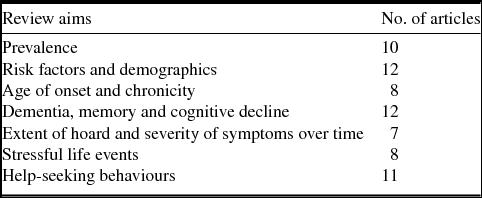
Studies were assessed for findings of specific relevance to the review questions described above, and reviewed from a critical perspective. A total of 45 papers were reviewed (see Table 1).
The number of reviewed articles reporting or discussing information pertaining to each of the aims of the present review

Results
Prevalence
A frequently cited prevalence study of hoarding in adults was undertaken by Samuels and colleagues (Reference Samuels, Bienvenu, Grados, Cullen, Riddle, Liang, Eaton and Nestadt2008) who reported that 3.7% (5.3% weighted) of the general population in eastern Baltimore show ‘pathological’ hoarding behaviours. They noted that the prevalence among older people (6.2% aged 55–94 years) was nearly three times greater than the youngest group sampled (2.3% aged 34–44 years, p. 840). They also found it to be twice as common in men as in women, a finding inconsistent with other literature (see ‘Risk factors and demographics’ section below). Other studies have reported prevalence rates of 1.5-4.6% of general population samples (Mueller et al. Reference Mueller, Mitchell, Crosby, Glaesmer and De Zwaan2009; Nordsletten et al. Reference Nordsletten, Reichenberg, Hatch, de la Cruz, Pertusa, Hotopf and Mataix-Cols2013), although the finding of greater prevalence among older age groups has not been shown consistently (see Mueller et al. Reference Mueller, Mitchell, Crosby, Glaesmer and De Zwaan2009).
The idea that hoarding might be more prevalent among older adults compared to working-age adults seems to go against the general pattern of ‘anxiety burnout’ as age increases (see Jorm, Reference Jorm2000). Jorm makes the important point however that this declining pattern can be easily and significantly masked by the influence of covarying risk factors such as marital status, gender, level of education, income, and employment status (p. 16). The anxiety burnout trend is only visible when these factors are statistically controlled for, something not done in the reviewed studies. Alternatively it may be true that hoarding is an exception to the rule, in that it only becomes a problem in later life due to the accumulation of possessions. More rigorous age comparison studies with large population samples are required to ascertain clearly whether hoarding fits the general pattern.
The prevalence estimates are also likely to be affected by significant variation in how hoarding is defined across different studies. Samuels et al. (Reference Samuels, Bienvenu, Grados, Cullen, Riddle, Liang, Eaton and Nestadt2008) defined pathological hoarding as whether the hoarding criterion within the obsessive-compulsive personality disorder DSM-IV category was met. Other definitions include reaching a cut-off on the German Compulsive Hoarding Inventory (Mueller et al. Reference Mueller, Mitchell, Crosby, Glaesmer and De Zwaan2009), or simply the presence of hoarding behaviours that cause distress or functional impairment (Stein et al.1997). As would be expected, studies using broader hoarding definitions such as ‘the presence of a hoarding or hiding behaviour several times per week’ (see Marx & Cohen-Mansfield, Reference Marx and Cohen-Mansfield2003) found much higher prevalence estimates, in this case 25% within their older adult community sample (see also Ellis et al. Reference Ellis, Mullan and Worsley2011, who reported high prevalence rates of medication hoarding).
Studies exploring hoarding in the context of neurodegenerative and other conditions have tended to find much higher prevalence rates, such as 22.6% in a sample of dementia patients aged 65–91 years (Hwang et al. Reference Hwang, Tsai, Yang, Liu and Ling1998), 13% in older adults with later life depression (Mackin et al. Reference Mackin, Areán, Delucchi and Mathews2011), and 27.8% in older adults with Parkinson's disease, where impulsive-compulsive behaviours are also displayed (O'Sullivan et al. Reference O'Sullivan, Djamshidian, Evans, Loane, Lees and Lawrence2010).
The lack of consistent definitions and approaches to the assessment of hoarding difficulties perhaps calls into question the validity of these prevalence estimates. A further point for consideration is the conceptual clarity within the prevalence literature. Some studies view hoarding as a manifestation of ‘self-neglect’ (also referred to in the literature as living in squalor, or Diogenes syndrome; see Dong et al. Reference Dong, Simon, Mosqueda and Evans2012). Others view self-neglect not as the underlying problem, but a consequence of hoarding (see Maier, Reference Maier2004 for discussion). It is perhaps likely that the DSM-5 criteria will help to standardize the identification of hoarding (see Nordsletten et al. Reference Nordsletten, Reichenberg, Hatch, de la Cruz, Pertusa, Hotopf and Mataix-Cols2013), and mean that more reliable and comparable prevalence estimates will become available as these become more widely adopted.
Risk factors and demographics
A number of studies have looked at the broad demographics of older people with hoarding problems. These suggest that the majority are female, with proportion estimates ranging between 69% and 86% (Kim et al. Reference Kim, Steketee and Frost2001; Marx & Cohen-Mansfield, Reference Marx and Cohen-Mansfield2003; Chapin et al. Reference Chapin, Sergeant, Landry, Koenig, Leiste and Reynolds2010; Ayers & Dozier, Reference Ayers and Dozier2015). However, it could be argued that these figures are an artefact of longer life expectancy for women, in that as age increases, there are relatively more women than men in the population to present to, or come to the attention of, services for hoarding problems. It seems that when a wider age range is sampled, gender differences are not present (Mueller et al. Reference Mueller, Mitchell, Crosby, Glaesmer and De Zwaan2009), although replication would help establish this more clearly.
The literature generally reports that older adults with hoarding problems tend to be widowed, divorced, or never married (Kim et al. Reference Kim, Steketee and Frost2001; Andersen et al. Reference Andersen, Raffin-Bouchal and Marcy-Edwards2008; Chapin et al. Reference Chapin, Sergeant, Landry, Koenig, Leiste and Reynolds2010; Ayers & Dozier, Reference Ayers and Dozier2015). There is some evidence suggesting that living alone is common (Kim et al. Reference Kim, Steketee and Frost2001; Ayers et al. Reference Ayers, Saxena, Golshan and Wetherell2010), although one study that incorporated an older adult non-hoarding control group suggested this may be no more frequent than in the general population (Steketee et al. Reference Steketee, Schmalisch, Dierberger, DeNobel and Frost2012). It is suggested that future studies utilize control groups to ensure that participants experiencing hoarding difficulties can be described in context rather than in isolation.
Other potential ‘risk factors’ for hoarding problems in later life include social isolation (Andersen et al. Reference Andersen, Raffin-Bouchal and Marcy-Edwards2008; Samuels et al. Reference Samuels, Bienvenu, Grados, Cullen, Riddle, Liang, Eaton and Nestadt2008; Ayers et al. Reference Ayers, Saxena, Golshan and Wetherell2010; Chapin et al. Reference Chapin, Sergeant, Landry, Koenig, Leiste and Reynolds2010), comorbid physical or mental health problems (Stein et al. Reference Stein, Laszlo, Marais, Seedat and Potocnik1997; Ayers et al. Reference Ayers, Saxena, Golshan and Wetherell2010; Chapin et al. Reference Chapin, Sergeant, Landry, Koenig, Leiste and Reynolds2010; Calamari et al. Reference Calamari, Pontarelli, Armstrong and Salstrom2012; Lee & LoGiudice, Reference Lee and LoGiudice2012), and estrangement from family (Thomas, Reference Thomas1998; Franks et al. Reference Franks, Lund, Poulton and Caserta2004). However, some studies (Marx & Cohen-Mansfield, Reference Marx and Cohen-Mansfield2003; Steketee et al. Reference Steketee, Schmalisch, Dierberger, DeNobel and Frost2012) suggest these factors are perhaps more age-related than they are hoarding-related. For example Steketee and colleagues (Reference Steketee, Schmalisch, Dierberger, DeNobel and Frost2012) found no difference in rates of social isolation between older adults (aged 58–90 years) with and without hoarding problems. The potential for age-related factors to confound the risk factors for hoarding may be significant here, meaning some of the above factors cannot be considered ‘risk factors’ at all until a direct and statistically sound association with hoarding is demonstrated; again the use of control groups in these studies is critical.
Age of onset and chronicity
The literature is generally consistent in reporting that a significant proportion of older adults with hoarding problems first showed symptoms of hoarding behaviours in childhood or adolescence, with estimates ranging from 34.6% to 83% (Grisham et al. Reference Grisham, Frost, Steketee, Kim and Hood2006; Ayers et al. Reference Ayers, Saxena, Golshan and Wetherell2010; Steketee et al. Reference Steketee, Schmalisch, Dierberger, DeNobel and Frost2012; Tolin et al. Reference Tolin, Meunier, Frost and Steketee2010). Ayers and colleagues (Reference Ayers, Saxena, Golshan and Wetherell2010) suggested that ‘Compulsive hoarding is a progressive and chronic condition that begins early in life’ (p. 142), and the chronicity of problems is supported by other studies who make use of retrospective interviews and ‘hoarding timelines’ (Grisham et al. Reference Grisham, Frost, Steketee, Kim and Hood2006; Tolin et al. Reference Tolin, Meunier, Frost and Steketee2010; Steketee et al. Reference Steketee, Schmalisch, Dierberger, DeNobel and Frost2012). The participants seeking help for hoarding in the Grisham et al. (Reference Grisham, Frost, Steketee, Kim and Hood2006) study had a mean age of 51 (range 26–71) years, suggesting a substantial time gap between onset and treatment. While this requires more robust empirical investigation, it does suggest that hoarding may have a longer onset-treatment gap compared to other anxiety disorders such as social anxiety disorder (10–15 years; Grant et al. Reference Grant, Hasin, Blanco, Stinson, Chou, Goldstein, Dawson, Smith, Saha and Huang2005), or OCD (7.5 years; Altamura et al. Reference Altamura, Buoli, Albano and Dell'Osso2010).
What is not considered however, is the question of base rates, i.e. what proportion of children and adolescents in the general population show hoarding type behaviours, and how commonly do these transition into difficulties in adulthood? If this is extremely common among young people, it is not surprising that most older adults can recall childhood experiences of this type, and these experiences may not be causally linked to the ‘onset’ of hoarding problems. An additional complicating factor is the possibility of bias during retrospection. It may be for example, that the process of being interviewed about your history of hoarding problems may encourage the expression of childhood experiences. Retrospective designs are clearly pragmatic for many of the studies in this review, but longitudinal work exploring changes across the lifespan is an obvious need within the literature.
The notion of late-onset hoarding seems more controversial, with some studies (Ayers et al. Reference Ayers, Saxena, Golshan and Wetherell2010) ruling this out, and others (Tolin et al. Reference Tolin, Meunier, Frost and Steketee2010; Turner et al. Reference Turner, Steketee and Nauth2010; Steketee et al. Reference Steketee, Schmalisch, Dierberger, DeNobel and Frost2012) suggesting this does occur in a minority of cases. Dozier and colleagues (Reference Dozier, Porter and Ayers2016a ) found that 19 of the 82 older adults with hoarding problems sampled (aged 60–86 years) reported onset after the age of 40 years, although further investigation revealed that the majority of these were experiencing at least one hoarding symptom prior to this. Some case reports describe late onset, such as the case described by Cermele et al. (Reference Cermele, Melendez-Pallitto and Pandina2001) whose difficulties began when she was about 62 years. Not all case reports describe the development and history of hoarding behaviours, and this is therefore recommended. There is some support for a bimodal distribution of onset ages, with peaks around adolescence and approximately age 50 years (see Steketee et al. Reference Steketee, Schmalisch, Dierberger, DeNobel and Frost2012). However, the definition of ‘onset’ needs clarity, as the reviewed papers do not always state their criteria to determine this, and sometimes conflate the onset of saving behaviours with the onset of a hoarding problem.
In late-onset cases, it would be helpful to explore in detail the ‘triggers’ surrounding this. Tolin and colleagues (Reference Tolin, Meunier, Frost and Steketee2010) suggested that the presence of close family members has an inhibitory effect on hoarding, meaning that hoarding becomes unconstrained when these people are no longer present (through bereavement, divorce, moving away). The Cermele et al. (Reference Cermele, Melendez-Pallitto and Pandina2001) case report is consistent with this, and it is questioned whether all instances of late-onset hoarding reflect the removal of limitations to a pre-existing hoarding tendency, rather than genuine symptom ‘onset’.
Dementia, memory and cognitive decline
There is a small body of research exploring hoarding behaviours in the context of neurodegenerative conditions such as Parkinson's disease (O'Sullivan et al. Reference O'Sullivan, Djamshidian, Evans, Loane, Lees and Lawrence2010) and various dementias (Stein et al. Reference Stein, Laszlo, Marais, Seedat and Potocnik1997; Hwang et al. Reference Hwang, Tsai, Yang, Liu and Ling1998; Marx & Cohen-Mansfield, Reference Marx and Cohen-Mansfield2003) including a number of case reports (Thomas, Reference Thomas1998; Franks et al. Reference Franks, Lund, Poulton and Caserta2004; Baker et al. Reference Baker, LeBlanc, Raetz and Hilton2011; Lee & LoGiudice, Reference Lee and LoGiudice2012).
One criticism of this work is that at times, the implicit assumption is made that hoarding is explained by dementia. As a result, descriptions of participants’ histories and pre-dementia hoarding behaviours are often insufficient or absent altogether. While it may be true that hoarding behaviours may have multiple aetiologies, and dementia could be one of these (Stein et al. Reference Stein, Laszlo, Marais, Seedat and Potocnik1997 could be seen as supporting this view), case reports such as Shroepfer & Ingersoll-Dayton (Reference Schroepfer and Ingersoll-Dayton2001) highlight that childhood experiences and saving-related beliefs may still be present in, and pre-date the onset of, dementia.
Other studies have taken a neuropsychological approach, assessing cognitive function among individuals with hoarding problems. Kim and colleagues (Reference Kim, Steketee and Frost2001) found that the majority (76%) of their sample (aged 65–92 years) showed no cognitive problems or problems with memory (67%). Where deficits are identified they tend to be in the areas of memory (Hogstel, Reference Hogstel1993; Mackin et al. Reference Mackin, Areán, Delucchi and Mathews2011; Ayers et al. Reference Ayers, Bratiotis, Saxena and Wetherell2012a , Reference Ayers, Wetherell, Schiehser, Almklov, Golshan and Saxena2013), processing speed (Mackin et al. Reference Mackin, Areán, Delucchi and Mathews2011) and executive functioning, specifically categorization and sorting (Mackin et al. Reference Mackin, Areán, Delucchi and Mathews2011; Ayers et al. Reference Ayers, Wetherell, Schiehser, Almklov, Golshan and Saxena2013, Reference Ayers, Dozier, Wetherell, Twamley and Schiehser2016; Dozier et al. Reference Dozier, Wetherell, Twamley, Schiehser and Ayers2016b ), planning, problem solving, and flexibility (Ayers et al. Reference Ayers, Bratiotis, Saxena and Wetherell2012a ). It is suggested that these deficits may underlie people's limited responses to current CBT treatment protocols (Ayers et al. Reference Ayers, Wetherell, Golshan and Saxena2011, Reference Ayers, Bratiotis, Saxena and Wetherell2012 a).
Taken in isolation, the reported cognitive deficits offer little in the way of explaining hoarding behaviours (causally or otherwise). Some studies have hypothesized possible mechanisms as to why deficits might manifest in hoarding behaviours. Hogstel (Reference Hogstel1993) suggested that memory problems might mean it is difficult to discriminate between important and non-important objects. Other suggestions include the idea that hoarded objects hold useful information or memories that can be referred to if memory fails, or that hoarding is an activity that feels meaningful but requires little cognitive effort (Andersen et al. Reference Andersen, Raffin-Bouchal and Marcy-Edwards2008).
However, without adequate baseline or premorbid measures of cognitive functioning, it is difficult to differentiate longstanding deficits from age-related ones. Again, without detailed information regarding participants’ neurological and hoarding histories, we cannot be certain that the observed deficits are age-related at all, let alone being linked to the onset or worsening of hoarding.
Extent of hoard and severity of symptoms over time
There are very few studies assessing whether and how hoarding symptoms change over time. Defining the severity of a hoarding problem is complex, in that there are both situational (i.e. amount of clutter) and cognitive (beliefs about saving and possessions) factors to consider. While these two factors are moderately correlated (Reid et al. Reference Reid, Arnold, Rosen, Mason, Larson, Murphy and Storch2011), it is not possible to definitively infer one from the other.
The amount of hoarded possessions generally increases over time, and this can lead to people self-rating their hoarding as more severe (Ayers et al. Reference Ayers, Saxena, Golshan and Wetherell2010). However, Reid and colleagues (2011) studied non-clinical older adults aged 56–93 years and found no correlations between age and either hoarding behaviours or hoarding cognitions. Consistent findings were reported by Diefenbach and colleagues (Reference Diefenbach, DiMauro, Frost, Steketee and Tolin2013) using a cross-sectional design, and by Ayers & Dozier (Reference Ayers and Dozier2015) but as highlighted by Reid et al. (Reference Reid, Arnold, Rosen, Mason, Larson, Murphy and Storch2011), these findings may be limited by the truncated age range of participants. More recently, one study has reported evidence suggesting that clutter, difficulty discarding, and saving behaviours all increase with age, with the latter two stabilizing during the fifth decade of life, and clutter continuing to increase (Dozier et al. Reference Dozier, Porter and Ayers2016a ).
There are theoretical reasons why hoarding problems may worsen with age, for example if the act of hoarding can provide ‘a sense of purpose and meaning to their lives’ (Andersen et al. Reference Andersen, Raffin-Bouchal and Marcy-Edwards2008, p. 211), it may become a more significant activity in older age, where some people are more functionally impaired (Ayers et al. Reference Ayers, Schiehser, Liu and Wetherell2012b , Reference Ayers, Najmi, Mayes and Dozier2015) and feel increasingly isolated socially due to retirement, mobility problems, bereavement of partners/friends and other age-related factors. The potential inhibitory effect of the presence of others (Tolin et al. Reference Tolin, Meunier, Frost and Steketee2010) is again relevant here, an idea with empirical support, particularly regarding clutter severity (Eckfield & Wallhagen, Reference Eckfield and Wallhagen2013; Ayers & Dozier, Reference Ayers and Dozier2015) which also highlight the impact of changes to health status and social roles on hoarding behaviours.
Hoarding may also be reinforced by the behaviour of others. Calamari and colleagues (Reference Calamari, Pontarelli, Armstrong and Salstrom2012) describe ‘Ms. Smith’, whose family would occasionally stop by her house to pick up items that they thought she might have. A reinforcement pattern such as this is likely to increase hoarding behaviours, and possibly cognitions, and therefore the problem severity over time. Other case reports describe a sense of things ‘getting out of hand’ once the person's age begins to limit their capacity to sort or categorize possessions (e.g. Thomas, Reference Thomas1998).
Given that hoarding is considered a mental health difficulty, it is surprising so few studies have explored the development of related beliefs and cognitions over time, instead focusing almost exclusively on behavioural and situational aspects of the problem. This is a clear need in the literature for longitudinal work, or cross-sectional studies comparing age groups. These may have important implications for the development of effective psychological therapies for these problems.
Stressful life events
Stressful life experiences are frequently reported among people with later-life hoarding problems. The case studies reviewed provide a good overview of the range of events experienced. These include bereavement of spouse, parent, or child (Thomas, Reference Thomas1998; Franks et al. Reference Franks, Lund, Poulton and Caserta2004; Calamari et al. Reference Calamari, Pontarelli, Armstrong and Salstrom2012), childhood sexual abuse (Franks et al. Reference Franks, Lund, Poulton and Caserta2004), domestic violence (Cermele et al. Reference Cermele, Melendez-Pallitto and Pandina2001), loss of possessions in a house fire (Schroepfer & Ingersoll-Dayton, Reference Schroepfer and Ingersoll-Dayton2001), wartime experiences (Hogstel, Reference Hogstel1993; Schroepfer & Ingersoll-Dayton, Reference Schroepfer and Ingersoll-Dayton2001) and family members moving away (Cermele et al. Reference Cermele, Melendez-Pallitto and Pandina2001). Other events reported include divorce, including multiple divorces (Franks et al. Reference Franks, Lund, Poulton and Caserta2004) and being raised in an orphanage (Lee & LoGiudice, Reference Lee and LoGiudice2012), although it is not necessarily the case that these events were experienced as stressful. Other than wartime experiences, which are more specific to the older adult cohort, the presence and type of events experienced seem in line with that in the general hoarding literature.
Grisham and colleagues (Reference Grisham, Frost, Steketee, Kim and Hood2006) found that 55% of their sample of people with hoarding problems (aged 26–71 years) reported a stressful life event at the onset of symptoms, and only 19% of these were considered ‘hoarding-related’ (such as eviction, or loss of possessions). They stated that ‘individuals who did not report a stressful life event at the time of onset of hoarding symptoms showed a significantly earlier age of onset than those who did’ (p. 682). While this study is perhaps limited by its retrospective design, it does seem to suggest that stressful events are not necessary, but could be sufficient, to trigger hoarding behaviours.
It is important to note that because older people have lived longer lives the probability of having experienced a stressful event is likely to be higher than average. This may artificially inflate their perceived association with hoarding within this client group. It is unclear as to whether the frequency and type of these events is different compared to older adults without hoarding problems, and this may warrant investigation.
Help-seeking behaviours
Generally, the literature consistently finds that older adults with hoarding problems rarely seek help for these directly. Most clients come to the attention of services through other agencies such as the emergency services, local councils, animal protection organizations, and public health authorities (Chapin et al. Reference Chapin, Sergeant, Landry, Koenig, Leiste and Reynolds2010). Kim and colleagues (Reference Kim, Steketee and Frost2001) found that 73% of referrals were made in this way, while 21% arose from direct complaints, 3% from service delivery workers, and the remaining 3% from self-referral.
Commonly people do not acknowledge there is a problem, with a tendency to see it ‘not as a problem but as a lifestyle choice or as normal behaviour, even though they take the effort to conceal it from others’ (Franks et al. Reference Franks, Lund, Poulton and Caserta2004, p. 80). Where a problem is identified it is a lack of storage space (Thomas, Reference Thomas1998). The literature frequently reports that people are ‘not willing to voluntarily receive treatment’ (Thomas, Reference Thomas1998, p. 52), which is understandable if people do not find their living conditions distressing, even if others perceive this as clutter or squalor. This can lead to active refusal of and resistance to intervention (Reinisch, Reference Reinisch2009; Lee & LoGiudice, Reference Lee and LoGiudice2012; Koenig et al. Reference Koenig, Leiste, Spano and Chapin2013), and can result in agencies imposing fines and threats of prosecution on public health grounds (Thomas, Reference Thomas1998; Lee & LoGiudice, Reference Lee and LoGiudice2012).
Where direct help-seeking does take place, it may be delayed by shame and embarrassment about the person's living conditions (e.g. Cermele et al. Reference Cermele, Melendez-Pallitto and Pandina2001) and seems to require the presence of a trusting relationship with a health professional (Koenig et al. Reference Koenig, Leiste, Spano and Chapin2013). The prevailing view in the literature is that multi-agency and interdisciplinary working is recommended as the most effective method of intervention in these cases (Poythress et al. Reference Poythress, Burnett, Naik, Pickens and Dyer2007; Chapin et al. Reference Chapin, Sergeant, Landry, Koenig, Leiste and Reynolds2010; Koenig et al. Reference Koenig, Chapin and Spano2010, Reference Koenig, Leiste, Spano and Chapin2013; Lee, Reference Lee2010; Whitfield et al. Reference Whitfield, Daniels, Flesaker and Simmons2011), although there are as yet no studies comparing different models of intervention. Further enquiry into hoarding stigma, the impact of media programming on public perceptions and treatment expectations, and barriers to help-seeking is recommended given their potential impact on the gap between onset and treatment.
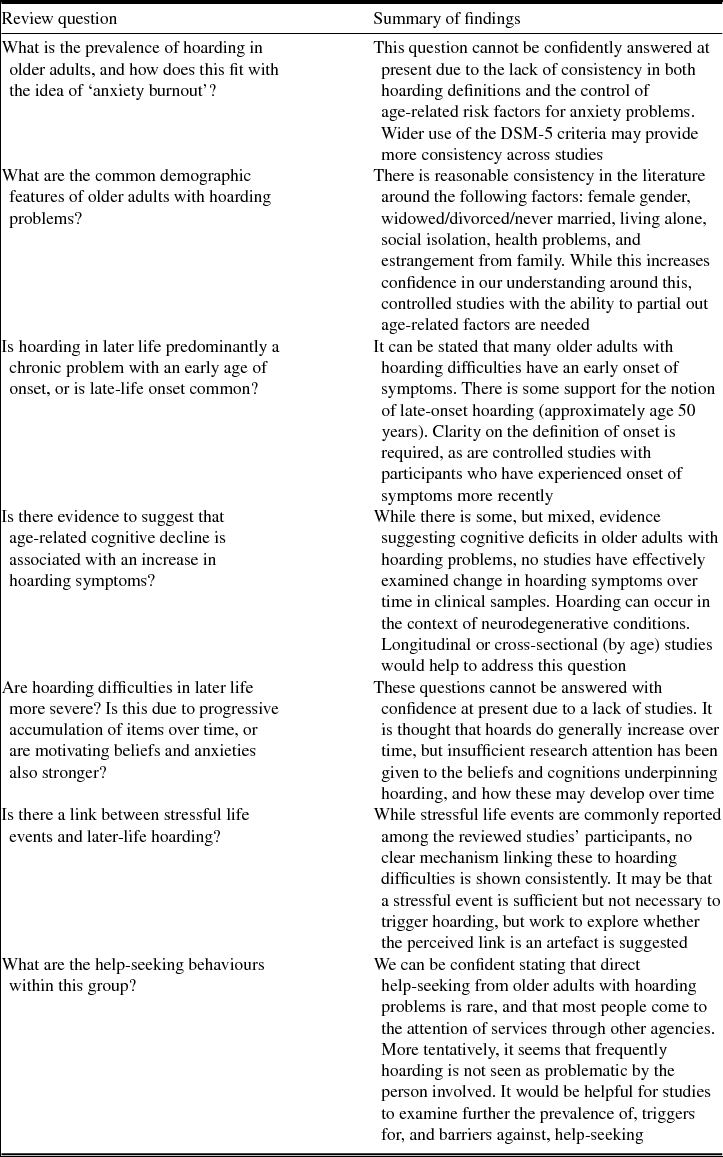
Table 2 summarizes the findings in relation to each review question.
Summary of findings relating to each of the review questions

Implications
By exploring the hoarding literature pertaining to older adults, this review has highlighted a relatively small but growing body of work in this area. Two general observations are made: first, the literature is overly descriptive and is hindered by a lack of good quality empirical studies and appropriate theoretical frameworks, and secondly, there is an overemphasis on behavioural aspects of the condition at the expense of motivation and cognition.
While a range of study designs is used, including some cross-sectional work, work with analogue non-clinical populations, and some initial interventive designs, the vast majority of the literature is descriptive in nature. These studies include both case reports and more structured qualitative studies using interview methodologies. While these studies help to develop an understanding of older adults’ hoarding experiences, the management of cases and procedures undertaken, and the experiences of the professionals involved, they are limited in their capacity to generate and test explanatory hypotheses regarding problem onset, maintenance, and development over time.
As a result, distinctions between adult and older adult hoarding populations are difficult to analyse, as hoarding-related, and age-related factors cannot be effectively separated. This means the present review can only point to certain elements of the literature that may be more relevant to older adult populations. These include the findings around dementia and memory, although it is unclear whether these problems simply exacerbate existing hoarding tendencies, or should be considered causally linked to hoarding. Other factors that seem to be more marked in this literature and are likely to be age-related are the extent of clutter, which accumulates over time, and the degree of functional impairment, which occurs both due to clutter and other factors such as social isolation, physical health problems and mobility issues. Health and mobility problems seem to be linked to the self-neglect/Diogenes syndrome/squalor literature, which therefore features prominently in this age group.
There seems to be an overemphasis on behavioural aspects of hoarding within this literature, with studies tending to favour descriptions of the extent of clutter, self-neglect, or acquisition behaviours over saving cognitions and beliefs about possessions. In part this is understandable as cases are more likely to come to the attention of services when these behavioural aspects get ‘out of control’, but a greater focus on the beliefs and cognitive processes involved is required in order to fully understand the psychological aspects of these difficulties. Similarly this behavioural bias plays out in the literature's focus on the management of hoarding problems in the community (such as hoarding ‘Task Forces’, multi-agency working techniques, removal of clutter), as opposed to a focus on understanding the thoughts and beliefs that underpin the difficulties and distress experienced.
Consequently, there is a clear need for good quality empirical data in this field, employing longitudinal and systematic cross-sectional (with respect to age) designs with appropriate control groups. This will allow the development and testing of specific hypotheses around hoarding and its relationship to age, and be able to explore hoarding psychopathology without confounding age-related factors. It will also allow greater clarity on how and if hoarding in older adults differs from that in other age groups, along with the development of clinical interventions that can address core hoarding psychopathology more directly. Research in this area needs to move beyond simply describing cases and circumstances, and focus more on developing an understanding of why these problems have come about, underlying beliefs and cognitions, and the mechanisms by which they are maintained and/or exacerbated.
We believe there are some clear theoretical implications of the present findings. The studies reviewed provide support for some of the conceptual frameworks of hoarding. Examples of material deprivation, attachment problems, neuropsychological deficits, obsessive-compulsive difficulties and stressful life events can be found in the older adult literature, while biological and genetic perspectives are not mentioned. However, it is hard to draw conclusions from this, in that the generally descriptive nature of the studies means there is insufficient evidence to say some perspectives are supported while others are not. The empirical observations have tended to drive models rather than theories, with the focus being on how any particular observation might account for hoarding, rather than seeking to conceptualize hoarding itself.
What is clear from these findings is the heterogeneity of hoarding problems – there is no consistent pattern of past experiences among older adults who hoard, suggesting that there may be multiple routes leading to the expression of hoarding behaviours. It is questioned whether existing theories and models of hoarding problems fully take this heterogeneity into account, as it is tempting to design models to account for all circumstances, despite this resulting in a lack of specificity. For example, the model described by Frost & Hartl (Reference Frost and Hartl1996) simply lists multiple causal factors, albeit tentatively, and even within individual case formulations are multiple mechanisms outlined (see Calamari et al. Reference Calamari, Pontarelli, Armstrong and Salstrom2012, p. 145). Investigation of the mechanisms behind specific aspects of hoarding problems, such as acquisition, churning, and discarding, may be helpful in developing models that can more succinctly account for the development and maintenance of hoarding problems, rather than models that aim to account for all circumstances.
It is suggested that theoretical work at present may be being hindered by an overreliance on older adult populations, where hoarding is clearly manifested in behaviour and highly problematic. By primarily deriving theory from a single group such as this, it is difficult to determine whether factors represent causes or effects of hoarding, or if indeed they are relevant to the core psychopathology of hoarding at all, being ‘side-effects’ linked simply to the chronicity of problems, or the process of ageing. For example, social isolation, something described frequently in the reviewed studies, may lead someone to turn to possessions for comfort (cause), it may result from not being able to have people visit your home (effect), or it may be that friends have passed away or that mobility problems make going out difficult (age-related artefact).
Conclusions
The reviewed literature provides effective descriptions of the presentations, difficulties, and management of older adults with hoarding problems. There is however a lack of good quality empirical studies, and insufficient focus on the motivating beliefs and cognitions that may represent the core psychopathology of this mental health difficulty. As a result this literature is limited in its power to inform conceptual and theoretical understandings of hoarding, and consequently the clinical interventions developed from these.
Older adults often form a large proportion of hoarding research samples, almost certainly due to more severe clutter making them easier to identify. As efforts to identify and control for age-related factors are uncommon in the literature, it is suggested that consequently there is a real risk that findings and related theorizing may be misleading, being unduly affected by ageing-related, and chronicity-related confounds that may have nothing to do with the core psychopathology underpinning hoarding problems. Given that the average age of onset of hoarding is thought to be in adolescence, the study of wider age ranges and in particular younger people is likely to help avoid these confounds and better develop our understanding of what can be a lifelong and disabling condition.
Summary
-
• Although hoarding as a clinical problem typically has an early age of onset (in adolescence), people with this problem are typically seen by services in later life.
-
• It seems likely that the presentation of older people with hoarding problems will be affected by this discrepancy, so relevant literature is reviewed here.
-
• There are a number of factors which might differentiate people with hoarding at different stages across the lifespan; these include chronicity, ageing, and shifts in belief about possessions and hoarding.
-
• Many studies use samples of older people; it may be that studies of the psychopathology of hoarding are primarily evaluating consequences of hoarding more than causes.
Acknowledgements
This research received no specific grant from any funding agency, commercial or not-for-profit sectors.
Ethical standards
The authors assert that all procedures contributing to this work comply with the ethical standards of the relevant national and institutional committees on human experimentation and with the Helsinki Declaration of 1975, as revised in 2008.
Declaration of Interest
The authors have no conflict of interest with respect to this publication.
-
• To consider the gap between onset and presentation of hoarding difficulties, how this compares to other disorders, and how this may be problematic for our understanding of hoarding psychopathology and treatment.
-
• To understand the main themes and issues within the literature on hoarding among older adults.
-
• To consider the need to distinguish primary (i.e. hoarding psychopathology) from secondary (i.e. age or chronicity related) problems in research and clinical interventions.



Comments
No Comments have been published for this article.