In 1962, the nuclear industry in the United States started commercial operations on a large scale outside of its borders. Spain was the first developing country that was able to build a nuclear plant and connect it to a commercial electrical grid. The first Spanish nuclear plant also happened to be the first U.S. export of a “turnkey” nuclear project that was eventually completed.Footnote 1 The Spanish government supervised the project, but it was a private endeavor of a Spanish utility, led by Westinghouse International and the ad hoc Spanish firm Tecnatom, which handled the engineering. The project was financed by American capital—the Export-Import Bank of the United States (EXIM) and Chase Manhattan Bank—and, to a lesser extent, by Spanish capital. It is a paradox that a country in southern Europe, with a lagging economy, that was severely dependent on external energy sources and governed by a dictator could replicate one of the most complex technologies to be developed after World War II.Footnote 2
This article shows what made it possible for Spain to be among the first European countries to have access to commercial nuclear power. The Spanish dictatorship aggressively pursued nuclear development to achieve status on the international stage and pushed for the technological prowess for its plans for industrialization.Footnote 3 However, Spain could not do so alone; it required the collaboration of technological leaders, because nuclear power demanded institutional, business, financial, and technological capabilities from abroad.
While historians of science and technology have explained the attempt to replicate the civil and military uses of atomic energy in Spain from the 1950s, its economic, business, and financial dimensions have only recently been analyzed.Footnote 4 To understand these perspectives it is fundamental to bear in mind the international context at the time. The Cold War and the Western defense system facilitated General Franco's joining with the atomic countries. From December 1955, the American “Atoms for Peace” administrative program offered “friendly countries” a program for action and cooperation in nuclear development. Its initial purpose was to establish a close collaboration between the public and private spheres, given the high investment that was required, its inherent risks, and the need for state control of military uses of atomic power. The American government transmitted a message of confidence: it would not be long before nuclear progress would benefit industry and the energy and financial sectors. President Eisenhower's proposal at the United Nations immediately resonated around the world. However, implementing this scheme in a relatively poor country with a dictatorship that was still functioning as an autarchy would be somewhat different from its application among industrial and democratic powers. The Spanish institutional setting combined a dictatorship (in fact, the only dictatorship among the early nuclear adopters) with a lobbying electricity sector that influenced, without opposition, the decisions of the government and its regulatory agencies. This setting defined how decisions were made in the Spanish case: that is, without checks or balances.Footnote 5 The Spanish case fills a gap in the international literature on nuclear programs. There are good accounts of nuclear programs in capitalist democracies (the United States, West Germany, France, and Britain) and in the communist world (the USSR, East Germany), but Spain represents a distinct case of a Fascist dictatorship that was slowly coming back onto the international stage.Footnote 6
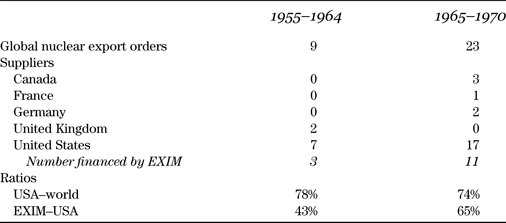
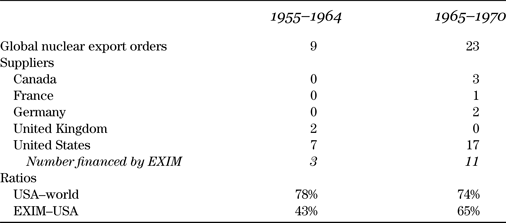
In the early 1960s, American institutions concluded a decade of efforts in the commercial development of nuclear-powered electric energy with more failures than successes. A massive injection of public funds was made in an attempt to overcome technical difficulties so that experimental reactors could produce marketable electricity. However, none of the prototypes had provided engineering solutions on a large scale. Further, when the industry accomplished this feat at the end of the Eisenhower administration, the resulting solutions were far from economically competitive. At the time, General Electric (GE) and Westinghouse (WH) believed they needed a great deal of new knowledge before they could turn a profit.Footnote 7 In addition, the space race had taken the spotlight in the new Democratic administration. The scientific community's skepticism suggested a time frame of twenty years before commercial use could be achieved, and they underscored the security risks of the technology. Only the government and the pioneering industries associated with this new technology remained steadfast in their resolve to develop the business. The standing of the Western leadership in its competition with the Soviet Union was at stake. The opportunity to profit from the investment that had already been made also seemed to be far away. In effect, the beginning of international sales of nuclear reactors had been sluggish. From the Atoms for Peace speech until 1964, the United States had sold only seven reactors overseas (see Table 1). The British had sold another two. All were experimental reactors.
Global Nuclear Export Orders by Non-Communist Countries (Number of Reactors), 1955–1970
Source: Authors’ elaboration from “Nuclear Power Plants—Export Orders Since 1974,” box H 116, folder 524, RG 275, Records of the Export-Import Bank of the United States, National Archives and Records Administration, College Park, Maryland.
Note: Excludes Soviet reactor sales.
For all of these reasons, at the end of 1962, the Atomic Energy Commission (AEC) drafted its report to the president with a double objective. The report's primary objective was to persuade the Kennedy administration to increase financial support of the nuclear industry with research funds and subsidies for private businesses to build commercial plants. Secondarily, the report aimed to create favorable public opinion concerning the civil expansion of atomic energy. The first commercial civil nuclear plant in the United States—at Oyster Creek—was connected to the grid in December 1962, and both GE and WH rushed to conquer the national and international markets. In their marketing strategies, both companies proclaimed that the costs of a nuclear plant would soon be competitive with those of conventional power plants.Footnote 8 The American nuclear industry became part of the general strategy to promote U.S. exports, which were favored by the public financing offered by the Export-Import Bank. The shift in strategy had a significant effect, and the United States obtained preeminence in the world market of nuclear reactors (see Table 1).
Within this global political-economic context, Spain emerged as a trustworthy ally. The financial and military agreements of 1953 between Spain and the United States turned Spain from “United Nations outcast to US partner.”Footnote 9 This raised Spain to a privileged position among the beneficiaries of the U.S. nuclear program.Footnote 10 The prospect of passing nuclear technology to a Fascist dictatorship left the American officials unconcerned, but it troubled other allies.Footnote 11
As a theoretical concept in economics, “learning by doing” implies the increase in productivity that occurs by perfecting processes without additional factors or investment.Footnote 12 In business history, however, learning by doing is one of the processes by which firms, markets, and countries address uncertainty and imperfect and asymmetric information.Footnote 13 How do firms, markets, and countries go from an experimental technology to the creation of a new industrial sector? How do they inform their decision-making processes in the face of unknown variables? In the nuclear sector, it has been established that “the turnkey projects can be viewed as investment in obtaining information through ‘learning by doing’ in an effort to capture rents from the second generation reactors.”Footnote 14 As the first U.S. turnkey export project, Spain's first nuclear power plant served that same purpose and paved the way for the posterior growth of the nuclear sector, for both Spanish and U.S. firms.
The article is organized as follows. The first section explains the construction of the networks and channels for the exchange of nuclear information: formally and informally, between the public and private sectors, among private firms, nationally and internationally. After all, technological progress is a network phenomenon, which grows out of the actions of large numbers of people interacting.Footnote 15 The second section elucidates how the private sector ended up building the Spanish nuclear plants by conveying information to key government actors. Section three addresses the details of the first Spanish nuclear power plant, which was initially named “Jose Cabrera” and most commonly referred to by its location: Zorita. We relate its reliance on U.S. capital and technology and its role as a learning-by-doing exercise for the industry on both sides of the Atlantic, as a process that included learning through new experiences.Footnote 16 The experience acquired in Spain by the WH engineering department in the provision of continuous improvements was crucial to its conquest of the world market.Footnote 17 In addition, for the Spaniards, Zorita constituted a nuclear training school for technicians and experts, the upgrade of low-tech civil companies to the required quality standards, and understanding of the inner workings of the international capital markets. As a result, all of those who were involved had much to learn and to gain from the project.
Building the Spanish Nuclear Network
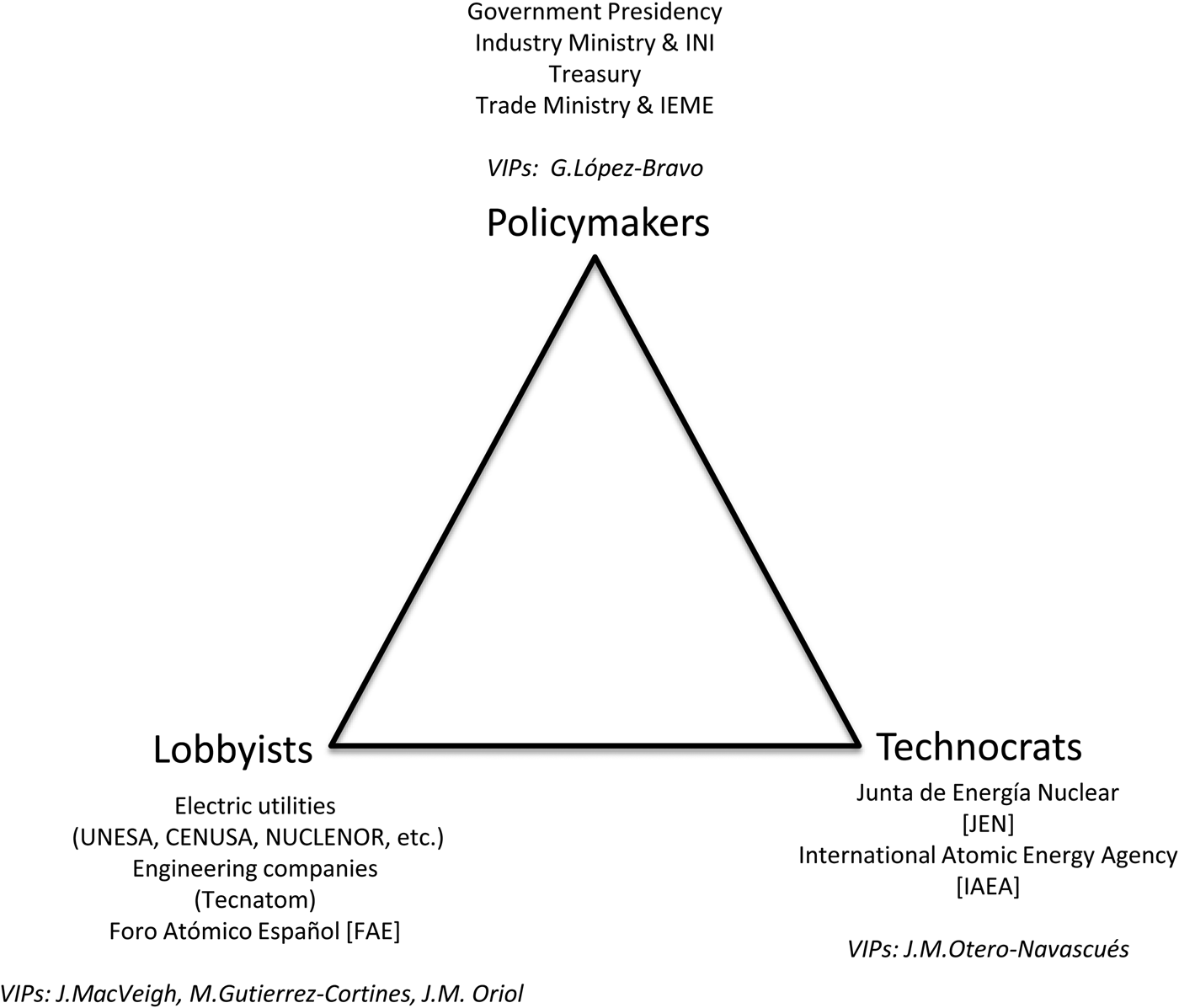
The pursuit of a Spanish nuclear program was hastened after the First International Conference on the Peaceful Uses of Atomic Energy, which convened in Geneva in August 1955. The Spanish version of the nuclear iron triangle was slowly forged between 1956 and 1964, but it only emerged in its definitive shape after 1962 with the decision to leave the construction of nuclear power plants to the private sector, a network that included politicians, technicians, and business groups linked to energy, construction, and civil engineering.Footnote 18 The aim of this network was the commercial use of electricity derived from nuclear fission. As in the case of the United States, the roles of policymakers, technocrats, and lobbyists sometimes overlapped: the industry created its own rules that supplanted legislation, and supervisors maintained a close relationship with the industry they were supposed to oversee. The main difference between the Spanish triangle and the American one is not the intertwined relationships among the people involved, but the lack of checks and counterbalances that existed in the U.S. democracy. In Spain, the initial internal dilemma was focused on the decision of who should lead the atomic program: the market or the state. Economic policy considerations, business decisions, and technical factors finally resolved this stalemate. We will begin by defining each of the three vertices of the iron triangle (see Figure 1).
The Spanish nuclear iron triangle. Note the absence of checks and balances between the vertexes. VIPs are the most noteworthy characters involved in the development of the first Spanish nuclear plant. (Source: Authors’ elaboration based on description of the United States in Brian Balogh, Chain Reaction: Expert Debate and Public Participation in American Commercial Nuclear Power, 1945–1975 [New York, 1991], chap. 2).
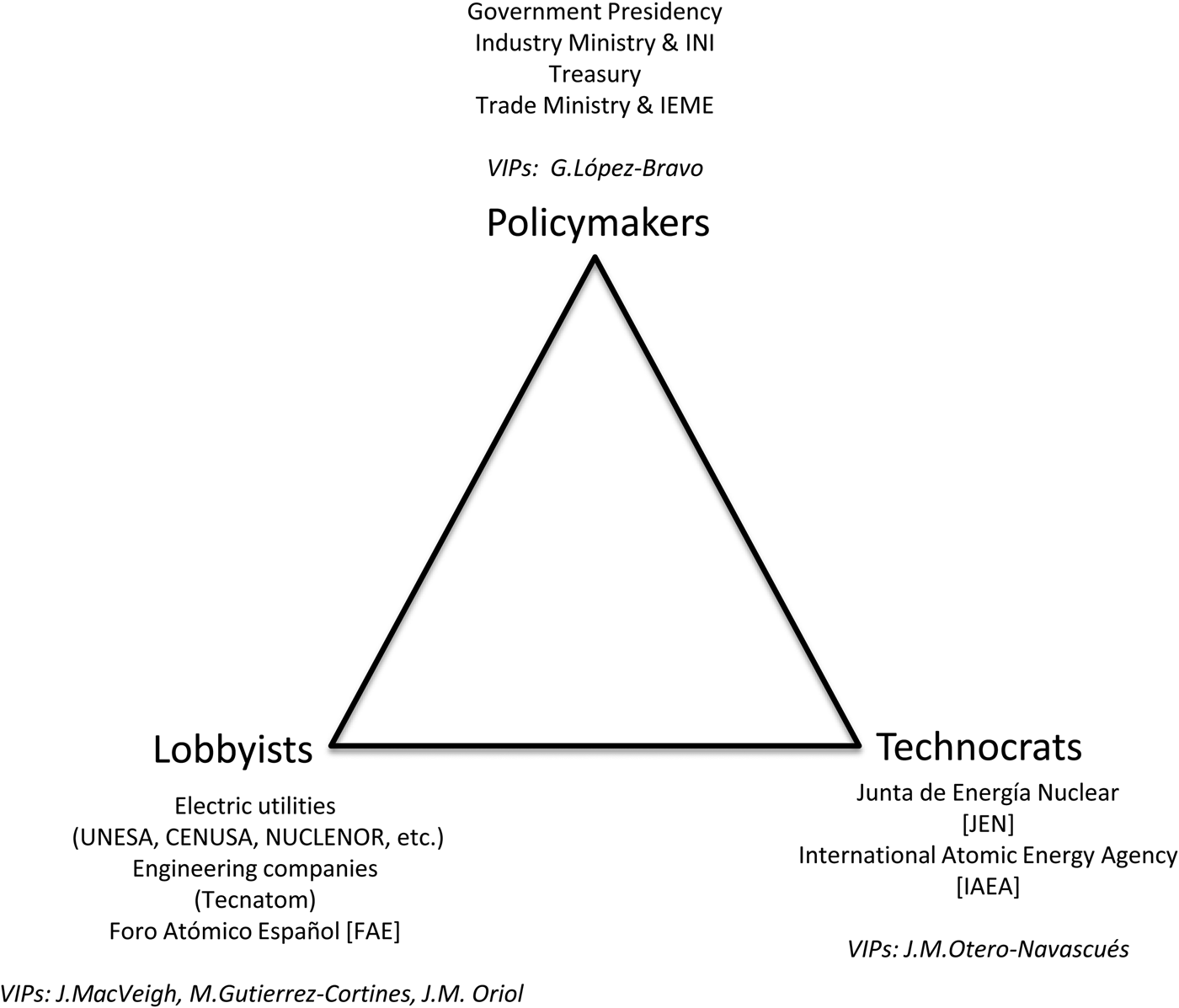
In a dictatorship, the policymakers have absolute power because executive decisions are not subject to parliamentary control or checked by any other balancing authority. The government passed laws and created the institutional framework. In Franco's Spain, the Government Presidency (which coordinated all civil and military actions of the state) and the Department of Industry were the governmental entities that promoted the initial nuclear projects. This was a complicated objective for an ostracized country that was subject to strict controls. The importing of capital goods and technical assistance involved obtaining access to international means of payment that were nonexistent in Spain. Finally, the National Industry Institute (INI) originally appeared as the industrial executor of nuclear projects.Footnote 19 At these initial stages, some of the personalities within the government unsuccessfully called for a more prominent role for the private sector.
In the second vertex, we place the technocrats: specialists and experts in the nuclear sector who defined the technological limits.Footnote 20 The Nuclear Energy Board (Junta de Energía Nuclear [JEN]), created in 1951, became the public entity to which the government entrusted technical decisions regarding nuclear energy.Footnote 21 The three fundamental objectives of JEN were to exploit uranium deposits in the country, to establish a scientific system for the new technology—to be determined by the experts—and to create a national industry around atomic energy. The JEN leaders understood that the rapid technological learning to which they aspired involved establishing international contacts to facilitate the transfer of know-how. This institutional framework promoted atomic technology and tested it at the laboratory scale in its different applications to health, agriculture, industry, and electricity production. Private initiative played a subsidiary role in autarchic Spain, while policymakers and technocrats dominated the atomic plans.
However, private business groups—the third vertex—refused to play a minor role. The private sector soon proposed a strategy to occupy a dominant position in the nuclear program in the face of state interventionism. Spanish electricity utilities had had sufficient influence to do so since 1944, when personal links with the dictator allowed the creation of Unidad Eléctrica SA (UNESA)—a cartel of the eighteen largest private electricity firms in the country. Together with the banking sector, private control of the electricity market constituted an exception within an otherwise interventionist dictatorship.Footnote 22 UNESA self-regulated the electricity sector and allotted the country's electricity market among its members. The utilities planning for the upcoming Spanish nuclear market applied the same rules. Consequently, the electricity companies created two business consortia in 1956, one for the northern region of the country and one for the southern region. The utilities pooled their technical and financial assets in the face of the atomic challenge and felt they were prepared to meet future electricity requirements on their own. In addition, the main Spanish industrial bank, Urquijo, sponsored the creation of an atomic engineering firm, Tecnatom, in an absolutely new sector in Spain. At the end of 1961, the Spanish Atomic Forum was born as an alliance of industries that sought a market niche in nuclear energy.Footnote 23 The members of the private sector vertex and the technocratic vertex communicated fluidly. The interests of the private industry were represented at the JEN executive council and through different working commissions starting in 1955.
How the Private Sector Came to Build the Spanish Nuclear Plants
Changes in the economic policy of the dictatorship gave way to indicative planning between 1959 and 1962. The government abridged the autarchy, pursued the integration of Spain into the international economy, and bet on accelerated industrialization by placing greater importance on the market.Footnote 24 In terms of energy policy, this shift meant that the nuclear program would end up being linked to private initiatives. Technology would be bought from countries that were on the cutting edge, relinquishing the idea of a “made in Spain” nuclear reactor. The enormous financial needs of the atomic program meant the engagement of international public and private banks, as well as multinationals that would transmit atomic know-how to Spanish engineers and industrialists. The state would create the legislation following guidelines from the International Atomic Energy Agency, which led to the nuclear law of 1964. In this section, we analyze the process by which the Spanish nuclear project ended up in the hands of private enterprises under the aegis of the dictatorship.
Initially, JEN technocrats led the scientific and technical decision making. One of their main research programs consisted of testing and selecting the technology. The research tests required time and capital investments before being transferred to the industry. Spain's government signed the first atomic agreement with the United States for the construction of an experimental reactor in 1955. GE supplied the reactor that began operating in 1958.Footnote 25 Meanwhile, Spanish experts continued to learn firsthand the results of each of the reactors that were tested in North America, Great Britain, Belgium, France, and Italy.Footnote 26 The experts found it difficult to choose among them given the lack of adequate empirical evidence. The members of JEN remained submerged in the economic reasoning of twenty years of autarchy and the model of import substitution industrialization. The starting point of JEN had been to locate and exploit deposits of uranium.Footnote 27 According to the JEN reports, decisions were based the availability of money and the principle of self-sufficiency. This implied that a “country with natural uranium deposits and not an excessively favorable trade balance” must choose reactors that “burn natural uranium” (even if their cost was “slightly more expensive” than that of the enriched minerals, to give preference to “national production”).Footnote 28
With the cooperation of Spanish companies and international experts, JEN formulated an ambitious plan that consisted of research reactors and steel, electrical, and chemical facilities to “achieve the complete nationalization of fuel components manufacturing.”Footnote 29 They, JEN, calculated that the first load for a natural-uranium-powered reactor could be achieved between mid-1969 and 1971.Footnote 30 Technocrats forecasted that nuclear plants would become competitive in ten years.Footnote 31 According to JEN's selling pitch to banks and financial agents, building a nuclear plant would cost only 18 percent more than a fuel-oil thermal plant by 1960. In light of American, Canadian, and British experiences, the Spanish experts were convinced that this difference would be further reduced by 1969; nuclear energy “would be able to compete economically, in Spanish conditions, with energy generated in conventional thermal plants,” which would result in savings for the treasury and the trade balance because they would use domestic fuel.Footnote 32 However, engineers and business leaders who worked in the private sector did not endorse that prediction.
While the INI demanded a plan for keeping nuclear projects exclusive to the state, UNESA pushed in the opposite direction.Footnote 33 The tension between public and private views surfaced behind closed doors at the JEN council, where the three vertices of the nuclear triangle were represented. At the beginning of 1961, the council sought to evaluate the proposals for the first two atomic plants of the private consortia: Garoña (for the north of the country) and Zorita (for the south). In parallel, JEN began to develop a state manufactured reactor: the DON (Deuterio-Orgánico-uranio Natural) project. The JEN council had convinced the electricity companies to commit 25 percent of the financing for the “made in Spain” reactor. A JEN technical report on the two private projects focused on four aspects that shed light on the Spanish nuclear strategy: (i) how long it would be before the costs of an atomic plant would be smaller than those of other conventional electricity sources; (ii) how the most suitable reactor could be selected in terms of availability of local raw materials and the degree of maturity of nuclear technology in the country; (iii) where the plants would be installed, in terms of security and water resource needs; and (iv) to what extent the adoption of the international regulatory framework would affect the economic viability of the projects.Footnote 34
At the JEN council, regarding the report on Garoña, the only dissenting voice belonged to one of the most knowledgeable experts on the electricity market: the president of Hidroeléctrica Española, which was the largest electricity utility at the time and one of the business consortia.Footnote 35 He demanded more time to study the document “of transcendence for the Electricity Industry” and “to seek essential advice on the matter.”Footnote 36 The requirement to subordinate the entire project to the new security requirements also troubled him.Footnote 37 The president of JEN provided a vague response: the report on Garoña possessed an “exclusively technical nature,” with “the political aspect of the issue” being a matter for the Nuclear Energy General Directorate—that is, the government—and not for the JEN council.Footnote 38 However, the background was more complicated. The leaders of the two private consortia had exchanged letters with the president of JEN, thus sidelining the council. The letters made clear that the electricity companies’ financial support of the JEN projects was contingent on the approval of their two nuclear plants.Footnote 39
At the beginning of 1962, the continuity of the DON project propitiated a “committee for industrial equipment” that, in collaboration with the JEN council, would generate “a real nuclear industry in our country” able to supply the Spanish nuclear plants as well as other projects such as Eurochemic and CERN.Footnote 40 The council decided for the DON on a thirty-megawatt plant prototype that was moderated with heavy water and refrigerated with organic liquid. The project would be developed in two stages: the first three years would focus on nuclear research, including the design of the plant, followed by a second stage, without a time frame, for construction.Footnote 41 JEN intended to achieve as much as possible in Spain, even if it required the technical assistance of two American companies: Atomic International (the reactor) and Bechtel Nuclear Corp. (economic consulting).
Given the low technological level that was prevalent in Spain, all of the nuclear projects required international partners and know-how, to be paid for in foreign currency. Both the private and the public agents would require the consent of the Department of Commerce—which oversaw imports—and that of Instituto Español de Moneda Extranjera (IEME), which undertook strict supervision of foreign currency movements. These two departments presented significant bottlenecks in the race between the public and private nuclear undertakings. Documents exchanged between the general manager of IEME (Gregorio López Bravo, the policymaker par excellence in this story) and Tecnatom's CEO (Jaime MacVeigh, the most outstanding lobbyist) resolved one aspect of the enigma of how the private sector managed its way through this situation. The engineer MacVeigh had been considering the idea of privately building a nuclear plant in Spain that would blaze a path for the industry and the electricity market. In a strictly confidential note to López Bravo, MacVeigh provided a summary account about the Spanish program in October 1961.Footnote 42 Without preamble, the text offers a critical evaluation of JEN management and advocates for American technology and private initiative.
MacVeigh maintained that the DON reactor remained precarious, of interest only in the long term, once the complicated problems involving the invention of a prototype could be resolved. He categorically judged that “any foreign prototype requires, before becoming reality, more than $30 million, and five or six years before being able to judge its industrial prospects. In Spain, the time frame will be longer and there are no reasons for it to be less expensive.” He was also pessimistic with regard to decisions made in the atomic program thus far: at that rate, “no commercial nuclear plant will start construction before 1966, or later.” For these reasons MacVeigh underscored the “convenience of initiating something reasonable from the economic and industrial point of view and in terms of today's feasibility.” While the reference for the JEN council was Great Britain (its directors had just visited Calder Hall), MacVeigh maintained that British plants were “gigantic by design . . . [and] there is no stomach right now in Spain for that capacity (1,000 MW per year), and no budget (4,000 million pesetas).” In addition, he stated that “it is not true that a greater proportion of the equipment can be built in Spain” for a British-type plant rather than for “another American type, for example, a boiling water type,” in a country in which “there is no nuclear industry.”Footnote 43
MacVeigh unveiled his plans at the end of his confidential message to the policymaker: “it seems convenient to go along with the private proposal . . . to build a small plant, with the maximum collaboration from the JEN, and a capacity of 65 MW, of the boiling water type, and at a reasonable cost, to match the size of current stomachs and budgets.”Footnote 44 MacVeigh firmly believed that it was necessary for them to accelerate the atomic race—and that this would materialize only with American technology and the leadership of the private sector. He was transmitting to the authorities his own pioneering ideas, which he first put forward in 1957 at the Research Service of the Urquijo Bank and discussed in conferences and public presentations all over Spain.Footnote 45 At the end of 1961, these ideas began to take shape as the first private nuclear plant project, Zorita, and in the formation of a nuclear lobby, the Spanish Atomic Forum. MacVeigh correctly forecasted that it all would depend on two essential factors: “the capacity of the Spanish industry” and “the [economic] liberalization.”Footnote 46 The new economic policy meant abandoning autarchic concepts and opening up to the outside.
In the policymaking vertex, López Bravo turned out to be the key figure. His ideas concerning how the Spanish nuclear program should be characterized had matured before his appointment as minister of industry, in his positions at the Department of Commerce and the IEME, in attending JEN and INI meetings, and in his participation in the commissions on energy and industry that designed the First Development Plan. Indeed, his atomic strategy synthesized the essential lines of the industrial policy of developmentalism, that is, of indicative planning. In the first weeks of 1962, still in his role as director of the IEME, López Bravo received two project proposals for the construction of experimental nuclear plants to produce electricity: the public DON reactor by JEN and the privately promoted Zorita nuclear plant. Both projects had entered into technological agreements with American companies, and both required authorizations from the Department of Commerce and the IEME.Footnote 47 López Bravo studied the economic and fuel chapters about Zorita that MacVeigh had written and an accompanying report by the Pacific Gas & Electric Company of California. The latter was about to connect to the grid a sixty-megawatt nuclear plant in Humbolt Bay, where the private initiative (a collaboration between electricity companies and nuclear industry) could make the project competitive in the medium run.Footnote 48 These basic ideas were about to be transposed to the Spanish nuclear program.
In all of his public interventions, López Bravo insisted on the need to seek external financing to accelerate Spanish industrialization. As head of IEME he perfected the legislation on capital markets that would facilitate foreign investment. Then he became minister of industry. In July 1962, the New York Times considered the appointment of López Bravo as the head of the Department of Industry “an invitation for foreign capital in the economic development of Spain.”Footnote 49 The following year and a half saw the public announcement of a new industrial policy. In December 1963, the First Economic Development Plan was introduced. Energy and industry would go hand in hand, and the plan reflected a decisive stance to cede nuclear leadership to private initiatives, with the stated aim that 40 percent of operations be performed by domestic companies, openly renouncing the idea of a “made in Spain” nuclear reactor. Further, in April 1964, the government approved its first atomic law to launch the first generation of atomic plants. The uncertainty over which would be the most effective technology led to the formulation of a strategy authorizing three nuclear plants with different atomic reactors that would be linked to two technological partners: the United States (Zorita, 153 megawatts, with a pressurized water reactor manufactured by WH; and Garoña, 300 megawatts, with a boiling water reactor by GE—both with enriched uranium) and France (Vandellós I, 480 megawatts, with a gas-cooled reactor and natural uranium). This first wave of plants constituted a global test for the members of the Spanish nuclear triangle.Footnote 50
“Learning by Doing” in the First Spanish Nuclear Plant
The initial size of the Zorita reactor reflected its experimental nature: a prototype of 60 megawatts, for electricity companies to develop civil and industrial capabilities. However, the final version increased power to 153 megawatts, with the intention of adding a second reactor of 300 megawatts.Footnote 51 Unión Eléctrica Madrileña (UEM), the provider of electric energy from the capital city, promoted the Zorita project. Madrid and its province was experiencing a demographic and economic expansion at the time.Footnote 52 The construction of hydroelectric facilities and distribution infrastructure almost matched the exponential growth in demand for electricity.Footnote 53 Demand would partly determine the location of the first nuclear plant in the country; in addition, the reactor's refrigeration required abundant water. UEM owned several hydroelectric dams around Madrid, and thus, it chose the Zorita reservoir, which was located some ninety-five kilometers from Madrid and had been in operation since 1947. The investment in high voltage lines in the Madrid area intensified in the following decade, which meant that the nuclear plant could connect to the grid as soon as it could operate. In February 1962, the UEM presented the project to the government, taking full responsibility for financing. The previous studies by Tecnatom and an American firm had detailed the economic and industrial limitations and the conditions of the construction, including the turnkey contract: the reactor manufacturer would take all responsibility for turning over the key to the operator once the reactor became operational under a fixed-price agreement. The promoters required quick government approval to start immediately.Footnote 54 The government took a whole year and in March 1963 agreed “in principle” to the idea, noting the need for further study of several relevant aspects, including legal, financial, pricing, third-party liability, and insurance aspects.Footnote 55
At the beginning, Zorita survived as a risky bet. In 1962, the support from the state, the financial capacity of the UEM, and the endogenous technological level conditioned the viability of the venture. Zorita become a project of strategic interest for the industrial private sector and the government. There were “incentives” for UEM to assume the whole financial burden. Such incentives took the form of multiple state-supported actions: the yielding of tariff exemptions for the equipment and material imported for the plant; the provision of a government loan of $3.2 million, with low interest and a long repayment period; the granting of support and guarantees for foreign credits; an offer of the same tax benefits that were granted to “a classical plant of national importance”; the guarantee of electricity prices that would be higher than those for hydroelectric plants; and a commitment to authorize the expansion of the plant as electricity consumption in the region grew.Footnote 56 Most of these incentives were not exclusive to the nuclear sector; they formed part of the special privileges already being received by the electricity sector in Spain. However, state support remained vital for the survival of the nuclear project given its sheer size.
Learning about international finances
The overall operation required foreign capital in the amount of $30.5 million (slightly more than 1.825 million pesetas in 1965), which was allocated for the building of the plant and the first fuel core with American technology and assistance. Approximately 80 percent came from EXIM, the U.S. public bank that supports North American exports. The rest came from Chase Manhattan Bank, a private bank also in the Unites States. The total estimated cost of the project exceeded $41 million.Footnote 57 Thus, despite the volume of foreign financing, UEM needed financial muscle from its domestic banking partners: the Urquijo Bank and the Hispano-Americano Bank shared the risk of the operation.Footnote 58 The UEM also paid $3 million in cash.
EXIM had authorized a single credit for the export of a nuclear plant before the credit for Zorita.Footnote 59 In February 1964, EXIM and the UEM agreed on a loan of $24.5 million, to be paid over fifteen years at an interest rate of 5.5 percent: $19 million for equipment and services and $5.5 million to cover the components of the first fuel core (see Table 2). EXIM's loan mostly targeted the purchase of the reactor and equipment (59.5 percent) and the first fuel core (22 percent), which means that technical assistance and services consumed 18.5 percent (including staff training—2.2 percent of the total).Footnote 60 The contract was historic. Between 1951 and 1962, all the credits from EXIM to the Spanish electricity sector added up to $84.5 million; in other words, Zorita's initial loan represented 30 percent of that total.Footnote 61 In financial terms, the atomic program represented a vigorous stimulus for Spanish foreign credits.Footnote 62
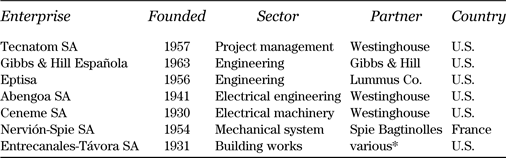
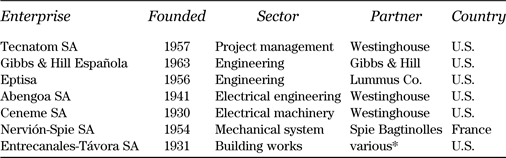
Main Spanish Companies Involved in Construction of Zorita and International Know–How
Sources: Authors’ elaboration of data from Consejo de Seguridad Nuclear, Las Centrales Nucleares españolas (Madrid, 1993); and Pedro Egurbide, “El ‘consulting’ en España,” Información Comercial Española 513 (1976): 133–37.
* According to Adoración Álvaro-Moya the company worked with different partners including Degremont, Pittsburgh-Des Moines Steel Company, and Metcalfe Hamilton. Álvaro-Moya, “The Globalization of Knowledge-Based Services: Engineering Consulting in Spain, 1953–1975,” Business History Review 88, no. 4 (2014): 695.
During the first four years—the time frame for the building of the plant—there would be no principal or interest payments on the EXIM credit. However, in addition to the financial advantages, the EXIM credit had complex conditions attached: the promoters had to procure the contracts with the American suppliers (mostly WH) specifying the items, value, and shipping dates for all of the goods to be exported from the United States. Forecasting the shipping dates involved learning about the logistics of transporting large pieces of technology across the globe.Footnote 63 Simultaneously, EXIM required the formalization of agreements between the AEC and the Spanish government to enrich Spanish uranium in the United States, although there was no legislation in either country to that effect. The loan's terms detailed the purchasing program for the fuel supply in addition to an inspection plan of the contract through “a specialized American company,” Bechtel Co. The UEM agreed to report to EXIM “on the progress of material and construction work and operation of the new plant, as well as any other changes in the process and purchasing periods at the end of each trimester.”Footnote 64 Finally, EXIM's credit also required formal government approval of the project, which arrived at the end of June 1964.Footnote 65
By law, EXIM could finance only the American part of the project; thus, there was a need for parallel private credit.Footnote 66 In January 1965, the complementary credit from Chase Manhattan Bank for $6 million—designated to finance equipment and facilities of Spanish origin (civil works supplies) and foreign services (technical assistance and personnel training)—was obtained.Footnote 67 Its conditions stipulated an interest rate of 6.5 percent with an additional rate of 0.5 percent for “commissions from the unforeseen portion.”Footnote 68 Chase's loan did not require the endorsement of Spanish banks.
Learning to create a nuclear industrial sector
From its beginnings, Zorita epitomized the idea of learning by doing. The promoters were obliged to gather information and to contact international organizations for the development of atomic energy in Spain.Footnote 69 From 1958, they had been “preparing the nuclear technicians overseas.”Footnote 70 The promoters worked at “acquiring practical experience before starting massive production of nuclear energy.” They argued that their experience would benefit the state and other private companies: “it would disseminate knowledge.” The project was committed to collaborate with JEN's high technical standards, cumulative experience, and all the means at the JEN's disposal.Footnote 71 Tecnatom planned to create a training school, which was to be directed by scientists from JEN and foreign advisors, close to the plant. Part of the foreign financing was needed for training of personnel who would participate in the installation and operation of the plant, given Spain's inexperience in operating commercial nuclear plants.Footnote 72 Approximately fifty-five people would manage the plant, including specialists and auxiliary personnel.Footnote 73 In addition, the UEM stated that its “greatest interest [was] in nationalizing as much of the fabrication of equipment and the construction of the plant as possible.”Footnote 74 This would end up being the learning path for the engineering, industrial, and service companies that participated in the building of Spain's nuclear infrastructure.
The companies involved in the Zorita project were required to innovate in products, techniques, knowledge, and management. Some of these firms were already based in the nuclear business, and others adapted to the new challenges through the diversification of their production lines, strategic alliances with foreign companies, and the implementation of quality controls that had not existed before nuclear plants.Footnote 75 Those with experience in the petrochemical or electricity sector, for instance, thought there would be great potential in becoming skilled for the atomic industry.
Table 3 presents the main domestic firms that were hired to execute the Zorita project under the overall direction of Tecnatom, with nuclear equipment goods from WH (vessel and reactor) and engineering work performed by Gibbs & Hill Española SA (GHESA), which was founded in 1963 by its American counterpart for the technological development of the energy sector. Another participant on the engineering side was Eptisa, which was founded in 1956.Footnote 76 Abengoa, which had been founded in 1941 and used WH licenses, performed the electrical installation. WH also participated with a 16 percent shareholding of Cenemesa, which provided motors and transformers with patents and technical assistance from the American company. The Urquijo Bank partly owned Eptisa, Tecnatom, and Cenemesa and was also a major shareholder in the plant's promoter UEM.Footnote 77 The mechanical side was contracted with Montajes Nervión SA, which had provided an entry point to the Spanish market for the French multinational Spie. Meanwhile, one of the largest builders in the country, Entrecanales y Távora, directed the civil works in conjunction with subcontractors from the United States.Footnote 78 In practice, Spanish industrial participation in the construction of Zorita accounted for approximately 36 percent of the total costs.Footnote 79 These companies evolved into a nuclear industrial cluster, and as of 2016, all of these companies remain prominent players at the international level. The nuclear path proved to be fruitful for the Spanish industry.
Initial Foreign Financing for Zorita Plant, 1964

Source: Joseba De la Torre and Maria del Mar Rubio-Varas, La financiación exterior del desarrollo industrial español a través del IEME (1950-1982) (Madrid, 2015), chap. 5.
Learning about the uranium fuel cycle
The engineers who designed the Zorita plant decided to use enriched uranium. They found a solution that reconciled the nationalistic idea of using Spanish minerals while also significantly reducing the cost.Footnote 80 Tecnatom held conversations with the AEC, which “had accepted the principle of selling enriched uranium,” although there was as yet no legislation in that respect (another first). With that information, the analysis by Spanish engineers ended up being correct in the short and medium term when they predicted that “given the interest of the U.S. in stimulating atomic energy around the world, especially with their technology, there will be no problems” in ensuring the supply of enriched uranium of U.S. manufacture.Footnote 81 The engineers trusted that although the first core and the first partial loads would come from America, Spain would in the future develop some of those operations domestically. This idea of transforming uranium initially in America and later in Europe could mean savings of up to 44 percent on the bill to be paid in dollars. They calculated that by the time the second core began to operate, Spanish industries would have the total or partial capability of solving the uranium problem.Footnote 82 Ultimately, Spain would never manage to enrich uranium, and as a result, the cost would not be reduced. However, WH, UEM, and the JEN created a joint research program on nuclear fuel, which provided some useful results for the industry worldwide.Footnote 83 Further, the model of Spanish uranium enriched in the United States remained in place for a while.
The AEC and UEM split the costs of the uranium cycle. The AEC took care of renting uranium hexafluoride between the initial enrichment and the end of the cycle, the payment for the consumed uranium, and the expenses associated with the reprocessing of fuel components and mineral conversion. Meanwhile, UEM paid for the mining expenses, the mineral treatment and purification, the fabrication of the fuel elements, the transportation, and the insurance. However, the final project multiplied the size of the plant and, consequently, the cost of irradiated fuel loads for the reactor. Increasing the plant size to 153 megawatts multiplied the cost of the first core by a factor of 2.5 (that is, from $4.78 million initially to $28 million for its complete hypothetical life). In practice, the cost continued to increase. Successive reloads of the core continued to depend on American technology at prices that were subject to the volatility of American currency exchange rates, inflation, and rising interest rates. The financial panorama became increasingly complicated.
Other lessons learned (or not)
Once construction began, in the summer of 1965, the Zorita plant was built in record time. At the beginning of 1969, the plant was connected to the grid, and it began the commercial production of electricity.Footnote 84 Publicity events, from the inaugural act of the plant until its commercial hook-up, involved different visits from the dictator, the future Spanish king, diplomatic representatives from the United States, bankers, business leaders, and the media. Spain's “economic miracle” took the shape of the “atomic miracle,” only fifteen years after proposing the civil use of the new form of energy and three and a half years after starting construction.
López Bravo, who was already head of the Department of Industry, stated days before the official inauguration of the plant that an increase in electricity production would act as “a vital engine for productive activities for prosperity and well-being” in the conditions of a free market and competition. This meant a “new stage of possibilities” for electric companies to “develop our equipment goods industry” and “create jobs.” He declared Zorita to be economically viable.Footnote 85 The government imposed the condition that national participation in the plants would not fall below 40 percent, while recommending that the alliance of Spanish groups and foreign firms approach cutting-edge technology projects with guarantees: a method for accelerating the process of learning by doing and the transfer of knowledge. The institutional framework for electricity, which gave priority to private enterprises, was intended to increase investment, coordinate energy planning, train specialists, and exploit the electricity grid. In other words, private companies were chosen to lead the business, which always involved the search for equilibrium between the expectation of benefits and the assumption of risks.
On its own, Zorita satisfied 11.5 percent of the increase in demand for electricity that had been predicted in the First Development Plan. At the end of 1969, the president of the Spanish Atomic Forum recognized that nuclear energy remained “very expensive”—“perhaps more than double” the cost of thermal petroleum or coal-based plants. In spite of this, he appeared to have confidence in the atomic future. What were his reasons? First, he stated that “the price of nuclear fuel is much less expensive.” In addition, an atomic group can “be installed close to a consumption center,” “does not produce air pollution,” and is built to be leak-proof, preventing the “release of radioactive products.” He admitted, “were it not for their strict security, nuclear plants would be much less expensive.” Finally, he highlighted the social savings for the country, represented by the reduction of imported petroleum and coal.Footnote 86 Based on this confidence, in May 1972, the UEM requested authorization from the Department of Industry to build two new groups in the Zorita area, each with a thousand-megawatt capacity, “in a stepwise manner based on arising needs.”Footnote 87 Neither the utilities nor the government could foresee the enormous changes of the decade ahead.
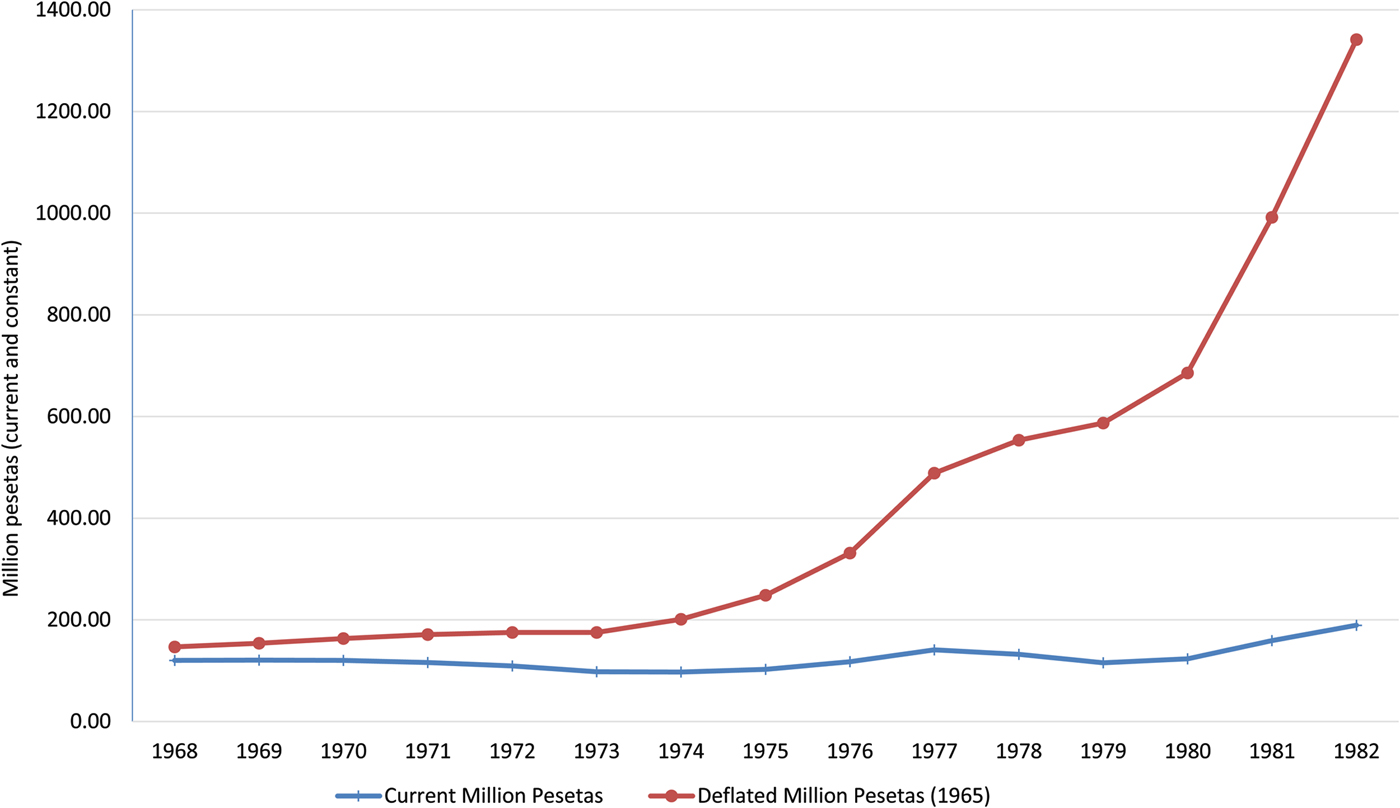
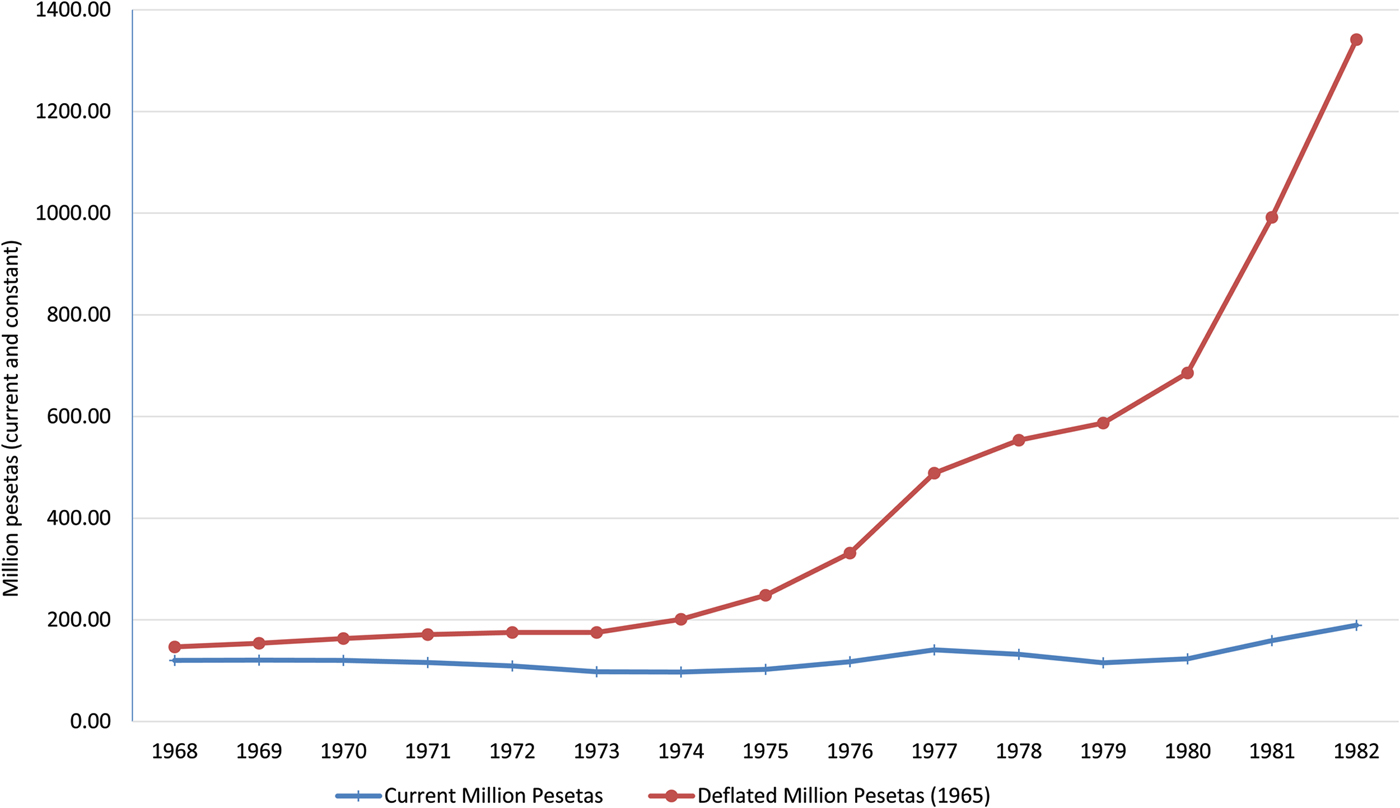
The financial advantages became obsolete with the end of the era of inexpensive energy, easy financing, and cheap dollars. The thirty semiannual installments of the EXIM credit for Zorita had begun to be paid back on March 31, 1968 (each payment amounting to $816,666), through an account at Chase Manhattan Bank of New York. The first payments benefited from the exit of the dollar from Bretton Woods and its devaluation. From 1974 the strengthening of the dollar demanded a greater financial effort. The evolution of the peseta–dollar exchange rate and a Spanish currency that was subject to a series of devaluations burdened the promoters. Figure 2 shows the figures of the actual financial cost of EXIM's main loan to Zorita (as a lower bound to the financial costs of the plant because private credits are not included, and new doses of foreign public financing were required for each further reload of enriched fuel). The financial panorama turned dismal.
Long-term finance of the first EXIM Bank credit for Zorita plant, 1968–1982 (current and constant prices). The annual estimation of principal and interest payment. (Sources: Authors’ elaboration from EXIM contract no. 2197 as stated in Authorizations for Nuclear Power Plants and Training Center from Inception thru March 31, 1983, 6–8 [1959–1983], box H128, folder 705, EXIM Bank Archives, National Archives and Records Administration, College Park, Maryland; exchange rate based on Pablo Martín Aceña and María Ángeles Pons, “Sistema monetario y financier,” in Estadísticas históricas de España [siglos XIX–XX], vol. 2, ed. Albert Carreras and Xavier Tafunell [Madrid, 2005]; prices based on Jordi Maluquer de Motes, La economía española en perspectiva histórica [Barcelona, 2014].)
Conclusion
With its first nuclear plant connected, and still a developing economy, Spain managed to place itself among the Western nuclear pioneers. The iron triangle formed by the government, experts, and business leaders sought to obtain, accumulate, and learn from the scarce and conflicting information that was available at the time. Despite the uncertainties, Zorita blazed the path not only for the remainder of the first and the whole of the second generation of atomic plants in Spain, but also for the international market of nuclear reactors. The first U.S. export of a turnkey nuclear project stands as an investment in obtaining information through learning by doing. In fact, turnkey projects were a game changer: WH and GE sold seventeen reactors abroad in the second half of the 1960s alone. With Zorita, the Spanish nuclear industry took off. Nuclear optimism penetrated the discourse of policymakers and lobbyists. Meanwhile, local industry matured, obtaining know-how and technology transfers that would mark the future of the electricity and nuclear sectors in Spain.
Zorita stood as a learning experience for all of the involved parties in many aspects, including some that would endure. Because past choices condition future choices—capabilities are built slowly over time—the project would affect the evolution of firms and their ability to take advantage of the coming possibilities. Contact with nuclear leaders in Europe and the United States and generous financing from public and private American banking had continuity in the decades ahead. The learning process for technicians and specialists intensified. In fact, Tecnatom, which was initially established to manage the Zorita project, developed its own technology, using the first nuclear plant as training for Spaniards and foreigners.Footnote 88 Some of the new capabilities emerged from a process of learning from new experiences. The Zorita experience helped with the creation of protocols for the logistics of transport and the timing of supplying the different components to the plant site. The uranium cycle that was created for Zorita—at a time when no legislation allowed the AEC to sell enriched uranium to foreign countries in long-term contracts—became the standard for the Spanish industry. In addition, participation in the nuclear project forced the upgrade of the equipment and civil work provided by Spanish firms to a level that was appropriate to match U.S. manufacturing standards. The Spanish nuclear industrial cluster emerged around Zorita. On the other side of the Atlantic, the Zorita project helped Americans understand how to address the Spanish authorities’ controls and requirements. At the same time, the learning curve and technical improvements allowed for better performance for American firms in foreign countries, although the industry's learning process worked better in small plants such as Zorita than in large stations.Footnote 89 This is because a site-built technology such as nuclear power has lower rates of learning and a higher variability of costs than mass-manufactured technologies.Footnote 90 Nevertheless, with the construction of the first Spanish atomic plant, firms on both sides of the Atlantic acquired and perfected the specific capabilities required to build a commercial nuclear reactor.