


Introduction
Lithium is the lightest alkali metal and the third element in the periodic table, with various historical medical applications. Lithium’s modern use in psychiatry goes back to the mid-20th century, aiming for mania.(Reference Shorter1) It is being considered one of the most effective medications in psychiatry.(Reference Leucht, Hierl, Kissling, Dold and Davis2) The most prescribed lithium salt is lithium carbonate in the United States (US), indicated for bipolar disorder with mania or maintenance treatment. Furthermore, it is also being used for various conditions, including augmentation of major depressive disorder, prevention of suicide attempts, and completed suicide, or disruptive behaviour.(Reference Gitlin and Bauer3) Notably, there is increasing evidence that substantially lower doses of lithium could imply some medical and psychiatric benefits in the general population.(Reference Mauer, Vergne and Ghaemi4,Reference Fajardo, LeBlanc and Fajardo5) While no daily intake value has been formally established, lithium is also consumed through diet, with average daily intake in the US estimated at 0.65 to 3.1 mg.(Reference Dolara6) One of the critical research areas is the relation between trace lithium levels in tap water and suicide rates.(Reference Pichler, Fartacek, Miller-Doebeling, Walter and Plöderl7,Reference Memon, Rogers and Fitzsimmons8) Another area of research is different formulations of lithium salts, such as lithium orotate, and their possible differences compared to lithium carbonate in psychiatry. Various lithium salt formulations might also pose variability in pharmacokinetics, and their eventual clinical effects could differ across doses.(Reference Pacholko and Bekar9)
In the clinical setting, lithium carries multiple risks, including a narrow therapeutic index. Lithium prescriptions are followed up by routine monitoring of lithium blood levels, not only to dose it therapeutically but also to prevent lithium toxicity, which can lead to serious adverse effects, including confusion, seizures, and coma.(Reference Dunne10) Lithium also affects multiple organ systems, impairing renal concentrating ability, reducing glomerular filtration, and causing thyroid dysfunction.(Reference Alexander, Farag, Mittal, Rennke and Singh11,Reference Chan, Solmi and Correll12) Given that lithium is cleared by the kidneys, its serum concentration can be significantly altered by medication interactions, including concomitant use of non-steroidal anti-inflammatory drugs (NSAIDs), angiotensin-converting enzyme (ACE) inhibitors, or certain diuretics. Reproductive and developmental safety are also important, as lithium can cross the placenta and is excreted in breast milk.(Reference Gehrmann, Fiedler, Leutritz, Koreny and Kittel-Schneider13) These properties are critical to consider when weighing lithium’s clinical benefits against its risks. Beyond its prescription use, lithium is also available as a dietary supplement, where this medical monitoring is absent.
Dietary supplements are frequently utilised worldwide for various purposes. A recent National Health and Nutrition Examination Survey (NHANES) reported that 60.2% of adults in the US used a dietary supplement in the past 30 days, showing an increasing trend with age up to 75.9%.(Reference Stierman, Couch, Gahche and Mishra14) This underlies the importance of supplements in society and healthcare. Unlike prescription medications, dietary supplements in the US are not subject to pre-market approval for safety under the Dietary Supplement Health and Education Act (DSHEA) of 1994.(Reference Wallace and Koturbash15) Based on DSHEA, manufacturers have the primary responsibility for the safety and accuracy of labels. Manufacturers may make structure–function claims describing a product’s effect on the body, such as ‘promotes’ or ‘supports’, but cannot claim a product treats, prevents, or cures a disease without FDA evaluation or authorisation.(Reference Avery, Eisenberg and Cantor16) Within this regulatory context, some lithium salts are available as dietary supplements over the counter at trace to micro doses in the US, which makes an appropriate case for this study. Given the re-emergence of interest in lithium, assessing supplements containing lithium is essential. This study aims to evaluate dietary supplements that declare lithium as an ingredient, focusing on reported dosing, mood and cognitive claims, precautionary labels, and the descriptive nature of product information.
Materials and methods
Dietary supplements containing ‘lithium’ on the label at any amount were identified using the Dietary Supplement Label Database (DSLD), developed by the National Institutes of Health (NIH). The DSLD includes product label statements, ingredient names, ingredient amounts, and forms for supplements marketed in the US. It provides the most representative database of dietary product labels being marketed in the US.(Reference Saldanha, Dwyer and Bailen17) As of January 2026, there are 121,959 labels within DSLD categorised as ‘on market.’ An entry search using the term ‘lithium’ was conducted in January 2026, covering product labels from 2011 to 2025. This study relied on the product labelling of dietary supplements rather than independent laboratory analysis of each product’s actual composition and dosing. The data used in this study are publicly available in the DSLD database.
Matched product labels and their claims were manually extracted using Microsoft Excel. Identified products were reviewed manually based on product name, ingredient composition, reported elemental lithium, health claims, and precautionary labelling. When available, lithium salt formulations were determined by tracing elemental lithium back to the labelled ingredient form. Elemental lithium amounts accounted for the total daily dose, based on each product’s serving size and directed frequency. Products with the same brand, name, and ingredients were treated as a single product, even when they had separate database entries differing in packaging size, container count, or label design. These duplicate records were merged rather than excluded, so each formulation was counted once. When claims or warnings differ between the merged records, a claim or warning was coded as present if it appeared on any version of the label. This approach is utilised to preserve label information, while preventing the same formulation from being counted more than once in the analyses. Health-related label claims were manually reviewed and categorised, with targeted text-string searches used to confirm claims related to mood, cognition, memory, and suicide. Mood claims were coded when wording referenced ‘mood’ or ‘emotional’ states, and cognitive claims when wording referenced ‘memory,’ ‘cognition,’ or ‘cognitive.’ Suicide claims were identified by the term ‘suicide.’ Precautionary label information was similarly reviewed for terms including kidney, pregnancy and breastfeeding, antidepressant, selective serotonin reuptake inhibitor (SSRI), and monoamine oxidase inhibitors (MAOIs), with confirmation via text-string search. Specifically, kidney cautions were coded for wording referencing ‘kidney’ or ‘renal’ function or disease. Pregnancy cautions were coded for ‘pregnancy,’ ‘nursing,’ or ‘breastfeeding,’ and antidepressant cautions for ‘antidepressant’, ‘SSRI’, or ‘MAO’.
Statistical analysis
All identified products that reported any amount of lithium were included in the descriptive and statistical analyses. Product data were extracted from the database and recorded in Microsoft Excel, which was also used to calculate descriptive counts of product characteristics. All statistical analyses were performed in R software (version 4.5.2). Elemental lithium dose was summarised using medians and interquartile ranges (IQR) due to the skewed distribution. Associations between elemental lithium amount and the presence of mood- and cognitive-related claims or precautions regarding kidney, pregnancy/lactation, and antidepressant use were evaluated using Mann–Whitney U tests, with significance set at p < 0.05. All p-values were corrected across all comparisons with the Bonferroni method, and effect sizes were reported as the rank-biserial correlation (r) with 95% confidence intervals.
Results
Sample selection
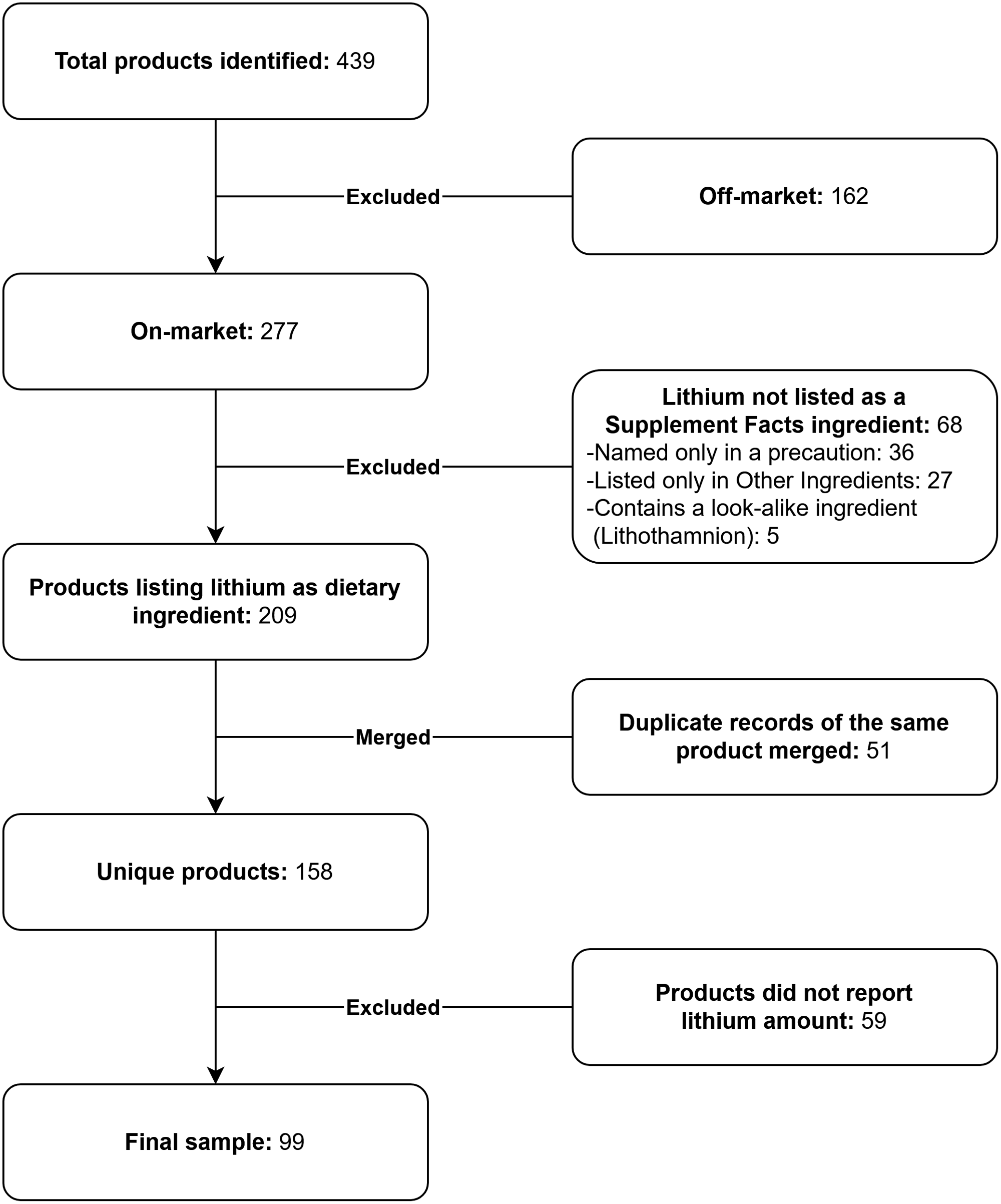
A total of 99 unique lithium-containing products with a specified elemental lithium amount were analysed. These were identified from 439 products initially indexed under the keyword ‘lithium’ in the database search. After excluding off-market products (n = 162) and products that did not list lithium as a dietary ingredient in the Supplement Facts panel (n = 68), 209 product labels remained. Among these 68 exclusions, lithium was reported only in precautionary statements (e.g., drug-interaction warnings, n = 36), listed only under ‘Other Ingredients’ without specifying its dose (n = 27), or contained a similarly named but distinct ingredient (Lithothamnion, n = 5). A further 51 records were identified as duplicates of products already included and merged into their respective labels, resulting in 158 products. Supplements that did not specify a lithium dose were subsequently excluded (n = 59), yielding 99 products (Figure 1).
Flow diagram of product identification and screening.

Product characteristics
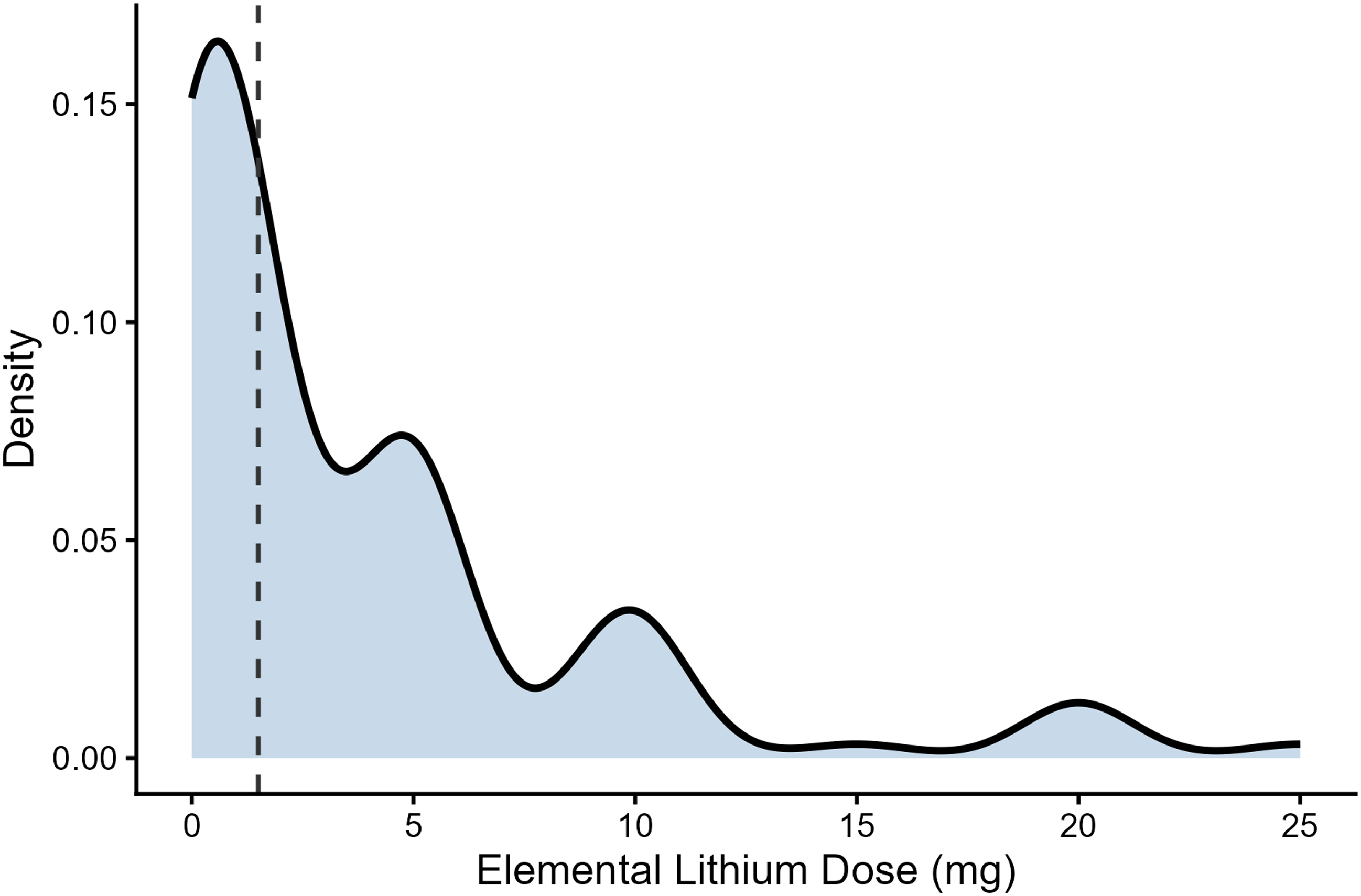
Forty-one products (41.4%) reported lithium as the sole active ingredient, whereas the majority (58.5%) reported lithium in combination with other ingredients. Overall, the median dose (IQR) of elemental lithium per daily serving across supplements was 1.5 (0.26–5) mg. Supplements reporting lithium as the only active ingredient had a higher median elemental dose than products combining lithium with other active ingredients (5 mg vs 0.5 mg), with the difference statistically significant (p < 0.0001; r = 0.64, 95% CI, 0.47–0.79). Elemental lithium doses across labels showed a skewed distribution, ranging from trace doses up to 25 mg (Figure 2).
Density plot of elemental lithium across dietary supplements. The dashed line represents the median reference (1.5 mg).

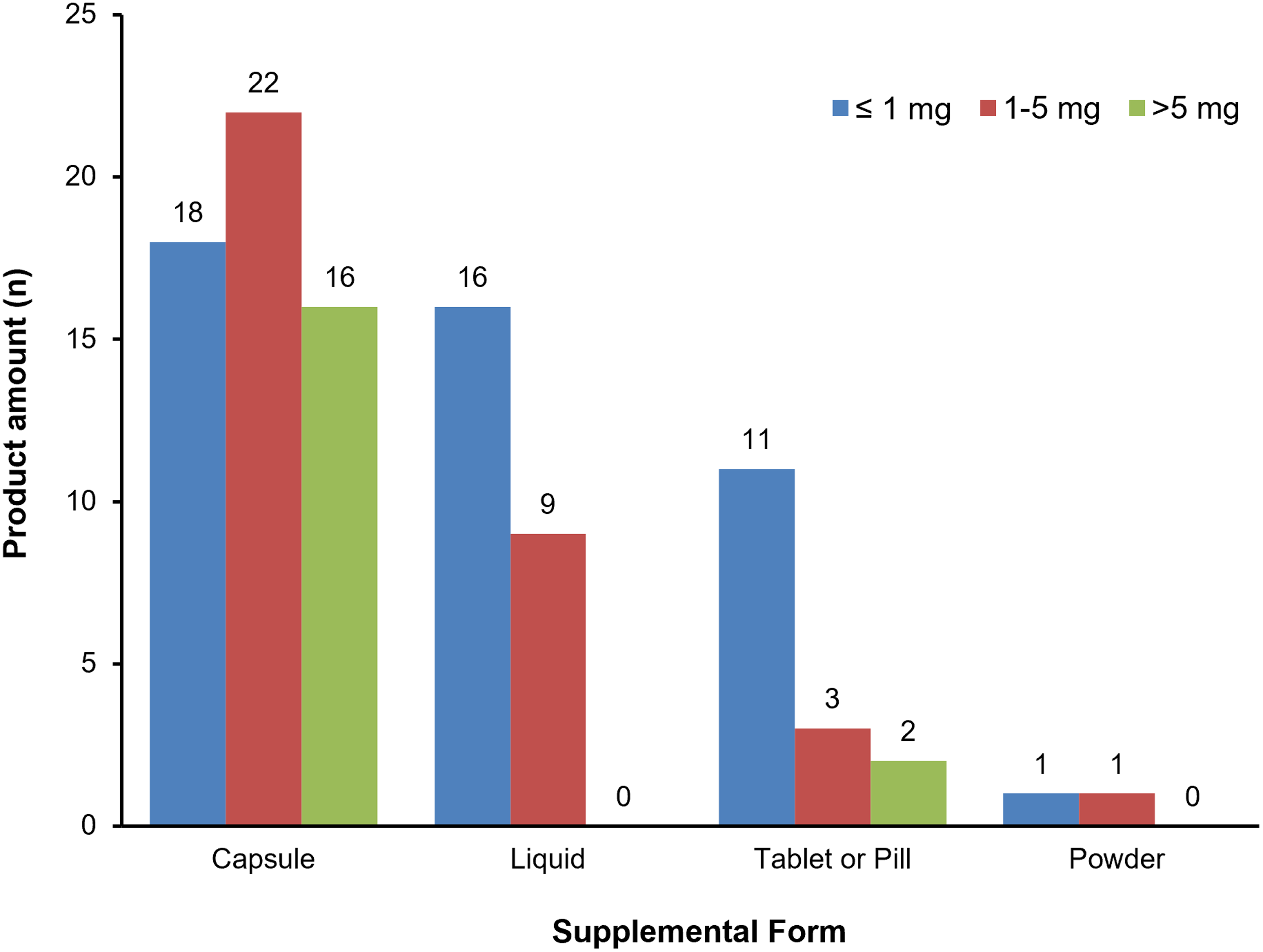
Products were available in multiple formulations, including capsules (56.6%), liquid (25.3%), tablets or pills (16.2%), and powder (2%). Supplemental forms and their dosing are represented in Figure 3. Lithium orotate was the most reported salt formulation, present in 52.5% of products. It was followed by lithium aspartate (7.1%), lithium citrate (5.1%), lithium carbonate (4%), lithium chloride (3%), and lithium gluconate (1%). One product reported a combination of lithium orotate and carbonate. The remaining products (26.3%) did not specify the lithium salt formulation despite reporting an elemental lithium amount.
Product supplemental forms are represented based on the amount of elemental lithium reported.

Mood and cognitive claims
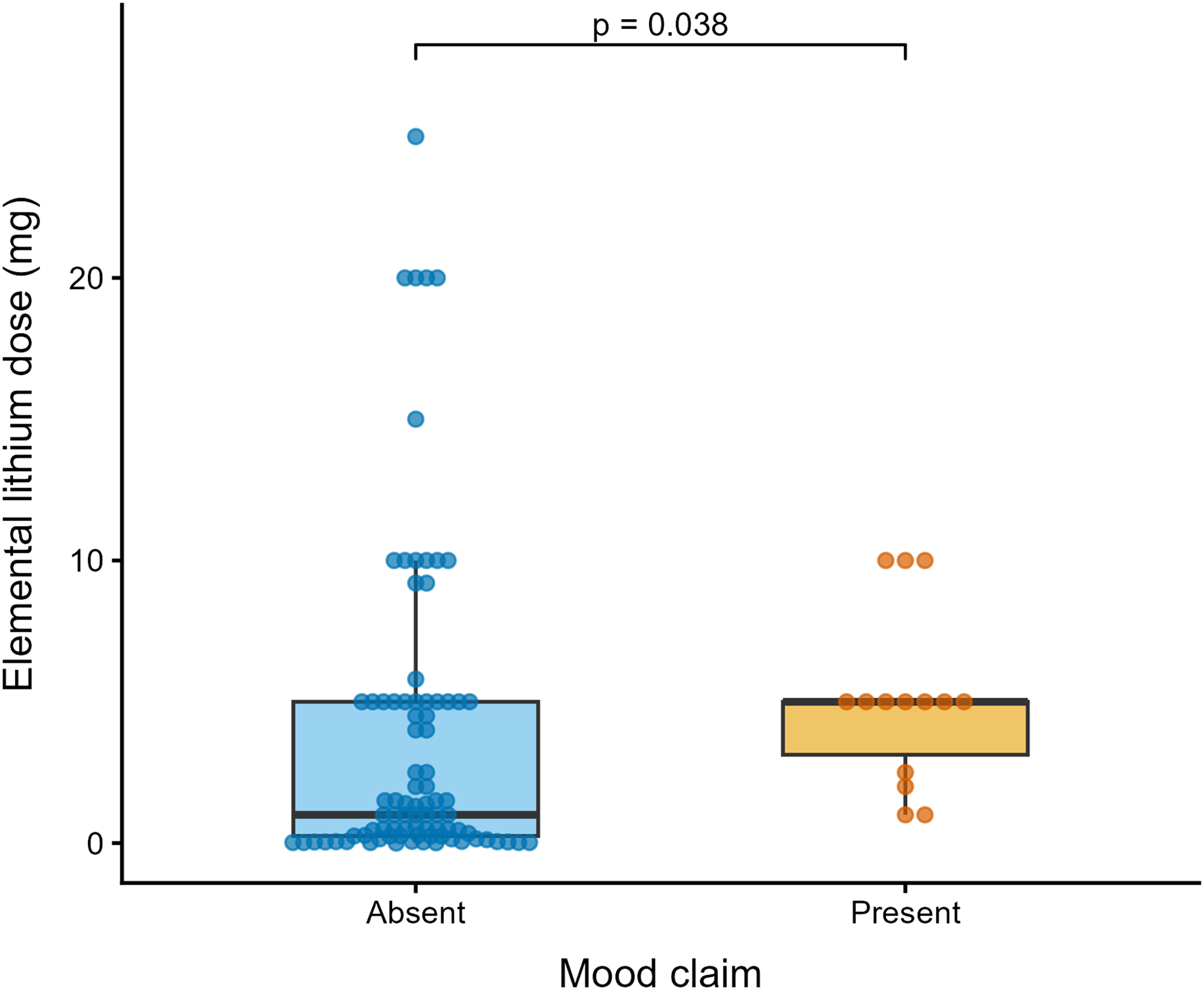
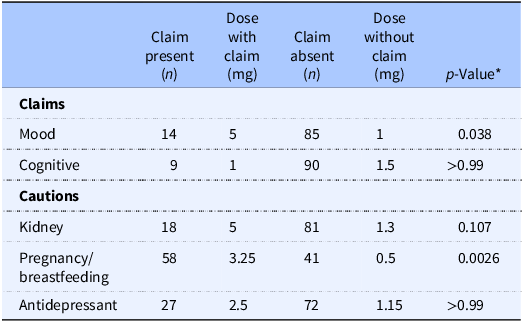
Claims related to mood, cognition, and suicide were assessed. Mood-related claims were present in 14 out of 99 products. The language around mood claims primarily focuses on ‘supporting healthy mood’ or ‘mood balance.’ Products making the mood-related claims had a statistically significantly higher median (IQR) dose of reported elemental lithium of 5 (3.13–5.00) mg compared to products without mood claims at 1 (0.25–5.00) mg (p = 0.038; r = 0.46, 95% CI, 0.25–0.65) (Figure 4). On the other hand, products with memory-related claims primarily focused on ‘support memory’ or ‘support cognition’ language. There was no statistical association between elemental lithium amounts and cognitive claims (p > 0.99). No labels made any claims related to suicide. These findings are summarised in Table 1.
Box plot of reported elemental lithium based on products that make a mood claim or not.

Mood or cognitive claims along with precautionary labels related to kidney, pregnancy/breastfeeding, or antidepressant use. Median doses are used. *Mann–Whitney U test, Bonferroni-corrected for multiple comparisons

Table 1. Long description
A table comparing doses of lithium in products with and without specific claims and cautions. The table has 8 rows and 5 columns. The columns are labeled ‘Claim present (n)’, ‘Dose with claim (mg)’, ‘Claim absent (n)’, ‘Dose without claim (mg)’, and ‘p-Value’. The rows are grouped into ‘Claims’ and ‘Cautions’. Under ‘Claims’, the rows are labeled ‘Mood’, ‘Cognitive’. Under ‘Cautions’, the rows are labeled ‘Kidney’, ‘Pregnancy/breastfeeding’, ‘Antidepressant’. Row 1: Mood, Claim present (n) 14, Dose with claim (mg) 5, Claim absent (n) 85, Dose without claim (mg) 1, p-Value 0.038. Row 2: Cognitive, Claim present (n) 9, Dose with claim (mg) 1, Claim absent (n) 90, Dose without claim (mg) 1.5, p-Value >0.99. Row 3: Kidney, Claim present (n) 18, Dose with claim (mg) 5, Claim absent (n) 81, Dose without claim (mg) 1.3, p-Value 0.107. Row 4: Pregnancy/breastfeeding, Claim present (n) 58, Dose with claim (mg) 3.25, Claim absent (n) 41, Dose without claim (mg) 0.5, p-Value 0.0026. Row 5: Antidepressant, Claim present (n) 27, Dose with claim (mg) 2.5, Claim absent (n) 72, Dose without claim (mg) 1.15, p-Value >0.99.
Precautionary labelling
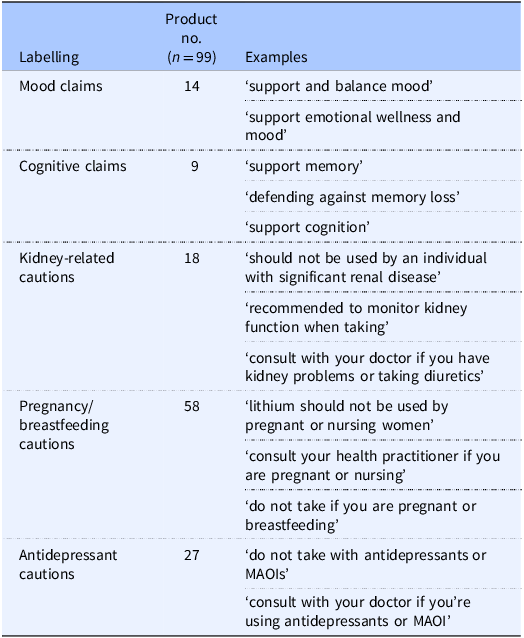
Precautionary labels for kidney function or disease, pregnancy and breastfeeding cautions, and concomitant antidepressant or MAOIs were also assessed. Kidney-related precautions were present in 18 of 99 products. Most products used the language ‘recommended to monitor kidney function while taking.’ There was no statistically significant difference in reported elemental lithium amounts between products with and without a kidney-related caution after correction for multiple comparisons (p = 0.107). On the other hand, products including pregnancy or breastfeeding precautions had a higher median elemental lithium amount compared with those without such precautions (3.25 vs 0.5 mg, p = 0.0026; r = 0.42, 95% CI, 0.19–0.62). Most cautions related to pregnancy or breastfeeding included a warning as ‘not to use while pregnant or breastfeeding,’ while also recommending ‘consult with a doctor’ if pregnant or nursing. Cautions for concomitant use of antidepressants and/or MAOIs included in 27 products, while reported elemental lithium dosing and their precautions on antidepressants did not show statistical correlation (p > 0.99). Most precautionary labels regarding antidepressants used direct language, such as ‘do not take with antidepressants or MAOIs,’ though a minority used more general wording, such as ‘consult with your doctor before using.’ Examples of claims or precautionary labels can be found in Table 2.
Examples of claims and precautions made by supplements that included lithium

Table 2. Long description
A table summarizing precautionary labels on lithium supplements, focusing on kidney function, pregnancy, breastfeeding, and antidepressant use. The table has five rows and three columns. The columns are labeled Labelling, Product no., and Examples. The rows are labeled Mood claims, Cognitive claims, Kidney-related cautions, Pregnancy/breastfeeding cautions, and Antidepressant cautions. Row 1: Labelling, Mood claims; Product no., 14; Examples, support and balance mood, support emotional wellness and mood. Row 2: Labelling, Cognitive claims; Product no., 9; Examples, support memory, defending against memory loss, support cognition. Row 3: Labelling, Kidney-related cautions; Product no., 18; Examples, should not be used by an individual with significant renal disease, recommended to monitor kidney function when taking, consult with your doctor if you have kidney problems or taking diuretics. Row 4: Labelling, Pregnancy/breastfeeding cautions; Product no., 58; Examples, lithium should not be used by pregnant or nursing women, consult your health practitioner if you are pregnant or nursing, do not take if you are pregnant or breastfeeding. Row 5: Labelling, Antidepressant cautions; Product no., 27; Examples, do not take with antidepressants or MAOIs, consult with your doctor if you’re using antidepressants or MAOI.
Discussion
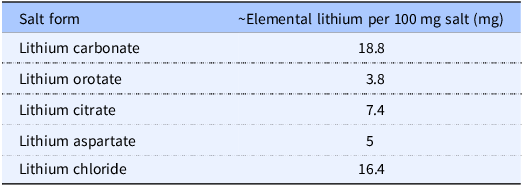
This study presents that various dose ranges of elemental lithium are marketed in the US as dietary supplements, as a sole ingredient, or in combination with other active ingredients such as vitamins/minerals. The median dose of elemental lithium across supplements was 1.5 mg, which is approximately 37 times lower than 300 mg of lithium carbonate, as carbonate salt at that dose includes 56 mg of elemental lithium (Table 3).(Reference Meyer and Stahl18,Reference Kim, Chen and Cheng19) Various lithium salts are used in dietary supplements, but the majority are lithium orotate. At these doses, lithium-containing products are generally considered dietary supplements, although some include 20 to 25 mg of elemental lithium, comparable to the elemental lithium content of the lowest available dose of lithium carbonate (150 mg). While human studies of lithium-containing supplements are lacking, some preclinical data exist. An earlier study suggested that lithium orotate may be nephrotoxic at concentrations comparable to lithium carbonate in a rodent model.(Reference Smith and Schou20) Although the kinetics of lithium salts might be different, as another suggested that the orotate form has higher brain lithium concentrations than carbonate salt in a preclinical model, which might imply that lower doses of lithium orotate compared to carbonate salt could achieve therapeutic brain levels.(Reference Kling, Manowitz and Pollack21) Aligning with this, a recent study on a preclinical mouse model of mania suggested that lithium orotate is more potent, efficacious, and tolerable compared to lithium carbonate.(Reference Pacholko and Bekar22) Regardless, this evidence remains preclinical, and further studies are required to determine how these findings translate to clinical settings. Furthermore, the health impact of lithium supplements at varying doses and in different salt forms remains unclear. Given these potential pharmacokinetic and tolerability differences between salt forms, it is notable that 26.3% of products did not disclose the lithium salt formulation despite reporting an elemental lithium amount, raising transparency concerns and limiting interpretability. Even though these supplements contained substantially lower lithium than standard psychiatric doses, it remains unclear how such trace to microdoses could affect people with comorbidities such as kidney disorders, those on other medications, or older adults, who are typically monitored during clinical lithium use.(Reference Tondo, Alda and Bauer23)
Lithium salt forms and their approximate elemental lithium amounts per 100 mg salt

Table 3. Long description
A table comparing different lithium salt forms and their approximate elemental lithium amounts per 100 mg salt. The table has six rows and two columns. The first column lists the salt forms, and the second column lists the approximate elemental lithium amounts per 100 mg salt. Row 1: Lithium carbonate, 18.8 mg. Row 2: Lithium orotate, 3.8 mg. Row 3: Lithium citrate, 7.4 mg. Row 4: Lithium aspartate, 5 mg. Row 5: Lithium chloride, 16.4 mg.
Lithium is well established for its mood benefits in clinical practice, while its effects on cognition have been a long-debated topic. A recent study suggested that lithium may be the only metal reduced in the human brain in mild cognitive impairment and demonstrated that lithium depletion in a rodent model leads to amyloid-β accumulation and tau phosphorylation, effects that were prevented by lithium orotate replacement.(Reference Aron, Ngian and Qiu24) It is essential in the context that there is increasing evidence that low-dose lithium treatments might lead to benefits in various conditions, including cognitive decline or augmentation of mood disorders.(Reference Strawbridge, Kerr-Gaffney and Bessa25) Although these represent active areas of research, they do not yet establish the safety, efficacy, or appropriate dosing of lithium-containing dietary supplements in humans and warrant further evaluation.
Lithium-only products reported markedly higher elemental lithium than combination products. This likely reflects product design, as lithium-only supplements are marketed specifically for lithium intake, whereas combination products were predominantly broad multi-mineral or multivitamin formulations in which lithium appeared as one of many trace ingredients. Products that made mood claims had significantly higher reported elemental lithium than those that did not, which might be related to the benefits of lithium on mood, and manufacturers might infer a perception of dose–response correlation in marketing. Nevertheless, there are no human studies evaluating the mood effects of different microdoses of elemental lithium to date. Elemental lithium amount correlation was not evident for cognitive claims. It is important to note that most of the products did not make mood or cognitive claims, nor did they identify kidney-related or concomitant antidepressant use as a caution. This can align with trace to micro doses of lithium and the common understanding that dietary supplements might not have harmful effects, while studies are lacking related to lithium as dietary supplementation and possible harmful effects in the short or long term. Although we have multiple studies in the last decades on the safety of lithium carbonate in humans, including across different age groups and long-term effects,(Reference Amerio, Ossola and Scagnelli26,Reference Ferensztajn-Rochowiak and Rybakowski27) the literature is scarce on the safety of other lithium salts. Given the over-the-counter nature of these supplements, intentional or unintentional toxicities can also occur, as toxicity with lithium orotate supplements is reported in the literature.(Reference Pauzé and Brooks28) Not only lithium supplementation itself but also its interactions with medications are important, as supplement-drug interactions are a general concern and well described in the literature.(Reference Gardiner, Phillips and Shaughnessy29)
There were no label claims related to suicide identified in this study, which is most likely attributable to common labelling practices and regulatory prohibitions against claiming to prevent, treat, or reduce a clinical outcome, as well as legal liability in the US. On the other hand, most products used precautions to warn consumers about lithium use in pregnancy or breastfeeding, which might reflect the well-known risks of cardiac and other congenital malformations.(Reference Fornaro, Maritan and Ferranti30) However, the effects of lithium supplements at trace to micro doses on pregnancy outcomes have not been studied. Products that included pregnancy and breastfeeding precautions were labelled with significantly higher lithium doses than products with no such precautions, which might indicate similar labelling practices for linear dose-adverse outcome perception. Regardless of whether trace-dose lithium poses a risk in pregnancy, these products are marketed with inconsistent precautions and limited labelling detail, leaving consumers without reliable guidance on safe use. Neither kidney-related nor concomitant antidepressant use precautions were significantly associated with lithium amounts after correction for multiple comparisons. This may reflect limited subgroup sizes or the absence of a true relationship.
About 10% of products reported lithium carbonate or lithium citrate, the two salt forms approved by the FDA for prescription lithium therapy. Although the elemental lithium in these supplements was substantially below prescription levels, the presence of these conventional prescription salts in over-the-counter products is worth noting. Prescription products report the salt amount (e.g., 300 mg lithium carbonate), whereas most supplements report the elemental lithium amount and only name the salt form, which may confuse consumers and clinicians. As noted, some products did not disclose the salt form, while others listed lithium as an ingredient without specifying any amount, leaving consumers unable to determine the dose or the form they are obtaining. While unreported lithium amounts could be assumed to be trace levels, this cannot be confirmed. More broadly, dietary supplements are not subject to pre-market approval by the FDA, whose authority is largely limited to post-market enforcement.(Reference Wallace and Koturbash15) As a result, the accuracy of labelled ingredients is not independently verified before these products reach consumers.
Some limitations apply to this study. DSLD was used to gather label information, which does not represent the entire market or every product sold in the US. DSLD is a database that collects voluntary product label submissions and may miss products that are not submitted to the database. The DSLD reproduces label information exactly as submitted by manufacturers and does not verify compliance with FDA labelling regulations, so it may contain errors or inaccuracies.(Reference Dwyer, Bailen and Saldanha31) Although only products designated as on market were included, this designation reflects database records rather than verified current market availability. This study also excluded supplements that listed lithium on the label but did not report their dosing, which is an inherent limitation. These products could not be entered into the dosing analyses because no lithium amount was reported. Almost all were multi-ingredient mineral formulations, often trace-mineral or ‘colloidal’ blends, in which lithium was one of many ions rather than the main ingredient. This is likely why their individual amounts were not given. Also, the amounts and chemical verification of compounds in dietary supplements were not validated with experiments, and the full validity of labels requires laboratory confirmation. More than half of the supplements in the final sample included a combination of ingredients with lithium, and some label claims or precautions might not be specific to lithium but to other active ingredients or their combinations. Given that this study focused on label claims through DSLD, there were no consumer exposure data or adverse events reported by consumers. It should be noted that the analyses conducted in this study were exploratory, and the findings should be considered hypothesis-generating. Finally, data extraction and classification were performed by a single reviewer, without independent verification.
It is currently unclear what the frequency of supplemental lithium use is in the population. A recent cross-sectional international survey identified some consumer perspectives and experiences of users who are using lithium supplements, indicating that most of the users are utilising lithium supplements for anxiety, cognition, and mood, while side effects were also reported, such as headaches or nausea.(Reference Strawbridge, Myrtle, Carmellini, Hampsey, Cousins and Young32) Given consumer practices, the increasing use of dietary supplements, and the re-emerging interest in lithium, it is essential to identify labels, the range of use, consumer perceptions and experiences, and outcomes. To our knowledge, this is the first study that evaluated commercially available dietary supplements that include lithium in the US. Clinicians should be aware of the general characteristics of lithium supplements and their labelling and inquire whether patients are taking lithium supplements to inform clinical care.
Conclusions
Lithium-containing dietary supplements marketed in the US show wide variability in label-reported elemental lithium amounts, disclosure of the lithium salt form, and precautionary labelling. Products making mood-related claims carried higher declared lithium amounts, and lithium-only products contained substantially more elemental lithium than combination products, in which lithium typically appeared as one of many ingredients. While evidence for potential benefits of trace to microdoses of elemental lithium is increasing, these products are widely available and used outside the monitoring that accompanies therapeutic lithium use. Clinicians should be aware that patients may be taking lithium-containing supplements, which may be relevant in the context of chronic illness and concurrent medication use. These findings support the need for clearer labelling requirements, including disclosure of the elemental lithium amount and salt form, along with standardised precautionary statements.
Data availability statement
The data presented in this study are publicly accessible and reproducible through the DSLD database (https://dsld.od.nih.gov/). The extracted dataset is available upon reasonable request.
Acknowledgements
None declared.
Financial support
No funding was used for this study.
Competing interests
The author has no conflict of interest to declare.

 Open access

