





1. Introduction
Counterfactual reasoning (CFR) refers to the ability to think about alternative outcomes for events that have already happened (Byrne, Reference Byrne2005, Reference Byrne2016; Roese, Reference Roese1997). These alternative scenarios are generally prompted by questions such as ‘What if…?’ or ‘If only I had…’ (Westby, Reference Westby2016). For example, after missing the school bus, one might think, ‘If I had woken up on time, I would have caught it’. This process requires setting aside the factual reality and constructing a hypothetical alternative. By its nature, CFR engages executive functions such as inhibitory control (to suppress the actual outcome) and working memory (to maintain both the real and imagined scenarios; Beck et al., Reference Beck, Riggs and Gorniak2009). Previous research suggests that CFR is not a unitary process and may vary according to contextual, linguistic and cognitive factors. Developmental studies, for example, have shown that CFR abilities emerge gradually and differ according to task demands and available cognitive resources (German, Reference German1999; Rafetseder et al., Reference Rafetseder, Schwitalla and Perner2013). Similarly, evidence from adult research indicates that performance may vary depending on characteristics of the counterfactual scenario as well as individual cognitive differences (Byrne, Reference Byrne2005; Roese, Reference Roese1997).
This study builds on the dual-meaning account proposed by Kulakova and Nieuwland (Reference Kulakova and Nieuwland2016) to further investigate counterfactual thinking. According to this account, counterfactual statements simultaneously express two contradictory representations: a hypothetical scenario and the factual reality. This dual representation makes counterfactuals inherently cognitively demanding. For instance, in the earlier example about missing the bus, the sentence ‘If I had gotten up early, I would not have missed the bus’ implies both a counterfactual situation (I got up early and caught the bus) and the actual event (I did not get up early and missed the bus). Thus, the theory argues that counterfactuals are more complex to process than single-meaning indicative statements because they require holding two mental representations simultaneously.
One source of this variability may lie in the different forms that counterfactual thoughts can take. Previous research has identified several dimensions along which counterfactuals can be classified, including the direction of the imagined alternative and the nature of the changes introduced into the antecedent. Depending on whether the imagined alternative is better or worse than the actual outcome, counterfactuals are categorized as: downward and upward (Roese and Epstude, Reference Roese, Epstude and Olson2017). Downward counterfactuals refer to worse alternatives and often elicit relief, for example, one might think, ‘If I had left home later, I might also have forgotten my school bag.,’ whereas upward counterfactuals involve better alternatives and evoke regret or disappointment for example ‘If I had woken up on time, I would have caught the bus’. Another distinction for the counterfactual thoughts emerges from the antecedent, whether something is added or deleted (Dunning & Parpal, Reference Dunning and Parpal1989). Suppose an action or element is removed from the antecedent, such as in the earlier example, the oversleeping action. In that case, we call this type of counterfactual subtractive counterfactuals. In contrast, if there is an added action or element to the antecedent, such as changing the first example and saying, ‘If the alarm had gone off, he/she would not have missed the bus’. This type of counterfactual is classified as an additive counterfactual.
Prior studies have examined counterfactuals by focusing separately on outcome valence (upward versus downward) or antecedent structure (additive versus subtractive). Roese and Epstude (Reference Roese, Epstude and Olson2017) claim that the typical form of spontaneous counterfactual thought is upward and additive. However, as far as we know, no research has investigated these two categories together. Examining these dimensions within the same framework may provide a more comprehensive understanding of how different structural and motivational properties contribute to CFR. In addition to these dimensions, linguistic properties of counterfactual expressions may also influence processing. One such property is grammatical polarity, whether the consequent of a counterfactual statement is expressed as a consequent-subtractive or consequent-additive event. Whereas antecedent structure reflects variation in how hypothetical alternatives are constructed, grammatical polarity reflects variation in how outcomes are linguistically expressed. Building on this perspective, the current study additionally examines grammatical polarity in the consequent of counterfactual statements. Specifically, we distinguish between counterfactual outcomes expressed as consequent-additive events through affirmative constructions (e.g., would have caught the bus) and consequent-subtractive events through negative constructions (e.g., would not have missed the bus), as a linguistic factor that may influence counterfactual processing.
Most previous studies on CFR have primarily focused on the generation of alternative outcomes by asking participants to imagine how reality could have unfolded differently. However, CFR also involves understanding and interpreting alternative scenarios once they are presented. In the present study, we focus on this aspect by examining the comprehension and processing of counterfactual statements. Rather than generating alternatives, participants are required to infer aspects of reality from simulated counterfactual scenarios. This approach allows us to investigate how semantic and syntactic properties of counterfactual expressions may shape their processing and interpretation.
Roese and Olson’s (Reference Roese and Olson1993) study provides empirical evidence by examining how these counterfactuals manifest differently depending on the context of success or failure. In their study, Roese and Olson (Reference Roese and Olson1993) investigated the participants’ CFR after a scenario about failure or success on an exam. They found that subtractive counterfactuals are produced more than additive counterfactuals after the success scenario, whereas additive counterfactuals are generated more than subtractive counterfactuals after the failure scenario. This study shows us the tendency to produce additive or subtractive counterfactuals after different outcome valence. However, when it comes to comprehension of different types of CFR, we do not know if there are any differences in how these types are processed.
One notable exception is Aktepe, who examined the processing of indicative and counterfactual conditionals in both children and adults. The findings showed that counterfactual statements were generally more difficult to process than indicative statements, supporting the claim that counterfactuals impose additional cognitive demands due to their dual meaning. Using eye-tracking measures, the study further suggested that negatively framed expressions were associated with reduced predictive processing. These findings raise the possibility that linguistic characteristics, such as negation, may contribute to differences in the processing of counterfactual expressions.
In this study, we investigate how different counterfactual expressions – namely upward versus downward and additive versus subtractive – affect adults’ CFR. We also explore how linguistic variations in the consequent part of the sentence, particularly the use of negation, influence the comprehension of counterfactual statements. The present study seeks to answer the following key research questions: (1) Does outcome direction (upward versus downward) influence adults’ accuracy and reaction times when comprehending counterfactual statements? (2) Does antecedent structure (additive versus subtractive) influence adults’ accuracy and reaction times when comprehending counterfactual statements (Experiment 1)? (3) Does consequent structure (consequent-additive versus consequent-subtractive) influence adults’ accuracy and reaction times when comprehending counterfactual statements (Experiment 2)? (4) Are individual differences in working memory, inhibitory control and relative clause comprehension related to the processing of these counterfactual expressions?
Building on this theoretical framework, the current study examines whether all types of counterfactuals impose the same cognitive load, or whether formal and semantic variations – specifically in the antecedent and consequent – lead to differences in processing demands.
1.1. Types of counterfactual reasoning (CFR)
1.1.1. Additive and subtractive counterfactuals
One way to categorize counterfactuals is based on whether an element is added to or removed from the antecedent (Roese & Olson, Reference Roese and Olson1993). Additive counterfactuals introduce a new action, event or mental state that did not occur, while subtractive counterfactuals involve removing or omitting an element. For example, in the sentence, ‘If I had left home earlier, I would not have missed the bus’, the antecedent introduces a new action – leaving earlier – which classifies it as an additive counterfactual. Conversely, in the sentence, ‘If I had not left home late, I might not have gotten stuck in traffic’, the antecedent removes an actual event – leaving late – making this a subtractive counterfactual.
(1a)
Evden
daha
erken
çık-mış
ol-say-dım,
otobüs-ü
house-ABL
more
early leave
PST.PTCP
be-COND-1SG
bus-ACC
kaçır-maz-dı-m.
miss-NEG-PST-1SG
‘If I had left home earlier, I would not have missed the bus.’
(1b)
Evden
geç
çık-ma-mış
ol-say-dım,
trafik-te
house-ABL
late
leave-NEG-PST.PTCP
be-COND-1SG
traffic-LOC
sıkış-ıp
kal-abil-ir-di-m.
get.stuck-CVB
remain-ABIL-AOR-PST-1SG
‘If I had not left home late, I might have gotten stuck in traffic.’
In their Norm Theory, Kahneman and Miller (Reference Kahneman and Miller1986) proposed that people evaluate events relative to norms that are constructed after the event rather than relying solely on fixed expectations. Such norms may emerge through retrieving similar experiences or constructing counterfactual alternatives. The theory further suggests that certain aspects of events are perceived as more mutable than others and are therefore more likely to be mentally altered when generating counterfactual scenarios. This distinction is relevant to the present study because counterfactual structures may differ in how they modify event representations. For example, additive counterfactuals introduce new elements into an event representation, whereas subtractive counterfactuals involve removing or suppressing existing elements. These structural differences may contribute to variation in processing demands across counterfactual forms.
He found that additive counterfactuals may facilitate future performance by promoting more concrete and adaptive behavioral intentions, such as identifying actions that could be changed or implemented in similar future situations. In contrast, subtractive counterfactuals showed less consistent effects on performance and seemed more dependent on individual differences such as self-efficacy. While the affective impact of counterfactuals was primarily related to their direction (upward or downward), additive counterfactuals played a clearer role in preparing individuals for future success through cognitive and behavioral planning. Also, research by Choi and Markman (Reference Choi and Markman2019) suggests that people tend to anticipate more significant changes or consequences following subtractive counterfactuals than additive ones, which are generally associated with more minor or incremental improvements.
Additionally, Thompson and Byrne (Reference Thompson and Byrne2002) investigated how reasoners interpret subjunctive conditionals and the types of inferences they endorse. Their work highlights that when negation appears in the antecedent, individuals are likely to make corresponding negative inferences in the consequent. This finding provides a crucial logical and linguistic foundation for understanding how additive and subtractive counterfactuals are processed and reasoned about.
1.1.2. Downward and upward counterfactuals
A counterfactual sentence is composed of two clauses. The first part, the antecedent, gives the hypothetical changes intended to alter the outcome. It typically begins with phrases like ‘if only’, ‘had’, ‘might have’, or ‘should have’. Since Turkish is an agglutinative language, the antecedent part of counterfactual sentences is typically expressed by adding the suffix -saydı/−seydi to the verb, corresponding to the ‘if + past perfect’ structure in English and conveying a hypothetical meaning. In Turkish, when the structure of the antecedent is subtractive, the negation suffix -ma/−me is attached to the verb before the counterfactual marker -saydı/−seydi. In English, the equivalent construction typically uses the word not before the main verb. The outcome part, called consequent, refers to the consequence or outcome envisioned because of the hypothetical antecedent condition. It is part of the statement describing what would have happened if the imagined scenario in the antecedent had occurred.
As stated above, there are two forms of counterfactual statements: upward (i.e., the imagined outcome is better) and downward (i.e., the imagined outcome is worse) (McMullen et al., Reference McMullen, Markman, Gavanski, Roese and Olson2014). In example (1a), the imagined scenario is a better alternative than the actual outcome (catching the bus > missing the bus), thus representing an upward counterfactual. Whereas in (1b), the alternative outcome is less desirable than the actual outcome (getting stuck in traffic < avoid traffic jam), which is called a downward counterfactual. Kray et al. (Reference Kray, George, Liljenquist, Galinsky, Tetlock and Roese2010) found that downward counterfactuals, which compare the actual situation with a worse scenario, are primarily associated with emotion regulation, such as relief. On the other hand, upward counterfactuals refer to comparing the actual situation with a better alternative, and they are primarily associated with negative emotions such as regret. The famous example of a medal ceremony effectively illustrates these two distinct forms of CFR. Medvec et al. (Reference Medvec, Madey and Gilovich1995) examined the emotions of silver and bronze medalists in the 1992 Summer Olympics; they showed that bronze medalists were happier than the silver medalists. Additionally, when they examined the interviews with athletes immediately after receiving their medals, researchers found that silver medalists used sentences like ‘almost I won the gold medal (upward)’ more often. In contrast, bronze medalists used sentences like ‘at least I won the bronze medal (downward)’ more often. These findings suggest that failure contexts are more frequently associated with upward counterfactuals, whereas success contexts tend to be associated with downward counterfactuals. Research conducted by Morris and Moore in 2000 suggests that upward counterfactuals significantly enhance planning abilities. Their findings indicate that self-focused upward counterfactuals correlate with heightened learning. This implies that learning from past experiences and adapting to future decisions relies heavily on CFR, particularly upward counterfactuals. Additionally, these studies show that upward counterfactual thoughts are more related to future planning, while downward counterfactuals are crucial for emotion regulation.
Previous research shows that counterfactuals are prompted mainly by negative events rather than positive or neutral outcomes (Roese & Olson, Reference Roese and Olson1995). Developmental trajectory also indicates that children are better when reasoning counterfactually in the face of negative events (German, Reference German1999; Guajardo et al., Reference Guajardo, McNally and Wright2016). While previous research has shown that upward counterfactuals are generally more frequent and developed earlier (German, Reference German1999) compared to downward ones and also tend to co-occur with subtractive antecedents (Roese & Olson, Reference Roese and Olson1993), we still know little about how the grammatical structure of the consequent influences the comprehension of these forms. A more fine-grained grammatical analysis of the consequent may provide crucial insights into how structural and semantic properties jointly shape CFR.
1.2. Cognitive aspects of CFR
Because of its inherent difficulties, CFR relies on complex cognitive abilities (Byrne, Reference Byrne2016; Roese, Reference Roese1997). These difficulties mostly stem from the dual meaning of this reasoning (Kulakova & Nieuwland, Reference Kulakova and Nieuwland2016). Initially, CFR requires reasoners to hold two mental representations together: the actual event and the hypothetical event, which counters the actual situation (Byrne, Reference Byrne2005). This dual representation places particular demands on working memory capacity and inhibition control. One serves to keep these multiple representations in mind, while the other serves to suppress the real event while creating different representations.
Even at three, children demonstrate the capacity for basic-level CFR (Robinson & Beck, Reference Robinson, Beck, Sokol, Müller, Carpendale, Young and Iarocci2014). However, some studies suggest that this ability may not fully develop until around six years of age (Rafetseder et al., Reference Rafetseder, Schwitalla and Perner2013). Inhibitory control is described as allowing for the suppression or refocusing of attention and controlling information processing (Drayton et al., Reference Drayton, Turley-Ames and Guajardo2011). In this respect, inhibitory control is an essential ability to suppress existing information and to think of other possibilities. At the same time, working memory is defined as the capacity to retain knowledge pertinent to a task goal while also planning and paying attention. Considering the nature of counterfactuals, keeping existing information in mind is a process that requires a developed working memory.
1.2.1. Inhibitory control and relations with counterfactual reasoning
In CFR, inhibitory control is crucial in allowing the thinker to override factual knowledge to mentally simulate alternative outcomes (Beck et al., Reference Beck, Riggs, Burns and Waldmann2011). To successfully reason counterfactually, one must temporarily suppress what happened (the factual representation) and construct a hypothetical version of events that contradict reality. This dynamic switch between the real and the imagined places has a high demand for cognitive control mechanisms, particularly inhibition. Therefore, difficulties in CFR, especially among children or populations with underdeveloped executive functions, may stem partly from the challenge of inhibiting dominant, reality-based representations.
Researchers have turned to neurophysiological methods to explore this inhibitory process’s neural and cognitive demands. Ferguson and Cane (Reference Ferguson and Cane2015) investigated individuals’ ability to switch between factual and counterfactual representations of the world. They examined whether suppressing access to alternative representations requires cognitive effort using event-related potentials (ERP). In their study, adult participants read both factual (e.g., ‘If sweets are prohibited, then the children eat vegetables’,) and counterfactual statements (e.g., ‘If sweets had been prohibited, then the children would have eaten vegetables’). Researchers found that counterfactual statements elicited a more widespread N400 response and a late positive component (P600), suggesting that participants had to inhibit the real-world factual representation while simultaneously building an alternative, imagined scenario. In other words, successfully processing a counterfactual statement may rely on one’s ability to suppress the actual course of events in favor of a hypothetical alternative. Aktepe (Reference Aktepe2022) also measured the inhibition of the adult participants using the happy-sad face task before presenting indicative and counterfactual statements. In this task, participants were instructed to say ‘happy’ when they saw a sad face and ‘sad’ when they saw a happy face. Interestingly, a negative relationship was found between inhibition ability and correct answers to questions following counterfactual statements. These findings align with those of Beck et al. (Reference Beck, Riggs and Gorniak2009), who also reported a negative correlation between inhibition skills and performance on a counterfactual thinking task.
Developmental studies in children indicate that inhibitory control contributes to CFR from an early age (Drayton et al., Reference Drayton, Turley-Ames and Guajardo2011; Rafetseder et al., Reference Rafetseder, Schwitalla and Perner2013), although the specific mechanisms may differ in adults. Taken together, these findings highlight that inhibitory control is a key cognitive mechanism supporting CFR in adulthood, but its function can vary depending on task characteristics and individual differences.
Together, these findings suggest that inhibitory control may contribute to processing demands across different counterfactual forms.
1.2.2. Working memory and relations with counterfactual reasoning
German and Nichols (Reference German and Nichols2003) suggested that comprehension is impacted by the temporal proximity of these events, underscoring the importance of maintaining causal relationships between the antecedent and consequent of counterfactual sentences. For instance, they observed that 3-year-old children could answer questions involving short causal chains, where the antecedent and consequent events were closer in sequence, but struggled with questions requiring comprehension of longer causal chains. In particular, they discovered that although 3-year-olds were able to answer questions such as ‘What if C had not happened, would D have happened?’ When questioned about farther-reaching occurrences, like ‘What if A had not happened, would D have happened?’ they stumbled (short causal chains) (long causal chains). This indicates that as the temporal gap between events increases, the cognitive demand for retrieving and integrating information from earlier events during speech increases. Therefore, the ability to comprehend and reason about counterfactual scenarios develops as children’s working memory capacity and cognitive skills mature.
Neurophysiological evidence further supports the involvement of working memory in counterfactual language processing. In an ERP study, Kulakova et al. (Reference Kulakova, Freunberger and Roehm2014) investigated the processing of counterfactual and indicative antecedents in German. They found that verbs in the subjunctive mood (marking counter factuality) elicited a left-frontal negative deflection between 450–600 ms compared to indicative mood verbs. This effect was interpreted as an instance of left anterior negativity (LAN), a known correlation of increased working memory demands during syntactic and semantic processing (Krott & Lebib, Reference Krott and Lebib2013; Matzke et al., Reference Matzke, Mai, Nager, Rüsseler and Münte2002). The authors suggested that the incremental computation of counterfactual meaning imposes greater cognitive load when the counterfactual structure becomes apparent, further supporting the claim that dual meaning maintenance relies on working memory resources.
In addition to remembering what happened when we think about ‘what if’ situations, how we verbalize these thoughts also might affect how much we have to remember. For example, in Turkish, saying ‘Yap(ma)saydım böyle olmazdı’ (If I had not done it, this would not have happened) or ‘Yapsaydım böyle olmazdı’ (If I had done it, this would not have happened) might need different levels of working memory. Understanding these sentences means recalling what happened, managing the words and their meanings in our minds, and thinking about ‘what if’ scenarios, which involves remembering events and handling how we express them, showing how memory and language work together in our minds.
Combined, these results imply that CFR is influenced by both working memory and inhibitory control. While working memory permits the concurrent maintenance and integration of competing representations, inhibitory control facilitates the suppression of factual information when creating hypothetical alternatives.
Taken together, these findings indicate that working memory and inhibitory control contribute to individual differences in CFR. Given the dual-meaning nature of counterfactuals, these cognitive processes may support comprehension differently across linguistic and structural variations examined in the present study.
1.2.3. Linguistic complexity
In addition to executive functions, broader language comprehension abilities may also contribute to individual differences in counterfactual processing. Understanding counterfactual statements requires maintaining complex syntactic relationships and integrating multiple representations simultaneously. Therefore, measures of sentence comprehension, such as relative clause comprehension, may provide additional insight into variability in counterfactual processing performance.
1.3. The present study
CFR is a complex mental process that involves thinking about how things could have turned out differently in the past. It is important to make decisions about the future and learn from the past (Roese, Reference Roese1997). The emotional implications and developmental trajectory of CFR have been examined in earlier research, but little is known about how linguistic and semantic features affect how counterfactual expressions are processed (Beck & Crilly, Reference Beck and Crilly2009; German, Reference German1999; Mandel, Reference Mandel2003; Rafetseder et al., Reference Rafetseder, Schwitalla and Perner2013). The current study aims to improve our knowledge of how people process various counterfactual expression structures and how cognitive capacities relate to this processing. We aim to determine whether differences in the meaning and structure of counterfactual expressions lead to disparities in the demands on cognitive processing. Moreover, this study examines the role of cognitive skills, mainly inhibitory control and working memory, in processing counterfactual expressions.
Although the literature finds such findings for both types separately, to our knowledge, no study has examined these different types of counterfactuals together in an experimental study. As mentioned above, the study aims to investigate the processing of linguistic and semantically different counterfactual expressions.
We created different forms of counterfactual statements to investigate linguistic variations in counterfactual structures. We designed this study to consist of two experiments. In the present study, we conducted two separate experiments with different groups of participants to investigate distinct aspects of CFR. In Experiment 1, we manipulated two factors: the direction of the counterfactual statement (upward versus downward) and the nature of the antecedent (additive versus subtractive), resulting in four types of counterfactuals: downward-additive, downward-subtractive, upward-additive and upward-subtractive.
In Experiment 2, a different set of participants was tested. Here, we manipulated the direction of the counterfactual (upward versus downward) and whether the consequent-additive or consequent-subtractive action. This resulted in four additional types of counterfactual statements: downward-consequent-subtractive, downward-consequent-additive, upward-consequent-subtractive and upward-consequent-additive. The decision to split the study into two experiments rather than using a three-way design was made to avoid overly complex experimental conditions and reduce participants’ cognitive load, while allowing us to test our theoretical distinctions across two complementary dimensions.
We aimed to examine how participants process different counterfactual structures by presenting them with counterfactual statements and asking them to infer the factual situation implied by these statements. Detailed examples and task procedures are provided in the Method section of experiment 1.
1.4. Research questions and hypothesis
RQ(1): Does the upward or downward nature of counterfactual statements affect adults’ processing of counterfactual statements?
H(1a): Participants will show higher accuracy in comprehension questions following upward counterfactual statements than downward counterfactual statements due to the tendency to engage more with negative outcomes (German, Reference German1999).
H(1b) Participants will respond faster to comprehension questions following upward counterfactual sentences than downward counterfactual sentences.
RQ(2): Does the additive or subtractive nature of counterfactual statements affect adults’ processing of counterfactual statements?
H(2a): Participants will exhibit higher accuracy in comprehension questions following subtractive counterfactual statements than additive counterfactual statements because subtractive scenarios might involve simpler cognitive processes by removing elements rather than adding new ones.
H(2b): Compared to additive counterfactual sentences, participants will respond faster to comprehension questions following subtractive counterfactual sentences.
RQ(3): Are cognitive skills associated with adults’ reasoning on different forms of counterfactual statements?
H(3): We hypothesize that individuals with higher inhibitory control and greater working memory capacity will generally perform better across conditions. These cognitive resources are essential for suppressing factual information and maintaining hypothetical representations, central to CFR. By addressing these research questions, the present study aims to contribute to the existing literature on CFR by offering insights into how linguistic factors and cognitive abilities interact in the processing of counterfactual expressions.
2. Experiment 1
2.1. Method
2.1.1. Participants
Based on an a priori power analysis conducted using G*Power (alpha = .05, power = .95, effect size = .20) for a Repeated Measures ANOVA design, the minimum required sample size was 40 participants. Accordingly, we recruited and tested 44 participants for Experiment 1 to ensure sufficient statistical power and account for potential exclusions. All participants were native speakers of Turkish and were naïve to the purposes of the study. Participants were recruited from Kadir Has University through university mailing lists and flyers (Mage = 22.21, SD = 5.35). All participants provided informed consent before participation, and data collection and experimental procedures were completed successfully with this sample.
2.1.2. Instruments of assessment
Counterfactual reasoning task. We adhered to the procedure described by Aktepe (Reference Aktepe2022), with modifications tailored to our specific research aims. The counterfactual sentences were carefully constructed to contain between 11 and 15 syllables to maintain a consistent auditory presentation length. The events described in the sentences involved activities both indoors and outdoors to provide situational variety. Additionally, agent names used in the sentences were selected to be two syllables long, ensuring uniformity and ease of processing. We used content consisting of everyday activities such as sports and food-related tasks. This thematic diversity helped maintain participant engagement and ensured the scenarios were relatable. Together with these carefully designed sentences, the images paired with the sentences were selected from open-source databases and converted to black-and-white to ensure visual consistency and minimize distractions, allowing participants to make accurate judgments during the CFR task.
The participants were presented with two visuals on the screen while hearing contextual audio related to these visuals. An example of the experimental trial is presented in Figure 1. The sound recordings were prepared using Audacity, a free and open-source digital audio editor and recording software.
Example visual scene.

Figure 1. Long description
The left panel contains two grayscale illustrations. On the far left is a modern sedan car, and to its right is a standard bicycle. Between the left and right panels is a black speaker icon with sound waves. The right panel contains a numbered list of three items.
1. Context. Ahmet uses either a car or a bicycle to get to work.
2. Counterfactual Statement. If Ahmet had used the car, he would have arrived at work on time.
3. Comprehension Question. What did Ahmet use to go to work?
After seeing the visuals and hearing the context, participants engaged in a CFR Task involving four types of counterfactual statements, each presenting a different scenario. These scenarios were structured into two formats: downward-upward and subtractive-additive (Table 1).
Example of counterfactual statements

Table 1. Long description
The table consists of three columns: Direction, Structure, and Example. It contains four data rows.
* Row 1: Direction is Upward, Structure is Additive. Example: If Aslı had worn the boots, her feet would have been clean.
* Row 2: Direction is Upward, Structure is Subtractive. Example: If Aslı had not worn the slippers, her feet would have been clean.
* Row 3: Direction is Downward, Structure is Additive. Example: If Ahmet had ridden a bicycle, he would have been late for work.
* Row 4: Direction is Downward, Structure is Subtractive. Example: If Ahmet had not driven a car, he would have been late for work.
Each statement was followed by a comprehension question to assess participants’ understanding of the presented counterfactual statement. For example, ‘Can işe gitmek için ne kullandı?’ (What did Can use to go to work?). Using a mouse, participants were prompted to select the correct answer from the provided options (e.g., car or bicycle). The experiment included a total of 32 experimental trials, with 8 trials assigned to each condition.
Counterfactual statements were presented in a randomized order, and each trial concluded with a comprehension question and target selection. The positions of the referents in the visual scenes (as either target or competitor) were balanced equally to prevent any bias toward either position.
Auditory stimuli were recorded by a female adult native Turkish speaker using Audacity. Additionally, a 1000 ms silence interval was inserted between each experimental phase, including the context sentence, counterfactual statement and comprehension question. The counterfactual statements were arranged to have a similar number of syllables (10–13) to equalize speaking time.
Inhibitory control task: happy/sad face task. We used a Stroop Task to measure inhibition ability (Lagattuta et al., Reference Lagattuta, Sayfan and Monsour2011). The task consisted of two parts. In the first part, participants were instructed to press the space key when they saw a happy face. After 20 trials, the instruction changed, and participants were required to press the space key when they saw a sad face. Each correct response was coded as 1. For scoring, two outcome measures were calculated: accuracy and reaction time. Stroop Accuracy Difference was calculated by subtracting the number of correct responses in the first part from the second part, while Stroop Reaction Time Difference was obtained by subtracting the average reaction time in the first part from that in the second part of the task.
Backward digit-span task. To assess participants’ working memory, we used the Backward Digit Span subtest of the Turkish adaptation of the WISC-IV (Uluç et al., Reference Uluç, Öktem and Erden2011). In this task, participants were presented with a sequence of digits and instructed to immediately recall and verbally reproduce the digits in reverse order. For example, if the experimenter said ‘5–8-3’, participants were expected to respond with ‘3–8-5’. The sequences increased in length progressively until the participant failed to correctly recall two sequences of the same length consecutively, at which point the task ended. Scoring was based on the total number of correctly recalled sequences, with one point awarded for each accurate response.
Relative clause comprehension. This task is designed to evaluate participants’ ability to comprehend complex Turkish sentence structures, particularly relative clauses. Relative clauses often require comparative processing and the ability to accurately establish contextual relationships. Since counterfactual statements frequently include complex syntactic constructions, participants’ capacity to interpret such structures may significantly affect their understanding and accuracy in the experimental tasks. Therefore, assessing relative clause comprehension serves as a crucial control variable to gauge the cognitive load participants experience when processing counterfactual expressions.
In this task, we used 30 sentences and their corresponding pictures from Kükürt’s (Reference Kükürt2004) study. Participants listened to the sentences one at a time. For each sentence, three pictures were displayed: one showing the correct thematic roles, one showing reversed thematic roles and a third illustrating an unrelated activity to test comprehension of basic words and actions within the sentence. For example, for the sentence ‘The man killed the woman’, the correct picture depicted a man killing a woman, the reversed picture showed a woman killing a man and the irrelevant picture showed the man and woman having lunch together. Each correct response was coded as ‘1’.
2.2. Procedure
The experimental session took place in the Kadir Has University Studies in Language and Bilingualism Laboratory. Participants were seated in front of a laptop displaying pictures created using PsychoPy. Before the experiment began, participants received instructions informing them that they would hear sentences followed by comprehension questions related to each sentence.
The experiment included 32 experimental items, with eight items per condition. The order of item presentation was randomized. Importantly, if participants heard a sentence in one condition, they did not hear its alternative forms in other conditions using the same stimuli.
During each trial, participants saw options on the screen (e.g., car versus bicycle) while simultaneously hearing the counterfactual statement. For example: ‘Ahmet arabayı sürmeseydi, işe zamanında yetişemeyecekti’. (‘If Ahmet had not driven a car, he would not have made it to work on time.’). Afterwards, participants were asked a comprehension question about the agent in the sentence they heard, such as: ‘Can işe gitmek için neyi kullandı?’ (‘What did Can use to go to work?’). Participants used an external computer mouse to select the correct referent displayed on the screen.
Following the CFR task, participants completed the Happy/Sad Face Stroop, Relative Clause Comprehension and Backward Digit-Span tasks. We expected all tasks, including preparation, to be completed within approximately 20 minutes.
2.3. Results
2.3.1. Statistical analyses and coding
In this study, we collected two main types of data: (1) participants’ accuracy in responding to counterfactual comprehension questions and (2) their reaction times during each trial. Accuracy was coded as a binary variable, with correct responses coded as 1 and incorrect responses as 0. Reaction time was recorded in seconds (s) as a continuous variable and was measured as the time interval between the end of the audio recording and the participant’s mouse click response.
Before analysis, reaction time data were cleaned to exclude outliers. For this, we calculated the overall mean and standard deviation of reaction time figures across all trials. Trials with reaction times greater than mean + 3 SD (upper threshold) or less than mean − 3 SD (lower threshold) were removed from the dataset. This trimming procedure was applied to reduce the influence of extreme values and improve data reliability. After excluding outliers based on the ±3 SD criterion, a total of 1376 data points remained from the original 1,408 trials (44 participants × 32 trials). Thus, 32 trials were excluded during the trimming procedure.
The final data were analyzed using linear and generalized linear mixed-effects models in Jamovi (Version 2.6.44). Accuracy data were analyzed using a generalized linear mixed-effects model (GLMM) with a binomial distribution, while reaction time data were analyzed using a linear mixed-effects model (LMM). Both models included fixed effects for experimental conditions (e.g., counterfactual direction and type) and covariates (e.g., working memory, inhibition, and language proficiency), as well as random intercepts for participants and trial number. All statistical analyses were conducted using Jamovi (version 2.6.44).
We first report the analysis of the accuracy data, followed by the results of the reaction time analysis.
2.3.2. Accuracy
A GLMM with binomial distribution was conducted to examine the effects of counterfactual sentence type (Downward/Upward, Additive/Subtractive), executive function (Stroop accuracy and reaction time differences), Turkish relative clause comprehension accuracy and working memory (Forward and Backward Digit Span) on participants’ accuracy in the CFR task. Random intercepts were included for participants (ID) and items.
The model fit was significant, with a conditional R2 of (0.379), χ2(10) = 26.936 and p = .003, indicating that the model explained a substantial proportion of variance in accuracy.
Regarding fixed effects, there was neither a significant main effect of Downward/Upward condition, χ2(1) = 0.008 and p = .925, nor a significant effect of Additive/Subtractive condition, χ2(1) = 3.371 and p = .066. Among the covariates, only relative clause comprehension accuracy significantly predicted counterfactual comprehension accuracy, χ2(1) = 3.94 and p = .047. Interestingly, higher relative clause comprehension was associated with lower accuracy in the CFR task. No significant interactions were observed (Table 2). The estimated accuracy across conditions is presented in Figure 2.
Fixed and random effects from the generalized linear mixed model predicting counterfactual comprehension accuracy

Table 2. Long description
The table is divided into two main sections: Fixed effects and Random effects.
Fixed effects section columns are Coefficient and S E (Standard Error):
- (Intercept): Coefficient -4.71, S E .43
- Upward versus downward: Coefficient -.03, S E .40
- Additive versus subtractive: Coefficient -.74, S E .40
- Stroop accuracy difference: Coefficient .09, S E .14
- Stroop R T difference: Coefficient -3.11, S E 5
- Relative clause accuracy: Coefficient -.32*, S E .16
- Forward digit span: Coefficient .11, S E .34
- Backward digit span: Coefficient .32, S E .42
- Interaction direction asterisk type: Coefficient .01, S E 0.8
Random effects (Intercepts) section columns are Variance:
- Subject: Variance 1.081
- Order: Variance 0384
Note: p < .05*, p < .01**, p < .001***.
Note: p < .05*, p < .01**, p < .001***.
Downward/upward ✻ additive/subtractive.
Note: Accuracy in counterfactual sentence comprehension as a function of Direction (Downward versus Upward) and Type (Additive versus Subtractive). The y-axis represents estimated accuracy on the logit scale. Error bars indicate 95% confidence intervals.

Figure 2. Long description
The y-axis is labeled Accuracy C f and ranges from minus 6 to minus 4 on a logit scale. The x-axis is labeled Downward forward slash Upward with two categorical points: Upward on the left and Downward on the right. A legend to the right indicates that blue lines represent Subtractive and gold lines represent Additive, both with C I (Confidence Intervals).
* For the Upward category: The Subtractive data point (blue) is positioned at approximately minus 4.3 with vertical error bars extending from minus 3.2 to minus 5.3. The Additive data point (gold) is lower, at approximately minus 5.1, with error bars from minus 3.9 to minus 6.2.
* For the Downward category: The Subtractive data point (blue) remains nearly horizontal at approximately minus 4.4, with error bars from minus 3.2 to minus 5.4. The Additive data point (gold) is also nearly horizontal at approximately minus 5.1, with error bars from minus 3.9 to minus 6.3.
Both the blue and gold lines connecting the points are nearly horizontal, indicating minimal change in accuracy between Upward and Downward directions for both Additive and Subtractive types.
2.3.3. Reaction time
A LMM was used to examine the effects of counterfactual sentence types – specifically the ‘Downward/Upward’ and ‘Additive/Subtractive’ distinctions – on reaction times. The model included sentence type as fixed effects, along with individual differences in inhibitory control (measured by Inhibition Task accuracy and reaction time differences), working memory (forward and backward digit span) and Turkish language comprehension (relative clause comprehension accuracy) as covariates. The random effects included random intercepts of items and participants.
The overall model fit was acceptable, with a conditional R 2 of .453 and a marginal R2 of .073. The model was significant, χ2(10) = 503.9, p < .001 (Table 3).
Fixed and random effects from the linear mixed model predicting reaction times in the counterfactual comprehension task

Table 3. Long description
The table is divided into two main sections: Fixed effects and Random effects.
Fixed effects section columns are Coefficient and S E.
- Intercept: Coefficient 0.76 with three asterisks, S E .08.
- Upward versus downward: Coefficient minus .06, S E .03.
- Additive versus subtractive: Coefficient minus .16 with three asterisks, S E .03.
- Stroop accuracy difference: Coefficient minus .00, S E .02.
- Stroop R T difference: Coefficient minus 1.41, S E .42.
- Relative clause accuracy: Coefficient minus .00, S E .05.
- Forward digit span: Coefficient .04, S E .09.
- Backward digit span: Coefficient .27 with three asterisks, S E .08.
- Interaction direction asterisk type: Coefficient minus .10, S E .07.
Random effects (Intercepts) section columns are Variance.
- Subject: Variance .268.
- Order: Variance .001.
Note: p is less than .05 indicated by one asterisk, p is less than .01 indicated by two asterisks, and p is less than .001 indicated by three asterisks.
Note: p < .05*, p < .01**, p < .001***.
The analysis of fixed effects revealed a significant main effect of the Additive/Subtractive condition on reaction times, with additive counterfactuals associated with faster responses compared to subtractive ones (Estimate = 0.163, SE = 0.03, t(23.08) = 4.8, p < .001). The Downward/Upward condition did not significantly affect reaction times (Estimate = 0.006, SE = 0.003, t(3.23) = −1.8, p = .072), nor did the interaction between Downward/Upward and Additive/Subtractive factors (Estimate = −0.09, SE = 0.06, t(2 = −1.41, p = .157. Among the cognitive covariates, only Backward Digit Span showed a significant positive relationship with reaction times (Estimate = 0.276, SE = 0.079, t(12.16) = 3.487, p < .001), suggesting that better working memory capacity was related to slower responses. The estimated reaction times across conditions are shown in Figure 3. Other covariates, including Stroop accuracy, Stroop reaction time difference, Forward Digit Span and Relative Clause accuracy, did not significantly predict reaction times.
Downward/upward ✻ additive/subtractive.
Note: Mean reaction time in CFR as a function of counterfactual direction (Downward versus Upward) and sentence type (Additive versus Subtractive). Error bars represent 95% confidence intervals.

Figure 3. Long description
The Y-axis is labeled Reaction Times (Cleaned) and ranges from 0.5 to 1.1. The X-axis is labeled Downward forward slash Upward with two categories: Upward and Downward. A legend to the right indicates that blue lines represent Subtractive and gold lines represent Additive sentence types.
* For the Upward category on the X-axis, the Subtractive data point is at approximately 0.8 with a large vertical error bar extending from 0.62 to 0.97. The Additive data point is lower, at approximately 0.68, with an error bar from 0.51 to 0.85.
* For the Downward category on the X-axis, the Subtractive data point increases to approximately 0.9 with an error bar from 0.73 to 1.08. The Additive data point shows a very slight increase to approximately 0.69 with an error bar from 0.52 to 0.87.
The blue Subtractive line shows a steeper upward slope from Upward to Downward compared to the nearly flat gold Additive line. In both categories, Subtractive sentence types result in higher mean reaction times than Additive types.
2.4. Discussion
The main purpose of Experiment 1 was to investigate how adults process different forms of CFR by manipulating key linguistic and semantic variables. The study investigated how the direction of the outcome (upward versus downward) and the structure of the antecedent (additive versus subtractive) of counterfactual statements affect how accurately participants comprehend and how quickly they respond to variations. The study also investigated how different cognitive and linguistic skills, namely inhibition control, working memory and relative clause comprehension, affect how well people can do CFR. Participants listened to the counterfactual sentences and answered comprehension questions while their accuracy and reaction times were recorded. Moreover, participants completed a series of cognitive tasks (Stroop, Digit Span and Relative Clause Comprehension) to assess executive functions, memory and language skills. This design provided insight into the mechanisms supporting CFR in adulthood by enabling a systematic investigation of the interactions between various dimensions of counterfactual meaning and underlying cognitive resources.
The results demonstrated that accuracy rates were high overall and did not significantly differ across the main experimental conditions. This pattern may partly reflect a ceiling effect, as participants’ generally strong performance could have limited the sensitivity of the task to detect differences between conditions. Interestingly, only relative clause comprehension accuracy significantly predicted accuracy in CFR, but in an unexpected direction: better relative clause comprehension was associated with lower accuracy in the task. This unexpected result might reflect a complex interaction between linguistic proficiency and task demands. We administered a language test assessing participants’ comprehension of complex sentences; however, a task specifically targeting causal language understanding might better suit the objectives of our experiment.
In terms of reaction times, there was a clear effect of antecedent structure: participants responded significantly faster to additive counterfactuals than to subtractive ones. Contrary to our initial prediction, additive counterfactuals were processed more efficiently than subtractive counterfactuals. One possible explanation is that subtractive counterfactuals often contain negation markers, which may introduce additional processing demands beyond CFR itself. Previous research suggests that negated expressions can increase cognitive load because individuals may initially represent the affirmative alternative before integrating the negated meaning. Therefore, the observed processing difference may reflect not only CFR mechanisms but also broader linguistic processing demands associated with negation. Contrary to our expectations, outcome direction (upward versus downward) did not significantly affect reaction times. This may indicate that the cognitive processing demands of simulating better (upward) versus worse (downward) alternatives are comparable in the present task and sample. Alternatively, this lack of effect might reflect task-specific characteristics or participant variables that minimize potential differences.
Interestingly, contrary to common expectations, higher working memory capacity, as measured by the Backward Digit Span task, was associated with slightly slower responses in CFR. This unexpected pattern might reflect a strategy effect: participants with higher working memory may have engaged in more thorough mental simulation of alternative events, prioritizing accuracy over speed. Alternatively, it could indicate that the task demands did not fully capitalize on the advantages of working memory, or that participants with lower working memory relied on faster, heuristic processing.
3. Experiment 2
In Experiment 1, we examined two dimensions of counterfactual processing: counterfactual direction (upward versus downward) and antecedent structure (additive versus subtractive). Experiment 2 extends this framework by introducing grammatical polarity as an additional linguistic dimension related to how counterfactual outcomes are expressed. To this end, participants were presented with counterfactual sentences varying in direction (upward versus downward), grammatical polarity (consequent-subtractive-using negation- vs consequent-additive) and their comprehension was measured through accuracy and reaction time in a CFR Task.
3.1. Research questions and hypothesis
RQ(4): Does the outcome being an consequent-subtractive or consequent-additive affect adults’ accuracy in comprehension questions following these statements?
H(4a): We hypothesize that there will be a difference in adults’ accuracy on comprehension questions depending on whether the counterfactual outcome refers to a consequent-subtractive or consequent-additive structure. While we do not make a specific prediction about which type will yield higher accuracy, different outcome structures may reflect different processing demands:
If accuracy is higher for consequent-subtractive outcomes (e.g., ‘If Mert had watched the action movie, he would not have enjoyed it much’), this may indicate that people more easily reason about counterfactuals anchored in real-world consequences.
If accuracy is higher for consequent-additive outcomes (e.g., ‘If Ahmet had chosen the seaside, he would have gotten sunburned’), it may suggest that reasoning about fully imagined, unrealized scenarios reduces interference from actual knowledge and facilitates mental simulation. However, consequent-subtractive counterfactuals often contain additional morphemes, such as negation or inability markers (e.g., would not have, could not have), which may introduce greater morphological complexity. This can increase cognitive load and reduce accuracy by making the sentence structure harder to parse.
H(4b): We also hypothesize that participants’ reaction times will differ depending on whether the counterfactual outcome refers to a consequent-subtractive or consequent-additive structure. Faster responses to consequent-subtractive outcomes may reflect facilitation from real-world memory traces, since the imagined alternative is anchored in a consequence linked to an actual event. Faster responses to consequent-additive outcomes might indicate that reasoning about entirely hypothetical scenarios allows for smoother simulation, free from conflict with known facts. Nevertheless, consequent-subtractive statements often involve morphologically complex structures, particularly negation (e.g., would not have enjoyed), which may impose an additional processing cost. This may lead to longer reaction times even if the imagined scenario is theoretically simpler.
RQ(5): Does the upward or downward nature of counterfactual statements affect adults’ accuracy in comprehension questions following these statements?
H(5a): Participants will show higher accuracy in comprehension questions following upward counterfactual statements than downward counterfactual statements due to the tendency to engage more with negative outcomes (German, Reference German1999).
H(5b) Participants will respond faster to comprehension questions following upward counterfactual sentences than downward counterfactual sentences.
RQ(6): Are cognitive skills associated with adults’ reasoning on different forms of counterfactual statements?
H(6): We hypothesize that individuals with higher inhibitory control and greater working memory capacity will generally perform better across conditions. These cognitive resources are essential for suppressing factual information and maintaining hypothetical representations, central to CFR. By addressing these research questions, the present study aims to contribute to the existing literature on CFR by offering insights into how linguistic factors and cognitive abilities interact in the processing of counterfactual expressions.
3.2. Method
3.2.1. Participants
We recruited and tested 44 participants for Experiment 1 to ensure sufficient statistical power and account for potential exclusions. Experiment 2 employed the same experimental design and power considerations; therefore, we also recruited 40 participants for this experiment. All participants were native Turkish speakers, naïve to the study’s purpose and were recruited from undergraduate students at Kadir Has University (Mage = 22.17, SD = 3.12). All participants provided informed consent prior to participation, and all sessions were completed successfully.
3.2.2. Stimuli and design
The stimuli for Experiment 2 included four types of counterfactual statements generated by manipulating the direction (downward/upward) and whether the outcome was a consequent-subtractive or consequent-additive action. Each statement described a hypothetical scenario and its outcome (Table 4).
Examples of counterfactual statements for experiment 2

Table 4. Long description
The table consists of three columns titled Direction, Polarity, and Example, with four rows of data.
* Row 1: Direction is Upward. Polarity is Consequent-Subtractive. Example: If Aslı had worn the boots, her feet would not have gotten dirty.
* Row 2: Direction is Upward. Polarity is Consequent-additive. Example: If Aslı had worn the boots, her feet would have been clean.
* Row 3: Direction is Downward. Polarity is Consequent-additive. Example: If Ahmet had ridden a bicycle, he would not have made it to work on time.
* Row 4: Direction is Downward. Polarity is Consequent-additive. Example: If Ahmet had ridden a bicycle, he would have been late for work.
3.3. Procedure
The procedure for the second experiment was the same as the first. Participants were seated in front of a laptop, where they heard counterfactual sentences and answered comprehension questions. There were 32 trials, with randomized presentation. After the CFR task, participants completed the Happy/sad face, Relative Clause Task and backward digit-span tasks. The entire session took approximately 30 minutes.
3.4. Results
3.4.1. Accuracy
A GLMM was used to examine the effects of counterfactual type and direction on accuracy. The model included fixed effects of Counterfactual Direction (Downward versus Upward), Counterfactual Type (consequent-subtractive versus consequent-additive), their interaction and covariates measuring executive function (Stroop task), working memory (forward/backward digit span) and Turkish relative clause comprehension. Random intercepts were included for both participants and items.
The intended dataset comprised 40 participants and 32 items, totaling 1,280 data points. One trial was excluded from all analyses because an inconsistency was identified between the verbal instruction and the corresponding visual stimulus. To maintain consistency across task items, this trial was removed for all participants. After excluding responses with reaction times outside ±3 standard deviations, 1,209 data points remained for analysis.
The model showed good fit (Conditional R2 = .36, Marginal R2 = .24) and was significantly better than a null model without predictors, χ2(10) = 47.559, p < .001 (Table 5).
Fixed and random effects from the generalized linear mixed model predicting accuracy in the counterfactual comprehension task (consequent-subtractive versus consequent-additive manipulation)

Table 5. Long description
The table is divided into two sections: Fixed effects and Random effects.
Fixed Effects (Variable, Coefficient, S E):
* Intercept: minus 4.32 (significant at p < .001), S E .33.
* Upward versus downward: .61, S E .40.
* Consequent-subtractive versus consequent-additive: minus 1.10 (significant at p < .01), S E .40.
* Stroop accuracy: .72 (significant at p < .05), S E .30.
* Stroop R T: 16.80 (significant at p < .01), S E 6.34.
* Forward digit span: minus .35, S E .29.
* Backward digit span: .27, S E .22.
* Relative clause accuracy: minus .27, S E .15.
* Upward times consequent-subtractive (Interaction): minus .36, S E .80.
Random Effects (Intercepts, Variance):
* Subject: .622.
* Order: .000.
Note: p < .05 is marked with one asterisk, p < .01 with two asterisks, and p < .001 with three asterisks.
Note: p < .05*, p < .01**, p < .001***.
The counterfactual type had a significant main effect, χ2(1) = 7.55, p = .006. Accuracy was higher for consequent-additive counterfactuals than consequent-subtractive ones (Estimate = −1.10, SE = 0.40, p = .006). The effect of direction (Downward versus Upward) was not significant, χ2(1) = 2.33, p = .126.There was no significant interaction between direction and type, χ2(1) = 0.205, p = .651, suggesting the effect of type on accuracy did not vary by direction. The estimated accuracy across conditions is presented in Figure 4.
Downward/upward ✻ consequent-subtractive/consequent-additive.
Note: Accuracy in counterfactual sentence comprehension as a function of Direction (Downward versus Upward) and Event Status (consequent-subtractive versus consequent-additive). The y-axis represents estimated accuracy on the logit scale. Error bars indicate 95% confidence intervals.

Figure 4. Long description
The y-axis is labeled Accuracy C f and ranges from minus 6 to minus 3 on a logit scale. The x-axis is labeled Downward forward slash Upward with two categorical points: Upward on the left and Downward on the right. A legend to the right of the plot identifies two categories: Non-occurred represented by a blue line and Occurred represented by an orange line.
* For the Upward condition: The blue Non-occurred data point is at approximately minus 4.2 with a 95 percent C I error bar extending from minus 5 to minus 3.3. The orange Occurred data point is lower at approximately minus 5.1 with a 95 percent C I error bar extending from minus 6.2 to minus 3.9.
* For the Downward condition: The blue Non-occurred data point increases to approximately minus 3.4 with a 95 percent C I error bar from minus 4.1 to minus 2.7. The orange Occurred data point increases to approximately minus 4.6 with a 95 percent C I error bar from minus 5.6 to minus 3.7.
Both lines show a positive linear trend from Upward to Downward, with the Non-occurred group consistently maintaining higher accuracy than the Occurred group.
In addition, Stroop accuracy difference, χ2(1) = 5.863, p = .015, Stroop reaction time difference, χ2(1) = 7.02 p = .008, were significant predictors of accuracy, indicating that better inhibition control and syntactic processing ability were associated with higher accuracy. Forward and backward digit span scores were not significant predictors (ps > .25).
3.4.2. Reaction Time
A LMM was used to investigate the effects of counterfactual sentence type – Downward/Upward and consequent-subtractive/consequent-additive – on participants’ reaction times in the comprehension task. Inhibition (Stroop accuracy and RT difference), working memory (forward and backward digit span) and Turkish comprehension skills (relative clause comprehension accuracy) were included as covariates. Random intercepts for participants and items were included.
The model demonstrated acceptable fit, with a conditional R2 = .291 and marginal R2 = .053. The overall model was significant, χ2(10) = 246.109, p < .001, and the fixed effects collectively contributed significantly to model fit, χ2(8) = 42.701, p < .001 (Table 6).
Fixed and random effects from the generalized linear mixed model predicting reaction times in the counterfactual comprehension task

Table 6. Long description
The first table lists Fixed effects with columns for Coefficient and S E.
- Intercept: .74 with three asterisks, S E .05.
- Upward versus downward: .13 with three asterisks, S E .03.
- Consequent-subtractive versus consequent-additive: minus .15 with three asterisks, S E .03.
- Stroop accuracy: minus .13, S E .07.
- Stroop R T: minus .66, S E 1.15.
- Forward digit span: .00, S E .06.
- Backward digit span: minus .07, S E .05.
- Relative clause accuracy: minus .00, S E .03.
- Upward times consequent-subtractive interaction: minus .02, S E .06.
The second table lists Random effects intercepts and their Variance.
- Subject: .1008.
- Trial: .0141.
Note: p is less than .05 marked with one asterisk, p is less than .01 marked with two asterisks, and p is less than .001 marked with three asterisks.
Note: p < .05*, p < .01**, p < .001***.
The Downward/Upward factor significantly affected reaction time, F(1, 26) = 16.62, p < .001. Post hoc tests revealed that participants responded significantly faster to Upward counterfactuals than Downward ones, with a mean difference of −0.138 units, t(26) = −4.08, p < .001 (Bonferroni-corrected). The estimated reaction times across conditions are shown in Figure 5.
Downward/upward ✻ consequent-subtractive/consequent-additive.
Note: Mean reaction time in CFR as a function of counterfactual direction (Downward versus Upward) and sentence type (consequent-subtractive versus consequent-additive). Error bars represent 95% confidence intervals.

Figure 5. Long description
The Y-axis is labeled Reaction Time (cleaned) with a scale from 0.4 to 1.0. The X-axis is labeled Downward forward slash Upward with two categories: Upward and Downward. A legend to the right titled Occured forward slash Non-Occured (C I) identifies two colored lines: a blue line for Nonoccured and a yellow line for Occured.
* For the Upward category on the X-axis, the blue Nonoccured data point is at approximately 0.75 with error bars extending from 0.62 to 0.88. The yellow Occured data point is lower, at approximately 0.61 with error bars from 0.48 to 0.74.
* For the Downward category on the X-axis, the blue Nonoccured data point increases to approximately 0.89 with error bars from 0.77 to 1.02. The yellow Occured data point increases to approximately 0.74 with error bars from 0.61 to 0.86.
Both lines show a positive linear increase from the Upward to the Downward condition, with the Nonoccured condition consistently maintaining higher reaction times than the Occured condition.
The consequent-subtractive/consequent-additive factor also showed a significant main effect, F(1, 26) = 8.18, p < .001. Participants responded faster to consequent-subtractive counterfactuals than consequent-additive ones, with a mean difference of 0.154 units, t(26) = 4.50, p < .001 (Bonferroni-corrected).
There was no significant interaction between Downward/Upward and consequent-subtractive/consequent-additive types, F(1, 26) = 0.01, p = .890.
All other covariates did not significantly predict reaction time.
3.5. Discussion
The second experiment extended the design of Experiment 1 by examining not only the semantic valence of counterfactuals (upward versus downward) but also the grammatical polarity of the outcome, here as consequent-subtractive versus consequent-additive outcomes. This dual manipulation allowed us to explore whether the direction and the occurrence of counterfactual events jointly influence comprehension.
Accuracy results revealed a main effect of counterfactual type: participants were more accurate in comprehending consequent-additive counterfactuals compared to consequent-subtractive ones. This suggests that counterfactuals referring to outcomes that did happen in the hypothetical scenario may be easier to integrate into the mental model of the event than those referring to outcomes that did not occur.
Interestingly, there was no significant effect of counterfactual direction (upward versus downward) on accuracy, consistent with the findings of Experiment 1. Furthermore, there was no significant interaction between outcome direction and outcome structure, indicating that the influence of event occurrence on accuracy was consistent across both upward and downward scenarios.
Executive function and syntactic processing measures also predicted accuracy: higher Stroop task performance was associated with greater accuracy, whereas better relative clause comprehension was unexpectedly associated with lower accuracy.
Reaction time results complemented these findings. Participants responded faster to upward counterfactuals than downward counterfactuals, suggesting that upward hypothetical outcomes may be processed more fluently due to more accessible mental representations or reduced processing demands. Moreover, consequent-subtractive counterfactuals elicited faster responses than consequent-additive ones. Taken together with the accuracy findings, this pattern suggests a potential speed–accuracy tradeoff. Although participants took longer to process consequent-additive outcomes, they also achieved higher accuracy in these conditions. One possible explanation is that consequent-additive scenarios required more deliberate processing and deeper integration of hypothetical information, resulting in slower but more accurate responses. In contrast, consequent-additive outcomes may have encouraged faster processing but at the cost of reduced accuracy. The absence of an interaction between direction and type in reaction times mirrors the accuracy results, implying that these factors independently affect processing rather than jointly shaping comprehension speed. None of the cognitive covariates significantly predicted reaction time, suggesting that speed in this task may be less dependent on executive or syntactic abilities than accuracy is.
4. General discussion
The present study investigated how adults process CFR by manipulating key linguistic and semantic features of counterfactual statements and examining the role of individual cognitive abilities. Across two experiments, we systematically varied aspects of counterfactual meaning – first focusing on antecedent structure and outcome direction (additive versus subtractive – upward versus downward; Experiment 1) and later on the grammatical polarity of the outcome and direction of the outcome (consequent-subtractive versus consequent-additive – upward versus downward; Experiment 2). In both experiments, comprehension accuracy and reaction times were measured, and participants’ executive functions, namely inhibition control, working memory and syntactic processing skills, were assessed to explore cognitive predictors of performance.
A consistent finding across both experiments was the lack of a main effect of outcome direction on CFR accuracy. Whether the counterfactual described a better (upward) or worse (downward) alternative, participants achieved similar accuracy rates and reaction times. This pattern suggests that, at least in the tasks used here, simulating upward and downward alternatives imposes comparable demands on mental construction. However, reaction time results diverged: Experiment 2 revealed that upward counterfactuals were processed faster than downward ones, indicating that positive hypothetical outcomes may be more accessible or less emotionally taxing to simulate, parallel with previous research (German, Reference German1999; Roese, Reference Roese1997).
In Experiment 1, antecedent structure influenced reaction times, with additive counterfactuals processed faster than subtractive ones – likely because mental addition may be cognitively simpler than mental deletion (Dunning & Parpal, Reference Dunning and Parpal1989). In Experiment 2, the grammatical polarity of the outcome influenced accuracy: counterfactual outcomes that consequent-subtractive were comprehended more accurately than consequent-additive ones, possibly because outcomes that ‘happened’ within the hypothetical framework are easier to integrate into the mental model. Intriguingly, the reaction time pattern for polarity was the reverse – consequent-additive counterfactuals were processed faster – suggesting that speed and accuracy may be supported by different processing strategies, with faster responses potentially reflecting heuristic shortcuts rather than deeper comprehension.
Through both experiments, executive and language skills played a role in accuracy but not in reaction time. Higher Stroop task accuracy predicted better counterfactual comprehension, consistent with the idea that inhibitory control supports the suppression of real-world facts when reasoning about hypothetical alternatives (Beck et al., Reference Beck, Riggs and Gorniak2009). Although overall accuracy was very high (.98–.99), surprisingly, better relative clause comprehension was associated with lower accuracy. This unexpected result may reflect task-specific interactions between language proficiency and the demands of CFR – for instance, participants with stronger syntactic skills might over-rely on structural cues at the expense of integrating semantic constraints, or they may adopt different, less optimal comprehension strategies in this task context. Given this, assessing participants’ ability to comprehend causal relations, rather than purely syntactic structures, might provide a more meaningful predictor of CFR performance.
Interestingly, as measured by the Backward Digit Span task, working memory did not predict faster responses as expected. Instead, higher working memory scores were associated with slightly slower reaction times in CFR. This pattern aligns with previous research suggesting a strategic trade-off: individuals with greater working memory capacity may engage in more thorough mental simulation and analytic processing, prioritizing accuracy over speed (Oberauer et al., Reference Oberauer, Süß, Schulze, Wilhelm and Wittmann2003). Alternatively, it is possible that participants with lower working memory relied on faster, heuristic-based processing (Kahneman & Frederick, Reference Kahneman, Frederick, Gilovich, Griffin and Kahneman2002). These findings suggest that, while working memory supports complex cognitive manipulation, its effect on processing speed in CFR may be nuanced and task dependent.
Taken together, the findings from the two experiments suggest that different components of counterfactual expressions impose distinct processing demands. Experiment 1 demonstrated that variation in antecedent structure influenced processing speed, whereas Experiment 2 showed that variation in consequent structure affected both response speed and accuracy. Across experiments, upward versus downward direction exerted relatively limited effects on accuracy, suggesting that the cognitive demands associated with constructing a counterfactual representation may depend more strongly on how alternatives are linguistically structured than on whether they describe better or worse outcomes. These findings support the view that CFR is not a unitary process but rather emerges from the interaction of multiple linguistic and cognitive factors.
4.1. Limitations and directions for future research
Despite its contributions, this study has several limitations that should be acknowledged. First, the overall high accuracy scores across conditions suggest the possibility of ceiling effects, which may have limited the sensitivity of the comprehension task and reduced variability in performance. Because the task was adapted from paradigms originally developed for children, it may not have been sufficiently demanding for adult participants. Although reaction time measures were able to capture processing differences, the high accuracy rates may have obscured more subtle effects in comprehension performance. Future studies could improve task sensitivity in several ways. First, incorporating more varied filler items and reducing the predictability of response patterns may minimize strategy-based responding. Second, more complex linguistic constructions, such as longer sentences, embedded structures or multiple competing alternatives, could increase processing demands. Third, reducing or eliminating pauses between the counterfactual statement and the comprehension question may reduce opportunities for deliberate response strategies. Finally, increasing inferential demands by requiring participants to integrate multiple causal relations rather than relying on single-event reasoning may better capture variability in adult counterfactual processing.
Future research should also explore how emotional valence, contextual support and individual beliefs (e.g., counterfactual tendency, need for closure) interact with linguistic structure to shape CFR. Additionally, neurocognitive or eye-tracking methods could provide more precise temporal data about the stages of processing involved in different types of counterfactuals.
Finally, although the present study focused on adults, extending this paradigm to developmental populations (e.g., adolescents or older children) could shed light on how cognitive and linguistic resources for CFR emerge and specialize with age. This may help explain why certain forms of counterfactuals (e.g., downward or subtractive) are more challenging to master’s in early development. Research indicates that CFR develops gradually between the ages of 6 and 12, with children being less likely than adults to spontaneously apply CFR up to at least age 12 (Rafetseder et al., Reference Rafetseder, Schwitalla and Perner2013). Additionally, the ability to reason counterfactually about doubly determined events, which involves considering multiple potential causes for an outcome, emerges between the ages of 6 and 12 (Nyhout & Ganea, Reference Nyhout and Ganea2019). These findings suggest that the development of CFR is complex and may vary depending on the type of reasoning involved.
5. Conclusion
This study makes significant contributions to the literature in several important ways. It provides a detailed psycholinguistic analysis of how structural and semantic differences in counterfactuals affect processing in adulthood. Second, it highlights the role of executive functions, particularly inhibition, in navigating the dual meanings inherent in counterfactual statements.
The study also has several limitations. Although morphosyntactic complexity was controlled in the relative clause comprehension task, future studies should further investigate how causal language comprehension affects processing. Additionally, the current task focused on comprehension of fact-based questions; integrating more diverse assessment methods, such as eye-tracking, could enrich the understanding of real-time processing.
Overall, this study contributes to our understanding of how adults comprehend and reason with counterfactual statements. By systematically manipulating additive versus subtractive counterfactual structures and incorporating measures of individual cognitive differences, the findings shed light on the complex interplay between language and thought.
Acknowledgements
We thank Tuğba Güler-Ertit for her help in voice recording of the stimuli. This study was supported by The Scientific and Technological Research Council of Turkey (TÜBİTAK), with project number 223 K645 granted to Aslı Aktan-Erciyes.
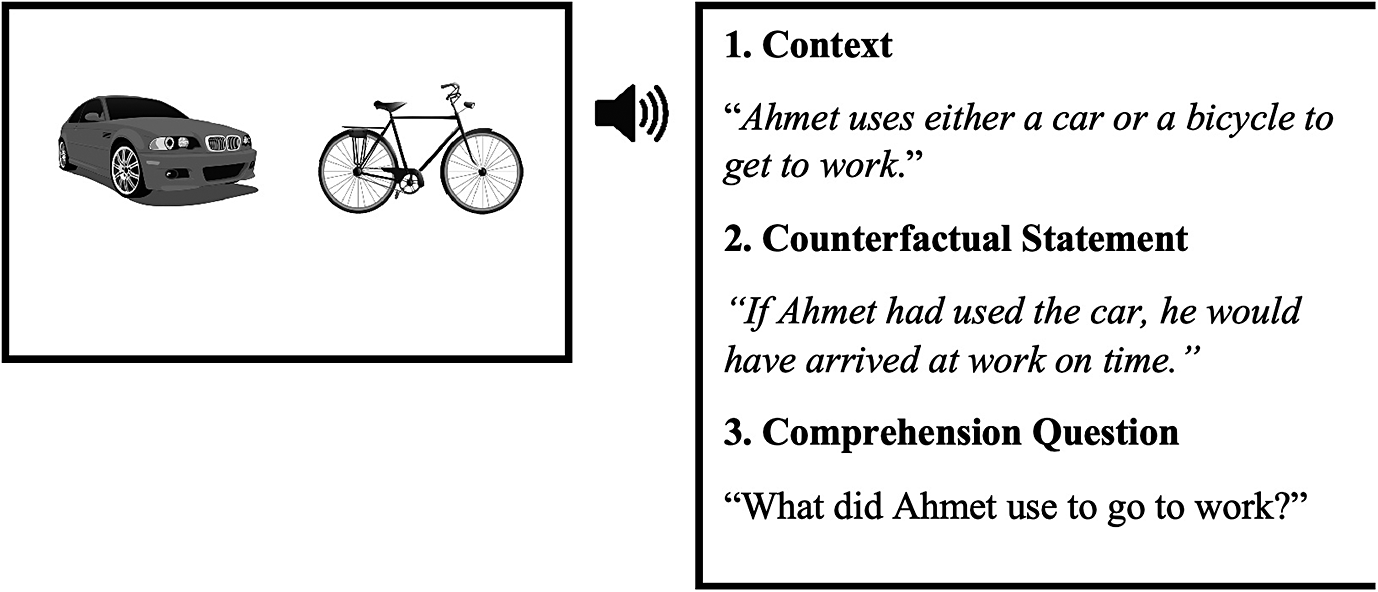



 Open access

