Introduction
Albendazole, a member of the benzimidazole group of anthelmintics, is highly effective against all stages of gastrointestinal nematodes including lungworms, cestodes and adult liver flukes in cattle, sheep and goats at different dose rates (Theodorides et al., Reference Theodorides, Gyurik, Kingsbury and Parish1976). Because of its aliphatic side chain, albendazole (methyl [5-(propylthio)-1H-benzimidazol-2 yl] carbamate) is more quickly metabolized in the liver following absorption than other sulphide benzimidazoles and its two metabolites, viz. albendazole sulphoxide and albendazole sulphone, appear and are eliminated more quickly from the vascular compartment, with a reduced area under concentration–time curve (Sanyal, Reference Sanyal1997) compared to other sulphide benzimidazoles with an aromatic side chain, e.g. fenbendazole (Sanyal, Reference Sanyal1994). In ruminants, benzimidazole anthelmintics are customarily deposited in the rumen following oral administration and become associated with the particulate digesta and released slowly to the liquid phase for absorption through the absorptive surfaces further down the tract (Hennessy et al., Reference Hennessy, Ali and Tremain1994). Following hepatic metabolism, the active metabolite and/or the parent drug undergo prolonged recycling between the enteral and parenteral tissues (Hennessy, Reference Hennessy1997). This recycling is of great pharmacological significance since the efficacy of benzimidazole anthelmintics is greatly influenced by the duration of their systemic availability (Prichard et al., Reference Prichard, Hennessy and Steel1978; Hennessy, Reference Hennessy1994). Passage from the rumen to the more acidic abomasum facilitates exchange of the drug from particulate to fluid digesta (Hennessy et al., Reference Hennessy, Ali and Tremain1994). As the mode of action of this class of anthelmintics suggests that the efficacy is principally dependent on time duration of contact of the parasite to the toxic concentration of the drug rather than the concentration alone (Hennessy, Reference Hennessy1997), altered physiology of the gastrointestinal tract might have some influence on systemic availability of the drug metabolites. Following disposition of the drug in the rumen, drug residence time in the body depends on the flow rate of the digesta. Gastrointestinal nematodosis causes inflammation in the gastrointestinal tract resulting in increased luminal peristalsis which in turn, decreases gastric transit time, resulting in decreased residence time, of the orally administered anthelmintics (Gregory et al., Reference Gregory, Wenham, Poppi, Coop, McRae and Miller1985). Altered pH of the abomasum influences solubility of albendazole and thus possibly influences the dissolution of the drug (Marriner et al., Reference Marriner, Evans and Bogan1984/85; Mathur et al., Reference Mathur, Sanyal and Sarkar1995).
The present study examined the effect of subclinical nematodosis by comparing the plasma metabolite profiles and anthelmintic uptake in parasitized and naïve goats following oral and intraruminal administration of albendazole.
Materials and methods
Animals
Local goats maintained in the College of Veterinary Science and Animal Husbandry, Anjora, Durg, India were used for the study without disturbing normal husbandry practices. They were maintained exclusively on grazing during the daytime with the provision of night shelter. No supplementary concentrate feed was offered to them. Twelve does of 2–4 years of age weighing 17.2–27.0 kg, were selected for the study.
Faecal egg counts and coproculture
Faecal samples were collected at monthly intervals for 4 months (February to May, 2006) and subjected to faecal worm egg counts by modified McMaster technique (Skerman & Hillard, Reference Skerman and Hillard1966). Pooled faecal samples were subjected to coproculture and the harvested infective third stage larvae were identified by morphology and morphometry and expressed as percentage of species present (Skerman & Hillard, Reference Skerman and Hillard1966).
Experimental design
The goats were assigned to two groups of six animals each, following balancing in age and sex. In the month of April, 2006, albendazole (Albendos, 2.5% w/v albendazole suspension, Dosch Pharmaceuticals Pvt. Ltd, Mumbai, India) was administered orally to six animals (group 1) and by intraruminal injection to another six animals (group 2) at the recommended therapeutic dose of 5.0 mg kg− 1 body weight in the morning following overnight fasting at night shelters, when their average faecal worm egg counts were around 250.00. After a wash-out period of one month, the same drug was readministered in both the groups of animals at the same dose regimen and routes of administration. Whole blood was collected from each goat by jugular venipuncture in heparinized vials (Vacutainer, Becton Dickinson Inc., California, USA) at 0, 2, 4, 8, 12, 16, 20, 24, 30, 36, 48 and 72 h post-dosing. Plasma was separated immediately and stored at − 20°C until analysed through high performance liquid chromatography (HPLC).
Solid phase extraction of plasma
Pure external standards (albendazole sulphoxide and albendazole sulphone) were supplied by M/S Smith Kline Beecham India Ltd, Bangalore, India. Pure internal standard, ethyl oxfendazole, was supplied by Dr D.R. Hennessy, CSIRO McMaster Laboratory, Sydney, Australia. Solid phase extraction of the plasma was done using a C18 Sep-pak cartridge (Waters Associates, Millford, Massachusetts, USA). Plasma (1 ml) spiked with 0.5 μg ethyl oxfendazole internal standard was applied to a C18 Sep-pak cartridge which had been preconditioned with 10 ml HPLC grade methanol and 5 ml Sep-pak buffer. Following elution with 10 ml water and 0.5 ml 40% methanol, the metabolites were collected in 2.5 ml of 100% methanol and evaporated under nitrogen gas to 300 μl before HPLC analysis.
HPLC analysis
The reverse phase HPLC (System Gold, Beckman Instruments Inc., San Ramon, California, USA), consisting of a 126 programmable solvent module, 166 programmable detector module set at 292 nm and a C18 4 μm Radial pak column contained in a radial compression module (RCM; Waters Associates, Millford, Massachusetts, USA), was run on isocratic mode using 33% acetonitrile in 0.025 m sodium acetate as the mobile phase, and 15 μl of the elute was injected to the column with a solvent flow rate of 1.0 ml min− 1 for 10 min. Identification of the metabolites in plasma was done by comparison with the retention times of reference standards. The absolute recovery rate was 97% wherein the precision of the extraction procedure and chromatography were evaluated by processing as replicates in different days, pooled plasma aliquots containing known amounts of albendazole sulphoxide, albendazole sulphone and ethyl oxfendazole in dimethyl sulphoxide (DMSO) at a concentration of 1000 μg ml− 1, from which working solutions of 0.125, 0.25, 0.5 and 1.0 μg 5 μl− 1 (external standards) were prepared in DMSO. Blank plasma was spiked with the external standards at five different concentrations of 0–1.0 μg to which 0.5 μg of the internal standard ethyl oxfendazole was added in each vial. The spiked plasma was extracted by solid phase extraction and dried down to 300 μl under nitrogen gas, and 15 μl of the same was injected into the column to enable calibration curves to be prepared over five different ranges of the two components. Concentrations of each component in the plasma extracts were determined by comparing the detector response for each component in the sample with the corresponding peak in the standard mixture. The limit of detection was 0.02 μg ml− 1.
Pharmacokinetic parameters
The maximum concentration (Cmax), time to Cmax (Tmax), area under concentration–time curve (AUC), absorption half life (t½ Ka), elimination half life (t½ β), volume of distribution (Vd) and other relevant kinetic parameters for albendazole sulphoxide and albendazole sulphone were determined using the non-linear modelling programme PHARMKIT (Sanyal, Reference Sanyal1994), which fitted the concentrations vs. time profiles at a first order input and output, two compartment model.
Statistical analysis
The plasma profiles of albendazole metabolites were analysed by analysis of variance using GraphPad Prism 4 software (Version 4.02, GraphPad Software Inc., 2004, USA). Mean values of pharmacokinetic parameters were compared for significance using the non-parametric Mann–Whitney test (GraphPad Prism 4 software Version 4.02, GraphPad Software Inc., 2004, USA).
Results
Faecal worm egg counts of the goats observed over 4 months are presented in table 1. Identification of third stage larvae following coproculture revealed 90% Haemonchus sp., 5% Cooperia sp. and 5% Trichostrongylus sp. When the drug was readministered, their mean faecal worm egg counts were 20 and 0 for oral and intraruminal groups, respectively.
Month-wise mean faecal worm egg counts in goats under experiment.

* Months of albendazole administration.
Using the described chromatographic conditions, albendazole sulphoxide, albendazole sulphone and ethyl oxfendazole were well resolved without interference from indigenous compounds with retention times of 3.95 ± 0.11, 5.72 ± 0.09 and 7.85 ± 0.10 min, respectively.
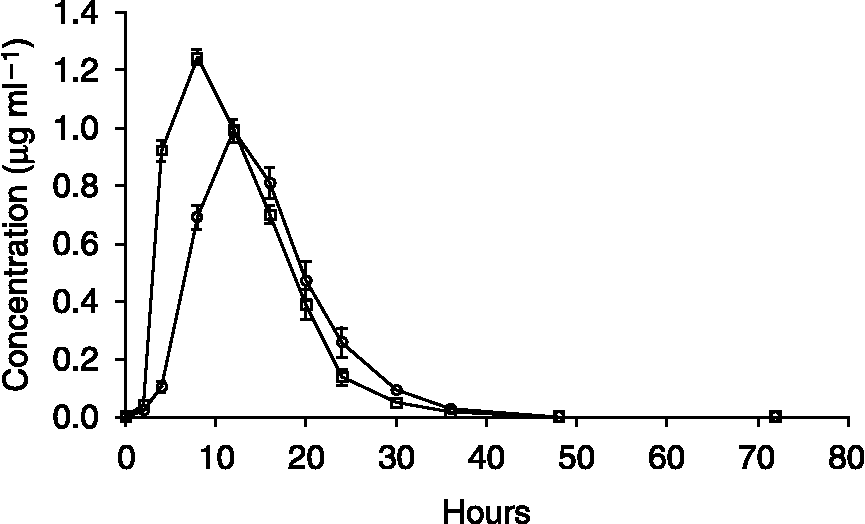
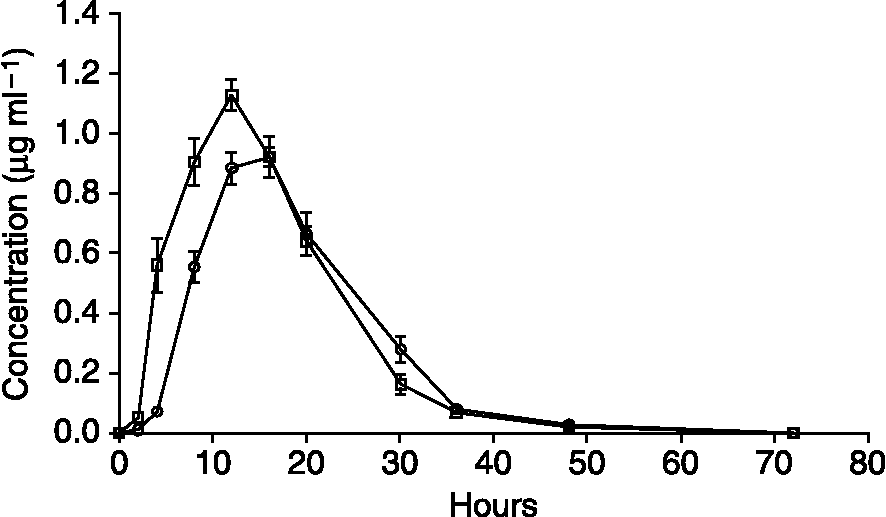
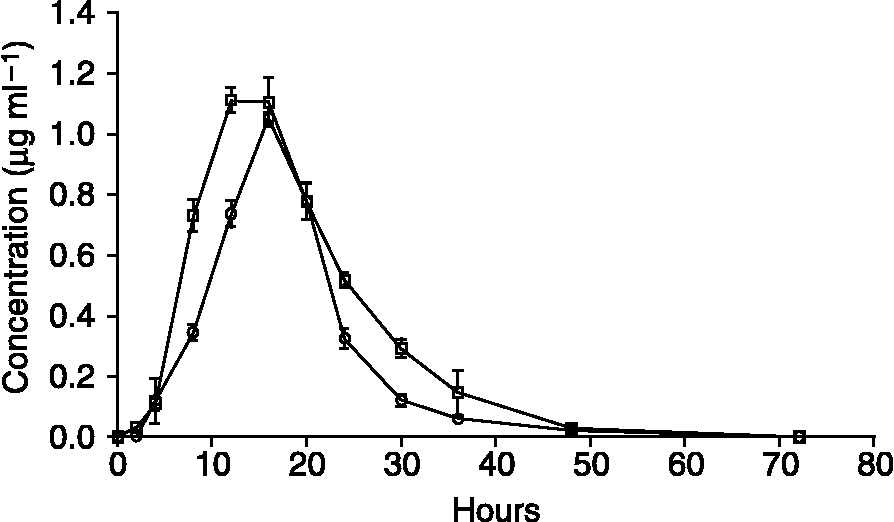
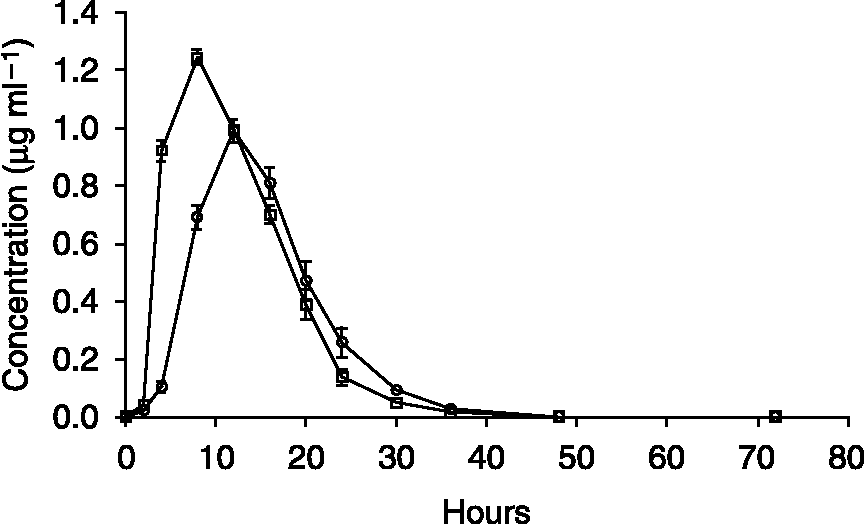
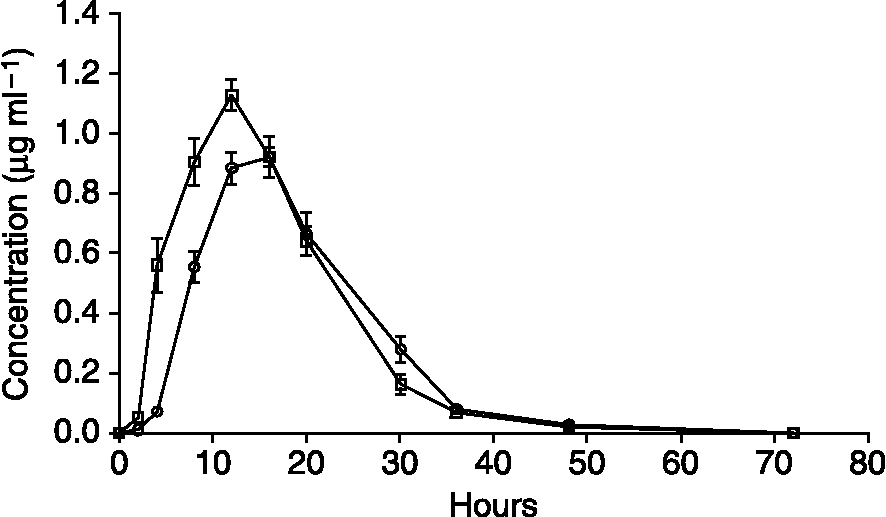
Mean plasma profiles of albendazole metabolites in goats subclinically infected with gastrointestinal nematodes following single oral and intraruminal administration of albendazole are presented in figs 1 and 2, respectively. Significant differences were observed on plasma concentrations of albendazole sulphoxide at 8 h and both albendazole sulphoxide and albendazole sulphone concentrations at 30 h (P < 0.05). Plasma concentrations of albendazole sulphoxide were higher compared to albendazole sulphone, which reached their peaks at 8 and 12 h and 12 and 16 h following administration by oral and intraruminal route, respectively. The metabolites appeared and were eliminated early in parasitized goats following the oral route of administration compared to the intraruminal route.
Plasma albendazole sulphoxide ( ) and albendazole sulphone (
 ) profiles (mean ± SEM) in goats subclinically infected with gastrointestinal nematodes following single oral administration of albendazole at 5.0 mg kg− 1 body weight.
Plasma albendazole sulphoxide () and albendazole sulphone () profiles (mean ± SEM) in goats subclinically infected with gastrointestinal nematodes following single intraruminal administration of albendazole at 5.0 mg kg− 1 body weight.
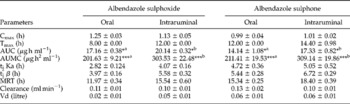
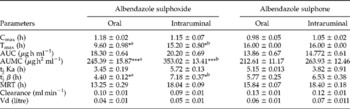
Pharmacokinetic parameters of albendazole sulphoxide and albendazole sulphone in the blood compartment of goats with subclinical levels of gastrointestinal nematodes following single oral and intraruminal administration of albendazole are presented in table 2. Route of administration has significant effect (P < 0.05) on area under concentration–time curves of both albendazole sulphoxide and albendazole sulphone in parasitized goats and the effect is far more pronounced in total area under the first moment of plasma drug concentration–time curve (AUMC; P < 0.001) of both the metabolites.
Pharmacokinetic parameters (mean±SEM) of albendazole metabolites in plasma of goats subclinically infected with gastrointestinal nematodes following single oral and intraruminal administration of albendazole at 5.0 mg kg−1 body weight.

Mean values in each metabolite with different superscripts represent significant differences (*P < 0.05; ***P < 0.001). AUC, area under concentration–time curve; AUMC, area under first moment of plasma drug concentration–time curve; Cmax, maximum concentration; MRT, mean residual time; t½ β, elimination half life; t½ Ka, absorption half life; Tmax, time to Cmax; Vd, volume of distribution.
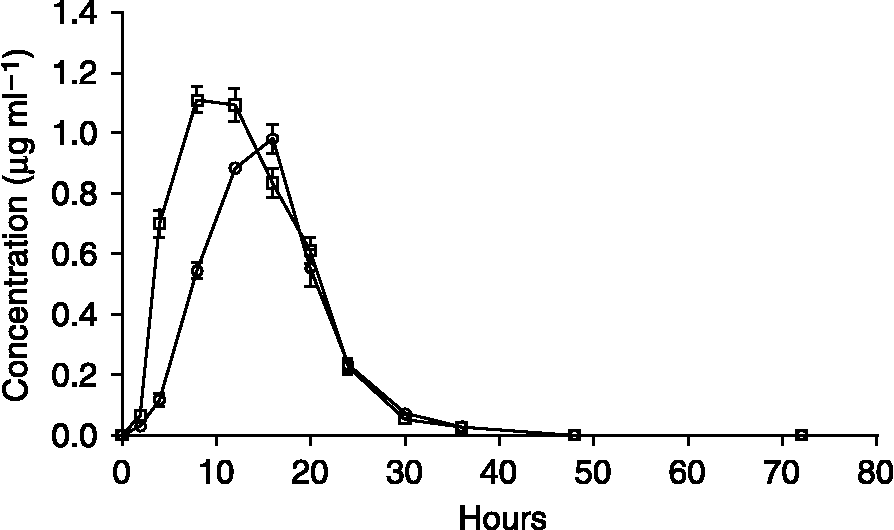
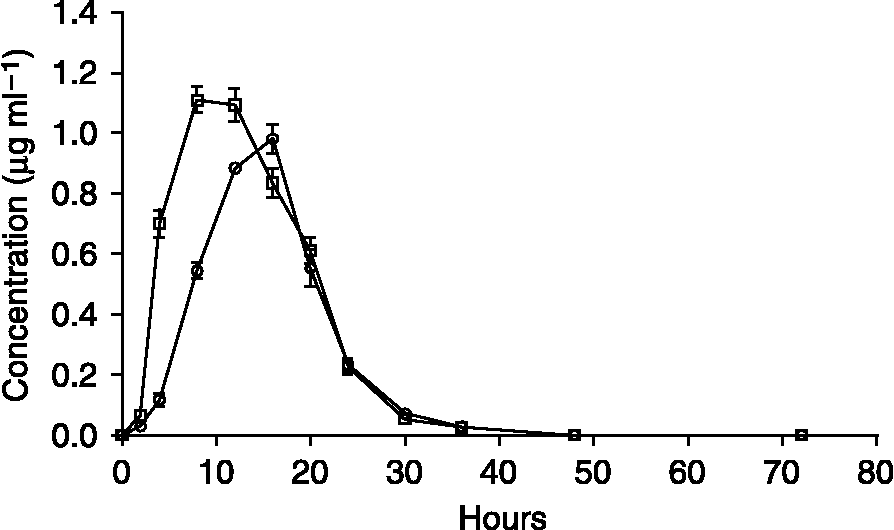
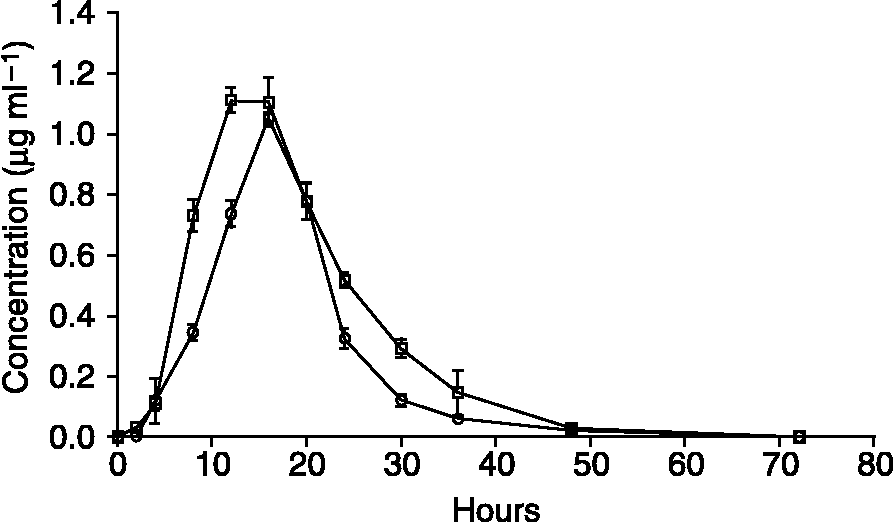
Mean plasma profiles of albendazole metabolites in naïve goats following single oral and intraruminal administration of albendazole are presented in figs 3 and 4, respectively. Route of administration revealed a significant effect (P < 0.05) on plasma concentrations of albendazole sulphoxide at 8, 30 and 36 h. Figure 3 demonstrates higher levels of albendazole sulphoxide compared to albendazole sulphone, which reached their peaks at 8 and 16 h by the oral route and at 12 and 16 h following the intraruminal route of albendazole administration (fig. 4). Albendazole sulphoxide appeared and was eliminated early in goats following the oral route of administration compared to the intraruminal route, while no such differences were observed for albendazole sulphone.
Plasma albendazole sulphoxide () and albendazole sulphone () profiles (mean ± SEM) in naïve goats following single oral administration of albendazole at 5.0 mg kg− 1 body weight.
Plasma albendazole sulphoxide () and albendazole sulphone () profiles (mean ± SEM) in naïve goats following single intraruminal administration of albendazole at 5.0 mg kg− 1 body weight.
Pharmacokinetic parameters of albendazole sulphoxide and albendazole sulphone in the blood compartment of naïve goats following single oral and intraruminal administration of albendazole are presented in table 3. Route of administration revealed a significant effect (P < 0.05) on Tmax and t½ β of albendazole sulphoxide and the effect is far more pronounced (P < 0.001) in AUMC. However, no significant influences were conferred by route of administration on any of the pharmacokinetic parameters of albendazole sulphone.
Pharmacokinetic parameters (mean±SEM) of albendazole metabolites in plasma of naïve goats following single oral and intraruminal administration of albendazole at 5.0 mg kg−1 body weight.

Mean values in each metabolite with different superscripts represent significant differences (*P < 0.05; ***P < 0.001). See table 2 for explanation of abbreviations.
Discussion
Parasitic gastroenteritis is regarded as a major impediment to profitable ruminant production. The haematophagous abomasal nematode, Haemonchus spp., is the dominant roundworm both in small and large ruminants in the developing tropical countries and the degree of infection is higher in grazing livestock than tethered animals (Sanyal, Reference Sanyal1996). Over the past 50 years, control of parasitic gastroenteritis in ruminants has been achieved predominantly by the use of anthelmintics in developed countries and increasingly so in the developing world. Sole reliance on anthelmintics has led to the emergence of resistant parasite strains, pest resurgence, environmental pollution, drug residues in food and food products and uneconomic animal production. Such problems are particularly severe in developing countries where drugs are poorly regulated and users often lack appropriate information and/or skills. For many of these farmers, the use of anthelmintics is becoming a rising and unreliable cost for farm animal production (Waller, Reference Waller1997).
Further, discovery of a new class of anthelmintics is very time and capital intensive and it is expected that a new drug with a different mode of action will not be available in the near future (McKeller, Reference McKeller1997). Therefore, the currently available chemical anthelmintics will continue to be used for parasite control. Thus, aims of the present day chemical control of parasites are to adopt technologies which maximize drug efficacy and avoid operations which compromise it. While repeated exposure of a parasite to an anthelmintic will ultimately contribute to the development of resistance, it is also essential to give the drug the best chance to work by taking actions that could prolong the effective life of these valuable resources.
The present observations suggested that goats maintained on the Chhattisgarh plain were always subjected to larval challenge even during the harsher months of February to May, resulting in maintenance of low-level subclinical nematodosis. As 5.0 mg kg− 1 body weight is the manufacturer's recommended therapeutic dose of albendazole for both sheep and goats in India, and widely used in the field, this dose was preferred over higher doses in goats.
The absence of parent albendazole in jugular plasma indicated that the drug was removed beyond the detectable limit from the portal blood by the liver. Albendazole was metabolized to the sulphoxide and sulphone metabolites by liver microsomal oxidation (Lanusse et al., Reference Lanusse, Gascon and Prichard1993; Sanyal, Reference Sanyal1997) in a similar manner to other sulphide benzimidazoles (Sanyal, Reference Sanyal1994, Reference Sanyal1995). The process of sulphoxidation of albendazole appeared to be rapid, as evidenced by the rapid appearance of the sulphoxide metabolite in the peripheral circulation of goats compared to that of sulphide benzimidazoles (Sanyal, Reference Sanyal1994, Reference Sanyal1995). Hennessy et al. (Reference Hennessy, Steel, Lacey, Eagleson and Prichard1989) attributed this to the presence of an aliphatic side chain in albendazole compared to an aromatic side chain in fenbendazole. Like other sulphide benzimidazoles, the sulphoxide metabolite is the component with potent nematocidal and flukicidal activity (Hennessy et al., Reference Hennessy, Steel, Lacey, Eagleson and Prichard1989). Albendazole metabolites could be completely extracted from plasma without pre-treatment with organic solvent, which is suggestive of their less avid binding with plasma proteins. Rapid metabolism and excretion of an aliphatic substituted benzimidazole like albendazole (Gyurik et al., Reference Gyurik, Chow, Zaber, Brunner, Miller, Villani, Petka and Parish1981) could possibly be explained by the appearance of substantially higher plasma concentrations of the two metabolites of albendazole with less protracted concentration–time curve compared to aromatic substituted benzimidazoles like fenbendazole, when similar administration routes were employed (Sanyal, Reference Sanyal1993, Reference Sanyal1994).
Interest focuses on the sulphoxide metabolite since, as with other sulphide benzimidazoles, this is the component with potent nematocidal activity (Hennessy et al., Reference Hennessy, Steel, Lacey, Eagleson and Prichard1989). The comparatively low plasma concentrations of albendazole sulphone might be due to rapid and extensive urinary excretion of albendazole sulphoxide prior to further oxidation, since the latter constitutes the major urinary metabolite in sheep (Gyurik et al., Reference Gyurik, Chow, Zaber, Brunner, Miller, Villani, Petka and Parish1981).
The uptake of albendazole in the infected goats with a substantially lower AUC and AUMC suggests that the biological availability of the active metabolite albendazole sulphoxide was reduced owing to the subclinical parasitism following oral administration. Chronic subclinical infection of Trichostrongylus colubriformis in sheep has been shown to be associated with a decreased transit time for the small intestinal digesta and increased abomasal fluid volume (Gregory et al., Reference Gregory, Wenham, Poppi, Coop, McRae and Miller1985). It has been suggested that this greater flow rate of the digesta reduces the residence time of albendazole sulphoxide at the absorption sites in the gastrointestinal tract. The intestinal villar atrophy associated with parasitism (Castro et al., Reference Castro, Badial-Aceves, Smith, Dudrick and Weisbrudt1976) could further reduce absorption and contribute to the lower systemic availability of albendazole sulphoxide in parasitized compared to non-parasitized hosts (Bogan et al., Reference Bogan, Benoit and Delatour1987).
Though Tmax and t½ β of albendazole sulphoxide are significantly higher in naïve goats dosed by the intraruminal route, insignificant AUC of both albendazole sulphoxide and albendazole sulphone between the groups suggests similar anthelmintic uptake of albendazole in goats administered by oral and intraruminal routes. However, the absence of differences in mean residual time (MRT), clearance and Vd suggests that the clearance of albendazole metabolites was similar for both the routes.
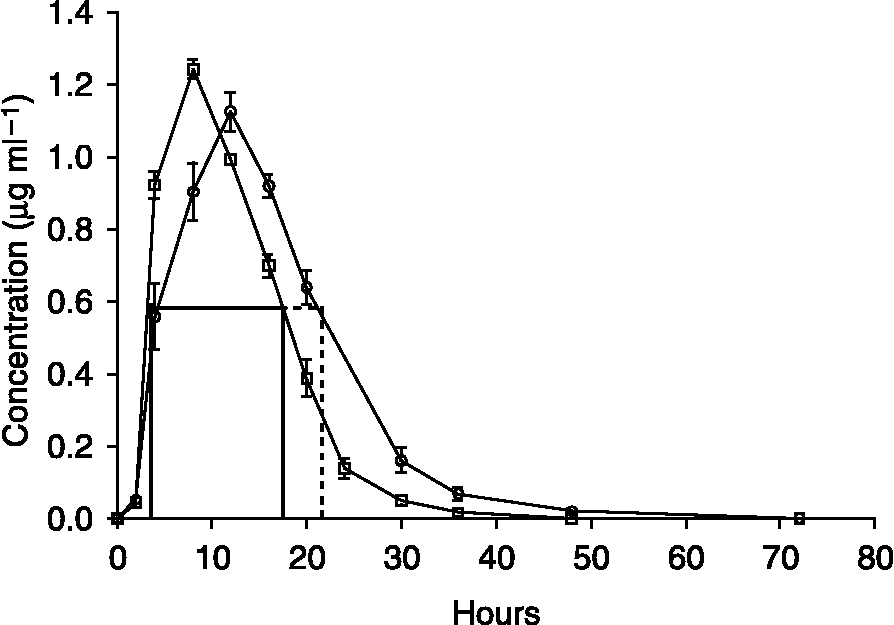
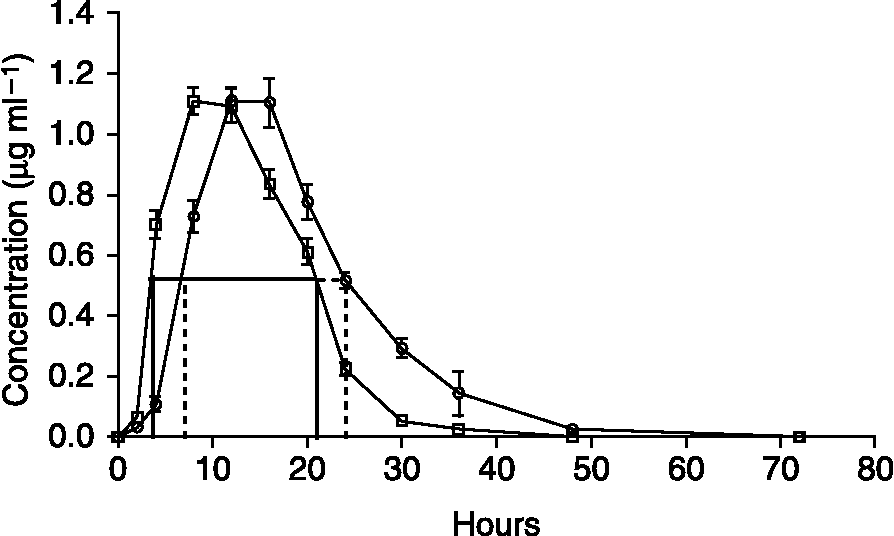
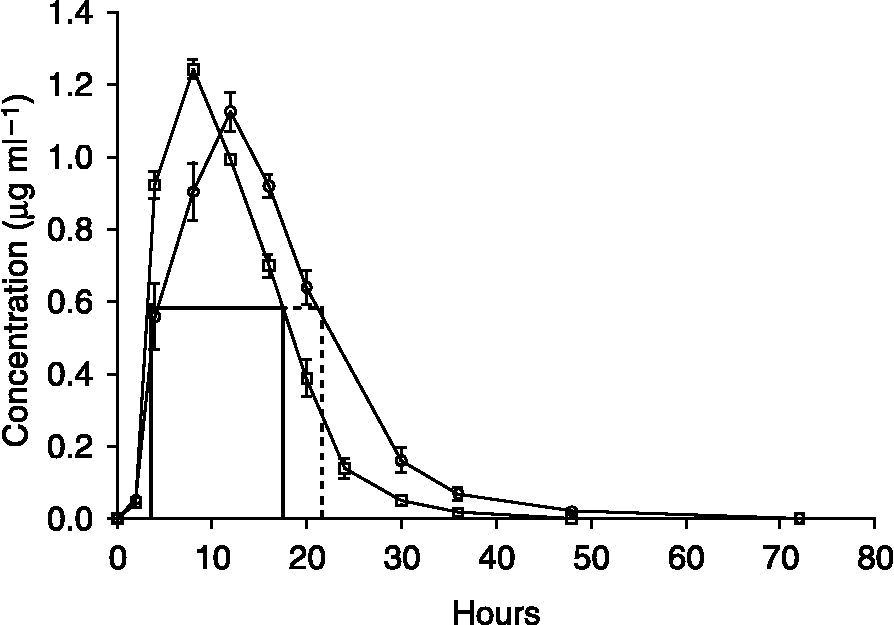
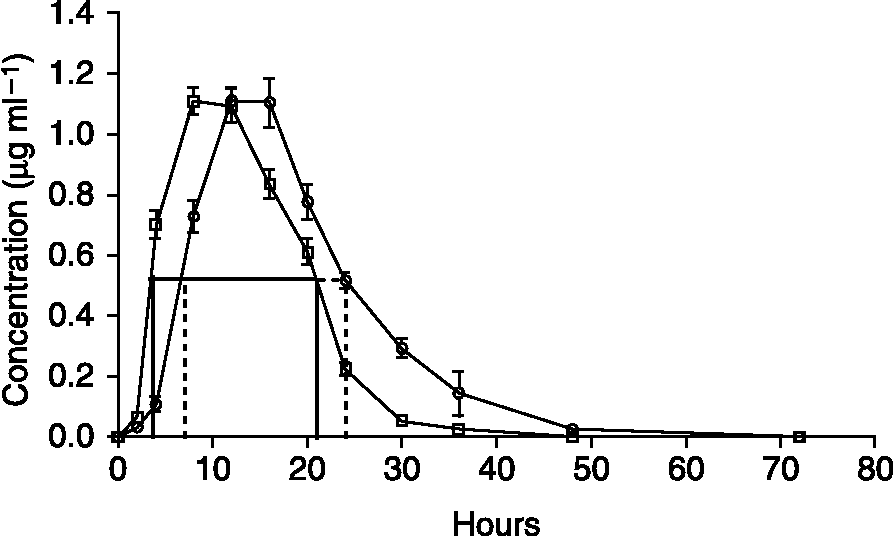
The efficacy and spectrum of activity of benzimidazole compounds are mainly determined by the time for which the parasites are exposed to a toxic concentration (Prichard et al., Reference Prichard, Hennessy and Steel1978). Hennessy (Reference Hennessy1994) proposed that the concentration of a metabolite of a benzimidazole compound in the appropriate compartment that is midway between zero and the maximun concentration achieved after administering a therapeutic dose may be regarded as the minimum toxic level for the parasite and that, for optimum results, this concentration should be maintained for as long as possible. The present study indicated that the midpoint for the pharmacologically active metabolite albendazole sulphoxide in the circulatory compartment of infected goats was about 0.6 μg ml− 1 and the period of exposure to this concentration was around 14 and 18 h by oral and intraruminal routes, respectively (fig. 5). As the time of exposure of parasites to the toxic concentration of the anthelmintic metabolite is prolonged, it may be assumed that intraruminal delivery of the drug will improve the efficacy of albendazole against resistant parasite strains as compared to the oral route (Prichard et al., Reference Prichard, Hennessy and Steel1978; Hennessy, Reference Hennessy1997; Swarnkar et al., Reference Swarnkar, Sanyal, Singh, Khan and Bhagwan1998). Results with naïve goats indicated that the midpoint for the pharmacologically active metabolite albendazole sulphoxide in the circulatory compartment was about 0.6 μg ml− 1 and the period of exposure to this concentration was around 16 and 17 h following oral and intraruminal route of administration, respectively (fig. 6). Therefore, contrary to the observations made by Swarnkar et al. (Reference Swarnkar, Sanyal, Singh, Khan and Bhagwan1998) in sheep, the present study revealed that the route of administration in goats has no significant effect on the duration of drug–parasite contact.
Period of exposure of the parasites to the proposed toxic concentrations of albendozole sulphoxide in the vascular compartment of parasitized goats following oral () and intraruminal () administration of a single therapeutic dose of albendazole at 5.0 mg kg− 1 body weight.
Period of exposure of the parasites to the proposed toxic concentrations of albendozole sulphoxide in the vascular compartment of naive goats following oral () and intraruminal () administration of a single therapeutic dose of albendazole at 5.0 mg kg− 1 body weight.
Acknowledgements
Facilities provided by the Dean, College of Veterinary Science and Animal Husbandry, Anjora, Durg, Chhattisgarh, India are thankfully acknowledged.