Introduction
Men’s involvement in antenatal care (ANC) services is imperative if pregnant women are to fully utilize and benefit from the services obtained (Kaye et al., Reference Kaye, Kakaire, Nakimuli, Osinde, Mbalinda and Kakande2014). In many societies, men, older women and families make decisions on when and where a woman should seek treatment and the type of services to use. This can affect women’s sexual and reproductive health and contribute to high incidences of reproductive disease, disability and death (Kinanee & Ezekiel-Hart, Reference Kinanee and Ezekiel-Hart2009). Many health systems require out-of-pocket payments, and this can limit women’s access to maternal health services and obstetric care, which are essential to overall maternal, newborn and child health (Yargawa & Leonardi-Bee, Reference Yargawa and Leonardi-Bee2015). The risk of a woman in a developing country dying from maternal-related causes during her lifetime is about 33 times higher than that of a woman in a developed country (Jungari & Paswan, Reference Jungari and Paswan2019). Factors contributing to this risk include: delay in making the decision to seek care, delay in accessing care and delay in receiving care due to a lack of decision-making power by women in their families. Therefore, male partners’ participation and support for sexual reproductive health service utilization is critical (Ditekemena et al., Reference Ditekemena, Koole, Engmann, Matendo, Tshefu, Ryder and Colebunders2012).
In developing countries, maternal health service utilization is poor compared with that in developed countries (Jungari & Paswan, Reference Jungari and Paswan2019). Research conducted in low- and middle-income countries has reported low male participation in maternal and child health matters (Ditekemena et al., Reference Ditekemena, Koole, Engmann, Matendo, Tshefu, Ryder and Colebunders2012; Clouse et al., Reference Clouse, Schwartz, Van Rie, Bassett, Yende and Pettifor2014). In Tanzania, several studies have reported low rates of male involvement in maternal health services (Msuya et al., Reference Msuya, Mbizvo, Hussain, Uriyo, Sam and Stray-Pedersen2008; MoHCDGEC, 2015; Vermeulen et al., Reference Vermeulen, Miltenburg, Barras, Maselle, van Elteren and Van Roosmalen2016) and one study reported that men did not wish to be actively involved in maternal health services (Maluka & Peneza, Reference Maluka and Peneza2018). Engaging men in ANC services is a significant entry point to improving maternal, neonatal and child health, addressing couples’ decision-making dynamics (Doyle & Kato-Wallace, Reference Doyle and Kato-Wallace2013) and also opening up opportunities to improve men’s own sexual and reproductive health, disrupt inter-generational cycles of violence and promote men’s roles as advocates for maternal neonates and child health (Doyle & Kato-Wallace, Reference Doyle and Kato-Wallace2013).
The involvement of men in maternal health services is influenced by multiple factors such as knowledge on the importance of the services, limited accessibility due to distance to health care facilities, cultural practices and traditions regarding pregnancy and child birth, attitudes of health care workers, waiting times at health care facilities and finances to pay for services and additional expenses including transport (Kwambai et al., Reference Kwambai, Dellicour, Desai, Ameh, Person and Achieng2013; Gibore et al., Reference Gibore, Bali and Kibusi2019a, b). Several studies have reported that men do not have the information to make informed decisions about maternal health and the roles they might play in promoting overall family health (Murthy et al., Reference Murthy, Ramachandar, Pelto and Vasan2002; WHO, 2012; Gibore et al., Reference Gibore, Bali and Kibusi2019a; Jungari & Paswan, Reference Jungari and Paswan2019). This is because sexual and reproductive health programmes and services have focused mainly on women (Rahman et al., Reference Rahman, Perkins, Islam, Siddique, Moinuddin and Anwar2018). Improving the way men are involved in reproductive health problems can enhance utilization of services and consequently have a positive impact on women’s, men’s and children’s health (Bustamante-Forest & Giarratano, Reference Bustamante-Forest and Giarratano2004).
However, men’s actual involvement in maternal health service utilization remains low in Tanzania (August et al., Reference August, Pembe, Mpembeni, Axemo and Darj2015). To understand why, men’s views on how they ought to be involved need to be sought. Studies conducted in Tanzania and Ghana have reported that men view they role mainly as financial providers (Reuben et al., Reference Reuben, Mbekenga, Dennis, Hurtig and Goicolea2017; Bougangue & Ling, Reference Bougangue and Ling2017; Maluka & Peneza, Reference Maluka and Peneza2018), but in some societies in these countries men take part in household chores (Bougangue & Ling, Reference Bougangue and Ling2017; Maluka & Peneza, Reference Maluka and Peneza2018), such as fetching firewood and fetching water; and in Tanzania they cultivate land (Reuben et al., Reference Reuben, Mbekenga, Dennis, Hurtig and Goicolea2017). In Tanzania and Ghana, they occasionally report taking care of their partners if other supporters are unavailable (Reuben et al., Reference Reuben, Mbekenga, Dennis, Hurtig and Goicolea2017; Bougangue & Ling, Reference Bougangue and Ling2017). Also, they can be involved in making decisions on whether to seek care from formal health care facilities, as reported in studies conducted in South Africa and the Ilala and Kongwa Districts of Tanzania (Morrell & Jewkes, Reference Morrell and Jewkes2011; Mbekenga et al., Reference Mbekenga, Pembe, Darj, Christensson and Olsson2013; Reuben et al., Reference Reuben, Mbekenga, Dennis, Hurtig and Goicolea2017). It has also been reported in Ghana and Tanzania that men are eager to be involved, but gender expectations stop them getting involved in maternity care as society have no room for men in such ‘feminine’ roles (Bougangue & Ling, Reference Bougangue and Ling2017; Gibore & Bali, Reference Gibore and Bali2020).
The Tanzanian Maternal and Child Health Policy advocates for the importance of involving men during the antenatal period, but there are no directives on how they can do this (MoHCDGEC, 2015). Previous studies in different parts of Tanzania have reported the involvement of men in various aspects of maternal care, including ANC attendance, birth preparedness, postnatal check-ups and financial support. However, there is gap in knowledge on how men view the way they can be involved in antenatal care. Therefore this study aimed to examine views and knowledge on, and challenges to, men’s involvement in ANC services in the Dodoma Region of Tanzania.
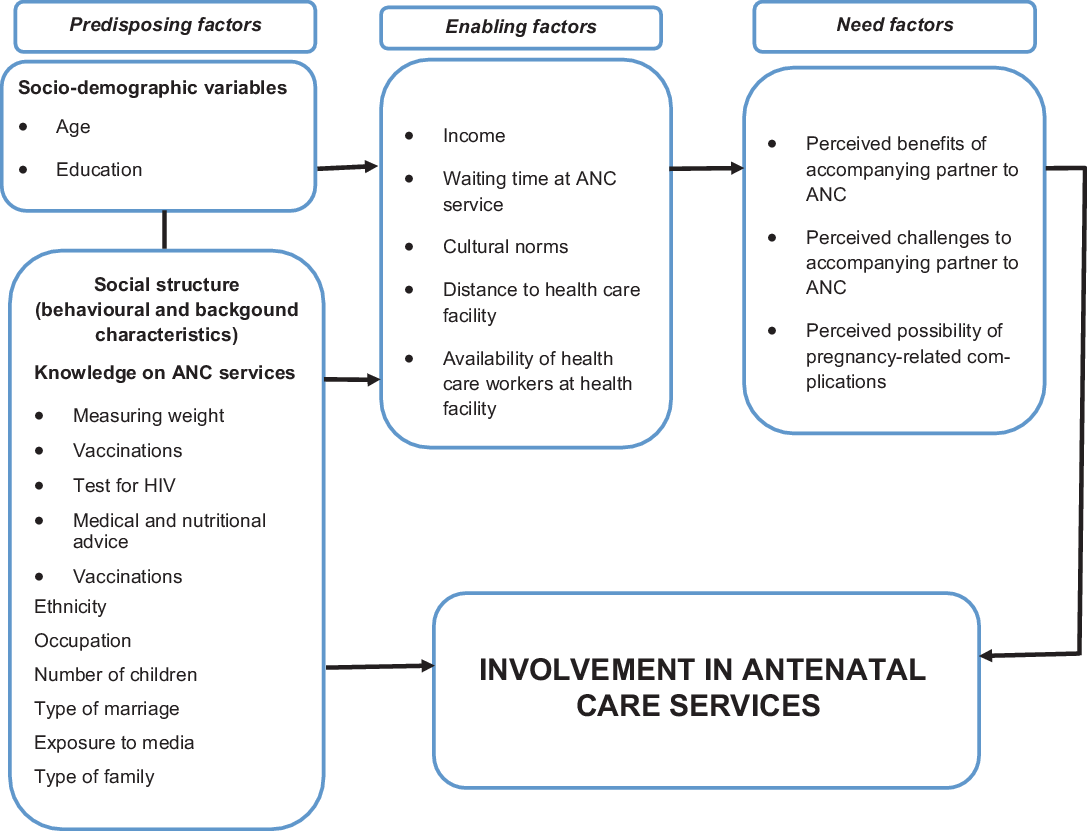
In order to explain the influence of knowledge on utilization of ANC services, the study adapted Andersen and Newman Behavioural Model (ANBM) for health service utilization as the conceptual framework for understanding the influence of health-seeking behaviour at individual and community levels (Andersen & Newman, Reference Andersen and Newman1973). The model has three constructs: predisposing, enabling and need factors. This model suggests that patients’ use of health services is a function of their predisposing characteristics before accessing health services, the factors and resources that enable or impede use of services, and their need for care, whether it be perceived or evaluated (Andersen & Newman, Reference Andersen and Newman1973). According to the ANBM for health care service utilization, predisposing factors are those socio-demographic characteristics and social structures of the individual that existed prior to their health condition, enabling factors reflect the means required to obtain the services (income, access to free services, availability of, and access to, the service) and need factors are the most immediate causes of health service use and reflect the perceived health status of the individual (Figure 1).
Conceptual framework for health care service utilization. Adapted and modified from the Andersen and Newman Behavioural Model for health service utilization (Andersen & Newman, Reference Andersen and Newman1973).
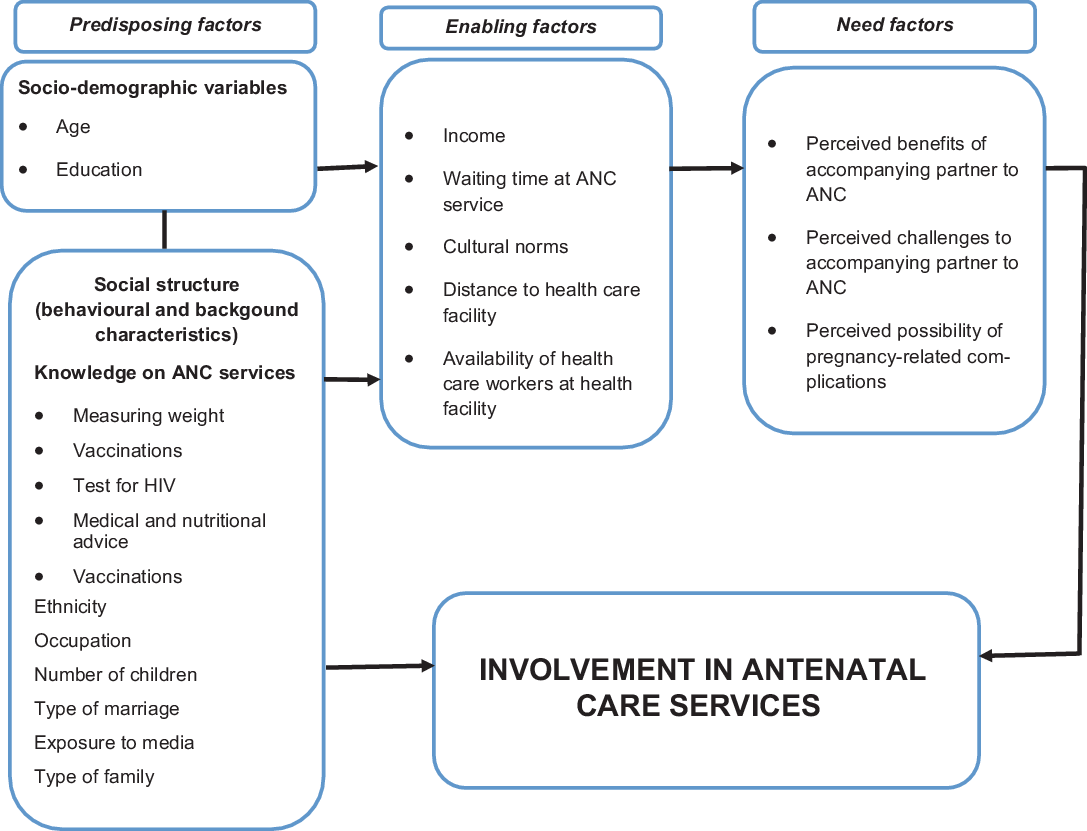
The health care service utilization model recognizes the role of knowledge in influencing male partners’ involvement in ANC services. Knowledge about the activities that are done during ANC and the perceived benefits of attending these services may affect the kind of perceptions a male partner may have about being involved in these. Increasing knowledge of ANC services, as well as improving accessibility, will lead to an increase in appreciation of the need to be involved in ANC services. This may shape the roles male partners play in caring for their pregnant partners, such as decisions on when and where to seek care, planning transport, exempting their partner from heavy work, accompanying her to health care facilities and supporting her emotionally and psychologically. Exposure to media campaigns about the importance of accompanying pregnant partners to ANC services and inspiration from other members of the community may influence men’s involvement. From the framework it can be predicted that knowledge of the activities conducted during ANC could result in a positive perception of involvement in services. In turn, the use of these services might result in desired behaviour change, which could lead to increased service utilization by women and consequently better maternal health outcomes. On the other hand, lack of knowledge about what is going on at ANC services may result in negative perceptions, hence perpetuating challenges to men’s involvement in ANC services.
Methods
Study settings
The study was conducted in Dodoma Region, located in the central part of Tanzania. It covers an area of 41,310 km2, with a population of 2,083,588 people and population density of 50 people per square kilometre (National Bureau of Statistics, 2013). Males make up 48.7% of the total population. The annual population growth rate is 2.1% with a sex ratio of 95 males to 100 females (National Bureau of Statistics, 2013). The region has seven districts, of which four districts were randomly selected for the study: Kondoa, Kongwa, Chamwino and Dodoma Municipality. The region’s health care service structure is made up of seven hospitals, 32 health centres and 269 dispensaries, most of which provide reproductive and child health services (National Bureau of Statistics, 2013).
Study design, participants and sampling procedure
A descriptive cross-sectional study design with a quantitative research approach was used. The study population included all men willing to participate in the study who had had a pregnant partner within the past 2 years and those whose partners had had a second pregnancy or more at the time of data collection. The study was conducted between November 2014 and June 2016. Sample size was estimated using the Kish Leslie formula based on the following assumptions: 95% confidence level, 39.2% estimated prevalence (findings from a previous study: August et al., Reference August, Pembe, Mpembeni, Axemo and Darj2016), a 5% margin of error and a design effect assumed to be 2.5 to cater for intra-cluster variability. The sample was further increased by 20% to account for non-response or recording error (Kish, Reference Kish1965). The estimated sample size was 1099 respondents. A multi-stage sampling technique was used to obtain a representative sample. In the first stage, all wards in the four districts were listed and then two wards in each district were randomly selected using the ballot method, which made a total of eight wards. In the second stage, all streets and villages in the selected wards were listed and then two streets in Dodoma Municipality and two villages in each three districts (Kondoa, Kongwa and Chamwino) were randomly selected (Gibore et al., Reference Gibore, Bali and Kibusi2019a). In stage three, a list of houses was obtained and then proportionate samples were drawn from each district. A systematic sampling technique with a starting point obtained using a table of random numbers was used to select the houses. In cases where more than one household was found in a house, one household was selected using a single one-time ballot. In the households, if a man had more than one partner with a child born within the past 2 years, the interview was conducted based on the information from the youngest child (Gibore et al., Reference Gibore, Bali and Kibusi2019a). Eligible men in the sampled household were approached to participate in the study, giving a final sample of 966 men.
Data collection
A pre-tested, structured, interviewer-administered questionnaire developed by the researchers was used to collect the data. This consisted of both open- and close-ended questions and was divided into two parts. The first part captured information on household socio-demographic variables. The second part assessed men’s involvement in ANC, knowledge on ANC services, views on how to be involved in ANC and challenges to involvement in ANC services. The questionnaire was prepared in English and translated into Swahili. To ensure accuracy in translation, the questionnaire was back-translated into English by two independent nursing officers who were familiar with ANC services in Dodoma. Pre-testing of the tool, which involved 100 men, was carried out at Ng’ong’hona village located in the Makulu Ward in Dodoma Municipality. The questionnaire was administered by eight trained research assistants who were community development workers from the four districts involved in the study.
Variables
The dependent variable ‘men’s involvement in (attendance at) ANC services’ was defined as men accompanying their pregnant partners to ANC services at least once, either for routine ANC check-ups or to receive any ANC service, and staying with their partners at the facility or in the consultation room while they received the service. The independent variables were based on Andersen and Newman Behavioural Model for health service utilization. These were divided into three categories: predisposing, enabling and need factors. Predisposing factors included socio-demographic variables (age and education level) and social structure (background and behavioural characteristics), which included knowledge on ANC services, ethnicity, occupation, number of children, type of marriage and media exposure. ‘Knowledge on ANC services’ was measured by asking participants to mention at least five services that are offered to pregnant women at antenatal clinics. Each correct response was given a score of 1, and 0 for a wrong answer or ‘no response’. The cumulative scores were used to calculate the mean score, which was in turn used as a cut-off. Scores that were equal to or above the mean were regarded as ‘good knowledge’ and those below the mean ‘poor knowledge’. Enabling factors were: income and waiting time to receive services at an ANC clinic. Need factors were: men’s views on their involvement in ANC and perceived challenges to involvement. Men’s views and challenges to their involvement in ANC were explored by asking participants to explain how they thought they could be involved and the challenges they faced when they were involved in ANC. The responses were quantified and grouped according to the meaning they portrayed.
Analysis
Data were analysed using SPSS Version 21.0. Univariate analysis was performed to obtain frequencies and percentages, which were used to describe the findings. A Chi-squared test was performed to draw out possible associations between involvement in ANC services and the background characteristics of respondents. Bivariate and multivariate logistic regression analyses were used to estimate the association of predictors of men’s involvement in ANC services. Significance set at p<0.05.
Results
Demographic and behavioural characteristics of men using ANC services
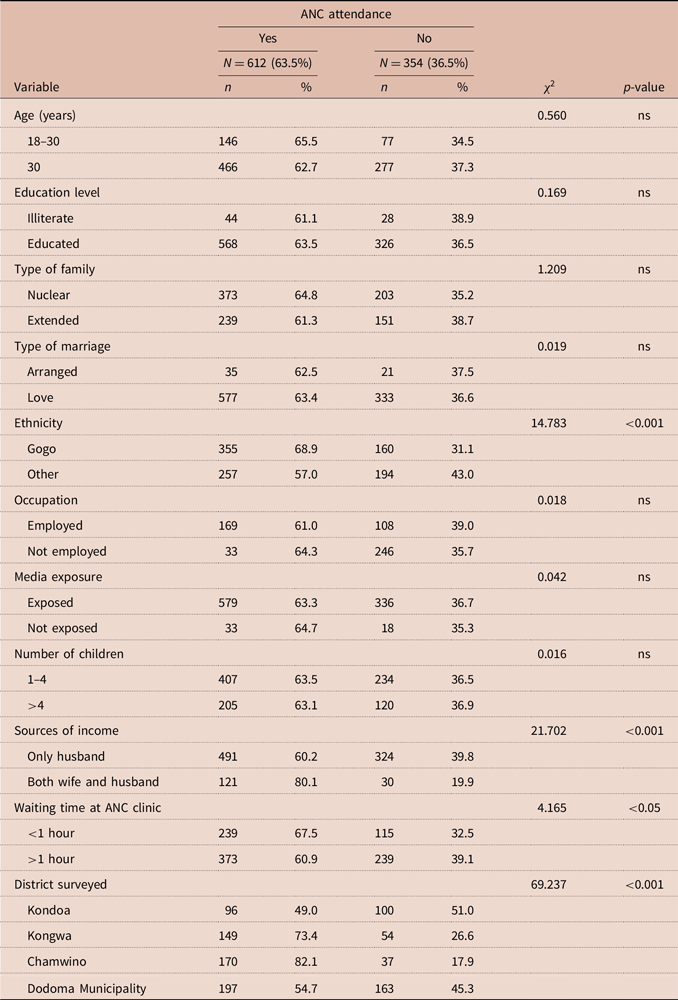
Table 1 summarizes men’s reported attendance at ANC services with their pregnant partners by background, demographic and behavioural characteristics. Overall, more than half of the men (612, 63.5%) reported attending ANC services at least once, either by accompanying their partners to their first ANC visit for the purpose of testing for HIV or for a routine ANC check-up. The remaining 354 (36.5%) did not report any ANC service attendance. The majority of the respondents (743, 76.9%) were over 30 years of age, and of those 466 (62.7%) reported attending ANC services with their partners. Among educated men, more than half (568, 63.5%) reported ANC service attendance. More than half of men who had nuclear families (373, 64.8%) reported attending ANC services with their partners. Also, more than half of those with love marriages (577, 63.4%), who were unemployed (33, 64.3%) and without media exposure (33, 64.7%) reported attending ANC services with their partners. Men in two-income families were more likely (121, 80.1%) to report attending ANC services than those from families where they were the sole providers (491, 60.2%) (χ 2=21.702, p<0.001). Men from the Gogo ethnic group (355, 68.9%) were more likely to attend ANC services than men from other ethnic groups (257, 57.0%) (χ 2=14.783, p<0.001). There was a significant difference in attendance at ANC services between men who reported spending less than an hour (239, 67.5%) and men who reported spending more than an hour (373, 60.9%) at ANC clinics during visits (χ 2=4.165, p<0.05). Men from Kongwa District (149, 73.4%) and Chamwino District (170, 82.1%) were more likely to report attending ANC services than their counterparts in the other surveyed districts (χ 2=69.237, p<0.001).
Men’s ANC service attendance with their pregnant partners by background, demographic and behavioural characteristics
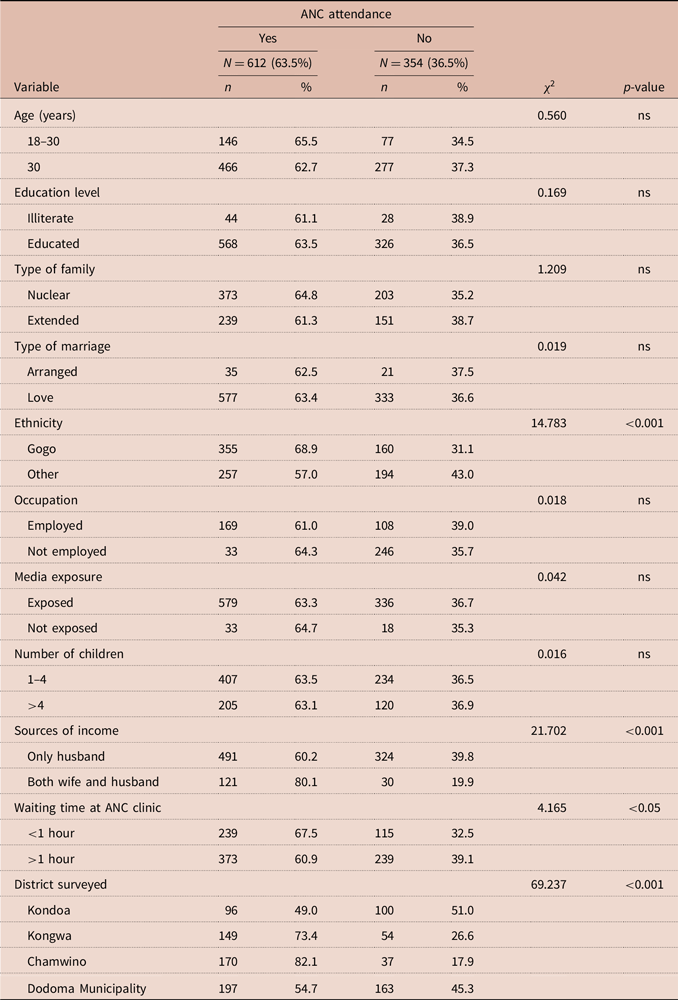
ns = not significant.
Men’s knowledge on services offered to their partners during ANC
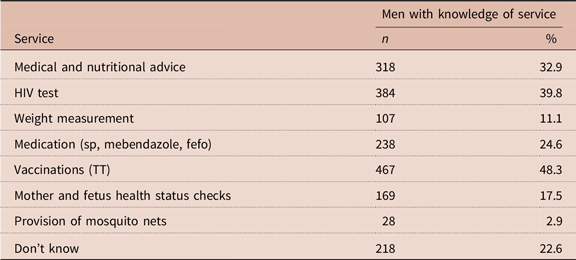
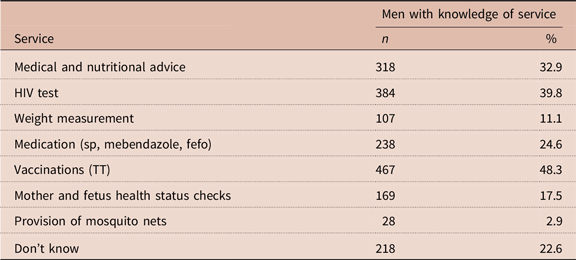
Table 2 shows that less than half of men knew that pregnant women received nutritional advice (32.9%), that HIV testing services are offered to both partners (39.8%) and that Tetanus Toxoid (TT) vaccination advice is given to pregnant women (48.3%). Nearly a quarter (24.6%) knew about ANC services offering intake of iron and folic acid tablets, anti-malaria prophylaxis and anti-helminthiasis tablets (medications). Less than a quarter of men knew about measuring weight (11.1%), checking the health status of the mother and unborn baby (17.5%) and provision of insecticide-treated nets (2.9%); 22.6% did not know any kind of service offered at ANC. More than half of respondents (66%) had ‘poor’ knowledge and about 34% had ‘good’ knowledge of ANC services.
Men’s knowledge on services offered to their partners at ANC clinics
Multiple responses.
sp = sulfadoxine pyrimethamine tablets; fefo = ferrous and folic acid tablets; TT = Tetanus Toxoid vaccine.
Men’s views on how they should to be involved in ANC
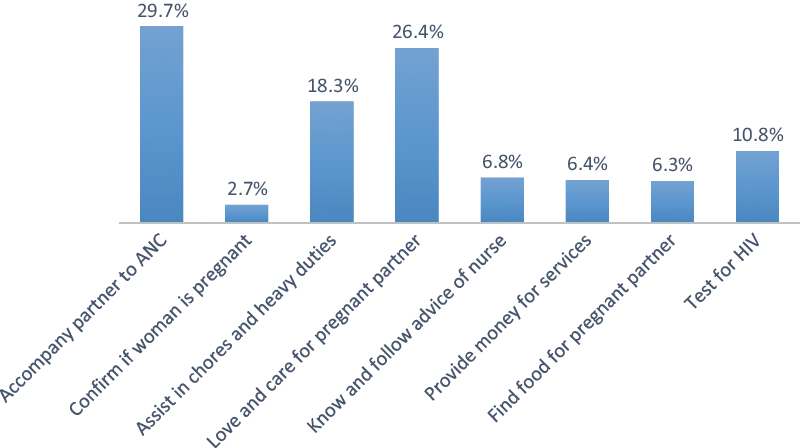
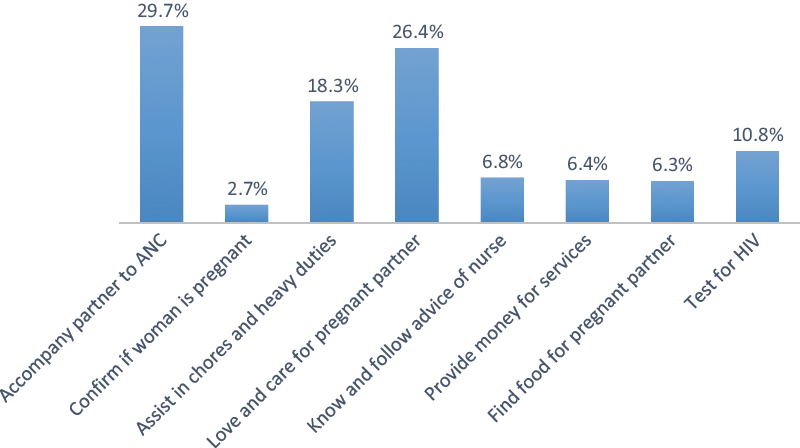
Seventy-five per cent of respondents (728) considered that a man is supposed to be involved in antenatal care: 29.7% said they can be involved by accompanying their partner for routine ANC, and 10.8% said that they can be involved through testing for HIV. Less than a quarter (6.4%) said they can be involved by providing money for services, 18.3% said they can assist in household chores and perform heavy duties, 2.7% reported that they should be involved in confirming if a woman is pregnant, 6.8% thought men should know and follow the advice given by a nurse and the same percentage reported that men should be involved in finding food for their pregnant partner. About a quarter (26.4%) said they can be involved by loving and taking care of their pregnant partner (Figure 2).
Percentage distribution of men’s views on how they should be involved in antenatal care.
Challenges facing men during involvement ANC services
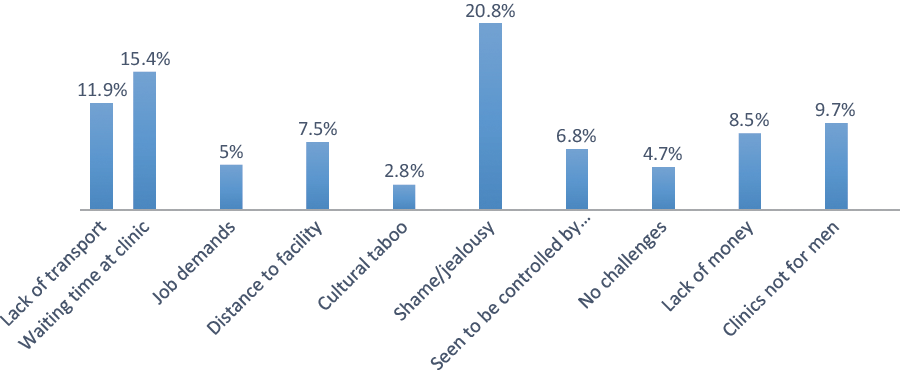
The challenges encountered by men when involved in ANC services were: clinics are not perceived to be places for men (9.7%), financial difficulties (8.5%), work demands (5%), lack of transport (11.9%), long waiting time at health care facilities (15.5%), long distance to health care facilities (7.5%), those men who are supportive to their pregnant partners are perceived as being jealous of their partners (20.8%) or being controlled by their female partners (6.8%) and the cultural taboo (6.8%) that pregnancy and child birth are female domains, and as such men are not expected to be involved in seeking care for their wives and children (2.8%) (Figure 3).
Percentage distribution of challenges reported by men during involvement in ANC services.
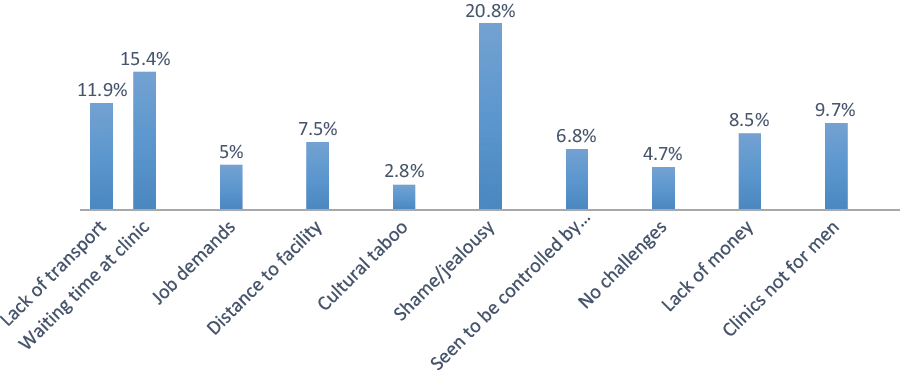
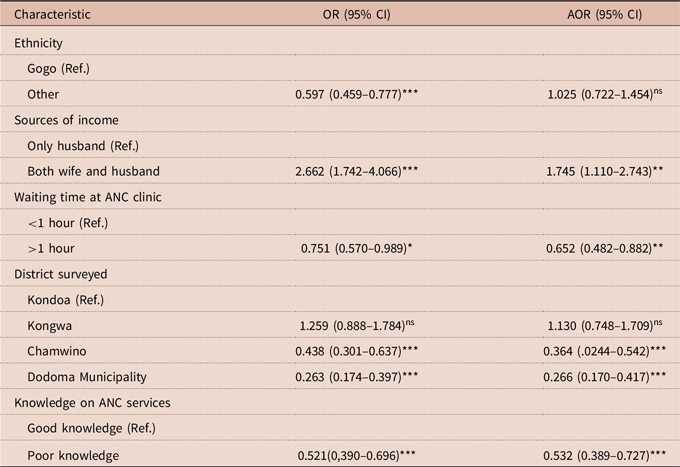
Table 3 shows the bivariate and multivariate logistic regression analysis for the factors associated with men’s involvement in ANC services. The variables that were found to be significant after Chi-squared analysis were subjected to bivariate and multivariate logistic regression analysis to estimate their independent association. After controlling for confounding variables (age, education, number of children, media exposure, type of marriage and occupation), the variables that remained statistically significant were: knowledge on ANC services, long waiting time to receive services at ANC clinics, source of income in the family and district surveyed. Men who had poor knowledge on ANC services had decreased odds of attending such services (AOR=0.532, 95%CI=0.389–0.727, p<0.001). Likewise, long waiting times to receive services at ANC clinics decreased the odds of service attendance (AOR=0.652, 95%CI=0.482–0.882, p<0.01). In households with a dual source of income, men were more likely to attend ANC services compared with households where men were the sole providers (AOR=1.745, 95%CI=1.110–2.743, p<0.01). Men from Kongwa District had greater odds of attending ANC services than those from other districts (AOR=1.259, 95%CI=0.888–1.784, p<0.001).
Bivariate and multivariate logistic regression analysis of men’s involvement in their partner’s ANC service utilization by background characteristics
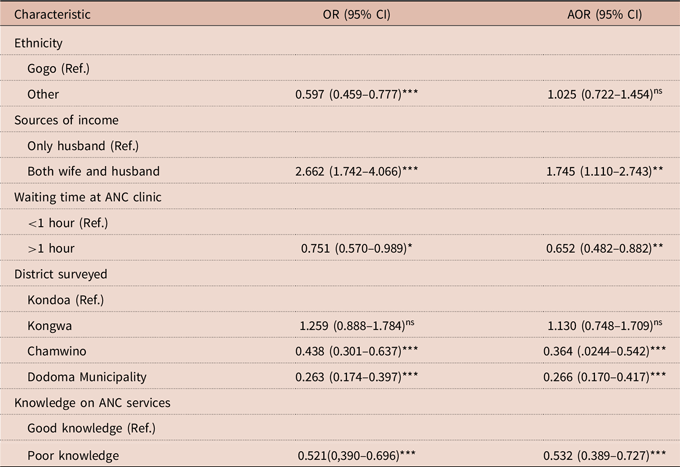
Ref. = reference category; OR = Odds Ratio; AOR = Adjusted Odds Ratio (adjusted for age, education, number of children, media exposure, type of marriage and occupation).
*p<0.05; **p<0.01; ***p<0.001; ns = not significant.
Discussion
Antenatal clinics create a good opportunity for service providers to impart essential knowledge on maternal health issues to expecting couples. Involving men in maternal health care services improves the likelihood of women using services, which may lead to decreased rates of maternal depression, increased maternal self-esteem and decreased possibility of childbirth complications (Yargawa & Leonardi-Bee, Reference Yargawa and Leonardi-Bee2015). In this study in the Dodoma Region of Tanzania, 63% of the respondent men reported attending ANC services at least once with their partners – either the first ANC visit for HIV testing or a routine ANC check-up. The few men who were keen to participate had the view that they could be involved in ANC by: accompanying their partners to ANC, assisting in household chores and heavy work, providing financial and emotional support, HIV testing, finding food for their pregnant partner, implementing the advice given by health care providers and confirming that their partner is pregnant. This implies that perceived need for care may trigger men to participate and provide necessary support to their partners during the antenatal period.
The findings of this study are in agreement with those of other studies conducted in Asembo in western Kenya, Limpopo Province in South Africa and the Dodoma Region of Tanzania, which found that men can be involved by accompanying their partners to ANC, arranging transport and performing domestic duties that might be hard to do during pregnancy, such as fetching water, splitting firewood and cultivating land (Kwambai et al., Reference Kwambai, Dellicour, Desai, Ameh, Person and Achieng2013; Nesane, et al., Reference Nesane, Maputle and Shilubane2016; Gibore & Bali, Reference Gibore and Bali2020). The study conducted in Asembo Kenya also found that men could be involved through purchasing additional food for their wife to supplement her diet and by providing emotional and financial support (Kwambai et al., Reference Kwambai, Dellicour, Desai, Ameh, Person and Achieng2013). Maluka and Peneza (Reference Maluka and Peneza2018), in their study in Masasi District Tanzania, and Gibore and Bali (Reference Gibore and Bali2020) in their study in Dodoma Tanzania, also found that men can be involved by providing financial and emotional support to their pregnant partners. However, the present study differs from previous studies in Limpopo Province in South Africa and Masasi District in Tanzania, which found that some men were not ready to be involved in ANC because they considered it to be a place for women and there was nothing they could do there (Nesane et al., Reference Nesane, Maputle and Shilubane2016; Maluka & Peneza, Reference Maluka and Peneza2018). Health care providers need to create community awareness on the importance of male involvement in ANC services so that they can gain an understanding of their role during the antenatal period.
The study found that the majority of men in the study region had poor knowledge on ANC services. This finding concurs with the finding from the study conducted in Limpopo Province, South Africa, by Nesane et al. (Reference Nesane, Maputle and Shilubane2016), who found that participants’ knowledge about pregnancy was limited, but differed from Nasreen et al. (Reference Nasreen, Leppard, Al Mamun, Billah, Mistry, Rahman and Nicholls2012), who found that men in Bangladesh had universal knowledge on ANC services. The differences observed in knowledge in these studies could be due to the effect of cultural differences related to pregnancy care practices in African and Asian culture, as well as differences in the implementation of men’s involvement by the different national health systems in these countries. Men who had poor knowledge on ANC services were less likely than men with good knowledge to be involved in ANC services. This suggests that the lack of knowledge on services provided during ANC visits is a barrier to men’s positive involvement in ANC. Another study in Maharashtra, India, by Jungari and Paswan (Reference Jungari and Paswan2019) found that men with complete knowledge of maternal health issues were more likely to attend all available maternal health services with their wives.
According to the Andersen and Newman Behavioural Model (ANBM), knowledge is an important factor in adopting a health behaviour or utilizing a health care service (Andersen & Newman, Reference Andersen and Newman1973), and indeed, male partners’ poor knowledge of ANC services observed in the present study did influence their level of involvement. The fact that most men were not knowledgeable about the services offered to their pregnant partners during ANC visits underscores the general view of men in this study that ANC clinics are places for women, and that men who accompany their partners could be jealous of their partners or wish to control them. As a result most men do not see the importance of knowing the services that are offered as they consider it a women’s issue. Therefore, educating men on the services that are offered at ANC visits – particularly on potential maternal health problems and pregnancy complications – is important to achieve higher ANC service attendance by both partners. This is because when it comes to the issues of health care seeking and reproductive health concerns, men are the primary decision-makers in the family in Tanzania.
According to the ANBM, income and short waiting times at ANC clinics are enabling factors for utilization of ANC services. This study found that an increased wait at ANC clinic decreased the odds of men’s service attendance, probably because of their work commitments. Men who are employed need permission to have time off work, and those who are self-employed cannot afford to forgo a day’s wages. A study in Limpopo Province in South Africa reported that most men were willing to learn about their expected roles during childbirth and were eager to support their partners but found the health system to be unwelcoming, intimidating and unsupportive (Nesane et al., Reference Nesane, Maputle and Shilubane2016). Other studies in the Democratic Republic of Congo, Ibadan in Nigeria and Dodoma Region in Tanzania reported that men in paid jobs are generally not able to spend almost an entire day attending ANC clinics (Ditekemena et al., Reference Ditekemena, Matendo, Koole, Colebunders, Kashamuka and Tshefu2011; Falade-Fatila & Adebayo, Reference Falade-Fatila and Adebayo2020; Gibore & Bali, Reference Gibore and Bali2020). To address this, clinic hours should be extended beyond the working day and into weekends.
Source of income in the family was also found to be associated with male partners’ involvement in ANC services, with men who were sole earners being less likely to attend services than those whose partner also earned a living. Although maternal health care services are offered free in government health facilities in Tanzania, additional costs associated with use of services, such as transport and food expenses for two people, might not be affordable, making it challenging for both partners to attend services. Some men in Dodoma, Tanzania, think it is wise to use the little money they do have on the pregnant woman attending ANC because she is the one who will benefit most from the service (Gibore & Bali, Reference Gibore and Bali2020). A study conducted in rural Tanzania found that lack of transport, long distances and informal out-of-pocket expenses influenced accessibility of health facilities and created barriers for both men and women attending ANC (Vermeulen et al., Reference Vermeulen, Miltenburg, Barras, Maselle, van Elteren and Van Roosmalen2016). Jungari and Paswan (Reference Jungari and Paswan2019), in their study in India, found that husbands who were poor were less likely than those who were richer to report attending ANC with their wives. Kululanga et al. (Reference Kululanga, Sundby and Chirwa2011) and Tweheyo et al. (Reference Tweheyo, Konde-Lule, Tumwesigye and Sekandi2010) reported similar findings in Africa. Thus health care providers, programme planners and implementers of maternal health issues need to consider the accessibility of services, and preferably make them within walking distance.
Perceived social stigma may prevent men from attending ANC services with their pregnant partners. In this study, peer pressure, coupled with gossip and disdain for men who accompany their pregnant partners to ANC services, acted as obstacles to men attending ANC services. The fact that ANC service providers focus specifically on women and children creates a perception that ANC is for women and children only, as men are not seen to benefit from the services. Socio-cultural practices and community beliefs establish gender roles and responsibilities in a society, which then create a barrier to men getting involved in ANC issues because of the view that it is exclusively a woman’s affairs. This finding is in keeping with those of Nesane et al. (Reference Nesane, Maputle and Shilubane2016), who concluded that maternal health issues were viewed as women’s matters in Limpopo Province, South Africa, observing that there was minimal expectation of men’s involvement because these were women’s issues. Craymah et al. (Reference Craymah, Oppong and Tuoyire2017) reported that in Ghana prohibitive cultural norms and gender roles play a role in low male involvement in maternal health care, with men risking social mockery and stigma if they are seen by their peers accompanying their partners to ANC (Aborigo et al., Reference Aborigo, Reidpath, Oduro and Allotey2018). Therefore, targeted interventions addressing these cultural practices that hinder male involvement in maternal health issues are required in Tanzania.
The survey districts of Kondoa, Chamwino and Kongwa are less developed socioeconomically than Dodoma Municipality, which is more urbanized. Men residing in Kongwa were more likely to attend ANC services than those from other districts. This was a surprising finding as rural health care facilities are located further away, transport services are unreliable and families have limited resources to afford transport and other needs. All these factors can limit men’s involvement in ANC services. It was expected that men residing in the more urbanized area of Dodoma Municipality would use services more than those from other districts, because the health care facilities are easily accessible. A possible explanation for this unexpected finding is that the rural areas of Dodoma have outreach programmes, such as the Mwanzo Bora Nutrition Project and Mother and Child Health Information System, which may have exposed men to the important information needed to create awareness and consequently influenced their involvement in ANC services. Another possible explanation could be that, in Kongwa District, women are given invitation cards inviting them to bring their male partners to their next clinic visit. These reinforce the idea that men have a place at ANC facilities, thereby improving men’s involvement. Invitation cards/letters have been suggested as a potential approach to promoting male involvement in ANC services in Johannesburg, South Africa (Yende et al., Reference Yende, Van Rie, West, Bassett and Schwartz2017). Theuring et al. (Reference Theuring, Jefferys, Nchimbi, Mbezi and Sewangi2016), in their study in Mbeya, Tanzania, found that the coaching of pregnant women on how to invite their partners, followed by written invitations, increased the number of men who attended ANC with their partners. Thus, education and communication materials may be an effective strategy for increasing men’s utilization of ANC services in the country.
The study had its limitations. The main limitation was that the only service accessibility factor considered was family source of income. However, many other factors affect service accessibility, including the availability of health services, the availability of capable, qualified and culturally competent health care providers and the availability of drugs and medical supplies.
In conclusion, the study found that men’s level of involvement in ANC in the Dodoma Region of Tanzania was more influenced by their perceived responsibility to their pregnant partners than their knowledge about ANC services. Poor knowledge about what is going on at ANC services means men cannot recognize the importance of attending the services with their partners. Poor knowledge could be a result of cultural practices, which view ANC as being for women, acting as a barrier to men attending services with their pregnant partners. However, financial difficulties, the influence of peer pressure and lack of time due to job demands were also shown to be barriers to men’s attendance at ANC services in the study context. These challenges, if not addressed, will affect the country’s aim to involve men in maternity health and thus attain the Sustainable Development Goal 3. Health care facilities and programme planners need to establish community outreach ANC clinics offering couple-friendly counselling services (including services that specifically target men), provide education on maternal health issues and address the cultural practices that hinder male involvement in ANC services.
Acknowledgments
The authors gratefully acknowledge the voluntary participation of the male respondents in the study and thank the University of Dodoma for permission to conduct the study. Thanks also go to the field-work team for their assistance.
Funding
This research received no specific grant from any funding agency, commercial entity or not-for-profit organization.
Conflicts of Interest
The authors have no conflicts of interest to declare.
Ethical Approval
The study was approved by University of Dodoma Research and Ethical Clearance Committee. Permission to collect data was obtained from Dodoma Regional Commissioner, Dodoma Municipal Council Director, District Council Directors of Kondoa, Kongwa, and Chamwino as well as District Medical Officers of all four districts and the local leaders of all wards. Voluntary informed written or verbal consent was obtained from each individual participant at the start of the data collection process. Confidentiality was maintained throughout the study by ensuring anonymity of the study respondents’ information.