Introduction
Dementia is associated with progressive cognitive decline affecting thinking, language, memory, comprehension, judgment, and functional ability. Behavioral and psychological symptoms of dementia (BPSD), also known as neuropsychiatric or non-cognitive symptoms, are common and often distressing features of the condition. Psychological symptoms can include anxiety, depressed mood, hallucinations, and delusions, while behavioral symptoms refer to aberrant motor behavior, verbal and physical aggression, screaming, restlessness, agitation, swearing, wandering, apathy, culturally inappropriate behaviors, disinhibition, and hoarding (Finkel et al., Reference Finkel, Silva, Cohen, Miller and Sartorius1997). It is estimated that over 80% of people with dementia are likely to experience related changes of personality and behavior (Overshott and Burns, Reference Overshott and Burns2005) and sleep disruptions (Bradley et al., Reference Bradley2002). These changes often cause distress for people with dementia and their caregivers, and can contribute to the breakdown in care at home leading to institutional care (Banerjee et al., Reference Banerjee, Murray, Foley, Atkins, Schneider and Mann2003). Health and social care professionals are also faced with a significant challenge in managing BPSD and thereby enabling patients to continue to live in their own homes.
Traditionally, a pharmacological approach has dominated the clinical management of BPSD. Common forms of treatments include mood stabilizers, anxiolytics, hypnotic and antipsychotic medications, and, more recently, cholinesterase inhibitors. Antipsychotic medications (e.g. haloperidol, risperidone, olanzapine) have been overly used to manage behavioral problems such as agitation and aggression (Ballard et al., Reference Ballard2009; Banerjee, Reference Banerjee2009), and there are long-standing concerns about using pharmacological methods to suppress aggressive behavior without addressing its cause (Royal College of Psychiatrists, Faculty for the Psychiatry of Old Age, 2006; Alzheimer's Society, 2008). Evidence is also beginning to accumulate that suggests that excessive sedation with antipsychotics may reduce symptoms such as restlessness and aggression at the expense of the person's mobility and coherence, with the perverse consequence of accelerating the rate of decline of cognitive capacity and quality of life for the person with dementia (Ballard et al., Reference Ballard2005; Schneider et al., Reference Schneider2006). Use of antipsychotics in dementia increases the likelihood of stroke and premature death, which has led the regulatory bodies of both the USA (Food and Drug Administration; FDA) and the UK (National Institute for Health and Clinical Excellence; NICE) to issue guidance directing clinicians to avoid the use of these drugs in dementia (Ballard et al., Reference Ballard2009; Banerjee, Reference Banerjee2009). In the UK, the NICE/SCIE guidelines encourage clinicians to treat BPSD with non-pharmacological methods in the first instance, unless the patient is severely distressed and there is an immediate risk of harm to themselves or others (NICE, 2006; National Collaborating Centre for Mental Health, 2007). Other classes of pharmacotherapeutic interventions are precluded due to similar challenges including limited or unclear efficacy (cholinesterase inhibitors; Howard et al., Reference Howard2007); high cost (Memantine; Areosa et al., Reference Areosa, Sherriff and McShane2005); and potentially worsening symptoms or negative side effects (hypnotic and anti-depressants; Boeve et al., Reference Boeve, Silber and Ferman2002). Further, most classes of medication are designed for short-term use (e.g. hypnotics, anxiolytic medications). Long-term psychosocial strategies are essential to achieving the best quality care possible for people with dementia and those who support them. Therefore, non-pharmacological alternatives should be explored and appraised more thoroughly. Physical activity taken regularly may provide a safer option than pharmacotherapy for BPSD.
The benefits of exercise for healthy older adults are well documented and are linked to improved physical and psychological outcomes including the prevention of heart disease, stroke, diabetes, falls, depression, cognitive decline, and dementia (Edwards and Larson, Reference Edwards and Larson1992; Mather, Reference Mather2002). Exercise, though not appropriate for all in this population, may enhance sleep and contribute to an increased quality of life via promotion of relaxation and maintenance of daytime wakefulness (Montgomery and Dennis, Reference Montgomery and Dennis2002). Currently, the literature contains several reviews examining the efficacy of exercise in dementia (McCurry et al., Reference McCurry, Reynolds, Ancoli-Israel, Teri and Vitiello2000; Heyn et al., Reference Heyn, Abreu and Ottenbacher2004; Eggermont and Scherder, Reference Eggermont and Scherder2006; Deschenes and McCurry, Reference Deschenes and McCurry2009; Forbes et al., Reference Forbes, Forbes, Morgan, Markle-Reid, Wood and Culum2009). These reviews examine different outcomes, different modalities of exercise, and different aspects of behavioral and psychological symptoms, and use different inclusion criteria. Consequently, the heterogeneity in the reviews makes it difficult to draw conclusions on the role of exercise in managing BPSD. For example, Eggermont and Sherder (Reference Eggermont and Scherder2006) included all randomized controlled trials (RCTs) published up until 2005 (n = 27) and graded them according to their methodological quality. In contrast, the Cochrane review conducted by Forbes et al. (Reference Forbes, Forbes, Morgan, Markle-Reid, Wood and Culum2009) used a very stringent inclusion criteria resulting in very few studies being retained in the review (n = 4, although only two were included in their meta-analysis). As a result, they were not able to reach any conclusions about the efficacy of exercise, nor were they able to give the reader any insight into previous studies and their findings. Indeed, they were limited to making recommendations for future studies only. We appreciate the clinical importance of assessing only the most methodologically robust studies. However, we also recognize the value of exploring all relevant studies in the literature to enable the reader to gain a thorough and broad insight into previous findings, including their clinical and methodological limitations and implications.
This paper aims to synthesize the evidence to examine the current understanding of the efficacy of physical activity programs for people with dementia in relation to various outcomes: psychological, behavioral, and mood and sleep disruptions. The aim was also to include any findings from recent studies not included in these reviews. Three questions were addressed:
1. Does exercise improve symptoms of BPSD?
2. How has exercise been conceptualized and do some aspects of it (e.g. type and duration) provide better results than others?
3. What are the main limitations and methodological shortcomings of current research in this area?
Methods
A rapid appraisal approach was adopted to inform the design and implementation of RCTs of exercise as therapy for BPSD (Cerga-Pashoja et al., Reference Cerga-Pashoja2010). This review, rather than systematically aggregating data, has adopted a critical interpretive approach (Dixon-Woods et al., Reference Dixon-Woods2006), the purpose of which is to construct theories grounded in research, develop an understanding about the potential effects of exercise on BPSD, and to generate practical methods to evaluate these effects. Using a critical interpretive approach, we have synthesized the evidence of physical activity on improving BPSD and propose a research agenda.
Inclusion/exclusion criteria
Although the aim of this review was to be as inclusive as possible with the current relevant literature, we nevertheless recognize the importance of setting boundaries about which papers to include (Dixon-Woods et al., Reference Dixon-Woods2006). Studies and review articles were therefore selected that met the following criteria:
1. Individual studies must measure the efficacy of exercise in improving BPSD. Exercise is defined as physical activity that is planned, structured, and repetitive for the purpose of improving BPSD.
2. Review articles must examine intervention studies assessing the efficacy of exercise in improving BPSD.
3. Papers must be published in peer-review journals using relevant keywords appearing as an important factor in the title or abstract. Studies examining combined interventions (i.e. combining exercise with another psychosocial intervention) were excluded as it is impossible to establish the absolute effects of exercise.
Database search
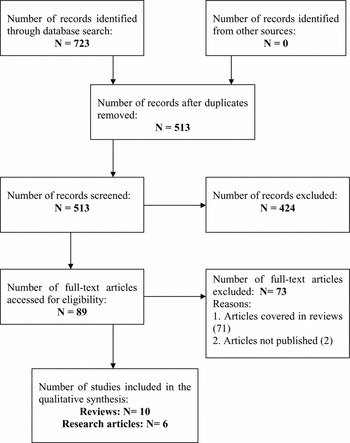
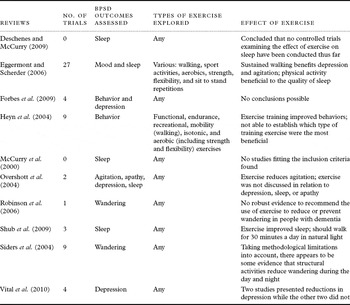
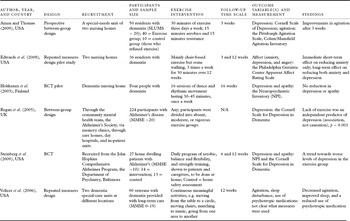
Medline, Embase, PsychInfo, and PubMed were searched using a combination of keywords: “physical activity and dementia/Alzheimer's disease,” “exercise and dementia/Alzheimer's disease,” “non-pharmacological interventions and dementia,” “exercise, sleep disturbance, and dementia/Alzheimer's disease,” “exercise, apathy, and dementia/Alzheimer's disease,” “exercise, aggression, and dementia/Alzheimer's disease,” “exercise, wandering/repetitive behaviors, and dementia/Alzheimer's disease,” and “exercise, depression/mood, and dementia/Alzheimer's disease.” Other sources were also searched, including reference lists and book chapters. A total of 723 articles were screened, of which 17 fitted the inclusion criteria. Of these, ten were review articles and six were additional papers not included in these reviews (Figure 1). We examined each paper included in the reviews to assess their inclusiveness. Table 1 describes the reviews and Table 2 describes the individual articles explored in this paper.
PRISMA flowchart describing the search process of finding articles examining the efficacy of exercise on BPSD.

Summary of reviews included in this paper

Additional papers not included in the reviews displayed in Table 1

MMSE = Mini-Mental State Examination; RCT = randomized controlled trail; SLUMS = St. Louis University Mental Status examination
Results
General findings
One study examining the efficacy of exercise in lowering anxiety found that chair-based exercises and some walking had an immediate short-term effect that was maintained after 12 weeks (Edwards et al., Reference Edwards, Gardiner, Ritchie, Baldwin and Sands2008). In depression, Aman and Thomas (Reference Aman and Thomas2009) found no improvements in depressed mood after three weeks of engaging in exercise and a pilot study by Steinberg et al. (Reference Steinberg, Sheppard Leoutsakos, Podewils and Lyketsos2009) found evidence of higher depression scores and poorer quality of life after 12 weeks of daily aerobic exercise. Edwards et al. (Reference Edwards, Gardiner, Ritchie, Baldwin and Sands2008) failed to find a short-term effect of exercise, although after a 12-week period a significant effect was evident. Indeed, after a longer duration, significant effects accruing from exercise appear more likely. For example, Teri et al. (Reference Teri2003; included in the reviews by Heyn et al., Reference Heyn, Abreu and Ottenbacher2004, and Eggermont and Scherder, Reference Eggermont and Scherder2006), using RCT design, found that weekly walking and strength and flexibility exercises predicted fewer depressive symptoms three months later and a study by Williams and Tappen (Reference Williams and Tappen2008; included in Vital et al., Reference Vital, Hernandez, Gobbi, Costa and Stella2010) found that comprehensive exercise as well as walking for 16 weeks reduced depressed mood, although the effect of comprehensive exercise was superior to that of walking. Unsurprisingly, reviews by Eggermont and Scherder (Reference Eggermont and Scherder2006) and Vital et al. (Reference Vital, Hernandez, Gobbi, Costa and Stella2010) concluded that the studies examining the efficacy of exercise on depressed mood showed inconsistent findings. However, taking methodological quality into consideration and comparing the type of interventions, Eggermont and Scherder (Reference Eggermont and Scherder2006) reported that some types of exercise can have a beneficial influence on affective symptoms. For example, an exercise program that is performed several times a week, for at least 30 minutes, and which includes walking, seems to have a positive impact on lowering depressed mood.
When the effect of exercise on apathy was examined, only one study was found in the literature examining the efficacy of physical activity in reducing apathy alone (Steinberg et al., Reference Steinberg, Sheppard Leoutsakos, Podewils and Lyketsos2009). This study found no evidence of a reduction in apathy after 12 weeks of daily aerobic exercise. However, it was a pilot study with a very low sample size (n = 27).
There appears to be some evidence that exercise training improves behavior, although which type of behavior is unclear and which type of training exercise show the most benefit has not been established (Heyn et al., Reference Heyn, Abreu and Ottenbacher2004; Forbes et al., Reference Forbes, Forbes, Morgan, Markle-Reid, Wood and Culum2009). Some studies have, however, examined specific behaviors such as aggression and wandering. Indeed, there is some evidence that physical activity can help to reduce aggressive behaviors in people with dementia. Although Edwards et al. (Reference Edwards, Gardiner, Ritchie, Baldwin and Sands2008) found no effect of chair-based exercise in reducing levels of agitation after 12 weeks, Aman and Thomas (Reference Aman and Thomas2009) found an improvement after only three weeks of aerobic exercise and strength training, and Volicer et al. (Reference Volicer, Simard, Pupa, Medrek and Riordan2006) found that meaningful exercise (i.e. exercise designed to meet the interest, physical, mental, and psychosocial well-being of each resident) reduced agitation after seven months. The reviews by both Overshott et al. (Reference Overshott, Byrne and Burns2004) and Eggermont and Scherder (Reference Eggermont and Scherder2006) concluded that exercise, especially sustained walking, reduces agitation. There is also some limited evidence that exercise reduces wandering during the day and night (Siders et al., Reference Siders2004). However, physical activity interventions specifically aiming to reduce repetitive behaviors appear to be lacking.
There is some evidence that exercise interventions improve sleep (Volicer et al., Reference Volicer, Simard, Pupa, Medrek and Riordan2006; Shub et al., Reference Shub, Darvishi and Kunik2009). A review by Eggermont and Scherder (Reference Eggermont and Scherder2006) concluded that methodologically robust studies examining the effects of physical activity on sleep were few, but showed positive effects on both sleep quantity and quality, particularly in people with mild sleep disturbance. The most methodologically sound studies included in this review, using objective sleep outcome measures (Alessi et al., Reference Alessi, Yoon, Schnelle, Al Samarrai and Cruise1999; Reference Alessi, Martin, Webber, Kim, Harker and Josephson2005; McCurry et al., Reference McCurry, Gibbons, Logsdon, Vitiello and Teri2005), involved frequent exercise sessions throughout the week (daily or several times a day). There is also some evidence that participation in non-strenuous daytime activities can have a beneficial effect on sleep in nursing home residents with dementia. For example, Richards et al. (Reference Richards, Beck, O'Sullivan and Shue2005) showed that residents with severely disturbed sleep who were randomized to receive one to two hours of individualized social activities in 15–30-minute sessions for 21 consecutive days had significantly reduced daytime sleep, sleep latency, and number of night-time awakenings compared with controls. However, two other reviews (McCurry et al., Reference McCurry, Reynolds, Ancoli-Israel, Teri and Vitiello2000; Deschenes and McCurry, Reference Deschenes and McCurry2009) came to a more cautious conclusion stating that regular physical activity may enhance the sleep of individuals with dementia; however, no controlled trials looking at the isolated effects of exercise on sleep in dementia have been published to date.
Type of exercise
The reviews described various approaches to the concept of exercise. For example, Shub et al. (Reference Shub, Darvishi and Kunik2009) included studies using exercise protocols ranging from walking to more comprehensive programs such as aerobics, endurance activities, strength training, and balance and flexibility training, while Heyn et al. (Reference Heyn, Abreu and Ottenbacher2004) included studies examining walking, cycling, chair-based exercise, and flexibility and weight training. The papers included in Eggermont and Scherder's (Reference Eggermont and Scherder2006) review evaluated seated exercise, walking, aerobics, music training, sit to stand repetitions, and strengthening and flexibility exercises where the effect of walking was superior to the other modalities. Siders et al. (Reference Siders2004) only mentioned dancing as exercise but argued that exercise had been poorly operationalized in studies while Forbes et al. (Reference Forbes, Forbes, Morgan, Markle-Reid, Wood and Culum2009) reviewed studies examining aerobics, walking, “meaningful” exercise, and flexibility. Vital et al. (Reference Vital, Hernandez, Gobbi, Costa and Stella2010) included studies examining walking, aerobics, and strength and flexibility training. However, some reviews failed to mention how exercise had been conceptualized in the studies (e.g. McCurry et al., Reference McCurry, Reynolds, Ancoli-Israel, Teri and Vitiello2000; Robinson et al., Reference Robinson2006; Deschenes and McCurry, Reference Deschenes and McCurry2009).
Exercise was also conceptualized in different ways in the individual papers included in this review. Some studies evaluated chair-based exercises and walking (e.g. Edwards et al., Reference Edwards, Gardiner, Ritchie, Baldwin and Sands2008) while others explored aerobics (e.g. Aman and Thomas, Reference Aman and Thomas2009; Steinberg et al., Reference Steinberg, Sheppard Leoutsakos, Podewils and Lyketsos2009), dance and rhythmic movement (Hokkanen et al., Reference Hokkanen, Rantala, Remes, Härkönen, Viramo and Winblad2003), or “meaningful” activities such as marching to music, moving from a table to a circle, and walking from one area to another (Volicer et al., Reference Volicer, Simard, Pupa, Medrek and Riordan2006).
Frequency and duration of exercise
Heyn et al. (Reference Heyn, Abreu and Ottenbacher2004) coded studies according to the intensity, frequency, and length of the intervention but were unable to demonstrate a significant finding for these training characteristics. Eggermont and Scherder (Reference Eggermont and Scherder2006) provided clear details of the frequency and duration of the exercise interventions when available. They found that higher frequency of exercise was related to better outcome (sleep) irrespective of duration. Siders et al. (Reference Siders2004) also described the frequency and duration of studies but did not discuss these in any detail, while Forbes et al. (Reference Forbes, Forbes, Morgan, Markle-Reid, Wood and Culum2009) were unable to examine the effects of frequency and intensity of exercise due to the small number of trials. These are described in detail, however (frequency: three times a week in all studies; duration: 20–30 minutes). Others made no mention of frequency or duration of exercise (e.g. Robinson et al., Reference Robinson2006).
Of the individual papers, duration of exercise when reported, varied from a daily program of exercise (Steinberg et al., Reference Steinberg, Sheppard Leoutsakos, Podewils and Lyketsos2009) to 30 minutes three times a week (Edwards et al., Reference Edwards, Gardiner, Ritchie, Baldwin and Sands2008; Aman and Thomas, Reference Aman and Thomas2009) and 30–45 minutes once a week (Hokkanen et al., Reference Hokkanen, Rantala, Remes, Härkönen, Viramo and Winblad2003).
Place of exercise
The studies included in the reviews by Eggermont and Scherder (Reference Eggermont and Scherder2006) and Siders et al. (Reference Siders2004) were conducted in care homes, although one study included in Siders et al. (Reference Siders2004) was conducted outside. Other reviews (McCurry et al., Reference McCurry, Reynolds, Ancoli-Israel, Teri and Vitiello2000; Heyn et al., Reference Heyn, Abreu and Ottenbacher2004; Overshott et al., Reference Overshott, Byrne and Burns2004; Robinson et al., Reference Robinson2006; Deschenes and McCurry, Reference Deschenes and McCurry2009; Shub et al., Reference Shub, Darvishi and Kunik2009) provided little information about the place of exercise, as did Forbes et al. (Reference Forbes, Forbes, Morgan, Markle-Reid, Wood and Culum2009) due to not being able to assess difference between these.
Of the individual studies, most took place within care homes (Hokkanen et al., Reference Hokkanen, Rantala, Remes, Härkönen, Viramo and Winblad2003; Volicer et al., Reference Volicer, Simard, Pupa, Medrek and Riordan2006; Edwards et al., Reference Edwards, Gardiner, Ritchie, Baldwin and Sands2008; Aman and Thomas, Reference Aman and Thomas2009). Steinberg et al. (Reference Steinberg, Sheppard Leoutsakos, Podewils and Lyketsos2009), however, carried out their intervention outside the care home setting where participants exercised within their own home.
Design
Some of the review papers imposed quality criteria to assess the designs of the studies included (e.g. Eggermont and Scherder, Reference Eggermont and Scherder2006; Robinson et al., Reference Robinson2006) and/or only included papers using RCTs with a non-intervention control group (Heyn et al., Reference Heyn, Abreu and Ottenbacher2004; Forbes et al., Reference Forbes, Forbes, Morgan, Markle-Reid, Wood and Culum2009). In the review by Forbes et al. (Reference Forbes, Forbes, Morgan, Markle-Reid, Wood and Culum2009), studies had follow-up times ranging from seven weeks to three months but the effect of exercise at follow-up was not examined due to lack of trials. Deschenes and McCurry (Reference Deschenes and McCurry2009) concluded that no controlled trial had been conducted to examine the effects of exercise on sleep. Heyn et al. (Reference Heyn, Abreu and Ottenbacher2004) and Robinson et al. (Reference Robinson2006) also point out the absence of blinding procedures and the lack of long-term follow-ups in studies, while Siders et al. (Reference Siders2004) highlight a lack of RCT designs and a lack of control group included in studies. Other reviews (Overshott et al., Reference Overshott, Byrne and Burns2004; Shub et al., Reference Shub, Darvishi and Kunik2009) only mention the importance of conducting RCT studies but fail to critically examine the methodology of papers under review.
Of the individual papers, only two studies (Hokkanen et al., Reference Hokkanen, Rantala, Remes, Härkönen, Viramo and Winblad2003; Steinberg et al., Reference Steinberg, Sheppard Leoutsakos, Podewils and Lyketsos2009) used RCT designs. However, both of these were pilot studies. The others used either a repeated-measures design (Volicer et al., Reference Volicer, Simard, Pupa, Medrek and Riordan2006; Edwards et al., Reference Edwards, Gardiner, Ritchie, Baldwin and Sands2008) or a between-group design (Regan et al., Reference Regan, Katona, Walker and Livingston2005; Aman and Thomas, Reference Aman and Thomas2009) where the former study was prospective in design. Of those using a between-group design, the control group consisted of those who refused to exercise (Aman and Thomas, Reference Aman and Thomas2009) and those who simply did not exercise (Regan et al., Reference Regan, Katona, Walker and Livingston2005). In the RCT study by Steinberg et al. (Reference Steinberg, Sheppard Leoutsakos, Podewils and Lyketsos2009), the control group was given a home safety assessment only. Follow-up times also varied from three weeks (Aman and Thomas, Reference Aman and Thomas2009) to 16 weeks (Hokkanen et al., Reference Hokkanen, Rantala, Remes, Härkönen, Viramo and Winblad2003).
Sample size
The meta-analysis by Heyn et al. (Reference Heyn, Abreu and Ottenbacher2004) excluded research papers with fewer than five participants and noted the problem of small sample size in current studies using RCT designs. Siders et al. (Reference Siders2004), Eggermont and Scherder (Reference Eggermont and Scherder2006), Forbes et al. (Reference Forbes, Forbes, Morgan, Markle-Reid, Wood and Culum2009), and Vital et al. (Reference Vital, Hernandez, Gobbi, Costa and Stella2010) also provided clear details of sample size and made similar comments with regard to small sample size and low power of studies.
The sample size in the individual studies was small overall, with only two studies having 90 participants or more (Regan et al., Reference Regan, Katona, Walker and Livingston2005; Volicer et al., Reference Volicer, Simard, Pupa, Medrek and Riordan2006). The remainder had samples ranging from four to 50 (e.g. Hokkanen et al., Reference Hokkanen, Rantala, Remes, Härkönen, Viramo and Winblad2003; Aman and Thomas, Reference Aman and Thomas2009).
Cognitive disability and diagnosis
Eggermont and Scherder (Reference Eggermont and Scherder2006) only included studies where participants had an MMSE score of 23/24 or less and although they described the diagnosis of participants within each study, these were not discussed further. Heyn et al. (Reference Heyn, Abreu and Ottenbacher2004) included papers where participants had MMSE scores of less than 26 or a pre-existing diagnosis of dementia. Seventy-five percent of the studies reported the MMSE score. The type of dementia diagnosis affecting the participants was described but not discussed further. Siders et al. (Reference Siders2004) reported that cognitive disability and type of dementia were rarely described. Indeed, Forbes et al. (Reference Forbes, Forbes, Morgan, Markle-Reid, Wood and Culum2009) also highlighted the lack of homogeneity in terms of diagnosis and severity of disease in current studies. Some reviews (e.g. Vital et al., Reference Vital, Hernandez, Gobbi, Costa and Stella2010) only included patients with Alzheimer's disease while others (e.g. Overshott et al., Reference Overshott, Byrne and Burns2004; Shub et al., Reference Shub, Darvishi and Kunik2009) did not discuss diagnosis or cognitive status.
Many of the individual studies ignored the potential importance of diagnosis type (e.g. Hokkanen et al., Reference Hokkanen, Rantala, Remes, Härkönen, Viramo and Winblad2003; Volicer et al., Reference Volicer, Simard, Pupa, Medrek and Riordan2006; Edwards et al., Reference Edwards, Gardiner, Ritchie, Baldwin and Sands2008) although most reported the MMSE/SLUMS scores used as an inclusion criterion and describe the diagnosis of their participants (e.g. Regan et al., Reference Regan, Katona, Walker and Livingston2005; Edwards et al., Reference Edwards, Gardiner, Ritchie, Baldwin and Sands2008; Aman and Thomas, Reference Aman and Thomas2009; Steinberg et al., Reference Steinberg, Sheppard Leoutsakos, Podewils and Lyketsos2009). However, two studies did have a homogenous sample (only people with Alzheimer's disease; Regan et al., Reference Regan, Katona, Walker and Livingston2005; Steinberg et al., Reference Steinberg, Sheppard Leoutsakos, Podewils and Lyketsos2009).
Discussion
The aim of this paper was to examine the effects of exercise on BPSD by synthesizing findings from previous reviews and individual papers published to date. Three questions were addressed: (1) Does exercise reduce BPSD? (2) How has exercise been conceptualized and how does this relate to the findings? (3) What are the main limitations and methodological shortcomings of recent studies? Each in turn will be examined before moving on to discuss what research agenda is needed for future studies.
Does exercise reduce BPSD?
Using very stringent inclusion criteria, the Cochrane review by Forbes et al. (Reference Forbes, Forbes, Morgan, Markle-Reid, Wood and Culum2009) concluded that there is insufficient evidence for the effectiveness of physical activity programs on affective symptoms in older persons with dementia to warrant commissioning new services or decommissioning existing ones. They argue that until further methodologically robust studies are conducted and published, making firm recommendations for clinical practice about the importance, type, and duration of exercise as a therapy for BPSD will not be possible. Such an approach precludes the use of potentially useful evidence to guide clinical practice, especially as it is very difficult to meet stringent Cochrane criteria in such research. The existing research literature, while thin, does offer insights into potential effects of physical activity on BPSD and does hint at the impact (or not) of exercise on behavioral and psychological symptoms not included in the Cochrane review (e.g. sleep disruptions, wandering, repetitive behaviors, anxiety, and apathy). For example, Eggermont and Sherder (Reference Eggermont and Scherder2006) suggest that exercise programs should include walking for at least 30 minutes in order to benefit mood and agitation; exercise should be offered frequently during the week, irrespective of duration, to achieve a positive impact on sleep. However, they do state that the effects of exercise on the subjective experience of caregivers, maintenance of care at home, and the economic cost of dementia require further prospective evaluation. In addition, the current literature has mainly focused on the efficacy of exercise on depressed mood and aggressive behaviors while neglecting other potentially important symptoms such as anxiety, apathy, wandering, and repetitive behaviors. There appears to be some indication that exercise can help reduce anxiety and “wandering” behaviors. However, its role in improving apathy and repetitive behaviors appears to be completely lacking. Studies examining the effects of physical activity on sleep were few, but showed positive effects on both sleep quantity and quality, particularly in people with mild sleep disturbance. It is noteworthy that studies using objective sleep outcome measures (Alessi et al., Reference Alessi, Yoon, Schnelle, Al Samarrai and Cruise1999; Reference Alessi, Martin, Webber, Kim, Harker and Josephson2005; McCurry et al., Reference McCurry, Gibbons, Logsdon, Vitiello and Teri2005) included frequent exercise sessions throughout the week (daily or several times a day).
How has exercise been conceptualized and how does this relate to the findings?
Exercise programs for people with dementia have been poorly conceptualized and it is unclear which aspects of physical activity (e.g. type and duration) provide better results than others. We need to understand further what behavioral and psychological symptoms respond best to what type of physical activity intervention, how exercise may work, for whom, and under what circumstances. Indeed, exercise may affect various BPSD in different ways. The current evidence cautiously indicates that its effect on some symptoms (e.g. agitation, anxiety) may be more rapid compared to others (e.g. depression). There are also complex interactions between different behavioral and psychological symptoms and it is important to understand these when planning studies. For example, reducing anxiety through increasing physical activity may, in some individuals, reduce repetitive behaviors or “wandering.” However, if, for example, “wandering” is caused by feeling lost, exercise may not be very effective. In addition, if exercise improves sleep, then other BPSDs may improve as a result. Physical exercise, taken regularly, may promote relaxation and raise core body temperature in ways that are beneficial to initiating and maintaining sleep, and there is also some evidence that keeping occupied in activities helps maintain wakefulness during the day and will therefore encourage sleep at night (Cole and Richards, Reference Cole and Richards2006).
What are the main limitations and methodological shortcomings of recent studies?
The methodological shortcomings of current work in this area are substantial. Indeed, as Forbes et al. (Reference Forbes, Forbes, Morgan, Markle-Reid, Wood and Culum2009) pointed out, very few studies have robust methodologies, few use RCT designs, and few have a sample size with enough power. In addition, many studies have short follow-up periods that could potentially produce a type II error, i.e. an effect of exercise on some symptoms may not be evident after only a short period. Many also rely on findings from mixed dementia groups while ignoring the potential differences between different types of dementias. There is clearly an important research task ahead. This should include focusing on the robust design of trials of well-defined exercise interventions appropriate for people with dementia. Key questions need to be answered on how exercise impacts specific types of BPSD and secondary outcomes like quality of life, carer burden, likelihood of institutionalization, mortality, use of antipsychotic medication, and use of health and social services. Some discrimination is also needed between agitation, anxiety, and aggression. Aggression can be part of agitation but agitation can also be seen as a much broader concept that can incorporate symptoms of anxiety. To complicate matters further, these constructs are usually examined together in the dementia literature as they are often assessed as constructs on separate ends of a continuum in questionnaires (e.g. The Neuro Psychiatric Inventory; Aalten et al., Reference Aalten2003). Finally, many non-pharmacological intervention studies have involved patients with mild to moderate impairment (Kverno et al., Reference Kverno, Black, Nolan and Rabins2009). Since individuals with severe impairment do not necessarily respond in the same manner to non-pharmacological interventions, current research may have little to offer to clinicians working with this patient group.
The methodological features of future studies should include (i) a randomized controlled parallel-group design with statistically appropriate analyses, a more homogeneous sample in terms of diagnosis, severity of disease, and mobility; (ii) a sample size with sufficient power to detect an effect (positive or negative) of clinically significant magnitude; and (iii) blinded and objective outcome ratings.
Towards a research agenda
It seems clear which behavioral and psychological symptoms to prioritize for further study; behaviors that challenge caregivers and low mood are reported to have a greater negative impact on caregivers than do cognitive losses (Donaldson et al., Reference Donaldson, Tarrier and Burns1998). Other disruptive behaviors such as sleep disturbances (nightly restlessness and wandering) also contribute to caregiver distress (Hope et al., Reference Hope, Keene, McShane, Fairburn, Gedling and Jacoby2001) and are predictors of institutionalization (Schur and Whitlatch, Reference Schur and Whitlatch2003) because of the increased burden that is placed on the caregiver (Lindsay and Anderson, Reference Lindsay and Anderson2004). Forbes et al. (Reference Forbes, Forbes, Morgan, Markle-Reid, Wood and Culum2009) also argue that further research is necessary to identify the optimal physical activity modalities particularly in terms of frequency, intensity, and duration for persons with different types and severity of dementia. Understanding potential issues surrounding group-based versus individual interventions with exercise is important. There is also a need for future studies to assess the efficacy of exercise interventions in relation to other non-pharmacological interventions to determine which are superior in reducing BPSD or how these may work in combination.
Heyn et al. (Reference Heyn, Abreu and Ottenbacher2004) have identified the need to understand the appropriateness and safety of exercise programs for older adults with dementia, and their preparedness to engage in them. Research is needed to identify ways to effectively increase the levels of physical activity and engagement among older people with dementia syndrome; research is also needed to determine how to motivate people with dementia to exercise regularly and also to engineer and adapt exercises to fit with physical comorbidities. We know that frail sedentary older people have good short-term responses to physical exercise, but there is a need for long-term follow-up and longitudinal investigations in this population. Adherence to an exercise program determines outcomes, but adherence may be influenced by the nature of dementia itself. For example, apathy makes people less likely to comply with therapy, which may mean that adhering to an exercise intervention is less likely even with the support of a carer. Apathy may be viewed differently in the home setting compared with the care home where the apathetic patient who sits quietly might be viewed as easy to care for. The motivation for staff in these homes to introduce regular exercise regimes for these patients may not be as strong as it is for the individual family carer. Indeed, understanding any potential difference between the care home and community-dwelling setting is important. For example, is there a higher incentive for relatives to engage in exercise interventions compared with care home staff? Caregivers can be trained to function as exercise “coaches” for individuals with dementia and older adults with a wide range of cognitive impairment, and participating in structured exercise programs has been demonstrated to be enjoyable (Teri et al., Reference Teri, Logsdon and McCurry2008). We need to know if different exercise regimens affect adherence, particularly if group-based. If exercise is not enjoyable, it will not be sustained (Teri et al., Reference Teri, Logsdon and McCurry2008); so the preferences of the individual may affect adherence, and exercise activities may need to be tailored in accordance with what the participant enjoys. Lastly, future studies should explore the stage-specific efficacy of exercise interventions (Kverno et al., Reference Kverno, Black, Nolan and Rabins2009).
Strengths and limitations of this approach
This review is more holistic than previous reviews and provides the reader with the bigger, albeit more complex, picture, largely because no previous review has examined all the symptoms in one paper. This review has several limitations that need to be considered in interpreting the findings. One problem with the critical interpretive synthesis approach is its difficulty in demonstrating explicitness, reproducibility, and comprehensiveness of searching. In addition, this approach does not promote exhaustiveness in searching the literature, and in this rapid appraisal, we relied upon results provided by other peer-reviewed, published reviews. We have not described attrition or adherence to the intervention, nor have we described whether studies included all patients with dementia or just those exhibiting a degree of BPSD; given the limited number of trials and the low quality of studies, we believe these are characteristics that need to be considered in future trials.
Conclusions
Exercise appears to be beneficial in reducing some BPSD, especially depressed mood and agitation and may also improve sleep and reduce “wandering.” However, the research into the efficacy of exercise with the therapeutic aim of improving other important symptoms such as anxiety, apathy, and repetitive behaviors is currently weak or completely lacking. The beneficial effect of exercise type, its duration, and frequency is also unclear although some studies suggest that walking for at least 30 minutes, several times a week may enhance outcome. Indeed, studies examining the effects of daily exercise showed more favorable outcomes. However, the methodological shortcomings of current work in this area are substantial and future studies need to focus on conducting robust longitudinal trials of well-defined exercise interventions appropriate for people with dementia.
Conflict of interest
None.
Description of authors' roles
I.C.V. Thuné-Boyle carried out the search, selected the literature for review, and wrote the paper. S. Iliffe contributed to the selection of the studies, their interpretation, and the writing. A. Cerga-Pashoja, D. Lowery, and J. Warner assisted in the data interpretation and in writing the review.
Acknowledgments
We would like to acknowledge Dr. Tamar Koch and Ms. Priya Jain for assisting in the literature search. This work has received financial support from the National Institute for Health Research (NIHR) Programme Grants for Applied Research funding scheme (RP-PG-0606-1005). The views and opinions expressed therein do not necessarily reflect those of Central and North West London NHS Foundation Trust, the NHS, the NIHR, or the Department of Health.