INTRODUCTION
The fauna of the lower Don River together with the Taganrog Bay and the Sea of Azov has been studied in detail during the last 150 years (Chernyavskiy, Reference Chernyavskiy1868; Ostroumov & Sovinskiy, Reference Ostroumov and Sovinskiy1903; Annenkova, Reference Annenkova1930; Morduhay-Boltovskoy, Reference Morduhay-Boltovskoy1939, Reference Morduhay-Boltovskoy1960; Vorobyov, Reference Vorobyov1949; Brayko et al., Reference Brayko, Bacescu and Vinogradov1968; Studenikina et al., Reference Studenikina, Volovik, Tolokonnikova, Pavlenko, Selivanova and Volovik1998; Frolenko, Reference Frolenko and Volovik2000; Kiseleva, Reference Kiseleva2004; Volovik, Reference Volovik2012). Until very recently, adult specimens of only five species of Polychaeta have been recorded from the Don River mouth and Taganrog Bay: Ponto-Caspian relics Hypania invalida (Grube, 1960), Hypaniola kowalewskii (Grimm, 1877) (Ampharetidae) and Manayunkia caspica Annenkova, 1929 (Sabellidae) together with the Atlantic euryhaline nereids Hediste diversicolor (Müller, 1776) and Alitta succinea (Leuckart, 1847). Therefore, the occurrence of two additional polychaete species, one of the family Sabellidae (see Syomin et al., Reference Syomin, Kovalenko and Savikin2015), and another of the genus Marenzelleria during a short period of time (less than one year) is a considerable addition to the regional species composition (see Syomin et al., Reference Syomin, Sikorski, Kovalenko and Bulysheva2016).
There are five known species belonging to Marenzelleria Mesnil, 1896: M. wireni Augener, 1913; M. arctia (Chamberlin, 1920); M. viridis (Verrill, 1873); M. neglecta Sikorski & Bick, Reference Sikorski and Bick2004 and M. bastropi Bick, Reference Bick2005 (see Sikorski & Bick, Reference Sikorski and Bick2004 for more detailed historical review). At least the last three of them originate from North America (despite M. neglecta being described from the Baltic coast of Germany, it is an invader). Marenzelleria wireni also probably inhabits arctic areas around Canada and Alaska. In the last 30 years M. viridis, M. arctia and M. neglecta were often the object of attention in papers related to the problem of invasive species in European waters. Examples include: Leling (Reference Leling1986), Gruszka (Reference Gruszka1991), Bastrop et al. (Reference Bastrop, Röhner, Sturmbauer and Jürss1997), Bick & Zettler (Reference Bick and Zettler1997), Sikorski & Buzhinskaya (Reference Sikorski and Buzhinskaya1998), Kotta et al. (Reference Kotta, Simm, Kotta, Kanošina, Kallaste and Raid2004), Sikorski & Bick (Reference Sikorski and Bick2004), Bastrop & Blank (Reference Bastrop and Blank2006), Blank et al. (Reference Blank, Laine, Jürss and Bastrop2008),Van Moorsel et al. (Reference Van Moorsel, Tempelman and Lewisde2010), Norkko et al. (Reference Norkko, Reed, Timmermann, Norkko, Gustafsson, Bonsdorff, Slomp, Carstensen and Conley2012) and Maximov et al. (Reference Maximov, Eremina, Lange, Litvinchuk and Maximova2014). As a result of these investigations, it was concluded that two species (M. viridis and M. neglecta) were introduced into the North Sea and Baltic Sea basins from the North American Atlantic coast, whereas M. arctia came to the Gulf of Bothnia from the European Arctic (the Barents Sea – see Bastrop & Blank, Reference Bastrop and Blank2006; Blank et al., Reference Blank, Laine, Jürss and Bastrop2008). The presence of two presumptive Marenzelleria species was detected in 2014 from the mouth of the Don River and the adjacent areas of the Azov Sea (Syomin et al., Reference Syomin, Sikorski, Kovalenko and Bulysheva2016). The authors supposed that two species were present because of the wide variability in the numeric characters of specimens that were examined. This paper is written following the final results of genetic examination of the material. Further naturalization and distribution of these spionids is shown below.
MATERIALS AND METHODS
There are only few external characters suitable for species identification within the genus Marenzelleria. In general, there are up to four extremely variable numeric characters (VHH, first chaetiger with neuropodial/ventral hooded hooks; DHH, first chaetiger with notopodial/dorsal hooded hooks; Br, last chaetiger with branchiae; NO, last chaetiger with nuchal organs, marked b, m, e – beginning, middle and end of the chaetiger, respectively) that are used, and, as these overlap in different species, correct identification can be difficult to make. Therefore, to obtain further diagnostic characters, arithmetical differences between some pairs of numeric characters are used as independent taxonomic characters: Br–VHH, Br–DHH and DHH–VHH (Sikorski & Bick, Reference Sikorski and Bick2004). All listed characters are size dependent. Width, length and number of chaetigers (in the case of complete specimens) are used as parameters of size, but width is used in most cases as complete specimens are generally quite rare in fixed material. We measured the width of the body (minus the parapodia) at chaetiger 10. Bastrop & Blank (Reference Bastrop and Blank2006) stated: ‘However, correct identification and denomination of Marenzelleria species are indispensable prerequisites for all future studies. Molecular markers allow the exact identification of all Marenzelleria species and must be used whenever a classical taxonomic identification is uncertain.’ Therefore, we attempt to make conclusions based both on morphological measurements and genetic tests.
Sampling and processing
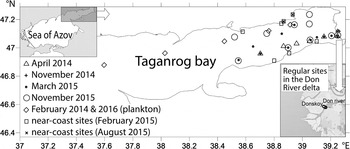
Monitoring research at the Donskoy village was started in 2011; surveys in Taganrog Bay area (Figure 1) have been carried out several times a year since 2003. Samples of zoobenthos for this study were taken in the Don River delta using a Petersen grab (0.034 m2) from a motorboat in 2014 (March, April, July, September and October) and 2015 (February, August), each time at the same regular sites. In Taganrog Bay, samples were taken using the same gear from the research vessel ‘Professor Panov’ in 2014 (April, November) and 2015 (March, November). In November 2014, samples were taken in the easternmost part of the bay and also in the Don River delta; other three surveys covered the eastern and the central parts of the bay. A series of samples were also taken using the same gear along the coast of the Taganrog Bay from ice-holes in February 2015. Additional samples were taken near Taganrog in August 2015 using a dredge. The samples taken were sieved through a 0.5 mm mesh and examined alive. Most of the samples were fixed afterwards in 4% formaldehyde except for some specimens selected for examination live. Specimens for genetic studies were preserved directly in 96% ethanol. In total, 39 quantitative and 20 qualitative zoobenthos samples were processed.
Map of the research area.

Nectochaetae were first found in zooplankton samples collected in the eastern and central parts of Taganrog Bay from the icebreaker ‘Kapitan Demidov’ (February 2014), and again in a similar survey in February 2016. The stations were similar in both surveys. Each zooplankton sample was obtained by filtering 100 l of seawater through an Apstein net. Fixation and processing methods were similar to those described for the adult specimens. In total, 10 zooplankton samples were processed.
A light microscope (MicMed2 Var.2) was used for morphological studies. Polychaetes were stained with methyl green, then placed into alcohol for a short time in order to remove excess dye. They were then clarified in glycerol. A total of 174 specimens were measured.
Ordination [non-metric Multi-Dimensional Scaling (Correlation and Gower distances) and Principal coordinates (Correlation and Gower distances)] and cluster analyses (Gower distances) conducted using Past 3.14 (Hammer et al., Reference Hammer, Harper and Ryan2001) were used to estimate the difference between the specimens and the reliability of the two forms. The maps were built using Surfer 8.02.
Genetic study
Specimens for genetic research were fixed with 96% ethanol. All analyses investigating mitochondrial gene fragments were made according to Blank & Bastrop (2009). Additional data were taken from this study (all sequences with names using CS denomination: see, for example, Blank & Bastrop, Reference Blank and Bastrop2008: fig. 1), or from GenBank. A combined dataset according to Blank & Bastrop (Reference Blank and Bastrop2008) was analysed. All analyses investigating nuclear gene fragments were made according to Radashevsky et al. (Reference Radashevsky, Neretina, Pankova, Tzetlin and Choi2014).
The primary analyses of the data involved the COI, Cytb and 16S sequences. The evolutionary history was inferred using Maximum Likelihood (ML). After testing different models using MEGA6, the model selected for ML analysis was [GTR (general time − reversible model) + G (discrete approximation of the gamma distribution)] with the lowest AICc value (Akaike Information Criterion, corrected).
The analysis involved 96 nucleotide sequences. All positions containing gaps and missing data were eliminated. There was a total of 1331 positions (COI + 16S + Cytb) in the final dataset. The percentage of trees in which the associated taxa clustered together is shown next to the branches (1000 replicates).
For 28SrDNA (691 base pairs), as well as for Histone 3 (327 base pairs) sequence data, only uncorrected p-distances were calculated. Evolutionary analyses were conducted in MEGA6 (Kumar et al., Reference Kumar, Stecher and Tamura2016).
RESULTS
Adult morphology
We considered all specimens examined to belong to the genus Marenzelleria Mesnil, 1896, based on the following characters. Prostomium, triangle to bell-shaped, peristomium not fused to the first chaetiger, without lateral wings. Branchiae present from the first chaetiger in the anterior one third or half of the body, basally fused to the notopodial lamellae. Nuchal organs short and epaulet-shaped, or like grooves bordered with cilia; beginning at the base of the palps and extending backwards until middle of the second – middle of the fourth chaetiger. Genital pouches absent. Pygidium with bilaterally symmetrical pairs of anal cirri. Anterior chaetae capillary, arranged in two rows; dorsal notopodial tuft of longer chaetae present from the first chaetiger. Neuro- and notopodial hooded hooks bi- or tridentate present posteriorly in a posterior row. The ventral bundle of neurochaetae contains several long and stout chaetae referred to as sabre chaetae. Ventral bundle becomes visible from the first to fifth chaetiger. Below we give the description of the whole material with special emphasis on the variability of diagnostic characters.
SYSTEMATICS
Order spionida
sensu Rouse & Fauchald, 1997
Suborder spioniformia Fauchald, 1977
Family spionidae Grube, 1850
Genus Marenzelleria Mesnil, 1896
Marenzelleria neglecta Sikorski & Bick, Reference Sikorski and Bick2004
(Figures 2–5: larva)
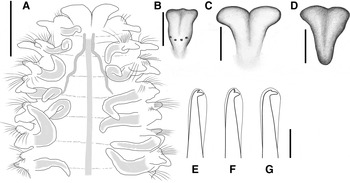
Marenzelleria neglecta, ‘typical’ form. (A) anterior part of the body; (B) juvenile prostomium; (C) adult prostomium, dorsal view; (D) adult prostomium, anterior-dorsal view; (E–G) hooded hooks. Scales: (A) 500 µm; (B) 150 µm; (C, D) 250 µm; (E–G) 100 µm.

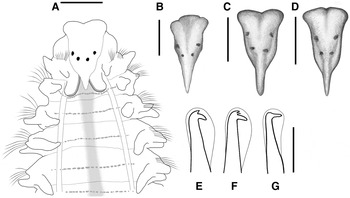
Marenzelleria neglecta, ‘arctia-like’ form. (A) anterior part of the body; (B) juvenile prostomium; (C, D) adult prostomium; (E–G) hooded hooks. Scales: (A) 300 µm; (B) 100 µm; (C) 300 µm; (D) 400 µm; (E–G) 100 µm.

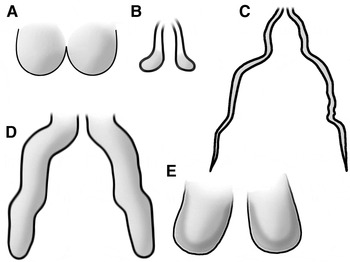
Marenzelleria neglecta, forms of nuchal organs.

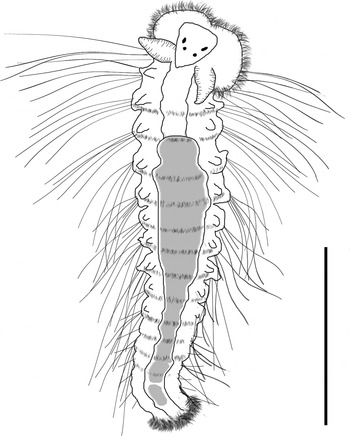
Spionid larva (supposedly Marenzelleria neglecta) from Taganrog Bay. Scale: 0.5 mm.

ALL MATERIAL EXAMINED
Up to 2.5 mm wide, 115 mm long, with up to 250 chaetigers.
Prostomium bell-shaped, broadly rounded anteriorly, often incised medially (Figures 2A–D & 3A–D). In large adults, prostomium sometimes with deep longitudinal depression that comes over front edge, making it look bilobate (Figure 2C, D). Occipital papilla absent. Two pairs of eyespots (pale in fixed specimens), usually arranged in line or in trapeziform with posterior pair closer together. Eyes are particularly well visible in juveniles; in large specimens hardly recognizable through the cuticle or absent. After fixation, eyes usually fade, but could be seen after staining in methyl green.
Palps short (2–3 times longer than the longest gill, never extending posteriorly beyond chaetiger 10 in fixed specimens), sometimes with dark pigmented spots.
Nuchal organs of adults are strongly shape-variable: usually as narrow grooves bounded with cilia, bent at the borders between chaetigers (Figure 4C), crossing mid ciliary band of chaetiger 3–4; in some cases the grooves are wide, almost straight (Figure 4D); specimens with nuchal organs resembling epaulet-like depressions reaching the middle of the second chaetiger are rarely found (Figure 4E).
In juveniles, nuchal organs are, as usual, epaulet-like (Figure 4A) or loop-like (Figure 4B), reaching the middle of the second chaetiger, but rarely crossing the border between the second and third chaetigers and reaching the beginning of the third chaetiger.
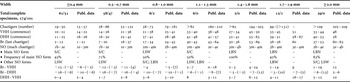
The number of branchiae range from one to 69 pairs (depending on size; see Table 1). In juveniles (specimens 0.15–0.4 mm wide) the number of branchiate chaetigers is from one to 13. Branchiae disappear immediately, sometimes six to ten segments after starting to decrease in length. Branchiae of chaetiger 1 rarely as high as the notopodial postchaetal lamellae, usually extending above the lamellae by up to one third of their length. The tips of notopodial postchaetal lamellae on two to nine anteriormost chaetigers are not fused to branchiae. In most of these cases, the upper tip of the anterior notopodial lamellae is pointed, but sometimes rounded; in the latter case the anterior notopodial postchaetal lamellae is completely fused to the branchiae (specimens from Canadian Arctic). Notopodial postchaetal lamellae decreasing in size, posteriorly becoming nearly triangular or oval. Neuropodial postchaetal lamellae sometimes pointed anteriorly, becoming rounded and slightly asymmetrical at the end of the anterior third of body, rounded or nearly triangular posteriorly.
Numeric characters of Marenzelleria neglecta from the lower Don River and the Taganrog Bay compared with published data.

VHH, ventral hooded hooks; DHH, dorsal hooded hooks; Br, branchiae; NO, nuchal organs; b, m, e, – beginning, middle, end of chaetiger; S/C, semicircle; LSW, long straight wide; LBW, long bent wide; LBN, long bent narrow.
Neuropodial hooded hooks from chaetiger 10–51, two to eight per fascicle in the middle or posterior half of the body (only two per fascicle in small specimens, 0.4 mm wide). Notopodial hooded hooks appear on one to 17 segments after the neuropodial hooks, i.e. from chaetigers 11–67, two to seven per fascicle in the middle of the posterior half of the body. Hooded hooks bidentate (Figures 2E & 3E), sometimes tridentate posteriorly (more usual in larger specimens), with two unpaired apical teeth in tandem above main fang (Figure 2F), Figure 3F). Sometimes the apical fang may be reduced (Figures 2G & 3G).Ventral inferior tuft of neuropodium with sabre chaetae appearing from chaetigers 1 to 5, 2–6 per fascicle anteriorly, decreasing in number to 2–3 and becoming stouter from chaetigers 4 to 41.
Pygidium of juveniles with four pairs of anal cirri; cirri of ventral pair shortest. Pygidium of adults with up to seven pairs of anal cirri, sometimes bifurcated.
Gametes first present from chaetigers 39 to 43.
Specimens unpigmented, sometimes with small black dots on palps.
type locality: Baltic Sea, Germany, Darss-Zingst-Boddenchain.
REMARKS
There were several specimens found in our samples that resembled M. arctia (Figure 3) due to the nuchal organs – epaulet-like depressions reaching the middle of the second chaetiger. Different shapes of nuchal organs are depicted in Figure 4. The high variability in shape and also the presence of several large specimens (see width 1.4–1.6 mm in Table 1) with unusual numbers of branchiae compared with published data made us consider the presence of two species in our material. The lower number of branchiae, together with the short loop-like nuchal organ matches the combination of characters found in M. arctia. We would like to draw attention here to an error in the description of the species in Sikorski & Bick (Reference Sikorski and Bick2004); the number of gills for M. arctia was given as up to 49 pairs, while the table in that paper showed that it could not exceed 37.
Larval morphology
All the larvae examined were at the 14–17 chaetiger stage. The body width was approximately equal to that of the prototroch. The prostomium was triangular with four eyes in a trapeziform arrangement. The palps reached the end of the second chaetiger. Nototrochs began from the second chaetiger, and were absent from the 2–3 posterior ones. Gastrotrochs were present on chaetigers 3, 5, 7, 9 and 11. Larval bristles were dentate; longest on the first chaetiger. Their number decreased posteriorly. Capillary chaetae occurred on all chaetigers. Bidentate hooks appeared in the neuropodia of chaetiger 10–12, and one chaetiger later in the notopodia. Branchiae were present from chaetiger 1 to chaetigers 10–11 (Figure 5).
REMARKS
The nectochaetae examined are similar to that described by Bochert & Bick (Reference Bochert and Bick1995) as belonging to M. viridis. Their specimens were sampled in the type locality of M. neglecta, (that was described later) therefore we consider them likely to be M. neglecta.
Genetic analyses
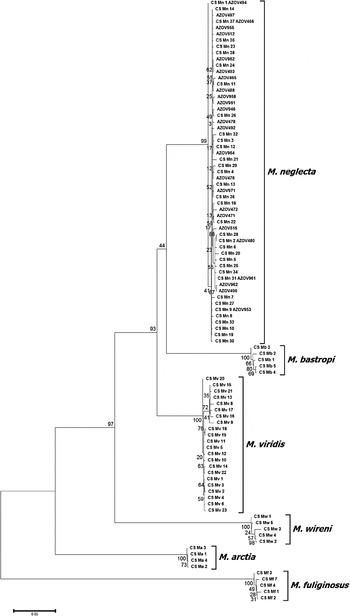
Cytochrome oxidase I was sequenced for all 62 individuals using both PCR primers. This revealed 25 haplotypes, so 25 individuals carrying a distinct COI haplotype were sequenced for 16S (using both PCR primers) as well as for cytochrome b (using both PCR primers). All three mitochondrial gene fragments (COI + 16S + Cytb sequences) are used to calculate a Maximum likelihood tree (Figure 6).
Phylogenetic relationship of Marenzelleria spp. based on the combined mitochondrial data set of 16S, Cytb and COI (1331 bp): Maximum likelihood tree, 1000 bootstraps; individuals of Malacoceros fuliginosus were defined as outgroup.

For the combined data set, the evolutionary history was inferred using the Maximum-Likelihood method. The phylogenetic analysis could definitely verify the existence of only one single Marenzelleria species, M. neglecta, in the Sea of Azov and the Taganrog Bay.
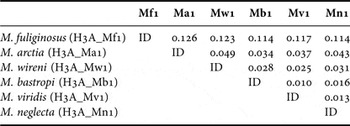
Histone 3 was sequenced for all 62 individuals using both PCR primers. This revealed one single sequence (H3A_Mn1). No variation was found, but all species could be identified without any doubt. The 25 individuals carrying a distinct COI haplotype were sequenced for 28S too (using both PCR primers). This revealed three different sequences (28S_Mn1: N = 6; 28S_Mn2: N = 1; 28S_Mn3: N = 18). Again, all species could be identified without any doubt.
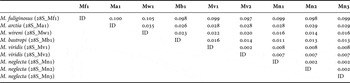
The mitochondrial gene fragments, 28S rDNA, as well as Histone 3 sequence data, allowed a 100% identification of all Marenzelleria species and Malacoceros fuliginosus (for p-distances see Tables 2 & 3).
28S rDNA: Genetic p-distances among the Marenzelleria species (660 base pairs).

Histone 3A: Genetic p-distances among the Marenzelleria species (327 base pairs).

The GenBank accession numbers of all new sequence data are listed in Tables A & B (Supporting information).
Density and biomass
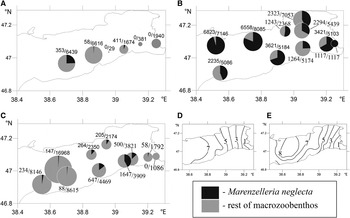
Densities of M. neglecta against total macrozoobenthos density in the three quantitative sampling occasions covering the central and eastern parts of Taganrog Bay are given in Figure 7A–C. Sampling data including M. neglecta’s and total macrozoobenthos density and biomass are also listed in Table C (Supporting information). The maximum density and biomass of M. neglecta in April 2014, soon after the first record in the Don River delta, were 411 ind. m−2 and 1.062 g m−2, respectively; occurrence was 50%. By March 2015, M. neglecta occurred in 100% of the samples from Taganrog Bay, whilst the density increased to 6823 ind. m−2, mainly due to the abundance of juveniles. Biomass was 0.253–5.365 g m−2 in most samples; at two sites along the southern coast it reached 17.651 and 31.211 g m−2. One quantitative station and three qualitative samples contained no other macrozoobenthic organisms but M. neglecta. By November 2015, its density and biomass relative to total zoobenthos abundance mostly decreased (maximum 1647 ind. m−2 and 23.26 g m−2, respectively); mostly large adults were present in samples. The percentage of M. neglecta in the total zoobenthos abundance and biomass now reached up to 91%.
Abundance of Marenzelleria neglecta and total macrozoobenthos on three quantitative sampling occasions covering the central and eastern parts of Taganrog Bay (A–C); salinity (PSU) of water in the sampled area (D, E). Numerator indicates the density of M. neglecta, denominator – total macrozoobenthos density, ind. m−2. Scale of the stations’ circles: square root. (A) April 2014; (B) March 2015; (C) November 2015; (D) typical salinity distribution in Taganrog Bay, November 2015; (E) salinity distribution during the wind-driven advection of water with increased salinity, March 2015.

In comparison, in quantitative samples from the Don River delta, to the east of Taganrog Bay (regular stations near Donskoy village, see Figure 1), the abundance of M. neglecta has remained considerably stable since its first occurrence: 88–147 ind. m−2; the biomass increased from early spring 2014 when only juveniles were found in samples (0.029–0.058 g m−2) to 4.941 g m−2 in November 2014.
DISCUSSION
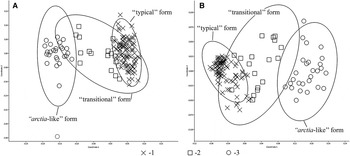
Two morphological forms were distinguished in the beginning, matching the diagnoses of two species: M. neglecta and M. arctia. Further sampling, however, provided a number of transitional forms that could not be assigned to either species; the genetic study revealed that only one species of the genus Marenzelleria, M. neglecta, inhabits the Sea of Azov. Each of the five gene segments used in the genetic analyses supported this determination for all life stages of these polychaetes. Furthermore, no possible hybrids were found. Nevertheless, two pronounced morphological groups were clearly identified with any of the statistics used, though some intermediate specimens lay in-between (Figure 8).
Ordination of complete Marenzelleria specimens from the Sea of Azov basin representing all considered characters (95% ellipses shown). (A) Principal Coordinates, Gower similarity; (B) Multi-Dimensional Scaling, Gower similarity; (1) M. neglecta ‘typical’ form; (2) ‘transitional’ form; (3) ‘arctia-like’ form.

The variability of numeric characters was examined in the last revision of the genus (Sikorski & Bick, Reference Sikorski and Bick2004), and the ranges of the characters’ values provided for different size groups within each species. Since our genetic analyses showed that all morphological forms of M. neglecta belonged to one species, despite the morphological variability, we have updated the numeric characters for this species to enable better comparison with those previously studied (Table 1). It is clear from the table that the variability of several characters was considerably wider in specimens from the Sea of Azov. For example, branchiae (Br) on M. neglecta from the Baltic Sea would be present to chaetiger 53 in specimens of 1.4 mm width and to chaetiger 60 in those of 2.0 mm width. However, in the Don estuary we found specimens of a similar size (1.5 and 2.0 mm) with branchiae to chaetiger 30 and 37 respectively. Furthermore, according to Sikorski & Bick (Reference Sikorski and Bick2004), nuchal organs in specimens of M. neglecta wider than 1.4 mm, should reach to at least the end of the third chaetiger. However, in some of our specimens wider than 2.0 mm, the nuchal organs did not extend beyond the middle of the second chaetiger. Similarly, the value of VHH in juvenile M. neglecta should be at least 14, and not less than 45 in specimens wider than 1.4 mm. Values of this character were quite different in specimens from the Don River. The minimum value was 10 in juveniles. In specimens wider than 1.4 mm the minimum value was 33 and it was less than 40 in half of all individuals of this size. The spread of values was similar in other size groups.
A question now arises as to what is the reason for such a remarkable variability of characters. One possible reason is that the mouth of the Don River, unlike the boreal Atlantic waters previously colonized by this species, considerably differs from the usual habitats of M. neglecta, especially in temperature which in summer can exceed 30 °C (Matishov et al., Reference Matishov, Stepanyan, Grigorenko, Kharkovskiy, Povazhnyi and Soier2015). Morphological anomalies are often found in such situations, which could explain the observed mismatches with known ranges of numeric characters. A consideration related to the previous one is as follows: David et al. (Reference David, Whitford and Williams2016), studying the regeneration process of M. viridis, showed that in low salinities the number of abnormalities increased, and that was not only the morphological anomalies in regenerated segments, but the number of regenerated segments itself. Suppose that we had two animals with equal numeric characters, and cut off the first 30 chaetigers from one. If it regenerated only 10 segments then all its numeric characters would be −20 relative to the control. In our samples, we had many regenerating animals, so they very likely had been sub-lethally cropped by benthophages. Hence, if the number of regenerated segments was subject to low salinity (and possibly temperature), an initial low variability in the numeric characters could later increase due to such casualties. Also, the variability may be defined not by size but by age. It is likely that under different conditions the worms would reach a certain size at different times. For example, in a southern water body with higher water temperature the growth rates can be higher and animals of a certain age larger than those from more northern waters. But in the case of age-dependent variability, their numeric characters would be equal. Future experimental examination will be necessary to fully resolve these relationships.
The dynamics of the distribution and the quantity of Marenzelleria in the Taganrog Bay was remarkable. It took only two months from the first records in February and March 2014 until its persistent occurrence in the bottom communities. Thus, a new community dominated by M. neglecta is now commonly recorded in Taganrog Bay. Further examination however shows that Marenzelleria has not formed a specific community with a certain species composition and quantitative character. It is more likely that it has just joined some existing communities due to the presence of an unused resource in the ecosystem.
The reasons are as follows. In flat epicontinental seas, detritophages are usually dominant. This is true for the Sea of Azov itself, where the gastropod Hydrobia ventrosa occupies this niche. The salinity of water in Taganrog Bay is however too low for these molluscs – from about 0.5 PSU in the easternmost part to 8.5 PSU in the central part and 9.5 PSU in the westernmost part (Gargopa & Aksyonov, Reference Gargopa and Aksyonov2008; Matishov et al., Reference Matishov, Stepanyan, Grigorenko, Kharkovskiy, Povazhnyi and Soier2015; Figure 7D, E) – and therefore chironomids, which are more characteristic for the freshwater bodies, are the most abundant detritophages present. There are however some restrictions concerning this group. Firstly, chironomid abundance fluctuates strongly due to the mass release of adults that takes place several times a year and causes temporary, but sharp, declines. Secondly, they generally occur on soft silt, whereas there are many shelly sediments in Taganrog Bay. On the other hand, M. neglecta is rather eurybiotic in regard to bottom sediment type. Lastly, the abundance of chironomids decreases considerably in the critical salinity zone, whereas M. neglecta is most abundant in this area. All these factors result in the accumulation of a considerable amount of unused detritus in the bottom biotopes. This, in turn, makes it possible for M. neglecta to spread widely and become extremely numerous in this water body.
It is presumed, then, that Marenzelleria will become a usual, but not very abundant, resident in the Sea of Azov itself, because there it will experience strong competition from H. ventrosa. Actually, some individuals of M. neglecta are already recorded in the centre of the Sea of Azov, in the Strait of Kertch and in some sites of the Black Sea. The further spread of M. neglecta in the Black Sea seems possible, as well as its penetration into the Caspian Sea via the Volga-Don Canal.
SUPPLEMENTARY MATERIAL
To view supplementary material for this article, please visit https://doi.org/10.1017/S0025315417001114
ACKNOWLEDGEMENTS
We thank K. Grigorenko and V. Gerasyuk for the data on salinity. We thank the crews of the RV ‘Professor Panov’ and of the coastal station ‘Kagalnyk’ for their help. We also thank our colleagues and in particular the two anonymous reviewers and A. Mackie for thoughtful and useful discussion of the material.
FINANCIAL SUPPORT
Authors are especially thankful to Akvaplan-niva for an outstanding financial support from internal funding. This work was also supported by funding from the Norwegian Research Council (Project 233635/H30 ‘Environmental management of petroleum activities in the Barents Sea: Norwegian-Russian collaboration’).