





Across decades of developmental psychopathology research, scholars have emphasized the importance of identifying the mechanisms through which risk and protection accumulate and cascade within families to shape youth adjustment (Luthar et al., Reference Luthar, Crossman and Small2015). Foundational frameworks such as the family stress model and transactional developmental models illustrate how persistent stressors, including socioeconomic hardship, discrimination, harsh parenting, and interparental conflict, can undermine adolescents’ regulatory functioning and psychological well-being, increasing risk for internalizing disorders and substance use (Conger & Donnellan, Reference Conger and Donnellan2007; Donnellan et al., Reference Donnellan, Martin, Conger and Conger2013; Sameroff, Reference Sameroff2009). Although this body of work has substantially advanced understanding of how adversity within family systems contributes to maladjustment, it has disproportionately emphasized risk processes, leaving two critical questions unanswered. First, what individual-level resources enable parents to initiate and sustain the positive relational dynamics that promote adolescent adaptation? Second, how do those promotive dynamics propagate across family subsystems to reach adolescent adjustment, particularly in contexts characterized by chronic stress and structural disadvantage (Luthar, Reference Luthar2015; Luthar et al., Reference Luthar, Lyman and Crossman2014)? Addressing these questions requires models that move beyond risk indexing to specify the upstream personal resources and relational mechanisms through which family strengths cascade.
Resilience has been conceptualized in multiple ways within the literature, of which two complementary lines are particularly relevant to the present study. Process-oriented perspectives, including Luthar’s influential work, define resilience as patterns of positive adaptation in the context of adversity, emphasizing that resilience is not a fixed trait but a dynamic process (Ungar & Theron, Reference Ungar and Theron2020), which unfolds within relational systems over time that provide emotional support, co-regulation, and opportunities for positive engagement (Luthar, Reference Luthar2015; Luthar et al., Reference Luthar, Cicchetti and Becker2000). From this perspective, resilience is inferred from individuals’ functioning within supportive environments rather than directly measured as an individual characteristic. A complementary line of research conceptualizes resilience as a set of individual capacities, such as optimism, effective emotion regulation, and adaptive coping that enable individuals to respond constructively to stress (Cihan & Aydoğan, Reference Cihan and Aydoğan2020; Connor & Davidson, Reference Connor and Davidson2003). Rather than treating these perspectives as competing, the present study treats individual resilience capacities as the upstream antecedent that makes relational resilience possible. Parents who possess higher levels of trait resilience may be better equipped to sustain warm, responsive, and constructive interactions with their partners under stress, in turn, enacting resilience relationally through the marital relationship in precisely the way Luthar’s framework describes.
Parental resilience, enacted through daily interactions within the marital relationship, thus represents a theoretically proximal starting point for understanding how individual-level strengths initiate promotive family processes. Adolescent children, in turn, may be particularly attentive to this promotive state of interparental relationships and the ways in which parents manage stress and conflict as they signal the stability and security of the broader family system (van Eldik et al., Reference van Eldik, de Haan, Parry, Davies, Luijk, Arends and Prinzie2020). Especially during adolescence, youth may be particularly sensitive to family emotional climates while demonstrating increasing cognitive capacity to interpret more complex relational dynamics (Cui et al., Reference Cui, Conger and Lorenz2005). Examining resilience and how it operates within and cascades across core family subsystems, such as the marital relationship, can in turn, advance understanding of how adaptive processes are transmitted across generations and shape promotive pathways in developmental psychopathology. How parental resilience shapes those interparental dynamics, and how those dynamics in turn reach adolescent adjustment, is the central question the present study addresses.
Marital relationships as a pathway linking parental strengths to youth outcomes
Marital relationships represent a central relational context through which parental strengths may shape adolescents’ experiences of the family environment. Marital warmth reflects expressions of affection, responsiveness, and emotional support between partners, whereas marital satisfaction reflects broader evaluations of relationship quality and fulfillment (Bradbury et al., Reference Bradbury, Fincham and Beach2000; Fincham & Beach, Reference Fincham and Beach2006), both of which are defining features of the family emotional climate. According to family systems and spillover theories, these relational qualities are deeply interconnected and reverberate across the family subsystems (Cox & Paley, Reference Cox and Paley2003; Kouros et al., Reference Kouros, Papp and Cummings2008). Indeed, Luthar’s work, as highlighted in this special issue, consistently demonstrates that children’s adaptive functioning is closely tied to the quality of caregiving environments, particularly those characterized by strong emotional support, responsiveness, and relational stability (Luthar & Zelazo, Reference Luthar and Zelazo2003). Empirical studies demonstrate that high levels of marital warmth are predictive of more harmonious family dynamics and lower youth internalizing symptoms and substance use trajectories (Alegre et al., Reference Alegre, Benson and Pérez-Escoda2014; Cruz et al., Reference Cruz, King, Mechammil, Bámaca-Colbert and Robins2018; Martin et al., Reference Martin, Conger and Robins2019). Neurobiological evidence further points to high parental warmth as buffers against anxiety and depressive symptoms, partly through reduced neural reactivity to negative affective stimuli in regions implicated in emotion processing and regulation (Butterfield et al., Reference Butterfield, Silk, Lee, Siegle, Dahl, Forbes, Ryan, Hooley and Ladouceur2021). In contrast, exposure to marital conflict is linked to higher levels of internalizing and externalizing symptoms among children and adolescents (Cummings & Davies, Reference Cummings and Davies2011; Davies & Cummings, Reference Davies and Cummings1994). Conceptually, marital warmth and marital satisfaction capture distinct but sequential aspects of relationship functioning. Warmth reflects proximal interpersonal behaviors such as expressions of care, responsiveness, and support, whereas marital satisfaction reflects broader evaluations of relationship quality that accumulate over time (Bradbury et al., Reference Bradbury, Fincham and Beach2000). Thus, repeated experiences of warm, supportive interactions are likely to shape individuals’ overall satisfaction with the relationship. In turn, higher marital satisfaction is associated with more constructive conflict processes and lower perceived conflict intensity. This distinction provides a conceptual basis for modeling marital warmth as a proximal behavioral mechanism that contributes to subsequent relationship evaluations, which then shape adolescents’ perceptions of interparental conflict.
For adolescents, the quality of interparental interactions holds particular developmental significance. The degree to which the family emotional climate is experienced as stable and harmonious has direct implications for adolescents’ regulatory functioning, threat appraisals, and engagement in health-risk behaviors (Brock & Kochanska, Reference Brock and Kochanska2015; van Eldik et al., Reference van Eldik, de Haan, Parry, Davies, Luijk, Arends and Prinzie2020). Because marital relationships likely represent one of the primary contexts in which parental resilience is enacted through daily interpersonal behavior (Gavidia‐Payne et al., Reference Gavidia-Payne, Denny, Davis, Francis and Jackson2015), they offer a theoretically proximal mechanism through which parental resilience may propagate across family subsystems and ultimately shape adolescents’ experiences of the family environment. The following section situates these marital processes within interparental positivity spillover theory (IPST) (Don et al., Reference Don, Simpson, Fredrickson and Algoe2025), which provides the theoretical framework for understanding how sustained interparental positivity reaches adolescent adjustment.
A critical feature of the present framework is its treatment of the marital dyad as the unit of analysis. Parental resilience is not enacted in isolation; it is expressed within a relational system in which each partner’s psychological resources may shape the other’s relational behavior and evaluations. Dyadic processes in marriage are well documented: one partner’s positive emotional resources predict not only their own relational behaviors but also their partner’s relational experiences, through mechanisms including emotional co-regulation, reciprocal responsiveness, and the maintenance of shared relational norms (Cook & Kenny, Reference Cook and Kenny2005; Randall & Bodenmann, Reference Randall and Bodenmann2009). Within the present study, partner effects are theoretically expected on this basis: a wife’s resilience, expressed through warm and responsive marital behavior, may directly shape her husband’s experience of the relationship and his evaluations of its quality, and vice versa (Cihan & Aydoğan, Reference Cihan and Aydoğan2020). An actor-partner interdependence model (i.e., APIM), which allows for examination of both actor effects, in which each partner’s resilience predicts their own relational behavior, and partner effects, in which each partner’s resilience predicts the other’s relational behavior and evaluations, provides a more complete account of how individual-level resources propagate through the couple system and ultimately reach adolescent outcomes.
Interparental positivity spillover
Recent theoretical developments have begun to highlight how positive relational processes between parents may influence children’s adjustment. IPST proposes that positive emotional exchanges between parents extend beyond the couple relationship to influence children’s emotional and behavioral development (Don et al., Reference Don, Simpson, Fredrickson and Algoe2025) through mechanisms that are conceptually distinct from those implicated in conflict exposure. Whereas emotional security theory describes how interparental conflict threatens children’s felt security (Cummings & Davies, Reference Cummings and Davies2011), contemporary IPST identifies three processes through which interparental positivity independently influences child adjustment. First, through affective contagion, children absorb and internalize the positive emotional states generated by warm interparental exchanges, producing direct downstream effects on children’s emotional functioning. Second, through social learning, children acquire constructive relational behaviors and conflict-management strategies by observing cooperative and supportive parental interactions, thereby shaping expectations for managing interpersonal stress and reducing engagement in maladaptive coping behaviors. Third, through cognitive appraisal, sustained exposure to positive interparental dynamics shapes how children interpret and evaluate their parents’ relationship and interactions. Critically, the appraisal mechanism does not predict that positive marital dynamics eliminate conflict, but rather that they recalibrate the interpretive lens through which children evaluate disagreements when these occur (Don et al., Reference Don, Simpson, Fredrickson and Algoe2025). In other words, adolescents’ subjective perceptions of conflict intensity, threat, and irresolvability reflect cognitive appraisal responses that reflect the broader emotional meaning adolescents assign to interparental relations (Fosco & Feinberg, Reference Fosco and Feinberg2015). From this perspective, adolescents embedded in warmer, more satisfying interparental relationships should appraise the same disagreements as less threatening, less intense, and more resolvable than adolescents in less positive family environments, independent of whether those disagreements decrease in frequency. These perceptions, in turn, are among the most robust predictors of internalizing symptoms and substance use in the developmental psychopathology literature (Brock & Kochanska, Reference Brock and Kochanska2015; van Eldik et al., Reference van Eldik, de Haan, Parry, Davies, Luijk, Arends and Prinzie2020) making adolescent-perceived conflict an empirically consequential appraisal outcome within the IPST framework.
Despite its contributions, IPST leaves a critical gap unaddressed: it does not identify the individual-level psychological resources that enable parents to sustain positive interparental dynamics in the first place. This is a significant omission, because the quality of interparental exchanges is unlikely to be uniform across couples, and it is plausibly shaped by the personal resources each partner brings to the relationship. Emerging research on positive psychological traits within couples have drawn links to how personal strengths such as optimism, gratitude, and emotional resilience are associated with greater relationship satisfaction, responsiveness, and supportive partner interactions (e.g., Algoe, Reference Algoe2012; Gordon et al., Reference Gordon, Impett, Kogan, Oveis and Keltner2012; McNulty & Fincham, Reference McNulty and Fincham2012), suggesting that positive relational processes may originate, in part, from the resources individuals bring into their relationships. In this sense, IPST likely captures the downstream effects of positive interparental exchanges while leaving underspecified the upstream processes that make those exchanges possible (Doty et al., Reference Doty, Davis and Arditti2017). A complementary gap exists within Luthar’s relational resilience framework: while it positions supportive relationships as the context in which resilience is enacted, it does not specify how adaptive individual-level resources translate into the interparental dynamics that shape children’s adjustment.
Integrating Luthar’s relational conception of resilience with IPST therefore helps identify parental resilience as a potential upstream determinant of positivity spillover (a question that IPST does not answer) while specifying how individual-level adaptive resources translate into the interparental dynamics through which children’s adjustment is shaped, a mechanism the relational model of resilience leaves underspecified. In this view, resilience functions not only as a buffer against stress but as a generative resource that initiates positive marital dynamics, which adolescents subsequently interpret as indicators of stability and reduced threat within the family system, with downstream consequences for anxiety and substance use in adolescents.
Mexican-origin families as a theoretically informative context
Understanding these processes is particularly important in sociocultural contexts where families face cumulative structural stressors while simultaneously drawing upon strong relational resources. Mexican-origin families represent one such context. Many Mexican-origin families navigate chronic and compounding stressors (i.e., socioeconomic disadvantage, discrimination, acculturative stress) that can place substantial strain on family function (Pew Research Center, 2018), while simultaneously drawing upon cultural values emphasizing familial solidarity, relational interdependence, and strong family cohesion. These cultural orientations may heighten both the salience of interparental conflict and the protective significance of harmonious marital relationships for adolescents’ well-being, making this an especially consequential context in which to examine resilience as a relational resource (Perreira et al., Reference Perreira, Marchante, Schwartz, Isasi, Carnethon, Corliss, Kaplan, Santisteban, Vidot and Van Horn2019).
Given that IPST is explicitly a promotive framework, the present study is primarily concerned with how positive relational processes generate adaptive outcomes rather than with how risk factors impede them (Don et al., Reference Don, Simpson, Fredrickson and Algoe2025). Parental resilience is thus examined not in spite of structural adversity but within it, consistent with Luthar and colleagues’ argument that adults’ personal strengths are most theoretically informative precisely when studied under conditions of sustained stress (Luthar, Reference Luthar2015; Luthar et al., Reference Luthar, Cicchetti and Becker2000). The central question is whether promotive relational processes can initiate protective cascades in a context where adversity is already structurally present, a question Mexican-origin families are uniquely positioned to illuminate.
Current study
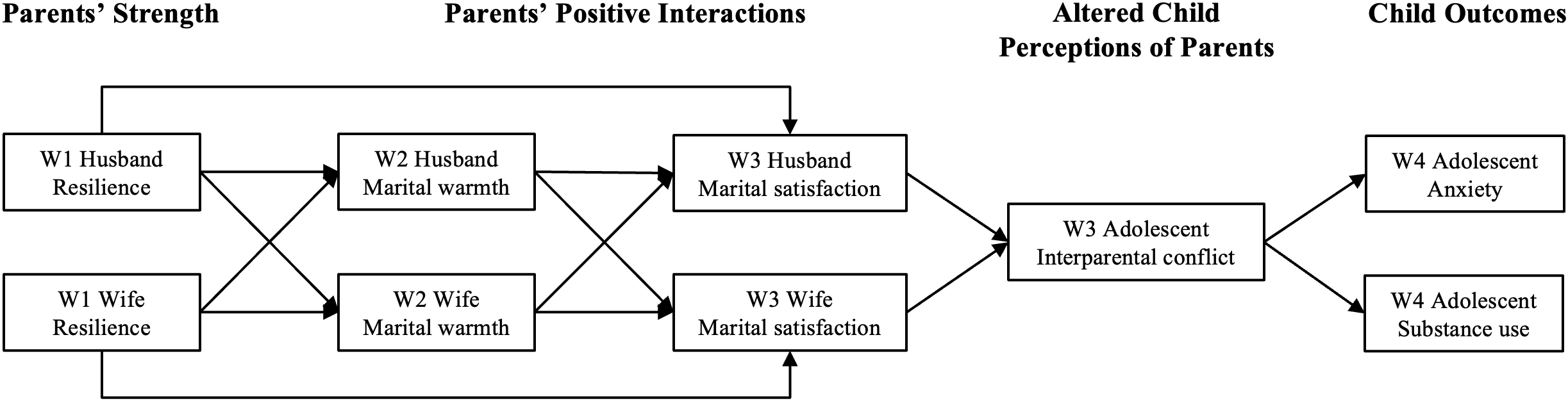
The present study tested a positive developmental cascade in which parental resilience is conceptualized as an antecedent personal resource that initiates a promotive relational sequence through more positive interpartner behaviors (i.e., marital warmth), which accumulate to inform broader relationship evaluations (i.e., marital satisfaction), and subsequently influence adolescents’ perceptions of interparental conflict that ultimately implicate adolescents’ anxiety and substance use, drawing on four waves of data from 604 Mexican-origin families.
Two sequential analytic steps were taken. First, an APIM was used to establish the dyadic pathways linking parental resilience to marital functioning, distinguishing actor effects (i.e., each partner’s resilience predicting their own relational behavior and evaluations) from partner effects (i.e., each partner’s resilience predicting the other’s relational behavior and evaluations). Second, a full developmental cascade linking Wave 1 parental resilience to Wave 4 adolescent anxiety and substance use through Wave 2 marital warmth, Wave 3 marital satisfaction, and adolescents’ Wave 3 perceptions of interparental conflict was tested. Together, these models position parental resilience as the generative upstream resource that initiates a promotive cascade from individual strength, through marital dynamics, to adolescents’ appraisals of the family environment, and ultimately to reduced psychopathology risk in adolescents.
Method
Participants
This study utilized data from a larger four-wave longitudinal study of Mexican American families from the United States. Data collection occurred between 2012 and 2024 (Wave 1: 2012–2015; Wave 2: 2013–2016; Wave 3: 2017–2020; Wave 4: 2021–2024). At Wave 1, the sample included 596 wives (M age = 38.40, SD = 5.74), 293 husbands (M age = 40.83, SD = 6.71), and 604 adolescents (M age = 12.41, SD = 0.97; 54.3% girls). In terms of nativity, 99.3% of wives and 98.6% of husbands were born in Mexico, and 75.3% of adolescents were born in the United States. Regarding their relationship to the target adolescent, the majority of participating wives were biological mothers (97.5%) and husbands were biological fathers (93.5%). Regarding family structure, mothers reported varied marital statuses, including married (68.0%), cohabiting with a partner (16.8%), single (6.7%), separated (6.0%), divorced (1.8%), widowed (0.5%), and other (0.2%). Adolescents’ reports corroborated this distribution, with 83.8% reporting that their parents were married or living together in a marriage-like relationship. The participation rate of fathers (48.5% at Wave 1) was notably lower than that of mothers (98.7%) and adolescents (100%) at Wave 1, consistent with the diverse family structures represented in the sample. At Wave 1, the median and mean household income ranged from $20,001 to $30,000, and the median highest education level for both couples was some middle school/junior high school. Retention rates decreased across waves (Wave 2: 81% wives, 66% husbands; Wave 3: 55% wives, 39% husbands, 55% adolescents; Wave 4: 44% adolescents). A priori power analysis was not conducted before data collection, and all available participants were included in the study due to attrition across waves. Post-hoc power analyses using Monte Carlo simulations (1,000 replications) indicated that the sample had sufficient power (0.80) to detect small effect sizes (β = 0.11–0.12). Attrition analyses indicated that couples who continued to stay in the study through Wave 2 and Wave 3 had higher education levels (t wife(591) = −2.54, t husband(283) = −4.87, ps < .05 for Wave 2; t wife(591) = −3.16, t husband(291) = −3.12, ps < .01 for Wave 3). Adolescents who continued participation through Wave 3 were younger (t(557) = 3.49, p = .001) and who continued through Wave 4 were more likely to be girls (t(570) = −3.02, p = .003). Therefore, couples’ education levels and age and adolescents’ gender and age were included as covariates in subsequent analyses.
Procedure
Participants were recruited through a convenience sampling approach via public records, school presentations, and community recruitment in central Texas in the United States. Research assistants distributed project information letters and permission slips to potential participants. Families who signed and returned the slip underwent eligibility screening based on three criteria: (1) Mexican heritage, (2) having a middle school child, and (3) the child’s involvement in language translation between English and Spanish for at least one parent. Following rigorous translation and back-translation protocols, bilingual and bicultural interviewers conducted in-home visits using questionnaires available in both English and Spanish. Interviewers verbally administrated questionnaires and recorded responses on laptop computers during sessions that typically lasted one and a half to two hours. The same procedures were applied across four waves, with the exception that the Wave 4 meeting was conducted via Zoom. To ensure confidentiality and encourage honest response, adolescents were provided with their own survey links to complete the substance use measures privately during the meeting with the research assistants. Data collection for Wave 2 data occurred approximately one year after Wave 1, Wave 3 was conducted roughly four years after Wave 2, and Wave 4 was conducted roughly four years after Wave 3. Families received compensation across waves ($60 at Wave 1; $90 at Wave 2 and 3; $70 at Wave 4). All procedures received approval from the Institutional Review Board at the University of Texas at Austin. This study was not preregistered. The data that support the findings of this study are not publicly available; however, the codebook for variables used in the present study and analytic syntax and output files are available online at https://osf.io/49s5j/overview?view_only=a332f758dcda42e58f60f0bc67f841f3.
Measures
Resilience
Resilience was measured at Wave 1 using three items from the Connor and Davidson (Reference Connor and Davidson2003) Resilience Scale. In this study, resilience was operationalized as parents’ perceived ability to cope with challenges, adapt to difficulties, and persist after setbacks, that have been previously used with Mexican-origin families (Kim et al., Reference Kim, Hou, Shen and Zhang2017). Both couples reported on their agreement with each statement on a 5-point Likert scale ranging from 1 (strongly disagree) to 5 (strongly agree). Sample items included “I can deal with whatever comes” and “I am not easily discouraged by failure.” Higher mean scores reflect a greater sense of resilience, particularly perceived coping capacity and persistence in response to stress or failure (α wife = 0.84, α husband = 0.87 at Wave 1).
Marital warmth
Both couples reported their warmth toward partners at Waves 1 and 2 using seven items adopted from Matthews et al. (Reference Matthews, Wickrama and Conger1996). Participants reported how often they engaged in these behaviors during the past month on a 7-point scale Likert ranging from 1 (never) to 7 (always). Sample items included “help your partner do something that was important to him/her” and “let your partner know you really love him/her.” Higher scores reflect stronger marital warmth (α wife = 0.88, α husband = 0.84 at Wave 1; α wife = 0.89, α husband = 0.87 at Wave 2).
Marital satisfaction
Marital satisfaction was measured at Waves 1 and 3 using three items adapted from the Couples Satisfaction Index (Funk & Rogge, Reference Funk and Rogge2007). Both wives and husbands answered to what extent they agreed with three statements regarding their relationship quality on a 5-point scale ranging from 1 (strongly disagree) to 5 (strongly agree). Sample items included “my relationship with my partner is better compared to other couples” and “in general, I am satisfied in my relationship with my partner.” Higher mean scores reflect greater marital satisfaction (α wife = 0.73, α husband = 0.69 at Wave 1; α wife = 0.77, α husband = 0.74 at Wave 3).
Interparental conflict
Interparental conflict exposed to adolescents was assessed at Waves 1 and 3 using five items adapted from the Children’s Perception of Interparental Conflict Scale (CPIC; Grych et al., Reference Grych, Seid and Fincham1992), which measures multiple aspects of conflict, including but not limited to conflict intensity and resolution on a 5-point scale ranging from 1 (not at all true) to 5 (very true). Sample items included “My parents yell a lot when they argue” and “When my parents disagree about something, they cannot come up with a solution.” Higher mean scores reflect higher levels of interparental conflict (α = 0.73 at Wave 1; α = 0.82 at Wave 3).
Anxiety
Adolescents reported the frequency in the last two weeks of experiencing anxiety-related symptoms at Waves 1 and 4 on four items from previous studies (Reynolds & Richmond, Reference Reynolds and Richmond1978; Spitzer et al., Reference Spitzer, Kroenke, Williams and Löwe2006). Sample items include “Feeling nervous, anxious or on edge,” and “Worrying about what is going to happen.” Responses were recorded on a scale ranging from 1 (not at all) to 4 (nearly every day). Higher mean scores reflect higher levels of anxiety (α = 0.75 at Wave 1; α = 0.81 at Wave 4).
Substance use
Adolescents reported on their lifetime substance use only at Wave 4 by answering three questions adapted from the 2011 Youth Risk Behavior Survey (YRBS; Centers for Disease Control and Prevention, 2012), including “During your lifetime, how many times have you used marijuana (pot, weed)?” “During your lifetime, how many days have you smoked cigarettes?” and “During your lifetime, how many days have you had at least one drink of alcohol?” Responses were recorded on a scale ranging from 0 (0 times) to 6 (100 or more times). Higher mean scores reflect higher levels of lifetime substance use (α = 0.71 at Wave 4).
Analytical plan
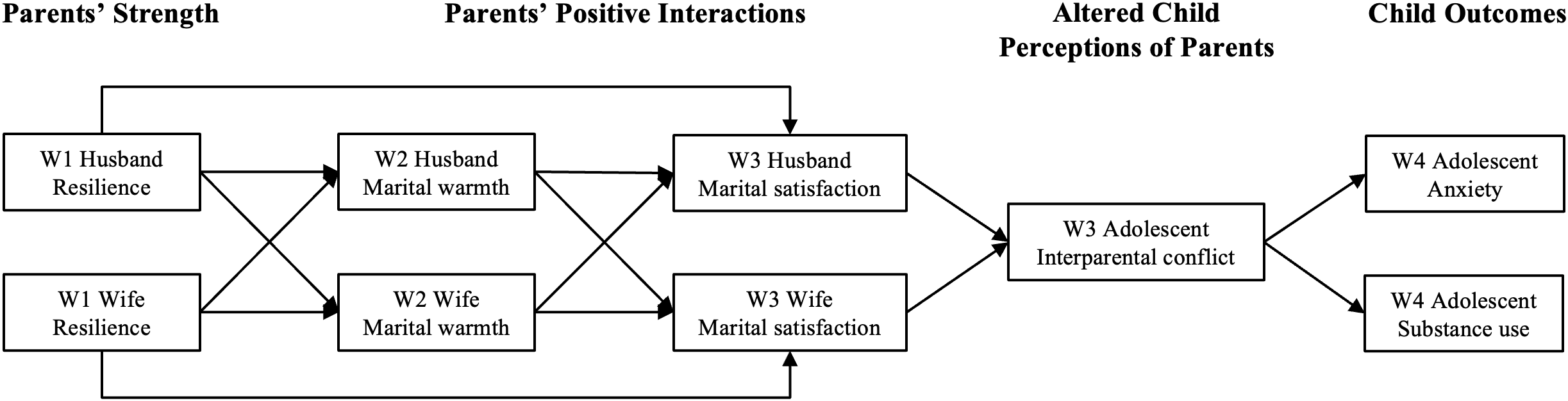
All analyses were conducted with Mplus 8.3 (Muthén & Muthén, 1998-2016). Missing data were handled using full information maximum likelihood (FIML) estimation. Given higher missingness in husband-reported data, we examined whether husband participation was linked to demographic characteristics and key study variables. Husband participation was associated with wife marital status (χ 2(6) = 79.14, p < .001) and adolescent sex (χ 2(1) = 10.63, p = .001) but was not associated with most other focal study variables. Thus, data was treated as missing at random, given missingness pattern appeared to be largely related to observed characteristics. FIML was used to retain all available data and reduce potential bias compared with listwise deletion (Enders, Reference Enders2022; Enders & Bandalos, Reference Enders and Bandalos2001). The conceptual model is shown in Figure 1. First, this study examined whether Wave 1 wives’ and husbands’ resilience predicted Wave 3 marital satisfaction through the mediating effect of Wave 2 marital warmth. The Actor-Partner Independence Model (APIM; Cook & Kenny, Reference Cook and Kenny2005) was used to capture both intrapersonal associations (actor effects; i.e., husband’s/wife’s resilience predicting their own marital warmth) and interpersonal associations (partner effects; e.g., husband’s resilience predicting wife’s marital warmth). Covariance between husband’s and wife’s reports were accounted for in each study variable. Second, a longitudinal mediation model tested the spillover positivity hypothesis by examining whether Wave 1 maternal and paternal resilience indirectly predicted Wave 4 adolescent anxiety and substance use through Wave 2 marital warmth, Wave 3 marital satisfaction, and Wave 3 interparental conflict. Husband’s and wife’s age and education levels were included as covariates predicting Wave 2 marital warmth and Wave 3 marital satisfaction. Adolescents’ age and gender were included as covariates predicting Wave 3 interparental conflicts and Wave 4 anxiety.
Conceptual model based on interparental positivity spillover theory.
Model fit was assessed with indices in Mplus such as the Comparative Fit Index (CFI), Tucker–Lewis Index (TLI), Root Mean Square Error of Approximation (RMSEA), and Standardized Root Mean Square Residual (SRMR), along with their 90% confidence intervals. An acceptable model fit was determined by CFI and TLI values ≥ 0.90 and RMSEA and SRMR values ≤ 0.08 (Hu & Bentler, Reference Hu and Bentler1999). Indirect effects and 95% confidence intervals were estimated using a bootstrapping technique with replication of 2,000.
Notably, the primary cascade model did not include any autoregressive paths (i.e., W1 marital warmth, marital satisfaction, interparental conflict, and anxiety) because marital and family-process constructs of this kind tend to show substantial rank-order stability across multi-year intervals (e.g., Bühler & Orth, Reference Bühler and Orth2022, for marital satisfaction). Controlling for their baseline levels substantially reduces variance available for resilience to predict, and conditioning on baseline levels risks partialling out the very developmental change the cascade model is designed to detect (Cole & Maxwell, Reference Cole and Maxwell2003). As the present design nonetheless departs from a more conservative autoregressive specification typical of longitudinal mediation work, a sensitivity analysis controlling for baseline levels of the mediators (i.e., couples’ marital warmth, marital satisfaction, and adolescents’ perceptions of interparental conflict) and outcomes (i.e., adolescents’ anxiety) was conducted to evaluate the robustness of the primary model. Substance use was not assessed at baseline and therefore could not be included as a baseline control.
Results
Preliminary analyses
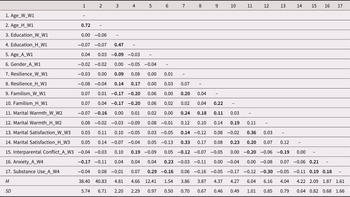
The descriptive statistics and correlations of study variables are presented in Table 1. Overall, resilience, marital warmth, and satisfaction were positively correlated with each other. Wife-reported resilience, marital warmth, and marital satisfaction were negatively correlated with adolescent-reported interparental conflict (rs = −0.12 − −0.20); interparental conflict was positively correlated with adolescent anxiety (r = .21) and substance use (r = .19).
Correlations among variables
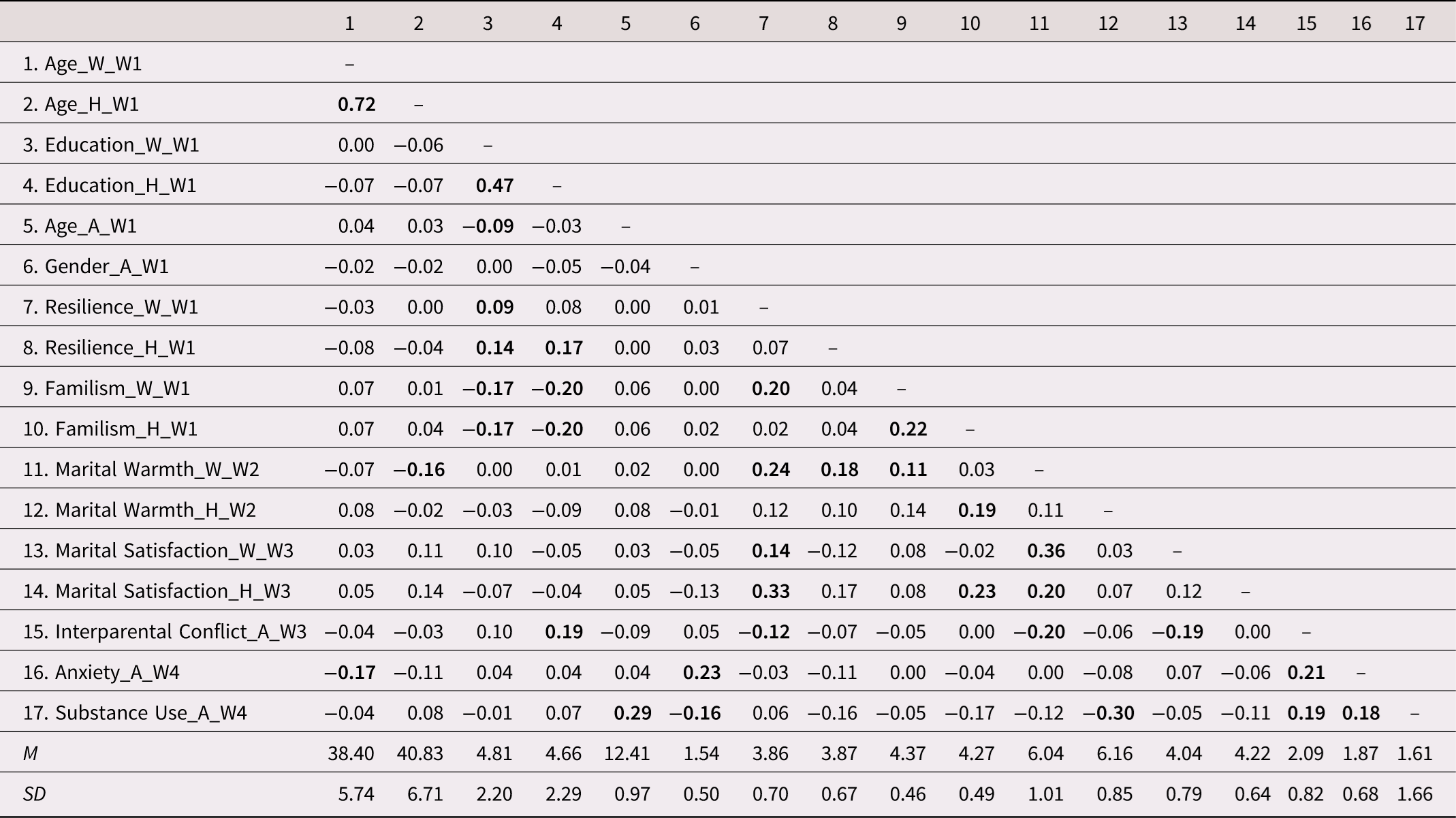
Table 1. Long description
A table with 17 rows and 17 columns displaying correlations among different study variables. The table includes row labels and column headers, both labeled with variable names and time points. Each cell contains a correlation coefficient value. The variables include age, education, resilience, familism, marital warmth, marital satisfaction, interparental conflict, anxiety, and substance use, reported by wives, husbands, and adolescents at different time points (W1, W2, W3, W4). Notable trends include positive correlations among resilience, marital warmth, and marital satisfaction, and negative correlations between wife-reported resilience, marital warmth, marital satisfaction, and adolescent-reported interparental conflict.
Note: W = Wife-reported, H = Husband-reported, A = Adolescent-reported. Bold denotes significant correlations.
W1 = Wave 1, W2 = Wave 2, W3 = Wave 3, W4 = Wave 4.
Before testing the spillover positivity hypothesis, an actor-partner interdependence mediation model was tested where marital warmth mediated the relationship between wives’ and husbands’ resilience and their marital satisfaction (see Figure S1). The model fit was good: χ 2 = 5.057, df = 8, p > .05, CFI = 1.000, TLI = 1.250, RMSEA = 0.000, 90% CI = [0.000, 0.050], SRMR = 0.019. Results showed significant actor effects from wife’s resilience to wife’s marital warmth (β = 0.25, p < .001) and from wife’s marital warmth to wife’s marital satisfaction (β = 0.31, p = .01), as well as significant partner effects from husband’s resilience to wife’s marital warmth (β = 0.19, p = .03) and from wife’s resilience to husband’s marital satisfaction (β = 0.26, p = .02). The indirect effects of both partners’ resilience to wife’s marital satisfaction through wife’s marital warmth were significant (indirect effect = 0.075, 95% CI = [0.019, 0.174] for wife’s resilience; indirect effect = 0.058, 95% CI = [0.010, 0.131] for husband’s resilience; see Table S1).
The mediation model of spillover positivity
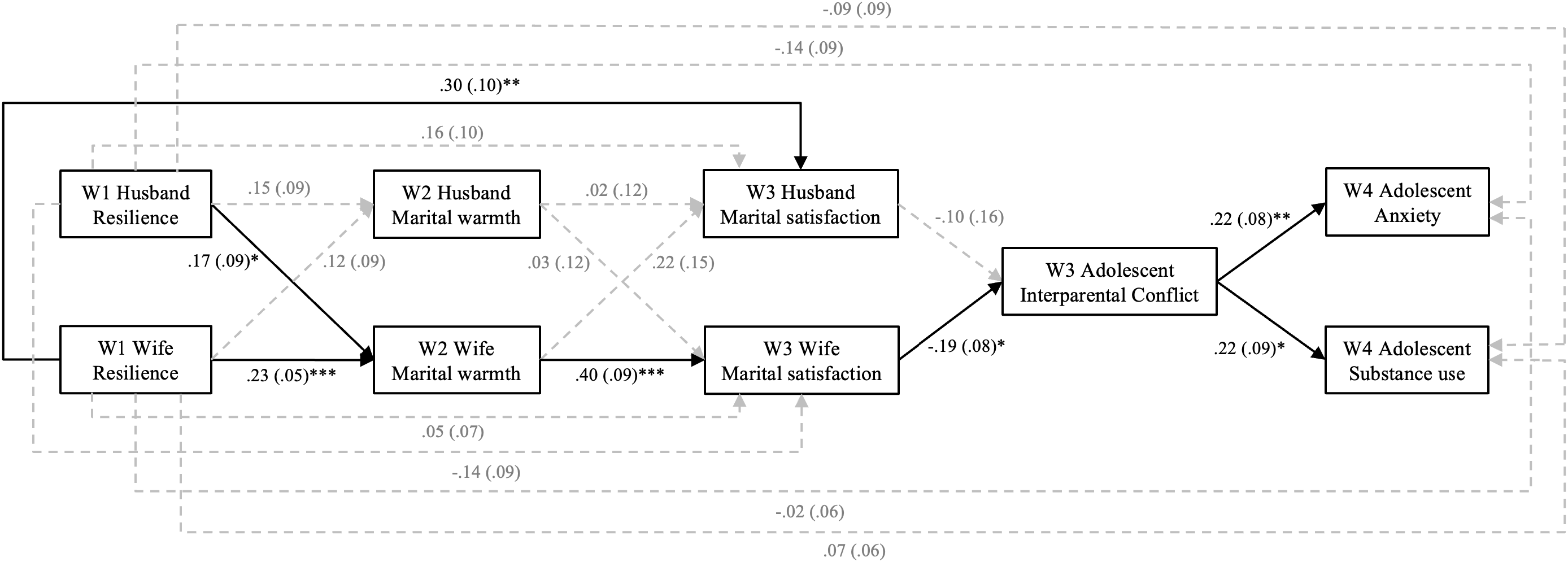
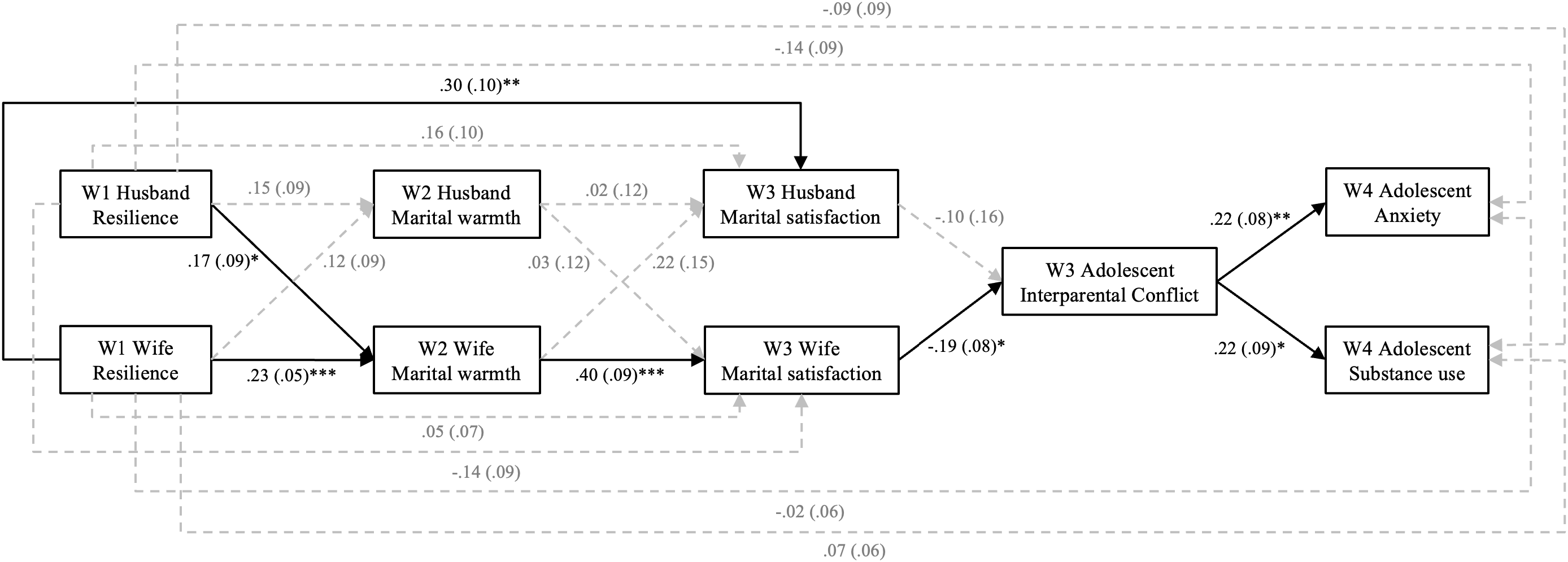
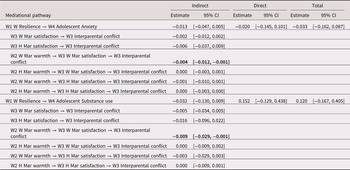
The model tested the indirect effect of Wave 1 couple’s resilience on Wave 4 adolescent anxiety and substance use through Wave 2 marital warmth, Wave 3 marital satisfaction, and Wave 3 interparental conflict (see Figure 2). The model showed good fit: χ 2 = 49.854, df = 44, p > .05, CFI = 0.964, TLI = 0.937, RMSEA = 0.015, 90% CI = [0.000, 0.032], SRMR = 0.053. The results show that higher level of both wives’ and husbands’ resilience was associated with increased wives’ marital warmth (β = 0.23, p < .001 for wife’s resilience; β = 0.17, p = .045 for husband’s resilience), which in turn predicted higher levels of wife’s marital satisfaction (β = 0.40, p < .001) and then lower levels of adolescents’ perceptions of interparental conflict (β = −0.19, p = .020), which subsequently lead to increased adolescent anxiety (β = 0.22, p = .006) and increased substance use (β = 0.22, p = .010). The indirect effects were presented in Table 2 and Table S2; specifically, indirect effects from Wave 1 wife’s resilience to Wave 4 adolescent anxiety and substance use, though Wave 2 wife’s marital warmth, Wave 3 wife’s satisfaction, and Wave 3 adolescents’ perception of interparental conflict, were both significant (anxiety: indirect effect = −0.004, 95% CI = [−0.012, −0.001]; substance use: indirect effect = −0.009, 95% CI = [−0.029, −0.001]).
Mediation model of spillover positivity with standardized coefficients.
Note: *p <.05, **p <.01, ***p <.001. Bold paths denote significant coefficients; gray and dashed paths denote nonsignificant coefficients. W1 = Wave 1, W2 = Wave 2, W3 = Wave 3, W4 = Wave 4.
Direct, indirect, and total effects for the mediation model of spillover positivity from wife’s resilience
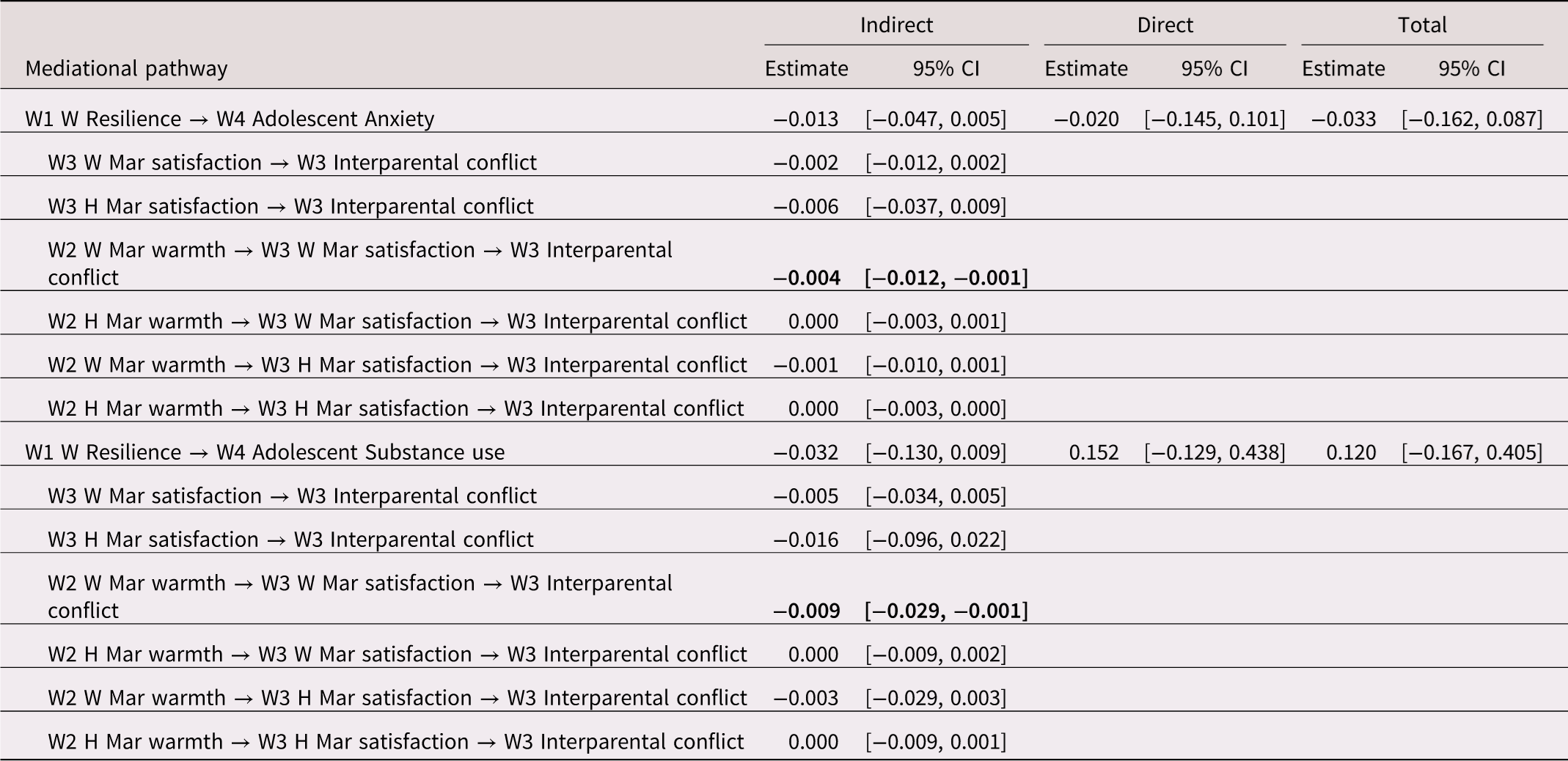
Table 2. Long description
A table with 12 rows and 7 columns. The columns are labeled ‘Mediational pathway’, ‘Indirect Estimate’, ‘Indirect 95% CI’, ‘Direct Estimate’, ‘Direct 95% CI’, ‘Total Estimate’, and ‘Total 95% CI’. The rows list different mediational pathways and their corresponding estimates and confidence intervals. Row 1: W1 W Resilience -> W4 Adolescent Anxiety, Indirect Estimate -0.013, Indirect 95% CI [-0.047, 0.005], Direct Estimate -0.020, Direct 95% CI [-0.145, 0.101], Total Estimate -0.033, Total 95% CI [-0.162, 0.087]. Row 2: W3 W Mar satisfaction -> W3 Interparental conflict, Indirect Estimate -0.002, Indirect 95% CI [-0.012, 0.002], Direct Estimate -0.006, Direct 95% CI [-0.037, 0.009], Total Estimate -0.004, Total 95% CI [-0.12, -0.001]. Row 3: W2 W Mar warmth -> W3 W Mar satisfaction -> W3 Interparental conflict, Indirect Estimate -0.004, Indirect 95% CI [-0.012, -0.001], Direct Estimate 0.000, Direct 95% CI [-0.003, 0.001], Total Estimate -0.004, Total 95% CI [-0.012, -0.001]. Row 4: W2 H Mar warmth -> W3 W Mar satisfaction -> W3 Interparental conflict, Indirect Estimate -0.001, Indirect 95% CI [-0.010, 0.001], Direct Estimate 0.000, Direct 95% CI [-0.003, 0.000], Total Estimate -0.001, Total 95% CI [-0.010, 0.001]. Row 5: W1 W Resilience -> W4 Adolescent Substance use, Indirect Estimate -0.032, Indirect 95% CI [-0.130, 0.009], Direct Estimate 0.152, Direct 95% CI [-0.129, 0.438], Total Estimate 0.120, Total 95% CI [-0.167, 0.405]. Row 6: W3 W Mar satisfaction -> W3 Interparental conflict, Indirect Estimate -0.005, Indirect 95% CI [-0.034, 0.005], Direct Estimate -0.016, Direct 95% CI [-0.096, 0.022], Total Estimate -0.009, Total 95% CI [-0.029, -0.001]. Row 7: W2 W Mar warmth -> W3 W Mar satisfaction -> W3 Interparental conflict, Indirect Estimate -0.009, Indirect 95% CI [-0.029, -0.001], Direct Estimate 0.000, Direct 95% CI [-0.009, 0.002], Total Estimate -0.009, Total 95% CI [-0.029, -0.001]. Row 8: W2 H Mar warmth -> W3 W Mar satisfaction -> W3 Interparental conflict, Indirect Estimate -0.003, Indirect 95% CI [-0.029, 0.003], Direct Estimate 0.000, Direct 95% CI [-0.009, 0.001], Total Estimate -0.003, Total 95% CI [-0.029, 0.003].
Note: Bold denotes significant indirect effects. W = Wife, H = Husband, Mar = Marital.
W1 = Wave 1, W2 = Wave 2, W3 = Wave 3, W4 = Wave 4.
Sensitivity analyses
The current study estimated the cascade model controlling for Wave 1 levels of the mediators (i.e., couples’ marital warmth, marital satisfaction, and adolescents’ perceptions of interparental conflict) and outcomes (i.e., adolescents’ anxiety). Because substance use was not assessed at Wave 1, baseline substance use could not be included as a control. Model fit showed that RMSEA and SRMR indicated acceptable fit, whereas CFI and TLI fell below conventional cutoffs (χ 2 = 183.116, df = 108, p < .001, CFI = 0.837, TLI = 0.820, RMSEA = 0.035, 90% CI = [0.026, 0.043], SRMR = 0.064). The result are shown in Figure S2. After baseline adjustment, the paths from husbands’ resilience to wives’ marital warmth (β = 0.12, p = .129) and from wives’ resilience to wives’ marital warmth (β = 0.04, p = .424) were attenuated to non-significance. However, the downstream paths from wives’ marital warmth to wives’ marital satisfaction (β = 0.24, p = .009), from wives’ marital satisfaction to adolescents’ perceptions of interparental conflict (β = −0.13, p = .034), and from interparental conflict to adolescent anxiety (β = 0.16, p = .020) and substance use (β = 0.22, p = .005) remained significant. This pattern suggests that parental resilience may be associated with stable differences in marital warmth rather than short-term changes in warmth, whereas the downstream spillover process from marital behavior and evaluation to adolescent perceptions and adjustment remained relatively robust.
Discussion
The present study examined how parental resilience, as an individual-level resource, cascades through the marital relationship to shape adolescents’ adjustment in Mexican-origin families (Chassin et al., Reference Chassin, Sher, Hussong and Curran2013; Luthar, Reference Luthar2015). Findings revealed a promotive developmental cascade in which wives’ resilience predicted greater marital warmth, which in turn predicted higher marital satisfaction, lower adolescent-perceived interparental conflict, and ultimately reduced adolescent anxiety and substance use, with wives’ resilience also exerting an indirect effect on adolescent outcomes through this full cascade. These results extend IPST (Don et al., Reference Don, Simpson, Fredrickson and Algoe2025) by identifying parental resilience as the upstream individual-level resource that initiates positivity spillover, a question IPST leaves unaddressed, while advancing Luthar’s relational resilience framework by specifying the interparental mechanisms through which individual-level strengths translate into adolescent developmental outcomes (Luthar & Zelazo, Reference Luthar and Zelazo2003; Luthar et al., Reference Luthar, Lyman and Crossman2014). These patterns are consistent with IPST’s proposition that positive interparental interactions shape children’s adjustment through their appraisals of the parental relationship (Don et al., Reference Don, Simpson, Fredrickson and Algoe2025; Fosco & Feinberg, Reference Fosco and Feinberg2015, Reference Fosco and Feinberg2018) and with Luthar’s framework in which resilience operates not as a static attribute but as a dynamic process enacted within relational systems, here manifesting through marital warmth and satisfaction that reorganize adolescents’ experiences of the family environment (Luthar, Reference Luthar2015). Critically, the findings demonstrate that the mechanisms linking family functioning to adolescent psychopathology are not exclusively risk-driven; promotive relational processes, initiated by parental personal resources, represent an equally consequential pathway.
Rather than focusing solely on the detrimental consequences of interparental conflict, our findings suggest that positive marital dynamics may also function as promotive processes that reduce adolescents’ emotional distress and decrease their reliance on substances as a coping strategy, complementing developmental psychopathology perspectives that highlight family relationships as mechanisms linking stress exposure to internalizing symptoms and maladaptive coping behaviors (Luthar et al., Reference Luthar, Cicchetti and Becker2000). In this way, the present study extends existing spillover research by illustrating how parental strengths, specifically resilience, may initiate relational dynamics that promote a more harmonious family environment. This effect may be especially salient in Mexican-origin families, where prevailing cultural norms emphasize family cohesion and lead adolescents to place a high value on harmonious family ties (Germán et al., Reference Germán, Gonzales and Dumka2009; Zamudio et al., Reference Zamudio, Wang and Jin2020), making interparental relationship disruptions particularly distressing and positive, harmonious dynamics especially promotive. Moreover, in cultural contexts where socioeconomic resources may be particularly scarce and sustained parental investment can be challenging, positive resources such as parental resilience and warm marital dynamics may be valuable leverage points for initiating upward cascades of adaptation (Doty et al., Reference Doty, Davis and Arditti2017). By identifying the marital relationship as a key protective resource, the work here suggests that interventions should prioritize strengthening parental resources, in addition to mitigating stress exposure, to promote warm, low-conflict couple dynamics and healthier youth adjustment.
The comparison between primary and sensitivity models clarifies what parental resilience and marital warmth in the primary cascade does, and does not, represent. Once W1 marital warmth, satisfaction, and adolescents’ perceptions of interparental conflict were held constant, the direct paths from both partners’ resilience to wives’ marital warmth were attenuated and became nonsignificant, while the downstream paths from warmth to satisfaction, to adolescents’ perceptions of interparental conflict, to anxiety, and substance use remained significant in both models. As marital processes such as satisfaction and warmth tend to be highly stable across the intervals separating waves (Bühler & Orth, Reference Bühler and Orth2022), controlling for their baseline likely removes most of the between-person variance available for resilience to predict, shifting the sensitivity model’s interpretation from a prospective developmental cascade to a more stringent residualized-change model. In this way, the models’ results most plausibly suggest that parental resilience may not be related to short-term changes in marital warmth, whereas the consistency of the downstream cascade (warmth to satisfaction, to adolescents’ perceptions of conflict, to anxiety and substance use) across both specifications indicates that this portion of the cascade remained robust to baseline adjustment. The unconditioned model was retained as the primary analysis because it corresponds to the hypothesized prospective cascade that motivated the study; the attenuation of the resilience to warmth paths under baseline adjustment refines this picture, where the stable trait-like component of marital warmth appears to carry the downstream cascade forward to shape adolescents’ developmental outcomes.
Notably as well, gendered effects were observed such that wives’ effects were more prominent than husbands’ effects in both the direct and indirect pathways, highlighting the particularly salient role of wives in shaping family emotional climate. Specifically, wives’ resilience predicted their own warmth and satisfaction via actor effects, whereas husbands’ resilience predicted wives’ warmth via partner effects, and both partners’ resilience indirectly predicted wives’ marital satisfaction through wives’ warmth. These patterns are in line with prior research highlighting wives’ emotion regulation as a stronger predictor of both partners’ marital satisfaction and conflict dynamics than husbands’ (Bloch et al., Reference Bloch, Haase and Levenson2014), and with evidence that wives’ personal strengths and warmth are more consistently linked to and may be a key leverage for improving couple functioning. Results are also aligned with prior work showing that maternal warmth and acceptance have been more consistently linked to youths’ internalizing symptoms more so than paternal behaviors (Jones et al., Reference Jones, Forehand and Beach2000; Rodríguez et al., Reference Rodríguez, Perez-Brena, Updegraff and Umaña-Taylor2014; Zhang et al., Reference Zhang, Wang, Li and Chen2024).
Our results here also echo Luthar’s emphasis on the central role of emotionally supportive relationships in fostering resilience. In many family contexts, wives often serve as key emotional regulators within the household, suggesting that maternal resilience may be more directly translated into observable relational processes that shape broader family climates (Luthar & Sexton, Reference Luthar and Sexton2007). It is possible that the Mexican-origin context amplifies these effects as women typically occupy primary caregiving roles; thus, adolescents have been socialized to attend more closely to maternal behavioral and emotional cues (DiGirolamo & Salgado de Snyder, Reference DiGirolamo and Salgado de Snyder2008; Pakaluk & Price, Reference Pakaluk and Price2020). At the same time, existing research indicates that Mexican-origin husbands are traditionally expected to emphasize authority, provision, and indirect forms of care over overt emotional expressiveness, leading adolescents to experience paternal warmth as more duty-based and less consistently demonstrative than maternal warmth (Cabrera & Bradley, Reference Cabrera and Bradley2012; Karberg et al., Reference Karberg, Guzman, Cook, Scott and Cabrera2017). As a result, adolescents from Mexican-origin families may be more attuned to their mothers’ emotional cues about family climate and conflict while interpreting fathers’ warmth through the lens of respect, responsibility, and rule-setting, rendering it less salient for adolescent-perceived interparental conflict. For instance, recent work suggests that adolescents perceive maternal parenting behaviors as more differentiated and nuanced than paternal behaviors, with maternal psychological control viewed as multifaceted while paternal psychological control was perceived as more unidimensional (Romm & Alvis, Reference Romm and Alvis2022). Future studies could extend the work here by examining how specific paternal behaviors (e.g., guidance, monitoring, instrumental support) versus maternal emotional cues differentially predict adolescents’ interpretations of interparental conflict across developmental periods. An important next step would be to examine whether enhancing parental resilience produces comparable downstream changes in husbands’ versus wives’ marital warmth and satisfaction and whether these processes differentially relate to adolescents’ psychopathology and outcomes. Importantly, these findings should not be interpreted to suggest that husbands are less important or that wives should bear greater responsibility for family functioning. Rather, they reflect differential pathways through which resilience is expressed within specific sociocultural contexts.
Limitations
Despite its contributions, this study also has constraints that should be acknowledged. First, the sample consisted solely of Mexican-origin families, which may constrain the extent to which the findings can be generalized to couples from other ethnic, cultural, or regional backgrounds. At the same time, resilience is a broad personal strength likely relevant across many cultural contexts, and focusing on Mexican-origin families offers added value about how it operates within a context of strong family ties and distinct gender-role expectations in ways that may also inform work with other cultural groups (Luthar et al., Reference Luthar, Kumar and Benoit2019; Ungar & Theron, Reference Ungar and Theron2020). Future studies should therefore test whether similar resilience-based processes emerge in the marital and family systems of more culturally and socioecologically diverse samples.
Secondly, while the longitudinal design provides important insight into long-term effects of parental strengths on marital and adolescent outcomes, the longer four-year gaps between waves possibly overlooks short-term processes and unmeasured life changes (e.g., economic shifts, migration changes, major stressors) that could alter both marital functioning and youth adjustment. Day-to-day dynamics such as minor conflicts or small acts of support are also not captured, which may partly obscure some associations (Totenhagen et al., Reference Totenhagen, Serido, Curran and Butler2012). Nonetheless, the extended intervals remain informative for showing how relatively enduring strengths relate to relationship and psychopathology outcomes over substantial periods.
Thirdly, this study focused exclusively on parental resilience as the central personal strength, even though other strengths likely also contribute to marital functioning and adolescents’ internalizing symptoms and substance use. Other strengths such as optimism, emotion regulation, and coping flexibility have been identified as key resilience-related resources in families that are also linked to youth well-being, psychopathology, and anxiety risk (Anderson et al., Reference Anderson, Siciliano, Gruhn, Bettis, Reising, Watson, Dunbar and Compas2024; Castro-Schilo et al., Reference Castro-Schilo, Taylor, Ferrer, Robins, Conger and Widaman2013). However, resilience was chosen as the focal strength because it is broadly relevant across contexts and addresses calls in resilience scholarship, including Luthar’s work, to examine how adults’ strengths in high-adversity settings support children’s adaptation (Luthar, Reference Luthar2015; Luthar et al., Reference Luthar, Cicchetti and Becker2000). Future research should test whether these additional strengths show similar or distinct spillover pathways through marital processes and adolescents’ perceptions of interparental conflict and whether particular combinations or profiles of parental strengths confer greater protection for adolescent adjustment than resilience alone (Sim et al., Reference Sim, Song, Ip, Costa, Wen and Kim2024). Relatedly, more work could be channeled to examine parental resilience in explicit interaction with risk indices such as socioeconomic stress or immigration-related strain to test whether the promotive cascade documented here is moderated by adversity level.
Conclusion
Altogether, parents’ resilience emerged as a core resource that shapes marital functioning and adolescent adjustment in Mexican-origin families. In this way, the findings here align with Luthar’s work on resilience and underscore the resilience construct as a process embedded within familial relationships that structure family emotional climates and shape adolescents’ developmental contexts (Luthar et al., Reference Luthar, Crossman and Small2015). Notably, positivity spillover was evident (Don et al., Reference Don, Simpson, Fredrickson and Algoe2025): higher parental resilience supported warmer, more satisfying marital dynamics, which in turn were linked to lower adolescent anxiety and substance use via reduced perceptions of interparental conflict and a more positive family climate. The prominence of maternal pathways and the gendered pattern of partner effects further highlight cultural and gender-structured family roles influencing these protective processes, underscoring the importance of situating personal strengths in relevant sociocultural contexts. Collectively, the findings suggest that family-based interventions that bolster both parents’ internal resources may offer a promising strategy for promoting youth’s emotional and behavioral health and the overall marital climate in Mexican-origin families. In doing so, strengthening parental resilience may provide families with an added avenue to counteract the sociocultural stressors that threaten the emotionally secure climate needed for youth to thrive. Future work should therefore examine how strengths-focused, family-based programs can be tailored and implemented in high-adversity contexts to maximize benefits for marital flourishing and healthier adolescent adjustment.
Supplementary material
The supplementary material for this article can be found at https://doi.org/10.1017/S0954579426102016.
Data availability statement
Availability of data: The raw data are not publicly available due to restrictions on the original data collection agreement.
Availability of code: The analytic syntax and output files are available online at OSF: https://osf.io/49s5j/overview?view_only=a332f758dcda42e58f60f0bc67f841f3.
Availability of methods/material: The codebook for variables used in the present study is available at the OSF link above.
Funding statement
This research was supported through awards to Su Yeong Kim from (1) National Science Foundation, Division of Behavioral and Cognitive Sciences, 1651128 and 0956123, (2) National Institute on Minority Health and Health Disparities 5R21MD012706-02 and 3R21MD-012706-02S1, (3) Eunice Kennedy Shriver National Institute of Child Health and Human Development 5R03HD060045-02, (4) Russell Sage Foundation, 2699, (5) Spencer Foundation, 202600183 and 202100057, (6) Hogg Foundation for Mental Health JRG-102, (7) Office of the Vice President for Research and Creative Grant and Special Research Grant from the University of Texas at Austin, (8) College of Natural Sciences Catalyst Grant from the University of Texas at Austin, and (9) Eunice Kennedy Shriver National Institute of Child Health and Human Development 5P2CHD042849-22 grant awarded to the Population Research Center at The University of Texas at Austin.
Competing interests
No potential competing interest was reported by the authors.
Pre-registration statement
The current study was not preregistered. The analyses were conducted using an existing longitudinal dataset originally collected for purposes broader than this study; the specific hypotheses and analytic plan were formulated after data collection had already taken place.


 Open access

