INTRODUCTION
Uca tangeri (Brachyura: Ocypodidae; Eydoux, 1835) is an intertidal euryhaline burrowing crab which is found from southern Spain and Portugal (~37°N) through the west coast of Africa, down to Angola (~16°S) (Spivak & Cuesta, Reference Spivak and Cuesta2009; de Gibert et al., Reference de Gibert, Muñiz, Belaústegui and Hyžný2013; Rodríguez-Tovar et al., Reference Rodríguez-Tovar, Mayoral and Santos2014). Uca tangeri is the only fiddler crab species to inhabit Europe. In spite of its ecological and economical importance, few studies are available about physiological aspects of this crab (Drews & Graszynski, Reference Drews and Graszynski1983; Krippeit-Drews et al., Reference Krippeit-Drews, Drews and Graszynski1989; Mourente et al., Reference Mourente, Medina, González and Rodríguez1994). Moreover, studies on metabolic adjustments in responses to key environmental factors, such as salinity, and possible sex differences are lacking. Recently the importance of taking into account the potential sex differences in physiological studies of the euryhaline crab Carcinus maenas has been pointed out (Pennoyer et al., Reference Pennoyer, Himes and Frederich2016).
The spatial and temporal changes in environmental salinity faced by intertidal euryhaline crabs require different strategies for controlling movements of water and ions between the individuals and their medium (McNamara & Faria, Reference McNamara and Faria2012; Romano & Zeng, Reference Romano and Zeng2012; Havird et al., Reference Havird, Mitchell, Henry and Santos2016). Phenotypic flexibility implies reversible modifications within individual phenotypic traits (from molecular to organisms) which can increase the chances of survival for animals facing changes in environmental conditions (Piersma & Drent, Reference Piersma and Drent2003; Pfenning et al., Reference Pfenning, Wund, Snell-Rood, Cruickshank, Schlichting and Moczek2010; Kelly et al., Reference Kelly, Panhuis and Stoehr2012). The ability to osmoregulate is a primary physiological determinant for euryhalinity and for the occupancy of different zones within an intertidal area (Pinoni et al., Reference Pinoni, Michiels and López Mañanes2013; Larsen et al., Reference Larsen, Deaton, Onken, O'Donnell, Grosell, Dantzler and Weihrauch2014; Havird et al., Reference Havird, Mitchell, Henry and Santos2016). Hyper- and hypo-osmoregulation abilities allow maintenance of the osmotic concentration of the haemolymph within a stable range, above or below that of the aquatic environment in low and high salinities, respectively (McNamara & Faria, Reference McNamara and Faria2012; Romano & Zeng, Reference Romano and Zeng2012). Comparisons of osmoregulatory capacity (the difference between haemolymph and aquatic environment osmotic pressures at a given salinity, Lignot et al., Reference Lignot, Spanings-Pierrot and Charmantier2000) of male and females will allow evaluation of the possible differential performance upon distinct osmotic challenges depending on sex.
Compensation in response to different environmental conditions is, usually, an energy-demanding process which requires the mobilization of energy substrates to metabolically deal with challenge. Carbohydrate, lipid and protein storage and metabolites in body fluids can be altered by changing environmental conditions. Decapod crustaceans use carbohydrates, lipids and proteins as principal energy molecules but the extent of use and the relative importance of the different metabolic sources involved vary depending on species and type of challenge (Pinoni et al., Reference Pinoni, Michiels and López Mañanes2013; Jimenez & Kinsey, Reference Jimenez and Kinsey2015; Wang et al., Reference Wang, Li and Chen2016). In males of various species of decapod crustaceans, adaptation to environmental salinity is a complex process involving adjustments at the biochemical level in several tissues and organs and a metabolic reorganization (Michiels et al., Reference Michiels, del Valle and López Mañanes2013, Reference Michiels, del Valle and López Mañanes2015; Pinoni et al., Reference Pinoni, Michiels and López Mañanes2013; Chen et al., Reference Chen, Li, Li, Xu, Wang, Lin and Chen2015). Modifications in various haemolymph metabolites have been reported (Romano et al., Reference Romano, Zeng, Mat Noordin and Ng2012, Reference Romano, Wu, Zeng, Genodepa and Elliman2014; Larsen et al., Reference Larsen, Deaton, Onken, O'Donnell, Grosell, Dantzler and Weihrauch2014; Prymaczok et al., Reference Prymaczok, Pasqualino, Viau, Rodríguez and Medesani2016). The differential patterns of physiological challenges faced by males and females could result in sex differences concerning the regulation of osmotic balance and the possible associated use and distribution of energy resources. Comparative studies on metabolic adjustments at different levels in response to low and high salinity in adult male and females of a single species of euryhaline crab are scarce. The hepatopancreas, due to its central role for storage of energy substrates and synthesis of macromolecules, is a sensitive indicator for metabolism modifications related to osmoregulatory processes (Zeng et al., Reference Zeng, Ye, Li, Wang and Huang2010; Ribeiro et al., Reference Ribeiro, Papa, Vicentini and Franceschini Vicentini2014; Wang et al., Reference Wang, Lee, Sia, Wanga, Yang, Yina, Qiana and Park2014). Anterior and posterior gills also have a role as energy storage in various osmoregulating crabs although with differential degree of importance depending on species, type of energy substrate and salinity challenge (Pinoni et al., Reference Pinoni, Michiels and López Mañanes2013).
In Rio San Pedro, a shallow inlet of the salt marsh zone in the eastern shore of the Cádiz Bay, Spain (36°23′–37′N 6°8′–15′W), adult specimens of U. tangeri are exposed to a wide range of environmental salinity ranging from 12 up to 46 psu, although frequently higher values can be reached (González-Gordillo et al., Reference González-Gordillo, Arias, Rodríguez and Drake2003; Ferrón et al., Reference Ferrón, Alonso Pérez, Ortega and Forja2009; personal observations). In this context, the aims of this work were to study in both male and female specimens of U. tangeri from the Rio San Pedro population: (i) osmoregulatory pattern and capacity, and (ii) the influence of different environmental salinities (12, 33 and 55 psu) implying distinct osmoregulatory responses (hyper-osmoregulation; osmoconformation; hypo-osmoregulation) on metabolic parameters in the haemolymph as well as on energy reserves content in key storage organs (hepatopancreas and gills). We determined osmolality, glucose, amino acids, triglycerides and lactate concentration in haemolymph, as well as glycogen, free glucose, amino acid and triglyceride values in hepatopancreas and anterior and posterior gills. This work will increase the knowledge on the metabolic response to changes in environmental salinity of osmoregulating crabs as well as the variability in relation to sex.
MATERIALS AND METHODS
Animal collection and maintenance
Adult intermoult males and females (non-ovigerous) of U. tangeri were caught during early autumn (September 2013) by hand at low tides in Rio San Pedro, a shallow inlet of the salt marsh zone in the eastern shore of the Cádiz Bay, Spain (36°23′–37′N 6°8′–15′W). The bay is under a strong tidal and wind regime, and in summer air temperatures can reach up to 35°C. In these conditions, and in some places where the water exchange is low (such as growing fish ponds), we can find 55 psu-water and also regular populations of this burrowing crab. Crabs were placed in 50 l buckets with some stones to allow them the possibility to emerge from water. The immersion pattern of crabs was not affected by salinity. Crabs were transported on the day of collection in the same water of the site of collection under continuous aeration to the wet laboratory at the Department of Biology (Faculty of Marine and Environmental Sciences, University of Cádiz). Specimens were acclimated to different environmental salinities: (i) diluted seawater (12 psu, 287 mOsm kg−1), (ii) seawater (33 psu, 765 mOsm kg−1) or (iii) concentrated seawater (55 psu, 1386 mOsm kg−1) for one week before sampling. A period of one week of acclimation is standard for biochemical and metabolic studies in various crabs (i.e. Figuereido & Anderson, 2009; Jin et al., 2011, Reference Jin, Li, Cheng, Li, Guo, Yu, Wu, He and Wang2012; Ninlanon, Reference Ninlanon2011; Cheng et al., Reference Cheng, Jin, Li, Li, Guo, Wang, Gong, He and Wang2013; Maciel et al., Reference Maciel, Geihs, Cruz, Vargas, Allodi, Marins and Nery2014). The experimental salinities were obtained either by mixing full-strength seawater with dechlorinated tap water or by mixing full-strength seawater with natural marine salt (Salina de La Tapa, Puerto de Santa María, Cádiz, Spain). Salinity, expressed in practical salinity units (psu), was measured with a refractometer (Master Refractometer Manual ATAGO®, Master-S10M Cat. No. 2473) and the corresponding osmotic pressure with a cryoscopic osmometer (Fiske One-Ten Osmometer, FISKE USA). Aquaria water was continuously aerated and filtered, and partially changed every 2 days to keep constant physicochemical parameters. Animals were maintained under natural photoperiod (October 2013; latitude 36°31′34″N) and water temperature (20 ± 2°C) and were fed three times a week with commercial fish food (Élite-Skretting, about 0.07 g ind.−1), but they were starved 24 h prior to sampling. No differences in the feeding behaviour were observed in the different experimental salinities tested. No mortality of individuals occurred at any salinity throughout the experimental period. All experimental procedures complied with the Guidelines of the European Union (2010/63/UE) and the Spanish legislation (RD 1201/2005 and law 32/2007) for the use of laboratory animals.
Sampling procedures
Crabs were weighed and cold-anaesthetized by placing them into ice for about 15 min. A sample of haemolymph (about 500 µl) was withdrawn from the intrabranchial sinus by means of a syringe previously rinsed with heparin (Sigma H6279, 25 000 units per 3 ml 0.6% NaCl saline solution), at the base of the cheliped. It was centrifuged at 13 030 g for 3 min (Microcentrifugette ALC® 4204) and split into 100–200 µl aliquots (Allender et al., Reference Allender, Schumacher, Milam, George, Cox and Martín-Jiménez2008). The hepatopancreas as well as anterior (1–5 pairs) and posterior (6–8 pairs) gills were immediately excised, rapidly and gently dried by putting them on paper towel frozen on liquid nitrogen and then stored at −80°C until use in the preparation of extracts (see below).
Extracts preparations
To assess metabolite levels, around 0.2 g of gills and hepatopancreas were homogenized by ultrasonic disruption (Ultrasonic Cell Disruptor XL MICROSON ™, Misonix Incorporated) in 7.5 v/w ice-cold 0.6 N perchloric acid. Homogenates were neutralized with the same volume of 1 M potassium bicarbonate and centrifuged at 4°C and 3220 g during 30 min. The supernatants were stored in different aliquots at −80°C until use for the metabolite assays.
Haemolymph osmolality
Osmolality (mOsm kg−1) was measured in an aliquot of 10 µl of haemolymph and water medium with a cryoscopic osmometer (Fiske One-Ten Osmometer, FISKE USA).
Haemolymph and organ parameters
Glucose, triglycerides (TAG) and lactate concentrations in haemolymph and organs were measured with commercial kits (SPINREACT, Spain). Total protein levels were measured using commercial kits (‘PIERCE® BCA Protein Assay Kit’, THERMO) based on the bicinchoninic acid assay. Total α-amino acid levels in haemolymph, gills and hepatopancreas were determined using the ninhydrin method described by Moore (Reference Moore1968). Glycogen levels in gills and hepatopancreas were determined by hydrolysing organ extracts with amyloglucosidase (AGS, Sigma A7420) during 120 min in a thermostatic bath at 40°C as Keppler & Decker (Reference Keppler, Decker and Bergmeyer1974) described. Glucose obtained after glycogen breakdown (subtracting free glucose levels) was determined with the same kits used to determine haemolymph glucose levels. Metabolite levels were determined spectrophotometrically in a 96-well microplate, and performed with a ‘PowerWave™ 340’ spectrophotometer (BIO-TEK, USA) using KC Junior™ Data Analysis Software for Microsoft Windows XP®.
Statistical analysis
Statistical analyses were performed using the Sigma-Stat 3.0 statistical package for Windows operating system, which automatically performs a preliminary test for equal variance and normality to check parametric assumptions. A parametric (t-test or one-way ANOVA) or non-parametric (Mann–Whitney or Kruskal–Wallis, respectively) analysis of variance was used to estimate the statistical significance of the differences, and P < 0.05 was considered to be significant. A posteriori ANOVA or Kruskal–Wallis test (the Holm–Sidak or the Dunn's method, respectively) was used to identify differences (Zar, Reference Zar1999).
RESULTS
Haemolymph parameters
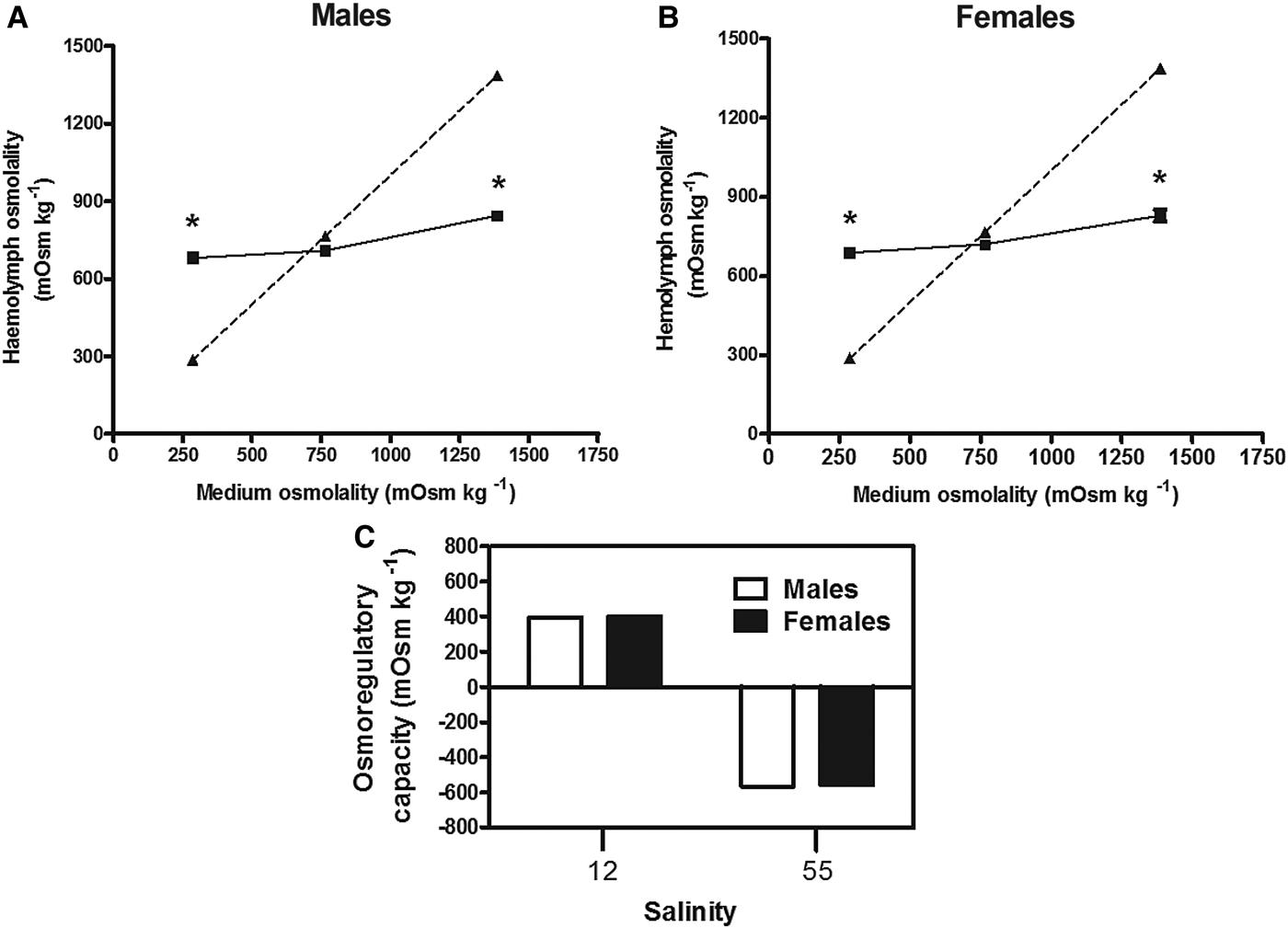
Haemolymph osmolality of male and female crabs acclimated to 33 psu was similar to that of the aquatic environment (Figure 1A, B). However, at 12 psu haemolymph osmolality was about 2.5-fold higher while at 55 psu it was 2.0-fold lower with respect to the aquatic environment (Figure 1A, B). Our results indicated that the difference between environment and haemolymph osmolality at 55 psu appeared to be higher than at 12 psu (Figure 1C). In addition, no differences in osmoregulatory capacity were found between male and female specimens in either 12 or 55 psu (Figure 1C).
Haemolymph osmolality of male and female of U. tangeri acclimated to 12 (287 mOsm × kg−1), 33 (765 mOsm × kg−1) and 55 (1386 mOsm × kg−1) psu (A, B). Dashed line: isoosmotic line. Isoosmotic point: Males = 692 mOsm × kg−1; Females = 724 mOsm × kg−1. C: Osmoregulatory capacity (difference between haemolymph and medium osmolality). In some cases, error bars were smaller than the symbols used. * Indicate different from the medium osmolality (t test, P < 0.05). Data are the mean ± SEM (N = 8–12).

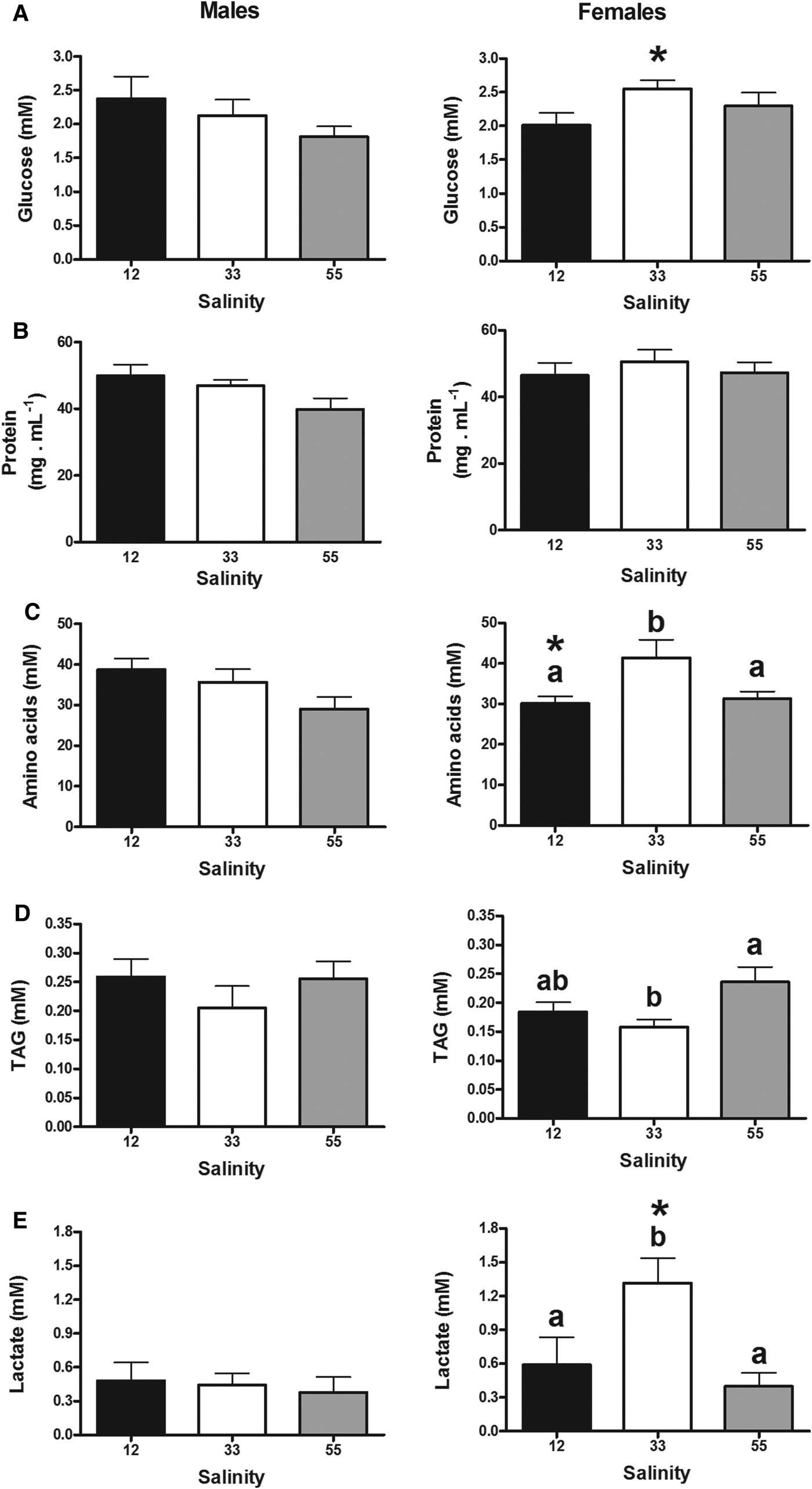
No differences were observed for any haemolymph metabolite assessed (glucose, lactate, triglycerides, protein and amino acids) in male specimens acclimated to different environmental salinities (12, 33 and 55 psu) (Figure 2). A similar situation was observed in female specimens for glucose and protein values (Figure 2A, B). However, amino acids and lactate levels in 12 and 55 psu acclimated specimens were lower (about 25 and 70%, respectively) than in 33 psu (Figure 2C, E). Triglycerides level enhanced (about 34%) at 55 psu with respect to 33 psu (Figure 2D). Glucose and lactate concentrations in the haemolymph of females acclimated to 33 psu were higher (about 20% and 2.5-fold, respectively) than the corresponding value in males (Figure 2A, E).
Glucose (A), proteins (B), amino acids (C), triglycerides (D) and lactate (E) concentrations in the haemolymph of male (left) and female (right) of U. tangeri acclimated to 12, 33 and 55 psu. Different letters indicate significant differences between salinities (one-way ANOVA, P < 0.05). * Indicate different from the corresponding value of males in 33 psu (t-test, P < 0.05). Data are the mean ± SEM for eight individuals.

Hepatopancreas parameters
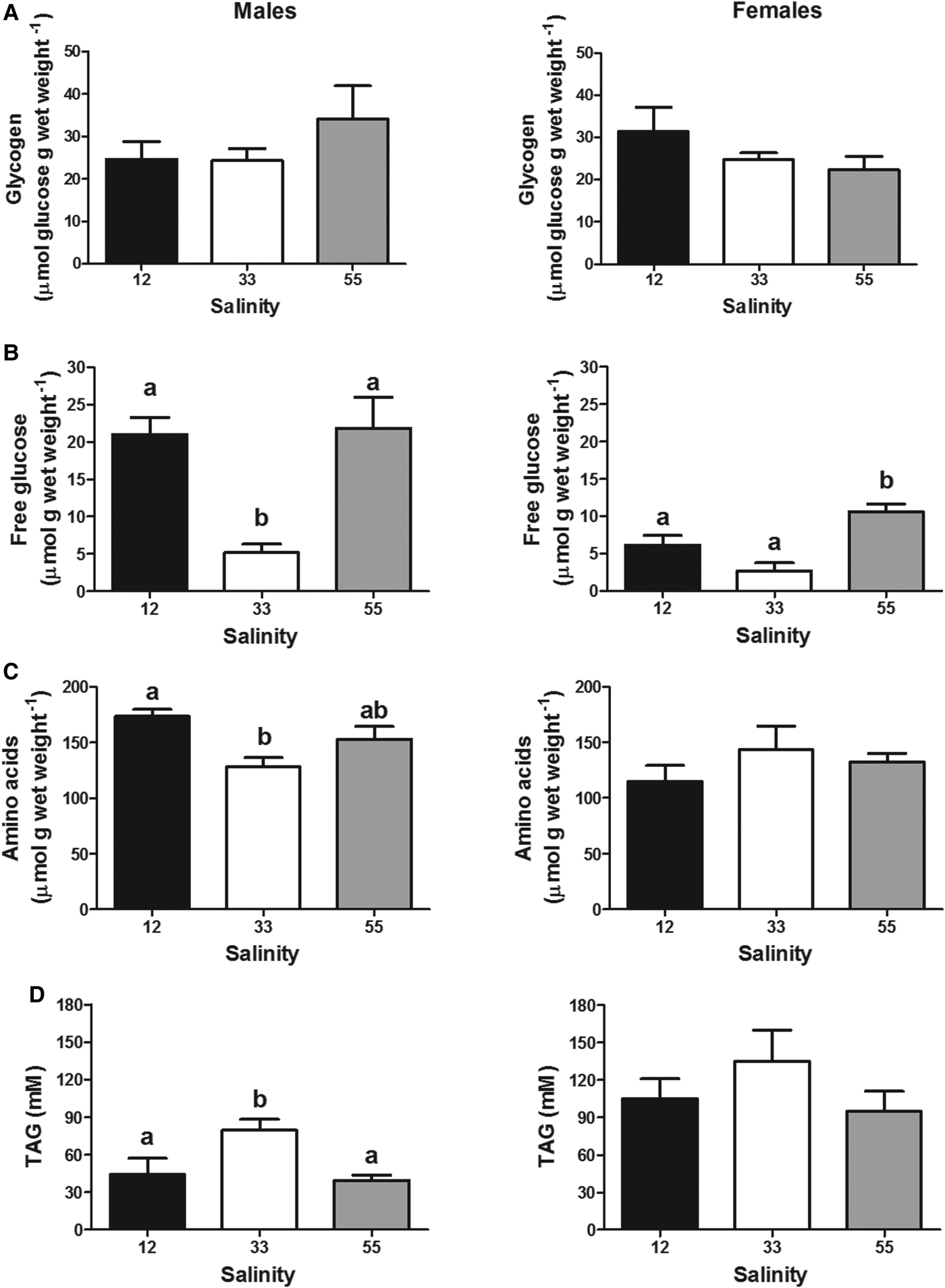
In males and females, glycogen concentration was not affected by acclimation to different environmental salinities (Figure 3A). However, free glucose values in males were higher (about 4-fold) at both 12 and 55 psu compared with 33 psu (Figure 3B). A similar situation was observed in females acclimated at 55 psu, but not at 12 psu (Figure 3B).
Glycogen (A), free glucose (B), amino acids (C) and triglycerides (TAG) (D) concentrations in hepatopancreas of males and females of U. tangeri acclimated to 12, 33 and 55 psu. Different letters indicate significant differences between salinities (one-way ANOVA, P < 0.05). Data are the mean ± SEM for eight individuals.

Male specimens acclimated to 12 psu presented higher (about 35%) amino acids concentration with respect to specimens kept at 33 psu. However, in females no differences were found in relation to environmental salinity (Figure 3C).
Finally, triglycerides values decreased (about 50%) in males acclimated to both 12 and 55 psu, with respect to 33 psu, while no differences related to salinity acclimation were observed in lactate concentration (Figure 3D).
Anterior and posterior gills parameters
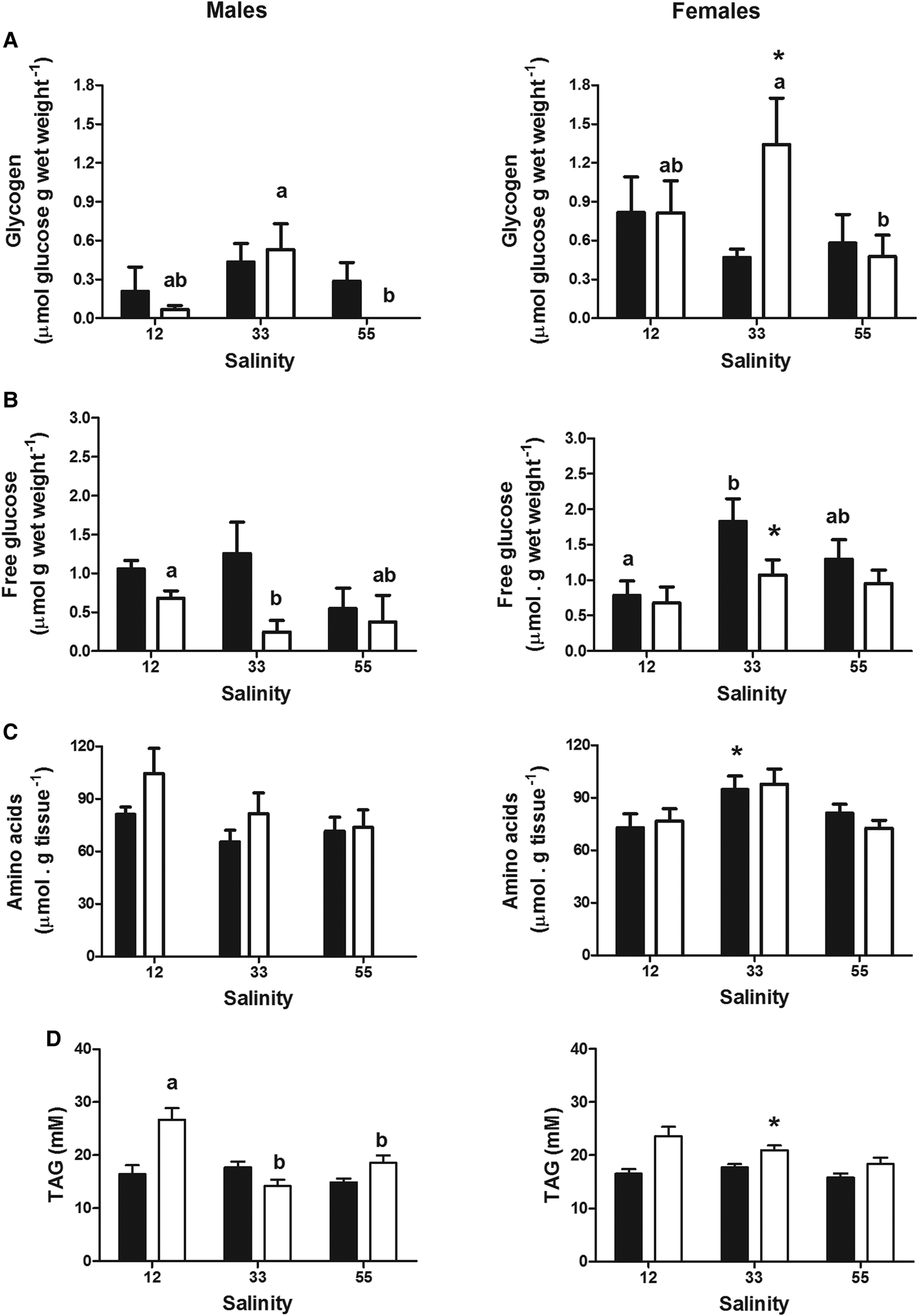
In both male and female specimens, all of the metabolites assessed in anterior gills showed statistically significant differences related to environmental salinity (Figure 4). Only free glucose values in females acclimated to 12 psu were lower (about 67%) than at 33 psu, while they were similar at 55 psu (Figure 4B). In addition, in females acclimated to 33 psu, amino acids concentration in anterior gills was higher (about 45%) than the corresponding value in males (Figure 4C). However, more changes related to sex and environmental salinity were detected in posterior gills. In both males and females, glycogen concentration at 12 psu was similar to that at 33 psu and decreased at 55 psu (Figure 4A). Females acclimated to 33 psu exhibited higher glycogen and free glucose concentrations in posterior gills (about 40 and 58%, respectively) than the corresponding values in males (Figure 4A, B). Free glucose levels in male specimens acclimated to 12 psu were about 3-fold higher than in 33 psu, while no differences were found in females (Figure 4B). In male specimens acclimation to 12 psu enhanced triglycerides values with respect to those in 33 (about 2-fold) and 55 psu (about 1.5-fold). In 33 psu, triglycerides concentration in posterior gills of females was ~48% higher than males (Figure 4D).
Glycogen (A), free glucose (B), amino acids (C) and TAG (D) concentrations in anterior (black bars) and posterior (open bars) gills of males and females of U. tangeri acclimated to 12, 33 and 55 psu. Different letters indicate significant differences between salinities (one-way ANOVA, P < 0.05). * Indicate different from the corresponding value of males in 33 salinity (t test, P < 0.05). Data are the mean ± SEM for eight individuals.

DISCUSSION
Our results show that adult males and females of U. tangeri from Rio San Pedro, Cadiz, Spain exhibit similar hyper- and hypo-osmoregulatory capacity upon acclimation to low and high salinity, respectively. However, they exhibited distinct responses in metabolic parameters suggesting the occurrence of differential adjustments in relation to sex. We determined the haemolymph osmolality of male and females of U. tangeri acclimated to different salinities as a tool to evaluate and compare the osmoregulatory pattern and capacity. Males and females behaved as hyper/hypo-osmoregulators since they exhibited haemolymph osmolality values higher and lower than those of the corresponding aquatic environment upon acclimation to low (12 psu) and high (55 psu) salinity, respectively, while osmoconforming at 33 psu (Figure 1A, B). This differs to recent results in females of the euryhaline crab Carcinus maenas which showed an increased ability to maintain their internal osmolality compared with males upon exposure to low salinity (Pennoyer et al., Reference Pennoyer, Himes and Frederich2016). The higher osmoregulatory capacity in both males and females of U. tangeri at high salinity (55 psu) compared with that in low salinity (12 psu), suggests a higher ability for hypo-osmoregulation. Whether this is linked with the fact that in Rio San Pedro, freshwater input from Cadiz Bay is relatively low so the salinity of the water is more usually high (Bautista- Chamizo et al., Reference Bautista- Chamizo, De Orte, Del Valls and Riba2016; Pereira et al., Reference Pereira, Costa, Costa, Luque, DelValls and Riba López2016) remains to be investigated. Flexibility in osmoregulatory behaviour of euryhaline crabs determines a successful and/or differential occupancy of distinct areas in estuarine, inlets and coastal lagoons habitats that exhibit wide changes in environmental salinity.
Molecular and biochemical changes such as those in enzymes and system transport components of the branchial osmoregulatory machine need energy (McNamara & Faria, Reference McNamara and Faria2012; Romano & Zeng, Reference Romano and Zeng2012). Biochemical adaptation to low and high salinity in males of various euryhaline crabs implies a metabolic reorganization which could lead to a mobilization of energy reserves from different storage sites. However, the responses (i.e. type of reserves, storage organs involved) are species-specific and depend on the type of osmotic challenge (Romano & Zeng, Reference Romano and Zeng2012; Pinoni et al., Reference Pinoni, Michiels and López Mañanes2013; Romano et al., Reference Romano, Wu, Zeng, Genodepa and Elliman2014). Hyper and hypo-osmoregulation can require different mechanisms which lead to differential adjustments in carbohydrates, protein and lipid metabolism (Michiels et al., Reference Michiels, del Valle and López Mañanes2013, Reference Michiels, del Valle and López Mañanes2015; Pinoni et al., Reference Pinoni, Michiels and López Mañanes2013, Reference Pinoni, Méndez and López Mañanes2015; Romano et al., Reference Romano, Wu, Zeng, Genodepa and Elliman2014). The possible occurrence of differential metabolic adjustments related to sex is poorly studied. Glucose is the principal monosaccharide in the haemolymph of decapod crustaceans. Glucose homeostasis is essential for supporting the regular functions of various organs and in responses to environmental factors (Lorenzon et al., Reference Lorenzon, Edomi, Giulianini, Mettulio and Ferrero2005, Reference Lorenzon, Giulianini, Martinis and Ferrero2007; Jimenez & Kinsey, Reference Jimenez and Kinsey2015). The similar values of glycaemia in males and females of U. tangeri upon acclimation to low and high salinity indicates that availability of glucose from the haemolymph would not be a constraint upon hyper and hypo-osmoregulation (Figure 2A).
The hepatopancreas of decapod crustaceans is a key metabolic organ constituting a main site for intracellular digestion and absorption of nutrients and storage of energy reserves (Carter & Mente, Reference Carter and Mente2014; Lignot & Charmantier, Reference Lignot, Charmantier, Chang and Thiel2015; Saborowski, Reference Saborowski, Chang and Thiel2015). A major part of haemolymphatic glucose comes from the hepatopancreas (Wang et al., Reference Wang, Li and Chen2016). Glucose produced from the digestion of polysaccharides in the hepatopancreas can be transported to the haemolymph or can be stored as glycogen. Glucose can also be synthesized by gluconeogenic pathways (Martins et al., Reference Martins, Chittó, Rossetti, Brondani, Kucharski and Da Silva2011; Jimenez & Kinsey, Reference Jimenez and Kinsey2015; Wang et al., Reference Wang, Li and Chen2016). The higher levels of free glucose in the hepatopancreas of males of U. tangeri in low and high salinity, and of females in 55 psu (Figure 3B), suggest the occurrence of adjustments in carbohydrate metabolism likely to maintain glycaemia upon hyper and hypo-osmoregulation. The increased free glucose while glycogen concentrations was not affected, points to possible adjustments in gluconeogenic pathways. Most crustaceans studied so far appear to have key enzymes of the gluconeogenesis pathway in the hepatopancreas (Martins et al., Reference Martins, Chittó, Rossetti, Brondani, Kucharski and Da Silva2011; Wang et al., Reference Wang, Li and Chen2016). The fact that in females the content of free glucose in the hepatopancreas was not affected in low salinity (while increased in males) (Figure 3B) suggests different adjustments in carbohydrate metabolism upon hyper-regulation depending on sex. On the other hand, the increase of free glucose content in the hepatopancreas in 55 psu suggests the occurrence of different responses in carbohydrate metabolism in relation to the type of osmotic challenge in females (Figure 3B). Hypo- and hyper-osmotic stresses in vitro on hepatopancreas sections from males of the euryhaline crab Neohelice granulata induce different adjustments in gluconeogenesis pathways (Martins et al., Reference Martins, Chittó, Rossetti, Brondani, Kucharski and Da Silva2011). Further investigation is necessary to determine whether this is the case for females of U. tangeri. Anterior and posterior gills have an important role in the metabolism of carbohydrates in males of various euryhaline crabs in which they are sites of glycogen storage and utilization (Martins et al., Reference Martins, Chittó, Rossetti, Brondani, Kucharski and Da Silva2011; Pinoni et al., Reference Pinoni, Iribarne and López Mañanes2011, Reference Pinoni, Michiels and López Mañanes2013). The high concentration of glycogen under osmoconforming conditions (33 psu) (Figure 4B) indicates that the anterior and posterior gills of males and females of U. tangeri constitute sites of glycogen storage. The higher content of glycogen in posterior gills of females compared with males (Figure 4B) supports the idea of a difference in carbohydrate metabolism of gills between sexes. In anterior and posterior gills of males of various species of euryhaline crabs, components of carbohydrate metabolism such as glycogen reserves are differently modulated depending on the type and degree of the osmotic challenge (Martins et al., Reference Martins, Chittó, Rossetti, Brondani, Kucharski and Da Silva2011; Pinoni et al., Reference Pinoni, Iribarne and López Mañanes2011, Reference Pinoni, Michiels and López Mañanes2013). Most animals utilize stored glycogen when coping with different stresses and changes in key environmental factors (Watford, Reference Watford2015; Wang et al., Reference Wang, Li and Chen2016). Carbohydrates can also support energy demands of various crustaceans during stressful conditions (Wang et al., Reference Wang, Li and Chen2016). The fact that no changes in glycogen content in anterior gills occurred in males or females of U. tangeri (Figure 4A) suggests that mobilization of this reserve would not be involved in biochemical adaptation to low (12 psu) or high (55 psu) salinity. This differs to that we previously found in males of the euryhaline crabs N. granulata and Cyrtograpsus angulatus from Mar Chiquita coastal lagoon (Argentina) (Pinoni et al., Reference Pinoni, Michiels and López Mañanes2013; unpublished results). However, the lower free glucose level in anterior gills of females of U. tangeri acclimated to low salinity (12 psu) compared with 33 psu (osmoconformation) suggests, as we discussed above for hepatopancreas, the occurrence of specific adjustments in females in carbohydrate pathways (i.e. down-regulation of gluconeogenic pathways, intracellular utilization) underlying hypo-osmoregulation. Gills contain enzymes involved in gluconeogenesis in some species of decapod crustaceans (Bianchini et al., Reference Bianchini, Machado Lauer, Nery, Pinto Colares, Monserrat and dos Santos Filho2008; Wang et al., Reference Wang, Li and Chen2016). The variations found in glycogen and free glucose content in posterior gills of males and females of U. tangeri in response to low and high salinity indicate the role of these gills in metabolic reorganization (i.e. carbohydrate metabolism) in response to salinity and, furthermore, points to sex differences and the dependence on the type of osmotic challenge (Figure 4A, B). A further experimental approach is needed to determine whether the specific increase of free glucose in posterior gills of males in low salinity (Figure 4B), while no changes occurred in glycogen concentration (Figure 4A), is related with the activation of gluconeogenesis pathways under hyper-regulation. On the other hand, our results suggest the utilization by both sexes of glycogen reserves in posterior gills in high salinity (55 psu) since this reserve was not detected in males and it was decreased in females (Figure 4A). The maintenance of free glucose content in posterior gills in both sexes in 55 psu (Figure 4B) supports the idea that a rapid intracellular utilization of glucose resulting in glycogen degradation could occur, for instance, for provision of energy needed for the osmoregulatory machine as suggested for other species (Romano & Zeng, Reference Romano and Zeng2012). In decapod crustaceans, lactate has multiple metabolic fates (Henry et al., Reference Henry, Booth, Lallier and Walsh1994; Maciel et al., Reference Maciel, Valle, Kucharski and Da Silva2008; Pellegrino et al., Reference Pellegrino, Kucharski and Da Silva2008). The lower haemolymph lactate values in females of U. tangeri in low and high salinity suggests its potential utilization as substrate for gluconeogenic pathways which could lead to an increase in free glucose in anterior gills and hepatopancreas (anterior gills in low salinity and hepatopancreas in high salinity). This idea is further supported by the fact that glycogen content in hepatopancreas and anterior gills was not affected by environmental salinity (Figures 3 & 4A). In several tissues and organs of N. granulata, gluconeogenesis from lactate occurs under different physiological conditions (Pellegrino et al., Reference Pellegrino, Kucharski and Da Silva2008). The fact that lactate concentration in haemolymph of females in 33 psu was higher than that in males (Figure 2E) could indicate a differential degree of reliance on and a major potential ability for anaerobic energy production of females.
In several crustaceans, protein metabolism plays a key role in biochemical adaptation to environmental salinity by supporting an adequate provision of amino acids for fuelling osmoregulation (Shinji et al., Reference Shinji, Kang, Okutsu, Banzai, Ohira, Tsutsui and Wilder2012; Romano & Zeng, Reference Romano and Zeng2012). However, in some species of euryhaline crab such as males of N. granulata from different populations, salinity affects protein metabolism differentially (i.e. no variations, or distinct tissues and organs involved depending on type of osmotic challenge) (Bianchini et al., Reference Bianchini, Machado Lauer, Nery, Pinto Colares, Monserrat and dos Santos Filho2008; Pinoni et al., Reference Pinoni, Michiels and López Mañanes2013). Some species enhance free amino acids in the haemolymph (i.e. via breakdown of proteins in the haemolymph or storage organs) in high salinity, but this is not a universal response (Romano & Zeng, Reference Romano and Zeng2012). Similarly to that described above for carbohydrate metabolism, U. tangeri appears to exhibit sex-specific adjustments in protein metabolism parameters in response to low and high salinity. The higher amino acids levels in hepatopancreas of males in low salinity (12 psu) compared with those in 33 psu (osmoconformation) (Figure 3C) with no concomitant changes in haemolymph proteins or amino acid values (Figure 2B, C), suggests that intracellular adjustments in protein metabolism (i.e. modulation of synthesis/degradation pathways) could be occurring. Gluconeogenesis in the hepatopancreas of the euryhaline crab N. granulata from Brazilian populations is involved in osmoregulatory adjustments to hypo-osmotic stress (Oliveira & Da Silva, Reference Oliveira and Da Silva2000). Experiments in vitro with hepatopancreas sections of males of N. granulata suggests that changes in the carbon amino acid flux between gluconeogenesis and lipid synthesis pathways are among the strategies to respond to hypo-osmotic medium (Martins et al., Reference Martins, Chittó, Rossetti, Brondani, Kucharski and Da Silva2011). Whether this is the case for males of U. tangeri (which could, for instance, explain in part the higher hepatopancreas free glucose described above) requires further investigation. Since no changes occurred in 55 psu (hyper-osmoregulation), variations in amino acid levels in hepatopancreas of males of U. tangeri appears to be a specific adjustment underlying hypo-osmoregulation (Figure 3C). In vitro experiments with hepatopancreas sections of males of N. granulata showed that adjustments in protein metabolism components are dependent on the degree and type of osmotic challenge (Bianchini et al., Reference Bianchini, Machado Lauer, Nery, Pinto Colares, Monserrat and dos Santos Filho2008). The decrease in haemolymph amino acids concentration in females of U. tangeri in low and high salinity with no changes in haemolymph protein concentration (Figure 2B, C) suggests, contrary to males, a utilization or a diminished provision of circulating amino acids from different sites under osmoregulation. As we described above, the hepatopancreas is the main site for absorption of products of digestion (i.e. amino acids) (Carter & Mente, Reference Carter and Mente2014; Lignot & Charmantier, Reference Lignot, Charmantier, Chang and Thiel2015; Saborowski, Reference Saborowski, Chang and Thiel2015). The similar amino acid levels in the hepatopancreas of females in low and high salinity with respect to those in 33 psu, suggest that adjustments in the hepatopancreas (i.e. a minor absorption or protein digestion) would not account for the decrease in haemolymphatic pool. Furthermore, it indicates the occurrence of sex-specific adjustments in protein metabolism in response to environmental salinity (Figures 2 & 3). The fact that no changes occurred in amino acid content in gills of females suggests that other destination sites could be using amino acids from haemolymph.
In crustaceans, lipids are mainly stored as triglycerides (over 80–90%) which are a major source of energy in various species. The hepatopancreas is the main site for this storage (Wright & Ahearn, Reference Wright, Ahearn and Dantzler1997; Sánchez-Paz et al., Reference Sánchez-Paz, García-Carreño, Muhlia-Almazan, Peregrino-Uriarte, Hernández-López and Yepiz-Plascencia2006; Dima et al., Reference Dima, De Vido, Leal and Barón2009; Pinoni et al., Reference Pinoni, Michiels and López Mañanes2013). In males of various euryhaline crabs, acclimation to different environmental salinities induces changes in lipids concentration or mobilization in the hepatopancreas and gills suggesting that increased lipid oxidation is associated with hyper- and hypo-osmotic regulation. However, these responses are species-dependent (Luvizotto-Santos et al., Reference Luvizotto-Santos, Lee, Branco, Bianchini and Nery2003; Pinoni et al., Reference Pinoni, Michiels and López Mañanes2013; Jimenez & Kinsey, Reference Jimenez and Kinsey2015). The decreased triglycerides concentration in the hepatopancreas of males of U. tangeri in low and high salinity (Figure 3D) suggests that a mobilization of this reserve is also one component of biochemical adaptation upon hyper- and hypo-osmoregulation conditions. This differs to that found in males of N. granulata in which no changes in hepatopancreas triglycerides or total lipids content occurred under acclimation to low salinity (Luvizotto-Santos et al., Reference Luvizotto-Santos, Lee, Branco, Bianchini and Nery2003; Pinoni et al., Reference Pinoni, Michiels and López Mañanes2013). Whether the decrease in triglyceride content in hepatopancreas of males of U. tangeri is linked to the use of stored lipid in gluconeogenesis pathways leading to the concomitant increase in free glucose level (Figure 3B) remains to be investigated. This is further supported by the fact that no changes in haemolymph triglycerides levels (Figure 2D). As we pointed out above, i n vitro hypo- and hyper-osmotic stresses on hepatopancreas sections of N. granulata induce different adjustments in gluconeogenesis pathways (Martins et al., Reference Martins, Chittó, Rossetti, Brondani, Kucharski and Da Silva2011). Again, sex differences occurred in response to salinity in lipid metabolism parameters in U. tangeri. In females, low and high salinity had no effect on hepatopancreas triglyceride values (Figure 3D), suggesting that utilization of this lipid reserve would not be involved in biochemical adaptation to salinity. Triglycerides in the hepatopancreas of females could be conserved to be used as an energy source for other energy-demanding physiological processes (e.g. reproduction) as suggested for various crustacean species (Lautier & Lagarrigue, Reference Lautier and Lagarrigue1988; Mourente et al., Reference Mourente, Medina, González and Rodríguez1994; Ituarte et al., Reference Ituarte, Bas, Luppi and Spivak2006). The triglycerides concentration enhancement in haemolymph of females acclimated to 55 psu indicates that other adjustments in lipid metabolism could be occurring upon hypo-osmoregulation. Anterior and posterior gills are sites of triglycerides storage in some species of crustaceans (Buckup et al., Reference Buckup, Dutra, Ribarcki, Fernandes, Noro, Oliveira and Vinagre2008) while not in others (Pinoni et al., Reference Pinoni, Michiels and López Mañanes2013). The high content of triglycerides in gills of males and females of U. tangeri indicates their role as potential site of storage or utilization of this reserve under different environmental challenges. However, adjustments in triglyceride content in gills occurred only in males, in which the higher triglycerides content in posterior gills in 12 psu (Figure 4D) suggest the modulation of lipid metabolism (i.e. anabolism) under hyper-osmoregulation. This agrees with the reported increases in lipid content in gills of juveniles of the mud crab Scylla serrata under low salinities (Romano et al., Reference Romano, Wu, Zeng, Genodepa and Elliman2014). The fact that in males acclimated to high salinity (55 psu), triglyceride values were affected in the hepatopancreas but not in the posterior gills, unlike the values found in 12 psu (Figures 3 & 4D), suggests the occurrence of differential pathways to site-specific storage and of distinct mechanisms of regulation of this reserve depending on osmotic challenge direction. Since, the lipid metabolic routes are unknown in U. tangeri, a further experimental approach is needed to establish the components involved and the mechanisms of regulation of triglycerides metabolism (i.e. catabolism/anabolism) in the hepatopancreas and posterior gills.
In conclusion, the results of this work show that concentrations of (i) glycogen in gills, (ii) free glucose in gills and hepatopancreas, (iii) amino acids in hepatopancreas, (iv) triglycerides in haemolymph, hepatopancreas and posterior gills, and (v) lactate in the haemolymph, are differentially affected upon acclimation to low and high salinity (12 and 55 psu, respectively) in male and female U. tangeri, suggesting the occurrence of differential metabolism upon hyper- and hypo-osmoregulation related to sex. Future studies should be focused on the mechanisms of regulation involved to provide a better understanding of differences between sexes of the complex responses underlying biochemical adaptation to salinity in U. tangeri, in particular, and in euryhaline crabs in general.
FINANCIAL SUPPORT
This study was partly supported by grant AGL2013-48835-C2-1-R (Ministerio de Economía y Competitividad, Spain) to Juan Miguel Mancera. SAP and ALM were working at Dr Mancera lab in the context of a working commission allowed by CONICET and the University of Mar del Plata, Argentina.