Introduction
As one of the most significant human rights initiatives of the second half of the twentieth century, the Czechoslovak oppositional group Charter 77 produced dozens of documents between 1977 and 1992.Footnote 1 These documents addressed a diverse range of questions, including the abuse of political and civil rights by the Czechoslovak socialist state, the right to freely interpret history, geopolitics and the peace movement, as well as human rights violations in other countries. Yet Charter 77 never produced a document dedicated specifically to women's rights. This absence is conspicuous. As Robert Brier has highlighted, the universalist agenda of human rights dissent did not mean that Eastern European oppositionists could not articulate demands for the rights of particular groups.Footnote 2 Charter 77 produced documents aimed specifically at the situation of the Roma and the Hungarian minority in Czechoslovakia. So why not women?
The question is all the more relevant as other oppositional groups within the former Eastern bloc did in fact address women's rights and produced feminist critiques of the state socialist promise of gender equality. Yugoslav feminist dissent, which admittedly operated in different and less repressive circumstances than the opposition in Czechoslovakia, criticised the ‘limits and possibilities of Marxism, the opportunities offered by real existing socialism, and the failures of the communist state in women's emancipation’.Footnote 3 Soviet and Hungarian oppositional groups have been documented as criticising the position of women in socialist societies, while East German women came together in pacifist protests in the 1980s.Footnote 4 Furthermore, women's equality constituted a significant topic within international human rights debates from the 1970s onwards. The United Nations launched the Decade for Women in 1975 and declared the same year International Women's Year. Czechoslovakia was, like other socialist countries, also officially committed to women's equality and, as the literature now amply documents, the Czechoslovak government granted significant rights to women, including full legal equality in education, work, marriage and divorce, as well as economic independence, well ahead of certain Western European and North American countries.Footnote 5 The country was also party to the Convention on the Elimination of All Forms of Discrimination Against Women, which it signed in 1980. Charter 77's mission was to call out the socialist state for breaching the human rights protections that it had committed to in both domestic legislation and international conventions. The absence of documents on women's rights by the Charter would thus seem to suggest that the dissident initiative did not observe significant violations of women's rights in Czechoslovakia. But was that really the case?
This article suggests that within the legalistic logic of Charter 77, many dissidents, both men and women, did not perceive women's rights as an area worth struggling for. Unlike other areas such as employment, education and freedom of speech, where the socialist state obviously denied political opponents the rights guaranteed to them by legislation, women's rights were not conspicuously impinged upon by the authorities. Despite this, thinking about women's rights was not completely absent from the Charter's human rights agenda. There is evidence that some Charter signatories considered women's rights significant. As Marek Suk documents, at a strategic meeting held in June 1978 from which notes have been preserved, eighteen Charter signatories discussed ‘particularly pressing and important topics’ which they wanted to address in the future, including ‘the issue of women’.Footnote 6 Unfortunately, no further evidence of informal internal debates on the topic remains, and in reconstructing the position of Charter 77 signatories on women's rights, only published documents can be relied on. This investigation is thus conducted based on texts published as official Charter 77 documents, texts in samizdat periodicals, in particular Informace o Chartě 77 (Information about Charter 77; Infoch for short), retrospective interviews with Charter signatories and additional sources, such as Radio Free Europe/Radio Liberty (RFE/RL) broadcasts and reports.Footnote 7
The gendered distribution of roles in Czechoslovak and Eastern European dissent more generally has by now been explored.Footnote 8 Nonetheless, as Libora Oates-Indruchová points out, in scholarly accounts of the day-to-day workings of Czechoslovak dissent, gender continues to be a ‘blind spot’.Footnote 9 But the everyday gender regime of oppositional activities is not the subject of exploration of this paper. Instead, I am interested in tracing the position that Charter 77 signatories took on women's rights in their intellectual production. As Jonathan Bolton has argued, there is an inherent gender bias in how Eastern European oppositions have been perceived in the West, as it was mainly male dissidents and their texts that made it abroad.Footnote 10 An investigation of varied sources can bring some women back into the picture, although as this article will show, some men were also thinking about women's rights.
Several documents, which will be analysed in detail, give us a good idea of the role of women's rights in Charter 77's production, as well as the divergences in approach and opinion that this topic generated within the ideologically heterogenous Charter community. These documents clearly demonstrate that parts of the Charter milieu were ready to acknowledge that the state granted women formal equality while suggesting that neither material conditions nor prevailing cultural norms in Czechoslovakia provided full emancipation. Those members of the dissident milieu who after 1989 were active in bringing feminist debates to Czech society also argued in this vein. Prominent post-dissident advocates of feminism include Jiřina Šiklová and Mirek Vodrážka, as well as Milan Machovec on the academic level.Footnote 11 But as I will demonstrate, the sources that I draw upon also present a different type of critique, which saw the socialist agenda of women's emancipation as restricting women's freedom in the personal sphere (for example, their freedom to choose not to work). While the textual production of Charter 77 thus acknowledged the need to uphold women's rights, this article will show that Czechoslovak dissidents, including Václav Havel, were wary of feminism and women's emancipation as yet another form of prescription limiting personal freedom and which stemmed from an implicit understanding of prevalent gender roles as ‘natural’.
In what follows, I will first discuss the context of both domestic and international discussions on women's equality as part of the broader discourse on human rights. Second, I will analyse relevant documents produced by Charter signatories relating to women's rights, and finally, I will offer several explanations for the relatively low representation of this topic in the Charter's intellectual production.
Context: Charter 77 and International Discussions on Women's Equality
Charter 77 emerged within a society that simultaneously declared formal equality between men and women while remaining culturally traditional regarding social gendered roles. Despite this, we have good reasons to believe that many Charter signatories were aware of discussions on women's equality happening at the international level. Women's rights were well-represented in international human rights discourse at the time of the Charter's inception and activity. Although the Helsinki Final Act of the Organization for Security and Co-Operation in Europe, to which Charter 77 directly referred in its founding document, did not explicitly mention women's rights, women's equality was very much part of the global human rights discourse in the second half of the 1970s. The United Nations was a key organisation for propagating the notion of the equal rights of women and men from its inception in 1945. While a more mainstream understanding of women's rights as human rights was compounded only after the end of the Cold War,Footnote 12 a whole literature has emerged on how socialist regimes and women's organisations contributed to shaping international human rights discourse. Scholars including Celia Donert, Francisca de Haan, Kristen Ghdosee and Yulia Gradskova have shown that socialist women's organisations played a substantial role in setting the international women's rights agenda in the 1970s.Footnote 13 The UN Decade for Women launched in 1975, just two years before the founding of Charter 77. The conception of the UN's International Women's Year in 1975 was influenced by the Women's International Democratic Federation, a communist-leaning organisation based in East Berlin. In 1979, the UN published its Convention on the Elimination of All Forms of Discrimination Against Women. Significantly, the Convention did not only lay out a basis for female and male equality in the legal sphere – a state of affairs that socialist states claimed to have achieved – but also addressed reproductive rights and cultural factors that prevent women achieving and enjoying their fundamental rights.Footnote 14 In its initial mission, Charter 77 was reacting precisely to these international human rights discussions. Indeed, international pacts relating to women's rights, including the ILO Equal Renumeration Convention of 1951 and the UN Convention on the Political Rights of Women (1953), are mentioned, albeit in passing, in Charter documents.Footnote 15
In Czechoslovakia, after the communist takeover in 1948, women's rights were overseen by the Czechoslovak Union of Women (CUW), which from 1952 became part of the National Front, a broad coalition of political parties and civil organisations officially approved by the communist government. Subsequently, the agenda of ensuring women's equality rested with trade unions and local councils.Footnote 16 Efforts to reinstate an independent women's organisation only came with the Prague Spring, when the CUW adopted a more radical Action Programme in April 1968.Footnote 17 The struggle for women's rights thus formed a part of the reformist movement, and many later dissidents who were recruited from the reform communist milieu would have been aware of these efforts, which were also widely reported in the popular women's magazine Vlasta. Prominent Charter signatory and former politician and diplomat Gertruda Sekaninová-Čakrtová had been vice-president of the CUW during the Prague Spring.
With the political clampdown on reformist tendencies that followed the 1968 Warsaw Pact invasion of Czechoslovakia, the CUW was, like other organisations, purged of reform-minded members and made to follow the official ‘normalisation’ line. The normalisation period of the 1970s and 1980s was characterised by a policy turn towards the family. Based on an analysis of legislation, Barbara Havelková argues that while the policies of the 1950s were geared towards women as workers and citizens, in the final two socialist decades, more emphasis was placed upon their role as mothers and wives.Footnote 18 Already with the onset of normalisation, a number of pronatalist benefits for mothers were introduced, creating financial incentives for mothers to have two or more children and to stay at home with them for longer without the need to return to their paid employment.Footnote 19 Children, traditionally central to the communist regime's propaganda efforts as the beacons of a bright socialist future, became even more essential to official rhetoric.
Apart from this domestic context, only a small number of Charter signatories would also have been aware of the second wave of feminism that was taking place throughout Western Europe and North America from the 1960s onwards. Although access to Western feminist literature was limited, some key works did make their way into Czech or Slovak translation. For instance, an abridged version of Simone de Beauvoir's The Second Sex was published in Czech in 1966 with an introduction and afterword by philosopher Jan Patočka, who would go on to become one of the Charter's first spokespersons. The book's publication was discussed in a lively debate in the magazine Literární noviny by philosopher Ivan Sviták, sociologist Irena Dubská and then editor, later psychologist Helena Klímová, all of whom would go on to become part of the dissident and exile milieu.Footnote 20 Although Betty Friedan's seminal The Feminine Mystique was not published in Czech or Slovak until after 1989, its theses were debated in the scholarly periodical Sociologický časopis.Footnote 21 We also know that some Charter signatories received Western feminist periodicals.Footnote 22 Women in expert circles, often academics who later became dissidents, had access to Western literature, including feminist literature, in the original.Footnote 23
Nevertheless, these were individual examples rather than a wider trend: although women's equality was addressed in Czechoslovak academic research as well as the official press after 1968, the language of second-wave feminism was not present in these debates. As a result, critiques of patriarchy that focused on issues such as the division of domestic labour, domestic violence or sexual violence were not well represented in Czechoslovak public discourse.Footnote 24 As literary scholar Jan Matonoha observes, there is no evidence of a ‘dissident feminism’ in the Czechoslovak context, as ‘the paradigm of feminism was discredited by having been adopted – or “expropriated”, in the words of Hana Havelková – into the official regime, and most independent cultural elites rebelled against it’.Footnote 25 This lack of feminist critique was thus a significant precondition for what could and could not be said about women's rights not only within the oppositional milieu but also within Czechoslovak society in general.
The Charter carried out its activities within a context where women's equality was a significant part of socialist state policy. It has by now been well-established by scholars that human rights did not ‘arrive’ in socialist countries only with human rights dissent, but that socialist states had their own conception of human rights.Footnote 26 Within this conception, women's rights played a prominent role, even if it they were decidedly not feminist (with feminism being viewed as a ‘bourgeois’ ideology).Footnote 27 Within the logic of Charter 77's strictly legalist strategy, women's rights were relatively well upheld by the socialist state, which had formally granted women all the legal rights fought for during the first wave of feminism. However, women lacked rights within a number of other areas that dissidents found more pressing, such as freedom of expression, of assembly, of religion, of the right to choose one's employment, where both men and women alike experienced discrimination and persecution.
I argue that Charter 77 faced a double obstacle in engaging with women's rights: not only was formal equality put in practice, but also the Charter's very project lay in demanding that existing laws be upheld and not in proposing new legislation. In its efforts to reconfigure existing power relations between men and women, a feminist approach to women's rights was antithetical to Charter 77's strategy of pointing out the violation of existing laws. Such an effort would have been seen as a form of prescription – and a prescriptive approach, as I illustrate below with the example of Václav Havel's essay Anatomy of a Reticence, was something that Charter signatories were wary of.
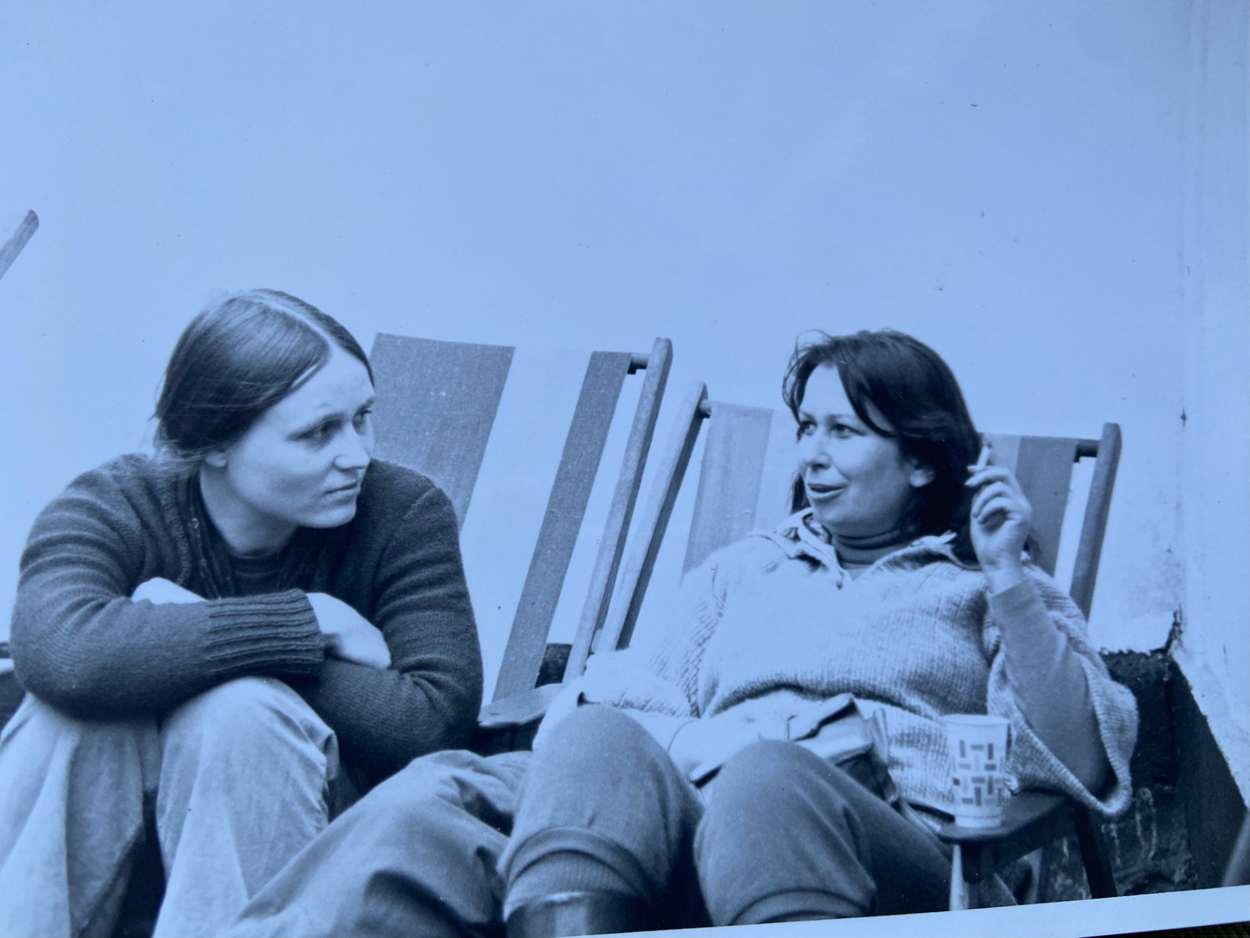
As scholars observed, legal equality in socialist countries did not translate into equality in the private sphere, as patriarchal forms of behaviour and the notorious ‘double burden’ of paid work in the workplace and unpaid work in the household persisted for women.Footnote 28 But these forms of discrimination that were identified during the second wave of feminism in the West were not widely recognised in Czechoslovakia at that time, and indeed retrospective interviews with female Charter signatories reveal that many came to recognise the cultural and social dimensions that underlie women's equality only much later, often after 1989.Footnote 29 Zdena Tominová was one of the few dissidents who simultaneously acknowledged the legal equality of men and women before 1989 and also repeatedly spoke out about prevailing patriarchal norms both before and after the Velvet Revolution (Figure 1). Already in 1980, she condemned how the authorities could use sexist slander as a repressive strategy more effectively against female than male dissidents.Footnote 30
Charter 77 signatory Anna Šabatová (left) and Charter 77 spokesperson Zdena Tominová in discussion at Václav Havel's country house, spring 1979. Source: Anna Šabatová's personal archive, reprinted with permission.

Coupled with the low level of awareness of second-wave feminism in Czechoslovakia, the structure of the discourse on women's rights did not grant the Charter milieu the conceptual tools to explore women's discrimination as a result of the everyday imbalance of power between men and women beyond the law. Certain Charter 77 signatories did identify discrimination of women that was taking place within the private sphere; however, this discrimination was identified as a problem of economic rights and did not address culturally-conditioned forms of patriarchal behaviour, which they largely took for granted.
Like other parts of Czechoslovak society, many dissidents may have considered the prevailing patriarchal order as ‘natural’ and therefore not worth challenging. Czechoslovak dissent was not unique in this respect. Zsófia Lóránd notes that political oppositional groups in Yugoslavia (as opposed to dissenting feminist scholars and activists) also regarded the socialist ‘forced emancipation’ of women as ‘unnatural’.Footnote 31 Soviet dissident feminism, Rochelle Ruthchild argues, grew out of disillusionment with the sexism of dissident circles.Footnote 32 Nevertheless, an articulate critique of the implementation of women's rights did make it into one of the Charter's earliest documents, which suggests that this topic was of concern at least to some groups within the dissident milieu.
Charter 77 Documents Relating to Women's Rights
The seventh document published by Charter 77 in March 1977 was entitled ‘An analysis of the state of economic and social rights in Czechoslovakia’.Footnote 33 The document, signed in the name of the Charter community by spokespersons Jan Patočka and Jiří Hájek, was prepared by Jaroslav Šabata and Jan Tesař, who belonged to the group of former reform communists within the Charter. The document reveals that within the authors’ understanding, women are considered to be a group whose human or political rights are not subject to violations different to those of men. However, in the case of social and economic rights, the document argues, the situation is somewhat different. Like other Charter documents, the argumentation is built upon highlighting the ways in which the Czechoslovak authorities failed to uphold their commitments to international agreements, here specifically the International Covenant on Economic, Social and Cultural Rights. The authors note that although this Covenant recognised the right to employment that guarantees a decent living for individuals and their families, in Czechoslovakia a sole earner could only rarely manage to provide an adequate standard for their family. As a result, Czechoslovakia has one of the highest female employment rates. For the authors, this is a point of critique, and they call the rates of female employment a ‘virtue of necessity’ (z nouze ctnost). From the perspective of the authors, most women enter employment not in search of a fuller life and self-fulfilment but under economic pressure, because ‘the wages of a man do not provide a decent living for the family’.Footnote 34 The document further criticises the lower salary levels of female employees and the fact that dominantly female professions are generally underpaid. This critique was not novel: official surveys and the press acknowledged that many women worked out of economic necessity rather than a desire for their personal independence and noted that the high burden of housework demotivated women from taking up leading managerial positions at work.Footnote 35 In this respect, the authors of the document concurred with official positions on women's equality.
Nevertheless, the authors go further in their critique of the state of women's rights. The document concludes that ‘the almost universal employment of women is therefore in this respect a higher degree of their constraint and not an expression of their equality’.Footnote 36 The authors accept the standard gender dynamic of the time that men are the main breadwinners within a family unit. They seem to suggest that many women would choose not to work if their male partner earned sufficiently high wages. Their critique is thus aimed at the fact that the Czechoslovak legal code criminalised not having a paid job as ‘social parasitism’, while the Chartists believed choosing not to work ought to be a legal right. An exception to this rule were married women with children, whom Czechoslovak law did not require to be in paid employment. Typically, however, a single income was not sufficient to sustain a family and in practice the majority of married mothers did work. Yet framing this critique in gendered terms also reveals that the authors did not question the distribution of power underlying traditional roles within society – in their argumentation, the impossibility of choosing not to work is understood as primarily a female, and not a male problem. In line with the Charter's legalist strategy, the authors merely point out where the socialist state is failing on its own promises. The Communist Party encouraged even married women with children to work in order to gain economic independence. As the document pointed out, this promise was illusory.
A similar implicit tendency is evident in the document's further critique on women and social and economic issues. The authors write:
The social situation of women is worsened by the systematic lack of development and, in particular, by the constant increase in the price of services of all kinds, which has been going on for practically the entire existence of the current social order. The chronic difficulties in supplying the market with various consumer goods are well known; the range of scarce goods may be changing, but the problem itself remains unchanged.Footnote 37
Here too, the problems of the deficit economy and its inability to provide the population with at times even quite basic goods are implicitly presented as a women's problem, because it is assumed that within domestic economies, women are in charge of securing various consumer services and goods. The implication is that the practical disadvantages associated with the economy of scarcity do not impact the social and economic rights of men in the same way. The document's position thus remains in line with the overall policy turn towards women and family from the 1960s onwards, which in contrast to the more radical 1950s accentuated ‘the biological function of women and emphasized their biologically conditioned caregiving role’.Footnote 38 In this sense, the document shared another assumption with the legislation of the time, which granted women generous maternity leave (while not providing an option for paternity leave) and in so doing compounded the notion that childcare was (solely) the obligation of women.
The fact that document 7/1977 on economic and social rights was received as primarily concerned with the rights of women is evidenced by an episode of the RFE/RL Russian-language programme Modern Woman, broadcast on 10 May 1977, just a couple of months after its publication. The show's guest, Matej Piljar from RFE's Czechoslovak editorial room, states explicitly that ‘Document number 7 [of Charter 77] deals with the problems of women in Czechoslovakia’.Footnote 39 The guest goes on to enumerate all the tasks that women have to take care of on top of paid work (shopping, cooking, taking care of the children), mentions that women are paid one-third less than men for the same work and concludes that ‘it's difficult to talk about equality in this case’. The programme, like the document itself, observed that the current state of affairs did not allow for true equality, but at the same time did not question the prevailing gender roles that burdened women with care for the household and children, and instead identified women's forced employment as the problem.
Although some Charter signatories reproduced the gender norms of the time, other signatories thought differently, and in particular signatories on the left of the Charter's political spectrum, with whom Šabata and Tesař were in contact. In the essay ‘Czechoslovakia and Socialism’, Petr Uhl (who was Šabata's son-in-law), in cooperation with Jaroslav Suk, dedicates a short but rich subchapter to ‘the women's question’. Written already at the end of the 1960s, the essay (the complete version of which has been lost), predates the Charter's inception.Footnote 40 Here, the authors declare: ‘It would seem, therefore, that the emancipation of women, which the new establishment had set itself the task of accomplishing, has been carried out. But the reality is quite different’.Footnote 41 In the analysis that follows, Uhl rather presciently for his time points out that the massive participation of women in the labour market is not yet proof of emancipation, as ‘the working woman is compelled to spend almost all of her leisure time, which is intended for her development and renewal of strength, shopping, arranging all sorts of affairs, cleaning, cooking, housework of all kinds. Only seldomly has the bourgeois tradition of suitable and unsuitable work for men been broken’.Footnote 42 Here Uhl expresses an awareness of the cultural conditioning of gender roles. The problem of women's emancipation lies not only in women's (forced) employment but also in the reluctance of society, and men in particular, to accept something other than traditional gender roles and partake in a more equitable distribution of labour and care.
Furthermore, the analysis continues with setting the ‘women's question’ in a much wider socioeconomic context. Uhl points out that the unsatisfactory material and working conditions provided by the economy adversely affect familial relations: ‘Job dissatisfaction, poor working and living conditions, constant rush and hustle and bustle cause nervousness and irritation, which do not contribute in any way to “family harmony”, on the contrary, they reinforce family disagreements and, together with sexual and generational problems, cause family disruption’.Footnote 43 These problems are then further contextualised by the lack of sex education and poor availability of contraception. Altogether, the essay thus lays out a rather negative diagnosis of the actual state of women's rights in Czechoslovakia.
It appears that the thinking of Uhl and Suk about women's rights did not make it into the Charter's official documentary production. Uhl had been a key figure in the Movement of Revolutionary Youth (HRM), one of the first oppositional organisations in Czechoslovakia that was founded in 1968. Coming from a Trotskyist position, Uhl's lifelong commitment to revolutionary socialism jarred with many more conservatively-minded dissidents and caused conflict within the dissident community. Although the former HRM members formed an important group within Czechoslovak dissent that was involved in distributing Trotskyist literature and maintaining contacts with Western leftist organisations, they succeeded in asserting their viewpoint within the Charter community, which was founded on compromise between heterogenous positions, on only a limited number of topics.Footnote 44 Some evidence suggests that even Uhl's wife Anna Šabatová did not share Uhl's systemic critique of women's rights until much later. In a retrospective interview published in 2017, she claimed that her eyes were opened to one of the fundamental points of critique that arose during the second wave of feminism, the systemic inequality in the division of domestic labour, only in conversation with a Western female journalist in the mid-1980s.Footnote 45
Yet there were women among the Charter signatories who were using rights-based argumentation to highlight how they were being treated unequally as women already in the 1970s. In a letter of complaint addressed to the Ministry of the Interior and reprinted in Infoch 13/1978, Marie Mašterová protested the Ministry's rejection of her family's application for emigration to Austria. Asking why her family is not allowed to leave if they do not want to live in Czechoslovakia, she argues: ‘I only see decline and the endless squeezing [ždímání] of people. Especially women, who have no rights here, just endless exhausting work/family, children, shopping and work for eight and a half hours’.Footnote 46 Mašterová, at the time of writing a housewife, was a signatory from the small, provincial town of Ostrov, where she felt the shortages of the planned economy more acutely than signatories in larger cities such as Prague and Brno, as a letter about the dramatic lack of supplies in their town written to Infoch by her husband, František Maštera, testifies.Footnote 47 Like document no. 7, Mašterová complains primarily about the infringement of her economic rights as a woman. Unlike the document, she argues that women ‘do more for the state than men’, referring to their role as childbearers. As such, the rights of children become by extension a problem of women's rights – a motif that was also apparent in other documents. As Mašterová writes, women are not able to provide their children with basic foodstuffs such as fruit and accuses the state: ‘Who is robbing these innocent children of vitamins and joy? Is that what you call happiness and the future?’ She concludes: ‘I want to remain a woman-human and not an outlaw of this state’. Mašterová's letter shows that individuals within the Charter were able to take up the critique of the state of economic rights, arguing that women, and especially mothers, bore the brunt of the lack of these rights more acutely than men, and called out the state on its failings.
Despite the initial acknowledgement at the aforementioned 1978 meeting that women's issues constituted a pressing topic, the remaining references to women's rights in the Charter's documents during the entire period of its existence remain piecemeal. One aspect that did garner the attention of Chartists was the question of gendered violence against female dissidents. This phenomenon was addressed in document 16/1978 on Czechoslovak prison conditions. When describing the conditions of custody, the document states that ‘particularly reprehensible is the physical abuse of the accused women’.Footnote 48 It also notes the different mechanisms of humiliation that men and women are subjected to: ‘The humiliation is complex: for example, women receive only one pair of underwear for ten days (it is forbidden to wash them) and one pack of menstrual pads (twelve items) per month’.Footnote 49 The document, however, only mentioned these forms of gendered repression in passing rather than interpreting them as a manifestation of inequality or systemic discrimination.
Further documents mention that some female signatories had been subjected to undignified and sexualised violence, including the assault and medical mistreatment of Zdena Erteltová, Zina Kočová, and Ivanka Hyblerová.Footnote 50 That this violence was perceived as distinctly gendered is apparent from a letter signed by forty-nine women protesting Zdena Erteltová's treatment addressed to the president of Czechoslovakia Gustáv Husák. In it, the signatories appeal to Husák as ‘women, mothers and citizens of this country’ and declare collective solidarity and identification with Erteltová's suffering: ‘Now, through the person of Zdena Erteltová, we are all subjected to brutal violence and humiliation even in the sphere of our most intimate humanity’.Footnote 51 The letter shows that dissident women acutely felt the gendered dimension that different forms of discrimination could take.
Violence against women appeared also in a document dedicated to the rights of the Roma minority. Published in December 1978, it criticised the widespread practice of the often involuntary sterilisation of Roma women by medical staff, as well as the frequent placement of Roma children in orphanages.Footnote 52 Indeed, threats from the security services to mothers that their children would be taken away from them and placed in orphanages as a gendered form of repression were frequent, as testified by both period documents and retrospective interviews with female dissidents.Footnote 53
One case where a woman's rights as a mother were perceived to be violated by both fellow dissidents and the international community was that of Drahomíra Šinoglová. In 1982, the pregnant mother of three was sentenced to one year in prison for copying texts written by forbidden authors. A petition to the City Court in Brno, signed by dozens of Charter signatories and published in Infoch, asked for a suspension of Šinoglová's sentence. The petition pleaded for Šinoglová mainly on the basis that, as a mother, she was ‘indispensable to her children’ and argued that ‘her case fulfils all the conditions of the amnesty issued by the President in May 1980. This amnesty expressed the irreplaceability of maternal care [mateřské výchovy]’.Footnote 54 The signatories thus acknowledged the state's pledge to give special attention to maternal rights and asked the court to uphold these rights. A RFE/RL report interpreted the case similarly; although it remained unarticulated, the author seemed to implicitly assume that Šinoglova's rights were being violated to a greater extent than in other cases, because of her status as a mother of three and her pregnancy.Footnote 55
The rights of mothers also appeared in document 14/1984, which presented an analysis of the Czechoslovak healthcare system and understood the right to adequate healthcare as a basic human right.Footnote 56 This extensive analysis also paid attention to gendered aspects of healthcare, and specifically obstetrics. Although the document acknowledges the progress made in this area, it also criticises that the Czechoslovak healthcare system is unable to keep up with modern trends (presumably in the West), where more attention is paid to the bonding of mothers and newborns directly after birth. The document on healthcare did not, however, take up issues noticed by Soviet feminist dissidents, in particular the problem of abortion as often the only available form of contraception and the humiliating conditions in which it took place.Footnote 57
The document, which was prepared by Charter signatories in cooperation with experts from the healthcare sector, further criticises the poor state of children's health, attributing these problems to poor air quality, contaminated drinking water, and poor food quality.Footnote 58 The high sickness rate of children, the document claims, has negative effects primarily on mothers, whose frequent absences in order to take care of their sick children cause problems at work. As in previous cases, the document implicitly accepts the actual cultural praxis that mothers stay at home with ill children rather than fathers, not questioning this state of affairs, but understanding the practice as impacting the rights of women.
Overall, it is thus possible to detect an understanding in Charter documents that rights of men and women, and especially mothers, can be subjected to different kinds of violations. Charter 77 understood women's rights as a separate issue worthy of attention, but it assumed a relatively low position in the hierarchy of subjects that Charter signatories found most pressing. Apart from document 7/1977, which analysed the situation of the Czechoslovak labour market and the limitations that it placed upon women's freedom of choice, discussions of women's rights in the Charter documents are limited to observations that acknowledge and accept the prevailing gender order, rather than suggestions on how to improve women's rights. However, this absence was not solely the result of Charter 77 signatories simply unquestioningly accepting the prevailing gendered social roles of the time. The reasons for the relatively low representation of women's rights in the Charter's textual production need to be placed within a wider network of cultural factors. Some of these were best captured by Václav Havel.
Feminism and Peace
In 1985, Václav Havel published an essay entitled ‘Anatomy of a Reticence’, which attempted to explain the difficult relationship of Czechoslovak dissidents with the Western peace movement. Although Havel was right to identify several basic points of mistrust that marked the interactions between Eastern European human rights activists and Western peace campaigners, Charter 77 was by no means reticent towards the topic of the peace movement itself and questions of geopolitics. Over the course of its activities between 1977–89, the Charter published numerous documents on questions of peace and entered into dialogue with various peace-focused organisations in the West.Footnote 59 Charter signatories such as Jiří Hájek or Jaroslav Šabata, who maintained a well-known epistolary dialogue with British historian E.P. Thompson, were actively engaged in formulating the Charter's peace agenda.Footnote 60
According to Havel, the basis of the misunderstanding between Charter 77 and Western peace activists was the Charter's basic demand that human rights cannot be separated from demands for peace and a just geopolitical division of power. In the dissidents’ view, predominantly left-wing Western activists were too ready to take the USSR's peace agenda at face value (and overlook human rights abuses), while considering Eastern European dissidents to be too uncritical of the United States.Footnote 61 But some of the reasons Havel describes for Czechoslovak dissidents’ mistrust towards issues of peace might be analogously applied to the question of women's rights – a topic the essay also touches upon.
In the second chapter of the essay, Havel explains that ‘in our part of the world, the word “peace” has been drained of all content’.Footnote 62 He goes on to document the omnipresence of the ‘struggle for peace’ as an empty signifier present in slogans on buildings, during official parades, and in the media, which has become ‘part and parcel of the ideological façade of the system within which we live’.Footnote 63 As Havel describes it, peace has become a stepping stone for those who are able to (opportunistically) make use of it, and a tool of reprimanding those who do not conform. Tied to the ‘pyramid of lies’ produced by the socialist system, Havel states it is no wonder that people approach peace with aversion.
Although Havel does not do so in this essay, it is not difficult to see how the question of women's equality could have been perceived similarly. Constantly demonstrating its alleged superiority in terms of women's emancipation to capitalism, the socialist official rhetoric was overloaded with references to women, peace and children, as Catriona Kelly has shown for the Soviet context.Footnote 64 The conflation of the agendas of women, children and peace can be seen already in the fact that in Czechoslovakia, Anežka Hodinová Spurná chaired both the Czechoslovak Union of Women and the Czechoslovak Committee of Peace Defenders in the 1950s. Indeed, Havel himself points out ‘how repulsive it was’ when in her televised speeches, the deputy director of Czechoslovak Television, Milena Balášová, often ‘larded [sic] the official “peace” theses with constant references, full of fake sentimentality, to women and children’.Footnote 65 Moreover, by the time the Charter became active in late socialism, such slogans were typical examples of what Alexei Yurchak has called the hypernormalised authoritative language of the time, emptied of constative meaning.Footnote 66 Slogans about women's equality were perceived, as Havel argues about the struggle for peace, as masking ‘the wasteland of life in a totalitarian state, with its all-powerful centre and all-powerless inhabitants’.Footnote 67 In this sense, women's rights and women's equality were part of the rhetorical ballast of socialist regimes.
An integral part of the Charter's strategy was to call out the authorities on their hypocrisy in relation to upholding their own legal norms. Thus, pointing out that women's employment did not lead to their economic liberation as the official rhetoric had promised (as seen with document 7/1977) was very much in line with the Charter's legalistic approach. However, the fact that women and children had become just empty keywords in official slogans can also explain some of their reticence towards this topic. Chartists could not use the language of socialist emancipation to talk about women's rights because it had been ‘expropriated’ by the ‘other side’ of power which they were attempting to criticise.Footnote 68 As dissident literary critic Petr Fidelius observed, socialist ideological language operated with a binary logic, dividing the world into two opposing halves with what Fidelius describes as the principle of the ‘big axe’.Footnote 69 Words like democracy had a completely different meaning in socialist and capitalist contexts: in socialist ideological language, democracy in Western countries was ‘unmasked’ as a dictatorship (of the bourgeoisie), while in the socialist context, dictatorship (of the proletariat) allegedly meant true democracy.Footnote 70 Key words like ‘peace’ and ‘women's emancipation’ were subjected to the same inversion of meaning.
We may then wonder why ‘peace’ constituted a topic of active and consistent interest for the Charter, while women's equality did not. While many dissidents (and, indeed, also later scholars) perceived women's rights as essentially in place, peace was most definitely not in the era of the Cold War arms race. Furthermore, while peace is – as a universally desirable value – easy to advocate for across the political spectrum, women, as Milena Bartlová observes in an essay on the history of Czechoslovak feminism, are systematically silenced in patriarchal societies.Footnote 71 The few advocates of women's rights within dissident circles had to break through the double barrier of a society that did not question its own patriarchal organisation and empty official language claiming to have achieved women's emancipation. This double barrier, as well as the ‘discursive gap’ created by the absence of second-wave feminism in Czechoslovakia, were some of the reasons for the poor reception of feminism in general within Czechoslovak society and the Czechoslovak dissident movement.
In the essay dedicated to the peace movement, Havel meanders into an explanation of why feminism has not found an audience in Czechoslovakia, citing the example of two Italian activists who tried to collect the signatures of female dissidents for a feminist petition, but received a cold reception. According to Havel, this reluctance to engage with feminism lies not in a rejection of women's rights as such, but rather in a scepticism towards utopianism of any sort, which Havel also uses as an explanation for the reticence towards the Western peace movement (without reflecting on the utopian dimension of human rights as such, for which Charter 77 fought).Footnote 72 In Havel's reasoning, the communist regime attempted to impose a utopia where ‘so many difficult questions are answered in advance’.Footnote 73 Havel is thus uneasy primarily with the prescriptive nature of any ideology – and he sees in feminism a form of prescription of how society should be organised, while the dissidents’ efforts have been to fight against such prescriptions. Charter 77 as a movement also did not offer any prescriptions, such as a specific political programme telling Czechoslovak politicians and society what they should do; the should in its logic was limited to the demand to uphold existing legal norms.
Havel's attitude was not untypical. In her memoirs, the American feminist scholar Ann Snitow recounts how many Eastern European women she encountered after the fall of the Iron Curtain also subscribed to an anti-utopianism stemming from a dislike of communist utopia, which translated into reactive rather than active politics and led to a mistrust of feminism as a movement that sought to change existing power relations.Footnote 74 It is thus not surprising that in Czechoslovak dissident writing about women's rights, we can detect a current that is wary of feminism as a type of movement that wants to change society – as indeed communist ideology had attempted to do. One type of reaction to this wariness was not a prospective orientation towards what could be done differently in terms of women's rights, but rather a reversion to perceived ‘natural’ or ‘essential’ female qualities that are being hindered by communist forced emancipation. This position was reiterated by female Charter signatories, such as writer Eva Kantůrková, who in her 1980 collection of interviews with female dissidents lays out the rationale behind the book as follows: ‘We met in this book not for feminine reasons. After all, feminism has been eradicated from our society by its wanton perversion into a new form of enslavement of women – their enforced employment’.Footnote 75 Marianna Placáková argues that Czechoslovak thinkers, including women like Helena Klímová and Irena Dubská, relied on notions of ‘feminine authenticity’, ‘naturalness’ or ‘essentialism’ of gendered roles.Footnote 76 Such thinking, as Placáková further elucidates, was part of the reform socialist expert discourses of the 1960s in the fields of psychology and sociology, which criticised the gender politics of the 1950s that had been geared towards creating a ‘new socialist man’ by encouraging women into full employment, including in traditionally male professions, and socialising childcare and domestic labour. Dubská and Klímová, informed by influential research claiming negative effects of early institutional care on children's psychology, ‘wrote about the specificity of the “female human” and promoted values associated with care, based on the biological nature of the female body’.Footnote 77 Such thinking, which attributed essential, biologically determined qualities to men and women, would go on to resonate within the Charter. In this, Czechoslovak dissidents were not alone; the Soviet oppositional Maria group took such thinking much further, critiquing the ‘false emancipation’ offered by the Soviet state through seeking inspiration on traditional gender roles in Russian Orthodoxy.Footnote 78
Despite such attitudes, there is documentary evidence to suggest that Czechoslovak dissident women were willing to instrumentally align with Western feminism if it allowed them to advocate for other human rights causes. This was the case with a 1985 open letter signed by women Charter signatories, together with women activists from the United Kingdom, Italy and both East and West Germany. The letter, addressed to all European citizens, protests the placement of nuclear missiles in the countries of the authors’ origin and pleads for demilitarisation.Footnote 79 As a RFE/RL situation report notes, ‘feminist and ecological causes also find expression in the letter, reflecting the more immediate concerns of some of the Western signatories’, while the Eastern signatories were likely more concerned with ‘the universal right for the free expression of our opinion’.Footnote 80 Although the letter questioned ‘the conventional role of the sexes’, what probably united the Eastern and Western signatories was once again an emphasis on children and the idea that as women, they had the authority to protest against their children ‘being raised as soldiers’.Footnote 81 In this way, Western feminists and Eastern European human rights activists found common ground, despite different understandings of women's rights.
Conclusions
Based on the analysis of existing documents, it is clear women's rights were not among Charter 77's top priorities. In solely legalist terms, women in Czechoslovakia had enjoyed a much wider array of rights than their counterparts in the West. Unlike other areas of Charter 77's interest, this was not an area where the state hypocritically declared the existence of certain rights but failed to uphold them. In fact, even in the late 1980s, party officials and the official press admitted that women's equality had not been achieved entirely satisfactorily.Footnote 82 In this sense, the Charter did not need to call out policymakers on their hypocrisy on the issue of women's rights.
Even if Charter 77 signatories also identified areas where the situation for women was unsatisfactory, they were unable to apply the Charter's rights-based language towards deconstructing the patriarchal culture that continued to prevail in spite of formal gender equality. Only in those instances where women were perceived to be discriminated against in terms of their freedom (being forced into employment, presumably against their will), their economic rights (lower salaries) and their human rights (sexualised violence, their rights as mothers) were gendered issues given more consideration. Women were thus not seen to be significantly oppressed as a group, but rather specific areas were identified where their rights could be ameliorated.
Moreover, the prevailing culture of unequal treatment and gendered distribution of labour and care was most likely not perceived as a problem by many dissidents. On the contrary, they saw Western feminism, just like socialist women's emancipation, as equally prescriptive, utopian projects attempting to change the ‘natural’ order. The idea of a ‘natural order’ as setting right the ‘aberration’ of communist rule in the cultural, social and economic sphere reemerged forcefully in the 1990s and was frequently used as a rhetorical trope by the new political elites.Footnote 83 As Jiřina Šiklová, however, warned already in the early 1990s, it would be a simplification to understand this as an inherent conservatism in Czechoslovak society that could only reemerge after 1989. Rather, she suggests, ‘many people welcome the freedom to return to traditions once forbidden’, including women opting to stay at home. But in Šiklová's interpretation, this is not necessarily a sign of a return of patriarchy (which was arguably never gone), but rather a ‘reaction to our recent past’.Footnote 84 We can add that the dissidents, in their tacit consent to traditional gender roles and critique of socialist female emancipation, paved the way for embracing traditional gender roles as one of the ways of coming to terms with the past after 1989.
Charter 77 signatories thus shared many attitudes towards women and women's equality with those articulated in official organisations and policies and within society at large. Many of the quoted documents perceived women, in line with the official rhetoric, as primarily mothers. An appeal to the state's alleged commitment to supporting mothers was then used as an argument to highlight where women's economic rights were not being upheld, especially in providing for their children, as the case of Mašterová's letter or the document on healthcare demonstrate.
A handful of documents as well as retrospective interviews suggest that some individuals within the dissident movement, such as Uhl, Suk, Tominová and Šiklová, articulated the idea that formal equality did not mean women's rights were being upheld satisfactorily, as it could not compensate for inadequate material conditions and existing cultural norms that would allow women to achieve true equality. It should be emphasised that Charter 77 was a highly heterogenous community that sought consensus on certain issues only with difficulty; this was the case of the question of women's rights as well. This resulted in very different trajectories after 1989. While on the one hand writer Kantůrková could publish an article in 1991 entitled ‘I Am an Antifeminist’, sociologist Šiklová went on to found the academic discipline of gender studies in the Czech Republic.Footnote 85 While some women were actively thinking about gender inequality within the dissident movement, they were unable or unwilling to push this issue into the Charter's agenda. We can only speculate to what extent this intellectual reticence was linked to the gendered dimension of the lived experience of the Charter.
Funding
This article was funded by the Czech Science Foundation as part of project no. GA22-05450S, ‘The History of Charter 77 in Domestic and Transnational Perspective’, carried out at the Institute of Contemporary History of the Czech Academy of Sciences.