


%20--%3e%3c!DOCTYPE%20svg%20PUBLIC%20'-//W3C//DTD%20SVG%201.0//EN'%20'http://www.w3.org/TR/2001/REC-SVG-20010904/DTD/svg10.dtd'%3e%3csvg%20version='1.0'%20id='Layer_1'%20xmlns='http://www.w3.org/2000/svg'%20xmlns:xlink='http://www.w3.org/1999/xlink'%20x='0px'%20y='0px'%20width='64px'%20height='64px'%20viewBox='5.5%20-3.5%2064%2064'%20enable-background='new%205.5%20-3.5%2064%2064'%20xml:space='preserve'%3e%3cg%3e%3ccircle%20fill='%23FFFFFF'%20fill-opacity='0'%20cx='37.785'%20cy='28.501'%20r='28.836'/%3e%3cpath%20fill='%23595959'%20d='M37.441-3.5c8.951,0,16.572,3.125,22.857,9.372c3.008,3.009,5.295,6.448,6.857,10.314%20c1.561,3.867,2.344,7.971,2.344,12.314c0,4.381-0.773,8.486-2.314,12.313c-1.543,3.828-3.82,7.21-6.828,10.143%20c-3.123,3.085-6.666,5.448-10.629,7.086c-3.961,1.638-8.057,2.457-12.285,2.457s-8.276-0.808-12.143-2.429%20c-3.866-1.618-7.333-3.961-10.4-7.027c-3.067-3.066-5.4-6.524-7-10.372S5.5,32.767,5.5,28.5c0-4.229,0.809-8.295,2.428-12.2%20c1.619-3.905,3.972-7.4,7.057-10.486C21.08-0.394,28.565-3.5,37.441-3.5z%20M37.557,2.272c-7.314,0-13.467,2.553-18.458,7.657%20c-2.515,2.553-4.448,5.419-5.8,8.6c-1.354,3.181-2.029,6.505-2.029,9.972c0,3.429,0.675,6.734,2.029,9.913%20c1.353,3.183,3.285,6.021,5.8,8.516c2.514,2.496,5.351,4.399,8.515,5.715c3.161,1.314,6.476,1.971,9.943,1.971%20c3.428,0,6.75-0.665,9.973-1.999c3.219-1.335,6.121-3.257,8.713-5.771c4.99-4.876,7.484-10.99,7.484-18.344%20c0-3.543-0.648-6.895-1.943-10.057c-1.293-3.162-3.18-5.98-5.654-8.458C50.984,4.844,44.795,2.272,37.557,2.272z%20M37.156,23.187%20l-4.287,2.229c-0.458-0.951-1.019-1.619-1.685-2c-0.667-0.38-1.286-0.571-1.858-0.571c-2.856,0-4.286,1.885-4.286,5.657%20c0,1.714,0.362,3.084,1.085,4.113c0.724,1.029,1.791,1.544,3.201,1.544c1.867,0,3.181-0.915,3.944-2.743l3.942,2%20c-0.838,1.563-2,2.791-3.486,3.686c-1.484,0.896-3.123,1.343-4.914,1.343c-2.857,0-5.163-0.875-6.915-2.629%20c-1.752-1.752-2.628-4.19-2.628-7.313c0-3.048,0.886-5.466,2.657-7.257c1.771-1.79,4.009-2.686,6.715-2.686%20C32.604,18.558,35.441,20.101,37.156,23.187z%20M55.613,23.187l-4.229,2.229c-0.457-0.951-1.02-1.619-1.686-2%20c-0.668-0.38-1.307-0.571-1.914-0.571c-2.857,0-4.287,1.885-4.287,5.657c0,1.714,0.363,3.084,1.086,4.113%20c0.723,1.029,1.789,1.544,3.201,1.544c1.865,0,3.18-0.915,3.941-2.743l4,2c-0.875,1.563-2.057,2.791-3.541,3.686%20c-1.486,0.896-3.105,1.343-4.857,1.343c-2.896,0-5.209-0.875-6.941-2.629c-1.736-1.752-2.602-4.19-2.602-7.313%20c0-3.048,0.885-5.466,2.658-7.257c1.77-1.79,4.008-2.686,6.713-2.686C51.117,18.558,53.938,20.101,55.613,23.187z'/%3e%3c/g%3e%3c/svg%3e)
%20--%3e%3c!DOCTYPE%20svg%20PUBLIC%20'-//W3C//DTD%20SVG%201.0//EN'%20'http://www.w3.org/TR/2001/REC-SVG-20010904/DTD/svg10.dtd'%3e%3csvg%20version='1.0'%20id='Layer_1'%20xmlns='http://www.w3.org/2000/svg'%20xmlns:xlink='http://www.w3.org/1999/xlink'%20x='0px'%20y='0px'%20width='64px'%20height='64px'%20viewBox='5.5%20-3.5%2064%2064'%20enable-background='new%205.5%20-3.5%2064%2064'%20xml:space='preserve'%3e%3cg%3e%3ccircle%20fill='%23FFFFFF'%20fill-opacity='0'%20cx='37.637'%20cy='28.806'%20r='28.276'/%3e%3cg%3e%3cpath%20fill='%23595959'%20d='M37.443-3.5c8.988,0,16.57,3.085,22.742,9.257C66.393,11.967,69.5,19.548,69.5,28.5c0,8.991-3.049,16.476-9.145,22.456%20C53.879,57.319,46.242,60.5,37.443,60.5c-8.649,0-16.153-3.144-22.514-9.43C8.644,44.784,5.5,37.262,5.5,28.5%20c0-8.761,3.144-16.342,9.429-22.742C21.101-0.415,28.604-3.5,37.443-3.5z%20M37.557,2.272c-7.276,0-13.428,2.553-18.457,7.657%20c-5.22,5.334-7.829,11.525-7.829,18.572c0,7.086,2.59,13.22,7.77,18.398c5.181,5.182,11.352,7.771,18.514,7.771%20c7.123,0,13.334-2.607,18.629-7.828c5.029-4.838,7.543-10.952,7.543-18.343c0-7.276-2.553-13.465-7.656-18.571%20C50.967,4.824,44.795,2.272,37.557,2.272z%20M46.129,20.557v13.085h-3.656v15.542h-9.944V33.643h-3.656V20.557%20c0-0.572,0.2-1.057,0.599-1.457c0.401-0.399,0.887-0.6,1.457-0.6h13.144c0.533,0,1.01,0.2,1.428,0.6%20C45.918,19.5,46.129,19.986,46.129,20.557z%20M33.042,12.329c0-3.008,1.485-4.514,4.458-4.514s4.457,1.504,4.457,4.514%20c0,2.971-1.486,4.457-4.457,4.457S33.042,15.3,33.042,12.329z'/%3e%3c/g%3e%3c/g%3e%3c/svg%3e)
Introduction
Infections caused by multidrug-resistant organisms (MDROs) have been increased substantially worldwide and represent a major threat to the effectiveness of antimicrobial therapy and patient safety. Reference Rice1–Reference Klevens, Edwards and Richards4 MDROs are generally defined as bacteria that exhibit resistance to several antimicrobial agents, including methicillin-resistant Staphylococcus aureus (MRSA), vancomycin-resistant enterococci (VRE), extended-spectrum β-lactamase (ESBL)-producing Gram-negative bacteria (GNB), carbapenem-resistant Enterobacterales (CRE), carbapenem-resistant Acinetobacter baumannii (CRAB), and carbapenem-resistant Pseudomonas aeruginosa (CRPA). 3 These pathogens have been associated with healthcare-associated infections (HAIs). Reference Siegel, Rhinehart, Jackson and Chiarello2–9 In Southeast Asia, CRAB has emerged as one of the most prevalent pathogens associated with nosocomial infections, followed by CRPA. Reference Hsu, Apisarnthanarak, Khan, Suwantarat, Ghafur and Tambyah10–Reference Mendes, Mendoza and Banga Singh12 In Thailand, the high prevalence of ESBL-producing GNB colonization (29–63%) have been a public health concern and associated with inappropriate antimicrobial use. Reference Suwantarat and Carroll11–Reference Apisarnthanarak, Kiratisin, Saifon, Kitphati, Dejsirilert and Mundy15 Furthermore, community-acquired infections caused by ESBL-producing GNB have been reported and are associated with adverse clinical outcomes. Reference Suwantarat and Carroll11,Reference Apisarnthanarak, Kiratisin, Saifon, Kitphati, Dejsirilert and Mundy15,Reference Karanika, Karantanos, Arvanitis, Grigoras and Mylonakis16 This problem has raised a concern over the MDROs colonization in healthy patients undergoing elective surgery. Reference Hsu, Apisarnthanarak, Khan, Suwantarat, Ghafur and Tambyah10–Reference Kiratisin, Chongthaleong and Tan13,Reference Karanika, Karantanos, Arvanitis, Grigoras and Mylonakis16
Orthopedic procedures are traditionally classified as clean surgeries with relatively low rates of postoperative infection. Data from the United States Centers for Disease Control and Prevention’s National Healthcare Safety Network (CDC’s NHSN) reported surgical site infections (SSIs) rates following total knee replacement ranging from 0.68% to 1.60% and from 0.67% to 2.4% following hip replacement between 2006 and 2008. Reference Edwards, Peterson and Mu17 Importantly, orthopedic SSIs have been associated with substantial morbidity, including prolonged hospitalization, increased readmission rates, and higher healthcare costs. Previous studies have been reported a high prevalence of MDROs isolated from SSIs, with ESBL-producing organisms and MRSA. Reference Whitehouse, Friedman, Kirkland, Richardson and Sexton18,Reference Manyahi, Matee, Majigo, Moyo, Mshana and Lyamuya19
Despite the growing burden of MDRO colonizations and its potential postoperaive clinical implications, the prevalence and clinical impaction of MDROs colonization among patients undergoing orthopedic surgery in Thailand remain limited. Therefore, we conducted a prospective study to evaluate the incidence, risk factors, and clinical outcomes associated with MDRO colonizations in patients undergoing elective orthopedic surgery.
Methods
Study setting and participants
Thammasat University Hospital (TUH) is a 650-bed tertiary-care university hospital located in the central part of Thailand. The Orthopedic Surgery service comprises a 60-bed inpatient unit staffed by 17 full-time orthopedic surgeons and 24 trainees. We conducted a prospective surveillance study of MDROs colonization among adult patients older than 18 years, undergoing elective orthopedic surgery at TUH between March and August 2016. The participants had no sign of acute infection and had not received systemic antibiotic treatment within 7 days prior to the screening. The study protocol was approved by the Ethical Committee No. 1, Faculty of Medicine, Thammasat University. All participants provided signed informed consent before the screening process.
Microbiological methods
Surveillance swabs (BD CultureSwab™, Becton Dickinson Diagnostics, Sparks, MD, USA) were collected from 4 anatomical sites (anterior nares, throat, groin, and rectum) upon admission to the orthopedic unit. Each specimen was processed immediately and inoculated into tryptic soy broth containing a 30-μg ceftriaxone disk (bioMérieux, France), followed by incubation at 37°C. Within 48 hours of incubation, 100-μL aliquots of broth demonstrating visible turbidity were subcultured on to a sheep blood agar, and MacConkey agar with a 30-μg ceftriaxone disk and incubated at 37°C overnight. All recovered isolates within the inhibition zones were subjected to routine identification using the Vitek®2 automated system (bioMérieux, France). Antimicrobial susceptibility testing was performed according to Clinical and Laboratory Standards Institute (CLSI) interpretive criteria using the disk diffusion method and further confirmed by ESBL double-disk synergy testing for Enterobacterales. 20 MDROs were defined as MRSA, VRE, ESBL-producing GNB, CRE, CRAB, CRPA, and non-glucose fermenting GNB resistant to at least 3 antimicrobial classes.
Data collection and statistical analysis
The primary outcome was the incidence of MDROs colonization upon hospital admission. Clinical characteristics, risk factors for MDROs colonization and infection, surgical procedures, perioperative antibiotic prophylaxis, and clinical outcomes were reviewed from electronic medical records. Clinical outcomes included operative time, estimated intraoperative blood loss, duration of hospital stay, re-hospitalization, SSIs and postoperative complications at 1, 3, 6, and 12 months following surgery. SSIs were defined according to the criteria of the CDC’s NHSN guideline for infections involving the skin, subcutaneous tissue, or deep soft tissues of the incision, or organs/spaces manipulated during an operative procedure, occurring within 30 days postoperatively or within one year in cases involving prosthetic implantation. Reference Edwards, Peterson and Mu17 Comparative analyses were performed between patients with and without MDROs colonization, and between patients with and without SSIs. Statistical analyses were conducted using SPSS software (version 15.0; SPSS Inc., Chicago, IL, USA). Categorical data was compared using the χ2 test or Fisher’s exact test, as appropriate, while continuous data was analyzed using the Student T-test.
Results
Patients’ clinical characteristics and incidence of MDROs colonization
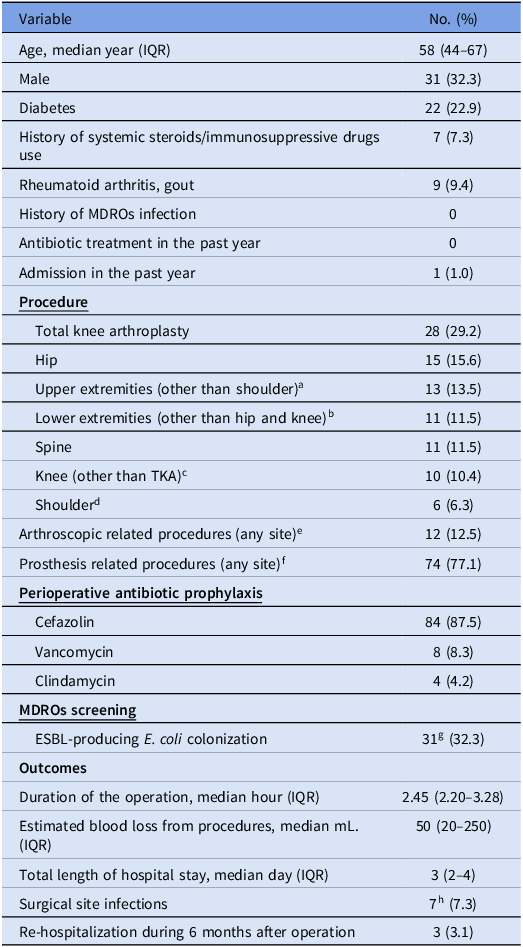
A total of 384 surveillance swabs were collected from 96 patients (median age, 58 years). ESBL-producing Escherichia coli was identified in 38 swabs from 31 patients, corresponding to a colonization rate of 32.3%. There were no additional types of MDROs detected in surveillance cultures. Only one patient had a history of hospital admission within the previous year. The common procedures were involved prosthetic implantation (74 patients, 77.1%). Twenty-eight patients (30.2%) underwent total knee arthroplasty (TKA), and 15 patients (15.6%) underwent hip surgery. Perioperative antibiotic prophylaxis included cefazolin in 84 patients (87.5%), vancomycin in 8 patients (8.3%), and clindamycin in 4 patients (4.2%) (Table 1).
Characteristics of 96 patients undergoing elective orthopedic surgery

Note. No, number of patients; MDROs, multidrug-resistant organisms; ESBL, extended-spectrum betalactamase; IQR, inter quartile range; total knee arthroplasty, TKA; surgical site infections, SSIs; GNB, Gram-negative bacteria.
aSurgery related to elbow (n = 2), ulnar (n = 7) and hand (n = 4).
bSurgery related to ankle (n = 2), foot (n = 5) and arthroscopic ankle (n = 3).
cSurgery related to knee, anterior cruciate ligament reconstruction (ACLR) (n =5) and arthroscopic ACLR (n=6).
dSurgery related to clavicle (n = 2), shoulder (n = 2), and arthroscopic shoulder surgery (n = 2).
eArthroscopic surgery related to knee (n = 6), elbow (n = 1), shoulder (n = 2), and ankle (n = 3).
fProsthetic surgery related to knee (TKA) (n = 28), and hip arthroplasty (n = 14).
g38 ESBL-producing E. coli isolates (7 groin swabs, 31 rectal swabs) recovered from 31 patients.
h7 patients with SSIs related to TKA (n = 3), spine surgery with prosthetic implementation (n = 2), hip surgery (n = 1) and foot surgery (n = 1).
MDRO isolates and in-vitro antimicrobial susceptibility testing
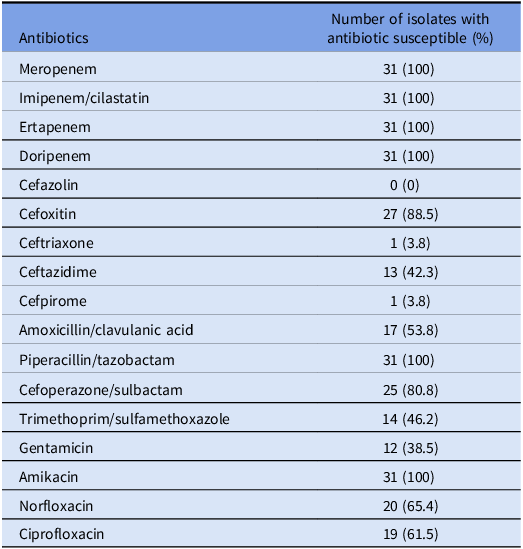
Among the 38 ESBL-producing E. coli isolates, 31 were collected from the rectal area and 7 from the groin area. Total of 31 ESBL-producing E. coli isolates from individual patients were highly in-vitro susceptible to carbapenems (100%), piperacillin/tazobactam (100%), amikacin (100%) and cefoperazone/sulbactam (80.2%) but were poorly susceptible to gentamicin (38.5%), trimethoprim–sulfamethoxazole (46.2%), norfloxacin (65.4%), and ciprofloxacin (61.5%). All ESBL-producing E. coli isolates were confirmed by a positive ESBL double-disk synergy test and the highly in-vitro susceptible to cefoxitin (88.5%) (Table 2).
In-vitro antimicrobial susceptibility pattern of 31 ESBL-producing E. coli isolates recovered from individual patients undergoing elective orthopedic surgery

Note. ESBL, extended-spectrum betalactamase. All ESBL-producing E. coli isolates were confirmed with positive ESBL double-disk test.
MDROs colonization, risk factors, and outcomes
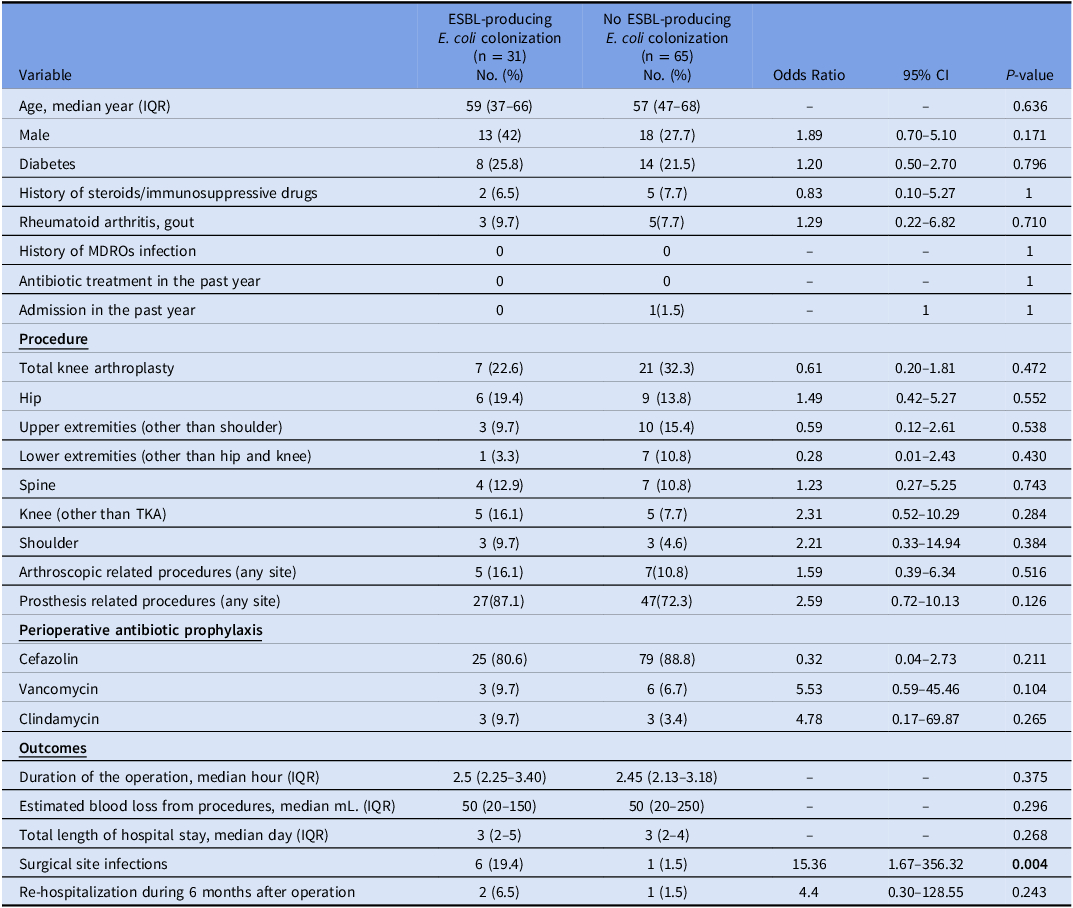
Patients were followed for 12 months. The clinical outcomes were monitored. Seven patients (7.3%) developed SSIs during the follow-up period. The rate of SSIs was higher among patients colonized with ESBL-producing E. coli compared with those without colonization (6/31, 19.4% vs. 1/65, 1.5%; P = .004; odds ratio [OR] 15.36; 95% confidence interval [CI], 1.67–356.32). There were no differences in other clinical characteristics, procedure types, and postoperative outcomes between patients with and without MDROs colonization (Table 3).
Characteristics and outcomes of patients with and without ESBL-producing E. coli colonization

Note. No, number of patients; MDROs, multidrug-resistant organisms; ESBL, extended-spectrum betalactamase; IQR, inter quartile range; total knee arthroplasty, TKA; surgical site infections, SSIs; GNB, Gram-negative bacteria.
Patients with surgical site infections
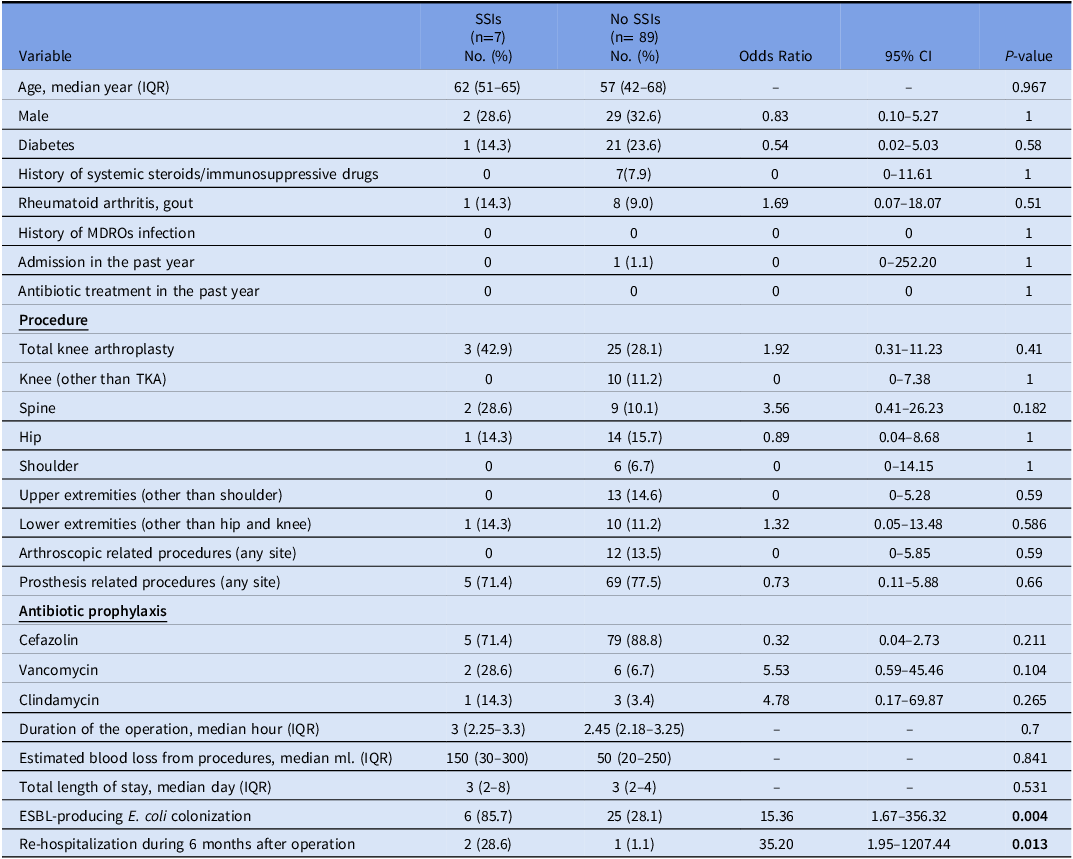
Seven patients developed SSIs following TKA (n = 3), spine surgery with prosthetic implantation (n = 2), hip surgery (n = 1), and foot surgery (n = 1). Six of these patients (85.7%) were colonized with ESBL-E. coli preoperatively. Moreover, ESBL-producing E. coli colonization and re-hospitalization were significantly higher among patients with SSIs compared with those without SSIs. From the multivariate logistic regression analysis, preoperative ESBL-producing E. coli colonization was associated with the development of SSIs (P = .014; adjusted OR, 16.53; 95% CI 1.78–153.44) (Table 4).
Characteristics of patients with and without surgical site infections

Note. No, number of patients; SSIs, surgical site infections; MDROs, multidrug-resistant organisms; ESBL, extended-spectrum betalactamase; IQR, inter quartile range.
From the multivariate logistic regression analysis (ESBL-producing E. coli colonization, and re-hospitalization), ESBL-E.coli colonization was associated with SSIs (P=0.014, adjusted odds ratio 16.53, 95% CI 1.78–153.44).
All patients with SSIs were initially treated with empirical oral antibiotics (dicloxacillin or amoxycillin/clavulanate) and outpatient management. Four patients demonstrated clinical improvement following oral antibiotic treatment. Three patients with SSIs experienced clinical treatment failure following initial oral antibiotic treatment and required re-hospitalization. Surgical incision and drainage were subsequently performed with intravenous broad-spectrum antibiotic treatment (piperacillin/tazobactam or meropenem). However, microbiological confirmation of SSIs was unavailable as the surgical wound cultures yielded no growth.
Discussion
We observed a high incidence of preoperative ESBL-producing E. coli colonization (32.3%) and a high rate of SSIs (7.3%) among patients undergoing elective orthopedic procedures. Preoperative ESBL-producing E. coli colonization was independently associated with the development of SSIs. These findings highlighted the potential clinical relevance of MDROs colonization in surgical populations in endemic regions. Reference Apisarnthanarak, Kiratisin and Mundy14,Reference Apisarnthanarak, Kiratisin, Saifon, Kitphati, Dejsirilert and Mundy15 In our study, only one patient had a history of hospital admission within the prior year, suggesting that traditional healthcare-associated risk factors may not adequately capture the current epidemiology of MDROs colonization. In the settings with a high prevalence of antimicrobial resistance, community-acquired colonization with MDROs might be an important reservoir for subsequent infection. Increasing reports of community-based ESBL-producing GNB colonization among healthy individuals in endemic regions support the hypothesis that asymptomatic colonization may influence perioperative infectious risk, even in patients without established healthcare exposures. Reference Karanika, Karantanos, Arvanitis, Grigoras and Mylonakis16,Reference Manyahi, Matee, Majigo, Moyo, Mshana and Lyamuya19,Reference Boonyasiri, Tangkoskul, Seenama, Saiyarin, Tiengrim and Thamlikitkul22–Reference Dayan, Dabbah, Weissman, Aga, Even and Glikman25
A previous meta-analysis by Karanika et al. reported a global prevalence of fecal ESBL-producing GNB colonization of approximately 14% among healthy adults, with substantially higher rates in parts of the West Pacific and Southeast Asia, Africa, and the eastern Mediterranean (22%–46%). Reference Karanika, Karantanos, Arvanitis, Grigoras and Mylonakis16 The colonization rate observed in our study was consistent with these regional estimates. Colonization with MDROs especially in multidrug-resistant GNB have been associated with subsequent infection in several clinical settings. Reference Karanika, Kinamon, Grigoras and Milonakis26–Reference Apisarnthanarak, Kondo and Mingmalairak31 Data regarding the clinical impact of gastrointestinal colonization with multidrug-resistant GNB on postoperative infectious outcomes remain limited, particularly in patients undergoing elective surgical procedures. Reference Tischendorf, de Avila and Safdar28–Reference Cheikh, Belefquih, Chajai, Cheikhaoui, El Hassani and Benouda30 However, few studies have been reported the risk for fecal multidrug-resistant GNB colonization and infection, particularly in patients with underlying hematologic malignancies. Reference Tischendorf, de Avila and Safdar28,Reference Cornejo-Juarez, Suarez-Cuenca and Volkow-Fernandez29 Cheikh et al. performed a retrospective cohort study of pediatric cardiac surgery in Morocco. ESBL-producing GNB colonization was around 15% (17/111). Among the 17 patients, 23.5% (4/17) developed a postoperative infection due to ESBL-producing GNB. Reference Cheikh, Belefquih, Chajai, Cheikhaoui, El Hassani and Benouda30 In Thailand, preoperative screening for ESBL-producing GNB colonization was conducted in patients underwent abdominal surgery. ESBL-producing GNB colonization and dirty wound classification were associated with SSIs. However, there was no association between carbapenem prophylaxis and reduction in SSIs. Reference Apisarnthanarak, Kondo and Mingmalairak31
Our study is the first study to assess the incidence of SSIs after elective orthopedic procedures in Thailand. We found a high rate of SSIs compared to CDC’s NHSH report (<3%). Reference Rosenthal, Richtmann and Singh21 Our study supports the data from the International Nosocomial Infection Control Consortium (INICC) (resource-limited settings) that there are higher rates of SSIs postsurgery. The data from INICC has been collected from a multinational, multicenter, collaborative on health care associated control program that used a surveillance system. This system is in 30 countries in Latin America, Asia, Africa, and Europe which are MDROs endemic regions. For example, the rate of SSIs after hip prosthesis was 2.6% (INICC data) versus 1.3% (CDC’s NHSN data). Reference Rosenthal, Richtmann and Singh21 Elective orthopedic procedures are considered as a clean procedure with low rate of SSIs. The rates of SSIs were higher in patients with certain risk factors based on the patient’s underlying disease, immune status, and procedure types. Reference Edwards, Peterson and Mu17 High rate of SSIs in MDROs endemic region may be related to the virulence of the pathogen, antimicrobial resistance and lack of infection prevention and control program.
In our study, the association between ESBL-producing E. coli colonization and development of SSIs was consistent with previous studies. Reference Cheikh, Belefquih, Chajai, Cheikhaoui, El Hassani and Benouda30,Reference Apisarnthanarak, Kondo and Mingmalairak31 However, we had only 7 patients with SSIs and limited microbiological culture confirmation. Three patients with SSIs who had re-hospitalization were response with empirical of board spectrum antibiotic treatment. Thus, we had insufficient evidence to clarify the process of SSIs development. Nevertheless, ESBL-producing GNB colonization may be enhanced or be the causative pathogen by hematological route from gut translocation, or direct contamination at the skin surface at surgical sites. Active surveillance screening of ESBL-producing GNB colonization for patients undergoing elective orthopedic surgery may have a significant contribution on the antibiotic perioperative prophylaxis and infection control implementation. However, the cost-effective analysis of the active surveillance screening and outcomes required further studies.
In our study, MDROs surveillance cultures recovered only ESBL-producing E. coli. CREs, CRAB, CRPA, MRSA, and VREs isolates were not recovered. ESBL-producing E. coli is the major community associated MDROs pathogen in Thailand which is consistent with previous studies. Reference Suwantarat and Carroll11,Reference Kiratisin, Chongthaleong and Tan13–Reference Apisarnthanarak, Kiratisin, Saifon, Kitphati, Dejsirilert and Mundy15,Reference Rosenthal, Richtmann and Singh21,Reference Yungyuen, Chatsuwan and Plongla32 Although prevalence of CREs infections has been increasing in Thailand. It may be possible that it is still related to nosocomial pathogen. Reference Hsu, Apisarnthanarak, Khan, Suwantarat, Ghafur and Tambyah10,Reference Suwantarat and Carroll11,Reference Yungyuen, Chatsuwan and Plongla32 The recent national surveillance molecular characterization of multidrug-resistant GNB from the Research University Network Thailand study reported the high prevalence of extended-spectrum cephalosporinase E. coli (14.5%) and the low prevalence of carbapenem-resistant E.coli (1.3%). Reference Yungyuen, Chatsuwan and Plongla32 In our study, the patients with elective orthopedic surgery had no traditional risk of MDROs. Thus, the positive ESBL-E. coli colonization could be reflected the ESBL-producing E. coli colonization in the community setting which were higher than CRE colonization.
The global strains of E. coli ST 131, that carry the CTX-M gene may be the major strain of ESBL-producing E. coli isolate from our study. From our study, all ESBL-producing E. coli strains were highly susceptible to carbapenems. However, the control of carbapenems use should be considered. Thus, piperacillin/ tazobactam (in noncritical infections), amikacin, and Cefoperazone/sulbactam are considered as alternative regimen. The rectal swab culture revealed a great performance for detecting ESBL-producing E. coli colonization. Our study was also confirmed the low prevalence of community-acquired MRSA in Thailand. Active surveillance screening for MRSA in patients without risk factors for HAIs and anti-MRSA perioperative prophylaxis are not recommended.
Limitation
This study has several limitations. First, it was conducted at a single center, which may limit generalizability. Second, molecular characterization of ESBL-producing E. coli isolates was not performed. Third, we had a small number of patients with SSIs, which may limit microbiological confirmation and the interpretation of the association between colonization and postoperative infection risks. The clinical significance of ESBL-producing E. coli colonization, clinical outcomes, and antimicrobial perioperative prophylaxis adjustment in orthopedic patients require further investigation.
Conclusion
Preoperative ESBL-producing E. coli colonization was common among patients undergoing elective orthopedic surgery in the endemic setting and was associated with an increased risk of SSIs. These findings suggest that colonization may serve as a potential marker of postoperative infectious risk. Further studies are needed to evaluate the role of targeted surveillance and perioperative antibiotic prophylaxis modification in patients colonized with MDROs particularly in GNB.
Financial support
The authors gratefully acknowledge the financial support provided by Thammasat University. We would like to thank Kittisak Soungpan and Worawimol Wongworajareong (Medical technologist students, Faculty of Allied Health Science, Thammasat Hospital), and TUH Microbiology laboratory staff for their assistance with this study.
Competing interests
None.

 Open access

