Introduction
Recent innovations in the laundry industry have led to major advances in laundry equipment, laundry chemicals, fiber and fabric technology, and laundry facility design and engineering. Collectively, these have enabled healthcare facilities and their contract laundry operators to provide a quality product for a diverse textile inventory of bed linens, towels, washcloths, patient gowns, uniforms, scrub suits, and drapes or other surgical textiles.Reference Rutala and Weber 1 , 2 Residential care facilities (eg, assisted living facilities, long-term care facilities) often will provide laundry services for residents’ personal clothing in addition to typical healthcare textiles (HCTs), if laundry equipment appropriate for these garments is available. 3
Healthcare professionals have questions about the infection prevention effectiveness of these modern healthcare laundry developments. The epidemiology of microbial contamination of HCTs and the potential for infection transmission identifies 2 distinct situations: (1) freshly laundered HCTs, and (2) HCTs in use. This review addresses evidence that current industrial laundry processes are sufficient to interrupt patient-to-patient transmission of infection, focusing on those laundered HCTs having the greatest degree of contact with patients and healthcare professionals. Although surgical textiles and drapes would normally be included among HCTs with a high degree of patient contact, the processing of reusable surgical textiles is not discussed here. This topic is thoroughly addressed in a standard published by the Association for the Advancement of Medical Instrumentation. 4 Recent industry developments (ie, antimicrobial treatments of HCTs and microbiologic testing of laundered HCTs) are reviewed in an effort to give infection preventionists some insight on these topics that may be helpful in future purchase/procurement decisions. The resources for this narrative review include peer-reviewed medical literature using PubMed (search terms including but not limited to “textiles,” “laundry,” “infection,” “sanitization”), standards and guidelines, and textile information from industry publications and websites.
Overview of the Laundry Process
When textiles are heavily contaminated with potentially infective body substances (eg, blood, stool, urine), they can contain 1×10⁴ to 1×10⁶ colony-forming units of bacteria per square centimeter of fabric.Reference Blaser, Smith, Cody, Wang and LaForce 5 However, through a combination of soil removal, pathogen removal, and pathogen inactivation, contaminated laundry can be rendered hygienically clean. Hygienically clean laundry carries negligible risk to healthcare personnel and patients, provided that the clean textiles are not inadvertently contaminated before use. 2 , Reference Nicholes 6 The Association for the Advancement of Medical Instrumentation defines hygienically clean for clean, nonsurgical, reusable textiles as being “free of pathogens in sufficient numbers to cause human illness.” 4
The laundry process starts with collection of soiled and contaminated textiles at point of use. Handling contaminated laundry with minimal agitation can help prevent the generation of potentially contaminated lint aerosols in patient-care areas. 7 – Reference Shimori, Miyamoto and Makishima 9 Previously, contaminated laundry originating in hospital isolation rooms (eg, patient rooms under contact precautions) was segregated and handled with special practices. However, few, if any, cases of healthcare-associated infections (HAIs) have been linked to this source.Reference Garner and Simmons 10 Single-blinded studies have demonstrated that laundry from isolation rooms is no more heavily contaminated with microorganisms than laundry from elsewhere in the hospital.Reference Weinstein, Gantz, Pelletier and Hibert 11 Adherence to standard precautions and minimal textile agitation when handling contaminated laundry in isolation rooms are considered sufficient to prevent the dispersal of potentially infectious aerosols. 12 The Occupational Safety and Health Administration prohibits the sorting or rinsing of contaminated laundry at the location where contamination occurred (eg, in the patient’s room). These tasks should be accomplished in the facility at a hopper sink in a soiled linen room. 7 If a contract laundry service is used, sorting takes place at that off-site facility.
Laundering cycles consist of an initial flush with water, the main wash with cleaning agents and other laundry additives, followed by rinsing with clean water. 2 , Reference Riggs and Klipper 13 The number of rinses is determined by water quality, the size of the load, fabric type, and the laundry chemicals used, all of which are taken into account when selecting the appropriate wash/rinse cycle parameters. The last rinse for each load of laundry includes the addition of an acid (ie, a souring agent) that causes a pH shift from approximately pH 12 to pH 5. This action neutralizes residual alkalinity in the water from the soap or detergent used in the wash. Eliminating residual alkali from textiles is an important measure in reducing the risk for skin irritation. 2 , Reference Riggs and Klipper 13
Dryer temperatures and cycle times are dictated by fabric and fiber characteristics. Manmade fibers (ie, polyester and nylon) require shorter dry times and lower dryer temperatures compared with those used for cotton. Sorting the textiles by fiber/fabric type before laundering can help maximize the effectiveness of the drying phase. Cleaned and dried textiles are pressed if needed, folded, and packaged for transport, distribution, and storage. Off-site laundries should package or cover clean textile bundles before transport to prevent inadvertent contamination from dust and dirt during loading, delivery, and unloading. State regulations and/or accrediting standards may dictate the procedures for this activity. 14 , Reference Fairbanks 15
Laundered HCTs must be stored in a manner to keep them dry and free from soil and contamination. In the healthcare facility, the clean textile storage room/area should be designed to minimize dust contamination of the textiles. The storage room should also be maintained at ambient temperature and relative humidity ranges to help prevent the proliferation of any residual microbial contamination in the textiles. 4
Microbial Inactivation Associated With the Laundry Process
Microbial Reductions Associated With Washing and Drying
The antimicrobial action of the laundering process results from a combination of mechanical, thermal, and chemical factors all in action over a period of time.Reference Nicholes 6 , Reference Riggs and Klipper 13 , Reference Walter and Schillinger 16 , Reference Mouton and Bekkers 17 Studies demonstrate that cool water wash cycles at temperatures of 71°F–77°F (22°C–25°C) can reduce microbial contamination when the wash cycle duration, the wash detergent, and the amount of laundry additive are all carefully monitored and controlled.Reference Blaser, Smith, Cody, Wang and LaForce 5 , Reference Jaska and Fredell 18 – Reference Heinzel, Kyas, Weide, Breves and Bockműhl 23 Wash cycles with detergent and 71.6°F (22°C) water removed easily dislodged soils and achieved a 3 log10/cm2 reduction in microorganisms with the help of the washer’s agitation, rinsing, and drainage.Reference Blaser, Smith, Cody, Wang and LaForce 5 Surfactants and detergents function to suspend more tightly bound soils. Use of low-temperature wash cycles has demonstrated effectiveness in either inactivation or removal of healthcare-associated pathogens such as Klebsiella pneumoniae, total coliforms, Staphylococcus aureus, enterococci, poliovirus, adenovirus, and pollen allergens.Reference Blaser, Smith, Cody, Wang and LaForce 5 , Reference Smith, Neil, Davidson and Davidson 21 – Reference Arnold 25 Use of hot water provides a sanitizing effect capable of producing microbial reduction of at least 5 log10 per square centimeter.Reference Jaska and Fredell 18 A temperature of at least 160°F (71°C) for a minimum of 25 minutes is recommended frequently for traditional hot-water washing. 2 Regardless of whether hot or cold water is used for washing, the temperatures reached in drying and especially during ironing provide additional microbicidal action, resulting in a reduction in the range of 0.5 to 2.0 log10 per square centimeter.Reference Blaser, Smith, Cody, Wang and LaForce 5 , Reference Choi, Lee and Sohn 22
Microbial Inactivation via Laundry Additives
Laundry Chemicals: Modes of Action
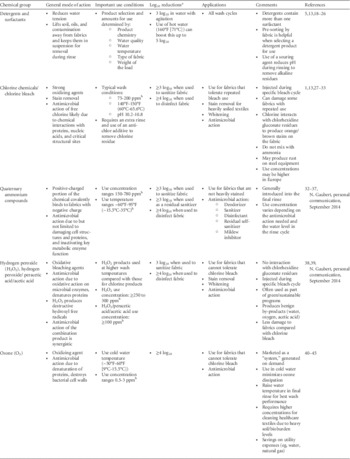
Contemporary laundry chemicals are divided into 5 major groups: (1) detergents and surfactants, (2) chlorine chemicals and chlorine bleach (ie, sodium hypochlorite), (3) quaternary ammonium compounds, (4) hydrogen peroxide and hydrogen peroxide/peracetic acid/acetic acid, and (5) ozone. General properties and modes of action for these chemicals are summarized in Table 1. A recent major trend to move away from an almost universal reliance on chlorine-based laundry additives in favor of using oxidative chemistries encountered some pushback from infection preventionists.Reference Belkin 46 However, knowing the advantages, disadvantages, and function of these chemicals can be helpful when discussing laundering options with laundry contractors. Modern laundry chemistries are less destructive to modern fabrics, thereby expanding the textile options available to healthcare facilities.
Major Categories of Laundry Chemicals for Soil/Microbe Removal and/or Inactivation

NOTE. anti-chlor, an anti-chlorine compound or chlorine neutralizer; ppm, parts per million.
a Log10 reductions achieved via removal of microorganisms or microbial inactivation.
b Recommended ppm or use temperature may vary by product.
Laundry Chemicals: Antimicrobial Potency
There are circumstances when adding a disinfectant or adding a detergent whose formula contains a disinfectant at some point into the wash/rinse cycle can enhance the overall disinfection of the laundering process. Examples of these decisions include (1) when textile properties indicate use of cooler water temperatures (eg, 104°F [40°C]), (2) if a high proportion of the textile load is very heavily soiled, or (3) if there is concern about suspended microbes in wash or rinse water settling back onto the textiles in the load.Reference Riggs and Klipper 13 , Reference Gerba and Kennedy 27 Altenbaher et alReference Altenbaher, Šostar Turk and Fijan 47 noted that when any of the 4 factors needed to produce hygienically clean textiles (ie, water temperature, agitation, chemical type and concentration, and duration of the wash cycle) is altered (eg, lowering the wash/rinse water temperature), the addition of a disinfecting laundry chemical can compensate for the anticipated loss of antimicrobial activity of the overall process. For lightly soiled textiles, however (eg, healthcare residents’ clothing), the use of a disinfectant may not offer any advantage over the use of detergent.
Traditionally, the use of chlorine bleach ensured an extra margin of safety.Reference Rutala and Weber 1 , Reference Gerba and Kennedy 27 , Reference Belkin 46 , Reference Jordan and Jones 48 For example, the addition of bleach to a low-temperature wash cycle increased the microbial log reduction by an additional 3 log10 per square centimeter.Reference Blaser, Smith, Cody, Wang and LaForce 5 , Reference Choi, Lee and Sohn 22 A total available chlorine residual of 50–150 parts per million is usually achieved during the bleach cycle.Reference Jaska and Fredell 18 Chlorine bleach in commercial laundry applications is most effective at water temperatures of 140°F–150°F (60°C–65.6°C).Reference Tinker 31
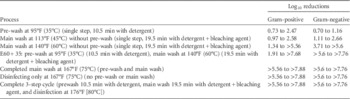
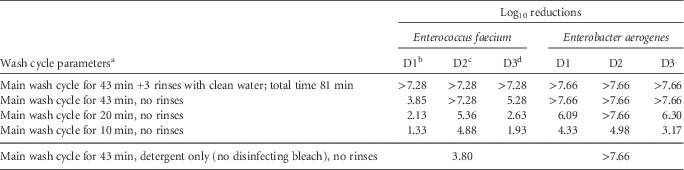
Potency evidence for contemporary oxidative laundry additives is now available. Fijan et alReference Fijan, Koren, Cencič and Šostar Turk 49 conducted laboratory evaluations to determine the log reductions of bacteria achieved under varying wash cycle parameters and use of oxygenated laundry additives. Experimental design details and results of this work are summarized in Table 2. The use of a hydrogen peroxide bleaching agent and a disinfectant (containing hydrogen peroxide + peracetic acid+acetic acid) in 140°F (60°C) water produced greater than 7 log10 reduction for selected bacterial and yeast challenge microorganisms (ie, Enterococcus faecium, S. aureus, Pseudomonas aeruginosa, Enterobacter aerogenes, Candida albicans).Reference Altenbaher, Šostar Turk and Fijan 47 , Reference Fijan, Koren, Cencič and Šostar Turk 49 They also evaluated the potency of 3 disinfecting bleaches in the wash cycle under various cycle parameters.Reference Fijan and Šostar Turk 50 The experimental details of this work are summarized in Table 3. Longer wash cycle times were necessary to achieve greater than or equal to 7 log10 reduction of E. faecium regardless of the type of laundry additive compared with the wash cycle times needed for E. aerogenes. Of the 3 chemicals, only the peracetic acid–containing product achieved higher reduction levels (>4.0 log10) for E. faecium during shorter wash cycle times (10–20 minutes). These results suggest that for institutional laundries, peroxyacetic acid in hydrogen peroxide products would meet or exceed the US Environmental Protection Agency log reduction benchmark (≥4.0 log10) for adequate textile disinfection for short wash cycles at warm temperatures for healthcare purposes. 32 All 3 products achieved greater than 7 log10 reductions for both E. faecium and E. aerogenes at 86°F (30°C) when the full wash and rinse cycles were completed in 81 minutes.Reference Fijan and Šostar Turk 50
Log10 Reductions Associated With Wash Cycles: Impact of Contemporary Laundry Additive Chemistries and Water Temperature

NOTE. Adapted and compiled from reference 49.
Detergent: anionic and nonionic surfactants (5%), phosphates (25%), silicates, sodium carbonate, optical whitener; use concentration in pre-wash: 6.2 g detergent/kg textiles; main wash: 5.0 g detergent/kg textiles.
Bleaching agent: hydrogen peroxide (35%); use concentration in main wash: 4.4 mL/kg textiles.
Disinfecting agent: hydrogen peroxide (20%), peroxyacetic acid (7.5%), acetic acid (7.5%); use concentration in main wash: 3.0 mL/kg textiles.
Equipment: laboratory washing machine: 7.5 kg capacity, 75 L volume.
Challenge organisms: Enterococcus faecium, Staphylococcus aureus, Mycobacterium terrae, Candida albicans, Enterobacter aerogenes, Pseudomonas aeruginosa. Starting inoculum for each organism (allowed to dry onto fabric): ~1×10⁶ to 1×10⁷ colony-forming units/cm2.
Organic matter challenge: swine blood, swine fat, artificial sweat.
Fabric used: cotton, previously sterilized; cut into square centimeters.
Assay method: recovery of the laundered cotton squares, each immersed in 20 mL normal saline + Tween 80 and vortexed, and serial dilutions plated on appropriate selective media.
E60+35 is the designation in this study for the laundry process using a pre-wash and a main wash.
The disinfecting step by itself could not remove stains.
Log10 Reduction Activity of Selected Oxidative Disinfecting Bleaches in Low-Temperature Wash Cycles

NOTE. Compiled and adapted from reference 50.
a Water specifications: all experiments run at 86°F (30°C). Wash water volume=8 L, bath ratio=1:8, each rinse water volume=9 L.
Detergent used in all experiments contained 12% sodium alkylbenzene sulphonate, 2% sodium lauryl ether sulphate, 2.5% isopropanol, 3% fatty alcohol etoxylate, 1.5% sodium hydroxide. Amount used was 10 g/2.5 kg of dry textiles.
Separate cotton test swatches were inoculated with E. faecium and E. aerogenes and allowed to dry. Starting concentrations after drying were 1.9×10⁷ colony-forming units (cfu)/swatch for E. faecium and 4.6×10⁷ cfu/swatch for E. aerogenes. Swatches were laundered along with 2.5 kg of previously disinfected ballast cotton/polyester (50/50) fabric.
Washing machine was a small-scale laboratory industrial drum washing machine.
b D1=sodium chlorate (10%). Amount used=10 mL per 2.5 kg dry textiles.
c D2=peroxyacetic acid in hydrogen peroxide (2.5% peroxyacetic acid, 10% hydrogen peroxide, 2.5% acetic acid). Amount used=12.5 mL/2.5 kg dry textiles.
d D3=hydrogen peroxide (35%). Amount used=7.5 mL/2.5 kg dry textiles.
Questions have been asked about home laundering of hospital scrubs and uniforms. There have been concerns that home laundering of healthcare attire may expose family members to healthcare-associated pathogens.Reference Nordstrom, Reynolds and Gerba 51 However, infections in families attributed to home laundering of healthcare attire have not been demonstrated conclusively. As an example, studies have documented that the loss of antimicrobial activity by using wash water temperature of 140°F (60°C) can be compensated with longer wash cycle time, hot air drying, and ironing.Reference Honisch, Stamminger and Bockmühl 52 – Reference Patel and Murray-Leonard 54 Industrial laundering offers many process advantages over home laundering, such as (1) more exact control over all aspects of the process, (2) the ability to tailor wash parameters more accurately to match the soil level of the load, and (3) more choices in detergent and laundry additives (eg, sours). The current stance is hospital-directed laundering of employee scrubs and uniforms, although home laundering continues to be debated. 55 The Occupational Safety and Health Administration regulations require employers to provide laundry processes for reusable personal protective equipment textiles and healthcare attire or uniforms with visible blood or other potentially infectious material contamination. 7
Laundry sanitizers and disinfectants marketed in the United States must be registered by the Environmental Protection Agency. Registered laundry product labels must have the following information at a minimum: (1) the intended use of the product (eg, a presoaking additive, an additive for the wash cycle), (2) the appropriate use conditions, and (3) the product’s compatibility with fabrics and other laundry chemicals. Those products intended for HCT laundering should be tested at a minimum against S. aureus, K. pneumoniae, and P. aeruginosa to support claims for disinfection. 32 Laboratory data for inactivation of S. aureus and K. pneumonia are required to support claims for sanitization. 32 Additional label claims for inactivation of other healthcare-associated pathogens must similarly be supported by laboratory data. The microbial log reduction benchmark for laundry disinfectants is greater than or equal to 4 log10, whereas the benchmark for laundry sanitizers is greater than or equal to 3 log10.
Epidemiology of HAIs Attributed to Laundered HCTs
HCTs will become populated with microorganisms while these textiles are in use. Several research teams evaluating microbial ecology in healthcare settings have demonstrated that patients and their hospital beds are at the center as a source of room contamination, with pathogen levels dropping in concentration per area as the distance from the patient increases.Reference Dancer, White and Robertson 56 – Reference Bonten, Hayden and Nathan 58 This suggests that hospital bed textiles become contaminated primarily with the patient’s flora and to a lesser degree with those microorganisms already present in the healthcare environment, including pathogens that are particularly adept at long-term survival.Reference Dancer, White and Robertson 56 – Reference Huang, Datta and Platt 61 However, the epidemiology of outbreaks associated with laundered, reusable HCTs strongly supports the notion that current industrial laundry processes are effective in interrupting patient-to-patient transmission.
Outbreaks of Infection Attributed to Laundered HCTs
The volume of HCTs processed annually in the United States is difficult to determine, but this figure provides context when discussing the epidemiology of HAIs attributed to HCTs. A current estimate for the annual volume of US hospital laundry is approximately 4.34 billion pounds as derived from Government Accounting Office 62 and American Hospital Association data sources. 63 However, when the laundry needs for nonhospital healthcare settings are included, a conservative estimate of the total volume of HCTs processed annually in the United States today for all healthcare venues would be several billion pounds higher.
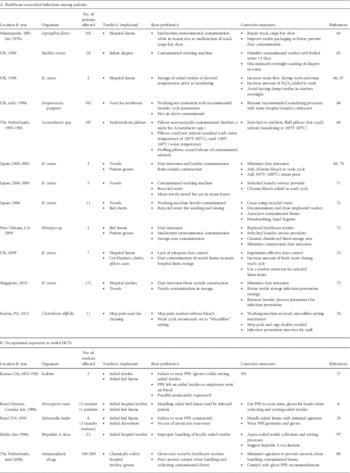
Outbreaks involving laundered HCTs from the 1970s to the present are summarized in Table 4, along with occupational exposures to pathogens on soiled HCTs. The occupational infection clusters involved exposure to infectious aerosols from mishandling of the textiles or failure to use personal protective equipment. 2 The outbreaks of clinically symptomatic infection among patients are associated mostly with textiles contaminated with environmental pathogens after laundering or contaminated owing to a deficiency in the laundering process. 2 At least 350 patients worldwide have been infected in 12 outbreaks over the past 43 years. Despite the presence of microorganisms on clothing and HCTs, there appears to be little to no evidence of patient-to-patient transmission of infection attributed to laundered textiles, even for Clostridium difficile infection.Reference Bearman, Bryant and Leekha 81 We have not found reports of C. difficile spore persistence on patient-care HCTs, nor have we found reports of patient-to-patient transmission of C. difficile infection associated with HCTs not mixed with cleaning cloths, etc, during laundering.
Outbreaks of Healthcare-Associated Infections Attributed to Laundered Healthcare Textiles (HCTs) and Occupational Exposures Involving Soiled HCTs: 1970 to 2015

NOTE. NS, not specified in the report; PPE, personal protective equipment.
a Report is primarily a serosurvey of workers presumed at risk for hepatitis A.
Of the 12 outbreaks, 7 (58%) were due to contamination from Bacillus cereus (a common environmental, spore-forming microorganism) occurring in the late spring or the summer months. Towels were noted as being contaminated with B. cereus in 4 (57%) of these 7 events. Higher ambient temperatures (which favor spore-forming microorganisms), coupled with normally moisture-absorbent textiles, result in conditions that favor environmental pathogen proliferation. Root problems associated with the B. cereus outbreaks included (1) dust contamination of the clean textiles, (2) inappropriate wash/rinse water temperatures, and (3) storage conditions that promoted microbial growth. Two of these root problems were also identified in a recent Rhizopus outbreak in Louisiana, where storage conditions may have encouraged fungal growth on the HCTs.Reference Duffy, Harris and Gade 73 This outbreak was limited to a very small group of severely immunocompromised patients, even though contaminated HCTs presumably were used elsewhere in the hospital. Of the 12 outbreaks, 4 (33%) reported problems with laundered textile storage in the hospital; 7 (58%) reported contaminated washing equipment, inappropriate wash cycle or water temperature settings, or recycled water issues; and 1 (8%) attributed the outbreak to inadvertent contamination occurring during transit from the laundry to the hospital. Reports of HCTs becoming contaminated during use and reports of infection attributed to HCTs used for multiple patients with no laundering are not included here.
These observations about outbreaks involving environmental pathogens strongly suggest that transport and storage of cleaned HCTs can present opportunities for postlaundering contamination of textiles. Storage or holding areas for cleaned textiles should be designed and engineered to protect textiles from dust and soil. 4 , Reference Riggs and Klipper 13 , Reference Bureau-Chalot, Piednoir, Camus and Bajolet 82 The importance of temperature, relative humidity, and moisture control in storage areas is central to preventing microbial proliferation in and on materials that have some organic components. Given that some HCTs may consist of fibers with high organic content (eg, cotton) and some textiles absorb moisture by design (eg, towels), textiles with high moisture content (eg, textiles packaged in plastic before they are completely dry) might provide a favorable environment for microbial proliferation, especially if the ambient temperature in the textile package storage area is warm.
Environmental pathogen contamination of HCTs also draws attention to the necessity of proper water and equipment management in the laundry. Bacillus spores can be present in water, and water recycling can potentially build up the spore concentrations in the wash and rinse cycles. Additionally, laundry additives may lack sufficient sporicidal potency to inactive large numbers of these spores during laundering. Prompt removal of wet textiles from the machines and proper washer maintenance should help to minimize equipment contamination and biofilm development.Reference Barrie, Hoffman, Wilson and Kramer 67
Antimicrobial Treatments and Residues for HCTs
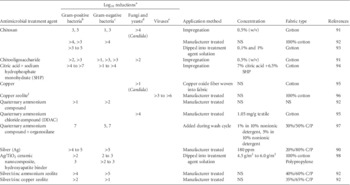
Early uses of antimicrobial treatments of textiles and garments prevented fabric from rotting in adverse environmental conditions.Reference Elsner 83 Treated textiles have been evaluated in clinical studies as part of a treatment strategy for atopic dermatitis for several years.Reference Ricci, Patrizi, Bellini and Medri 84 – Reference Gauger 86 More recent research is targeting the general infection prevention market. Antimicrobial agents for textiles represent a diverse array of chemicals and metals including but not limited to gold, silver, copper, chitosan, chitooligosaccharides, quaternary ammonium compounds, and zeolite-containing compounds. These agents can be added to textiles either as a chemical treatment of woven fabric or finished textile item, or as an impregnated fiber that is incorporated into fabric during weaving.Reference Szostak-Kotowa 87 Despite the differences in experimental design, laboratory studies in general have confirmed the potency of these active agents in reducing microbial populations on fabrics during contact periods ranging from days to weeks.Reference Gao and Cranston 88 – Reference Mariscal, Lopez-Gigosos, Carnero-Varo and Fernandez-Crehuet 90 The log10 reduction observed in these studies can range from 1 to 7 log10, but most microbial inactivation potencies observed cluster between 3 and 5 log10 (Table 5). Antimicrobial activity is affected by many factors, such as (1) properties of the challenge microorganism(s), (2) intrinsic moisture content of the fabric, (3) length of the contact time, (4) method of treatment application, (5) type of fabric, and (6) number of wash cycles after treatment. Reference Szostak-Kotowa 87
Antimicrobial Treatments of Textiles: Reported Log10 Reductions of Challenge Microorganisms for Selected Treatment Agents

NOTE. Ag/TiO2, silver/titanium dioxide; C/P, cotton/polyester; DDAC, didecyldimethyl ammonium chloride; NS, not specified; ppm, parts per million; w/v, weight/volume.
a Results expressed as whole integers to depict the general magnitude of microbial inactivation. The range indicates maximum reductions when multiple challenge microorganisms were evaluated. Check references for complete listing of challenge microorganisms. A result preceded by the > symbol indicates the log reduction is greater than the number listed but less than the next higher integer.
b Strains of Staphylococcus aureus (eg, methicillin-susceptible S. aureus, methicillin-resistant S. aureus) used most frequently.
c Escherichia coli and Pseudomonas aeruginosa used most frequently.
d Trichophyton spp. and Candida spp.
e Avian influenza viruses H5N1, H5N3.
f Zeolite is a mineral, typically a hydrated aluminosilicate of sodium, potassium, calcium, or barium. Zeolite acts as an absorbent and/or catalyst.
Antimicrobial treatment may be useful in inactivating microbes transferred onto fabrics touched frequently by hand, such as privacy curtains,Reference Schweizer, Graham, Olh, Heilmann, Boyken and Diekema 99 or in reducing the microbial burden on hospital outerwear (eg, scrubs).Reference Bearman, Rosato and Elam 100 Patients will have the greatest degree of direct contact with their gowns, the bed linens and blankets, towels and wash cloths. Adverse effects on skin and cytotoxicity may be issues if the antimicrobial treatment chemical degrades such that bioactive compounds are released (ie, leached) from the material during wear.Reference Hőfer 101 In one study, silver-treated fabrics were found to leach silver in the presence of artificial sweat.Reference Kulthong, Srisung, Boonpavaitchakul, Kanywansupamonkon and Maniratanachote 102 Dermal adsorption is known to occur with Triclosan and quaternary ammonium compounds.Reference Elsner 83 Treatment chemicals could also cause skin irritation, which can lead to localized skin infections, which in turn may create portals of entry for pathogens. Sensitization and allergic reactions are also possible. Risk-benefit analyses for patient-safety purposes should be performed as part of treated textile research to evaluate potential skin reactions to continual contact with antimicrobial chemical residues.Reference Elsner 83 , Reference Kramer, Guggenbichler and Heldt 103
Once a textile treatment is deemed safe for skin contact, the antimicrobial performance of the textile should be evaluated in a clinical setting.Reference Borkow and Gabbay 104 Lazary et alReference Lazary, Weinberg and Vatine 105 recently studied the impact on HAI incidence when copper oxide–impregnated (biocidal) HCTs and patient garments were used in a long-term brain injury ward. Although the report’s “before/after” design for an intervention study may not be the most rigorous approach from an epidemiologic perspective, the reported reduction in HAI incidence (24%) when the biocidal textiles were used suggests that the use of antimicrobial-treated HCTs may provide some benefits for infection prevention. This report may be the first to examine the public health impact of biocidal HCTs, and clearly much more research is needed employing rigorous epidemiologic methods to determine whether reductions in HAI incidence occur with biocidal HCT use. Such research could help to determine whether use of these textiles provides greater infection prevention benefits during long-term hospitalizations versus those achieved during short-term care.
Antimicrobial treatments of textiles in the United States may be subject to review by the Environmental Protection Agency to determine whether the pesticide registration provisions of the Federal Insecticide, Fungicide, and Rodenticide Act apply in full (ie, to both the treatment chemical and the treated item) or whether the “Treated Articles Exemption” in this act (40 CFR §152.25(a)) is applicable. 106 , 107 Note that the Treated Articles Exemption does not apply to items used in direct patient care (eg, antiseptic wound dressings, certain textiles intended for atopic dermatitis therapy). Such items would be cleared by the US Food and Drug Administration.Reference Ricci, Neri, Ricci and Patrizi 108
Microbiologic Testing of Laundered Textiles
Microbiological testing of clean HCTs is conducted in Europe and Australia as part of their regulatory programs established for the healthcare sector. 109 , 110 Sampling methods for this test include the use of RODAC (Replicate Organism Detection And Counting) plates pressed onto a fabric’s surface (followed by incubation for growth) or immersing fabric into broth and enumerating growth in the broth after incubation. Recently, microbiological testing of clean HCTs for “hygienically clean certification” purposes has been introduced to the United States. 111 The basic testing program consists of 4 phases: (1) initial qualification (2 garments tested), (2) probationary period (6 different textiles tested in 3 months), (3) quarterly quality control testing (testing 28 textiles over 3 years), and (4) onsite sampling (2 textiles tested in each of 3 years). This program adopts the pass/fail benchmark of less than or equal to 20 colony-forming units/100 cm2 total aerobic microbial count on fabric (similar to the German test benchmark) using quarterly RODAC testing. Additional textile samples are required to be tested if a laundry’s test results exceed the benchmark or if there are changes in the parameters of the laundry processes. Target microorganism testing using the US Pharmacopeia USP <62> Microbiological Examination of Nonsterile Products: Tests for Specific Microorganisms is conducted semiannually to detect S. aureus, P. aeruginosa, and E. coli. 112
The Centers for Disease Control and Prevention has not recommended routine microbiological testing of nonporous environmental surfaces or of HCTs for infection control purposes. 2 , Reference Garner and Favero 113 Currently, there is no public health consensus regarding a microbial benchmark to define hygienically clean for textiles. Most importantly, given the historical record for patient safety and extremely infrequent episodes of infection attributed to clean HCTs, the need to establish a certification program based on microbiological testing does not appear to be supported by epidemiologic data. The testing of clean HCTs appears to be a test of a “finished” product. Currently in US health care, the only finished product testing that is recommended by the Centers for Disease Control and Prevention is the routine testing of water and dialysate in dialysis settings. The key rationale for testing performed in dialysis settings is the fact that levels of microbial contamination have been associated with adverse outcomes in dialysis patients. Based on those data, there are action level benchmarks for heterotrophic plate counts in water and dialysate that, if exceeded, require immediate action to restore water quality for patient safety. 114 The benchmark set for clean HCTs testing does not appear to be linked to patient outcomes, nor is there any indication from the certification program literature that the benchmark is statistically valid (ie, within 90%–99% confidence intervals). Microbiological testing conducted in other hospital services, such as central sterilization for instruments, is basically process monitoring of industry-established standards and equipment manufacturer specifications.
When considering adopting a microbiological testing program for textiles, there are several important factors to evaluate. The method must be scientifically rigorous and validated. If a method needs to be developed, it should undergo both intra-laboratory and inter-laboratory testing to define all aspects of the method, including aseptic technique, and ideally the validation results should be subject to scientific scrutiny.Reference Tomasino 115 , 116 The method selected for use in the US HCT certification program (USP <62>) was originally developed for testing pharmaceutical and cosmetic substances. Currently there are no microbiological test methods for textiles that are part of either the AOAC International 117 or the ASTM collections of validated methods. 118 RODAC plate sampling and other sampling techniques cover very small areas, and microbial bioburden may not be spread evenly over the entire item. The method should be statistically valid, providing a meaningful representative sampling of the HCT product output during the sampling period. Given that most healthcare laundry facilities will process thousands, if not millions, of pounds of laundry in the 3-year certification period (the period established in the testing program in the United States), testing a very small number of textiles would not meet this criterion. The testing strategy should target the true end of the laundering process—when the textile goes to storage. Given the nature of the problems leading to some of the outbreaks summarized in Table 4 (poor storage conditions supporting microbial proliferation), spore-forming bacteria and fungi were identified, whereas S. aureus, P. aeruginosa, and E. coli were not. Microbiological testing will not detect contamination where we have seen it occur most often—in transit, in storage. Most importantly, there would need to be a plan of action for the infection preventionist at the hospital and the laundry managers when test results exceed the benchmark. Would a recall of HCTs be warranted under these circumstances, and if so, how far back from the current load? If the HCT testing benchmark is not linked to patient outcomes and no infection prevention intervention is developed to address high heterotrophic plate counts, there may be no justification for testing.
Concluding Remarks
Current infection prevention strategies and textile management during patient use appear to be adequate in preventing HAIs, provided that every step is taken to maintain the hygienic quality of HCTs before use. Patient-to-patient transmission of microorganisms involving clean textiles has not been demonstrated to date, despite the fact that pathogenic microorganisms can survive on textiles.Reference Boyce, Potter-Bynoe, Chenevert and King 57 , Reference Bearman, Bryant and Leekha 81 , Reference Fijan and Šostar Turk 119 Well-designed studies are needed to determine whether and to what extent HCTs may be a factor in patient colonization.Reference Boyce, Potter-Bynoe, Chenevert and King 57 , Reference Bonten, Hayden and Nathan 58 Clinical studies are needed for risk/benefit evaluation of antimicrobial-treated or -impregnated HCTs.
Healthcare epidemiologists would benefit from gaining some familiarity with HCT laundering, facility policies, and procedures for management of hygienically clean HCTs. If an outbreak of HAIs potentially linked to HCTs occurs, it is not enough to conduct microbial sampling of laundered textiles and declare the laundry process as the source of the problem.Reference Sifuentes, Gerba, Weart, Engelbrecht and Koenig 120 Each of the distinct operations of the laundry process needs to be evaluated in order to pinpoint the root cause of the problem. The greatest risks of diminishing the hygienically clean state of HCTs appear to be associated with inadvertent environmental contamination due to a malfunction of the laundry process or poor storage conditions of HCTs after laundering. A Hazard Analysis and Critical Control Point assessment of all postlaundering tasks should be included in any outbreak investigation of laundered HCTs. 14 , Reference Fijan, Šostar Turk and Cencic 121 , Reference Griffith 122
Studies to evaluate new developments in laundry processing in addition to current operations are encouraged. Survey entities such as the US Centers for Medicare & Medicaid Services are now acknowledging use of laundry additives other than chlorine bleach for HCT sanitization in healthcare facilities. 123 Following manufacturer instructions for laundry equipment, laundry chemicals, and fabrics is crucial to the provision of quality service to healthcare facility patients. 123
The provision of hygienically clean HCTs is an important service. Healthcare facilities are responsible for ensuring that laundry contractors provide their service in a safe and effective manner. 124 At least one on-site inspection of the laundry facility by hospital staff on an annual basis is needed to make this determination. In order to help infection preventionists or environmental service directors with this inspection, the Association for Linen Management is now making a laundry facility checklist available on its website. 125
Acknowledgments
The author acknowledges prepublication review of the manuscript by Nancy Bjerke, RN, BSN, MPH, CIC, cochair, Standards Committee, Healthcare Laundry Accreditation Council; Patti Costello, executive director, Association for the Healthcare Environment; and Linda Fairbanks, executive director, Association for Linen Management. The author also acknowledges conversations with Walter W. Bond, MS, environmental microbiology consultant, RCSA, on the microbial topics addressed in this manuscript.
Financial support. None reported.
Potential conflicts of interest. The author reports that she was a member of the Healthcare Laundry Accreditation Council from 2005 to 2012. No compensation from HLAC was received during or after this tenure.
Disclaimer: The findings and conclusions in this report are those of the author and do not necessarily represent the official position of the Centers for Disease Control and Prevention.