Introduction
Tracheostomy insertion may be considered in infants who require bypass of an upper airway obstruction, prolonged ventilatory support or management of excess secretions.Reference Dal’Astra, Quirino, Caixêta and Avelino1 Compared to endotracheal intubation, a tracheostomy may allow for discharge from the intensive care setting and, over time, promote the ability to vocalise, mobilise, eat and drink. Depending on the indication and improvement of the underlying condition, a tracheostomy may be reversed through the process of decannulation.Reference Bice, Nelson and Carson2, Reference Hebert, Watson, Madrigal and October3
Despite clear improvements for the infant’s quality of life and development, tracheostomy placement places an immense economic and care burden on families and the health system. Infants with tracheostomies experience long and costly hospitalisations.Reference Zhu, Das, Roberson, Jang, Skinner and Paine4, Reference Sakai, Kou, Shah and Johnson5 Parents and carers must have proficient skills in tracheostomy care, vigilance to tracheostomy tube patency and the ability to manage emergencies including tube dislodgement and obstruction.Reference Flanagan and Healy6, Reference Hopkins, Whetstone, Foster, Blaney and Morrison7 This has significant effect on psychological wellbeing of families.Reference Nakarada-Kordic, Patterson, Wrapson and Reay8, Reference Johnson, Brown and Brooks9
Advancements in medical practice have influenced the indications for paediatric tracheostomy, particularly with regards to bypassing upper airway obstruction.Reference Süslü, Ermutlu and Akyol10 Prior to the introduction of vaccinations, steroids and antibiotics, a tracheostomy was primarily indicated for acute inflammatory conditions such as laryngotracheobronchitis and diphtheria.Reference Flanagan and Healy6, Reference Carter and Benjamin11–Reference Gergin, Adil, Kawai, Watters, Moritz and Rahbar14 Over the last two decades, neonatal resuscitation and delivery of airway pressure support with non-invasive ventilation has become the preferred modality of respiratory support over intubation.Reference Ganu, Gautam, Wilkins and Egan15, Reference Behnke, Lemyre, Czernik, Zimmer, Ehrhardt and Waitz16 Non-invasive ventilation mitigates the risk of iatrogenic airway injury from an endotracheal tube contributing to upper airway obstruction.
Published literature on the indications and outcomes of tracheostomy in infants is heterogeneous across different health systems, countries and timeframes.Reference Sidman, Jaguan and Couser17–Reference Wood, Wang, Mitchell, Shah and Johnson21 This makes it difficult to ascertain trends reflecting local medical practices.
Approximately half of all paediatric tracheostomies are performed in infants under one year of age.Reference Muller, Mamidala, Smith, Smith and Sheyn22, Reference Ueno, Fujino, Morikawa, Iwanaka, Kinoshita and Ozeki23 However, most tracheostomy studies generalise to the greater paediatric population and include older children. Due to their smaller anatomy and medically complex indications, tracheostomies in infants are a high-risk procedure, and are associated with increased incidences of complications and mortality rates compared to adults.Reference Watters13, Reference Lee, Smith, Quek, Laughon, Clark and Hornik19, Reference Watters, O’Neill, Zhu, Graham, Hall and Berry24, Reference Leavitt, Brooks, Mitchell, Johnson and Chorney25 Despite this, there are no published Australian studies looking at the indications and outcomes of tracheostomy specifically in infants under one year of age.
The aim of this study is to identify the indications and associated outcomes of infant tracheostomies. We hypothesise that these have changed over time in Australia. Understanding these local trends will allow benchmarking against other international centres, enable better counselling of families and increase quality of care for the vulnerable infant population.
Materials and methods
A retrospective review was conducted on all tracheostomy insertions between January 1997 and November 2020 at Sydney Children’s Hospital Randwick in infants who were less than one year of age. Infants without a date of insertion, indication for tracheostomy or had tracheostomy insertion at a different hospital location were excluded in analyses. The primary outcome was indication for tracheostomy. Secondary outcomes included length of stay, complications, decannulation and mortality.
Patient data was collected using electronic medical records, or paper records if required. The data was securely stored on the University of New South Wales Research Electronic Data Capture (REDCap) server.
Tracheostomy indication was categorised into three groups: airway obstruction, long-term ventilation, and pulmonary toilet. If more than one indication was listed, the primary rationale behind tracheostomy insertion was recorded as the indication. Patients with neurological disorders were classified as either long-term ventilation or pulmonary toilet following individual review of their underlying condition and medical needs.
Length of stay was classified into four groups: total hospital length of stay, pre-tracheostomy hospital stay (number of days from admission until the tracheostomy was inserted), total intensive care unit (ICU) length of stay and post-tracheostomy ICU stay.
Complications were defined as any deviation from the normal post-operative course that occurred with a tracheostomy in situ. As such, complications involving the expected adaptation to the insertion of a foreign object (e.g. granulation tissue) were excluded. Complications were classified as early (< 7 days from tracheostomy insertion), medium (from 7 days up to 3 months) and long-term (> 3 months until decannulation).
Decannulation was defined as the purposeful or accidental removal of the tracheostomy tube that did not require re-insertion. Mortality outcomes including number of deaths, cause and age of death were also collected if available.
Statistical analysis
Data analysis was conducted using IBM SPSS Statistics Version 26.0 (Armonk, NY). Descriptive statistics and frequency tables were used to characterise patients, their indications, and outcomes. Continuous variables were expressed using median (interquartile range) and categorical variables were described as a number (percentage) unless otherwise stated. Normality of distribution was determined using the Shapiro–Wilk test.
To compare the changing indications and outcomes over the last two decades, patients were further classified according to the date of tracheostomy insertion: epoch 1 (1997–2008) and epoch 2 (2009–2020). The measure of association between categorical and continuous variables was determined using Fisher’s exact test and Mann–Whitney U test or Kruskal–Wallis test, respectively. Binary logistic regression was undertaken to adjust for the effects of tracheostomy indication on mortality rates. A two-tailed p-value < 0.05 was considered significant.
This study was approved by the Sydney Children’s Hospital Network Human Research Ethics Committee (2020/ETH03107). A waiver of consent was obtained due to the retrospective nature of the study.
Results and analysis
Demographics
There were 77 infant tracheostomies performed in the 24-year period (1997–2020). After excluding five patients with missing or incomplete medical records, 72 patients were included in the analysis. Of these tracheostomies, 40 (55.6 per cent) and 32 (44.4 per cent) patients were from epoch 1 and epoch 2, respectively.
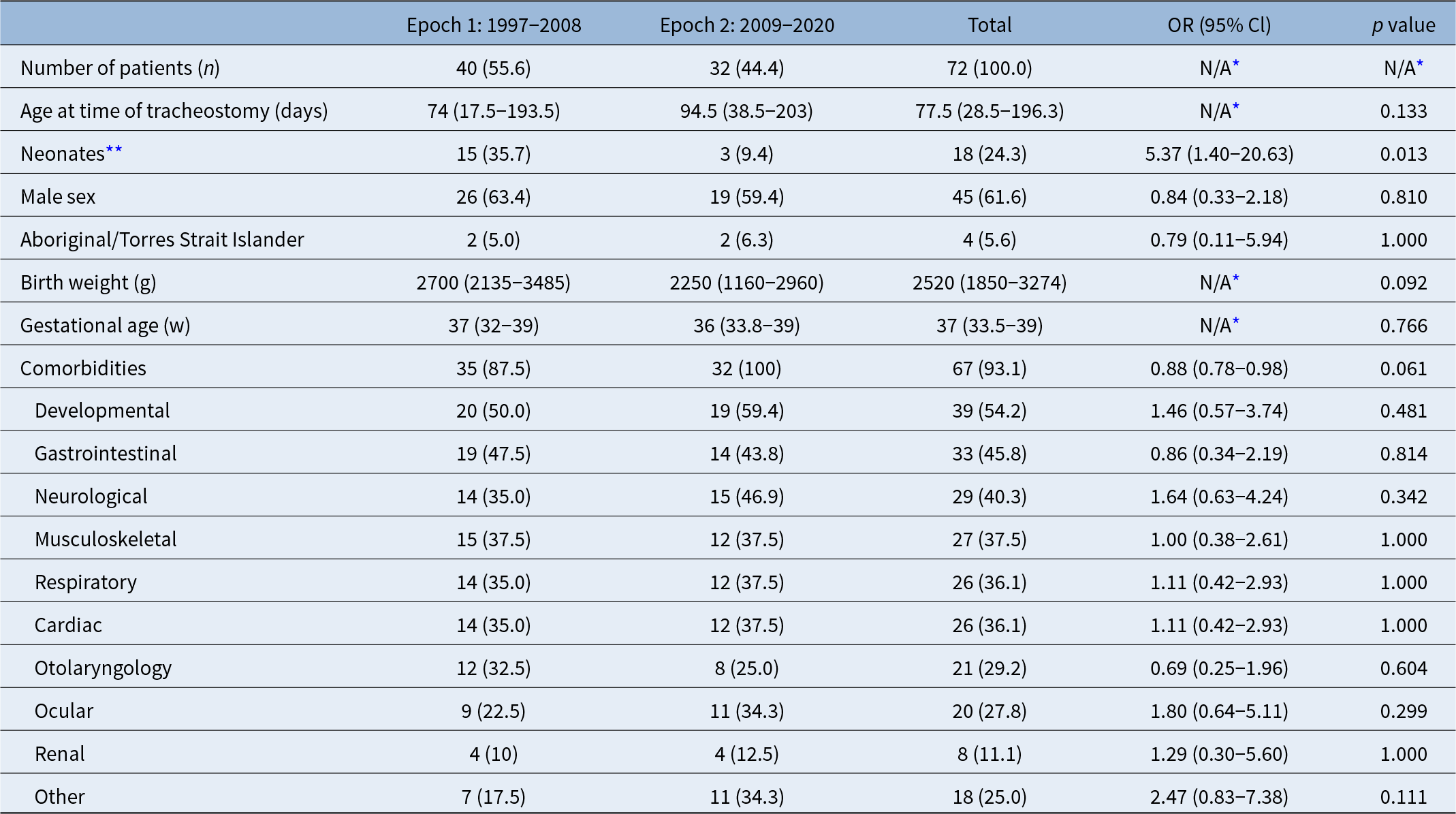
Table 1 illustrates the demographics, clinical characteristics and comorbidities of patients who underwent a tracheostomy. Across both time periods, the median age at time of tracheostomy was 77.5 (28.5–196.3) days. The number of neonates aged less than 28 days in epoch 1 was significantly higher compared with epoch 2 (15 vs 3, p = 0.013). Sixty-seven (93.1 per cent) patients had comorbidities, with developmental (54.2 per cent) and gastrointestinal (45.8 per cent) systems the most affected.
Patient demographics and comorbidities. For incomplete data, proportions were calculated as percentages/means of the available data, rather than the entire cohort. Data expressed as median (IQR) or number (per cent) unless otherwise specified. CI = confidence interval; g = grams; IQR = interquartile range; n = number of patients; N/A = not available; OR = odds ratio; w = weeks

* Analysis not applicable or unable to be obtained due to cell numbers.
** neonates were defined as patients who had a tracheostomy inserted at ± 28 days.
Indications
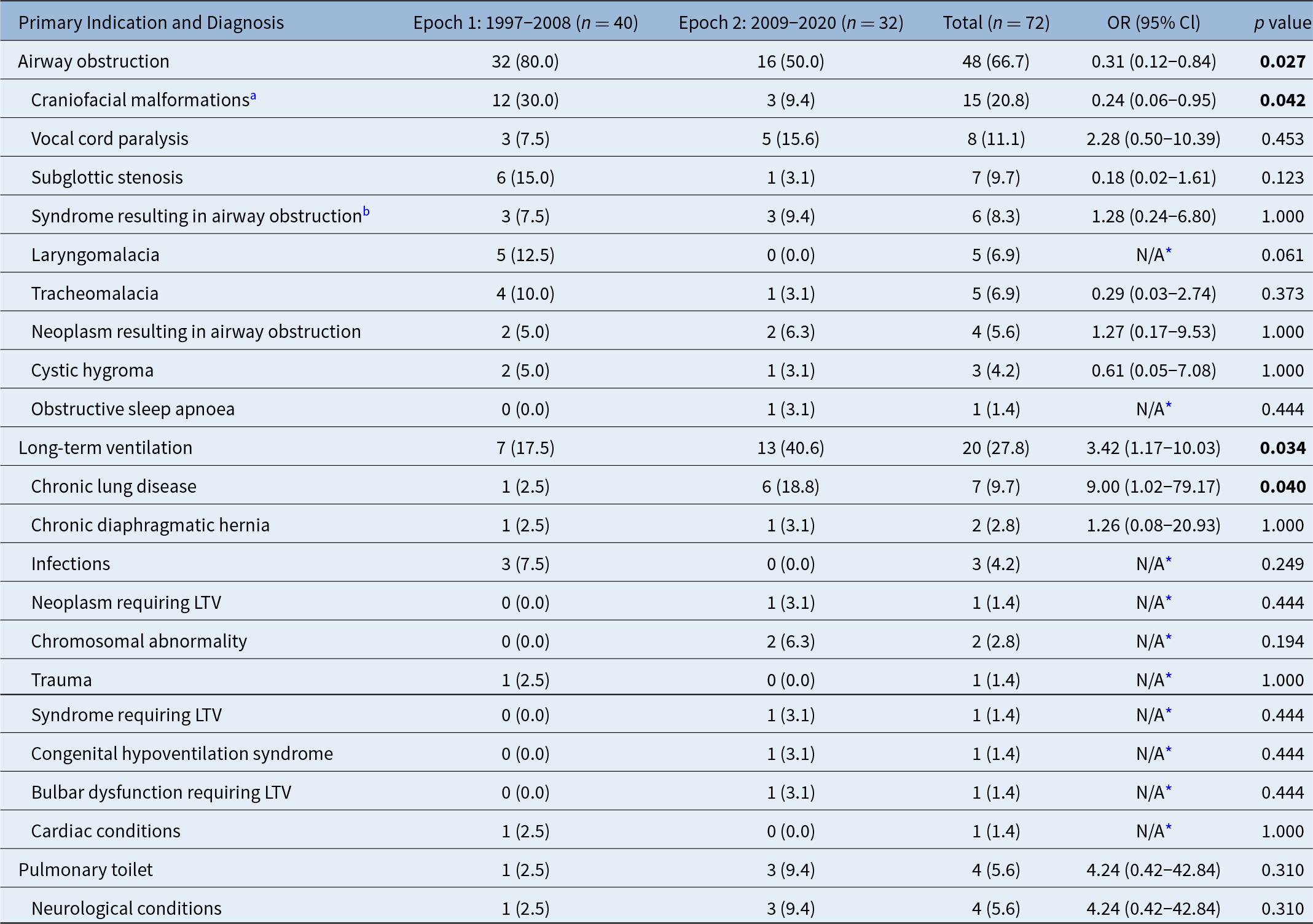
The most common indication for tracheostomy insertion was airway obstruction (48/72, 66.7 per cent) (Table 2). Overall, there was a significant decline in the number of tracheostomies performed for airway obstruction between epoch 1 and epoch 2 (32 vs 16, p = 0.027). Craniofacial malformation was the most common principal diagnosis (20.8 per cent), followed by vocal cord paralysis (11.1 per cent). Craniofacial malformations decreased during this time-period (12 vs 3, p = 0.042).
Indications for tracheostomy. Patients classified under the same primary diagnosis (e.g. neoplasm) may have different indications for tracheostomy. For patients with multiple diagnosis, the principal diagnosis was recorded for the purposes of the study. CI = confidence interval; LTV = long-term ventilation; n = number of patients; N/A = not available; OR = odds ratio

a Patients with syndromes involving craniofacial malformations were classified under ‘craniofacial malformations’.
b patients with syndromes not involving craniofacial malformations were classified as ‘syndrome resulting in airway obstruction’ if airway obstruction was indicated.
* analysis not applicable or unable to be obtained due to cell numbers; data expressed as number (per cent).
Long-term ventilation was the second most common indication for tracheostomy (20/72, 27.8 per cent). There was a significant increase in long-term ventilation as the primary indication for tracheostomy insertion in epoch 2 (7 vs 13, p = 0.034). Specifically, the number of patients with chronic lung disease increased significantly between the two epochs (1 vs 6, p = 0.040). There was no statistically significant difference in the pulmonary toilet indication group between epochs 1 and 2 (1 vs 3, p = 0.310).
Length of stay
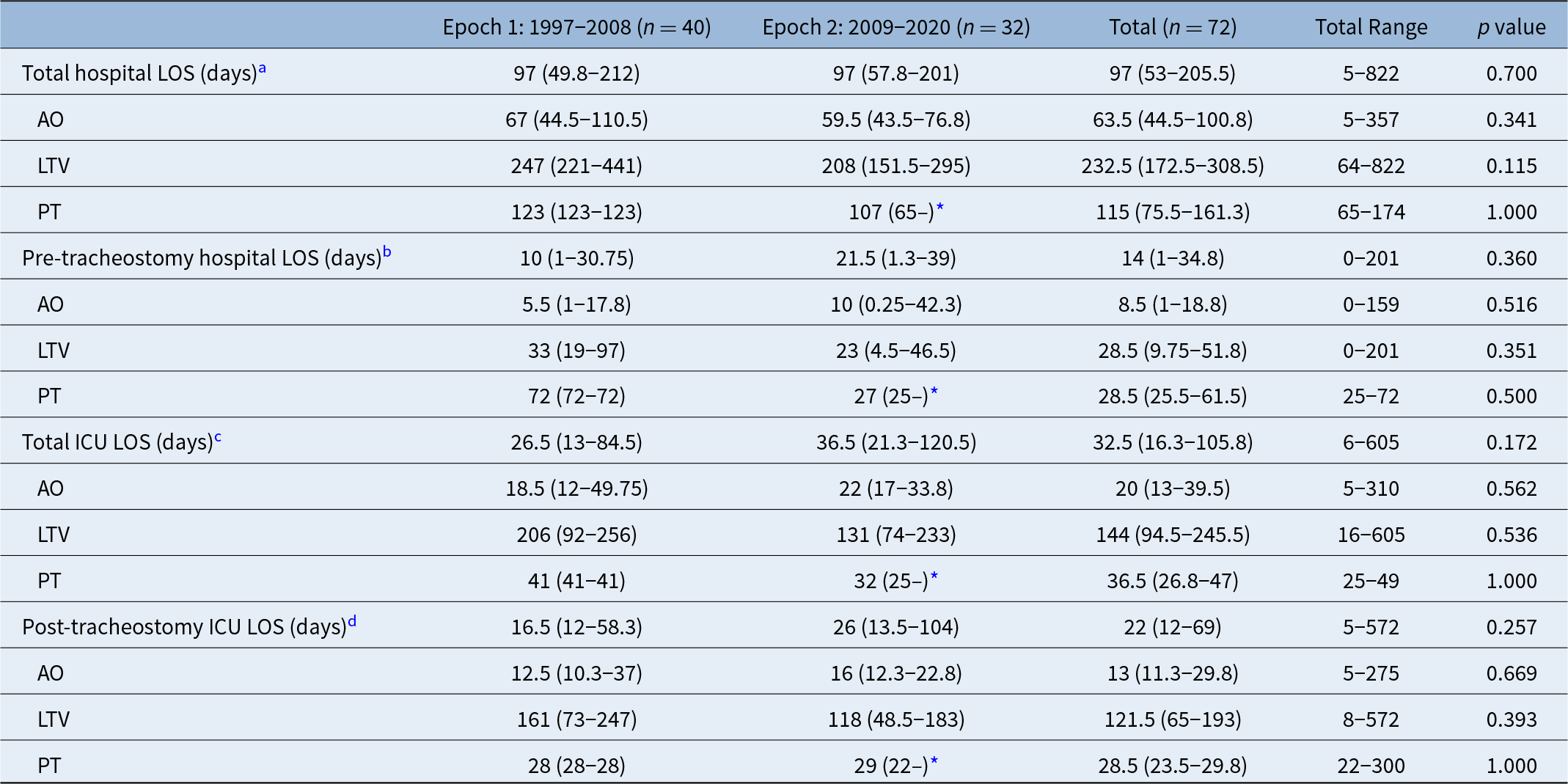
Across both time periods, the total hospital length of stay ranged from 5 to 822 days (Table 3). The median hospital length of stay was 97 (53–205.5) days. Patients spent a median time of 14 (1–34.8) days in hospital before a tracheostomy was inserted. The median total ICU length of stay was 32.5 (16.3–105.8) days for this admission and the median time spent in ICU post-tracheostomy insertion was 22 (12–69) days.
Length of stay. AO = airway obstruction; d = days; ICU = intensive care unit; IQR = interquartile range; LOS = length of stay; LTV = long-term ventilation; n = number of patients; PT = pulmonary toilet

a Total hospital LOS: total number of days in hospital during admission at which the tracheostomy was inserted.
b Pre-tracheostomy hospital LOS: number of days from the date of hospital admission until the date at which the tracheostomy was inserted.
c Total ICU LOS: number of days in ICU during admission at which the tracheostomy was inserted.
d Post-tracheostomy ICU LOS: number of days spent in the ICU from date of tracheostomy insertion until ICU discharge.
* analysis not applicable or unable to be obtained due to cell numbers; data expressed as median (IQR).
There were no major differences in the comparison of all length-of-stay subgroups between the two time periods. Patients requiring long-term ventilation had significantly higher total length of stay (p < 0.0001), pre-tracheostomy hospital length of stay (p = 0.023), ICU length of stay (p < 0.0001), and post-tracheostomy ICU length of stay (p < 0.0001) than the airway-obstruction group.
Complications
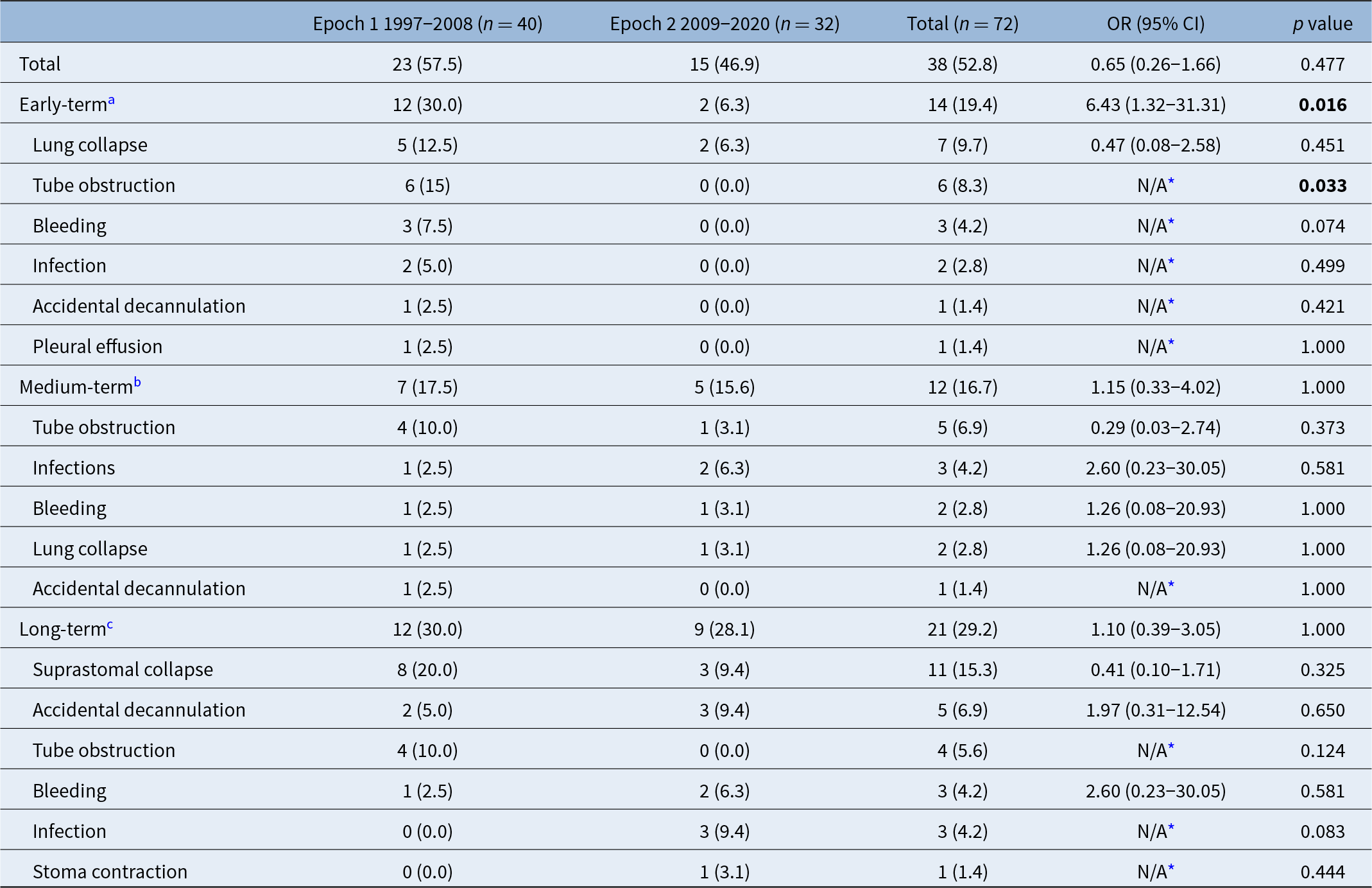
Complications were divided into early, medium and late-term (Table 4). Fourteen (19.4 per cent) patients had early-term complications while 12 (16.7 per cent) and 21 (29.2 per cent) had medium- and late-term complications, respectively. Seven infants had multiple complications. The overall complication rate was 52.8 per cent. The most common early-, medium- and late-term complications were lung collapse (9.7 per cent), tube obstruction (6.9 per cent) and suprastomal collapse (15.3 per cent), respectively.
Complications. CI = confidence interval; n = number of patients; N/A = not available; OR = odds ratio

a Early-term: < 7 days from date of tracheostomy insertion.
b Medium-term: 7 days to 3 months from date of tracheostomy insertion.
c Long-term: > 3 months to date of decannulation.
* analysis not applicable or unable to be obtained due to cell numbers.
There was a significant decline in early-term complications across the two epochs (12 vs 2, p = 0.016), particularly in early-term tube obstruction (6 vs 0, p = 0.033). There were no significant findings with total, medium- and late-term complications.
Decannulation
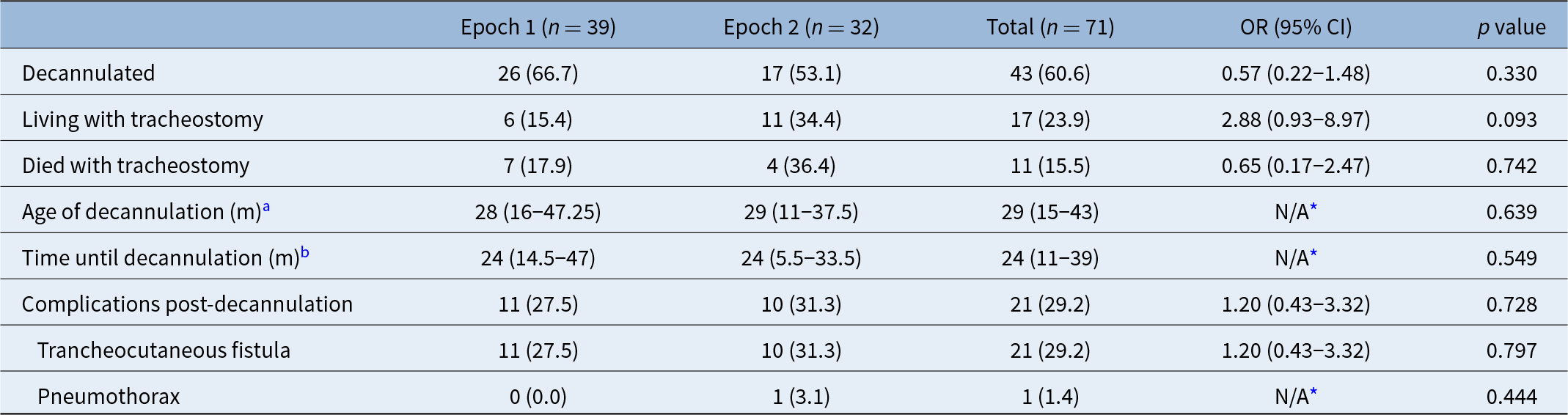
The decannulation statuses of 71 patients were available (Table 5). Forty-three (60.6 per cent) patients were decannulated across both time periods, among which 26 (66.7 per cent) were from the first epoch and 17 (53.1 per cent) from the second epoch. There was no significant change in decannulation rates between the two time periods (p = 0.330). While not significant, the number of patients living with a tracheostomy tended to be higher in epoch 2 in comparison with epoch 1 (6 vs 11, p = 0.093).
Decannulation. One patient had both a pneumothorax and trancheocutaneous fistula post-decannulation; data expressed as median (IQR) or number (per cent) unless otherwise specified. CI = confidence interval; IQR = interquartile range; m = months; n = number of patients; N/A = not available; OR = odds ratio

a Age of decannulation refers to the age of the patient at the time of decannulation.
b Time until decannulation refers to the length of time between when the tracheostomy was inserted and when it was removed.
* Analysis not applicable or unable to be obtained due to cell numbers.
The median age of decannulation was 29 (15–43) months and the median time until decannulation was 24 (11–39) months. There was no significant change in age at the time of decannulation (p = 0.639) and time until decannulation (p = 0.549) between epoch 1 and epoch 2.
Post-decannulation, 29.2 per cent (n = 21) of patients had a tracheocutaneous fistula requiring intervention. Among these, 11 (27.5 per cent) were from epoch 1, and 10 (31.3 per cent) were from epoch 2. One (1.4 per cent) patient suffered from a pneumothorax following decannulation. Complications that occurred post-operatively did not significantly differ over time.
Mortality
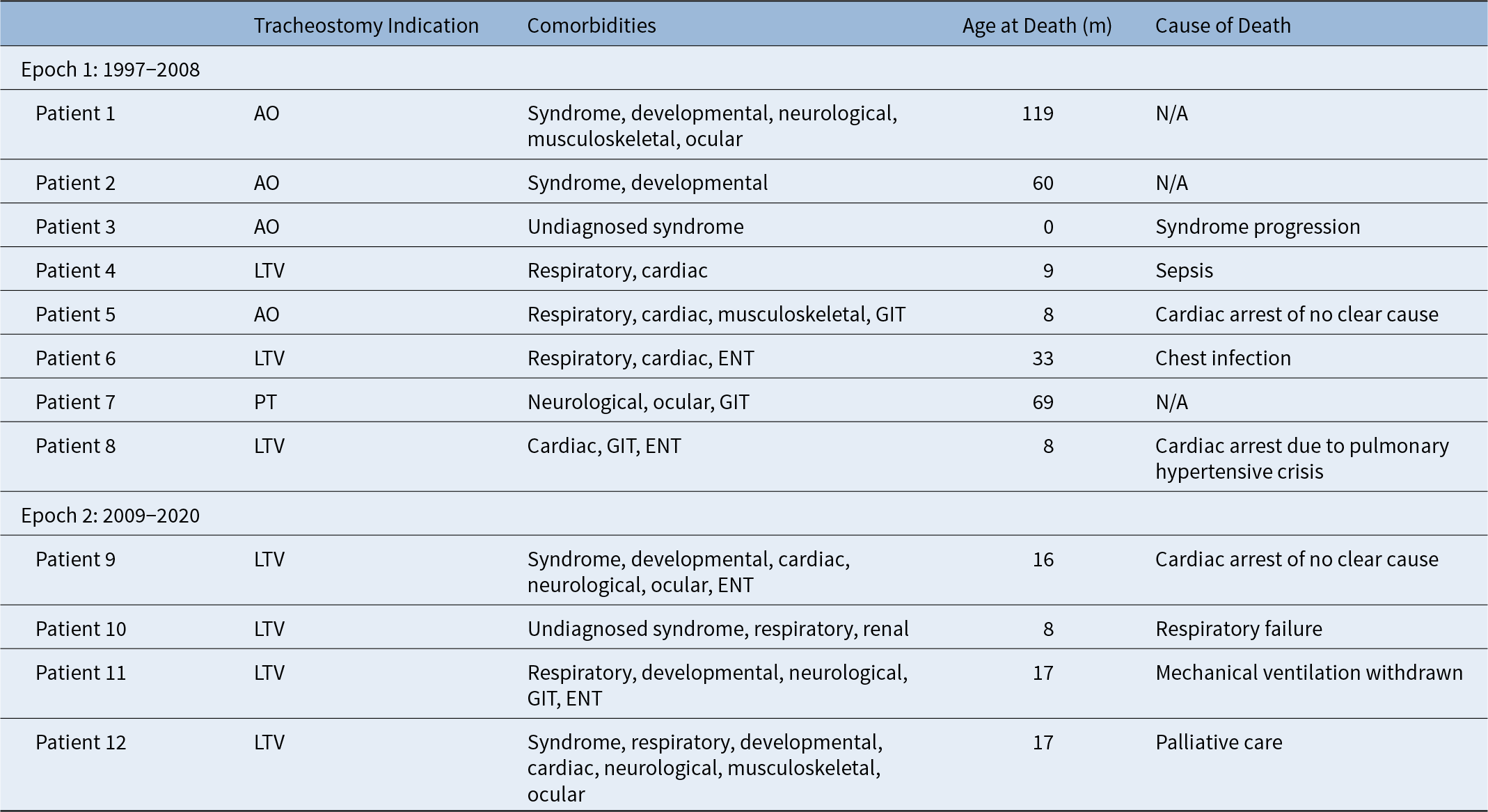
Twelve (16.7 per cent) patients died during this study period (Table 6). Among these patients, 11 died with a tracheostomy in situ. One patient died 8.5 years following decannulation due to an undetermined cause. Nine deaths were due to disease progression or complications and there were no deaths directly related to the tracheostomy. The causes of death for three patients were unable to be identified. Controlling for indication, there was no significant difference in mortality rates between the two epochs (20 per cent vs 12.5 per cent, p = 0.326, odds ratio (95 per cent), confidence interval (CI) = 1.97 (0.51–7.61)). There was also no significant difference in the median age of death between the two epochs (21 vs 16.5 months, p = 0.683).
Mortality. AO = airway obstruction; GIT = gastrointestinal tract; LTV = long-term ventilation; m = months; N/A = not available; PT = pulmonary toilet

Discussion
To our knowledge, this study is the first to characterise the changing profile of indications leading to tracheostomy and describe outcomes of tracheostomy practice in an Australian infant population. Our study found a significant decrease in neonates who needed a tracheostomy inserted. The decline may be attributed to the advancements in neonatal resuscitation strategies with a shift in first-line airway management towards non-invasive ventilation and limiting use of invasive measures, such as a tracheostomy.Reference Ganu, Gautam, Wilkins and Egan15, Reference Behnke, Lemyre, Czernik, Zimmer, Ehrhardt and Waitz16 As a result, a tracheostomy is considered following failure of non-invasive ventilation to support the neonate’s ventilation requirements, meaning that these infants are receiving a tracheostomy later in their treatment course.
Most patients (93.1 per cent) had other pre-existing comorbidities, with the most common being developmental delays (54.2 per cent) followed by gastrointestinal- (GI-) tract-related conditions (45.8 per cent). This was comparable to a study of 165 tracheostomised infants, where the most common comorbidities were also developmental (64.2 per cent) and GI-tract-related (46.3 per cent).Reference Overman, Liu, Kurachek, Shreve, Maynard and Mammel26 DeMauro et al.Reference DeMauro, D’Agostino, Bann, Bernbaum, Gerdes and Bell27 found that infants with a tracheostomy have a higher incidence of all in-hospital morbidities than those without. These high comorbidities reflect the medically complex nature of infants requiring tracheostomy from a young age across multiple centres around the world.
Our findings showed airway obstruction as the most common indication for tracheostomy insertion, however this has notably decreased in the more recent epoch. Conversely, there was an upward trend in long-term ventilation as the primary indication. This shift is likely owing to changes in medical practice. Most importantly, the evolution of neonatal resuscitation techniques has led to the greater survival of premature infants requiring long-term airway management due to chronic lung disease.Reference Praud28, Reference Collaco and McGrath-Morrow29 For these infants, a tracheostomy is only indicated when non-invasive ventilation is insufficient, or when an extended duration of mechanical ventilation is required. Successful use of non-invasive ventilation reduces the need for intubation and its associated risks,Reference Ganu, Gautam, Wilkins and Egan15, Reference Behnke, Lemyre, Czernik, Zimmer, Ehrhardt and Waitz16 with a subsequent drop in acquired subglottic stenosis requiring bypass with a tracheostomy. Furthermore, in our centre, the use of nasopharyngeal airways was adopted from 2009 (correlating with epoch 2) as a less invasive alternative to tracheostomy for upper airway obstruction. Nasopharyngeal airways involve the placement of a modified endotracheal tube into the nasal passage and has been successfully used to avoid tracheostomy placement in children with upper airway obstruction, particularly craniofacial malformations.Reference Parhizkar, Saltzman, Grote, Starr, Cunningham and Perkins30
Our upward trend in long-term ventilation is concordant with more recent infant studies that have reported pulmonary disorders as the most common indication leading to tracheostomy insertion.Reference Wood, Wang, Mitchell, Shah and Johnson21, Reference Han, Watters, Hong, Edwards, Knell and Morrow31–Reference Salley, Kou, Shah and Johnson33 However, there is heterogeneity in the published literature regarding indications for tracheostomy in infants.Reference Lee, Smith, Quek, Laughon, Clark and Hornik19, Reference Cheng, Lioy and Sobol20, Reference Saadia and Prasad34–Reference Cardoso, Ribeiro, Neves, Cruz and Silva37 This may be attributed to differences across institutions and countries, namely the availability of medical care, ventilator access, local infrastructure and socioeconomic disparities.
The changing profile for tracheostomy indications is reflected in paediatric papers comparing indications within the same institution over time.Reference Douglas, Poole-Cowley, Morrissey, Kubba, Clement and Wynne38–Reference Mizuno, Takeuchi, Kishimoto, Kawakami and Omori41 Gergin et al.Reference Gergin, Adil, Kawai, Watters, Moritz and Rahbar14 reported a substantial increase in cardiopulmonary disease leading to tracheostomy across three decades. Our downward trend in upper airway obstruction corroborates with Sachdev et al.,Reference Sachdev, Chaudhari, Singh, Sharma, Gupta and Gupta42 who analysed indications across an 18-year timeframe. However, the inclusion of children greater than one year of age in these studies reduces the validity of comparison to the infant population specifically.
Our median total length of stay was 97 days, and the total ICU length of stay was 32.5 days. These findings are comparable to Dursun and Ozel,Reference Dursun and Ozel43 who observed a median length of stay of 95 (11–327) days and ICU median length of stay of 30 (1–115) days based on 30 infants (47 per cent < 1 year of age). However, the literature findings are diverse. A prospective multicentre North American study published significantly longer median hospital length of stay of 226 (168–304) days while a Singaporean study of 105 paediatric patients (61 per cent < 1 year of age) conversely recorded a median length of stay of 75 (39–138) days.Reference Chia, Ng, Pang, Ang, Chow and Teoh44 This significant variation in length of stay may reflect different complex patient populations and paradigms of care between healthcare systems across different countries.
Despite changes in practice, there was no change in total hospital length of stay over the two decades studied. Our study found long-term ventilation had significantly higher total length of stay due to the higher degree of medical complexity in these patients compared to other indications. These findings are similar to a Canadian population of infants requiring respiratory support which documented considerably higher length of stay with a median of 403 (77–1082) days and median ICU stay of 172 (0–659) days.Reference Bergeron, Sauthier, Kawaguchi, Essouri, Quintal and Emeriaud36
The overall complication rate was 55.6 per cent which was consistent with other infant tracheostomy studies (18–81 per cent).Reference DeMauro, D’Agostino, Bann, Bernbaum, Gerdes and Bell27, Reference Pereira, Shaigany, Zur, Jenks, Preciado and Hamdi32, Reference Chia, Ng, Pang, Ang, Chow and Teoh44, Reference Pereira, MacGregor, McDuffie and Mitchell45 The large variation may be attributed to differing interpretations of complications. Like our study, many authors consider granulation tissue as a natural sequela of the surgical procedure because it is often asymptomatic.Reference Kremer, Botos-Kremer, Eckel and Schlöndorff46, Reference Ogilvie, Kozak, Chiu, Adderley and Kozak47 However, some studies have classified all granulation tissue as a complication,Reference Pereira, Shaigany, Zur, Jenks, Preciado and Hamdi32, Reference Cardoso, Ribeiro, Neves, Cruz and Silva37 while others only included it when intervention for airway compromise was required.Reference Chia, Ng, Pang, Ang, Chow and Teoh44, Reference Özmen, Özmen and Ünal48 The latter studies reported a higher rate of complications, demonstrating how different classifications of complications contribute to variations.
The most feared early complications include emergency situations, such as occlusion of the tracheostomy tube, accidental decannulation and lung collapse due to the high morbidity.Reference Sachdev, Chaudhari, Singh, Sharma, Gupta and Gupta42 Our study reported a notable decrease in early-term complications, particularly tube obstruction, which may correspond to improvements in intensive-care management and small changes in surgical technique such as the use of maturation sutures.
In our cohort, decannulation rates have remained stable with an overall rate of 60.6 per cent. This lies on the higher end of reported rates in literature, which varies from 17 per cent to 69.3 per cent in infants.Reference Sidman, Jaguan and Couser17, Reference Cheng, Lioy and Sobol20, Reference Wood, Wang, Mitchell, Shah and Johnson21, Reference Salley, Kou, Shah and Johnson33, Reference Bergeron, Sauthier, Kawaguchi, Essouri, Quintal and Emeriaud36, Reference Dursun and Ozel43, Reference Chia, Ng, Pang, Ang, Chow and Teoh44 The variability can be attributed to inconsistencies in follow-up periods, with our findings correlating with other studies that did not adjust their time periods.Reference Sidman, Jaguan and Couser17, Reference Cheng, Lioy and Sobol20, Reference Salley, Kou, Shah and Johnson33, Reference Chia, Ng, Pang, Ang, Chow and Teoh44 Lower rates of decannulation were often observed in studies with defined follow-up periods.Reference Bergeron, Sauthier, Kawaguchi, Essouri, Quintal and Emeriaud36, Reference Dursun and Ozel43
As decannulation readiness is usually assessed based on the resolution or improvement of the tracheostomy indication, decannulation rates may be largely associated with the medical complexity of the individual patientReference Chia, Ng, Pang, Ang, Chow and Teoh44 rather than changes over time. Other possible confounding factors hindering decannulation success include feeding dysfunction, presence of comorbidities, caregiver readiness, resource availabilities and the timing of the procedure.Reference Bandyopadhyay, Cristea, Davis, Ackerman, Slaven and Jalou49, Reference Falla, Westhoff, Bosch and Federspil50
Our time to decannulation (mean ± standard deviation = 28.4 ± 20.8 months) was comparable with findings by Salley et al.Reference Salley, Kou, Shah and Johnson33 (2.66 ± 2.07 years) and Akangire et al.Reference Akangire, Taylor, McAnany, Noel-MacDonnell, Lachica and Sampath35 (33.88 ± 19.3 months). Institution-specific decannulation protocols add another contributing variable to the timing of decannulation.
The mortality rate in our study was 16.6 per cent across both time periods. This lies within the published range of infant tracheostomy studies, which cite mortality rates of 3.6–44 per cent.Reference Chen, Chang, Hsu, Chiu, Peng and Jim18, Reference Wood, Wang, Mitchell, Shah and Johnson21, Reference Han, Watters, Hong, Edwards, Knell and Morrow31, Reference Cardoso, Ribeiro, Neves, Cruz and Silva37, Reference Chia, Ng, Pang, Ang, Chow and Teoh44 It is also comparable to paediatric tracheostomy mortality rates, which vary from 12 per cent to 19 per cent.Reference Özmen, Özmen and Ünal48, Reference Groenendijk, Booth, van Dijk, Argent and Zampoli51–Reference Al-Samri, Mitchell, Drummond and Bjornson53 The higher mortality rate in the infant group is a testament to the greater risk and complexity associated with infant tracheostomy in comparison to the overall paediatric population.
There were no tracheostomy-related deaths in our dataset, while the reported tracheostomy-related mortality rates in literature vary from 0 per cent to 14 per cent.Reference Chen, Chang, Hsu, Chiu, Peng and Jim18, Reference Pereira, Shaigany, Zur, Jenks, Preciado and Hamdi32, Reference Cardoso, Ribeiro, Neves, Cruz and Silva37, Reference Isaiah, Moyer and Pereira54 There was no significant change observed in the mortality rate between the two time periods. Nine patients died from disease-related progression or complications, commonly from cardiac arrest (due to pulmonary hypertensive crisis or of unknown aetiology). This cause of death was consistent with other centres.Reference Akangire, Taylor, McAnany, Noel-MacDonnell, Lachica and Sampath35
Due to its retrospective design, study outcomes were restricted to the data documented in pre-existing medical records. Complications and deaths that occurred in other centres or in the community were not available unless patients were managed in hospital or self-reported these incidents in clinic visits, resulting in potential underreporting.
The study was limited by its small sample size obtained from a single paediatric tertiary institution. Tracheostomy indications could only be considered as a covariate for binary outcomes (i.e. mortality), but not other outcomes. This ultimately reduces the statistical power and generalisability of the results. However, our sample size was comparable with infant numbers in other single-centre tracheostomy studies,Reference Sidman, Jaguan and Couser17, Reference Douglas, Poole-Cowley, Morrissey, Kubba, Clement and Wynne38, Reference Roberts, Powell, Begbie, Siou, McLarnon and Welch40, Reference Chia, Ng, Pang, Ang, Chow and Teoh44, Reference Ogilvie, Kozak, Chiu, Adderley and Kozak47 merely reflecting the incidence of the procedure around the globe.
• Advancements in neonatal resuscitation have changed tracheostomy indications
• Infant tracheostomy patients are a vulnerable yet under-reported population group
• Published literature on indications and outcomes of infant tracheostomy is heterogeneous across different health systems and countries
• There is an increasing population of infants requiring tracheostomy due to long-term ventilation over time
• Complications, decannulation and mortality rates have remained stable in infants requiring a tracheostomy
• Australian tracheostomy outcomes in infants are comparable to other international centres
Conclusion
This study demonstrated a significant increase in long-term ventilation and decrease in airway obstruction as the primary indications leading to tracheostomy in an Australian infant population over time. Based on the findings of this study, knowledge of indications and outcomes will facilitate a more informed approach to clinical decision making as well as improve guidance and counselling of families on what to expect following a tracheostomy. This study ultimately provides an opportunity for improvement of patient care and a reduction of morbidity and mortality among a higher risk population.
Funding statement
This research received no specific grant from any funding agency, commercial or not-for-profit sectors.
Competing interests
The authors declare none.