Coarctation of the aorta is a well-recognized cause of systemic hypertension in children, and as a lesion it accounts for up to one-tenth of all congenital cardiovascular anomalies.Reference Campbell1
In such patients, late morbidity and mortality are mainly due to systemic hypertension. Those thus afflicted may suffer from ischaemic cerebrovascular disease, intracranial haemorrhage, myocardial infarction, congestive cardiac failure, or aortic rupture. More than four-fifths of untreated patients do not survive beyond the age of 50. An increase in peripheral vascular resistance is a feature of the established phase of hypertension. This elevated resistance results in increased ventricular work, producing changes in cardiac geometry which effect ventricular mural stress during systole.Reference Campbell1 These changes in mural stress in turn may have adverse effects on other aspects of function, especially by reducing compliance of the left ventricle and increasing the myocardial demand for oxygen.Reference Campbell1 Although surgical repair has significantly improved survival, both morbidity and mortality remain elevated in comparison to controls, even in the absence of associated cardiovascular malformations, with late postoperative hypertension presenting the major risk factor for both morbidity and mortality.Reference Cokkins, Leachman and Cooley2–Reference Cohen, Fuster, Steele, Driscoll and McGoon6
Much data is available concerning the long term follow-up in terms of recoarctation, aneurysmal formation, and mortality,Reference Toro-Salazar, Steinberger, Thomas, Rocchini, Carpenter and Moller7–Reference Gibbs9 but we are unaware of data concerning haemodynamics, the behaviour of systemic arterial pressures, and the effects of medications used for lowering blood pressure during exercise and during daily activities. In a pilot study, we demonstrated differences in levels of blood pressure measured at follow-up depending upon the type of corrective surgical procedure, with better outcomes achieved using a therapeutic protocol involving candesartan cilexetil, an angiotensinII receptor blocker, up to the maximum dosage and, if needed, the addition of a low dose of atenolol, a beta blocker, to obtain optimal control of blood pressure.Reference Giordano, Turchetta and Crosio10–Reference Giordano, Giannico, Cifra, Calzolari, Turchetta and Calzolari11 We have now extended this study, investigating consecutive patients who had undergone surgical repair of aortic coarctation in early childhood, and who are now in adolescence, evaluating them to determine the presence and/or the onset of hypertension. The efficacy of our therapeutic approach was based on the choice of candesartan in patients who presented with an abnormal elevation of values for blood pressure with a reduced increment of heart rate during exercise, specifically a maximal heart rate of less than 85% of their predicted value, or atenolol for patients who presented with abnormal elevation of blood pressure with a normal increment of heart rate during exercise. We used both drugs in combination when one alone was not effective.
Materials and Methods
From 2002 to 2007, we studied 128 consecutive patients, 41 female and 87 male, with a mean age of 15.6 ± 4.3 years to establish the behaviour of their blood pressure, and to monitor the pharmacologic therapy, as we sought an end-point of achieving a normotensive state. The mean period from their surgical correction was 13.3 ± 6.5 years, with a range from 0.6 to 22.4 years. In 27 patients, repair had been achieved by end-to-end anastomoses, while in 64 patients the surgeon had created subclavian flaps, in 35 had inserted patch aortoplasties, with the final 2 patients being treated by insertion of stents rather than surgical repair. The patients had been selected on the basis of the absence of associated cardiac abnormalities, with the exception of bicuspid aortic valves.
Each patient was evaluated by clinical examination, including measurements of blood pressure at rest in both the right arm and leg, with measurements also taken in the arm during exercise testing on a cycle ergometer using the James protocol, and by 24-hour ambulatory monitoring. Informed consent for the study was obtained from the parents, and was approved by the Research Institute Ethics Committee of Bambino Gesù Children’s Hospital, Rome, Italy.
All subjects underwent a physical examination with the measurement of blood pressure at rest using a calibrated Tycos aneroid sphygmomanometer. Systolic and diastolic blood pressures were measured with the subject in the supine position in both the right arm and leg. A correct measurement required the use of a cuff that was appropriate to the size of the upper right arm and right leg, as indicated in the criterions of the Task Force for Blood Pressure Control in Children12. The right arm was used to account for any deficiency of the left subclavian artery due to surgical repair. We took 3 separate measurements at intervals of 3 to 5 minutes, recording pressures twice during each examination, and using the average of each of the systolic and diastolic measurements to determine the recorded pressures. We used tables adjusted for sex, age, and height to establish the presence of hypertension.12 We defined our patients as normotensive if the measured pressures were below the 90th percentile.
If either a systolic or diastolic pressure was at or above the 95th percentile after 3 examinations, the child was considered to be hypertensive. We also assessed the levels of creatinine in the serum, the lipid profile, and electrolytes, all of which were normal in all patients.
All subjects performed cycle ergometer exercise testing to obtain exercise measurements of blood pressure. The James protocol requires an increment of the workload every 3 minutes, starting with 32 watts. We used workloads of 82, 131, 163, and 198 watts.Reference James13 The duration of exercise in minutes, the maximal power in Watts, the maximal heart rate in beats per minute and the peak systolic and diastolic blood pressures millimetres of mercury were all recorded. Every patient was strongly encouraged to continue exercise until the point of exhaustion. Exercise testing was stopped for muscular fatigue, or for an excessive hypertensive response defined as a systolic pressure of more than 230 millimeters of mercury.
All patients also underwent 24-hour ambulatory monitoring using Spacelab 90207 equipment manufactured by Spacelab Inc, Redmond, Washington. The appropriate size of cuff for the right arm was chosen using the same criterions as used at rest. Patients were instructed to relax their arm during measurements. Measurements that produced a pulse pressure of less than 20 millimeters of mercury, or a heart rate of less than 40 beats per minute, were regarded as errors, and excluded automatically by the recorder. If any of the parameters could not be measured correctly, the measurement was repeated within 3 minutes.
The device was set to obtain readings every 15 minutes from 7 a.m. to 11 p.m, and every 30 minutes from 11 p.m. to 7 a.m. Waking and sleeping periods were established from the diaries recording activities kept by each patient. Ambulatory readings were accepted only when at least 75% of the measurements were successful. The mean of 24-hour daytime and night-time systolic and diastolic blood pressures, 24-hour mean arterial pressures, and 24-hour mean pulse pressures were all determined. To define hypertension, we used reference values obtained with oscillometric measuring devices in healthy children, adjusted for sex and height.Reference Soergel, Kirschstein and Busch14
A Chi-square test was used for statistical analysis when appropriate, setting significance at a value for p of less than 0.05.
Results
At the start of the study, the mean gradient measured between the arms and legs at rest was 7 ± 9 millimeter of mercury, with a range from 0 to 46. Of the patients, 31 (24%) were already receiving atenolol as recommended by their primary cardiologist. The remaining 97 patients (76%) were not receiving antihypertensive therapy. We excluded from study a group of 46 patients that had only one examination during the prior 5 years, and/or a gradient between the arm and leg of more than 15 millimeter of mercury, and/or magnetic resonance or imaging evidence of an obstructed arch.
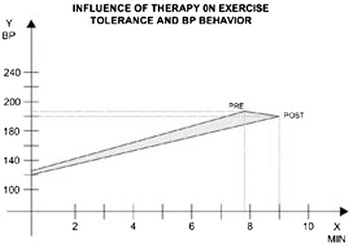
We used the remaining 51 patients with at least two examinations to provide our population for study. In none of these was a significant gradient found between the arm and leg at rest. At the end of 5 years of follow-up, 21 of these 51 patients (41%) were normotensive, while the remaining 30 patients had required antihypertensive therapy, starting at 15.4 ± 2.5 years of age. In 5 patients (16%), we had administered candesartan and atenolol together, while the remaining 25 were using only one drug, 13 receiving candesartan and 12 atenolol. In those patients treated with 2 drugs, therapy was successful in all, and they were normotensive at rest, during exercise, and as shown by ambulatory monitoring. In those receiving 1 drug, optimal control was achieved in 10 of 13 (77%) of those treated with candesartan, but in only 6 of 12 of those treated with atenolol. A mild hypertensive response, with values measured between the first and second standard deviations in all the examinations, was found in one patient treated with candesartan, while 2 patients showed a mild hypertensive response to exercise testing. Of the 6 patients not controlled with atenolol, 4 had a mild hypertensive response during exercise testing, while 3 had nocturnal hypertension revealed by ambulatory monitoring, and 2 patients proved to be hypertensive in all studies. No patients receiving candesartan suffered any side-effects, while it was necessary to change medication in 3 patients treated with atenolol, 2 because of a heart rate of less than 40 beats per minute, and 1 because of dizziness. Exercise tolerance was mildly increased, with a better control of blood pressure after the initiation of therapy (Fig. 1).
The results of exercise testing. Abbreviations: MIN: time of exercise in minutes; BP: maximal systolic blood pressure (p = not significant).

We also assessed the incidence of hypertension relative to the surgical procedure. Those repaired by patch aortoplasty showed a higher incidence of hypertension, with 20 of 35 (57%) being hypertensive, while 22 of 64 (34%) having subclavian flaps, and 5 of 27 (8%) undergoing end-to-end anastomosis were hypertensive. The incidence of hypertension revealed during the follow-up after surgical repair was significantly increased during adolescence, the chi-squared test revealing a p value equal to 0.005.
Discussion
Hypertension at rest, or during effort, is not uncommon in patients with aortic coarctation, even those with apparently successful repair, or only a mild degree of residual obstruction. Anatomic factors, such as narrowing at the site of intervention,Reference Kappetein, Guit and Bogers15 hypoplasia of the aortic arch,Reference Weber, Cyran, Grzeszcak, Myers, Gleason and Baylen16 and the type of surgery,Reference Giordano, Giannico, Turchetta, Hammad, Calzolari and Calzolari17 as well as functional abnormalities, such as baroreceptor dysfunction,Reference Giordano, Giannico, Turchetta, Hammad, Calzolari and Calzolari17 altered responsiveness of the renin-angiotensin system,Reference Guenthard, Zumsted and Whyler18 an abnormal response to sympathomimetic agents,Reference Ross, Clapp and Gunther19 and increased arterial resistance of the upper limb associated with structural alterations of the arterial wall,Reference Hauser, Kuehn and Wilson20 have been proposed as causes of this finding.
Several studies have shown a higher incidence of hypertension in patients undergoing surgery with blood pressures found to be elevated during daily activity,Reference Sehested, Baandrup and Mikkelsen21–Reference Nanton and Olley22 and during exercise.Reference Leandro, Smallhorn and Benson23–Reference Clarkson, Nicholson, Barrat-Boyes, Neutze and Whitlock24 We have shown recentlyReference Freed, Rocchini, Rosenthal, Nadas and Castaneda26 that these patients, when compared to the normal population, suffer a greater incidence of hypertension with altered haemodynamics, especially a higher pulse pressure and a decrease of total peripheral vascular resistance with exercise. In particular, the behaviour of the systemic arterial pressures was similar to that observed in older patients with reduced elasticity of the aortic wall, or in patients with moderate to severe aortic regurgitation, the latter being known to accentuate abnormalities of the elasticity and compliance of the aortic wall.Reference Giordano, Turchetta, Calzolari, Crosio, Giannico and Calzolari26
Alterations in the aortic root after repair of coarctation were also described by Sehested et al,Reference Sehested, Baandrup and Mikkelsen21 who detected evidence of excessive rigidity and deposition of collagen within the aortic wall in specimens obtained at the time of repair, and by Ong et al,Reference Ong, Canter, Gutierrez, Sekarski and Goldring27 who found the transverse aorta of patients with seemingly successful repairs to be stiffer than those of normal subjects.
In our study, we obtained the best therapeutic results, in terms of achieving a normotensive state, when administering candesartan, which provided better control of the blood pressure in absence of side-effects, especially as revealed by 24-hour ambulatory monitoring. Administration of atenolol, in contrast, was less effective, and produced more side-effects, notably excessive bradycardia and dizziness.
Our data reinforces the need for careful follow-up, including exercise testing and 24-hour monitoring, to avoid future damage to target organs in hypertensive patients, particularly since we found a higher incidence of the development of hypertension during puberty and adolescence. The data also shows that the optimal goal of normotension, even if needing antihypertensive therapy, can be achieved.
Acknowledgement
We are grateful to Frank M Galioto Jr, for his critical support, and for his assistance during preparation of the manuscript.