





Introduction
Healthcare-associated infections (HAIs), particularly ones caused by antimicrobial resistance (AMR) remain a leading cause of morbidity, mortality, and excess healthcare costs worldwide. Reference Harris, Pineles and Perencevich1 Within the European Union, over 4.5 million HAIs occur annually, resulting in approximately 37,000 deaths and 16 million additional hospital days. Reference Suetens, Latour and Kärki2 In the United States, an estimated 1.1–2.7 million infections occur in nursing homes each year. Reference Herzig, Dick and Sorbero3 Moreover, HAIs are a key driver of AMR. AMR is among the most urgent global health threats, projected to cause around 10 million deaths annually and major economic losses by 2050. Reference Price4,Reference Naghavi, Vollset and Ikuta5
Effective infection prevention and control (IPC) is essential to reduce both HAIs and AMR. Reference Allegranzi and Storr6 Core IPC strategies (eg, hand hygiene, use of personal protective equipment, environmental cleaning, surveillance, and staff education) effectively lower infection rates, improve safety, and reduce antibiotic use. Reference Ershova, Savin and Kurdyumova7,Reference Pallares, Hernández-Gómez and Appel8 Evidence from hospital settings shows that multimodal IPC interventions can reduce HAIs by more than 30% and are cost-effective. 9
Despite a large evidence-base from hospital settings, long-term care facilities (LTCFs) received less attention. LTCFs offer continuous, 24-hour residential care and support. Examples include nursing homes, elderly care facilities, residential care centers, mental health care facilities, and disability care organizations. LTCFs care for populations at high risk of infection due to advanced age, comorbidities, and frequent hospitalizations. Reference Callejón Fernández, Madueño Alonso and Abreu Rodríguez10 Shared living spaces, close social interaction, and prolonged stays further facilitate the spread of (multidrug-resistant) micro-organisms, and colonization may persist longer than in hospital populations. Reference Dumyati, Stone, Nace, Crnich and Jump11,Reference Kanamori, Rutala, Sickbert-Bennett and Weber12 Transmission of micro-organisms also occurs through direct care interactions, as healthcare workers often provide close-contact care to multiple residents, creating opportunities for cross-contamination via their hands or shared care equipment. With further aging populations worldwide, the demand for long term care is increasing. Strengthening IPC in LTCFs is therefore increasingly critical. 13 A key challenge to successful IPC in any healthcare setting, including LTCFs is related to implementation. Challenges to implementation in LTCFs include limited resources, high staff turnover, inconsistent access to training, and diverse care settings. Reference Nicolle and Yoshikawa14 Implementation success is also influenced by organizational structure and culture, leadership, and staffing ratios. Reference Lee, Lee, Lee and Park15 Although targeted interventions such as education, audit, and feedback have been shown to reduce HAIs in LTCFs, Reference Lee, Lee, Lee and Park16 the overall evidence remains fragmented and less developed than for hospital settings. Three related reviews were identified, but all with a limited scope. One focused on IPC implementation in hospitals Reference Gastaldi, Festa and Nieddu17 or on antimicrobial stewardship (AMS) in LTCFs. Reference Lee, Lee, Lee and Park16 And a third one only included individual determinants of IPC practices in LTCFs. Reference Fujimoto, Utsumi and Swa18 A comprehensive overview of hindering and facilitating factors for implementing IPC in LTCFs is lacking. Obtaining insights in these barriers and facilitators would enable facilities to design strategies to support effective IPC implementation in long term care. To fill this knowledge gap, a scoping review was conducted with the research question “What factors hinder or facilitate implementation of IPC in LTCFs?’” This review seeks to clarify contextual and organizational determinants and generate actionable insights to strengthen IPC implementation in LTCFs and support global efforts against AMR.
Methods
Theoretical framework
The Consolidated Framework for Implementation Research (CFIR) serves as the foundation for the scoping review. Reference Reardon, Damschroder and Ashcraft19,Reference Damschroder, Reardon, Widerquist and Lowery20 It is a frequently used framework for systematically assessing the factors that influence implementation across a range of health interventions and sectors. It organizes determinants into five domains: Intervention Characteristics, Individual Characteristics, Inner Setting, Outer Setting, and Implementation Process allowing researchers to capture both contextual and behavioral influences on implementation. Reference Reardon, Damschroder and Ashcraft19,Reference Damschroder, Reardon, Widerquist and Lowery20 CFIR is widely used in implementation research because it enables structured comparison across studies, highlights underexamined contextual factors, and supports translation of evidence into practice. Reference Kirk, Kelley, Yankey, Birken, Abadie and Damschroder21 It maps a wide range of contextual factors that can work against implementation in the real world. First, CFIR identifies factors related to the innovation (ie, the “thing” to be implemented), for example, factors such as adaptability, complexity, relative advantage or costs of the innovation. Second, the individual domain focuses on the people involved with implanting, delivering and/or receiving the innovation (eg, nurses). It focuses on what their roles are and their characteristics. Third, the inner-setting domain is influencing implementation success. The inner setting refers to the setting where the innovation is implemented (eg, wards, teams, locations of the care organizations), and influential factors in the inner setting related for instance to infrastructure, culture, communication, compatibility with workflows and systems, incentive systems. Fourth, implementation is influenced by factors related to the so-called outer setting domain (ie, the setting in which the inner setting exists). These include for instance laws, partnerships, or external pressure. Fifth, the implementation process domain refers to the activities and strategies to implement the innovation, and includes factors such as teaming, assessing needs, reflecting and evaluating.
Study design and framework
Given the exploratory nature of this research and fragmented literature, a scoping review was deemed the most suitable research method to achieve the objectives. Scoping reviews are particularly useful to identify research gaps in existing literature. Reference Peters, Godfrey, McInerney, Munn, Tricco, Khalil, Aromataris, Lockwood, Porritt, Pilla and Jordan22 The PRISMA-scoping review guidelines (Preferred Reporting Items for Systematic Reviews and Meta-Analyses Extension for Scoping Reviews) guided the reporting. Reference Tricco, Lillie and Zarin23 The protocol was preregistered prior to conducting the review at Open Science Framework DOI 10.17605/OSF.IO/AVKQ2.
Eligibility criteria
Studies were included if conducted in public or private LTCF. Studies conducted in hospitals, home care, or other non-residential settings were excluded. Studies were considered eligible when professional providers were included that engaged in IPC programs in LTC settings (ie, nurses, coordinators, cleaning staff, and other personnel). Also, studies were considered eligible if they involved external providers delivering services within LTC facilities, including those related to implementation. Studies were included that explored or evaluated barriers, facilitators, or other determinants of IPC implementation. To be eligible, studies had to address at least one IPC component based on WHO IPC core elements, Reference Allegranzi and Storr6,9 namely IPC programs, IPC guidelines, IPC education and training, HAI surveillance, multimodal implementation strategies, monitoring/audit and feedback, workload/staffing/bed occupancy, and the built environment, materials, and equipment for IPC. Studies focusing exclusively on AMS were excluded, as AMS primarily concerns antibiotic prescribing rather than preventing the spread of infections or AMR. Further, studies evaluating intervention effects were excluded as these do not shed light on barriers and facilitators for implementation. Also, review articles were excluded as the original articles were already included. No restrictions were placed on year of publication. Only studies in English were included.
Information sources and search strategy
The search strategy was designed with the PRESS guideline and was reviewed and refined collaboratively by the authors and in consultation with a university librarian. Reference McGowan, Sampson, Salzwedel, Cogo, Foerster and Lefebvre24 Four search databases were selected to capture biomedical, nursing, psychological, and organizational perspectives: Web of Science, PubMed, CINAHL, and PsycINFO. The strategy was structured around three concepts: IPC, LTC, and implementation. Key terms were expanded with synonyms, truncation, and Boolean operators. Subject headings (eg, MeSH) were adapted to each database. A pilot search in PubMed and Web of Science was conducted to refine keywords and search strings (step1). The final strategies for all databases are presented in Supplementary 1.
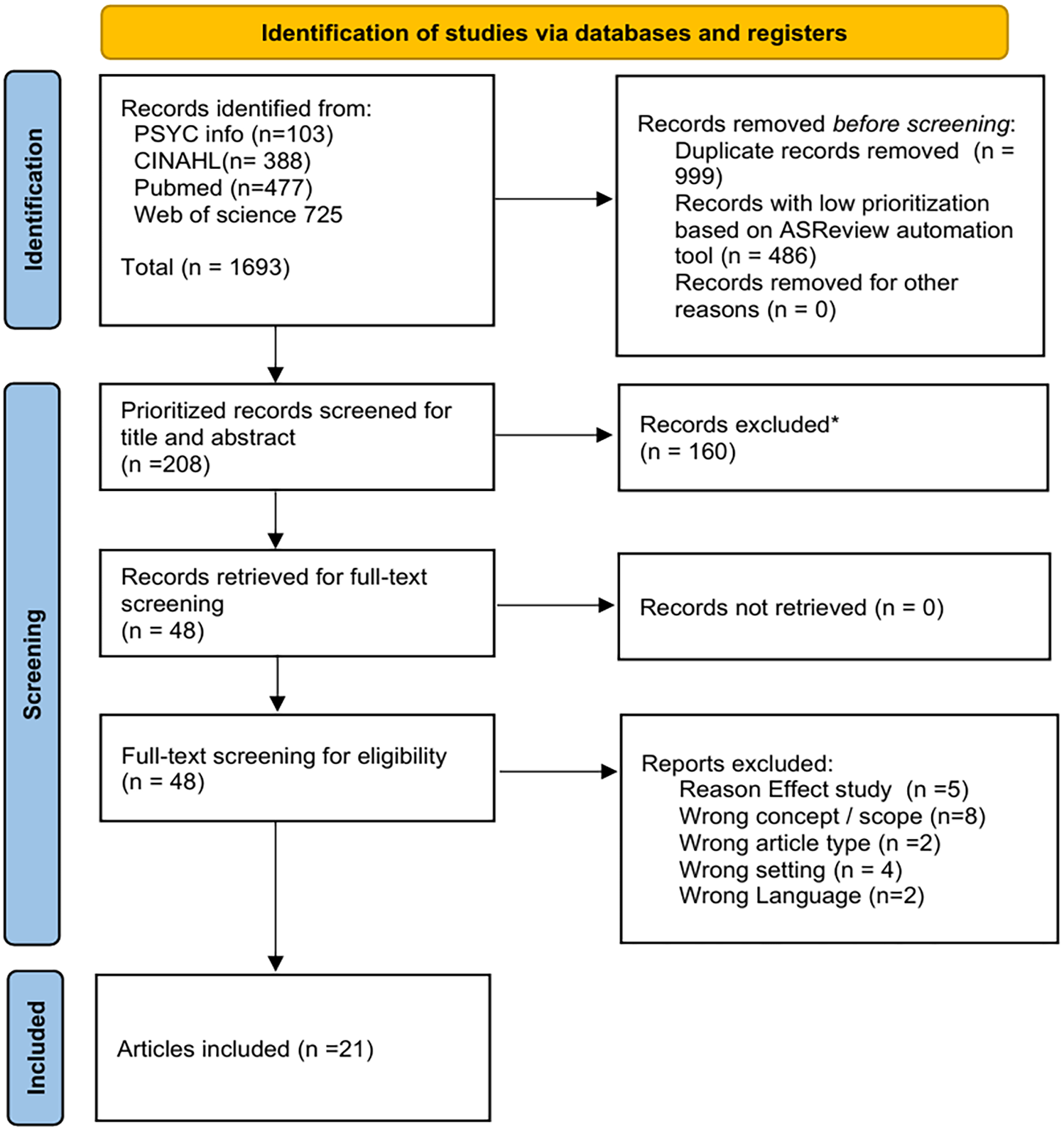
After removing duplicates, 694 unique records were identified and selected for title and abstract screening for (step 2). A random sample of 10% (70) of the 694 records were screened independently by author1 and author2 to ensure consistency (step 3). Discrepancies were resolved in consultation with author3 and author4 (The inconsistencies were related to effect studies and vaccination studies). Following final agreement on the eligibility criteria, the remaining records were screened by author1 (step 4). Title and abstract screening were supported using ASReview, Reference Van De Schoot, De Bruin and Schram25 an open-source machine-learning tool designed to prioritize relevant records and increase screening efficiency in reviews. ASReview was trained using the set from the previous step, containing 10 relevant and 60 irrelevant publications identified collaboratively by two reviewers. Based on this training set, records were ranked by predicted relevance. Following the ASReview prioritization, 208 prioritized records (30%) were screened at title and abstract level, resulting in 48 full-text articles assessed for eligibility. Ultimately, 21 studies were included (step 5). The study selection process is illustrated in the PRISMA flow diagram (Figure 1).
PRISMA flow diagram: literature identification process.

Figure 1. Long description
The flowchart illustrates the identification and screening process of studies via databases and registers. The process begins with the identification of records from various databases: PSYC info (n=103), CINAHL (n=388), Pubmed (n=477), and Web of Science (n=725), totaling 1693 records. Records are removed before screening: 999 duplicates, 486 records with low prioritization based on the ASReview automation tool, and 0 records for other reasons. The prioritized records (n=208) are screened for title and abstract, resulting in the exclusion of 160 records. The remaining 48 records are retrieved for full-text screening. All 48 records are screened for eligibility, with reports excluded for various reasons: 5 for being effect studies, 8 for wrong concept/scope, 2 for wrong article type, 4 for wrong setting, and 2 for wrong language. Finally, 21 articles are included.
Data charting and analysis
Data were extracted using a JBI template, Reference Pollock, Peters and Khalil26 which included population, concept, context and the study objectives (Supplementary 2). Data were charted in Microsoft Excel. Author 1 extracted data for all studies. From each paper individual barriers and facilitators for implementing IPC practices in LTCFs were extracted, after which these were categorized into one of the five CFIR domains (ie, Intervention Characteristics, Characteristics of Individuals, Inner Setting, Outer Setting, or Implementation Process).
Results
Descriptive information of included studies
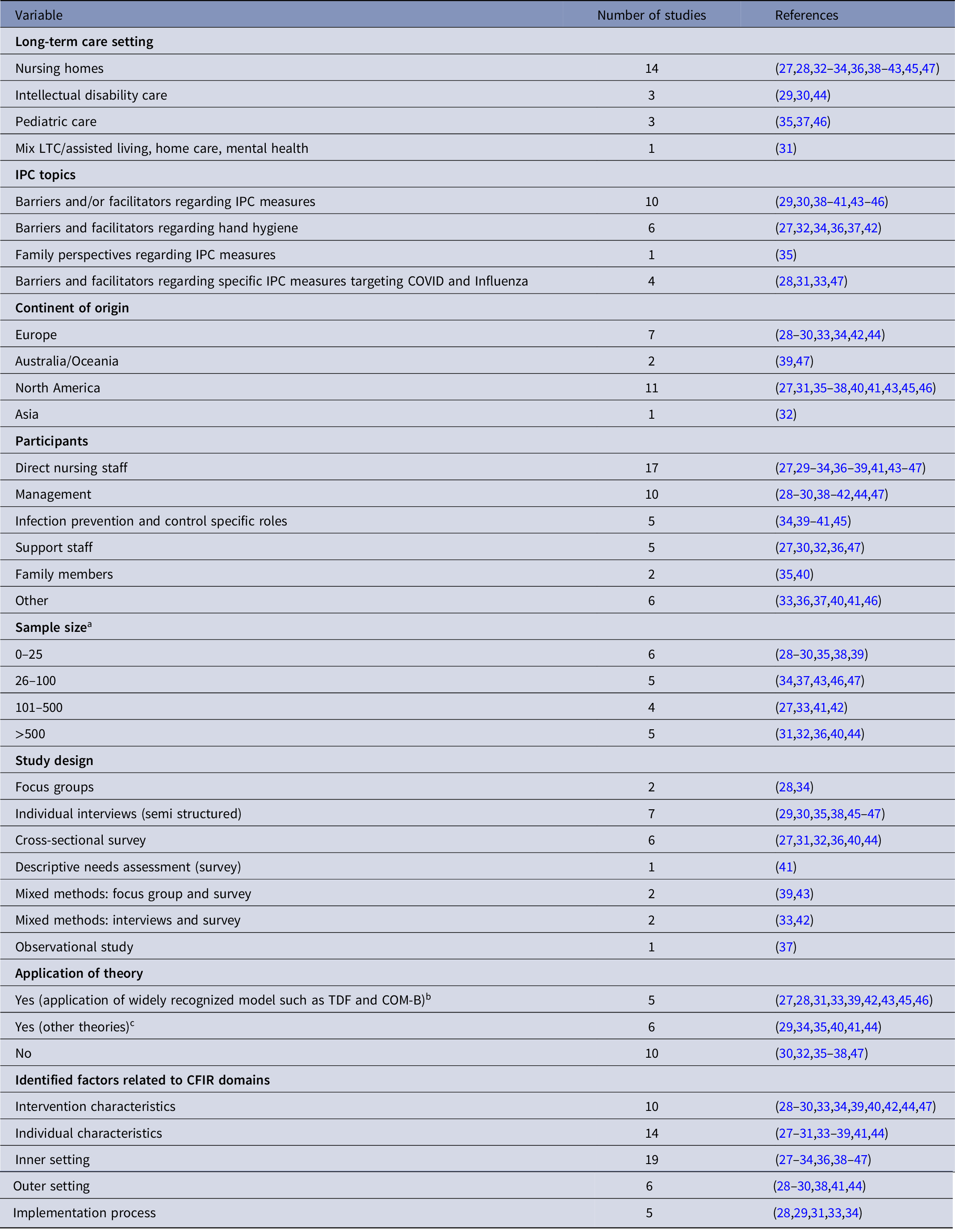
This scoping review included 21 articles that identified factors influencing implementation of IPC in LTCFs. Reference Smith, Corace and MacDonald27–Reference Huhtinen, Quinn, Hess, Najjar and Gupta47 Of the 21 articles, 17 articles reported on single studies whereas 4 articles combined different sources of information (eg, surveys and qualitative research. Reference Lohiniva, Toura, Arifulla, Ollgren and Lyytikäinen33,Reference Watson, Dowson and Dunt39,Reference Hammerschmidt and Manser42,Reference Wolf, Lewis, Cochran and Richards43 Table 1 describes the main characteristics of the studies. Most studies focused on nursing homes (n = 14), hand hygiene (n = 5) and IPC strategies (n = 7). Individual interviews (n = 7) and cross-sectional surveys (n = 6) were the most used methods, Theoretical Domains Framework (TDF) was the most frequently reported framework (n = 5). All individual studies are described in Supplementary 3. None used the CFIR as a guiding framework. Overall, studies primarily assessed staff knowledge, attitudes, and self-reported practices, with limited attention to systematic implementation or evaluation of IPC programs.
Main characteristics of the 21 included articles

Table 1. Long description
A table summarizing the characteristics of 21 studies on infection prevention and control (IPC) in long-term care facilities (LTCFs). The table has 12 rows and 4 columns. Column headers are Variable, Number of studies, and References. Row labels include Long-term care setting, IPC topics, Continent of origin, Participants, Sample size, Study design, Application of theory, and Identified factors related to CFIR domains. The table lists the number of studies for each variable and provides references. Notable trends include a focus on nursing homes, hand hygiene, and IPC strategies, with individual interviews and cross-sectional surveys being the most used methods. The Theoretical Domains Framework (TDF) was the most frequently reported framework.
Notes.
a One study was an observational study, number of participants was not mentioned.
b Theoretical Domains Framework (TDF), Capability-Opportunity-Motivation and Behavior (COM-B), Donabedian’s conceptual framework of healthcare quality, cognitive theory, health belief model were included.
c Flottorp’s integrated checklist of determinants of practice (TICD framework), Knowledge to Action Framework, Interpretive description.
Facilitators and barriers of IPC implementation according to CFIR domains
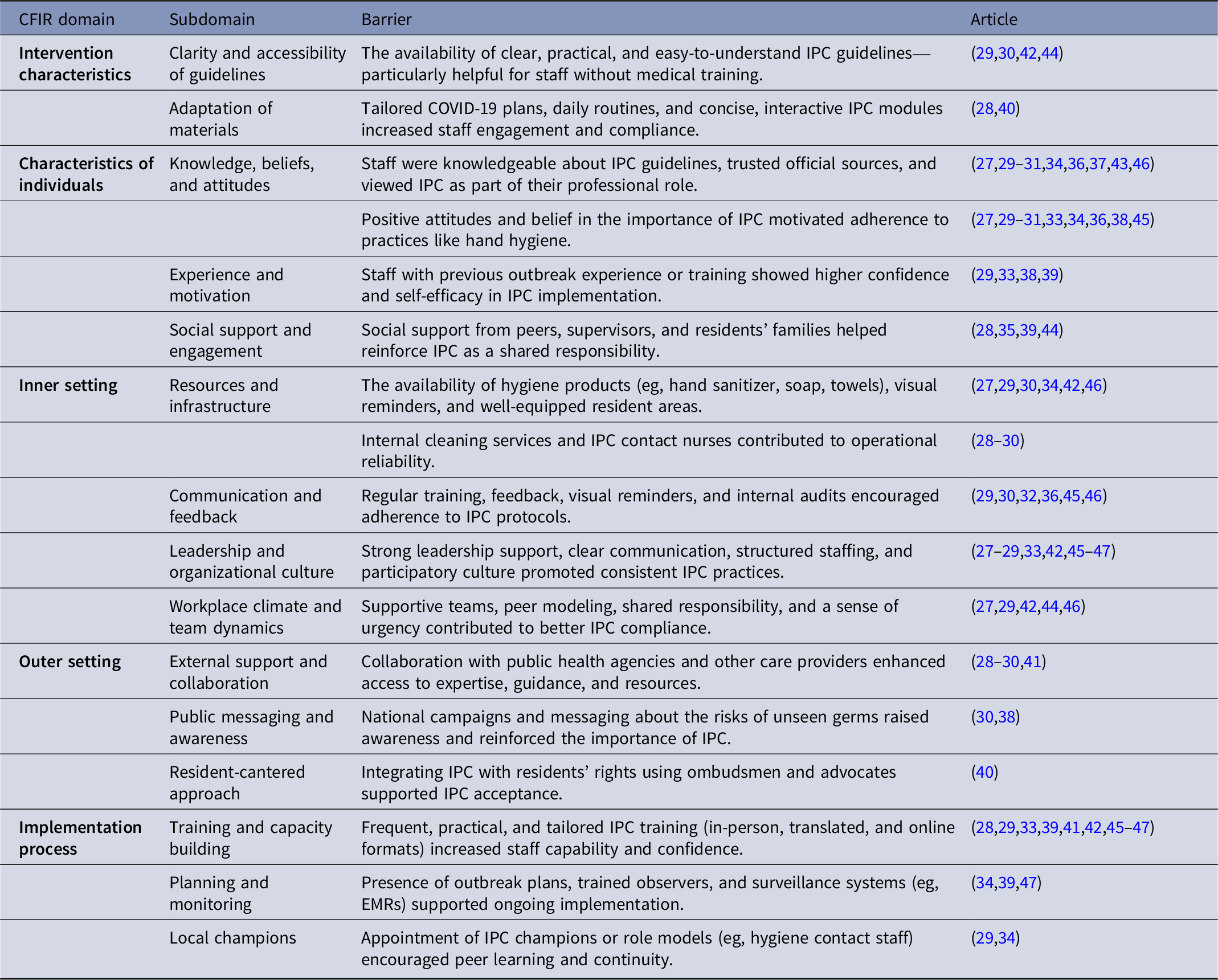
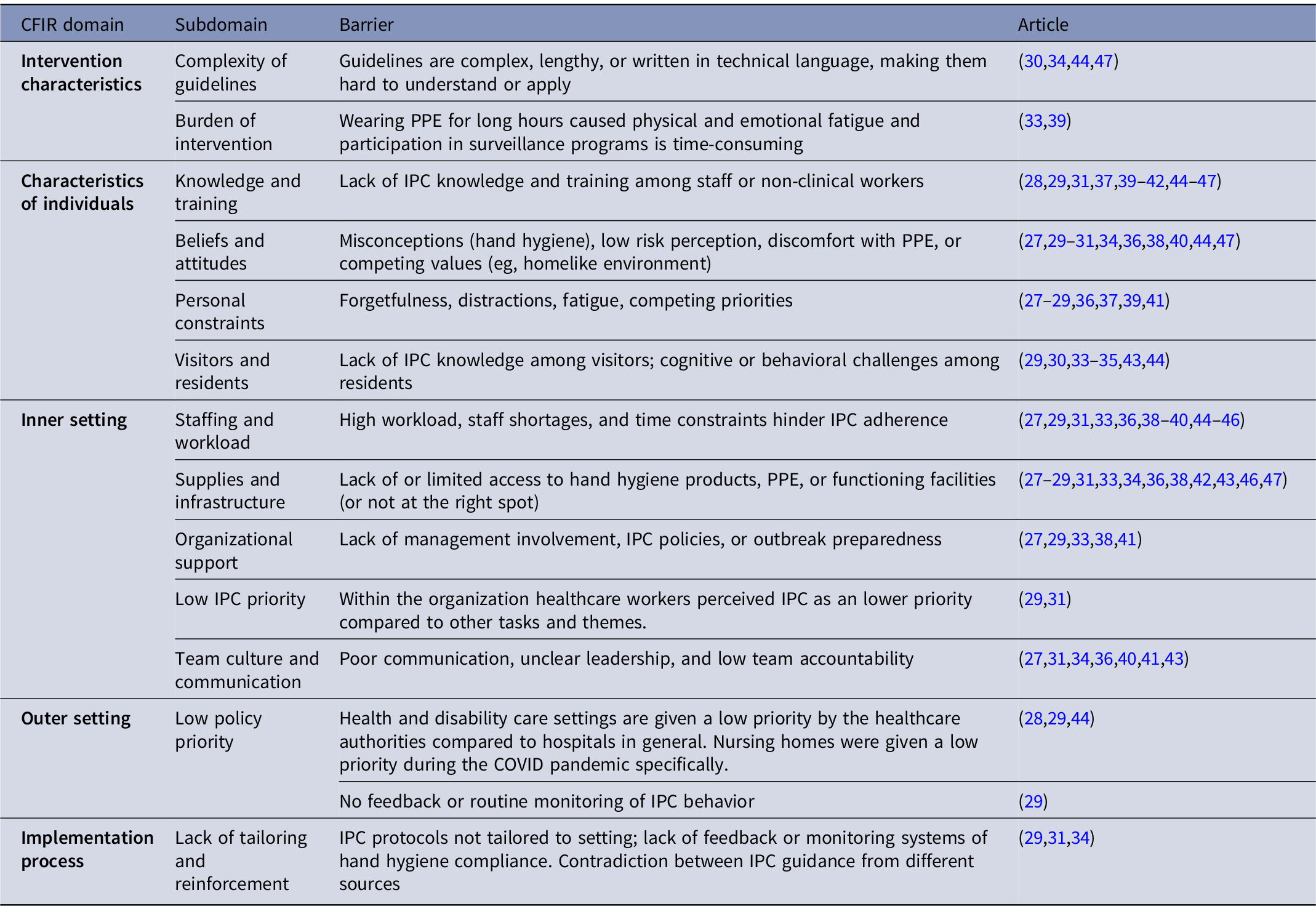
A comprehensive set of facilitators (Table 2) and barriers (Table 3) for IPC implementation in LTCFs was identified and organized into the five domains of the CFIR. The findings highlight the multifaceted and context-dependent nature of IPC implementation, with particular emphasis on organizational, individual, and systemic factors.
Facilitators for implementing Infection Prevention and Control (IPC) in Long-Term Care Facilities (LTCFs)

Table 2. Long description
A table with five columns and multiple rows. The columns are labeled CFIR domain, Subdomain, Barrier, and Article. The table lists various facilitators for implementing infection prevention and control (IPC) in long-term care facilities (LTCFs), organized into five domains: Intervention characteristics, Characteristics of individuals, Inner setting, Outer setting, and Implementation process. Each domain is further divided into subdomains, and specific facilitators are listed under each subdomain. The Article column contains references to articles that discuss these facilitators. Row 1: Intervention characteristics, Clarity and accessibility of guidelines, The availability of clear, practical, and easy-to-understand IPC guidelines—particularly helpful for staff without medical training., 29,30,42,44. Row 2: Intervention characteristics, Adaptation of materials, Tailored COVID-19 plans, daily routines, and concise, interactive IPC modules increased staff engagement and compliance., 28,40. Row 3: Characteristics of individuals, Knowledge, beliefs, and attitudes, Staff were knowledgeable about IPC guidelines, trusted official sources, and viewed IPC as part of their professional role., 27,29–31,34,36,37,43,46. Row 4: Characteristics of individuals, Knowledge, beliefs, and attitudes, Positive attitudes and belief in the importance of IPC motivated adherence to practices like hand hygiene., 27,29–31,33,34,36,38,45. Row 5: Characteristics of individuals, Experience and motivation, Staff with previous outbreak experience or training showed higher confidence and self-efficacy in IPC implementation., 29,33,38,39. Row 6: Characteristics of individuals, Social support and engagement, Social support from peers, supervisors, and residents’ families helped reinforce IPC as a shared responsibility., 28,35,39,44. Row 7: Inner setting, Resources and infrastructure, The availability of hygiene products (eg, hand sanitizer, soap, towels), visual reminders, and well-equipped resident areas., 27,29,30,34,42,46. Row 8: Inner setting, Resources and infrastructure, Internal cleaning services and IPC contact nurses contributed to operational reliability., 28–30. Row 9: Inner setting, Communication and feedback, Regular training, feedback, visual reminders, and internal audits encouraged adherence to IPC protocols., 29,30,32,36,45,46. Row 10: Inner setting, Leadership and organizational culture, Strong leadership support, clear communication, structured staffing, and participatory culture promoted consistent IPC practices., 27–29,33,42,45–47. Row 11: Inner setting, Workplace climate and team dynamics, Supportive teams, peer modeling, shared responsibility, and a sense of urgency contributed to better IPC compliance., 27,29,42,44,46. Row 12: Outer setting, External support and collaboration, Collaboration with public health agencies and other care providers enhanced access to expertise, guidance, and resources., 28–30,41. Row 13: Outer setting, Public messaging and awareness, National campaigns and messaging about the risks of unseen germs raised awareness and reinforced the importance of IPC., 30,38. Row 14: Outer setting, Resident-centered approach, Integrating IPC with residents’ rights using ombudsmen and advocates supported IPC acceptance., 40. Row 15: Implementation process, Training and capacity building, Frequent, practical, and tailored IPC training (in-person, translated, and online formats) increased staff capability and confidence., 28,29,33,39,41,42,45–47. Row 16: Implementation process, Planning and monitoring, Presence of outbreak plans, trained observers, and surveillance systems (eg, EMRs) supported ongoing implementation., 34,39,47. Row 17: Implementation process, Local champions, Appointment of IPC champions or role models (eg, hygiene contact staff) encouraged peer learning and continuity., 29,34.
Barriers for implementing Infection Prevention and Control (IPC) in long-term care facilities

Table 3. Long description
A table with five columns and multiple rows detailing barriers to implementing infection prevention and control (IPC) in long-term care facilities. The columns are labeled CFIR domain, Subdomain, Barrier, and Article. The table is organized into several domains: Intervention characteristics, Characteristics of individuals, Inner setting, Outer setting, and Implementation process. Each domain lists specific subdomains and associated barriers. For example, under Intervention characteristics, subdomains include Complexity of guidelines and Burden of intervention, with barriers such as guidelines being complex and PPE causing fatigue. The Characteristics of individuals domain includes subdomains like Knowledge and training, Beliefs and attitudes, Personal constraints, and Visitors and residents, with barriers such as lack of IPC knowledge and misconceptions about hand hygiene. The Inner setting domain covers Staffing and workload, Supplies and infrastructure, Organizational support, Low IPC priority, and Team culture and communication, highlighting issues like high workload and lack of management involvement. The Outer setting domain mentions Low policy priority and lack of feedback on IPC behavior. The Implementation process domain lists Lack of tailoring and reinforcement, noting issues like IPC protocols not being tailored to settings. The Article column lists references related to each barrier.
-
1. Intervention characteristics
Across multiple studies (n = 4), Reference Houben, Van Hensbergen, Den Heijer, Dukers-Muijrers and Hoebe30,Reference Lescure, Haenen, De Greeff, Voss, Huis and Hulscher34,Reference Houben, Den Heijer, Dukers-Muijrers, Smeets-Peels and Hoebe44,Reference Huhtinen, Quinn, Hess, Najjar and Gupta47 IPC guidelines were described as overly lengthy, technical, and poorly aligned with the realities of long-term or disability care, making them difficult for staff to interpret and implement. This complexity particularly challenged staff without formal medical training, such as social workers. In one qualitative study involving interviews with LTC staff, Reference Houben, Van Hensbergen, Den Heijer, Dukers-Muijrers and Hoebe30 participants described existing guidelines as inaccessible due to complex terminology and unclear instructions, and many found them impractical for daily routines. In the same study, facilities that adopted user-friendly protocols with clear, role-specific procedural descriptions were perceived as more relevant and feasible, leading to greater staff confidence and adherence. Better implementation was supported by availability of concise, clearly illustrated, and practically oriented IPC guidelines. Reference Houben, Van Hensbergen, Den Heijer, Dukers-Muijrers and Hoebe29,Reference Houben, Van Hensbergen, Den Heijer, Dukers-Muijrers and Hoebe30,Reference Houben, Den Heijer, Dukers-Muijrers, Smeets-Peels and Hoebe44 When protocols were easy to navigate and adapted to specific care contexts, staff reported greater confidence and adherence. Reference Houben, Van Hensbergen, Den Heijer, Dukers-Muijrers and Hoebe29,Reference Houben, Van Hensbergen, Den Heijer, Dukers-Muijrers and Hoebe30,Reference Hammerschmidt and Manser42,Reference Houben, Den Heijer, Dukers-Muijrers, Smeets-Peels and Hoebe44 Facilities that tailored IPC guidelines to their care context and included visual aids or checklists achieved better engagement and compliance. Reference Houben, Van Hensbergen, Den Heijer, Dukers-Muijrers and Hoebe30
-
2. Characteristics of individuals
Lack of IPC knowledge and formal training of social workers or nursing assistants was a recurrent barrier for implementing IPC measures. Reference Houben, Van Hensbergen, Den Heijer, Dukers-Muijrers and Hoebe29,Reference Cheng, Ali and Chen Collet31,Reference Ashraf, Hussain and Agarwal36,Reference Houben, Den Heijer, Dukers-Muijrers, Smeets-Peels and Hoebe44,Reference Huhtinen, Quinn, Hess, Najjar and Gupta47 Also, inadequate understanding of hand hygiene protocols, confusion about right PPE use and PPE fatigue/discomfort, Reference Cheng, Ali and Chen Collet31,Reference Lohiniva, Toura, Arifulla, Ollgren and Lyytikäinen33,Reference Løyland, Wilmont, Cohen and Larson37 and lack of outbreak management procedures and knowledge reduced the capability off direct healthcare staff to implement IPC measures. Reference Samdal, Alpers and Sekse28,Reference Houben, Van Hensbergen, Den Heijer, Dukers-Muijrers and Hoebe29,Reference Watson, Dowson and Dunt39–Reference Hammerschmidt and Manser42,Reference Travers, Herzig and Pogorzelska-Maziarz45,Reference Løyland, Wilmont, Hessels and Larson46
In addition, several attitudinal and perceptual factors hindered IPC implementation. Misconceptions, disbelief in the effectiveness of IPC measures, and attitudes that de-emphasized IPC were mentioned as barriers by direct care staff. Reference Houben, Van Hensbergen, Den Heijer, Dukers-Muijrers and Hoebe29,Reference Houben, Van Hensbergen, Den Heijer, Dukers-Muijrers and Hoebe30,Reference Lescure, Haenen, De Greeff, Voss, Huis and Hulscher34,Reference Rynkiewich, Makhija and Froilan38 Related challenges included low risk perception, Reference Houben, Van Hensbergen, Den Heijer, Dukers-Muijrers and Hoebe30 overreliance on gloves, and conflicting priorities Reference Smith, Corace and MacDonald27,Reference Houben, Van Hensbergen, Den Heijer, Dukers-Muijrers and Hoebe30,Reference Lescure, Haenen, De Greeff, Voss, Huis and Hulscher34,Reference Huhtinen, Quinn, Hess, Najjar and Gupta47 such as efforts to preserve a “home-like” environment within the healthcare setting. Reference Smith, Corace and MacDonald27,Reference Houben, Van Hensbergen, Den Heijer, Dukers-Muijrers and Hoebe29–Reference Cheng, Ali and Chen Collet31,Reference Lescure, Haenen, De Greeff, Voss, Huis and Hulscher34,Reference Ashraf, Hussain and Agarwal36,Reference Rynkiewich, Makhija and Froilan38,Reference Cervantes, Krenek, Ross and Knebl40,Reference Houben, Den Heijer, Dukers-Muijrers, Smeets-Peels and Hoebe44,Reference Huhtinen, Quinn, Hess, Najjar and Gupta47 Direct care staff also faced practical and cognitive limitations, including forgetfulness, fatigue and multitasking pressures, which made it difficult to consistently follow IPC protocols. Reference Smith, Corace and MacDonald27–Reference Houben, Van Hensbergen, Den Heijer, Dukers-Muijrers and Hoebe29,Reference Cheng, Ali and Chen Collet31,Reference Ashraf, Hussain and Agarwal36,Reference Løyland, Wilmont, Cohen and Larson37,Reference Watson, Dowson and Dunt39,Reference Gambeta and Chambers41 In dementia and disability care settings, resident’s behavioral and cognitive challenges further complicated the adherence to IPC guidelines and standards. Reference Houben, Van Hensbergen, Den Heijer, Dukers-Muijrers and Hoebe29,Reference Houben, Van Hensbergen, Den Heijer, Dukers-Muijrers and Hoebe30,Reference Lohiniva, Toura, Arifulla, Ollgren and Lyytikäinen33,Reference Lescure, Haenen, De Greeff, Voss, Huis and Hulscher34,Reference Wolf, Lewis, Cochran and Richards43,Reference Houben, Den Heijer, Dukers-Muijrers, Smeets-Peels and Hoebe44 Additionally, visitor non-compliance, due to limited knowledge or IPC awareness posed challenges to infection prevention efforts. Reference Wilmont, Hessels, Kelly and Larson35
Nevertheless, several individual level facilitators supported IPC implementation. Direct care staff who were motivated by a strong sense of professional responsibility and belief in IPC effectiveness, especially regarding hand hygiene, demonstrated high levels of compliance. Reference Smith, Corace and MacDonald27,Reference Houben, Van Hensbergen, Den Heijer, Dukers-Muijrers and Hoebe29–Reference Takahashi and Turale32,Reference Lescure, Haenen, De Greeff, Voss, Huis and Hulscher34,Reference Ashraf, Hussain and Agarwal36,Reference Løyland, Wilmont, Hessels and Larson46 Prior experience with outbreaks enhanced self-efficacy, as direct care staff who had navigated infectious events felt more capable and committed to implementation of IPC measures. Reference Houben, Van Hensbergen, Den Heijer, Dukers-Muijrers and Hoebe29,Reference Lohiniva, Toura, Arifulla, Ollgren and Lyytikäinen33,Reference Rynkiewich, Makhija and Froilan38,Reference Watson, Dowson and Dunt39
Increased awareness of infection prevention measures also facilitated implementation and compliance. Reference Smith, Corace and MacDonald27,Reference Houben, Van Hensbergen, Den Heijer, Dukers-Muijrers and Hoebe29,Reference Lescure, Haenen, De Greeff, Voss, Huis and Hulscher34,Reference Løyland, Wilmont, Cohen and Larson37,Reference Rynkiewich, Makhija and Froilan38,Reference Løyland, Wilmont, Hessels and Larson46 Support from colleagues, residents, and families also played a reinforcing role in encouraging consistent and engaged IPC behaviors. Reference Samdal, Alpers and Sekse28,Reference Houben, Den Heijer, Dukers-Muijrers, Smeets-Peels and Hoebe44 Qualitative studies offered further insight into these individual-level facilitators. In a U.S. study of ventilator-capable nursing facilities, Reference Lee, Lee, Lee and Park16 staff described self-developed hygiene routines extending beyond the workplace, motivated by protecting themselves and residents. In contrast, a Dutch disability care study Reference Houben, Van Hensbergen, Den Heijer, Dukers-Muijrers and Hoebe30 revealed that lack of role models, low risk perception, and emphasis on home-like settings reduced IPC adherence. IPC implementation was more successful where staff were confident, well-informed, and motivated.
-
3. Inner setting
Staff shortages, high workloads, time pressures, and reliance on undertrained or part-time workers limited consistent IPC practice. Reference Smith, Corace and MacDonald27,Reference Houben, Van Hensbergen, Den Heijer, Dukers-Muijrers and Hoebe29,Reference Cheng, Ali and Chen Collet31,Reference Lohiniva, Toura, Arifulla, Ollgren and Lyytikäinen33,Reference Ashraf, Hussain and Agarwal36,Reference Rynkiewich, Makhija and Froilan38–Reference Cervantes, Krenek, Ross and Knebl40,Reference Houben, Den Heijer, Dukers-Muijrers, Smeets-Peels and Hoebe44–Reference Løyland, Wilmont, Hessels and Larson46 These conditions led to IPC being deprioritized amid competing care demands.
Resource limitations were another critical barrier: many facilities lacked hand sanitizer, soap, PPE, and functional handwashing stations, especially at points of care. Reference Smith, Corace and MacDonald27–Reference Houben, Van Hensbergen, Den Heijer, Dukers-Muijrers and Hoebe29,Reference Cheng, Ali and Chen Collet31,Reference Lohiniva, Toura, Arifulla, Ollgren and Lyytikäinen33,Reference Lescure, Haenen, De Greeff, Voss, Huis and Hulscher34,Reference Ashraf, Hussain and Agarwal36,Reference Rynkiewich, Makhija and Froilan38,Reference Hammerschmidt and Manser42,Reference Wolf, Lewis, Cochran and Richards43,Reference Løyland, Wilmont, Hessels and Larson46,Reference Huhtinen, Quinn, Hess, Najjar and Gupta47 Supply accessibility was inconsistent, and infrastructural deficits hindered compliance. Organizational issues also played a major role. Insufficient leadership involvement, unclear IPC responsibilities, and absence of structured IPC policies or outbreak preparedness plans undermined implementation. Reference Smith, Corace and MacDonald27,Reference Houben, Van Hensbergen, Den Heijer, Dukers-Muijrers and Hoebe29,Reference Lohiniva, Toura, Arifulla, Ollgren and Lyytikäinen33,Reference Rynkiewich, Makhija and Froilan38,Reference Gambeta and Chambers41 Weak communication and feedback loops and poor team cohesion created fragmented IPC cultures lacking shared accountability. Reference Cheng, Ali and Chen Collet31,Reference Lescure, Haenen, De Greeff, Voss, Huis and Hulscher34,Reference Ashraf, Hussain and Agarwal36,Reference Cervantes, Krenek, Ross and Knebl40,Reference Gambeta and Chambers41,Reference Wolf, Lewis, Cochran and Richards43
Positive inner setting conditions played a crucial role in supporting IPC. Adequate resources, including easily accessible hygiene supplies, visual reminders, and support staff for cleaning and logistics, were among the most cited facilitators. Reference Smith, Corace and MacDonald27–Reference Houben, Van Hensbergen, Den Heijer, Dukers-Muijrers and Hoebe30,Reference Lescure, Haenen, De Greeff, Voss, Huis and Hulscher34,Reference Hammerschmidt and Manser42,Reference Løyland, Wilmont, Hessels and Larson46 Leadership support was another major theme: facilities with active managerial involvement, clear IPC communication, and designated IPC roles showed better adherence. Reference Smith, Corace and MacDonald27–Reference Houben, Van Hensbergen, Den Heijer, Dukers-Muijrers and Hoebe29,Reference Lohiniva, Toura, Arifulla, Ollgren and Lyytikäinen33,Reference Hammerschmidt and Manser42,Reference Travers, Herzig and Pogorzelska-Maziarz45–Reference Huhtinen, Quinn, Hess, Najjar and Gupta47 A supportive team culture, featuring peer feedback, shared norms, and urgency around IPC, also contributed to implementation success. Reference Smith, Corace and MacDonald27,Reference Houben, Van Hensbergen, Den Heijer, Dukers-Muijrers and Hoebe29,Reference Houben, Van Hensbergen, Den Heijer, Dukers-Muijrers and Hoebe30,Reference Hammerschmidt and Manser42,Reference Houben, Den Heijer, Dukers-Muijrers, Smeets-Peels and Hoebe44,Reference Løyland, Wilmont, Hessels and Larson46 For example, in a qualitative study in Dutch psychiatric institutions, Reference Houben, Van Hensbergen, Den Heijer, Dukers-Muijrers and Hoebe29 staff emphasized the importance of both formal and informal peer support for sustaining IPC practices. Structured feedback promoted accountability, whereas informal encouragement fostered shared responsibility. Designated “practice assistants” clarified procedures and offered on-the-spot help, facilitating guideline adherence. Similarly, in postacute and long-term care facilities, Reference Løyland, Wilmont, Hessels and Larson46 clear, consistent communication from leadership was a key facilitator. Staff valued face-to-face meetings, direct feedback, and repeated reminders, noting that feedback should be clear, actionable, and easy to understand. Reference Lohiniva, Toura, Arifulla, Ollgren and Lyytikäinen33,Reference Ashraf, Hussain and Agarwal36,Reference Watson, Dowson and Dunt39,Reference Løyland, Wilmont, Hessels and Larson46
-
4. Outer setting
Studies highlighted limited policy prioritization of IPC, particularly in mental health and disability care. Reference Samdal, Alpers and Sekse28,Reference Houben, Van Hensbergen, Den Heijer, Dukers-Muijrers and Hoebe29,Reference Houben, Den Heijer, Dukers-Muijrers, Smeets-Peels and Hoebe44 During the COVID-19 pandemic, attention and resources were often redirected toward acute care, leaving LTCFs with reduced support, oversight, and guidance. Reference Samdal, Alpers and Sekse28,Reference Faghanipour, Monteverde and Peter48 The absence of structured audits, feedback, and external accountability mechanisms further hindered IPC improvement. Reference Houben, Van Hensbergen, Den Heijer, Dukers-Muijrers and Hoebe29
Nevertheless, some studies identified external collaboration as an important facilitator. Reference Samdal, Alpers and Sekse28–Reference Houben, Van Hensbergen, Den Heijer, Dukers-Muijrers and Hoebe30,Reference Gambeta and Chambers41 Partnerships with public health agencies and peer organizations supported access to expertise, shared resources, and up-to-date guidance. Reference Samdal, Alpers and Sekse28–Reference Houben, Van Hensbergen, Den Heijer, Dukers-Muijrers and Hoebe30,Reference Gambeta and Chambers41 For example, in a Dutch psychiatric care study, Reference Houben, Van Hensbergen, Den Heijer, Dukers-Muijrers and Hoebe29 staff emphasized the benefits of cross-organizational collaboration and information exchange. Similarly, public health campaigns were described as enhancing awareness among both staff and families. Reference Houben, Van Hensbergen, Den Heijer, Dukers-Muijrers and Hoebe30,Reference Rynkiewich, Makhija and Froilan38 Overall, findings in this domain show the positive influence of system-level support and interorganizational collaboration on IPC implementation, though these were infrequently explored in depth.
-
5. Implementation process
Several studies reported insufficient tailoring of IPC protocols to LTCF needs, causing confusion and low perceived relevance. Reference Houben, Van Hensbergen, Den Heijer, Dukers-Muijrers and Hoebe29,Reference Lescure, Haenen, De Greeff, Voss, Huis and Hulscher34 Inconsistent or contradictory training and feedback mechanisms further weakened implementation. Reference Houben, Van Hensbergen, Den Heijer, Dukers-Muijrers and Hoebe29,Reference Cheng, Ali and Chen Collet31,Reference Lescure, Haenen, De Greeff, Voss, Huis and Hulscher34 IPC protocols were also viewed as burdensome, particularly tasks involving prolonged PPE use or complex documentation. Reference Lohiniva, Toura, Arifulla, Ollgren and Lyytikäinen33,Reference Watson, Dowson and Dunt39
Nevertheless, effective implementation processes shared several features. Regular, accessible, and context-specific IPC training delivered through interactive workshops, e-learning, or certification opportunities improved engagement across professional backgrounds. Reference Samdal, Alpers and Sekse28,Reference Houben, Van Hensbergen, Den Heijer, Dukers-Muijrers and Hoebe29,Reference Lohiniva, Toura, Arifulla, Ollgren and Lyytikäinen33,Reference Watson, Dowson and Dunt39,Reference Gambeta and Chambers41,Reference Hammerschmidt and Manser42,Reference Travers, Herzig and Pogorzelska-Maziarz45–Reference Huhtinen, Quinn, Hess, Najjar and Gupta47 Facilities that introduced IPC champions or hygiene contact persons benefited from sustained adherence, as these individuals modeled good practice and reinforced IPC in daily routines. Reference Houben, Van Hensbergen, Den Heijer, Dukers-Muijrers and Hoebe29,Reference Lescure, Haenen, De Greeff, Voss, Huis and Hulscher34 Tailored tools such as interactive training modules and outbreak-specific plans further enhanced relevance and usability. Reference Samdal, Alpers and Sekse28,Reference Cervantes, Krenek, Ross and Knebl40 These findings align with research showing that knowledge alone is insufficient for IPC compliance; organizational and behavioral factors must also be addressed. Reference Spoon, Rietbergen and Huis49,Reference Houghton, Meskell and Delaney50
Discussion
This scoping review mapped barriers and facilitators for implementation of IPC in LTCFs using the CFIR. Two key findings emerged from the review. First, the implementation process generally received little attention. Implementation strategies are often lacking, and implementation was rarely approached as continuous change process. Second, there is an overemphasis on individual-level and inner setting factors. This implies that responsibility for IPC is often placed with individual employees in specific teams or facilities, rather than seen as the result of the wider context employees and teams operate in. Consequently, IPC in LTCFs is often narrowed down to behavior change (ie, compliance with hand hygiene measures or use of protective equipment) with a limited focus on the structural embedding of such specific measures in broader (IPC) quality assurance processes. In the following we will elaborate on these key findings.
Limited attention to implementation process
A striking finding is the lack of attention to the Implementation Process. Across studies, there was limited detail about how IPC guidelines or interventions were implemented in practice. Subdomains such as planning, assessing context, executing, tailoring strategies, and reflecting and evaluating were rarely mentioned. Only few studies referenced training activities or IPC champions, but these elements were presented as isolated features rather than part of a structured implementation approach. No study described a comprehensive implementation strategy or roadmap, nor did they report how healthcare organizations prepared for, monitored, or adjusted the rollout of IPC measures over time. This implementation process gap is critical. Without attention to how interventions are introduced and sustained, it becomes difficult to assess what works, for whom, and under what conditions. The lack of implementation strategy also suggests that IPC is often treated as a set of rules or policies to follow, rather than as a change process requiring adaptation, buy-in, and continuous support. This may help explain why certain IPC practices, such as hand hygiene or PPE use, remain inconsistently adopted despite widespread awareness.
Similar observations have been reported in previous reviews. Reference Low, Fletcher and Goodenough51,Reference Spoon, Rietbergen and Huis49 For example, one review noted that only three studies explicitly described their program logic or explained how the intervention was intended to achieve its impact. Reference Low, Fletcher and Goodenough51 Another review found considerable variation in the reporting of implementation strategies: although a small number of studies provided a detailed description of the implementation process, most merely mentioned the type of strategy used (eg, audit and feedback), without further elaboration. Reference Spoon, Rietbergen and Huis49 Moreover, multiple reviews emphasize that no single implementation strategy, or fixed combination of strategies, can be directly linked to successful implementation. Reference Lee, Lee, Lee and Park16,Reference Low, Fletcher and Goodenough51,Reference Spoon, Rietbergen and Huis49 Instead, strategies need to be tailored to the specific context. By systematically applying the full CFIR framework, this review highlights a persistent gap in the literature: IPC implementation is frequently reduced to behavior change, although implementation processes and contextual mechanisms remain underexplored. Evidence from other healthcare settings indicates that structured attention to implementation is crucial for achieving effective and sustainable outcomes. In hospital settings, AMS programs supported by pragmatic, step-by-step implementation guides, have been associated with improved implementation outcomes. Reference Mendelson, Morris, Thursky and Pulcini52 Translating such approaches to long-term care remains challenging, as implementation in dementia care and other LTC settings has been shown to be less successful than in acute clinical settings.Reference Low, Fletcher and Goodenough 51 Nevertheless, research demonstrates that the use of explicit implementation strategies can improve the adoption and effectiveness of nursing guidelines. Reference Spoon, Rietbergen and Huis49 Implementation mapping provides a systematic process for developing strategies to improve the adoption, implementation, and maintenance of evidence-based interventions in real-world settings. Reference Fernandez, Ten Hoor and Van Lieshout53 Importantly, dedicating structured attention to the implementation process, particularly through tailoring to the local context, has been shown to enhance outcomes without increasing overall implementation time. Reference Vis, Schuurmans and Aouizerate54
Overemphasis on individual responsibilities hampers acknowledgement of wider context
Most reported factors concentrated within the Inner Setting and Characteristics of Individuals domains, in particular structural constraints (eg, staffing, supplies), leadership engagement, and staff-level knowledge and attitudes. Most studies focused on perspectives from nursing staff, and the perspectives from managers, policymakers, residents, and their families received limited attention so far. This is consistent with earlier reviews in other settings, such as hospitals and residential care. Here, also individual compliance and organizational culture received more attention than implementation processes and outer setting influences on implementation. These findings align with prior literature emphasizing individual and organizational determinants of IPC behavior. Reference Gastaldi, Festa and Nieddu17,Reference Fujimoto, Utsumi and Swa18,Reference Low, Fletcher and Goodenough51,Reference Spoon, Rietbergen and Huis49
This focus on individual and organizational factors appears to overshadow consideration of broader contextual influences. Several Outer Setting subdomains were underrepresented. The role of external systems, policy incentives, or inter-organizational collaboration, in line with research in hospitals and nursing homes. Reference Spoon, Rietbergen and Huis49 There was limited attention to external pressures (eg, regulations, funding, benchmarking) and patient or family engagement, despite their potential influence on implementation success. Most studies studied nursing staff perspectives, with little involvement of other stakeholders such as managers, policymakers, or residents, further narrowing the scope of insight.
Within the Intervention Characteristics domain, emphasis was primarily on complexity and burden (eg, confusing protocols, demanding procedures). There was no exploration of whether staff or other end-users were involved in shaping guidelines or planning their introduction, an important omission, given the need to build ownership and contextual fit. It is important to involve the end users, staff, with the development of guidelines and implementation. Altogether these findings indicate that although individual and environmental barriers are well-documented, the process of implementing IPC in LTCFs remains poorly understood and under-researched. Most studies examine perceptions of IPC once it is already in place, rather than investigating how new policies are introduced, scaled, or maintained. This represents a major knowledge gap with direct implications for improving practice.
Strengths and limitations
A strength of this scoping review is the application of the CFIR to synthesize barriers and facilitators to IPC implementation. Applying the CFIR enabled systematic comparison across studies and facilitated the identification of gaps, particularly in process- and outer-setting determinants. In addition, the inclusion of qualitative and mixed-methods studies across different long-term care settings allowed for a broad mapping of implementation determinants from diverse contexts.
This review also has two limitations. Several included studies were conducted during the COVID-19 pandemic, Reference Samdal, Alpers and Sekse28,Reference Cheng, Ali and Chen Collet31,Reference Lohiniva, Toura, Arifulla, Ollgren and Lyytikäinen33 which may limit the generalizability of findings to routine IPC practices in non-crisis contexts. As this was a scoping review, no formal quality appraisal of included studies was conducted. The findings should therefore be interpreted as a broad map of existing evidence rather than an assessment of evidence quality.
Implications for future research and practice
This review points to two directions for future work. First, implementation science and practice benefits from attention to implementation processes that plan and monitor how IPC interventions are introduced, adapted, and sustained in LTCFs. Mixed-method process evaluations, guided by frameworks such as CFIR, can provide insight into what strategies work, for whom, and under what conditions. At the facility level, managers should develop clear implementation plans that define leadership roles, outline staff engagement strategies, and establish monitoring and feedback mechanisms. Simple measures such as regular audit-and-feedback cycles, the appointment of IPC champions, and the integration of tailored training modules can help sustain adherence over time. IPC should be embedded into broader quality and safety management systems rather than treated as an isolated policy requirement. This includes ensuring consistent access to hygiene resources, supporting staff through protected time and training, and balancing IPC measures with the goal of maintaining a home-like environment for residents. At the system level, policy-makers and regulators have an important role in creating external incentives for IPC. Structured external audits, regulatory standards, and dedicated funding streams could strengthen accountability and ensure that LTCFs are not left behind compared to acute care settings. Moreover, involving a broader set of stakeholders such as residents, families, and advocates can help align IPC practices with resident needs and values, increasing both feasibility and acceptance. Second, and following, a broader scope of stakeholders need to be involved throughout the implementation process and need to move beyond a focus on nursing staff alone. Implementation success also depends on the roles of managers, policymakers, infection control specialists, residents, and families, particularly for leadership engagement, policy alignment, and resident-cantered care. Third, IPC research and practice need to tailored to the unique challenges of LTCFs, tested in small-scale pilots before full rollout, and evaluated in terms of sustainability and resource use. Understanding these factors is crucial for ensuring that interventions are both feasible and durable in resource-constrained environments such as LTCFs. Finally, strategies for fostering cultural and behavioral change within care teams remain needed. Beyond providing knowledge and resources, effective IPC implementation requires building ownership, accountability, and collective responsibility across staff. Monitoring and evaluations can track how such cultural shifts can be achieved and maintained would provide valuable evidence for practice.
Conclusions
In conclusion, the review points to the need for multilevel, context-sensitive strategies that acknowledge the realities of LTC. Without structured planning, leadership support, and external reinforcement, even well-designed IPC guidelines are unlikely to translate into consistent and sustainable practice. Although barriers related to staffing, resources, and knowledge are well-described in the literature, this review reveals a significant blind spot: how IPC interventions are implemented in long-term care settings. Sustainable implementation of IPC within LTCFs requires moving beyond compliance-based approaches toward structured and strategic implementation.
Supplementary material
The supplementary material for this article can be found at https://doi.org/10.1017/ice.2026.10534.
Financial support
This review is funded by ZonMW as part of the antimicrobial resistance 3 program and the Control of AMR transmission by implementing auditing tools in long-term care facilities project (10680012310012). Open access funding provided by Wageningen University & Research.
Competing interests
None declared.
Ethical standard
This scoping review generates new knowledge from published and publicly available literature; thus, an ethical approval is unnecessary to conduct this research.
Use of artificial intelligence tools
Title and abstract screening were supported using ASReview, an open-source machine-learning tool designed to prioritize relevant records and increase screening efficiency in reviews.


 Open access

