Introduction
The efficiency of growth and egg production in poultry has increased substantially over the past few decades. Although most of this increase is attributable to genetic improvements, it cannot be sustained without excellent feed management. Feed costs represent about 70% of the variable costs of production and are dependent on the composition of the diet. Conventional poultry diets predominantly consist of vegetable feedstuffs with a small proportion of animal protein sources and mineral material. Animal proteins tend to be more balanced in respect of amino acids than plant proteins. Thus, it is easier to formulate diets containing animal proteins than diets containing only vegetable material.
There is a growing trend worldwide to feed poultry diets containing only plant material or vegetable protein diets. This may be because of a limited supply of animal protein in some regions or demand or legislation for meat and eggs produced using ‘animal-free’ diets. The demand for meat has increased in many developing countries and has resulted in expansion of the local poultry industry. This expansion is constrained by a lack of feed ingredients or high costs of feed ingredients, particularly animal protein. Oluyemi and Roberts (Reference OLUYEMI and ROBERTS2000) reported that a critical cost appraisal of poultry feed showed that protein, especially protein of animal origin, is the most expensive component per unit cost of production. The development of good quality VP diets would reduce cost and increase efficiency of production (Teguia and Beynen, Reference TEGUIA and BEYNEN2005).
There are contrasting reports on the responses of poultry to VP diets. Many studies have reported that poultry productivity on these diets is poor because of deficiencies in nutrients such as amino acids and minerals, and from imbalances in the energy to protein ratio (Dilger and Baker, Reference DILGER and BAKER2008). Some vegetable protein sources contain detrimental agents such as non-starch polysaccharides (NSPs), polyphenols and phytic acid (Iji et al., Reference IJI, KHUMALO, SLIPPERS and GOUS2004; Olukosi et al., Reference OLUKOSI, COWIESON and ADEOLA2010). However, poultry nutritionists are striving to improve the quality of VP diets using crop breeding, feed processing and supplementation with nutrients. If these measures are adopted, vegetable protein ingredients could serve as excellent nutrient sources and significantly reduce feed costs (Cruz et al., Reference CRUZ, DUCATTI, ARAÚJO, SARTOR and PICCININ2009). In the past few years, research has been conducted on the nutritive value of VP diets for broiler chickens in which soybean or canola meal completely replaced meat meal or fish meal. This review presents an overview of the responses of broiler chickens to VP diets.
Effects of vegetable protein diets on growth and meat quality
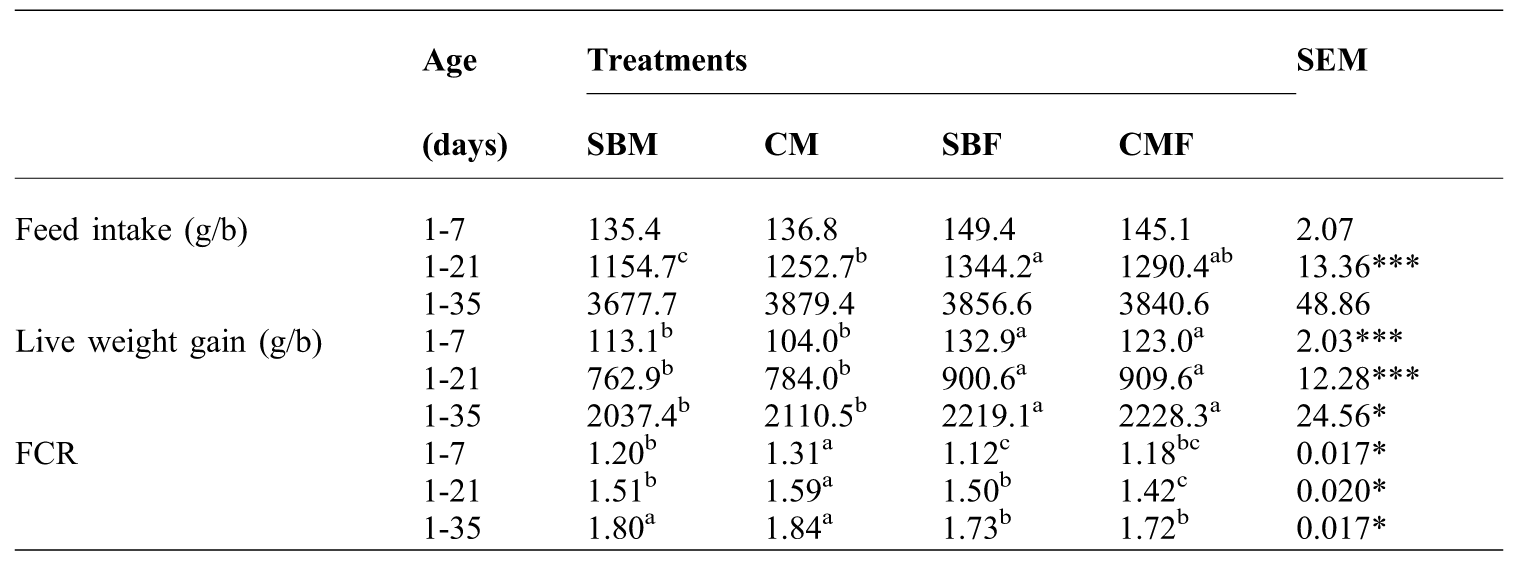
The growth responses of poultry to VP diets are influenced by many factors, including diet composition, physical nature of the diet and level of anti-nutritive factors (Gatel, Reference GATEL1993; Dublecz, Reference DUBLECZ2003; Cowieson and Bedford, Reference COWIESON and BEDFORD2009). These responses may be positive or negative, depending on the diet properties and rearing conditions. Omenka and Anyasor (Reference OMENKA and ANYASOR2010) reported that broiler chickens fed VP diets gained body weight at the same rate as chickens fed conventional diets. Cancherini et al. (Reference CANCHERINI, JUNQUEIRA, ANDREOTTI, BARBOSA and OLIVEIRA2004) reported that corn/soybean meal-based diets promoted better growth than other diets. Similarly, Vieira and Lima (Reference VIEIRA and LIMA2005) found no significant differences in the body weight gain of broilers fed diets containing only vegetable material or diets containing animal protein (pig and poultry by-products). However, Hossain et al. (Reference HOSSAIN, ISLAM and IJI2012a; Reference HOSSAIN, ISLAM and IJI2013a) observed that growth of broiler chickens fed VP diets was slower than that of chickens fed diets containing fishmeal (Table 1).
Growth responses of broiler chickens fed on different diets from d1 to d35.

Diets SBM and CM are vegetable protein-based containing predominantly soybean and canola meals, respectively as sources of proteins. Diets SBF and CMF are corresponding conventional diets containing fish meal. a,b - Mean values on the same row not sharing a superscript are significantly different (*P<0.05; ***P<0.001). Source: Hossain et al. (Reference HOSSAIN, ISLAM and IJI2013a).
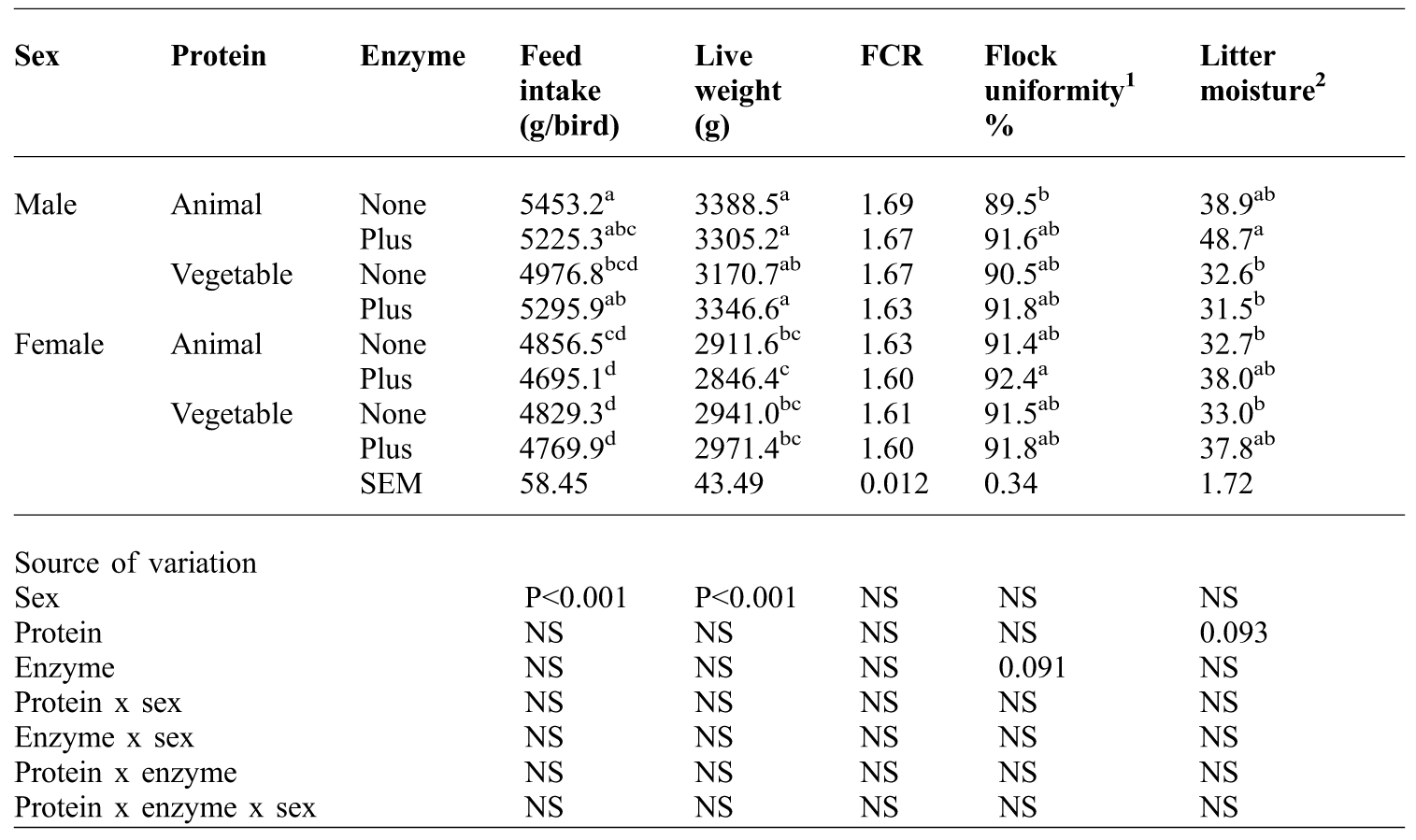
In a study involving meat meal replacement, feed intake to 42 days was 10% lower for VP diets than for the conventional diet (Table 2) (Bhuiyan et al., Reference BHUIYAN, CLATWORTHY and IJI2012a). These results suggest that VP diet growth responses are similar to those for conventional diets if the diets are formulated to have similar nutrient composition. A reduction in feed intake appears to be the main cause of any differences in responses to VP diets versus conventional diets, but it may be that poorer protein digestibility and energy utilisation occurs for VP diets. Diets containing animal proteins tend to have a better amino acid profile (Radhakrishnan et al, Reference RADHAKRISHNAN, KADIRVEL and VIJAYAKUMAR2001; Alali et al., Reference ALALI, HOFACRE, MATHIS and BATAL2011). In addition, the improvement in growth of the birds fed animal protein diets might result from the presence of unidentified growth factors, especially in the case of fishmeal.
Feed intake, body weight, FCR and flock uniformity of male and female chicks to 42 days of age on conventional (meat meal) and vegetable protein diets.
1, 2 - Assessed at 28 and 35 days, respectively. Source: Bhuiyan et al. (Reference BHUIYAN, CLATWORTHY and IJI2012a).
Preference of birds for animal and vegetable protein diets
The ancestors of modern meat chickens lived in self-selecting feeding systems. Modern chickens are typically reared on single-feed systems under confinement, where they do not have any choice or opportunity to select a mixture of feedstuffs as do wild fowls. When birds are given a choice, they choose a mixture of feedstuffs to meet their requirements for protein and energy (Forbes and Shariatmadari, 1994; Yo et al., Reference YO, SIEGEL, GUERIN and PICARD1997). It was reported that fast-growing birds, such as broiler chickens, are more responsive to variation in essential amino acid concentrations than laying birds (Noble et al., Reference NOBLE, PICARD, DUNNINGTON, UZU, LARSEN and SIEGEL1993). It is generally considered that domestic fowl show reduced responsiveness to the nutritional consequences of their feed intake compared with their progenitor, the jungle fowl, particularly in terms of protein and energy regulation (Hughes, Reference HUGHES1984). However, evidence from several species of poultry indicates that birds are capable of selecting the required amount of protein when given a choice between high- and low-protein diets. Apart from this inherent capability, many other factors, for example, nutrient composition, source of protein, vitamins and minerals may affect feed selection of the poultry. The organoleptic traits of diets such as colour, smell, odour, flavour, taste, and texture may play significant roles in the feed intake of poultry (Cruz et al., Reference CRUZ, PEZZATO, PINHEIRO, GONCALVES and SARTORI2005).
A recent study conducted by Bhuiyan et al. (Reference BHUIYAN, CLATWORTHY and IJI2012a; Reference BHUIYAN, HOSSAIN and IJI2012b) demonstrated that broilers preferred animal protein diets to VP diets when given a choice. When offered grower diets, 62% of the birds’ intake was derived from the animal protein diet and 38% was derived from the VP diet, whereas when offered finisher diets, the 82% of the birds’ intake was derived from the animal protein diet and 18% was derived from the VP diet. Preference was significantly different in the grower (P<0.01) and finisher (P<0.001) periods. In a similar study, selection of diets containing predominantly soybean meal (SBM) or canola meal (CM) as source of vegetable protein was tested. The birds ate more of the CM diet than the SBM diet from 8-14 days of age (P<0.001) and from 15-21 days of age (P<0.01). From 8-14 days of age, 62% of the birds’ intake was derived from the CM diet and 38% was derived from the SBM, whereas from 15-21 days of age 58% of the birds’ intake was derived from the animal protein diet and 42% was derived from the SBM diet (Bhuiyan et al., Reference BHUIYAN, CLATWORTHY and IJI2012a; Reference BHUIYAN, HOSSAIN and IJI2012b; Hossain et al., Reference HOSSAIN, ISLAM and IJI2014).
Meat quality of birds fed vegetable protein diets
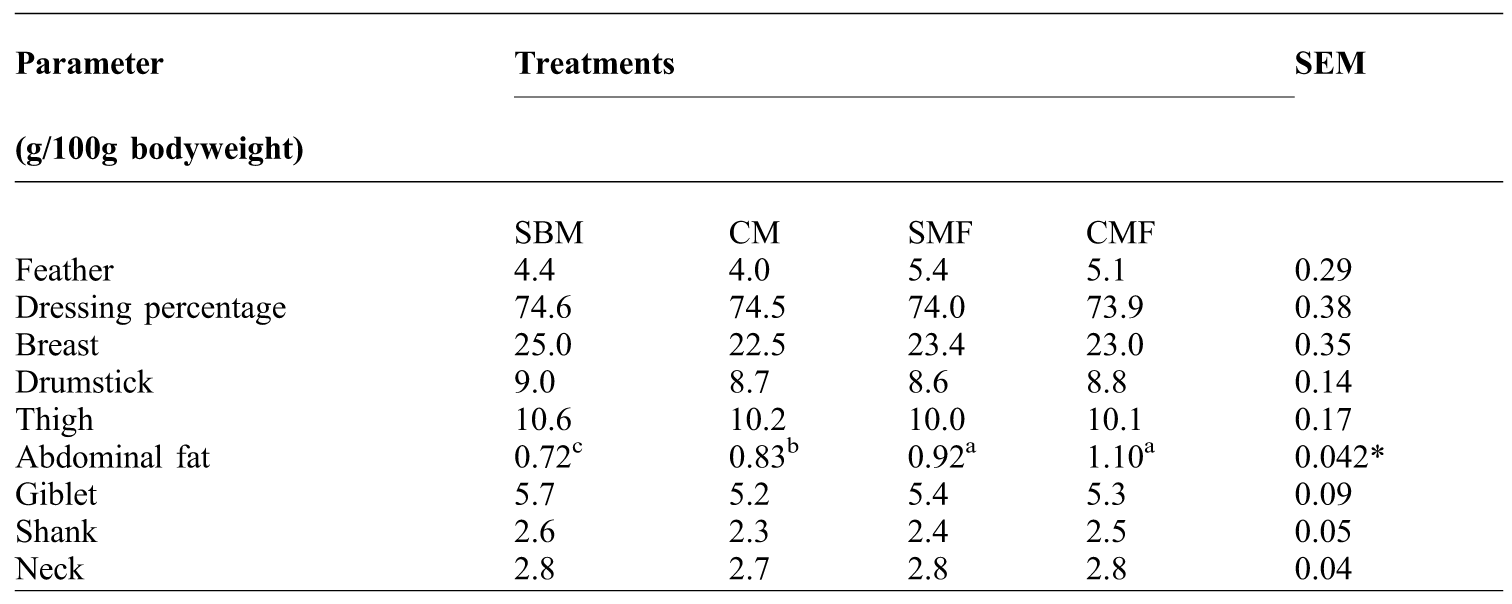
Feed nutrients appear to be metabolised at different rates when supplied in diets containing animal or vegetable protein. This influences deposition of fat in the carcass. In general, bone development occurs first, followed by muscle and then fat deposition. As one phase nearly completes, the rate of the next phase increases, so that birds that grow rapidly tend to enter the fat deposition phase earlier than those that grow slowly. This response was observed in a recent study (Hossain et al., Reference HOSSAIN, ISLAM and IJI2013a) in which birds fed animal protein diets accumulated more abdominal fat than birds fed VP diets. This finding can be used to advantage in diet formulation; when lean meat is desired, birds may be fed VP diets, which will result in less fat deposition and more protein deposition in the carcass (Singh and Panda, Reference SINGH and PANDA1992). This will not only reduce fat waste at processing plants but gives a better quality product for the consumer. The shelf life of such meat may also be increased. These results showed that there was no difference in the meat yield of birds fed VP diets compared with that of birds fed animal protein diets (Table 3).
Carcass traits and meat yield of broiler chickens fed diets in which soybean and canola meals replaced fish meal from hatch to 35 days of age.
SBM and CM denote vegetable protein diets whereas SMF and CMF are animal protein diets. Source: Hossain et al. (Reference HOSSAIN, ISLAM and IJI2013a).
Constraints to use of vegetable protein diets
formulation constraints
Vegetable protein ingredients are comparatively cheap and are used by many oil mills and feed industries (Vieira et al., Reference VIEIRA, PENZ, LEBOUTE and CORTELINE1992). Affordability, accessibility, and ease of processing make vegetable proteins an attractive resource for the poultry industry. However, vegetable protein sources contain numerous anti-nutritive factors, are unbalanced or deficient in amino acids, and have a lower protein content that animal protein sources (Hossain et al., Reference HOSSAIN, ISLAM, ISLAM and IJI2011). The quality of diets derived from such ingredients may be inadequate and affect bird performance adversely. Feed cost can increase when birds are fed diets formulated exclusively with vegetable proteins (Bellaver et al., Reference BELLAVER, COSTA, AVILA, FRAHA, LIMA, HACKENHAR and BALDI2005; Vieira and Lima, 2005). These constraints may discourage producers from incorporating vegetable ingredients in poultry diets.
anti-nutritive factors
Many oilseeds and legumes contain factors that hamper the utilisation of ingested feed by reducing protein digestibility, binding to nutrients or damaging the gut. Factors that reduce growth rate and feed conversion ratio or affect the health of animals are termed anti-nutritive factors (ANFs) (Huisman and Tolman, Reference HUISMAN and TOLMAN1992). However, several studies have reported that cereal grains and other vegetable feedstuffs also contain anti-nutritional and toxic components (Lewis and Fenwick, Reference LEWIS and FENWICK1987; Akande et al., Reference AKANDE, DOMA, AGU and ADAMU2010; Hossain et al., Reference HOSSAIN, ISLAM, ISLAM and IJI2011). Fasuyi and Aletor (Reference FASUYI and ALETOR2005) reported that these compounds prevent birds from obtaining the full nutritional benefits of such feedstuffs if they are included in diets without processing.
Of the vegetable protein sources, soybean is used predominantly. However, it is rich in protease (trypsin and chymotrypsin) inhibitors and lectin (phytohaemagglutinins), which inhibit the digestion of protein and minerals (Siddhuraju et al., Reference SIDDHURAJU, MAKKAR and BECKER2002), thereby reducing growth. Rapeseed meal contains glucosinolate (commonly referred to as a goitrogen), sinapine, tannins, erucic acid, and phytate (Thanaseelaan et al., Reference THANASEELAAN, VISWANATHAN, CHANDRASEKARAN, PRABAKARAN and CHELLAPANDIAN2007). Feed palatability, growth, and animal production are reduced by the glucosinolates in rapeseed meal (Peron and Partridge, Reference PERON and PARTRIDGE2010). The main anti-nutritional factors in lupins are alkaloids, phytate, protease inhibitors, and lectins (Mikić et al., Reference MIKIĆ, PERIC, DORDEVIC, SREBRIC and MIHAILOVIC2009).
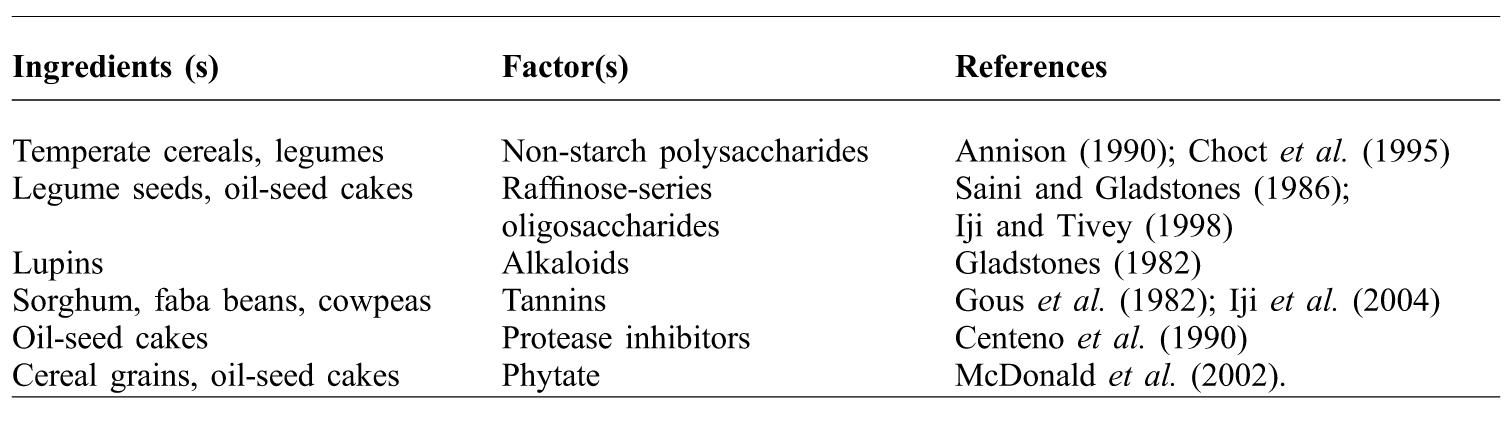
Many other ANFs are present in vegetable protein sources (Table 4). These include NSPs, anti-vitamin factors, phytic acid, toxic amino acids, and hydrocyanic acid. Phytic acid is present in all oilseed meals and plant feedstuffs. Its presence in the diet causes formation of protein-phytate and mineral-phytate bonds, which reduce the availability of these nutrients (Al-Kaiesy et al., Reference AL-KAIESY, ABDUL-KADER, MOHAMMAD and SAEED2003). Vegetable proteins, particularly canola meal, contain relatively high phytate levels, averaging 76.4% of total P (Selle et al., Reference SELLE, RAVINDRANV, PITTOLO and BRYDEN2003). The lack of endogenous phytase makes phytate-P unavailable to non-ruminant animals. Consequently, inorganic phosphorus has to be added to poultry diets.
Anti-nutritive factors present in vegetable protein sources.
Improving the nutritive value of vegetable protein diets
Current research indicates that it is possible to obtain the same level of productivity using vegetable protein instead of animal protein in diets. The manner in which the diets are formulated determines the response that will be obtained. Formulating on the basis of available amino acids tends to narrow the differences between vegetable protein and animal protein diets. This may be because this procedure ensures that the nutrients provided can be metabolised. However, there is scope for improving the quality of vegetable ingredients, which would not only increase the concentrations of nutrients but also increase the digestibility of the ingredients, resulting in increased availability of nutrients. Some of the methods that producers can adopt to improve the quality of VP diets are crop breeding, feed processing, and nutrient supplementation.
crop breeding
The principal goal of genetic manipulation is to enhance the nutritive value of the crops as well as that of the diet in which it is destined to be included by increasing the concentration of nutrients and reducing the level of detrimental factors (Swiatkiewicz and Arczewska-Wlosek, Reference SWIATKIEWICZ and ARCZEWSKA-WLOSEK2011). As a result of advances in crop breeding research, many crops are now available in the market for use in poultry diet formulation. However, although many genetically modified crops have superior nutritive value their use for livestock and their impact on consumer health are controversial.
feed processing
Anti-nutrients pose a major constraint to the use of plant protein sources in livestock feeds when these are without adequate and effective processing. The concentrations of anti-nutrients in plant protein sources vary between species of plant, cultivars, and post-harvest treatment methods (Akande et al., Reference AKANDE, DOMA, AGU and ADAMU2010). However, many food processing techniques have been discussed as possible means of reducing levels of anti-nutrients in plant feed sources to levels that can be tolerated by animals, particularly non-ruminants (Fasuyi and Aletor, Reference FASUYI and ALETOR2005).
These processes can effectively eliminate the toxicity of many feedstuffs (Singh and Panda, Reference SINGH and PANDA1992; Leeson and Summers, Reference LEESON and SUMMERS2001). Protease inhibitors and lectins (phytohaemagglutinins), widely believed to be the most important of the anti-nutrients present in soybeans, can be eliminated by heat processing techniques (Leeson and Summers, Reference LEESON and SUMMERS2001). Ethanol extraction is suitable for reducing NSPs (oligosaccharides) (Coon et al., Reference COON, LESKE, AKAVANICHAN and CHENG1990; Leske et al., Reference LESKE, JEVNE and COON1993). Appropriate processing can improve the nutritive value of plant feedstuffs many fold by eliminating anti-nutritive factors; such processed ingredients are safe for use in poultry diets.
nutrient supplementation
Diet formulation using only vegetable ingredients can increase the crude fibre level of the diet, reducing nutrient digestibility for poultry. The negative effect of fibre can be reduced by supplementation with limiting nutrients. Amino acids, minerals, and readily available sources of energy such as lipids can be provided as supplements in the diet. The use of supplemental amino acids, notably lysine, methionine, and more recently, threonine, has long been practised by the poultry industry. This measure has remained effective over the years, as it is relatively easy to rectify nutrient deficiencies by supplying them from readily available sources. Bound nutrients can be released through supplementation with in-feed enzymes that were introduced into poultry nutrition about 25 years ago.
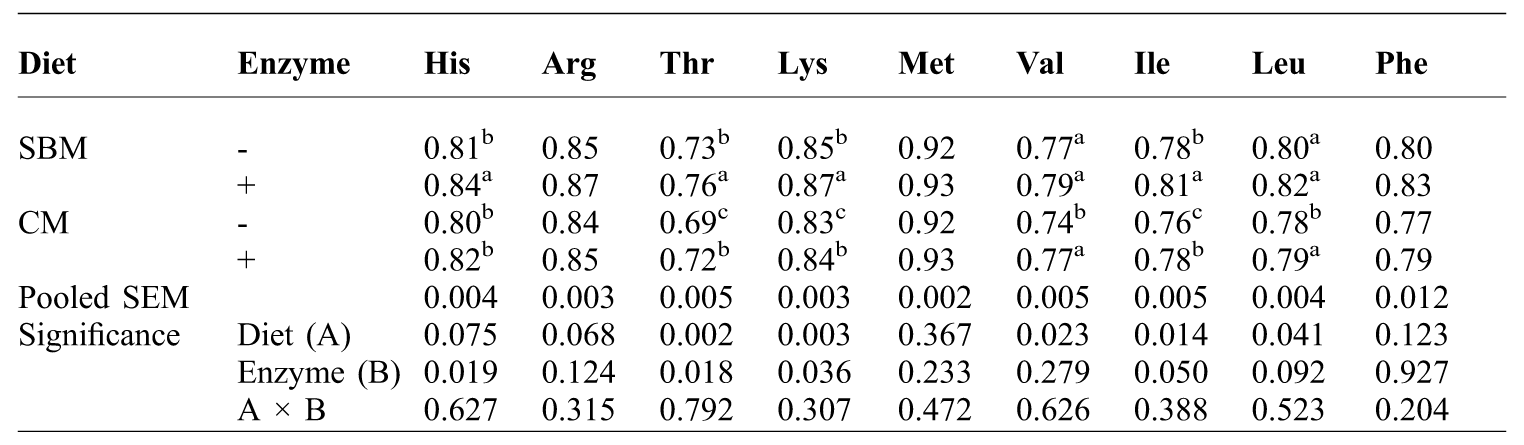
Recent results showed that responses to enzymes are dependent on the type of animal protein included in the diet and possibly on whether the diets are formulated on the basis of available amino acids or total amino acids. In one trial, meat meal was replaced with soybean, canola, and cotton seed meal, with or without supplementation with carbohydrase and phytase enzymes. Feed intake to 42 days of age in birds fed VP diets was about 10% lower than that of birds fed the animal protein diet but was improved by up to 6% by enzyme supplementation (Bhuiyan et al., Reference BHUIYAN, CLATWORTHY and IJI2012a; Table 2). Live weight was reduced by up to 6% for the VP diet compared with the animal protein diet but was improved (5%) by enzyme supplementation. Feed conversion ratio was better (by 1%) for the VP diet compared with the animal protein diet and was further improved (2.5%) by the enzyme supplement. Flock uniformity at 28 days was better (1%) for the VP diet compared with the animal protein diet and was increased (1%) by the enzyme supplement. Litter moisture content was greater for the animal protein diet (16%-33%) than for VP diets (Table 2). Enzyme supplementation reduced litter moisture for VP diets (3.5%) but increased it for animal protein diets. In another study, we assessed the relative value of soybean and canola meals when these replaced with fish meal in the diet. The diets were formulated on the basis of total amino acids. The first experiment showed that the performance of VP diets was inferior to that of diets containing fish meal. Later experiments focussed on differences between diets containing soybean meal or canola meal. Hossain et al. (Reference HOSSAIN, ISLAM and IJI2012b) reported that responses for diets containing either of these vegetable meals were identical and both diets were improved by enzyme supplementation. There were significant differences between groups in the ileal digestibility of some amino acids, including lysine (P<0.01) and histidine (P<0.05), and digestibility was improved by enzyme supplementation (Table 5). Mineral digestibility responded well to enzyme supplementation (data not shown) but there were no differences between vegetable protein sources and enzyme addition at 21 days of age.
Ileal digestibility coefficients of amino acids in birds fed diets with or without supplemental enzymes at 35 days.
Data represent means of two chickens from five replicate groups at 35 days of age; a, b, c Means bearing uncommon superscripts within a column are significantly different at the levels shown. Source: Hossain et al. (Reference HOSSAIN, ISLAM and IJI2013b).
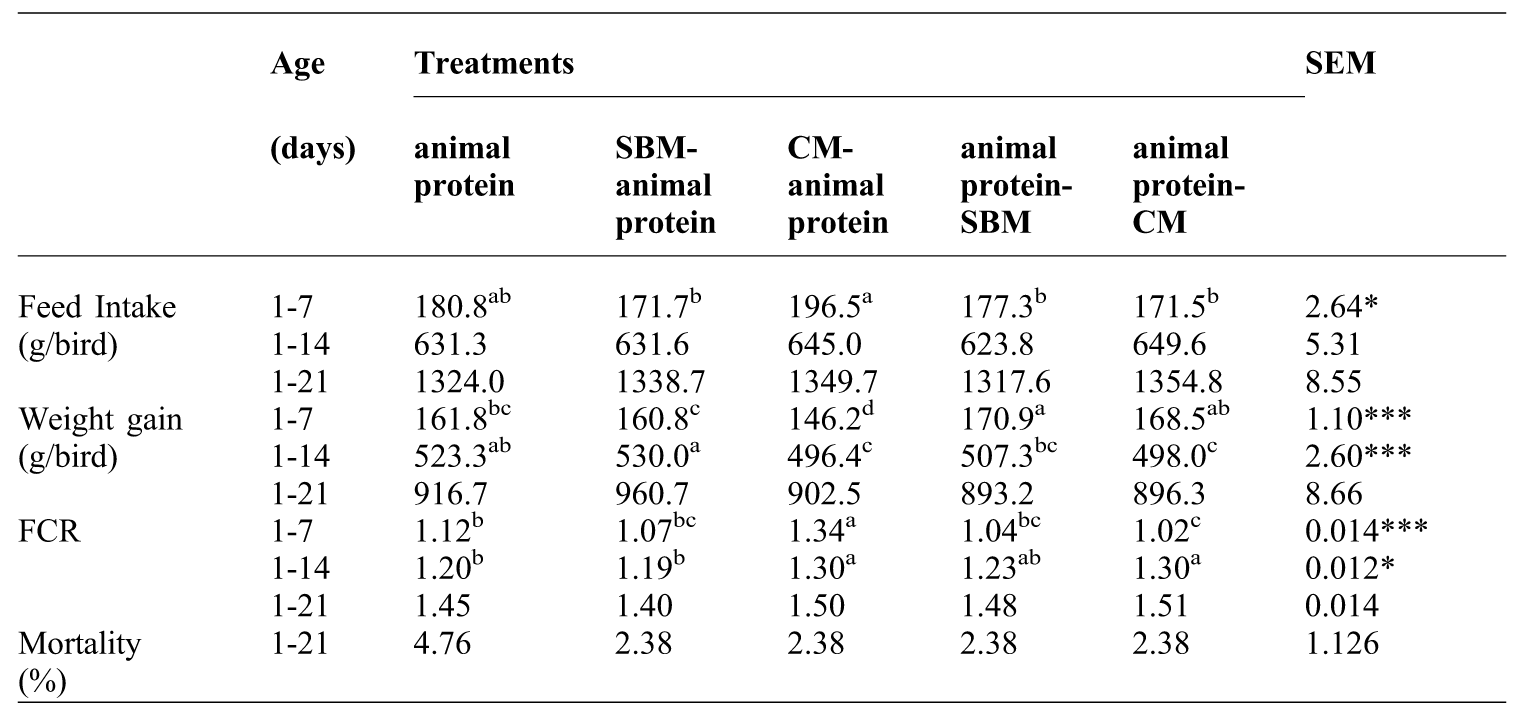
The final experiment in the series examined the impact of the age at which the two VP diets (soybean or canola meal) were introduced to the birds. Each VP diet was fed from seven days of age after the birds had been fed an animal protein diet from hatching and vice versa for the animal protein diet. There were differences between diets one week after the change in diet but these differences disappeared by the end of the second week or by 21 days of age (Table 6). These feeding plans did not significantly affect bone development or responses to endogenous enzymes.
Feed intake, body weight gain, FCR and mortality of broilers from 1 to 21 days of age.
Each value represents the mean of 6 replicates consisting of 7 birds in each replicate cage from d1-21 days; a, b, c Means bearing uncommon superscripts within a row are significantly different at *P<0.05 and ***P<0.001; SEM = Pooled standard error of mean. Source: Hossain et al. (Reference HOSSAIN, ISLAM and IJI2014).
Exogenous enzymes are regarded as ‘pro-nutrients’ and improve the nutritive value of feedstuffs (Ristic and Damme, Reference RISTIC and DAMME2001; Rosen, Reference ROSEN2006). Enzyme supplementation of VP diets degrades NSPs and thus improves the nutritive value of such diets (Meng et al., Reference MENG, SLOMINISKI, NYACHOTI, CAMPBELL and GUENTER2005; Slominski et al., Reference SLOMINSKI, MENG, CAMPBELL, GUENTER and JONES2006). Supplementation with certain minerals, amino acids and vitamins could help reduce or neutralise the negative impact of anti-nutritional factors in plant protein sources for poultry and other farm animals.
Conclusions
Broiler chickens can be raised on diets devoid of animal protein. However, there is a need to streamline diet formulations to obtain consistent responses. Responses are dependent on the composition of the diet. There is a need to assess the impact of processing on such diets and the factors that regulate the preference of birds for animal protein diets and preferences between different VP diets.