Dairy products containing probiotic cultures such as bifidobacteria and lactobacilli have been produced because of their beneficial effects (Vinderola et al. Reference Vinderola, Bailo and Reinheimer2000). Among the dairy products, cheese provides an encouraging alternative to fermented milks and yogurts as a food carrier for the delivery of viable probiotics, due to certain potential advantages (Gomes da Cruz et al. Reference Gomes da Cruz, Buriti, Batista de Souza, Faria and Saad2009). These advantages, the high pH and fat content, buffering capacity and the dense matrix of cheese, offer a suitable environment for the survival of probiotic during both the storage and the passage through the gastrointestinal tract (Stanton et al. Reference Stanton, Desmond, Coakley, Collins, Fitzgerald, Ross and Farnworth2003).
In cheese manufacture, the importance of using adjunct cultures is mainly to improve cheese quality, suppress the growth of undesirable, exogenous microorganisms, accelerate ripening, increase aroma and flavour intensity or provide probiotic effects (Bernardeau et al. Reference Bernardeau, Vernoux, Henri-Dubernet and Gueguen2008). Recently, there is an increasing trend in the use of adjunct probiotic bacteria in the production of white cheese. White cheese is a brine ripened cheese with a soft or semi-hard texture and is one of the most produced and consumed type of cheese in Turkey. It is generally matured under brine at 4−5 °C up to 3–4 months (Hayaloglu et al. Reference Hayaloglu, Guven and Fox2002). However, in recent years it has been ripened and marketed in vacuum package after short-term brining to avoid the excessive intake of salt (Akalın & Karaman, Reference Akalın and Karaman2011). It was reported that the viability of probiotic bacteria is reduced in cheese when its salt content is above 4% (Gobbetti et al. Reference Gobbetti, Corsetti, Smacchi, Zocchetti and de Angelis1998). Therefore, plastic films with low permeability to oxygen should be chosen to pack these functional products (Gomes da Cruz et al. Reference Gomes da Cruz, Buriti, Batista de Souza, Faria and Saad2009). It was suggested that the use of vacuum packaging in the production of white cheese could positively influence the survival of probiotic bacteria (Kasımoğlu et al. Reference Kasımoğlu, Göncüoğlu and Akgün2004). The package used in cheese storage also affects biochemical events such as proteolysis, lipolysis, glycolysis which occur during cheese ripening; thus, final quality characteristics of cheese are formed (Kirkin et al. Reference Kirkin, Gunes and Kilic-Akyilmaz2013). In this sense, proteolysis in cheese ripening is a crucial role in the development of cheese quality and cheese serves as a natural source of milk-derived peptides due to the intensity of proteolysis during ripening (Pihlanto-Leppälä et al. Reference Pihlanto-Leppälä, Rokka and Korhonen1998).
Some bioactive peptides are liberated from certain sequences of specific amino acids as a result of proteolytic activity during cheese ripening. They can act as regulatory compounds with their angiotensin-I-converting enzyme (ACE)-inhibitory, antioxidant and immunomodulatory activities etc. (Smacchi & Gobbetti, Reference Smacchi and Gobbetti1998; Jao et al. Reference Jao, Huang and Hsu2012; Gupta et al. Reference Gupta, Mann, Kumar and Sangwan2013). Small peptides, many of which are responsible bioactivity, are extracted efficiently with water from cheese. This water soluble extract (WSE) contains primarily small and medium-sized peptides, free aminoacids, and their salts and the level of water-soluble nitrogen (WSN) is frequently used for cheese ripening index (McSweeney & Fox, Reference McSweeney and Fox1997). There are many in vitro experiments performed on ACE-inhibitory and antioxidant activity using the WSEs in various cheeses. Also, further investigations on WSEs were carried out with probiotic cheeses (Ryhänen et al. Reference Ryhänen, Pihlanto-Leppälä and Pahkala2001; Ong et al. Reference Ong, Henriksson and Shah2007; Ong & Shah, Reference Ong and Shah2008; Gupta et al. Reference Gupta, Mann, Kumar and Sangwan2013; Sahingil et al. Reference Sahingil, Hayaloglu, Kirmaci, Özer and Simsek2014).
To the authors’ knowledge, there is no published research investigated the effects of packaging and probiotic adjunct culture on the bioactivity of WSEs of white-brined cheese. Thus, the objectives of this study were: (a) to produce a functional food using probiotic strains (Bifidobacterium bifidum DSMZ 20456 or Lactobacilus acidophilus DSMZ 20079) as adjunct cultures, (b) to use vacuum package in the ripening of white cheese instead of brine for lengthening the shelf life and keeping salt level low (c) to investigate the survival of probiotic bacteria during ripening, (d) to evaluate the changes in some chemical characteristic and bioactivity (ACE-inhibitory and antioxidant activities) of WSEs from white cheese during 120 d ripening.
Materials and methods
Milk and cultures
Raw cow milk (total solids 12·0%; protein 3·0%, fat 3·6%, titratable acidity 0·16%, pH 6·52) was obtained by Agricultural Faculty dairy plant at Atatürk University, Erzurum, Turkey. A freeze-dried DVS (Direct Vat Starter Culture) Lactococcus lactis subsp. lactis and Lc. lactis subsp. cremoris with code R-707 were obtained from Chr. Hansen's Lab (Horsholm, Denmark). Probiotic cultures, Bifido. bifidum DSMZ 20456 and Lb. acidophilus DSMZ 20079 were provided by the Food Microbiology Laboratory, Department of Food Engineering, Faculty of Agriculture, Atatürk University, Turkey. Firstly, probiotic bacteria were cultured in MRS broth (37 °C, 24 h, anaerobic condition). Then, Lb. acidophilus DSMZ 20079 was sub-cultured (1 ml/100 ml) at 37 °C overnight in 12% sterile reconstitute skim milk prior to use. Bifido. bifidum DSMZ 20456 was also sub-cultured similarly using 1% inoculum in sterile RSM supplemented with 0·05% l-cysteine hydrochloride (Sigma Aldrich, St. Louis, MO, USA).
Cheese manufacture
White cheese was manufactured in two separate trials. The raw milk was pasteurised at 65 °C for 30 min and cooled to 35 °C. Then, it was divided into three aliquots and all batches were inoculated with DVS culture containing Lc. lactis subsp. lactis and Lc. lactis subsp. cremoris at a level of 15 g/500 l. One batch was selected as the control (C), and probiotic cultures (Lb. acidophilus DSMZ 20079, Bifido. bifidum DSMZ 20456) were added to the second (L) and third (B) batches, respectively. The adjunct inoculation level was 2% (v/v). Calcium chloride was added to the cheese milk at a level of 20 g CaCl2/100 l milk and it was held for 30 min. The milk (32 °C) was coagulated with commercial rennet of microbial origin (Mucor miehei, strength 1 : 16 000, Mayasan Food Co., Istanbul, Turkey) at a sufficient level to coagulate the milk within 90 min. The coagulum was cut into cubes of 1 cm3 and transferred into the cheese cloth for wheying off. The curd was pressed at room temperature for 3 h. After the removal of the whey, the cheese block was portioned into blocks of 7 × 7 × 7 cm, and the fresh cheeses were brined (14 g NaCl/100 g water) for 6 h at room temperature. After the salting, the cheese cubes were held at room temperature (20 ± 2 °C) 12 h. Following this, each batch of cheeses was divided into two groups; one group (V) was packaged in the polyethylene bags under vacuum and the second group (S) was placed in polypropylene containers with 11% (w/v) NaCl solution. Thus there were six sample types abbreviated as C, L or B depending upon adjunct added and V or S to denote ripening under vacuum or brine.
Enumeration of the probiotic bacteria
The probiotic microorganisms were enumerated using various selective media. MRS-nalidixic acid (150 mg/l), neomycin sulphate (100 mg/l), lithium chloride (3000 mg/l), and paramycin sulphate (200 mg/l) (NNLP) agar was used for enumeration of Bifido. bifidum DSMZ 20456 (Tharmaraj & Shah, Reference Tharmaraj and Shah2003). The NNLP mixture (5 ml) was added to 100 ml molten MRS agar containing 0·5 mg/ml l-cysteine hydrochloride (Sigma–Aldrich) prior to plating. The viable counts of Lb. acidophilus DSMZ 20079 were enumerated on BL–MRS (agar supplemented with 1·5 g/l bile salts) (Lima et al. Reference Lima, Kruger, Behrens, Destro, Landgraf and Gombossy de Melo Franco2009) under anaerobic incubation at 37 °C for 72 h. Viable cell counts expressed as cfu/g.
Chemical composition and pH
Cheese samples were analysed in duplicate for dry matter, fat, total nitrogen (TN), salt and titratable acidity (lactic acid %) by the methods described in (AOAC, 2000). Protein content (N × 6·38) was determined by Kjeldahl method (IDF, 1993). For pH measurement, a penetration probe was used and the values were measured using a digital pH meter (Crison model Basic 20, Alella, Spain).
Proteolysis
WSEs of the cheese samples were prepared by the method of Kuchroo & Fox (Reference Kuchroo and Fox1982). WSN, 12% trichloroacetic acid soluble nitrogen (TCA–SN) and 5% phosphotungstic acid–soluble nitrogen (PTA–SN) fractions as % of the total nitrogen in cheeses were determined by the methods described in Kuchroo & Fox (Reference Kuchroo and Fox1982). The pH 4·6-soluble extracts were freeze-dried and stored at −20 °C for the determination of ACE-inhibitory activity and antioxidant activity of peptides.
Determination of the ACE-inhibitory activity
The ACE-inhibitory activity of the freeze-dried WSEs was measured using the colorimetric and spectrophotometric assay of Jimsheena & Gowda (Reference Jimsheena and Gowda2009), with some further modifications. The mixture contained 250 μl hippuryl-histidine-leucine (HHL, Sigma Aldrich) solution (3·8 mmol/l HHL, 100 mmol/l sodium borate buffer, 300 mmol/l NaCl, pH 8·3), and 35 μl sample solution (~15 mg freeze-dried WSE in 1 ml distilled water) and pre-incubated at 37 °C for 3 min. Then 2 mU ACE (from rabbit lung; Sigma Aldrich) was added and incubated for 30 min at 37 °C. The reaction was stopped by the addition of 250 μl 1 M HCl. Then, 200 μl Toluenesulfonyl Chloride (TSC) was added instead of benzenesulfonyl chloride, and the solution was mixed by inversion for 1 min. The yellow colour developed and was measured using UV visible spectrophotometer (DU 730 Beckman Coulter Inc.) at 393 nm, which was the maximum absorbance monitored, against the deionised water as a blank.
The percentage inhibition was calculated as follows:
 $$ACE{-\rm inhibitory}\,\,{\rm activity}\,(\% ) = \left[ {1 - \displaystyle{{\left( {A - C} \right)} \over {\left( {B - D} \right)}}} \right] \times 100$$
where, A is the absorbance with ACE, HHL and ACE-inhibitory sample, B is the absorbance with ACE and HHL without ACE-inhibitory sample, C is the absorbance with HHL and without ACE and D is the absorbance with HHL without ACE and ACE-inhibitory sample. ACE-inhibition was also expressed as IC50. The protein content of the samples was determined using the Lowry method (Lowry et al. Reference Lowry, Resebrough, Farr and Randall1951). The IC50 was then determined from the linear regression as the protein concentration in the sample required to inhibit 50% of the ACE activity.
Determination of the antioxidant activity by 2,2-diphenyl-1-picrylhydrazyl (DPPH)
DPPH radical-scavenging activity of the freeze-dried WSEs was determined as described previously (Apostolidis et al. Reference Apostolidis, Kwon and Shetty2007). DPPH (60 μm) in ethanol was used for the analysis. 250 μl homogenised extract was mixed with 3 ml DPPH solution and then allowed to rest for 1 h. The absorbance was monitored at 517 nm and the % inhibition was calculated by:
 $${\rm Scavenging}\,\,{\rm activity}\,{\rm (\% )} = \displaystyle{{\left( {\it Acontrol - Aextract} \right)} \over {\left( {\it Acontrol} \right)}} \,\times 100$$
DPPH scavenging activity was also expressed as IC50. The IC50 was then determined from the linear regression of the DPPH radical scavenging activity against the protein concentration in the sample.
Statistical analysis
Statistical analysis of the data was performed using the SPSS statistical software program version 17·0 (SPSS Inc., Chicago, IL, USA; SPSS 1999). Firstly, all data on the chemical composition, probiotic cell counts, proteolysis and ACE-inhibitory and antioxidant activities of WSEs in cheese samples at 2, 60 and 120 d were tested for normal distribution using the Shapiro–Wilk test (Shapiro & Wilk, Reference Shapiro and Wilk1965). The test results showed that the data were approximately normally distributed. Then, data from the samples from each of the two batches were subjected to the analysis of variance (ANOVA), with packaging type, probiotic bacteria and ripening time as fixed factors and their interactions. Comparison of means was performed using Duncan multiple range test as post-hoc test (P < 0·05). General Linear Model procedure was applied for a completely random design with the following model:
 $$Y_{ijk} = \mu + R_i + P_j + B_k + (RP)_{ij} + (RB)_{ik} + (PB)_{\,jk} + \varepsilon _{ijk}. $$
where, Y ijk = dependent variable, μ = general mean, R i = ripening period effect (i = 1–3; 2, 60 and 120 d), P j = packaging type effect (j = 1–2; brine and vacuum), B k = probiotic bacteria effect (k = 1–3; control, Lb. acidophilus DSMZ 20079 and Bifido. bifidum DSMZ 20456), (RP)ij = interaction between R and P, (RB)ik = interaction between R and B, ε ijk = random error.
Results and discussion
Survival of the probiotic bacteria
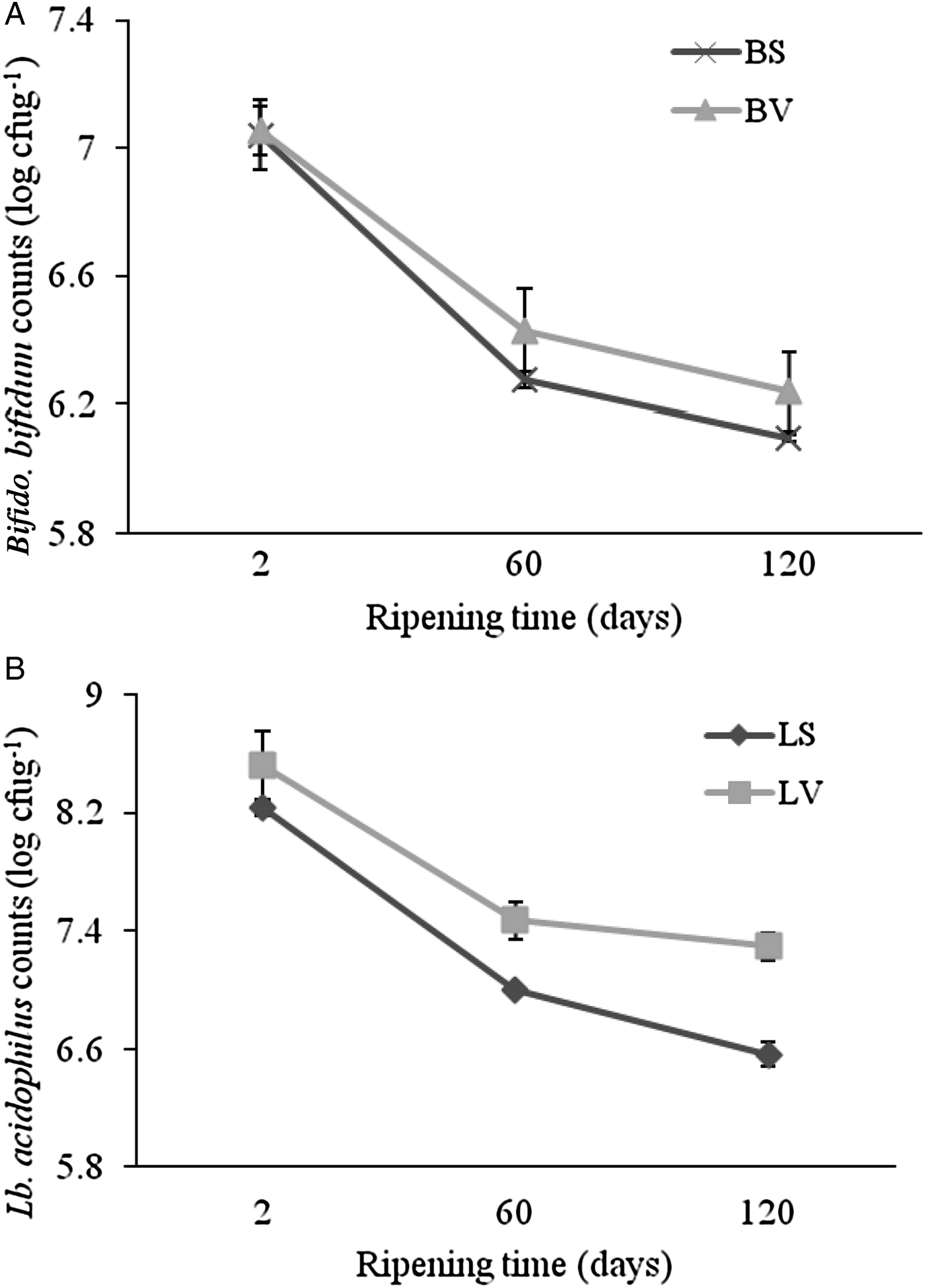
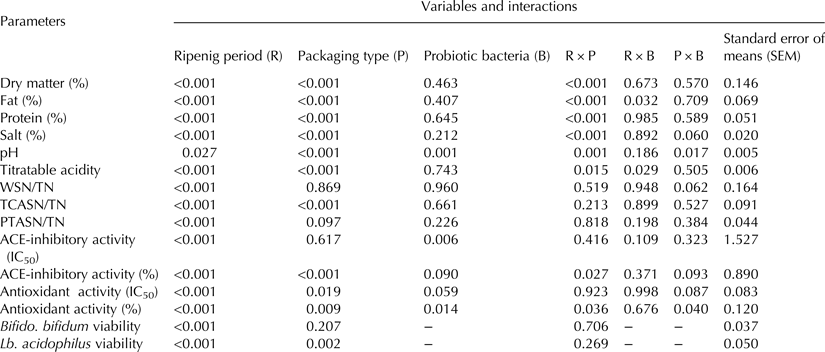
At the beginning of the ripening period, both Bifido. bifidum DSMZ 20456 and Lb. acidophilus DSMZ 20079 counts were >107 cfu/g (Fig. 1). Also, the viability of the probiotic bacteria remained above 106 cfu/g through 120 d ripening at 4 °C. Thus, it was observed that using these bacteria in white cheese production was an effective way to obtain probiotic cheese. Bifido. bifidum DSMZ 20456 counts were not significantly affected (P > 0·05) by the packaging type, whereas Lb. acidophilus DSMZ 20079 counts were significantly affected (P < 0·01) (Table 1). Bifido. bifidum DSMZ 20456 counts declined about one log cycle both in S and V cheeses following 120 d ripening. Ghoddusi & Robinson (Reference Ghoddusi and Robinson1996) also found that Bifido. bifidum DSMZ 20456 survived in high numbers during the 60 d ripening of white brined cheese and declined only one log cycle. As can be seen in Fig. 1b, changes in the counts of Lb. acidophilus DSMZ 20079 in V and S cheeses during ripening were significantly different (P < 0·05). Therefore, it can be concluded that using vacuum package in white cheese storage could be more effective for the viability of Lb. acidophilus DSMZ 20079.
Survival of Bifido. bifidum DSMZ 20456 (A), Lb. acidophilus DSMZ 20079 (B) in the cheeses throughout 120 days of ripening. The values presented as mean ± standard error of two replicate trials means; all data analysed in duplicate. (refer to Table 2 for abbreviations).

Significance levels and SEM values of ANOVA for the effects of ripening period, packaging type, probiotic bacteria and their interactions
Chemical composition and pH
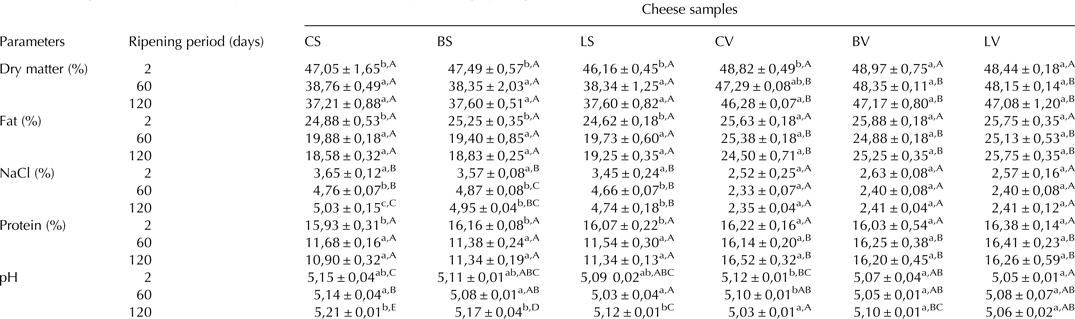
The chemical composition of white cheese samples is shown in Table 2. The dry matter, fat and protein contents of the S cheese samples were significantly lower than the V cheeses after 30 d ripening. These parameters were significantly (P < 0·05) decreased in S cheeses. Generally, when cheese is brined, water flows from the cheese into the brine by an osmotic effect induced by the high salt concentration (>20%) of the brine. However, at low salt concentrations in the brine, this osmotic effect is much smaller and the flow of the moisture is in the opposite direction (i.e., into the cheese) and the cheese expands (Fucá et al. Reference Fucà, McMahon, Caccamo, Tuminello, La Terra, Manenti and Licitra2012). In addition to these, cold storage also affects the moisture content of the pickled cheeses. Researchers reported that moisture uptake from the brine during cold storage is typical of white-brined cheeses (Alichanidis et al. Reference Alichanidis, Polychroniadou, Tzanetakis and Vafopoulou1981; Pappas et al. Reference Pappas, Kondyli, Voutsinas and Mallatou1996). McMahon et al. (Reference McMahon, Motawee and McManus2009) evaluated the influence of the brine concentration and temperature on the composition, microstructure, and yield of feta cheese. According to their results, in cheeses brined and stored at 3 °C, an increase occurred in the moisture content, whereas those brined at 22 °C, a decrease was observed in the moisture content with intermediate changes occurring at 6 and 10 °C.
Changes in the chemical compositon of White cheese samples during ripening (Mean ± SD)
* CS: Control white cheese in brine without probiotic; BS: White cheese in brine with B. bifidum; LS: White cheese in brine with Lb. acidophilus; CV: Control white cheese in vacuum pack without probiotic; BV: White cheese in vacuum pack with B. bifidum; LV: white cheese in vacuum pack with Lb.acidophilus.
* Data are expressed as means ± standard deviation
a–c Different superscripts within the same column indicate that the means differ significantly (P < 0.05).
A–E Different superscripts within the same row indicate that the means differ significantly (P < 0.05).
The changes of pH values in cheese samples during ripening are given in Table 2. The pH values of all the cheese samples ranged from 4·97 to 5·22. The salt contents of the cheese samples ranged from 2·33 to 5·03. The highest salt content (5·03%) was determined in CS cheese at the end of the storage. As expected, the salt levels of the S cheeses were significantly (P < 0·05) higher than the V cheeses. The salt content increased throughout the ripening period in S cheeses. Similarly, Akalın & Karaman (Reference Akalın and Karaman2011) and Hayaloglu et al. (Reference Hayaloglu, Bansal and McSweeney2012) found that the higher the levels of dry matter, fat and protein, the lower the values of salt in vacuum packaged cheese compared with brined cheese for white and Mihalic cheeses, respectively.
Proteolysis
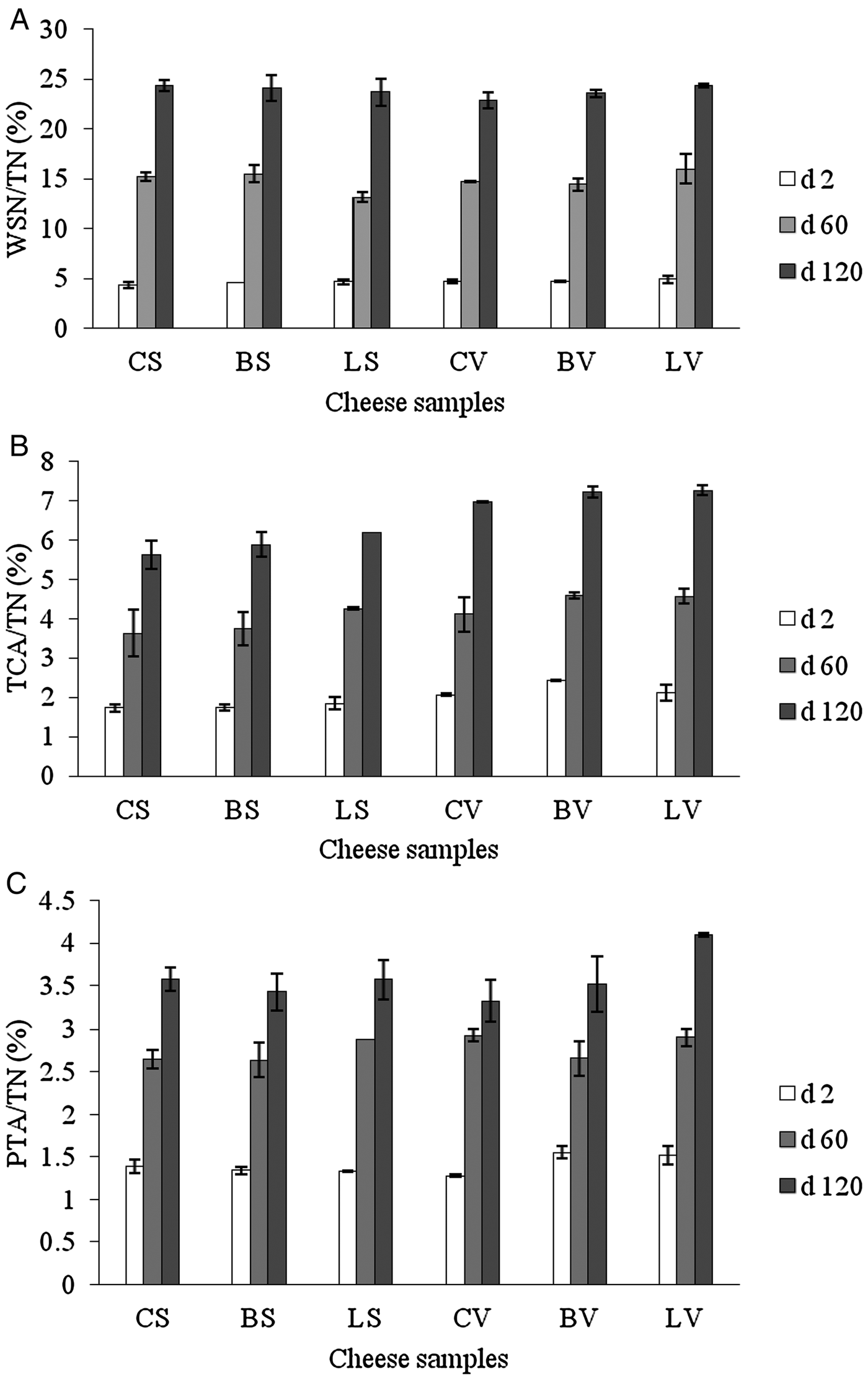
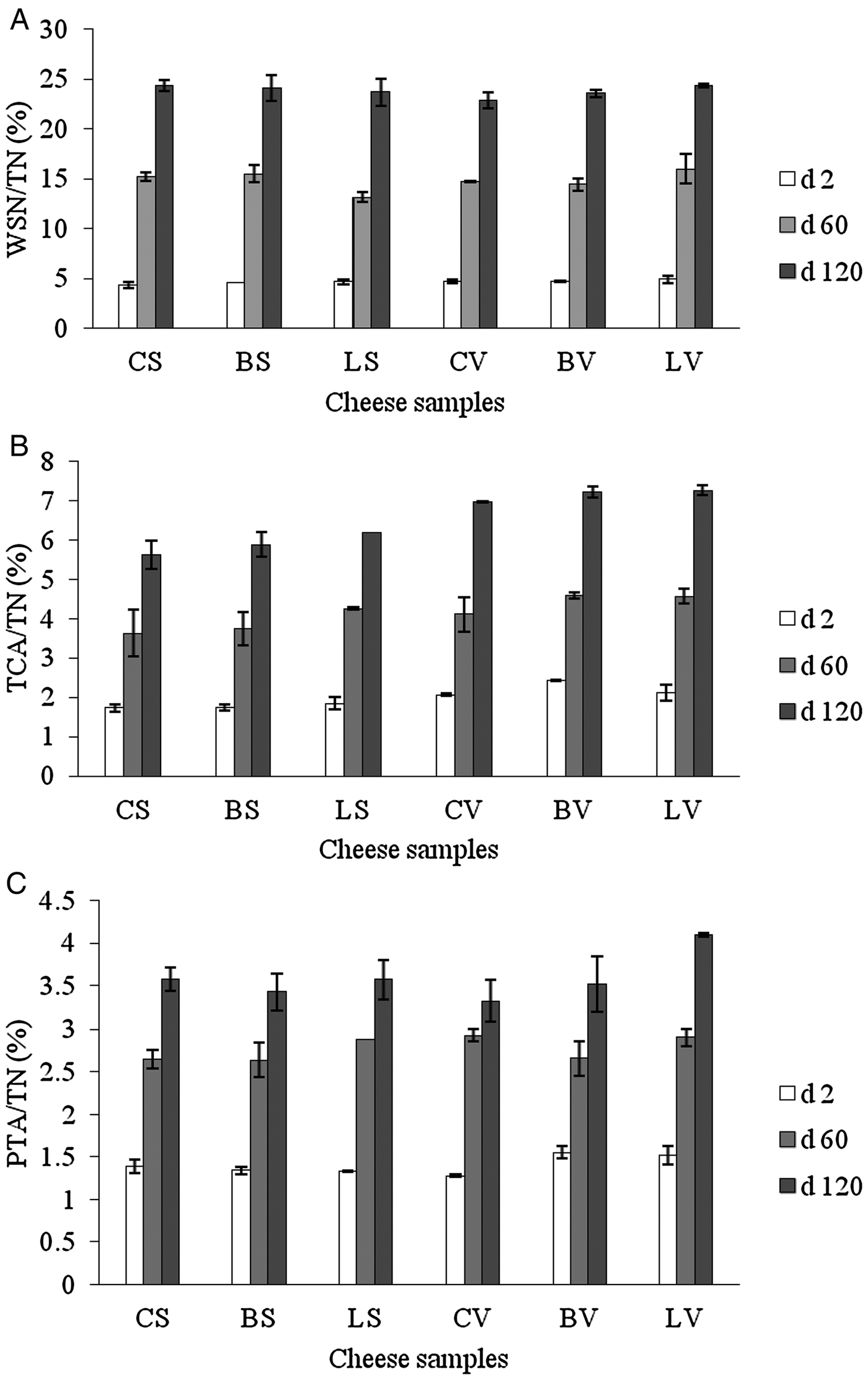
Proteolysis in cheese is often measured by means of quantification of WSN fraction of cheese, which is an indicator of ripening. The WSN fraction contains high, medium and low peptides and free amino acids (McSweeney & Fox, Reference McSweeney and Fox1997). The level of WSN (as % of TN) in white cheeses increased significantly (P < 0·05) during ripening (Fig. 2a) and use of probiotic adjunct culture or packaging type did not influence the WSN values of the cheeses (P > 0·05) (Table 1). In many cheese varieties, the primary proteolysis of caseins is caused by the chymosin and plasmin. However, WSN contents of the V cheeses were higher than those of the S cheeses (data not shown). Similarly, a remarkable difference in WSN values was observed in the V cheeses when compared with the S cheeses for probiotic white cheese (Kasımoğlu et al. Reference Kasımoğlu, Göncüoğlu and Akgün2004), Mihalic cheese (Hayaloglu et al. Reference Hayaloglu, Bansal and McSweeney2012) and Turkish White cheese (Akalın & Karaman, Reference Akalın and Karaman2011). The concentration of TCA-SN was significantly affected by probiotic bacteria, packaging type and ripening time (Fig. 2b). The levels of TCA-SN increased progressively during ripening (P < 0·05) and it had significantly higher levels in vacuum packaged types than those of brined types. This may be due to the contribution of adjunct bacterial proteinase activity under vacuum packaging and lower oxygen permeability of vacuum package. In the present study, the concentration of the 5% (v/v) PTA-SN was significantly increased (P < 0·05) during ripening in all samples except for BV cheese; however, it was not affected by the probiotic bacteria and packaging type. The highest PTA-SN value was observed after 90 d ripening in the cheeses and the highest value was determined in LV cheese at the end of the ripening (Fig. 2c). High proteolysis levels in the vacuum-packaged cheeses may be linked to their low salt content (see Table 2). Since, high salt contents in cheeses inhibit the proteolysis during the ripening period (Guinee & Fox, Reference Guinee, Fox and Fox1993) and limit the action of probiotic cultures.
Concentration (expressed as percentage of total nitrogen) of A: water-soluble nitrogen (WSN). B: trichloroacetic acid-soluble nitrogen (TCA-SN), and C: phosphotungstic acid-soluble nitrogen (PTA-SN) in experimental cheeses during ripening. The values presented as mean ± standard error of two replicate trials means; all data analysed in duplicate. (refer to Table 2 for abbreviations).
ACE-inhibitory activity
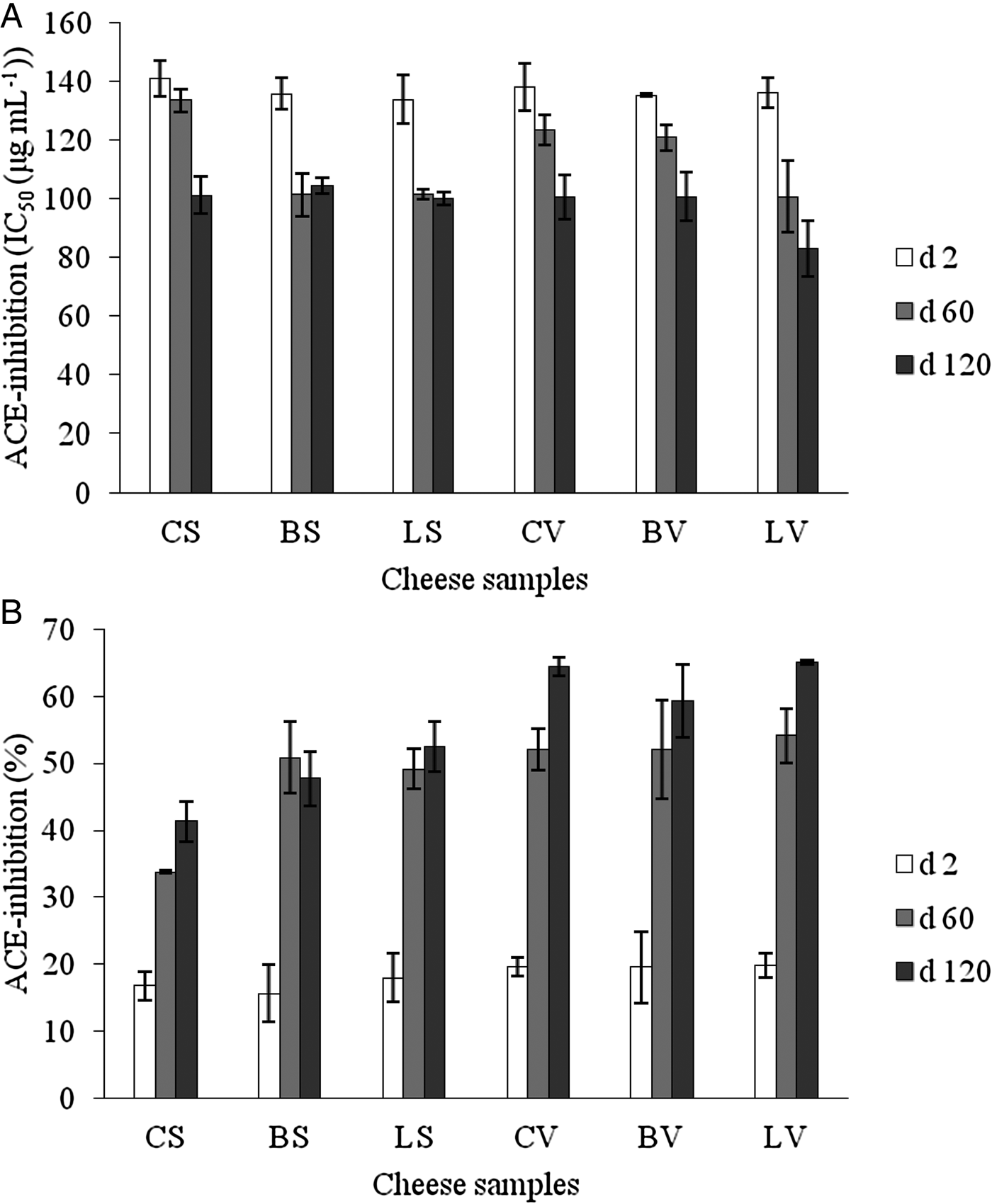
ACE-inhibitory activities of the pH 4·6-soluble fractions of the cheese samples during ripening are presented in Fig. 3a, b. The ACE-inhibitory activity increased during ripening and the changes were positively correlated with the peptide concentration in WSEs. Ripening time had significant effect (P < 0·01) on the ACE-inhibition of the cheeses and significant differences were observed as ripening proceeded, especially after day 60 of ripening. Similarly, Sahingil et al. (Reference Sahingil, Hayaloglu, Kirmaci, Özer and Simsek2014) found that ACE-inhibitory activities of white-brined cheeses increased with the advanced ripening time. Probiotic bacteria and packaging type also significantly affected (P < 0·01) IC50 and % values of ACE-inhibition, respectively (Table 1). Many researchers have also found that ACE-inhibitory activities in cheese was considerably affected by the ripening time and adjunct culture (Ryhänen et al. Reference Ryhänen, Pihlanto-Leppälä and Pahkala2001; Gómez-Ruiz et al. Reference Gómez-Ruiz, Taborda, Amigo, Recio and Ramos2006; Ong & Shah Reference Ong and Shah2008; Nielsen et al. Reference Nielsen, Martinussen, Flambard, Sørensen and Otte2009; Sahingil et al. Reference Sahingil, Hayaloglu, Kirmaci, Özer and Simsek2014). The ACE-inhibitory activity was determined as IC50 which was the concentration of the protein required to inhibit 50% of ACE activity. IC50 values ranged from 82·78 μg/ml (determined in LV cheese at day 120 of ripening) to 140·99 μg/ml (in CS cheese at the beginning of ripening). Tonouchi et al. (Reference Tonouchi, Suzuki, Uchida and Oda2008) isolated two ACE-inhibitory peptides (Leu-Gln-Pro and Met-Ala-Pro) from enzymatically modified cheese, in which MAP exhibited a very strong inhibitory effect with IC50 of only 0·8 μm. Many important key factors have been reported, including milk pre-treatment, cultures, scalding conditions, and ripening times which affect the formation of ACE-inhibitory peptides in the fermented products (Bütikofer et al. Reference Bütikofer, Meyer, Sieber, Walther and Wechsler2008).
Angiotension-converting enzyme (ACE)-inhibitory activity of the experimental cheeses at 1, 60 and 120 days of ripening presented as: A: IC50 (concentration of the protein required to inhibit 50% of ACE activity) values of pH 4.6-soluble extract of cheeses, B: percentage ACE-inhibition of pH 4.6-soluble extract of cheeses. The values presented as mean ± standard error of two replicate trials means; all data analysed in duplicate. (refer to Table 2 for abbreviations).
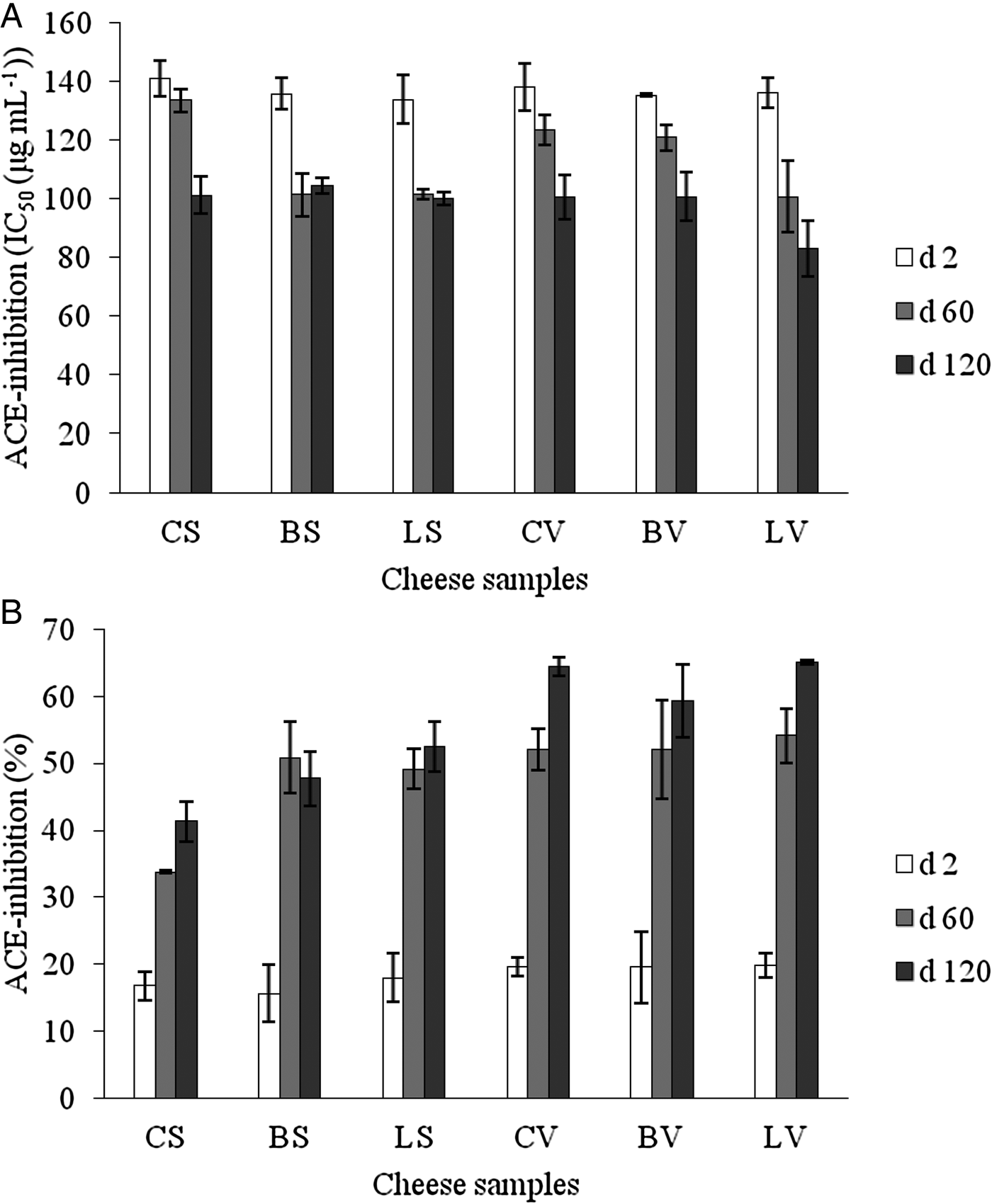
As shown in Fig. 3b, the ACE inhibition ranged from 15·62 to 65·06% with an average of 40·66%. At end of the ripening, sample LV had 65·06% of the ACE-I activity value which was higher (P < 0·05) than the values found in other samples. This result indicated that Lb. acidophilus DSMZ 20079 contributed to the ACE inhibition. There are some studies reporting that Lactobacillus increases the ACE-inhibitory activity in cheese. For example, Ong & Shah (Reference Ong and Shah2008) found that the maximum inhibition was observed in Cheddar cheese made using Lb. acidophilus LAFTI L10 after 24 weeks of ripening. Wang et al. (Reference Wang, Dong, Chen, Cui and Zhang2010) also suggested that cheese with the probiotic strain Lb. casei Zhang showed good potential for the application in the management of hypertension. During the ripening period, percentage of the ACE inhibition values of the cheeses were significantly (P < 0·05) increased with the exception of BS cheese. Similarly, Meira et al. (Reference Meira, Daroit, Helfer, Corrêa, Segalin, Carro and Brandelli2012) determined that higher ACE-inhibitory activity (80%) in the WSE of ripened Feta cheese, while they found lower activity (46·45%) in the WSE of fresh Feta cheese.
Antioxidant activity
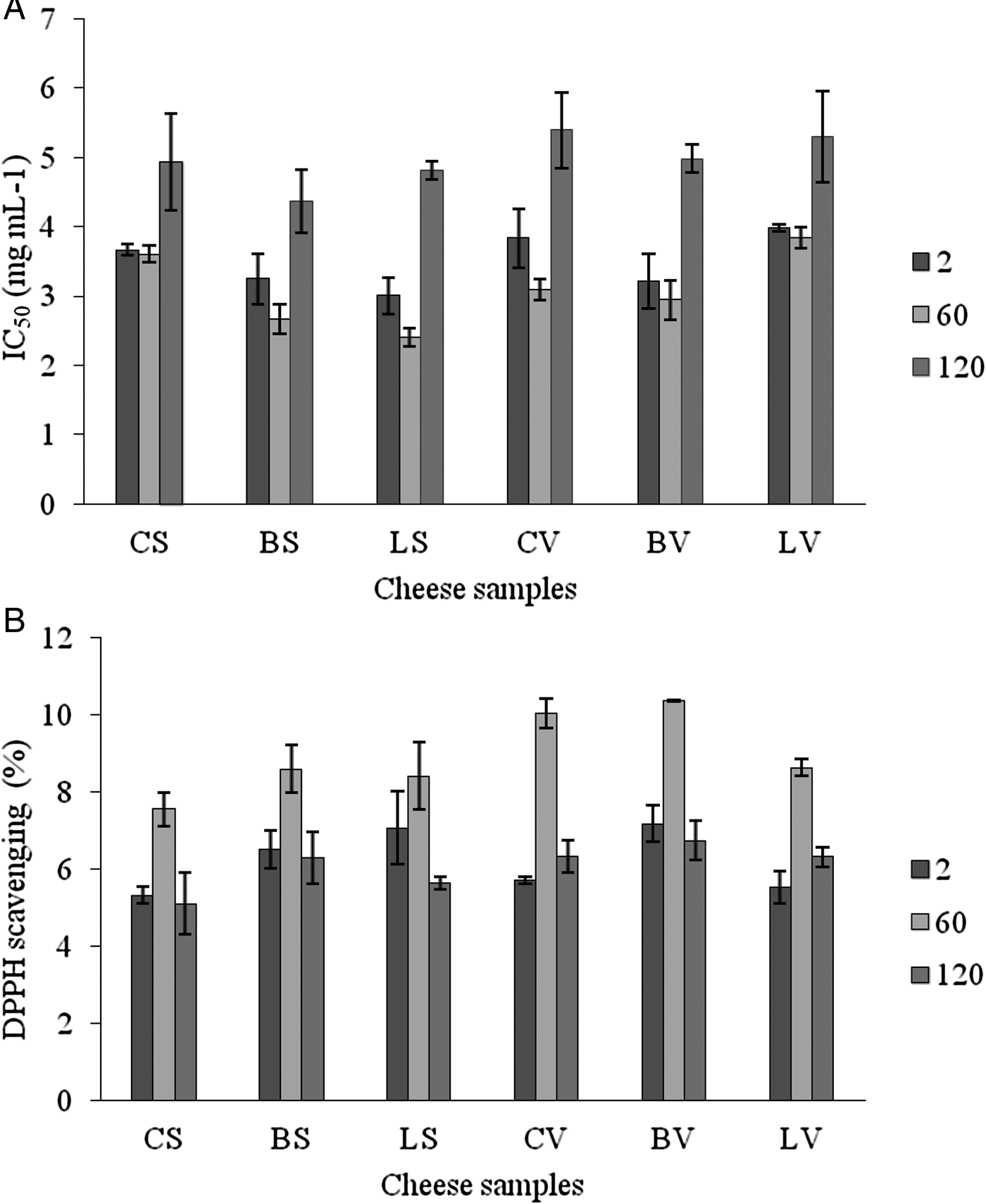
pH 4·6 soluble extracts had DPPH scavenging activities with IC50 values from 2·41 to 5·39 mg/ml and with percentages of DPPH scavenging ranging from 5·10 to 10·38% (Fig. 4). This indicated that WSEs contained peptides which were more easily accessible to the hydroxyl and DPPH radicals (Zhu et al. Reference Zhu, Chen, Tang and Xiong2008). DPPH scavenging activity values of the peptides increased up to day 60 of ripening, whereas the values decreased at day 120 of ripening. In a similar vein, Gupta et al. (Reference Gupta, Mann, Kumar and Sangwan2009) reported a steady increase in the antioxidant activity of Cheddar cheese peptides during the first period of the ripening time, whereas they observed a decrease through the subsequent period of ripening. They suggested that eventual antioxidant peptides were not resistant to further proteolysis. The effect of packaging type on the antioxidant activity of WSEs was significant (P < 0·05) (Table 1) and higher activity values were obtained in the V cheeses compared with the S cheeses. This result was similar to the ACE-inhibitory activity results of the cheese WSEs.
DPPH scavenging activity of the experimental cheeses at 1, 60 and 120 days of ripening presented as: A: IC50 (concentration of antioxidative peptides required to scavenge 50% of DPPH) values of pH 4.6-soluble extract of cheeses, B: percentage DPPH scavenging of pH 4.6-soluble extract of cheeses. The values presented as mean ± standard error of two replicate trials means; all data analysed in duplicate. (refer to Table 2 for abbreviations).
Conclusion
According to the results, the white cheese samples had probiotic characteristics at all ripening period and the use of adjunct probiotic culture, particularly Lb. acidophilus improved proteolytic characteristics and bioactivity of white cheese. At the same time, vacuum package ripening increased proteolysis, bioactivity and reduced salt level in cheese samples. Therefore, vacuum packaging can be offered as an alternative storage way for this cheese type to control the salt level and to get a high bioactivity. But, this ripening method may cause some differences in typical sensory properties of white cheese; thus, consumer acceptability may be affected positively or negatively.
In vitro ACE-inhibitory activity of WSEs increased progressively during the ripening period with the increasing proteolysis level, whereas the antioxidant activity decreased at the end of the ripening. The levels of proteolysis and ACE-inhibitory activity were higher in the LV cheese at 120 d ripening. As a result, in the present study the cheese with high ACE-inhibitory activity was obtained. However, further in vivo studies are needed to confirm the in vitro effects of WSEs from white cheese and to prove in vitro role of the adjunct bacteria and vacuum package on the bioactivity of peptides under in vivo conditions.
The authors wish to thank the Atatürk University Research Centre for the financial support of this project. Project No: 2011⁄162. We are also grateful to Assoc. Prof Bülent Çetin for supplying the probiotic bacteria used in the cheese production and Aykut Öztekin (MSc) for his assistance in the analysis of ACE-inhibitory activity and for sharing their experiences in some specific analyses.